You're invited! Join us as we celebrate Seuss's birthdayweek! D r - Hats Off ...
←
→
Page content transcription
If your browser does not render page correctly, please read the page content below
Youu’rs eas wine vceiletbed!
                                                            Join                rate
                                                          Dr. Se uss’s birthday week!

                                                                         Who: YOU plus Thing 1 & Thing 2!
                                                                         What:	A week of virtual storytimes, themed
                                                                                   crafts and activities, trivia, and prizes!

                                                                         Where: seusshatsofftoreading.com
                                                                         When:	February 28 – March 5, 2021
                                                                         Why: “There’s fun to be done!”
TM & © Dr. Seuss Enterprises, L.P. All Rights Reserved.

                                                                                        @RandomHouseKids @DrSeuss
2021 CLASSROOM
lebr ate
Ceeuss’s Bir
ACTIVITY GUIDE
S thd a y !
Dr.
TM & © 2020 Dr. Seuss Enterprises, L.P. All Rights Reserved.The sun did not shine. Can you imagine being stuck in your house with
It was too wet to play. nothing to do? I bet you can!
So we sat in the house When The Cat in the Hat was published in
1957, Dr. Seuss changed the way kids learn
on that cold, cold, wet day. to read.
I sat there with Sally. We celebrate Dr. Seuss’s imagination and his
We sat there, we two. books every year on his birthday. We have him
to thank for such favorites as:
And I said, “How I wish
The Cat in the Hat
we had something to do.” Green Eggs and Ham
One Fish, Two Fish, Red Fish, Blue Fish
Too wet to go out Dr. Seuss’s ABC
and too cold to play ball. Hop on Pop
So we sat in the house. Fox in Socks
and
We did nothing at all. What Pet Should I Get?
So all we could do was to This year, we’ll explore imagination and
experience how Dr. Seuss books make learning
Sit! to read fun!
Sit!
These activity ideas are designed for students
Sit! in grades K to 4, roughly ages five to nine.
Sit! They were created to be adaptable to various
TM & © 2020 Dr. Seuss Enterprises, L.P. All Rights Reserved.
ages and interests. Students can complete them
And we did not like it. individually, in groups, or as a class. Activities
Not one little bit. can be adjusted for virtual/distance learning.
—The Cat in the Hat by Dr. Seuss, 1957Activities to Encourage
and Celebrate Imagination!
Change the Picture
In the books for beginning readers, the pictures Invite your students to make their own illustrations
and words match to help readers decode the text. for a favorite story or poem, using Dr. Seuss as
Nothing was mentioned in the text that wasn’t their inspiration or drawing in their own style.
seen in the art, and vice versa. And instead of
• You can read a story aloud slowly, inviting
realistic illustrations, like the ones in the Dick
students to draw along.
and Jane books, these illustrations were full of
imaginary creatures, machines, buildings, and • You can provide pages with the text of the
plants. story and space for drawing, if your students
are reading on their own.
Show your students examples of realistic
illustrations (and even Dick and Jane readers, • You can also have students look at their
if you can find them). Then explore the favorite picture book or chapter book and
illustrations in Dr. Seuss’s books with your draw new illustrations for it. They can then
students. Point out that in The Cat in the Hat, write the text on their pictures to create a
What Pet Should I Get?, and One Fish, Two Fish, new version.
TM & © 2020 Dr. Seuss Enterprises, L.P. All Rights Reserved.
Red Fish, Blue Fish, the children look ordinary,
but other creatures and things are anything but! Ask students to share their drawings and talk
about how different pictures change the story and
Ask students to search for characters or things can make it more fun. Talk about how pictures
that look familiar but are a little different, like the might help a beginning reader.
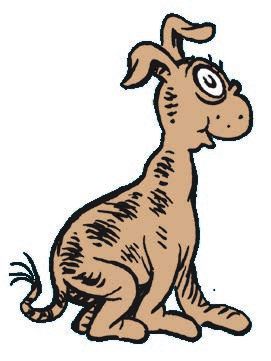
Wump in One Fish, Two Fish, Red Fish, Blue Fish.
Ask them to also point out objects they
have never seen before.Door Decoration or Bulletin Board And last of all, what kinds of presents would you
Idea: Real-ly Fantastic Art Gallery! get? A jet pack? A pet boa constrictor? A time
Find photos or realistic drawings of things like machine?
a chair, an airplane, a tree or flower, and a Invite your students to imagine their ultimate
mountain. Make a paper frame for each item, birthday party and all the fixings:
and attach them to your door or bulletin board.
Provide students with paper, and invite them to • Location
draw a fantastic Seussian version of the real • Decorations
objects. Put their imaginative versions of the real
items in paper frames, too, and hang them by the • Food
image that inspired them.
• Games
Have a Wild Party • Party Favors
If you could have a birthday party anywhere,
where would it be? On Mars? At the bottom of • Guests
the ocean? In an ice cream factory? • Gifts
What games would you play? What foods would There are no limits—imaginary places are A-OK
you serve? How about party favors—what would and fictional guests are, too. Encourage the kids
you send home with your guests? to put on their Seussian imagination hats and go
Don’t forget about guests. Who would you to town!
invite? Your favorite superhero? A sports or music Kids can draw and write about their ideas, create
star? What about favorite inventors or people sample decorations or gifts, invent games, and
from history? Great-great-grandparents you’ve create recipes and party favors. They can even
never met? What about favorite book or movie dress up!
characters?
Once they’ve planned their ideal birthday bash,
ask them to imagine it happening and write a
story about the event. Remind them that in a
Dr. Seuss story, things often get wacky!
Door Decoration or Bulletin Board Idea: Make a
TM & © 2020 Dr. Seuss Enterprises, L.P. All Rights Reserved.
giant party invitation or wrap the door or bulletin
board like a birthday present.Fun-in-a-Box Encourage students to pay special attention
Lots of Dr.Seuss books feature mischievous to the creatures. Take your time exploring the
characters. The Cat is a bit of a handful, and illustrations with them when you read the books
Sam-I-am goes to great lengths to get his friend aloud. Ask:
to try green eggs and ham. Silliness breaks out What kinds of animals do you see? Do they look
in One Fish, Two Fish, Red Fish, Blue Fish and like animals we know? Are there small but funny
Hop on Pop. differences? For example, on pages 12 and 13
Read the section in The Cat in the Hat where the of One Fish, Two Fish, Red Fish, Blue Fish, there
Cat introduces Thing One and Thing Two. He are animals that are almost an elephant, a rabbit,
says it’s a game called Fun-in-a-Box. and a seal, but there’s something different about
each of them. On pages 32–33, these are a
Ask your students to imagine their own bunch of sheep walking upright on their hind
Fun-in-a-Box. legs! Ask your students: What differences do you
• What size and shape is the box? see in the way he drew familiar animals, and
why do you think Dr. Seuss drew them this way?
• How does it open?
Have your students look at the animals again,
• What is inside, and what happens when it this time searching for completely new creatures.
comes out? One Fish, Two Fish, Red Fish, Blue Fish has lots
of imaginary animals. So does Dr. Seuss’s ABC.
• What is your reaction?
Ask: What features do these animals have? Do
• Does what’s inside ever go back in? they have horns, fur, feathers, or funny feet? Do
they have unusual names? Why do you think they
Encourage your students to imagine their Fun-in-a-
do?
Box, either on their own or in a group. If working
in a group, invite kids to act out what happens as Encourage your students to imagine their own
they present their game to the class. new creature. What does it look like? Where
does it live? What does it do or eat? What is
Door Decoration or Bulletin Board Idea: Create
its name? Invite them to draw their animal or to
a box with an open lid on the door or bulletin
make a mask or costume to represent it. They can
board and put photos of your students inside,
write about their creature or create a skit where
peeking out. Your class is Fun-in-a-Box!
they introduce it.
TM & © 2020 Dr. Seuss Enterprises, L.P. All Rights Reserved.
A Seussian Zoo
From Sneetches to Horton, Dr. Seuss has written
about some very memorable animals. Some are
famous, like the Cat in the Hat and the Grinch,
but others are not. Some look familiar, and others
are new and unusual.Alternatively, ask your students to think about When students have all had a chance to fill
what it would be like to have one of these out their game cards, explore the answers as a
animals as a pet. The kids in the Cat in the Hat group. Find the correct answers in Dr. Seuss’s
have a talking fish. And in What Pet Should I books. Take a vote to discover the class’s favorite
Get?, Dr. Seuss explores the process of choosing animal. Have students tally and graph the results
a pet, starting with cats, dogs, fish, birds, and of the game and the vote (The different answers
rabbits, and moving on to more unusual options. for #2 are 4 for Zax, 7 for Gox, etc.).
Get your students thinking about having a pet.
Ask them to answer these questions about one of Books Let You Explore the World
the suggested pets. from Your Couch!
At the beginning of The Cat in the Hat, the kids
What do you like about this animal? What might
are stuck at home with nothing interesting to do.
be hard about having this animal as a pet? What
That idea is at the heart of many children’s books,
would you need to take care of it? Where would
including The Phantom Tollbooth; Where the
it sleep? What would it eat? Where would it
Wild Things Are; and The Snowy Day. While the
play?
adventure comes to their house in The Cat in the
Show your students an animal adoption or Hat, in these other stories, kids are transported to
rescue website, like one from your local animal a magical new place.
shelter, and point out how each pet has a profile.
Invite your students to create a new take on The
Ask each student to choose an animal, real or
Cat in the Hat by inventing their own adventure.
imaginary, to write an adoption profile for. They
They can have a rambunctious visitor or be
need to describe the animal (including type of
transported to an entirely new place.
animal, age, name) and what it would need
in a happy home. Have them include pictures! If kids need a prompt to get started, have them
Combine all the pet profiles in a book or on a try to come up with a new title by replacing Cat
bulletin board for the class to enjoy. and Hat with a new, unusual visitor and place or
thing.
Door Decoration or Bulletin Board Idea: A Name
That Pet Contest Draw or copy some of Dr. Seuss’s The ________________ in the _________________
imaginary animals and put them on your door
The Frog in the Fog
or bulletin board, numbering each one. Make
a game card with a place for kids to write their The Teacher in the Bleacher
TM & © 2020 Dr. Seuss Enterprises, L.P. All Rights Reserved.
own name and the names of each animal, along
with its assigned number (#2 is a Zax). The Guy in the Sky
Over time, read each of the relevant books aloud The Snake in the Lake
to your students. Invite your students to explore The Field with a Shield
the books on their own to find the names of the
animals.Then let them create their stories. Ask: What kind • José Andrés, the chef, developed an efficient
of problem is created and solved in the story? In and culturally sensitive way to feed people after
The Cat in the Hat, the kids are bored, but then natural disasters.
the Cat comes and makes trouble. In Green Eggs
•M
arjorie Stewart Joyner invented a machine to
and Ham, Sam-I-am pesters his friend into trying
make straight hair curly.
a new food. In What Pet Should I Get?,
the kids have to choose a new pet. •W
illiam Kamkwamba figured out how to bring
electricity and running water to his village in
Encourage your students to use descriptive words
Malawi.
as they develop their story. What does the visitor
or the new place look or sound like? What unusual In some of Dr. Seuss’s books, characters use
things do the characters touch, smell, or hear? unusual gadgets, like the machine the Cat used
to clean up the mess Thing One and Thing Two
Students can write or dictate their stories or create
made. Encourage your students to look for and
a wordless book with only illustrations to tell the
point out gadgets as you read the books aloud.
story. Encourage each student to design a cover
for their book with an illustration and the title. Invite your students to pick a problem and
imagine a solution to it. It can be serious or silly.
Door Decoration or Bulletin Board Idea: Just
The point is to engage their imaginations to solve
Published! Ask students to write or dictate a short
a problem. Ask your students to:
description of their story. Post their book covers
and the descriptions of their stories on your door •N
ame the problem and explain it. What is the
or bulletin board. problem, and why does it need fixing?
Imagination Leads to Invention •B
rainstorm two or three ways to solve the
Imagination can be great fun, and it can also problem.
solve problems. Before someone invented a cell
•R
esearch or imagine what others might have
phone or a car, they had to imagine it. Inventors,
done to try to solve the problem.
engineers, scientists, artists, chefs, and doctors all
use their imaginations to create new things and •D
evelop one or two ideas for something or
solve problems. some way to solve the problem.
Provide some examples of inventions or problems. •D
escribe the solution, including what it does
For example: and how it works.
TM & © 2020 Dr. Seuss Enterprises, L.P. All Rights Reserved.
• Garrett Augustus Morgan invented the traffic • L ist the materials or resources needed to
light and the gas mask. make it.
• Stephanie Kwolek invented Kevlar, a super • Draw a picture or make a model of the idea.
strong yet light material used in firefighter
boots, cut-proof gloves, hurricane-safe rooms.For a more focused activity, provide the problem switch and have the other inventors present their
and have students imagine solutions. Students ideas.
can work alone or in groups, or you can do this
Door Decoration or Bulletin Board Idea: Combine
activity with the entire class.
pictures of real inventions and inventors with
Allow your inventors to share their ideas in a pictures of Dr. Seuss and some of his gadgets
science fair setting, with half of your students on your door or bulletin board to celebrate
presenting their ideas and the other half walking imagination and problem-solving. If you are
around the room to learn from their peers. Then celebrating virtually, have students create digital
presentations.
Activities to Encourage and
Celebrate Learning to Read!
The Word Count Challenge students how you choose some of the words to
Dr. Seuss used his imagination to enliven kids’ make a rhyming sentence. Encourage them to
reading experiences, while meeting their early make their own sentences and rhymes with the
reading needs. By limiting the number of different words provided. If you like, provide blank pieces
words used and employing rhyme and repetition, of your chosen “magnets” for students to add
he created wild stories and fantastic illustrations their own rhyming words to the mix.
to make the challenging experience of learning
Building Blocks of Reading
to read fun.
In 1957, Dr. Seuss launched his Beginner Books,
• Invite students to create their own rhyming, which are made for children learning to read
repeating stories using a limited number of all by themselves, with The Cat in the Hat. It
words. You can provide a list of words or was fun to read aloud, easy to read alone, and
have the kids brainstorm their own. Creative impossible to put down. It was the first Beginner
illustrations are a bonus! Book. This combination of words and pictures TM & © 2020 Dr. Seuss Enterprises, L.P. All Rights Reserved.
encouraged children to read--all by themselves.
Bulletin Board Idea: Make a new version of
Hailed by elementary educators and remedial
Magnetic Poetry on your bulletin board. Write
reading specialists, these enormously popular
fifty words on index cards, Post-its, or paper.
books are now used in homes, schools, and
Attach them to your bulletin board where the
libraries throughout the world.
students can reach them. Demonstrate for yourEncourage your students to illustrate their stories,
emphasizing how illustrations can help beginning
The Cat in the Hat got things started with a zany
readers, too.
story using a limited number of words, but it was
still a bit tricky for some readers. The books that Students can work independently or in groups.
followed were created using fewer words, plus They can write, dictate, or record their stories.
rhyme, repetition, and alliteration. Some start As beginning readers gain experience with
with short vowel sounds and one-syllable words, short and long vowel sounds, blends, etc., invite
like Hop on Pop, and get increasingly difficult, them to write their own stories using their new
ending up with Fox in Socks’s tricky tongue knowledge.
twisters.
Door Decoration or Bulletin Board Idea: Make
Share Dr. Seuss’s Beginner Books with your a rhyming or alliteration graffiti wall. Cover
students, pointing out the special features they the door or bulletin board with butcher paper.
have that support young readers. Write a rhyme, like “hop on pop,” or a phrase
with alliteration like “Big H, little h. Hungry
Then invite your students to try their hand creating
horse. Hay. Hen in a hat. Hooray! Hooray!”on
their own Beginner Book. Silliness is the only
it. Encourage your students to write their own
requirement!
rhymes or alliterative phrases as they think of
• Write a story using short vowel sounds, like them, and encourage them to draw a small
Hop on Pop. picture to go along with their rhyme or phrase.
• Write a book with rhyme and rhythm,
including made-up words that rhyme, like
One Fish, Two Fish, Red Fish, Blue Fish.
• Write a story using alliteration, like Dr. Seuss’s
ABC.
• Write a story that repeats and builds on itself
(a cumulative tale), like Green Eggs and Ham.
• Write a series of tongue twisters (that use
rhyme, repetition, and alliteration) like Fox in TM & © 2020 Dr. Seuss Enterprises, L.P. All Rights Reserved.
Socks.
Guide prepared by Eileen Hanning, children’s literacy consultantTM & © 2020 DSE TM & © 2020 DSE
TM & © 2020 DSE TM & © 2020 DSE
Print this sheet and have students
cut out these stickers along
the solid black line.
TM & © 2020 DSE TM & © 2020 DSEin g
Print on cardstock paper and
d
affix a Popsicle stick
e a
R Is Fun
with Th ing 1!
TM & © 2020 Dr. Seuss Enterprises, L.P. All Rights Reserved.Print on cardstock paper and
affix a Popsicle stick
ill Read Any w here
I W with
Sam-I-am!
TM & © 2020 Dr. Seuss Enterprises, L.P. All Rights Reserved.Print on cardstock paper and
o re
affix a Popsicle stick
he m
T t you read,
th a the mo re things
you will kn ow.
The more
that you learn
,
the more
places
you’ll
go.
TM & © 2020 Dr. Seuss Enterprises, L.P. All Rights Reserved.Print on cardstock paper and
affix a Popsicle stick
py Birt h d ay
Hap
!
Feliz
Cumpleaños!
Bon
Anniversaire
! TM & © 2020 Dr. Seuss Enterprises, L.P. All Rights Reserved.
Sang Yat
Fai Lok !t h
Print on cardstock paper and
B ir da
affix a Popsicle stick
ppy y !
Ha Sae n g-Il Chug
aeid S h a!
!
awlid
d M
Ei
Alles Gute zum
Geburtstag!
TM & © 2020 Dr. Seuss Enterprises, L.P. All Rights Reserved.You can also read


