1.0 Introduction - Webflow
←
→
Page content transcription
If your browser does not render page correctly, please read the page content below
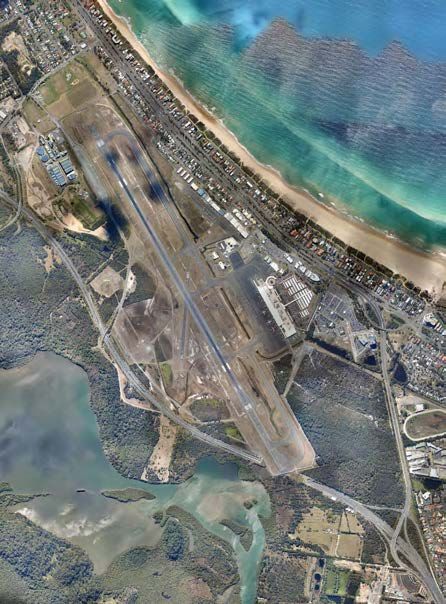
1.0 Introduction
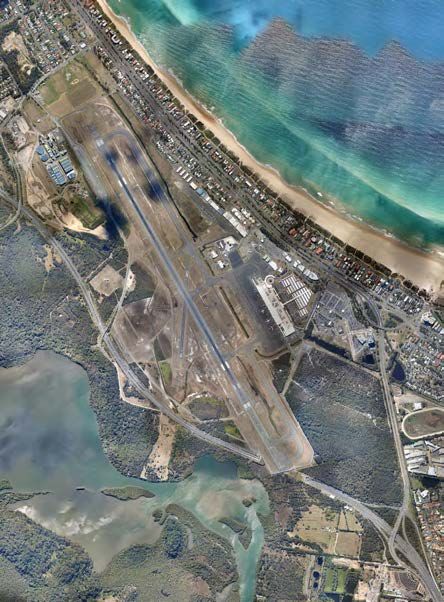
1.0 Introduction
1.1 The Project                                                  →→ Widening of the existing 150 metre runway strip to 300
                                                                    metres (from 75 metres to 150 metres each side of the
                                                                    runway centreline), on Commonwealth leased airport
At the request of Gold Coast Airport                                land;
Pty Ltd (GCAPL), Airservices Australia
                                                                 →→ An in-ground communications and mains power
(Airservices) is proposing to install an                            system on both Commonwealth and New South Wales
Instrument Landing System (ILS) at Gold                             State land; and
Coast Airport to improve the reliability of
                                                                 →→ The establishment of a new flight path to allow
landings in adverse weather conditions and                          operation of the ILS. Details regarding the new flight
to improve regularity of service.                                   path are further described in Section 1.4, Chapter 3
                                                                    and Section 6.1.
The ILS is a precision, radio navigation, ground based
aid adopted by airports and airlines worldwide to allow
aircraft to approach and land in weather conditions that         Figure 1.1 shows the location of the glidepath footprint,
would otherwise have resulted in a missed approach and           localiser footprint and runway strip widening, Figure 1.2
possible diversion to another airport.                           shows a schematic layout of the communications and
                                                                 mains power system for the ILS project and Figures 1.3
Gold Coast Airport is the fifth (5th) busiest international      and 1.4 show existing flight paths and the ILS flight path
airport in Australia. However, it is the only airport within     on runway 14 respectively.
the busiest twelve (12) airports in Australia that is not
equipped with an ILS. The installation of an ILS will result     At Gold Coast Airport, runway 14 is used for landings
in improved reliability of landings (for equipped aircraft) at   from the north and runway 32 is used for landings from
Gold Coast Airport during periods of inclement weather.          the south. The prevailing wind at Gold Coast Airport (from
This essential infrastructure will:                              the south-east) results in runway 14 being the preferred
                                                                 runway for landings approximately two thirds of the time. It
→→ Reduce the frequency of diversions to other airports
                                                                 is therefore proposed to install the ILS on runway 14 due
   (currently around 50 diversions per year from Gold
                                                                 to operational benefits from the prevailing wind direction.
   Coast Airport to alternative airports have been recorded
   since October 2010 largely due to adverse weather             Currently aircraft landing at Gold Coast Airport are guided
   conditions);                                                  by non-precision approach procedures and the recently
→→ Reduce associated disruptions to passenger journeys;          introduced satellite based landing system, Required
→→ Improve customer experience;                                  Navigational Performance (RNP). Although RNP has
                                                                 improved the landing success rate on runway 14, an ILS
→→ Equip Gold Coast Airport with the same level of
                                                                 will provide additional benefit allowing aircraft to land
   technology as other airports of a similar size and
                                                                 in all but the most severe weather conditions. This is
   capacity.
                                                                 represented in Figure 2.9. It is noted that the ILS approach
                                                                 procedure does not replace the existing approaches
All users of the airport (including passengers, family and
                                                                 but creates a new approach. It is further noted that the
friends of passengers, airlines, business owners, ground
                                                                 proposed ILS has no effect on departure flight paths from
transport services and the wider community) will benefit
                                                                 Gold Coast airport.
from a landing system capable of minimising the number
of missed approaches and diversions whilst reducing              The ILS project consists of three separate approval
the inconvenience to the public, airlines and other              processes;
stakeholders.                                                    →→ Works on Commonwealth Airport land under the
                                                                    Airports Act 1996 (Airports Act),
The components of the ILS project include:
                                                                 →→ Works on NSW State land under the Air Services Act
→→ The glidepath antenna and associated infrastructure
                                                                    1995 (Air Services Act), and
   (referred as the glidepath footprint) to be located
   adjacent to the aircraft touchdown point of runway 14,        →→ Approval of the ILS flight path under the Air Services
   on Commonwealth leased airport land;                             Act and Civil Aviation Act 1988.
→→ A localiser antenna array and associated infrastructure
   (referred as the localiser footprint) to be located on New
   South Wales State land to the south of the runway;

2   Gold Coast Airport | Major Development Plan
While these three elements of the project have separate     relating to the flight path have been considered by
formal regulatory approval pathways, for simplicity, a      Airservices as part of the flight path approval process.
single public consultation process was undertaken. This     Comments relating to the ground works on NSW State
occurred through the Major Development Plan (MDP)           land received during the MDP public consultation process
process as regulated by the Airports Act. All feedback      have been considered and addressed accordingly.
received during this consultation period was captured and   Consideration of all comments received is detailed
considered as appropriate for each regulatory approval      the supplementary report and where appropriate via
pathway. Section 7 of this MDP provides further detail on   amendments to the MDP.
the consultation process.
                                                            A diagram depicting the key steps and interconnections
The ILS project is considered to be a “major airport        between the MDP approval process and separate
development” as defined in Section 89 of the Airports Act   approval processes undertaken by Airservices is found in
requiring a MDP due to the reasons noted in Section 1.3.    Figure 3.1.
In developing a MDP, airports must publish a preliminary
draft MDP and invite public comment for a period of 60      Subject to approval of the MDP by the Minister for
business days. A draft MDP and a supplementary report       Infrastructure and Regional Development, it is anticipated
has been prepared and submitted to the Minister for         that the ILS will be operational within a 12 month
Infrastructure and Regional Development for approval of     period. This assumes no delays due to wet weather,
the components of the project located on Commonwealth       procurement and provision of construction, installation
airport land only.                                          and commissioning services. Based on an MDP approval
                                                            of January 2016 it is expected the ILS will be operational
Works on NSW state land are subject to a separate           in January 2017.
regulatory process managed by Airservices under
Section 19 of the Air Services Act. As Airservices is a     1.2 Project Location
Commonwealth Agency, these works are also captured
by the EPBC Act which relates to impacts on the whole of    The location of the glidepath footprint, localiser footprint
the environment, including matters protected under state    and widening of the runway strip to 300m along with
and/or local legislation.                                   state, property, lease and license boundaries are depicted
                                                            in Figure 1.1. The widening of the runway strip from 150
Prior to the MDP public comment period, a referral
                                                            metres to 300 metres and the glidepath footprint of the
under Section 68 of the Environment Protection and
                                                            ILS are located on the Commonwealth leased airport
Biodiversity Conservation Act 1999 (EPBC Act) was
                                                            land. The localiser component of ILS is located on both
lodged by Airservices for the Commonwealth airport
                                                            New South Wales State land (Lot 1 DP 1092951) leased
land and NSW State land component of the ILS project
                                                            to GCAPL and New South Wales Transport, Roads and
to determine whether or not the works were deemed a
                                                            Maritime Services land (Lot 112 DP 1202048) licenced to
controlled action. The Commonwealth Department of
                                                            GCAPL. The communications and power system for the
Environment (DoE) determined the works on NSW State
                                                            ILS project is located on both Commonwealth Land and
land are not a controlled action and no approvals under
                                                            New South Wales State land (Lot 1 DP 1092951).
the EPBC Act are required. In addition, the Department of
Infrastructure and Regional Development (DIRD) referred     For clarity, the New South Wales State land (leased to
the exposure draft MDP to DoE under Section 160 of          GCAPL) and New South Wales Transport, Roads and
the EPBC Act as required and DoE has decided that the       Maritime Services land (licensed to GCAPL) are referred to
works on Commonwealth airport land are unlikely to have     in this document as NSW State land.
a significant impact on the environment and therefore,
advice from the Minister for the Environment is not
required.

The formal regulatory approvals for the flight path and
noise impact are dependent on the MDP being approved,
and will follow an additional regulatory process under
Section 160 of the EPBC Act and the Air Services Act.
Comments received during the public comment period

                                                                     Major Development Plan | Gold Coast Airport         3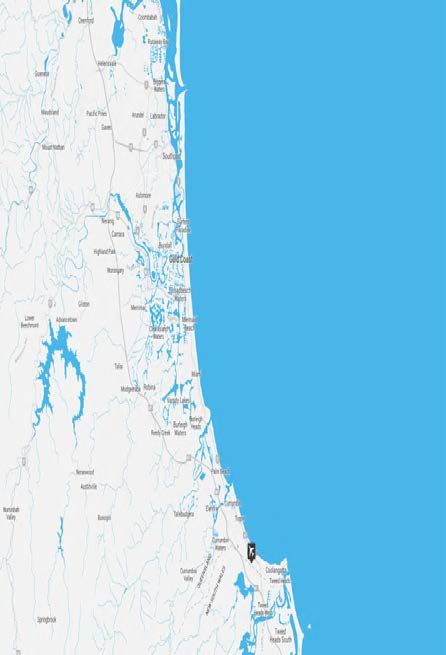
Figure 1.1: Location of Glidepath Footprint, Localiser Footprint and
Runway Strip Widening
LEGEND
WIDENING FOR 300m WIDE STRIP
PACIFIC OCEAN
TUGUN ILS INFRASTRUCTURE
AIRPORT BOUNDARY (COMMONWEALTH LAND
LEASED TO (GCAPL)
NSW STATE CROWN LAND
(LEASED TO GCAPL, LOT 1 IN DP 1092951)
NSW / QLD BORDER
LICENCE OVER LOT 112 IN DP1202048
14
GO
LD
CE
CO
NT
AS
RA
T
HI
LD
GH
W
RA
AY
INA
GE
R
ES
ER
VE
BILINGA
VE
GC
DRI
AIR
AL
PO
MIN
RT
TER
TE
RM
RU
INA
NW
L
AY
PA
CI
FIC
M
OT
OR
W
32
AY
(M
1)
NSW CROWN
LAND
TU
GU
N
BY
PA
SS
COBAKI BORADWATER
NSW CROWN
LAND
TWEED SOUTH
4 Gold Coast Airport | Major Development Plan
Figure 1.2: Schematic Layout of the Communications and Mains Power
System
LEGEND
PACIFIC OCEAN
GLIDEPATH GRADING AREA
TUGUN
LOCALISER FOOTPRINT
AIRPORT BOUNDARY (COMMONWEALTH LAND)
NSW STATE CROWN LAND
NSW / QLD BORDER
LICENCE OVER LOT 112 IN DP1202048
ELECTRICAL & COMMUNICATIONS TRENCH
14
GO COMMUNICATIONS TRENCH
LD
CE
CO
NT
AS
RA
T
HI
LD
GH
W
RA
AY
INA
GE
RE
SE
RV
E
BILINGA
VE
GC
DRI
AIR
AL
PO
MIN
RT
TER
TE
RM
RU
INA
NW
L
AY
PA
CI
FIC
M
OT
OR
W
32
AY
(M
1)
NSW CROWN
LAND
TU
GU
N
BY
PA
SS
COBAKI BORADWATER
NSW CROWN
LAND
TWEED SOUTH
Major Development Plan | Gold Coast Airport 5
Figure 1.3 Existing Approaches on Runway 14

                                                        R/DME
                                                   VO

                                                                NP
                                                            L/R
                                                           UA
                                                          VIS
                                                                     VIS
                                                                           UA
                                                                                L/R
                                                                                      NP

Map data © 2015 Google

Figure 1.4 ILS Approach on Runway 14

Map data © 2015 Google

6    Gold Coast Airport | Major Development Plan
1.3 Major Development Plan
The ILS project is considered to be a “major airport development” as defined in Section 89 of the Airports Act requiring a
MDP. The triggers from the Airports Act which define the ILS as a major airport development are:
(n) a development which affects an area identified as environmentally significant in the environment strategy; and
(na) a development of a kind that is likely to have a significant impact on the local or regional community.
1.4 Project Roles and Responsibilities
The “airport lessee company” under the Airports Act responsible for preparing and obtaining approval of the MDP is:
Gold Coast Airport Pty Ltd
Level 1, Airport Central, 1 Eastern Ave
Bilinga QLD 4225
Airservices is the Project Proponent and is responsible for obtaining the relevant statutory approvals (excluding the MDP)
for the ILS project. Other associated responsibilities of Airservices include;
→→ Design, approval and promulgation of the flight path;
→→ Installation, certification, operation and maintenance of the ILS.
1.5 Major Development Plan Structure
Chapter 2 of this document describes the development in detail. In Chapter 3 the statutory framework for the project is
outlined, having regard to federal, state and local legislation and policy. Chapter 4 describes the economic and regional
significance of the proposal. Chapter 5 details the environmental impacts of the proposed ILS development. Chapter
6 describes aircraft noise impacts associated with the flight path. Details of the proposed consultation process are
provided in Chapter 7.
This MDP addresses all of the required matters of Section 91 of the Airports Act as demonstrated in Table 1.1.
Major Development Plan | Gold Coast Airport 7Table 1.1: Major Development Plan Requirements
Section of this MDP
Act Ref Major Development Plan Requirement Matter is Addressed
91(1A) The purpose of a major development plan in relation to an airport is to
establish the details of a major airport development that:
(a) relates to the airport 3.3
(b) is consistent with the airport lease for the airport and the final Master 3.3 and 3.4
Plan for the airport
91(1)(a) The proponents objectives for the development 2.2
91(1)(b) The extent to which the development will meet the future needs of civil 2.4
aviation uses of the Airport and other users of the Airport
91(1)(c) A detailed outline of the development 2
91(1)(ca) Whether or not the development is consistent with the Airport’s lease for 3.3
the airport
91(1)(d) Whether or not the development is consistent with the final Master Plan 3.4
for Gold Coast Airport
91(1)(e) If the development could affect noise exposure levels at the airport and 6.2
the effect the development would have on noise exposure levels
91(1)(ea) If the development could affect flight paths at the airport— the effect that 6.1
the development would be likely to have on those flight paths
91(1)(f) The airport-lessee company’s plans, developed following consultations with 6.3
the airlines that use the airport, local government bodies in the vicinity of the
airport; and
91(1)(g) An outline of the approvals that the proponent has sought, is seeking or 3.6
proposes to seek under Division 5 or Part 12 in respect of elements of
the development
8 Gold Coast Airport | Major Development Plan91(1)(ga) The likely affect the development would have on:
Traffic flows at the airport and surrounding the airport 2.8.4
Employment levels at the airport 4
The local and regional economy and community, including an analysis N/A the proposal is not
of how the developments fit within the local planning schemes for for a commercial or
commercial and retail development in the adjacent area retail development
91(1)(h) An assessment of environmental impacts that might reasonably be 5
expected to be associated with the development
91(1)(j) The proponents plans for ameliorating or preventing identified 5
environmental impacts
91(1)(k) If the plan relates to a sensitive development—the exceptional N/A the proposal is
circumstances that the airport lessee company claims will justify the not for a sensitive
development of the sensitive development at the airport development
91(1)(l) Such other matters (if any) as are specified in the regulations N/A
91(4) The proponents plan must demonstrate the extent of the consistency 3
with planning schemes in force under a law of the state where the Airport
is location; and identity and justify any inconsistencies
91(6) In developing plans referred to in paragraph (l)(f), an airport lessee 6.2
company must have regard to Australian Standard AS 2021—2000
(“Acoustics—Aircraft noise intrusion—Building siting and construction”)
as in force or existing at that time
Major Development Plan | Gold Coast Airport 9You can also read


