10th Workshop on Evaluation and Usability of Programming Languages and Tools - Sarah Chasins Elena Glassman Joshua Sunshine - DROPS
←
→
Page content transcription
If your browser does not render page correctly, please read the page content below
10th Workshop on Evaluation
and Usability of Programming
Languages and Tools

PLATEAU 2019, October 24, 2019, New Orleans, Louisiana, USA

Edited by

Sarah Chasins
Elena Glassman
Joshua Sunshine

 O A S I c s – V o l . 76 – PLATEAU 2019       www.dagstuhl.de/oasics
Editors

Sarah Chasins
University of California, Berkeley, USA
schasins@berkeley.edu

Elena Glassman
Harvard University, Cambridge, USA
eglassman@g.harvard.edu

Joshua Sunshine
Carnegie-Mellon University, Pittsburgh, USA
sunshine@cs.cmu.edu

ACM Classification 2012
Human-centered computing → Human computer interaction (HCI); Software and its engineering →
General programming languages

ISBN 978-3-95977-135-1

Published online and open access by
Schloss Dagstuhl – Leibniz-Zentrum für Informatik GmbH, Dagstuhl Publishing, Saarbrücken/Wadern,
Germany. Online available at https://www.dagstuhl.de/dagpub/978-3-95977-135-1.

Publication date
March, 2020

Bibliographic information published by the Deutsche Nationalbibliothek
The Deutsche Nationalbibliothek lists this publication in the Deutsche Nationalbibliografie; detailed
bibliographic data are available in the Internet at https://portal.dnb.de.

License
This work is licensed under a Creative Commons Attribution 3.0 Unported license (CC-BY 3.0):
https://creativecommons.org/licenses/by/3.0/legalcode.
In brief, this license authorizes each and everybody to share (to copy, distribute and transmit) the work
under the following conditions, without impairing or restricting the authors’ moral rights:
    Attribution: The work must be attributed to its authors.

The copyright is retained by the corresponding authors.

Digital Object Identifier: 10.4230/OASIcs.PLATEAU.2019.0

ISBN 978-3-95977-135-1              ISSN 1868-8969                    https://www.dagstuhl.de/oasics
0:iii

OASIcs – OpenAccess Series in Informatics
OASIcs aims at a suitable publication venue to publish peer-reviewed collections of papers emerging from
a scientific event. OASIcs volumes are published according to the principle of Open Access, i.e., they are
available online and free of charge.

Editorial Board
   Daniel Cremers (TU München, Germany)
   Barbara Hammer (Universität Bielefeld, Germany)
   Marc Langheinrich (Università della Svizzera Italiana – Lugano, Switzerland)
   Dorothea Wagner (Editor-in-Chief, Karlsruher Institut für Technologie, Germany)

ISSN 1868-8969

https://www.dagstuhl.de/oasics

                                                                                                             P L AT E A U 2 0 1 9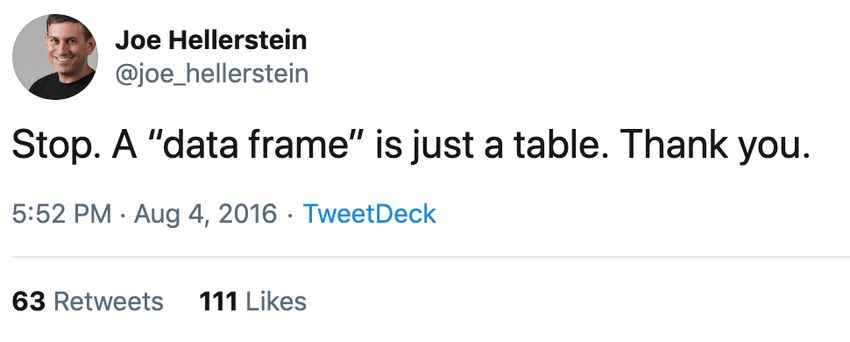
Contents

Preface
   Sarah Chasins, Elena Glassman, and Joshua Sunshine . . . . . . . . . . . . . . . . . . . . . . . . . . .                                                      0:vii

Regular Papers

Approaching Polyglot Programming: What Can We Learn from Bilingualism
Studies?
   Rebecca L. Hao and Elena L. Glassman . . . . . . . . . . . . . . . . . . . . . . . . . . . . . . . . . . . . . . . . . .                                    1:1–1:7
A Pilot Study of the Safety and Usability of the Obsidian Blockchain
Programming Language
   Gauri Kambhatla, Michael Coblenz, Reed Oei, Joshua Sunshine,
   Jonathan Aldrich, and Brad A. Myers . . . . . . . . . . . . . . . . . . . . . . . . . . . . . . . . . . . . . . . . . . .                                  2:1–2:11
Type-Directed Program Transformations for the Working Functional Programmer
  Justin Lubin and Ravi Chugh . . . . . . . . . . . . . . . . . . . . . . . . . . . . . . . . . . . . . . . . . . . . . . . . . . . .                         3:1–3:12
Designing Declarative Language Tutorials: A Guided and Individualized Approach
   Anael Kuperwajs Cohen, Wode Ni, and Joshua Sunshine . . . . . . . . . . . . . . . . . . . . . . . . .                                                       4:1–4:6
Human-Centric Program Synthesis
  Will Crichton . . . . . . . . . . . . . . . . . . . . . . . . . . . . . . . . . . . . . . . . . . . . . . . . . . . . . . . . . . . . . . . . . . . .        5:1–5:5
Is a Dataframe Just a Table?
   Yifan Wu . . . . . . . . . . . . . . . . . . . . . . . . . . . . . . . . . . . . . . . . . . . . . . . . . . . . . . . . . . . . . . . . . . . . . . . .   6:1–6:10
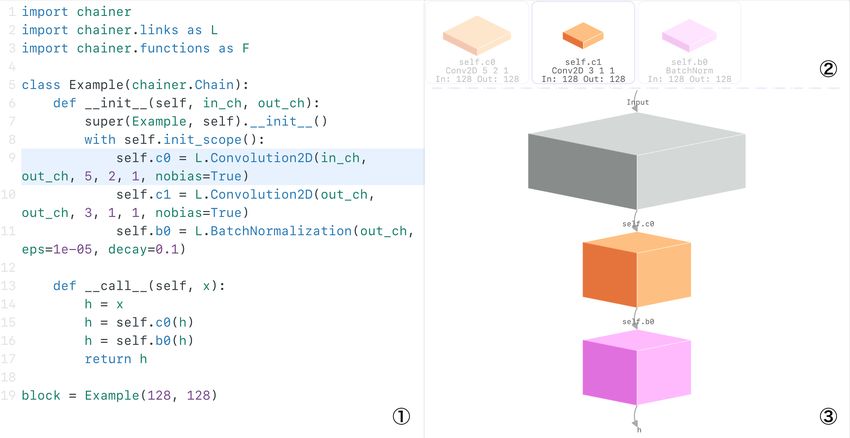
Live Programming Environment for Deep Learning with Instant and Editable
Neural Network Visualization
   Chunqi Zhao, Tsukasa Fukusato, Jun Kato, and Takeo Igarashi . . . . . . . . . . . . . . . . . .                                                             7:1–7:5

10th Workshop on Evaluation and Usability of Programming Languages and Tools (PLATEAU 2019).
Editors: Sarah Chasins, Elena Glassman, and Joshua Sunshine
                  OpenAccess Series in Informatics
                  Schloss Dagstuhl – Leibniz-Zentrum für Informatik, Dagstuhl Publishing, Germany
Preface
Programming languages exist to enable programmers to develop software effectively. But
programmer efficiency depends on the usability of the languages and tools with which they
develop software. The aim of the Workshop on Evaluation and Usability of Programming
Languages and Tools (PLATEAU) is to discuss methods, metrics, and techniques for evalu-
ating the usability of languages and language tools. The supposed benefits of such languages
and tools cover a large space, including making programs easier to read, write, and maintain;
allowing programmers to write more flexible and powerful programs; and restricting programs
to make them more safe and secure. The 10th Workshop on Evaluation and Usability of
Programming Languages and Tools (PLATEAU 2019) was held on October 24, 2019 in
New Orleans, Louisiana, USA, and collocated with UIST 2019. The workshop gathered the
intersection of researchers in the programming languages and human-computer interaction
communities to share their research and discuss the future of evaluation and usability of
programming languages.
It is our pleasure to present this year’s proceedings. Together, these papers demonstrate
the remarkable scope and applicability of the workshop, with topics that include software
development techniques, software evolution, programming by example, and empirical studies
in human-computer interaction. Our thanks go to the authors, reviewers, speakers, and
attendees, without whom this workshop would not have been possible.
Joshua Sunshine, Elena Glassman, and Sarah Chasins PLATEAU 2019 Co-Chairs
10th Workshop on Evaluation and Usability of Programming Languages and Tools (PLATEAU 2019).
Editors: Sarah Chasins, Elena Glassman, and Joshua Sunshine
OpenAccess Series in Informatics
Schloss Dagstuhl – Leibniz-Zentrum für Informatik, Dagstuhl Publishing, GermanyApproaching Polyglot Programming: What Can
We Learn from Bilingualism Studies?
Rebecca L. Hao
Department of Computer Science and Department of Linguistics, Harvard University,
Cambridge, MA, USA
rhao@college.harvard.edu
Elena L. Glassman
Department of Computer Science, Harvard University, Cambridge, MA, USA
glassman@seas.harvard.edu
Abstract
Today’s programmers often need to use multiple programming languages together, enough that this
practice has been given the name “polyglot programming.” However, not much is known about how
using multiple programming languages affects programmers, despite its increasing ubiquity. If we want
to better design programming languages and improve the productivity of programmers who program
in multiple programming languages, we should seek to understand the user in this context: we need
to better understand the impact that polyglot programming has on programmers. In this paper, we
pose several open research questions to begin to approach this question, drawing inspiration from
psycholinguistic studies of bilingualism, because despite the differences between natural languages
and programming languages, the questions considered in natural language bilingualism studies
are relevant to programming languages, and the existing findings may prove useful in guiding our
intuitions, methods, and priorities as we begin to explore this topic. In particular, we pay close
attention to the implications that code switching (switching between languages within a conversation)
and interferences (ways an unintended language may influence one’s use of an intended language)
may have on our understanding of how using programming languages may impact a programmer.
2012 ACM Subject Classification Human-centered computing → HCI design and evaluation meth-
ods; Software and its engineering → General programming languages
Keywords and phrases Programming languages, polyglot programming, bilingualism
Digital Object Identifier 10.4230/OASIcs.PLATEAU.2019.1
1 Introduction
Programmers today are often expected to use multiple programming languages at once,
engaging in polyglot programming. Perhaps they are developing for the web, and using some
mixture of HTML, CSS, Javascript, SQL, and others. They could be using a virtual platform
like JVM or .NET, using a number of programming languages and libraries together. Maybe
they require a more expressive, higher-level scripting language or domain specific language,
embedding it into a lower-level one with better run-time performance like C or C++. On a
project level, they could build separate programs and let them interact and send data to each
other using pipes, cross-compile one language into another, or use a language’s ability to
interface with other languages. Even within a single file, they may need to mix programming
languages [1].
The advantages of polyglot programming include the cost-effective ability to reuse code
already written in other languages, and using programming languages that are better suited
to one’s goals. After all, programming languages are not created equally – each has its
characteristics and strengths, and is more useful in certain domains and tasks than others.
Given the commonality of programmers writing code in multiple programming languages,
we think that it is important to know more about the impact that using multiple programming
© Rebecca L. Hao and Elena L. Glassman;
licensed under Creative Commons License CC-BY
10th Workshop on Evaluation and Usability of Programming Languages and Tools (PLATEAU 2019).
Editors: Sarah Chasins, Elena Glassman, and Joshua Sunshine; Article No. 1; pp. 1:1–1:7
OpenAccess Series in Informatics
Schloss Dagstuhl – Leibniz-Zentrum für Informatik, Dagstuhl Publishing, Germany1:2 Approaching Polyglot Programming
languages has on the programmer, and how the knowledge and use of multiple programming
languages affects the code the programmer writes. Intuitively, we may think that knowing
multiple programming languages strengthens one’s understanding of programming concepts,
or that switching between languages is difficult and may incur some cognitive cost, but how
well do these intuitions hold and how can we go about studying them?
Though programming languages and natural languages have their differences, there
are still a number of compelling parallels. One such parallel that is relevant to polyglot
programming is that there are many polyglots of natural language, who use different languages
in different domains. Similarly to programming languages, natural language speakers may
switch languages at multiple scales, a practice known as code-switching, substituting words
and phrases in one base language with those of another, or switching languages altogether
depending on who they are speaking to and in what context.
There have been a number of interesting findings in psycholinguistics, the study of the
relationship between linguistic behavior and psychological processes, that deal with the
learning, use, and switching of multiple languages [7, 8, 9]. In this paper, we examine how
psycholinguistic studies of natural language bilingualism may relate to that of programming
languages, and argue that a psycholinguistic lens of polyglot programming may be useful
towards guiding the questions that we ask, the priorities that we set, and the methodologies
that we use. We choose to focus specifically on the case of the use of multiple programming
languages, which involves code switching (switching between two language systems), and
the direct impact that knowledge of multiple programming languages has on programming.
However, this psycholinguistic lens may also prove to be useful in other polyglot programming
topics, including programming language learning and the effects that the knowledge of multiple
programming languages has on programming concept understanding.
In this way, by learning more about how programmers use and are affected by their use of
multiple programming languages, we can inform programming language design in the context
of its use with other languages, and also inform the practice of using multiple programming
languages, working towards increasing programmer productivity and efficiency.
2 Related work
2.1 HCI for programmers
HCI methods have already been used to examine programming languages and environments.
This work seeks to better use the knowledge, principles, and methods of human computer
interaction (HCI) in programming language design, showing that gathering data on and
considering programming language usability leads to better design [15, 17]. Similarly, we
seek to understand the impact of knowing and using multiple programming languages on
users: the programmers.
2.2 Related work in programming languages
Work in the psychology of programming and the HCI-based approach toward programming
language design has made major strides. For example, there are investigations of how a
programmer’s experience level impacts how they reason about, read, and/or debug programs
[6, 13, 21]. However, the question of polyglot programming is less thoroughly explored.
Most of the work that addresses multiple languages focuses on the learning and teaching
of programming languages. This work includes justifying and exploring the impact of using
specific languages (like Python or Java) in introductory computer science courses [10, 11],
and effective methodologies for learning subsequent languages [16, 19].R. L. Hao and E. L. Glassman 1:3
There is some literature surrounding the design of multi-language systems like .NET that
discuss ways to support polyglot programming and its design [14], but it does not focus on
the effects that these multi-language systems have on programmers and their productivity.
However, there is evidence that suggests that using multiple programming languages
within a project may result in decreases in code quality. Kochhar et al [12] investigated
the impact of multiple programming languages on software quality, applying a method of
looking into code quality across Github projects proposed by Ray et. al [18]. In this study,
Kochhar et al. looked for the effects of using different programming languages on the number
of bug fix commits in a dataset of popular projects from Github. They found that in general,
projects that used more programming languages were more bug-prone, especially for memory,
concurrency, and algorithmic bugs, and that specific languages like C++, Objective-C, and
Java were more bug-prone [12].
2.3 Related work in natural languages
Studies regarding natural language polyglots are more numerous. A central observation is
that bilinguals operate using different language modes: the monolingual speech mode and the
bilingual speech mode [8]. In the monolingual speech mode, the bilingual almost completely
deactivates one language, while in the bilingual speech mode, they choose a base language
but activate another language occasionally in the form of code-switching and borrowing [8].
This deactivation when a language is not in use involves prefrontal brain activity associated
with cognitive control [2]. This cognitive cost may be due to task switching, as it has been
shown that in word-reading and picture-naming, a greater time delay occurs after a task
switch than a task repetition [20].
However, there is a nuance to when this cognitive cost occurs that may be relevant: a
recent study suggests that deactivating a language requires cognitive control, while activating
a new language may not [4]. This study used magnetoencephalography (MEG), and found
that American Sign Language (ASL)-English bilinguals had increased brain activity in brain
areas involved in cognitive control (the anterior cingulate cortex and dorsolateral prefrontal
cortex) when deactivating a language, but not when activating one [4]. Additionally, because
certain ASL-English bilinguals can sign and speak simultaneously, they also found that
using both languages simultaneously did not necessarily incur a greater cognitive cost than
producing one language on its own [4].
Psycholinguistic studies have shown that even though it is not conscious or intentional,
code switching behavior is often rule-based: there are systematic patterns to how and when
speakers code switch. Speakers may code switch by substituting single words from one
language into a sentence with the grammar of the base language, or alternate between
languages on sentence boundaries [7].
It has also been found that infants demonstrate cognitive load through involuntary pupil
dilation and eye-tracking fixations when they listen to language switches. These effects,
however, were reduced when going in a non-dominant to dominant language direction, and
when switching languages when crossing sentence boundaries [5].
Additionally, even when in a monolingual speech mode and trying to speak one language
(La ), sometimes other languages that the bilingual knows (e.g. Lb ) influence their speech in
the form of interferences. This is known as cross-linguistic influence, and comes in the form
of static interferences or transfers, which are more permanent traces of Lb in La (like with
accents), and dynamic interferences, which are brief intrusions of Lb in La (like accidentally
stressing the wrong syllable or momentarily using a word or grammatical structure in the
other language). Static interferences are linked to a person’s competence in Lb , while dynamic
P L AT E A U 2 0 1 91:4 Approaching Polyglot Programming
interferences are more likely to occur when one is stressed, tired, or emotional. A language
that is more closely related to the intended language has been found to have more of an
influence on the intended language than one that is are more distant [9].
3 Open questions and potential approaches
We pose four guiding questions regarding the use of multiple programming languages that
are inspired by the hypotheses, methods, and work within the psycholinguistic study of
bilingualism.
1. How does knowledge of certain programming languages influence programming
in another language?
Is there cross-linguistic influence [9] between programming languages? Do programmers ever
accidentally use an unintended programming language syntax or concept while trying to
program in a specific programming language? This could occur on a number of levels, taking
on forms like: using a function word or symbol incorrectly in the desired language because of
that symbol’s use in another language, using an incorrect construct (e.g. for loop constructs
look and act differently between C and Python), and approaching a function or program
using logic that is clearly inspired by another language (e.g. trying a “Pythonic” way in a
language where it is less conventional, or not even possible).
This may be challenging to isolate and quantify especially in existing projects and code,
so studying programmers while they are programming may be of interest. We can observe
and look out for errors that programmers run into and corrections that they make as they
program, and their approaches to certain programming problems, paying particular attention
to what programming language, if any, these errors come from and approaches are inspired
by. This resembles the collection of linguistic data, which often involves utterances from
native speakers, which are then analyzed by linguists for patterns and structures. To better
understand the influences programming languages may have on each other, it may also
be useful to investigate how much programmers seek equivalences between languages, for
example, how often questions are asked about equivalent keywords or constructs from one
language to another on forums like Stack Overflow.
2. Are certain kinds of languages more prone to influencing other kinds?
From there, it also seems important to determine which languages influence and are influenced
by others, and if there are patterns in terms of the characteristics of the languages involved,
or in terms of the relationships between the languages. For example, do similar languages
influence each other more, as we find with natural language? Does knowledge of languages
that use certain paradigms (e.g. static versus dynamic, functional versus object-oriented)
have greater influence over the use of other programming languages?
In order to approach this question, we may need a more concrete way of describing a
programming language polyglot’s knowledge of their programming languages, since proficiency
is likely closely related to the ability for a certain language to influence another. Natural
language bilingualism studies have generally used two main factors to characterize bilinguals
– language proficiency and language use – and have used these two variables as axes in a
grid approach to map the language history of a polyglot [9]. In this approach, a language is
represented on this grid as a datapoint of proficiency and use, and multiple grids may be
used to show proficiency and use in specific domains, or across time. A similar approachR. L. Hao and E. L. Glassman 1:5
may prove useful for programming languages as well, because in this way we can investigate
the time course of programming language learning, and have an improved ability to study
how code quality and performance change with time, without requiring a study to be set
up around a specific computer science course and structured learning. However, this may
require that we determine what variables are relevant in programming language knowledge,
and what data we would like to and can collect from our participants.
3. How and when do programmers code switch?
As programmer “code switching” seems to occur at several distinct levels of granularity, it
may be useful to look into the occurrences of “code switching” at these different levels. An
example delineation of these levels could be: switching within a line, switching for each
line, switching at “logical blocks” of the code (e.g. where the author decided to stylistically
include a new line for readability), and switching between files. We could learn more about
the contexts in which code switching occurs in practice, to better understand the motivations
of why programmers code switch in the first place.
From there, we can then look at the impacts of code switching on programmers. It
may be useful to try out switching tasks inspired by psycholinguistic studies that, require
speakers to name images in different languages in a controlled manner, measuring reaction
time differences or neuroimaging studies [2]. The equivalent of having speakers name images
could be having programmers name constructs for short code snippets. Alternatively, to
study whether reading and understanding multilingual code incurs a cognitive cost, we could
present programs in different languages and observe eye tracking or pupil dilation to indicate
the presence of cognitive control.
4. What is the degree of cognitive control being exerted when switching between
programming languages? Are there cases where we can reduce the cognitive cost
of switching and thereby increase productivity?
Additionally, investigating programming in different languages using MEG may provide
information of whether switching programming languages has a similar effect on prefrontal
areas of cognitive control. This can be investigated when programming in a language-agnostic
way (e.g. writing pseudocode), or when activating and deactivating languages (e.g. writing a
program or code for a project that requires switching between programming languages).
Does the degree of cognitive control depend on the programmer’s proficiency in a language?
Is the cognitive cost higher in novices and lower in experts?
From there, inspired by natural language, we can investigate whether there are cases
where the effects of code switching are reduced. Like how the effect is reduced in natural
language when going from nondominant to dominant language and on sentence boundaries
[5], for programming languages, are effects reduced in certain directions, like going from
programming languages one is less familiar with to those one is more familiar with? Are effects
reduced more on boundaries of a certain granularity, like between “sentences”? Like how
cognitive cost is reduced in ASL-English bilinguals when using both languages simultaneously
[4], is there a difference between when trying to program exclusively in one language or when
actively harnessing knowledge from multiple languages simultaneously (e.g. pseudocode)?
P L AT E A U 2 0 1 91:6 Approaching Polyglot Programming
4 Conclusion
We have proposed several open questions and next steps for the study of polyglot programming,
inspired by findings and methodologies in natural language bilingualism. Even though
programming languages likely do not rely on the same language faculty attributed to natural
language and instead on different programming concepts, natural language bilingualism still
serves as a useful model to guide foundational decisions to more concretely approach polyglot
programming questions, and provide an intuition for possible phenomena related to the use
of multiple programming languages.
This approach may also be extended beyond the use of programming languages, to areas
like programming language learning and whether there are benefits of knowledge and use
of multiple programming languages. For example, does knowing more languages improve
your understanding of programming concepts? Bilingualism studies demonstrate a bilingual
advantage in non-linguistic tasks that require cognitive control [3] – is polyglot programming
beneficial to a programmer’s general programming skills?
With an improved understanding of the use of multiple programming languages, we may
be better equipped to design programming languages and tools given this growing polyglot
programming landscape and improve programmer efficiency and polyglot programming
workflows.
References
1 Why are multiple programming languages used in the development of one product or
piece of software?, April 2018. URL: https://softwareengineering.stackexchange.
com/questions/370135/why-are-multiple-programming-languages-used-in-the-
development-of-one-product-or.
2 Jubin Abutalebi and David W. Green. Control mechanisms in bilingual language production:
Neural evidence from language switching studies. Language and Cognitive Processes, 23(4):557–
582, 2008. doi:10.1080/01690960801920602.
3 Ellen Bialystok. Cognitive complexity and attentional control in the bilingual mind. Child
Development, 70(3):636–644, 1999. doi:10.1111/1467-8624.00046.
4 Esti Blanco-Elorrieta, Karen Emmorey, and Liina Pylkkänen. Language switching decomposed
through meg and evidence from bimodal bilinguals. Proceedings of the National Academy of
Sciences, 115:201809779, September 2018. doi:10.1073/pnas.1809779115.
5 Krista Byers-Heinlein, Elizabeth Morin-Lessard, and Casey Lew-Williams. Bilingual infants
control their languages as they listen. Proceedings of the National Academy of Sciences,
114:201703220, August 2017. doi:10.1073/pnas.1703220114.
6 Martha E. Crosby, Jean Scholtz, and Susan Wiedenbeck. The roles beacons play in compre-
hension for novice and expert programmers. In PPIG, 2002.
7 David W. Green and Li Wei. Code-switching and language control. Bilingualism: Language
and Cognition, 19(5):883–884, November 2016. doi:10.1017/S1366728916000018.
8 François Grosjean. The bilingual’s language modes. One mind, two languages: Bilingual
language processing, pages 1–22, 2001.
9 François Grosjean and Ping Li. The Psycholinguistics of Bilingualism. Wiley-Blackwell,
Chichester, 2013.
10 Said Hadjerrouit. Java as first programming language: a critical evaluation. SIGCSE Bulletin,
30:43–47, 1997.
11 Tony Jenkins. The first language - a case for python? Innovation in Teaching and Learning
in Information and Computer Sciences, 3(2):1–9, 2004. doi:10.11120/ital.2004.03020004.R. L. Hao and E. L. Glassman 1:7
12 Pavneet S. Kochhar, Dinusha Wijedasa, and David Lo. A large scale study of multiple
programming languages and code quality. In 2016 IEEE 23rd International Conference on
Software Analysis, Evolution, and Reengineering (SANER), volume 1, pages 563–573, March
2016. doi:10.1109/SANER.2016.112.
13 Yu-Tzu Lin, Cheng-Chih Wu, Ting-Yun Hou, Yu-Chih Lin, Fang-Ying Yang, and Chia-Hu
Chang. Tracking students’ cognitive processes during program debugging—an eye-movement
approach. IEEE Transactions on Education, 59(3):175–186, August 2016. doi:10.1109/TE.
2015.2487341.
14 Bertrand Meyer. Multi-language programming: how .NET does it. Software Development,
2002.
15 Jonathan Aldrich Michael Coblenz, Brad A. Myers, and Joshua Sunshine. Interdisciplinary
programming language design. In Proceedings of the 2018 ACM SIGPLAN International
Symposium on New Ideas, New Paradigms, and Reflections on Programming and Software,
Onward! 2018, pages 133–146, New York, NY, USA, 2018. ACM. doi:10.1145/3276954.
3276965.
16 Casey O’Brien, Max Goldman, and Robert C. Miller. Java tutor: Bootstrapping with python
to learn java. In Proceedings of the First ACM Conference on Learning @ Scale Conference,
L@S ’14, pages 185–186, New York, NY, USA, 2014. ACM. doi:10.1145/2556325.2567873.
17 John F. Pane, Brad A. Myers, and Leah B. Miller. Using hci techniques to design a more usable
programming system. In Proceedings IEEE 2002 Symposia on Human Centric Computing Lan-
guages and Environments, pages 198–206, September 2002. doi:10.1109/HCC.2002.1046372.
18 Baishakhi Ray, Daryl Posnett, Vladimir Filkov, and Premkumar Devanbu. A large scale
study of programming languages and code quality in github. Proc. FSE 2014, pages 155–165,
November 2014. doi:10.1145/2635868.2635922.
19 Karen P. Walker and Stephen R. Schach. Obstacles to learning a second programming
language: An empirical study. Computer Science Education, 7(1):1–20, 1996. doi:10.1080/
0899340960070101.
20 Florian Waszak, Bernhard Hommel, and Alan Allport. Task-switching and long-term priming:
Role of episodic stimulus–task bindings in task-shift costs. Cognitive Psychology, 46:361–413,
2003.
21 Susan Wiedenbeck. Beacons in computer program comprehension. International Journal of
Man-Machine Studies, 25(6):697–709, 1986. doi:10.1016/S0020-7373(86)80083-9.
P L AT E A U 2 0 1 9A Pilot Study of the Safety and Usability of the
Obsidian Blockchain Programming Language
Gauri Kambhatla
Electrical Engineering & Computer Science, University of Michigan, Ann Arbor, MI, US
Michael Coblenz
School of Computer Science, Carnegie Mellon University, Pittsburgh, PA, USA
Reed Oei
Department of Computer Science, University of Illinois, Urbana, IL, USA
Joshua Sunshine
School of Computer Science, Carnegie Mellon University, Pittsburgh, PA, USA
Jonathan Aldrich
School of Computer Science, Carnegie Mellon University, Pittsburgh, PA, USA
Brad A. Myers
School of Computer Science, Carnegie Mellon University, Pittsburgh, PA, USA
Abstract
Although blockchains have been proposed for building systems that execute critical transactions,
security vulnerabilities have plagued programs that are deployed on blockchain systems. The
programming language Obsidian was developed with the purpose of statically preventing some of the
more common of these security risks, specifically the loss of resources and improper manipulation of
objects. The question then is whether Obsidian’s novel features impact the usability of the language.
In this paper, we begin to evaluate Obsidian with respect to usability, and develop materials for a
quantitative user study through a sequence of pilot studies. Specifically, our goal was to assess a)
potential usability problems of Obsidian, b) the effectiveness of a tutorial for participants to learn
the language, and c) the design of programming tasks to evaluate performance using the language.
Our preliminary results tentatively suggest that the complexity of Obsidian’s features do not hinder
usability, although these results will be validated in the quantitative study. We also observed the
following factors as being important in a given programmer’s ability to learn Obsidian: a) integrating
very frequent opportunities for practice of the material – e.g., after less than a page of material at a
time, and b) previous programming experience and self-efficacy.
2012 ACM Subject Classification Software and its engineering → Domain specific languages; Human-
centered computing → User studies; Human-centered computing → Usability testing
Keywords and phrases smart contracts, programming language user study, language usability
Digital Object Identifier 10.4230/OASIcs.PLATEAU.2019.2
1 Introduction
Blockchains have a myriad of applications, including shipping, supply chain, auctions, storing
health records, and voting [8]. A blockchain is used when a central authority cannot be
trusted; instead of a singular ledger (as is used by an entity like the Federal Reserve), a
distributed ledger is used to keep track of transactions that are made, held accountable by the
users of the blockchain themselves. Smart contracts are programs that are deployed across
a blockchain network. Since blockchain technology is often used in potentially high-stakes
contexts, such as financial transactions, if a bug in a contract is exploited, it could involve
loss of important resources (like money or personal items). Some of the more common of
these security risks are (1) loss of resources and (2) manipulating objects at improper times.
Current status quo blockchain languages (such as Solidity) have no mechanism to prevent
such bugs.
© Gauri Kambhatla, Michael Coblenz, Reed Oei, Joshua Sunshine, Jonathan Aldrich, and Brad A.
Myers;
licensed under Creative Commons License CC-BY
10th Workshop on Evaluation and Usability of Programming Languages and Tools (PLATEAU 2019).
Editors: Sarah Chasins, Elena Glassman, and Joshua Sunshine; Article No. 2; pp. 2:1–2:11
OpenAccess Series in Informatics
Schloss Dagstuhl – Leibniz-Zentrum für Informatik, Dagstuhl Publishing, Germany2:2 A Usability Study of Obsidian
Obsidian is a programming language for writing smart contracts that is designed to
prevent these two issues; it uses both typestate and linear types to prevent such risks
statically [2]. In order to detect and prevent these vulnerabilities, Obsidian introduces the
concepts of ownership, assets, and states. Ownership is a property of references, rather
than the objects themselves. There are three types of references; Owned, Unowned, and
Shared. An object can have exactly one Owned reference, and any number of Unowned
references. It can have any number of Shared references, but only if there is no Owned
reference. Making an object an asset enables the compiler to prevent losing track of Owned
references. Assets, combined with permissions (the types of ownership references) allow
the compiler to detect the loss-of-resource security bug. Objects can also have states, and
certain transactions can only occur within a particular state. States help prevent improper
manipulation of objects; certain contracts might allow certain transactions only when in an
appropriate state. A contract is similar to a class in other object-oriented languages, with
corresponding transactions (analogous to methods) and fields (like member variables) [2].
Yet how do we know Obsidian is effective in accomplishing what it is designed to achieve?
Do users actually make fewer of these security mistakes in Obsidian than in other common
smart contract programming languages, such as Solidity? And how usable is Obsidian in
the long term, after programmers have mastered the language? In this paper, we focus on
beginning to answer these questions; we want to see whether the bugs that Obsidian detects
are ones we observe people inserting frequently in the laboratory. In addition, we want to
see whether the language is in fact usable, and how we can teach it to potential users.
We intend to run a user study where participants will learn either Solidity or Obsidian
through a tutorial, and then attempt a series of programming tasks that will test their
knowledge of the language. We will also assess the safety of the code they have will write. In
order to develop these programming tasks and the Obsidian tutorial, we first ran a series of
pilot studies. This paper describes the design and results of those pilot studies, addressing in
particular, the following research questions:
RQ1 What are the most significant usability problems with Obsidian?
RQ2 How should a tutorial be best authored to help one learn a language sufficiently well
to get to the point where usability can be evaluated?
RQ3 How do we design programming tasks that assess the ability to program effectively and
also potentially expose the types of bugs that our tool would detect or prevent?
The answers to these research questions, and what we learned from this study could also
be of interest to a broader audience; specifically, the initial findings we report in this paper
that could feed into future work are as follows:
A potential design of a method of teaching programmers to effectively learn an entirely
new language composed of complex features
Hypotheses on why some programmers are more effectively able to learn and utilize a
new programming language than others
Evidence that the additional features Obsidian introduces for security can actually be
effectively used by programmers
It is important to note the findings we present here through our pilot studies are not fully
validated; we plan to substantiate them in our follow-up quantitative user study.
2 Related Work
Designing programming tools and languages has been shown to be better when done with
a human-centered approach [4]. It is often inadequate to just use technical methods in
assessing properties of a language. For example, even if type soundness has been proven,G. Kambhatla, M. Coblenz, R. Oei, J. Sunshine, J. Aldrich, and B. A. Myers 2:3
the language might be too complex for a programmer to learn and use [3]. Programming
languages are interfaces between a human programmer and a computer to enable people to
effectively create programs, and as a result, should be tested and evaluated through user
studies with actual developers. Obsidian has been designed using such a human-centered
approach [1], and is similarly being evaluated through user studies.
There are differences in approaches to programming between novices and experts [6].
Novices generally lack detailed mental models of what they are doing, and approach program-
ming one line at a time, rather than as meaningful blocks [6]. On the other hand, experts
tend to be faster and more accurate, able to make use of a variety of effective strategies and
more vast knowledge base [6]. The participants in the pilot studies fall somewhere between
novice and expert, and their approach to programming may play a role in their success in the
tasks given to them. While knowledge is the ability to state how something works, strategies
are the ability to apply that knowledge. There are many different strategies programmers
use to comprehend programs, including systematic (tracing through all the code in detail),
as-needed (only looking at code related to the required task), and inquiry episodes (asking
a question, hypothesizing an answer, and verifying by looking at code, or compiling the
program), among others [7]. The programming strategy participants in our study use is a
variable that could influence how they learn Obsidian.
In addition, studies of novice programmers have shown that past experience is strongly pre-
dictive of self-efficacy, and that a strong mental model increases self-efficacy [5]. Ramalingam
et al. also found that both of these (self-efficacy and strong mental models) affect perform-
ance in an introductory class setting. Active learning helps develop these mental models;
it requires an individual to be active in constructing their own knowledge and finding new
ideas [9]. An active learning environment is beneficial to learning programming because it is
one that provides immediate feedback and engaged participation, which can help develop
mental constructions of programming concepts [9]. Although Obsidian is not being taught
to novice programmers in a course setting, self-efficacy and mental models might still play
roles in the ability to learn the language effectively, and teaching through active learning
might help participants pick up the language more successfully.
3 Study Design
In this work, we focused on designing the Obsidian condition for the quantitative user study.
Participants in our pilot studies were asked to do the Obsidian tutorial, and then some more
in-depth programming tasks, during which they were asked to think out loud. They were
told they could ask questions about anything they didn’t understand throughout the study;
the answers to these questions could then be incorporated in the next iteration of the tutorial
and tasks. This pilot study was approved by our IRB, and participants were paid $10/hour
for their time during the study.
We chose tasks with potential real blockchain use-cases for external validity; by approx-
imating code an actual smart contract programmer might write, we hope to be able to
generalize our conclusions to our proposed end applications of Obsidian. Each task had a
series of parts that tested different aspects of Obsidian, and are described below, along with
the design of the tutorial.
Obsidian Tutorial
The tutorial consisted of a Qualtrics survey with a few multiple choice, write-in answers, short
answer questions, and small programming questions. It was split into eight sections: four on
ownership, one on assets, and three on states. An early version of the tutorial had only four
P L AT E A U 2 0 1 92:4 A Usability Study of Obsidian
sections, but we subdivided it because of participant feedback of having too much information
at once with just a few sections. Participants completed programming questions in a separate
Visual Studio Code (VSCode) window, in which participants could compile their code to
confirm that they had complied with the type system’s requirements. Some of the short-
answer questions were purposefully open-ended, as in “Describe the relationship between
ownership and states in your own words.” The objective was to make the participant think
about, and thereby internalize, these concepts, rather than to evaluate their understanding.
Auction Task
The Auction task simulates an English auction; there are multiple Bidders who each make
a Bid for a single Item being sold by a Seller. The highest Bidder receives the Item for the
price of the highest Bid. However, unlike in a normal English auction, when a Bidder makes
a Bid, they give the Money to the Auction house immediately, and the Money is returned
to that Bidder if another Bidder makes a higher Bid. This requirement ensures that all bids
are legitimate, rather than allowing for a failure mode in which the sale cannot be completed
because a bidder does not pay for the item. A consequence is that the contract must return
the bid money every time a higher bid is made. If a participant forgot to do this, they would
lose a resource (the bid money), which the Obsidian compiler would detect.
The task included five parts. The most significant parts of this task were 3 and 4, which
allowed for a potential loss-of-resource bug. Part 3: Write code to return money to a Bidder
in the case that the bid is not greater than the current maximum bid. This part (whose
starter code is shown in Listing 1) was created to prime the participant for the next question,
so the participant is aware there is a way to return money to a Bidder. Part 4: Update
the current maximum bid (i.e., given that the new bid is greater than the previous, replace
the maxBid with the new one). Since Money is an asset, and a Bid contains Money, the
participant will not be able to simply do something like maxBid = newBid; the money
will have to be returned to the Bidder before overwriting maxBid, otherwise they will get
a compiler error in regards to overwriting an asset (losing a resource). This part (starter
code also shown in Listing 1) was meant to capture this potential pitfall. To implement this
correctly, a participant must return the Money to the Bidder and disown the Bid. They
could write code to do this or call a given function that does both these things.
Listing 1 Partial Starter Code for Auction Parts 3 & 4.
transaction makeBid(Auction @ Open this, Bid @ Owned >> Unowned newBid,
Bidder @ Unowned bidder) {
if (newBid.getAmount() > bid.getAmount()) {
setCurrentBid(newBid);
Bidder tempBidder = maxBidder;
maxBidder = bidder;
}
else {
//Part 3. TODO: return the newBid money to the bidder.
//You may call any other transactions as needed.
}
}
transaction setCurrentBid(Auction @ Open this, Bid @ Owned >> Unowned b) {
//Part 4. TODO: set the current bid to the new bid b.
//You may call any other transactions as needed.
}G. Kambhatla, M. Coblenz, R. Oei, J. Sunshine, J. Aldrich, and B. A. Myers 2:5
Pharmacy Task
The Pharmacy task simulates a pharmacy; there are Prescriptions, PrescriptionRecords
(which keep track of Prescriptions), and Patients (who have Prescriptions), as well as the
Pharmacy contract, which has a list of PrescriptionRecords. The goal of this task is to
have the participants utilize states to prevent improper use of the prescription; a Patient
can only fill a Prescription when they have additional refills. There were three parts to
this task; the third was most significant, which had a participant writing in lines of code
to fill a prescription. In this part (starter code shown in Listing 2), the participant must
take an element off a list, apply transactions to that object, and add it back to the list. It
assesses understanding of the code, and the ability to use the language to implement what
the participant wants to occur, as well as correct use of states.
Listing 2 Partial Starter Code for Pharmacy Part 3.
transaction fillPrescription(Prescription @ Unowned prescription) {
MaybeRecord maybeRecord = prescriptionList.removeIfExists(prescription);
// TODO Part 3: Fill in the rest of this transaction.
// You will need to call the doFill transaction in this
// class (Pharmacy) on the appropriate PharmacyPrescriptionRecord.
// Be sure to record that the prescription has been filled.
}
Gambling Tasks
The Gambling task simulates betting at a Casino; before every Game, Bettors place a
bet on the outcome of the Game. A set of restrictions and assumptions is given to the
participant, as well as a sequence diagram showing a potential timeline of possible events, and
structural diagram explaining how contracts relate to each other. This task is purposefully
more open-ended; the participant can design and implement the Casino contract however
they would like using Obsidian, but the program must comply with the given requirements.
The goal of this task was to see how the participants used what they learned about the
language to design their own program (and be able to implement it). Code for the other
contracts (Bettor, Money, etc.) is not shown here due to space constraints.
Listing 3 Partial Gambling Starter Code.
main asset contract Casino {
Money @ Owned money;
Game @ Owned currentGame; //The game that is currently being played
BetList @ Shared bets; //The bets for the current game being played
Casino @ Owned() {
money = new Money(100000);
currentGame = new Game();
bets = new BetList();
}
//TODO: Add your code here.
}
4 Initial Results
Since these studies were exploratory, serving as preparation for our evaluative user study,
we changed the tutorial and tasks after nearly every participant, based on the qualitative
results and participant feedback. We recruited six participants (three men, and three women),
P L AT E A U 2 0 1 92:6 A Usability Study of Obsidian
all of whom were undergraduates in computer science at different universities. Despite all
the participants being almost the same amount through their undergraduate career (they
were either rising Juniors or Seniors), there was a wide range of 3 - 9 years of previous
programming experience, and they all had a different CS education. All the participants were
familiar with Java to varying degrees (ranging from 1.5 to 8 years of experience), which was
a requirement for participation, since Obsidian is similar to Java. None of the participants
had any previous experience with blockchain programming. Each participant was given an
anonymous participant ID: R0, R1, etc.
Participants worked on a 15” MacBook Pro with a second monitor that displayed the
documentation pages and instructions for the tasks. We recorded screen and audio of each
session. The programming tasks were all done in VSCode, for which we created a plugin for
Obsidian syntax highlighting, and through which we ran the Obsidian compiler.
Some participants did not seem to understand and internalize the information given
in the tutorial despite reading it. For example, R2 said the idea of ownership made sense
theoretically, but not in application. This may be because R2 missed some key concepts,
like the fact that ownership is a property of a reference, not an object. In contrast, other
participants seemed to fully comprehend the material; R1, R3, and R5 got nearly all questions
correct. A summary of the tutorial results are shown in Table 1.
Table 1 Tutorial Results.
Participant Tutorial Version Questions Correct Time
R0 2 Parts, No questions N/A N/A
R1 4 Parts, all multiple-choice 19/19 35 min
R2 4 Parts, all multiple-choice 11/19 40 min
R3 8 Parts: multiple-choice, 20/22 (non-code), 8/8 (code) 1.25 hours
short answer, programming
R4 8 Parts: multiple-choice, 14/22 (non-code), 4/8 (code) 2.5 hours
short answer, programming
R5 8 Parts: multiple-choice, 20/22 (non-code), 8/8 (code) 53 min
short answer, programming
All the participants except R4 did the Auction task. They all had the most trouble
with part 4; neither R0 nor R2 was able to complete it. Every participant who did part 4
started by writing bid = newBid, which overwrote an owned reference to an asset; the
compiler generated an appropriate error message. Participants R1, R3, and R5 realized that
ownership of the original bid must be transferred first. R1 even said out loud after typing
this in, “Oh is bid an asset? Yes, it is an asset. Then this should fail.” After compiling the
code and confirming the failure, R1 made sure the original bid was transferred. R3 did the
same, but first returned the Money in the Bid to its Bidder. R5 was the only one that used
the given transaction returnBidMoney() (which gave the Money back to the Bidder and
disowned the current bid).
All the participants except R4 were given the Pharmacy task. R0 was able to complete
parts 1 and 2, but was unable to do any of the third part; the participant could not figure
out what to do, and was stopped by the experimenter due to time constraints. Participant
R2 did part 1 incorrectly, and part 2 correctly. R2 was unable to figure out the third part,
and stopped after a significant amount of trial and error due to time constraints. R2 was
asked by the experimenter to answer in pseudocode; the participant did this mostly correctlyG. Kambhatla, M. Coblenz, R. Oei, J. Sunshine, J. Aldrich, and B. A. Myers 2:7
(but forgot to check if the PrescriptionRecord actually existed). Participant R3 did the whole
task correctly, but forgot to append the PrescriptionRecord back on the list after consuming
a refill. Participants R1 and R5 did the entire task correctly.
Only R3 and R5 were given the Gambling task (it was created after R1, and both R2
and R4 could not take it because of time constraints). R3 took 1 hour to complete the task
and get the code to compile. Most of this time was spent on understanding the architecture
of the objects given, and the structure of the problem itself. Participant R5 took 36 minutes
to do this task and get the code to compile. In this version, the requirements were unchanged,
but the problem was made more clear, and there were fewer layers of abstraction. For R5,
an architectural diagram was added to show how objects are related (e.g., a Bet has a Bettor
and a BetPrediction), in addition to the sequence diagram (showing an example of potential
actions) given to R3. Both R3 and R5 successfully designed and implemented a program
that met all the requirements given in the specification. They made correct use of states and
permissions. R3’s program was 63 lines long, and R5’s was 56 lines long.
5 Discussion
A clear distinction can be drawn between the results of the different participants. Participants
R0, R2, and R4 struggled with the study (both the tutorial and the programming tasks),
while participants R1, R3, and R5 found the tutorial and tasks easy to understand. There
was almost no middle ground; one of the challenges in designing the tutorial and tasks
was that after one participant, it seemed the exercises were very difficult and needed to
be simplified, but after another, they seemed too simple. While R0, R2, and R4 needed
prompting and additional explanation, and still did not finish all the exercises, R1, R3,
and R5 easily completed the tutorial (including the programming exercises for R3 and R5).
These three participants were able to work through the programming tasks, write code in
the language, understand the compiler errors, and make fixes when necessary. They had
understood the new concepts they were taught; while working through the Pharmacy task,
R5 said “... and this takes an owned [reference] and makes it unowned...,” showing that the
participant grasped the idea of ownership. Both R1 and R3 also said similar things while
thinking out loud. On the other hand, R0, R2, and R4 got stuck; it was clear that although
they read through the tutorial, they did not fully understand the concepts. For example,
despite reading in the documents, answering questions about it in previous parts of the
tutorial, and given an explanation by the experimenter, R4 did not seem to understand how
state and permission transitions worked as types for a parameter in a transaction declaration.
Below are hypothesized explanations for the differences among participant performance:
General programming experience. The participants who struggled had an average of
3.2 years of programming experience; the others had an average of 7.5 years of experience.
One of the key observations we made during the pilot studies was that the participants
who struggled had the most trouble because upon getting an error, they would either
get stuck or start trying random solutions that neither made sense conceptually nor
syntactically. Participants who successfully completed the tutorial and tasks used a
variety of techniques to fix compiler errors. They had less trouble understanding the
compiler messages (most of the time, they knew what the problem was immediately),
and even if they did not, they used strategies to find a solution. These observations
suggest that the amount of past programming experience played a role in how effective
participants were in using the unfamiliar language.
P L AT E A U 2 0 1 92:8 A Usability Study of Obsidian
Object-oriented (OO) programming experience. The less effective participants
had an average of 2.2 years of Java experience, and the more effective ones had an average
of 5.3 years (familiarity with Java was a prerequisite to participating in this study).
Perhaps some concepts that are learned in OO classes, or learned through developing in
OO languages affects the way one learns other OO languages.
Teaching style. The tutorial was text- and exercise-based. Perhaps the participants
who struggled may have done better if the material had been taught in a video, or lecture
format, or in a more interactive way.
Type of programmer. Different programmers use different programming strategies (see
§2). Perhaps some of these strategies are more effective in learning or using Obsidian than
others. While there were systematic and opportunistic strategies used in the group that
was more effective, the ones who had more trouble only used an opportunistic approach.
Self-efficacy and interest. Self-efficacy appeared to play a role in how effective parti-
cipants were in using the language while completing the tasks. The effective participants
were very confident; they were not afraid to question the experimenter about things they
did not understand and things they thought were wrong in the tutorial or tasks. They
were also more relaxed; the participants who struggled seemed tense. It is difficult to
tell whether confidence entailed being effective in completing the tasks, or whether doing
well made participants more confident. In addition, lower self-efficacy might have played
a role in whether participants asked questions when they were confused, and thus how
well they performed. The effective participants also had a genuine interest in what they
were learning. They made noises of surprise or interest while reading the tutorial, saying
for example “Oh, that makes sense”, or “huh, that’s interesting.” In contrast, other
participants went through the study like taking an exam, or doing an assignment; they
were just doing exercises they were given. Perhaps having an interest in learning a new
language made participants more successful at completing the given exercises, or at least
created a more open mindset that might have allowed for faster debugging.
RQ1 asked about identifying potential usability problems with Obsidian. Multiple
participants mentioned things related to the environment; a few expected more precise
autocomplete (VSCode has a default autocomplete that lists any words used previously
in the window, which confused some participants), and one asked about in-place error
diagnostics (showing errors as one types). In addition, a few participants were confused
by some of the compiler errors. Two participants tried to add a permission or state to an
object they were creating, like g = new Game@FinishedPlaying(). The error message
was Error: '(' expected, but @ found, which they eventually figured out. R2
did not understand the compiler message variable is an owning reference to an
asset, so it cannot be overwritten at first, and when it was explained by the
experimenter, was unable to figure out how to resolve the problem. R5 was confused by the er-
ror message Can’t reassign to variables that are formal parameters or
which are used in a dynamic state check. R5 commented that even distin-
guishing between the two (whether a formal parameter or used in a dynamic state check)
might be more helpful. None of the participants had much feedback about the language
itself, although there was a general consensus that states were an easier concept to grasp
than ownership because they are more familiar.
RQ2, asked about how to design a language tutorial. Teaching any new programming
language is hard; teaching a new programming language that has more complex features
may be even harder. From our results, we learned a few things: (1) material that should be
read needs to be split into manageable sections, (2) simply giving people material to read isYou can also read


