16 Days of Activism against Gender-Based Violence Advocacy Toolkit - 25 November - 10 December 2018
←
→
Page content transcription
If your browser does not render page correctly, please read the page content below
16 Days of Activism
against Gender-Based
      Violence
  Advocacy Toolkit
25 November - 10 December 2018

        © Graduate Women International, 2018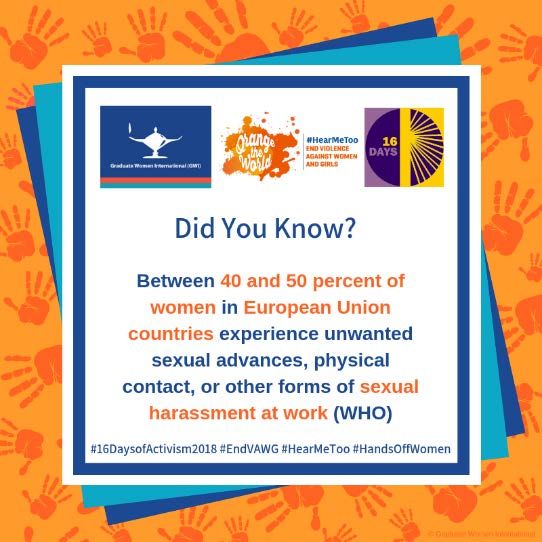
“GWI believes that as a civilization, we are at a critical moment in time when we must
   acknowledge, once and for all, that the safety of women girls is a cornerstone of a
sustainable society. We call on all men and women to strenuously reject all notions that
 tend to justify Gender-Based Violence, punish its perpetrators to the full extent of the
          law and advocate for strict laws where there are none”, Geeta Desai,
                      Graduate Women International, President.

                                        Foreword
  Beginning with the International Day for the Elimination of Violence against Women on 25
  November and ending with Human Rights Day on 10 December, the 16 Days of Activism against
  Gender-Based Violence (16 Days of Activism) is a widespread, annual movement for the
  international community to center its efforts on eliminating violence against women and girls
  around the world. Since 1991, the 16 Days of Activism have united the voices of millions of
  women and girls to raise awareness about Gender-Based Violence (GBV), eliminate it in all forms
  and demand equal protection for women and girls from GBV.

  The overarching themes of the 2016 and 2017 16 Days of Activism focused on raising awareness
  and calling for the elimination of GBV in education. Last year, the Campaign saw the coming
  together of more than 700 organisations in some 92 countries for the “Together We Can End
  GBV in Education!” Campaign. This year, the power of the 16 Days of Activism is moving towards
  a new, 2-year targeted global advocacy goal. Under the new overarching theme, “Together We
  Can End GBV in the World of Work!”, the Campaign calls for the elimination of all forms of GBV
  in the world of work including the adoption by the International Labour Organisation (ILO) at its
  June 2019 conference of a legally binding convention to end GBV in the world of work.

  Together We Can Eliminate GBV!
  The goal of this Graduate Women International (GWI) 16 Days of Activism toolkit is, alongside
  our National Federations and Associations (NFAs), to increase awareness about and advocate for
  the elimination of all forms of GBV in the world of work and beyond, through a united, worldwide
  voice. The primary action towards eliminating GBV is to draw attention to the frequency of GBV
  incidents and spread awareness about the issue; to see yourself and your NFA as agents of
  change towards the elimination of GBV, locally and globally. Underscoring that GBV destabilizes
  the safety, dignity, overall health condition, and human rights of the millions of women and girls
  who experience it. Advocacy campaigns such as this aim to build on previous year’s successes
  while highlighting the work that still needs to be done. GWI correspondingly celebrates this
  progress and the extraordinary women and girls around the world who have fought back against
  GBV. Included in this toolkit are many powerful, easy-to-use resources to assist you with an
  advocacy campaign of your own. The resources can be widely shared as support vehicles to
  spread the word about the need to address GBV. Together we can end GBV! No action is too
  small!

                                  © Graduate Women International, 2018
Table of Contents
1. Foreword
2. GWI stands strong against all forms of GBV
   2.1. What is GBV?
   2.2. Facts about GBV?
   2.3. GBV: What international regulations?
   2.4. GBV and the SDGs: What are the critical connections?
   2.5. GBV in the World of Work
3. Important dates to observe during the 16 Days of Activism
   3.1. November 25: International Day for the Elimination of Violence against Women
   3.2. December 3: International Day of Persons with Disabilities
   3.3. December 6: The Montreal Massacre
   3.4. December 9: International Anti-Corruption Day
   3.5. December 10: Human Rights Day
4. Join Us: Take Action against GBV!
   4.1. 16 Advocacy ideas for 16 Days of Activism
   4.2. Easy-to-share social media campaign
       4.2.1.      Comprehensive social media campaign and custom infographics
       4.2.2.      Facebook cover photo
       4.2.3.      16 Days of Activism Ready-Made Tweets
   4.3. Prewritten press releases for distribution to local media outlets
   4.4. GWI resolutions related to GBV
   4.5. Orange Your Community, Orange the World
   4.6. Participate in local events
   4.7. Suggested books and films for discussion
5. Together We Can Eliminate GBV Worldwide!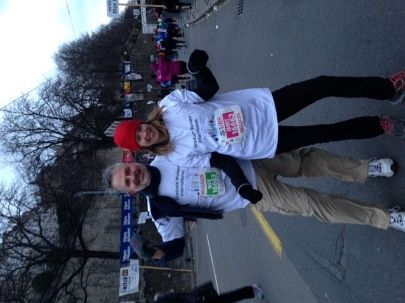
What is GBV?
The Convention on the Elimination of all Forms of Discrimination against Women (CEDAW)
defines GBV as “violence that is directed against a woman because she is a woman or that affects
women disproportionately.” More generally, GBV can be any act of violence that results in result
in, physical, sexual or psychological harm or suffering to women and girls, including threats of
such acts, coercion or arbitrary deprivation of liberty, whether occurring in public or in private
life.

All forms of GBV are direct human rights violations, heinous and immoral. As global citizenship
expands, cultures overlap resulting in varying and often conflicting ideals of what GBV is, and is
not. Although recognizing all forms of violence as human rights violations, GWI is principally
concerned about GBV as a specific type of violence
committed against women and girls that often emerges
as an expression of the power inequalities existing
between men and women in communities and cultures                 All forms of GBV are
around the world. GBV includes both direct violence                direct human rights
(i.e. sexual harassment/assault, human trafficking,                 violations, heinous
domestic violence, early and forced marriages, female
                                                                       and immoral.
genital mutilation (FGM)) and indirect violence (i.e.
institutionalized norms, attitudes and stereotypes that
perpetuate an unequal power dynamic between
gender). GBV is crosscutting with no boundaries for nation, culture, community, race, sexual
orientation or religion. GBV exists both in the private and public spheres and may be committed
against women by men or even fellow women. GBV is a form of discrimination against women
and is a fundamental human rights violation.

Unacceptably, on many occasions, girls are accused of or blamed for the violence they
experience. They are often held responsible for the consequences. In many communities, there
exists a general sentiment that girls who have experienced GBV have themselves caused the
violence, somehow provoking or enticing their attacker, and should have acted differently to
avoid the violence. This perception as victims of their own accountability is harmful to women
and girls, both because it prevents prosecution or punishment of the perpetrator(s) and because
it reduces the level of community support or assistance a girl receives as post-victims of GBV.
Additionally, according to an UNESCO study on GBV, this perceived blame reduces the likelihood
that girls will report instances of GBV due to fear of stigmatization, retribution or distrust by
those entrusted to protect them.

        GBV is crosscutting with no boundaries for nation, culture,
             community, race, sexual orientation or religion.

                               © Graduate Women International, 2018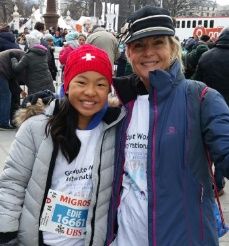
Facts About GBV
Below are facts and statistics about GBV. You may want to highlight these on your social media
and NFA webpage, perhaps through a daily “Did You Know” or trivia campaign.

   1. Between 40 and 50 percent of women in European Union countries experience
       unwanted sexual advances, physical contact or other forms of sexual harassment at work
       (World Health Organisation (WHO)) i.
   2. Early and forced marriage is a violation of women's rights. Almost 750 million women
       and girls alive today were married before their 18th birthday, and more than 20,000
       underage girls are illegally married every year (UNICEF) ii.
   3. An estimated one in three girls around the world will experience physical or sexual abuse
       or violence in her lifetime (United Nations Population Fund) iii.
   4. Women and girls account for 71% of human trafficking victims, with nearly three of every
       four trafficked for the purpose of sexual exploitation (United Nations (UN)) iv.
   5. At least 200 million women and girls alive today have undergone FGM, with most
       experiencing FGM before age of 5 (UNICEF) v.
   6. One in 10 women in the European Union report having experienced cyber-harassment
       since the age of 15 (including having received unwanted, offensive sexually explicit
       emails or SMS messages, or offensive, inappropriate advances on social networking
       sites). The risk is highest among young women between 18 and 29 years of age
       (UNWomen) vi.
   7. Eighty-two per cent of women parliamentarians who participated in a study conducted
       by the Inter-Parliamentary Union in 39 countries across five regions reported having
       experienced some form of psychological violence while serving their terms (Inter-
       Parliamentary Union) vii.
   8. According to a 2016 ActionAid Survey, 79% of women living in cities in India, 86% in
       Thailand, and 89% in Brazil have been subjected to harassment or violence in public, as
       had 75% of women in London, UK (ActionAid) viii.
   9. In a survey of 3,706 primary schoolchildren from Uganda, 24 per cent of 11 to 14-year-
       old girls with disabilities reported sexual violence at school, compared to 12 per cent of
       non-disabled girls (UNWomen) ix.
   10. At least 140 countries have passed laws on domestic violence, and 144 have laws on
       sexual harassment. Though laws exist, compliance and implementation of such
       international standards remains low. Still, 37 countries exempt rape perpetrators from
       prosecution when they are married to or subsequently marry the victim (World Bank
       Group) x.
   11. In Australia, Canada, Israel, South Africa and the United States, between 40 and 70 per
       cent of female murder victims are killed by their intimate partners (WHO) xi.
   12. Conservative estimates suggest that 20,000 to 50,000 women were raped during the
       1992-1995 war in Bosnia and Herzegovina, while approximately 250,000 to 500,000
       women and girls were targeted for rape in the 1994 Rwandan genocide (UNIFEM) xii.

                              © Graduate Women International, 2018
13. Approximately once every ten minutes, somewhere in the world, an adolescent girl dies
        as a result of violence (UNICEF) xiii.
    14. In a majority of countries with available data, less than 40 per cent of women and girls
        who experience GBV seek help of any sort. Of these, less than ten per cent seek help
        from the police (UNWomen) xiv.
    15. Around 120 million girls worldwide (slightly more than 1 in 10) have experienced forced
        intercourse or other forced sexual acts at some point in their lives. By far the most
        common perpetrators of sexual violence against girls are current or former husbands,
        partners or boyfriends (European Commission) xv.
    16. Women who have been physically or sexually abused by their partners are more than
        twice as likely to have an abortion, almost twice as likely to experience depression, and
        in some regions, 1.5 times more likely to acquire HIV, as compared to women who have
        not experienced partner violence (WHO) xvi.

       GBV: What international regulations?
Sometimes today, women’s rights as human rights are
taken for granted. The reality is that women’s rights
activists and women’s organisations from around the                   Violence against
world have worked for decades to secure the mere                     women and girls is
recognition of GBV and other violations as violations of
human rights under international law and not simply                      the result of
private acts outside of the purview of the State. Framing                 structural,
GBV against women as a human rights violation implied an                 deep-rooted
important conceptual shift. Laws meant recognizing that
                                                                    discrimination which
women are not exposed to violence by accident, or
because of an in-born vulnerability. Instead, violence is              the state has an
recognised as the result of structural, deep-rooted                 obligation to address.
discrimination which State’s have obligations to
prosecute. Preventing and addressing GBV against women
is, therefore, not a charitable act. It is a legal and moral
obligation requiring legislative, administrative and institutional measures and reforms and the
eradication of gender stereotypes which condone or perpetuate GBV against women and
underpin the structural inequality of women with men xvii.

This major breakthrough was achieved thanks to the active and relentless advocacy work
conducted by women organisations such as GWI over decades. Since the 1970s, international
women’s rights networks had been growing and expanding, facilitated in part by the UN World
Conferences on Women. The 16 Days of Activism were launched in 1991 by the Center for
Women’s Global Leadership with the goal of uniting women’s rights activists globally to call upon
the 1993 United Nations Convention on Human Rights held in Vienna to comprehensively
address women’s human rights and to recognize GBV as a human rights issue.

                               © Graduate Women International, 2018
In 1979 already, the United Nations General Assembly had adopted the Convention on the
Elimination of Discrimination against Women (CEDAW). In 1989, the Committee on the
Elimination of Discrimination against Women released General Recommendation 12 on Violence
against Women stating that CEDAW requires State parties to act to protect women against
violence of any kind occurring within the family, the workplace or in any other area of social life.
In 1992, the Committee released General Recommendation 19 on Violence against Women
which incorporates GBV into a framework of discrimination and human rights violations and
measures to combat them. Both recommendations reiterate a State’s responsibility to act with
due diligence in eliminating violence against women xviii.

The 1993 Vienna UN World Conference on Human Rights and the Vienna Declaration and
Programme for Action presented GBV as structural and universal. The Vienna Declaration also
called for the appointment of a Special Rapporteur on violence against women and contributed
to the 1993 Declaration on the Elimination of Violence against Women, adopted by the UN
General Assembly in December 1993. The Declaration is the first international instrument that
solely concerns violence against women. It defines violence against women and specifies that
the measures to end violence against women shall target the structures, contexts, and social and
cultural patterns which constitute the root causes of this type of violence. It further establishes
the relationship between intersecting inequalities and violence xix.

The Fourth UN World Conference on Women in 1995 produced the Beijing Declaration and
Platform for Action (BPfA) which comprises a set of 12 critical areas for achieving women’s
empowerment, including a commitment to combat violence against women, and was adopted
by 189 Member States. The Beijing Declaration shows the universal and particular nature of
violence against women. It also considers the fear of violence to be a permanent constraint on
the mobility of women, limiting their access to resources and basic activities. Furthermore, the
BPfA acknowledges additional barriers faced by women due to such factors as race, age,
language, ethnicity, culture, religion, disability, etc xx.

In 1999, the UN General Assembly adopted the Optional Protocol to the Convention on the
Elimination of All Forms of Discrimination against Women. The Optional Protocol created two
procedures to monitor compliance with CEDAW. First, it established a communications
procedure to enable women to submit claims of violations of CEDAW after exhausting domestic
remedies. Second, the Optional Protocol created an inquiry procedure allowing the Committee
to investigate situations of “grave or systematic violations” of women’s rights. Both procedures
can only be used in cases where the State is a party to the Convention and the Optional Protocol.
Currently, 104 countries are parties to the Optional Protocol xxi.

             1979:   Convention on the Elimination of All Forms of Discrimination Against Women
             1993:   Declaration on the Elimination of Violence Against Women
             1995:   Beijing Declaration and Platform for Action
             1999:   Optional Protocol to the Convention on the Elimination of All Forms of Discrimination
                i     W

                                    © Graduate Women International, 2018
Violence against women is also largely addressed through other mechanisms such as the
Universal Period Review (UPR) mechanism of the Human Rights Council (HRC) since its creation
in 2005 after the reform of the HRC. The UPR is a unique, volunteer process which involves a
review of the human rights records of all UN Member States. The UPR is a State-driven process,
under the auspices of the HRC which provides the opportunity for each State to declare what
actions they have taken to improve the human rights situations in their countries and to fulfil
their human rights obligations. The aim of this mechanism is to improve the human rights
situation in all countries and address human rights violations wherever they occur, including GBV
and all forms of violence and mistreatment against women and girls.

                             GBV and the SDGs?
On 25 September 2015, 193 countries across the globe united by adopting the 2030 Agenda for
Sustainable Development. This constituted the 17 Sustainable Development Goals (SDGs) that
aim to end poverty, protect the planet and ensure prosperity for all. The success of the SDGs is
multidimensional and participation at all levels from all sectors is key. Based on fundamental
rights yet, immersed in a world entrenched in complexity of globalisation, the SDGs success
heavily depends on the use of foresight which will provide the principles of understanding the
complexity of the SDGs. Foresight is key to implement and tactically influence policies based on
a thorough and informed approach as opposed to a set
of assumptions.

It is certain that the world will not achieve the SDGs,             Eliminating GBV is
particularly SDG5 on achieving gender equality and                 a priority, given that
empowering all women and girls, unless society                     this is one of the most
“dramatically” increases its efforts to end all forms of
GBV. Eliminating GBV is a priority, given that this is one
                                                                      pervasive human
of the most pervasive human rights violations in the                 rights violations in
world today. Based on data from 87 countries, one in                   the world today.
five women and girls under the age of 50 have
experienced physical and/or sexual violence by an
intimate partner within the last 12 months. Harmful
practices, such as child marriage, steal the childhood of 15 million girls under age 18 every year xxii.

GWI underscores that education is the success pillar of the SDGs and younger generations
gaining equal access to education is key to empowering them to contribute the 2030 Agenda.
We highlight problems that can arise from GBV within GWI Resolution 1 on Bullying and Cyber-
Bullying; Resolution 2 on Disability; Resolution 4 on Harassment; Resolution 7 on Trafficking; and
Resolution 8 on Child Marriage. GWI also highlights the importance of recognizing that women
and girls are at a disproportionate risk of being victim of GBV and suffer the consequences
throughout their lives.

The 16 Days of Activism against GBV Campaign serves as a reminder to focus attention on the
global extent of GBV and the action and efforts needed to eliminate it. Thus, it is vital to consider
the links between GBV and the SDGs.

                                 © Graduate Women International, 2018
One-third of women worldwide - or nearly 1 billion women - have or will
experience intimate partner violence or non-partner sexual violence in
their lifetime. This is equivalent to the population of Africa. GBV is not
only a tremendously difficult social issue: it also has very tragic
economic consequences. Women and girls who are victims of GBV are
less likely to have access educational and employment opportunities,
thus too often constraining them in a vicious circle of insecurity,
precariousness and poverty.

Acts of violence against women aged 15 to 44 are the cause of more
death and disability than cancer, malaria, traffic accidents and war
combined. But ending violence against women is more than a right for
the millions affected worldwide; it is a crucial step towards ending world
hunger. GBV impedes women from fully participating in food
production: yet, if women farmers had the same access to resources as
men, the number of hungry people in the world could be reduced by
some 150 million.

Physical injuries are some of the more visible, and at times most deadly,
consequences of GBV. But the long-term mental health consequences
are often invisible and left untreated. Similarly, the reproductive and
sexual health needs of survivors of sexual violence – to reduce the risk
of HIV and sexually transmitted infections, unwanted pregnancies and
unsafe terminations - are often unmet, stigmatized and under-
reported xxiii. Eradicating GBV will directly influence the success and
positively contribute towards SDG3, good health, and well-being for all.

GBV is a direct barrier to girls’ education. GBV causes girls emotional
distress and feelings of insecurity and danger in their educational
settings and, consequentially, forces loss of focus on their academics
and increases attrition. Access to quality education is a fundamental
human right, and eliminating all forms GBV will contribute to the
promotion of women’s human rights and enjoyment of life.

Based on data from 87 countries, one in five women and girls under the
age of 50 have experience physical and/or sexual violence by an
intimate partner within the last 12 months. Harmful practices, such as
child marriage, steal the childhood of 15 million girls under age 18 every
year. Eliminating GBV is a priority, given that this is one of the most
pervasive human rights violations in the world today.

© Graduate Women International, 2018
In both urban and rural contexts, without safe and accessible to sanitary
facilities and drinking water, women and girls may have to walk long
distances to collect water. Walking to remote locations or using WaSH
(Water, Sanitation, Hygiene) facilities after dark puts women and girls
at risk of multiple forms of GBV, including harassment, sexual assault,
rape and trafficking.

Today, women hold only 20-24 percent of jobs in the renewable energy
sector. Efforts to ensure women reap the benefits of the green economy
must come earlier in life as increased investments in their access to
quality education as girls and as conscious efforts to eliminate all forms
of GBV and discrimination against women and girls in all spheres of
society, including in male-dominated workplaces.

Eradicating GBV translates into economic and development gains.
Incomplete or inadequate education manifests itself in reduced future
productivity. According to the World Bank xxiv, GBV has dire economic
consequences, costing an estimated 1.2%-3.7% of GDP in some
countries due to lost productivity, equivalent to the average spending
of low and middle-income countries on primary education.

Gender inclusion and diversity benefit greatly innovation-driven
economies like the global technology market. Companies with more
diverse workforces perform better financially. According to analyses,
companies ranking in the top 25% in terms of diversity are more likely
to outperform the median financial returns of their industries.
Eliminating GBV in the work force pays off.

GBV is both a cause and a consequence of inequalities. Often, GBV is
reinforced by discriminatory laws and exclusionary social norms that
undermine women and girl’s opportunities for education and income.
GBV accompanies shifting power relations within households and
communities, especially when there is resentment against women who
move away from conventional roles. To break the GBV cycle, policy
interventions should focus on the longer-term by changing
discriminatory social norms that fuel inequalities.

© Graduate Women International, 2018
According to a 2016 ActionAid Survey, 79% of women living in cities in
India, 86% in Thailand, and 89% in Brazil have been subjected to
harassment or violence in public, as had 75% of women in London, UK.
Achieving SDG11 by building sustainable cities and communities
includes ensuring that all women and girls can live freely in safe cities
and safe public spaces.

Producing and consuming in unsustainable ways drives climate change
and destructs the environment. By eliminating GBV in the education,
the world of work and public life, societies empower women to
participate in key decision making to safeguard the sustainability of
their entire population and develop responsible modes of consumption
and production.

During and after disasters, women are at greater risk of GBV, including
rape, sexual exploitation, and assault. Communities, humanitarian
actors and key service providers must ensure essential measures are
taken, in line with global standards, to provide a comprehensive
protection response for women and girls during and after disasters.

The protection of oceans and the lives that depend on it will require
international scientific partnerships and enhancement of critical
research. In this urgent endeavor, the crucial contribution and potential
of women scientists must be facilitated by ensuring that GBV and
discrimination does not prevent them from pursuing their studies and
academic career.

The sustainable use of ecosystems will benefit women and girls living in
the areas most affected by damaged ecosystems as they are more likely
to be affected by droughts and food insecurity caused by the impacts of
land degradation. Without the risk of GBV, women, and indigenous
women in particular, can fully participate in decision-making and
scientific research on ecosystem use at all levels, as essential players in
preserving our planet.

© Graduate Women International, 2018
In both developing and developed countries, institutions continue to
                                 fail women and girls, especially through impunity for GBV. This
                                 repudiates the reality that many women are victims of intentional
                                 homicide at the hands of an intimate partner or family member. All
                                 women are entitled to fair, effective access to justice and essential
                                 services under SDG16.

                                 GBV is amalgamated in all 17 SDGs. Collaboration and partnerships are
                                 key factors for the successful implementation of the 2030 Agenda.
                                 Institutions, private and public, and States must embrace the benefit of
                                 working together with NGOs and civil society in order to achieve the
                                 SDGs and meet the 2030 Agenda.

            2018 GBV in the World of Work?
There can be no decent work with violence at work. Whilst both women and men are susceptible
to experience violence and harassment in the world of work, unequal status and gender power
relations permeating through society and at work often result in women being far more exposed
to violence and harassment. According to the WHO, 35 per cent of women – 818 million women
globally – over the age of 15 have experienced sexual or physical violence at home, in their
communities or in the work place. Violence against women can severely jeopardize women’s
economic and social position and have significant impact on their physical and mental health xxv.

                                        GWI is gravely concerned that GBV remains one of the
                                        most tolerated violations of workers’ human rights as
     GWI reaffirms concern              there is still no law at the international level that sets a
    that GBV remains one of             clear baseline for taking action to eradicate GBV in the
        the most tolerated              world of work. Various organisations, including trade
                                        unions and NGOs have been lobbying for an International
      violations of workers’
                                        Labour Organisation (ILO) Convention on GBV for many
    human rights as there is            years. As ILO is gearing up towards this monumental
       today no law at the              breakthrough, now is more than ever the time to unite
     international level that           our voices and actively call for the adoption of new,
     sets a clear baseline for          legally-binding international standards to eliminate GBV
         taking action to               in the world of work xxvi.
      eradicate GBV in the
          world of work.              In 2015, the ILO – the only tripartite UN agency with
                                      government, employer, and worker representatives —
                                      decided to launch a standard-setting process on
harassment and violence against women and men in the world of work, followed by a Meeting
of Experts on violence against women and men xxvii.

                               © Graduate Women International, 2018
In June 2018, the ILO began a series of discussions on a potential new ILO instrument on violence
and harassment in the world of work at the International Labour Conference, in a Committee
composed of representatives from governments, employers, and worker unions. xxviii
In June 2019, the ILO Committee will meet again to decide on what form the instrument will
take: a legally binding convention, a non-legally binding recommendation, or a convention
supplemented by a recommendation. GWI urges the ILO to adopt the strongest possible
instrument — a legally-binding Convention supplemented by a recommendation. We are calling
for an explicit and clear focus on GBV. The Convention should also include specific guidance for
governments, employers, and trade unions to identify and address the discriminatory behaviors
and unequal power relations that lie at the root of GBV. xxix
Important Day to Observe During the
16 Days of Activism Campaign
Amongst the numerous Days of Observance highlighted and observed by the international
community under the guidance of the UN, several notable days occur during the 16 Days of
Activism. Whilst these days have not been created precisely in relation to the Campaign, the
coincidence between these days and the GWI awareness raising campaign against all forms of
GBV provides us with the opportunity to think about the crucial interrelation between any
important topic and GBV. You may want to highlight these days within your NFA activities or on
your social media accounts:
25 November – International Day for the Elimination of Violence
against Women
The kickoff to the 16 Days of Activism, this day was chosen to commemorate the assassination
of the Mirabal sisters in 1960. Born and raised in the Dominican Republic, “Las Mariposas” (“the
Butterflies”) were outspoken political activists and visible resistors to then-dictator Rafael
Trujillo’s reign. The Mirabal sisters were murdered by Trujillo’s secret police, a tragedy that
shocked the nation and contributed to the fall of Trujillo just a year later. Since their death, Las
Mariposas have become symbols of the feminist movement, and their legacy lives on in the
women and girls around the world who continue to fight for equality and stand up for what is
right. Popular hashtags: #ViolenceAgainstWomen , #StopVAW
Women's rights activists have observed 25 November as a day against GBV since 1981. On 20
December 1993, the UN General Assembly adopted the Declaration on the Elimination of
Violence against Women through resolution 48/104, paving the path towards eradicating
violence against women and girls worldwide.
© Graduate Women International, 2018Finally, on 7 February 2000, the General Assembly adopted resolution 54/134, officially
designating 25 November as the International day for the Elimination of Violence Against
Women and in doing so, inviting governments, international organisations as well as NGOs to
join together and organize activities designed to raise public awareness of the issue every year
on that date xxx.
On International Day for the Elimination of Violence against Women, GWI issued
a press release supporting ILO's efforts towards the establishment of legally-
binding international standards to eliminate GBV in the world of work. The press
release can be downloaded and shared with your NFA members, network and
community here.
3 December – International Day of Persons with Disabilities
The annual observance of this day aims to promote the rights and well-being of persons with
disabilities in all spheres of society and development. All women and girls, regardless of level of
ability, have a fundamental right to quality education. However, girls with disabilities face unique
challenges and obstacles on the quest for education, and this day is used to increase the
awareness of their needs. This year's theme focuses on empowering disabled persons for a more
equitable future as part of the 2030 Agenda for Sustainable Development. Popular hashtag:
#idpwd
On International Day of Persons with Disabilities, GWI issued a press release
calling for the establishment of barrier-free learning environments for all disabled
women and girls. GWI further recognizes disabled women and girls as both
beneficiaries and agents of change towards the achievement of the 17 SDGs. The
press release can be downloaded and shared with your NFA members, network
and community here.
6 December – The Montreal Massacre
On this day in 1989, 25-year-old Marc Lépine, armed with a rifle and a hunting knife, walked into
an engineering classroom at the École Polytechnique at the Université de Montréal, ordered the
male students to leave the room, and proceeded to shoot the nine remaining female students,
killing six of them before continuing his rampage. At the end of the horrific ordeal, fourteen
women had been murdered and fourteen others were injured – including four men – before the
gunmen committed suicide. In his suicide note, which also included a list of 19 other feminist
Quebec women he wished to kill, the gunman blamed feminists for ruining his life, claiming the
female engineering students had no business being there because they were taking the place of
men. Since then, the massacre has been defined as an anti-feminist attack representative of
wider societal violence against women.
© Graduate Women International, 2018In Canada, 6 December is now the National Day of Remembrance and Action on Violence Against
Women. On this day, the world remembers the fourteen women killed, simply for being women.
reflect on the phenomenon of violence against women in our society. It is also an opportunity to
consider the women and girls for whom violence is a daily reality, and to remember those who
have died as a result of GBV. And finally, it is a day on which communities can consider concrete
actions to eliminate all forms of violence against women and girls. xxxiPopular hashtags:
#Montreal Massacre, #IRememberDec6, #Rememberthe14
9 December – International Anti-Corruption Day
Fighting corruption is a global concern because corruption is found in both rich and poor
countries, and evidence shows that it hurts poor people disproportionately. It contributes to
instability, poverty and is a dominant factor driving fragile countries towards state failure. It also
has grave and far-reaching consequences on women’s and girls’ fundamental rights, including
their right to quality education. Governments, the private sector, NGOs, media and citizens
around the world are joining forces to fight this crime. The United Nations Development
Programme and the United Nations Office on Drugs and Crime are at the forefront of these
efforts xxxii.
There are forms of corruption that affect women and girls more specifically, such
as sexual and GBV that are among the most widespread, monstrous and least
prosecuted of all gender-based corruption. In our press release marking the day,
GWI encourages public leaders to create local alliances with women’s NGOs
whose members can serve as listening and action partners for victims. The press
release can be downloaded and shared with your NFA members, network and
community here.
10 December – Human Rights Day
The conclusion of the 16 Days of Activism, this day celebrates the anniversary of the 1948
adoption of the Universal Declaration of Human Rights (UNHR). Along with the two International
Covenants on Human Rights, the Declaration sets out the civil, political, cultural, economic and
social rights that all human beings inherently possess. Proclaimed as a “common standard of
achievement for all peoples and all nations”, the Declaration has inspired more than 60 human
rights instruments constituting an international standard of human rights. The day offers an
opportunity for a renewed commitment to the promotion of human rights around the world,
and, with safe access to education for girls being a fundamental human right, is a emotional way
to end the Campaign.
© Graduate Women International, 2018As GWI prepares to celebrate another important milestone with its centenary in
2019, we uphold the UDHR as an unfailing source of inspiration in our mission to
empower all women and girls to demand what should be guaranteed: their
human rights. On this significant day, GWI reaffirms its commitment to
protecting and fostering the human rights principles the UDHR established. The
press release marking Human Rights Day can be downloaded and shared with
your NFA members, network and community here.
Join Us and Take Action against GBV !
16 Advocacy Ideas for 16 Days of Activism
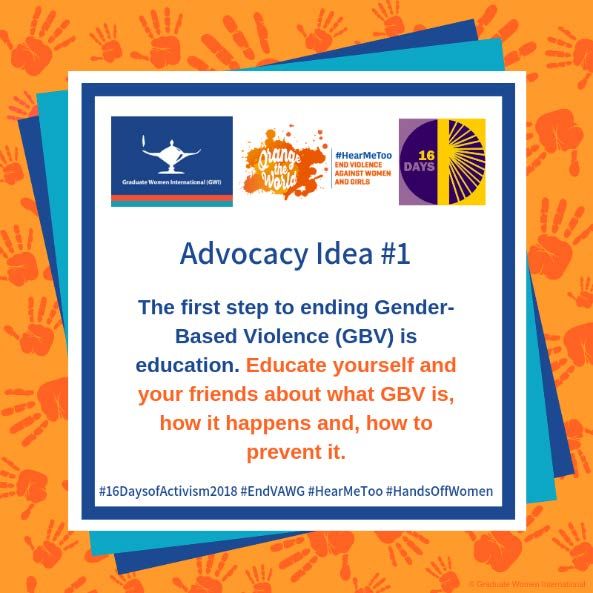
1. The first step to ending GBV is education. Educate yourself and your friends about what GBV is,
how it happens and how to prevent it.
2. Beginning with this GWI campaign, commit to standing up against instances of gender
discrimination or violence you see in your daily life.
3. Between 40 and 50 per cent of women experience unwanted sexual advances, physical contact
or other forms of sexual harassment at work. Organise a discussion at work to raise awareness
about the far-reaching detrimental effects of GBV in the world of work and discuss how to better
eliminate it among both men and women.
4. Form working groups whose aim is to influence the creation and enforcement of local laws
protecting women from varying forms of GBV, including rape, beatings, verbal abuse, mutilation,
“honor killings”, child marriages, and trafficking.
5. Art in multiple forms has the power to move people and creative portrayals of GBV can help raise
community awareness that it is a problem. Organise an art exhibition in your community to open
multilogues on the various forms of GBV and create ideas to stop GBV in your area.
6. Brainstorm with colleagues and members the underlying issues to the central concern of GBV in
your area (i.e. societal norms surrounding the use of violence, gender norms surrounding what
women and men are supposed to do) and ways to address the problem at its source.
7. Lead by example. In your circle of friends and colleagues create a culture that rejects violence as
a way to deal with problems. Develop and share with community leaders a plan to speak out
against GBV.
8. Acquaint yourself with the specific needs of survivors of GBV and contribute to local support
groups.
9. Encourage the equal voices of women in politics and positions of power, to promote peaceful
resolution of disputes by including female perspectives.
© Graduate Women International, 201810. Utilize your Twitter, Facebook, and other social media sites to inform your friends and network
about the issue of GBV; encourage LIKES, SHARES and FOLLOWS.
11. Be familiar with contact details of a nearby women’s shelter. You never know who might need
refuge in a hurry. Keep numbers to local shelters in your phone.
12. As a relative or friend, re-think whether children’s toys need to be divided into “boys’ toys” and
“girls’ toys”. More flexible ideas of gender, instead of rigid stereotypes, will help to create
better foundations for safety and respect and help end GBV.
13. Build a coalition of girls’ education and gender equality champions by engaging or partnering
with local community organisations and businesses to end GBV in all spheres of life.
14. Advocate for the strengthening of GBV reporting and response mechanisms with your local
media.
15. Get the word out. Assist a local shelter or domestic violence organisation in their efforts to raise
awareness in your community. Or use your personal connections to start a grassroots
campaign.
16. Volunteer in youth programs. Become a mentor. Get involved in programs that teach young
people to solve problems without violence. Get involved with programs that teach teens about
healthy relationships and healthy masculinity and femininity.
Social Media
Follow and Share our 16 Days of Activism Social Media Posts and Custom Infographics!
Every year, GWI prepares a comprehensive 16 Days of Activism Social Media Campaign to mark
its strong commitment towards ending all forms of GBV. We will be very active all through the
16 Days of Activism with three posts a day on Facebook, Twitter and LinkedIn that include 1) a
fact; 2) an article; 3) an advocacy idea.
This year, we have enhanced our campaign with a brand-new campaign, to include unique and
colourful infographics to share facts and advocacy ideas. Plan to FOLLOW and SHARE our daily
posts on your NFA Facebook or Twitter Page as well as with your friends and personal networks!
You will find eye-catching and interesting posts every day like these examples:
© Graduate Women International, 2018GWI has created a Facebook cover image that can be placed on your NFA and personal Facebook
pages for the duration of the 16 Days of Activism to spread awareness about GBV and the efforts
to end it. The cover image can be easily saved directly from this toolkit or copied directly from
the GWI Facebook page. Facebook you will find the image under the Photos section. Why not
LIKE and SHARE the GWI Facebook page while you are there?
16 Days of Activism Tweets
Popular hashtags: #humanrightsday, #Standup4HumanRights
1. Violence is never the answer. GWI stands against GBV!
2. #GBV remains one of the most tolerated violations of workers’ human rights GWI says
#NoMoreGBV
3. No education, no progress! Align with GWI to end GBV in education.
4. Together with you, GWI strives to end GBV in the world of work!
5. GWI Caroline Spurgeon Centenary fellowship will further gender equality and help
eliminate #GBV.
6. To #EndGBV, Speak up against messages that say that violence against women is OK.
#NOMOREGBV
7. GWI celebrates all of the #endGBV supporters. Where are the rest of you?
8. Break the silence on violence against indigenous girls, adolescence and young women.
GWI SPEAKS OUT TODAY!
9. Disabled women and girls suffer #GBV disproportionately. GWI hears their voice!
10. GWI encourages more female police officers as means to end #GBV. Join us!
11. GWI stands with female media to raise powerful voices against #GBV.
12. Early and forced child marriage is GBV. GWI unites to eliminate #childmarriage.
13. GWI stands against #GBV and macho violence.
14. Real men and boys don’t need to use violence to make themselves feel powerful. End
#GBV.
15. Societal privilege does not protect women and girls from #GBV; it knows no
boundaries.
16. School-related GBV is preventable with the right teachers. Support GWI Teachers for
Rural Futures program.
© Graduate Women International, 2018Share our press releases with local media outlets
Local media sources are some of the most powerful advocacy tools – let’s engage them. GWI
offers in this campaign three press four press releases for:
25 November 2018, International Day for the Elimination of Violence against Women
• GWI Press Release (PDF)
• NFA Press Release Template (Word)
3 December 2018, International Day of Persons With Disabilities
• GWI Press Release (PDF)
• NFA Press Release Template (Word)
9 December 2018 International Anti-Corruption Day
• GWI Press Release (PDF)
• NFA Press Release Template (Word)
10 December 2018 Human Rights
• Press Release (PDF)
• NFA Press Release Template (Word)
We encourage you to email, print and personally distribute the press release to local media,
including radio stations who could be interested in making public announcements about the 16
Days of Activism. You can download a Word template of each press release for localization on
the GWI website, or a PDF version of the GWI office press release using the link provided above.
Read, Share and Reflect on the GWI Resolutions related to GBV
While GWI’s core mission relates to the empowerment of all women and girls through access to
quality education at the highest level, education is a cross-cutting issue that can apply to many
areas. Furthermore, many far-reaching barriers to
women’s rights, independence and security, such as all
forms of GBV and discrimination severely impacts the Eliminating GBV is a
ability of millions of women and girls to fulfill their priority, given that this is
fundamental right to education. Consequently, GWI’s one of the most pervasive
advocacy priorities reflect the need for action in many human rights violations
areas that touch girls’ and women’s lives, including the in the world today.
crucial need to eliminate all forms of discrimination and
GBV.
Many forms of GBV, such as bullying and harassment, FGM, trafficking and child marriage are of
grave concern to GWI, who, as advocates for the advancement of the status of women through
quality education participate to the elimination of those harmful and unjust practices. As part of
the 16 Days of Activism, GWI highlights the following resolutions that were passed by the 32nd
GWI General Assembly in Cape Town in 2016 and through which GWI reinforced its commitment
to the promotion and protection of women’s right to live free from all forms of GBV.
© Graduate Women International, 2018Resolution 1: Bullying and Cyberbullying in Schools
Raise public awareness on the detrimental effect of bullying and cyberbullying, uphold the
legal remedies already in place and advocate for such policies where there are none. Advocate
for educational institutions to establish or develop programmes which train educators and
counsellors to recognize bullying and cyberbullying and address the issue by integrating
appropriate training into their core curriculum and ongoing professional development.
Encourage institutions to provide educational programmes for parents and guardians to
recognize, understand, support and teach anti-bullying strategies.
Resolution 2: Full Accessibility and Barrier-Free Environments for Persons with
Disabilities
Urge governments to meet the commitments made by signatories to the UN Convention on
the Rights of Persons with Disabilities (CRPD). Encourage the establishment, implementation and
monitoring of national standards to promote and protect the full enjoyment of human rights by
persons with disabilities, in particular their right to education. Urge governments to adopt and
enforce regulations to enable all persons with disabilities to participate in society to the fullest
possible extent and enjoy full equality under the law.
Resolution 4: Sexual Harassment of Women and Girls in Public Spaces
Raise global awareness of the issue of public sexual harassment of women and girls as a
violation of their human and civil rights. Urge governments to address the issue and develop
both legislation and educational programmes for the elimination of all forms of public sexual
harassment and to encourage full respect for women and girls. Support the expansion of UN
Women’s Safe Cities Global Initiative launched in 2010 to encourage innovative, locally owned
and sustainable approaches to prevent and respond to sexual harassment and other forms of
violence against women and girls in public spaces.
Resolution 6: Preventing FGM
Urge governments to pass laws forbidding all forms of FGM. Encourage the enactment of
legislations making FGM illegal with the effect that anyone found involved in aiding, abetting,
perpetrating this practice will be punished in a court of law.
Resolution 7: Human Trafficking
Advocate for the review and implementation of existing national legislations on human
trafficking. Urge governments to enact further legislation in defence of human rights, specifically
in regard to the human trafficking of women and children, whether this is for purposes of sexual
exploitation or other forms of exploitation as defined in the UN Protocol to prevent, suppress
and punish trafficking in persons. Use the GWI international network of graduate women to
discuss the issue and introduce further actions that will help to raise awareness of the issue. Use
the GWI standing committees and its consultative status at the UN to urge international
organisations and NFAs to consider this resolution to eradicate human trafficking especially in
regard to women and children. Organise talks, discussions and workshops pertaining to the
trafficking of women and girls and formulate suggestions as to how to eradicate the problem.
© Graduate Women International, 2018Resolution 8: Child Marriage
Promote international agreements to forbid child marriages and raise awareness of girls’ rights
to education and a better future. Urge governments to implement legislation and practices to
prevent child marriages and provide opportunities for all children, especially girls, to complete
secondary education. Encourage the promotion of early education in human rights with a gender
perspective. Call on international organisations and national members to consider this resolution
to eradicate child marriages. Advocate for the implementation of social programmes to raise
awareness in communities against child marriage and raise awareness of girls’ rights to education
and a better future.
Orange Your Community, Orange the World
The movement to Orange Your
Neighborhood has gained traction
in the past several years and this
toolkit motivates your participation
in this momentum. In 2014, for the
first time, the U.S.A UNs and Empire
State buildings in New York, New
York were lit up in orange to mark
the elimination of GBV. Similar
actions were seen around the
world. We invite you to make plans
to orange your community in
alignment with 16 Days of Activism.
Suggestions are to wear orange clothing, tie orange ribbons in your community or wear an
orange flower. The show of unity demonstrates support to end GBV pandemic that affects one
billion women.
Participate in Local Events
To diversify your advocacy, we encourage participation in local events that either already mark
the 16 Days of Activism or participate in events where a connection can be made. As example,
the GWI office has put together a diverse team of runners who will participate as girls’ education
champions its 3rd Annual Course de l’Escalade Run in Geneva, Switzerland on 1 December 2018.
The Course de l’Escalade is a traditional sporting event that attracts more than 40,000 annually
and is an outstanding opportunity to draw attention to the importance of girls’ education and
raise awareness about GBV. The l’Escalade celebrates Geneva’s defeat of the surprise attack by
troops sent by Charles Emmanuel I, Duke of Savoy during the December 1602.
For its 3rd annual Escalade Fundraiser, GWI will be leading a team of 15 runners at the 41st Course
de l’Escalade. Our objective is to promote the importance of girls’ education, to raise awareness
about GBV and to fundraise for our programs like Teachers for Rural Futures and the Girls’
Choices Mentoring Programme.
© Graduate Women International, 2018We sincerely appreciate the generous support of Geneva’s
Corner Trader online trading platform and the Picard and
Wachter families whose contributions add to the support of
GWI programmes. For more information contact Stacy Dry
Lara at: sdl@graduatewomen.org . Please click here to
contribute to our efforts.
GWI youngest runner
age 11 (2017), Edie
Balster, with Stacy Dry
Lara, GWI Executive
Director
Nick and Janet Balster (2017
runners)
Suggested Books and Films for Discussion
Below is a short list of books and films exploring the topics of GBV and SRGBV. We encourage
you to watch and read the suggestions as a means to increase your awareness and knowledge
on issues surrounding GBV. Perhaps you would like to share the resources with others to spread
awareness. Alternatively, host a book club or film screening to stimulate a discussion in your NFA
and community about the importance of safe access to education for girls around the world.
Books Films
A Thousand Splendid Suns (Khaled Hosseini) Driving with Selvi xxxiii
Girl Connected xxxiv
Becoming Unbecoming (Una)
Girl Rising xxxv
Lucky (Alice Sebold)
I Am A Girl xxxvi
Some Men: Feminist Allies in the Movement It’s a Girl xxxvii
to End Violence Against Women (Michael A.
Messner, Max A. Greenberg, Tal Peretz) I Was Worth 50 Sheep xxxviii
Opium Brides xxxix
Speak (Laurie Halse Anderson)
The Color Purple (Alice Walker) Salma xl
The Handmaid’s Tale (Margaret Atwood) The Campaign xli
© Graduate Women International, 2018Together We Can Eliminate GBV
Worldwide!
The primary action towards eliminating GBV globally is to draw attention to the frequency of
GBV and SRGBV incidents and spread awareness about the issue; to see yourself and your NFA
as agents of change towards the elimination of GBV, locally and globally. Underscoring that GBV
destabilizes the safety, dignity, overall health condition, and human rights of the millions of
women and girls who experience it. Advocacy campaigns such as the 16 Days of Activism aim to
build on previous year’s successes while highlighting the work that still needs to be done. GWI
correspondingly celebrates this progress and the extraordinary girls around the world who have
fought back against GBV. Included in this 16 Days of Activism toolkit you will find several
resources intended to assist you with an advocacy campaign of your own. The resources in this
toolkit can be shared with your members and local community as support vehicles to spread the
word about the need to address GBV. Together we can end GBV in education! No action is too
small!
Please send us information and photos about your activities.
About GWI
Graduate Women International (GWI) is a membership-based international NGO based in
Geneva, Switzerland, with presence in some 60 countries with our NFAs and Independent
Members. Founded in 1919, GWI is the leading girls’ and women’s global organisation advocating
for women’s rights, equality, and empowerment through access to quality education and training
up to the highest levels. GWI is in special consultative status with ECOSOC since 1947 and in an
NGO maintaining official relations with UNESCO and ILO.
GWI operates with a small yet dedicated staff consisting of an Executive Director, a Junior Office
Administrator, and a host of committed interns and volunteers. Additionally, our work is possible
with the support of our tireless Board of Directors.
Stacy Dry Lara Clemence Mathiaud
Executive Director Junior Office Administrator
sdl@graduatewomen.org partnerships@graduatewomen.org
Learn about GWI at graduatewomen.org.
© Graduate Women International, 2018i WHO, Sexual Violence, Violence and Injury Prevention,
https://www.who.int/violence_injury_prevention/violence/global_campaign/en/chap6.pdf
ii UNICEF. From Invisible to Indivisible Promoting and Protecting the Right of the Girl Child to be Free from Violence
https://unicef.at/fileadmin/media/Infos_und_Medien/Info-Material/Maedchen_und_Frauen/From_Invisible_To_Indivisible_-
_Rights_of_Girl_Child.pdf
iii
United Nations Population Fund. Gender-based violence. http://www.unfpa.org/gender-based-violence
iv United Nations. Report: Majority of trafficking victims are women and girls; one-third children
https://www.un.org/sustainabledevelopment/blog/2016/12/report-majority-of-trafficking-victims-are-women-and-girls-one-third-
children/
v
UNICEF. Female genital mutilation Data, https://data.unicef.org/topic/child-protection/female-genital-mutilation/
vi UN Women. Facts and figures: Ending violence against women http://www.unwomen.org/en/what-we-do/ending-violence-
against-women/facts-and-figures
vii InterParliamentary Union. Gender Equality. https://www.ipu.org/theme/gender-equality
viii ActionAid UK. Three in four women experience harassment and violence in UK and global cities
https://www.actionaid.org.uk/latest-news/three-in-four-women-experience-harassment-and-violence
ix UN Women. Facts and figures: Ending violence against women http://www.unwomen.org/en/what-we-do/ending-violence-
against-women/facts-and-figures
x UN Women. Facts and figures: Ending violence against women http://www.unwomen.org/en/what-we-do/ending-violence-
against-women/facts-and-figures
xi Inter-Agency Working Group on Reproductive Health in Crises, GBV Facts & Stats, http://iawg.net/areas-of-focus/gender-based-
violence/gbv-facts-stats/
xii UN Women. Fast facts: statistics on violence against women and girls http://www.endvawnow.org/en/articles/299-fast-facts-
statistics-on-violence-against-women-and-girls-.html
xiii
UNICEF, For every girl: Empowering adolescent girls is investing in a brighter future. https://blogs.unicef.org/blog/empowering-
adolescent-girls/
xiv
UN Women. Facts and figures: Ending violence against women http://www.unwomen.org/en/what-we-do/ending-violence-
against-women/facts-and-figures
xv UN Women. Facts and figures: Ending violence against women http://www.unwomen.org/en/what-we-do/ending-violence-
against-women/facts-and-figures
xvi WHO, Violence Against Women, Key Facts http://www.who.int/news-room/fact-sheets/detail/violence-against-women
xvii
Centre for Women’s Global Leadership. 16 Days of Activism 2018 https://cwgl.rutgers.edu/
xviii Stop Violence Against Women, The Advocates for Human Rights, UN Human Rights Treaties
http://www.stopvaw.org/un_treaties_on_violence_against_women
xix Centre for Women’s Global Leadership. 16 Days of Activism 2018 https://cwgl.rutgers.edu/
xx Stop Violence Against Women, The Advocates for Human Rights, UN Human Rights Treaties
http://www.stopvaw.org/un_treaties_on_violence_against_women
xxi
ibid
xxii UN Women, SDG 5 http://www.unwomen.org/en/news/in-focus/women-and-the-sdgs/sdg-5-gender-equality
xxiii United Nations development programme, end gender based violence to ensure health and well-being for all
http://www.undp.org/content/undp/en/home/blog/2017/3/26/End-gender-based-violence-to-ensure-health-and-well-being-for-
all.html
xxiv World Bank, Gender-based violence https://www.worldbank.org/en/news/factsheet/2018/08/30/fact-sheet-update-on-
addressing-gender-based-violence-in-development-projects
xxv
International Trade Union Confederation Eliminating Gender-Based Violence in the World of Work https://www.ituc-
csi.org/IMG/pdf/booklet_eliminating_gender-based_violence_in_the_world_of_work_womens_organising_assembly_en.pdf
xxvi Centre for Women’s Global Leadership. 16 Days of Activism 2018 https://cwgl.rutgers.edu/
xxvii ibid
xxviii ibid
xxix Ibid
xxx United Nations, Internatioanl Days for the Elimination of Violence Against Women
http://www.un.org/en/events/endviolenceday/background.shtml
xxxi Government of Canada, Status of Women in Canada https://www.swc-cfc.gc.ca/commemoration/vaw-vff/remembrance-
commemoration-en.html
xxxii United Nations Office on Drugs and Crime, Anti-Corruption Day, About the Campaign
ttp://www.un.org/en/events/anticorruptionday/
xxxiii
http://drivingwithselvi.com/
xxxiv
https://www.youtube.com/watch?v=5PZgeUoGOvA
xxxv
http://girlrising.com/
xxxvi
http://iamagirl.com.au/
xxxvii
http://www.itsagirlmovie.com/
xxxviii
http://www.cultureunplugged.com/documentary/watch-online/play/6058/I-Was-Worth-50-Sheep
xxxix
http://www.pbs.org/wgbh/frontline/film/opium-brides/
xl
https://www.youtube.com/watch?v=u7Qrx7i9AKM
xli
https://www.thecampaignfilm.com/
© Graduate Women International, 2018You can also read


