$195 - That White Paper Guy
←
→
Page content transcription
If your browser does not render page correctly, please read the page content below
$195
Virtual Worlds for Kids, Tweens & Teens:
           7 Must-Have Features
       A Special Report for Marketers

                interFUEL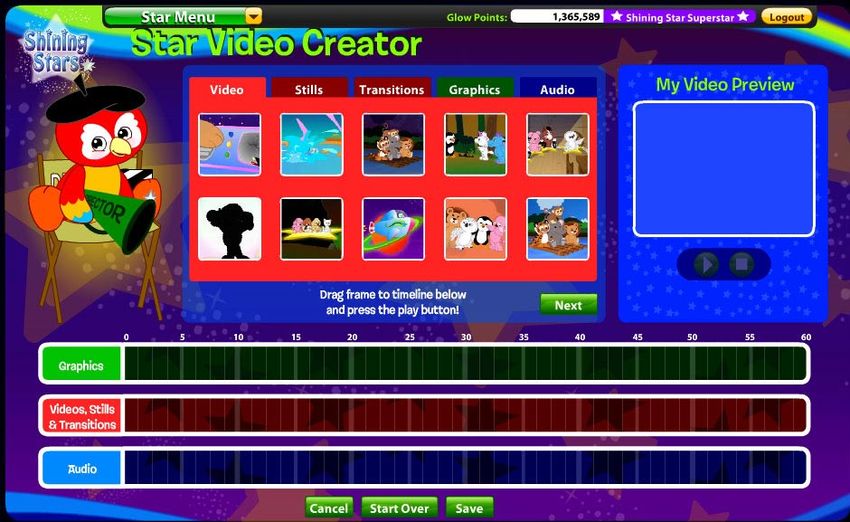
interFUEL
interFUEL Interactive Design + Technology
3445 Telegraph Road, Suite 230
Ventura, CA 93003

Email: contact@interfuel.com
Online: www.interfuel.com

Southern California:
David Holifield, Founder & President
Mel Bergman, Director of Business Development
Phone: 805-642-2200

New York:
Liam O’Malley, Sr. Account Manager
Phone: 917-749-0957

Copyright © 2008 interFUEL, LLC.

Readers are free to distribute this report within their own organizations,
provided the interFUEL footer at the bottom of every page is also present.
TABLE OF CONTENTS

Executive Summary                                                                    1

Introduction                                                                         2

Must-Have Feature #1: Mom’s Approval                                                 4

Must-Have Feature #2: Safety                                                         7

Must-Have Feature #3: Fun, Fun, Fun!                                               11

Must-Have Feature #4: Fresh Content                                                13

Must-Have Feature #5: Ways to Socialize                                            15

Must-Have Feature #6: A Feeling of Control                                         17

Must-Have Feature #7: Self-Expression                                              19

Conclusions                                                                        22

Appendix A: Four Possible Models for Virtual Worlds                                24

Appendix B: Virtual Worlds Mentioned in this Report                                25

interFUEL         |   Virtual Worlds for Kids, Tweens, and Teens: 7 Must-Have Features   iv
EXECUTIVE SUMMARY

T  oday’s kids and tweens all over the globe are growing up with virtual worlds. And
   if your company doesn’t start using this new medium to enrich your brand, your
competition will.

But any company trying to reach a younger audience through a virtual world faces
many pitfalls. No world is guaranteed to attract a community. Creating a poor user
experience can even damage your brand. And there are next to no resources to turn
to for advice. So how do you know you’re on the right path?

This special report fills that gap. Based on the hands-on experience of an interactive
agency that specializes in creating websites and online content for children, it
presents seven emerging best practices for creating a virtual world that will truly
engage younger visitors.

Here are the seven must-have features for kids, tweens, and teens:

1. The virtual world must have Mom’s approval.
2. The world must be safe, under the law, and in the eyes of parents and children.
3. It must be fun, fun, fun!
4. It must provide fresh content so it becomes part of a child’s regular routine.
5. It must provide ways to socialize with other kids.
6. It must provide the child with a feeling of control.
7. The virtual world must encourage creative self-expression.

This special report describes each must-have feature in detail, with screen shots from
half a dozen successful virtual worlds. It also links each must-have feature to a human
need within Abraham Maslow’s well-known hierarchy, and describes four possible
business models for virtual worlds.

interFUEL           |   Virtual Worlds for Kids, Tweens, and Teens: 7 Must-Have Features   1
INTRODUCTION

W         hile present-day teens grew up with the Web, today’s kids and tweens are
          growing up with the immersive experience of virtual worlds.

A virtual world can be defined as “a shared, multi-sensory, 3D, electronically
generated visual environment in which users, presented by avatars, can act, create,
and communicate at will.”1

There are dozens of new virtual worlds being developed for kids now, by everyone
from well-known firms like Disney and Lego to unknown upstarts.

And kids all over the globe are excited to explore these worlds.

A recent report from eMarketer found about 1 in 4 of the 34.3 million children and
teens online in the US visited virtual worlds in 2007. And they expect this number to
increase to 1 in 3 in 2008, and 1 in 2 by 2011.2

Google says two of the fastest-rising search terms for 2007 were for the kid’s virtual
worlds Webkinz and Club Penguin.3 All this points to what the New York Times
recently called “a virtual gold rush.”4

If your company does not take advantage of this new way to enrich your brand, your
competition just might.

1: David Burden, “Virtual Worlds — A New Medium,” Daden Limited, 2007, page 3
2: “Kids and Teens Online,” Virtual Worlds Open New Universe,” eMarketer, September 2007
3: “2007 Year-End Zeitgeist,” Google, retrieved January 8, 2008 from http://www.google.com/intl/en/press/zeitgeist2007/
4: Brooks Barnes, “Web Playgrounds of the Very Young,” New York Times, December 31, 2007

interFUEL                  |     Virtual Worlds for Kids, Tweens, and Teens: 7 Must-Have Features                         2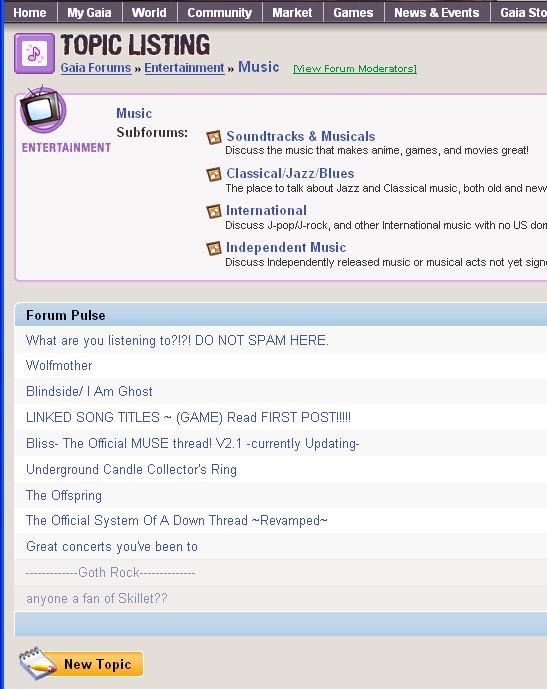
But any company trying to reach a younger audience through this new type of social
network faces many pitfalls. The fact is, no new world is guaranteed to attract and
retain a community. While structuring an online experience properly can reinforce
your brand, creating a poor user experience can bore visitors and even damage your
brand.5

Executives and clients may be clamoring for virtual worlds, but it’s still risky to build
one. And with next to no relevant studies, resources, or books for advice, how do you
know you are on the right path?

This special report is intended to fill that void. Based on the hands-on experience
of an interactive agency that specializes in creating websites and online content for
children, it presents seven emerging best practices for creating a virtual world that will
truly engage younger consumers.

The rest of this special report describes seven must-have features for virtual worlds for
kids, tweens, and teens, with concrete examples drawn from successful worlds now
in existence. This report also links each must-have feature to a primary human need
within Abraham Maslow’s well-known hierarchy.

For more background, Appendix A describes four possible business models for virtual
worlds, and how best to promote each one. Appendix B sums up the six virtual worlds
mentioned in this special report.

5: Frank Rose, “How Madison Avenue is Wasting Millions on a Deserted Second Life,” Wired, July 24 2007

interFUEL                 |    Virtual Worlds for Kids, Tweens, and Teens: 7 Must-Have Features          3

Must-Have Feature #1:

MOM’S APPROVAL

T   he prime directive of any parent is to ensure their child’s safety and well-being.
    And the ultimate decision to admit a child to a virtual world rests with the
parents, most often the mother.

Therefore, any effective virtual world must provide ample information for parents.
Ideally this information is positioned front and center on the home page, with
buttons clearly marked “For Parents...”

This information should answer the questions that naturally occur to any parent:
• Why should I give my child permission to come here?
• Will they be safe here? Safe from hurtful experiences? From adult predators?
• Who will be looking out for them while they’re online?
• What will they do here? What will they learn here?
• How much time should they spend here? How can I control that?
• Why should I buy the toy, or pay the subscription fees, or transfer money into
  this world for my child to use?

Most parents will assume that a world operated by some household name like Disney
will offer wholesome activities and a safe space. Any smaller company with no brand
recognition will face more scrutiny from parents.

Example of Mom’s Approval: Club Penguin

Club Penguin provides a great example of a virtual world that goes all-out to reassure
parents and secure Mom’s approval.

interFUEL           |   Virtual Worlds for Kids, Tweens, and Teens: 7 Must-Have Features   4
The basic description of the site includes this sentiment: “As parents of young chil-
dren we wanted to create a fun online world we’d be comfortable letting our own kids
visit.”6 Our own kids play here; what more powerful guarantee can anyone give?

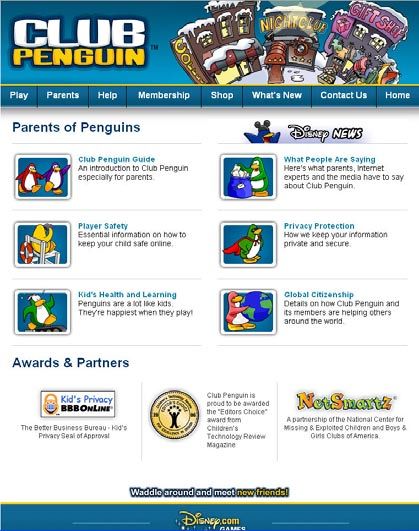
                         Figure 1: Information for Parents in Club Penguin

The very first link on the Club Penguin home page is labeled “Parents Guide.” This
leads to the screen shown on the left in Figure 1, providing four further links to
information for parents:

• Club Penguin Guide: An introduction to Club Penguin especially for parents.
• Player Safety: Essential information on how to keep your child safe online
  (with details shown on the right in Figure 1).
• Kid’s Health and Learning which leads to a page that states, “Club Penguin is a
  great place for kids to have fun online, and while we are happy to provide this safe
  environment, it is not intended to replace fun physical activities.”7 In other words,
  kick your kid off the computer and outside to play once in a while.
• Privacy Protection: How we keep your information private and secure.

6: “Club Penguin Guide,” Club Penguin web site, retrieved January 8, 2008 from
          http://clubpenguin.com/parents/club-penguin-guide.htm
7: “Kid’s Health and Learning,” Club Penguin web site, retrieved January 8, 2008 from
          http://clubpenguin.com/parents/kids-health.htm

interFUEL                 |     Virtual Worlds for Kids, Tweens, and Teens: 7 Must-Have Features   5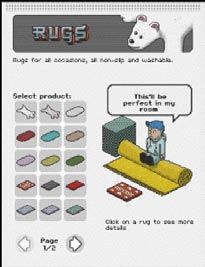
Beyond all this information, several further elements of the first page provide a higher
comfort level for parents.

What People are Saying leads to testimonials from a police officer, a grandmother,
and some parents, as well as positive stories in major publications such as Business
Week, Newsweek, and The New York Times. The message: The site has the seal of
approval from outside experts.

Global Citizenship describes the philanthropic activities of the company. “At Club
Penguin, we’re committed to improving the lives of children everywhere... A portion
of the proceeds from every Club Penguin membership is used to support specific
local and global projects.”8 There are details about projects for children underway
in Uganda and Romania. The message: The company is doing good in the world.

Finally, there are logos from noteworthy organizations, including the Better Business
Bureau, the Editor’s Choice award from an education magazine, and two occurrences
of the Disney logo... probably the world’s most trusted logo for children’s entertain-
ment. The message: You can trust us.

By providing all this material for parents, Club Penguin does an excellent job of
securing Mom’s approval.

8: “Global Citizenship,” Club Penguin web site, retrieved January 8, 2008 from
           http://clubpenguin.com/parents/global-citizenship.htm

interFUEL                  |     Virtual Worlds for Kids, Tweens, and Teens: 7 Must-Have Features   6
Must-Have Feature #2:
SAFETY
A virtual world absolutely must be safe, in the eyes of the law, in the eyes of parents,
and in the eyes of children who visit it.
It’s no wonder. There are plenty of places kids can go on the web, but not all of them
are safe. Many sites provide one button to click to claim you are 18 years old. A well-
meaning grandparent could send a child a VISA gift card or telephone calling card
they could easily use to start an account or draw out currency in a virtual world.
In terms of the law, the world must comply with the Children’s Online Privacy
Protection Act (COPPA), which lays down out the legal parameters for operating
a web site in the United States aimed at children.
“The Children’s Online Privacy Protection Act, effective April 21, 2000, applies to the
online collection of personal information from children under 13. The new rules spell
out what a web site operator must include in a privacy policy, when and how to seek
verifiable consent from a parent, and what responsibilities an operator has to protect
children’s privacy and safety online.”9
Anyone planning a virtual world aimed at children must inform themselves about
COPPA, and follow its prescriptions.
In terms of the parents, we have already discussed providing them with ample
information. This information must stress the safety provisions of the virtual world.
9: “How to Comply With The Children’s Online Privacy Protection Rule,” Federal Trade Commission, retrieved
January 8, 2008 from http://www.ftc.gov/bcp/conline/pubs/buspubs/coppa.shtm
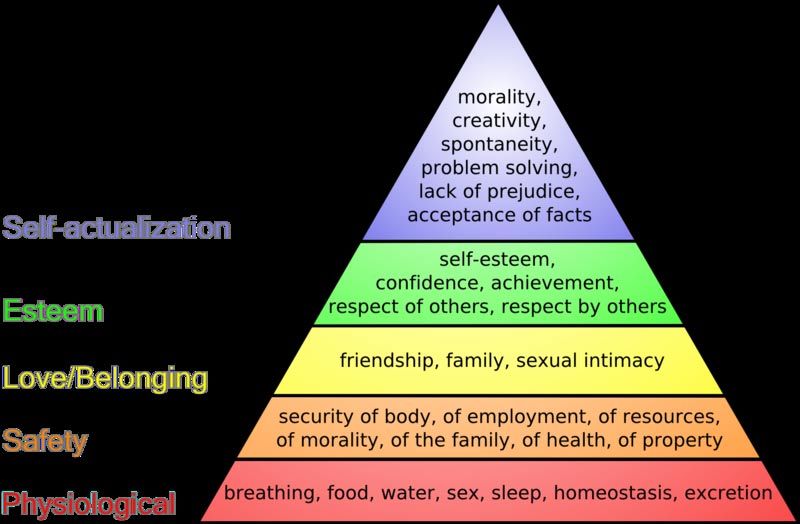
interFUEL | Virtual Worlds for Kids, Tweens, and Teens: 7 Must-Have Features 7In Abraham Maslow’s hierarchy of human needs, shown in Figure 2,10 the most
fundamental physiological needs are for air, water, food, and sleep. (Sex is not relevant
for children.)
Figure 2: Maslow’s Hierarchy of Needs Is Useful for Virtual World Designers
The next most basic human need is for safety, including security of body, family,
health, and property.
Any responsible parent wants to be sure all these elements of their child’s well-being
will be safeguarded in any virtual world they visit.
In terms of the child, the world must feel safe but not stifling. The virtual world must
have boundaries and safeguards that a child can accept, but nothing that unduly limits
their creativity or self-expression.
Finding this balance, and communicating it in simple terms, can be challenging.
10: J. Finkelstein, “Maslow’s Hierarchy of Needs,” Wikipedia.com, retrieved January 8, 2008 from
http://en.wikipedia.org/wiki/Image:Maslow%27s_hierarchy_of_needs.png
interFUEL | Virtual Worlds for Kids, Tweens, and Teens: 7 Must-Have Features 8Example of safety: Two levels of chat and parental controls in Webkinz
The Webkinz world offers two levels of chat, both designed to promote safety by
preventing any inappropriate exchanges.
The basic level is called KinzChat, in which the chat is entirely “constructed” from
a pre-existing set of stock phrases.
Figure 3: Safe Chat in Webkinz
“There is no way for a user to type what they want, nor ask or say anything
inappropriate to any other user. We control everything the users are able to say.
We have designed our chat menu of choices of sentences and phrases to put safety
first. There is no way to exchange any personal information of any sort.”11
Figure 3 shows how a child uses the sliding menus to construct the simple message,
“You are so much fun!”
11: “Is KinzChat Safe?” FAQ: For Parents, Webkinz web site, retrieved January 8, 2008 from
http://www.webkinz.com/faq_parents.html
interFUEL | Virtual Worlds for Kids, Tweens, and Teens: 7 Must-Have Features 9This certainly meets the safety requirements of the law and of parents. Yet it could seem restrictive to any older or more literate child, who wants to express more personal or nuanced ideas. To meet this need, Webkinz provides a more advanced level of chat, called KinzChat PLUS. This chat is somewhat more freeform, within a controlled vocabulary. “In the restricted dictionary, we have eliminated numbers, most common names, many place names, and a variety of inappropriate words,” explains the site.12 This means children cannot easily exchange phone numbers or addresses. And if a child uses any word that’s not in the dictionary, that word turns red and prevents the message from being sent. What’s more, a parent has to give explicit permission for their child to access the advanced level of chat in Webkinz. There is even a Parental Control Tool to deal with any attempt by a child to use the parent’s e-mail to give themselves permission to access it. These four measures taken together — constructed chat, restricted dictionary, parental permission, and an anti-tampering control — provide a very good example of how to design a safe system for younger children. 12: “Is KinzChat PLUS Safe?” ibid interFUEL | Virtual Worlds for Kids, Tweens, and Teens: 7 Must-Have Features 10
Must-Have Feature #3:

FUN, FUN, FUN!

B  eing a kid means playing and having fun... and that means games, games, and
   more games. The number one thing kids like to do online is play games. Online
games are a major attraction of every virtual world for kids and teens.

Engaging games will keep visitors coming back every day. And kids should be
rewarded for completing certain tasks or reaching certain levels in these games. In
several worlds, kids “earn” the currency they spend by playing games.

Playing games and having fun fit under two possible categories in Maslow’s hierarchy:
Love/Belonging or Esteem. Playing with others online seems to fit more with the
human need for friendship and intimacy, but doing well in games can certainly help
promote self-esteem, confidence, and a feeling of achievement.

Example of fun, fun, fun: Shining Stars

Yes, there are lots of captivating games in this virtual world, aimed at a target
audience of younger children. You can pop balloons, collect stars in your spaceship,
play a Pacman-like game called “Starchomp”; you can also watch cartoons, test your
memory, set up your own Star Space, and so on. Fun suffuses the whole design of this
world, through visual appeal, sound effects, and a consistent motif. And all these fun
elements serve as integral parts of the interface.

Visual appeal: Shining Stars is as visually rich as the cereal aisle of a grocery store.
And almost every screen features animations that add further visual appeal.

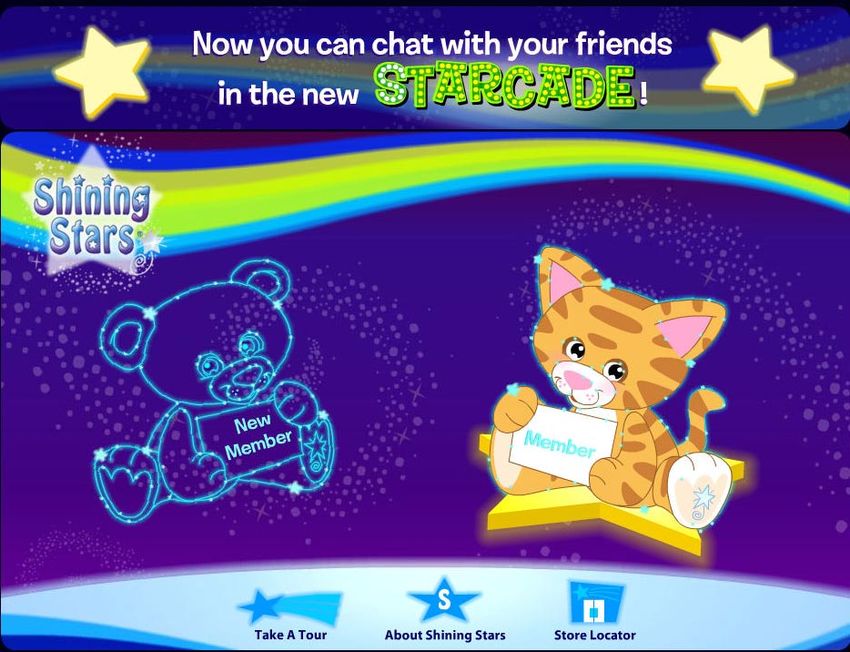
For example, on the login page shown in Figure 4, a stylized constellation based on
the outline of a plush toy (left) “fills in” with full color and textures when the mouse
passes over it (right). This visual feedback instantly conveys that the child has reached
a clickable area of the screen with the mouse.

interFUEL            |   Virtual Worlds for Kids, Tweens, and Teens: 7 Must-Have Features   11
Figure 4: The Login Screen of Shining Stars Provides a Gateway to Fun

Sound effects: The site is filled with sound effects, which the producers call “ear
candy.” For example, logging in generates a giggle. Passing the mouse over a menu
option or clickable graphic produces a “glittering” xylophone sound. “Circus music”
plays when the child’s avatar enters an arcade area. Almost every click has an
associated sound. Completing a task or winning a game produces a round of
cheers. All these effects make up a rich soundscape to enjoy in this world.

Consistent motif: Shining Stars has two ongoing motifs: plush toys, and stars and
constellations. Every screen has one or both of these elements, rendered and animated
in a charming way. For example, the water around the beach and jungle island worlds
has little stars twinkling in it. The games are called things like “Starburst,” “Star Grab,”
and “Star Search.” You can even listen to songs with a “star” theme on your star-
shaped “Starpod.” Sometimes both motifs come together: the child’s avatar is a plush
animal that glides around on a star-shaped platform over land and water.

All these elements make visiting the Shining Stars virtual world a delightfully fun
experience, especially for younger children.

interFUEL            |   Virtual Worlds for Kids, Tweens, and Teens: 7 Must-Have Features      12
Must-Have Feature #4:

FRESH CONTENT

A     n effective virtual world must deliver fresh content on a regular basis so that
      it becomes part of a child’s routine. Kids need a reason to come back often,
hopefully every day. Each time a child returns to a site, they invest a little more of
their energy and attention into it. So it’s best to incorporate this must-have feature
into the basic design of a virtual world.

There are many possible ways to deliver fresh content:

• Roll out new images geared to seasons or major holidays: back-to-school, Halloween,
  Thanksgiving, and so on
• Add more contests or games
• Open up new areas, such as another arcade, park, mall, hotel, or whatever

You can even encourage visitors to generate their own content. For example, in
Webkinz kids take care of a virtual pet, which requires daily attention, or its health
and happiness fall on three visible meters, as shown in Figure 5. Keeping these meters
high can become a daily preoccupation for a child.

            Figure 5: A Virtual Pet Gives Kids a Reason to Return Every Day

interFUEL           |   Virtual Worlds for Kids, Tweens, and Teens: 7 Must-Have Features   13
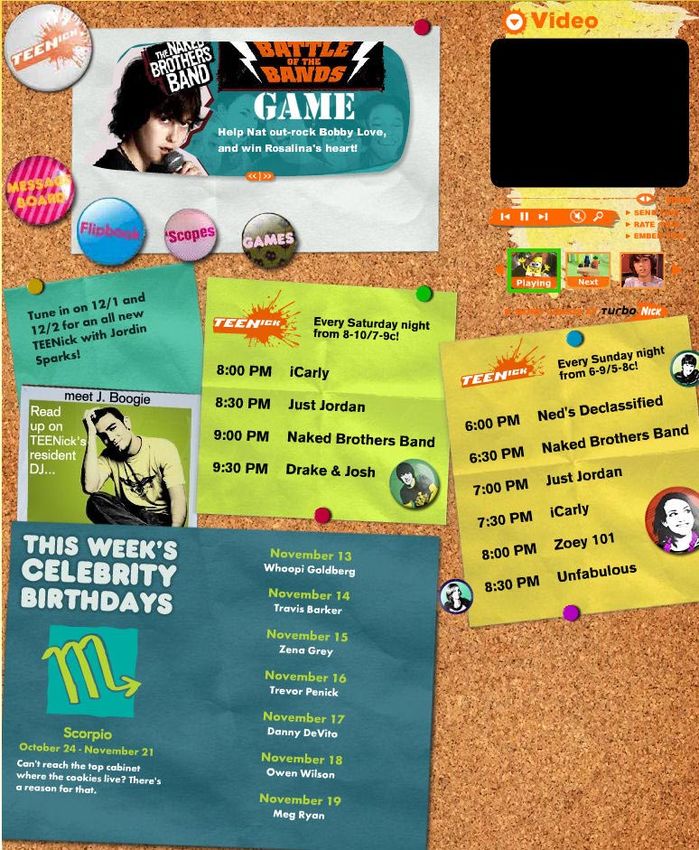
Example of fresh content: Nicktropolis This virtual world is ideally suited to deliver fresh content, since it’s sponsored by the Nickelodeon TV network. Naturally enough, one of the top-level sections of this world is devoted to its shows. Every day the Schedule page changes to show the lineup of shows for that day, along with a program note on the particular episode to be broadcast. Another click shows all the times this episode will be repeated. This is an obvious example of fresh content, but unfortunately it’s one that most other worlds cannot duplicate. Figure 6 shows an example of a more conventional approach to fresh content from this world. Using the visual metaphor of a teen’s cluttered corkboard, this screen includes a host of time- sensitive information (clock- wise from the bottom): • This week’s celebrity birth- days, which clearly rotate every week • A bio of someone from behind the scenes at the virtual world, which changes to spotlight different people • Weekend program notes, which reflect any changes to the lineup • A “button” linking to the message boards, which change constantly as visitors Figure 6: Fresh Content in Nicktropolis post new messages • A “button” linking to a daily horoscope • An ongoing rotation of promo clips in the top center • A mini-screen showing what’s currently on the network at the top right. This screen is a tremendous example of fresh content provided to visitors by Nicktropolis. There are no less than seven sections here that change over time, either constantly, daily, weekly, or monthly. interFUEL | Virtual Worlds for Kids, Tweens, and Teens: 7 Must-Have Features 14
Must-Have Feature #5:

WAYS TO SOCIALIZE

S  ocial interaction is the “killer app” of virtual worlds.13 An effective virtual world
   must provide ways to socialize with other kids. In fact, these applications are often
considered part of the “social networking” category, where the name of the game is
meeting and interacting with other people.

In Maslow’s hierarchy of needs, the next most fundamental need after safety is for
love and belonging, which includes friendship, family, and intimacy.14 Human beings
are innately tribal; this is clear to see in the behavior of children and teens. The groups
and cliques that young people form are a basic part of the human condition.

To meet this essential need, virtual worlds must provide a way to chat and interact
with other kids. We’ve seen how Webkinz provides restricted chat for younger
children. Now let’s look at how another world attracts teenagers with a vast
assortment of much more wide-open forums.

Example of socializing: GaiaOnline

In GaiaOnline, many residents enjoy the daily interaction of chatting in forums.

In fact, this world hosts more than 30 major forums devoted to topics like art, comics,
computers, entertainment, gaming, Harry Potter, lifestyles, pictures, polls, sports, and
writers. As well, there are numerous forums for world-related announcements,
contests, discussion, and questions.

For example, one busy forum is for music, as shown in Figure 7. The Music forum has
eight subforums on everything from classical to rap, with more than 95,000 individual

13: “Virtual Worlds — A New Medium,” page 7
14: Ibid

interFUEL               |    Virtual Worlds for Kids, Tweens, and Teens: 7 Must-Have Features   15
topics. Some topics have dozens of thousands of postings. It’s a wonderful place
to talk and argue about music, a subject close to every teenager’s heart. Recent
studies confirm that more than 80% of tweens and teens listen to music during
their free time.15

There are other levels of forums as well. Gaians can band together into guilds, and
each guild can choose to have an open, private, or hidden message forum of its own.

The forum system is a breeze to use, and it’s set up to encourage active participation.
For instance, each post includes a mini-version of the poster’s avatar, essentially a little
ad for themselves. And the first screen of each forum includes a “Forum Pulse”
rotating through the newest topics to catch the visitor’s eye.

                                                                The rules for posting are straight-
                                                                forward. Posts cannot contain
                                                                anything “excessively vulgar, insulting,
                                                                explicit, self-deprecating, or racial...
                                                                Encouraging crime is not permitted...
                                                                Sexually explicit posts may be deleted.
                                                                Soliciting or engaging in cyber sex or
                                                                mature content role play is not
                                                                allowed.”16

                                                                Despite these rules, teens clearly
                                                                love to post messages in these
                                                                forums. Many posts are short, like
                                                                the barrage of IMs that teenagers
                                                                exchange. Members can also send
                                                                each other private messages.

                                                 By spring of 2007, the average visit
                                                 to GaiaOnline lasted more than 44
                                                 minutes17 — an enviable statistic for
   Figure 7: Socializing in Online Forums        any marketer. By November 2007, this
                                                world claimed that visitors spend an
average of two hours a day on the site, and to date have posted more than one billion
messages.18

This is an excellent example of a virtual world that gains tremendous loyalty and
“stickiness” by enabling visitors to socialize freely.

15: Karen Raugust et al, “Marketing to Tweens and Teens,” EPM Communications Inc., 2007, page xi
16: “GaiaOnline Rules & Guidelines,” GaigaOnline web site, retrieved January 8, 2008 from
          http://www.gaiaonline.com/info/index.php?mode=rules
17: LeeAnn Prescott, “Virtual Worlds Ranking,” Hitwise Intelligence, retrieved January 8, 2008 from
          http://weblogs.hitwise.com/leeann-prescott/2007/04
18: “About Us”, GaiaOnline web site, retrieved January 8, 2008 from http://www.gaiaonline.com/info/about.php

interFUEL                 |     Virtual Worlds for Kids, Tweens, and Teens: 7 Must-Have Features               16
Must-Have Feature #6:
A FEELING OF CONTROL
A successful virtual world must allow kids to be the master of their own domain.
This must-have feature corresponds to Maslow’s need for esteem, confidence,
and achievement, the second-highest level in his pyramid of needs.
This includes a feeling of control over all of the key elements of their online
experience, including their:
• avatar
• movements
• “personal space”
• resources.
Avatar: This report has already discussed letting children customize their avatars. As
well as enabling self-expression, this gives a child a feeling of control. In the virtual
world, they can look however they want, and dress however they want.
Movements: Kids need to be able to navigate a virtual world quickly and easily.
Moving around is likely one of the first things they will ever do. Basic functions like
turning and walking must be simple to accomplish. Many worlds offer a “teleport”
(TP) function that can “beam” an avatar to any desired point, with no delay for any
travel time. Mastering these movements give a child a further sense of control.
Personal Space: Many virtual worlds have a personal space called something like My
Room, which kids can decorate as they wish. They can acquire furnishings and bring
them home to their room. My Room becomes a child’s bedroom in the online world,
a home away from home where they call the shots. And no one can tell them how
their personal space should look, or order them to clean it up.
interFUEL | Virtual Worlds for Kids, Tweens, and Teens: 7 Must-Have Features 17Resources: Many virtual worlds have their own currencies called something like
coins, gold, or points. Kids can use this currency to acquire objects or experience other
facets of the world. If a virtual world has a currency, it should provide kids with some
way to earn it and some fun places to spend it.
Young visitors can then use their resources to create and personalize their online
experience to suit their own preferences. This gives them the feeling sense that they
control their own environment, and can reshape it at will.
Example of Control: Habbo Rooms
In Habbo Hotel, residents enjoy the capability of setting up and furnishing one or
more rooms. As shown in Figure 8, there are many catalogues to shop from for “furni”
such as tables, chairs, plants, rugs, beds, TVs, or anything else you could conceivably
put in a room.
Figure 8: Decorating a Habbo Room Gives a Feeling of Control
Some items come in different colors, so you can choose the one that best matches
your decor before you buy it. Each item has a cost, so the whole system is very much
a simulation of what a young adult goes through when furnishing their first room or
apartment.
Acquiring enough coins, shopping, and putting together a room you’re proud to invite
friends to can be a very empowering experience for any teenager. The Habbo virtual
world gives them the scope to gain that feeling of control.
interFUEL | Virtual Worlds for Kids, Tweens, and Teens: 7 Must-Have Features 18Must-Have Feature #7:
SELF-EXPRESSION
A virtual world must encourage self-expression, which meets Maslow’s highest
category of need: self-actualization. The most obvious forms of self-expression
are a child’s avatar, and any content they create.
Most virtual worlds offer customizable avatars, which transcend the limitations of real
life in flexible ways that kids appreciate.
For instance, a child’s avatar can have a “forbidden” appearance that their parents
would never allow in real life. They can have blue spiky hair, get “tattoos”, wear a skull
and crossbones T-shirt. They can dress like their favorite celebrities, characters from
TV shows or movies, or even “re-skin” themselves as fantasy beings like wizards or
dragons.
Kids can even compensate for any perceived shortcomings in their own self-image, by
making their avatars taller, thinner, more muscular, more mature, and so on.
In some worlds, an avatar is a profound personal statement in which kids invest many
hours of shopping and tweaking. GaiaOnline is such a world, with a vast variety of
avatars, as shown in Figure 9.
“Gaia revolves around creative customization. Every member can create their own
virtual character and dress it up with over 5,000 items: clothes, accessories, pets, masks
and just about anything else imaginable.”19
A second aspect of this must-have feature is for a virtual world to provide ways for
users to generate their own content. For example, if a virtual world provides a fun way
to assemble music or video, many kids will use it to express themselves.
19: “About Us”, GaiaOnline web site, ibid
interFUEL | Virtual Worlds for Kids, Tweens, and Teens: 7 Must-Have Features 19Figure 9: Self-expression through Personalized Avatars in GaiaOnline Example of self-expression: The Star Video Creator in Shining Stars The Shining Stars virtual world provides a wonderfully simple Star Video Creator, as shown in Figure 10. At the top, this online tool provides palettes of existing video clips, stills, transitions, graphics, and audio clips that a child can drag on to the timelines at the bottom of the screen. Then they click to preview the resulting video. With a little on-screen experimentation, a child can create and save a 60-second video. The user interface is extremely simple and clear. No documentation is required. Each type of content can be dropped only at certain reserved spots on certain timelines, which are outlined in color. There are only a handful of buttons, each with a clear-cut purpose and label. interFUEL | Virtual Worlds for Kids, Tweens, and Teens: 7 Must-Have Features 20
The whole process is visual and interactive, and the results can be previewed and
reworked quickly.

An interim version of a video can be saved for a child to continue working with
another day.

This video-making tool provides powerful self-expression within a controlled
environment that ensures success. And it seems that children are hungry for this
self-expression. In the first few days after this tool went online, visitors to Shining
Stars created an average of 4,375 videos per day.

This is a tribute both to the clear design of this tool, and to the pent-up demand
among children for online tools for self-expression.

         Figure 10: Self-Expression with the Star Video Creator in Shining Stars

interFUEL           |    Virtual Worlds for Kids, Tweens, and Teens: 7 Must-Have Features   21
CONCLUSIONS
T his special report has described seven best practices in the emerging field of
creating virtual worlds for kids, tweens, and teens.
We’ve seen how these must-have features map closely to Maslow’s hierarchy of needs,
as shown in Figure 11.
Maslow’s Category Must-Have Feature
Self-Actualization #7 Self-Esteem
Esteem #6: A Feeling of Control
Love/Belonging #5: Ways to Socialize
#4: Fresh Content
#3: Fun, Fun, Fun!
Safety #2: Safety
#1: Mom’s Approval
Physiological
Figure 11: Must-Have Features for Virtual Worlds Align Well
with Maslow’s Hierarchy of Needs
interFUEL | Virtual Worlds for Kids, Tweens, and Teens: 7 Must-Have Features 22These seven must-have features are found to some degree in every successful virtual
world aimed at children, tweens, or teens today.
For example, this statement from one of the most popular virtual worlds for children
touches on three of these seven features in a few lines: “In light of Club Penguin’s
incredible success, its founders continue to maintain the company’s focus on the three
key areas of fun, safety, and service. Club Penguin is updated every week, and most of
the company’s resources go into its efforts to make the site as safe as possible.” 20
And in this context “service” includes delivering fresh content and fun to visitors, two
more must-have features.
Of course, the sponsor of any virtual world should know how it stands to generate
revenue. For more background, Appendix A describes four possible business models
for virtual worlds, and how best to promote each one.
Appendix B sums up the six virtual worlds mentioned in this report. We invite
interested readers to visit these six worlds for yourself.
To find out more about how to build
a virtual world that will successfully
engage kids, tweens, or teens, contact
interFUEL today at (805) 642-2200 or
contact@interfuel.com.
20: “About Club Penguin,” Club Penguin web site, retrieved January 8, 2008 from
http://www.clubpenguin.com/company/about.html
interFUEL | Virtual Worlds for Kids, Tweens, and Teens: 7 Must-Have Features 23Appendix A:
Four Possible Business Models for Virtual Worlds
Business Model Description Promotion
A: Buy the toy, get the A consumer buys some type This model depends mainly on
world of toy, card, or clothes bundled driving purchases of the toy
with a password to an associated through word-of-mouth,
online world. advertising, and retail channels.
No one is admitted to the virtual
world without owning the toy.
B: Shop at the virtual Admission to the world is open This model depends mainly
mall to anyone. on word-of-mouth, PR, and
advertising to build up the
Once there, residents are highly
virtual world’s population.
encouraged to buy clothes,
furniture, a makeover, or extra In some worlds, residents can
experiences with some in-world create, trade, or sell items, giving
currency, such as gold, coins, or them motivation to do their own
points. grassroots promotions.
This currency can be bought
with real-world currency, or
else earned in the virtual world
by completing certain tasks or
games.
C: Monthly subscription Residents pay a monthly fee to Same as B above, to build up
belong to the virtual world, and paying subscribers.
use everything that it offers.
This fee can usually be paid in-
stantly through a credit card, gift
card, PayPal, or mobile phone.
B+C: Basic is free, pay Basic membership in the world Same as B above.
for extras is free.
Paying a monthly fee entitles
you to additional features and
services such as “owning” space,
having multiple avatars, and so
on.
Source: “Virtual Worlds for Kids, Tweens, and Teens: 7 Must-Have Features” interFUEL, 2007Appendix B: Vitual Worlds Mentioned in this Report
Club Penguin Gaia Online Habbo Nicktropolis Shining Stars Webkinz
URL ClubPenguin.com GaiaOnline.com Habbo.com Nicktropolis.com ShiningStars.com Webkinz.com
A kid-friendly A place where A virtual world A new 3D world A virtual world The exciting online
virtual world where teens can create where teenagers where you can where children can experience where
children can play their own space create their own create, play online name a star of their your plush pet
Concept
games, have fun, and express their virtual character games, and con- very own, play comes to life... a
and interact with individual style. and interact with nect safely with games, have fun, safe, educational,
each other. other characters in your Nicktropolis and interact with and fun online
the hotel. friends. each other. community.
Founded 2005 2003 2000 2007 2007 2005
12 million user unknown, claims unknown, claims 5.36 million user 1+ million 1+ million
No. of accounts & 700,000 2 million unique 80 million avatars accounts registered users registered users
Residents
paid subscribers visitors a month created
Business
Model B+C B B+C B A A
(See Appendix A)
Owner
Walt Disney Gaia Interactive, Sulake Corp., Nickelodeon Russ Berrie and Ganz, Canada
Company, USA Inc. USA Finland (Viacom), USA Company, USA
In 2007, Disney Most activity The oldest virtual Has numerous Each resident can The secret code
bought Club takes place in world mentioned tie-ins to kid’s claim an actual sold with each
Penguin for $700 forums, which in this report, and TV shows on star through an plush toy entitles
Notes million, creating can be consid- the only one from the Nickelodeon exclusive deal with the buyer to one
huge publicity ered “outside” Europe. network, such the International year of access to
around virtual the virtual as SpongeBob Star Registry. the virtual world.
worlds. world. SquarePants. After that? Time
to buy another.
Source: “Virtual Worlds for Kids, Tweens, and Teens: 7 Must-Have Features” interFUEL, 2007You can also read


