20 TIMSS & PIRLS International Study Center Lynch School of Education - Timss and Pirls
←
→
Page content transcription
If your browser does not render page correctly, please read the page content below
PIRLS now available in digital format –        20
            digitalPIRLS!                    Years of
                                              Trends

                                TIMSS & PIRLS
                                International Study Center
                                Lynch School of Education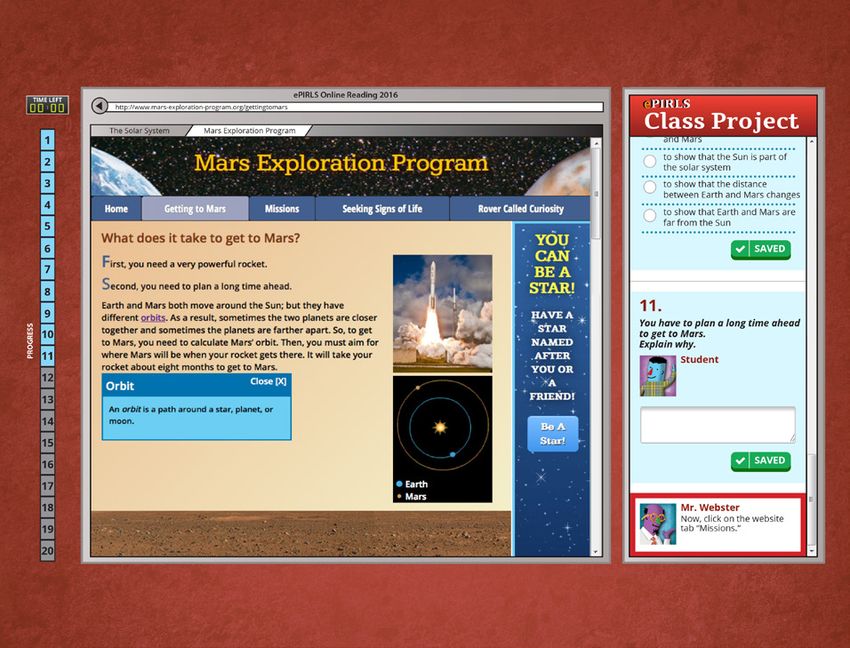
20 Years of Trends in International
 Reading Achievement
Conducted every five years since 2001, IEA’s PIRLS (Progress in International
Reading Literacy Study) provides trends in reading achievement at the fourth
grade for about 60 countries around the world. PIRLS is a valuable vehicle
for monitoring the impact of new or revised policies on students’ educational
achievement.

 Transitioning to Digitally Based Assessment

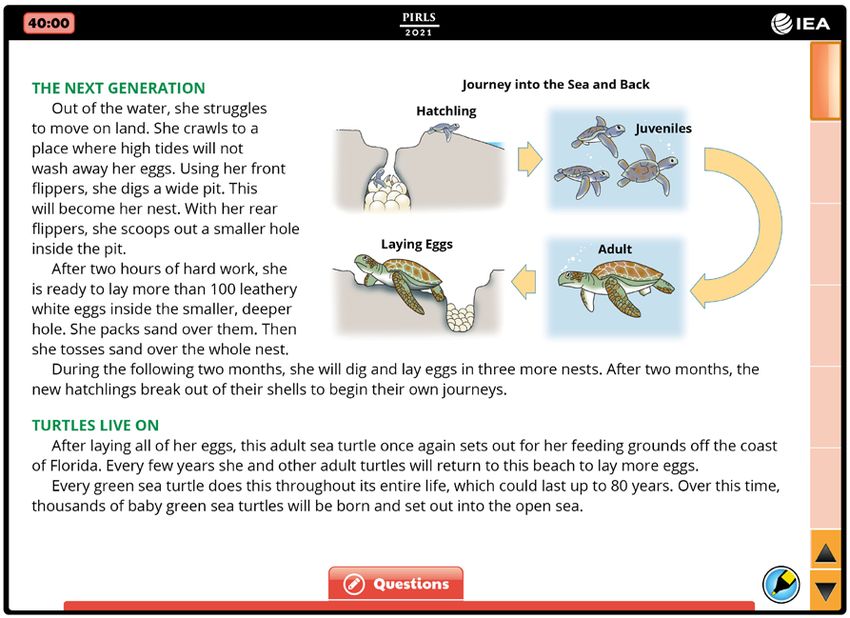
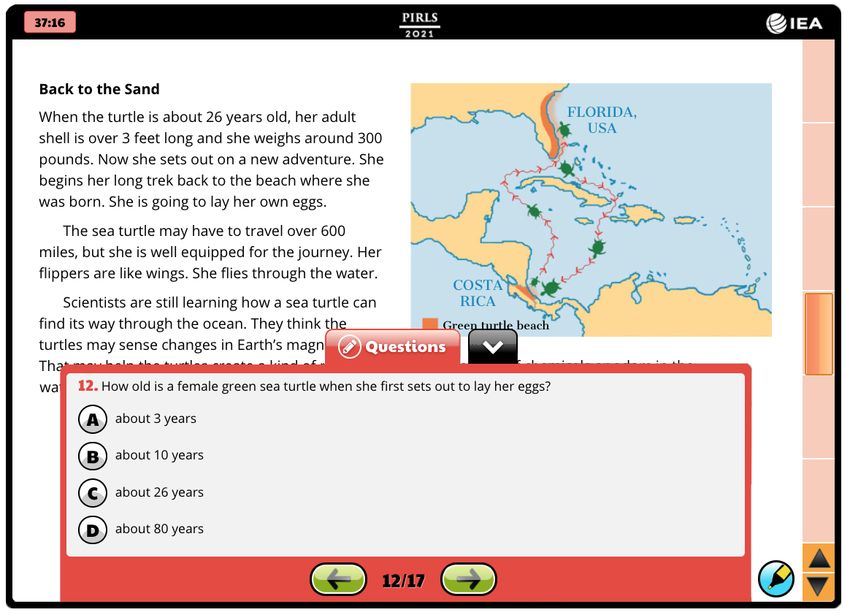
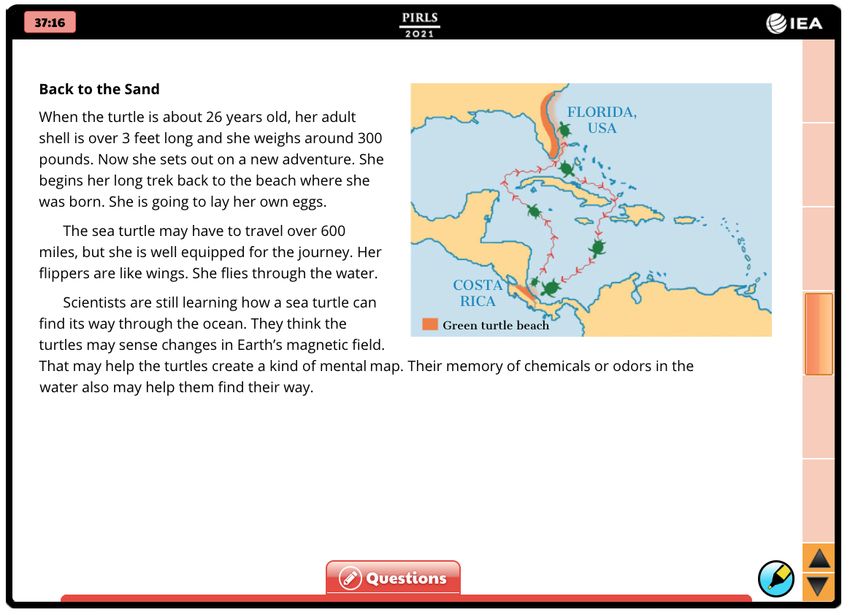
                                                    After reading a digitalPIRLS
                                                    passage about sea turtles,
                                                    students click on a tab to
                                                    access and answer questions.

To keep up to date,
PIRLS evolves with each
assessment cycle. For the
first time, PIRLS 2021 will
be presented via a digital
web-based delivery system.
The digitalPIRLS reading
assessment will include a variety of reading texts presented in an engaging
and visually attractive format that will motivate students to read and interact
with the texts and answer comprehension questions. The texts address the
two overarching purposes for reading that account for most of the reading
done by young students both in and out of school: for literary experience, and
to acquire and use information. In addition, PIRLS assesses four broad-based
comprehension processes within each of the two purposes for reading: focus
on and retrieve explicitly stated information, make straightforward inferences,
interpret and integrate ideas and information, and evaluate and critique
content and textual elements. digitalPIRLS will include the ePIRLS assessment of
online reading initiated in 2016.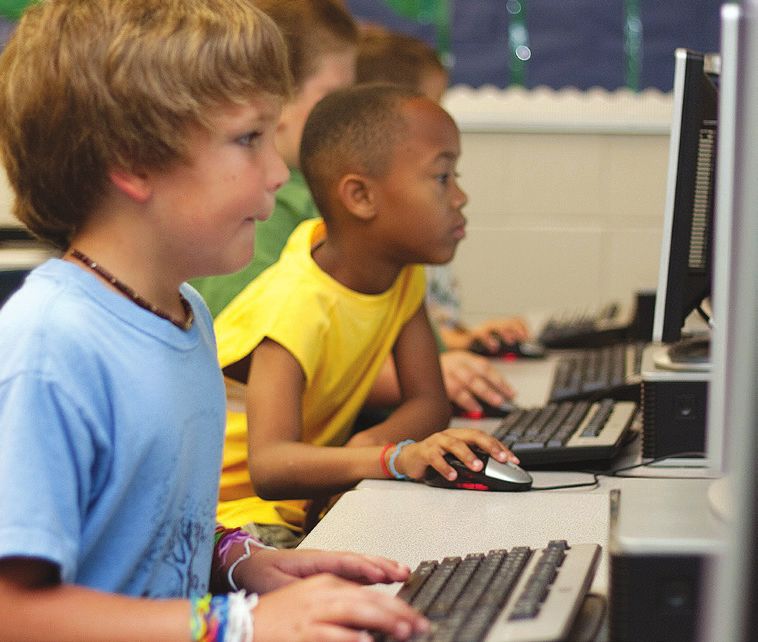
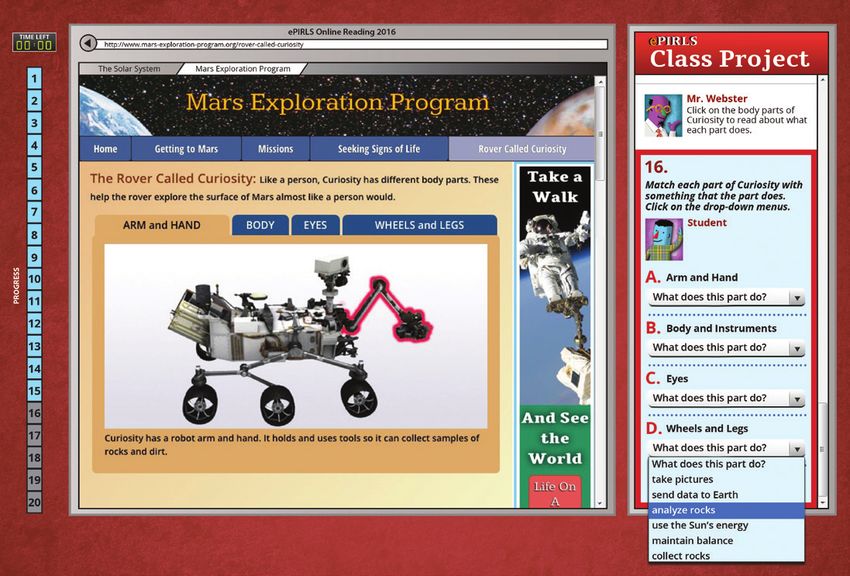
ePIRLS monitors how
well students read,
interpret, and critique
online information in
an environment that
looks and feels like
the internet. With the
guidance of a teacher
avatar, students
navigate within and
across webpages to
answer questions,
explain relationships,
and interpret and
integrate information.
The webpages contain
visual data including photos, charts, and maps, as well as navigational and dynamic
features such as animations, hyperlinks, and pop-up boxes. Taken together as
one seamless digitally based endeavor, digitalPIRLS provides a state-of-the-art
assessment of 21st century reading skills.
Countries that administer digitalPIRLS can take advantage of the benefits
of a computer-based assessment, including greater operational efficiency in
translation and translation verification, data entry, and scoring, without the need
for printing or shipping. digitalPIRLS will be offered as a web-based system via
school-based or IEA web servers, or via a USB drive connected locally to a PC with
the Windows Operating System.
As an alternative to digitalPIRLS, countries may administer PIRLS 2021 in paper
format. ePIRLS is available only in conjunction with digitalPIRLS.

 Informs Evidence-Based Decision-Making
Like previous cycles, PIRLS 2021 will continue to collect trends in an extensive
array of policy-relevant information about students’ home and school
experiences in learning to read:

   • The Home Questionnaire gathers data related to students’ “head start” before
     entering primary school, with an emphasis on learning early literacy skills and
     the level of preprimary education students received
   • The Student, Teacher, and School Questionnaires focus on issues such as school
     safety, emphasis on academic success, school and classroom resources for
     learning, use of technology, and effective instruction
   • Authored by the participating countries, the PIRLS 2021 Encyclopedia provides
     a comprehensive picture of reading education around the world
Benefits of PIRLS 2021
PIRLS 2021 offers countries the opportunity to participate in
a world-class assessment of reading comprehension. The high-
quality internationally comparative data enable countries to:
• Monitor system-level achievement trends in a global context
• Monitor the impact of new or revised educational policies
• Pinpoint any areas of weakness, and stimulate curriculum
  reform
• Improve teaching and learning through research and
  analysis of PIRLS data
• Obtain rich questionnaire data about the home and school contexts for
  teaching and learning reading
• Conduct related studies, such as monitoring equity or assessing students in
  additional grades

The Flexibility of PIRLS 2021
                 In countries where most children still are developing basic
                 reading skills, students can participate in the less difficult version
                 of PIRLS. It has passages in common with PIRLS, as well as some
                 shorter and simpler texts. The results are reported on the PIRLS
                 achievement scale, just as in PIRLS.
                 Also, PIRLS has a benchmarking component whereby entities such
                 as regions (e.g., states or provinces), additional grades (e.g., third
                 or fifth grade), or additional language groups can participate in
                 the same ways as countries.

     For country enrollment, contact: IEA Amsterdam Director Andrea Netten
                                 a.netten@iea.nl

                    PIRLS is a project of IEA. With offices in Amsterdam and Hamburg, IEA
                    pioneered international comparative studies. It has been conducting
                    international assessments of educational achievement since 1959.

                    PIRLS is directed by the TIMSS & PIRLS International Study Center at
                    Boston College. PIRLS, together with TIMSS, which assesses mathematics
                    and science, comprise IEA’s core cycle of studies designed to provide
                    countries with regular information about achievement in three
                    fundamental subjects—reading, mathematics, and science.

                                    pirls.bc.edu

You can also read


