2017-2018 REPORT RESEARCH & INSIGHTS - Grassroot Soccer
←
→
Page content transcription
If your browser does not render page correctly, please read the page content below
2017-2018
RESEARCH & INSIGHTS
      REPORT
SELECT RESEARCH,
IMPLEMENTATION & FUNDING PARTNERS WELCOME
In 2017, we celebrated a milestone: Grassroot Soccer has now reached over 2 million young people in nearly 50 countries
with life-saving health programmes. This achievement has only been possible with the support of donors, advisors, and
research partners like you.
The last 15 years have seen profound gains in global public health, including in the response to HIV and AIDS.
But adolescents continue to be left behind. While mortality for children and adults has declined over the last decade, it
hasn’t improved enough for adolescents. Young people face the most acute combination of preventable diseases and
disorders of any age group in the world — yet many organizations lack the tools to reach them.
This is where Grassroot Soccer comes in. We are uniquely positioned to address the adolescent health gap, combining the
appeal of soccer with a rigorous, evidence-based approach.
In 2017, we reached more youth than ever — over 200,000— achieving 45% growth between 2016 and 2017. We are proud
to have partnered with research institutions and non-profits from 6 different countries, presented at 10 international public
health conferences, and been involved with 16 studies since 2016.
This research has deepened our understanding of what works and strengthened our linkages to health service providers.
Our involvement in research keeps the perspectives and needs of participants at the forefront, and ensures that intentional,
adolescent-centered design is the core of our approach.
We’re humbled that Grassroot Soccer has played a part in the lives of so many young people, and that we can work
alongside leading researchers and non-profits contributing to the global evidence base on adolescent health.
Thomas S. Clark, MD, Founder & Chief Executive Officer
Chelsea Coakley, Director of Research, Curriculum & Innovation
1
OUR MISSION                                                                                                                      OUR IMPACT
                                                                                                                                                   ASSETS                ACCESS               ADHERENCE

                                                                                                                                                  INCREASED HEALTH      INCREASED UPTAKE OF    ADHERENCE TO MEDICAL
                                                                                                                                                 KNOWLEDGE AND THE      HIGH-QUALITY HEALTH   TREATMENT, THERAPY, AND
                                                                                                                                                 CONFIDENCE TO USE IT        SERVICES           HEALTHY BEHAVIOURS
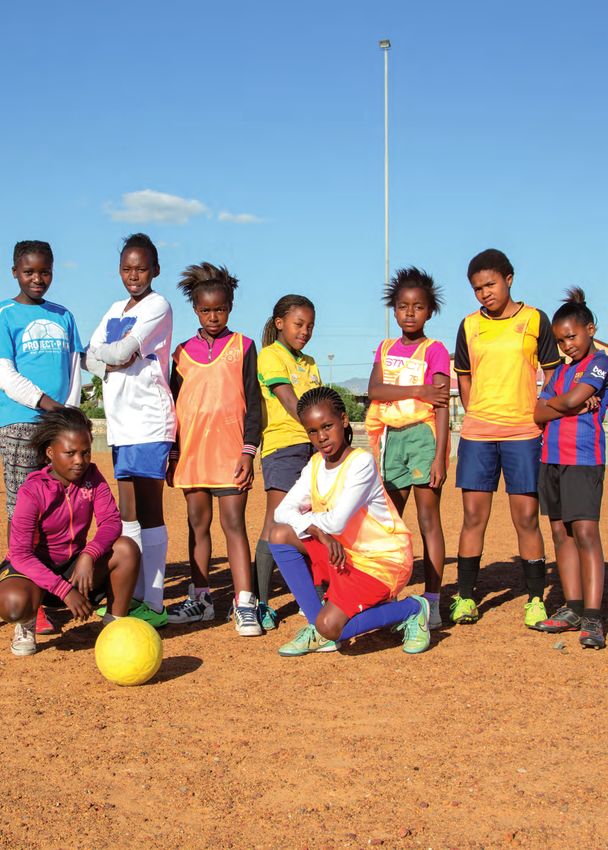
    SKILLZ Coach and participants, Lusaka, Zambia / Photo Credit: Slingshot Media

       Grassroot Soccer (GRS) is an adolescent health organization that leverages the
       power of soccer to educate, inspire, and mobilize youth in developing countries
       to overcome their greatest health challenges, live healthier, more productive
       lives, and be agents for change in their communities.
                                                                                                                                                                  OUR MODEL
                       CHALLENGE                                                           OPPORTUNITY                                          CURRICULUM              COACHES                 CULTURE
     “The world is about to undergo an unprecedented transformation:         At Grassroot Soccer we reach adolescents through the universal
     the largest generation of young people in human history is              appeal of soccer, engaging adolescents through proven soccer-
     coming of age.” - Melinda Gates, May 2017                               based curricula, caring mentor coaches, and a culture that
                                                                             encourages safe spaces for vital conversation. GRS is unique
     There are more adolescents in the world than ever before                among adolescent health organizations. We have a deep
     (1.8 billion), and they face unprecedented social, economic, and        understanding of soccer (the “hook”) and our access to the world
     health challenges. Young people in sub-Saharan Africa face the          of soccer is enviable and unusual. At the same time, research,
     most acute combination of health issues of any population in the        evidence, and information are at the core of what we do. GRS
     world. HIV, unwanted pregnancy, and gender-based violence               programs are infused with soccer activities and metaphors —
     (among other issues) are undermining a population that is projected     which makes them fun and engaging — but are also rigorously
     to double by 2050. While childhood mortality has improved               evaluated and evidence-based. We know that data is critical to
     80% in the past 50 years, adolescent mortality hasn’t budged.           improving programmes and getting as much impact with every
     The evidence is clear — adolescents are being left behind.              dollar as possible.

     Yet the future depends on young people having the tools to
     lead healthy and productive lives. The Lancet Commission has
     estimated that every dollar invested in adolescent health yields a                                                                                                                        VITAL CONVERSATIONS,
     10x economic return.                                                                                                                        SKILLZ SOCCER-BASED       CARING ADULTS
                                                                                                                                                                                              SAFE SPACES, INSPIRATION,
                                                                                                                                                 HEALTH CURRICULUM         AND MENTORS
                                                                                                                                                                                                      AND FUN
     Now is the time to invest in what works.

2                                                                                                                                                                                                                         3
GRS RESEARCH
TIMELINE
Grassroot Soccer conducts research as systematic investigation
into programme delivery impact. Our research goals are clear: to
gain a deeper understanding of the complex issues we seek to address, 2016 :
inform our organisational development, establish credibility for our
efforts, and contribute more broadly to existing evidence of effective Significant increase in girls’
adolescent health interventions. This report demonstrates the ways in self-efficacy and negotiation
which Grassroot Soccer is standing beside youth on HIV, AIDS, malaria
2015 - 2016 : skills, and a decrease in
prevention, positive youth development, sexual and reproductive health, Study in Ethiopia suggests GRS can achieve girls’ acceptance of violence,
and gender-based violence. both significant scale and quality through after going through GRS
partnerships with civil society and government. programmes.
In collaboration with a variety of research institutions and funders,
Grassroot Soccer has participated in 40 research studies since 2005,
including three randomised controlled trials (RCTs), in 24 countries and
has utilised a variety of research methods, including cluster-randomised
trials, qualitative studies, and mixed methods evaluations.
X THIS IS A SUMMARY OF SELECT FINDINGS PRESENTED IN OUR
2016 RESEARCH REPORT, AND A REVIEW OF WHAT WE HAVE
LEARNED IN THE LAST TWO YEARS:
2004:
1st independent evaluation by Stanford
University.
Key findings:
Significant improvement in knowledge, attitudes, 2012:
and perceptions of social support related to • Increased uptake of HIV Testing Services (HTS)
HIV/AIDS. After five months, GRS adolescent amongst adolescent girls in GRS programmes.
participants report that they continue to use
knowledge learned. • The Sexual Violence in Schools in
South Africa baseline study identified
high levels of intimate partner
violence among adolescents;
GRS programming strengthens
approach to violence prevention
and pilots girls-focused
programming.
2006: 2013 - 2014 :
1st peer-reviewed Increase in uptake of
publication published in voluntary male medical 2017 :
AIDS and Behaviour. circumcision amongst
Significant decrease in boys’
adolescent boys and
attitudes towards harmful
Key finding: young men participants
gender norms and acceptance
Diffusion of information in GRS programmes.
of violence, after going through
X
through GRS graduates
GRS programmes.
educating their peers.
2011:
In Zambia, the rate of HIV Testing Services
(HTS) uptake for GRS adolescent participants
reaches over 4x the national average.
4 5
ASSETS
                           IT’S OUR PASSION TO CHANGE
                           THE LIVES OF YOUNG PEOPLE
                           AROUND US SO THAT THEY,
                           TOO, CAN CONTINUE TO MAKE
                           POSITIVE CHANGE FOR THOSE
                           AROUND THEM.

     INCREASED HEALTH
    KNOWLEDGE AND THE
    CONFIDENCE TO USE IT

                                        - GRASSROOT SOCCER SKILLZ COACH
6                                                                         7
GIRLS
2017
After going through SKILLZ Health, adolescent girls:
ADOLESCENT GIRLS
+ Reported increased self-efficacy and increased negotiation skills
+ Reported increased ability to disclose and have discussions
UPTAKE OF HIV TESTING about relationships and violence
+ Are more aware of available health, HIV, and violence-support services
+ See trust and support as important parts of relationships
3X INCREASE IN HIV TESTING AS WELL AS AN + Are less likely to justify violence against adolescent girls and
INCREASE IN READINESS TO TEST young women
BUILDING THE ASSETS OF ADOLESCENT GIRLS:
KEY TO EMPOWERMENT AND FUTURE PLANNING
100
55%
To date, 1.1 million
90
adolescent girls have
80
participated in GRS
of GRS participants globally are girls programmes globally 70
60
19.2 %
increase of the
The SKILLZ asset-building approach meets It means a lot to me to be a participants ready to
BASELINE
take an HIV test
ENDLINE
the unique needs of adolescent girls, who
are at higher risk of HIV infection than their
part of the Grassroot Soccer 50
male peers. The SKILLZ approach fosters team. I am dedicated to
girls’ empowerment, promotes awareness building a new South Africa,
of sexual and reproductive health, increases a team that will prevent HIV 40
access to medical, legal and psychosocial 31.5 %
services, and prepares girls for their future.
by all means. People are dying increase of the
out there, so why should I participants ever tested
watch people die? 30
Let me be part of this team
that is making progress, 20
something I see that is 22.6 %
increase of the
working. To attract the youth, participants tested in the
bring them all together, and 10
last 3 months
share knowledge, share what
we have. This is how we can
build a new generation that
0
will be free from HIV.
UPTAKE OF HIV TESTING
- Grassroot Soccer SKILLZ participant
SOURCE: GRS studies from South Africa, Zimbabwe and Nigeria with support from UCLA, Bill & Melinda Gates Foundation and Barclays
8 9ASSETS - GIRLS 2017
BUILDING THE ASSETS OF ADOLESCENT GIRLS:
KEY TO EMPOWERMENT AND FUTURE PLANNING ADOLESCENT GIRLS
ABILITY TO DISCLOSE AND HAVE
DISCUSSION AROUND RELATIONSHIP
AND VIOLENCE
I tell my friends messages Grassroot Soccer’s sport-based programming empowers girls
to seek sexual and reproductive health services and provides a
from our Coaches, like how safe space to address sexuality and relationship issues as well as
harmful gender norms, and to learn about the social and structural
to behave, how to prevent drivers of violence against women and girls.
yourself from getting HIV and The use of soccer language makes concepts such as HIV, sex, and
gender awareness accessible, fun and non-threatening. The pairing of
other diseases, and how to the participants with a Coach in their peer group, although slightly older,
has proven to be powerful as it opens up safe spaces for the participants
treat other people. to talk about sex, sexuality, gender, pregnancy, and HIV.
SKILLZ Health for Girls is an intervention designed for girls, led exclusively
We must treat each other by female GRS Coaches, that uses soccer as a tool to engage adolescent
girls. The program combines sport-based activities with a sexual and
equally and love each other reproductive health-focused curriculum that explores the ways in which
their bodies are changing throughout puberty, incorporates gender
like we love ourselves. I think awareness, fosters healthy equitable relationships, and addresses
unintended pregnancy, contraception, and HIV prevention. This unique
all young girls should be approach provides a platform for young girls to develop their soccer skills
and participate in a sport seen as a ‘male domain’, while building critical
part of the Grassroot Soccer life skills, a sense of solidarity and support in a team environment that is
programmes so as to learn affirming and encouraging of pro-social behaviour.
about these topics in a fun and HIV and SRH-related knowledge
In multiple studies, GRS measured self-reported changes in attitudes,
100
safe way. communication, and knowledge amongst adolescent girls in SKILLZ
programmes, at pre-intervention and post-intervention. Adolescent
95.9 % = 6.9 %
girls reported overall improvements in attitudes, communication and Increase
- Grassroot Soccer SKILLZ Participant
knowledge. This increase signals the positive effect of presenting 89 % 90
information about HIV to participants using an interactive, informative
and sport-based methodology, as participants are able to process I would tell someone if I were 83.9 % = 21.6 %
information about HIV and SRH in a non-threatening and fun way. touched in a manner that
made me uncomfortable Increase
The largest increases were reflected in communication, which (agree) 80
signified increased self-efficacy and agency among participants,
resulting in confidence to speak to peers, parents and guardians 71.9 % = 34.9 %
regarding topics discussed during SKILLZ interventions. In turn, the
increased communication signifies the positive effects of creating 70 Increase
safe spaces for adolescents to discuss sensitive topics with the
support of Coaches. 62.3 %
Gender-Equitable Relationships I have discussed 60
SKILLZ programming for adolescent girls proved to be beneficial in violence against
helping girls leave physically and emotionally abusive relationships and women and girls
choose to be in relationships that contained greater levels of gender with someone
equality. Adolescent girls understood trust and support to be fundamental 50
to healthy relationships. As girls showed significant increases in self
efficacy, their beliefs with regard to gender equitable relationships also
improved, and the confidence gained to communicate their beliefs
and challenges may have led to their choice of more gender equitable 37.0 % 40
relationships. Findings from a qualitative study suggested that some girls
left physically and emotionally abusive relationships and some chose to I have talked
be in relationships that contained greater levels of equality. Research about dating/
does not indicate exactly what informed their choices, but possible relationships with 30
explanations could involve a shift in beliefs regarding gender-equitable an adult I trust in
relationships as well as improved self-concept and self-efficacy. the last 3 months
Violence Against Women and Girls 20
By developing adolescent girls’ assets and understanding of power
dynamics in relationships and their rights, GRS programming for
adolescent girls resulted in fewer girls justifying violence against
women. Although challenges still exist in addressing the root cause of 10
violence, adolescent girls in SKILLZ programmes were able to break
the silence and confidently communicate with parents regarding BASELINE ENDLINE
violent relationships, receive support from parents and increase their
awareness of services available within their community. 0
10 11ASSETS - GIRLS
BUILDING THE ASSETS OF ADOLESCENT GIRLS:
KEY TO EMPOWERMENT AND FUTURE PLANNING
Conference Conference
Presentations, Presentations,
Publications & Publications &
Ongoing Studies Title Method Results Ongoing Studies Title Method Results
2017 South African AIDS Changing the game for girls: results Baseline and endline questionnaires 89% of girls reported intimate Journal of Evaluation and Linking at-risk South African girls to Mixed-methods assessment Of 394 female participants enrolled,
Conference, Durban from a mixed methods longitudinal were administered to girls partner violence (IPV) as Planning - 2018 sexual violence and reproductive of preliminary outcomes and 97% (n=382) graduated, and 217
& 2017 International AIDS study of a soccer-based HIV and (n=146, average age = 13.6) in two unacceptable versus 70% at health services: A mixed-methods implementation processes in three unique users accessed the SMS
Society Conference on HIV SGBV prevention programme for intermediate and two secondary baseline. Some girls chose to (Brown University, assessment of a soccer-based HIV primary schools in Soweto, South platform. Questionnaires completed
Science, Paris (two separate adolescent girls in South Africa schools in Soweto over an 18-month leave abusive relationships, University of North Carolina) prevention program and pilot SMS Africa, from August-December 2013. by 213 participants (mean age:
abstracts) period. Project monitoring data were complemented by reported campaign Quantitative methods included 11.9, SD: 3.02 years) alongside
collected, including uptake of HIV decreases in justification and participant attendance and SMS qualitative findings showed modest
testing and disclosure of experiences experiences of IPV. HIV testing platform usage tracking, pre/post improvements in participants’
requiring follow-up. An external uptake (ever tested for HIV and questionnaires, and structured perceptions of power in relationships
evaluation investigated quantitative tested for HIV in last 3 months) observation. Qualitative methods and gender equity, self-esteem and
results through rapid ethnographies, increased from 12.3% to 43.9% and included 6 focus group discussions self-efficacy to avoid unwanted sex,
focus group discussions (n=6) and from 4.8% to 27.4% respectively. and 4 in-depth interviews with communication with others about HIV
interviews (n=19) with staff, coach Girls reported greater confidence, program participants, parents, and sex, and HIV-related knowledge
mentors, SSP participants as well self-efficacy, and improved decision teachers, and a social worker. and stigma. The coach-participant
as male participants in mixed-sex making, while disclosure of violence relationship, safe space, and
GRS programmes. doubled from baseline to endline. integration of soccer were raised as
key intervention components.
Ongoing study Girls Achieve Power (GAP) Year: Two-arm cluster randomized Study underway
2016 International AIDS Gender Norms; Sexuality and Qualitative study based on interviews, Barriers to access: teachers Using sport to empower girls at controlled trial (cRCT) with three
Conference, Durban Sport for Development: Challenges focus groups, semi-structured indicated that girls who want to play (Wits Reproductive Health critical time of adolescent transition time point repeated measurement
Faced by Adolescent Girls When observations, and field notes. soccer face no barriers in doing of outcome variables at baseline (12
Institute, PATH, Sonke
Participating in a Soccer-Based Life so, one saying that “nowadays months), post midline (12 months) and
Gender Justice)
Skills Programme in Khayelitsha, everyone knows that what a end line (24 months) of follow-up.
South Africa boy can do, a girl can do it too”. The primary objective is to assess
However, this sentiment seems learner dropout as they transition
disconnected from the reality that through high school, and secondary
few resources are invested in girls’ objectives include assessing
soccer, community support is limited, whether the intervention increases
and a lack of necessary strucures girls’ access to social, health, and
and infrastructure persist — all of educational assets.
which hinder girls’ access to soccer.
Policing Sexuality: based on
interviews with teachers, the idea
that playing a sport ‘for males’ might Ongoing study Goals for Girls: Cluster randomized controlled trial Study underway
have an impact on how girls think of Evaluating the feasibility, acceptability, using mixed biomedical, quantitative,
their sexuality is a significant barrier (Desmond Tutu HIV and impact of integrating an in-school and qualitative methods will be used
for girls who want to play soccer. Foundation) sexual and reproductive health to determine programme feasibility
Participants stated reasons for (SRH) education programme with an and acceptability, impact on SRH
quitting the programme, indicating after- school sport-based programme outcomes (including pregnancy, HIV
feelings of shame for not playing on SRH health outcomes amongst and sexually transmitted infections),
well, beliefs that they would become adolescent girls (aged 14-17 years) in uptake of health care services, and
tomboys, and beliefs that girls Cape Town, South Africa. impact on school attendance, both
cannot play soccer. Results indicate immediately post-intervention and 6
culturally and self-imposed gender months later.
stereotypes, which go beyond the
soccer field into other areas of life.
2018 International AIDS Outcome evaluation of Grassroot Mixed methods evaluation to Quantitative data was collected
Conference, Amsterdam Soccer-Zimbabwe SKILLZ for youth explore the relevance, efficiency, from 392 adolescents, showing
programmes (2011-2017) effectiveness, utility, and sustainability a large gap in HIV and SRHR
2016 International AIDS Supplementing Social Learning Focus groups, in-depth interviews, Co-creation and sharing of (Zimbabwe National of three GRS SKILLZ Health knowledge levels between female
Conference, Durban (Ford Theory with Communication for participatory digital storytelling knowledge between workshop University of Science and programs: Generation SKILLZ, and male participants (mean 69.3%
Foundation) & Sexual Social Change Techniques: A Mixed- workshop participants and facilitators; increased Technology) SKILLZ Holiday, and SKILLZ Street. compared to 30.7%). There was
Violence Research Initiative Methods Approach to Sexuality self-awareness, self-confidence and Quantitative methods included self- a significant (pThe programmes have taught
me how to be mindful of my
health and how I carry myself as
a young person.
I learnt a lot on puberty and
the knowledge will help me
understand my changing body.
- Grassroot Soccer SKILLZ Participant
14 15BOYS
2017 - 2018
ADOLESCENT BOYS & YOUNG MEN CHANGES IN FAVOURABLE RESPONSES TO PRE-
AND POST-TEST STATEMENTS ABOUT GENDERED
CHANGES TO VIEWS ON GENDER RELATIONSHIPS
EQUALITY
BUILDING THE ASSETS OF ADOLESCENT BOYS:
KEY TO ENGAGEMENT AND RETENTION 1 2 3 4
100 %
45%
To date, 900,000 61 %
adolescent boys have
% INCREASE
participated in GRS
45 %
of GRS participants globally are boys programmes 26 %
17 %
0%
Building assets through SKILLZ ensures
adolescent boys participate in critical 100 % 94 % 92 %
I had two girlfriends before SKILLZ came to
discussions about what it means to be a our school. I was into a sexual relationship 83 %
man, take small steps to achieve their goals, with the two. Having two girls was so
81 % 80 %
stay strong when faced with challenges, and prestigious and made me a jack of all trades 73 %
support each other to be positive male role at the campus. I felt like a king in other
models in their communities.
BASELINE & ENDLINE (%)
ways. After SKILLZ, I have learnt that having
57 %
more than one sexual partner increases
the risk of HIV transmission. I have since 50 %
dropped all the two and refocused my vision
to school, for education indeed is the key
to success. The risk of having two partners
would easily have landed me into STIs and
possible be a father at a tender age. I do not
think school would be so dear again if I was
to be a father. “Risk factor,” a topic in one of
the practices, helped me change my way of
0%
living. [I] am ready to go for an HIV test for
Unequal power in Guys and girls It is the male’s Men should share
that is where my future begins. relationships can should listen to responsibility to the work around
contribute to the each other. make decisions in the house, such as
1
A P-Value indicates there is a statistically significant difference between scores at baseline spread of HIV. (Agree) a relationship.2 cleaning.
and endline. (Agree) (Disagree) (Agree)
2
% who expressed gender-equitable response. - Grassroot Soccer SKILLZ Participant
P-VALUE1ASSETS - BOYS
BUILDING THE ASSETS OF ADOLESCENT BOYS:
KEY TO ENGAGEMENT AND RETENTION
SKILLZ Health for Boys uses different intervention designs in both Results from three studies
mixed and single-sex settings. Our 3C model has proven to create
meaningful changes in the lives of young men and adolescent boys ZIMBABWE
in diverse contexts and towards a range of health and development
outcomes. Using football as a hook seems especially appropriate for 4.6 %
young men and boys – football is a platform already used by young 12.2 %
men and adolescent boys, and often builds on their existing identities
and preferred styles of acting and communicating. Two cluster-randomised trials of a sport-based voluntary
male medical circumcision (VMMC) intervention in
Shaping gender norms among very young adolescent boys Bulawayo, Zimbabwe produced promising evidence of
Studies from Nigeria and South Africa have highlighted the potential its effect, especially among school-going youths, finding
of single-sex interventions for very young adolescent boys (10-14) strong evidence that the intervention increased VMMC
to shift harmful gender norms. In South Africa, a 7-session SRH and
gender norms intervention for adolescent boys (mean age = 13.88)
found significant improvements to gender equitable views (n=974).1 UGANDA
uptake nearly threefold, from 4.6% to 12.2%.
IT WAS A NORM ON FRIDAY
AND SATURDAY TO GO WITH
Transferable skills 55 %
Multiple studies2 with young men and adolescent boys have found 23 %
that the 3C model is particularly effective at providing an experience 26 %
that develops important skills or competencies that apply to different
life events and may enable outcomes. Using a mix of evaluation A modified sport-based voluntary male medical
designs, we have found significant improvements to participants’ future
orientation, communication skills, positive self-image, and self-control/
discipline
circumcision (VMMC) intervention delivered in-school to
adolescent boys (mean age = 16) found that 55% of
uncircumcised participants registered for Safe Medical
Circumcision, with 23% undergoing circumcision by the
FRIENDS TO THE TAVERNS
AND BINGE ON ALCOHOL.
Meaningful relationships with male mentors end of the study. 26% of male participants were also
Findings from a process evaluation of a sport-based voluntary medical vaccinated to prevent other health issues, highlighting
male circumcision (VMMC) demand creation intervention in Zimbabwe the potential of integrating health services or using
found that the coach-participant relationship was the key factor in medical male circumcision as an entry point to other
increasing participants’ motivation to undergo VMMC, especially among health services.
younger male participants.
The GRS sport-based VMMC demand creation intervention has been
recognised by the Bill & Melinda Gates Foundation as one of the most
Access to health education and health services for hard-to-reach
young men and boys
Using football structures and sport-based education, GRS found that
BUT DURING [SKILLZ] WE
HAD SOMETHING TO KEEP
innovative and effective VMMC interventions for young men and its soccer-based intervention to promote healthy living pro-social
boys, recognized by PEPFAR in COP 2017 Guidance as a “Country behaviours among unemployed men (18-25) recruited from local
Example of Priority Interventions for Preventing New Infections Among taverns was highly acceptable and resulted in reduced violence
Adolescents and Young Adults Under 30”, recently highlighted by towards women, crime, and drug usage compared to a control group.
UNAIDS’ 2017 World AIDS Day Report “Addressing a blind spot in the
response to HIV — Reaching out to men and boys”, and selected as
the “Best Demonstrated Impact” winner in the Optimizing Prevention
Technology Introduction on Schedule (OPTIONS) Consortium Demand
Creation Challenge.
US BUSY, AND THAT ALSO
KEPT US FROM WAYWARD
RESULTS FROM TWO CRTs IN ZIMBABWE RESULTS FROM A FEASIBILTY STUDY IN UGANDA
ACTIVITIES.
VS
BASELINE: 4.6 % 12.2 % INCREASE ENDLINE 12.2 % 0% 23 % 26 % 55 % 100 %
1
[Publication under development] HIV prevention and SRH education on the football pitch: results from a mixed-methods evaluation of an HIV prevention program delivered to adolescent boys by
football coaches.
2
Banda, DeCelles, Peacock-Villada. (2007). Grassroot Soccer Resiliency Pilot Program: Building resiliency through sport-based education in Zambia and South Africa. Afterschool Around the
Globe: Policy, Practices, and Youth Voice. - GRASSROOT SOCCER SKILLZ PARTICIPANT
18 19ASSETS - BOYS 2017 - 2018
BUILDING THE ASSETS OF ADOLESCENT BOYS: After going through SKILLZ Health, adolescent boys and young
KEY TO ENGAGEMENT AND RETENTION ADOLESCENT BOYS & YOUNG MEN men:
+ Are 2.5x more likely to circumcise
KNOWLEDGE OF HEALTH RISKS + Are more likely to test for HIV
+ Report large gains in knowledge about and healthier attitudes
ASSOCIATED WITH MULTIPLE towards reproductive health, gender-equitable beliefs, and
gender-based violence
Conference CONCURRENT PARTNERS + Are less likely to perpetrate violence against adolescent girls
and young women
Presentations, An improvement of 23% was observed.
+ Are more willing to test for alcohol and drugs, and less likely to
test positive for drugs while enrolled in SKILLZ Health
Publications &
Ongoing Studies Title Method Results
Journal of Acquired Process Two cluster Randomised Control Findings demonstrate high program acceptability,
Immune Deficiency Evaluation of Trials (RCTs), were conducted along highlighting the coach-participant relationship as a key
Syndromes - 2016 a Sport-Based with 17 interviews and 2 focus group factor associated with uptake. Specifically, participants
Voluntary Medical discussions with coaches and 29 valued the coaches’ openness to discuss their personal
(London School of Hygiene Male Circumcision interviews with circumcised (n = 13) experiences with VMMC and the accompaniment by their
and Tropical Medicine, Demand-Creation and uncircumcised participants coaches to the VMMC clinic.
Brown University, National Intervention (n = 16).
in Bulawayo,
University of Science and
Zimbabwe
Technology)
PLoS ONE - 2017 Soccer-based A mixed-methods (quantitative 59% of boys reported being circumcised already; findings
promotion of and qualitative) approach was showed high levels of knowledge and generally favourable
(Uganda Virus Research voluntary medical used to explore the feasibility and perceptions of circumcision. Initial implementation
Institute, London School male circumcision: acceptability of a soccer-based resulted in uncircumcised boys (10.3%) becoming
of Hygiene and Tropical A mixed-methods VMMC intervention in Uganda. circumcised. Following changes to increase engagement
Medicine, WHO) feasibility study with 210 boys were enrolled in a cross- with parents and schools, uptake improved to 26.1%. In-
secondary students sectional survey. depth interviews highlighted the important role of family
in Uganda and peer support and the coach in facilitating the decision
to circumcise. The study showed the intervention may be
effective; since it is time-intensive, further work is needed
to assess the cost-effectiveness of the intervention
conducted at scale.
2018 International Social Changing gender YEDI and GRS designed and pilot- To date, 796 participants completed the programme
and Behaviour Change norms, improving tested SKILLZ Guyz, an SRH and gender with a 92% graduation rate (attending at least 7 out of 11
Communication Summit, health: a sport- transformative life skills intervention sessions). Overall pre/post questionnaire results showed a
Nusa Dua based sexual for adolescent boys. The programme 26% increase in attitudes, communication, and knowledge
and reproductive uses soccer metaphors to build self- – and large gains specifically on gender equitable norms,
(Youth Empowerment and health efficacy, challenge risky behaviors, and self-efficacy, knowledge of reproductive health, and risk
Development Initiative) programme in encourage participants to become of multiple concurrent partners. Findings from this study
Lagos, Nigeria positive role models. Leveraging will inform intervention revisions and research methods
the power of soccer is an innovative for a rigorous mixed-methods evaluation starting in 2018
approach expanding the potential to (see ongoing study below).
engage boys who may not otherwise
participate in SRH and gender
programming.
Ongoing study - 2018 Using a A convergent parallel mixed Study underway
sport-based methods design will be used to
(Youth Empowerment and Intervention to gain a deeper understanding of the
Development Initiative, improve sexual effectiveness of the intervention.
Nigeria Institute of Medical and reproductive The qualitative methods will include
Research) health including focus group discussions and in-
health-seeking depth interviews, providing deeper
behaviours understanding of the processes
among related to planning, training,
adolescent males implementing, monitoring, and
in Lagos, Nigeria reporting on intervention activities.
Quantitative data will include
self-administered questionnaires,
standard routing monitoring data on
fidelity, and uptake of HIV testing.
2018 International AIDS HIV prevention Participants (mean age = 13.8) All questionnaire items showed significant improvements
Conference Society, and SRH completed a 17-item questionnaire pre- to post-intervention. The largest changes were seen
Amsterdam education on the at baseline (September-December in items about communication about HIV with friends,
football pitch: 2016, n=974) and immediately after gender equitable decision-making responsibility in
(South African Football results from a the intervention relationships, and drinking alcohol increasing HIV risk.
Association) mixed-methods (March-May 2017, n=974). Focus Larger changes were seen in older participants (ages
evaluation of a group discussions (FGDs) were 14-17) in items pertaining to decision-making responsibility
HIV prevention conducted with participants (n=1) in relationships and attitude toward people living with
programme and coaches (n=1) and in-depth HIV. Qualitative data found unanticipated improvements
delivered to interviews (IDIs) were conducted to communication and discipline on the football pitch.
adolescent with GRS staff (n=2) and LFA These findings suggest that local football structures
boys by football administrators (n=1). may be under-utilised in reaching adolescent boys. The
coaches intervention and delivery channel present opportunities
for scale and merit more rigorous, longer-term evaluation.
20 212017 - 2018
COACHES
Additional Findings
THE COACHES
+ SKILLZ Coaches are not only crucial implementers of sexual and
reproductive health curricula, but are the next generation of
community leaders and change agents.
PERCENTAGE OF SKILLZ COACHES + Structured work and skills development, combined with the use of
sport- based methodology, may offer an innovative and evidence-
WHO HAVE OPENED THEIR OWN based manner in which to tackle the twin, interrelated epidemics of
BANK ACCOUNT AND HAVE HIV and youth unemployment.
+ Favourable results in health knowledge, community leadership
GRADUATED INTO FURTHER and employability amongst SKILLZ Coaches were also observed.
+ Coaches gain Social Return on Investment which is a calculation
EDUCATION OR EMPLOYMENT that determines the worth of the benefits generated for society,
evaluating both inputs and outcomes of an intervention.
DEVELOPMENTAL JOURNEY OF COACHES
100 %
In South Africa > 65% of 18-25-year-olds are unemployed
This is caused by a faltering education system that limits knowledge
and skills development, systematic economic and social exclusion
of those historically disadvantaged, as well as unequal access to
training, networks, and resources to find employment.
Grassroot Soccer (GRS) SKILLZ Coaches come from the communities
GRS works in and are 19-30 years old. Their Coach Development
Journey includes:
• Training and mentorship to ensure high quality delivery of
SKILLZ Health programmes for adolescents
• Structured and supervised work experience
• A Coach Development Programme, which shows an
increase in agency and leadership skills and a drastically
It’s difficult to believe in
increased likelihood of accessing employment or further
study opportunities beyond their two years with GRS. In turn
yourself if people can’t believe
in you, so we first believe in
73 %
this journey that SKILLZ Coaches undertake contributes
to decreasing the impact of many of the societal and
economic drivers leading to high levels of HIV and gender
based violence in their own lives and close family networks.
those kids. We show them
Delivering SKILLZ Health is at the core of what GRS does in terms
that they are important and
of our approach to adolescent health and is the vehicle through
which our Curriculum, Coaches, and Culture are shared with
whatever they want to achieve,
adolescent participants. It is also a vital aspect of the journey
SKILLZ Coaches embark on towards their own development and
they can do it, there is no limit.
ultimately becoming confident, independent, and employable
individuals. During the delivery of SKILLZ, Coaches gain valuable
Low self-esteem is dangerous.
COACHES THAT GRADUATE WITH A BANK ACCOUNT
work experience that will contribute greatly towards this. It
includes planning skills, engaging stakeholders, scheduling
sessions, facilitating learning and discussion, working in a team,
monitoring and evaluation skills, resilience, and problem solving,
amongst other skills. All of which takes place under supervision
and with support, structured for them by GRS staff. This gives
SKILLZ Coaches the opportunity to experience aspects associated
with the broader world of work, but within a safe environment.
RESULTS
COACHES THAT GRADUATE INTO FURTHER
EDUCATION, EMPLOYMENT OR TRAINING
Results from a longitudinal study of the first cohort of coaches to complete
the GRS Coach Development programme demonstrated a significant - Grassroot Soccer SKILLZ Coach
increase in self-esteem, future orientation and planning, financial skills,
community leadership, and computer literacy.
In comparison to the national average on youth unemployment in
South Africa, these findings suggest that the combination of training,
work experience, and a formal Coach Development programme has a
positive impact on the lives and futures of SKILLZ Coaches.
This programme has been implemented comprehensively in South
Africa, and at a small scale in Zambia, Zimbabwe, and in GRS partner
organisation Youth Development and Empowerment Initiative (YEDI),
in Nigeria.
22 23ASSETS - COACHES ASSETS - COACHES
DEVELOPMENTAL JOURNEY OF COACHES DEVELOPMENTAL JOURNEY OF COACHES
Conference
Presentations,
Publications &
Ongoing Studies Title Method Results
2018 International Social Grassroot Soccer - South Africa Programme aims to develop Quantitative and qualitative research shows
and Behaviour Change Youth Employability and Leadership unemployed youth to become SKILLZ Coaches demonstrate increased
Communication Summit, Programme: A Response to the (1) effective change agents and employability and leadership, greater agency,
Nusa Dua Youth Unemployment Crisis leaders in their communities improved knowledge of HIV and healthy
(building assets); and behaviours, and develop a range of life
(2) move onto further skills. Furthermore, 73% of SKILLZ Coaches
employment, education or that completed their two-year tenure since
training following their two- programme inception (between 2013 – 2016),
year tenure with GRS SA accessed further employment (54%), education
(promoting access). and/or training (19%).
IN ADDITION TO THE Commonwealth Youth and
Development Journal - 2017
Changing the game – can a
sport based youth development
A results-based management
approach and a social return on
Preliminary results offer encouraging evidence
of progress into employment, education and
PROFESSIONAL SKILLS I HAVE
programme generate a positive investment methodology were training with positive social returns for the youth
(University of the Western social return on investment? used to track the young people and external stakeholders, suggesting that this
Cape) during and after the intervention. investment is cost-effective and impactful. The
results indicate that structured sport-based
programmes can put young people to work
LEARNED, THE INTANGIBLE
and get them to study in a constructive manner,
thereby stimulating economic growth and
development. It concluded that initiatives using
sport to promote youth work merit greater
THINGS I TOOK AWAY WERE
investment, recognition, and research.
SO VALUABLE. GRASSROOT
SOCCER MADE ME BELIEVE I
CAN BE A GAME CHANGER IN
MY COMMUNITY, BUT ALSO
SHOWED ME I CAN BE A GAME
CHANGER IN MY OWN LIFE.
GRS staff and SKILLZ Coaches, Lusaka, Zambia / Photo Credit: Slingshot Media
- GRASSROOT SOCCER SKILLZ COACH
24 25ACCESS MY WISH FOR GIRLS GROWING
UP TODAY IS THAT THEY
SHOULD FOLLOW THEIR
DREAMS AND NEVER LET
ANYTHING OR ANYONE
STAND IN THE WAY OF THEM
REACHING THEIR GOALS.
A GIRL WITH A VOICE IS
STRONG, CONFIDENT, AND
INCREASED UPTAKE ABLE TO TAKE ON THE WORLD.
OF HIGH QUALITY
HEALTH SERVICES
- GRASSROOT SOCCER SKILLZ PARTICIPANT
26 27ACCESS RESULTS FROM 2017
INNOVATIONS IN ADOLESCENT-CENTRED SERVICES AND SERVICE
INTEGRATION PARTNERSHIPS FACILITATING ACCESS TO
SERVICES FOR ADOLESCENTS
Kenya
Zimbabwe
VAP has:
GRS Zimbabwe programmes are - Reached 30,000
an integral source of HIV and SRHR adolescents with
information for young people, SKILLZ programming
and provide important linkages to - Tested approximately
critical health services. 2,000
In addition to building the assets of adolescent boys and girls, SKILLZ participants in a girls-specific programme accessed STI services individuals for HIV
Grassroot Soccer ensures they are linked to high quality, adolescent- and 26.9% of participants in the smaller SKILLZ week-long programme
friendly health services. This portion of the report highlights some reported accessing VMMC.
of the achievements and insights gained from working with service
delivery partners in a few of Grassroot Soccer’s priority partnership Malawi Malawi
geographies. The Baylor College of Medicine and the Children’s Foundation of
Malawi, a partnership established in part by the Malawian Ministry GRS has tested and referred
South Africa of Health, serves as a pillar of pediatric HIV care in the country*. Over over 2,000 people.
Public-Private Partnerships & Centre for Communication Impact the years, Baylor has built a large adolescent support programme, Zambia
In 2015 GRS established a 3-year public-private partnership to prevent focusing on the provision of clinical care and treatment, mentorship,
HIV, promote sexual and reproductive health and rights (SRHR), and and advocacy. In collaboration with GRS, the program was developed
reduce the likelihood or sexual and gender-based violence (SGBV) by to fill a gap in testing and uptake among Malawian youth, and includes 4,900 adolescents were
challenging harmful gender norms among adolescents, and providing a combination of home visits, private counselling, and regularly-held referred for integrated HTS
clear linkages to post-violence care for survivors, HIV testing, and SRH community HIV testing tournaments. More recently, in 2017 Baylor and and SRH services
services. GRS successfully scaled its sport-based approach through GRS designed and scaled the Transition Training (T2) project: a self-care,
partnerships with three community-based organisations (CBOs) by rolling social enfranchisement, and career development programme for 17 - 25
out an integrated, comprehensive community prevention programme year olds living with HIV and transitioning to adult care.
called Community Responses in 2016. Both programmes have reached
significant scale and have built-in sustainability strategies by building the The Global AIDS Interfaith Alliance (GAIA) is an innovative healthcare
capacity of local community-based organisations and strengthening the organisation that directly provides comprehensive HIV education, testing,
enabling environment. and care through the implementation of GRS programmes, regular home
visits to encourage uptake, support of youth clubs, hosting of activity-
Hope in South Africa based community events, and local mobile clinics. GAIA has brought
Educating South African Youth About Fetal Alcohol Spectrum critical health services to remote regions of Mulanje, and has been
Disorders (FASD), is a sport-based education and prevention particularly vital in increasing the number of boys and young men who
programme that engages and teaches children between the ages get tested for HIV and gain access to relevant health services. Indeed,
of 10 - 18 in South Africa’s Northern Cape province, which has the GAIA has tested over 2,000 people and referred many to services, with
highest incidence of FASD in the world, about the dangers of Fetal about fifty percent of the total referrals for VMMC. Nigeria
Alcohol Spectrum Disorders.
*More detail in ADHERENCE section Highlights from Nigerian
Nigeria partnerships
The Youth Empowerment Development Initiative (YEDI) Kenya - 600+ Coaches trained
YEDI has partnered with GRS since 2011 to provide comprehensive Vijana Amani Pamoja (VAP) is a youth-focused social services - 141,000 adolescents
sexuality education in and out of schools across Nigeria, and deliver organisation based in Nairobi, and a long-standing partner of GRS. reached with SRHR
integrated, youth-friendly sexual health services. YEDI oversees the programming
operation of three UNFPA-supported “Hello Lagos” centres, linked to - 53,800 adolescents
the Lagos State Ministry of Health, through which they offer a range of tested for HIV and
adolescent-friendly services. Malaria
Special Olympics Nigeria (SON)
SON has partnered with GRS since 2014 to provide unique HIV, malaria,
and life skills education and testing services to people living with and
without intellectual disabilities.
Zambia
Since 2012, GRS has been working in partnership with the Ministry of
Health of Zambia and other clinical service providers, such as Centre for
Infectious Disease Research Zambia (CIDRZ) to ensure our adolescent
participants have access to friendly and confidential clinical services, South Africa
and to facilitate adherence support clubs for adolescents living with HIV
in government health facilities, and to mobile HIV testing. As a result of
- Highlights from South African partnerships with CBOs Hope in South Africa
these service integrations, there has been an increase in access to health
- 400+ coaches trained 98% graduation rate; statistically significant positive change for
services for young people.
- 25,028 adolescent graduates 9 of the 14 questions included in the pre-post surveys; statistically
- 2,632 people referred for contraceptives significant positive change in participants’ communication about
Zimbabwe
- 7,282 people referred for HIV testing services FASD, knowledge related to sexual and reproductive health and
GRS Zimbabwe has partnered with several organisations in order to link
- 1,132 people referred for VMMC FASD, and attitudes towards pregnancy, alcohol consumption,
adolescents to more health information and appropriate health services.
- 2,020 people referred for SGBV services and men’s role in FASD prevention. Qualitative data showed
For participants in SKILLZ Health, the National AIDS Council helps to
that the intervention has the potential to change participants’
provide HIV testing and counseling, while participants seeking VMMC
Pre-Post intervention surveys across CBOs showed that behaviour as respondents described risky situations and
are referred to Population Services International. GRS Zimbabwe also
adolescent participants experienced notable increases in: identified actual steps to avoid or remove themselves from such
links adolescents and their families to sexual and reproductive health
- Communication with friends and family about HIV situations.
services through the Zimbabwe National Family Planning Council
(107% average increaase)
and Ricabytes. According to a 2017 outcomes evaluation, about 14%
- Improvement in knowledge (24% average increase)
of SKILLZ participants reported accessing VMMC, while nearly 15% of
- Healthy attitudes (18% average increase)
28 29ACCESS
INNOVATIONS IN ADOLESCENT-CENTRED SERVICES
AND SERVICE INTEGRATION PARTNERSHIPS
Conference Conference
Presentations, Presentations,
Publications & Publications &
Ongoing Studies Title Method Results Ongoing Studies Title Method Results
2018 International AIDS Lessons from implementing SKILLZ Lessons learned from the Key lessons learned from a 2015
2016 7th African Increasing Contraceptive Prevalence Mixed methods evaluation of sport- Increase in contraception Conference, Amsterdam for life: A sport-based HIV and life implementation of SKILLZ for Life, external evaluation and 2017-2018
Conference on Sexual in adolescent girls in Malawi: A model based intervention for in-school prevalence rate among adolescent skills programme for youth with an HIV prevention and life skills process evaluation include the
Health and Rights, for success and out-of-school adolescent girls, girls from 9% to 21%; 3781 referred intellectual disabilities in Namibia, programme for youth with intellectual importance of early engagement with
(Special Olympics
Accra including modelling exercise utilising for SRH services; 2,780 unintended Nigeria, and South Africa disabilities (ID) in South Africa and key stakeholders and community,
Nigeria, Special Olympics
Marie Stopes International Impact2 pregnancies averted; caring Nigeria. The programme aims to rigorous curriculum review and
(innovation tool to estimate impact of relationships built between Coaches International)
(Concern Worldwide, increase knowledge of HIV and adaptation for participants with ID,
Banja La Mtsogolo) reproductive health programmes) and adolescent girl participants sexual rights, malaria/HIV testing and the use of Family Health Forum
uptake, self-esteem, and improve events to provide ID-friendly health
attitudes toward health services of services for participants and their
2016 Medical HIV Testing Attitudes and Behaviours 23-question survey to assess Preliminary data suggest that this “athletes” with ID and their “partners,” families.
University of South at a Sports-based HIV Prevention socio-demographics, HIV risk population is highly motivated to participants without ID.
Carolina (MUSC) Program in Mukuru kwa Ruben, behaviours, HIV testing behaviours test for HIV and willing to use HST
Global Health Nairobi, Kenya and attitudes, and knowledge of HIV on themselves and as a tool to
Conference self-testing (HST), HIV status, linkage motivate others to test. As the age
and barriers to care of participants increased, so did the
(Vijana Amani Pamoja, proportions of those who knew about
HST and were wiling to use HST.
MUSC) 2018 International AIDS Scalability of SKILLZ for Life: A sports- Mixed methods evaluation conducted Quantitative survey results show
Conference, Amsterdam based behaviour change HIV/AIDS from June 2017-January 2018 in significant positive changes from
and Malaria programme for young order to assess the scalability of baseline to endline, including
2017 Fetal A mixed methods convergent parallel 98% graduation rate; statistically (Special Olympics people with intellectual disabilities SKILLZ for Life to other geographies. improvements on HIV stigma,
Alcohol Spectrum study design was used, including a pre significant positive change for Qualitative methods included 10 IDIs, HIV and malaria knowledge, and
Nigeria, Special Olympics
Disorders Summit, and post intervention questionnaire, 9 of the 14 questions included in 7 FGDs, and 3 observation visits, identifying sexual abuse items.
International)
Bloemfontein focus group discussions and one in- the pre-post surveys; statistically while quantitative pre/post surveys Qualitative data indicate conditions
depth interview. significant positive change in were used to examine changes in for successful scale include
(Hope in South Africa) participants’ communication participants’ knowledge, behavior, adaptation of curriculum to local
about FASD, knowledge related and attitudes. context and including community
to sexual and reproductive health stakeholders in the training process
and FASD, and attitudes towards in order to improve health outcomes.
pregnancy, alcohol consumption,
and men’s role in FASD prevention.
Qualitative data showed that the
intervention has the potential to
change participants’ behaviour
as respondents described
risky situations and identified
actual steps to avoid or remove
themselves from such situations.
2018 International Importance of engaging parents and Using participatory communication Between 2016 - 2017, 2,213 girls aged
Social and caregivers in the provision of HIV model for dialogue, reflection and 10 - 14 received the programme
Behaviour Change Testing Services (HTS) to adolescent action, girls and their parents/
Communication girls 10 - 14 in Johannesburg caregivers discussed the
Summit, Nusa importance of HIV prevention and
Dua; programme accessing services.
ongoing
(Centre for Communication
Impact)
Peace Corps SKILLZ participants, South Africa /
Photo © Holly Powers, USAID Southern Africa
30 31Grassroot Soccer has taught me that one cannot tell
just by looking at someone, one needs to be tested to
know if they are HIV positive or negative.
We were taught to love even those who are HIV
positive and treat them as we would treat ourselves.
- Grassroot Soccer SKILLZ Participant
32 33ADHERENCE
SUPPORTING ADOLESCENTS LIVING WITH HIV
ADHERENCE
Innovative Partnerships SKILLZ Plus & Clubs
Recognizing that more services are available to adolescents living
with HIV (ALHIV) than in previous stages of the HIV epidemic, GRS Our work is evolving and we are piloting new and different
is actively looking to broaden the types of support we can provide approaches to engaging ALHIV while continuing to reach and
to young people living with HIV. We aim to continue building strong support ALHIV through SKILLZ Plus interventions and clubs.
partnerships with local institutions, both clinical and non-clinical, and
connect youth to local resources to improve adherence and retention • SKILLZ Plus is specifically tailored to adolescents living with
in care. HIV, providing them with mentorship, life skills, information
on living healthy sexual lives and links to quality health
AIDS Healthcare Foundation services. Grassroot Soccer’s work is evolving, which
Grassroot Soccer partners with the AIDS Healthcare Foundation requires piloting new and differentiated approaches to
(AHF) in South Africa and Zambia. In Durban, South Africa, GRS has engaging adolescents living with HIV (ALWHIV).
partnered with AHF to build capacity and support services at a local • Clinical partnerships: In Zambia and Zimbabwe, the SKILLZ
clinic serving ALHIV in order to improve retention to care. At various Plus program is implemented in partnership with Ministry
sites across Zambia, GRS has partnered with AHF in order to improve of Health, where interventions and peer support meetings
linkages to quality support services; all young people who test HIV (see below) are held from district and community-level
positive from AHF health facilities and testing events will be enrolled health facilities.
in SKILLZ Plus. • Home visits: In Zimbabwe, home visits are conducted by
Coaches and are at the request of participants, peers, or
Baylor College of Medicine Children’s Foundation-Malawi care providers in order to provide holistic support and/or
In 2017, GRS revised the Baylor College of Medicine Children's follow up.
Foundation - Malawi (BCM-CFM) Transition Training program, which • SKILLZ Plus Clubs: After the conclusion of the initial
aims to support young adults living with HIV as they transition into SKILLZ Plus intervention, participants are linked to peer
adulthood and adult HIV care. T2 was created in response to young support groups — SKILLZ Clubs — where they continue to
adult patients' requests for tips on finding jobs, starting and sustaining access services and connect with their team of supporters.
businesses, how to have healthy sex while living positively, and which SKILLZ Clubs are held once every month, which for most
modern contraceptive methods were most effective on ARVs. Through participants coincides with their monthly clinical visits for
an asset-building approach, T2 also aims to improve psychosocial and check-up and refills. Some SKILLZ Clubs are held outside
behavioral outcomes that influence decision-making in sexual health of the health center at local community centers.
and relationships, economic empowerment, and self-care skills.
After initial success in Lilongwe, the second round of the program was
initiated in 2017, with a pilot program in rural Salima District and use of
the revised curriculum in Lilongwe. A mixed methods evaluation of T2
is underway, with preliminary results demonstrating modest positive
changes in many domains measured in a quantitative pre/post survey,
such as support, leadership/mentorship, HIV and SRH knowledge,
disclosure self-efficacy, and self-concept (n=35). Greater changes
were seen in the Salima (rural/peri-urban) cohort than the Lilongwe
(urban) cohort, with the Lilongwe cohort demonstrating higher baseline
scores. Qualitative interviews with service providers and Ministry
of Health stakeholders have been conducted, with participatory
focus groups and data analysis to be held with participants later in
2018. Participants will be trained in research methods using a Youth
ADHERENCE TO MEDICAL
Participatory Action Research (YPAR) approach in order to empower
and engage them in further research and dissemination of findings.
ALHIV Working Group
TREATMENT, THERAPY, AND
Over the years, GRS’s ALHIV programmes have been adapted to the
local context in which they are implemented. In order to ensure GRS
is providing evidence-based and relevant programming across all of
our sites and partnerships, Grassroot Soccer established an internal
HEALTHY BEHAVIOURS
ALHIV working group in late 2017. The goal of the working group is
to share internal learnings, highlight innovations, and ensure that our
programmes are effectively responding to the needs of ALHIV.
34 35You can also read


