REACHING THE HARD TO REACH: A Case Study of Brazil's Bolsa Família Program - The Reach ...
←
→
Page content transcription
If your browser does not render page correctly, please read the page content below
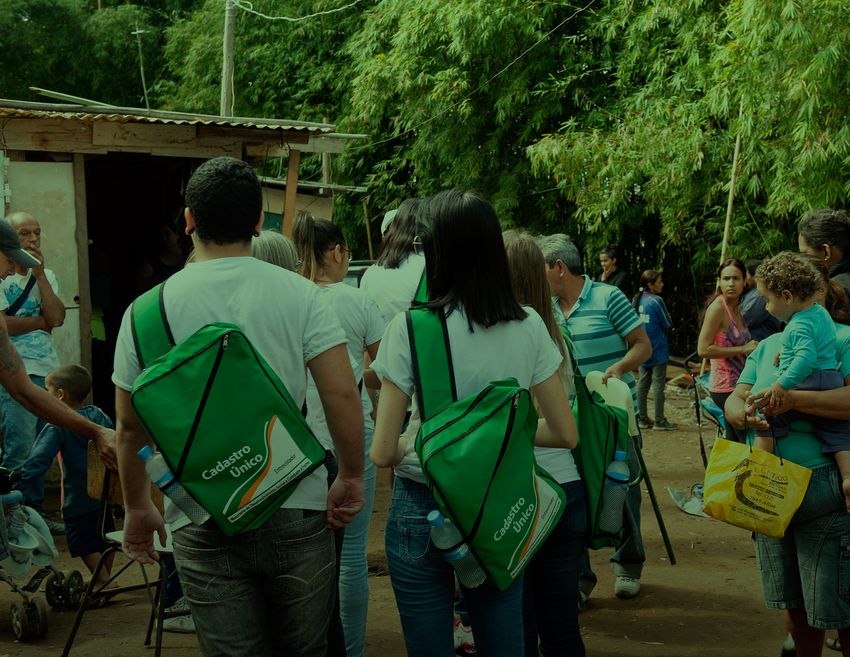
REACHING THE
HARD TO REACH:
A Case Study of Brazil’s
Bolsa Família Program
CONTENTS

REACHING THE HARD TO REACH: FOREWORD   1

1. INTRODUCTION                        3

2. CADASTRO ÚNICO                      7

3. DIRECT TRANSFER                     13

4. LOCAL IMPLEMENTATION                17

5. MEETING CONDITIONALITIES            23

6. CITIZEN PARTICIPATION               27

7. LESSONS LEARNED                     31

RESEARCH TEAM                          33
REACHING THE HARD TO REACH
FOREWORD                                                                                                          Brazil’s Bolsa Familia
                                                                                                                  Program has already been
It has been said that development is about delivery: the will and ability to deliver interventions to very        studied from many different
poor people in order to improve their lives. The development “space” is filled with great ideas and innovative    perspectives. But what is
solutions, from technological interventions to new policy initiatives. But the effects of these potentially       new and promising about
game-changing ideas are severely mitigated if they do not actually get to the people they are intended to         Reaching the Hard to Reach
benefit. We think of this challenge in terms of “reach.” Solutions can only solve problems if they reach those
                                                                                                                  is that researchers are asking
who need them most.
                                                                                                                  basic and yet pertinent and
Those who live at the base of the pyramid – the poorest of the poor – are also the hardest to reach.              challenging questions: How
Many are homeless or live far in the countryside; they might lack formal identification; or they are socially     do social participation and
marginalized because of their ethnicity or gender. As Anthony Lake of UNICEF puts it: “Disaggregate the data      transparency arrangements
and we find that our statistical national successes are masking moral and practical failures. People are left     play a role in the
behind simply because they live in rural communities or urban slums, in conflict zones, as part of indigenous     implementation process? How
groups, with disabilities or because they are girls.”                                                             does a decentralized political
The Bolsa Familia program in Brazil is an excellent example of an innovative social policy program that           structure turn a design
successfully reaches the hardest to reach. Bolsa Familia is a conditional cash transfer scheme that targets       obstacle into an advantage in
Brazil’s poorest families. In addition to reducing poverty and improving health and education outcomes            reaching otherwise “invisible”
among those in the bottom income quintile, the Bolsa Familia program is noted for its precision, in not only      citizens? How does the
identifying and finding the poorest of the poor, the socially excluded and the geographically distant, but also   program maintain precise
in delivering the cash benefit to these families. This report explains how the Bolsa Familia has achieved this.   and updated information
Our findings point to innovative policy design, the appropriate use of technologies, sheer legwork in the         about its 14 million families?
villages and urban favelas, and political attention paid to the challenges and imperatives of reach.
                                                                                                                  The research approach
The following report on the Bolsa Família program is based on a year-long research project, carried out           adopted in this study gets at
by Professor Joseph Wong of the Munk School of Global Affairs and Department of Political Science at the          various points of view from
University of Toronto, and five research assistants: Nina Da Nóbrega Garcia, Nicoli Dos Santos, Sarah Ray,        policymakers and managers
Ariel Sim and Alexa Waud. Funding for the project was provided by the Ralph and Roz Halbert Professorship         as well as street-level
in Innovation at the Munk School of Global Affairs; the Canada Research Chairs program; and the                   personnel, opening a new
MasterCard Center for Inclusive Growth.                                                                           and promising perspective for
                                                                                                                  social policy analysis.
The authors of this report would like to express our gratitude and appreciation to those we met and
interviewed in Brazil, specifically those in the Ministry of Social Development and the Institute for Applied
                                                                                                                                     - Bruno Câmara Pinto
Economic Research in Brasília, and the inspiring people who are making Bolsa Familia reach in Salvador,           National Secretariat of Citizenship Income,
Dias d’Ávila, Sapeaçu and Belo Horizonte.                                                                               MINISTRY OF SOCIAL DEVELOPMENT,
                                                                                                                                                       BRAZIL
This project is the first of several more focusing on the concept of development reach, and specifically
innovative programs that are reaching the hardest to reach populations.
                                                                                                                                                           1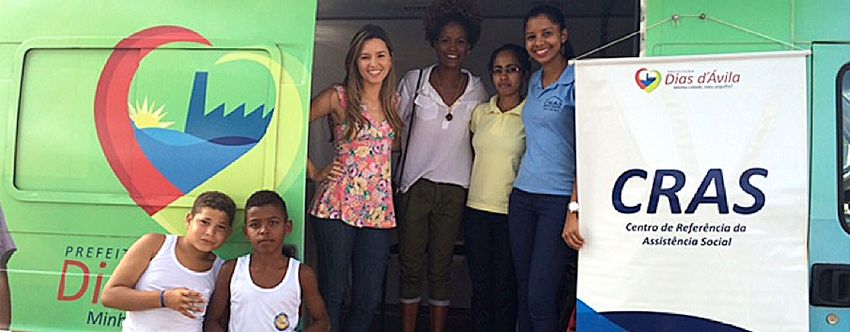
REACHING THE HARD TO REACH:
An Introduction to Bolsa Família
2
I. INTRODUCTION
 1.1 Reach
 Brazil is a highly unequal society. Despite having experienced years of robust economic growth, levels
 of social and economic inequality remain very high. Brazil’s Gini Coefficient ranks it among the most unequal
 societies in the world. In 2011, for instance, still more than 3% of the population lived under conditions of
 “extreme poverty,” earning a monthly income of less than R$70 (approximately US$18 in 2015). Meanwhile,
 almost half of the population – 49% – lived in “vulnerable situations,” earning a monthly per capita income
 of between R$149 to R$560 (US$39 to US$147). Poverty in Brazil is chronic, described by policymakers as
 “intergenerational poverty” – cyclical poverty in which the very poor tend to stay very poor.

 The Bolsa Família program (BFP) was created in 2003 by President Lula to end persistent poverty. The
 BFP resulted from the consolidation of four pre-existing conditional cash transfer programs, such as
 Bolsa Escola, an education conditional cash transfer scheme. From 2003 onwards, the BFP has continually
 expanded its coverage, reaching nearly 13.8 million families by 2015. As of July 2015, the BFP covered 48
 million people, or about one-quarter of Brazil’s population.
                                                                                                                     In 2004, nearly three-
 The program is managed by the central government in Brasília, though it is implemented and operated
 by Brazil’s 5570 municipalities. The average monthly benefit paid to a BFP family is R$163 (US$43 in 2015
                                                                                                                     quarters of cash
 dollars). The cost to operate the BFP equals just 0.5% of GDP, making it an inexpensive program to run,             transfers from the
 especially considering its coverage and reach.                                                                      Bolsa Família program
 What stands out about the BFP is that it is able to reach the poorest of the poor in Brazil. According to           actually reached those
 a 2007 World Bank report, in 2004, nearly three-quarters of cash transfers from the BFP reached those
 families whose income was in the bottom quintile; Brazilian officials estimate that upgrades to the online
                                                                                                                     in the bottom income
                                                                                                                     quintile. Bolsa Família
                                                                                                                     is reaching Brazil’s
                                                                                                                     very poor.
                      80%      Absolute Incidence - CCTs in Brazil and LAC
                      70%                     (QUINTILES)                             BR-BFP 2004
% of total benefits
received by each

                      60%                                                             CL-SUF/Solidario 2003
    QUINTILE

                      50%                                                             MX-Oportunidades 2002
                      40%
                                                                                      AR-Jefes 2003
                      30%
                      20%
                      10%
                      0%
                            Q1		    Q2		            Q3		            Q4		       Q5   Poorest to richest (QUINTILES)
                                                                                                                                           3
registration processes, regulations and more accurate data collection have improved the BFP’s targeting
            Basic                      record. Eighty percent of the remaining 25% (or four-fifths) were transferred to the next lowest income
          Benefit                      quintile, or the “near poor.” This means that “fiscal leakage,” a common problem where corruption and rent-
           (R$77)
      for families in                  extraction are prevalent, such as in Brazil, is not a severe problem in the delivery of Bolsa Família. Compared
    extreme poverty                    with other Latin American countries’ cash transfer programs, the BFP’s performance in actually reaching the
    (pc income below                   poor stands out by a considerable margin.
      R$ 77/month)

                                       The BFP’s reach is impressive. When it comes to social policy, reaching the very poor is very difficult to do.
                                       Reaching the hardest to reach involves identifying the very poor, finding them and, finally, delivering social
                                       services to them. But consider the challenges: those living under conditions of poverty tend to be informally
                                       employed; they likely live in informal housing without a permanent or fixed address; and they are often
         Child Benefit                 socially excluded if, for instance, they are from one of Brazil’s minority “traditional groups.” The very poor in
             (R$35)                    rural parts of the country live far from town centers. People living in slums, especially precariously employed
         for each child
          (0-15 years)
                                       workers such as migrant workers, are constantly on the move. River dwellers living along the Amazon are
                                       effectively “off the grid.” And many poor people are not even aware of government-run social programs. In
                                       other words, identifying, finding and delivering social services pose daunting technical, administrative and
                                       political challenges. And yet the BFP has successfully reached the hardest to reach in Brazil.

               Pregnant
                Women                  1.2 What is Bolsa Família?
              (9 months
                x R$35)                Eligible families that receive BFP benefits are those whose monthly per capita incomes are equal to or
             and Lactant
            Women Benefit              less than R$77 (US$20). Families that earn monthly per capita incomes between R$77 and R$154 are also
              (6 months                eligible if they have children younger than 18 years old.
                x R$ 35)
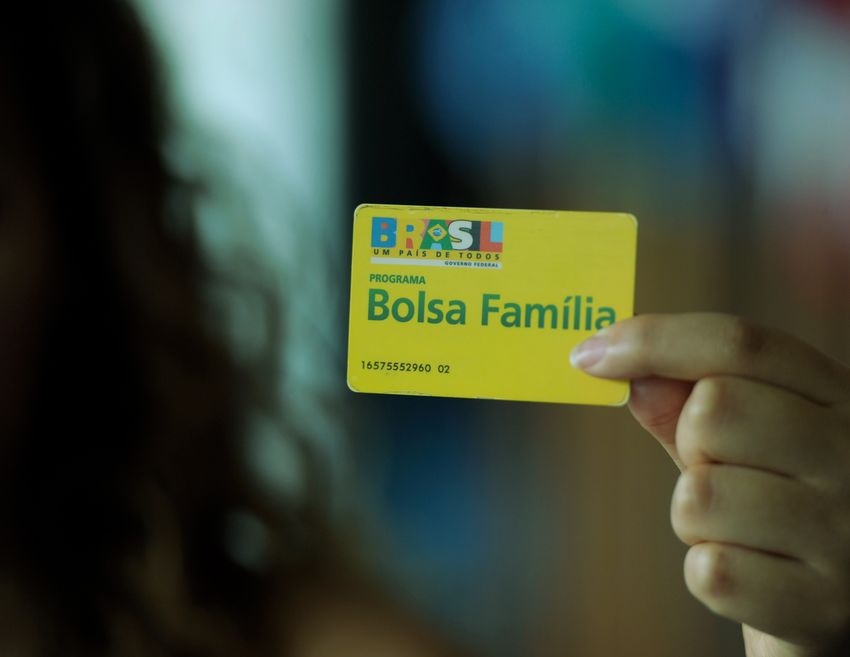
                                       Qualifying families are identified in the Cadastro Único (CadÚnico), a unified registry of all low-income
                                       households in Brazil. The CadÚnico is managed by the central government, and currently has household
                                       data on more than 27 million families; of these, 13.8 million families are enrolled in the BFP.
                 Youth Benefit
                     (R$42)
                                       Cash benefits are paid directly to each family through an electronic payment system. The amount paid
                for each youth         each month varies, depending on several factors. The basic monthly benefit is R$77. Monthly child benefits
                  (16-17 years)        of R$35 are added for each child 0 to 15 years old, as well as pregnant and lactating women (up to five
                                       beneficiaries). An additional benefit of R$42 per month is included for youths aged 15 to 17 (up to two
                                       youths for each family). And last, a superation top-up is calculated for families living in extreme poverty.

                                       The BFP is a conditional cash transfer program. In order to withdraw their monthly cash transfers,
                       Extreme
                       Poverty         beneficiaries must demonstrate that they (and their family members) have met the program’s health and
                      Superation       education conditionalities. Health conditionalities require that children between 0 and 6 years old be
                        Benefit        vaccinated and attend regular health check-ups; and that pregnant and lactating women attend pre- and
                   (variable, brings
                    family to extr.    post-natal check-ups and participate in health promotion activities offered by local health units. Education
                    poverty line of    conditionalities stipulate that children aged 6 to 15 must maintain an 85% attendance record at school, and
                       R$77 pc)        youths aged 16 to 17 must achieve a 75% record. Municipal operators of the BFP monitor BFP families to
4                                      record whether conditionalities have been met.
1.3 Impact
The BFP has had a positive impact on poverty reduction and human development in Brazil. Since the
introduction of the BFP in October 2003, poverty incidence has declined continuously. Health outcomes,
measured in terms of under-5 child mortality and nutrition, have improved among BFP families. Education
outcomes are similarly impressive. For example, children of families that receive BFP benefits are less likely
to drop-out of high school and thus more likely to graduate than children from non-BFP families. Empirical
research on the effects of the BFP on employment show that BFP recipients are not incentivized to leave the
labor market; rather than making poor people “lazy,” BFP recipients are likely to continue to work, to look for
work, work as farmers or small-scale entrepreneurs.
1.4 Research
The research presented in this report was funded by the Canada Research Chairs program; the Ralph
and Roz Halbert Professorship of Innovation at the Munk School of Global Affairs; and the MasterCard
Center for Inclusive Growth. The research was conducted by Professor Joseph Wong; three undergraduate
students, Nicoli Dos Santos, Sarah Ray and Alexa Waud; one graduate student, Ariel Sim; and a recent
graduate of the Masters of Global Affairs program at the Munk School, Nina Da Nóbrega Garcia. Research
was conducted throughout 2015, including primary fieldwork in Brazil during December 2015. Interviews
and site visits were conducted in Brasília, Salvador, Dias d’Ávila, Sapeaçu and Belo Horizonte.
The research was vetted by the Ethics Review Board of the University of Toronto.
The report is organized into five sections. The key theme that runs through all five sections is reach:
specifically about how the Bolsa Família program is so successful in delivering cash transfer benefits to
Brazil’s poorest of the poor and most difficult to reach populations.
Section 2 describes the Cadastro Único and how the unified registry gathers information that provides
both big data and precise data with which the BFP can effectively identify, find and deliver benefits to the
most difficult to reach populations. Section 3 focuses on the cash transfer system, and specifically how BFP
benefits are transferred from the central government directly to individual households. The fourth section
describes how the BFP is implemented and operated by Brazil’s 5570 different municipalities. The program,
though it is centrally managed by the Ministry of Social Development, is in fact decentralized in its operation,
allowing considerable latitude for municipal innovation in implementation. Section 5 highlights the impact of
health and education conditionalities on human development outcomes for those who receive BFP benefits.
And last, Section 6 describes how the BFP’s success hinges in part on local, bottom-up participation by
citizens themselves. Findings from our fieldwork confirm that participatory mechanisms, such as local or
municipal councils, give poor people an active voice in how Bolsa Família operates, as well as a sense of
stakeholder empowerment.
5CADASTRO ÚNICO PARA PROGRAMAS SOCIAIS Unified Registry for Social Programs 6
2. CADASTRO ÚNICO
2.1 Identifying and Finding
To reach the poorest of the poor involves identifying, finding and delivering to them social services. How
does the Bolsa Família program (BFP) find and identify the poorest of the poor?

The Cadastro Único Para Programas Sociais (Unified Registry for Social Programs) is the central government
registry for all of Brazil’s low-income households. Created in 2001 by the Ministry of Social Development
(MDS), the Cadastro Único (CadÚnico) houses information in a single database about poor families that
potentially qualify for social assistance benefits. Currently the CadÚnico has data on more than 27 million
households, or approximately 80 million people, accounting for 40% of all Brazilian households. Nearly 14
million households benefit from Bolsa Família.

Data recorded in the CadÚnico is used by the
government to determine which families and
individuals are eligible for 30 different government-
sponsored social service programs. In addition                                                                The Cadastro Único has
to Bolsa Família, other social programs that use
CadÚnico data to determine eligibility include the
                                                                                                              become a tremendous
Tarifa Social de Energia Elétrica (electricity subsidy),                                                      resource. It has
Programa Minha Casa Minha Vida (My Home, My                                                                   quantified poverty,
Life), and the Bolsa Verde (environmental subsidy). In
this regard, the CadÚnico actively identifies qualifying                                                      identified geographical
families; many poor families do not know about                                                                areas of socio-economic
certain programs or are unaware that they are eligible
to receive social program benefits. The CadÚnico                                                              vulnerability, and it has
ensures poor families do not fall through the cracks.                                                         revealed the face of
The CadÚnico is a tool for identifying and finding poor families. The detailed database provides a “map” of   poverty in Brazil is that
poverty in Brazil, showing the government where the most vulnerable and poor families live. By identifying    of a young black female
and finding such households, the CadÚnico is also used to effectively deliver social services and programs
such as Bolsa Família to eligible families.                                                                   living in a rural area.
                                                                                                                            – MDS Official

                                                                                                                                          7
2.2 Collecting Data
Information about low-income households is collected with the use of a lengthy questionnaire (the
“green book”). The CadÚnico collects data on the family, including information about: household income;
information about each family member such as education levels and employment status; the number of
children; descriptions of the physical residence in which they live; and so on. Each family member is given a social
In many favelas or identification number (NIS).
those living in the Households provide the following information in the Cadastro Único questionnaire:
countryside, residents
• housing characteristics (number • education level of each
do not have formal of rooms, type of construction, household member
addresses. This address or landmarks)
• employment status of each
does not preclude, • family composition (number household member
of family members, pregnant
however, the Cadastro women, elderly) • family income
Único from recording • identification of each household • family expense (rent,
transportation, food)
where such people member
live. In lieu of an
It is important the CadÚnico records information about where the family lives. This is often not
address, place of straightforward, however, as many poor people do not have a permanent residence. Some are homeless.
residence is identified Others live in slums without a formal address. Some live along the rivers. Hence, in addition to asking
registered households in the CadÚnico to indicate their address, the questionnaire also asks them to
by a landmark, physically describe their dwelling (i.e. apartment, home, shared room, block); to indicate the public space
directions, and other they live near (i.e. a street, avenue, river stream, an alleyway); and whether their residence is permanent,
improvised or shared. Question 1.20 of the CadÚnico questionnaire asks specifically that the registered
“informal” markers. family provide additional descriptions of their residence to help social workers locate where they live. As
As a result, even if a an MDS official explains, the CadÚnico collects “clues” to help the MDS determine where the poorest of the
poor can be found.
potential beneficiary
does not have a The household information collected for the CadÚnico is self-reported, though the responses are recorded
by an interviewer who administers the green book questionnaire. Most often the head of household (for the
permanent residence purposes of registering for social programs) creates a file by visiting a Reference Center for Social Assistance
or address, he or she (CRAS). The head of household is usually the mother (or female head of household). The interview data is
digitally inputted. In larger cities, such as Salvador, the main CRAS in the city center receives approximately
will still be recorded 500 visitors each day. The number of CRAS centers in each municipality varies. In the small town of Sapeaçu,
in the registry. for instance, there is one CRAS center to service the town’s 18,000 inhabitants, while in the large city of Belo
Horizonte, there are 33 centers for nearly 2.4 million people.
8The reality for many poor families is that the CRAS center is not
accessible, either because it is too far away or because the registration
process is too onerous or simply not a priority. To ensure that all low-
income households are registered in the CadÚnico, the CRAS centers
will dispatch social workers to poorer or distant neighborhoods to
directly register families for the registry. Social workers will often
conduct home visits to assist families in the registration process. The Reference Center for
Social Assistance (CRAS)
Despite efforts to bring the registration process directly to homes,
however, there remain many who are not included in the CadÚnico. The CRAS center is the main
Brazil’s poorest of the poor live in slums as well as the most remote and entry point for people to
difficult to reach places, such as the countryside or jungles along the
access basic social programs.
Amazon River. Many Brazilians also face what government officials refer
The CRAS is usually located
to as “double exclusion”: both economic and social exclusion. Sixteen
“traditional groups” are recognized by the MDS – including Gypsies,
in the most vulnerable
Quilombolas (descendants of slaves), Ribeirinhos (traditional fishing areas within a municipality
communities), indigenous groups, homeless people, among others – and offers a range of social
who are poor and socially marginalized, and often without any formal assistance services depending
identification. Reaching these families is difficult. on the neighborhood’s specific
needs; provides information
To ensure the CadÚnico precisely identifies members of “traditional groups,” low-income households and
about all social programs;
those who qualify for social programs such as the BFP, the MDS employs a strategy of active search. Active
and registers families for the
search is implemented at the local level, addressing the specific challenges of municipalities. For example, in
Dias d’Ávila, a town of 80,000, the CRAS dispatches a van – the Unidade Social Móvel (Mobile Society Unit) – CadÚnico. Social services
to do weekly visits to families who live far from the town center. In Belo Horizonte, the government assigns offered by the CRAS include
a basic health unit to specific catchment areas within the city and family health teams go door-to-door to counselling, family protection
follow-up with families and to enlist new ones into the CadÚnico. services, psychological and
other health services. In Belo
Horizonte, CRAS centers
are integrated within a city-
wide program called the BH
Cidadania (or BH Citizenship),
an innovative social service
program addressing food
security in vulnerable
areas; coordinates access
to education; manages cash
transfer programs; and assists
in employment placement.
9On the families’ In addition to reaching those who are hard to reach, the CadÚnico must also ensure that the data it collects
is up-to-date. Inaccurate data undermines the ability of the MDS to identify, find and deliver social services
addresses: why are they to poor households. During the initial implementation of the CadÚnico in 2003, the quality of household
so important? To send data in the registry was very poor. The CadÚnico was not updated regularly, there was a lot of missing
them their cards and data, and the MDS was unable to verify the accuracy of reported information. Thus in 2005, the MDS
initiated a major push to improve the CadÚnico, to “clean” the existing database, and to put into place new
letters. Finding them is mechanisms to ensure the continual updating of household information into the future. Municipalities were
the name of the game. It incentivized (with fiscal resources) to carry out this federal initiative. According to MDS officials, 85% of the
doesn’t matter whether current administrative work on the CadÚnico is spent on updating and verifying the database, while the
remaining 15% is dedicated to enrolling new families.
the address is precisely
right. People only need Families are encouraged to update – self-report – their registry information whenever there are changes to
to be found. So how do their status, such as births or deaths; a change of address or residence; changes in employment status and
income; and so on. The municipal CRAS centers are also pro-active in updating information, as well as in
we find them? There are verifying household changes. To ensure the registry data are accurate, the CadÚnico is periodically checked,
many ways: the postmen household data verified with local-level CRAS centers, and updated at least once every two years.
who work in the favelas
know where everybody
lives; or people usually
look for their mail at post 2.3 The CadÚnico and Bolsa Família
office centers, and this The CadÚnico is managed by the central
is also true for people government’s Ministry of Social Development (MDS),
living in rural areas though the actual implementation of data collection
is the responsibility of the 5570 municipalities in
(including Amazonia); Brazil. The municipal coordinators of the CadÚnico
the zip code system is and Bolsa Família are the main points of contact
very good in Brazil (most for beneficiaries, and municipal agencies, such as
the CRAS centers, are in charge of data collection,
people know their own), entry, verification and updating. Household-level
and people who live in data collected by the municipalities are consolidated
big cities take advantage centrally. The federal bank Caixa Economica Federal
(Caixa) operates the CadÚnico registry.
of it. These are the clues
for the hardest-to-find
situations.
-MDS Official
10The MDS uses the CadÚnico registry to target – to identify and find – those households which are eligible
for the Bolsa Família program. The targeting process involves three steps. First, municipalities collect
household-level data about low-income households. Second, the data are consolidated centrally and
managed by the Caixa Bank. And third, the MDS identifies the specific families who qualify for the BFP and
enroll them into the program (see graphic below).
Cadastro Único Targeting System:
Three Basic Steps
Family Registry (Cadastro Beneficiary Payroll includes only
Único) includes all families families that have been deemed
that are registered (whether eligible; Used for payroll purposes,
or not they are eligible) program monitoring
Database BFP
Consolidation Eligibility Beneficiary
Data Collection and Management Determination Payroll List
& Entry & Verification
(household (sub-registry)
registry)
Municipalities: Caixa Economica Federal: Ministry of Soc. Devel. (MDS)
• Collect Data • Consolidates data from • Verifies information via internal and
• Enter Data municipalities external cross-checks
• Some cross-checks • Assigns identification • Establishes eligibility for BFP payroll
numbers (NIS) (sub-registry)
• Runs some cross checks
2.4 Summary
The successful reach of the Bolsa Família program is due to the extraordinary data provided by the
Cadastro Único that are used to find and identify the hardest to reach families. The CadÚnico provides the
MDS with precise and updated household-level information to target and deliver conditional cash transfers
to very poor, socially excluded as well as geographically distant families.
11DIRECT TRANSFER Maximizing Bolsa Família’s Reach 12
3. DIRECT TRANSFER
3.1 Delivering Directly
The Bolsa Família (BFP) cash transfer is
delivered monthly to enrolled families through an
electronic payment system operated by the Caixa
bank. Beneficiaries receive a BFP bank card upon
enrollment in the program. The card is used to
withdraw funds, much like from a personal debit
bank account, from Caixa ATMs, bank branches and
ubiquitous lotteria houses throughout Brazil. The
electronic payment system was adopted to ensure
that cash transfers are reliable, safe and have a broad
reach; for instance, sending a check through the
postal system is less viable as many poor households
do not have permanent housing or an address, and
are unlikely to have a formal bank account. The BFP
payment system does not require the beneficiary to
have a bank account or a Caixa account. Simply put,
being “unbanked” does not prohibit a poor family
from claiming BFP benefits.

Because BFP funds are directly delivered to families
through an electronic payment system, money is not
transferred through either the state or municipal
governments. This reduces fiscal leakage and mitigates
the possibility of corruption and patronage.

Each beneficiary’s BFP card has a specific identity
number. This number is not only unique to the
individual beneficiary household, but also indicates what specific day of the month the funds are available to
be withdrawn. According to current regulations, funds that are not withdrawn on the specified date are held
for up to three months.

                                                                                                                 13
The BFP payment system is operated by the federal government-owned Caixa bank. Payments are paid
directly to the beneficiary through Caixa’s existing networks of ATMs, bank branches and Caixa-owned
lotteria houses. In addition to operating the payment system, the Caixa bank also provides administrative
and technical support to the CadÚnico and the BFP, such as hardware, data analysis, information systems
management and software, as well as local troubleshooting. As the operator of the payment system it
is in Caixa’s interest to maintain a secure and efficient cash transfer mechanism. Continual optimization
of Caixa’s payment system operations, the BFP database and the CadÚnico has resulted in significant
reductions in administrative costs since the program’s implementation. In 2015, the MDS and Caixa
When a Bolsa Família introduced the BFP mobile app, a beneficiary-facing app which allows BFP beneficiaries access to their
beneficiary fails to account, updates, conditionalities, and other important sources of information relating to their program
status. Prior to the introduction of this app, BFP enrollees had to present themselves in-person at a
meet the program’s government office to access their account.
conditions (education
and health), they will
receive a warning
3.2 Customized Messaging
slip when they go to
withdraw their funds. BFP is a conditional cash transfer program,
meaning beneficiary families must meet all education
The warning slip and health conditionalities to remain eligible for cash
explains why their transfers. Benefits are suspended when families fail
to fulfill the conditions. However, often times the
account is, or will beneficiary is unaware that their benefits are soon to
soon be, suspended. be suspended or they have yet to update their school
and health records. Before an account is suspended,
Rather than give a the beneficiary will receive a warning slip directly
generic message, from the ATM (or other cashpoint) when they go to
withdraw the cash transfer. The slip explains why their
the BFP operates account is or will soon be suspended. The warning is
with such precise specific to that individual, and not a generic message,
reflecting the precise data which the BFP uses to
and personalized track and reach beneficiaries. The warning slip is not
data that it is able intended to be punitive. The messaging is positive,
to provide each emphasizing to the beneficiary the importance of
meeting the education and health conditions. The
beneficiary a unique MDS finds that with customized and encouraging
warning slip. messaging, people are more likely to take action and
fulfill the program’s conditionalities.
143.3. Reaching the Hard to Reach
The CadÚnico is the data backbone of the BFP. Unique household information about individual low-
income households is collected and updated by the CadÚnico in order to identify and find poor families
Remote distance is a
eligible for BFP benefits. But identifying and finding poor families does not mean the challenge of delivering
cash transfers to them is resolved; knowing where they live is not the same thing as getting cash to where real problem. Rugged
they live. While the Caixa’s network of ATMs, bank branches and lotteria houses is extensive, it is also limited and difficult to reach
to the existing Caixa infrastructure. Banking regulations prohibit the diversification of possible cashpoints terrain, such as Brazil’s
to grocery stories, post offices, retail stories and point-of-sale devices. Thus, those living outside the Caixa
network – such as families in the remote countryside – are less likely to be reached. It is not uncommon for
rainforests, is a problem
eligible families living in exceptionally remote areas to exceed the three month deadline to withdraw their when it comes to
BFP funds; not because they are negligent or have failed to meet their conditionalities but simply because delivering the BFP cash
they cannot reach a cashpoint (i.e. ATM) within the three month hold period. Government officials are
transfer to poor families
currently contemplating changes to the hold period for families living in remote areas, extending it from
three months to six months so that families are able to access a cashpoint. living off-the-grid. To
address this problem,
the Caixa bank outfitted
3.4 Summary
a “Caixa boat” with
Unlike other social services and cash transfer programs, the BFP directly transfers cash benefits automated payment
to recipients through an automated electronic payment system. Though it is a challenge to get cash equipment and remote
transfers to those who are unable to regularly access the Caixa banking network, the direct transfer system
maximizes the BFP’s reach and minimizes fiscal leakage. connectivity on-board
in order to deliver cash
benefits to those living
in areas accessible only
by waterways. Security
requirements for the
boat, however, make
it impossible for the
Caixa boat to navigate
in smaller or shallow
waterways. Despite such
innovative efforts, many
eligible beneficiaries
remain unreached.
15LOCAL IMPLEMENTATION Strategizing One Municipality at a Time 16
4. LOCAL IMPLEMENTATION
When the Brazilian government was considering how to design and implement the Bolsa Família program
(BFP), advisors from Mexico encouraged Brazilian policymakers to centralize the conditional cash transfer
scheme. The Brazilians resisted, however. Social policymakers chose to maintain a centralized administration
and cash payment system, but contrary to the advice of their Mexican counterparts, the BFP was implemented
by municipal governments. Local implementation more accurately reflects the vast diversity of local contexts in
Brazil; a one-size-fits-all approach would not work.

4.1 The Role of Municipal Governments
The central government, and specifically the Ministry of Social Development (MDS), outlines the goals and
objectives of the BFP, though local municipal governments implement the program. Municipalities, and not the
central government, are responsible for collecting and updating the data used in the Cadastro Único; actively
search in order to find and identify families that are eligible to be enlisted in the unified registry; monitor and
report that health and education conditionalities are met; and provide supplementary services to BFP recipients.
Simply put, with 5570 municipalities in Brazil, there are also 5570 different implementation strategies.

For example, Belo Horizonte (BH) is a large, urban
metropolis. The BFP and other social service programs
are implemented by the Belo Horizonte Municipal
Council of Social Assistance; the Social Assistance
Secretariat; the coordinating office for the BFP; as well
as neighborhood commissions and district councils.                                                                    As there are 5570
Given the size of BH, the city organizes nine main
regional Social Assistance (CRAS) Centers. Additional                                                                 different municipalities
CRAS centers and community centers are located in                                                                     in Brazil, there are
the most vulnerable and poor areas in BH. In Sapeaçu,
a rural town of just 18,000, the implementation and                                                                   also 5570 different
organization of the BFP is much simpler than in BH,                                                                   implementation
though similarly based at the level of the municipal
government. Whereas in BH the CRAS centers and                                                                        strategies for the BFP.
local health clinics are spread throughout different
regions and catchment areas in the city, the entire BFP administration is located in one village block. The staff
complement in Sapeaçu is significantly smaller as well.

                                                                                                                                                 17
How each municipality implements and manages the BFP differs. In BH, for example, social workers (CRAS social
ACTIVE SEARCH workers, community health agents) are assigned to specific catchment areas identified as “high vulnerability”
Active search refers to finding and identifying neighborhoods within the city. The BH municipal government uses census data to identify which catchment
those who live under conditions of extreme
areas have a higher concentration of poor families and allocate more social service resources to those vulnerable
poverty, live far from city and town centers,
who are also socially marginalized, or those areas. CRAS social workers are responsible for their own catchment areas, registering families and monitoring
who do not have access to social programs them to ensure that conditionalities are met. Community health agents and workers will both deliver health
such as Bolsa Família. Active searchers services to BFP recipients and refer their patients to the CRAS center to register for or update their CadÚnico
identify low-income families who are not profiles. Because the catchment areas in BH are densely populated, distance is not an obstacle to reaching the
registered in the CadÚnico, enlist them in
poor. However, the population density, the spread of informal employment, and the lack of permanent housing
the unified registry, enroll families in social
programs, and ensure their registry profile is make it difficult to find and identify especially vulnerable families.
updated regularly.
In rural areas, on the other hand, the population is disparate, homes are widely spaced and can be far from
Municipalities implement innovative
practices to reach those hard to reach the town center where the CRAS centers and health clinics are located. In Dias d’Ávila, a smaller city in the
families. For example, in the town of Dias northeastern state of Bahia, social assistance vans are deployed to reach vulnerable households that live far from
d’Ávila, a mobile social services unit makes the city. BFP workers, CRAS social workers and community health agents travel up to an hour to find and reach
a trip once per week to reach those living those families who cannot or are unwilling to travel to the city center to register or update their CadÚnico profile.
far from the town center, traveling up to an
In the city of Salvador, Brazil’s third largest city but also one of the poorest, many poor families do not even know
hour to find and identify rural families. The
mobile unit brings different kinds of social the CadÚnico and BFP exist. Mobile teams are thus deployed in very poor neighborhoods and favelas to register
service workers, depending on the needs of families in the CadÚnico and for the BFP. Many of these areas are without any internet and mobile connectivity,
the community, including community health and word-of-mouth and door-to-door visits are the only way in which CRAS and BFP workers can reach very poor
workers, psychologists, lawyers, health care and marginalized households. Churches and neighborhood associations will also request the mobile teams to
technicians, and so on. Mobile services in
come to their specific areas in the city.
Dias d’Ávila are very successful, and usually
reach between 20-30 people each trip. Many
of the people reached by the mobile social Monitoring BFP recipients to ensure that health and education conditionalities are being met is also a municipal
services unit are unlikely to come to the responsibility. Prior to 2006, there was no comprehensive monitoring system in place. As a result, during the
town because of the lack of time, means or early days of the BFP, data reporting on health and education conditionalities was spare and inconsistent.
awareness of the social programs that are Then, only 40% of BFP beneficiaries were monitored to ensure that health and education conditionalities were
available to them.
being met. This has improved since 2006, however, largely due to municipal efforts to increase their capacity
Belo Horizonte (BH), on the other hand, is to accurately monitor and report on whether individual households are meeting the BFP health and education
a very large city of 2.38 million people. In
conditionalities.
order to more effectively manage social
services delivery and to actively search
for very poor families who may qualify for In BH, schools and basic health units receive a list of children and families living within a specific catchment
social programs like the BFP, the municipal area who are receiving BFP benefits. Teachers and family health teams are responsible for recording school
government has divided BH into several attendance and medical check-ups for each beneficiary. This information is consolidated and sent to the
catchment areas and identified each as municipal secretariats for education and health, and then collected centrally by the federal Ministry of Social
being low to high vulnerability areas.
Development (MDS). But just as it is very difficult to identify poor families for the CadÚnico and deliver cash
Each catchment area is assigned a basic
health unit to provide health services, benefits to many poor and hard to reach households, it is similarly challenging to accurately monitor and report
information and to monitor extremely on health and education conditionalities. Social workers assigned to specific catchment areas in BH often go
vulnerable families. Community health door-to-door in poorer neighborhoods to check that BFP recipients are meeting the program’s conditionalities. In
workers go door-to-door within their Dias d’Ávila mobile units are deployed to register families for the CadÚnico and to report that conditionalities are
specific catchment areas to encourage and
monitor BFP recipients.
being met (or not) in the town’s schools and health centers. And in Sapeaçu, community health agents make daily
home visits to remind families about meeting the BFP’s health and education conditionalities.
184.2 Decentralized Management Index
To ensure municipalities improve the implementation and administration of the BFP program (BFP),
the Ministry of Social Development (MDS) has put into place the Decentralized Management Index (IGD), a
performance-based incentive scheme for municipalities. The IGD scores municipal performance, rewarding
municipalities that achieve high implementation and management scores with additional fiscal resources and
subsidies from the central government.
The IGD evaluates each municipality on the following criteria:
1. The quality of the data collected for the Cadastro Único
2. The percentage of families that have updated their registry information
3. The percentage of children whose school attendance are monitored
4. The percentage of children with completed and accurate health records
The IGD incentive system, in one respect, was created to lessen the variation in implementation effectiveness of
the BFP across municipalities. Municipal performance, while overall very good, nonetheless varies, depending
on the resources each has, as well as the political will to effectively implement the BFP. The MDS finds that
service provision tends to be less effective in poorer and smaller municipalities, and where, in some cases,
municipal leaders do not have the political will to implement the CadÚnico and the BFP. The IGD scheme was
created to incentivize municipalities to create political will and to provide fiscal resources to the most vulnerable
municipalities to improve the implementation of the BFP. For example, vans were purchased with IGD subsidies
in Dias D’Ávila and Sapeaçu for their mobile units.
4.3 Local Innovation
Local implementation of the BFP gives municipalities the opportunity to innovate in order to meet their
specific needs and to address specific challenges. Reaching the urban poor in densely populated favelas
where residents do not have an address or are constantly on the move presents different challenges than
reaching the very poor in geographically isolated areas such as in the Northern region and along the Amazon
River. Municipal autonomy to implement the BFP allows local governments to devise local solutions that best
address local challenges.
BH has always been at the leading-edge of innovation in social services provision. It was one of the first municipalities
to introduce a local conditional cash transfer program in 1996. Before the BFP was created, the BH government
generated a vulnerability index of the city using georeferenced data from surveys and census data, identifying
catchment areas in BH where the city’s poorest and most vulnerable live.
19In 2002 the BH government introduced a supplementary social assistance program for high vulnerability areas:
BH Cidadania. The BH Cidadania was rolled out first in nine pilot neighborhoods in BH, and has expanded to 34
catchment areas, each with its own BH Cidadania center. The city’s social assistance secretariat hopes to expand
the program to 54 catchment areas in BH. The BH Cidadania centers are essentially a one-stop shop for all of the
city’s social service programs, including supplementary services such as job training workshops. Social workers at
the BH Cidadania centers keep track of low-income families, their eligibility for social programs and registration in
the CadÚnico. In 2009, the BH municipal government created the Família Cidadã program, specifically targeting
the most vulnerable citizens in BH. For instance, to qualify for the Família Cidadã program, families must earn, per
capita, less than R$70 each month and score “extremely vulnerable” in the Belo Horizonte Family Development
Index. Beneficiaries of the Família Cidadã program are given more attention with respect to their health and
education needs.
204.4 Beyond the Municipality
State governments play an important role in the implementation of Bolsa Família as well. They are a bridge
between the municipal and federal governments, and provide municipalities with financial and administrative
support, including staff training. The Bahia state government, for example, keeps track of those municipalities
that have scored relatively poorly on the IGD scheme, identifying specific municipalities for more technical and
training assistance in data collection and monitoring conditionalities.
Like municipalities, state governments are also incentivized to improve their state-wide IGD scores. States are
evaluated on their performance in registration and registry maintenance, monitoring, and overall administration
of the BFP (and other social programs). Similar to municipal governments, states receive important fiscal
resources for strong performance. Funds from the IGD system were used by the Bahia government to hire extra
personnel to digitally input and update more than 40,000 entries into the CadÚnico.
4.5 Summary
Though the BFP is a federal social policy program, it is implemented by municipal governments. In Brazil there
are 5570 different municipalities, each with its own unique conditions, needs and challenges. Municipalities have
a fair degree of autonomy in how they implement the BFP, specifically in how each municipality finds, identifies,
monitors and delivers to hard to reach populations. In this respect, municipal implementation encourages local
innovation and the creation of new best practices.
21MEETING CONDITIONALITIES Breaking the Cycle of Intergenerational Poverty 22
5. MEETING CONDITIONALITIES
The objective of the Bolsa Família program (BFP) is to not only provide immediate poverty alleviation
with the regular transfer of cash benefits, but to also break the intergenerational cycle of poverty in Brazil.
As noted by social policymakers, the poor in Brazil tend to stay poor across generations. To break out of this
so-called poverty trap, the very poor, the excluded and vulnerable need sources of human capital, notably
health and education.

As the BFP is a conditional cash transfer program, beneficiaries must meet health and education
conditionalities in order to receive cash transfers. The MDS stresses that the health and education
conditionalities are not intended to be punitive, but rather to give access to otherwise excluded and poor
families to Brazil’s health and education systems.

5.1 Health Conditionalities
The central government’s Ministry of Health and the municipalities share responsibility for delivering
health care through Brazil’s Sistema Único de Saude (SUS, or Unified Health System) and for monitoring
that health conditionalities are being met for the BFP. The specific health conditionalities of the BFP focus
on health needs of children and mothers. Children ages 0 to 7 years are required to receive all vaccinations
recommended by the SUS and to attend regular health check-ups to monitor growth and nutrition.
Pregnant and lactating women are required by the BFP to attend pre-natal check-ups, post-natal follow-ups,
and to take part in health promotion activities at local health units.

Monitoring that conditionalities are being met is difficult to do, given the challenges of finding, identifying
and delivering the BFP to hard to reach populations. The MDS has set a target to monitor health
conditionalities for about three-quarters (73%) of all BFP beneficiary households across the country. Given
there are over 48 million individual beneficiaries of the BFP, who reside in 26 states and 5570 municipalities,
the MDS has decentralized monitoring responsibilities. As with the implementation of the BFP, monitoring is
by and large the responsibility of the municipalities.

At the municipal level in Belo Horizonte, for example, community health agents (CHAs) are assigned specific
catchment areas within the municipality. The CHA is responsible for conducting regular home visits in their
assigned areas to help monitor and encourage BFP families to meet the program’s conditions. Because
community health agents work extensively within certain areas, the CHA becomes known to families and
trust develops between the health agent and BFP families. During home visits, for example, the CHAs will
request to see the children’s immunization cards or the mother’s checkup booklet. Monitoring reports are
recorded by the CHAs and forwarded to the municipal secretariat and then the central Ministry of Health
(MOH). This data is consolidated by the MOH and communicated regularly to the MDS.

                                                                                                                  23
Meeting the health conditionalities of the BFP has had a far-reaching impact on the health status of poor
Brazilians. The Institute for Applied Economic Research (IPEA) reports that in 2012 the health care system
delivered basic care services (i.e. pre-natal check-ups, infant check-ups, vaccinations) to approximately 8.6
million households, including to 5.1 million children, and 13.8 million women. Remarkably, of the monitored
children, over 99% were up-to-date on their vaccines, and similarly 99% of pregnant women who had been
monitored had met their pre-natal care conditionalities.
5.2 Education Conditionalities
The BFP requires all children ages 6 to 15 of beneficiary families be enrolled in school, and that each child
maintains a daily attendance record of a minimum of 85% school days per month. Additionally, parents
must inform the school of absences and notify the municipal BFP coordinator if their child moves to a
different school. Youths aged 16 to 17 years old are required to achieve a minimum attendance record of
75% school days per month.
Dropout and Pass Rates in High Schools (2012)
The monitoring of education conditionalities, as with the health conditionalities, requires co-operation
DROPOUT RATE PASS RATE
among various actors. Teachers record daily attendance. Attendance records are processed by each
Students Other Students Other
in the BFP students in the BFP students school’s administration and forwarded to the Ministry of Education. Absences are also reported to the
Ministry of Education. Schools are required to establish a dialogue with families who fail to meet the BFP’s
Brazil 7.4 11.3 79.7 75.5
education conditionalities or who are at risk of failing to meet them in order to identify additional social
North 8.7 17.1 79.8 71.1
assistance needs of the family and to connect them with the necessary support networks. The Institute
for Applied Economic Research (IPEA) estimates that over 1 million individuals are involved in the process
North- of collecting and tracking the information of more than 17 million students, from approximately 170, 000
7.7 17.5 82.6 72.0
east schools.
South-
6.3 7.5 78.4 78.5
east The BFP’s educational requirements are supplemented by two other programs: Saúde na Escola (Health
in Schools) and Mais Educação (More Education). The second program, More Education, has increased
South 8.4 9.0 73.2 76.9
the national average number of school hours per day from four to seven. The implementation of the
Central-
7.9 11.4 75.0 72.8 More Education program specifically prioritizes those schools in which at least half of the students are
West beneficiaries of the BFP.
The education conditionalities of the BFP have produced impressive outcomes, particularly in the poorest
Northeast region of the country. Historically, education outcomes for students in the Northeast are
considerably below the national average. For example, whereas the national average of the percentage of
students who have completed elementary school before the age of 15 is 79.4%, in the Northeast this figure
is only 64%. Within the Northeast, however, students who are beneficiaries of the BFP rank above their
non-BFP peers in elementary school graduation rates by the age of 15 at 71.3%. According to data from the
School Census and the MDS, students in the BFP also perform much better and are less likely to dropout
from high school than their peers who are not recipients of the Bolsa Família conditional cash transfer.
Again, the relatively stronger performance of BFP recipients is particularly pronounced in the poorest region
of Northeast Brazil.
245.3 Strengthening Health and Education
The BFP’s success in monitoring and encouraging better health and education decisions by poor – and
hence, better outcomes – is a reflection of not only the BFP conditionalities but also the social program
infrastructure in place. In other words, meeting health and education conditionalities requires that
adequate health and educations services are available. When it comes to health, the decentralized delivery
of health services in the SUS has improved patient access, particularly in poorer areas and those further
from city centers. In addition, in many municipalities, especially those in which there are a large number
of poor families, the health service providers, the CRAS centers and the Bolsa Família programs are tightly
integrated, meaning that CRAS social workers will encourage BFP recipients to meet the program’s health
and education conditionalities while community health agents will encourage poor families to register in the
Cadastro Único.
There is always room for improvement, however, when it comes to the delivery of health and education
services. So long as poor families face challenges in accessing adequate health and education services,
meeting the developmental goals of the Bolsa Família program will be mitigated. The MDS reports that
health and education services access remains a challenge for families that live far from village and town
centers and for those who are doubly excluded because they are poor and culturally marginalized.
5.4 Summary
The BFP is a conditional cash transfer scheme, intended to not only alleviate poverty through cash
benefits but also to break the cycle of intergenerational poverty. BFP beneficiaries must therefore meet
health and education conditionalities in order to receive the cash transfer. Monitoring and reporting on
health and education conditionalities are municipal responsibilities. The BFP conditionalities have had a
positive impact on both health and education outcomes for families enrolled in the BFP.
25CITIZEN PARTICIPATION Local Demand, Municipal Action 26
6. CITIZEN PARTICIPATION
6.1 Participation Matters
The passage of the 1988 Constitution in Brazil was a watershed moment. In addition to putting Brazil
on a democratic path, the Constitution also committed the government to protect all citizens’ social rights.
Often the gap between the rhetoric of a constitutional commitment to social rights and the actual practice
of inclusive democracy is large. Indeed, democracy can sometimes be double-edged, in that democracies
can be committed to social provision for the poor but also rife with corruption, clientelism and political
exclusion. As one observer of Brazilian politics puts it, “the groups at the bottom lack the means to influence
the country’s economic and political development.”

To ensure social programs actually reach the poorest of the poor, bottom-up participation is required in
the design, implementation, feedback and continual evaluation of the program. Participatory budgeting – a
system used in many developing countries at the local level – is a good example of how the involvement of
regular citizens in budgeting improves government effectiveness. Similarly, a recent study of social policy in
Brazil shows that in those municipalities where local policy councils involving citizen participation are active,
health and well-being outcomes are better than in those cities without such councils.

But how do these councils matter; what do these local councils do? Empirical surveys and our field research
in Brazil confirm that there is significant variation among municipalities when it comes to local participation,
especially with respect to the role of local policy councils. In some municipalities, local policy councils do
not exist at all, or merely exist “on paper”; while in other municipalities, councils are very active. And among    A recent study shows
those that are active, what it is they do varies quite considerably as well.                                        that in municipalities
                                                                                                                    where local policy
6.2 Municipal Councils                                                                                              councils involving citizen
In general, local municipal councils enjoy a veto voice over the functions of the various social services           participation are active,
secretariats (i.e. health, education, social assistance). Each municipality, however, organizes and operates        health and well-being
their municipal councils differently.
                                                                                                                    outcomes are better
Local participation in Belo Horizonte (BH) occurs at three levels: local commissions, district councils,            than in those cities
and municipal councils. BH is a very large city, tremendously diverse in terms of household income,
neighborhood composition and traditional group minorities. The local commissions operate at the most                without active councils.
micro-level to reflect specific neighborhood needs and initiatives. All citizens who live within a catchment
area are invited to attend local commission meetings, which are held monthly. Citizens provide feedback,
and voice opinions and suggestions for improvement to the local commission. Above the local commission
are the district councils. A city the size of BH needs to organize municipal governance into regional districts;
each district is represented by several functionally-specific district councils, such as health councils,
education, and social assistance councils. The district council’s membership includes city policymakers,                                    27
You can also read


