Saving lives through research, education and empowerment - 2017-2020 STRATEGIC PLAN - Center for Humanitarian Health
←
→
Page content transcription
If your browser does not render page correctly, please read the page content below
Saving lives through research, education and empowerment

2017–2020
STRATEGIC PLAN

  Johns Hopkins Center for Humanitarian Health | 1 |
VISION
To pursue new knowledge and disseminate this
learning to save lives and reduce human suffering
and other consequences of humanitarian
emergencies and disasters.
p Refugees at Budapest train station, Hungary.
                                                        2015. UNHCR/Paul Spiegel

CONTENTS
Strategy at a Glance | 5 |

Introduction | 6 |

Strategic Objectives & Enabling Actions:
Research, Educate, Empower | 10 |
                                                        q Red Cross personnel transport a refugee
                                                        rescued from the Mediterranean Sea by the Italian
Strategic Approaches | 14 |                             coastguard, Italy. 2016. UNHCR/Patrick Russo

   Johns Hopkins Center for Humanitarian Health | 3 |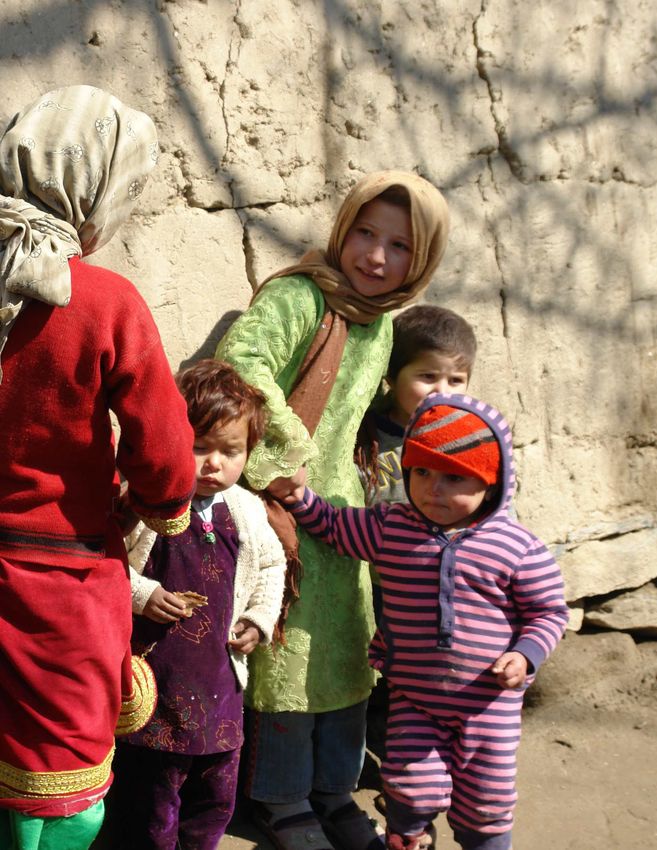
p Somali refugees gathering around water point,
Ethiopia. 2011. UNHCR/Paul Spiegel

                                                  | 4 | Johns Hopkins Center for Humanitarian Health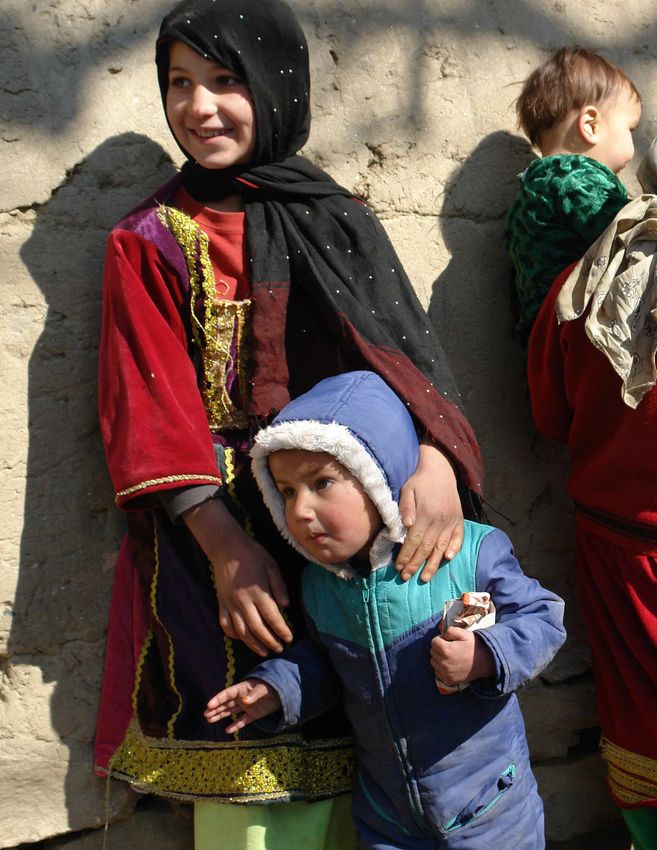
STRATEGIC
                                            APPROACHES

                                            I.
                                            Partnership: Expanded
                                            partnerships within Johns Hopkins
                                            University and among numerous
                                            other organizations, governments
                                            and academic institutions will be
STRATEGIC                                   actively sought.
OBJECTIVES

I.                                          II.
                                            Management and Governance:
                                                                                 STRATEGY
                                                                                 AT A GLANCE
Undertake innovative                        Clear structures with explicit
research in humanitarian health             expectations and incentives will
science to discover and apply               be put in place for faculty and
evidence-based strategies                   non-faculty involvement as well
for prevention, preparedness,               as for Advisory and Technical
response, recovery and                      Committees.

                                            III.
reintegration.

II.
Educate and train individuals,
                                            Capacity: Adequate human
                                            resources and financial capacity
governments and organizations               according to an internal action
on the latest theories and                  plan with measurable targets will
best practice approaches of                 be needed to achieve the strategic
humanitarian health science to              objectives.

                                            IV.
allow for their evidence-based
and practical application.

III.
Empower individuals,
                                            Communication and Advocacy:
                                            Strong communication through a
                                            variety of mechanisms including
communities, organizations                  social media will be implemented
and governments to practically              to advocate for evidence-based
apply skills and expertise gained           and human rights policies both
through research and education.             domestically and internationally.

    Johns Hopkins Center for Humanitarian Health | 5 |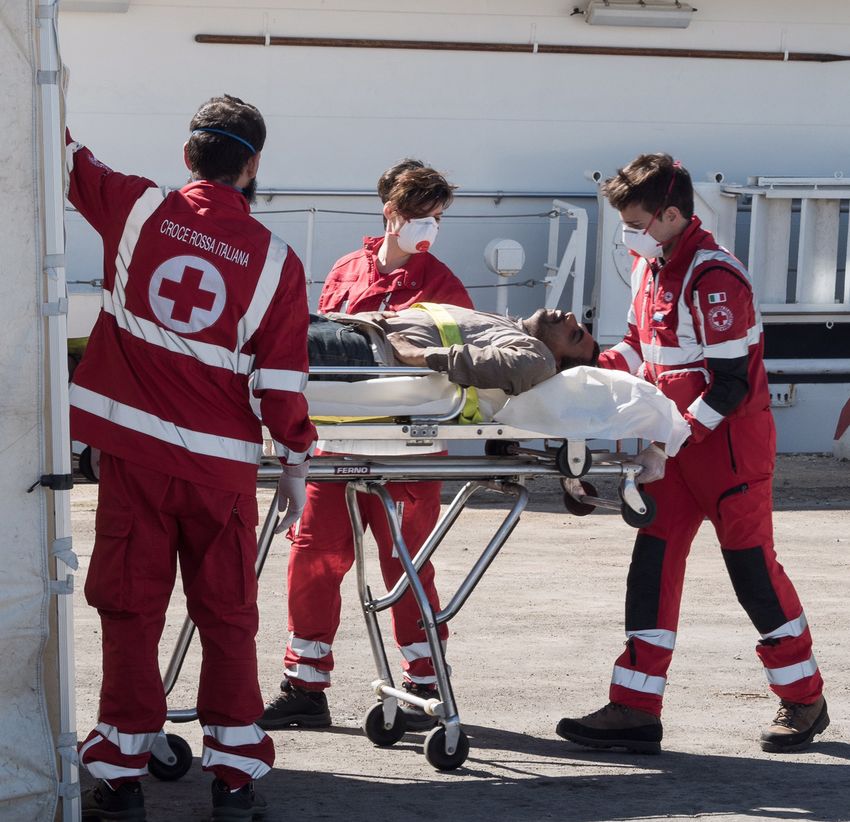
q Afghan mother with her young child, Afghanistan. 2011. JHU/Gilbert Burnham

                                                                                   INTRODUCTION

DEFINITIONS      DISASTER: A serious disruption of the
                 functioning of a community or a society
                                                                         or authority that represent a critical threat
                                                                         to the health safety, security or wellbeing of
                 causing widespread human, material,                     communities over a wide area, which require
                 economic or environmental losses which                  a coordinated national or international
                 exceed the ability of the affected community            response that goes beyond the capacity of
                 or society to cope using its own resources.             the authorities or any other single entity.
                 (International Strategy for Disaster
                 Reduction)                                              HUMANITARIAN HEALTH SCIENCE:
                                                                         Multidisciplinary field of study that discovers
                 DURABLE SOLUTIONS: The three durable                    and applies knowledge from public health,
                 solutions are voluntary repatriation, local             biomedical science, social and behavioral
                 integration and resettlement. (United Nations           science, political science and human rights to
                 High Commissioner for Refugees)                         humanitarian settings.

                 GLOBAL HEALTH SECURITY: Capacity to                     HUMANITARIAN-DEVELOPMENT NEXUS:
                 protect the world’s nations and populations             The connection between humanitarian
                 from factors that threaten public health, such          and development organizations that
                 as infectious diseases, humanitarian crises             work in concert to address humanitarian
                 and the growing burden of noncommunicable               requirements while taking into account
                 diseases.                                               current and future development needs.

                 HUMANITARIAN EMERGENCY: A serious                       JUST-IN-TIME TRAINING: Training that
                 event or events resulting from internal or              imparts necessary knowledge and skills for
                 external conflict and/or natural disaster in            immediate application in specific contexts
                 part of or all of a country or region where             and evolving situations.
                 there is considerable breakdown of systems

                                                        | 6 | Johns Hopkins Center for Humanitarian Health
The Johns Hopkins Center                    Humanitarian contexts refers            mental health as well as nutrition
for Humanitarian Health (the                to a wide range of settings and         and food security. These sectors
Center) is a unique Johns Hopkins           situations that includes conflicts,     are interpreted in a broad sense
University collaboration of the             natural disasters, infectious disease   that avoids a siloed approach and
Bloomberg School of Public                  outbreaks as well as mixed migration.   considers other important issues
Health, the School of Medicine and          For the Center, the various stages      such as the resilience of affected
the School of Nursing. It draws             of humanitarian contexts include        individuals and communities, the
upon a variety of disciplines and           preparedness, acute emergency,          global health security agenda and the
sectors, including epidemiology,            protracted emergencies, durable         humanitarian-development nexus.
demography, emergency and                   solutions, reconstruction, post
disaster medicine, health systems           conflict/recovery and reintegration.    The Center’s focus rests on the multi-
management, communicable                    The Center’s focus on affected          disciplinary field of humanitarian
and non-communicable diseases,              persons in humanitarian contexts        health science, which studies and
nutrition and food security,                extends to non-displaced persons,       applies a wide range of disciplines
environmental engineering,                  displaced persons (refugees and         in humanitarian settings including
political science and human rights.         internally displaced persons) and the   public health, biomedical science,
The Center collaborates with                surrounding national populations as     socio-behavioral science, political
a variety of partners including             well as to responders themselves.       science and human rights.
national and international non-             These persons may be in urban or
governmental organizations                  rural areas, in camps or outside of
(NGOs) and community-based                  camps and in low-, middle- and
organizations (CBOs), United Nations        high-income countries anywhere in
agencies, bilateral and multilateral        the world.
organizations, and governmental
agencies, as well as partner research       All humanitarian emergencies may
institutions on field-based research,       be categorized as disasters, yet
training and humanitarian projects.         not all disasters are humanitarian
                                            emergencies. Emergency/disaster
Johns Hopkins University has                medicine has evolved as a discipline
an international reputation for             separate from that of humanitarian
excellence in research, education           action. Our strategy therefore refers
and training. It boasts a global            to both “humanitarian emergencies”
outreach with a multitude of field-         and “disasters.”
based faculty and projects. The
University’s scholarly expertise            Health is interpreted broadly,
in many disciplines, together               applying the World Health
with its global and influential             Organization’s definition: “health is
alumni network, are resources               a state of complete physical, mental
for extensive partnership and               and social well-being and not merely
advocacy opportunities involving            the absence of disease or infirmity.”
U.S. policymakers, legislators              The Center currently addresses
and Washington, D.C.-based                  a wide range of public health
organizations as well as governments        sectors that include communicable
and non-government actors around            diseases including epidemics, non-
the world.                                  communicable diseases including

    Johns Hopkins Center for Humanitarian Health | 7 |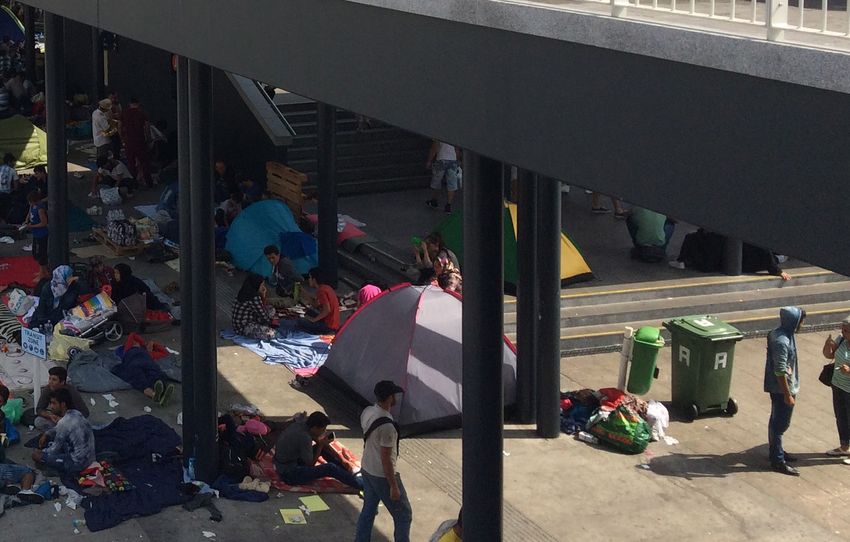
Life’s most persistent and urgent question
is, “What are you doing for others?”
                                     MARTIN LUTHER KING JR.
CIVIL RIGHTS ACTIVIST, CLERGYMAN, NOBEL PEACE PRIZE LAUREATE

               | 8 | Johns Hopkins Center for Humanitarian Health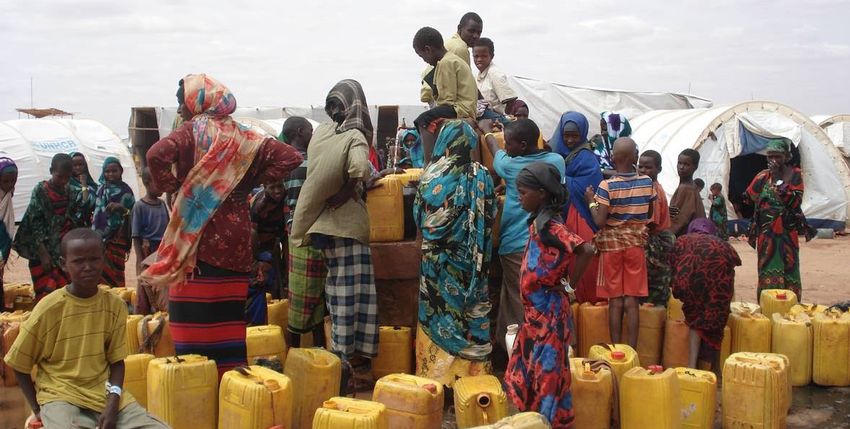
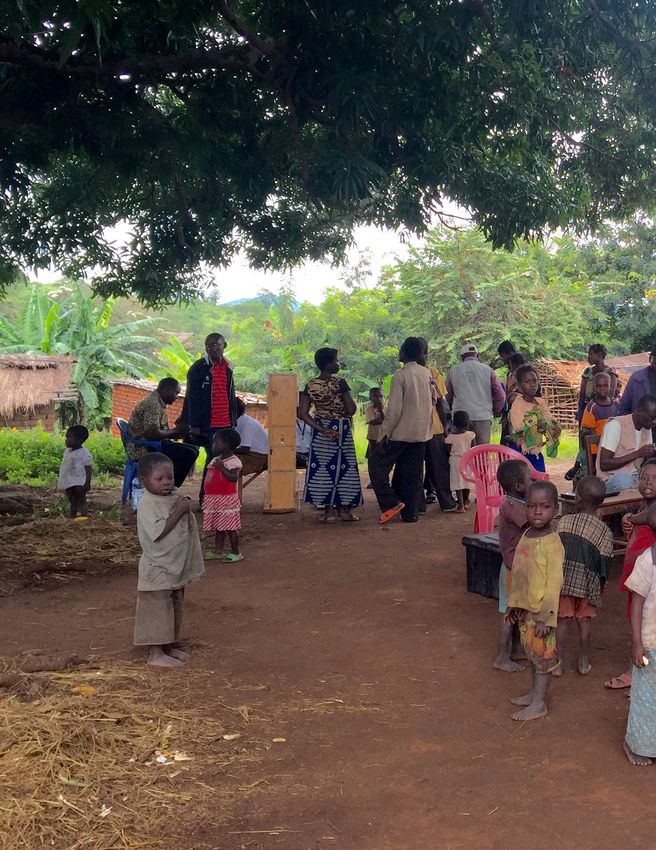
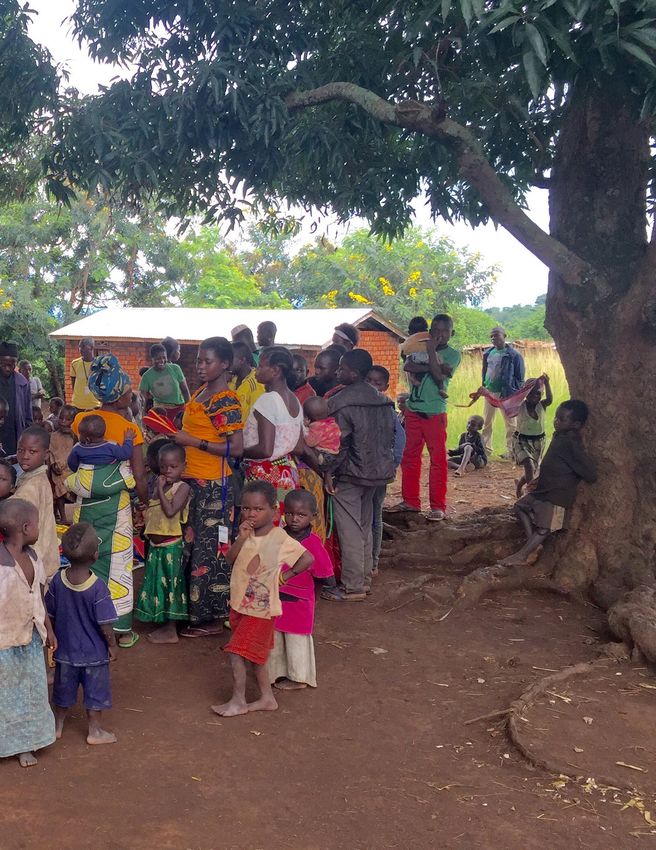
p Returnees in South Kivu participating in a food
                                                     security and nutrition survey, Democratic Republic
                                                     of Congo. 2016. JHU/Jillian Emerson
Johns Hopkins Center for Humanitarian Health | 9 |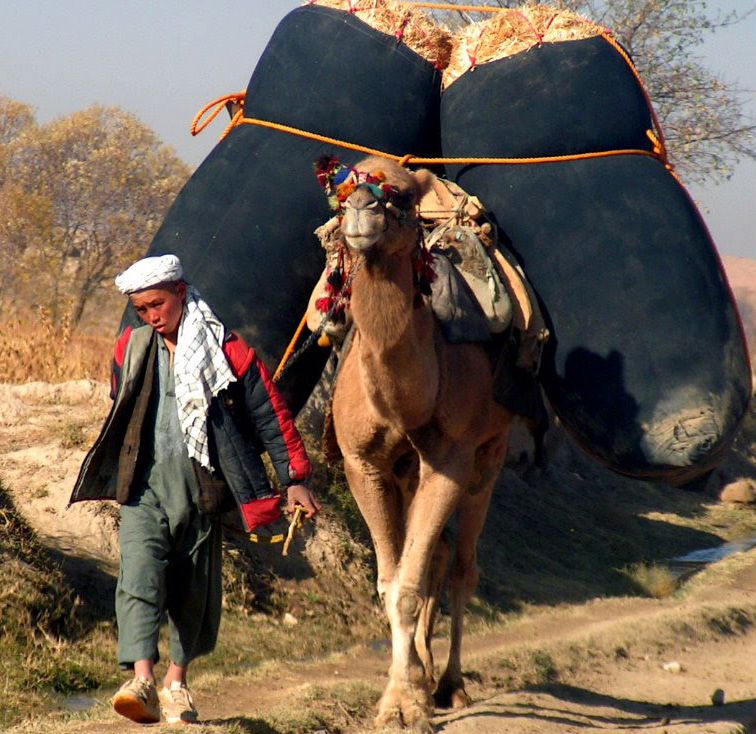
I.
                                                                    Undertake innovative research
                                                                    in humanitarian health science
                                                                    employing a continuous
                                                                    improvement approach to improve
                                                                    prevention, preparedness, response,
                                                                    recovery and reintegration.

                                                                    ENABLING ACTIONS

                                                                   • Continue the Center’s strong focus
                                                                     on health systems, communicable
                                                                     diseases, mental health, nutrition
    STRATEGIC OBJECTIVES &                                           and food security, human rights
                                                                     (including protection from human
    ENABLING ACTIONS:                                                trafficking and gender-based
                                                                     violence), and measurement
    RESEARCH, EDUCATE, EMPOWER                                       methods including surveys,
                                                                     surveillance, monitoring and
                                                                     evaluation.

                                                                   • Expand to other areas such as
                                                                     humanitarian leadership, cash
                                                                     transfers, innovative health
                                                                     financing, cost efficiency and
                                                                     effectiveness, adaptive technology,
                                                                     humanitarian-development nexus,
                                                                     non-communicable diseases
                                                                     beyond mental health, global
                                                                     health security and resettled
                                                                     refugees.

                                                                   • Coordinate, plan and submit multi-
                                                                     year large-scale strategic domestic
                                                                     and international proposals
                                                                     involving various schools of Johns
                                                                     Hopkins University and other
p Internally displaced Azerbaijanis get their eyes
tested by Japanese optometrists working with                         partners that will lead to a wide
UNHCR, Azerbaijan. 2016. UNHCR/Andrew McConnell
                                                                     range of innovative projects.

                                                     | 10 | Johns Hopkins Center for Humanitarian Health
• Collaborate with a wide range of
partners to define and shape a
global evidence-based research
agenda according to need while
practitioners, taking into account
their travel restrictions, financial
situations, and needs to continue
working while studying. Possible
III.
Empower individuals, communities,
taking into account cost and organizations and governments to
formats include but are not limited
prioritization. practically apply skills and expertise
to online certificates and master’s
gained through research and
degrees, massive open online
• Develop priority research relation- education.
courses, short courses, seminars
ships with academic institutions, and webinars.
particularly in designated low- and ENABLING ACTIONS
middle-income countries as well as • Provide audience-appropriate
various domestic and international trainings to organizations • Operationalize research outcomes
NGOs and CBOs. (including but not limited to and knowledge gained from
international and national NGOs, practice, education and training
II.
CBOs, academic institutions, United into humanitarian action.
Nations agencies, multilateral
and bilateral organizations,
• Train a cadre of well-educated
Educate and train individuals, donors, and the private sector)
professionals with managerial and
governments and organizations on and governments to provide
leadership capacity to support
the latest theories and best practice knowledge, practical skills and
organizations operating in
approaches of humanitarian health capacity according to their needs
humanitarian settings.
science to allow for their evidence- and specific contexts, including
based and practical application. just-in-time trainings. • Develop and implement platforms
using evolving technology to
ENABLING ACTIONS • Emphasize practical application of
provide current information and
theory and practice for different
support to humanitarian field
• Provide current concepts, contexts such as leveraging
practitioners.
information, data and practices, technological tools and platforms
with the ability to analyze and to provide information in remote • Advocate with governments,
make recommendations, to and insecure settings for delivery particularly the U.S. government,
students and practitioners, using of essential just-in-time training. to adapt humanitarian policies and
suitable pedagogical formats priorities according to evidence
(including blended active learning) • Develop priority research
and need.
to reach as many persons as relationships with academic
possible. institutions, particularly in
designated low- and middle-
• Explore and implement a range income countries as well as various
of educational formats accessible domestic and international NGOs
and attractive to domestic and and CBOs.
international students and
Johns Hopkins Center for Humanitarian Health | 11 || 12 | Johns Hopkins Center for Humanitarian Health
The philosophies of one age have become
the absurdities of the next, and the
foolishness of yesterday has become
the wisdom of tomorrow.
                                                        WILLIAM OSLER
         PHYSICIAN, EDUCATOR, HISTORIAN, AUTHOR, AND ONE OF
        THE FOUNDING PROFESSORS OF JOHNS HOPKINS HOSPITAL

                                                                        p Afghan children, Afghanistan. 2011.
                                                                        JHU/Gilbert Burnham

  Johns Hopkins Center for Humanitarian Health | 13 |
I.
Partnership: Partnerships are
essential to the Center’s current and
future success. Within the Johns
Hopkins University, the Center is
currently a collaboration among
t Afghan boy with camel, Afghanistan. 2006. the Bloomberg School of Public
JHU/Krishna Rao
Health, the School of Medicine and
the School of Nursing. There are
plans to expand to other Hopkins
schools as well as its numerous
other centers and institutes. The
Center partners with a broad range
of actors in its research, education
STRATEGIC APPROACHES and empowerment strategic
objectives, including a diverse range
of government, United Nations
agencies, international organizations,
domestic and international NGOs
and CBOs, foundations and donors.
Hopkins faculty undertake field-
based research in varied settings. We
will pursue more decentralized local
partnerships to give our students
increased access to field projects
and our researchers new avenues for
collaboration with local organizations,
government officials and, most
importantly, affected populations
worldwide. We will also seek
partnerships with the private sector
as it becomes more prominent in
humanitarian action, as well as with
academic and research institutions
in the U.S. and internationally to
extend the reach of our research and
education resources in humanitarian
settings, creating synergies and
powers of scale.
| 14 | Johns Hopkins Center for Humanitarian HealthII.
Management and Governance:
funds will be secured to support
effective administration, dedicated
student and faculty time, travel,
communication and outreach. The
The Center will be composed of core
strong and influential Johns Hopkins
faculty, center faculty, and affiliates
alumni network will be actively
(the latter are not Hopkins faculty),
sought to facilitate the achievement
each with a clearly defined role.
of Center objectives.
There will be an Advisory Committee
IV.
and a Technical Committee, each
with clear terms of reference.
The Center will require and seek
core funding to ensure strong Communication and Advocacy:
management (see capacity section The Center for Humanitarian Health
below). As the Center expands, will develop a communications
the need for more expertise and strategy for reaching its various
support will be necessary for support constituents in a variety of media,
functions of communications, grant including social media, to disseminate
writing and resource administration. news of projects, programs and
research results effectively. Through
III.
Capacity: For the Center to achieve
our communications channels we will
also advocate for evidence-based
human rights policies domestically
and internationally. Availability of
its vision and strategic objectives, it
the full range of Center academic
requires adequate human resources
offerings—courses, trainings,
and financial capacity that will
seminars and webinars—will be
progressively increase. Working
communicated to reach as many
with the University and the Center’s
persons as possible, working with
Advisory Committee, Johns Hopkins
partners to choose the right methods
Center for Humanitarian Health will
and tools to reach first responders
develop an internal action plan with
and other humanitarian workers
clear goals and targets following
to improve their preparedness,
the three strategic objectives. To
response and recovery efforts.
pursue the expanded objectives
Similarly, we will enhance
described above, more doctoral and
communications with affected
postdoctoral students and faculty
populations, not only to improve their
will be needed. Grants to support
health awareness but also to enable
training, scholarships, fellowships
us to listen to and learn from these
and research will be pursued in a way
individuals and communities.
that reflects the Center’s vision and
objectives. Sufficient Center core
Johns Hopkins Center for Humanitarian Health | 15 |615 N. Wolfe Street
Baltimore, Maryland, USA 21205
humanithealth@jhu.edu
www.hopkinshumanitarianhealth.org
p Somali refugee boy flying kite on top of shelter
frame, Ethiopia. 2011. UNHCR/Paul Spiegel
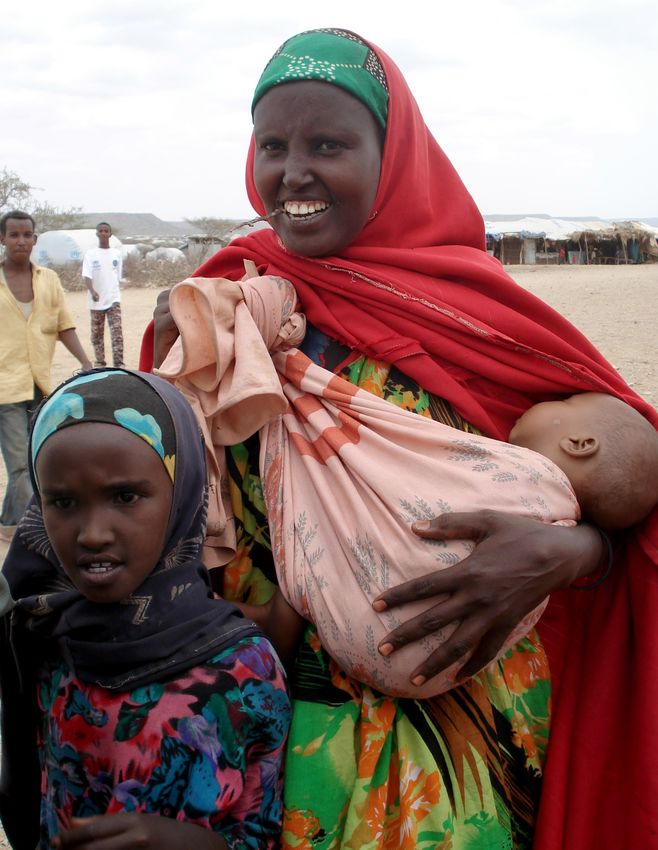
t Somali refugee woman with her children,
Ethiopia. 2011. UNHCR/Paul SpiegelYou can also read


