STAND UP FOR SAFE AND EFFECTIVE CARE 01 - RCN.ORG.UK/PROTECT #PROTECTTHEFUTUREOFNURSING - ROYAL COLLEGE OF NURSING
←
→
Page content transcription
If your browser does not render page correctly, please read the page content below

01

Stand up for safe and effective care

                                                 rcn.org.uk/protect
                                       #ProtectTheFutureOfNursing
2021 Manifesto

 Contents                                     Foreword
                                              2020 was the International Year of
 Foreword02                                  the Nurse and Midwife, although
                                              not the one any of us expected. The
                                              leadership, dedication and compassion
 Valuing the nursing workforce          04
                                              shown by nursing staff over the last
                                              year has demonstrated in the clearest
 Staffing for safe and effective care   08   way possible the unique contribution
                                              and value of our profession. This has
                                              definitely been the toughest and most
 A sustainable future for health         10   challenging of my 25 years of nursing.
 and care services                           But I still love my job as a Senior Charge
                                              Nurse and am incredibly proud of the
                                              extraordinary effort and skill that has
 Tackling inequalities                  14   been shown by colleagues across the
                                              whole multidisciplinary team.
                                              The pandemic response has shone a light on the
                                              contribution of our profession, but remarkable and
                                              innovative nursing care has always been delivered
                                              by nursing staff across our health and care sectors
                                              day in, day out, year after year.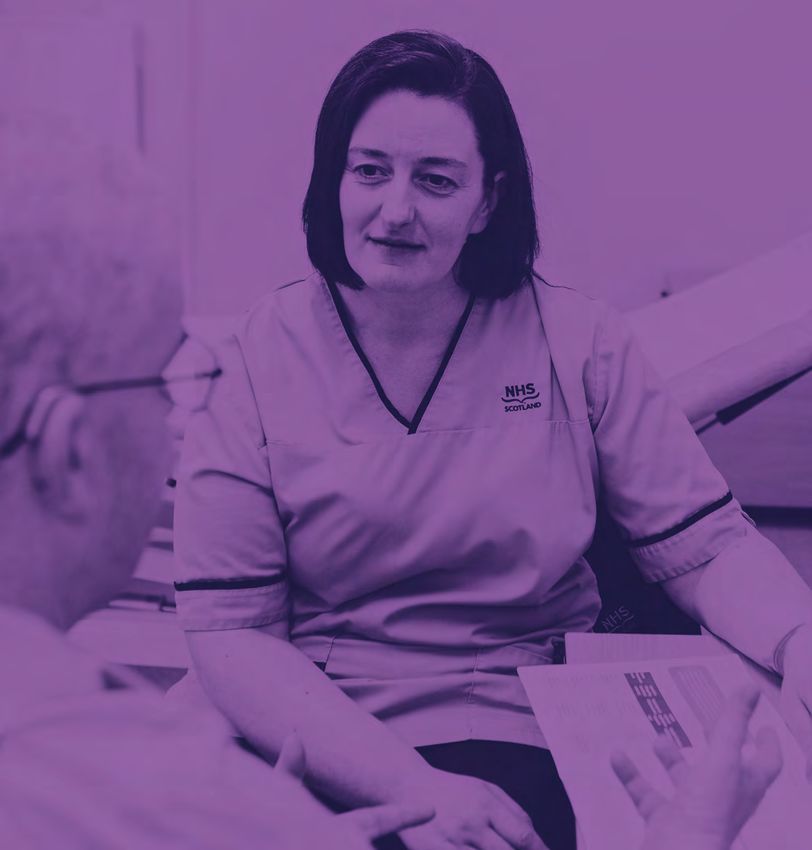
03

The events of this last year have made it clear that things need to change for the nursing
profession. Longstanding pressures have been exacerbated and, in one of our highest
engaged-with member surveys, our members told us clearly that they are working harder
than ever but feel less valued. Meanwhile, low staffing levels continue to have a major
impact on patient safety, staff morale and wellbeing.
The survey also revealed a sharp rise in the proportion of nursing staff considering quitting
the profession. Our members remain passionate about their profession, but action is urgently
needed to ensure nursing is attractive, well-paid and meaningfully supported, otherwise we
risk many of our members leaving – at a time when the nation needs them more than ever.
So ahead of the 2021 Scottish Parliament election, we are asking politicians, our members,
stakeholders and the public to support our campaign to Protect the Future of Nursing.
Our manifesto calls for nursing staff to be better valued and for urgent action to ensure there
are enough registered nurses and nursing support workers to deliver safe and effective care
across all settings. We call for resourcing to properly reflect the critical role of community
services within the whole health system, a workforce that reflects clinical need in the
community and care homes, and action to tackle health inequalities.
I’d like to thank the RCN Scotland Board members and reps who have engaged in the work
to develop this manifesto, as well as all of our members who have shared their views,
experiences and stories over the last year.
I’m pleased that the International Year of the Nurse and Midwife has now been extended
into 2021 and I know our members are looking to the future.

                  Julie Lamberth,
                  Chair, RCN Scotland Board

                                                                                                  rcn.org.uk/protect
2021 Manifesto
01 73%
of members said
Valuing the improved pay would
make them feel
nursing workforce more valued.
The COVID-19 crisis has demonstrated the
unique value of the nursing profession. However
working under this sustained pressure is having
a devastating impact on the physical and mental
health of staff. Our members told us that they
felt undervalued before the pandemic. Worrying
numbers are now considering leaving the
profession. To achieve the nursing workforce
that Scotland needs, the government must take
action now to retain the experienced and valuable
nursing staff Scotland already has, while also
attracting new people into the profession.05
All nursing staff deserve to be recognised for the
complexity of skill and expertise they demonstrate
every day and rewarded fairly for the job they do.
The RCN’s UK-wide Fair Pay for Nursing campaign
is calling for a 12.5% pay rise for NHS nursing staff There has been a sharp
in 2021-22, as part of a one-year deal that applies rise in the proportion of
equally to all bands. Looking to the longer term, it is
vital that the unique contribution of all nursing staff, nursing staff considering
whatever their grade or place of work, is recognised quitting the profession.
and reflected in future conversations about pay,
terms and conditions. In Scotland
Professional development and learning enable
38%
nursing staff to learn new skills and develop their
careers. It is essential for patient safety and clinical
effectiveness. Yet far too many of our members
struggle to access professional development
opportunities at work and instead have to do
it in their own time and at their own cost.
of members reported
in 2020 that they are
We call for: thinking of leaving
Fair pay, good employment terms and safe working nursing, compared
conditions for all registered nurses and nursing
support workers wherever they work. to 27% in 2019.
Protected time for continuing professional
development for nurses working in all health
and care settings.
Greater access to high-quality education and
training for nursing support workers and, for those
who wish, improved access to career development rcn.org.uk/protect
training and opportunities.2021 Manifesto
Health and wellbeing of the workforce
Evidence shows that good working environments and culture are
fundamental for staff wellbeing and the quality of care. Positive work
environments need to be developed, instead of focusing on ways In a 2020 RCN survey
to help individuals cope with negative environments.
90%
Staff shortages, excessive workloads, high stress levels, blame culture,
bullying and harassment are all problems that predate the pandemic
and, unless action is taken now to bring about change, they will continue.
The pandemic has exacerbated the issue of excessive demands on
a nursing workforce already at risk of stress and burnout and over
50% of respondents to a 2020 RCN survey said they were worried
about their own mental health.
of respondents said
In order to maintain a safety culture, working environments must promote
psychological safety. This means that staff need to be confident that they were concerned
doing the right thing – reporting incidents, raising concerns, being
candid about mistakes and talking openly about error – are all welcomed about the welfare
and encouraged. They need to know that the organisation will focus
on learning and improving, not individual blame, and believe they
of themselves or
are safe when raising concerns. their colleagues.
The consequences of failing to ensure nurses’ wellbeing and
psychological safety are profound – for individuals themselves,
their organisations, and the people and communities they serve.
There is much to do, but achieving the cultural and physical changes
needed to ensure a healthy and vibrant workforce is essential for
delivering high quality care to patients, residents and communities.07
We call for:
A transformation of workplaces so that nursing staff can thrive and
flourish and are better able to provide high-quality, compassionate care.
Nursing staff to be able to take their breaks, with paid overtime if they
are unable to do so, and access to appropriate break facilities, healthy
food and water in workplaces.
Timely access to occupational health, including mental health support
and counselling, for all nursing staff, whatever setting they work in.
Greater flexible working opportunities to help increase recruitment
and retention.
37%
of members who responded
to our latest employment
survey had experienced
bullying at work.
rcn.org.uk/protect2021 Manifesto
02 In our 2019
employment survey
Staffing for safe
and effective care
There are not enough nursing staff to provide the care our
60%
of respondents
population needs. Nursing is a safety critical profession and
research shows that there is a direct link between staff having reported feeling too
the time to care and positive patient outcomes. Our members tell busy to provide the
us time and again about the negative impact that poor staffing level of patient care
levels are having on their work, their patients and their wellbeing. they would like.
Staff shortages are resulting in nursing staff being spread more thinly across teams
and, in many cases, the mix of skills, expertise and experience that a team requires is not
available – at a time when the acuity of patients in hospital wards and in the community
is high and the clinical skills and expertise of registered nurses are essential. We need
action now to tackle unsafe staffing levels which compromise patient care and safety.
Sustainable solutions to workforce shortages are needed to ensure that all health
and care services have the right staff, with the right skills, in the right place.
The Health and Care (Staffing) (Scotland) Act is the first legislation in the UK
to set out requirements for safe staffing across both health and care services.
The reasons for passing this Act nearly two years ago have been made even clearer
by the COVID-19 crisis. Safe and effective staffing is a key element of remobilising
the NHS safely and ensuring that Scotland’s care homes can safely deliver care
to residents with increasingly complex health needs.09
The Health and Care (Staffing)
(Scotland) Act 2019
The Act places a duty on NHS and social care providers
to make sure that, at all times, there are suitably qualified In June, one of our
and competent staff working in the right numbers to ensure
safe and effective care. Working in an environment where biggest ever member
they are supported, have safe staffing levels and time surveys found that
for learning will give health and care staff the conditions
to provide the best care for patients.
We call for:
34%
of respondents
Implementation of the Health and Care (Staffing) (Scotland) in Scotland said
Act by the end of 2021, and continued work to develop
workforce planning tools. staffing levels had
Greater investment in health and care services to enable worsened during
providers to employ more registered nurses, achieve and
maintain safe staffing levels and ensure nursing teams the pandemic.
have the correct skill mix.
A commitment to increase the number of nursing
student places, ensure a fair bursary and improve access
to other financial support to widen access and increase
student retention.
The pivotal role of Senior Charge Nurses in leading safe,
effective, patient-centred care to be properly recognised,
valued and protected.
An annual parliamentary debate on safe staffing to ensure
ongoing scrutiny of how the duties introduced by the Act rcn.org.uk/protect
are being met.2021 Manifesto
03
A sustainable
future for health
and care services
No matter where people are receiving it, they
have a right to expect care that is high quality,
safe and appropriate for their needs. It is time
that the care home and community sectors are
valued to the same extent as acute hospitals.
The critical role of community services within
the whole system must be recognised and
properly resourced.11
Care homes
Care homes have been at the centre of the COVID-19 crisis, despite the
commitment of staff to try to keep residents as safe as possible. The sector-wide
workforce crisis and need for more registered nurses to deliver care to residents
with increasingly complex health needs are symptoms of how the sector, and the
people that live and work in it, have been undervalued by society for far too long.
These longstanding problems must be addressed.
Attention has rightly turned to reform of adult social care; the difficult
lessons of the pandemic must be learned and the many issues placed previously
in the ‘too hard to do’ box must be tackled. Our focus is on ensuring that,
whichever model of reform is pursued, individuals who require ongoing clinical
care have this met alongside their care needs, with the essential role of nursing
in delivering this recognised.
We call for:
A commitment to further investment and recruitment to the registered nurse
role within care homes to ensure the workforce reflects increasing clinical need.
Fair pay, terms and conditions for nursing staff employed within care homes
as well as improved access to training and development and clear career
pathways. Registered nurses and nursing support workers employed within
care homes should be paid at least the same level as their counterparts in the
NHS. The Scottish Government should ensure sufficient funding is put into
the adult social care system to achieve this.
Development of an evidence-based methodology for determining safe and
effective staffing in the care home sector to ensure that funding reflects clinical
need and the correct staffing numbers and skill mix to meet these needs.
rcn.org.uk/protect2021 Manifesto
Community nursing
Moves to encourage shorter patient stays,
reduce the number of hospital beds and
advancements that enable more complex
treatments and care to be delivered at
home, mean we need more nursing staff
in our communities.
Our members working in community nursing
tell us that they are feeling under pressure
and short on staffing capacity – yet they
are being asked to take on more and more,
including expanded vaccination delivery,
increased support for care homes, and the
increased workload caused by emphasis
on swifter hospital discharge and changes
to unscheduled care access.
Following sustained pressure from the
RCN, the Scottish Government committed
to increase the district nursing workforce
by 12% by 2024. We are clear that a 12%
increase is what is required to deliver
existing workloads; it does not cover
any extra demands placed on the district
nursing role.13
Digital technologies are being used to open up new, smarter ways
of working for health care teams, especially those operating in the
community. The pandemic has further driven use of technology in
the health and care sectors, as well as across society. While it cannot
replace physical examination and face-to-face contact, when used
40%
appropriately, technology can help to deliver better, safer care. But
our members, particularly those who work in remote and rural areas,
remain frustrated with the limitations of IT systems and connectivity.
Others say they need additional training and equipment to do their
jobs properly. To make the most of the technologies available
these challenges must be addressed. The government and health
and social care partnerships must also ensure that increasing use
of digital technologies does not lead to digital exclusion and of care home
increased health inequalities.
services for older
people report
We call for: nursing vacancies.
Recognition of the critical role of community services within
the whole health system, with resourcing to properly reflect this,
particularly in light of increased demand.
Better data sharing and improved access to patient records as
well as investment in digital technology to ensure nursing staff
working in the community have the information and equipment
they need to do their jobs and deliver safe and consistent care.
rcn.org.uk/protect2021 Manifesto
Across Scotland, over
04
Tackling inequalities 660
mental health
Mental health
nursing posts were
With significant demand for services and high levels unfilled as of 30
of nursing vacancies in the mental health workforce,
we know that mental health services were under
September 2020.
significant strain before the pandemic.
Now there is growing evidence around the impact of the pandemic on mental
health. Of particular concern are the adverse effects on children and young
people, those who are economically disadvantaged and indications of
worsening mental health inequalities. It is therefore vital that mental health
services are prioritised as part of remobilisation and recovery.
The role of a mental health nurse has evolved and transformed since much We call for:
of the legislative framework under which they operate was put into place.
The review of mental health legislation, being led by John Scott QC, must A commitment to undertake modelling
result in modernised, clear legislation to ensure mental health nurses to project the growth required in the
can do their jobs properly. mental health nursing workforce and
develop a fully-costed and transparent
workforce plan by the end of 2021.
Renewed urgency around reform of mental
health legislation, with an emphasis on
improving services and embedding the
rights of people using them.15
Health inequalities
and ethnicity
The pandemic has had a disproportionate impact
on individuals and health and care staff from minority
ethnic groups.
COVID-19 has not created health inequalities; rather
it has uncovered and exacerbated existing structural
and institutional inequalities and barriers that exist
across health and care, but also across wider society.
The pandemic has also highlighted the lack of adequate
data to monitor the needs of different minority
ethnic groups, particularly in relation to the health
consequences of the pandemic.
We support the recommendations of the Scottish
Government’s Expert Reference Group on COVID-19
and Ethnicity and, in continuing to take these forward,
the next Scottish Government must tackle head on the
deep-rooted health and socio-economic inequalities
that minority ethnic communities face, and the systemic
failures to address these issues.
We call for:
The recommendations of the Expert Reference Group
on COVID-19 and Ethnicity to be implemented in full,
with prioritisation across government departments.
rcn.org.uk/protectThe Royal College of Nursing (RCN) is the world’s largest
professional organisation and trade union for nursing staff,
with members in the NHS, independent and voluntary sectors.
RCN Scotland promotes patient and nursing interests by campaigning on issues that affect our members, shaping
national health policies, representing members on practice and employment issues and providing members with
learning and development opportunities. With over 40,000 members in Scotland, we are the voice of nursing.
Get in touch
For any further information please @RCNScot
contact our Senior Public Affairs
RCN Scotland
Officer, Niki Stark at
42 South Oswald Road
niki.stark@rcn.org.uk Edinburgh
EH9 2HH
0131 662 6172
rcn.org.uk/protect
#ProtectTheFutureOfNursingYou can also read


