Public Seminar Series 2018 Doctoral Students Research & News Jameel Scholars 2017 2018 - Cardiff University
←
→
Page content transcription
If your browser does not render page correctly, please read the page content below
Public Seminar
         Series 2018
         Doctoral
         Students
         Research
         & News
         Jameel
         Scholars
         2017 – 2018

@IslamUKCentre

facebook.com/IslamUKCentre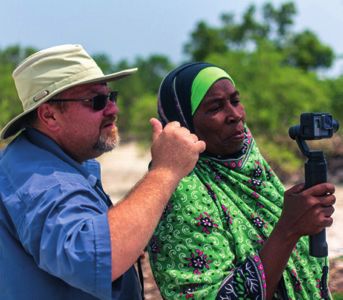
The Centre for                         Public Seminar Series 2018
    the Study of
                                           Wednesday 7th February 5pm        Wednesday 21st February 5pm
    Islam in the UK                        Dr Imran Awan                     Professor Peter Hopkins
    The Centre for the Study of            Cardiff Business School,          Cardiff Business School,
    Islam in the UK was opened             3 Colum Dr, Cardiff CF10 3EU      3 Colum Dr, Cardiff CF10 3EU
    in September 2005 by Yusuf             Room: 1.27                        Room: 1.27
    Islam, formerly musician Cat           ‘You Terrorist Scum’: Doing       ‘Being a Scottish Muslim:
    Stevens in front of 400 guests.        Dangerous Ethnographic            the Difference that Scotland
    Islam is the second largest            Research on Islamophobia’         Makes?’
    religion in Britain and, indeed, the
    world. There are 46,000 Muslims        Imran Awan                        Peter Hopkins
    in Wales, about half of whom live      is Associate                      is Professor
    in Cardiff itself (Census 2011).       Professor in                      of Social
                                           Criminology                       Geography
                                           and Deputy                        at Newcastle
                                           Director of                       University.
                                           the Centre                        His main area
                                           for Applied Criminology at        of research is the geographies
                                           Birmingham City University.       of Muslim identities with a
                                           Imran’s research examines         particular focus upon the
                                           the impact of Islamophobia        Scottish context. Peter has
    Cardiff University is now a leading    and security upon Muslim          co-edited Muslims in Britain:
    institution for scholarly teaching     communities. He has written for   Race, Place and Identities
    about Islam and Muslims in             various news organisations and    (with Richard Gale), Religion
    contemporary Britain. The Centre       offered comment for national      and Place: Landscape, Politics
    for the Study of Islam in the UK       and international broadcasters,   and Piety (with Lily Kong and
    (Islam-UK Centre) is based within      and he is an advisor to the       Elizabeth Olson) and recently
    the School of History, Archaeology     British Government on anti-       edited a new collection on
    and Religion, which has a wealth       Muslim hatred. His new            Scotland’s Muslims: Society,
    of teaching expertise and a lively     book, Islamophobia: Lived         Politics and Identity with
    programme of research activity.        Experiences of Online and         Edinburgh University Press.
    Within the school’s degree             Offline Victimisation, is
    programmes there are a range                                             Email address:
                                           published by Policy Press.
    of possibilities for studying Islam                                      peter.hopkins@ncl.ac.uk
    and classical Arabic.                  Email address:
                                                                             Chair: Dr Richard Gale,
                                           Imran.Awan@bcu.ac.uk
    The Centre has a strong and                                              Lecturer in Human Geography
    positive relationship with the         Chair: Professor Sophie
                                                                             School of Geography and
    local Muslim community.                Gilliat-Ray, Islam UK Centre      Planning, Cardiff University.
    Local Muslims form part of the         Director, Cardiff University.
                                                                             To book go online now: https://
    Centre’s advisory committee,           To book go online now: https://
                                                                             peter-hopkins.eventbrite.co.uk
    and we are proud of this               imran-awan.eventbrite.co.uk
    partnership. We envisage the
    Centre as an accessible, vibrant,
    and inclusive hub of learning
    about Islam in Cardiff, South
    Wales and the UK for Muslims
    and non-Muslims alike.
2
Wednesday 7th March 5pm Wednesday 21st March 5pm Wednesday 18th April 7pm
Dr Rehana Ahmed Dr Abdul-Azim Ahmed Shaykh Dr Asim Yusuf
Cardiff Business School, Cardiff Business School, Glamorgan Building, King
3 Colum Dr, Cardiff CF10 3EU 3 Colum Dr, Cardiff CF10 3EU Edward VII Avenue, Cardiff,
Room: 1.27 Room: 1.27 Committee Rooms 1 & 2
‘Contemporary “British ‘Who Needs a Masjid? The ‘Approaches to Depression
Muslim” Writing: Controversy, Past, Present and Future of and Anxiety in Classical Islam:
Translation, Belonging’ British Mosques’ From Abu Zayd to Abu Hamid.’
Rehana Abdul-Azim Asim Yusuf is
Ahmed Ahmed a practising
is Senior completed Consultant
Lecturer in his doctorate Psychiatrist
Postcolonial on British with a special
and mosques at interest in
Contemporary the Centre for bioethics,
Literature at Queen Mary the Study of Islam in the UK, spirituality and mental health.
University of London. She is Cardiff University, in 2017, He holds a number of ijaza’s
the author of Writing British and has since been working as (formal teaching authorisations)
Muslims: Religion, Class and a researcher in the third sector. in classical Islamic disciplines
Multiculturalism (Manchester He is currently writing a book and has authored works in
University Press, 2015), based on his thesis as well as spirituality, history and Islamic
and the co-editor of South continuing his research on the law.
Asian Resistances in Britain, history and presence of Muslims
He is the director of the Nur
1858-1947 (Continuum, in Wales.
al-Habib Foundation as well
2011), Culture, Diaspora, and
Email address: as IMWell Health, an Islamic
Modernity in Muslim Writing AhmedMA1@cardiff.ac.uk Mental Well-being Consultancy,
(Routledge, 2012) and, most
and sits on the advisory board
recently, a special issue of Chair: Haroon Sidat, Jameel
of a number of charities and
The Journal of Commonwealth Scholar, Cardiff University.
initiatives.
Literature on ‘British Culture To book go online now:
after 9/11’ (2018). Email address:
https://abdul-azim-ahmed.
asimyusuf@hotmail.com
Email address: eventbrite.co.uk
rehana.ahmed@qmul.ac.uk Chair: Sara Moseley, Director,
MIND Cymru (See Page 10).
Chair: Ayesha Khan, Jameel
Scholar, Cardiff University. To book go online now: https://
asim-yusuf.eventbrite.co.uk
To book go online now: https://
rehana-ahmed.eventbrite.co.uk
Dr Mansur Ali at the 2017
graduation ceremony with Jameel
Scholars Amanda Morris, Faisal Ali,
and Abdul-Azim Ahmed.
3Islam-UK Centre Doctoral Students
Jo Bryant I am currently in the writing I have conducted a mixed
PhD topic: up year, having completed a methods study in order to
The Status and multi-site ethnography with develop a more sensitive and
Integration of 6 chaplaincy teams across nuanced understanding of the
Minority Faith England. At present, I am economic activity and everyday
Groups in engaged in a knowledge lives of first and second
Acute Healthcare Chaplaincy. exchange placement with NHS generation British Muslim
England in order to maximise women. The study includes
Generously funded by the the impact of my findings. It analysis of the results of a
Arts and Humanities is hoped that this project will large-scale social survey
Research Council. introduce a greater diversity and qualitative fieldwork
Project summary: of voices to the chaplaincy undertaken in a case study
Healthcare chaplaincy has literature, offer new insights site in the North of England.
diversified considerably over into how the NHS is providing
I am in the final year of my
the past 25 years in response spiritual care, and have an
doctoral studies and I am
to growing religious plurality in impact on guidelines and
currently writing up my research
the UK. However, a significant strategy for the development of
findings. I have found that
proportion of chaplaincy literature NHS chaplaincy.
economic activity is a powerful
neglects the multi-faith dimension Email address: lens through which to examine
of chaplaincy provision. This BryantJR@cardiff.ac.uk and understand the experiences
project is a qualitative study of of Muslim women in Britain.
the integration of minority faith
groups into healthcare chaplaincy Asma Khan This study highlights the ways
teams, which aims to examine how in which social, cultural and
PhD topic:
the NHS provides spiritual care economic factors interact
Understanding
for minority faith groups and how to create conditions where
and Explaining
chaplains negotiate difference economic inactivity is the
the Economic
within their teams. So far, the norm for some Muslim women.
Inactivity of
findings of the project centre on Patriarchal gender norms,
Muslim Women.
the fault-lines between religion- patterns of migration and
Generously funded by the transnational ties, educational
specific and generic chaplaincy
Jameel Scholarship Programme. attainment and social class
provision. This has implications
for access, autonomy and the Project summary: all emerge as significant and
career progression of minority faith High rates of economic interacting explanatory variables
chaplaincy representatives, as well inactivity amongst British across quantitative and
as the ways in which chaplains Muslim women are often-cited qualitative analysis.
determine the boundaries of social statistics in Britain. Conference Papers in 2017:
acceptable manifestations of This topic is particularly ‘Intersections of Gender,
religion in a secular setting. My relevant in the contemporary Religion and Social Class
interest in healthcare chaplaincy context as it is likely that the in Areas of High Ethnic
began when I conducted a study economic inactivity of Muslim Density’. Annual Conference
on sacred space in a hospital women contributes to the high of the European Sociological
during my undergraduate degree levels of relative deprivation Association, Athens University,
at the University of Leeds, and currently experienced by 1st September 2017.
developed further during an MRes Muslim households in
‘Reflections on Establishing
degree in Theology and Religion at England and Wales.
and Maintaining Fieldwork
the University of Birmingham.
4Relationships as An Insider- Through my study I ask: What are Project summary:
Outsider Within a British Muslim the present Sufi manifestations I am in the third year of my
Community’. Postgraduate amongst young British Muslims? PhD. Given that imams and
Research Methods Workshop, What is the role of social media religious leaders are facing
University of Cambridge, 25th in contemporary religious greater public scrutiny, there has
April 2017. expression? What does the new been a focus on the seminaries
Sufi phenomenon tell us about that train Islamic scholars in
‘Experiences of Second
Islam in contemporary Britain? Britain. To date, however, very
Generation British Muslim
Now in the second year of my little research exists on the
Women in Education in the
doctoral study, I hope to answer institutions that provide training
70’s and 80’s’. BRAIS Annual
these research questions through for prospective Muslim Religious
Conference, Chester University,
participant observation in professionals. An explanation
12th April 2017.
religious and spiritual gatherings for this lacuna is the difficulty
‘The experiences of first and and online research of Sufi in gaining access to the darul
second generation Pakistani expression on social media. uloom (seminaries). Both as an
women in areas of high Muslim alumnus and someone involved
and co-ethnic density’. MBRN Alongside my studies, I am
with a traditional darul uloom,
Annual Conference, Leeds currently serving as an executive
I have gained access and am
University, 29th March 2017. committee member of the
studying the seminary as an
Muslims in Britain Research
Email address: ‘insider and a researcher’.
Network (MBRN). We bring
AsmaKhan@cardiff.ac.uk The rationale for this research
together academics, students,
professionals, researchers, rests upon my personal
Ayesha Khan journalists and practitioners to experience and the challenge
encourage and promote the study of building bridges between
PhD topic:
of Muslims and Islam in Britain. confessional and non-
An
confessional teaching and
exploration of Conference Paper 2017 learning about Islam, and the
contemporary ‘Exploring post-tariqa Sufism’ formation of religious scholars
forms of Sufi (Sept 2017). equipped to provide leadership
expression amongst
Plenary Speaker at the MBRN to Muslim communities in Britain
young British Muslims.
Conference on Exploring in the future.
Generously funded by the Contemporary Muslim Art, My PhD explores the world of a
Jameel Scholarship Programme. Culture and Heritage in Britain. traditional darul uloom. I want
The interaction between Email address: to find out what (or who) inspires
transnational Sufism and the khana43@cardiff.ac.uk young British Muslims to acquire
sociological environment in a deep personal understanding
Britain have led to new forms of their faith. What are the
of Sufi expression. Through a Haroon processes of intellectual,
qualitative approach, my study Sidat spiritual, and cultural formation
seeks to explore contemporary PhD topic: within a British darul uloom?
Sufi manifestations amongst Training of To what extent does this training
young British Muslims. Imams and prepare students for religious
Religious leadership roles in modern
This will contribute towards
Leaders in Britain. Britain?
understanding the diversity of
religious practice and what young Generously funded by the This research will enable serious
Muslims interpret as Sufism. Jameel Scholarship Programme. academic consideration of
5Islam-UK Centre Doctoral Students continued
the questions surrounding Matt Vince RE teaching have also proved
the intellectual and spiritual PhD topic: challenging from a personal
formation of Muslim scholars Islam, perspective. Where there is
in Britain. More broadly, I hope Muslims, currently no support available,
that my insights will begin and teaching these teachers have developed
to answer bigger questions Religious robust strategies for these
about the sociology of religious Education. experiences to succeed, and
professionals, religious many have emerged as leaders
education and formation, and Generously funded by the in their school contexts.
changing patterns of religious Jameel Scholarship Programme.
Entering my third year, I now
authority and leadership within Project summary: have the exciting task of creating
the Islamic tradition. Having previously completed a coherent narrative from these
Conference Papers in 2017: the MA Islam in Contemporary accounts!
‘British Dārul ‘ulūms: To bench Britain (2012), I return to the
Islam-UK Centre after training Conference Papers in 2017:
or not to bench?’. Markfield
to teach Religious Education ‘At the edge of professionalism:
Institute of Higher Education
(2013 – 2015). My doctoral Muslim RE teachers’
October 2017.
research project stems from negotiation of personal faith
‘Accessing a traditional Islamic these experiences, focusing on in RE classrooms’. Sociology
seminary in Britain’. Joint the experiences of Muslims who of Religion Annual Conference,
Postgraduate Conference on work as Religious Education (RE) 2017.
Theology and Religion at Exeter
teachers in state-school across ‘Beyond skin-deep: bringing
University, May 2017.
England. Muslim teachers faith into Black and Minority
‘Inside a British Darul Uloom’. have been largely absent from Ethnic teacher research’.
Symposium on the Comparative discussions surrounding the British Educational Research
Study of Religious Seminaries, experience of Muslims in British Association, 2016.
UCL Institute of Education, education, as well as in the ‘Tawhid and the textbook:
October 2016. literature pertaining to RE. Yet learning from Muslim teachers’.
Other activities: they represent an important British Association of Religious
Attended meeting with HRH intersection between Islam and Studies, 2016
The Prince of Wales discussing the public sphere.
Book Review:
the challenges facing Muslim Based on 22 interviews Vince, Matthew (2016) Islamic
communities in the UK and and three periods of Education in Britain: New
the role young Imams can play “paraethnographic shadowing”, Pluralist Paradigms, Journal
in shaping the future, October my fieldwork has highlighted of Beliefs and Values, 37,
2017. the everyday challenges and 1 DOI: 10.1080/13617672.
Panellist and presenter, Imams successes experienced by 2015.1129258
Online Digital Summit 2017, these teachers. Instances of
racism are commonplace from Non-academic articles:
Google headquarters, London,
students, staff, and parents. Vince, Matthew (2017)
January 2017.
Some find that their schools are Research Report: Islam and
Email address: not accommodating to observing Muslims in British Schools,
SidatHE@cardiff.ac.uk certain religious practices, REToday, Christian Education
namely finding time and space Publications, Birmingham
for prayer or abstaining from Email address:
alcohol. Certain aspects of vincem@cardiff.ac.uk
6Jameel Scholars 2016-17 MA in ‘Islam in
Contemporary
Masters Students Britain’
Research and teaching about
Hasnan and understand my personal Islam and Muslims in Britain is
Hussain experiences as a British now an established and rapidly
I became Muslim at a much deeper level growing field.
involved with and allows me to bring these There is an urgent need to
the Islam experiences to the table with continue to develop new scholars
the hope that I may contribute from a range of backgrounds and
UK research
to the academic field in my own, experiences who can critically
centre during the first few evaluate emerging debates, and
months of my time at Cardiff unique way.
appreciate the rich diversity within
University while I was studying British Muslim communities.
religion. During this time, I had Thomas This interdisciplinary programme,
enjoyed studying modules in the Fletcher drawing upon the fields of
fields of Islamic Studies and the history, sociology, and religious
Having studies, examines the history
sociology of Islam. I had also
completed and settlement of Muslims in
gained a working knowledge of
a BA (Hons) Britain and the dynamics that
the Muslim communities here in
Religious shape contemporary Muslim
Cardiff and how they politically communities. We look at how
and Theological Studies at
mobilise and utilise social space Muslims have engaged with
Cardiff University, the Jameel
in ways which are meaningful local and national government
Scholarship has provided me
to them. As a result of my time in relation to matters such as
with the opportunity to further education, social policy, and
here, I gained an appreciation
my studies with the renowned chaplaincy, as well as the growth
of how nuanced academic
staff at the Islam-UK Centre. of Muslim community
discussion regarding Islam and infrastructures such as mosques
Both my undergraduate degree
Muslims is, to an extent which I and charities. During the course
and my voluntary- and paid-work
did not see in public and media of the MA, students receive a
with Muslim communities in
discourse beforehand. thorough grounding in social
Cardiff and Newport has helped science research methods and
This encouraged me to foster an interest in the issues theories, and acquire a set of
undertake the Masters affecting these communities, transferrable and employability
programme here at the Islam such as educational and skills that will equip them for a
UK centre, which has, and occupational barriers. The MA range of future careers.
continues to, give me the programme at Cardiff University We encourage and support our
conceptual tools and knowledge is helping me to develop the students to undertake volunteering
to understand better the lived research skills and knowledge and community engagement, in
order to develop a sympathetic first
experiences of Muslims in the necessary for further exploration
hand understanding of Muslim
UK. The course is both mind of my research interests through communities in Britain today.
opening and challenging, as it the Masters dissertation and for
For more information,
enables me to critique my own personal career development. please contact: Postgraduate
preconceptions regarding a Administrator:
variety of factors and mature
Email:
academically. However, this SHARE-PG@cardiff.ac.uk
course also gives me the
Tel: +44 (0)29 2987 0903
unique opportunity to explore
http://www.cardiff.ac.uk/
study/postgraduate/taught/
courses/group/islam-in-
contemporary-britain
7Centre Contacts
Islam-UK Centre, in supporting the re-running Lecturer in Social Science
School of History, Archaeology of the Massive Open Online Research Methods
and Religion, John Percival Course (MOOC) on Muslims in Dr Michael Munnik
Building, Colum Drive, Cardiff, Britain. Mark completed the MA MunnikM@cardiff.ac.uk
CF10 3EU, UK ‘Islam in Britain’ in 2009, and Tel: +44 (0)29 2087 5646
was employed as a research
Tel: +44 (0)29 2087 0121 Dr Michael
assistant for the ‘Islamic
Email: islam-uk@cardiff.ac.uk Munnik is
Gardens’ project funded by
BGCI in 2010. Lecturer in
Director Social Science
Professor Sophie Gilliat-Ray Theories and
Lecturer in Islamic Studies
Gilliat-RayS@cardiff.ac.uk Methods. He
Maulana Dr Mansur Ali
Tel: +44 (0)29 2087 0121 completed
alimm1@cardiff.ac.uk
his doctorate at the University
Professor Tel: +44 (0)29 2087 6297 of Edinburgh, supported by the
Gilliat-Ray is
Dr Mansur Alwaleed Centre for the Study
Director of the
Ali studied of Islam in the Contemporary
Centre and
classical World. For his thesis, he
was awarded
Islamic studies examined relationships between
the Sankore
and Arabic at mainstream journalists and
University
Darul Uloom Muslim sources in Glasgow,
award for Excellence in
Bury, UK and Scotland. His work concerns
Education at the Muslim News
Al-Azhar University Cairo, Egypt. the production of news about
Awards in 2006. She was also
He then completed an MA Muslims in Britain rather than
presented with an Achievement
and a PhD in Middle Eastern the product itself, and he draws
Award in 2012 by the Muslim
Studies (Hadith Studies) at the on personal experience to inform
Council of Wales during National
University of Manchester where his research: Dr Munnik worked
Interfaith Week.
he also lectured as a graduate for eight years as a journalist in
teaching fellow. During this time Canada before coming to the UK
Development Officer
he also worked as a Muslim to take up postgraduate studies
Mark Bryant
chaplain at Ashworth High in 2010. He received his MA
BryantMW@cardiff.ac.uk
Security hospital in Liverpool. in ‘Religion in Contemporary
Tel: +44 (0)7738 932376 Shortly after completing his Society’ with Distinction at King’s
Tel: +44 (0)29 2087 0121 PhD, he worked on an AHRC/ College London before securing
Mark Bryant ESRC funded project on Muslim the Alwaleed scholarship to
provides Chaplaincy in Britain alongside study in Edinburgh.
essential Professor Sophie Gilliat-Ray
administrative at Cardiff University. He is
and technical interested in Hadith Studies as
support for the well as applied Islamic theology.
Centre. This He is a Lecturer in Islamic
includes managing the database Studies at Cardiff University and
and website, and promoting Khatib of Darul Isra Mosque,
the Centre’s work via social Cardiff, UK.
media. He is a member of the Dr Michael Munnik speaking about
his research at a workshop on Islam
Centre’s Advisory Board, and is
and the media in Glasgow, led by
working closely with the Director Interfaith Scotland.
8Research Associate
Dr Riyaz Timol
timolr@cardiff.ac.uk
Tel: +44 (0)29 2087 0121
Dr Riyaz Timol
obtained his
PhD from
the Islam-UK
Centre in June
2017 on the
British branch
of the transnational Islamic
movement Tablighi Jama’at, and
currently works as a Research Development office Mark Bryant, working with Muslim Coral Communities
in Zanzibar in conjunction with IFEES/EcoIslam/Eco Islam, Plymouth Marine
Associate. His disciplinary Laboratories and Exeter University.
approach is within the sociology
of religion and his research within Islam in Britain’ which remains committed to advancing
interests include ethnographic was published as a Community the subject discipline through
methodology, intergenerational Religions Monograph. He has promoting the study of lived
transmission of Islam in Britain researched Islam in Britain since religions. Professor Geaves’s
and the relationship of Islam that time, publishing several new book, Islam and Britain:
with modernity. His current books that explore British Muslim Mission in an Age of
work maps the way accounts of manifestations of Sufism. Empire (2017) is published
contemporary Islamic revivalism by Bloomsbury Press. He has
intersect with secularisation He is an early member of the
delivered papers in over one
theory in Europe. Muslims in Britain Research
hundred conferences, including
Network and chaired the
invitations to Russia, USA,
Honorary Visiting Professor body from 2006 to 2009 and
Norway, Denmark, Sweden,
remains a lifetime member of
Professor Ron Finland, Germany, Switzerland,
the committee. He has also
Geaves has Mauritius and India. He is
been Secretary of AUDTRS, the
held a Chair currently working on the
scholarly body representing all
in Religious history of Islam in Britain in
departments of religion in the
Studies at the Edwardian era and is
UK. His work remains focused
the University continuing his work on the
on the application of religious
of Chester Deobandi movement.
knowledge to real life affairs
(2001-2007) and a Chair in the
and he is a passionate believer
Comparative Study of Religion
in advocacy. As a consequence,
at Liverpool Hope University
he has involved in a number of
(2007-2013). He joined the
projects bridging academia to
Community Religions Project at
government, law, architects
the University of Leeds in 1988
and media.
where he began to work on the
transmigration of South Asian His work on the theory and
@IslamUKCentre
religions to Britain, especially method in the study of religion,
Islam. He completed his PhD The Study of Religion went to facebook.com/
thesis ‘Sectarian Influences second edition in 2014 and he IslamUKCentre
9Mind Cymru
In recent years, we have We’re here for you. Today. Now. P’un a ydych chi dan straen, yn
joined with a major civil society We’re on your doorstep, on the teimlo’n isel neu mewn argyfwng.
organisation as a ‘partner’ for one end of the phone or online. Byddwn yn gwrando arnoch, yn
of our public seminars. This has Whether you’re stressed, rhoi cyngor a help i chi ac yn
included the Equality and Human depressed or in crisis. We’ll listen, ymgyrchu ar eich rhan. A byddwn
Rights Commission for Wales, the give support and advice, and yn gweithio’n galed i gael cymorth
Welsh Centre for International fight your corner. And we’ll push gwell a pharch i bawb sydd â
Affairs, and Citizens Cymru Wales. for a better deal and respect for phroblem iechyd meddwl yng
We are committed to relationship- everyone experiencing a mental Nghymru.
building between people from health problem in Wales. Ynghyd â’r 20 o ganghennau
different organisations and Mind lleol yng Nghymru rydyn
Together with our 20 local
developing the dialogue between ni wedi ymrwymo i wella iechyd
Minds in Wales we are
academia and civil society. In meddwl yn y wlad hon. Gallwn
committed to improving
2018, we are delighted to be ddefnyddio’r elfennau gorau o’n
mental health in this country.
partnering with Mind Cymru for dysgu, gwybodaeth, arbenigedd
Together we’re Mind in Wales.
our final public lecture , which is ac ymarfer sy’n seiliedig ar
on the subject of mental health Ni yw Mind Cymru, yr elusen
dystiolaeth ledled Cymru a
in Muslim communities, and is iechyd meddwl. Credwn na
Lloegr i gryfhau ein cymorth a’n
delivered by Dr Asim Yusuf. Here ddylai neb yng Nghymru orfod
hymgyrchu yng Nghymru.”
are a few words about their work: wynebu problem iechyd meddwl
“We’re Mind Cymru, the mental ar eu pen eu hunain.
health charity. We believe no one Rydyn ni yma i chi. Heddiw. Nawr.
in Wales should have to face a Rydyn ni ar garreg eich drws,
mental health problem alone. ar ben arall y ffôn neu ar-lein.
Members of the Islam-UK Centre
Management Board
Prof David Watkinson, Chair Rights Commission for Wales Achievement Service, Cardiff
of the Management Board and Thomas Fletcher, MA Student, Council
Acting Head of the School of Cardiff University as the student Samina Khan, Community Liaison
History, Archaeology and Religion representative and Development Manager,
Dr Mansur Ali, Lecturer in Dr Richard Gale, Lecturer in Cardiff and Vale College
Islamic Studies, Department of Human Geography School of Saleem Kidwai OBE, Secretary
Religious & Theological Studies Geography and Planning, General of the Muslim Council
Ali Abdi, Partnerships and Cardiff University. of Wales
Facilities Manager, Community Prof Sophie Gilliat-Ray, Dr Michael Munnik, Lecturer
Gateway, Cardiff University. Director, Islam-UK Centre in Social Science Research
Mark Bryant, Development Dr Meraj Hasan, Association of Methods and Theories
Officer, Islam-UK Centre Muslim Professionals, Cardiff Nathan Roberts, Head of
Laura Davies, Head of Eleanor Hewett, Senior Education Support, Student
Communications, College of Development Manager, Experience and Education
Arts, Humanities and Social Development and Alumni Support, Cardiff University
Sciences, Cardiff University Relations, Cardiff University Dr David Wyatt, Community
Jennifer Dunne, Project, Gillian James, Head of Engagement, School of History,
Stakeholder and Intelligence Ethnic Minority and Traveller Archaeology and Religion
Manager, Equality and Human
10Cardiff University’s first MOOC
“Muslims in Britain: changes and challenges”
will be offered again in 2018!
Develop your understanding of Muslims and their faith through an
exploration of communities in Britain.
Starts: 26th February 2018 many British Muslims originally hailed.
Duration: 4 weeks • Settlement Patterns: The origins and makeup
Study Time: 4 hours pw of today’s British Muslim communities.
• Cultural Diversity: Confronting the ‘myth’ of a
About the course homogenous Muslim community through an
Islam is the second largest religion in the world today exploration of the various religious and cultural
and dominates much of the current geopolitical influences that characterise and inform Muslim
discourse. People are increasingly bombarded by communities in Britain today.
dramatic and at times disturbing headlines. Yet • Contemporary Debates: An examination of how
general knowledge of Muslims and their faith can be the above topics feed into the contemporary
poor. There is consequently a need for a balanced debates and what the future might hold.
and well-informed understanding of the current
• Given current debates about multiculturalism,
debates around this internationally significant topic.
integration, and the spectre of fundamentalism,
This course uses Britain as a case study to shed this course will appeal to a wide audience not
light on wider issues relating to the growth of only in Britain but far beyond.
Islamic communities across the culturally Christian
Educators
and increasingly secularised Western World.
Maulana Dr Mansur Ali, Mark Bryant, Professor
Topics include: Ron Geaves, Professor Sophie Gilliat-Ray,
• Islamic Practice: An outline of Islamic practices Dr Michael Munnik and Dr Riyaz Timol.
and beliefs plus an introduction to the different
Requirements
viewpoints within Islam.
The course is free-of-charge, and open to anyone
• History of Islam in Britain: An exploration of the
with an interest in religion, culture and history,
longstanding associations between Islam and
whether you are a beginner, experienced learner or
Britain, including Islamic influences on British
returning to study.
society and the well-established connections
between Britain and the countries from which www.futurelearn.com/courses/muslims-in-britain
What are MOOCs?
Massive Open Online Courses or MOOCs are • Accessible on all mobile platforms - you can fit
short courses (4-8 weeks) presented online, your learning around your own schedule. You can
free and open to all through the internet. benefit from a collaborative learning experience
with the support of your fellow learners.
MOOC’s through Cardiff University:
• The MOOC will feature a variety of innovative
• If you have access to the internet you can take learning platforms appealing to a range of
a MOOC as there is no entry requirement. learning styles.
• Your commitment is typically 3-5 hrs of study per • Having been through rigorous quality control
week. processes, the course content will comply with
• The courses are led by internationally recognised the same high standards found in other Cardiff
leading academics. University courses.
11All seminars will be
held at 5pm in the
Cardiff Business Diary of Public Seminars 2018
School, 3 Colum
Dr, Cardiff CF10 3EU Wednesday 7th February 5pm
Room: 1.27, except the Dr Imran Awan
seminar on Wednesday ‘You Terrorist Scum’: Doing Dangerous Ethnographic Research on
18th April February Islamophobia
(Asim Yusuf) which
Chair: Prof Sophie Gilliat-Ray, Director, Centre for the Study of Islam in the
will be held at 7pm
in Committee Rooms UK, Cardiff University.
1&2 of the Glamorgan Book online now: https://imran-awan.eventbrite.co.uk
Building at 7pm.
Wednesday 21st February 5pm
Please note that Professor Peter Hopkins
photographs and a
video will be taken of the Being a Scottish Muslim: the Difference that Scotland Makes?
lectures. Cardiff University Chair: Dr Richard Gale, Lecturer in Human Geography
will assume the consent
School of Geography and Planning, Cardiff University.
of all those in attendance
and those that appear in Book online now: https://peter-hopkins.eventbrite.co.uk
the media footage taken.
Photographs and videos
Wednesday 7th March 5pm
are taken with the view to Dr Rehana Ahmed
use in University and link
organisations’ websites,
Contemporary “British Muslim” Writing: Controversy, Translation,
marketing materials and Belonging
related media coverage. Chair: Ayesha Khan, Jameel Scholar, Cardiff University.
If you DO NOT agree to Book online now: https://rehana-ahmed.eventbrite.co.uk
this please inform a staff
member on the evening. Wednesday 21st March 5pm
If you do wish to withdraw
permission at a later Dr Abdul-Azim Ahmed
date you must inform Who Needs a Masjid? The Past, Present and Future of British Mosques
Mark Bryant in writing
Chair: Haroon Sidat, Jameel Scholar, Cardiff University.
(BryantMW@cardiff.ac.uk).
Book online now: https://abdul-azim-ahmed.eventbrite.co.uk
Wednesday 18th April 7pm
Shaykh Dr Asim Yusuf
Approaches to Depression and Anxiety in Classical Islam: From Abu
Zayd to Abu Hamid
Front Cover: Chair: Sara Moseley, Director, MIND Cymru.
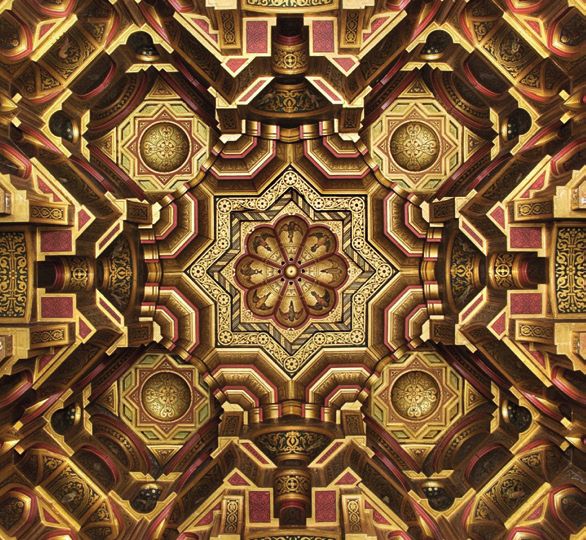
The Arab Room, Cardiff
Book online now: https://asim-yusuf.eventbrite.co.uk
Castle designed by William
Burges in the 1880’s. #IUKCSem18
Photo by permission of
Cardiff County Council. @IslamUKCentre facebook.com/IslamUKCentreYou can also read


