2018 Cryptocurrency Survey - Foley & Lardner LLP
←
→
Page content transcription
If your browser does not render page correctly, please read the page content below

2018 Cryptocurrency Survey

Executive Summary
“We have proposed a system for electronic transactions           Commission (SEC) Chairman Jay Clayton has said that
without relying on trust.”                                       every initial coin offering he’s seen so far qualifies as a
                                                                 security. SEC Division of Corporation Finance Director
Those words, in a 2008 essay by Bitcoin’s mysterious             William Hinman has testified before Congress that tokens
creator Satoshi Nakamoto, paved the way for the rise             can “theoretically” avoid being securities, but his division
of cryptocurrencies – fueling dreams of a new form of            has so far declined to give written no-action assurances to
currency that would exist outside of sovereign control and       any token proponent. In a June 2018 speech, Hinman listed
independent of the banking system. But nearly a decade           and explained factors that could persuade the SEC that a
later, a new survey by Foley & Lardner LLP shows that            particular token offering is, or is not, a securities offering.
executives and investors in the space overwhelmingly             Clayton also noted in April 2018 that if the SEC doesn’t “stop
want regulation to provide certainty beyond Nakamoto’s           the fraudsters, there is a serious risk that the … regulatory
cryptographic proof.                                             actions will be so severe that they will restrict the capacity of
                                                                 this new security.”
At a pivotal moment for the maturing – but still young –
cryptocurrency industry, Foley surveyed industry insiders        The Commodity Futures Trading Commission (CFTC), in
to gauge attitudes and perspectives on the use, risks and        contrast, has said that cryptocurrencies are commodities
regulation of cryptocurrencies. The survey finds that the vast   (of the non-security variety) that may implicate its oversight
majority believe initial offerings of cryptocurrencies should    responsibilities. CFTC staff recently issued guidance for
be regulated in the United States at the federal level, with     futures exchanges to list derivatives on cryptocurrencies
a strong majority also supporting regulation of trading and      beyond Bitcoin.
use of cryptocurrencies. At the same time, most believe that
the industry lacks a well-grounded understanding of how          There are indications that the SEC and CFTC staff
existing regulation of financial markets or services might       are discussing how to cooperate and coordinate on
already apply.                                                   jurisdictional matters.

The widespread sense of regulatory confusion – combined          Clearly, a decade into the cryptocurrency revolution,
with cryptocurrencies’ enormous value losses in recent           questions abound. But many investors are still hopeful – for
months – might be expected to hamper investment.                 big paydays and increased regulatory certainty.
However, most respondents expressed a willingness to
take on legal risk and invest in or develop cryptocurrency       “We’d rather be leading the path forward than following
businesses. As one executive said, “the juice is worth           behind,” one executive said. “There are plenty of ways to
the squeeze.”                                                    work with regulators and legislatures to develop common-
                                                                 sense cryptocurrency laws and regulations.”
Federal regulators are indeed asserting their grounds for
regulating aspects of cryptocurrency activities, but creating
legal uncertainty in the process. Securities and Exchange

                                                                                                      © 2018 Foley & Lardner LLP | 1
Highlights of Foley’s 2018 Cryptocurrency Survey include:
■■ The vast majority of respondents expressed a desire           ■■ A strong majority of respondents (72%) support the
    for greater regulatory certainty, with 84% indicating           opportunity to invest in exchange-traded funds holding
    that initial offerings of cryptocurrencies should be            cryptocurrencies. Regulators have sent mixed messages
    regulated by the federal government, states or both.            on this point, with concerns cited relating to valuation,
    68% want regulation for ongoing purchases and sales             liquidity, custody, arbitrage and potential manipulation.
    of cryptocurrencies, and 55% say it’s needed when it         ■■ Private key management and storage emerged as the
    comes to paying for goods and services.
                                                                    top risk for managing cryptocurrency assets, with 67%
■■ Most respondents (86%) think the cryptocurrency                  indicating that it poses a strong or very strong risk. But
    industry should self-police through developing common           they are largely split on whether validation through proof
    voluntary standards. 89% say the industry should                of work (the method most associated with Bitcoin) or
    explore implementation of standards through formalized          proof of stake (the method in development by Ethereum)
    self-regulation, with most believing that any model of          has the greatest long-term sustainability. Each method
    self-regulation should be subject to regulatory oversight.      garnered support from 28% of respondents, but 26%
■■ The lack of legal certainty emerged as a concern
                                                                    say they don’t have an opinion – another sign
                                                                    of uncertainty.
    throughout the survey, including for the 72% who feel
    that the cryptocurrency industry does not have a well-       ■■ Bitcoin and Ethereum are the leaders in
    grounded understanding of existing federal and state            cryptocurrency, according to survey respondents.
    regulation of financial markets or financial services.          Bitcoin is viewed as the most likely to gain the broadest
    Despite that, 58% of respondents are willing to take            acceptance for use in making payments by 43% of
    on legal risk to invest in or develop cryptocurrency            respondents, with Ethereum second at 17%. But
    businesses.                                                     Ethereum is seen as the best investment opportunity
■■ Most respondents (58%) disagree that sovereigns or
                                                                    by 38% of respondents, slightly edging out the more
                                                                    established Bitcoin (selected by 35%).
    central banks should create their own cryptocurrencies,
    but 25% were in favor of that proposition.
■■ Beyond legal and regulatory, other risks – many
    involving security – weigh heavily on respondents’
    minds. Hackers and security breaches are seen as the
    most pressing threats to the viability and growth of the
    cryptocurrency industry, though manipulative trading of
    cryptocurrencies and fraudulent offerings are also high
    on respondents’ radar.

    In the charts that follow, some aggregate percentages do not equal 100% due to rounding or because
    respondents were invited to select more than one answer. Refer to page 19 for more detail on the survey
    methodology and a breakdown of respondent demographics.

2 | © 2018 Foley & Lardner LLP
IN YOUR OPINION, WHICH CRYPTOCURRENCY
1
    PROVIDES THE BEST INVESTMENT OPPORTUNITY?

    40%    38%
                       35%
    35%

    30%

    25%

    20%

    15%

    10%                                                        9%

                                 5%
    5%
                                         2%         2%
    0%
          Ethereum    Bitcoin   Ripple   Dash   Zcash/Monero   None

    IN YOUR OPINION, WHICH CRYPTOCURRENCY HAS, OR WILL LIKELY GAIN, THE MOST
2
    BROAD ACCEPTANCE FOR USE IN MAKING PAYMENTS FOR GOODS AND SERVICES?

    50%

    45%    43%

    40%

    35%

    30%

    25%

    20%                17%
    15%                                                        12%
                                10%
    10%
                                 5%      5%
    5%                                   2%         2%
    0%
          Bitcoin    Ethereum   Ripple   Dash   Zcash/Monero   None

                                                                         © 2018 Foley & Lardner LLP | 3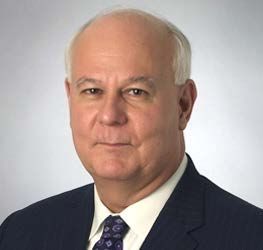
3      DO YOU THINK BITCOIN’S MARKET CAP WILL BE SURPASSED BY ANOTHER CRYPTOCURRENCY?

          It’s possible, but it’s too early to tell                                                                         35%

                                 Yes, within 1 year           5%

                        Yes, within 1 to 2 years                               14%

                        Yes, within 2 to 5 years                                      18%

                             Yes, in over 5 years             5%

                    Yes, but I don’t know when                            12%

                                             Never                       11%

                                                      0%    5%     10%         15%      20%        25%        30%        35%

Bitcoin, launched in 2009, was the first cryptocurrency,             With regard to market cap, 54% of respondents say Bitcoin
and among laymen it is nearly synonymous with blockchain             will eventually be surpassed, but only 19% think it will
itself. So the fact that a strong plurality (43%) believe it has     happen within two years. The scattering of responses and
or will likely gain the broadest acceptance for use in making        the 35% who say it’s possible to surpass Bitcoin–but too
payments isn’t surprising. Ethereum is much younger,                 early to tell–show a great deal of uncertainty.
having launched in 2015, and is sometimes described as a
distant second to Bitcoin – which aligns with the 17% who
                                                                     “Bitcoin and Ethereum are the ‘safest’ crypto assets to
selected this choice in the same question.
                                                                     build a business around because they are the only crypto
But as far as investment opportunities, slightly more                assets that the SEC and the CFTC agree upon. That’s not
respondents see an upside in Ethereum (38%) than in                  to say that Bitcoin or Ethereum investment is safe – it’s
Bitcoin (35%). There are likely several reasons for that             not. It’s also not a prediction that these assets will outlast
– some Ethereum advocates point to its environmentally               all of their competitors. A competitor of Bitcoin and
friendly strategy (compared to Bitcoin) and that Ethereum            Ethereum could arise to take their place, or the entire
is not constrained by a limited number of Ether tokens.              asset class might disappear.
Ethereum also launched with its own scripting language,
making it possible to develop complex smart contracts,
decentralized autonomous organizations, decentralized                                Patrick Daugherty, partner
autonomous apps and other cryptocurrencies, according                                and member of Foley’s
to TechCrunch. “This ease of development, combined with                              Blockchain Task Force
the rising price of Ether and a desire by early stakeholders
to reinvest in the Ethereum ecosystem, has made Ethereum
the platform of choice for crypto-asset entrepreneurs,” the
publication reported in 2017.

4 | © 2018 Foley & Lardner LLP
4 DO YOU ANTICIPATE A CRYPTOCURRENCY “CRASH” OR “BUBBLE BURST”?
Yes, in the next 12 months 41%
Yes, within 2-5 years 14% 29%
Yes, in over 5 years 4%
No 27%
0% 10% 20% 30% 40% 50%
ARE YOU WILLING TO TAKE ON LEGAL RISK IN PURSUING YOUR
5
INVESTMENT IN CRYPTOCURRENCY OR YOUR DEVELOPMENT OF
A CRYPTOCURRENCY BUSINESS AS DISRUPTERS HAVE DONE IN
OTHER INDUSTRIES (E.G., UBER)?
Yes
42% 58%
No
© 2018 Foley & Lardner LLP | 5Given the market pounding cryptocurrencies have taken in specifically about Bitcoin, Willemien Kets, associate
the past several months, one could argue that the bubble professor at the University of Oxford’s Department of
has already burst. The fact that 74% expect a market Economics, told CNBC in February 2018, “We know from
correction at some point in the next five years makes sense. social psychology that the best way to get people hooked
on something is to give them a reward on a very uncertain
When it comes to investing despite perceived legal risks, time frame.”
more than half of survey respondents (58%) are still willing
to take a chance on cryptocurrency. Among those who For those who say they’re unwilling to invest, reasons
identify themselves as investors or traders, 89% say they are vary from the lack of an established market to (perhaps
willing to take on legal risk to invest. relatedly) the lack of regulations and legal risk. “There
are too many unknowns – and regulation has a tendency
It’s possible that the volatility of cryptocurrency might be to loop back and find fault even though no rules were in
part of its appeal for investors, as the big swings in valuation place,” one executive says.
provide tempting opportunities for a big payday. Speaking
“If the potential for a society-changing technology is new
and investable, the risks to invest will be high.”
– Investor respondent
6 | © 2018 Foley & Lardner LLPGiven that cryptocurrency was built around replacing trust
IN YOUR OPINION, SHOULD SOVEREIGNS with cryptographic proof, the fact that 25% of respondents
6
OR CENTRAL BANKS CREATE THEIR OWN think sovereigns and central banks should get into the
CRYPTOCURRENCIES? game is telling – as is the fact that 17% of respondents
aren’t sure. Essentially, a good portion of respondents
think that governments should exert more authority over
cryptocurrency.
17% Several countries are thinking of launching their own
cryptocurrencies, but crisis-ridden Venezuela was the first
Yes to do it in early 2018. “We are on the world’s financial
vanguard,” Venezuelan President Nicolas Maduro said,
58% No according to the Washington Post. In March, the Marshall
25% Islands, a small country in the Pacific, passed a law to
No Opinion
recognize cryptocurrency as its legal tender.
Both countries see the technology as a way to address
financial issues – a motivation shared by the government
of Illinois, where legislators are considering a bill that
would allow the state to accept payments for taxes using
cryptocurrency. The governments of other states, including
Arizona and Georgia, have considered similar measures.
Those efforts seem to dovetail with the reasoning of one
survey respondent who explains why sovereigns should get
involved: “To capitalize on the efficiencies that distributed
ledger technology can bring to an economy.”
“Sovereigns have to try and compete to own a platform
for owning the infrastructure to move wealth from one
entity to another before their own currency is rendered
useless online. No matter what they do, there may be no
stopping the decentralized, independent cryptocurrency,
but better to try and fail.”
– Engineer/developer respondent
“When sovereigns create their own cryptocurrencies, it
will bring regulation. This will hurt the cryptocurrencies
at first, but will bring legitimacy to the industry and
make it stronger in the long run.”
– Investor respondent
© 2018 Foley & Lardner LLP | 7IN YOUR OPINION, SHOULD INVESTORS BE ALLOWED TO INVEST IN EXCHANGE-TRADED FUNDS
7
(ETFS) HOLDING CRYPTOCURRENCIES?
Yes, for Bitcoin and others 69%
Yes, for Bitcoin but not others 3%
No 4% 19%
No opinion 9%
0% 10% 20% 30% 40% 50% 60% 70% 80%
Nearly three-quarters of respondents (72%) are hopeful
they’ll see ETFs for Bitcoin and other cryptocurrencies, “From an investor protection standpoint, regulators are
indicating strong interest in a retail investment product. particularly concerned about offerings of cryptocurrency
Major players on the financial scene are also in favor, with assets directed to retail investors. ETFs are a vehicle for
Cboe Global Markets, one of the first to launch Bitcoin selling pooled assets to the public. The SEC has made
futures (the other being the CME), recently asking the SEC clear that before this will be permitted, the volatility and
to allow Bitcoin ETFs. That came after the SEC pushed back liquidity of these assets, among other concerns, will need
against ETF applications in a letter earlier this year, citing to be addressed.”
questions about valuation, liquidity, custody, arbitrage and
potential manipulation. Cameron and Tyler Winklevoss also
applied for a Bitcoin-based ETF five years ago and were Kathryn Trkla, partner and
turned down, though the famous twins have continued to member of Foley’s Blockchain
make applications. Task Force
Despite the SEC’s hesitancy, the commission said in March
that it would begin the process of deciding whether NYSE
Arca can list two funds that track Bitcoin futures. But
not everyone watching cryptocurrencies thinks ETFs will
be good for Bitcoin. Financial writer Ryan Derousseau,
writing in Time, said ETFs for Bitcoin might be a case of “be
careful what you wish for,” noting that “history is replete with
examples of ‘hot’ investing trends turning cold once they
reach sufficient popularity for the financial services industry
to launch mass-marketed funds.”
8 | © 2018 Foley & Lardner LLPFOR EACH OF THE FOLLOWING ITEMS, PLEASE INDICATE THE LEVEL OF RISK YOU THINK IT POSES
8
TO THE VIABILITY AND GROWTH OF THE CRYPTOCURRENCY INDUSTRY.
40%
40%
36%
34% 34%
35% 33%
32%
31% 31%
30%
30% 28% 28% 28% 28%
26% 26%
25% 23%
22%
19% 19%
20% 17%
17%
14% 14%
15%
12% 12%
10% 10%
9% 9%
10%
7% 7%
5% 5%
5% 3%
2%
0%
Rogue state actors Hackers/ Hackers/ System limitations Fraudulent offerings of Manipulative trading Money laundering and
(e.g., North Korea) security breaches - security breaches - (e.g., transaction cryptocurrencies of cryptocurrencies the finance of crime
theft or “ransom” of theft of speed, scaling /
data cryptocurrency tokens throughput)
no risk slight risk average risk strong risk very strong risk
Respondents see several causes for concern with regard there’s a break from common cryptocurrency rules, leading
to the viability and growth of the cryptocurrency industry. to splits like that of Bitcoin and Bitcoin Cash in August 2017.
Given the theft of $530 million in tokens from Japanese
cryptocurrency exchange Coincheck earlier this year – as The uncertain regulatory future was cited by respondents
well as the continuous cyberattacks and data breaches in too, particularly in relation to Initial Coin Offerings – many
the headlines – it’s not surprising that hackers and security of which have been offered as unregulated fundraising
breaches (the theft of cryptocurrency tokens) registered efforts. ICOs also drew more general concerns. “ICOs are
as the most pressing risk. 71% of respondents say it is a holding mass amounts of capital with only small-percentage
strong or very strong risk, with 31% calling it very strong success rates for startups, (and) high capital only delays
– mirroring the percentage for money laundering and the the inevitable failure for 75 to 90 percent of them,” one
finance of crime. System limitations, the manipulative executive who took the survey says.
trading of cryptocurrencies, and fraudulent offerings of
cryptocurrencies also emerged as key areas of concern.
“The biggest risk most take for granted is that
In their verbatim feedback, respondents identified a host of blockchain technology is not hackable.”
other potential problem spots, from misplaced beliefs that – Investor respondent
blockchain is impervious to hacking to high energy costs to
illiquidity. Still others pointed to “forking,” a practice in which
© 2018 Foley & Lardner LLP | 9FOR EACH OF THE FOLLOWING ITEMS, PLEASE INDICATE THE
9
LEVEL OF RISK IN MANAGING CRYPTOCURRENCY ASSETS.
45%
40%
36%
35%
31% 31% 31%
29%
30%
26%
25%
21% 22% 21%
20%
15%
12% 12%
10% 10%
10%
5%
5%
2%
0%
Private key Cryptography vulnerability Inability to
management / storage (e.g., due to quantum computing) remove content
no risk slight risk average risk strong risk very strong risk
WHAT FORM OF CRYPTOCURRENCY VALIDATION METHOD DO
10
YOU THINK HAS THE GREATEST LONG-TERM SUSTAINABILITY?
30% 28% 28%
26%
25%
20%
14%
15%
10%
5%
0%
Validating Validating Validating Don’t have
transactions transactions via transactions via an opinion
via mining holding a certain your identity
(i.e., proof of work) number of coins and reputation
(i.e., proof of stake) (i.e., proof of authority)
10 | © 2018 Foley & Lardner LLPWhen it comes to the risks associated with private key and create new blocks. Proof of stake, part of Ethereum’s
management and storage – considered by respondents to upcoming Casper implementation, uses algorithms that
be the biggest risk in managing cryptocurrency assets – select participants with the highest stakes as validators,
respondents are likely thinking of simple human error or the assuming that those stakeholders have the highest incentive
ease of hacking individuals’ online wallets. The perceived to ensure a transaction is processed. Meanwhile, 26% of
risk associated with the inability to remove content likely respondents indicated not having an opinion.
relates to concerns about privacy, because details specific to
individuals’ wallets are exchanged in every transaction and
cannot be removed, making that information available for “Proof of work is most closely associated with Bitcoin,
others to access. which has been around for a decade. Proof of stake
and other alternative consensus mechanisms are
Although the technology is thought to be a long way emerging areas that are worth watching because they
off, quantum computers also pose a major risk to
can address energy, environmental and scalability
cryptocurrency. Quantum computers could outperform
concerns associated with proof of work. That said, the
classical supercomputers and break encryption schemes
fact that a quarter of respondents don’t have an opinion
that secure data transmission on the internet and underpin
about the long-term viability of various consensus
the security of most cryptocurrencies. “This is really, really
mechanisms shows how early we are in the evolution of
hard, way harder than building a classical computer,”
cryptocurrencies.”
John Martinis, Google’s quantum computing expert, said in
August 2017, according to Forbes.
As far as methods seen as having long-term sustainability Joseph Janas, associate and
for cryptocurrency validation, proof of work and proof of member of Foley’s Blockchain
stake tied for the top choice. Proof of work, which underpins Task Force
Bitcoin and other cryptocurrencies, rewards participants who
solve cryptographic puzzles in order to validate transactions
© 2018 Foley & Lardner LLP | 11DO YOU THINK INITIAL OFFERINGS OF CRYPTOCURRENCIES
11
SHOULD BE REGULATED IN THE U.S.?
70%
70%
60%
50%
40%
30%
16%
20%
12%
10% 2%
0%
Yes, by the Yes, as Yes, at No
U.S. federal determined both the
government by individual federal state
states levels
DO YOU THINK ONGOING PURCHASES AND SALES OF
12
CRYPTOCURRENCIES SHOULD BE REGULATED IN THE U.S.?
60% 57%
50%
40%
32%
30%
20%
9%
10%
2% 2%
0%
Yes, by the Yes, as Yes, at both No
U.S. federal determined by the federal
government individual states and state levels
12 | © 2018 Foley & Lardner LLPDO YOU THINK USE OF A CRYPTOCURRENCY AS A MEANS TO PAY FOR
13
GOODS AND SERVICES SHOULD BE REGULATED IN THE U.S.?
50%
46%
45%
40% 37%
35%
30%
25%
20%
15% 12%
11%
10% 7%
5%
5% 2%
0%
Yes, by the Yes, as Yes, at both No
U.S. federal determined by the federal
government individual states and state levels
DO YOU AGREE WITH THE FOLLOWING STATEMENT: THE INDUSTRY HAS
14
A WELL-GROUNDED UNDERSTANDING OF WHETHER OR HOW EXISTING
FEDERAL AND STATE REGULATION OF FINANCIAL MARKETS OR FINANCIAL
SERVICES MIGHT APPLY TO THE ACTIVITIES DESCRIBED ABOVE.
5%
9%
Strongly agree
33% Agree
14%
Neither agree
nor disagree
Disagree
Strongly disagree
39%
© 2018 Foley & Lardner LLP | 13Respondents appear to broadly support regulation of Nearly three-quarters of respondents (72%) don’t think the
cryptocurrency – more than half answer in the affirmative to industry has a well-grounded understanding of how existing
the first three questions above. Given the historically strong regulation of financial markets and financial services might
libertarian bent in the cryptocurrency world, it’s remarkable apply to the cryptocurrency industry. That may well reflect
that most respondents are in favor of regulation. the confusion created by seemingly contradictory assertions
of jurisdiction in this area by the SEC and CFTC, as well as
Respondents overwhelmingly say regulation of initial the challenge of sorting through potentially multiple layers of
offerings of cryptocurrencies should involve the federal regulation at both the state and federal levels.
government (82%). 66% support federal regulation of
ongoing purchases and sales of cryptocurrencies, and 48%
favor it when it comes to paying for goods and services. In
“It’s interesting that the number of respondents who
fact, the SEC and CFTC have both asserted their regulatory
favor some degree of federal regulation is so high. The
interest over aspects of the cryptocurrency industry.
reasons likely vary, but one may be a recognition that
The Treasury Department, through its Financial Crimes
the decentralized platforms on which cryptocurrencies
Enforcement Network bureau, has also weighed in to clarify
application of the anti-money laundering laws to firms are traded or transferred are not self-contained silos.
involved in the business of transmitting cryptocurrencies. When a cryptocurrency is exchanged for USD or another
fiat currency, or transferred as payment for receipt of a
Few respondents favor state regulation. But as uncertainty good or service, the transaction will likely involve use of
prevails in D.C., states are getting involved – with California, existing, regulated financial market infrastructure.”
New York and Wyoming (from a regulation-friendly
perspective) among the most active. “There is growing
realization that regulation (or even attention from regulators)
Kathryn Trkla, partner and
is good because it establishes rules and order in an
member of Foley’s Blockchain
otherwise lawless jungle that provides free play to dubious
Task Force
actors and businesses,” according to a March 2018 article
in Investopedia.
It's likely that respondents who favor regulation are hoping “Uncertainty about regulatory standards and duties
for a measured hand when it does come. “Regulation is is an obstacle to salutary product development in this
both good and bad for the space,” an investor who took the field. But a recent speech by SEC Division of Corporation
survey says. “But harsh regulations would stifle innovation.” Finance Director William Hinman enlightened the issues
and paved the way toward wholesome engagement by
the SEC with lawyers for the cryptocurrency industry.”
Patrick Daugherty, partner
and member of Foley’s
Blockchain Task Force
14 | © 2018 Foley & Lardner LLPDO YOU THINK THE INDUSTRY SHOULD
15
DEVELOP COMMON VOLUNTARY STANDARDS?
14%
Yes
No
86%
IN YOUR OPINION, SHOULD THE INDUSTRY EXPLORE IMPLEMENTATION OF STANDARDS VIA
16
A FORMALIZED MODEL FOR SELF-REGULATION?
Yes, subject to regulatory oversight 59%
Yes, standalone (no regulatory oversight) 30%
No 11%
0% 10% 20% 30% 40% 50% 60%
© 2018 Foley & Lardner LLP | 15A strong majority of respondents think common voluntary 59% of respondents believe that formalized self-regulation standards (86%) should be implemented, and an even should be subject to regulatory oversight, while 30% don’t stronger majority favor formalized self-regulation (89%). – and only 11% are against formalized self-regulation for It’s possible that respondents believe standards related to the industry. This is another place where respondents value technology are needed – especially given the high-profile regulations that are done properly, primarily because of forking issues throughout the industry. Or they may see the concerns about the unknown. CFTC commissioner Brian value of voluntary standards or self-regulation in multiple Quintenz, in March 2018, said the industry should consider areas, such as standards governing practices for trading self-regulatory standards and industry-wide standards as on cryptocurrency platforms or processing cryptocurrency government regulations take shape. transactions, the business conduct of those providing services to market participants, or commercial enforceability of transactions should disputes arise. Regardless, it’s clear respondents support efforts to police themselves. 16 | © 2018 Foley & Lardner LLP
IF YOU THINK CRYPTOCURRENCY ACTIVITIES SHOULD BE SUBJECT TO REGULATORY OVERSIGHT,
 17
        WHICH OF THE FOLLOWING DO YOU THINK U.S. REGULATORS SHOULD BE DOING? CHECK EACH YOU
        AGREE WITH.
                      75%
        80%

        70%
                                       57%
        60%                                              51%               51%               49%
        50%

        40%

        30%
                                                                                                             19%
        20%

        10%

          0%
                    Continue           Create        Move quickly to       Let the           Embrace      Move quickly
                     to bring      commissions        provide legal      technology        “regulatory       to adopt
                      fraud         and/or task       certainty for     develop and        sandboxes”      regulations
                   cases - this   forces to better    determining      play out in the      permitting
                    will stop       understand           when a        market before      experimenta-
                     the bad      the technology/    cryptocurrency     intervening,     tion with new
                      actors       market before      is a security     but keep an      products and
                                      enacting         and when it     eye on what is      technology
                                    regulations           is not          going on         without the
                                                                                         full burden of
                                                                                            regulation

Fraud, also identified by the SEC as a major focus, tops
respondents’ wish list for regulatory oversight (chosen                   “If the concern is investment, regulate it like any other
by 75% of respondents). Interestingly, the percentage                     investment; if the concern is accepting it as a means of
of respondents who want certainty about whether                           exchange, people should be able to do whatever they
cryptocurrencies qualify as securities or non-securities                  want.” – Investor respondent
commodities and those who want the government to let the
technology play out is exactly the same (51%).
                                                                          “The U.S. has long-standing anti-fraud laws that
57% say they support the creation of a commission or task
                                                                          apply to cryptocurrencies, but there are potential
force to better understand technology and the market before
                                                                          gaps and shortcomings in this developing area. While
enacting regulations – and one investor respondent goes
                                                                          worries about fraud aren’t necessarily surprising, they
a step further: “There should be an independent, non-
                                                                          do provide another sign that industry insiders view
government body to oversee regulation.”
                                                                          regulation on the whole as a good thing.”
But only 19% seize on the idea that regulators need to move
quickly to adopt regulations – despite other survey results
                                                                                            Allison Charney, partner and
pointing to a desire for regulation. This likely shows that
                                                                                            member of Foley’s Blockchain
respondents want regulations, but in a measured way.
                                                                                            Task Force

                                                                                                               © 2018 Foley & Lardner LLP | 17
FOR EACH OF THE FOLLOWING STATEMENTS, PLEASE INDICATE WHETHER
18
YOU THINK IT POSES AN OBSTACLE TO THE CRYPTOCURRENCY INDUSTRY.
100%
14% 14% 12%
16% 16%
80%
14%
19%
33% 29%
37%
60%
34%
28%
40% 34%
32% 28%
28% 23%
20%
11% 16%
18%
11% 13%
9% 7%
5%
0%
The prospect Legal Legal Legal uncertainty Lack of global
that an ICO uncertainty uncertainty around whether a harmonization
is a securities around around whether network on which (i.e., across
offering whether a a transaction to a cryptocurrency different
cryptocurrency buy or sell a may be purchased countries) in
is a security or cryptocurrency or sold is subject whether or how
a commodity is subject to to regulation as to regulate ICOs,
regulation an exchange purchases and
(e.g., by the under the sales of
SEC or the securities or cryptocurrencies
CFTC) commodities laws or use of
cryptocurrencies
as means to pay
for goods and
services
No Slight Strong Very Strong
Obstacle
Obstacle Obstacle Obstacle Obstacle
The responses reveal yet again strong concern about legal uncertainty. Over 50% of respondents
ranked each statement as posing an obstacle or a strong or very strong obstacle. Legal uncertainty
related to whether a cryptocurrency is a security or a commodity narrowly holds the top spot, with 79%
of respondents saying it is at least an obstacle. Uncertainty around whether transactions to buy or sell
cryptocurrencies are regulated and whether platforms on which cryptocurrencies are traded could be
subject to regulation as exchanges under securities or commodities laws drew a similar reaction.
18 | © 2018 Foley & Lardner LLPMethodology and Demographics
In March and April of 2018, 62 professionals completed Foley’s 2018 Cryptocurrency Survey. Most respondents (61%) held
executive titles or identified as investors or traders. Respondents were primarily based in the United States and ranged in age from
their 20s to 50 and older.
The breakdown of respondents includes:
■■ Investor (30%)
■■ Business Executive (26%)
■■ Lawyer (17%)
■■ Consultant (9%)
■■ Trader (5%)
■■ Engineer/Developer (5%)
■■ Other Professional (8%)
© 2018 Foley & Lardner LLP | 19AboutFoley
About Foley& Lardner LLP
Foley & Lardner LLP looks beyond the law to focus on the constantly evolving demands
facing our clients and their industries. With over 1,100 lawyers in 24 offices across
the United States, Mexico, Europe, and Asia, Foley approaches client service by first
understanding our clients’ priorities, objectives, and challenges. We work hard to
Foley & Lardner LLP looks beyond the law to focus on the constantly evolving demands facing our clients and
understand our clients’ issues and forge long-term relationships with them to help achieve
their industries.
successful outcomes With
andover 1,100
solve lawyers
their legal in through
issues 24 offices across
practical the United
business States,
advice and Mexico, Europe, and Asia,
cutting-edge legal insight. Our clients view us as trusted business advisors because we
Foley approaches client service by first understanding our clients’ priorities, objectives, and challenges. We work
understand that great legal service is only valuable if it is relevant, practical and beneficial
hard tobusinesses.
to their understandLearn
our clients’
more at issues and forge long-term relationships with them to help achieve successful
Foley.com.
outcomes and solve their legal issues through practical business advice and cutting-edge legal insight. Our
About Foley’s Blockchain Task Force
clients view us as trusted business advisors because we understand that great legal service is only valuable if it is
relevant, practicalTask
Foley’s Blockchain and Force
beneficial to theirofbusinesses.
is comprised practitioners of multiple legal disciplines
in money centers and innovation hubs across the U.S. With a deep understanding of the
On April 1, 2018, Foley combined with Gardere, Wynne & Sewell LLP. Foley & Lardner LLP operates as
regulatory landscape and extensive experience bringing novel products to market, Foley
“Foley
advises Gardere”
established in and
Austin, Dallas,
startup Denver,onand
businesses theHouston,
full range and as “Foley
of issues arisingGardere Arena” in Mexico City through
this space,
including initial Gardere,
its subsidiary, coin offerings andy blockchain
Arena Asociados,fund
S.C.formation; investing in cryptocurrency;
use of distributed ledger platforms for trading of cryptocurrencies and other instruments;
and the proper regulatory classification of these transactions. The task force brings
comprehensive experience in the regulation of securities and derivatives markets and
trading; securities offerings, venture capital and hedge fund formation and financing;
securities and derivatives exchange formation; bank regulation; technology and intellectual
property licensing; and taxation. Enforcement and litigation lawyers also represent clients in
government investigations or civil disputes and privacy lawyers advise on cybersecurity and
data privacy related issues.
AUSTIN | BOSTON | BRUSSELS | CHICAGO | DALLAS | DENVER | DETROIT | HOUSTON | JACKSONVILLE | LOS ANGELES | MADISON | MEXICO CITY | MIAMI
MILWAUKEE | NEW YORK | ORLANDO | PALO ALTO | SACRAMENTO | SAN DIEGO | SAN FRANCISCO | TALLAHASSEE | TAMPA | TOKYO | WASHINGTON, D.C.
ATTORNEY ADVERTISEMENT. The contents of this document, current at the date of publication, are for reference purposes only and do not constitute legal advice.
Where preious cases are included, prior results do not guarantee a similar outcome. © 2018 Foley & Lardner LLP | 18.MC10951You can also read


