Corporate Plan 2019-20 - Airservices Australia
←
→
Page content transcription
If your browser does not render page correctly, please read the page content below
2019–20

Corporate
Plan
2019–20 Corporate Plan

                         Publication Details                               Digital Access
                         Published by Airservices Australia.               Online access is available at
                                                                           www.airservicesaustralia.com/publications/
                         © Airservices Australia 2019                      corporate-publications/strategic-planning

                         PUB 001—Airservices Australia Corporate Plan
                         2019–20                                           Publication Contact
                         ISSN 1325-2755 (hard copy/print)                  Enquiries concerning reproduction rights should
                         ISSN 2207-5925 (online)                           be addressed to:

                         ABN 59 698 720 886                                Enterprise Analysis and Reporting Manager
                                                                           Airservices Australia
                         This plan was presented for tabling in both       GPO Box 367
                         Houses of Parliament of the Commonwealth          Canberra City ACT 2601
                         of Australia.
                                                                           Telephone (02) 6268 4374
                         This work is copyright. Apart from any use as     Fax (02) 6268 4233
                         permitted under the Copyright Act 1968, no part   EnterpriseReporting2@AirservicesAustralia.com
                         may be reproduced by any process without prior    www.airservicesaustralia.com
                         written permission from Airservices Australia.

                                                                           Publication Acknowledgements
                                                                           Graphic design—Impress Design
                                                                           Print publication—Instant Colour Press
Contents
1                                               1
Letter from the Chairman             2

                                           2019–20 Corporate Plan
2
Outlook8
3
Our Purpose                          12
4
Strategic Pillars                    13
5
Performance28
6
Five-year Corporate Financial Plan   30
7
Risk Oversight and Management        34
Appendix A:
Ministerial Expectations             37
1
                         Letter from the
     2
                         Chairman
2019–20 Corporate Plan

                                           I am proud to present
                                           the Airservices
                                           2019–20 Corporate Plan,
                                           my first as Chairman of
                                           Airservices Australia.
                                           I consider it a great honour
                                           to chair this organisation
                                           as we move towards a
                                           different future for both
                                           Airservices and Australia’s
                                           aviation industry.

                                           Air traffic continues to grow, with Australia’s
                                           capital cities forecast to more than double
                                           their conventional aircraft movements over
                                           the coming two decades. The nature of
                                           air traffic is changing and becoming more
                                           complex as remotely piloted and unmanned
                                           aircraft systems—such as drones—and other
                                           innovators enter our airspace. As a nation
                                           we are investing heavily in the airport and
                                           aviation infrastructure required to support
                                           this growth. Meanwhile, the continuing rate
                                           of acceleration of technological change is
                                           transforming aviation at all levels.
3

                                                                                                2019–20 Corporate Plan
This year’s plan builds on the themes of the     While delivering these financial benefits
previous three years of industry leadership,     for the industry, we are continuing to
service innovation, service excellence and       execute our $1.2 billion capital investment
organisational agility. Our work program         program. This is underpinned by OneSKY
is very much focused on delivering               but also supports delivery of new airport
outcomes for our customers and industry,         infrastructure, services to regional
while minimising the community and               Australia and the digital transformation
environmental impacts of our operations.         of our operations.

We also remain committed to evolving as an       OneSKY remains the cornerstone of our
organisation. We are becoming more agile         commitment to deliver world‑class air
and maintaining productive operations to         traffic management services into the future.
ensure that we can continue to deliver safe      Airservices is working closely with our
and efficient services to all who make use       partners in the Department of Defence, as
of Australia’s changing skies.                   together we introduce a truly harmonised
                                                 civilian and military air traffic management
The work we have done internally since 2017      system. This will transform air traffic
to make Airservices more efficient is now        management in Australia and improve
helping to support the long-term growth of       the safety and efficiency of our skies for
Australia’s aviation industry. I am pleased to   the benefit of industry and the Australian
announce that on 1 July 2019 we passed on        economy. In the coming year our focus
a price reduction of two per cent, following     is on harnessing the benefits of our new
several years of zero price increases.           voice communication switch, ensuring our
For our customers, this represents a real        new air traffic services centres are ready
price decrease of 20 per cent by the end         for installation, and concluding the system
of this plan.                                    design review, as we prepare for the new
                                                 system to go live during the five-year life
In 2019–20 we will once again waive up           of this plan.
to approximately $2.5 million in annual
service charges for Australia’s not‑for‑profit
aeromedical providers. These operators
provide vital services in remote parts of
Australia and we are always pleased to
offer our support.
OneSKY’s customer service delivery               We are managing the introduction of
                         benefits will be complimented by programs        remotely piloted and unmanned aircraft
                         to enhance our network air traffic flow          systems—as well as other low‑altitude
                         management, including airport collaborative      airspace entrants into Australian
                         decision making (A-CDM) and long-range air       airspace—safely and efficiently. We have
                         traffic flow management (LR-ATFM).               commenced a program to rapidly assess
                                                                          the capability and functionality of unmanned
                         A-CDM will provide Airservices, our              traffic management (UTM) systems,
     4                   customers and industry partners—including        and to understand how we must adapt
                         airports—with real-time operational data,        to accommodate the rapidly changing
                         which will help reduce delays and operating      landscape of low altitude airspace.
2019–20 Corporate Plan

                         costs. The program will track towards service
                         readiness in 2019–20.                            This organisation’s proven ability to deliver
                                                                          safe and efficient services, coupled with
                         Meanwhile, LR-ATFM is on-track for               our vision for Australia’s high-tech aviation
                         implementation at Melbourne Airport in           future, leaves us well-positioned to meet
                         late 2020, with Brisbane, Sydney and             the challenges that lie ahead for the industry.
                         Perth airports to follow. This initiative will   This plan outlines how we intend to rise to
                         deliver a range of operational, economic         those challenges in the coming year and
                         and environmental benefits, including            beyond, and how we will ensure that all
                         reduced aircraft fuel burn and enhanced air      those using our skies remain safe.
                         traffic predictability.
                                                                          As Chairman of Airservices Australia,
                         We have established a program of work            I present the Airservices Australia 2019–20
                         to ensure that our aviation rescue fire          Corporate Plan, which covers the period of
                         fighting service is well positioned for the      2019–20 to 2023–24, according to s.35(1)(b)
                         future, as we bring on a new fire service        of the Public Governance, Performance and
                         at Whitsunday Coast Airport in 2019–20.          Accountability Act 2013 (Cth) and s.13 of the
                                                                          Air Services Act 1995 (Cth).

                                                                          John Weber
Our Values
Our values reflect what is important to us at Airservices. Embedded and shared, our values
guide our daily interactions with our customers, community and each other.

Who we are today:

          We are proud of our people                        We achieve more together
           and our contribution                                                                   5
We recognise, acknowledge and celebrate         Our collective efforts are more powerful

                                                                                             2019–20 Corporate Plan
our achievements and milestones                 than any individual

We take pride in the contribution we            We cooperate across organisational
make and are confident in the capability        boundaries to achieve the best outcome
of our people
                                                We share knowledge through clear
We speak up to ensure we are just as safe       communication, foster collaboration
and secure tomorrow as we are today             and work towards a common goal

       We build relationships                              We are authentic
        on trust and respect                                 in our actions
We are professional in our work                 We are committed to our vision
and interactions
                                                We act with integrity while delivering on
We encourage diversity and value the            our promises
difference it makes to our organisation
                                                We know our roles and accountabilities
We actively listen to, communicate with         and how they contribute to our success
and care for each other
                                                We take responsibility and are honest
We support each other to learn, grow,           when making tough decisions
challenge and change

       We innovate for customer value

We put our customers at the centre
of services and we work to deliver
customer value and community benefit

We empower our people to exercise
good judgement and develop better ways
of working

We are resilient, flexible and we learn from
mistakes to find solutions for our customers
and community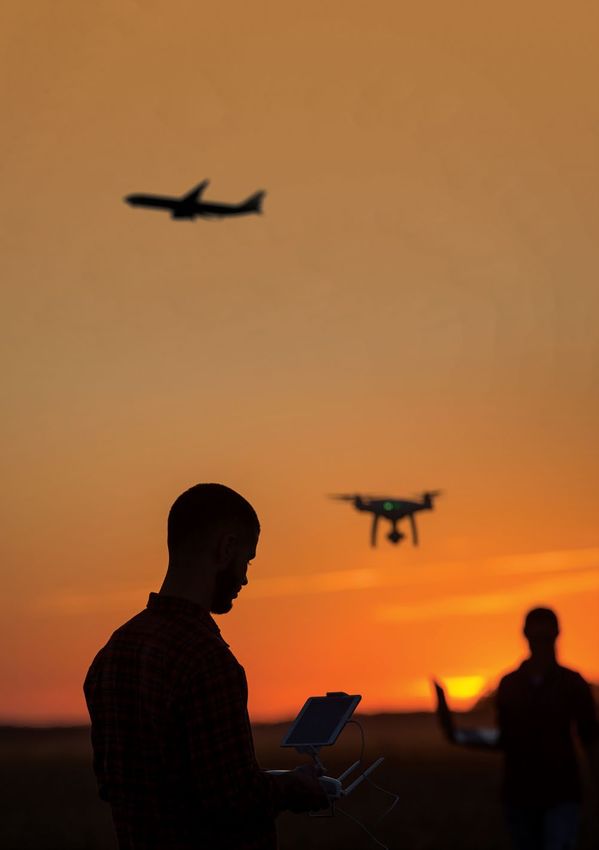
This page discusses             Corporate Plan Overview
                          the Airservices
                          corporate plan
                          overview               Our Purpose
                                                 To provide safe, secure, efficient and
                                                 environmentally responsible services
                                                 that are valued by the aviation industry
     6                                           and community
2019–20 Corporate Plan

                                                 Industry
                                                 Leadership
                           Significant global    Promoting opportunities to
                             traffic growth      enhance the safe and secure
                                                 growth of the aviation
                                                 industry, anticipating
                                                 future needs.
                         Increasing airspace
                             complexity
                                                 Service
                                                 Innovation
                                                 Investing to deliver enhanced
                                                 and new service offerings,
                         Value of data growing
                                                 valued by our customers
                             exponentially
                                                 and the community now
                                                 and into the future.

                              Automation,        Service
                           digitalisation and
                          intelligent systems    Excellence
                                                 Delivering our services to
                                                 a standard of excellence,
                                                 while improving safety and
                                                 efficiency for our customers
                               Evolving
                                                 and the community.
                            transportation
                            ecosystem and
                              value chain        Organisational
                                                 Agility
                                                 Operating efficiently and
                                                 effectively, while remaining
                           Environmental         agile to meet and exceed
                           and community         our customer, industry and
                           consequences          community expectations.
                             of aviation
                             operations
                                                 Our                        We are proud of
                                                                            our people and our
                                                 Values                     contribution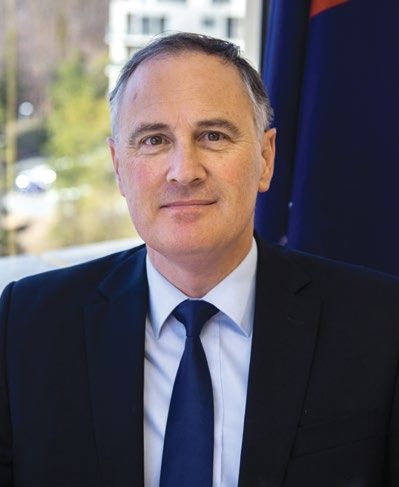
Our Ambition
            To be the industry partner for keeping skies safe
            and delivering distinctive value

                                                                                                                 7

                                                                                                            2019–20 Corporate Plan
       Promoting industry growth                                     Fostering and Promoting Aviation

                                                                          International Capability
       Strategic partnerships
                                                                          Development Program

       Modernising airspace for complexity and growth
                                                                          Airspace Modernisation

                                                                       Network Management Airport
       Enhanced Air Traffic Flow Management Services
                                                                  Collaborative Decision Making and Long
                                                                    Range Air Traffic Flow Management
       Low-level airspace integration
                                                                        Digital Aerodrome Services
       Digital                            Low-level
       Aerodrome                          airspace traffic          Unmanned Aerial Vehicle Integration
       Services                           management
                                          services                     and Management Services

       Delivering ATM                     Transition from
                                                                                  OneSKY
       and ARFF service                   navigation
       excellence                         services to traffic
                                          management
       Community                          services
                                                                  Airport Development Support Program
       engagement

                                          Civil Military           Aviation Rescue Fire Fighting Services
       Evolving satellite
       based surveillance
                                          harmonisation                    Modernisation Program
       and navigation
       systems                                                  Air Navigation Services Readiness Program

                                                                                  People
       People capability development

                                                                     Digital and Information Capability
       Information strategy implementation

       Digital capability and cyber resilience
                                                                           Enterprise Network
                                                                          Modernisation Program
       Leveraging industry capabilities
                                                                             Cyber Resilience

We build                        We innovate for                 We achieve more        We are authentic
relationships on                customer value                  together               in our actions
trust and respect
2
Outlook
8 As the global aviation
industry continues to change,
2019–20 Corporate Plan
we must continue to evolve
and adapt to ensure we
achieve our purpose
and ambition.
The global air traffic management (ATM)
operating environment is changing at a rapid
pace. Our primary focus is ensuring safe air
travel and supporting our customers with
efficient and innovative services.
Aviation continues to grow—by 2037, it is
estimated that global air traffic passenger
numbers will double to 8.2 billion.1
The wider Asia–Pacific region is forecast
to record the largest growth of all regions
globally in the next two decades, with an
additional 2.35 billion passengers expected
to travel each year2. Passenger movements
at Australia’s capital city airports will reach
235 million3 a year by 2030.
1 IATA Forecast Predicts 8.2 billion air travellers in 2037, IATA,
Accessed March 2019, https://www.iata.org/pressroom/pr/
Pages/2018-10-24-02.aspx
2 Ibid.
3 Aviation aircraft movements through capital city airports to
2029–30, Australian Government Department of Infrastructure,
Transport, Regional Development and Local Government, 2010The Oceania region is also expected to Unmanned Aerial Vehicles 9
record significant growth, including an
increase from approximately 17 million
and Low-level Airspace
2019–20 Corporate Plan
international arrivals in 2018 to 26 million Management
by 20284. The biggest growth will come from The global market for unmanned aerial
China (5.6 per cent), followed by the rest vehicles (UAV)—known as drones—
of Asia (3.5 per cent) and North America is expanding exponentially. By 2031
(4 per cent) 5. more than 24 million drones are predicted
to populate our skies globally, compared
Based on stable global economic growth, to 150,000 drones in 2016.6
the forecast for the aviation industry is
bright. Yet as with all global businesses, The unmanned traffic management
the industry’s operating environment is (UTM) market is valued at approximately
sensitive to global market changes influenced US$538 million and is expected to expand
by economic conditions, technology, at a compounded annual growth rate of over
government policies, mining production, 20 per cent during the period 2019–2025.7
and global events. These variables can
significantly impact the long-term forecast Air navigation service providers (ANSPs) have
figures. With the environment changing at been the primary source of oversight for safe,
a rapid pace, there will be periods of slowed secure and efficient air travel for decades.
growth—evidenced by past events—based The growth of non-traditional vehicles brings
on supply and demand, requiring the industry specific challenges to the global aviation
to navigate challenges as they arise. industry. One critical challenge is integrating
a safe and sustainable system that supports
Meanwhile, community expectation in the forecast growth in the emerging air
relation to minimising the effects of aviation mobility industry sector, while keeping
on communities and the environment will our skies and communities safe.
continue to grow.
With the accelerating pace of change
we are continually monitoring international
developments to ensure we are responsive
to this shifting environment.
4 Travel and tourism – Economic Impact 2018 Oceania, World Travel & Tourism Council, Accessed March 2019,
https://www.wttc.org/-/media/files/reports/economic-impact-research/regions-2018/oceania2018.pdf
5 Ibid.
6 ICAO finishes up its ‘unmanned aviation week’ as drones continue to rise in popularity, Blue Swan Daily, Accessed March 2019
https://blueswandaily.com/icao-finishes-up-its-unmanned-aviation-week-as-drones-continue-to-rise-in-popularity/
7 “Global Unmanned Traffic Management Market 2018-2025:Requirement of UTM Solutions to Integrate Autonomous Aerial Vehicles into
Commercial Airspace”. Research and Markets. June 04, 2018. https://www.prnewswire.com/news-releases/global-unmanned-traffic-
managementmarket-2018-2025-requirement-of-utm-solutions-tointegrate-autonomous-aerial-vehicles-into-commercialairspace-30-
0658122.html, Accessed May 14, 2019.Six Key Trends Impacting the Aviation Industry
Airspace increasing Significant global
in complexity traffic growth
Over the next decade, traditional Continued increases in flight volumes
(including ultra-long haul) and will require airspace harmonisation
10 non‑traditional vehicles will operate across flight information regions to
alongside each other, increasing the improve efficiency. Air navigation service
congestion and complexity of airspace.
2019–20 Corporate Plan
provision will be based on operational
New models of air traffic are likely to needs, rather than constraints of
emerge, including models based on national boundaries. Enhanced
the principle of a sharing economy. cooperation will be required between
states and industry.
The emergence of unmanned
aerial vehicles (UAVs) in low altitude Ongoing support will be needed
airspace—such as aerial taxis and for airport infrastructure projects
delivery drones—will accelerate to increase airport capacity.
uptake of new models and force air The environmental and societal impacts
navigation service providers (ANSPs) of an increasingly congested airspace
to rethink how they deliver their current must be managed closely.
service offerings.
There is a growing requirement
to integrate controlled and
uncontrolled airspace to ensure safe
air traffic operation in increasingly
congested skies.
ANSPs must work effectively with
regulatory bodies to form forward-
looking policies and regulatory change.
They need to accommodate anticipated
growth, maintain safety, and ensure
resilience and security. Value of data The evolving transportation
growing exponentially ecosystem and value chain
As data is able to be more readily New entrants are bringing unique
captured and analysed, it is becoming propositions and business models to
increasingly critical in supporting the global aviation market. Incumbents 11
operational efficiency and effectiveness are looking to expand along the
value chain, as seen by aerospace
2019–20 Corporate Plan
across all areas of aviation. Accordingly,
information infrastructure and manufacturers working with other
architecture capability needs to be players to co‑develop self-navigating
enhanced to support the continued technology. Strategic partnerships will
growth of data. become critical for air navigation service
provider success, as future service
Information management, and the delivery will require new capabilities
insights it captures, will form core value and ways of working.
propositions to organisations.
Industry will race to provide end-to-end
customer experiences through vertical
integration of travel. Organisations will
Automation, digitisation need data—and the business insights it
and intelligent systems provides—to create hyper-personalised
services for customers.
Artificial intelligence, the Internet of
Things and virtual technology have
the potential to significantly increase
operating efficiency. Leveraging new Environmental and
technology will create opportunities community consequences
to improve overall performance, of aviation operations
productivity, and safety, and to Community awareness and
facilitate innovation. Integrating these expectations continue to grow around
technologies with existing capability minimising the effects of aviation on
requires a measured transition between communities and the environment.
old and new systems to achieve
intended benefits.
Increasing traffic growth, flight path
changes to support the introduction
of new technology and airport
infrastructure, and the increasing
prevalence of quicker aircraft all
impact on community experience
of aircraft noise.
We are Prepared
Our five year strategy explores the opportunities and challenges these trends bring to
our customers, industry and the community. Our programs and deliverables are tailored
to capitalise on opportunities to ensure we deliver on our purpose and ambition.3
Our Purpose
12 To provide safe, secure,
efficient and environmentally
2019–20 Corporate Plan
responsible services that
are valued by the aviation
industry and community.
We are positioned to be the industry
partner for keeping skies safe and for
delivering distinctive value to our customers
and stakeholders.
Our primary role, as defined under the
Air Services Act 1995 (Cth), is to:
• provide facilities and services for the
safety, regularity and efficiency of air
navigation within Australian‑administered
airspace. This includes providing
air traffic services, aviation rescue
fire fighting services, aeronautical
information, radio navigation and
telecommunications services.
• promote and foster civil aviation in
Australia and overseas.
We operate in accordance with the Air
Services Act 1995 (Cth), the Australian
Airspace Policy Statement 2018, the Public
Governance, Performance and Accountability
Act 2013 (Cth) and the Minister’s Statement
of Expectations.4
Strategic Pillars
Our four strategic pillars are the foundation of our value 13
proposition to our customers, industry and the community.
2019–20 Corporate Plan
Industry Leadership
Promoting opportunities to enhance the safe and secure growth
of the aviation industry, anticipating future needs.
Service Innovation
Investing to deliver enhanced and new service offerings,
valued by our customers and the community now and into the future.
Service Excellence
Delivering our services to a standard of excellence, while improving
safety and efficiency for our customers and the community.
Organisational Agility
Operating efficiently and effectively, while remaining agile to meet and
exceed our customers, industry and the community expectations.
We are focused on what our customers, The success of our programs and
the community and other stakeholders value deliverables outlined in this section
and expect, in navigating the challenges are measured by our key performance
and opportunities of technology and trends indicators (page 29).
in aviation and air safety globally.
Our program deliverables will ensure that
we are:
• safe and secure
• valued and accountable
• efficient and commercial
• innovative.Industry Leadership
14 Promoting opportunities to enhance the safe and secure
growth of the aviation industry, anticipating its future needs.
2019–20 Corporate Plan
Our key legislative obligations under the Programs
Air Services Act 1995 (Cth) include providing
facilities and services for safety, regularity Fostering and Promoting Aviation
and efficiency of air navigation in Australian
In fostering and promoting civil aviation,
administered airspace and to foster and
we place critical importance on not being
promote civil aviation.
an economic or operational impediment
to industry growth. That is why we held
Our role in fostering and promoting civil our prices in 2015 and embarked on a
aviation challenges us, as an industry leader, transformation program to improve our
to continually look for ways to improve efficiency, and position the organisation for
the aviation ecosystem. We exemplify future success. In 2017–18 we waived our
leadership by anticipating changes rather charges for many not-for-profit aeromedical
than responding, and bringing together services. Following successive years of zero
stakeholders from across our industry price growth, from 1 July 2019 we provided a
and community to navigate inevitably price reduction for our customers of two per
complex issues. This collaboration will cent. This translates to a real price reduction
support industry growth, as together of 20 per cent for our customers from 2015
we create an environment in which through to 2023–24.
the aviation industry thrives.
International Capability
We will ensure representation of all layers
Development Program
of our industry—airlines, regional operators,
general aviation users, commercial and We enhance the safety of air transport
non‑commercial drone operators—as in our region by helping our neighbours
well as the communities and citizens improve their operations and internal
we ultimately protect. capability. Airservices works closely with
the Australian Government to provide this
international assistance.15
2019–20 Corporate Plan
Airspace Modernisation Program The tranches of the program are:
Airspace modernisation is critical to support • Tranche 1: Nationally standardise
continued safe air traffic growth while enroute and tower airspace management
catering for the proliferation of new airspace arrangements at regional air traffic control
entrants such as drones. tower locations
• Tranche 2: Increase and nationally
The program will deliver a series of standardise upper enroute Class C
enhancements over the next five years to and Class E controlled airspace
improve safe and efficient service outcomes
and increase airspace access for the aviation • Tranche 3: Nationally standardise the use
industry. It will be primarily achieved through of Class E controlled airspace at regional
national standardisation and leveraging air traffic control tower locations
the benefits of increased surveillance • Tranche 4: Introduce the higher service
coverage, while ensuring that the safety of air level Class B controlled airspace at major
navigation provided by Automatic Dependent capital city locations such as Sydney
Surveillance – Broadcast (ADS-B) remains and Melbourne
the most important consideration.
• Tranche 5: Replace uncontrolled Class G
airspace with controlled Class E airspace
at regional locations outside of air traffic
control tower operating hours
• Tranche 6: Modify controlled airspace
to allow for environmentally efficient
Continuous Descent Approaches.Deliverables
2019–20 2020–21 2021–22 2022–23 2023–24
Fostering and • 2% price
Promoting reduction
Aviation
International • Indonesia • Indonesia
Capability Transport Safety Transport Safety
16 Development Assistance Assistance
Program Program Program
2019–20 Corporate Plan
• Papua New • Papua New
Guinea Guinea
Memorandum of Memorandum of
Understanding Understanding
Airspace • Tranche 2 • Tranche 3 • Tranche 5 • Tranche 6
Modernisation • Tranche 4
Program
Performance Assessment
Our programs and deliverables outlined
under Industry Leadership, help us to be
‘valued and accountable’, ‘efficient and
commercial’ and ‘innovative’.
We will measure success against our core
key performance indicators (page 29).Industry Service Service Organisational
Leadership Innovation Excellence Agility
17
2019–20 Corporate Plan
Strategic Promoting Modernising airspace Digital Aerodrome
partnerships industry growth for complexity Services
and growth
Community Evolving satellite People capability
engagement based surveillance development
and navigation
systemsService Innovation
18 Investing to deliver enhanced and new service offerings,
valued by our customers and the community now and
2019–20 Corporate Plan
into the future.
We are focused on optimising our value to Our two programs of work are:
customers and the aviation industry now
• Airport Collaborative Decision Making
and into the future.
(A-CDM)
A-CDM is a cross-industry initiative with
We innovate to develop valued services for the potential to realise major efficiencies
our customers, while providing the flexibility for the aviation industry over the next
they need for success in an ever changing decade. Following completion of the
and growing industry. foundational work, 2019–20 will see the
A-CDM system go-live at Brisbane and
To anticipate and keep pace with change, Sydney Airports.
we continually explore and identify ways to
keep our skies safe and deliver distinctive • Long Range Air Traffic Flow
value. By embracing opportunities to work Management (LR-ATFM)
in new ways, we add value to our customers LR-ATFM shifts some or all of the required
and industry with improved safety, economic airborne delay for long range flights
and operational outcomes. from the arrival phase of the flight to the
enroute phase. The resulting benefits for
airlines are less fuel burn and improved
We recognise the impact of aviation
predictability of arrival flows into our
on communities and the environment.
major airports. LR-ATFM will go live at
Our engagement with communities minimises
Melbourne Airport during this reporting
the potential impact of our operations.
period, with other airports to follow
in 2020–21.
Programs
Digital Aerodrome Services (DAS)
Network Management
We are introducing DAS—known as digital
We play an important role in the efficient air traffic control towers—to help our air
and effective management of the national traffic controllers enhance service delivery
aviation network. We are collaborating with and improve safety outcomes for the aviation
industry to continuously improve our network industry and travelling public.
management and minimise the impact of
air traffic disruptions on the travelling public.Trials to be conducted during 2019–20 Unmanned Aerial Vehicles (UAV) 19
and 2020–21 will help us determine the Integration and Management Services
technology’s suitability to meet our stringent
2019–20 Corporate Plan
The UAV integration and management
operational and safety standards and deliver
services program is designed to rapidly
the expected benefits.
assess the maturity, capability and
functionality of emerging unmanned traffic
The trials will cover a range of management (UTM) systems. It will also
possible applications: provide test-and-learn opportunities
• back-up facility for service continuity to understand how we must adapt
and resilience purposes (to be trialled our approaches to airspace design to
at Sydney) accommodate the changes occurring in the
emerging landscape for low altitude airspace.
• a control tower service where there
is the need for a future replacement
As part of this program, we are working with
of the current air traffic control tower
industry to pilot operational concepts for UTM
(to be trialled at Canberra)
services and to integrate with conventional
• the introduction of a service at an airspace users, while maintaining a safe
aerodrome that does not currently have and secure environment for all.
an air traffic control tower, but may
require an air traffic control service in The objectives of the pilots are to:
the future (Ballina).
• rapidly assess the maturity, capability and
functionality of emerging UTM systems
Subject to the successful outcome of
and their providers
the trial, we will progress to operational
implementation supported by the • accelerate our understanding of the
appropriate safety analysis, business case, aeronautical data requirements needed
and necessary regulatory approvals. to support low-altitude operations
• inform approaches to boundary
management between ATM and UTM
systems, to assure segregated operations
between conventional and low-altitude
airspace segments
• provide test-and-learn opportunities
to understand how we must
adapt our approaches to airspace
design to accommodate urban
environment complexity.Deliverables
2019–20 2020–21 2021–22 2022–23 2023–24
Network • A-CDM operational • A-CDM
Management at Sydney and operational at
– A-CDM and Brisbane airports Melbourne and
LR-ATFM • LR-ATFM Perth airports
operational at • LR-ATFM
20 Melbourne airport operational at
Sydney, Brisbane
and Perth airports
2019–20 Corporate Plan
Digital • Trial of contingency • Trial of current • Commission
Aerodrome operation air traffic control a digital
Services completed tower service operational
• National completed contingency
deployment • Trial of new service in
roadmap regional air traffic Sydney
completed control service
completed
Unmanned • Pilot 1 – detection, • Pilot 4 – Real
Aerial tracking and UAV time warning for
Vehicles surveillance trial ATC of UAV in
(UAV) completed exclusion zone
Integration • Pilot 2 – UAV trial completed
and surveillance • Pilot 5 –
Management system integration Evaluation of
Services trial completed airspace flight
• Pilot 3 – UTM rules for urban
ecosystem data air mobility trial
integration trial completed
completed • Pilot 6 – Urban air
corridor design
trial completed
• Pilot 7 –
Emergency
services
prioritisation trial
completed
Performance Assessment
Our programs and deliverables outlined Our investment in this space is focused on
under Service Innovation, help us to be adapting to industry changes and growth.
‘efficient and commercial’ and ‘innovative’. We will continue to build valued capabilities
that provide the operational flexibility that
our customers need to be successful and
minimise the impact of our operations
on the environment and communities.
We will measure success against our core
key performance indicators (page 29).21 2019–20 Corporate Plan
Service Excellence

22                       Delivering our services to a standard of excellence,
                         while improving safety and efficiency for our customers
2019–20 Corporate Plan

                         and the community.

                         While the aviation industry operates in          Programs
                         an environment of significant growth,
                         unprecedented change and complexity,             OneSKY
                         we remain focused on delivering service
                                                                          The OneSKY program will deliver a
                         excellence to our customers. This means
                                                                          harmonised civil and military air traffic
                         doing what we do now—well—while
                                                                          management system for Australia and
                         continuously improving the safety and
                                                                          remains our key priority.
                         efficiency of our service delivery to meet and
                         exceed our customers’ expectations.
                                                                          The program includes investment in critical
                                                                          air traffic infrastructure, facilities and services
                         We understand our obligation to protect
                                                                          to enhance the safety, efficiency and capacity
                         the environment and community from the
                                                                          of the Australian air traffic network. It is the
                         effects of aircraft operations.
                                                                          most complex transformation of air traffic
                                                                          management in Australian aviation history,
                         We reward the trust placed in us by              delivering over $1 billion in economic benefits
                         communities, industry and the Government         and enabling us to meet Australia’s future
                         by ensuring that the safety of air navigation    air traffic management needs, maintain
                         remains our most important priority and          Defence capability, and meet national
                         fulfilling our environmental and other           security imperatives.
                         legislated obligations.
                                                                          Over the coming financial year the benefits
                                                                          enabled by the new voice communication
                                                                          system commissioned in 2019 will be
                                                                          delivered to our customers.
Airport Development Support Program Aviation Rescue Fire Fighting 23
Services Modernisation Program
We continue to support industry expansion
2019–20 Corporate Plan
and aviation infrastructure investment across The ARFFS Modernisation Program
Australia. This program delivers essential will ensure ARFFS is ‘fit for the future’
communications, navigation, surveillance and and positioned to leverage technology
aviation rescue fire fighting services across developments that will enhance our service
Australian airports to support the safe and delivery. The program—which also supports
secure growth of air traffic. the Industry Leadership, Service Innovation
and Organisational Agility pillars—is
We are establishing new Aviation Rescue structured around six work streams:
Fire Fighting Services (ARFFS) at the • organisation design
Whitsunday Coast Airport. To enhance
safety at the aerodrome while the new fire • leadership and management
station is constructed, an early service will be • personnel
introduced by the end of September 2019.
The new fire station will be operational by • vehicles and equipment
the end of June 2020. • facilities and training
• support.
To support the new parallel runway at
Brisbane Airport, a second fire station,
Brisbane West, will be commissioned Air Navigation Services
in 2020. Readiness Program
This program will prepare our air traffic
We are supporting planned developments operations capability to transition to OneSKY.
at Sunshine Coast, Melbourne, Perth and The program is structured around four
Western Sydney airports with airspace work streams:
design flight paths and infrastructure.
• organisation design
Our airspace and flight path design • people, leadership and capability
work is essential to realising the safety, • systems and processes
economic and passenger benefits of
airport infrastructure investment. We will • change management.
engage with communities as we seek to
minimise the impact of aircraft operations
on the environment.Deliverables
2019–20 2020–21
OneSKY • Preliminary Design Review • Perth Terminal Control Unit
completed refurbished and ready for
• Critical Design Review installation
completed • Simulator and training
• Melbourne Air Traffic Services system commissioned
24 Centre ready for installation • Brisbane Air Traffic Services
Centre ready for installation
2019–20 Corporate Plan
Airport Development • Whitsunday Coast early ARFFS
Support Program service in operation
• Whitsunday Coast ARFFS
Category 6 service in operation
• Sunshine Coast runway
program completed
• Brisbane new parallel runway
infrastructure program
complete, including new ARFFS
station west
• Western Sydney Airport airspace
preliminary design
ARFFS • ARFFS Modernisation
Modernisation Program Program completed
Air Navigation Services • Air Navigation Services
Readiness Program Readiness Program completed
Performance Assessment
Our programs and deliverables outlined
under Service Excellence, help us to be
‘safe and secure’, ‘valued and accountable’
and ‘efficient and commercial’.
We aim to do what we do now—well—while
continuously improving our effectiveness
and efficiency to meet and exceed
our customers, community and other
stakeholders’ expectations. We will measure
success against our core key performance
indicators (page 29).2021–22 2022–23 2023–24
• New Sydney Air Traffic Service • System Acceptance for • System acceptance of software
Centre ready for installation software release zero (Rz) release one (R1)
• Technical Operations • Site commissioning for software • System verification for software
Centre commissioned release one (R1) commences release two (R2)
• Site commissioning for software
release zero (Rz) 25
2019–20 Corporate Plan
• Western Sydney Airport • Melbourne Airport airspace • Perth new parallel
airspace design finalised design finalised runway infrastructure
• Melbourne Airport new ARFFS program commenced
and air navigation infrastructure
in placeOrganisational Agility
26 Operating efficiently and effectively, while remaining
agile to meet and exceed our customer, industry and
2019–20 Corporate Plan
community expectations.
Our organisational capability and capacity Digital and Information Capability
underpins everything we do. We need to
Advancements in technology has meant an
continue to set the internal conditions for
exponential growth in data. To leverage the
service delivery and innovation to thrive, as
value of this data and to provide improved
we aim to be a more agile organisation with
services in an increasingly complex
the capability and capacity to respond to a
environment, we need new capabilities
rapidly changing and complex environment.
focused on data and analytics.
Our digital program has three work streams:
Programs
• Develop a digital services platform to
People enhance our aeronautical information
Our People Strategy identifies the management (AIM) services through
requirement to evolve—and in some areas a customer focused approach to our
transform—our workforce over the short information-based products and services.
and long term. Over the planning period we • Develop a ‘digital twin’ of our operation
will ensure that our organisation design and to support the delivery of optimised
people practices build, develop, engage and network management through improved
retain the people capability that is essential collaborative decision making.
to deliver service excellence and innovation
for our customers and community. • Using the ‘digital twin’ to optimise air
traffic controller work load as well as
traffic complexity and air route design.
We will further develop and sustain an
inclusive workplace, where differences in our
people are valued and utilised to support Enterprise Network
our innovation and change agenda. Modernisation Program
This program will ensure that the Airservices
We will continue to identify, develop and network has the capacity, availability,
deploy our current and future leaders flexibility and security to manage the current
to ensure they are ready to deliver on and future bandwidth requirements of all our
our strategic initiatives and optimise critical aviation equipment and systems.
service delivery.Cyber Resilience
Investment in cyber security continues to
improve our cyber resilience and security
posture through the implementation of a
comprehensive security framework that is
consistent with the Australian Government’s
Protective Security Policy Framework.
We promote a positive security culture that
evolves along with our systems to meet 27
technology’s rapid advancements.
2019–20 Corporate Plan
Deliverables
2019–20 2020–21 2021–22 2022–23 2023–24
People • Implementation • Leadership
Capability of people development
capability and refresh
engagement implemented
program
commenced
Digital & • Air traffic • Customer • Digital
Information network portal transformation
Capability simulation launched of existing
prototype (digital aeronautical
developed marketplace) information
products
completed
Enterprise • Program • Program • OneSKY • Program • Program
Network transition stage design core enabling design transition
Modernisation commenced and build activities and build completed
Program commenced completed completed
Cyber • Readiness • Readiness • Annual • Annual • Annual
Resilience baseline 1 baseline 2 certification certification certification
achieved achieved and and and
• Annual remediation remediation remediation
certification plan plan plan
and completed completed completed
remediation
plan
completed
Performance Assessment
Our programs and deliverables outlined An agile, fit-for-purpose organisation
under Organisational Agility, help us to be underpins our successful achievements
‘safe and secure’, ‘valued and accountable’, across all our pillars and programs.
‘efficient and commercial’ and ‘innovative’. We will measure success against our core
key performance indicators (page 29).5
Performance
28 Our strategic performance
measures ensure that we
2019–20 Corporate Plan
continue to be recognised
as an industry leader and
valued service provider.
We are driven to succeed by our people,
technology, investments and the decisions
we make.
We monitor our performance against a set
of key performance indicators as outlined in
table 1.
Our performance indicators are balanced
against the broad criteria of safety, financial
stewardship, operational efficiency, industry
outcomes, and organisational capacity. They
support, inform and drive our decision-making.
Through the decisions we make we ensure
we are:
safe and secure valued and
our most important accountable
consideration is we deliver services
always the safety that are valued by our
of air navigation customers and community
that are environmentally
responsible
efficient and innovative
commercial we embrace and invest
we make in innovation to build the
customer‑centric and Airservices of tomorrow
commercially rigorous
decisions and commit to
continually improving the
way we do businessPerformance Criteria
Table 1: Key Performance Indicators
Safety
2019–20 2020–21 2021–22 2022–23 2023–24
Significant attributable safety
occurrences (ATM) 0 0 0 0 0
29
Significant attributable safety
occurrences (ARFFS) 0 0 0 0 0
2019–20 Corporate Plan
Lost time injury frequency rate 2022–23
Result Result Result Result Result
Inclusion index > 2018–19 > 2019–20 > 2020–21 > 2021–22 > 2022–23
Result Result Result Result Result6
Five-year Corporate
30
Financial Plan
2019–20 Corporate Plan
This five-year financial plan
supports our strategy,
delivers price reductions to
our customers, and funds
key investment and services
improvement programs to
enhance safety and deliver
value to industry.
The financial plan continues to deliver value
to industry to support the long term growth
of aviation across Australia.
This plan passes on savings that Airservices
has achieved through a customer price
reduction of 2 per cent. It also returns $200
million in capital to the Government while
continuing to fund $1.1 billion in capital
investment and new and enhanced services.
The investment program remains focused
on customer service improvements
through programs such as OneSKY,
supporting airport infrastructure projects
while continuing to enhance safety and
business resilience. The five-year operating
projections and performance measures are
shown in table 2 (page 32). The plan reflects
the latest economic outlook and airways
traffic projections.31
2019–20 Corporate Plan
Pricing We anticipate that our returns will come
under pressure in the latter years of the
We set our prices in consultation with our plan due to increased investment and costs
customers for core airways services under associated with delivery of our strategy.
Long Term Pricing Agreements. Under the
provisions of the Competition and Consumer
Over the planning horizon, Return on Assets
Act 2010 (Cth) any increase in prices must
and Net Profit After Tax are forecast at
be notified to the Australian Competition
an average of 5 per cent and $53 million
and Consumer Commission for its review.
a year respectively.
The current prices were established in
These returns are marginally below regulatory
October 2011 allowing us to recover all
benchmark rates acknowledging the peak in
reasonably incurred costs (including a return
investments associated with implementing
on capital employed) relating to the delivery
the future air traffic management services
of our services. Under this agreement the
through OneSKY.
last Airservices pricing change occurred
on 1 July 2015.
Revenues over the period reflect the planned
price reduction and grow in line with
Following successive years of zero price
projected traffic growth.
growth, from 1 July 2019 Airservices
delivered a price reduction of 2 per cent.
Signs of slowing traffic across the
This delivers price certainty to our customers
international aviation sector are starting to
through to 2023–24 and a real price
emerge following successive years of strong
decrease of 20 per cent since 2015.
growth across Asian and Middle Eastern
services. The outlook for domestic market
growth still remains soft as major domestics
Operating Performance continue to manage capacity and improve
Financially, we have sustained our new yields through increased load factors.
operating model and continue to build on On balance traffic is expected to grow
our financial strength. This ensures the at average of 3 per cent a year.
capacity for reinvestment in key programs
and services to support industry growth
into the future.Expenses are forecast to grow in line with To deliver information services for the future,
inflation and then lift. This uplift will support the financial plan funds costs associated
the expansion of our core services to new with developing these services, as well
regional locations and parallel runway as modernisation of our networks and
operations at major airport locations. information platforms to ensure timely and
It will also support required transition and secure delivery information and data services
capability readiness activities, and provide in an ever challenging cyber environment.
overlapping support for old and new systems
32 as part of OneSKY’s implementation. Allowances have also been made for
per- and poly-fluoroalkyl substances
(PFAS) site testing, containment and
2019–20 Corporate Plan
monitoring work.
Table 2: Operating Projections and Performance Measures
2018–19 2019–20 2020–21 2021–22 2022–23 2023–24
Forecast Plan Plan Plan Plan Plan
Description ($million) ($million) ($million) ($million) ($million) ($million)
Airways Revenue 1,103.0 1,108.9 1,141.8 1,179.1 1,218.7 1,259.0
Other Revenue 30.6 30.8 30.9 31.0 31.2 31.3
Total Revenue 1,133.6 1,139.7 1,172.7 1,210.1 1,249.9 1,290.3
Staff Costs 639.2 658.9 682.1 700.5 724.3 750.0
Supplier Costs 228.3 225.1 239.4 256.2 277.2 283.2
Depreciation 146.7 154.4 155.0 155.0 155.0 169.6
Total Expenses before
interest and Tax 1,014.1 1,038.4 1,076.5 1,111.7 1,156.6 1,202.8
Earnings Before
Interest & Tax (EBIT) 117.0 92.4 90.3 92.6 87.4 81.7
2018–19 2019–20 2020–21 2021–22 2022–23 2023–24
Performance
Forecast Plan Plan Plan Plan Plan
Description ($million) ($million) ($million) ($million) ($million) ($million)
EBIT/Revenue 10.4% 8.2% 7.7% 7.7% 7.0% 6.4%
Return on Assets 7.6% 5.9% 5.2% 5.0% 4.3% 3.7%
Net profit after tax 72.3 55.7 53.5 54.9 51.3 51.4
Return on Equity after tax 9.7% 8.1% 8.7% 8.6% 7.8% 7.6%
Gearing 25.2% 44.5% 44.9% 44.8% 46.1% 45.2%
Returns
Dividends 9.8 22.1 32.7 32.5 31.9 30.8Capital Expenditure
The five-year capital investment projections The OneSKY program accounts for
are provided in table 3. This investment approximately 60 per cent of the total
profile incorporates the funding required to expenditure. The program also supports the
deliver on our strategy across the planning delivery of runway developments, establishes
years with total investment levels estimated at two new regional services and continues the
$1.2 billion over five years. expansion of surveillance services to improve
safety and support industry growth.
33
2019–20 Corporate Plan
Table 3: Capital Investment Projections
2019–20 2020–21 2021–22 2022–23 2023–24 TOTAL
Plan Plan Plan Plan Plan 5 years
Description ($million) ($million) ($million) ($million) ($million) ($million)
Air Traffic
Management Services 15.4 34.8 35.7 42.1 33.7 161.6
Aviation Rescue
Fire Fighting Services 21.6 16.5 27.1 43.9 48.4 157.5
Future Services 167.6 146.5 137.7 141.0 151.9 744.6
Enabling Services 15.3 33.8 39.5 35.6 15.4 139.6
Total Program 219.9 231.6 239.9 262.5 249.4 1,203.3
Returns, Dividends and Gearing
Through sustained levels of profitability, • EBIT returns over revenue are forecast
dividend planning and management of at an average annual rate of 7 per cent.
capital expenditure funding, Airservices is
in a position to make a $200 million capital Dividends are forecast to be paid out at
repayment to the government. a rate of 60 per cent of after tax profits
returning an average of $30 million in
The five-year returns, dividends and gearing dividends each year.
projections are provided in Table 2. Over the
term of the plan: Gearing is projected to remain within target
• earnings before interest and tax (EBIT) will levels and average 45 per cent over the term
average $89 million a year of the plan.7
Risk Oversight
34
and Management
2019–20 Corporate Plan
With unprecedented
disruption, effective risk
management is integral
to our success.
Our Positive Risk Culture
We are committed to developing
and promoting a culture of active risk
management supported by robust and
transparent governance oversight. Our Board
Risk Appetite Statement promotes risk‑based
decision making driven by a sound
understanding of our risk environment.
This supports our commitment to better
practice risk management and to meeting
our obligations according to s.16 of the Public
Governance, Performance and Accountability
Act 2013 (Cth) and in accordance with the
Commonwealth Risk Management Policy.35
2019–20 Corporate Plan
Our Approach to Risk Through the implementation of our Risk
Management Standard, as a part of
We take a continuous improvement approach the Governance, Risk and Compliance
towards risk management that aligns with Framework, we proactively embed and
best practice principles and is consistent with integrate risk management practices into
the International Standard ISO 31000:2018 our organisational frameworks to identify and
Risk Management – Guidelines. The Board’s treat risks to within acceptable tolerances.
Risk Appetite Statement supports effective
risk management and decision-making
Our day-to-day operational risks are
processes through clear articulation of
managed in accordance with the risk
risk tolerance and the level of risk that we
management processes we have
are willing to accept as an organisation.
embedded in our organisational frameworks.
To keep pace with the exponential change
These clearly articulate the accountability,
within the aviation industry, during the last
responsibility and delegation for managing
fiscal period we refreshed and released our
risks. We have established appropriate and
new enterprise risk matrix. This aligns with
effective mechanisms to communicate and
our risk appetite for embracing innovation
escalate risk information for management
and taking advantage of new opportunities
attention and decision making.
while maintaining safety as our most
important consideration.
Our risk management approach comprises
three layers of risk management activities.
This is illustrated below.
This model demonstrates the consistent application of risk appetite;
Understand
Operational Functional Enterprise
risk context,
Risks Risks Risks
aggregate and
Layer Layer Layer
escalate
Consistent application of risk appetiteOur Risk Environment Risk Oversight
We perform an integral role in the Australian and Assurance
aviation industry and operate in an inherently The Enterprise Risk Report is reviewed
complex environment. While exposure to by the Chief Executive Officer and
risk is a key part of our operations, effective Executive Team each quarter. The report
risk management contributes to enhanced draws risk intelligence from a range of
risk-based decision making. Our external assurance activities, internal insights and
risk considerations include our regulators, external trends.
36
emerging technologies, changes to the
domestic and international economic
A quarterly governance, risk and compliance
2019–20 Corporate Plan
environment, and our role in the broader
report containing enterprise risk information
commercial aviation industry. We have a
is also presented to the Board Audit and Risk
wide range of risks associated with our
Committee (BARC) for review and oversight.
operational activities.
Effective reporting and oversight helps our
leaders make strategic decisions to address
Responding to these diverse risks requires major threats and to seize opportunities
us to ensure the integrity of our safety openly and transparently.
and environment management systems
and service delivery to maintain long term
In addition, we apply the three lines of
sustainability. We continuously improve our
defence model to provide assurance that our
operating systems, embrace innovation
key controls are effective in managing risk.
and engage with technology to remain
Assurance activities are layered across the
responsive to changes.
three lines of defence and embedded into
our processes. These assurance activities
Risks identified in the 2019–20 Enterprise provide the leadership team, the BARC and
Risk Profile include: our stakeholders with a high level of comfort
• Strategic risks such as delivery of value that risks are being managed, compliance
to customers, geopolitical uncertainties obligations are being met and corporate
and innovation opportunities arising objectives are being achieved.
from technological disruption.
• Business risks such as the delivery
of safe, efficient and environmentally
responsible air traffic management and
aviation rescue firefighting services,
as well as provision of supporting
functions which enable service delivery.
• Transitional risks such as delivery
of our OneSKY Program and ongoing
management of PFAS contamination.You can also read


