2019-2020 DOCTORAL INTERNSHIP PROGRAM - Westcoast Children's Clinic - WestCoast Children's Clinic
←
→
Page content transcription
If your browser does not render page correctly, please read the page content below
Westcoast Children’s Clinic

          2019-2020
DOCTORAL INTERNSHIP PROGRAM
          in Clinical Psychology
TABLE OF CONTENTS

          TRAINING PROGRAM
                Page 1-4

          TRAINING ACTIVITIES
                Page 5-7

AIMS OF THE INTERNSHIP TRAINING PROGRAM
                 Page 8

           INTERN SELECTION
                Page 9-11

         APPLICATION PROCESS
               Page 11-12
OUR MISSION
  HELPING CHILDREN DISCOVER WHO THEY ARE AND WHAT THEY CAN BECOME

WestCoast Children’s Clinic, located in Oak-         Annually we serve over 1,700 children, who are
land, California, is a non-profit community psy-     living at or below the poverty level. Our clients
chology clinic that has provided mental health       have experienced physical or sexual abuse, ne-
services to Bay Area children since 1979. Our        glect, disrupted attachments to caregivers, and/or
mission is threefold: 1) to provide psycholog-       community violence. Most of these children have
ical services to vulnerable children, adoles-        been removed from their families due to abuse or
cents, and their families regardless of their        neglect. Sixty-five percent are currently in foster
ability to pay; 2) to train the next generation of   care, with the remaining at risk of entering foster
mental health professionals; and 3) to improve       care.
services to children and families by conducting
research on the impact of clinical services, and
utilizing findings to advocate on behalf of the
children we serve.
TRAINING AT WEST COAST
DOCTORAL INTERNSHIP TRAINING PROGRAM IN CLINICAL PSYCHOLOGY

WestCoast Children’s Clinic offers a one-year,
full-time APA-accredited internship program
for doctoral students in psychology. This
brochure provides an overview of our program
and the application process.

The Internship Training Program at WestCoast
is committed to developing community psy-
chologists: expanding one’s consciousness
with regard to diversity and social justice;
working with foster youth and other vulnerable
children and their families; providing care in
the communities where clients live; and advo-
cating for them when needed. We work with            within communities; have good writing skills;
children, youth and families who often have          and are or have been in their own psychother-
very difficult life circumstances and may have       apy.
very serious symptoms. We see clients at our
clinic office as well as in the community—at         The Internship Program at WestCoast Chil-
their schools and homes—and work primarily           dren’s Clinic’s is accredited by the American
from a psychodynamic and systems perspec-            Psychological Association (APA), and is a
tive. Trauma theory and research within the          member of the Association of Psychology
context of cultural, racial, and individual diver-   Postdoctoral and Internship Centers (APPIC).
sity underlies our work.                             Our program offers internship-level place-
                                                     ments to predoctoral students in psychology
We see training as a developmental process           currently attending APA-
and seek interns who are open to learning,           Accredited programs.
challenge, and supervision. We look for interns
who are comfortable working clinically with          Students accepted into the Intern Training
children, youth, parents, and other caregivers;      Program (ITP) contract for a 12-month, 40-
have training and experience in psychological        hour per week commitment. The Internship
assessment; have worked within intercon-             begins July 1, 2019. Six full-time positions
nected systems; have an interest in working          are available through the APPIC match.

1
INTEGRATING SERVICE & LEARNING
DIRECT SERVICES PROVIDED INCLUDE LONG-TERM INDIVIDUAL CHILD,
ADOLESCENT AND FAMILY PSYCHOTHERAPY, PARENT AND OTHER CAREGIVER
GUIDANCE, CONSULTATION, PSYCHODIAGNOSTIC AND THERAPEUTIC-
COLL ABORATIVE/SYSTEMIC ASSESSMENT.

Internship Training Program in                    from marginalized groups such as people who
Clinical Psychology                               are immigrants and sexual minorities.

The Internship Training Program integrates        As many of our clients are involved in the
training and direct service. Interns are em-      foster care system, working closely with social
bedded within both the Outpatient Therapy         workers, foster parents, group home provid-
Program and the Therapeutic Assessment            ers, and others in the children’s system of
and Systems Collaboration Program, provid-        care is paramount. The single most common
ing a range of psychological services includ-     feature of our clients is exposure to trauma –
ing: child and adolescent therapy; family ther-   often, complex developmental trauma. We
apy; parent and other caregiver guidance;         provide long-term psychotherapy, parent guid-
psychodiagnostic and therapeutic-collabora-       ance, and clinical case management services
tive assessment. Interns provide psychologi-      aimed at helping clients heal from the impacts
cal services within the community—                of trauma, develop healthy relationships and
at schools, in homes, and in other neighbor-      handle the challenges in their daily lives.
hood spaces—enhancing the partnerships
between WestCoast and clients’ community
support systems. They also consult within
community agencies and collaborate with
other professionals.

Outpatient Therapy Program
In the Outpatient Therapy Program interns
work alongside staff clinicians who include
psychologists, social workers, and marriage
and family therapists, providing therapy at
our clinic site and in the community. Our cli-
ents are children and youth who come from
a wide variety of ethnic, cultural, and so-
cio-economic backgrounds, including clients
                                                                                                2
Therapeutic Assessment                             sessed. Interns are introduced to the principles
& Systems Collaboration                            of Therapeutic Collaborative Assessment, a
Program                                            therapeutic assessment process developed by
                                                   Dr. Stephen Finn. Assessments at WestCoast
Psychological assessments at WestCoast
                                                   require considerable clinical acumen and test-
are viewed as both diagnostic evaluation
                                                   ing skill, and our training curriculum supports
and collaborative, therapeutic intervention. In
                                                   the development of these competencies.
our selection of test instruments and inter-
pretation of test data, we are sensitive to the    Training Model
impact of racial, ethnic, and cultural identity,
                                                   The Internship Program subscribes to a practi-
environmental factors, and other aspects of
                                                   tioner-scholar model. Training components are
the child’s experience on performance and
                                                   organized to build on previous experiences and
behavior. The diagnostic questions raised
                                                   learning to maximize the transfer of theoretical
often necessitate examining the traumatic
                                                   understanding to practical application. Teaching
underlying causes of behavior problems. Our
                                                   occurs through a combination of supervised
batteries have a strong collaborative com-
                                                   professional experience, didactics, case-based
ponent; we involve other service providers
                                                   presentations, observational learning, and
and families, including the child or youth, in
                                                   consultative guidance to increase clinical under-
generating questions they want answered,
                                                   standing.
and we make multi-system links to support
people and services. Interns develop skills
                                                   The training year begins with an intensive ori-
in writing reports in accessible language for
                                                   entation period, designed to help the interns
parents, social workers and other treatment
                                                   acclimate and integrate into the agency, and
providers, and providing letters and stories
                                                   acquaint them with the agency’s philosophy,
as feedback to the children and youth as-
                                                   policies, and procedures.

3
The Internship Training Program Director and WestCoast is an equal opportunity employer.
training faculty review expectations, feedback, We are committed to diminishing the influence
evaluations, grievance procedures, due pro- of privilege and discrimination in our field and
cess, and other relevant areas. our workplace relating to differences in age,
race, ethnicity, creed, disability, gender, ge-
During the orientation period interns begin to netic information, marital or parental status,
build their caseloads with direction and guid- medical condition, national origin or ancestry,
ance from clinical supervisors. Interns’ level of religion, registered domestic partner status,
knowledge and experience in testing, scoring, sex, sexual orientation, and veteran status.
interpretation, and writing is assessed through
review of their sample test reports and the
completion of a written assignment (a report
based on a clinical vignette and testing data)
and an initial self-evaluation. The information
gathered aids in understanding each intern’s
The Internship begins
skills, as well as establishing a group baseline
used to calibrate the teaching level for the
JULY 1, 2019
seminars.
Individual And Cultural
6
Diversity
WestCoast Children’s Clinic is a learning com-
munity, where integrated personal and pro-
fessional development are pursued in order
to match our clients’ desire for change in their
lives.
Full-time positions
are available through
Respect for cultural and individual diversity is
reflected in the program’s policies for the re-
the APPIC match
cruitment, retention, and development of staff
and interns, and in didactic and experiential
training. The program has nondiscriminatory Students accepted into the Intern Training
policies and operating conditions and avoids Program (ITP) contract for a 12-month,
any actions that would restrict program ac- 40-hour per week commitment.
cess on grounds that are irrelevant to success
in an internship or the profession.
4TRAINING ACTIVITIES
The internship is organized to address the Later in the year, the case conference leader
development of skill areas: psychotherapy with focuses on facilitating the group, encouraging
children, adolescents, and families; psycho- interns to engage with each other through
logical assessment; and intake interviewing. peer consultation and take greater responsi-
Additionally, interns participate with the agen- bility for discussion. Discussions of assigned
cy’s clinical staff in agency-wide trainings that readings on various topic areas including di-
include Grand Rounds presentations as well versity, working in the community, working with
as didactic and experiential exercises. Efforts children in care, and theory are included.
are made to include content experts and
community professionals as consultants and Clinical Seminar (1.5 hours/twice per
instructors for specific topics. Awareness of month) focuses on the theoretical and prac-
diversity and culture is promoted throughout tical aspects of working with children, youth,
the training. and families. Each meeting has both didactic
and discussion components. Interns present
Supervision current clinical material, which is used to illus-
Licensed psychologists and mental health pro- trate and enhance understanding of the con-
fessionals provide all clinical supervision. Spe- cepts presented and discussed. As seminars
cialized consultation is also made available. progress and are at more advanced levels,
Each intern receives three hours of individual interns must demonstrate the integration of
supervision (two in outpatient therapy and one theoretical understanding into practice. Invited
in assessment) and two hours of group super- guest trainers include community providers and
vision (Case Conference) each week. Video content experts. Readings accompany the semi-
and or audio taping of sessions, process nar.
notes, and case reports are some methods
used in supervision.
Case Conference (2 hours/week) Initial
meetings set the format and structure of the
case conference. The case conference leader
is more active in guiding the discussion in the
first few months of the year, highlighting impor-
tant theoretical underpinnings and multicultural
awareness, facilitating case conceptualization,
and drawing out each intern’s perspective.
5Assessment Seminar (1.5 hours/2x ongoing support in test administration, scor-
per month) focuses on developing compe- ing, interpretation, and report writing.
tence in the administration, scoring, and
interpretation of various assessment mea- Professional Development
sures, and on the integration of data into a Seminar (1.5 hours/1x per month) is an
meaningful, accessible report. The seminar opportunity for interns to explore dimensions
includes didactic training in child assessment of professional development and to think
instruments and a focus on such topics as together about what facilitates the integration
learning disorders and neuropsychology. of various facets of becoming a psychologist.
An emphasis is placed on deepening un- During the year, interns can present their dis-
derstanding of projectives and the child’s sertation work or lead discussions on aspects
experience, writing readable reports, and of professional development that are of great-
collaborative assessment principles. Case est interest to them. This seminar also ad-
conference presentations of active cases dresses models of supervision, postdoctoral
are a way for interns to engage in the ma- opportunities, and the licensing process.
terial and integrate their learning. Additional
assessment trainings with experts from the Culture and Community Seminar
field are held monthly and are available for (1.5 hours/twice per month) is an opportunity
interns to attend. for interns to explore in greater depths the
cross section of their cultural identities with
Rorschach Seminar (1.5 hours/2x the cultural identities of their clients. Oakland
per month) focuses on the complexities of and its neighborhoods, the role of community,
administering, scoring, and interpreting the and the clinician’s transition from the clinic to
Rorschach. The seminar begins as a didac- the community and vice versa is discussed.
tic, covering topics including administration, In this context, the organizational culture of
scoring, and interpretation. Later sessions the clinic is also examined.
are focused on clinical applications through
discussion of the intern’s client protocols. Milieu Intervention Interns will re-
The Exner Comprehensive System and the ceive training and experience providing care
Rorschach Performance Assessment Sys- through our STAT Program. STAT is a mental
tem (R-PAS) are taught and used. health screening and assessment program,
located at the Alameda County Assessment
Assessment Administration Center. When a child is taken into protective
Seminar/Lab (1.5 hours/1x per month) custody by Alameda County Child Protective
is led by postdoctoral residents to provide Services or the police, they are brought to the
6Assessment Center. At this location trainees Intern Process Group
will have the opportunity to learn about the care (1.5 hours/month) is facilitated by a mental
that is required for children directly following a health professional from the community and
traumatic event and entering into the foster care aids the interns in reflecting on their training
system. experience, and integrating these aspects of
experience into their understanding of them-
Agency-Wide/ Program Specific selves as developing professional psycholo-
Trainings (4-6 hours/month) Examples of gists.
trainings from previous years include:
• Engaging Youth in Difficult Conversations Retreats (day long) are held twice a
about Safety and Current Events with Na- year at a site away from the agency and are
talie Thoreson, M.Ed.A facilitated by the training faculty. The retreats
• A Brief History of the Creation of Racial serve as a time to focus on group develop-
Childhood in America with Stacey Patton, ment as well as to reflect on the individual
Ph.D. experience at the internship. Providing sup-
• Integrative Treatment of Complex Trauma for port and developing self-care practices are
Adolescents with John Briere, Ph.D. core components of the retreats.
• Secondary Traumatic Stress with Jim Henry,
Ph.D. and Ami Perricone Training Progress Meetings
• A New Look at the Implications of Slave At the beginning of the training year, interns
Legacy for the Mental Health of Foster Care develop their goals and objectives for the
Youth and their Families with Alma Carten, training year in conversation with their su-
MSW, PhD pervisors. Interns receive written feedback
• Developing a Racially Informed Lens with about their progress and performance at
Ken Hardy, Ph.D. least twice during the year. In addition, Train-
• A Gender Affirmative Model for Working with ing Progress Meetings (TPMs) are held twice
Children and Youth with Diane Ehrensaft, during the year. The intern’s Supervisors,
Ph.D. Case Conference Leader, Intern Training
Program Director and the intern participate
Small group discussions provide opportunities in these meetings to discuss the intern’s
to apply and integrate the information presented learning progress and to identify the intern’s
during the trainings. Additionally, consultation strengths as well as areas of needed growth.
groups meet monthly to discuss privilege, race,
and culture in the agency and to build commu-
nity across programs.
7AIMS OF THE INTERNSHIP TRAINING
AIM 1
Provide a doctoral internship of exceptional quality that combines intensive and diverse profes-
sional experiences, supervision and mentoring from a skilled faculty, interactive seminars and
agency wide trainings within a context of individual and cultural diversity.
AIM 2
Foster the development of an entry-level skills in the Profession Wide Competencies (PWC), which
are as follows:
I: Research
II: Ethical and Legal Standards
III: Individual and Cultural Diversity
IV: Professional Values and Attitudes
V: Communication and Interpersonal Skills
VI: Assessment
VII: Intervention
VIII: Supervision
IX: Consultation and Interprofessional/Interdisciplinary skills
AIM 3
Foster the development of entry-level skills in Program Specific Competencies, which are as follows:
I: Psychological and Therapeutic Collaborative Assessment (TCA) with Children & Families
II: Understanding and Application of Trauma, Attachment, and Developmental Theories
III: Community Based Therapy and Assessment with Children & Families
IV: Foster Youth Systems
V: Quality of Administrative Work and Documentation
VI: Culturally Responsive Therapy and Assessment
AIM 4
Promote the career development of doctoral interns, facilitating an informed choice of their next step
professionally
I: Increase interns’ awareness of career options and post-internship opportunities
II: Support interns in searching for post-internship positions
8SAMPLE WEEKLY INTERN SCHEDULE
MONDAYS
9:00 - 10:30 AM: Clinical Seminar/ Culture & Community Seminar
10:45 AM - 12:30 PM: Assessment/ Rorscach Seminar
WEDNESDAYS
9:00 - 10:50 AM: Intern Case Conference
THURSDAYS
9:00 - 10:50 AM: Assessment Administration Seminar (twice monthly)
ALTERNATING FRIDAYS
1st Friday: 10:00 - 11:30 AM: Professional Development Seminar
2nd Friday: 10:00 AM - 12:00 PM: Agency Wide Consultation Groups
3rd Friday: 12:30 - 2:30 PM: Assessment Trainings
4th Friday: 10:30 AM - 12:00 PM: Process Group
Interns will typically spend approximately 14 hours per week delivering direct services.
These are scheduled around the required trainings.
INTERN SELECTION
Applicants to WestCoast’s internship program are selected based on criteria that
includes academic preparation, clinical experience working with diverse popu-
lations, assessment writing skills and strong letters of recommendation. We are
looking for individuals who value social justice and are willing to engage in conver-
sations about race, power, privilege, and diversity in all forms. Strong candidates
possess a perspective that is consistent with our agency mission, population
and culture. Individuals who are of historically underrepresented racial and ethnic
backgrounds, in addition to those who represent a variety of gender identities,
sexual orientations, and diverse life experiences are strongly encouraged to apply.
9Academic Preparation sessment (some child assessment expe-
• Currently attending an APA-Accredited rience is preferred).
graduate program. • Knowledge of the Rorschach and Exner’s
• In good academic standing and deemed Comprehensive System or the R-PAS is
ready by the applicant’s school to apply required by internship start date. Appli-
for internship as evidenced in the APPIC cants who have not yet learned to ad-
online application. minister and score the Rorschach using
• Coursework in child and adolescent de- these systems must commit to complet-
velopment, child psychopathology, family ing an intensive course prior to the intern-
functioning, and psychological assess- ship start date. Documentation of course
ment including training on the Rorschach completion must be provided.
(Exner System or R-PAS).
• Child psychological assessment course-
Writing Skills
work preferred. • Strong writing skills
• Knowledge of trauma and attachment • Professional, organized writing
research and theory.
Match With Agency
Diversity & Multicultural
Interest & Experience • Ability to handle a demanding caseload,
and to engage with demanding case
• Interest in and experience with diverse
material.
and multicultural populations.
• Openness to supervision (including the
• Self-reflective awareness of one’s own
impact of emotional reactions in the
culture.
work).
• Academic classwork in multicultural
• Openness to working in the community
awareness and/or diversity training is
(i.e., in homes, schools, and neighbor-
preferred.
hoods).
• Willingness to embrace the learner role
Clinical Experience
through training and supervision.
• Completion of a minimum of 440 ap-
• Personal means of transportation re-
proved practicum hours as part of the
quired.
doctoral program.
• Ability to manage time effectively.
• Prior clinical experience with children,
• Desire to work within a practitioner-
adolescents, families, parents and other
scholar model and developmental philos-
caregivers.
ophy.
• Knowledge of the foster care system.
• Has had or currently is in own psycho-
• Experience conducting psychological as-
therapy preferred.
10INTERN SELECTION, Continued
Other
• Spanish language fluency a plus.
• Flexibility to work in various environments.
• Ability to collaborate and work with a multidisciplinary team.
Internship Stipend & Benefits
• Annual stipend: $29,200, including medical benefits
• Membership in the California Psychological Association
• Time Off: 12 days paid time-off (includes sick & vacation); 11 WestCoast Holidays
• Professional Development Time
• Paid parking at the clinic
• Use of WestCoast issued phone
• Reimbursement of expenses for community-based work
APPLICATION PROCESS
TO APPLY
Applicants must register for the Match using the online registration system on the Match web-
site at www.namatch.com/psychint (No paper applications will be accepted)
For the online application process, please submit:
• A cover letter describing your interest in the position and why you think it is a
good match for you
• The APPI
• Your curriculum vitae including your email address (we will communicate
with you primarily by email to schedule interviews)
• A redacted psychological assessment report
• Three letters of recommendation
This internship site agrees to abide by the APPIC policy that no person at this training facility will
solicit, accept or use any ranking-related information from any intern applicant. Applicants must
obtain an Applicant Agreement & register for the Match.
11APPIC APPLICATION TIMELINE
Application deadline November 4, 2018
Interview notification date December 7, 2018
Interviews January 8, 10, or 15, 2019
Match Notification February 22, 2019
FOR MORE INFORMATION
If you have any questions regarding accreditation, please contact:
Office of Program Consultation & Accreditation
750 First Street, NE
Washington, DC 2002-4242
Phone: (202) 336-5979
TDD/TYY: (202) 336-6123
Fax: (202) 336-5978
If you have questions about the Predoctoral Internship Training Program and/or
the contents of this brochure, please contact:
Brooke Guerrero, Psy.D. Marcella Kreysa, Psy.D.
WestCoast Children’s Clinic WestCoast Children’s Clinic
Intern/Resident Training Program Director Intern/Resident Training Program Assistant Director
3301 E. 12th Street, Suite 259, 3301 E. 12th Street, Suite 259,
Oakland, CA 94601 Oakland, CA 94601
Phone: 510.269.9054 Phone: 510.485.7409
Email: bguerrero@westcoastcc.org Email: mkreysa@westcoastcc.org
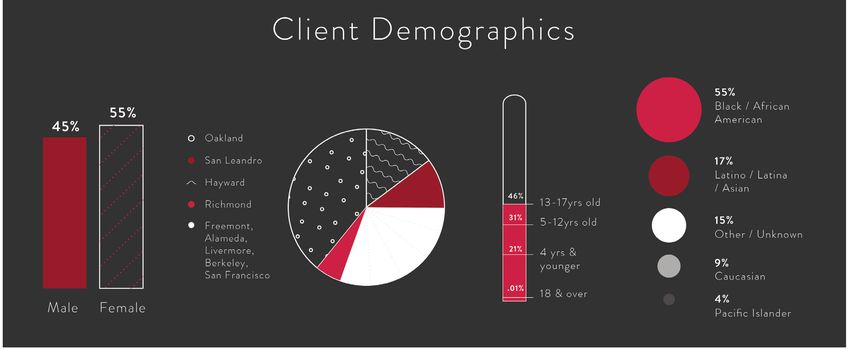
12DEMOGRAPHIC INFOGRAPHIC HERE
Westcoast Children’s ClinicYou can also read


