2019- 2020 Temple University Financial Aid Resource Guide for Incoming Students & Their Families - Congratulations on your admission to Temple ...
←
→
Page content transcription
If your browser does not render page correctly, please read the page content below
2019- 2020 Temple University Financial Aid Resource
   Guide for Incoming Students & Their Families

                                              An Estimated Award Notice – complete outstanding
Congratulations on your                       requirements by June 1st, 2019
admission to Temple University!              We have ESTIMATED your financial aid eligibility for your first
Welcome to Temple! The Office of Student
                                             academic year (Fall and Spring terms), based on the information
                                             provided on your FAFSA application.
Financial Services (SFS) is here to assist

students/parents with the financial aid
                                             We may need additional information from you to confirm or adjust
process.
                                             the estimate, so review your    Financial Aid Requirements within
                                             your TUportal account today. Requirements may include:
We hope you will find this resource guide

useful for interpreting your financial aid
                                             • Federal Verification documentation (2017 Federal IRS Tax Return
award letter, and in developing and
                                             Transcripts, Statement of Non-filing, 2017 W-2 forms, Household
implementing a plan for your college
                                             Verification form, etc.)

education. We understand the cost of         • Confirmation of citizenship, selective service registration, proof of

college can be overwhelming, therefore       high school completion, etc.

our office is here to help with any

questions or concerns.                       Financial Aid Requirements should be reviewed and completed by

                                             clicking on the requirement to log into the SFS Dashboard

Read/click through this interactive          (temple.verifymyfafsa.com). Students will be prompted to verify their

resource guide, visit the SFS website        identity the first time they log-in. After that, you simply enter the

                                             dashboard by logging into TU Portal. Google Chrome is the
(sfs.temple.edu) or speak with one of our
                                             recommended browser for using TU Portal and SFS dashboard.
financial aid experts in person, by phone,

or by email. We are happy to assist you!
                                             The   Costs and Aid tab within the TU Portal includes information on
                                             estimating the cost to attend the upcoming 2019- 2020 academic
Emilie Van Trieste
                                             year, the TUpay system (University e-bill), and pertinent information
Director, Student Financial Services
                                             regarding your financial aid.

 NOTICE: Because of the nature of federal, state, and institutional guidelines affecting financial aid
           programs, the information contained in this publication is subject to change.
Key Financial Aid Dates for 2019-2020
    March 1st – FAFSA application priority filing deadline &
                                                                                                                     Remember:
    create estimated bill for upcoming year using Tuition                                                              personal
                                                                                                                    spending can
    Calculator

    May 1st- Pennsylvania State Grant Application deadline &
    time to secure additional loan funding if needed
                                                                                                                   make or break a
    June 1st – Financial Aid Requirements priority deadline
    July – Temple University Board of Trustees confirms 2019-                                                      college budget!
    20 tuition rates & first Fall 2019 e-bill issued to enrolled

    students

                                                         Cost of Attendance
The Office of Student Financial Services awards financial aid based on standard Cost of Attendance budgets. These

budgets reflect modest, but adequate, expense patterns of Temple students. While individual expenses vary based on

lifestyle, estimated costs are helpful in budget planning.

Cost of Attendance as listed is an estimate for the 2019- 2020 year. Actual tuition is set in July 2019. For more

information, see: https://sfs.temple.edu/apply/steps-financial-aid/eligibility-determination/financial-need.

Estimated Cost of Attendance for Fall/Spring 2019-20

The table below is meant to provide a better understanding of financial aid cost of attendance budgets. Below are

the allowances used in the 2019- 20 financial aid budget for two Temple University programs (College of Liberal Arts &

Fox School of Business and Management) and do not represent direct costs.

Tuition and fees will vary depending on a student’s school/college selection. Housing and Meal Plan options are also

based on a student’s selection.

1 These are tuition and fees based on approved 2018-2019 University rates. Tuition and fees may be higher or lower, depending on a student’s program

           of study; current full- and part-time tuition rates for all Temple University schools and colleges are available on the Bursar’s website,

                                                   https://bursar.temple.edu/tuition-and-fees/tuition-rates

   2 The housing and meal plan rate is a based on the average. The estimated housing and meal allowance total for a commuting student is $2602/year.

3 The Office of Student Financial Services does not have sufficient funding to meet a student’s full demonstrated need. Other options to cover costs may be

   through outside scholarships, or resources from private sources. Families will also consider the Federal Direct PLUS Loan and the private alternative

                                                                      educational loan.
Tuition and Fees                                               Housing & Meals
 Rates are listed based on full-time enrollment, defined        Living on-campus: Budget is based on the
 as 12-18 undergraduate credits. Students choosing              average; direct costs vary based on

 fewer than 12 credit hours are charged on a per-               selection from University Housing,

 credit-basis, while those electing more than 18 credits        https://housing.temple.edu/housing-and-

 must pay for additional hours.                                 dining-costs

 Rates vary based on school/college,                            Living off-campus: Budget allows for rent,
 https://bursar.temple.edu/tuition-and-fees/tuition-            utilities and food costs up to the estimated

 rates                                                          amount for students on-campus. Costs will

                                                                depend on a student’s choice of housing

 Full-time enrollment for graduate students is 9 credits        and lifestyle. We recommend students

 per term.                                                      consider off-campus options carefully.

 Official tuition and fee rates are published by the            Commuting: Students that live at home or
 Office of the Bursar,                                          with relatives have a reduced allowance in

 https://bursar.temple.edu/tuition-and-fees                     the budget of $2,602/year.

 Books & Supplies                                               Other
                                                                This allowance represents other student
 Costs vary by program, course load and class
                                                                expenses not listed including: transportation,
 selection. We recommend students consider
                                                                loan fees, cell phones, clothing, personal
 buying used books, renting books or
                                                                hygiene items and entertainment. This will vary
 utilizing the University’s library system.
                                                                among students, the financial aid budget is

                                                                allowing for about   $93 per week.

Grants
                                                                Students eligible for tuition remission may not also
Grants are often called “gift aid” because they are free
                                                                receive a Temple University Grant (TUG). Students may
money—financial aid that does not have to be repaid.
                                                                be eligible for tuition remission and University merit
Grants are often need-based, while scholarships are
                                                                scholarship, however the combined total of awards
usually merit-based.
                                                                can never exceed tuition. The Office of Undergraduate

                                                                Admissions can review and assist with questions
Grants are funded by the federal government (Pell and
                                                                related to tuition remission and merit.
SEOG grants), state governments (www.pheaa.org for PA

residents), and Temple University. Do your research, apply

for any grants or scholarships you might be eligible for, and
                                                                Fly in 4 Grant - Join Temple’s innovative plan to fast-
                                                                track your future and limit your debt. More than 93% of
be sure to meet application deadlines!
                                                                the class of 2020 committed to Fly in 4,

                                                                https://fly.temple.edu/. In addition to the support
The Temple University Grant (TUG) is a limited resource.
                                                                program, Temple provides 500 Fly in 4 need-based
Temple maintains a March 1st FAFSA priority filing deadline
                                                                grants per entering class. To be considered, incoming
because the fund will become exhausted. The FAFSA must
                                                                students must have documented financial need
be completed and filed with the federal processor by
                                                                determined by the FAFSA, meet the March 1st FAFSA
March 1st of each year to be considered. FAFSA

applications received after   March 1st will be considered      filing deadline, and sign-up for the Fly in 4 program.

                                                                Eligible students may receive the grants for up to four
for TUG on a first come first served basis based on
                                                                consecutive, full-time years.
availability of funding.
         2018 - 2019 ACADEMIC YEAR
Scholarships
 Scholarships through Temple University
 The Office of Undergraduate Admissions administers all merit

 scholarships for incoming students. All incoming freshman and

 transfer students with completed admission applications on file

 by February 1st will be automatically considered for University

 Merit scholarships.

 Information on scholarship opportunities (including University

 merit renewal criteria) can be found on the SFS website,

 https://sfs.temple.edu/financial-aid-types/scholarships.

 Students receiving University merit scholarships are notified in

 their admissions acceptance letter.

 After the first year at Temple, how do students apply for
 additional scholarships?
 The university’s schools and colleges offer merit and need based

 scholarships for continuing students. Students will need to apply

 for these scholarships with the school/college directly. Contact

 the academic advising office of your school or college for more

 information on scholarship applications after your first term of

 enrollment.

                                          Outside Scholarships
  Outside scholarships are funds awarded to a student by a third party. Third parties include agencies, organizations,

communities, high schools or persons not affiliated with Temple University or any of its campuses. Students can create an

    account with Temple's financial literacy tool, iGrad, and search for outside scholarships through their Scholarship

            Database. Incoming students should also research all outside scholarship opportunities through:

                           • High school counseling office – look for fliers offering opportunities

                                          • Social and professional organizations

                                                    • Parent’s employer

                                                     • Place of worship

                                             • High school and public libraries

               • SFS Office listing of free searches, https://sfs.temple.edu/financial-aid-types/scholarships

  Be wary of any money-back guarantees and companies promising scholarships before they receive your application!

  The SFS office will apply all scholarship awards to the student account for the year (evenly split between the fall and

  spring terms). These awards will be applied to the student e-bill and/or refunded to the student as approved by the

                                                           donor.

 Outside scholarship checks should be mailed to (be sure to endorse any checks made co-payable to you and Temple):

                                             Temple University Bursar's Office

                                       Attn: Outside Scholarship Payment Processing

                                                    1803 N. Broad Street

                                                      216 Carnell Hall
        2018 - 2019 ACADEMIC YEAR
                                                   Philadelphia, PA 19122

                                       Phone 215-204-7269 and Fax 215-204-5418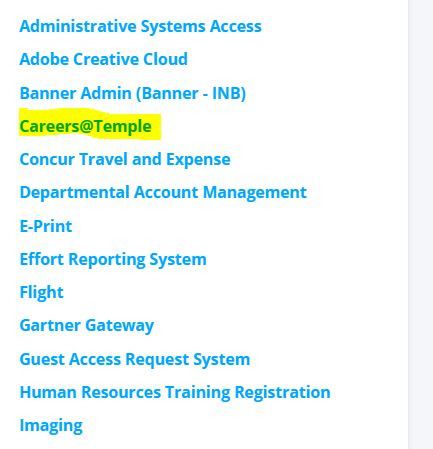
Student Loan Options
A financial aid award letter will offer the maximum, annual Federal Direct Loan eligibility for a student. A loan is

money you   borrow and must pay back with interest. Some loans are need-based; others are available to
any enrolled student that files the FAFSA. Borrowing can be costly. We recommend you consider borrowing only

if you have exhausted all other options and    only borrow what you need. Make a budget for yourself to keep
your debt within manageable limits.

           Subsidized Federal Direct Loan:                           Unsubsidized Federal Direct Loan:
     Federal student loan awarded to students with                 Federal student loan that does begins to

      need. Need is defined as a student's Cost of                      accrue interest when disbursed.

         Attendance minus the Expected Family                     Accumulated interest is capitalized (added

     Contribution, as well as any other financial aid              to the principal amount of the loan) once

    awarded. The US Department of Education will                       the loan repayment period begins.

  pay the interest on a subsidized loan while you are               Students have the option to to pay the

          enrolled in at least half-time status.                            interest while still in school.

Both the subsidized and unsubsidized loan     require students to file a FAFSA to determine eligibility.
Congress sets the interest rate for the subsidized and unsubsidized loans for undegraduate and graduate

students for each academic year. For more information on the loan terms, visit

https://studentaid.ed.gov/sa/types/loans.

Parent PLUS Loans                                              Private Loans
Direct PLUS Loan is an option for   parents of dependent      Private alternative loans are managed through private

undergraduate students to help pay for education              lenders, issued in the student’s name, and may require a

expenses not covered by other financial aid.The borrower      credit-worthy co-signer. Eligibility, rates, terms, and

is the parent, and responsibility is not transferred to the               Student Financial Services cannot
                                                              conditions vary.

student's name. A   separate online application is            recommend specific private loan lenders per federal
required (and a credit check). Parents can apply through      regulation.
studentloans.gov. Interest rates for the Parent Plus loan
are determined by Congress each year. There is also a         If you are looking to borrow a private student loan, make

4.27% origination fee taken out of the loan at                                    interest rates offered, any fees
                                                              sure you research the

disbursement. For more information regarding PLUS loans,      associated with the loan terms, and repayment plan
visit https://sfs.temple.edu/financial-aid-                   options.
types/educational-loans/federal-direct-plus-loans.

                                                              Private loans are also   certified for the full year
PLUS loans will be certified with   equal disbursements for   (certified loans will be split between the Fall and Spring

fall and spring terms, so be sure to plan accordingly. The    semesters).

SFS Office will begin posting processed Parent PLUS loans

to student accounts in   May. Parents must reapply for        For more information on private student loans, you can

these loans each year.                                        visit https://sfs.temple.edu/financial-aid-

                                                              types/educational-loans/private-alternative-loans.

If a parent is denied the Parent Plus loan, the parent can

pursue an Endorser (similar to a co-signer), or elect to

increase their student’s unsubsidized loan by a $4000 to

$5000 depending on the student’s grade level.

     2018 - 2019 ACADEMIC YEAR
How much can you borrow?
Students can borrow up to the following amounts in Direct Subsidized and Unsubsidized loans in an
academic year:
PLUS/Private loan PLUS Loans
PLUS loan applicants can apply for up to the maximum
eligibility example: The
based on the student's Cost of Attendance budget.
maximum would be the difference between the Cost
The maximum that can be borrowed each of Attendance and total financial aid awarded (not
academic year is a student's Cost of just a student's tuition and fees).
Attendance minus all other financial aid
awarded: The credit check on PLUS loan applications remain valid
for 180 days. During this time, approved PLUS loan
$35,348 Cost of Attendance for the year
applicants can contact SFS to review eligibility for an
increase. Endorsed applicants must submit a new
- $10,000 Total Financial Aid
application with an approved endorsed amount for every
(includes grants, scholarships,
increase request.
and loans)
-$2,500 Total Savings There is no aggregate limit on total outstanding PLUS
loans. Students must meet all financial aid eligibility
$22,848 Total PLUS/Private Loan that
requirements. For PLUS loan requirements,
could be requested for the year
visit https://sfs.temple.edu/financial-aid-
types/educational-loans/federal-direct-plus-
loans/parent-plus-eligibility
Remember: what Private Loans
Students can borrow up to their remaining Cost of
you borrow today
Attendance in a private loan. Maximum eligibility for the
academic year is calculated by subtracting a student's
must be repaid later
total awarded financial aid from the Cost of
Attendance.
- with interest! Some private lenders have aggregate limits on the total
amount borrowed. This criteria varies based on
lender. Enrollment requirements also vary based on
lender.Special Circumstances
Family Contribution Appeals
If your family's financial circumstances have undergone a significant
change from the 2017 tax year (listed on the FAFSA) to the 2019-20
academic year, visit the Change of Financial Circumstances section
Incoming students are encouraged
on https://sfs.temple.edu/policies.
to base their admissions decision on the award letter currently
offered.
Students must submit appeals through the SFS Dashboard on TU Portal.
Students can log into the Dashboard at temple.verifymyfafsa.com and
click on the red "Request" button in the upper right hand side of the
screen. Then, select the green plus button for the Family Contribution
Appeal for 2019-20. The deadline to submit an appeal request
is August 1st, 2019.
Dependency Override
Students who do not meet any of the criteria to be considered an
experiencing unusual
Satisfactory Academic Progress
Independent Student on the FAFSA, or who are
or extenuating circumstances that prevent them from listing
parental information can apply for a Dependency Override. Student Financial Services (SFS) is required
by federal regulation to monitor student
To initiate a Dependency Override appeal, students can log onto
progression toward completion of degree
temple.verifymyfafsa.com and click on the red 'Request' button on the and certificate programs at both the
right hand side of the screen. Select the green plus button for the
undergraduate and graduate levels. This
Dependency Appeal for 2019-20. This will direct the student to submit a Satisfactory Academic Progress (SAP)
brief explanation of events before completing a more detailed form
Standard includes a quantitative (time-
regarding the extenuating circumstances.
based) and qualitative (grade-based)
measure of progress.
Some of the circumstances our office will consider for a Dependency
Override:
SFS must review current academic
progress and future student financial aid
Voluntary/Involuntary removal from the parents' home due to an abusive
eligibility after each semester. Students
situation that threatens the student's mental or physical health.
who have met the minimum percentage
Incarceration of both parents.
67% passage of earned
requirement (
Incarceration or Death of the custodial parent and the whereabouts of
credits from attempted credits), and
the non-custodial parent are unknown.
who are in good academic standing
Whereabouts of both parents are unknown and another person has legal
according to University policy (GPA
custody of the student.
requirement), and who have not exceeded
the maximum time frame to complete their
The conditions listed below do not, either individually or in degree programs (view
combination, qualify as unusual circumstances for a Dependency https://sfs.temple.edu/policies for more
Override: information), are considered to have
maintained satisfactory academic progress
Parent(s) refuse to contribute to the student's education.
and are eligible for financial aid.
Parent(s) are unwilling to provide information on the FAFSA or documents
for the Verification process.
Students that have lost eligibility for
Parent(s) do not claim the student as a dependent for income tax
financial aid may submit a written
purposes.
appeal. Check with SFS for due dates
Parent(s) live overseas.
for SAP appeals for each semester.
The student is self-sufficient.Work Study Employment
Federal Works Study is a need-based grant that allows A basic principle governing need-based financial
earn money towards their educational expenses.
students to aid programs is that families are primarily
Work study
Students must work to in order to earn the funds. response for paying for college – this includes
does not pay towards tuition and fees. students! Employment during the summer and
academic year are great ways to contribute to a
Students must first file a FAFSA application by Temple’s Fafsa student’s available financial resources. A recent
filing deadline to initially be reviewed for Federal study confirmed that students who work a modest
Work Study. Students must have “ unmet need” to qualify. SFS number of hours per week – no more than 15 – will,
will award eligible students with FWS on their award on average:
letter. Students must be eligible for Title IV (Federal) Aid to
qualify for Federal Work study. Students must accept any • Have a higher grade point average,
offered Federal Work Study on their TU Portal award letter. • Graduate at a faster rate, and
• Be less likely to drop out than students who do
To search for On-Campus Work Study positions, students not work.
should visit Temple University Student Employment website
(see the example of TU Portal below for where you can find Important reasons why:
the link on TU Portal). Students must create an account to be
able to apply for any posted position. • Working part-time helps a student learn to be
organized and manage their time well.
Off campus Work Study positions can be searched through the • Employment exposes students to the “real world”
Job Bank on https://sfs.temple.edu/financial-aid- and surrounds them with mentor relationships.
types/federal-work-study/work-study-job-bank. Students • Employment provides financial resources to help
wanting to work off-campus must stop by SFS. Students assist with the cost of college.
cannot work off-campus until the employer
is approved by SFS and the hiring process is completed by
HR.
Work Life Balance
Student should only work up to 15 hours per week
during the Fall/Spring Semester. During the Summer
Session students are allowed to work up to 40 hours
per week if they have enough FWS funding to cover
their wages. Students working a Federal Work Study
position do not qualify for overtime pay.
Students are not permitted to work during their
scheduled class hours. The only exception if is
Is there Summer Work Study? there is written notice that the class has been
cancelled.
Students who have used Work-Study during
Fall/Spring and are registered for Summer session
Students can request an increase to
will be reviewed for a Summer grant. Students who
their Work Study grant by coming into the SFS
are not attending Summer but are pre-registered for
Office. We can only guarantee the increase if there
Fall should stop by SFS at the end of April to be
is enough fundingwithin our budget to cover it.
reviewed for Summer Work Study. Students working
during the Summer are required to have a valid
FAFSA for the upcoming academic year. The last
date to work during Summer is the last day of
finals for that semester.Financial Aid Beyond the First Year Student Financial
Receiving financial aid beyond your first year. It is likely that you will receive Services
similar financial aid offers throughout your undergraduate years if: Phone: (215) 204-2244
Fax: (215) 204-5897
• Eligibility for the scholarship(s) or award(s) you receive is not limited to your Email: sfs@temple.edu (Please include
first year 9-digit TUID# when emailing)
Changes in parents’
• Your family’s financial situation does not change. Address: 1803 N. Broad Street
income or marital status or in the number of your siblings who attend Ground Floor, Carnell Hall
college will affect your eligibility Philadelphia, PA 19122
• Federal, state, and institutional funding of financial aid programs does not Hours: Monday - Thursday 8:30AM
change to 5:00PM
• You submit the appropriate application materials by the required deadlines Friday 8:30AM to 1:00PM
each year Website: sfs.temple.edu
• You provide accurate information (income, assets, etc.) on all application Twitter: @TempleSFS
materials Instagram: templesfs
• You continue to meet enrollment level and Satisfactory Academic Facebook: TU Office of Student
Progress (SAP) requirements: https://sfs.temple.edu/policies Financial Services
Undergraduate
Admissions
Phone: 215-204-7200
Email: askanowl@temple.edu
Website: https://admissions.temple.
edu/
Graduate Admissions
Phone: 215.204.1380
Fax: 215.204.8781
Email: grad@temple.edu
Website: https://www.temple.edu
/grad/
Bursar Office
Phone: 215-204-7269
Housing Options Meal Plan Options Email: bursar@temple.edu
Website: bursar.temple.edu
Phone: (215) 204-7184 To add or change a meal plan, visit
Address: 1803 North Broad St.
Email: housing@temple.edu the MyHousing system via the 115 Carnell Hall (040-13)
Website: https://housing.temple.edu/ TUportal.
Philadelphia, PA 19122
Address: 1910 Liacouras Walk
Suites 201-301 Website: https://housing.temple.e Office of the Registrar
Philadelphia, PA 19122-6027 du/housing-and-dining-
costs/meal-plans Phone: (215)-204-1131
Email: registrar@temple.edu
Website: http://www.temple.edu/re
gistrar/You can also read


