2020 & 2021 - Lalor Secondary College
←
→
Page content transcription
If your browser does not render page correctly, please read the page content below
2020 & 2021
Lalor Secondary College VCE Handbook 2019/20
VCE NDOK

  LALOR
SECONDARY
 COLLEGE

VCE HANDBOOK
     2020 & 2021
 (Please retain this Handbook for Year 11 and 12)

                             Lalor Secondary College VCE Handbook 2020/21   1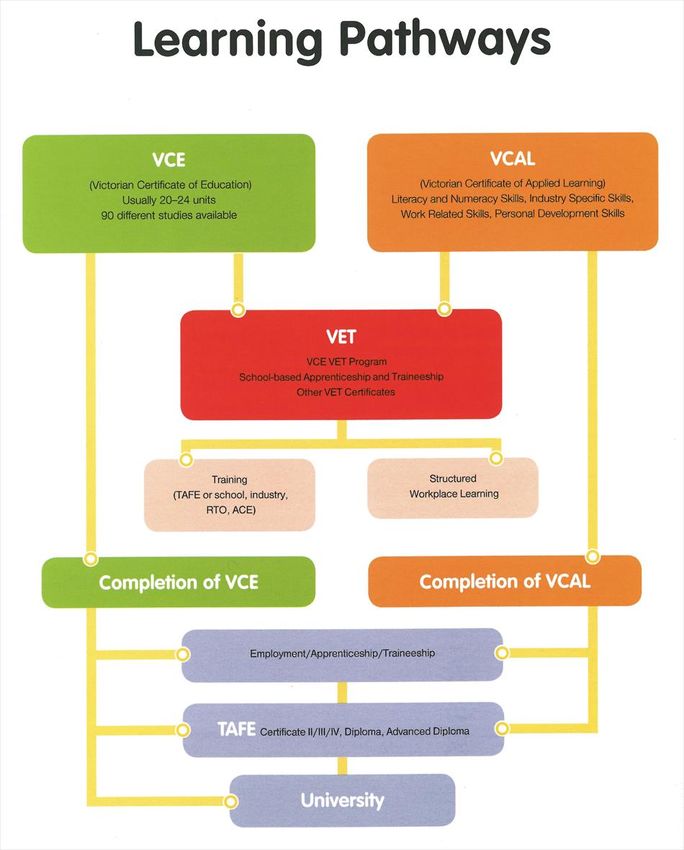
Mission                                              Vision
The community of Lalor Secondary                     Our vision for Lalor Secondary College
College acknowledges the ability                     is to be a vibrant school; a school
and right of all students to learn and               where learning is valued and students
to experience success. All students                  empowered to become lifelong,
are encouraged and challenged to                     socially responsible learners; where
reach their potential. The College                   a challenging and diverse curriculum
provides students and staff with a                   caters for the variety of learning styles
safe and nurturing environment.                      where the varying talents of students
                                                     and staff are recognised and celebrated
                                                     where excellence and effort are rewarded.

College Values

  2   Lalor Secondary College VCE Handbook 2020/21
College Values

      VALUES               ATTITUDES                                             BEHAVIOURS

                 • Being loyal                         • I am proud of my work
                 • Doing my personal best              • I am passionate about everything I do
     PRIDE       • Being passionate                    • I take pride in what I participate in
                                                       • I am proud of my school
                                                       • I dress appropriately and with pride

                 • Being committed                     • I am committed
                 • Being persistent                    • I am doing my best
                 • Always striving to do my best       • I am organised
                 • Having aspirations                  • I complete all my work
  ACHIEVEMENT    • Aiming for excellence               • I celebrate achievement
                                                       • I am responsible
                                                       • I am motivated
                                                       • I am rational
                                                       • I see mistakes as an opportunity for improvement

                 • Being respectful                    • I am attentive
                 • Having positive relationships       • I am helpful to others in need
                 • Being helpful                       • I show respect to others and show them that they
                 • Using manners                         are being noticed
                 • Showing friendship                  • I choose my attitude
                 • Having a positive attitude          • I am a good listener
                                                       • I am sensitive to others’ needs
                                                       • I behave consistently to build richer relationships
                                                       • I am respectful
    CARING                                             • I am tolerant
                                                       • I am friendly
                                                       • I am appreciative
                                                       • I make others comfortable
                                                       • I am encouraging
                                                       • I accept others for who they are
                                                       • I consider others’ feelings and needs
                                                       • I treat others in a caring manner
                                                       • I am polite

                 • Being tolerant                      • I work together with teachers and peers
                 • Being respectful                    • I follow instructions
                 • Having understanding                • I accept other people’s opinions
                 • Working as a part of a team         • I accept decisions
  COOPERATION                                          • I work in a team to achieve common goals
                                                       • I work with others’ willingly
                                                       • I listen to others ideas/opinions
                                                       • I am reliable

                 • Being truthful                      • I have integrity in what I do
                 • Showing trust                       • I have morals
                 • Being reliable                      • I am loyal
                 • Having integrity                    • I do not speak about others behind their back
    HONESTY                                            • I am trustworthy
                                                       • I am responsible
                                                       • I am honest
                                                       • I am truthful

                                                   Lalor Secondary College VCE Handbook 2020/21                3
Contents
College Values                                        3
Principal’s Message                                   6
Course Selection Process & Subject Advice             7
Choosing a VCE Program                                8
Year 11 Students Undertaking a Unit 3 and 4 Subject   9
Requirements for Satisfactory Completion of the VCE   9
VET Programs                                          10
School Reporting                                      11
Career Resources                                      12
Lalor Secondary College Pathways                      13
Accounting                                            15
Applied Computing                                     16
Applied Computing – Data Analytics                    17
Applied Computing – Software Development              18
Biology                                               19
Business Management                                   22
Chemistry                                             21-22
Economics                                             23
English                                               24
English (Foundation Stream)                           25
English as an Additional Language (EAL)               26
Environmental Science                                 27
Food Studies                                          28
Geography                                             29
Global Politics                                       30
Health & Human Development                            31-32
History                                               33-35
Languages – French                                    36
Legal Studies                                         37
Literature                                            38
Mathematics – Pathways                                39
Mathematics – Foundation Maths                        40
Mathematics – General Maths                           40
Mathematics – Maths Methods 1 and 2                   40
Mathematics – Specialist Maths 1 and 2                41
Mathematics – Further Maths 3 and 4                   41
Mathematics – Maths Methods 3 and 4                   42
Mathematics – Specialist Maths 3 and 4                42
Media                                                 43
Music Performance                                     44
Physical Education                                    45-46
Physics                                               47-48
Product Design and Technology                         49
Psychology                                            50
Sociology                                             51
Studio Arts                                           52
Theatre Studies                                       53
Visual Communication Design                           54

4    Lalor Secondary College VCE Handbook 2020/21
Lalor Secondary College was established in 1963. It is a
                                     co-educational Year 7-12 school situated in the City of
LALOR SECONDARY COLLEGE              Whittlesea and serves the communities in and around
David Street, Lalor 3075
                                     Lalor. Set on approximately 4 hectares, the College has
www.lalorsc.vic.edu.au
                                     excellent facilities and spacious grounds.
Telephone: 9463 7300
Facsimile: 9465 3865                 In 2020 the College will have an enrolment of
                                     approximately 1100 students representing more than 40
E-mail:
lalor.sc@edumail.vic.gov.au          ethnic groups with approximately 60% from non-English
                                     speaking backgrounds.
Principal
Mr Corey Jewell                      The College provides a broad, inclusive and
Assistant Principal (Later Years)    comprehensive program designed around the Victorian
Ms Julie Ryan
Assistant Principal (Middle Years)
                                     Curriculum to ensure the needs of all students are met.
Ms Laura Foster
Assistant Principal (Junior Years)   The College also provides a number of pathways at the
Mr Timothy Cottrell
Year 11 and 12 Sub-School Leader
                                     senior levels of the school including a comprehensive
Ms Victoria D’Alton                  range of VCE subjects, VCAL and VET programs.
Curriculum Coordinator
Ms Kathryn Carmody
VET Coordinator
                                     A partnership between parents, staff and students is
Ms Christine Sakellaris              encouraged through informal and formal communication
Careers Coordinator                  to support student success.
Ms Krystal Bussell

                                                                Lalor Secondary College VCE Handbook 2020/21   5
Principal's Message

                           As a member of the Lalor Secondary College community for the past 18 years I have great confidence
                           in the educational opportunities that we provide to all of our students. I know that Lalor Secondary
                           College is a vibrant school where learning is valued and students are empowered to become lifelong,
                           socially responsible learners, so that they are caring and confident contributors to the global community
                           of the 21st Century.

The school’s core values of Pride, Achievement, Caring, Cooperation and Honesty are embedded in our wellbeing and teaching
practices, as well as our Student Code of Behaviour. High expectations and well developed policy and practices ensure a calm
teaching environment that allows the focus of the classroom to be centred around the teaching and learning. The high
expectations are driven by a student culture where students motivate and inspire each other to achieve excellence in the
academic field, applied learning field or through the extra-curricular program.

The extra-curricular program is supported by both student and staff led clubs. Some of these include the Science and Maths
clubs, Art Club, Anime Club, Horticulture Club, Sports Program, House Program, Music Program, Year 12 Mentor Program,
Walking Club, Mindfulness Club, Breakfast Club and Chess Club. This also includes a unique partnership with ABCN that
provides numerous leadership opportunities to our students that supports the student leadership structures of the College. The
school has an established and dedicated Wellbeing Team that delivers a coordinated approach to the Student Wellbeing
Programs that have been embedded into the school curriculum and culture. Some of these programs include ‘Yoga Thursdays’,
Peer Support, After School Homework Club, Animal Assisted Therapy and the Pre-Orientation Program. The College also offers
distinctive educational programs such as the Years 7 to 10 differentiated Maths program, Years 7 to 10 Literacy Support Program,
High Potential Learning Program, Years 7 to 12 language program offering Macedonian, Greek, Italian and French and an
extensive elective program in Years 9 and 10.

Our school community acknowledges the ability and the right of all students to learn and to experience success in the classroom.
The College delivers a rigorous and comprehensive educational program built around the Victorian Curriculum in Years 7 to 10,
where a challenging and diverse curriculum caters for a variety of learning styles. The varying talents of students at years 7 to 10
are recognised and celebrated and excellence and effort are rewarded throughout the College at regular intervals throughout the
year. The program offered at Years 11 and 12 provides opportunities for students to excel in VCE, VCAL and VET, which is long
established through results that are above the state average. The school has a strong pathways program that ensures a high
retention from Year 7 to Year 12 and ensures all students in Years 9 to 12 receive counselling in choices of study and focuses on
providing an individual pathway for every child.

The school recognises that the final years of schooling are a challenging time for students and parents, however the College has
well established programs that offer wellbeing support to students through a teacher-student Mentor program, pathways and
career support, stress management sessions and study skills presentations. The rigorous nature of the academic program
means students are provided the opportunity to excel, whether in VCE or VCAL, and academic excellence is the expectation from
all within the College.

The information in this handbook will provide more explicit detail to assist you with your upcoming choices. If you require any
further information or clarification to assist you with your choices, please do not hesitate to contact the relevant staff member or
myself.

Mr Corey Jewell
College Principal

6   Lalor Secondary College VCE Handbook 2020/21
courses in which they are interested. Students should discuss their
Section One Prerequisites are compulsory to gain subject selections with a wide range
entry into those courses. of interested people – parents,
Course Selection 4. Interests and abilities
subject teachers, Home Group
teachers, careers staff and Sub-
Process & Subject It is important that a student chooses
studies which interest them and in which
School Leaders/Student Managers.
Subjects will only run in 2020 if there
Selection Advice they can achieve. Students who choose
unwisely and are unable to cope with a
is sufficient demand from students.
The feasibility of a class running is
study may lose confidence and find dependent on many variables and
themselves struggling in other studies as constraints: the timetable, the
Subjects will be selected well. minimum class size and the physical
5. Achieving a balance and human resources available at
using Subject Selection
It is important to maintain a balance the school. Many of these issues
Online Software, full between career interests and the value cannot be dealt with until late in the
instructions will be given to of education in its own right. Students year when results are known and
students and parents during should attempt to balance their the program for the rest of the
emotional, intellectual, physical and school is determined.
VCE information sessions.
artistic needs when choosing their The College will always endeavour
This handbook is designed to help Year subjects. to satisfy the choices and
10 and 11 students and their parents requirements of as many students
make appropriate and informed choices To help you choose your study as possible. Unfortunately, there can
about VCE units and program selection program. be situations where students may
for 2020/2021. Students interested in a not receive their first choice.
VCAL program are directed to the Do Take time to select subjects as this
separate VCAL Handbook. Think about your interests and will form the basis for the draft
To obtain a VCE certificate students what you like doing. timetable blocks and arrangements
select a program over two years that Check out what VCE, VET and for next year’s VCE program.
satisfies the requirements of the VCAL studies are on offer. Students should discuss choices
Victorian Curriculum Assessment Talk with the Careers with their parents and teachers,
Authority (VCAA). There is provision for Coordinator and/or subject including the Careers Coordinator.
students to take longer to complete their coordinators. Year 10 students will receive
studies and to change direction during Keep your options open. individual counselling prior to
that time. Students need to choose a Speak to your parents. making selections at the Year 11
meaningful course of study which will Log onto VTAC Courselink to Subject Selection Counselling Day.
provide pathways into further study or start researching the types of
employment. courses you will be eligible to
Students should consider the apply for.
following guidelines and factors when Attend tertiary institutions open
choosing a VCE program and days.
subjects.
1. Career intentions
Don’t
Studies should be appropriate for the Panic if you have no idea
career a student intends to follow which what studies to take up.
will reflect students’ MIPS plans which Choose studies that you
are completed online through the
don’t like just because you
careers website.
think doing those subjects
2. Future options will help you get a “good
ATAR” – your ATAR
In choosing a VCE course, students
represents your
should endeavour to keep career and
performance across all
further study options as open as
your studies.
possible. Consider two or three possible
VCE courses rather than just one. Choose studies based on
their scaling – there is no
3. Prerequisite subjects for tertiary point selecting a study that
courses you struggle with.
Many courses at Universities and TAFEs
have prerequisite studies. Students
should research the prerequisites for
Lalor Secondary College VCE Handbook 2020/21 7
Commitments required of all
VCE students                                 Choosing a                                 Middle Band Selection
In line with the College values, it is                                                  ‘Considered units’
expected that all students entering the      VCE Program                                 • ONLY considered by institutions for
senior years of the school will:                                                           BORDERLINE ENTRY into a
 • Strive to achieve their best in all                                                     course
     classes and for all examinations.                                                   • Give an INDICATION of
                                             All students should carefully consider        RELEVANT SUBJECTS
 •    Complete all coursework, school
     assessed tasks, SACs and                the type of program they wish to           These only apply in the middle band,
                                             complete in their VCE. Student ability,    i.e., when you are ‘nearly’ into a course.
     examinations on time and to the
                                             interests and prerequisites for tertiary   These are units which some courses at
     best of their ability.
                                             courses should all be taken into           some institutions will consider giving a
 • Spend at least the recommended            consideration when determining a           student an advantage over another
     time on homework: two hours per         meaningful VCE program. All course         student who does not have that unit(s).
     night in Year 11, three hours per       requirements and prerequisites             Check particular course requirements in
     night in Year 12.                       should be checked with tertiary            VTAC Prerequisites Guide. Some
 • Spend no more than 10 hours per           institutions handbooks and VTAC            institutions indicate that ‘students will be
     week on employment.                     prerequisites.                             deemed to have an ATAR of x
 • Follow all College rules and values                                                  percentage points higher’ if they
     with good grace.                        Prerequisite units – ‘Required             satisfactorily complete certain studies.
 • Participate fully in College              units'
     activities.                             These are units that you must
 • Treat all teachers and all other          complete to enter a particular course
     class members with respect.             at a tertiary institution. All
                                             prerequisites must be met before an
 • Attend all classes unless ill or for      applicant is eligible to be selected for
     an approved reason.                     that course. Prerequisites are at
 • Inform their teachers and Student         Units 1 and 2 and Units 3 and 4
     Managers of any difficulties they       levels. Always check the specific
     may be having in completing             prerequisite requirements for a
     Coursework or Assessment Tasks          course using VTAC Prerequisites
     well before the due date and to         Guide and VTAC course search.
     submit medical certificates where
                                             Additional Units
     necessary.
                                             You can choose from any of the
 • Complete all drafts of work as
                                             remaining VCE units.
     required and then keep copies of
     all work required for assessment.
     This is important for authentication.
 • Being aware of the requirements
     and procedures of VCE and the
     College and to work within them:
     this includes attendance, uniform
     and discipline requirements.

8    Lalor Secondary College VCE Handbook 2020/21
Year 11 Students Undertaking
Units 3 and 4 To meet the graduation requirements
Assessment and Reporting
There will be an opportunity for Year 11 of the VCE, each student must Levels of Performance
students to undertake a Unit 3 and 4 satisfactorily complete a total of no Units 1 and 2
subject in their program. fewer than 16 units. A unit is usually In addition to the S or N certain
Students will attend class with Year 12 one semester (two terms) in length, outcomes will be graded to determine
students. It is expected they will therefore students usually complete the level of performance.
possess very good organisational skills, Units 1 & 2 or Units 3 & 4 over a
whole year. Performance will be reported using
a desire to complete a Unit 3 and 4
marks for each assessment activity or
subject as well as a sound academic Units 1 and 2 can be completed as a percentage. Where a student has
record. Students with the requisite skills separately or as a sequence, whereas not undertaken the task, they will be
are encouraged to enrol in a Unit 3 and Units 3 and 4 must be completed as a assigned a ‘0’ for the assessment task
4 subject in Year 11. This provides sequence. Most students will be missed. If a student does not
students with a sixth VCE subject which advised to complete a total of 22 to 24 satisfactorily complete the outcomes or
contributes to their ATAR and allows units. Some students may also choose assessment tasks then they may
them to experience the demands and to complete a Unit 1 and 2 subject in receive a ‘Not Satisfactory’ (N) for the
requirements of a Year 12 subject. Year 10. unit.
There will not be an automatic place in
The VCE may include an unlimited
a Unit 3 and 4 subject for Year 11 Units 3 and 4
number of units of Vocational Education
students and places are subject to an All units will be assessed with
and Training (VET) certificates or
application process, meeting the Satisfactory (S) or Not Satisfactory (N)
subjects.
requirements as outlined in the LSC for the completion of learning outcomes.
Promotion Policy and course Students must satisfactorily The VCAA will supervise the
availability. complete: assessment of all students undertaking
• At least three units of English, Units 3 and 4. There is a system of
Additional Course Requirements English as an Additional Language graded assessment using the symbols
and Costs (if eligible) or Literature, with A+, A, B+, B, C+, C, D+, D, E+, E and
Some subjects have fees associated satisfactory completion of both UG based on school assessments and
with them that cover consumables and Units 3 and 4. one external examination or one school
materials. These additional costs are and assessment and two external
covered in the subject description in this examinations. VCAA use this system of
booklet. Please note that, at the time of • A sequence of Units 3 and 4 in
graded assessment at the end of the
publication, these fees were correct, three studies in addition to the
year. Students will also receive a ‘raw
however, they may be subject to compulsory English based subject.
score’ for their coursework assessment;
change dependent on the VCE is based on achievement of this will form the basis of the graded
provider/supplier. learning outcomes. Each unit has two assessment and is reported in the mid-
to four outcomes. The outcomes define year reports. Performance in the
Some subjects will require students to what students will know and be able to coursework will be moderated against
attend excursions and other activities, do as a result of satisfactorily the student’s performance in the
for which there will be a cost charged completing a study. Students will external exams and the GAT. There is
during the year. receive ‘S’ (Satisfactory), or ‘N’ (Not no guarantee that the ‘raw scores’ will
Satisfactorily completed) for each unit not be changed based on exam
depending on whether all outcomes performance. Students will receive
Requirements for Satisfactory have been satisfactorily completed. feedback from teachers for all school
Completion of the VCE Assessment in Unit 3 and 4 can be of assessed coursework.
To complete the VCE a student three types and all studies will have
generally undertakes 20 to 24 units of two or three assessment components,
study. which will make up the study score.
The three types of assessment are:
Students usually undertake 12 units
(6 subjects) in Year 11 and 10 units • School-assessed course work
(5 subjects) in Year 12. • School-assessed tasks
The VCE is flexible and students can • Examinations
undertake the VCE over 2 or more
years.
Lalor Secondary College VCE Handbook 2020/21 9Tertiary Entry VET Programs The contribution of a scored VCE VET
Vocational Education Training (VET) program is as follows:
The Victorian Tertiary Admissions
Centre (VTAC) handles the programs lead to nationally recognised - Any contribution to the ATAR is
administration of the tertiary entrance qualifications, thereby offering students subject to satisfactory completion
system. the opportunity to gain both the VCE of the designated Units 3 and 4
and a VET qualification. These include: sequence.
Each student will receive assistance in
• VET units contribute towards the - The study score will contribute
selecting courses for University and
VCE and ATAR. directly to the ATAR, either as one
TAFE in their final year of VCE in an
of the student’s best four studies
online selection process. • A flexible program.
(the primary four) or as a fifth or
The Careers Coordinator can also offer • A course with vocational skills and a sixth study.
advice on the above matters. Students work placement. - A contribution to the ATAR is
and parents should feel free to contact • Increased employment subject to receiving a study score.
the Careers Coordinator when making opportunities. Structured Work Place Learning (SWL)
subject choices or career decisions.
• VET courses can count as Units 1 Students undertaking VET are
University Enhancement Studies to 4 subjects and a study score may recommended and sometimes required
There is an opportunity for very capable be obtained. to undertake a SWL placement. SWL
Year 12 students to complete a first • At Lalor Secondary College complements the training and also is an
year university subject while in their final students can only undertake one
• Enhancement of skills
year of school. VET subject as part of their VCE.
development
Students must start a VET subject
The university study counts as a • Practical application of industry
in Year 11.
student’s sixth VCE study and students knowledge
who complete the program receive a • All students undertaking VET must • Assessment of units of
bonus of 10% of the maximum score sign a VET contract, outlining their competency/modules, as
possible for a sixth VCE study. This responsibilities. determined by the registered
bonus is calculated by VTAC. training organisation (RTO)
• Increased employment
Students attend classes at selected
schools after school hours for one to
Scored VET Programs opportunities.
three hours per week for two 13 week For scored VCE VET programs, the For students undertaking a VCE/VET
semesters. study is calculated using assessments program their SWL placement must be
undertaken during school holidays.
For further details contact the Senior of each student’s level of performance
This is to ensure students meet VCE
Sub School Leader. and are based on evidence from two
attendance requirements as per VCAA
sources: guidelines.
- School assessment coursework (a
set of coursework tasks set by the
assessor) Students completing a VET course need
- An examination set by VCAA to be aware that it is not an ‘easy
option’. Rather it offers students the
It is important to note that the Units 3 and
chance to pursue areas of interest and
4 sequences of VCE VET programs are
not designed as stand-alone studies. gain skills that will assist in developing
Students are strongly advised against competencies that may also be carried
undertaking the Units 3 and 4 sequence over into employment. VET courses
without first completing Units 1 and 2. also offer pathways into other TAFE
courses. Students wishing to complete
a VET course will need to be committed
VCE VET Programs with a to these courses, have an interest in the
Study Score area and be able to work independently
To view the full list of scored VCE VET in many cases.
subjects please refer to the VCAA Further information regarding VET
website. programs and requirements should be
directed towards the VCAL/VET
Coordinator and Careers Coordinator.
ATAR Contribution for scored
Please note there will be:
VCE VET programs
• A materials fee which is dependent
The Australia Tertiary Admissions Rank on the course and ranges from
(ATAR) is calculated by the Victorian $200 - $600. The materials charge
Tertiary Admissions Centre (VTAC), covers items such as:
subject to satisfactory completion of the - Timber
VCE and using the study scores - Beauty kits
students have received for their VCE - Hairdressing kits
studies. - Uniforms for Hospitality
10 Lalor Secondary College VCE Handbook 2020/21School Reporting of the student. Teachers also into a subject for Unit 4. All Year 12
Reporting enables students to be aware authenticate work by; students are expected to complete 5
of whether they have met the goals of • Consulting with the student. subjects at the College, as part of their
the study, their strengths and enrolment.
• Ensuring work is mainly completed
weaknesses and areas for in class under a teacher’s
improvement. Reporting is also Year 11 students may have an
supervision.
important for parents to enable them to opportunity to change at the end of Unit
• Teacher recording submission of One. In Year 11 the student must
provide help and support to students.
work in progress. consult the Sub School Leader about
Written progress indicators and oral
Where the school is satisfied, on the the reasons for changing. It may not be
reports are given to parents and
basis of evidence, that work submitted possible to change from one study to
students at parent/teacher
is not the student’s own, the Student another if the class is full or the change
conferences at the end of Term 1
Managers, in consultation with the requires major changes to the student’s
and start of Term 3 for Year 12
Principal, Assistant Principal and Sub timetable. Students will be required to
students and the end of Term 3 for
School Leader, shall determine the complete a form indicating the changes
Year 11 students.
penalty by using guidelines set out by requested and have it signed by parents
For Year 11 and 12 students written VCAA. Further details can be found in and the Careers Coordinator. All
reports are issued for Units 1 and 3 the VCE Policy Handbook. changes must be completed within two
at the end of Term 2 and Unit 2 in weeks of the start of the semester as
December. A Statement of Results is VCAA must be notified. In making
issued by VCAA in December for all Changing Courses and Withdrawing changes the student should be aware of
students who have undertaken a From a Study or Unit: the possible consequences and ensure
VCE/VET subject. After choosing a course of study a that all VCE and Tertiary/TAFE
student may decide that the course entrance requirements are met.
Authentication does not meet their needs or
Authentication is the term used to cover expectations and want to make a
the procedures for ensuring that the change. Textbooks
work submitted by students is genuinely In Year 12 students can only change Please note that book lists for textbooks
their own work completed for subjects in the first two weeks of Term 1 and other resources required by
assessment tasks taken over an if the Sub School Leader approves the students will be available to students
extended period of time. These tasks change. All relevant paperwork must be and parents later in the year. Books will
are usually completed in class under completed by a parent. It should be be available from the second hand book
teacher supervision to ensure all noted that all Unit 3 & 4 subjects must sale where possible. Some VCE
students are treated fairly and that the be completed as a sequence therefore studies have new or amended courses
teacher can attest that the work is that it is not possible for a student to move for 2020 and therefore new textbooks
will need to be purchased.
11 Lalor Secondary College VCE Handbook 2020/21Resources
There are a variety of resources available, including the Careers Coordinator, however, the main websites are:
A guide published by VTAC that includes information on
key terms, institution specific study requirements for
Year 10 Guide courses in 2 years’ time and examples to explain subject
choices and the impact of these on a student’s ATAR.
This is distributed to all students at the Year 10 Subject
Selection Evening.
A newspaper lift out that lists all known courses with the
pre-requisite subjects required to be eligible to apply. This
Year 10 VCE Planner Herald Sun lift out is distributed to all Year 10 students prior to subject
selection with activities based around it in their Year 10
Careers classes to help with their subject choices for
VCE.
VTAC Website and app. This website holds all information pertaining to
applications at the end of Year 12. Students can research
www.vtac.edu.au course offerings based on key words, interest areas and
subjects. Information regarding key processes,
publications and all reports are also available in online
versions and phone apps.
Specifically for LSC students which contains parent and
Lalor Secondary College Careers Website student information. Prerequisite study course search,
www.lalorsccareers.com careers quizzes, career outlooks and students online
careers portal. A fortnightly careers newsletter is also sent
to parents and students who sign up.
This website run by the Australian Government
My Future Website Department of Education is an easy to use resource that
www.myfuture.edu.au allows for occupation research. It includes activities to
help you consider which types of occupations may suit
your skills, interests, values and ambition.
A great source of information and links to resources to
Apprenticeships Australia help with exploring and locating apprenticeship
http://www.australianapprenticeships.gov.au/ opportunities. Advice, support and personal stories are
available online.
Job Outlook A government website providing data and statistics on a
variety of different occupations. National, state-wide and
http://joboutlook.gov.au/ local data is included as well as a quiz you can take to
consider career options.
Youth Central Youth Central offers a range of information and advice for
young people on issues like jobs, study, travel, money
http://www.youthcentral.vic.gov.au/ and events and provides young people with the
opportunity to participate.
12 Lalor Secondary College VCE Handbook 2020/21Lalor Secondary College VCE Handbook 2020/21 13
Subjects offered at Lalor
Secondary College
Arts/Humanities/Health Maths/Science/
Science Subjects Technology subjects
Accounting Applied Computing
Business Management Applied Computing – Data Analysis
Economics Applied Computing – Software Development
English Biology
English (EAL) Chemistry
English (Foundation Stream) Environmental Science
Geography Food Studies
Global Politics Foundation Mathematics
Health and Human Development (Units 1 & 2 only)
History – Australian Further Mathematics
History – Revolutions General Mathematics
History – Twentieth Century Maths Methods
Languages Specialist Mathematics
Legal Studies Physics
Literature Psychology
Media Product Design Technology
Music Performance
Physical Education
Sociology
Studio Arts
Theatre Studies
Visual Communication Design
VET course are available through
the VET cluster & a wide variety of
courses are available for students.Accounting
“You have to understand accounting and you have to understand the nuances of accounting.
It’s the language of business and it’s an imperfect language, but unless you are willing to put
in the effort to learn accounting – how to read and interpret financial statements – you really
shouldn’t select stocks yourself.”
Unit One accounting as an information system.
Students use the double-entry system of
Warren Buffett Role of accounting in recording financial data and prepare
business reports using the accrual basis of
The unit explores the establishment of a accounting and the perpetual method of
business and the role of accounting in the inventory recording.
If you like working with determination of business success or Samples of knowledge and skills
numbers and like to solve failure. It considers the importance of include:
accounting information to stakeholders.
problems, then accounting Samples of knowledge include: • The general ledger.
may be for you. You will • Reasons for establishing a business. • The GST Clearing account.
develop real-life skills • Factors that lead to the success or • Distinguishing between product and
period costs.
relating to your own failure of a business.
• Price-setting methods. • Explain and apply appropriate
financial literacy including internal control procedures.
budgeting, keeping • Discussing ethical considerations
faced by business owners.
financial records using Unit Four
accounting software, Recording, reporting, budgeting and
Unit Two
making careful investment decision-making.
Accounting and decision-making In this unit, students further develop their
decisions and reading and for a trading business. understanding of accounting for a trading
understanding financial In this unit, students develop their business owned by a sole proprietor and
data. knowledge of the accounting process for the role of accounting as an information
sole proprietors operating a trading system. Students use the double-entry
business, with a focus on inventory, system of recording financial data, and
accounts’ receivable, accounts’ payable prepare reports using the accrual basis of
and non-current assets. accounting and the perpetual method of
Samples of knowledge and skills include: inventory recording. Both manual and
• Documents used by business to ICT are used to record and report.
record financial transactions. Samples of knowledge and skills include:
• Strategies for effective management • The purchase of non-current
of accounts’ receivable and depreciable assets for cash and
accounts’ payable. financed by a loan.
• Identify, classify and manually record • Methods of depreciation: straight line
financial data. and reducing balance.
• Determine the valuation of a non- • Characteristics and use of classified
current asset. accounting reports.
• Analyse and interpret accounting
reports.
Assessment Tasks
Unit Three The final examination accounts for 50%
Financial accounting for a of the assessment. The other 50% is
trading business. completed at school and consists of one
This unit focuses on financial accounting or more of the following; structured
for a trading business owned by a sole questions, folio or exercises, a case
proprietor and highlights the role of study and a report
Lalor Secondary College VCE Handbook 2020/21 15Applied Computing
“For one person who is blessed with the power of invention, many will always be found who have the
capacity of applying principles.”
Charles Babbage
VCE Applied Computing focuses Unit One Unit Two
on the strategies and techniques
for creating digital solutions to Applied Computing Applied Computing
In this unit students are introduced to the In this unit students focus on developing
meet specific needs and to
stages of the problem-solving innovative solutions to needs or
manage the threats to data,
methodology. Students focus on how data opportunities that they have identified,
information systems including can be used within software tools such as and propose strategies for reducing
people, processes, data and databases and spreadsheets to create security risks to data and information in a
digital systems (hardware, data visualisations, and the use of networked environment.
software, networks), and how programming languages to develop In Area of Study 1, students work
their interrelationships affect the working software solutions.
collaboratively and select a topic for
types and quality of digital In Area of Study 1, as an introduction to further study to create an innovative
solutions. data analytics, students respond to a solution in an area of interest. The
teacher- provided analysis of innovative solution can be presented as a
requirements and designs to identify and proof of concept, a prototype or a product.
collect data in order to present their Students engage in all areas of the
findings as data visualisations. They problem solving methodology.
present work that includes database, In Area of Study 2, as an introduction to
spreadsheet and data visualisations cybersecurity, students investigate
solutions. networks and the threats, vulnerabilities
In Area of Study 2 students select and use and risks to data and information. They
a programming language to create a propose strategies to protect the data
working solution. Students prepare, accessed using a network.
document and monitor project plans and
engage in all stages of the problem-
solving methodology.
16 Lalor Secondary College VCE Handbook 2020/21Applied Computing – Data Analytics
Unit Three Unit Four
Data Analytics Data Analytics
In this unit students apply the problem-solving methodology to In this unit students focus on determining the findings of a
identify and extract data through the use of software tools such research question by developing infographics or dynamic data
as database, spreadsheet and data visualisation software to visualisations based on large complex data sets and on the
create data visualisations or infographics. Students develop an security strategies used by an organisation to protect data and
understanding of the analysis, design and development stages information from threats.
of the problem-solving methodology. In Area of Study 1, students apply the problem-solving stages
In Area of Study 1, students respond to teacher-provided of development and evaluation to develop their preferred
solution requirements and designs. Students develop data design prepared in Unit 3, Area of Study 2, into infographics or
visualisations and use appropriate software tools to present dynamic data visualisations, and evaluate the solutions and
findings. Appropriate software tools include database, project plan. Area of Study 1 forms the second part of the
spreadsheet and data visualisation software. School-Assessed Task (SAT).
In Area of Study 2, students propose a research question, In Area of Study 2, students investigate security practices of an
prepare a project plan, collect and analyse data, and design organisation. They examine the threats to data and
infographics or dynamic data visualisations. Area of Study 2 information, evaluate security strategies and recommend
forms the first part of the School-Assessed Task (SAT) this is improved strategies for protecting data and information.
completed in Unit 4, Area of Study 1.
Assessment
The final written assessment contributes 50% to the
assessment of this subject, whilst the school assessed task
(SAT) contributes 30% and school assessed coursework
(SAC) 20% to the overall assessment.
Lalor Secondary College VCE Handbook 2020/21 17Applied Computing - Software Development
Unit Three Unit Four
In this unit students apply the problem-solving methodology In this unit students focus on how the information needs of
to develop working software modules using a programming individuals and organisations are met through the creation of
language. Students develop an understanding of the software solutions. They consider the risks to software and
analysis, design and development stages of the problem- data during the software development process, as well as
solving methodology. throughout the use of the software solution by an
organisation.
In Area of Study 1, students respond to teacher-provided
solution requirements and designs and develop a set of In Area of Study 1, students apply the problem-solving
working modules through the use of a programming stages of development and evaluation to develop their
language. Students examine a simple software preferred design prepared in Unit 3, Area of Study 2, into a
requirements specification and a range of software design software solution and evaluate the solution, chosen
tools in order to apply specific processing features of a development model and project plan. Area of Study 1 forms
programming language to create working modules. the second part of the School-assessed Task (SAT).
In Area of Study 2, students analyse a need or opportunity, In Area of Study 2, students examine the security practices
select an appropriate development model, prepare a project of an organisation and the risks to software and data during
plan, develop a software ‘part of the School-assessed Task the development and use of the software solutions.
(SAT) this is completed in Unit 4, Area of Study 1. Students evaluate the current security practices and develop
a risk management plan.
Assessment
Students will solve teacher provided problems and
complete a case study, analysing the development of
security strategies and recommend a risk management
plan.
The final written assessment contributes 50% to the
assessment of this subject, whilst the school assessed task
(SAT) contributes 30% and school assessed coursework
(SAC) 20% to the overall assessment.
18 Lalor Secondary College VCE Handbook 2020/21Biology
“Biology is truly a land of unlimited possibilities. We may expect it to give us the most surprising
information, and we cannot guess what answers it will return in a few dozen years… They may be of
a kind which will blow away the whole of our artificial structure of hypothesis.”
Sigmund Freud
Biology plays an important role in consider the role of genetic knowledge in Unit Four
the understanding of complex decision making about the inheritance of How does life change and
forms of life involving humans, genetic condition and the social and respond to challenges over time?
animals and plants. Biology helps ethical issues surrounding genetic
In this unit students consider the continual
individuals understand the screening.
change and challenges to which life on
interaction between humanity and Earth has been subjected. They
the world. In the future, doctors investigate the relatedness between
Prerequisite – Units 1&2 Biology 60%
and scientists hope to use our species and the impact of various change
(average).
understanding of Biology and events on a population’s gene pool. The
genetic information to diagnose, Unit Three accumulation of changes over time is
treat, prevent and cure many considered as a mechanism for biological
How do cells maintain life?
illnesses, as well as develop ways evolution by natural selection that leads to
to preserve the living organisms The cell is a dynamic system of
the rise of new species.
around us. Biology is a interacting molecules that define life.
An understanding of the workings of How are species related?
prerequisite for a number of
postsecondary courses. the cell enables an appreciation of both In this area of study students focus on
the capabilities and the limitations of changes to genetic material over time
Prerequisites – (averages) Year 10 living organisms whether animal, plant, and the evidence for biological
General Maths 60%, Year 10 Maths fungus or microorganism. The evolution. They investigate how
Methods 50%, any Science 60%. convergence of cytology, genetics and changes to genetic material lead to new
biochemistry makes cell biology one of species through the process of natural
Unit One the most rapidly evolving disciplines in selection as a mechanism for evolution.
How do living things stay alive? contemporary biology. How do humans impact on
This unit explores the challenges biological process?
organisms face in sustaining life. The How do cellular processes work?
In this area of study students focus on In this area of study students examine the
cell as the structural and functional unit
the cell as a complex chemical system. impact of human culture and
of life, from the single celled to the
They examine the chemical nature of the technological applications on biological
multicellular organism, and the
plasma membrane to compare how processes. They apply their knowledge of
requirements for sustaining cellular
hydrophilic and hydrophobic substances the structure and function of the DNA
processes in terms of inputs and
move across it. They model the molecule to examine how molecular tools
outputs are studied.
formation of DNA and proteins from their and techniques can be used to
Adaptations that enhance the respective subunits. manipulate the molecule for a particular
organism’s survival in a particular purpose.
environment and the role homeostatic
mechanisms play in maintaining the How do cells communicate? Assessment
internal environment are considered. In this area of study students focus on
how cells receive specific signals that The final examination accounts for 60% of
Practical tasks will be undertaken to build
elicit a particular response. Students the assessment. The other 40% is
experimental design and analytical skills.
apply the stimulus-response model to completed at school and consists of a
the cell in terms of the types of signals, combination of the following; a student-
Unit Two the position of receptors and the designed investigation, practical reports,
How is continuity of life maintained? transduction of the information across data analysis and bioinformatics.
In this unit students focus on cell the cell to an effector that then initiates a
reproduction and the transmission of response.
biological information from generation to
generation. The process of DNA
replication, inheritance of characteristic
and the role of stem cells in medical
therapies is examined. Students will
Lalor Secondary College VCE Handbook 2020/21 19Business Management
“To succeed in business, to reach the top, an individual must know all it is possible to know
about that business.”
J.P. Getty
Unit Three
Unit One
Managing a business
Planning a business
In studying VCE Business This unit covers the following:
This unit covers the following:
Management, students • How and why business ideas are
• The key characteristics of
businesses and their stakeholders,
develop knowledge and created and developed, and explain
and an analysis of the relationship
skills that enhance their the methods by which a culture of
between corporate culture,
business innovation is generated in
confidence and ability to management styles and
a nation
management skills.
participate effectively as • Identifies various factors including
• The different ways to manage and
socially responsible and taxes, laws, customers, suppliers
motivate employees.
and others which may affect
ethical members, business planning • The relationship between business
managers and leaders of objectives and the operations of a
• Examines the variety of influences
business. Business strategies to
the business community such as finance, employees,
improve the efficiency and
location, impact on business plans.
and as informed citizens, Students will generate a business
effectiveness of business operations
will be evaluated.
consumers and investors. plan.
The study of Business Unit Four
Management leads to Unit Two
Transforming a business
opportunities across all Establishing a business
This unit covers the following:
facets of the business and This unit covers the following:
• The way business change may
management field such as • When establishing a business,
come about, using key
owners must ensure they are
small business owner, performance indicators to analyse
complying with legal and financial
the performance of a business,
project manager, human record keeping requirements. The
discussing the driving and
process of establishing effective
resource manager, policies and procedures.
restraining forces for change and
evaluating management strategies
operations manager or • The importance of establishing a to position a business for the
executive manager. Further customer base and a marketing future.
presence to achieve the objectives
study can lead to of the business, analysis effective
• Identifying and evaluating the
effectiveness of a variety of
specialisation in areas such marketing and public relations.
strategies used by managers to
as marketing, public • The staffing needs for a business implement change and discussing
relations and event and evaluating the benefits and the effect of change on the
limitations of management stakeholders of a business.
management. strategies in this area.
Assessment
The final examination accounts for 50%
of the assessment. The other 50% is
completed at school and consists of one
or more of the following; case study, test,
report and structured questions.
Additional Costs
Excursion – cost approximately $15 to
$30. Costs may be subject to change.
20 Lalor Secondary College VCE Handbook 2020/21Chemistry
“Chemistry itself knows altogether too well that – given the real fear that the scarcity of global
resources and energy might threaten the unity of mankind – chemistry is in a position to make a
contribution towards securing a true peace on Earth.”
Kenichi Fukui
• How can knowledge of elements
molecule’s structure, polarity and
Embark on a journey of explain the properties of matter? – In
bonding and explore the significance
this area of study students focus on
scientific investigations and the nature of chemical elements, their
of water’s high specific heat capacity
and latent heat of vaporisation for
learn to speak the atomic structure and their place in the
living systems and water supplies.
language of chemists. You periodic table. Students investigate
• How are substances in water
the properties of metals and ionic
may find the answers to compounds and how they are formed. measured and analysed? – In this
questions such as what Fundamental quantitative aspects of area of study students focus on the
chemistry are introduced including use of analytical techniques, both in
holds everything together the laboratory and in the field, to
the mole concept, relative atomic
and are diamonds forever? mass, percentage abundance and measure the solubility and
concentrations of solutes in water,
How will nanotechnology composition by mass and the
and to analyse water samples for
empirical formula of an ionic
shape the future? How can compound. various solutes including chemical
‘green chemistry' assist in • How can the versatility of non-metals contaminants.
be explained? – In this area of study • Practical investigation – In this area of
reducing pollution? This study students design and conduct a
students explore a wide range of
subject also emphasises substances and materials made from practical investigation into an aspect
how evidence is used to non-metals including molecular of water quality. The investigation
substances, covalent lattices, carbon relates to knowledge and skills
develop or refine chemical nanomaterials, organic compounds developed in Area of Study 1 and/or
ideas, knowledge and and polymers. They explore the Area of Study 2 and is conducted by
the student through laboratory work
models. Practical activities modification of polymers and the use
and/or fieldwork.
of carbon-based nanoparticles for
and experiments assist in specific applications.
developing your • Research investigation – In this area
understanding of the of study students apply and extend
Additional Costs
their knowledge and skills developed
chemical concepts and in Area of Study 1 and/or Area of Visit to La Trobe University, approximately
theory. Study 2 to investigate a selected $30. Costs may be subject to change.
question related to materials.
Unit Two
Prerequisites – (averages) Year 10
General Maths 60%, Year 10 Maths What makes water such a unique
Methods 50%, any Science 60%. chemical?
Water is the most widely used solvent on
Earth. In this unit students explore the
Unit One physical and chemical properties of
How can the diversity of materials water, the reactions that occur in water
be explained? and various methods of water analysis.
The development and use of materials There are three areas of study:
for specific purposes is an important • How do substances interact with
human endeavour. In this unit students water? – In this area of study students
investigate the chemical properties of a focus on the properties of water and
range of materials from metals and salts the reactions that take place in water
to polymers and nanomaterials. There including acid-base and redox
are three areas of study: reactions. Students relate the
properties of water to the water
Lalor Secondary College VCE Handbook 2020/21 21Prerequisites – Chemistry Units 1&2
70% (average). The principles studied
will be built upon in Units 3&4.
Unit Three
How can chemical processes be
designed to optimise efficiency? • How can the yield of a chemical
The global demand for energy and product be optimised? In this area of study students explore
materials is increasing with world In this area of study students explore why such a vast range of carbon
population growth. In this unit students the factors that increase the compounds is possible. They
explore energy options and the efficiency and percentage yield of a examine the structural features of
chemical production of materials with chemical manufacturing process members of several homologous
reference to efficiencies, renewability while reducing the energy demand series of compounds, including some
and the minimisation of their impact on and associated costs. of the simpler structural isomers, and
the environment. learn how they are represented and
• What are the options for energy Unit Four named.
production? • What is the chemistry of food?
How are organic compounds Food contains various organic
In this area of study students focus on
categorised, analysed and used? compounds that are the source of
analysing and comparing a range of
energy resources and technologies, The carbon atom has unique both the energy and the raw materials
including fossil fuels, biofuels, characteristics that explain the that the human body needs for growth
galvanic cells and fuel cells, with diversity and number of organic and repair. In this area of study
reference to the energy compounds that not only constitute students explore the importance of
transformations and chemical living tissues but are also found in the food from a chemical perspective.
reactions involved, energy fuels, foods, medicines and many of
efficiencies, environmental impacts the materials we use in everyday life. Assessment
and potential applications. In this unit students investigate the The final examination accounts for 60% of
structural features, bonding, typical the assessment. The other 40% is
reactions and uses of the major completed at school and may consist of a
families of organic compounds range of the following; scientific poster,
including those found in food. report of a laboratory investigation,
structured questions and evaluation of
• How can the diversity of carbon research.
compounds be explained and
categorised? Additional Costs
Visit to VSSEC, approximately $35.
Costs may be subject to change.
22 Lalor Secondary College VCE Handbook 2020/21Economics
“No generation has had the opportunity, as we now have, to build a global economy that
leaves no-one behind. It is a wonderful opportunity, but also a profound responsibility”
Former U.S. President Bill - how individuals might and services. Students consider
respond to incentives and contemporary issues to explain the
Clinton
how technology may have need for government intervention in
altered the way businesses markets and why markets might fail
and consumers interact. to maximise society’s living
If you are interested in finding out • A simple microeconomic model standards as well as the unintended
about how resources are distributed, to explain changes in prices and consequences of this government
why governments regulate quantities traded. intervention.
economies and issues such as • The factors that influence the level
poverty, inflation and the global Unit Two of aggregate demand and aggregate
financial crisis then Economics is a Contemporary economic issues supply in the economy and use
subject you will enjoy. Economics In this unit students will examine models and theories to explain how
fills our newspapers and other media economic issues such as: changes in these variables might
each day. It examines how and why influence the achievement of the
• Economic growth and the possible
individuals, businesses and Australian Government’s domestic
trade-off between the pursuit of
governments spend their money. It macroeconomic goals and affect
growth in incomes and production
is one of the major subjects in most living standards.
and the goal of environmental
tertiary business courses. sustainability and long-term • The importance of international
Economics looks at questions such economic prosperity. Students will economic relationships in terms of
as, why has funding to schools and examine whether the goals of their influence on Australia’s living
hospitals been cut? How can economic growth and environmental standards.
employment be increased? Do sustainability can be compatible and
Australians pay too much tax? discuss the effect of different Unit Four
policies on the achievement of these Managing the economy
Unit One important goals.
In this unit, students will:
The behaviour of • The benefits of economic growth
consumers and businesses • Develop an understanding of how
and how they are shared in an
the Australian Government can alter
In this unit, students explore: economy. Students will explore the
the composition and level of
• The contributions of economics concept of ‘trade-offs’ and begin to
government outlays and receipts to
as a discipline and investigate appreciate that efforts to increase
directly and indirectly influence the
some of the factors that motivate economic efficiency might lead to a
level of aggregate demand and the
people to act in the way they do more inequitable distribution of
achievement of domestic
and the consequences of their income.
macroeconomic goals.
actions. • The influence on the world’s living
• Examine the role of the Reserve
• Their role in the economy, how standards of the decisions made
Bank of Australia (RBA) with a focus
they interact with businesses and the actions taken in the Global
on its responsibility to alter the cost
and the way economic models Economy. Students will investigate
and availability of credit in the
and theories have been the Global Economy by investigating
economy to influence the level of
developed to explain the causes one or more contemporary global
aggregate demand and the
and effects of human action. issues and the trade-offs involved.
achievement of domestic
• Fundamental economic macroeconomic goals.
Unit Three
concepts such as:
Australia’s economic Assessment
- the motivations and
consequences of both The final examination contributes 50% of
prosperity
consumer and business the total assessment and the other 50%
In this unit, students will investigate: consists of one or more of the following;
behaviour;
- basic economic models • The role of the market in allocating essay, tests, folio of applied exercises.
where consumers and resources and examine the factors
business engage in mutually that are likely to affect the price and
beneficial transactions; quantity traded for a range of goods
Lalor Secondary College VCE Handbook 2020/21 23You can also read


