2020 JUNIOR HIGH SCHOOL & SENIOR SCHOOL HANDBOOK - Diocesan ...
←
→
Page content transcription
If your browser does not render page correctly, please read the page content below

Be more than you ever imagined
                                             DI
Clyde Street, Epsom, Auckland, New Zealand
Private Bag 99939, Newmarket 1149
P. +64 9 520 0221 School House Reception
   +64 9 520 9343 School Attendance
E. office@diocesan.school.nz                 2020 JUNIOR HIGH SCHOOL &
DIOCESAN.SCHOOL.NZ                           SENIOR SCHOOL HANDBOOK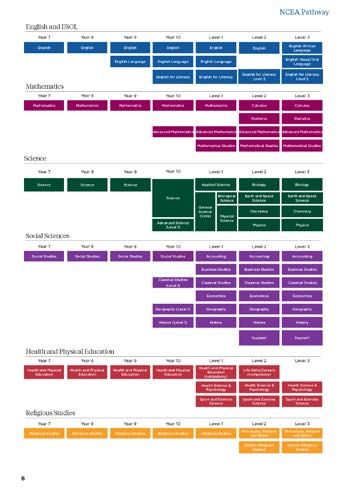
Contents
Principal’s Welcome                                             3
Important Dates for 2020                                        4
First Week of School                                            4
Term Dates                                                      4
Parent Evenings Years 7–13                                      5
Reports Issued                                                  5
School Examinations (Internal)                                  5
National Examinations (External) and Study Leave Dates          5
House Events                                                    6
House Chapel Services                                           6
Year Level Chapel Services                                      6
Special Events                                                  7
Diocesan Community Events                                       7
Meet The Team                                                   8
Deans                                                           9
Heads of Faculty                                                9
Communication for Parents                                       10
Communication                                                   10
Newsletters and How Parents are Informed                        10
Teaching and Learning                                           11
Academic Qualifications                                         11
Senior Student Support for Junior High School Students          11
Career Development Centre                                       11
Centre for Ethics                                               12
Centre for the Enhancement of Learning                          13
Chaplaincy                                                      13
Education Outside the Classroom                                 14
Guidance Counsellors                                            14
High Expectations of Student Behaviour                          14
Information Technology                                          15
Infinite - A futures thinking programme                         16
Learning at Home                                                17
Reports                                                         17
Appendix 1: Educational Structure Dual Pathway                  18
Appendix 2: Years 7–13 Curriculum                               20
                                                                20
Appendix 3: International Baccalaureate Diploma Subjects 2020   22
Appendix 4: Education Outside the Classroom                     23

                                                                     1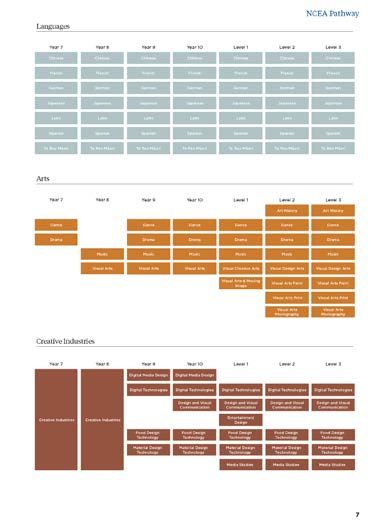
Our School Day                                              25
Bell Times                                                  25
Assembly/Chapel/Tutor Group Timetable for Years 7–13        25
Absence, Lateness and Leave                                 26
Self Interest or Representative Leave                       26
Boarding                                                    26
Cars                                                        27
Cell Phones and Other Electronic Devices                    27
Co-Curricular Opportunities                                 27
DioConnect                                                  28
Health Centre                                               28
Houses                                                      29
ISS Helpdesk                                                29
Library                                                     30
Lockers                                                     30
Lost Property                                               30
Lunches and Cafeteria                                       30
Newsletters and Publications                                32
Parking on Campus                                           32
Personal Information (The Privacy Act 1993)                 33
School Office and Reception                                 33
Stationery                                                  33
Student Drop off and Pick up Area                           34
Student Identity Cards                                      34
Sunsmart                                                    34
Transport to and from School                                35
Uniform                                                     35
Diocesan Community                                          36
Heritage Foundation                                         36
Dio Arts                                                    36
Dio Sport                                                   37
Old Girls’ League                                           37
Parents & Friends’ Association                              37
Other volunteer opportunities                               38
School Facilities                                           38

   2   2020 Junior High School and Senior School Handbook
Principal’s Welcome

Dear students and parents

We wish you a very warm welcome to the 2020
school year as you embark on a challenging and
rewarding learning journey with us. This handbook
will help you understand how our school activities
and events operate and who is involved in making
them happen.

Effective relationships between the community, students, parents and staff are very
important to us and we hope that this information will support your regular contact
with the school and awareness of what is happening during your time at Diocesan.

For information about current and future events, please take time to check
DioConnect via our website. This provides you with very useful tiles to select
information about your daughter’s progress, achievement, attendance, timetable
and teacher contacts. Once school begins, we also email parents our fortnightly
newsletter - Dio Beat. It contains information about the School including academic,
arts, sporting and cultural events. It is very important to browse through it as most
announcements and information for parents is there to help everyone stay in contact.

One of the most important aspects of effective relationships for teaching
and learning involves the provision of high quality feedback to students in a
supportive home/school partnership. We will always welcome your feedback and
communication so that we can continue to provide the very best education for our
girls. We want to use your feedback to keep improving.

If you have a problem or query that needs to be resolved your first point of contact
is your daughter’s teacher or Dean. Your daughter will receive feedback and feed
forward throughout the year from teachers about her learning and you can track her
progress and achievements as the year unfolds.

We hope you have a great year and take time to enjoy the many Diocesan events that
celebrate the family atmosphere of our school.

Very best wishes

Heather McRae
Principal

                                                                              3
Important Dates for 2020
First Week of School
Wednesday 22 January Course Confirmation Yr 12 & 13
Thursday 23 January Teacher Only Day
Friday 24 January Welcome Morning Tea for
new Yr8-13 students and parents
Welcome Picnic for Year 7
students and parents
Monday 27 January Auckland Anniversary Day - School Closed
Term Dates
Tuesday 28 January Term 1 Begins
Thursday 6 February Waitangi Day – School Closed
Wednesday 8 April Term 1 Ends Yr7-13
Thursday 9 April Teacher Only Day Yr7-13
Monday 27 April Anzac Day Observed - School Closed
Tuesday 28 April Term 2 Begins
Monday 1 June – School Closed Queen’s Birthday – School Closed
Thursday 2 July Term 2 Ends Yr7-13
Friday 3 July Teacher Only Day Yr7-13
Monday 27 July Term 3 Begins
Friday 25 September Term 3 Ends
Monday 12 October Term 4 Begins
Monday 26 October Labour Day – School Closed
Monday 7 December Years 7 -10 Term 4 Ends
Full details of term dates and events can be found on DioConnect under ‘School
Calendar’.
4 2020 Junior High School and Senior School HandbookParent Evenings Years 7–13
Wednesday 12 February Information evening for yr7 parents 6.30pm
Tueday 7 April Initial Progress Report Interviews as
required 3-6.00pm
Monday 22 June Option Information Evening – Years 11–13 2021
(current Years 10–12)
Tuesday 28 July Parent Interviews A to K 1.45–6.00pm
Thursday 30 July Parent Interviews L to Z 1.45–6.00pm
Monday 3 August Option Evening for Year 9 & 10, 2021
(Current Year 8 & 9) 6.30-8.30pm
Reports Issued
Friday 27 March Initial Progress Reports Years 7–13
Thursday 2 July Full Reports Years 7–13
Thursday 29 October Full Reports Years 11–13
Monday 7 December Full Reports Years 7–10
School Examinations (Internal)
Thursday 10 – Friday 18 September Year 12 & 13 Diploma Examinations
Thursday 10 – Friday 18 September Year 10–13 NCEA Examinations
Monday 2– Wednesday 4 November Year 9–10 Examinations
National Examinations (External) and Study Leave Dates
Friday 16 October Study leave for Year 13 Diploma students
Thursday 29 October Study leave for Years 11-13 NCEA students
Friday 23 October IB Diploma External Examinations (Year 13)
Friday 13 November IB Diploma External Examinations End
Friday 6 November NCEA and Scholarship External
Examinations
Wednesday 2 December NCEA and Scholarship Examinations End
5House Events Friday 7 Feburary Swimming Finals for Years 7-13 Thursday 20 February Athletic Sports for Years 7-13 Thursday 25 June All day - House Music House Chapel Services Sunday 17 May 5.00 pm - Eliza Edwards House Chapel Service Sunday 17 May 6.30 pm - Mary Pulling House Chapel Service Sunday 7 June 5.00 pm - Selwyn House Chapel Service Sunday 7 June 6.30 pm - Neligan House Chapel Service Sunday 14 June 5.00 pm - Cochrane House Chapel Service Sunday 14 June 6.30 pm - Cowie House Chapel Service Sunday 28 June 5.00 pm - Roberton House Chapel Service Sunday 28 June 6.30 pm - Mitchelson House Chapel Service Year Level Chapel Services Sunday9 February 5.00pm - Year 11 Chapel Service Sunday 9 February 6.30pm - Year 12 Chapel Service Tuesday 11 February 6.00pm - Year 13 Commissioning Service Sunday 16 February 5.00pm - Year 7 Chapel Service (CW,CO,ED,MP) Sunday 16 February 6.30pm - Year 7 Chapel Service (MI,NE,RO,SE) Sunday 8 March 5.00pm - Year 9 Chapel Service (CW,CO,ED,MP) Sunday 8 March 6.30pm - Year 9 Chapel Service (MI,NE,RO,SE) Sunday 15 March 5.00pm - Year 8 Chapel Service (MI,NE,RO,SE) Sunday 15 March 6.30pm - Year 8 Chapel Service (CW,CO,ED,MP) Sunday 22 March 5.00pm - Year 10 Chapel Service Sunday 29 November 5.00pm - Year 13 Leavers Chapel Service 6 2020 Junior High School and Senior School Handbook
Special Events

 Saturday 9 May                      7.30pm - School Ball (Years 12 and 13)

 Monday 25 May                       Birthday Concert

 Tuesday 13 October                  6.00pm - Year 13 Leavers’ Dinner

 Tuesday 20 October(TBC)             6.30pm - Arts Awards Dinner

 Friday 16 October                   6.30pm - Sports Awards Dinner
 Friday 30 October                   6.30 pm - Senior Prize Giving

 Friday 13 November                  2.00 pm - Junior High School Arts and Sports Awards

 Thursday 26 November                7.30pm - Carol Service (Years 7–13)
                                     Holy Trinity Cathedral
 Wednesday 2 December                Final School Assembly (Years 7–13)
                                     Final Sign Out Day Years 11-13
 Saturday 5th December               Graduation Ball (Year 13)

 Monday 7 December                   10.00am - Junior High School Prize Giving
                                     Final Day Years 7 -10

Diocesan Community Events

 Thursday 12 March                                   6.30pm - New Parents’ Cocktail Party
 A welcome to parents new to the School. Hosted by Parents & Friends’ Association.
 Monday 18 May                                       7.00am - Father & Daughter Breakfast
 A morning for fathers to spend with their daughters. Hosted by the Parents & Friends’
 Association, this event includes a breakfast and guest speaker.
 TBC                                                 Parents & Friends AGM
 Sunday 1 November                                   10.00am - Founders’ Day Chapel
                                                     The OGL AGM follows
 Thursday 19 November                                6.30pm - Parents & Friends’ Cocktail Evening
 All parents are invited to come and celebrate another wonderful year, hosted by Parents &
 Friends’ Association.

Please note occasionally dates and times may change. Please refer to DioConnect and Dio Beat for the
latest information and full details of events

                                                                                             7
Meet The Team
Principal Ms Heather McRae Level 1 School House
Head of Senior School Mrs Margaret van Level 1 Centennial Building
Meeuwen
Deputy Principal Mrs Dian Fisher Level 1 Centennial Building
Deputy Principal Mr Simon Walker Level 1 Centennial Building
Assistant Principal Mrs Kate Burkin Level 1 Centennial Building
Director of Mrs Angela Coe Level 2 School House
Development
Chaplain Reverend Sandy Office off Chapel Courtyard
Robertson
Associate Chaplain Reverend Bryan Haggitt Office off Chapel Courtyard
Director of Mrs Simone Clark Level 2 School House
International Students
Admissions Director Mrs Kate Jones Level 2 School House
Career Development Ms Grace Birdsall Level 2 Centennial Building
Services Director
Boarding Senior Dean Mrs Cathy Kirkman Innes House
Guidance Counsellors Ms Clare Norton Level 2 School House
Mrs Fiona Pritchard Level 2 School House
Ms Alison Chuang Level 2 School House
School Nurse Mrs Lesley Paul Health Centre
Chief Financial Officer Mr Scott Christie Level 1 School House
Director of Sport Ms Angie Level 1 Aquatic Centre
Winstanley-Smith
Performing Arts Ms Shelagh Thomson Arts Centre
Director
ICT Director Mr Rob McCrae Level 1 Centennial Building
Centre for the Mrs Suzanne Buswell Level 2 Centennial Building
Enhancement of
Learning Director
Director of Leadership Mr Chris Clay Level 1 Professional Centre
and Futures Thinking
Ethics Centre Director Mrs Nina Blumenfeld Level 4 Centennial Building
8 2020 Junior High School and Senior School HandbookDeans
Year 13 Ms Tracey Cusdin Level 2 Senior Comm Building
Year 12 Mrs Lisa Vos Level 2 Senior Comm Building
Year 11 Mrs Raewyn Nutsford Level 2 Senior Comm Building
Year 10 Mrs Christine Lewis Level 4 Centennial Building
Year 9 Mr Kit Bushell Level 3 Centennial Building
Year 8 Mr Neil Cheetham Level 2 Centennial Building
Year 7 Ms Lynn Tonking Level 1 Centennial Building
Heads of Faculty
Arts Mr Andrè Worsnop Arts Centre
Creative Industries Mrs Lesley Sampson Level 2 Centennial Building
English Ms Susy Carryer Level 4 Patteson Building
Health and Physical Ms Michelle Ogilvie Dawn Jones Sports Centre
Education
Languages Mrs Susan Marriott Level 1 Centennial Building
Mathematics Mrs Susan Jackson Level 3 Centennial Building
Science Mrs Sarah Boasman Level 1 Science Building
Social Sciences Mrs Lisa Mavé Level 4 Centennial Building
Religious Studies Ms Ellen Childs Level 3 Centennial Building
9Communication for Parents
We welcome and actively encourage communication with parents/guardians
regarding their daughter’s learning and wellbeing at Diocesan School for Girls.
Communication
We welcome contact with parents at any time because we believe a school and
family partnership enhances learning. We encourage parents to contact their
daughter’s Dean, Tutor or her teachers if they have any questions regarding their
daughter’s wellbeing and learning.
Newsletters and How Parents are Informed
Our school newsletter, Dio Beat, is emailed to parents every fornight during the
school term and includes news and information relevant to all parents.
Most notices are communicated to our parents through Dio Beat and
DioConnect but on occasion it is necessary for us to send special notices home
with the students or email parents directly.
Parents are encouraged to contact the School at any time by email (first initial
plus surname eg hmcrae@diocesan.school.nz), phoning (09) 520 0221, letter or
personal appointment.
Your Year Level Dean has an overview For a specific The Head of Other staff
of your daughter and will collect and act subject Faculty for the who can help
on information: related matter, subject you are:
Y7 Ms Lynn Tonking ext 7595 contact your are concerned Chaplains
Y8 Mr Neil Cheetham ext 7594 daughter’s about. (The School Nurse
Y9 Mr Kit Bushell ext 7880 teacher. (Your names of the Career
Y10 Mrs Christine Lewis ext 7526 daughter’s Faculty Heads Development
Y11 Mrs Raewyn Nutsford ext 7942 timetable, with are noted on Services
Y12 Mrs Lisa Vos ext 7525 her teachers’ the previous CEL Director
Y13 Ms Tracey Cusdin 7592 names, is handbook Guidance
Director of International Students: available on page.) Counsellors
Mrs Simone Clark ext 7587 DioConnect.)
Each Senior Leader has an overview of
each year level.
Principal
Y7 Mrs Kate Burkin ext 7841 Ms Heather McRae
Y8&11 Mrs Dian Fisher 7539 ext 7818
Y10&12 Mr Simon Walker 7780
Y9&13 Mrs Margaret
van Meeuwen ext 7819
10 2020 Junior High School and Senior School HandbookTeaching and Learning
Academic Qualifications
Junior High School (Years 7–10)
All students learn six core subjects and a range of options from the Arts,
Languages and Creatvie Industries In Year 10, students begin some NCEA Level
1 Achievement Standards and may be placed in enrichment and/or accelerated
classes to meet their learning needs.
Senior School (Years 11–13)
After completing NCEA Level 1 in Year 11, we offer students the guided choice
of studying either the NCEA or two-year IB Diploma so they can gain the most
relevant qualifications to realise their future plans and ambitions.
(see Appendix 1).
The academic curriculum covers the core subjects of English, Mathematics and
four other subjects in Years 11 and 12, and five in Year 13 for NCEA students (see
Appendix 2). Diploma students take six subjects over their two year programme
(see Appendix 3). Students can also enter NZQA Scholarship exams in Year 12
or 12. High achieving students have the opportunity to study University papers
during Year 13.
Senior Student Support for Junior High School Students
Years 7 and 9 are key transition years and we ensure that current students sup-
port new girls entering these year levels.
All Year 7 students are supported by Year 12 Circle Leaders. Circle Leaders con-
vene and lead “Circles” with the junior girls in their House. The year 7 students
have an opportunity to get to know one another better, to discuss themes
around working together effectively, and discuss any general concerns. The
Circles are convened in tutor time in the first term.
New students in Year 9 are supported by the Student Services Council with
Orientation sessions in the first term. They meet with them in some tutor times
and assist with their induction into the school. The new year 9 students are also
assigned a Buddy from their Tutor Class.
New Students in other year groups, as well as students who join us throughout
the year, are assigned a Buddy. The Buddy is another student from their Tutor
Class or Academic Class who will support and guide the new student through
the first few weeks in school while they settle in. The Year Level Deans and Tutor
teachers oversee this transition.
Career Development Centre
The Career Development Centre (CDC) provides guidance and career education
to enable students to make informed decisions about their future pathways. Our
aim is to ensure every girl makes an effective transition to the world of work and
training.
11The Career Development Centre provides students with a variety of resources, both online and print. The School also hosts guest speaker sessions with partners from industry, universities and past students. Careers services include: • Facilitating students’ career decision-making through individual and group counselling. • Providing career education programmes from yr7 -13 that give girls the knowledge and skills to self manage their careers throughout their lives. • Supporting staff and curriculum areas by providing special opportunities and specialist speakers to provide links between academic courses and real life situations. • Helping students with option choices as they progress through the schools. • Co-ordinating trips and activities, such as visits to open days at tertiary institutions. • Organising career opportunities for students, such as work experience and taster days • Assisting students in making the transition from school to tertiary training, work or other options including CV and interview skills, university preparation and applications. • Providing information about gap year experiences and exchanges. • Assisting students applying for scholarships and overseas universities. • Providing students and parents with timely information about upcoming events and deadlines through email, facebook, instagram and DioConnect. People interested in supporting career development programmes by offering work experience opportunities or in providing other expertise are encouraged to contact the CDC. Students and parents are welcome to contact the CDC at any time to discuss a student’s future choices. Centre for Ethics The Centre for Ethics aims to encourage careful reflection and debate about critical issues facing New Zealand and the world. By doing this, we seek to equip our students and the wider community with lifelong skills, knowledge and confidence to understand the theoretical and practical context of any ethical issue, to clarify their own and others’ values and beliefs and provide opportunities for balanced review and consideration. The Centre facilitates an annual programme of events focused on a range of ethical topics and situations, delivered by distinguished speakers. Speakers spend time in the classroom with students exploring ethical issues and practice in their areas of professional expertise, occasionally followed by an evening lecture delivered to the wider Diocesan community. 12 2020 Junior High School and Senior School Handbook
Centre for the Enhancement of Learning
The Centre for the Enhancement of Learning (CEL) provides our gifted and
talented programmes and student learning support. To further the goal of
enhancing learning, any student can seek learning support at CEL.
CEL supports students’ literacy learning in individual subjects across the
curriculum.
Support of learning needs
The CEL staff are experienced at identifying students with dyslexia and other
learning differences, and offer tailored support to meet their learning needs.
CEL staff work closely with parents, academic and pastoral staff to ensure girls
benefit from a good support network.
The learning support aspect of CEL focuses on helping students become
effective learners. CEL staff work with different year levels discussing the
role of the brain in learning, learning styles, study techniques, revision, time
management and planning strategies. A student can refer herself for CEL
support or be referred by her parents, dean, subject teachers or counsellor.
Students may get support in withdrawal groups and/or in-class support by a
CEL staff member. Students who drop an option because of learning needs
join the Learning Support Programme (LSP). This enables CEL staff to provide
learning support for these students as needed without taking them out of
subject classes.
Gifted and talented
We offer several opportunities to further extend the academic thinking of gifted
and talented students, through the da Vinci programme in the Junior High
School and the Copernicus Programme in Junior School. In these programmes, a
variety of enrichment modules are provided for students.
The da Vinci and Copernicus modules cover performance and visual arts,
philosophy, creative writing and the integrated study of topics from a range of
subjects. Students are invited to join these modules and are withdrawn from
their classes to do so. We also offer acceleration opportunities for selected
students to work at higher year levels in subjects in which they excel.

Chaplaincy
As an Anglican school, we value having ordained priests as an everyday part of
our school community. Our Chaplains seek to nurture faith and personal identity
and encourage girls to engage in intellectual, moral, ethical and social issues, as
they relate to their own lives.
The Chaplains provide a safe, confidential and professional Christian presence in
the school where students, staff and members of the wider school community
can find support. They work across the whole school community to ensure that
we are living up to the Gospel principles of love, generosity, justice, peace, hope
and service.
Our chapel services are Christian, in the Anglican tradition, but everyone can

                                                                                   13
find the Chapel to be a place where they can find spiritual nourishment and refreshment regardless of personal faith and belief. We worship in a variety of settings and styles: as year levels, Houses, whole School and staff during the School year. The strong network of Old Girls has a continuing association with the School through special services and community gatherings. Education Outside the Classroom As defined in the New Zealand Curriculum, Education Outside the Classroom (EOTC) is a generic term that is used extensively by schools in New Zealand to describe curriculum based learning that extends beyond the four walls of the classroom. Out of the classroom learning experiences provide students with a range of contexts to develop the key competencies, explore their values and the values of others, and apply learning across the curriculum. (Abbott, 1990; Ministry of Education, 2002). With this definition in mind, the EOTC programme at Diocesan aims to provide all our students with experiences that challenge them physically, mentally and spiritually. It also considers the school’s heritage and school motto ‘Ut Ser- viamus’. It provides opportunities for our students to explore new skills and ac- tivities as well as enhancing previously learned knowledge in real life situations. Each year level programme, during EOTC week (camp week), has specific key competencies, values, aims and learning objectives that relate to the girls learn- ing in school and reflects their current abilities and understandings about the world around them. EOTC curriculum trips held throughout the year enhance and support learning that is going on in the classroom with real life, relevant learning experiences. EOTC is: • Curriculum based teaching and learning that extends the four walls of the classroom • Learning beyond the classroom and accessible to all students • Learning which is consistent with the vision; principles; values; attitudes; key competencies and effective pedagogy statements in the National Curriculum. Guidance Counsellors We recognise that student wellbeing impacts on academic learning and offer confidential support. The School has a counselling team available for students and their families. Students may also be referred to outside agencies for more specific support. High Expectations of Student Behaviour An important aspect of creating great schools is the need for consistently applied and clearly articulated expectations for student behaviour. All teachers 14 2020 Junior High School and Senior School Handbook
at Diocesan share responsibility for maintaining these standards and regularly
clarify practices and consequences for inappropriate behaviour.
Students will be shown this format through school assemblies and in discussion
with their teachers, and we would like parents to understand the expectations
and support the School’s efforts to optimise our high quality learning
environment.
The philosophy behind our expectations is based on rights and responsibilities.
Every student has the right to learn and every teacher has the right to teach.
We all have responsibilities in our Diocesan learning community. We have a
responsibility to:
  • Respect learning
  • Respect the School environment
  • Respect others

Common issues have been categorised into ten key headings:
  1.   Lateness - lessons start on time and time lost must be made up.
  2.   Lack of equipment - teachers articulate requirements in advance and
       have routines. Students must take personal responsibility to come to class
       well prepared.
  3.   Work completed - students must complete work and detentions will be
       issued if this is not done.
  4.   Eating in class - only at the teacher’s discretion.
  5.   Uniform issues - maintain high standards, confiscate non-regulation items
       and follow up to ensure improvement.
  6.   Leaving class - permission must be obtained in advance if a student
       wishes to leave class unless they are distressed in which instance a
       counsellor must be notified.
  7.   Electronic devices - used only with permission from the teacher or items
       will be confiscated.
  8.   Harassment - this is not acceptable and the issue will be addressed
       immediately.
  9.   Defiance or distracting others - this is not acceptable.
  10. Truancy - Students must be in class and unjustified absence will result in
      detentions.
We want all students to achieve their personal best and believe the quality of
the learning environment is a significant factor for this. We expect students to
take personal responsibility for their behaviour and to be prepared to learn. If
students transgress they will be challenged respectfully, expectations will be
consistent and consequences will be firm and fair.

Information Technology
Our curriculum is constantly evolving to ensure girls have the skills and
experience to succeed in our fast-changing world. We strive to provide
opportunities for students to explore the online world and develop their digital

                                                                                   15
literacy.
Diocesan students use a range of information technologies to help them
contemplate, collaborate, create and communicate - the ‘Four C’s’ of 21st century
learning. Students use iPads in the Junior School through to Year 8. Students from
Year 9 to Year 13 work on their own laptops.
Students have high speed wireless access to school resources, especially our
learning management system. In addition, direct connection to the Kiwi Advanced
Research and Education Network (KAREN) provides high speed internet
connectivity for all students and staff.
Parents can check their daughter’s grades and learning resources and access a
range of related information via DioConnect.
Infinite - A futures thinking programme
The Infinite programme is a futures thinking initiative that provides you with the op-
portunity to learn how the future is shaped and how you can become more actively
involved in its creation.
Whilst you’ll explore the trends that have shaped today’s world, you’ll also get the
opportunity to dream big and imagine a wide range of possibilities before stopping
to think deeply about the future you want and how you can work with others to
make this a reality.
“The best way to predict the future is to create it”
Dennis Gabor (winner of the Nobel Prize in Physics)
Education is a future-oriented endeavour where our actions in the present influence
who we are and what we know in the future. However, as we work through our busy
and full lives we often don’t take the time to consider the vast range of possible
futures we might experience.
Only when we engage in this kind of futures thinking can we begin to develop a
more comprehensive awareness of the ways we can create the future. By thinking
more carefully about the consequences of what we do today, we are able to make
decisions that will lead change in ways that will serve both our own needs and those
of our community.
The infinite programme will support your development in the following three interre-
lated areas:
Knowing myself and others
You will increasingly become more aware of yourself and how you perceive the
world. By understanding ourselves we will also be able to contrast ourselves with
others and increasingly be able to explore multiple perspectives on many local and
global issues.
Systems thinking
You will increasingly become aware of the interdependence between the elements
and agents in our universe and how they shape our experience. You will become
more aware of the way’s small changes in one area can lead to vast changes else-
where. This will allow you to consider actions more wisely and with a greater aware-
ness of the potential for unintended consequences.
16 2020 Junior High School and Senior School HandbookAnticipatory awareness and leadership
Our students and our staff will increasingly become aware of how they might think
about the future in different ways. This will involve learning how we can cope and
thrive within increasingly unpredictable environments and become more resilient
to constant change.
Learning at Home
Parents and guardians actively supporting home learning forms an important
part of our school/home partnership. Teachers may set activities that are to be
undertaken at home. When home based activities are not set by teachers, girls are
expected to be revisiting concepts, testing their own understanding and perhaps
even explaining their understanding of ideas and concepts to others.
Families engaging in conversations about learning have a significant effect on
student achievement. Asking ‘how’ and ‘what’ questions that are open-ended will
more likely result in a conversation, as opposed to a ‘yes’ or ‘no’. Having adults role
modeling learning helps our students gain confidence and shows learning to be a
lifelong process.
Reports
We regularly share information regarding our students’ progress and achievement.
Parents receive written reports, have parent interview opportunities and can check
on their daughter’s progress through DioConnect
Parent Teacher Interviews
Parent interviews provide parents with the opportunity to discuss their daughter’s
progress with her subject teachers. Appointments are made via the online
bookings system on DioConnect.
To book an appointment Log into DioConnect then select the “Parent Meetings”
tile, from here you can book your appointments with the teacher/s you wish to
see.
If you require assistance with your bookings please phone +64 9 550 2845 or
email bim@diocesan.school.nz.
For any technical issues or problems associated with logging on to DioConnect
please contact the School’s ISS Helpdesk on +649 520 9230 or by emailing
helpdesk@diocesan.school.nz. The Helpdesk is open Monday to Friday between
7:30am and 4.30pm, except on public holidays.
17Appendix 1: Educational Structure Dual Pathway
NCEA Level 3 IB Diploma
NZQA scholarships may
Yr 13 be taken from Year 12
on either pathway
Yr 12 NCEA Level 2 IB Diploma
Yr 11 NCEA Level 1
New Zealand
Yr 7 to 10 Curriculum
NCEA begins in Year 10
Yr 1 to 6 PYP
Primary Years Programme
18 2020 Junior High School and Senior School HandbookInternational Baccalaureate Pathway
Years 9-11 Year 12 & 13
English
English Literature
Literature
Chinese Literature
(Group 1)
Chinese
English
French
Languages German
Language B
(Group 2) Japanese
Spanish
French Ab Initio
Classical Language: Latin
Economics
Social Sciences
Geography
(Group 3)
History
Creative Industries
Information Technology in a Global Society
(Group 3)
Biology
Science
Chemistry
(Group 4)
Physics
Mathematics
Mathematics
(Group 5)
Music
Arts
Theatre Studies
(Group 6)
Visual Arts 19Appendix 2: Years 7–13 Curriculum
20 2020 Junior High School and Senior School Handbook21
Appendix 3: International Baccalaureate Diploma Subjects 2020

                                             Group 2
                                             Chinese B
                                             English B
                                             French B
                                             German B
 Group 1                                                        Group 3
                                             Japanese B
 English Literature A                                           Economics
                                             Latin B
 Chinese Litertaure A                                           Geography
                                             Spanish B
                                                                History
                                             French ab initio
                                                                Information Technology
                                                                in a Global Society

Group 4                                                            Group 6
Biology                                                            Music
Chemistry                                                          Theatre Studies
Physics                                                            Visual Arts

                                           Group 5
                                           Mathematics

    22     2020 Junior High School and Senior School Handbook
Appendix 4: Education Outside the Classroom
EOTC is:
• Curriculum-based teaching and learning that extends the four walls of the
classroom
• Learning beyond the classroom and accessible to all students.
• Learning that is consistent with the vision, principles, values, attitudes,
key competencies and effective pedagogy statements in the National
Curriculum.
To lessen the cost we plan EOTC Week so that every alternate year there is a
school based programme with only a minimal cost involved. This programme
cycle enables parents to plan ahead and budget for EOTC Week.
EOTC Themes/Outcomes Based on NZC for EOTC Week 5.
Year Link to NZC (Phi- Themes Learning Intentions
Level losophy, Values and Students will:
Key Competencies)
7 Energetic Making New • Participate in a range of outdoor
Inclusion Friends sports and activities with energy and
enthusiasm
Relating to others
• Be challenged to work in teams and
develop strategies to include everyone
• Develop communication skills to
improve their ability to relate to others
8 Participating and William Pike • Build confidence, life skills and
contributing Challenge development of personality and
Relating to others Award character
Authenticity • Discover strengths and passions by
trying new skills
Stewardship
• Build an awareness of the environment
Self-belief and sustainability
• Develop knowledge around outdoor
safety and survival skills
• To be active participants in the
community
9 Treaty of Waitangi Understand the • Develop an awareness of the relevance
Cultural diversity culture – the and importance of the Treaty of
New Zealand Waitangi in NZ’s society
Respect context • Participate in a range of cultural
activities and reflect on how this
relates to their own culture
• Recognise the strength of a united
community based on the combination
of each culture’s different beliefs and
traditions
23Year Link to NZC Themes Learning intentions
Level (Philosophy, Students will:
Values and Key
Competencies)
10 Inclusion The long road • Recognise their own potential to
Communication ahead make a difference in someone else’s
life
Resilience
• Communicate effectively in group
Participating and situations
contributing
• Build resilience when faced with a
challenge
• Recognise your own skills and how
they contribute to participating in a
team.
11 Confident Exploring and • Have the confidence to participate in
Actively involved discovering new activities and go beyond their comfort
possibilities zone
High expectations
by aiming high and • Develop a greater sense of year level
by persevering in the community by participating with
face of difficulties enthusiasm in every aspect of the
camp
• Persevere and show resilience when
facing challenges.
12 Connected Leadership • Able to relate well to others
Managing self and Valuing and • Are members of communities
relating to others understanding • Are positive in their own identity and
Confidence diversity are motivated and reliable
Interpersonal • Show resilience
Acceptance • Take personal responsibility to use
appropriate interpersonal skills to act
and respond in diverse environments.
13 Integrity Thinking and • Reflect and be challenged to explore
Lifelong learners moving beyond the contribution they can make to the
boundaries future
Future focus
• Act with integrity, showing honesty,
responsibility and accountability
through ethical decision making
• Adopt an attitude which enables
them to embrace learning, and new
experiences
24 2020 Junior High School and Senior School HandbookOur School Day
Bell Times
Warning bell 8.25am
Period 1 8.30am
Period 2 9.25am
Either Interval, Chapel, Assembly or Tutor Time 10.20am
Either Interval, Chapel or Assembly 10.45am
DAY 2 Full School Assembly 10.40am
Warning Bell 11.05am
Period 3 (No Bell will ring) 11.10am
Period 4 12.05pm
Lunch 12.55pm
Warning Bell 1.45pm
Period 5 (No Bell will ring) 1.50pm
Period 6 2.40pm
End of the day 3.30pm
We generate a seven day (cycle) timetable with six periods
(as noted above) per day.
Assembly/Chapel/Tutor Group Timetable for Years 7–13
Day Time Year Level
7 8 9 10 11 12 13
1 10.20am C Int A Int
1 10.45am C A
2 10.40am Full School Assembly
3 10.20am C Int A Int
3 10.45am C A
4 10.20am Tutor Time
5 10.20am A C Int
5 10.45am A C
6 10.20am Tutor Time
7 10.20am A C
25Full School Assembly is Day 2 after interval, starting at 10.45am. All year levels have a Dean’s Assembly and a Year Level Chapel once per cycle. On Days 1, 3 and 5, ‘Int’ means the year level has interval at 10.20am and then goes to Assembly or Chapel at 10.45am. On Days 4 and 6 all years have Tutor Time (replaced by House Meetings when required). Absence, Lateness and Leave All students are expected to be in their Period 1 teaching room by 8.30am. If they arrive at school at any time after 8.30am, they must sign in with the Attendance Supervisor (Years 7 to 13). If students are absent through illness or any other reason, the parent/caregiver must phone the School before 8.00am on each day of absence. Years 7 to 13 Attendance Supervisor, Mrs L Carpentier-Jones Level 1 Centennial Building Phone (09) 520 9343 Personal appointments should be made outside of school hours. If students have an appointment during the school day, they must bring a note from their parent/ caregiver to the Attendance Supervisor before 8.30am. Before leaving for an appointment, they must sign out at the Attendance Office in Level 1 Centennial Building, and then sign in on return to school. Please note: If students are absent from class without a valid reason entered in our system, a text will be sent to the first named parent/guardian on their record. Please ensure therefore that if students are not in class for any reason that they inform the teacher for that period. Self Interest or Representative Leave For Years 7–9, leave for two or more days requires written permission to be sought from the Dean and the appropriate leave form to be completed. For Years 10–13, leave for two or more days requires written permission to be sought from Senior Management and the appropriate leave form to be completed. If a student feels ill, she must not leave school without first seeing the School Nurse in the Health Centre. The School Nurse will contact her parents and ensure that the student signs out before she goes home. Boarding Innes House provides full and weekly boarding from Year 9 upwards and provides a warm family boarding environment. At Innes House each girl plays her part in the day to day community life of the House and is encouraged to reach her potential in the academic, sporting, cultural and spiritual life of Diocesan School. The girls enjoy a happy, friendly environment under the care of the Senior House Dean and two Assisstant House Deans with two tutors supporting during busy times. 26 2020 Junior High School and Senior School Handbook
Cars
Students may drive to School, but there is limited street parking and strictly
NO parking on the school grounds (unless disabled with the appropriate permit
displayed). Diocesan is not responsible for cars parked on the street and traffic laws
will apply. Girls may not use vehicles at lunch times and may not transport other
students unless they have a full driver’s licence and the written permission of the
passengers’ parents.

Cell Phones and Other Electronic Devices
Cell phones and other electronic devices must be switched off and kept in bags at
all times, unless directed by a teacher. This includes break times for years 7-10. Any
devices used in these times will be confiscated by a teacher who will inform the
Dean. The confiscated device used will be held by the School Office until the end of
the school day, and the student’s name recorded. The Dean will inform the parent of
inappropriate use of the device on a second instance of confiscation and the device
will be kept for five school days. If this is a phone, this will require the confiscated
item to be handed in to the School Office daily at 8.30am and will be available for
collection at 3.20pm for the confiscation period. Subsequent confiscations will incur a
longer confiscation period.

Co-Curricular Opportunities
For full information on all the available co-curricular options for both Performing Arts
and Sports, see DioConnect. Notices will be put in Dio Beat.

Arts
Dio leads the way in Performing Arts for young women. Our programmes are a great
platform for building confidence, nurturing creativity and encouraging curiosity in our
girls. From Music and Drama to Movement and Dance, performing is an important
part of school life and our community. Our Preforming Arts Director and exceptional
teaching staff make sure all our girls have the opportunity to experience the power of
performance first-hand, through specialist teaching in Music, Singing, Speech, Dance
and Drama.

Sport
Dio is recognised both nationally and internationally, for our sporting success. It’s a
big part of who we are. We offer an impressive range of sports so there’s something
to suit every student, at every level. Whichever sport your daughter chooses, we
have the team and the resources to make sure she can get out there and achieve her
personal best. Our Director of Sport alongside specialist coaches and staff, play key
roles in maintaining exceptional sporting standards. Nearly every student is involved
in sport, whether that is at participation, competition or high performance levels.

                                                                                27
DioConnect
Parents are issued with login credentials that gain them entry to the School
intranet, DioConnect. To gain access, parents should click the ‘DioConnect Login’
button on the School website and enter their registered email address and
password (not their daughter’s details).
DioConnect serves three key purposes:
• To provide an effective conduit for constantly changing and detailed internal
communication,
• To enable parents to access confidential information about their daughters,
• To facilitate a move from paper to electronic communication.
If any technical difficulties are encountered our ISS Helpdesk can be reached on
+649 520 9230 or by emailing helpdesk@diocesan.school.nz. The Helpdesk is
open Monday to Friday between 7:30am and 4.30pm, except on public holidays.
Health Centre
There is a registered nurse on duty between 8.00am and 4.00pm, Monday to
Friday. If any student is unwell she should see the nurse. If the School Nurse
decides that the student is not well enough to remain at school, her parent/
guardian will be contacted to collect her from the Health Centre, which is situated
at the end of School House. Students are not permitted to ring parents directly
and ask to be collected - they must see the nurse first.
For the safety of our students, it is essential that the nurse is informed of any
particular medical problem, or if a student is receiving any special treatment or
medication. Students are not permitted to carry medication with them apart from
Inhalers, Anakits or Epipens. Parents may supply medication with written details
to be safely kept and dispensed by the nurse. Parents are encouraged to contact
the nurse to discuss concerns they may have in regard to their daughter’s health.
Physiotherapist
Physiotherapist
An accredited Physiotherapy service is also available onsite for all students and
staff of the school to use.
The clinic operates out of the Aquatic Centre, on the Ground floor next to the
main entrance.
• The service will be free of charge for accident related consultations and
treatments covered by ACC.
• Initial appointment bookings are booked directly with the Physiotherapist by
parents or by students who are over 16 years of age. The School Nurse will
provide contact details for the Physiotherapist.
The service operates on-site during the following hours:
28 2020 Junior High School and Senior School HandbookMonday: 1pm-4pm
Tuesday: 8am-12pm
Wednesday: 2pm-4.30pm
Thursday: 8am-12pm
Friday: 1pm-4pm
These times may change due to demand.
Houses
Much of the spirit of the School is derived from the history of each House and
the long standing rivalry between them. Each student is placed in a House which
is the basis of her Tutor Group. The Houses have been named in recognition
of people connected with the School. The Houses are: Cochrane, Mary Pulling,
Mitchelson, Neligan, Cowie, Eliza Edwards, Roberton and Selwyn. To maintain
family tradition, if a student has a sister, mother or grandmother belonging to a
particular House, they will also be placed in that House. Houses compete against
each other in numerous activities for various trophies. At the end of the year the
House gaining the highest overall points is awarded the Stark Cup.
Each House has a badge, which is issued to all new students. Replacements may
be purchased from the Dio Shop.
Cochrane Red and White
Cowie Green and White
Eliza Edwards Green and Gold
Mary Pulling Blue and Yellow
Mitchelson Red and Black
Neligan Red and Purple
Roberton Black and White
Selwyn Green and Purple
ISS Helpdesk
Information Systems Support staff are available to assist students with any
issues relating to their iPads, laptops and ICT equipment. This includes software,
network or configuration issues and hardware faults and damage. Our staff will
either fix the problem, arrange repair or advise how to resolve the issue.
For hardware repairs, equipment is fixed by accredited service agents either on-
site or collected from school, repaired and returned to school. Alternatively, once
diagnosed, equipment may be returned to the student to take back to the place
of purchase or a service agent for repair. Short term loan laptops are available
while equipment is in for repair or while awaiting delivery of a laptop order.
Parents are also welcome to contact the Helpdesk to discuss any issues relating
to their daughter’s device, for iPad and laptop purchase recommendations, help
with logging into DioConnect or advice on school ICT matters.
29Location: Room C1.29 on the ground floor of the Centennial Building Open: Monday–Friday between 8.00am and 4.30pm including during the school holidays. (excluding the Christmas/New year period) Phone: 09 520 9230 DioConnect: IT Helpdesk Request Form Email: helpdesk@diocesan.school.nz Library The library in the Centennial Building on Level 2 is always staffed by an adult librarian. Parents can collect students studying in the library after school from the Whanau Area Level 2, the entrance from the courtyard or after hours from the Whanau Area Level 1. A direct line is available if a parent needs to contact their daughter while she is working in the library. The telephone number is 09 520 9342. Library hours are: Monday – Thursday, 7.30am–5.00pm Friday, 7.30am–4.00pm Lockers Students in Years 7–10 are allocated a locker. Students must provide their own padlock, (these are available for purchase at the Dio shop) and their locker must be kept locked at all times. Years 11–13 students have allocated lockers in their Common Room areas. Students who have lost their key should contact the School Office which will arrange for the lock to be cut. A new lock will be required. Students should use their lockers and are advised not to carry heavy bags around the School or leave their possessions in classroom or Common Room areas. Lost Property All articles brought to School must be clearly named including items such as watches, shoes and sports equipment. If you have to bring a large sum of money to school for any reason we suggest that it be handed into School Office for safe-keeping during the day. If you have brought special gear to School your Dean may look after it during the day. If anything valuable goes missing, you are encouraged to look carefully for it and, if necessary, report the loss to your Dean. Who is responsible for your belongings? YOU ARE. Always store belongings safely in your locker and do not leave belongings unattended. All your belongings should be covered by your parents’ Personal Contents Insurance policy while you are at school. The school is not liable for loss of personal property. Articles found around the School may be claimed by the owner, if named, from the office. A School sale to clear unnamed uniform items is held twice a year. All unsold non uniform items are placed in the Senior School Caring Shed to be donated to the Monte Cecilia Housing Trust. 30 2020 Junior High School and Senior School Handbook
Lunches and Cafeteria
The School Cafeteria is run by the Parents & Friends Association and is where
food and drink is available for breakfast, morning tea, lunch and after school
meals. The Cafeteria is open for breakfast from 7.45am–8.30am and after school
for approximately 20 minutes. Parents & Friends welcome assistance from any
parent who can help in the Cafeteria – usually once a term for four to five hours.
Interested parents can assist by contacting the School Office on 09 520 0221 or
alternatively by contacting the Cafeteria on 09 520 0221 ext 7871.

My Monitor Debit Card System
My Monitor is a web based application, accessed from DioConnect, that enables
parents to load funds on to their daughter’s school ID card. Girls can then use
their ID card as a debit card to make purchases at school.

This service provides an alternative to carrying cash on campus.

Using My Monitor

Login in to DioConnect using your registered email address and password (not
your daughter’s details). If you have forgotten your password just click “reset
your password”.

Click on the My Monitor icon.

If prompted, select the Parent option box.

The first time you login you will be prompted to accept the terms and
conditions, then click the Create Account button.

Once signed in, your daughter(s) account details will load on the screen. You will
see there are several categories to which you can load and manage funds,
including print/copy, café and Dio shop.

Note that each student is given a printing allowance at the beginning of each
year. This appears as a Quota balance and is not transferable to other accounts.

To add funds to your daughter’s My Monitor account: Click the
button to the right of the screen next to the relevant account (e.g. café) for your
daughter who is to receive the funds and follow the prompts. You will receive an
email confirming any deposits you make. These funds are available for immediate
use.

There are also options to set up an auto top up (if your daughter will be regularly
using the café for example), set low balance warning emails, transfer funds
between accounts and view statements.

                                                                                31
If your daughter loses her card, she should report this to ISS so a stop can be put on the account. Replacement cards can be ordered through the school office. If you need any assistance please contact the ISS Helpdesk on +649 520 9230 between 7.30am and 4.30pm (Monday to Friday), submit a request via DioConnect or email helpdesk@diocesan.school.nz Newsletters and Publications The school newsletter, Dio Beat, is emailed to parents every fortnight during the school term and includes news and information relevant to all parents. The news- letter is also available on DioConnect. The School also produces a school magazine, Dio Today. The magazine features news about all aspects of school life as well as reports from Community Groups. Dio Today is distributed to all members of the Diocesan School family, including parents who reside overseas, as well as Old Girls resident in New Zealand. Parking on Campus There is a one-way drive through system at School, with cars entering on Clyde Street and departing onto Margot Street. Please be aware of pedestrians as you leave, and please also respect the 5km speed restriction. There is allocated visitor parking on the left-hand side of the driveway adjacent to the sports field, including provision for disabled parking for cars with a disabled permit displayed on the vehicle’s dashboard. Parking underneath the Hockey Turf is available to parents and visitors FROM 4.00pm–10.00pm Monday–Friday and at weekends for sport, Chapel services and school functions. Entry and exit to the carpark is on Clyde Street and you may also exit onto the drive through system and out onto Margot Street. The car park closes at 10.00pm (except for School functions), and also includes disabled parking spaces. Parking is strictly at the owner’s risk. Please DO NOT park or wait in your car for students before school starts and up to 4pm as this is reserved for staff. Please be respectful of our neighbours, it is illegal and impolite to park across driveways, to stop/park on dotted yellow lines, 1 metre from a vehicle entrance or within 6 metres of an intersection and on the pedestrian crossing. It is also illegal to park on the footpath, double park, park within half a metre of a fire hydrant and within 6 metres of an unmarked bus stop (Clyde Street and Margot Street Bus Bays). Also note that it is illegal to back your car into the angled car parks on Margot Street. Please note that parking wardens are vigilant at all times. Parking restrictions are clearly marked and we ask that you please respect these. 32 2020 Junior High School and Senior School Handbook
Personal Information (The Privacy Act 1993)
Personal details are requested each year of students and their parents or guardians.
A copy of the medical database for your daughter will be sent home at the
commencement of the year. You will be required to update this information as
changes occur.
It is important that these details remain up to date and the School is notified of
any changes whether permanent or temporary. This includes contact information if
your daughter is staying with friends or relatives while you are out of the country.
There are various update options:
  Option 1: Portal		       By logging onto DioConnect
  				                     Click on ‘Update my details’
  Option 2: Dean		         Student to deliver to their Dean
  Option 3: Email		        dataadmin@diocesan.school.nz
  Option 4: Mail		         Student Database Administrator
  				                     Diocesan School for Girls
  				                     Clyde St, Epsom, Auckland 1051

School Office and Reception
The School Office is open between 8.00am and 4.00pm. The Business Reception,
located in School House, is staffed from 8.00am–4.30pm and an automatic
reception is available at all other times for phone calls.

Stationery
In December, the following year’s stationery lists can be downloaded from
DioConnect. Stationery can be purchased by using the Office Max website, www.
myschool.co.nz or going to a stationery retailer of your choice. The Diocesan Shop
carries basic stationery items and has made up packs available for Years 7 and 8
students. All other school stationery can be purchased at the Diocesan Shop.
Please note that the stationery lists consist of basic requirements; workbooks and
other items may be distributed to your daughter(s) in class through the course of
the year and charged to your account.
The School Diary is a compulsory item and will be distributed to all students at
school.
International students need to get their stationery through the Diocesan Shop.

                                                                              33
Student Drop off and Pick up Area This drop off bay is situated in the drive through by the Margot Street exit and the Diocesan Aquatic Centre. It is the only area within the School grounds where students may be dropped off or picked up. Parents wishing to do this must travel through the Clyde Street entrance, and queue in the left lane and wait until they have reached the drop off area before students alight from or enter the vehicle. Please keep the right lane free for other drivers. There is a speed limit of 5km/h for pedestrian safety. Do not stop on the way down the driveway, park in the loading zone outside School House or on the dotted lines. This creates a bottleneck causing frustration for other drivers or blocks spaces for couriers, and is dangerous for students crossing the driveway. Drive through is not a parking bay. Please do not leave your vehicle and if your daughter is not ready to be picked up when you arrive, we ask that you keep moving through and do another lap. Our Years 0 - 2 students are the first to finish in the afternoons and if you are here to collect a student in those year levels, please enter the drive-through from 3pm. Our students in Years 3 - 6 finish at 3.15pm. If you are collecting a student in those year levels, please wait until this time to enter the drive-through. Our Years 7 - 13 students are the last to finish at 3.30pm. Please avoid entering the drive-through until 3.30pm. We encourage the girls to walk a short distance outside the school to meet their parents. For those families who have girls across multiple year groups, we suggest you pick up at the time the eldest child finishes. Younger children are welcome to wait at the pick-up point outside the Aquatic Centre. Student Identity Cards All students in Years 7–13 are issued with a Student Identity Card. These ID cards can be used on public transport and for any other purpose in which student discounts are available. The card has a photograph of the student and is supplied through the School at a small charge. Students also use their ID cards to release print jobs at the printers, to catch the Diocesan school buses and as a debit card within school to make purchases from the café or Dio shop. They are therefore encouraged to carry them with them at all times. 34 2020 Junior High School and Senior School Handbook
You can also read


