2021 Year 8 Curriculum Handbook - BEAUDESERT STATE HIGH SCHOOL
←
→
Page content transcription
If your browser does not render page correctly, please read the page content below
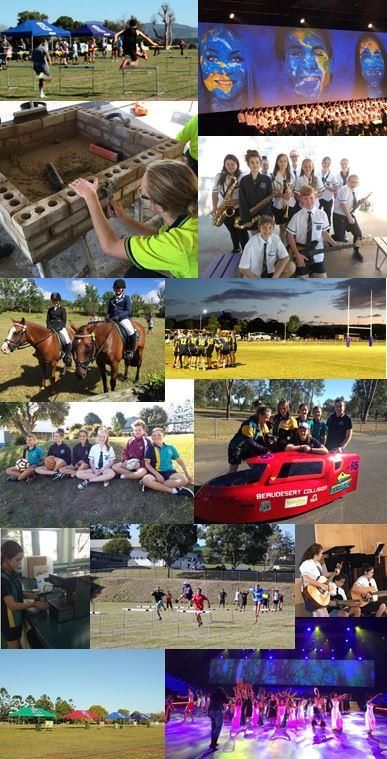
BEAUDESERT STATE HIGH SCHOOL

                      2021
                     Year 8
       Curriculum Handbook

0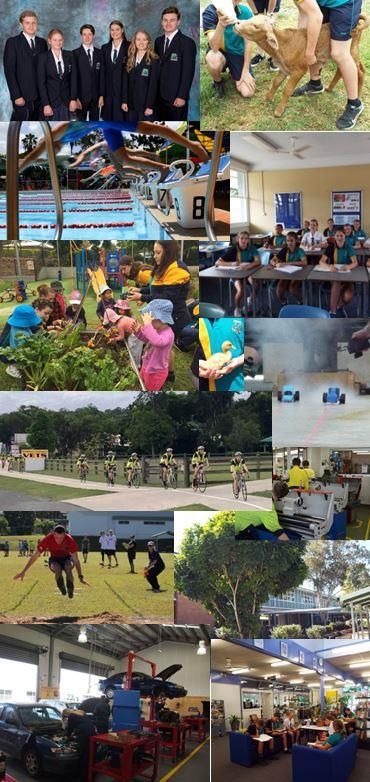
CONTENTS

MESSAGE FROM THE PRINCIPAL ..................................................................................................................2
YEAR 8 CURRICULUM OVERVIEW ................................................................................................................3
SOME HELPFUL HINTS WHEN CHOOSING AREAS OF STUDY .........................................................................4
SUBJECTS AND CAREER PATHWAYS .............................................................................................................5
CORE SUBJECTS............................................................................................................................................7
    ENGLISH ......................................................................................................................................................... 7
    MATHEMATICS .............................................................................................................................................. 8
    HISTORY, GEOGRAPHY, CIVICS AND CITIZENSHIP, ECONOMICS AND BUSINESS ............................................... 9
    SCIENCE........................................................................................................................................................ 10
    HEALTH AND PHYSICAL EDUCATION ............................................................................................................ 11
    DIGITAL TECHNOLOGIES .............................................................................................................................. 12
    DESIGN AND TECHNOLOGIES ....................................................................................................................... 13
      DESIGN and TECHNOLOGIES .................................................................................................................... 13
      FOOD and FIBRE PRODUCTION ................................................................................................................ 14
      FOOD SPECIALISATION ............................................................................................................................. 15
    LEARNING DIVERSITY STUDIES ..................................................................................................................... 16
ELECTIVE SUBJECTS ....................................................................................................................................17
    THE ARTS ...................................................................................................................................................... 17
      DANCE ...................................................................................................................................................... 17
      DRAMA..................................................................................................................................................... 18
      MEDIA ARTS ............................................................................................................................................. 19
      VISUAL ARTS ............................................................................................................................................ 20
    JAPANESE ..................................................................................................................................................... 21
CO-CURRICULAR SUBJECTS ........................................................................................................................22
    SPORT YEAR 8 (COMPULSORY) ..................................................................................................................... 22
    INSTRUMENTAL MUSIC ................................................................................................................................ 23

1
MESSAGE FROM THE PRINCIPAL
Students at Beaudesert State High School have access to a comprehensive and quality curriculum that
continues to develop foundation skills in the traditional areas of English, Mathematics, Science and Humanities
and Health and Physical Education. At the same time, it provides some variety and flexibility through a range
of exciting elective subjects.
Success at school involves hard work and commitment. This means that students at Beaudesert State High
School need to give their personal best at all times. This means:
Daily commitment to: Ongoing focus on:
Attendance Respect for all
Attitude Responsibility for your actions
Achievement Readiness to work and learn
We have fully implemented the Australian Curriculum. The Australian Curriculum sets the expectations for
what all young Australians should be taught, regardless of where they live in Australia or their background.
ACARA draws on the best national talent and expertise, and consults widely to develop the Australian
Curriculum and resources.
Education plays a critical role in shaping the lives of young Australians and contributing to a democratic,
equitable and just society that is prosperous, cohesive and culturally diverse.
The rationale for the introduction of the Australian Curriculum centres on improving the quality, equity and
transparency of Australia’s education system.
Quality – an Australian Curriculum will contribute to the provision of a world-class education in Australia
by setting out the knowledge, understanding and skills needed for life and work in the 21st century and
by setting high standards of achievement across the country.
Equity – an Australian Curriculum will provide a clear, shared understanding of what young people should
be taught and the quality of learning expected of them, regardless of their circumstances, the type of
school that they attend or the location of their school.
The commitment to develop a national curriculum reflects a willingness to work together, across geographical
and school-sector boundaries, to provide a world-class education for all young Australians. Working nationally
makes it possible to harness collective expertise and effort in the pursuit of this common goal. It also offers
the potential of economies of scale and a substantial reduction in the duplication of time, effort and resources.
This implementation will mean that there will be some changes in the subject choices and time allocations for
subjects.
Please take the time to read this handbook carefully.
I extend to all students best wishes for the year ahead at Beaudesert State High School.
Brad Roberts
Principal
2
YEAR 8 CURRICULUM OVERVIEW
Year 8 students study the CORE subjects of English, Mathematics, Science, Humanities, Health and Physical
Education, Technologies and the Arts. Involvement in Sports activities and Get Connected is also expected within
the timetable. Students can then choose two different ELECTIVE subjects from The Arts. Students may also select
to study a Langauages subject (Japnaese) for a term, in place of a Technology subject.
Key Learning Areas
                                                Subject                           Time Allocation
Core Subjects
                         English
English                                                                 3 periods per week all year
                         English Modified
                         Mathematics
Mathematics                                                             3 periods per week all year
                         Mathematics Modified
                         Science
Science                                                                 3 periods per week all year
                         Science Modified
                         History
                         Civics and Citizenship
Humanities               Economics and Business                         3 periods per week all year
                         Geography
                         History Modified
Health and Physical      Health and Physical Education                  3 periods per week for 1 semester
Education                Sport                                          1 period per week all year
                         Design and Technologies
Design and                                                              3 periods per week, 1 subject per
                         Food and Fibre Production
Technologies                                                            term
                         Food Specialisation
Digital Technologies     Digital Technologies                           3 periods per week for 1 term

Elective subjects - select two subjects from:

                         Dance
                         Drama                                          2 subjects only, 3 periods per week,
The Arts
                         Media Arts                                     for 1 term each
                         Visual Arts

May also select one subject from:

                                                                        3 periods per week for 1 term
Languages                Japanese
                                                                        (instead of a Technology subject)

               Line 1         Line 2             Line 3      Line 4          Line 5           Line 6
                                                                                          Technology* /
  Term         English     Mathematics           Science   Humanities    HPE / The Arts
                                                                                            Languages
    T1
    T2
    T3
    T4
1. Technology* (4 Terms), Languages (1 Term - an elective choice)
2. The Arts (must select 2 subjects from The Arts (Dance, Drama, Visual Arts, Media Arts)
* 1 term of Food and Fibre Production, 1 term of Digital Technologies, 1 term of Food Specialisation, Design &
Technologies
N.B. Languages/Design and Technology will be run depending on staffing. Language elective will mean missing out
on a Technology subject (depending on timetable)

3
Some helpful hints when choosing areas of study
The following points should be taken into consideration when choosing areas of study for Year 8.
You need to consider:
Past Achievement
A student’s past record is a very good indication of future success, consideration should, however, be given to
whether a student has worked to their maximum ability. If results in Year 8 have been disappointing it may mean
that the student has not worked diligently and consistently, that they did not like particular subjects or it may
mean that they are not capable of high academic results.
Subject teachers and Heads of Departments will be able to give advice in this area.
The Nature of Subjects
Some students enjoy subjects with a high practical workload while others may enjoy more theoretical subjects. It
is essential that students and parents carefully read subject descriptions and/or make enquiries of teachers of that
subject before a final choice is made.
Aptitude/Ability
Does the student have special talent in a particular area for example; good with his/her hands, or has artistic or
creative aptitude. These abilities and aptitudes should be encouraged.
Ambition/Career Plans
If a student has specific career plans/ambitions, then it would be wise to discuss with the Guidance Officer which
subjects would best lead to that career. Where no specific career goals exist, a choice of subjects that keep as
many options open as possible is advised.
Interests
Success in a subject is much more likely if a student is interested in that subject. After considering all the above
points, try to choose subjects that you are most interested in.
The Final Choice
The selection of areas of study is made by the school in consultation with the student’s parents and teachers.
Please consider carefully the school’s advice before final choices are made.
Final Allocation of Subjects
The final allocation of subjects will be determined by the school and may be affected by the number of places
available in certain subjects.
The school reserves the right to withdraw a subject from the curriculum that year for reasons of staffing and
lack of student interest.
4SUBJECTS AND CAREER PATHWAYS
ENGLISH MATHEMATICS SCIENCE HISTORY
Mathematics
English (Some careers will require core Science History
& extension)
Actor Accountant Automotive electrician Anthropologist
Archivist Actuary Cane tester Archaeologist
Author Bank officer (Building society, Chemist Archivist
Book editor credit union officer) Computer programmer Barrister
Broadcaster Bookkeeper/accounts clerk Electrical fitter Community development
Copywriter Credit manager Engineer officer
Diplomat Economist Electronics service person Criminologist
Interpreter Electrical fitter Environmental scientist Diplomat
Journalist Engineer Forensic scientist Historian
Lawyer Geologist Laboratory worker Journalist
Librarian Mathematician Medical practitioner Lawyer
Management consultant Motor mechanic Meteorologist Librarian
Personnel manager Pattern cutter/designer Nurse Museum curator
Printing machinist Physicist Pharmacist Palaeontologist
Publisher Programmer (information Photographer Photographer
Receptionist technology) Refrigeration and air- Public relations officer
Speech pathologist Quantity surveyor conditioning Mechanic Religious leader
Teacher’s aide Statistician Sports scientist Sociologist
Travel consultant Stockbroker Teacher Stage manager
Writer Surveyor Telecommunication Teacher/Lecturer
Tax agent technician Writer
Teacher Veterinarian
Winemaker
FOOD and FIBRE ECONOMICS and BUSINESS HEALTH and PHYSICAL
DIGITAL TECHNOLOGIES
PRODUCTION DIGITAL TECHNOLOGIES EDUCATION
Agricultural Science
Economics and Business
Agricultural Mechanics Digital Technologies HPE
Digital Technologies
Animal Husbandry
Agricultural engineer Accountant Architectural drafter Acupuncturist
Agricultural Science Bank officer Business systems analyst Ambulance officer
Teacher Bookkeeper/accounts clerk Computer assembler Beauty therapist
Agricultural technical Bookmaker Computer engineer Chiropractor
officer Car Rental officer Computer hardware service Fitness instructor
Animal attendant Cashier technician Hospital manager
Botanist Court and Hansard reporter Data processing operator HPE Teacher
Economist – agricultural Court officer Database administrator Jockey
Environmental Scientist Credit officer Desktop publisher Massage therapist
Food technologist Croupier Games developer Nurse
Forest officer Economist Help desk operator Occupational health and
Forester Farm manager Multimedia developer safety officer
Horticulturist Hotel/motel manager Programmer Occupational therapist
Jackeroo/jillaroo Law clerk Software developer Physiotherapist
Landscape gardener Office administrator Software engineer Podiatrist
Motor Mechanic Real estate salesperson Systems analyst Psychologist – sport
Pest controller Receptionist Systems designer Personal Trainer
Stock and station agent Secretary Teacher Radiation therapist
Veterinary nurse Stock and station agent Training consultant Recreation officer
Wool classer Teacher Technical support officer Sports scientist
Travel consultant Telecommunications Sports coach
engineer Stunt performer
Website developer
5LANGUAGES OTHER THAN
ART PERFORMING ARTS HOME ECONOMICS
ENGLISH
Dance
Visual Art
Drama Food Specialisation Japanese
Practical Art
Film & Media
Architect Actor Butcher Announcer
Artist Announcer Catering manager Anthropologist
Craftsperson Arts administrator Clothing production worker Archaeologist
Diversional therapist Choreographer Cook/chef Book editor
Dressmaker Dancer Craftsperson Customs officer
Engraver Film and TV lighting Dietician / Nutritionist Employment officer
Fashion designer operator Dressmaker Flight attendant
Florist Film and TV producer Dry cleaner Foreign affairs and trade
Graphic designer Make-up artist Fashion designer officer
Hairdresser Model Food technologist Interpreter
Interior decorator Public relations officer Home care worker Journalist
Industrial designer Receptionist Home economist Probation and parole officer
Jeweller Recreation officer Hospital food service Ship’s officer
Landscape architect Set designer manager Social worker
Landscape gardener Speech pathologist Hotel/motel manager Sociologist
Make-up artist Stage manager Interior decorator Teacher
Multimedia developer Teacher – dance Nanny Tour guide Translator
Photographer Teacher – speech & drama Nurse Travel consultant
Set designer Teacher – film & TV Pattern cutter Writer
Screen-printer Tour guide Retail buyer
Sign-writer Writer Tailor
Teacher Teacher
Wood turner
MUSIC DESIGN & TECHNOLOGY GEOGRAPHY
Music Design and Technologies Geography
Announcer Architect Agricultural scientist
Arts administrator Architectural drafter Anthropologist
Composer Assembler Archaeologist
Computer games Automotive electrician Architect
developer Boilermaker Armed forces officer
Conductor Builder Cartographer
Film and TV producer Cabinetmaker Civil engineering technologist
Music librarian Carpenter/joiner Ecologist
Music therapist Cartographer Environmental scientist
Musical instrument CNC Operator Farm manager
maker CNC Programmer Foreign affairs and trade officer
Musician Drafter Forester
Piano technician Engineering associate Geologist
Recreation officer Electrical Engineer Geophysicist
Singer/vocalist Fashion Designer Hydrologist
Sound technician Fitter and turner Land economist
Stage manager Graphic designer Landscape architect
Teacher – early Industrial designer Meteorologist
childhood Landscape architect Mine engineer
Teacher – music Mechanical Engineer Natural resource manager
Teacher – primary Leadlight worker Navy officer
Teacher – secondary Metal fabricator Park ranger
Metal machinist Pilot
Panel beater Sociologist
Picture framer Surveyor
Robotic Engineer Tour guide
Sheet-metal worker Tourist information officer
Teacher Urban and regional planner
Wood machinist Writer
6CORE SUBJECTS
ENGLISH
RATIONALE
English helps create confident communicators, imaginative thinkers and informed citizens. It is through the study
of English that individuals learn to analyse, understand, and communicate; building relationships with others and
the world around them. The study of English helps young people develop the knowledge and skills needed for
education, training and the workplace. It helps them become ethical, thoughtful, informed and active members of
society.
AIMS
The aim of English is the ensure that students:
learn to listen to, read, view, speak, write and reflect on increasingly complex and sophisticated spoken,
written and multimodal texts across a range of contexts
appreciate, enjoy and use the English language and develop a sense of its richness and power to evoke
feelings, convey information, form ideas, facilitate interaction with others, entertain, persuade and argue
creating interest and skills through inquiring into the aesthetic aspects of texts; developing an informed
appreciation of literature.
COURSE OUTLINE
English is organised into three interrelated strands that support students’ growing understanding and use of
Standard Australian English. Together the three strands focus on developing students’ knowledge,
understanding and skills in listening, reading, viewing, speaking and writing. The three strands are:
Language: knowing about the English language
Literature: understanding, appreciating, responding to, analysing and creating literature
Literacy: expanding the repertoire of English usage
Learning in English builds on concepts, skills and processes developed in earlier years, which will be revisited
and strengthened.
ASSESSMENT
The assessment is continuous and involves class work, assessment tasks and tests. All skill areas (listening,
viewing, reading, speaking and writing) will be assessed. Students will create a range of imaginative, analytical
and persuasive types of texts including narratives, multimodal presentations, reviews and literary analyses for
assessment.
CONTACT PERSON
Mrs Mandy De Vivo
Head of Department - English
mdevi31@eq.edu.au
7MATHEMATICS
AIMS
Through participation in the Mathematics Program at Beaudesert State High School, students will participate in a
course designed from the Australian Curriculum that incorporates the topics of Statistics and Probability,
Measurement and Geometry and Numbers and Algebra.
By the end of Year 8:
Students solve everyday problems involving rates, ratios and percentages.
They describe index laws and apply them to whole numbers. They describe rational and irrational
numbers.
Students solve problems involving profit and loss.
They make connections between expanding and factorising algebraic expressions.
Students solve problems relating to the volume of prisms.
They make sense of time duration in real applications.
They identify conditions for the congruence of triangles and deduce the properties of quadrilaterals.
Students model authentic situations with two-way tables and Venn diagrams.
They choose appropriate language to describe events and experiments.
They explain issues related to the collection of data and the effect of outliers on means and medians in
that data.
Students use efficient mental and written strategies to carry out the four operations with integers.
They simplify a variety of algebraic expressions.
They solve linear equations and graph linear relationships on the Cartesian plane.
Students convert between units of measurement for area and volume.
They perform calculations to determine perimeter and area of parallelograms, rhombuses and kites.
They name the features of circles and calculate the areas and circumferences of circles.
Students determine the probabilities of complementary events and calculate the sum of probabilities.
ASSESSMENT
Assessment will take the form of mid and end semester tests and assignments/ investigations/practical tests.
CONTACT PERSON
Mr Michael Gardiner
Head of Department - Mathematics
mjgar1@eq.edu.au
8HISTORY, GEOGRAPHY, CIVICS and CITIZENSHIP, ECONOMICS and
BUSINESS
RATIONALE
The Humanities and Social Science subjects involve the study of human behaviour and interaction in social,
cultureal, environmental, economic and political contexts. The focus is historical and contemporary, it
incorporates perspectives ranging from personal to global. Building upon upon Year 7 studies, Year 8 allows
students to study topics that are more issues based. This provides students with the opportunity to revisit and
practise higher-order thinking skills, as well as develop a deeper knowledge and appreciation of the complexity
and wonder of the world in which they live.
AIMS
Studies in the Humanities aims to support students to develop the abi9lity to question, think critically, solve
problems, communicate effectively, make decisions and adapt to change as active and informed citizens.
Humanities subjects aim to develop in each student:
Relevant knowledge and understanding e.g. of features of Australian democracy and how laws are made;
the cause and effects of historical events and the actions and motives of individuals and groups involved;
processes that influence how places are characterised and valued, and the interconnections between
people and places; how markets operate and the roles and responsibilities of government, commerce and
consumers.
The capacity to design research projects through generating inquiry questions, locating and organising
evidence.
Skills of analysis and synthesising of gathered evidence to draw conclusions, develop solutions to
identified issues and make recommendations for change beneficial to society.
COURSE OUTLINE
Studies of Humanities will incorporate the following units of work in Year 8:
Term 1 Law and Order in Democratic Australia
Term 2 Age of Exploration - Medieval Europe AND the Spanish Conquest of the Americas
Term 3 Markets, Business and Financial Decisions
Term 4 Natural and Built Environments - Landscapes and Landforms AND Changing Nations
ASSESSMENT
The basis of assessment for all units of work will be one assessment piece per term (i.e. 4 assessment pieces
for the year) which may include a selection of the following:
Research Assignment: based on library/internet research
Exam: based on knowledge and analysis of source material
Multi-modal presentation
USE OF COMPUTERS/LAPTOPS
This course is designed around access to IT and internet resources. It is therefore preferable that students are
able to access the internet at home. Every effort is made to access and use computers in this course for such
avenues as report and multi-modal presentation, sourcing of images for historical background, and Web
Quests.
CONTACT PERSON
Ms Sandra Malmstedt
Head of Department - Humanities
smalm1@eq.edu.au
9SCIENCE
RATIONALE
Science is a dynamic, hands-on, investigative, core subject that develops students understanding of the nature
of the world today and a scientific approach to thinking, decision making and problem solving. To be an active
participant in today’s society all students will need an understanding of such key issues as genetics, the
environment, our use of energy and sexual health. The science course offered at Beaudesert State High School
will give students this understanding as well as important thinking skills to work with new ideas.
AIM
The aim of this course is to provide our students with the thinking skills and knowledge to make better
decisions and better understand the world in which they live. An understanding of science is critical to being
an informed citizen of today. Advances in medicine and genetic research demands that citizens be involved in
making ethical decisions where deep knowledge is required. How science interacts with our society is an
important aspect of Science. Students are asked to think about this and learn to understand and question the
scientific ideas that underpin much of our society.
COURSE OUTLINE
There are five key components in Science. These are:
Science as a Human Endeavour – examining issues with how science impacts on our lives and how we can
be actively involved as citizens
Chemistry – studying materials and how they are used, scientific theories and the patterns with which
they interact
Biology – examining the human body, ecology and environmental issues, genetics and heredity
Physics – examining forces and energy, the ways they interact and sources of energy
Earth Sciences – our universe and the use of resources on our planet are examined
Students will develop deep knowledge of science through real life inquiries. Examples of possible tasks in Year
8 include:
How is energy used and converted in machines?
How do the different ways animals, plants and humans reproduce for their survival?
Are there patterns in the ways chemicals react?
Is radiation useful to us?
How was the Earth formed and what dynamic processes are still in place today?
Laboratory work is important in the sciences and there is a strong expectation that students will come
prepared for this. This includes being well equipped, organized and ready to work! As safety is paramount,
students involved in inappropriate behavior will be excluded from practical work. If exclusion is for an
extended period, parents will be notified.
ASSESSMENT
Science assessment has two main aspects: The knowledge and understanding of science concepts, and
scientific skills. Both are important for attaining a good result in Science.
Students will be given regular opportunities to demonstrate their understandings of scientific concepts in as
many ways as possible, including daily activities, journals, conversations, models, reports, displays,
experiments and tests. Every activity that students participate in will be used as an opportunity for students to
gain credit for their knowledge and understanding of the course outcomes.
CONTACT PERSON
Mr Keith Tyrrell
Head of Department - Science
ktyrr9@eq.edu.au
10HEALTH AND PHYSICAL EDUCATION
RATIONALE
Health and Physical Education is a physically based subject that uses knowledge from a wide variety of areas to
assist students in the promotion of their own health.
HPE provides opportunities for students to:
learn about different types of health
experience different forms of physical activity
recognise the value of physical activity to health
develop the necessary physical and social skills for life long participation in physical activity
AIMS
Health and Physical Education aims to:
Develop students who can perform a range of skills and tactics across a variety of sports and recreational
pursuits
Prepare students for future study in Health and Physical Education and Sport and Recreation courses
Show students how knowledge of physical education can be used to improve physical performance and
health
Develop students who are healthy – physically, mentally, emotionally and socially
Develop an appreciation of the benefits of being healthy and active
Provide a foundation for developing active and informed members of society
COURSE OUTLINE
Health and Physical Education requires students to engage in both theoretical and practical components. Over
the semester, students will be engaged in the following activities and concepts:
Social Networking & Change and Fitness – Theoretically, students recognise that they are becoming
independent, and explore risk-taking behaviours and identity experimentation as they grow up. They explore
respectful relationships with peers and how to conduct these relationships in real life and online. They
explore a range of strategies and practices to prevent cyberbullying and to ensure their safety when engaging
in online social-networking situations. Practically, students will participate in a range of fitness based activities
from training sessions to team games. They will create and execute fitness programs that are based upon
training in order to reach individual goals
Drugs in Sport and Kick Catch Throw – Theoretically, students will examine the reasons why young people
use alcohol and drugs, peer pressure and how to make good decisions using assertive behaviour. They will
identify the family's role in decision making and how to communicate and support peers in situations
involving alcohol and drugs, as well as the steps to follow in an emergency situation. Practically, students will
identify concepts and principles of kicking, catching and throwing through purposeful and authentic learning
in and about a selected physical activity. They will demonstrate their application of these skills while applying
personal and social skills to improve teamwork and fair play.
Students will be expected to wear clothing suitable (particularly footwear) for each practical activity and will be
assessed in all units. Broad brimmed hats or legionnaire must be worn for practical sessions. If students cannot
participate physically for any reason a note explaining must be supplied and they will be required to complete
written tasks related to the physical activity.
ASSESSMENT
Students will be required to demonstrate their abilities to analyse, investigate, evaluate, demonstrate and
compose through a range of theoretical and performance tasks.
CONTACT PERSON
Mrs Lisa Callaghan
Head of Department - Physical Education
lcall62@eq.edu.au
11DIGITAL TECHNOLOGIES
RATIONALE
The Technologies curriculum provides students with opportunities to consider how solutions that are created
now will be used in the future. Students will identify the possible benefits and risks of creating solutions. They
will use critical and creative thinking to weigh up possible short and long term impacts.
In Digital Technologies, digital systems and data are considered in terms of networking, human interaction,
security, gaming and data integrity.
AIMS
This course is designed around the use of computers and associated software to enhance and build upon
students’ previously acquired ICT knowledge and skills through coding.
COURSE OUTLINE
Digtial Technologies is organised into three interrelated strands that support students’ growing understanding
and use of technology through coding.
Unit name Coding Basics
Unit description Students learn how to code using Python coding language.
Students learn how to use excel spreadsheets and formula.
They learn basic coding principles via Minecraft Education Edition code builder.
Assessment Coding: Python & Minecraft Code Builder
ASSESSMENT
All assessment will be carried out during class time. This will involve accessing computers to complete any
necessary programming and uploading completed coding tasks.
COURSE REQUIREMENTS
Students will need ready access to computers both at school and at home. The computer needs to be capable
of running the software packages listed below (in some cases a similar software package will be acceptable).
Software Packages required: GROK learning, An Office Suite (eg Microsoft Word, Excel or similar), Internet
Explorer (or similar), and Audacity (or similar).
CONTACT PERSON
Mr Kerry Scarth
Head of Department - The Arts & Information Technology
kscar15@eq.edu.au
12DESIGN AND TECHNOLOGIES One subject per term : DESIGN and TECHNOLOGIES RATIONALE In an increasingly technological and complex world, it is important to develop knowledge and confidence to critically analyse and creatively respond to design challenges. Knowledge, understanding and skills involved in the design, development and use of technologies are influenced by and can play a role in enriching and transforming societies and our natural, managed and constructed environments. Design and Technologies enables students to become creative and responsive designers. When they consider ethical, legal, aesthetic and functional factors and the economic, environmental and social impacts of technological change, and how the choice and use of technologies contributes to a sustainable future, they are developing the knowledge, understanding and skills to become discerning decision-makers. AIMS Design and Technologies actively engages students in creating quality designed solutions for identified needs and opportunities across a range of technologies contexts. Students manage projects independently and collaboratively from conception to realisation. They apply design and systems thinking and design processes to investigate ideas, generate and refine ideas, plan, produce and evaluate designed solutions. They develop a sense of pride, satisfaction and enjoyment from their ability to develop innovative designed products, services and environments. COURSE OUTLINE Week 1 Safe work practices - 2 dimensional and 3 dimensional sketching - Design Process Weeks 2 & 3 Human Centred Design - 3D printed mobile phone holder key tag Weeks 4 - 6 Technologies and Coding – 3D printed maze Weeks 7 - 9 Timber Trade Skills – Timber maze holder Week 10 Design Consolidation – Personal design challenge ASSESSMENT Student Design Folio Practical Tasks FUTURE PATHWAYS This course is a preparatory course for students intending to undertake Design and Technology in years 9 and 10, as well as Senior Design in years 11, and 12. It provides a valuable foundation for students wishing to pursue a career in architecture, digital media design, engineering, fashion design, graphic design, industrial design, interior design, robotics and systems design. CONTACT PERSON Mr Jasen Johnson Head of Department - Design and Technology jjohn388@eq.edu.au 13
FOOD and FIBRE PRODUCTION
RATIONALE
Food and Fibre Production provides students with opportunities to experience the scientific principles and
practices that are engaged in modern agricultural production. These experiences are delivered in an agricultural
context by employing the assets of a well-resourced school farm and an additional grazing property on the
outskirts of Beaudesert.
AIMS
Upon completion of this course, students will have developed:
Knowledge and understanding of the sciences within the framework of an agricultural context
A range of communication and processing skills and techniques employed in agricultural and scientific
practices
Appreciation of the role that responsible farming, food and fibre production play in Australian society
Appreciation of the importance of sustainable agriculture in a world of finite resources
COURSE OUTLINE
1. Agricultural Crop Production and Hydroponics
Cropping Systems & Cycles (Agronomy and Horticulture)
Crop Production Practices (Cultivation, Pest Control and Harvesting)
Crop Management Techniques (Processing, Sales and Marketing)
Sustainable and ethical agriculture (sustainable production)
2. Animal Science
Intro to animal studies
ASSESSMENT
Students will be assessed through a range of the following methods:
Formal Tests
Assignments
Practical Tests
Experiment & Practical Reports
Student notebooks/folders
Informal/diagnostic in-class tests
Practical work will be conducted as required. Use of the Agriculture Department computer laboratory will occur
from time to time for the purposes of research and information processing. Please note that Q fever and other
zoonotic diseases are a minor risk factor when working with animals.
CONTACT PERSON
Ms Kate Bandrowski
Head of Department - Agriculture
kband3@eq.edu.au
14FOOD SPECIALISATION
RATIONALE
Food Specialisation is a practical subject supported by theory components. This subject focuses on the study of
foods, their selection, preparation and presentation. The subject allows students to enjoy a range of
experiences and equips them with basic skills that can be transferred to general life including home, school
and work.
AIMS
Food Specialisation supports students to develop the capacity to make decisions, solve problems and develop
critical and creative responses to practical concerns of individuals, families and communities in the local and
global context. This will enable students develop the knowledge, understanding and skills to make healthy
choices about food and nutrition. Students will explore the range of influences on these choices and build the
skills to access and assess nutritional information that can support healthy choices. Food Specialisation
encourages students to experiment with new foods and flavours and provides opportunities for students to
research, design and create food products for specific purposes. The learning experiences provided will enable
students to further develop their decision-making, personal interaction, problem solving and resource
management skills.
COURSE OUTLINE
‘Kitchen Capers’
Students will investigate, select and practice a variety of cookery techniques.
Further develop their knowledge & understanding of safety, hygiene (personal, kitchen & food),
equipment, terminology, stove use, measuring, healthy food choices, Australian Guide to Healthy Eating,
Food & Nutrition.
Researching healthy food choices.
Observing teacher demonstrations.
Investigating, designing, producing, reflecting and evaluating recipes for good health.
ASSESSMENT
A Project – written and Practical
Weekly practical tasks
COURSE REQUIREMENTS
Students will be required to provide ingredients and suitable take home container for practical cookery each
week. All food products will be taken home.
CONTACT PERSON
Mrs Helen Philp
Head of Department - Home Economics and Languages
hphil9@eq.edu.au
15LEARNING DIVERSITY STUDIES
These courses are highly modified individualised programs suited to students with a disability:
English Modified
Mathematics Modified
Science Modified
History Modified
CONTACT PERSON
Mr Todd Winton
Deputy Principal – Inclusion and Special Education
tawin0@eq.edu.au
16ELECTIVE SUBJECTS
THE ARTS
Choose two subjects, each studied for one term:
DANCE
RATIONALE
Dance provides another mode of learning and developing special interests, needs and talents. Dance
heightens awareness of, and develops respect for, the body and increases the quality of a person’s physical
well being. Dance allows students to achieve their unique potential in and through the Arts.
AIMS
Dance aims to:
develop physical coordination, discipline and self confidence
understand that movement can have ritual, social and artistic purposes
develop self expression and motivation
promote and realise creative, imaginative and inventive potential
foster positive relationships with others
develop critical analysis skills
realise that dance is an intrinsic part of culture and heritage
develop a well rounded knowledge and appreciation of different dance styles, and to enhance
performance and choreography skills
COURSE OUTLINE
In Dance, students use the body to communicate and express meaning through purposeful movement. Dance
practice integrates choreography, performance, and responding to dance and dance making.
Unit name Dance evolution
To make and respond to dance functions and genres that have evolved over time from
Unit description
local, Australian and global contexts to reflect identity, self-expression and community.
Making and Responding: Collection of Work – Project (Performance, Choreography&
Assessment
Responding)
All Dance students will have the opportunity to attend excursions and perform at the annual Arts Night.
ASSESSMENT
Assessment is in the three key areas of performing, choreography and responding. This may take the form of
written tests, assignments, orals, performances, self evaluations and choreography tasks.
CONTACT PERSON
Mr Kerry Scarth
Head of Department - The Arts & Information Technology
kscar15@eq.edu.au
17DRAMA
RATIONALE
Drama is more than just learning lines and acting. Drama can develop students’ artistic and creative skills. It
can also provide knowledge and skills that are transferable to a variety of artistic, social and work related
activities. It focuses on students expressing and communicating understandings about human issues and
experience through the enactment of real and imagined events. Students as dramatic artists and critics
develop confidence and self-awareness as they collaborate to prepare and present performances. They also
develop understanding of the forms, styles and purpose of drama.
AIMS
Drama encourages the development of:
creative, critical, imaginative and inventive thinking
disciplined working
the ability to work alone or in groups
self-motivation
being open to new experiences
communication
the ability to see things through to completion
the exploration of ideas
COURSE OUTLINE
Unit name Clowning
Students explore the techniques, purpose and history of clowning and mime.
Throughout the unit students will interpret and analyse a clowning performance and,
Unit description
devise their own clowning performance where they will manipulate the elements of
drama, and clowning conventions.
Assessment Student devised performance, Exam & Written Response
**All Drama students will have the opportunity to attend excursions, workshops and perform on the annual
Arts Night.
ASSESSMENT
The two equally weighted areas of assessment are Making and Responding. Practical assessment is both
individual and group and includes; improvisation, scripted performance work and monologues. Written
assessment includes; journals, analysis of performance, directing plans and programmes and script writing.
CONTACT PERSON
Mr Kerry Scarth
Head of Department - The Arts & Information Technology
kscar15@eq.edu.au
18MEDIA ARTS RATIONALE In Media Arts, students create and communicate representations of the world and tell stories through film. Students learn to be critically aware of ways that the media is culturally used and negotiated. Media Arts practice integrates Making and Responding. Making in Media Arts involves students using communications technologies to design, produce and distribute media artworks. Responding in Media Arts involves students learning to explore, view, analyse and participate in media culture. In Making and Responding students engage with the five key concepts of the curriculum, story principles and elements of media to create and analyse media artworks. AIMS Students will be able to: communicate information and ideas use and explore technology, and multi-media production create for a purpose produce for an audience work in teams persevere through to completion explore new ideas and concepts be critical of what they see, hear or read COURSE OUTLINE Unit name Mini Documentary – Capturing your World Unit description Students work through critique, design and production of a short documentary. Assessment Making and Responding: Storyboard, Film and Written Exam. ASSESSMENT Students will be assessed using a variety of techniques. Video productions created using computer technology are the main form of practical assessment. Written assignments assessing theoretical components may be submitted on paper or in any electronic format approved by the teacher. CONTACT PERSON Mr Kerry Scarth Head of Department - The Arts & Information Technology kscar15@eq.edu.au 19
VISUAL ARTS
RATIONALE
By the end of Year 8, students identify and analyse how other artists use visual conventions and viewpoints to
communicate ideas and apply this knowledge in their art making. They explain how an artwork is displayed to
enhance its meaning. They evaluate how they and others are influenced by artworks from different cultures,
times and places.
Students plan their art making in response to exploration of techniques and processes used in their own and
others’ artworks. They demonstrate use of visual conventions, techniques and processes to communicate
meaning in their artworks.
AIMS
Students will be able to:
create, critique, imagine and invent
work independently or in a team, where required
push boundaries and explore new expressions
communicate visually and kinaesthetically
see things through to completion by resolving ideas
explore ideas and concepts
COURSE OUTLINE
Unit name Personal Journeys
To explore representations of ideas and concepts related to the theme of personal
Unit description journey within environments. These representations can communicate our
connection to a particular location or type of environment
Assessment Making and Responding: Drawing, Printmaking and Written Analysis
Two dimensional art work covers areas such as drawing and painting, screen printing and lino printing and
design related activities, including computer graphics, which involve the use of a variety of media techniques.
We explore the representation of landscapes, still life, portraits and abstract environments through various art
techniques. We study how other artists have approached such subjects in their own work throughout history.
ASSESSMENT
Assessment is based upon achievement in two areas: Making & Responding. Making involves the process
involved in developing an idea and experimenting with various techniques. Responding is the theoretical
component. Here, students are assessed on their ability to analyse and interpret various art works in written
form.
CONTACT PERSON
Mr Kerry Scarth
Head of Department - The Arts & Information Technology
kscar15@eq.edu.au
20JAPANESE RATIONALE Situated as it is, equidistant from the multicultural centres of Brisbane and the Gold Coast, Beaudesert State High School recognises the importance of the study of a foreign language for students as a window to the appreciation and understanding of cultural diversity in our society. Learning another language extends, diversifies and enriches the language learner’s way of thinking. It promotes a greater sensitivity to and understanding of languages in general, including English. The year 8 course of study incorporates the Content Descriptors and Achievement Standards of the Australian Curriculum: Japanese. AIMS By the end of Year 8, students should be able to read, write, speak and listen with understanding to authentic Japanese, through situations in which they are most likely to be involved. Students should be able to communicate on a simple level as visitors to Japan, or when meeting a Japanese person. Students will develop a deeper understanding and appreciation of Japanese culture and society. COURSE OUTLINE The course will include the following units of study: My Friends My Family My Town My Week My Favourite Food Students are encouraged to speak, listen to, read and write Japanese in a range of interactions with the teacher and each another. Expressions and phrases commonly used in real life situations are introduced and studied. Students will apply this knowledge in simple oral and written texts such as self-introductions and conversations relating to themselves and their personal worlds. Cultural components are embedded in order to develop an appreciation and understanding of the lifestyle and ways of thinking of Japanese speakers. Direct contact with Japanese people occurs through home stays with students, visits from exchange students and teachers and our in-country Japan Tour. The Japan Tour is offered every second year to Japanese students from Years 9-12. Our last trip was in September 2018. Students are exposed to all three scripts, hiragana, katakana and kanji, and develop a working knowledge of how these are used to make and create meaning. FEATURES OF JAPANESE LANGUAGE USE Students will become familiar with spoken Japanese through exposure to a variety of oral texts. They will use Japanese in classroom interactions and short communicative tasks. Students will participate in scaffolded activities to exchange information and complete transactions in Japanese Language. They use modelled examples and apply knowledge of language features to create texts for a variety of purposes. Students will develop an awareness of different cultural perspectives. They will identify words, phrases and behaviours that convey Japanese traditions and values such as politeness and respect and and use these appropriately. ASSESSMENT Students are assessed on their ability to use vocabulary, sentence patterns and common expressions through the four skills of speaking, listening, reading and writing. Each of the four skills is assessed within the Year 8 semester course. Speaking is assessed in front of the teacher only. Consistent study of the language is necessary to achieve success. OTHER INFORMATION The Queensland State Government in the Global Schools initiative recognises the many benefits of studying a language for our students. Skills in languages provide personal, social and employments benefits. For students, quality languages education enhances understanding of their own language and culture and assists them to reflect on their identity and place in the world. It provides insights into the languages and cultures that shape their own and others’ beliefs, values and attitudes. CONTACT PERSON Mrs Helen Philp Head of Department - Languages and Home Economics hphil9@eq.edu.au 21
CO-CURRICULAR SUBJECTS
SPORT YEAR 8 (COMPULSORY)
RATIONALE
All students are involved in the school sport program as it:
provides time for regular physical activity, which is an important lifelong habit
allows school teams to be chosen for inter-school carnivals
provides opportunities to interact with other students from other schools
builds team work, communication and decision making skills
AIMS
At Beaudesert SHS we aim to provide:
A wide range of sporting options in both a competitive and recreational environment
Time to improve their student’s physical skills
Practical situations for students to develop team skills, resolve conflict, set goals and develop problem
solving strategies
Encouragement for students to realise the health benefits of regular physical activity and fitness
Opportunity for students who wish to pursue a career in representative sport
Sport and Activities is scheduled within the student timetable for one lesson per week. This will continue
through the full school year but changes to the sport and activity will be made each trimester. For trimesters 1
and 2, students will be with their Roll Class and rotate through a range of sport and cultural activities. For the
final trimester, students will select an offered sport or activity.
Sport in the school is offered through Intra-school (recreational) competition and Inter-school competition.
COURSE OUTLINE
a) Interhouse
Inter-house carnivals are conducted in Swimming (February), Cross Country (May) and Athletics (August)
and all students in the school are required to participate. Students are placed in a house according to
their surname - Cunningham (A-D), Fraser (E-K), Kennedy (L-Q), Leichhardt (R-Z) and from these carnivals
students are chosen to represent the school in the district (Pacific), regional (South Coast) and State titles.
b) Interschool Sports Available
Three seasons will be conducted for interschool sport. Each season will involve two full round robin days
against other schools.
BOYS: Basketball GIRLS: Basketball Touch Football
Rugby League Netball Volleybal
Soccer Rugby League
Touch Football Soccer
Volleyball
District premiers will progress to compete at the Gold Coast finals.
c) Knockout Competitions
The school participates in various interschool competitions, both carnival and knock out style. Teams are
normally nominated in rugby league, soccer, netball, futsal and touch.
e) Representative Sports
All students are eligible to represent their District, Region or State at their chosen sport and these
students are selected at the various competitions conducted by each sport throughout the year. Pacific
and South Coast sports days are held in term one, two and three and from these days the representative
teams to participate in the State titles are selected.
CONTACT PERSON
Mrs Lisa Callaghan
Head of Department - Physical Education
lcall62@eq.edu.au
22INSTRUMENTAL MUSIC Instrumental Music is offered at Beaudesert High School in addition to students’ regular subjects. Tuition is provided in the following areas: Strings Brass Woodwind Percussion Ensemble experience is provided through the formation of concert bands, orchestras and other ensembles. The program becomes an integral part of the student’s music education. Instruction takes place on a group basis with 3-10 students learning together. SELECTION CRITERIA Students will be selected for the program according to the various criteria: 1. student’s willingness to learn 2. physical characteristics pertinent to a particular instrument (eg. Student must be able to reach all the keys) 3. commitment of student and parent both to daily practice and to regular attendance at lessons and rehearsals Every student must agree to: Practice regularly - a short period every day Become a member of the school concert band or orchestra or other group Take part as required in all concerts and camps Attend lessons, rehearsals and other classes regularly as required COSTS Fees are consistent with those charged by cluster schools: - $30 per year levy using own instrument, PLUS - $20 per year if hiring a school instrument. Regular expenses are required at various intervals for reeds, strings, oils, etc. and these must be met by parents. Where parents are considering the purchase of an instrument for their child, they are requested to consult with the instructor before arranging any purchase. CONTACT PERSON Mr Kerry Scarth Head of Department - The Arts & Information Technology kscar15@eq.edu.au 23
You can also read


