2022 Kansas Communities That Care 2022 Survey Administration Documents
←
→
Page content transcription
If your browser does not render page correctly, please read the page content below

2022
 •

        Kansas Communities
       That Care 2022 Survey
          Administration
            Documents
                         1
2022 Survey Administration Documents
Administration Window: November 1st, 2021 – January 31st, 2022

    1. Survey Coordinator Letter and Instructions

    2. Survey Introduction Letter to Teachers

    3. Survey Administration Guidelines

    4. Overview and Frequently Asked Questions

                                       For questions, please contact:
                                              The KCTC Team
                           Greenbush – Southeast Kansas Education Service Center
                              947 West 47 Highway PO Box 189 Girard, KS 66743
                                    620-724-6281 kctc@greenbush.org

                  Provided By:                                             Administered By:
Kansas Department for Aging and Disability Services           Research, Grants, and Evaluation Department
     Behavioral Health Services Commission             Greenbush – The Southeast Kansas Education Service Center

                  Provided By:                                             Administered By:
Kansas Department for Aging and Disability Services           Research, Grants, and Evaluation Department
     Behavioral Health Services Commission             Greenbush – The Southeast Kansas Education Service Center

Revised October 12, 2021                                                                                 2
2021-2022 Survey Coordinator Letter
October 15, 2021                                                                    Survey Administration
                                                                                     may occur between:
To:     District Survey Coordinators
                                                                                     November 1st, 2021
                                                                                             &
From:   Rachel Phillips, KCTC Project Manager                                        January 31st, 2022

Thank you for serving as a District Survey Coordinator and participating in the 2022 Kansas Communities That
Care (KCTC) Student Survey. The survey should be administered to students in grades 6, 8, 10 and 12 between
November 1st, 2021, and January 31st, 2022. All surveys will be administered using an online survey tool.

Based on input from stakeholders, this year’s survey has been modified to shorten and improve the overall
survey experience for students.

   •    Readability
            o The language has been adapted to improve readability for all students, promote inclusivity, and
                 address relevancy
   •    Length
            o Several questions were removed, and new survey technology has reduced the time it takes to
                 complete the survey depending on each student's responses. The average time it took students
                 to complete the survey in 2021 was 27 minutes. Keep in mind, some students are able to finish
                 more quickly while others may need additional time.

Instructions for District Survey Coordinators are provided on the following page. Additional instructions and
resources are provided for teachers/proctors in the Student Survey Administration Guidelines.

You will need the following documents for preparation and administration.

   •    Parent Consent Form LINK HERE
   •    Parent Consent Form Tracking Sheet LINK HERE
   •    FY 2022 KCTC Student Survey Link LINK HERE
   •    Student Survey Administration Guidelines LINK HERE
   •    Letter to Teachers LINK HERE

If you have any questions, please contact The KCTC Team at Greenbush at 620-724-6281 Ext. 366 or
kctc@greenbush.org and our team will be ready to assist you.

                                                                                                                3
District Survey Coordinator Instructions
Three essential tasks to coordinate in your district for administration of the 2021 KCTC Student Survey:

        Document Parent Consent
  1     If your district has not already distributed parent consent forms, please distribute
                                                                                                   Click for Parent
                                                                                                   Consent Form
        consent forms and KCTC parent information as soon as possible to allow time to
        collect signed forms before administering the survey.                                      Click for Parent
                                                                                                    Consent Form
Document signed parent consent and provide a list of students included/excluded to each            Tracking Sheet
teacher or proctor administering the survey.

        Test survey to confirm teachers/proctors and students can access the URL
  2     This year’s survey is administered using an online survey tool. The URL for this year’s survey is:

                             https://surveys.kctcdata.org/s3/studentsurvey2022
                                 Please whitelist this wildcard: *kctcdata.org*
Please share the URL and wildcard with your IT department to ensure it is not blocked by              Click for
the district firewall or content filtering system. It is important to test the survey link ahead   IT Tips (Video)
of time on a student device in the environment where the survey will be taken to be sure
the URL is accessible. If you run a separate network for students and teachers, please                Click for
ensure access to the URL is approved on both networks. Some school internet security               IT Tips (PDF)
systems may require additional whitelisting; to learn more, click here.
This survey may be taken on any device with internet access. A smartphone is not recommended.
Any web browser may be used; however, Google Chrome is best when using the Google Extension Read Aloud.

        Disseminate Administration Guidelines to Teachers/Proctors
  3     The documents below should be provided to each participating
        teacher/proctor approximately two weeks before the survey date.                            Click for Letter
                                                                                                    to Teachers
           • Letter to Teachers: Introduces teachers to the survey.
           • Survey Administration Guidelines: This includes instructions on
                                                                                                      Click for
               preparation, room set-up, remote administration, & student survey                   Administration
               video instructions.                                                                   Guidelines

                                Curious to learn more about KCTC 2021-22?
              Check out the KCTC Technical Assistance presentation recording linked here.
                                     Visit us at kctcdata.org to learn more.

                                                                                                                     4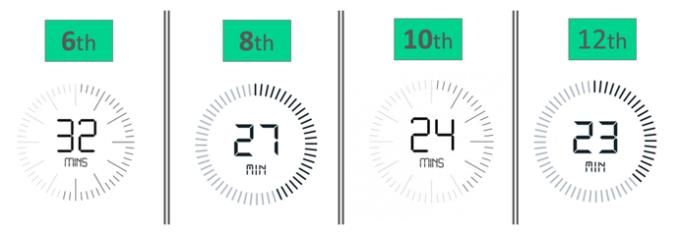
2021-2022 KCTC Survey Introduction

Dear :
Our district has agreed to participate in an important survey conducted by the Kansas Department for Aging
and Disability Services Behavioral Health Services Commission called the Kansas Communities That Care
Student Survey.
The purpose of this survey is:

   •   To gather information needed to plan prevention strategies addressing such problems as: alcohol,
       tobacco, and other drug use, and bullying at school and in the community.
   •   To measure the district’s social-emotional strengths and weaknesses.
   •   To help us judge the effectiveness of our current prevention efforts.
Between the dates of November 1st, 2021 and January 31st, 2022, our district’s 6th, 8th, 10th, and 12th grade
students will be participating in the student survey. We are asking for your help in doing this.
The survey will be administered during your  on . Students will
need an entire class period to complete the survey. Please see the enclosed information for instructions for
administering the survey to your class.
Data from the Kansas Communities That Care Student Survey is posted online at www.kctcdata.org for each
participating district and school. Log-in passwords are provided to superintendents for distribution within the
district. You are encouraged to access relevant information about your school.
I will be coordinating the survey effort in our district. If you have any questions about the survey or these
instructions, please do not hesitate to contact me. Thank you for your assistance!

Sincerely,

cc:

Revised October 12, 2021                                                                                    5
2021-2022 Survey Administration Guidelines
          Survey Administration Window: November 1st, 2021 – January 31st, 2022

PRIOR TO SURVEY ADMINISTRATION
   •   Get the list of the students who have a signed parent consent form from your survey
                                                                                                  Click for Parent
       coordinator. For tracking consent, please see the resources below:                         Consent Form
            o Click to view the Parent Consent Form.
            o Click to view the Parent Consent Form tracking sheet.                               Click for Parent
   •   USD#: Have your 3-digit Unified School District (USD) number and name available for      Consent Form
                                                                                               Tracking Sheet
       students.
            o TIP: Students will need to type the USD number in the first demographic survey question to locate
                their district number and name in the dropdown menu. Next, the survey will prompt them to
                select their grade level, school name, and the county where they live.
   •   COUNTY: Some students may need help naming the county in which they live.
          o TIP: If a student lives outside the area, they can select the county in which the school building is
             located.

TECH TIPS
  • The survey may be taken on any device with internet access.
            o    TIP: A smartphone is not recommended due to the small screen dimensions.
   •   Any web browser may be used.
           o TIP: Google Chrome works best when using the Google Extension Read Aloud.

TAKE A SNEAK PEEK                                                                                    Click for
  • To preview what the students will see, click here to view a test survey link.                 Student Survey
                                                                                                     Preview
   * IMPORTANT: This link is for preview ONLY. Please DO NOT share this link with students. *

ACCESSIBILITY - Click here to learn more about accessibility information for the Student Survey.
  • Audio/visual video instructions are embedded within the survey in both English and Spanish.
  • To have the survey questions read aloud, download the Google Extension Read Aloud on a Google Chrome
       web browser ahead of time.
   •   For low vision mode, students may select the Low Vision Mode setting at the top of the survey screen.
   •   This survey and survey platform have been tested and approved for use with screen reader apps such as
       JAWS, NVDA, VoiceOver, and Focus 40 refreshable braille display.

LANGUAGE OPTIONS
  • Students may choose to take the survey in either English or Spanish.
  • The embedded survey instructions will prompt students to select their preferred language on the first
       survey question. If choosing Spanish, students will be guided to toggle to the Spanish option located in the
       top corner of the survey screen.

 Revised October 11, 2021                                                                                       6
2021-2022 Survey Administration Guidelines
Survey Administration Window: November 1st, 2021 – January 31st, 2022
DAY OF SURVEY ADMINISTRATION
Click for
STUDENT SURVEY INSTRUCTIONS Student Survey
Instructions
• Survey instructions can be viewed in an embedded video or read as transcribed text. Video
• Both formats are also embedded into the survey.
Click for
• Proctors may play the video or read the instructions to the entire group prior to Student Survey
beginning the survey. Students may also independently view or read the instructions Instructions
Transcribed
embedded in the survey.
Text
VIDEO SURVEY INSTRUCTIONS:
Proctors may play the survey video instructions for the entire class. Once the instructions Click for Video
Instructions
have been viewed, instruct students to scroll past the video instructions and click “NEXT.” (English)
• For remote learners, or students with headphones, instructions may be viewed
independently as they are embedded in the survey. Click for Video
Instructions
English: https://vimeo.com/468279933 Length 2.47 minutes (Spanish)
Spanish: https://vimeo.com/468279755 Length 3.19 minutes
KCTC STUDENT SURVEY LINK
VIEW THE STUDENT SURVEY LNK IN THIS WEB FRIENDLY DOWNLOADABLE PDF:
• https://kctcdata.org/file/kctc-student-survey-link-sharing
• PROCTOR options for sharing the survey link with students
Project PDF on smartboard
Share PDF on Zoom screen (or other video conferencing platform)
Assign PDF to students in your school’s learning management system (LMS)
(i.e. Google Classroom, Blackboard, Seesaw, Canvas, etc.)
Write the Student Survey link on the board. (See PDF for survey link.)
• STUDENTS can access the link by: Click to Download PDF
Clicking the link within the PDF
Scanning the QR code within the PDF using an iPad or similar smart device
Typing the survey link from the PDF in their web browser
Revised October 11, 2021 72021-2022 Survey Administration Guidelines
Survey Administration Window: November 1st, 2021 – January 31st, 2022
TIMING & CLASSROOM TIPS
• ACTIVE CONSENT: An alternate assignment should be provided for students whose guardian(s) have
denied participation or for students who decline participation at the beginning of class. Participating
students will have access to the Student Informed Consent embedded within the survey and will be
reminded in the embedded survey instructions that all questions are optional.
• Allow one full class period to complete the survey.
o Because the online survey is anonymous, it cannot be started and then finished later.
o Advisory periods or other shortened periods may not allow enough time.
• Chairs and device screens should be placed as if students are taking a test. Click for Student
o Students should be separated and not facing each other. Survey
Instructions
o Ensure that the room contains sufficient lighting, a comfortable climate, Video
and adequate space.
o Keep student group size small. Click for the
KCTC Student
• Play the survey video instructions. Survey Link
• Share the survey link with students.
• Announce when there are 3-5 minutes remaining in the class period and ask students to skip to the final
page of the survey, answering the last question before clicking submit. (Final Survey Question: How honest
were you in filling out this survey?)
• AFTER THE SURVEY: Make sure that each student has submitted the survey before the next student
accesses the same device.
CONSIDERATIONS FOR REMOTE LEARNING
Survey Administration Protocols for Remote Learners
• Schedule a class period to take the survey as a group proctored using an online video conferencing
platform (Zoom, Skype, Google Hangouts, etc.).
o Disable the chat other than with the host/teacher/proctor.
o Follow the same administration process outlined above.
o Share the screen with the link information & post the survey link in the chat.
• As an option of last resort, send the survey link as an un-proctored assignment with a definitive due date.
o Share the survey link by sending the Student Survey Link Sharing PDF to students through your
school’s LMS or sending home a printed copy of the link sharing PDF.
o Give students their 3-digit USD number needed to answer the first demographic survey question.
Revised October 11, 2021 82021-2022 Survey Administration Guidelines
Survey Administration Window: November 1st, 2021 – January 31st, 2022
STUDENT SUPPORT RESOURCES Click for Support
Resources
These suicide prevention and behavioral health resources are embedded in the
Student Survey:
• Once students submit the survey, the following support resource information will
appear.
o SAMHSA National Helpline & behavioral health locator to help find resources
in your community.
o National Suicide Prevention Lifeline to learn about available help or chat now.
CURIOUS TO LEARN MORE ABOUT KCTC
• Check out the KCTC video at bit.ly/KCTCVideo to learn about
o The history of the survey
o Why it is important
o How the data is used
• KCTC Data is posted annually to the website kctcdata.org.
Click to Access Video
KCTC Survey Description
The KCTC survey is taken by 6th, 8th, 10th and 12th grade students statewide.
It is a valuable tool to help us understand how students behave, think and feel about alcohol,
marijuana and other drug use, bullying and school safety.
The KCTC survey measures teen substance use, delinquency, and related problem behaviors in
schools and communities.
The survey gives us insight into the problems students face and shows what we can do to help them
succeed.
The information is important for planning effective prevention programs in our school and provides
data to assist in applying for grant funding.
Revised October 11, 2021 9Kansas Communities That Care Student Survey
Overview and Frequently Asked Questions
Fiscal Year 2022
For more information, contact:
The KCTC Team
Greenbush – The Education Service Center
947 West 47 Highway PO Box 189 Girard, KS 66743
620-724-6281 kctc@greenbush.org
Provided By: Administered By:
Kansas Department for Aging and Disability Services Research, Grants, and Evaluation Department
Behavioral Health Services Commission Greenbush – The Education Service Center
Provided By: Administered By:
Kansas Department for Aging and Disability Services Research, Grants, and Evaluation Department
Behavioral Health Services Commission Greenbush – The Southeast Kansas Education Service Center
Revised October 12, 2021 10Table of Contents
Overview ----------------------------------------------------------------------------------------------------------------------------------------------------------------------- 12
Purposes of the KCTC Student Survey ----------------------------------------------------------------------------------------------------------------------- 12
Frequently Asked Questions ----------------------------------------------------------------------------------------------------------------------------------------- 13
What is the focus of the KCTC Student Survey? --------------------------------------------------------------------------------------------------------- 13
Why should my school participate? --------------------------------------------------------------------------------------------------------------------------- 13
Does my school have to participate? ------------------------------------------------------------------------------------------------------------------------- 14
How often should my school participate? ------------------------------------------------------------------------------------------------------------------ 14
How many schools and students participate?------------------------------------------------------------------------------------------------------------ 14
Does the 2015 Student Data Privacy Act apply to this survey? ----------------------------------------------------------------------------------- 14
Does the Protection of Pupil Rights (PPRA) amendment apply to this survey? ----------------------------------------------------------- 15
How do we ensure collection of accurate data? --------------------------------------------------------------------------------------------------------- 15
Are sensitive questions asked? --------------------------------------------------------------------------------------------------------------------------------- 15
Can I see the survey?------------------------------------------------------------------------------------------------------------------------------------------------- 15
Is there more than one version of the survey? ------------------------------------------------------------------------------------------------------------ 15
What are the optional modules? ------------------------------------------------------------------------------------------------------------------------------- 16
What format is available? ------------------------------------------------------------------------------------------------------------------------------------------ 17
What languages are available? ---------------------------------------------------------------------------------------------------------------------------------- 17
What if a student does not wish to participate? --------------------------------------------------------------------------------------------------------- 17
Who is eligible to take the survey? ----------------------------------------------------------------------------------------------------------------------------- 17
Are there students who should not participate? --------------------------------------------------------------------------------------------------------- 17
Is student participation anonymous? ------------------------------------------------------------------------------------------------------------------------- 17
How long does it take to complete the survey? ---------------------------------------------------------------------------------------------------------- 18
When should the survey be administered? ----------------------------------------------------------------------------------------------------------------- 18
How is the survey coordinated at each school? --------------------------------------------------------------------------------------------------------- 18
When will results be made available to schools? ------------------------------------------------------------------------------------------------------- 18
How will this information be used? ---------------------------------------------------------------------------------------------------------------------------- 19
Survey Rationale and Description of Content --------------------------------------------------------------------------------------------------------------- 19
Section 1: Demographics & School Climate --------------------------------------------------------------------------------------------------------------- 19
Section 2: Peer Influences ----------------------------------------------------------------------------------------------------------------------------------------- 20
Section 3: Alcohol, Tobacco, and Other Drug Use ------------------------------------------------------------------------------------------------------ 20
Section 4: Community-Based Perceptions ----------------------------------------------------------------------------------------------------------------- 20
Section 5: Family Domain (Optional)-------------------------------------------------------------------------------------------------------------------------- 21
Risk and Protective Factor Summary---------------------------------------------------------------------------------------------------------------------------- 21
Sample Protective Factor Profiles: ---------------------------------------------------------------------------------------------------------------------------- 21
Sample Risk Factor Profiles:-------------------------------------------------------------------------------------------------------------------------------------- 21
Revised October 12, 2021 11Overview
The Kansas Communities That Care (KCTC) Student Survey has been administered annually at
no cost to districts throughout the state since 1994-1995. The 2021-2022 KCTC Survey is the
28th annual administration making Kansas a national leader for prevention assessment and
evaluation. This survey tracks teen use of harmful substances such as alcohol, tobacco, and
other drugs. In addition, the survey provides a baseline for teen participation in, perception of,
and attitudes toward both pro-social and anti-social behavior at the peer, school, family, and
community levels. It provides a measurable level of risk and protective factors that influence
behavior, attitudes, and opinions of Kansas teens.
Purposes of the KCTC Student Survey
To develop a focus for planning — Reports show Kansas Communities That Care Student
Survey data provide an objective profile of problem behaviors, risk factors and protective
factors that exist in your communities. This information highlights strengths and
challenges, which will help in the development of a focused prevention plan. Data from
the KCTC Survey is used to help school and community planners assess current
conditions and prioritize areas of greatest need. Each risk and protective factor can be
linked to specific types of interventions that have been shown to be effective in either
reducing risks or enhancing protections. Survey results help schools and communities
identify specific areas of concern so they can target strategies which have proven to be
most effective in achieving desired results.
To establish a baseline to track progress — Survey data provides a standardized measure
of risk and protective factors and prevalence rates. This data can be used as a baseline
for developing measurable outcomes that states and communities choose to target.
Future surveys can then be used to track progress toward those outcomes. Data is also
used to measure teen behaviors, attitudes, and opinions, compared to teens in other state
and national averages.
To conduct public relations and outreach — Information from the survey can be used to
build public awareness about the extent of problem behaviors and levels of risk and
protection. It can help counteract misconceptions and denial about drug and alcohol use
and other problem behaviors and provides all stakeholders with a mutual understanding
and foundation upon which to make prevention-planning decisions.
For the past 27 years, the Kansas Department for Aging and Disability Services (KDADS)
Behavioral Health Services Commission has been dedicated to finding proven strategies and
implementing outcomes-based planning in communities. Their hard work and dedication have
earned Kansas national recognition and opportunities for continued funding.
Revised October 12, 2021 12Frequently Asked Questions
Greenbush –The Education Service Center, on behalf of the Kansas Department for Aging and
Disability Services Behavioral Health Services Commission, will conduct the 2021-2022 survey
to gather the information needed to plan important prevention and intervention programs to
combat such problems as alcohol and other drug use, bullying, gambling and violence in our
schools and communities.
What is the focus of the KCTC Student Survey?
The focus of the KCTC Student Survey is on:
Health risk behaviors—such as violence, alcohol, tobacco, and other drug use—that can
result in injury and/or impede positive development among youth
District-level measures of the KSDE adopted Social, Emotional and Character
Development Model Standards
Local baseline data on youth self-reported depression and suicide data to assist with
planning for prevention
Identifying risk factors (predictors of problem behaviors) and protective factors
(predictors of positive youth outcomes) which are attitudes and opinions that research
has shown to be highly correlated with health risk behaviors
Risk-focused prevention is based on a simple premise: To prevent a problem from happening,
we need to identify the factors that increase the risk of that problem developing and then find
ways to reduce the risks. Just as medical researchers have found risk factors for heart attacks
such as diets high in fats, lack of exercise, and smoking, research has defined a set of risk
factors for drug abuse.
Why should my school participate?
HELP YOUR SCHOOL DISTRICT: By participating in this survey, your school can:
• Learn more about the specific needs of its students.
• Receive a summary of results broken down by district and school, along with county and
statewide results for comparison.
• Use KCTC data to identify areas of need and choose programs and activities to impact
these areas.
• Measure and track bullying and school climate/safety issues.
Subsequent surveys are used to determine if the programs and activities that were
implemented are having a positive impact. Advantages of the KCTC Student Survey are:
• It helps communities focus their efforts on identified areas of need
• Because it is a federally approved needs assessment, funders are more likely to look
positively on it as an objective tool
• It helps support grant applications.
There are grant applications that rely on the district’s KCTC participation to collect various data
used in the selection process of grant recipients and to track progress toward program goals.
Revised October 12, 2021 13HELP YOUR COMMUNITY: It is not just your district that relies on KCTC data, but many other
community programs and services, and state agencies as well. To name a few, these include:
• community coalitions
• The Kansas Prevention Collaborative
• United Way
• Big Brothers/Big Sisters
• Boys & Girls Clubs
• Kansas Children’s Service League
• Communities In Schools
• Juvenile Justice Authority
These groups count on annual survey data to apply for and evaluate grant funding that directly
or indirectly benefit students, families, and communities. These organizations often assist in
providing services based upon needs identified through survey results. The value of these
services to schools is incalculable in terms of increasing school attendance, improving the
physical and mental health of students, increasing academic achievement and graduation rates,
and reducing drop-out rates.
Does my school have to participate?
Participation in this survey is voluntary. Each school has a right to decline participation, just as
each student has a right to decline. However, broad participation is needed to obtain accurate
estimates and comparisons of these behaviors at state, county, and local levels.
How often should my school participate?
Because we survey 6th, 8th, 10th, and 12th grades, it is important to administer the survey every
year to ultimately reach all students. It is also important that all students be given the
opportunity to participate. As students move through school and have less structured
schedules, it becomes more difficult to make sure that all students receive the opportunity to
participate. To determine if prevention activities are successful, annual comparison data is
needed. In addition, many community organizations may need annual data for grant evaluation
requirements.
How many schools and students participate?
Nearly 49% of eligible Kansas students participated in the survey in 2021. There were nearly
71,000 surveys submitted from 252 districts and private schools.
Does the 2015 Student Data Privacy Act apply to this survey?
Yes, this act requires written parental consent for surveys administered in schools. An
information letter and consent form should be provided to parents of students in the 6 th, 8th, 10th,
and 12th grades at enrollment or at least a month prior to the date of administration. A copy of
the survey is available for preview online at www.kctcdata.org and should be made available to
parents.
Revised October 12, 2021 14Does the Protection of Pupil Rights (PPRA) amendment apply to this
survey?
No, PPRA applies only to programs that receive funding from the U.S. Department of Education.
Funding for the Kansas Communities That Care Student Survey is provided by the Kansas
Department for Aging and Disability Services, Behavioral Health Services Commission.
How do we ensure collection of accurate data?
While the survey instrument is sound, attention and effort at the local level must be given to get
accurate data. To ensure that the data collected is truly reflective of the school and community,
there must be a high level of participation at all grade levels (80% is recommended). It is
important that staff follow the instructions in the protocol and emphasize the importance of the
survey. Some suspect that students do not take the survey seriously and therefore do not
provide reliable data. We have found that while that may be true in limited instances or when
staff do not follow protocol, trend data in Kansas is consistent from year to year, as well as with
national data, indicating that kids do answer more honestly than what they might say. All data
reported is based upon valid surveys, which are those determined valid after CTC data cleaning
protocol and validity checks have been applied.
Are sensitive questions asked?
The survey is designed to measure key behaviors without asking sensitive questions, although it
is possible that some schools may consider some questions sensitive. The survey includes
questions related to alcohol, tobacco, and other drug use; violent behaviors; and related risk and
protective factors, including 36 family domain questions. Unless questions in these topic areas
are asked honestly and straight forwardly, we cannot know the degree to which Kansas youth
engage in these health risk behaviors.
Can I see the survey?
The 2021-2022 survey text can be viewed at this LINK. The online survey format can be
previewed at this LINK.
Is there more than one version of the survey?
There is one Student Survey containing the core questions. There are also several optional
modules available that districts may elect to include.
The Student Survey core questions have been called the "Alternative Version" in previous years.
It contains all questions pertaining to CTC Risk and Protective Factors without questions
pertaining to the Family Domain.
1. The Student Survey core questions –It contains questions pertaining to CTC Risk and
Protective Factors, including sections on Demographics & School Climate; Peer
Influences; Drug/Alcohol/Tobacco Usage; Community-Based Perceptions.
Core Survey Questions can be previewed at this LINK
Revised October 12, 2021 15What are the optional modules?
Four optional modules are available.
1. Family Domain Module - It contains questions pertaining to Family Domain. Family
Domain questions determine things like a student’s view of parents’ attitudes toward
drugs/alcohol.
Family Domain Questions can be previewed at this LINK
Why take the Family Domain Module?
2. Depression/Suicide Module – This short module contains four questions related to
depression and suicide ideation and attempt. It is available for use with both the
comprehensive and alternate versions.
Questions:
•During the past 12 months, did you ever feel so sad or hopeless almost every
day for two weeks or more in a row that you stopped doing usual activities?
• Have you ever seriously thought about killing yourself?
• Have you ever made a plan about how you would kill yourself?
• Have you ever tried to kill yourself?
Depression/Suicide Module Questions can be previewed at this LINK
3. Gender Identity Module – This module contains two questions related to gender
identity. This optional module is new in 2022 and will be used to inform analysis of
substance use, bullying, depression, and suicide among this demographic group. All
survey questions are optional for students to respond to at their comfort level.
Questions:
• What gender were you assigned at birth, even if you are not that gender today
(that is, what is the gender on your birth certificate)?
• What is your current gender identity, even if it is different than the gender you
were assigned at birth?
Gender Identity Module Questions can be previewed at this LINK
4. Sexual Orientation Module – This module contains one question related to sexual
orientation. This optional module is new in 2022 and will be used to inform analysis of
substance use, bullying, depression, and suicide among this demographic group. All
survey questions are optional for students to respond to at their comfort level.
Questions:
• Which of the following best describes your sexual orientation?
Sexual Orientation Module Questions can be previewed at this LINK
Revised October 12, 2021 16What format is available? The survey is available online. To administer the survey, all you need is a device with internet connection. Although the survey may be taken from a smart phone, it is not recommended. The survey has been tested on PC, Mac, Chromebook, iPad, Android tablet, iPhones & Android phones. While the survey has been tested on the following web browsers: Chrome, Edge, Safari. We recommend Google Chrome for compatibility with accessibility apps. We provide a link to the survey. Multiple classes can take the survey on the same devices. What languages are available? Surveys are available online in both English and Spanish. Students may toggle between languages within the survey. What if a student does not wish to participate? Student participation in this survey is completely voluntary. At the beginning of the class period when the survey is administered, the teacher is asked to read a prepared statement that informs the students that their participation is voluntary. They will be allowed to decline to participate or to skip any question they prefer not to answer. Any student who declines the survey will be provided with an alternative activity while the survey is being administered. Parents also have the option of excusing their child from participation. Who is eligible to take the survey? Students in grades 6, 8, 10, and 12 in public and private schools in Kansas are eligible to take the survey. Are there students who should not participate? It is not recommended for students who cannot read and comprehend survey questions without assistance to participate in the survey. It is also not recommended for staff to read survey questions aloud to students. Is student participation anonymous? Yes, completely. Students will not be asked for their names on the questionnaire, nor will anyone be able to connect any individual student with his/her responses. School staff will not see any one student’s responses, but only summaries of results. To further guarantee anonymity, results will not be reported on any question without sufficient response from enough students. Privacy is also ensured through a sound technology infrastructure along with clear protocols and practices restricting access to key personnel. A password protected system ensures building and district level data are accessible only by individuals approved by each district’s superintendent. Is there a minimum number required to participate in the survey? Because we guarantee anonymity for participating students, we do need to have a minimum 25% participation and at least 20 participants per aggregation level, to report data at that level Revised October 12, 2021 17
(grade, school, district, county). If participation does not meet these levels, data are not reported
on the website but may in some cases be obtained by contacting us directly.
However, districts with low participation rates are included in county and state level reporting.

How long does it take to
complete the survey?
The online survey requires an average of
27 minutes for students to complete.
Allowing a single class period should
accommodate students who need
additional time to complete the survey. Survey administration cannot be broken up into
separate sessions. The average time to complete the survey by grade level is shown above to
assist in planning for administration.

When should the survey be administered?
The survey is available for administration between November 1, 2021, and January 31, 2022. For
best results, the survey should be administered to all schools in the district on the same day.
Within a given school, the survey should be administered to all participating grades during the
same class period. This will help avoid students discussing the questions with classmates who
have not yet completed the survey and therefore biasing results. Avoid scheduling on Mondays
or Fridays because the proximity of these days to the weekend has been shown to affect how
students respond to the questions and possibly bias results.

How is the survey coordinated at each school?
Ideally, districts should identify one individual (e.g., a counselor, curriculum director or principal)
who will be responsible for coordinating all surveys in the district. This person should then
oversee scheduling the survey in applicable classes and communicating this information to
teachers. This individual is also responsible for distributing survey links and instructions to
schools.
Staff at Greenbush will provide technical assistance and resources upon request. Let us know
how we can help you. Contact us at kctc@greenbush.org

When will results be made available to schools?
Results will be available on the KCTC website (www.kctcdata.org) by April 2022. (If you need
specific district data prior to that time, please contact us) Anyone may view actual state, county,
and Judicial District data, but to access specific district-or building-level data, a log-in password
is needed. Our password protected system ensures building and district level data are
accessible only by individuals approved by each district’s superintendent. Districts can also
easily create customized reports from the data on the website, comparing their district to
county or state averages. District summary reports will be posted on the website by April 2022
with some of the more commonly requested data and annual state comparisons.

Revised October 12, 2021                                                                             18
How will this information be used?
Information from the student survey can be used to meet a variety of needs at community and
state levels:
The survey provides information that can be used to identify the prevalence and trends
of various problem behaviors. This information can be used as input for resource and
policy planning decisions, such as targeting prevention interventions. Those who receive
the information may choose to share it with other community organizations.
At state and federal levels, there are a variety of competing interests for limited
resources. Results of this survey can and have been used to provide evidence for the
high priority of those issues that are revealed to be important.
Community coalitions in your area may be using local KCTC data for grant reporting.
Some grants, such as the Drug Free Communities, Kansas Prevention Collaborative-
Community Initiative (KPCCI), Partnerships for Success, 21st Century Community
Learning Centers, and School Climate Transformation, require KCTC participation to
collect various data used to track progress toward program goals.
Survey Rationale and Description of Content
The 2022 Kansas Communities That Care Student Survey contains questions pertaining to CTC
Risk and Protective Factors, including sections on Demographics & School Climate; Peer
Influences; Drug/Alcohol/Tobacco Usage; Community-Based Perceptions; and Family Domain.
This document specifies the importance and rationale for including each of these on the survey.
Research has provided a great deal of guidance on attitudinal and behavioral factors that place
students at great risk for violence and substance use, and those that, on the positive side,
provide protection against these unhealthy behaviors. For a complete description of the
survey’s Risk and Protective Factors, visit kctcdata.org, click Learn More and About the Survey to
view the content linked below An In Depth Look Behind the Scenes.
Section 1: Demographics & School Climate
Some basic background information (for example, age, grade level, ethnic group) is needed to
ensure that students participating in the survey are generally representative of the statewide
student population. Beginning in the late elementary grades, academic failure increases the risk
of both drug abuse and delinquency. Factors such as liking school, spending time on homework,
and perceiving the coursework as relevant are also negatively related to drug use. However,
these analyses are conducted without specific identification of individual students so that
anonymity is maintained throughout the survey.
Sample Items:
How old are you?
Revised October 12, 2021 19 What is the highest level of schooling your father/mother completed?
During this school year, how often have you been bullied at school?
There are a lot of chances for students in my school to get involved in sports, clubs, and
other school activities outside of class.
Section 2: Peer Influences
Research has shown that young people who are socially competent and engage in positive
interpersonal relations with their peers are less likely to use drugs and engage in other problem
behaviors. This section looks at the things associated with a student’s peers, such as use of
drugs/alcohol by a student’s best friends, gang involvement, and interaction with antisocial
peers.
Sample Items:
In the past year, how many of your best friends have sold illegal drugs?
In the past year, how many of your best friends have been arrested?
Section 3: Alcohol, Tobacco, and Other Drug Use
One of the target behaviors of interest in this survey is the extent to which students have used
and are using alcohol, tobacco, marijuana, cocaine, LSD, inhalants, methamphetamines,
steroids, and prescription drugs. Asking these questions from year to year allows for local and
statewide comparisons of changes in these patterns over time and provides important data-
based direction for prevention efforts both locally and across the state.
Sample Items:
In your lifetime, on how many occasions (if any) have you used any of the following
drugs (see above list)?
During the past 30 days, how many times have you used each of the following drugs
(see above list)?
Think back over the last two weeks. How many times have you had five or more drinks in
a row?
Section 4: Community-Based Perceptions
Research has shown that such things as legal restrictions on alcohol and tobacco use have
been followed by decreases in consumption, and that low levels of bonding to the neighborhood
are related to higher levels of juvenile crime and drug selling.
Sample Items:
If a kid (drank alcohol, carried a gun without permission or supervision in your
neighborhood), would he or she be caught by the police?
How wrong would most adults in your neighborhood think it was for kids your age to
(smoke cigarettes, drink alcohol)?
Revised October 12, 2021 20Section 5: Family Domain (Optional)
When children are raised in a family with a history of problem behaviors (e.g., violence or
substance use), the children are more likely to engage in these behaviors. Children raised in
families high in conflict, whether the children are directly involved in the conflict, appear at risk
for both delinquency and drug use. On the other hand, young people who feel they are a valued
part of their family are less likely to engage in substance use and other problem behaviors.
Sample Items:
How often do the adults you live with tell you they're proud of you for something you've
done?
Would the adults you live with know if you did not come home on time?
My family has clear rules about alcohol and drug use.
Risk and Protective Factor Summary
Each of the above domains has its own set of risk and protective factors, which are different
combinations of questions as they relate to students, their peers, school, community, and
family. Researchers have found that an interrelationship exists between adolescent drug abuse,
delinquency, school dropout, and violence, and thus were able to identify risk factors for these
problems. Then, to prevent problem behaviors from happening, we need to identify and increase
the factors that protect against problem behaviors and reduce the factors that increase the
risks.
For a complete description of the survey’s Risk and Protective Factors, visit kctcdata.org, click
Learn More and About the Survey to view the content linked below An In Depth Look Behind the
Scenes.
Sample Protective Factor Profiles:
School Opportunities for Involvement
Community Rewards for Conventional Involvement
Family Attachment
Sample Risk Factor Profiles:
Peer Antisocial Behavior
Academic Failure
Availability of Drugs
Family Conflict
Parental Attitudes Favorable to Drugs
Revised October 12, 2021 21You can also read


