A BETTER WAY A BETTER WAY TO A - Connecticut Senate Republicans
←
→
Page content transcription
If your browser does not render page correctly, please read the page content below

MARCH 2021

 A ABETTER
      BETTER WAY TOWAY  A
  PROSPEROUS
TO AFFORDABLE
  CONNECTICUT
  HEALTH CARE
 Workforce Development & Jobs

       FEBRUARY, 2022

       PRCOESENTED BY:
       Kevin Kelly
       Senate Republican Leader

       Paul Formica
       Senate Republican Leader Pro Tempore
WE MUST PUT SUCCESS, JOBS AND
      OPPORTUNITY IN REACH FOR ALL.
      Connecticut is dead last in the nation in job
      growth (1) and income growth (2). Young                             Connecticut has the
      people in Connecticut are graduating to an
      unemployment pool of over 100,000 people.
                                                                       "worst performing economy
      Generational poverty is a pervasive problem in                      among all 50 states -
      our state, especially in our cities. Income
      growth is not keeping up with the cost of living.                         dead last."
      These are unpleasant truths, but we must be                     Fred Carstensen, University of Connecticut economics professor
      honest about our state’s weaknesses so that we                   and director of the Connecticut Center for Economic Analysis,
      can improve.                                                                               June 2021

      Connecticut lags significantly behind the rest of the nation when it comes to our economic
      recovery following the pandemic. Connecticut is also experiencing a K-shaped recovery and
      people at the lower end aren’t experiencing what those at the top are. Economic output in
      Connecticut contracted 4.1% in 2020, compared with the nationwide reduction of 3.5%.
      Connecticut never fully restored the jobs lost in previous recessions, and in 2020, the state
      again experienced deeper job loss compared to the rest of the country.

      This problem isn't new for Connecticut. For the last decade Connecticut Democrats' policies
      controlled our state and created the environment we are in today. Democrats have failed to
      create the quality jobs people need to build a ladder out of poverty. Their policies made
      Connecticut more unaffordable, a problem worsened because income growth has not kept
      up with our state's absurdly high costs on everything from taxes to energy to housing to
      health care.

      The solution is not more of the same. It's not more government and more taxes. That
      Democratic strategy has only made the rich get richer, the poor get poorer, and hindered the
      growth of opportunity and jobs we need to help people up and out of poverty.

                                                            There is a better way. We must create an
  “The U.S. is on track to                                  environment where all jobs in all parts of our
    close its current job                                   state can grow and thrive, where employers
                                                            can afford to support good paying jobs, and
  shortfall in about nine                                   where all young people have an opportunity
months...Connecticut is on                                  to access good paying jobs.

 track to close its current
     shortfall in about
        23 months."                                         1) Connecticut Department of Labor & Connecticut Department of
                                                            Economic and Community Development (November 2020)
Patrick O’Brien, Author, CT Voices for Children “State of   2) PEW report (April 2021)
             Working Connecticut” report

                                                                                                                       PAGE 2
OUR PATH FORWARD

                   PAGE 3
PIPELINE TO WORK
Require the State Department of Education to partner with stakeholders to develop
the Pipeline for Connecticut’s Future program. The program will include development
of best practices for local school districts to create pathways to obtain occupational
licenses, apprenticeships or immediate job skills through partnerships with local
businesses.

In today’s world, receiving a bachelor’s degree is no longer a guarantee to employment
upon graduation. Overall, 43% of college graduates are underemployed in their first job.
In addition, higher education is a path that is not for everyone. Instead of focusing only
on college preparation in our high schools, we need to expand our approach in high
school to show students that there is a future and there are good jobs even if you don't
see college in your future.

This proposed program would provide a direct pipeline of qualified employees by
incentivizing local school districts to develop partnerships with local businesses and
develop curriculum to train high school students specifically for the business
community’s needs upon graduation.

The State Department of Education must examine existing laws and identify changes
required to allow for successful partnerships, such as in school attendance
requirements, counting certain apprenticeship hours as in school hours, and
certification requirements. Programs should also include both industry-specific class
time and cooperative work placements.

This homegrown program concept is modeled on successful programs in Wallingford
and the Platt Technical High School in Milford where local manufacturers work
collaboratively with the schools. While the Wallingford and Platt programs are geared
specifically towards manufacturing, it is imperative to educate towards a certificate
statewide. Whether it is manufacturing, computer programming, auto mechanic,
culinary arts, etc. students can graduate from high school with not only a diploma but
also either a certificate or with skillsets necessary to begin a career.

This model both enables companies to fill vacant positions in their workforce with an
employee trained specifically for that job while providing direct employment
opportunities for Connecticut youth as well promoting entrepreneurship among high
school students.

                                                                                 PAGE 4
WORKFORCE DEVELOPMENT
  PATH TO CAREER
There is a shortage of professionals in the construction and manufacturing trades. To
better connect young people with opportunity, especially within construction and
manufacturing trades that are experiencing a workforce shortage, we can simplify and
make clear the path from secondary or collegiate level education to a professional career.

 PART 1: Information to students. During           PART 3: Industry support. Connecticut's
 the 2021 legislative session, the Connecticut     apprenticeship program provides many
 General Assembly passed into law a                benefits to those students lucky enough
 provision requiring high schools to               to gain entry to the program. There are
 encourage the completion of FAFSA forms.          state grants that pay for the apprentice's
 Encouraging students to apply for federal         wages and tax credits available to
 government aid in the form of grants and          businesses who agree to sponsor a
 loans to attend a two or four year college is     construction or manufacturing
 not the only path our high schools should         apprentice. We propose expanding the
 be promoting. Rather, a career as a               tax credit to businesses that hire any
 professional tradesperson is another path         registered apprentice who completes an
 that will provide a lifetime of financial         apprenticeship program, not just those
 independence and economic stability and           who complete four year programs in
 often without the massive amounts of              construction or qualified manufacturing
 student loan debt faced by attendees of a         programs with periods of 4,000 or 8,000
 traditional college program. We propose           hours. This would open up the tax credit
 requiring area high schools to discuss the        to seven more trades whose
 benefits of attending a trade school              apprenticeship programs are only 2,000
 alongside any discussions of enrolling at a       hours: Auto Glass Technician, Barber, Oil
 traditional two or four year college.             Burner Servicer, Sewer Storm and Water
                                                   Lines Installer, Energy Efficiency
 PART 2: Financial Aid. Allow trade schools        Technician, Lawn Sprinkler and
 to participate in the Roberta Willis              Maintainer, Gasoline Tank Installer and
 Scholarship Fund. The Roberta B. Willis           Repairer.
 Need-Based Grant Program is open to
 Connecticut residents who attend a                 This proposal also recommends that
 Connecticut public or non-profit private          additional apprenticeship programs be
 college who demonstrate financial need.         developed to expand opportunities beyond
 Applicants must submit the FAFSA to apply.            manufacturing where possible.
 Awards are offered to full-time students in
 2- or 4- year programs of study. We propose
 expanding access to this program to allow
 trade school applicants to apply for grants.

                                                                                 PAGE 5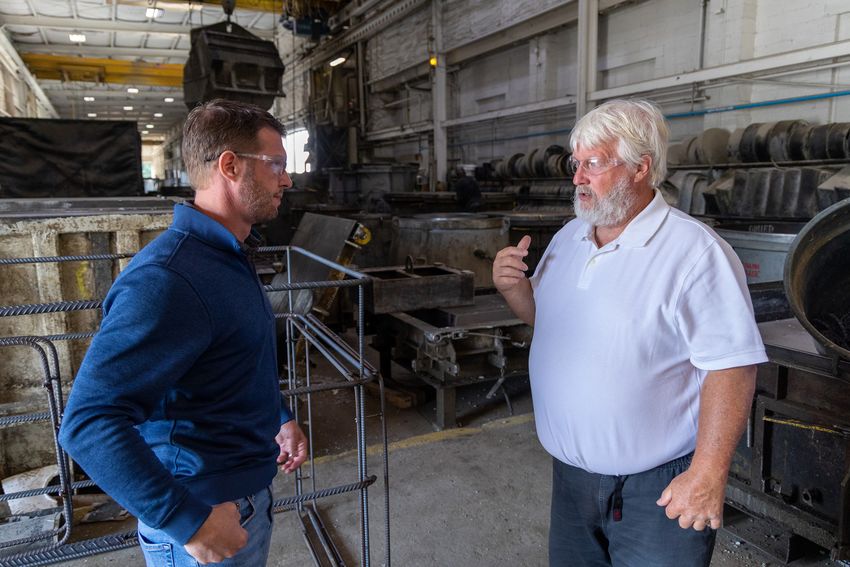
HEALTH CARE ACADEMY
Connecticut is facing a shortage of health care workers, an issue exacerbated by the
COVID-19 pandemic. As our state sees increasing demand in health care, we are also
facing significant shortages in many areas. Health care workers are facing burn out
and shortages across the nation are straining the entire workforce system. We must
work to support health care workforce growth to meet the needs of Connecticut
residents.

This proposal would require the State Department of Education, Department of
Public Health, and Department of Labor to work with the Connecticut Hospital
Association to develop curriculum for a high school "Health Care Academy" Program
to include training and certification for high school graduates to work in high
demand health care occupations. The program would be open to any high school to
participate in to train current students to fill in demand jobs. Students would
complete necessary in person training at local hospitals and obtain certification upon
completion of the program, graduation, and local hospital residencies.

This program will give high school students the training and certification to obtain
good-paying health care jobs upon graduation. It will also help ease the health care
worker shortage by increasing the number of individuals trained and certified for in
demand health care jobs.

                                                                              PAGE 6
RETURN OF JOB FAIRS
Job fairs can open students' eyes to career possibilities and help them find jobs that
meet their skill sets. Connecting students to jobs early on is important to enable
students to obtain employment, learn about the job search and interview process,
and empower them to build a better and brighter future. This proposal would require
the State Department of Education to develop guidelines for hosting successful job
fairs at high schools. The Department shall also survey each high school annually as to
the number of job fairs held and the results of each job fair.

VOCATIONAL PROGRAMS
RECRUITMENT
Vo-tech programs offer incredible opportunities for Connecticut students. More can
be done to enhance recruitment at the middle school level to attend vo-tech
programs. We must ensure Connecticut's vocational-technical high schools are within
reach for youth and are being discussed with students at an early age. This proposal
will reestablish a vo-tech ambassador program to share information with students in
middle schools to make more younger school children aware of future opportunities.

                                                                               PAGE 7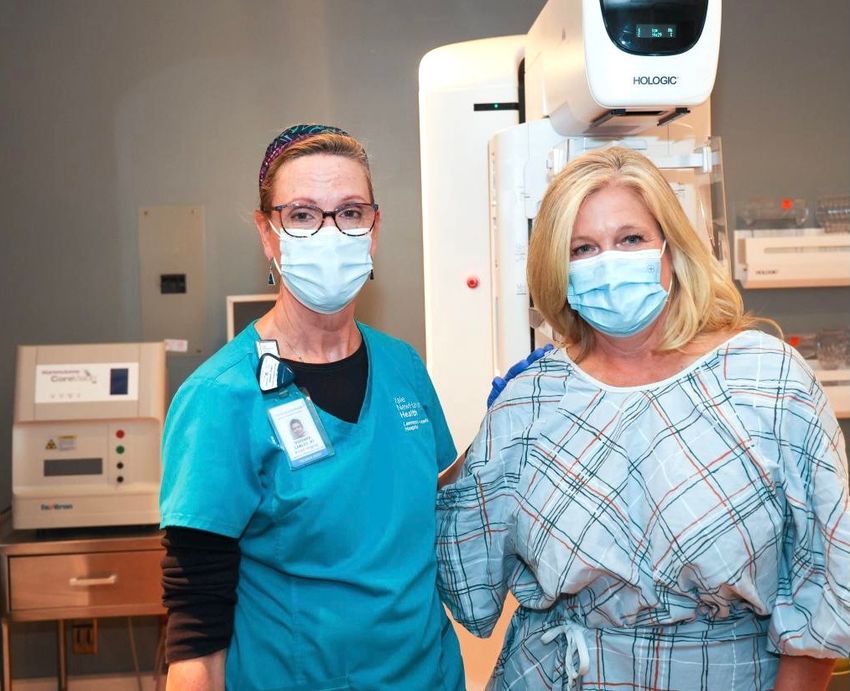
TASKFORCE ON
                                          OCCUPATIONAL
                                          LICENSES
                                          Connecticut must ensure that our licensure
                                          system does not become a barrier to
                                          employment, starting a business, and job
                                          creation. This proposal would amend the
                                          general statutes to create a task force to
                                          study occupational licenses in Connecticut,
                                          with a focus on revising and removing
                                          barriers to employment and
                                          entrepreneurial activity.

PROVIDE CAREER OPPORTUNITIES
FOR VETERANS
Many veterans struggle to find work after returning home from service. Connecticut
must continue to focus on workforce opportunities including for veterans who often
enter the workforce with unique skills from their time in service. This proposal
recommends enhancing the state’s efforts to ensure military training and experience
are eligible for application towards licensure requirements (evidence of applicant's
competency in a given field) in trades and professional occupations. This includes
enhancing communication and information sharing with veterans to assist them in
availing themselves of equivalencies.

                                                                             PAGE 8
BUY CT TO BUILD CT
Connecticut’s defense industry is a vibrant job creator and economic engine. CT has
the skilled workforce and the industry leaders who can produce the best goods and
services to keep our nation safe. Connecticut must do more to harness this success to
spread growth throughout our state. Specifically, we must encourage the defense
industry to work with in-state suppliers whenever possible and grow Connecticut
jobs.

The "Buy CT to Build CT” program will incentivize defense contractors to create and
support jobs. It will establish a program to provide incentives to defense contractors
and subcontractors that are headquartered in the state and make long-term
commitments to maintain and grow jobs in the state. It will also provide sales tax
exemptions and tax credits to defense contractors that work with in-state supply line
manufacturers, instead of buying parts and products from out-of-state companies. By
steering defense contractors toward in-state suppliers, we can help foster
relationships that will grow jobs, strengthen our communities and bring more
opportunities to our state.

GROW JOBS IN CT'S FLAGSHIP
INDUSTRY
Connecticut is known as the insurance capital of the world. The industry employs an
estimated 48,500 people in Connecticut. We must always strive to advance and
support good paying jobs in Connecticut, including jobs created by our flagship
industry. This proposal would require the Insurance Commissioner to promote
development of, and employment opportunities within, the insurance industry in
Connecticut. It encourages the department to examine newer areas of potential
insurance growth such as: insurtech, captive insurance, cybersecurity and data
protection.

                                                                            PAGE 9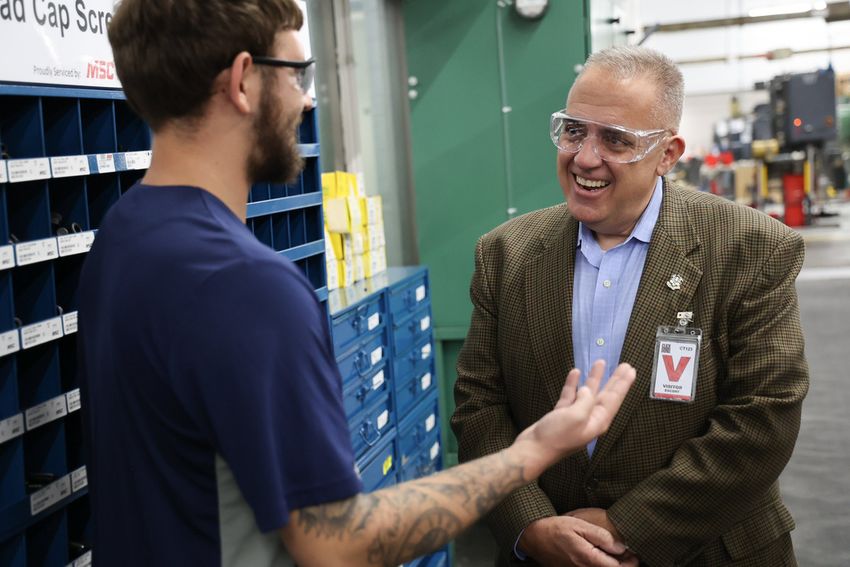
You can also read


