A Conversation with the FTC and - NMHC COVID-19 Scams June 10, 2020
←
→
Page content transcription
If your browser does not render page correctly, please read the page content below
A Conversation with the FTC and
NMHC
COVID-19 Scams

June 10, 2020
Speakers

              Lisa Lake                   Julianne Goodfellow
     Consumer Education Specialist   Senior Director, Government Affairs
       Federal Trade Commission                    NMHC
Webinar Information Today’s webinar was recorded on June 10 and is made available on- demand on the NMHC website. For further information on the topics covered within this webinar, please visit https://www.nmhc.org/covid19.

NMHC Disclaimer

This webinar is provided for informational purposes only. This content is not investment

or legal advice. NMHC assumes no liability for the use of the information provided in this

webinar. The views expressed during this webinar are those of the individual presenters

and not NMHC as a whole. Please consult with your own counsel for legal advice.
NMHC Mission

NMHC is the place where the leaders of the apartment industry come together to
guide their future success. With the industry’s most prominent and creative leaders
at the helm, NMHC provides a forum for insight, advocacy and action that enable
both members and the communities they build to thrive.
Presentation Outline

 • Welcome and Overview
 • About the FTC
 • Coronavirus S cams
    • Small Bu siness
    • General
 • Imposter S cams
 • Government Imposters
 • Free Materials to Use and Share
Speaker Introduction

                              Lisa Lake
                       Consumer Education Specialist
                         Federal Trade Commission
                               llake@ftc.gov
                               202.326.2345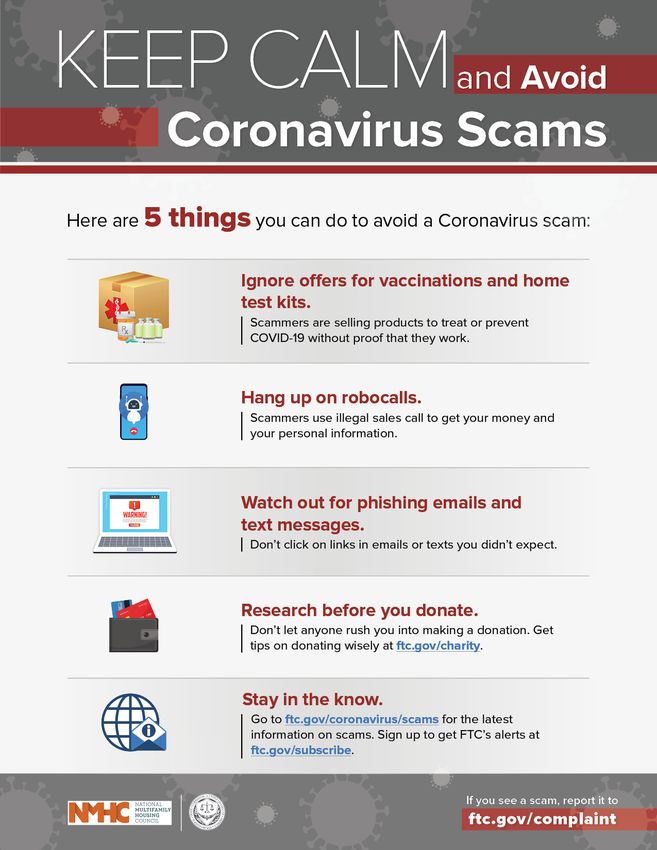
Presentation Outline

 • Welcome and Overview
 • About the FTC
 • Coronavirus S cams
    • Small Bu siness
    • General
 • Imposter S cams
 • Government Imposters
 • Free Materials to Use and Share
About the FTC
The Federal Trade Commission is the nation’s consumer protection agency.
The FTC works to prevent fraudulent, deceptive and unfair business
practices in the marketplace.
Education mission
Educate people about their rights
Educate businesses about their responsibilities
Partnerships are key
Our partners are a critical asset in reaching consumers.
Scammers Follow the Headlines
As headlines change, so will the scams
Scammers play on hopes, fears and needs
Scammers target small businesses, too
Help the FTC and law enforcement partners know what you’re
seeing
Report scams to ftc.gov/complaintPresentation Outline
• Welcome and Overview
• About the FTC
• Coronavirus S cams
• Small Bu siness
• General
• Imposter S cams
• Government Imposters
• Free Materials to Use and ShareFTC Law Enforcement
The FTC has sent warning letters to:
The makers of teas, essential oils, colloidal silver and many other
products
Said their products would help prevent the Coronavirus
BUT: No evidence to back up claims
VoIP providers who helped illegal telemarketers and robocallers push
products related to the Coronavirus
MLM business “opportunities” with Coronavirus cure claimsFTC Law Enforcement
The FTC has filed cases against:
A company calling itself “SBA Loan Program”
FTC says it had no affiliation with the Small Business
Administration
A company called “Whole Leaf”
Claimed its product could treat COVID-19 AND cancer
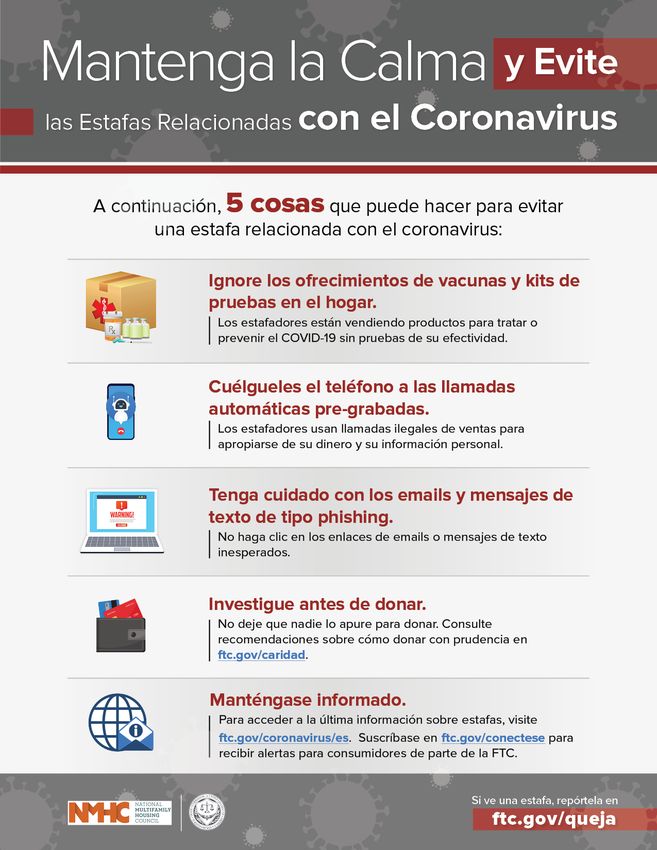
Had no proof to back either claimMisinformation & Rumors Ask yourself these 3 questions: 1. Who is this message from? 2. What do they want me to do? 3. What is the evidence behind this message?
Treatments & Cures Vaccine offers Test kit offers Miracle cures Medicare-related scams
Presentation Outline

 • Welcome and Overview
 • About the FTC
 • Coronavirus S cams
    • Small Bu siness
    • General
 • Imposter S cams
 • Government Imposters
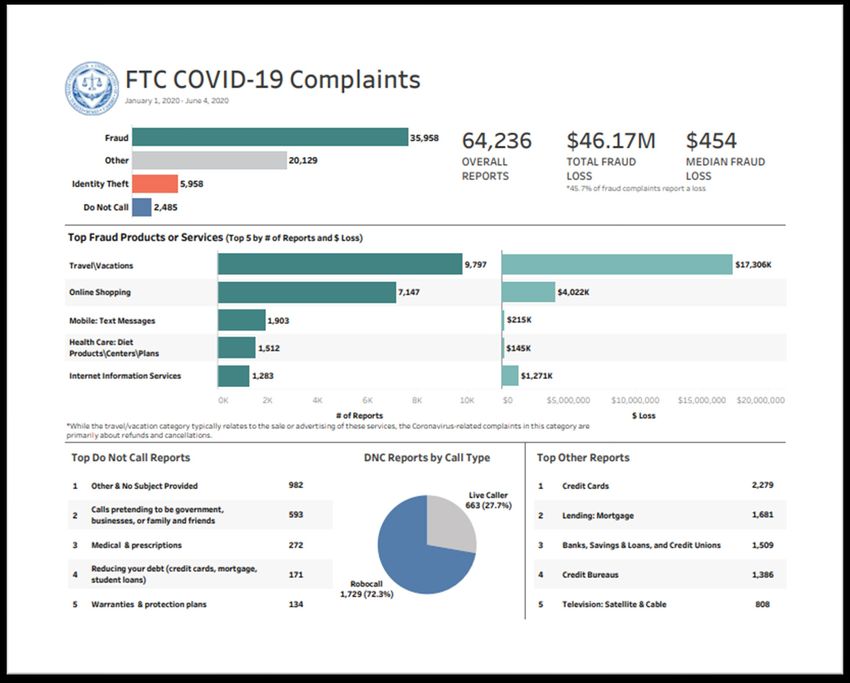
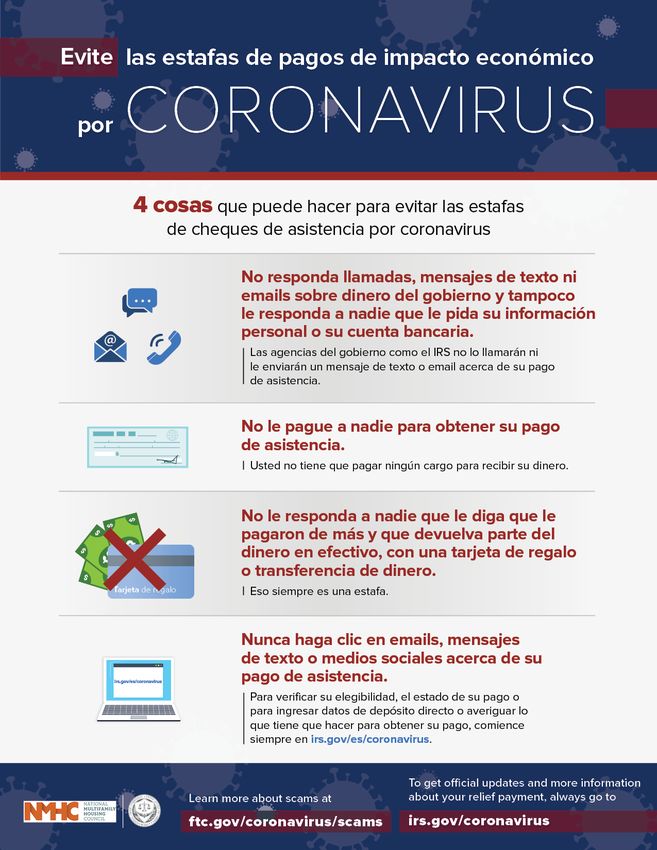
• Free Materials to Use and ShareEconomic Impact Payment Scams The government will not ask you to pay up front to get any money The government will not ask for your SSN, bank account, or credit card number The government will not call or text you to ask for money or information
Supply Scams & Fake Invoices

Avoid Fake Websites
Type in URLs you know to be genuine

Check out suppliers with trusted
industry colleagues

Ask employees to follow procedures
and verify
I.T. Scams
Your employee gets a message from someone claiming to be from your
IT department.
The fraudster may know a lot about the business.
Train your employees and remind them often to:
Never give out passwords. Stop and verify.
Don’t be quick to click on links. Stop and verify.Data Scams
Keep security software up to date
Secure your home network
Keep an eye on your laptop
Securely store sensitive files
Shred sensitive documents
Find more at www.csrc.nist.gov and www.ftc.gov/cybersecurityBusiness Email Scams
A scammer sets up an email that looks like it’s from your company.
Warn your employees
Make sure everyone knows who to call to confirm a suspicious directive
received by email
Keep the network security up to date and remind employees working
remotely to do the sameEmail/Text Scams & Malicious Websites Phishing Emails & Texts Get your money Get your information Links to malware sites Malicious Websites Lots of domains including “Coronavirus” Stick with known, trusted sites
Illegal Robocalls

Don’t press any numbers

Hang up                       “Your business may be
                                  affected by the
Block the number                 Coronavirus . . . .”

Report to ftc.gov/complaint
Presentation Outline
• Welcome and Overview
• About the FTC
• Coronavirus S cams
• Small Bu siness
• General
• Imposter S cams
• Government Imposters
• Free Materials to Use and ShareGovernment Imposters
SBA Scams
Emails that look like they’re from SBA or your bank
Calls impersonating the government
Promise fast track
Application scams: Unsolicited calls or emails from people claiming to have
an inside track to expedite financial reliefSBA Scams – DOs
Get information about SBA loans directly from the SBA’s website: sba.gov/coronavirus.
Once on that page, go to “Funding Options” and follow the instructions.
Find more information about the PPP and EIDL programs at the U.S. Treasury
Department’s website.SBA Scams – DON’Ts
Don’t pay in advance for information.
Don’t pay in advance for a government loan.
Don’t give your information to someone who calls, emails, or texts you out
of the blue.
Don’t apply for a loan without verifying the lender.
Don’t click on links or reply to emails or text messages from someone you
don’t know.Government Imposters
Medicaid/Medicare
Ask for your number to bill for things you may not need…or ever get
Social Security
Say your SSN or benefits are suspended and ask to “verify” your SSN
IRS
Say you owe taxes; ask for your banking information; steal your tax return infoSpot and Avoid Government Imposters Government agencies send letters. They do not: Begin contact with calls or emails Call you about your benefits unless you call them first Ask you to verify your Social Security number or bank information Ask you to wire them money or give you a credit card number
Spot and Avoid Government Imposters
If someone calls or emails you asking for your information, HANG UP
If you need medical equipment or supplies, ask your doctor
Do not give your Social Security number to anyone over the phone unless you called
them first and have verified who they are
Do not reply to any emails claiming to be from the government
If you owe taxes, send payments directly to the IRS. Go to IRS.gov to get the correct
addressUnemployment Benefits Fraud
Imposters are filing claims for unemployment benefits
They use the names and personal information of people who have not filed claims
Report the fraud to your employer. Report the fraud to your state unemployment
benefits agency. You can find state agencies at usa.gov/local-governments
If possible, report the fraud online. Keep a record of the report.
Visit IdentityTheft.gov to report the fraud to the FTC and get help with the next
important recovery steps.Other Types of Imposters
Family/Friend Imposters
Say they’re in trouble and need you to send money
Tech Support Imposters
Ask for your login information to “fix” a “problem”
“You’ve won!” Imposters
Say you won money or some other “prize” but you have to wire money or get a
prepaid card to pay “fees”Presentation Outline
• Welcome and Overview
• About the FTC
• Coronavirus S cams
• Small Bu siness
• General
• Imposter S cams
• Government Imposters
• Free Materials to Use and ShareHelp Us Spread the Word
Stay Informed
Get the FTC’s Business Alerts: ftc.gov/subscribe
Report scams or questionable claims: ftc.gov/complaint
Know the latest on the Coronavirus:
Health info: www.coronavirus.gov
COVID-19 Scams: ftc.gov/coronavirus/scams and
ftc.gov/coronavirus/business
Federal gov’t response: usa.gov/coronavirusUse and Share this Free Information
BulkOrder.ftc.gov: Order free publications.
FTC.gov/SmallBusiness: Articles and other information to help keep your
business compliant and protected
FTC.gov/consumer: Printable articles, videos and other online consumer
resources
Consumer.gov: Plain language consumer information
IdentityTheft.gov: Report identity theft and start a recovery planGovernment Help for Businesses Sources for accurate information: SBA.gov/coronavirus FTC.gov/smallbusiness FTC.gov/business
Questions?

 Contact:
 Lisa Lake                       Julianne Goodfellow
 Consumer Education Specialist   Senior Director, Government Affairs
 Federal Trade Commission        NMHC
 llake@ftc.gov                   jgoodfellow@nmhc.org
 202.326.2345                    202.974.2332
www.nmhc.org
You can also read


