A cross-border contemporary art collaboration Una collaboración transfronteriza desde el arte contemporáneo
←
→
Page content transcription
If your browser does not render page correctly, please read the page content below
DesiertoMountainTime.org


A cross-border contemporary art    Una collaboración transfronteriza
collaboration                      desde el arte contemporáneo
SEPTEMBER 2021 – MAY 2022          SEPTIEMBRE 2021 – MAYO 2022
DesiertoMountainTime.org
Bienvenides a / Welcome to Desierto Mountain Time!
13 organizations • 5 states • 2 countries 3 organizaciones • 5 estados • 2 países
Organized by 516 ARTS in Albuquerque, New Mexico,
Desierto Mountain Time is a constellation of contemporary
Organizado por 516 ARTS desde Albuquerque, Nuevo
México, Desierto Mountain Time es una constelación de
arts organizations in the Southwestern United States and organizaciones dedicadas al arte contemporáneo en el
suroeste de los Estados Unidos y el norte de México que se
Northern Mexico drawn together by our shared interest
in making meaningful connections between local and unen a partir de un interés compartido en las conecciones
international communities. Spanning the Chihuahuan, que pueden surgir entre las comunidades locales e
internacionales. Desierto Mountain Time se extiende a lo 8 516 ARTS
Sonoran, and High Deserts, Desierto Mountain Time shines
a light on the hub of vital, interconnected arts activity largo de cada uno de nuestros desiertos para iluminar un Albuquerque, New Mexico
happening in our shared region, and engages art as a complejo ecosistema de actividad cultural que nos une y
means of political, social, economic, and environmental propone al arte como vehículo para sostener diálogos con 10 Anderson Museum of Contemporary Art +
dialogue. implicaciones sociopolíticas, económicas y ambientalistas Roswell Artist-in-Residence & Roswell Museum
and Art Center
Our network was formed at the beginning of the pandemic Nuestra red se formó al principio de la pandemia como una Roswell, New Mexico
as a way to connect and think regionally about our shared forma de conectar y pensar a nivel regional sobre nuestros
values and concerns. This publication highlights some of valores y preocupaciones compartidas. Este folleto reúne 12 Colorado Springs Fine Arts Center
the artists and projects we are individually presenting algunos de los proyectos y artistas que presentaremos at Colorado College
Fall 2021 through Spring 2022, and serves as a launch for de forma independiente desde otoño del 2021 hasta la Colorado Springs, Colorado
our ongoing collaborative work. Follow us online for the primavera del 2022 y supone el lanzamiento de nuestra red
evolving schedule of thematic conversations with artists, colaborativa. Sigue nuestras redes para mantenerte al tanto 14 Cultufest
educators, curators, activists, and arts administrators. de nuestra programación que seguirá ampliándose a través
Valle de Juárez, Chihuahua
de conversaciones con artistas, educadores, curadores,
activistas y gestores culturales.educators, curators, activists,
16 The Fund for Ethical Practices of Transborder Art
and arts administrators.
Ciudad Juárez, Chihuahua / El Paso, Texas
PROJECT COORDINATION: 516 ARTS LOGO DESIGN: Viola Arduini 18 Harwood Museum of Art
(Suzanne Sbarge, Claude Smith, Viola Arduini, Danielle Griego,
TRANSLATION: SANAGUS Traducciones (Alejo De la Rosa-Carrillo,
Taos, New Mexico
Joni Thompson, Daniel Ulibarri, Ben Maseman)
León De la Rosa-Carrillo & Bianca Castillero-Vela)
PUBLICATION DESIGN: Suzanne Sbarge 20 MOCA Tucson
FUNDING: Desierto Mountain Time is currently a grass-roots,
WEBSITE DESIGN: Viola Arduini & León De la Rosa-Carrillo volunteer group effort, funded primarily by a mix of cash and in-kind
Tucson, Arizona
contributions from the participating partners.
22 Museo de Arte Ciudad Juárez
PARTNERS:
Ciudad Juárez, Chihuahua
Logo usage on dark background, cube color
can change but type (Rubin’s name) will always
remain white.
24 NMSU Art Museum
Las Cruces, New Mexico
26 RedLine Contemporary Art Center
90% Black
Denver, Colorado
516 ARTS is made possible by the following funders: SPECIAL THANKS: The color of the cube will change
according to the color of whatever
event will be hosting.
When using the logo in color CMYK,
the type(Rubin’s name) will always
28 Rubin Center for the Visual Arts
be used in 90% black unless
it is in its reversed form. The University of Texas at El Paso
El Paso, Texas
FRONT COVER ART: Daniel Ulibarri
30 Santa Fe Art Institute
rafa esparza performing Eamon Ore-Giron’s Talking Shit with Quetzalcoatl/I Like Mexico and Mexico Likes Me, 2017, atop esparza’s Raised Adobe Ground for Talking Shit
with Quetzalcoatl, 2017. Background: Sculptures by Timo Fahler. Photo by Alex Marks. (detail). Featured at MOCA Tucson. Santa Fe, New Mexico
3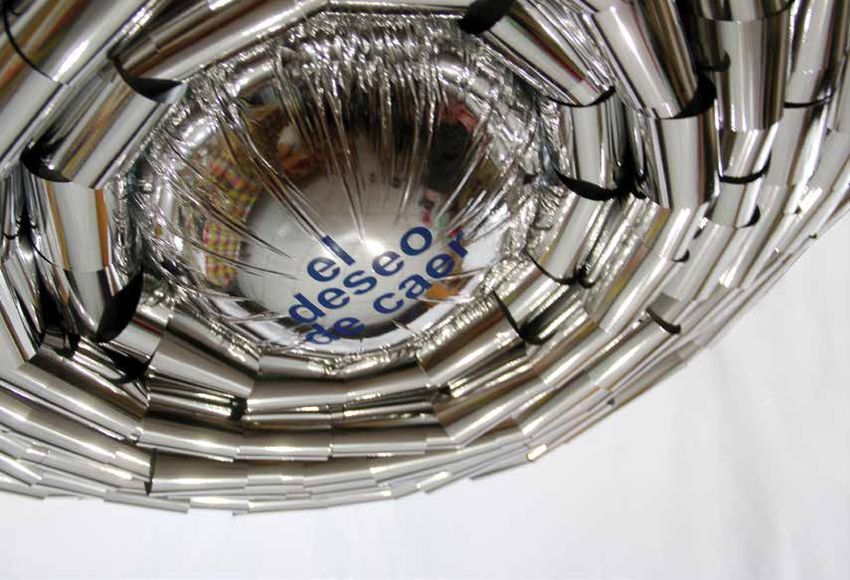
DESIERTO MOUNTAIN TIME
A Region That Became a Constellation
As far as the art world is concerned, there was something       be tamed with patience. Thought exercises that allowed us          to work through it and imagined ourselves a constellation
almost necessarily antithetical about the way we began;         to imagine a way through: hybrid programming, moving               of cultural agents, as a whole apparent only to the trained
some artists, curators, educators and art administrators        out into the open, mining digital spaces, reassessing our          eye but each converging point nonetheless meaningful
coming together on a conference video call mostly to check      immediate surroundings, reflecting through our most                in its own right. We each recognized and shared our
in on each other and to possibly explore a different type of    intimate places; quite simply the idea was, according to           own gravitational pull not in an effort to be aggregates
geography, unrestricted by boundaries and mapped only           Idris Goodwin, Director of the Colorado Springs Fine Arts          and simply echo each other, but rather to amplify and
through shared commitments. We were not announcing              Center, to “do something we’ve never done before.”                 redistribute whatever privileges we wield, without negating
our next opening, none of us would be commissioned to                                                                              the distance and borders between us, the inequalities and
perform at anyone’s panel, nobody would be writing a            Nothing forces you to stop imagining as trying to imagine          asymmetries that inform us, the limitations of serving the
curatorial statement in the immediate future. It was early      something you’ve never done before. Especially if The              small towns that shape us with limited budgets far removed
June, 2020, the summer of COVID of course and, according        Thing inevitably runs head first into an amalgam of                from the traditional enclaves of cultural power. Nothing
to Kerry Doyle, director of The Rubin Center for the Visual     anxieties regarding the validity, relevancy and authenticity       forces you to reconsider cultural hegemony as recognizing
Arts, “a great time to have an expansive conversation           of making art in a time of social upheaval triggered by            it both within and beyond reach, yet refusing to replicate
about regional partnerships.” The conversation in question      racial and gender injustices, economic inequities embodied         its homogenization inertia choosing instead to celebrate
was instigated by Suzanne Sbarge, Executive Director of         in the masses of laid off workers forced to perform high-          its limitations as you watch it dwindle across highways that
516 ARTS, who got the proverbial ball rolling with an email     risk activities like delivering groceries to the privileged few    become borders and turn cities into rural towns steeped          “We each recognized and shared
under the subject line “Regional Idea for Summer 2021,”         that got to stay home and work remotely, attend school             in local pride but thoroughly rendered invisible by global
                                                                remotely, dine in remotely. Nothing forces you to reconsider                                                                        our own gravitational pull, not
in which she referenced “the north/south corridor from                                                                             markets, mass media and all power structures that art is
                                                                the privilege of occupying public spaces like being able to
Denver to Chihuahua” as the region to consider. Quite a                                                                            supposed to challenge.                                           in an effort to be aggregates
region.                                                         order in and enjoy a sanitized Outside from the comfort
                                                                of your gaming sofa, far removed from the danger and               This is our challenge, to reconsider our own roles as cultural   and not simply echo each other,
Nothing forces you to reconsider your own region as             the conflict. Nothing forces you to reconsider conflict like       agents of our own accord and not because we are forced
suddenly being told that all travel is dangerous, that          realizing that the history of cultural institutions is ripe with   to do so. To reimagine our practices in hopes that art and       but rather to amplify and
state lines and international borders can only be crossed       replicas of injustice and exploitation, so perhaps it is time      cultural expressions never be deemed non-essential again.
when absolutely necessary and the streets of your city are      for them to become “a safe place to allow conflict” like           To recognize our privileges in the precariousness of our
                                                                                                                                                                                                    redistribute whatever privileges
reserved for the essentials. Nothing forces you to reconsider   Juniper Leherissey, Executive Director at Harwood Museum           neighbors to the south, “shit rolls down hill” don’t forget,     we wield, without negating
your chosen trench as realizing it is neither necessary nor     of Art, reminded us all.                                           and enact the necessary means to redistribute them both
essential and just how much it relies on travel. Quite soon                                                                        east, west and north. To amplify our individual gravitational    the distance and borders
the conversation became less about collaborations and           So instead of avoiding the inherent conflict of producing          pulls as we take advantage of our neighbor’s momentum
more about simply sharing coping mechanisms when facing         art, curating exhibitions and managing cultural institutions       to swing farther out, to float higher up, to reach further
                                                                                                                                                                                                    between us, the inequalities and
                                                                during a historical moment of global strife, we resolved
an unprecedented moment of uncertainty that could only                                                                             down. To honor our local realities even as we tease out every    asymmetries that inform us, and
                                                                                                                                   possibility hiding out in our shared regional landscape. To
                                                                                                                                   shape this region into a constellation.                          the limitations of serving the
                                                                                                                                   —León De la Rosa-Carrillo; San Agustín, JZ. Chihuahua            small towns that shape us, with
                                                                                                                                   in an ongoing conversation with:                                 limited budgets and existing far
                                                                                                                                   Viola Arduini, Jamie Blosser, Caroline Brooks,
                                                                                                                                   Christian Diego-Diego, Kerry Doyle, Toni Gentilli,
                                                                                                                                                                                                    removed from the traditional
                                                                                                                                   Kate Green, Idris Goodwin, Katelyn Krakauskas,                   enclaves of cultural power.”
                                                                                                                                   Juniper Leherissey, Louise Martorano, Larry Bob Phillips,
                                                                                                                                   Katja Rivera, Marisa Sage, Suzanne Sbarge, Claude Smith,
                                                                                                                                   & Alexis Wilkinson, among others

                                                                                                                                   LEFT: Photo by León De la Rosa Carrillo
4                                                                                                                                                                                                                                      5
durante un momento histórico de disensión mundial, decidimos trabajar “Nos reconocimos y
a partir del mismo y nos imaginamos como una constelación de agentes
culturales, evidente en su totalidad solamente para los iniciados, pero compartimos nuestras
cada punto convergente significativo y con brillo propio. Nos reconocimos
y compartimos nuestras fuerzas gravitacionales no para convertirnos fuerzas gravitacionales no
en un monolito, más bien para amplificar y redistribuir cualesquiera
privilegio a nuestra disposición sin negar la distancia y fronteras que nos
para convertirnos en un
separan, las iniquidades y asimetrías que nos informan, ni las limitantes monolito, más bien para
que nos moldean al trabajar con presupuestos limitados y en ciudades
pequeñas, distantes de los tradicionales enclaves culturales. Nada te amplificar y redistribuir
obliga a reflexionar la hegemonía cultural como cuando la descubres
contradictoria; al mismo tiempo en tus manos y demasiado distante para cualesquiera privilegio a
nuestra disposición sin negar
DESIERTO MOUNTAIN TIME
la distancia y fronteras que
nos separan, las inequidades
y asimetrías que nos
informan, ni las limitantes
Una región que se convirtió en constelación alcanzar, así que en vez de replicar su inercia homogeneizadora decidimos que nos moldean al trabajar
mejor celebrar sus limitaciones y su ocaso al recorrer carreteras que se
Con lo que respecta al mundo del arte, comenzamos de ejercicios mentales que nos permitían imaginar una salida: convierten en fronteras, a través de ciudades que dan paso a pueblos con presupuestos limitados
manera casi contradictoria por necesidad: algunos artistas, programación hibrida, ocupar el exterior, explotar espacios rurales empapados de orgullo, pero sistemáticamente invisibilizados
por los medios masivos de un mercado globalizado y todas las demás y en ciudades pequeñas,
curadoras, educadores y gestoras culturales nos conectamos en digitales, valorar nuestros entornos inmediatos, reflexionar a
infraestructuras de opresión que el arte se supone debe desafiar.
una video llamada principalmente para saber cómo estábamos través de nuestros lugares más íntimos. Básicamente la idea distantes de los tradicionales
y para posiblemente explorar una geografía propia, una era “hacer algo que nunca habíamos hecho antes,” como dijo
Así que nuestro desafío se ha convertido en reflexionar nuestros
geografía que no respondiera a las fronteras trazadas en Idris Goodwin, Director del Colorado Springs Fine Arts Center.
roles como agentes culturales por decisión propia y no porque las
enclaves culturales.”
un mapa y respondiera solamente a nuestros compromisos
Nada te obliga a dejar de imaginar cosas como cuando intentas circunstancias nos obliguen a hacerlo. Debemos re imaginar nuestras
compartidos. Ninguno de nosotros estábamos promoviendo
imaginar algo que nunca has hecho antes. Sobre todo cuando prácticas para que el arte y las expresiones culturales nunca vuelvan a ser
alguna inauguración, nadie sería comisionado para participar
ese ALGO choca inevitablemente contra una amalgama de identificadas como innecesarias. Reconocemos que nuestros privilegios
en ningún panel y ningún texto curatorial sería escrito en el
ansiedades sobre la posibilidad de producir arte durante un son extensiones de la precariedad de nuestros vecinos al sur, recuerda
futuro inmediato. Esto sucedió a inicios de junio del 2020,
momento de disturbios sociales que responden a injusticias que el sur global recibe toda la mierda del norte, y nos comprometemos
el verano de COVID era “el momento ideal para conversar
raciales y de género así como inequidades económicas a redistribuir ambos, privilegios y precariedades, a lo largo de los
extensivamente sobre colaboraciones regionales”
8 o por lo
encarnadas en las masas de desempleados que se han visto cuatro puntos cardinales. Buscaremos la manera de amplificar nuestras
menos eso dijo Kerry Doyle, la directora del Rubin Center Fort
obligados a realizar actividades de alto riesgo como llevarle fuerzas gravitacionales a la vez que aprovecharemos el impulso de
he Visual Arts. La conversación que menciona fue instigada por
el mandado a los privilegiados que pueden trabajar desde nuestros vecinos para columpiarnos más lejos, para alcanzar mayores
Suzanne Sbarge, Directora Ejecutiva de 516 ARTS, quién lanzó
casa, asistir a la escuela desde casa, cenar en restaurante alturas, para que nuestro alcance sea más profundo. Asumimos la
la primera piedra con un correo titulado “Idea regional para el
desde casa. Nada te obliga a reflexionar el privilegio de responsabilidad de honrar nuestras realidades locales, incluso mientras
verano del 2021”; en él, Suzanne hacía referencia al “corredor
ocupar espacios públicos como tener la posibilidad de pedir escudriñamos nuestro paisaje regional en busca de cualquier número de
norte-sur desde Denver hasta Chihuahua” como la región a
una versión desinfectada del Allá Afuera para disfrutarla posibilidades. Queremos moldear esta región hasta que se convierta en
considerar. Vaya región.
desde la comodidad de tu sofá de diseñador, protegido de una constelación.
Nada te obliga a reflexionar tu propia región, como cuando de cualquier peligro y conflicto. Nada te obliga a reflexionar
repente escuchas que viajar es peligroso, que solo puedes cruzar la noción de conflicto como darte cuenta que la historia de —León De la Rosa-Carrillo; San Agustín, JZ. Chihuahua
fronteras internacionales y estatales cuando sea absolutamente instituciones culturales está repleta de réplicas e instancias de
en una conversación continua con:
necesario y que las calles de tu ciudad únicamente pueden injusticia y explotación. Tal vez por ello, ya es hora de que estas
ser transitadas para lo esencial. Nada te obliga a reflexionar instituciones se conviertan en “lugares aptos para permitir que Viola Arduini, Jamie Blosser, Caroline Brooks,
tu trinchera como darte cuenta que no es necesaria, mucho surjan conflictos” como lo sugirió Juniper Leherissey, Directora Christian Diego-Diego, Kerry Doyle, Toni Gentilli, Kate Green,
menos esencial y lo mucho que depende de gente viajando. Ejecutiva del Harwood Museum of Art. Idris Goodwin, Katelyn Krakauskas, Juniper Leherissey,
Así, la conversación dejó de ser sobre colaboraciones y viró Louise Martorano, Larry Bob Phillips, Katja Rivera, Marisa Sage,
hacia estrategias para enfrentar una ola de incertidumbre sin Así, que en vez de evitar el conflicto inherente al producir Suzanne Sbarge, Claude Smith, & Alexis Wilkinson, among others
precedentes que solo podía ser domada con paciencia. Fueron arte, curar exhibiciones y administrar instituciones culturales
6 7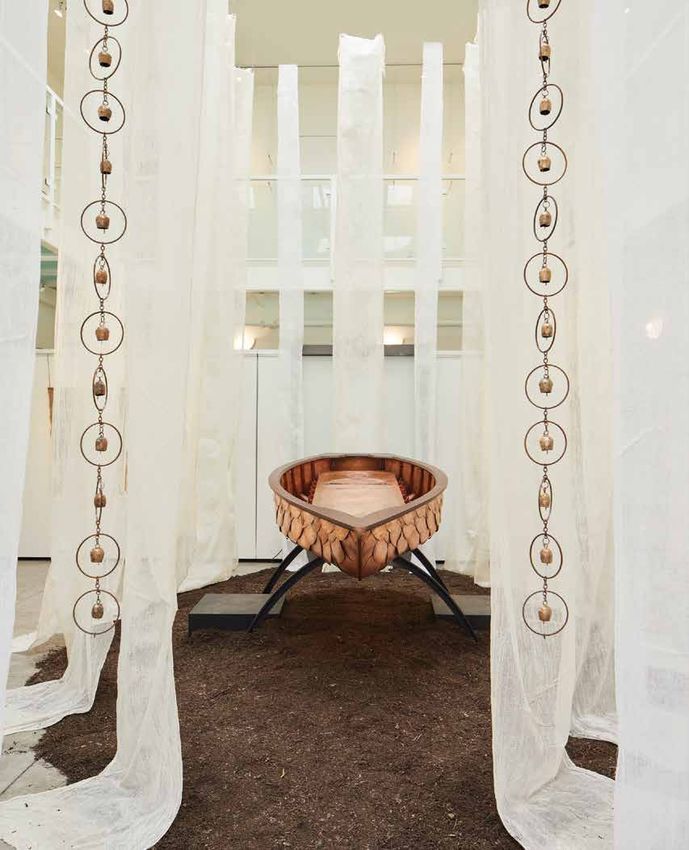
516 ARTS                                                                                                          Albuquerque, New Mexico
                                                                                                                                                         516arts.org

October 16, 2021 – January 22, 2022                                                   16 de octubre, 2021-22 de enero, 2022
Counter Mapping                                                                       Contra la Cartografía
Counter Mapping is a group exhibition featuring local,                                Contra la Cartografía es una exposición colectiva en la que
national, and international artists who subvert the                                   participan artistas locales, nacionales e internacionales
dominant power structure of traditional mapping. The                                  que subvierten la estructura de poder dominante en la
common idea of maps as objective and universal tools for                              cartografía tradicional. La idea tradicional de que los mapas
geographical knowledge is scrutinized and challenged by                               son herramientas objetivas y universales de conocimiento
artists who employ a variety of diverse perspectives and                              geográfico es cuestionada y desafiada por artistas que
contemporary practices. Counter Mapping investigates                                  emplean una variedad de perspectivas diversas y prácticas
how different ways of tracking and mapping affect                                     contemporáneas. Contra la Cartografía investiga cómo las
the meanings and perceptions of places. Co-curated by                                 diferentes prácticas cartográficas y de rastreo afectan los
Viola Arduini of 516 ARTS and Jim Enote (Zuni). Artists                               significados y percepciones de los lugares. Co-curada por
include: Val Britton (Portland, Oregon), Felipe Casteblanco                           Viola Arduini de 516 ARTS y Jim Enote (Zuni). Algunos de los
(Colombia/Switzerland), Cog•nate Collective (San Diego/                               artistas incluidos son: Val Britton (Portland, Oregón), Felipe
Tijuana), Friends of the Orphan Signs (Albuquerque, NM),                              Casteblanco (Colombia/Suiza), Cog•nate Collective (San
Cortney Metzger (Osage/Albuquerque, NM), Mallery                                      Diego/Tijuana), Friends of the Orphan Signs (Albuquerque,
Quetawki (Zuni), Jamie Robertson (Texas), Ana Serrano                                 NM), Cortney Metzger (Osage/Albuquerque, NM), Mallery
(Portland, OR), UglyJerry, Steven Yazzie (Navajo/CO),                                 Quetawki (Zuni), Jamie Robertson (Texas), Ana Serrano
Minnosh Zomorodinia (Iran/California).                                                (Portland, OR), UglyJerry, Steven Yazzie (Navajo/CO),                            “Maps have done a lot to confuse things for people. And I think more lands have been
                                                                                      Minnosh Zomorodinia (Irán/California).
February 12 – May 14, 2022                                                                                                                                             lost to native people probably through mapping than through physical conflicts.”
                                                                                      12 de febrero-14 de mayo, 2022
Many Worlds Are Born                                                                                                                                                   —Jim Enote (Zuni Pueblo), Co-Curator, Counter Mapping
"Millions of worlds are born, evolve, and pass away into                              Múltiples mundos nacen
nebulous, unmeasured skies; and there is still eternity. Time                         “Millones de mundos nacen, evolucionan y se desvanecen
always." This exhibition takes a cue from the late Chicano                            hasta convertirse en cielos nebulosos e infinitos; y todavía                     “Los mapas han confundido a mucha gente sobre muchas cosas. Y creo que los pueblos
writer, Rudolfo Anaya, who is best known for his fictional,                           existe la eternidad. Siempre el tiempo”. Esta exposición se
but still true, portrait of New Mexico, Bless Me, Última. Co-                         inspira en el difunto escritor chicano Rudolfo Anaya, más                        nativos han perdido más territorio a través de los mapas de lo que han perdido a través
curator Alicia Inez Guzmán says, “The light, the land, the                            conocido por su representación ficticia, pero real, de Nuevo                     de conflictos físicos.”
mysticism, and the people were all his subjects – kinfolk                             México, Bless me, Última. De acuerdo con la curadora Alicia
in a constellation that spanned generations. Along the                                Inez Guzmán: “La luz, la tierra, el misticismo y la gente
same lines, the sprawling content of this group exhibition                            eran sus temas, parientes todos en una constelación que
also spans multiple generations and understandings of                                 abarcaba varias generaciones. Siguiendo esta misma línea,
New Mexico's many histories, worlds born from beauty,                                 el extenso contenido de esta exposición colectiva también
violence, and a deep sense of place.” Co-curated with Ric                             abarca múltiples generaciones e interpretaciones de las
Kasini Kadour, this exhibition brings the pasts of various                            muchas historias de Nuevo México, mundos que nacen
cultures in our area into the current moment through a                                a partir de la belleza, la violencia y un profundo sentido
process of historical investigation and contemporary art                              de pertenencia”. Co-curada con Ric Kasini Kadour, esta
practices. Partners include Art Meets History initiative and                          exposición trae el pasado de varias culturas de nuestra zona
Albuquerque Museum Photo Archives.                                                    al momento actual a través de un proceso de investigación
                                                                                      histórica y prácticas artísticas contemporáneas. La iniciativa
                                                                                      Art Meets History y los Archivos Fotográficos del Museo de
                                                                                      Albuquerque son algunas de las instancias participantes.

TOP: Cog•nate Collective, Protest Balloon [American Citizen/Ciudadnx Americanx], 2018, screen-printed balloons, dimension variable, featured in Counter Mapping
BOTTOM: Ric Kasini Kadour, Untitled, 2021, collage using images from Albuquerque Museum Photo Archives, referencing Many Worlds Are Born

8                                                                                                                                                                                                                                                                9
Anderson Museum of Contemporary Art + Roswell, New Mexico
rair.org/about-amoca
Roswell Artist-in-Residence & Roswell Museum
and Art Center // Roswell, New Mexico
October 22 – December 4, 2021 22 de octubre – 4 de diciembre, 2021
Terri Rolland Terri Rolland
Terri Rolland’s work comes from direct contact with the La obra de Terri Rolland surge del contacto directo con
natural world. Spending stretches of time in open areas, like el mundo natural. Pasa temporadas en espacios abiertas,
the deserts of New Mexico or the grasslands of Wyoming to como los desiertos de Nuevo México o las praderas de
convey the vibrating stillness that being alone in a vast space Wyoming, para comunicar la vibrante quietud que revela
reveals. She creates paintings on paper outdoors which are la soledad en en un espacio inmenso. Pinta sobre papel
later used as ideas for larger paintings made in the studio. en el campo para luego generar ideas para cuadros más
Rolland is interested in the places where land and sky meet- grandes realizados en el estudio. A Rolland le interesan los
the color, temperature, movement, and edges found there. lugares en los que se unen la tierra y el cielo: el color, la
Visual meets perceptual: time of day, light, wind, moisture, temperatura, el movimiento y los bordes que se encuentran
allí. Lo visual se une a lo perceptivo: la hora del día, la luz, el
silence, smells and sounds, are as important as what is seen
viento, la humedad, el silencio, los olores y los sonidos, son
and considered known.
tan importantes como lo que se ve y se considera conocido.
January 14 – February 26, 2022
14 de enero – 26 de febrero, 2022
Marie Alarcon
Marie Alarcon
Marie Alarcon is an experimental video artist trained in
Marie Alarcón es una videoartista experimental con
documentary filmmaking. Her work addresses memory
formación en cine documental. Su trabajo aborda la
and transformation through dream spaces, where visual
memoria y la transformación a través de espacios oníricos,
and auditory landscapes are a collaboration between
donde los paisajes visuales y sonoros son el resultado
the interviewer, dancer/performer/interviewee, and the
de una colaboración entre el entrevistador, el bailarín/
environment. These conversations invite the natural intérprete/entrevistado y el entorno. Estas conversaciones
environment to “speak” rather than act as a backdrop. invitan al entorno natural a “hablar” en lugar de servir
Her work manifests in cinema as slow-motion memoirs, solo como escenario. La práctica de Alarcón se centra en
experimental documentaries, and spontaneous rituals. los paisajes personales, históricos y ambientales a través del
cine y su capacidad para referirse a la presencia continua
March 11 – April 23, 2022 de los desaparecidos u olvidados. Su trabajo se manifiesta
Eric J. Garcia a través del cine en forma de recuerdos a cámara lenta,
documentales experimentales y rituales espontáneos.
“...I hope to unlearn the very one-sided dogma of Western history and art, and to Born and raised in New Mexico, Eric J. Garcia creates
sculptural installations, murals, hand-printed posters, and
examine and learn from my creations about my own history and identity. My art 11 de marzo – 23 de abril, 2022
political cartoons. A descendant of the Indigenous lands
examines historical events to create a visual understanding of the past that unravels the north of the Rio Grande conquered and colonized by Eric J. Garcia
Spain and then by the U.S, Garcia sees himself as both the Nacido y criado en Nuevo México, Eric J. García crea
complexities of the present.” colonized and the colonizer. Like generations of colonized instalaciones escultóricas, murales, carteles impresos a
people have done before him, he enlisted in the military mano y caricaturas políticas. Descendiente de las tierras
—Eric J. Garcia, Artist
that occupies his land with the hope for opportunities indígenas al norte del río Bravo conquistadas y colonizadas
within the empire. Drawing on his experiences and cultural por España y luego por Estados Unidos, García es el
history, Garcia makes art to prevent historical amnesia and colonizado y el colonizador. Como han hecho generaciones
“...Quiero olvidarme del dogma mmono direccional de occidente y el arte, para examinar
cultural erasure. de colonizados antes que él, se alistó en el ejército que
mi historia y aprender sobre mi propia identidad a través de mis creaciones. Mis piezas ocupa su tierra con la esperanza de tener oportunidades
dentro del imperio. Basándose en sus experiencias y en su
interrogan eventos históricos para crear una reflexión visual sobre el pasado que sea historia cultural, García hace arte para evitar la amnesia
capaz de desenvolver las complejidades del presente.” histórica y el borrado cultural.
LEFT: Eric J. Garcia, The Bald Eagles Toupee, 2019, mural
10 11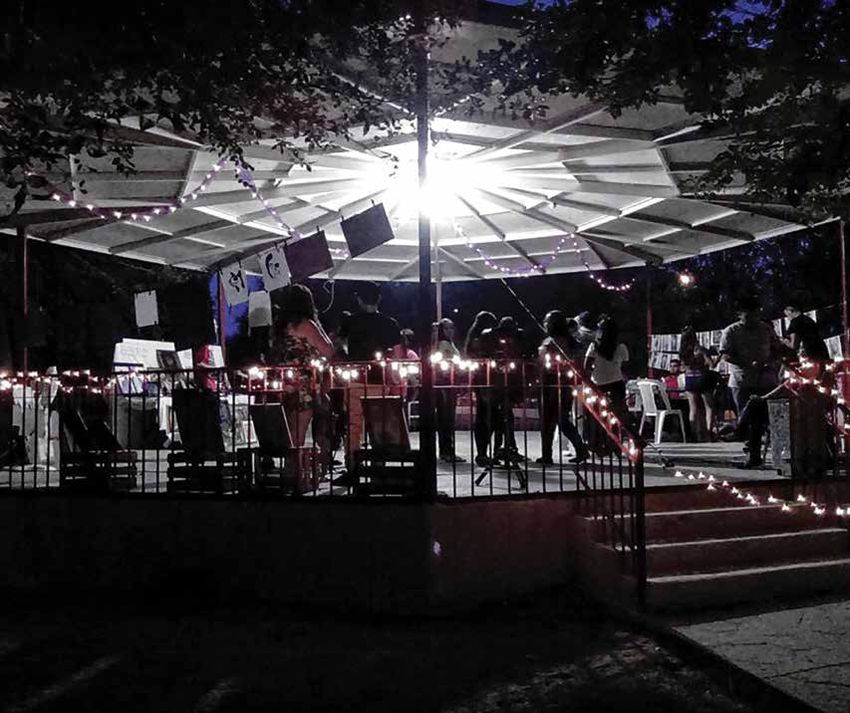
Colorado Springs Fine Arts Center Colorado Springs, Colorado
fac.coloradocollege.edu
at Colorado College
October 23, 2021 – January 2, 2021 23 de octubre, 2021 – 2 de enero, 2022
Ronny Quevedo: at the line Ronny Quevedo: en la línea
In Ronny Quevedo’s prints, drawings, and installations, the Para sus grabados, dibujos e instalaciones, Ronny Quevedo
artist takes inspiration from both ancient and contemporary se inspira en espacios públicos tanto antiguos como “Overarching the exhibition
public spaces. For the Colorado Springs Fine Arts Center contemporáneos. Para su exhibición en el Centro de is an understanding of
at Colorado College, Quevedo will present a newly Bellas Artes de Colorado Springs, Quevedo presentará una
commissioned architectural intervention using abstract intervención arquitectónica recientemente comisionada multiple origins. I reference
forms and diagrammatic renderings of various public sites en la que utilizará formas abstractas y diagramas que
personal geographies,
to address diasporic identity, migration, and transnational representan varios lugares públicos para abordar la
connections. identidad diaspórica, la migración y las conexiones various notions of
transnacionales.
January – April, 2022
identities, and multiple
Kukuli Velarde: CORPUS Enero – abril, 2022 diasporas to consider the
CORPUS, an installation by Kukeli Velarde, references the Kukuli Velarde: CORPUS development of individual
religious festivity known as Corpus, carried on since 1572 CORPUS, una instalación de Kukeli Velarde, hace referencia
identity.”
in Cusco, Perú. Velarde created 15 large scale ceramic a la festividad religiosa conocida como Corpus, que comenzó
sculptures that combine Indigenous and colonial Spanish a celebrarse en 1572 en Cuzco, Perú. Velarde ha creado —Ronnie Quevedo, Artist
baroque aesthetics to highlight the impact of colonization. 15 esculturas de cerámica a gran escala que combinan la
Through an artistic investigation of syncretism, she presents estética indígena y el barroco colonial español para poner
a contemporary aesthetic based on the procession of 15 de manifiesto el impacto de la colonización. Mediante una
catholic icons. The installation visually narrates the history investigación artística del sincretismo, presenta una estética
“Un tema recurrente en la
of Perú and interrogates the commodification of Indigenous contemporánea basada en la procesión de 15 iconos exhibición es la posibilidad
culture and the sacred. católicos. La instalación narra visualmente la historia de
Perú y cuestiona la mercantilización de la cultura indígena de orígenes múltiples.
y lo sagrado. Considero el desarrollo de
una identidad individual
a través de referencias
a la geografía personal,
nociones variadas de
identidad y diásporas
diversas. ”
LEFT: Kukuli Velarde, San José y el Niño, CORPUS series,
2018, courtesy of the artist
RIGHT Ronny Quevedo, no hay medio tiempo / there is
no halftime (after Glissant and Quevedo), 2017, custom
printed vinyl and vinyl tape, photo by Hai Zhang
12 13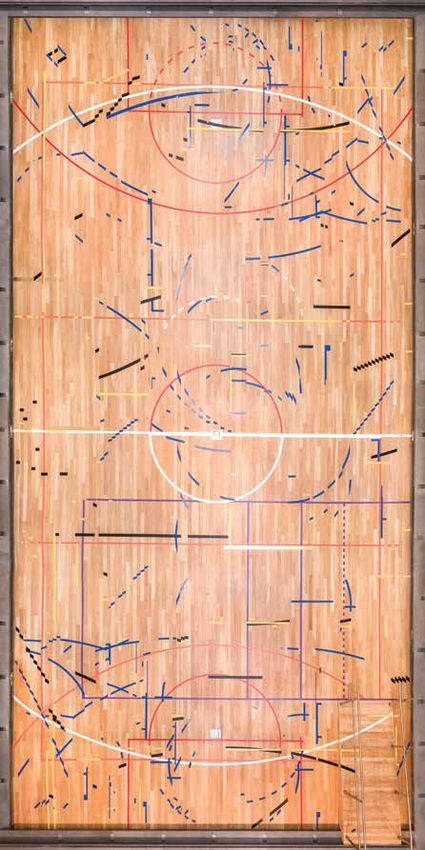
Cultufest                                                                                                      Valle de Juárez, Chihuahua
                                                                                                                                                                                                                           web.facebook.com/festival.vdj

                                                                                                  October 17, 2021                                                                            17 de octubre, 2021
                                                                                                  Fronteras: Placitas de Otero,                                                               Fronteras: Placitas de Otero,
                                                                                                  Gpe & Praxedis                                                                              Gpe & Praxedis
                                                                                                  Cultufest is a yearly celebration of cultural expressions in                                El Cultufest es una celebración anual de las expresiones
                                                                                                  el Valle de Juárez, a long stretch of small rural towns east                                culturales del Valle de Juárez, una larga franja de pequeños
                                                                                                  of Ciudad Juárez, Chihuahua that runs along the border                                      pueblos rurales al este de Ciudad Juárez, Chihuahua, que
                                                                                                  with Texas. A different town hosts Cultufest each year                                      se extiende a lo largo de la frontera con Texas. Cada año
                                                                                                  and this year’s chosen site will be Placitas de Otero, about                                un pueblo diferente acoge el Cultufest y este año el lugar
                                                                                                  a 90-minute drive from downtown Juárez; it straddles                                        elegido será Placitas de Otero, a unos 90 minutos en coche
                                                                                                  the border between two neighboring municipalities:                                          del centro de Juárez; ubicado entre dos municipios vecinos:
                                                                                                  Guadalupe and Praxedis G. Guerrero. Placitas’ peculiar                                      Guadalupe y Praxedis G. Guerrero. La peculiar ubicación
                                                                                                  location will be reflected on the festival’s theme: Fronteras                               de Placitas se reflejará en el tema del festival: Fronteras,
                                                                                                  [Borders] as attendees will not only enjoy the music, food                                  ya que los asistentes no sólo disfrutarán de la música, la
                                                                                                  and art from El Valle, but will also be asked to consider life                              comida y el arte de El Valle, sino que también se les pedirá
                                                                                                  on the border, a commitment to neighborly bonds and the                                     que consideren la vida en la frontera, el compromiso con los
                                                                                                  joys of blurring the divide. 2021 is also the tenth anniversary                             lazos comunitarios y lo divertido que puede ser difuminar
                                                                                                  of this popular verbena (60-minute drive from downtown                                      divisiones. 2021 es también el décimo aniversario de
                                                                                                  Juárez) to mark the occasion. A small exhibit is planned at                                 esta verbena popular, por lo que también se planea una
                                                                                                  Museo Regional del Valle de Juárez, in San Agustin.                                         pequeña exhibición en el Museo Regional del Valle de
                                                                                                                                                                                              Juárez, ubicado en San Agustin (a unos 60 minutos en coche
                                                                                                                                                                                              del Centro de Juárez) para celebrar la ocasión.

                                                                                                  LEFT: Kiosk at Juárez y Reforma, Valle de Juárez, CH during Cultufest 6 in 2017, photo courtesy of Cultufest
                                                                                                  BELOW: Digital Illustration by Jair Tapia for Cultufest 9 in 2019, courtesy of the artist

 “El cultufest fue creado con motivo de demostrar el talento que hay en el Valle de Juárez
 en pintura dibujo, escultura, danza, música, etc. Dentro de los principios del festival
 están la gratuidad, el apartidismo, sin religión en particular, y la pluralidad.”
 —Alejandro ‘Mono’ González, Co-Founder, Cultufest

 “Cultufest was created in order to display all the talent that can be found in El Valle
 de Juárez including painting, illustration, sculpture, traditional dances, and music,
 among others. The festival is always free, with no affiliation to political parties, religious
 organizations, and is committed to plurality.”
14                                                                                                                                                                                                                                                       15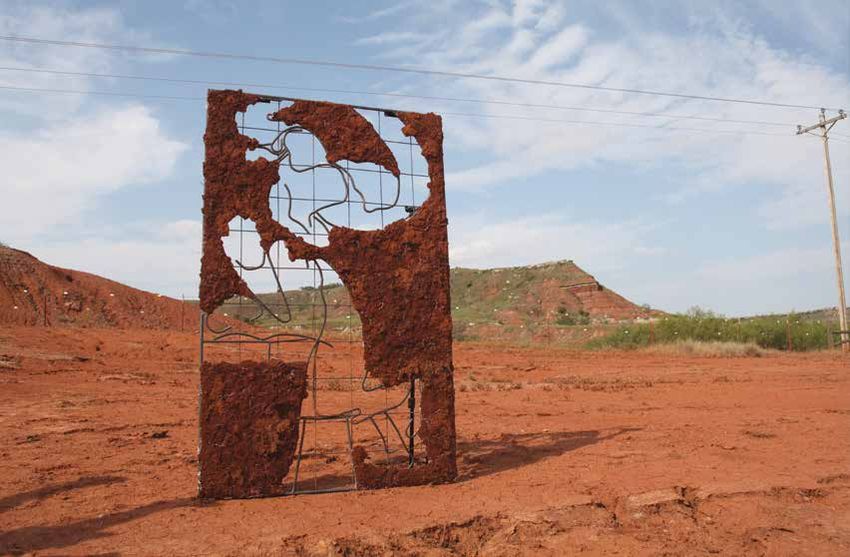
The Fund for Ethical Practices                                                                Ciudad Juárez, Chihuahua
                                                                                                              & El Paso, Texas
       of Transborder Art

 October 2 – December 10, 2021                                            2 de octubre - 10 de diciembre, 2021
 Exhibition at The Rubin Center for the Visual Arts,                      Exposición en El Rubin Center for the Visual Arts,
 The University of Texas at El Paso                                       The University of Texas at El Paso
 The Fund for Ethical Practices of                                        El Fondo para Prácticas Éticas de Arte
 Transborder Art                                                          Transfronterizo
 The Fund for Ethical Practices of Transborder Art emerged                El Fondo para Prácticas Éticas de Arte Transfronterizo
 out of Rafael Lozano-Hemmer’s Border Tuner | Sintonizador                nace de la coyuntura que emergió durante Border Tuner
 Fronterizo in 2019. The Fund was created in response to                  | Sintonizador Fronterizo de Rafael Lozano-Hemmer
 the need to give voice and visibility to transborder projects            y la necesidad de dar voz y visibilidad a proyectos
 that emerge on the border and are produced by artists                    transfronterizos que nacen en la frontera producidos por
 living in Ciudad Juárez, Chihuahua and El Paso, Texas. This              artistas fronterizos viviendo en Ciudad Juarez, Chihuahua
 exhibition features the six projects currently supported by              y El Paso, Texas. La exhbición se centrará en los seis
 the Fund, with work-in-progress videos highlighting the                  proyectos que el fondo apoya actualmente, con videos que
 artists’ voices as they talk about their experience creating             documentan el proceso de producción y resaltan las voces de
 work on the MX-US border during the global pandemic,                     las voces de los artistas reflexionando sobre la experiencia
 which has greatly limited the cross-border movement of                   de crear arte en la frontera de México y Estados Unidos
 fronterizos. This exhibition will be a fundraiser for future             durante la pandemia que ha limitado dramáticamente la
 iterations of The Fund for Ethical Practices of Transborder              movilidad de los fronterizos. Esta exhbición servirá para
 Art.                                                                     recabar fondos que permitan futuras iteraciones del Fondo
                                                                          para Prácticas Éticas de Arte Transfronterizo.

                                                                                                                                         “El fondo de arte transfronterizo no solo es importante porque ofrece a la comunidad
                                                                                                                                         de artistas un apoyo para trabajar a partir de necesidades sociales en un entorno
                                                                                                                                         que ha sido vulnerado durante décadas, también es un modelo de intervención para
                                                                                                                                         fomentar el intercambio de prácticas y recursos entre dos comunidades históricamente
                                                                                                                                         dependientes pero desiguales.”
                                                                                                                                         —Janette Terrazas, Instigadora del fondo. /Fund instigator

                                                                                                                                         “The transborder art fund is not only important because it encourages an artist
                                                                                                                                         community to work through social needs within an environment that has been exploited
                                                                                                                                         for decades, but it also serves as an engagement model that fosters the exchange of
                                                                                                                                         practices and resources between two communities historically dependent on each other
 ABOVE & RIGHT: Nómada Laboratorio Urbano, El Regreso Responsible, 2020
                                                                                                                                         but unequal.”
16                                                                                                                                                                                                                              17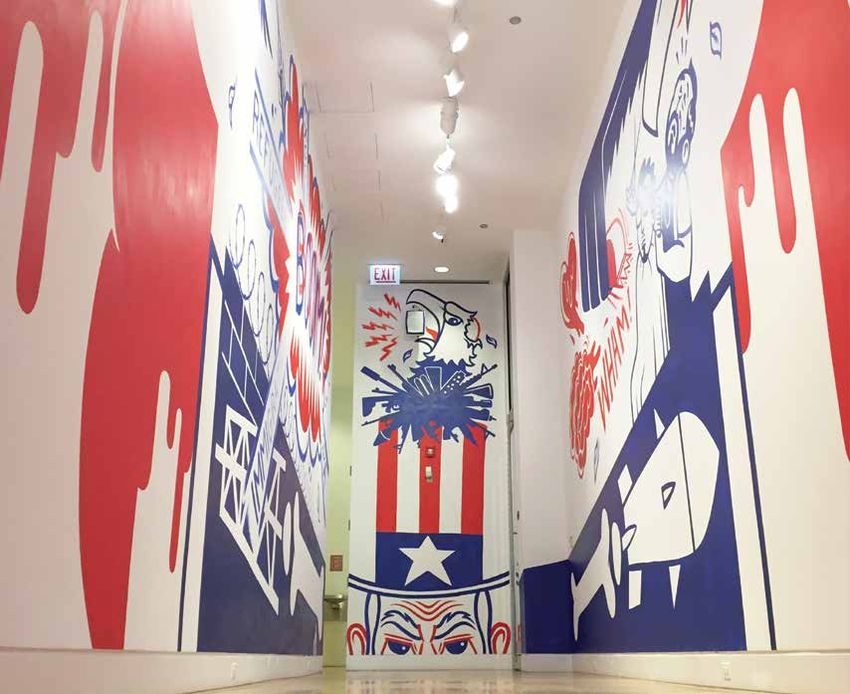
Harwood Museum of Art Taos, New Mexico
harwoodmuseum.org
October 23, 2021 – April 17, 2022 23 de octubre, 2021 – 17 de abril, 2022
Gus Foster: Panoramic Photographs of Gus Foster: Fotografías Panorámicas
Northern New Mexico del norte de Nuevo México
Gus Foster’s large-scale panoramic mountain photographs Las fotografías panorámicas de montaña a gran escala de
lead spectators on a pilgrimage to the rarified air at the Gus Foster llevan a los espectadores a una peregrinación
top of the world. Gus Foster: Panoramic Photographs of entre el aire enrarecido de la cima del mundo. Gus Foster:
Northern New Mexico includes works beginning from the Panoramic Photographs of Northern New Mexico incluye
artist’s first years in Taos in the 1970s and moves through the obras de los primeros años del artista en Taos, en la década
1980s to 2000s when he created 16-foot long photographic de 1970. El norte de Nuevo México es el punto central del
prints. Northern New Mexico is the center point of the viaje del artista, y la exposición sigue el horizonte temporal
artist’s journey, and the exhibition follows the horizon line desde el pasado hasta el presente, desde el principio hasta
of time from past to present, from the beginning to now. hoy.
October 9, 2021 – February 23, 2022 9 de octubre, 2021 – 23 de febrero, 2022
Remote Possibilities: Digital Landscapes Posibilidades Remotas: Paisajes
from the Thoma Foundation Collection Digitales de la Colección en la
Remote Possibilities: Digital Landscapes from the Thoma Fundación Thoma
Foundation Collection engages in digital explorations of
Remote Possibilities: Paisajes Digitales de la Colección en
the wild nature of the Southwest bringing together six of
la Fundación Thoma se dedica a la exploración digital de
the world’s foremost contemporary artists in digital media.
la naturaleza salvaje del suroeste, reuniendo a seis de los
John Gerrard, Kent Monkman, Bruce Nauman, Jennifer
artistas contemporáneos más destacados del mundo en
Steinkamp, Leo Villareal, and Marina Zurkow use digital
medios digitales. John Gerrard, Kent Monkman, Bruce
technology in their pursuit of veritable representation, the
Nauman, Jennifer Steinkamp, Leo Villareal y Marina
digital sublime, humanity’s need for control over the wild,
Zurkow, quienes utilizan tecnología digital en su búsqueda
and the meaning-making of our natural world.
de una representación irrefutable, de lo sublime digital, de
la necesidad de la humanidad de controlar lo salvaje y de la
March 19, 2022 – October 23, 2022
creación de significados en nuestro mundo natural.
“Light Ships are about slowing down Debbie Long: Light Ships
19 de marzo, 2022 – 23 de octubre, 2022
and connecting to the sky, nature and Debbie Long’s Light Ships are immersive environments that
travel through light, time, and space. The inviting chambers Debbie Long: Naves de Luz
land. They are built for the slow read, for lined with hundreds of handmade cast glass pieces are
Naves de Luz de Debbie Long son entornos inmersivos
experiencing light and the sky with our intended for slow bodily experiences of the movement
que viajan a través de la luz, el tiempo y el espacio. Las
of sunlight, moonlight, clouds passing, piercing stars, and
acogedoras recámaras revestidas con cientos de piezas
bodies in real time.” summer lightning. This exhibition represents the past decade
de vidrio fundido hechas a mano están pensadas para
of the artists’ career including Long’s newest environment
—Debbie Long, Artist experimentar lentamente el movimiento de la luz del sol, la
Willa (2015-2020), a transformed 1970s recreational vehicle,
luz de la luna, el paso de las nubes, las estrellas penetrantes
an original film of Light Ships experienced in a remote New
y los relámpagos de verano. Esta exposición representa
Mexico desert landscape, and an enchanting night sky
“Light Ships se tratan de disminuir la la última década de la carrera de la artista, incluyendo su
environment created site-specifically inside the museum.
instalación más reciente, Willa (2015-2020), un vehículo
velocidad y conectarnos con el cielo, la recreativo de los años 70 transformado, una película
TOP: Gus Foster, Sunset, Moonrise, Highline Ridge, Taos County, New Mexico, 1980, original de Naves de Luz vivida en un remoto paisaje del
naturaleza y la tierra. Están diseñadas para 403, courtesy of the artist
desierto de Nuevo México, y un encantador cielo nocturno
una lectura lenta, para experimentar la MIDDLE: Marina Zurkow (1962- ), Mesocosm (Wink, TX), 2012. Real-time generative
custom software animation (color, sound, monitor. Variable. Collection of the Carl &
creado in situ en el del museo.
Marilynn Thoma Foundation. © Marina Zurkow, courtesy of the Carl & Marilynn Thoma
luz y el cielo desde nuestros cuerpos y en Foundation, animation still by Marina Zurkow.
tiempo real.” BOTTOM: Debbie Long, Naima, 2012-2015, Trailer, Light, Glass, 9 x 8 x 7.5 feet,
courtesy of the artist, photo by Wendy Shuey
18 19MOCA Tucson Tucson, Arizona
moca-tucson.org
October 8, 2021 – February, 2022 8 de octubre, 2021 – febrero, 2022
rafa esparza and Timo Fahler: rafa esparza and Timo Fahler:
were-:Nenetech Forms eran-:Formas Nenetech
Los Angeles-based artists rafa esparza and Timo Fahler Los artistas de Los Ángeles rafa esparza y Timo Fahler están
are developing were-:Nenetech Forms for, in, and about creando eran-:Formas Nenetech, un proyecto expositivo
the Sonoran Desert borderlands. The exhibition project, sobre y desde las tierras fronterizas de Sonora. La exhibición,
which contributes to and intervenes into Chicano art que aporta e interviene desde la historia del arte chicano,
history, includes sculpture, sound works, photographs, and incluye esculturas, obras sonoras, fotografías y dibujos de
drawings by the artists and collaborators and is presented los artistas y colaboradores y se presenta simultáneamente
simultaneously at MOCA Tucson and the University of en el MOCA Tucson y en la galería Joseph Gross en la
Arizona’s Joseph Gross Gallery. were-:Nenetech Forms, a Universidad de Arizona. El título, eran-:Formas Nenetech,
title that includes the Nahuatl term for “twinning” and incluye el término náhuatl para “acoplamiento” y señala
signals both to Latinx history and the technological future. tanto la historia latina como el futuro tecnológico. El
Central to the exhibition, is the concept of biomimicry: the concepto de biomimetismo es fundamental en la exhibción:
process by which organic strategies are used to solve human el proceso por el que se utilizan estrategias orgánicas para
problems. Just as aerospace engineers have studied birds to resolver problemas humanos. Al igual que los ingenieros
inform aircraft design, here the natural landscape–its flora aeroespaciales han estudiado a las aves para diseñar aviones,
and fauna–is examined to develop survival techniques for aquí se examina el paisaje natural (su flora y fauna) para
migrants. desarrollar técnicas de supervivencia para los migrantes.
September 18, 2021 – February, 2022 18 de septiembre, 2021 – febrero, 2022
Mujeres Nourishing Fronterizx Bodies: Mujeres nutriendo cuerpes fronterizes:
Resistance in the Time of COVID-19 Resistencia en tiempos de COVID-19
Mujeres Nourishing Fronterizx Bodies: Resistance in the Mujeres nutriendo cuerpes fronterizes: Resistencia en
Time of COVID-19 is a multi-year project culminating in a tiempos de COVID-19 es un proyecto de varios años que “How can we as creatives, cultural and academic institutions, and
collaborative exhibition at MOCA Tucson. The exhibition culmina en una exhibición en MOCA Tucson. La exhibición
represents key pillars of the sustained work of two representa los puntos clave de la colaboración entre dos community members work together to reframe our humanity
collectives interrogating the borderlands in Arizona: A duo
of visual artists based in the United States, M. Jenea Sanchez
colectivas que interrogan la frontera en Arizona: Un par in the midst of a divided and increasingly polarized state of
de artistas visuales en Estados Unidos, M. Jenea Sanchez
and Gabriela Muñoz, alongside collaborators Ammi Robles y Gabriela Muñoz, junto con Ammi Robles y DouglaPrieta xenophobia? We see this multidisciplinary and collaborative
and DouglaPrieta Trabajan, a colectiva of women based Trabajan (una colectiva basada en Agua Prieta, Sonora,
in Agua Prieta, Sonora, Mexico. The project explores
exhibition as a site where we can model ways of experimenting
México). El proyecto explora la seguridad alimenticia, la
food security, self-representation, and self-determination auto-representación y autonomía a través de una serie and working together towards change.”
through a series of new works that examine what it means de nuevos trabajos que exploran el significado de nutrir
to nourish brown bodies alongside the U.S./Mexico border —rafa esparza & Timo Fahler, Artists
cuerpos cafés a lo largo de la frontera entre México y
during a global pandemic. A result of over five years of Estados Unidos durante una pandemia global. Mujeres
conversation and collaboration between the American Nourishing Fronterizxs Bodies es el resultado de una
and Mexican collectives, Mujeres Nourishing Fronterizx conversación y colaboración de cinco años entre las colectivas “¿Qué podemos hacer como instituciones académicas, culturales,
Bodies highlights the female experience in the borderlands
through printmaking, drawing, photography, oral history,
Estadounidenses y Mexicanas para realzar la experiencia creativas y miembros de la comunidad para replantear nuestra
femenina en la frontera a través de la serigrafía, el dibujo,
performance, and sustainable ecological and cooperative la fotografía, la historia oral, el performance y las prácticas humanidad en un estado xenofóbico, cada vez más dividido y
social practices. sustentables ecológicas y sociales. polarizado? Entendemos esta exhibición, multidisciplinaria y
colaborativa, como un lugar en el que podemos crear modelos
TOP: Timo Fahler, cast II, 2020, Cimarron River landscape OK, rebar steel, plaster, courtesy of the artist
BOTTOM: M. Jenea Sanchez, Dulce Guadalupe Garcia Anguamea, 2019, C-print on aluminum, courtesy of the artist, featured in Mujeres Nourishing Fronterizx Bodies:
para la experimentación y el trabajo colectivo como agente de
Resistance in the Time of COVID-19
cambio.”
20 21Museo de Arte Ciudad Juárez Ciudad Juárez, Chihuahua
museodeartejuarez.inba.gob.mx
October 2021 – January 2022 Octubre 2021 – Enero 2022
Victoria Vinamaragui: Victoria Vinamaragui:
Sustained Downfall Caída Sostenida
Sustained Downfall is a sculptural project by Victoria Caída Sostenida es un proyecto escultórico de Victoria
Vinamaragui that contemplates the current significance Vinamaragui que contempla el significado actual de la
of the word “suspended.” It explores the shape of the palabra “suspender”. Explora la forma del candelabro y
chandelier and its relationship with the viewer. The su relación con el espectador. Las esculturas se convierten
sculptures become the message and the messenger by en el mensaje y en el mensajero, al ser portadoras de una
carrying a sentence that bears a deep feeling of quarantine, frase que encierra un profundo sentimiento de cuarentena,
yearning, and longing while suspended on display. The anhelo y añoranza mientras permanecen suspendidas. La
series contains handwriting on paper, brightly colored serie contiene escritura a mano en papel, letras coloridas y
celebratory letters over metallic ribbons, and PVC balloon decoradas con cintas metálicas y ramos de globos de PVC,
bouquets, to reference the dynamics of the new normal. para hacer referencia a la dinámica de la nueva normalidad.
Opening March 4, 2022 Apertura 4 de marzo, 2022
Bordær: Narratives and Cartographies Bordær: Cartografía y Narrativas
of Migration Migrantes
Bordær: Narratives and Cartographies of Migration is Bordær: Cartografía y Narrativas Migrantes es un proyecto
a collective art project developed by a group of migrant artístico colectivo desarrollado por un grupo de migrantes
asylum seekers impacted by the “Migrant Protection solicitantes de asilo afectados por los Protocolos de
Protocols” (MPP) and sheltered in Casa de Acogida in Protección al Migrante (PPM) y refugiados en la Casa de
Ciudad Juárez, Chihuahua, Mexico. The project is a Acogida en Ciudad Juárez, Chihuahua, México. El proyecto
transdisciplinary creative laboratory, in close collaboration es un laboratorio creativo transdisciplinario, en estrecha
with Museo de Arte de Ciudad Juárez (MACJ) and a group colaboración con el Museo de Arte de Ciudad Juárez (MACJ)
of professionals in urban design, art, pedagogy, and y un grupo de profesionales del diseño urbano, el arte, la
anthropology. Participants are provided a space to narrate, pedagogía y la antropología. Los participantes disponen de
“Como arquitecto y diseñador urbano, el trabajo que hace el MACJ con respecto a draw, and expand on their experiences through embroidery. un espacio para narrar, dibujar y ampliar sus experiencias
visualizar la comunidad fronteriza, particularmente las mujeres inmigrantes, me parece The project traces the spatial perspectives and territories of a través del bordado. El proyecto traza las perspectivas
the migrant experience, as well as the personal journeys espaciales y los territorios de la experiencia migratoria,
relevante, no porque las muestre como un grupo vulnerable, sino porque revela su of those who were in the shelter. Their intertwined stories así como los viajes personales de quienes estuvieron en el
fuerza y empoderamiento como actores moldeadores de su futuro. Espero que Bordær provide the context for a collaborative art piece rendered albergue. Sus historias entrelazadas proveen el contexto
in cartographic perspective, which presents the experiences para una obra de arte colaborativa realizada en perspectivas
sea un proyecto de colaboración inicial que genere más espacios de colaboración entre of migrants’ journeys in a shared geography populated by cartográficas que presentan las experiencias de los viajes
la comunidad artística y las comunidades subrepresentadas de Ciudad Juárez.” flora, fauna, and faces. The word “bordær” comes from de los migrantes en una geografía compartida poblada
the English word “border” and the Spanish word "bordar" por flora, fauna y rostros. La palabra “bordær” proviene
—Gabriel Vergara, Bordær: Cartografía y Narrativas Migrantes which in English means “embroider.” Project partners del inglés “border” y del español “bordar”. Los socios del
include Junt@s Vamos A.C., Postcards from the Border, proyecto son Junt@s Vamos A.C., Postcards from the Border,
Museo de Arte de Ciudad Juárez, and Grupo Enfoque A.C. Museo de Arte de Ciudad Juárez y Grupo Enfoque A.C.
“As an architect and urban designer, the work that the MACJ does regarding
visualizing the border community, particularly immigrant women, seems relevant to
me, not because it shows them as a vulnerable group but reveals their strength and
empowerment as shaping actors of their future. I hope Bordær is an initial collaboration
project that will create more spaces for collaboration between the artistic community
and the under-represented communities of Ciudad Juárez.”
LEFT: Victoria Vinamaragui, Caída sostenida (Sustained Downfall) (detail) - vinamaragui.art
22 23NMSU Art Museum Las Cruces, New Mexico
uam.nmsu.edu
January 21 – March 6, 2022 21 de enero – 6 de marzo, 2022
Relational Tectonics Téctonica Relacional
and Four Sites of Return y Cuatro Sitios de Restitución
Relational Tectonics and Four Sites of Return: Ritual, Téctonica Relacional y Cuatro Sitios de Restitución abarca dos
Remembrance, Reparation and Reclamation are two site- exposiciones colaborativas, in situ, de obras comisionadas y
specific collaborative exhibitions of commissioned and existentes así como una serie de programación pública de
existing works and public programming. Both installations Nikesha Breeze y 1000 Tiny Mirrors. A través de diversos
showcase New Mexico based artists who investigate medios, Breeze y 1000 Tiny Mirrors investigan la resistencia
resilience, vulnerability, community, and intimacy. Nikesha radical de los cuerpos marginados en relación con el poder,
Breeze presents a large-scale multidimensional exhibition la vulnerabilidad, la comunidad y las tierras sagradas y
Four Sites of Return: Ritual, Remembrance, Reparation ancestrales en Nuevo México. El trabajo de Breeze explora
and Reclamation, that surfaces the collective traumas, los traumas e historias colectivas de la experiencia negra
histories, rituals, and healing of the African Diaspora in en el suroeste. A través de mapas, acciones performativas
the Southwest. Breeze seamlessly weaves African Diasporic y una instalación de medios mixtos específica para el lugar,
history and their own ancestral connection to Blackdom, Breeze profundiza en su conexión ancestral con Blackdom,
New Mexico, the state’s first all-Black community. Relational Nuevo México, la primera comunidad totalmente negra
Tectonics, by artists Ryan Denison, Eliza Lutz, Cedar Elford- del estado. Una instalación colaborativa de 1000 Tiny
White, Hendrix Olson, and F.A. Marie, is structured around Mirrors incluye prendas confeccionadas por artistas y
the complexities of one of our most private spaces, the músicos locales y regionales del colectivo LGBTQ+, que se
bedroom; a space where we undress and redress our utilizarán para realizar performances durante la exposición.
worlds. This intimate space is expressed through textile, Téctonica Relacional y Cuatro Sitios de Restitución conecta
beaded, printed, and other tactile mediums to address the una comunidad de obras de arte, comparte experiencias
intersections of identity, relationship to land, disability, decoloniales y se basa en la reafirmación de las voces de las
desire, and fluid expression. historias marginadas en las narrativas actuales de las tierras
y territorios de Nuevo México.
RIGHT: Nikesha Breeze, The Arc of Return, 2021, Baltic birch, hand-etched copper plates, copper mesh, 96 x 48 x 18 inches, photo by Byron Flesher/ form & concept,
featured in Four Sites of Return
“I am deeply interested in the Black body’s relationship to place, to time, and to land.
I am curious about the structures of histories and landscapes of wound that make up
the psycho-spatial geography of the African Diaspora. It is my belief that through ritual,
remembrance, reparation and reclamation we can re-map not only our histories, but our
futures.”
—Nikesha Breeze, Artist, Four Sites of Return
“Me interesa profundamente la relación del cuerpo negro con el espacio, el tiempo y
la tierra. Siento curiosidad sobre las estructuras narrativas y los paisajes de heridas que
definen la geografía psíquico-espacial de la Diáspora Africana. Me parece que a través
del ritual, la remembranza, la restitución y la recuperación podemos trazar de nuevo no
solo nuestras historias, también nuestros futuros.”
24 25You can also read


