A Dynamic Topology Management in a Hybrid Wireless Superstore Network
←
→
Page content transcription
If your browser does not render page correctly, please read the page content below
I.J. Computer Network and Information Security, 2011, 3, 8-18
Published Online April 2011 in MECS (http://www.mecs-press.org/)

   A Dynamic Topology Management in a Hybrid
          Wireless Superstore Network
                                           Shankaraiah and Pallapa Venkataram
                    Protocol Engineering Technology Unit, Electrical Communication Engineering
              Indian Institute of Science, Bangalore, India. Email:{shankaraiah,pallapa}@ece.iisc.ernet.in

Abstract—with the development of large scale wireless
networks, there has been short comings and limitations in
traditional network topology management systems. In this
paper, an adaptive algorithm is proposed to maintain
topology of hybrid wireless superstore network by
considering the transactions and individual network load.
The adaptations include to choose the best network
connection for the response, and to perform network
Connection switching when network situation changes.
At the same time, in terms of the design for topology
management systems, aiming at intelligence, real-time,
the study makes a step-by-step argument and research on
the overall topology management scheme. Architecture           Fig 1: Superstore hybrid wireless network
for the adaptive topology management of hybrid wireless
networking resources is available to user’s mobile device.     help extending the actual radio coverage of the wireless
Simulation results describes that the new scheme has           networks beyond their actual range. This can be achieved
outperformed the original topology management and it is        by integrating different wireless network technologies
simpler than the original rate borrowing scheme.               along with a wired network. The problem of topology
                                                               management for such hybrid wireless networks is very
Index Terms— Hybrid Wireless Network, Superstore,              difficult to solve because of insufficient network
Transaction Sensitive Level   (TSL), Topology                  resources, overloading on one networks and mobility of
Management                                                     the customer. In such hybrid wireless network
                                                               architecture, communication takes place between the
                    I. INTRODUCTION                            mobile terminal (MT) and the Base Transceiver Stations
    With the increment in the scope and the increase in        (BTS) or Access Points (APs). Several kind of wireless
complexity of fourth generation wireless networks,             networks may be merged logically to form larger wireless
network topology has become an important topic for             network.
study. The topology management of hybrid wireless                 Mobility of the customer leads to constant change in
networks is sure to be a new hotspot for research. It is       the location and the network conditions. Mobile devices
evident that the traditional static topology management        with multi-interface network switch between the
schemes cannot adapt to the topology structure of the          networks during data transfer and other network activities.
next generation wireless network.                              And further when a single network gets crowded, the
   Different integrated wireless technologies are used for     network can select best network in the same range and
different purposes. GSM [1], [2] and WiFi [3] are getting      carryout data transmission in that network. To ensure that
more attention because of their capability in providing        the handoff is successful topology management is
wireless connectivity. Integrating GPRS and WiFi gives         essential.
both ubiquitous coverage and support high data rate in            A superstore transaction [4] corresponds to one of a
strategic locations (Superstore, campuses, office, airports,   finite number of interactive processes between the
hotels, coffee shops etc.).                                    customer and the superstore server. Each transaction
    When WiFi and GPRS networks are integrated, the            consists of a predefined sequence of operations. Some
cellular operators are able to meet some requirements for      examples of transactions is listed in Table I.
4G services. This would allow them to provide high               Among all possible superstore transactions, not all
quality data services which can be perceived as 4G-like        transactions are important for the superstore management.
services. In this paper, an integrated network of GSM and      Hence it is wise to manage the transactions traffic which
WiFi covering the same service area is considered for a        is essential. An efficient method is required to manage
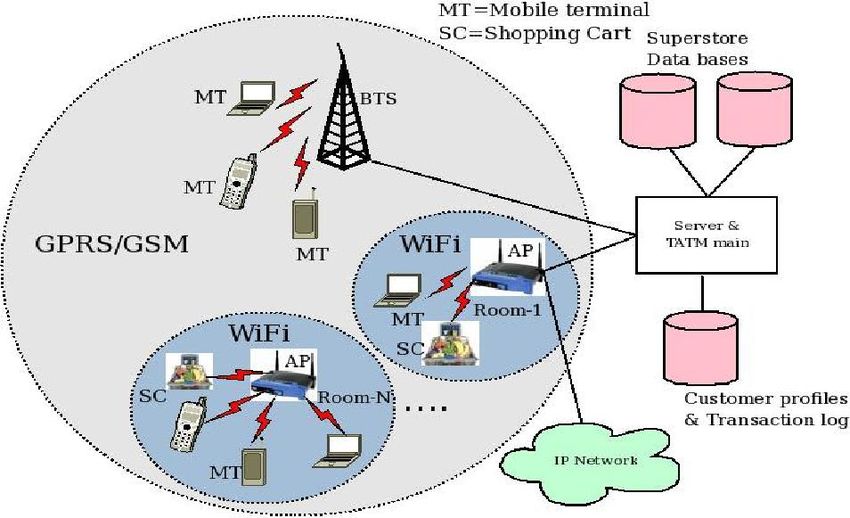
superstore business. Typical hybrid wireless superstore        the topology of wireless network and for admission
network architecture is shown in Fig.1.                        control. A topology management scheme for scheduling
    Hybrid wireless communication networks are                 the superstore transactions based on the gradational
evolving wireless networks architecture developed to           importance.

Copyright © 2011 MECS                                          I.J. Computer Network and Information Security, 2011, 3, 8-18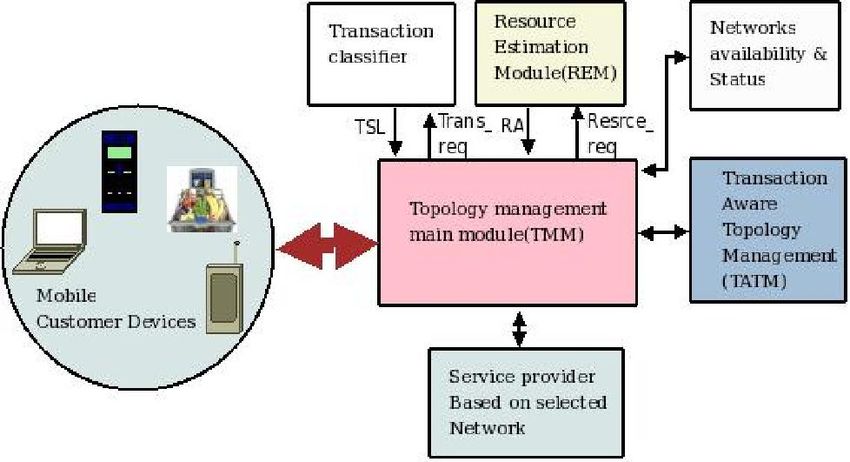
A Dynamic Topology Management in a Hybrid Wireless Superstore Network                                9

The main contributions of this paper are:                     They introduced two distributed heuristics for mobile
  • Reduce the load on one network                            networks. Both centralized algorithms require global
                                                              information, and thus cannot be directly deployed in the
   •    Minimize the energy consumption            of the
                                                              case of mobility. And the distributed heuristics cannot
        transmission of data to server.
                                                              guarantee the preservation of network connectivity.
   •    Enhance the QoS and provides less congested               Borbash and Jennings [8] proposed to use RNG for
        cells for each critical transaction.                  topology initialization of wireless networks. Based on the
                                                              local knowledge, each node makes decisions to derive the
   •    Distribute load in the hybrid wireless superstore
                                                              network topology based on RNG. The derived network
        environment by knowing topology
                                                              topology has been reported to exhibit good performance
   •    Multi-mode users can connect to the best points       in terms of power usage, interference, and reliability.
        of attachment and best QoS offering by HWNs              Most existing topology control algorithms [12] assume
                                                              homogeneous wireless nodes with uniform transmission
   •    Different network types are linked together and
        they can provide wider ranges and higher QoS          ranges. When directly applied to heterogeneous networks,
        than in homogeneous wireless networks.                these algorithms may render disconnectivity. Hence we
                                                              give several examples to motivate the need for new
   •    Minimize the necessary resource through the           topology management algorithms in heterogeneous
        appropriate access network.                           networks.
   In this paper, we present a topology management                In [14], the authors proposed Local Minimum
scheme in a hybrid wireless network to improve the QoS        Spanning Tree (LMST) for topology control in
of data transfer of each transaction request, save energy     homogeneous wireless multi-hop networks. In this
of the mobile terminals and prolong the network life time.    algorithm, each node builds its local minimum spanning
A wireless topology management that manages the               tree independently and only keeps on tree nodes that are
activities and features of a wireless network connection.     one-hop away as its neighbors in the final topology.
It may control the process of selecting an available access   Authors proved that: 1) the topology derived under
points, authentication and associating to it and setting up   LMST preserves the network connectivity; 2) the node
other parameters of the wireless connection.                  degree of any node in the resulting topology is bounded
    The rest of the paper is organized as follows. Section    by 6; and 3) the topology can be transformed into one
II describes the some of the related works. Section III       with bidirectional links (without impairing the network
discusses the working of hybrid wireless superstore           connectivity) after removal of all uni-directional links.
environment. Section IV illustrates the proposed              The results show that the LMST can increase the network
transaction-aware adaptive topology management along          capacity as well as reduce the energy consumption.
with the algorithms. Section V gives the analytical model         Gupta and Kumar [13] showed that the traffic carrying
of the proposed work. Section VI explains the simulation      capacity of the entire network is maximized if each node
results and finally, the paper concludes in Section VII.      uses the smallest power required to maintain the network
                                                              connectivity. Authors also describe that under what
                   II. RELATED WORKS                          conditions a wireless transmission over a sub channel is
                                                              received successfully by its intended recipient. They are
    The topology management algorithms have been              considered two types of networks, Arbitrary Networks,
proposed to maintain network connectivity while               where the node locations, destinations of sources, and
reducing energy consumption and improving network             traffic demands, are all arbitrary, and Random Networks,
capacity in hybrid wireless superstore networks.              where the nodes and their destinations are randomly
    Many new challenges have emerged in the system            chosen for their simulation.
design and analysis of wireless networks. Energy                   The authors in paper [15] presented a work on
efficiency and network capacity [13] are among the most       Connection Management Agent (CMA) concentrated on
fundamental issues. Various topology control algorithms       multiple wireless access networks that are available to
have been proposed to address these two challenges.           one single user device, in which the accesses are all
    Lot of research has been carried out on hybrid wireless   infrastructure wireless connections like WLAN, GPRS
network integration. Mobile IP based vertical handoff [5]     and UMTS. The research basically shares the common
proposed an integrated wireless networks like WLAN and        idea, but focuses on a “hybrid” access system where
GPRS. The authors have implemented a vertical handoff         available connections include both infrastructure and ad
scheme that allows a mobile user to roam between              hoc.
different wireless networks in a manner that is completely
transparent to applications and disrupts connectivity as           III. A HYBRID WIRELESS NETWORK IN A
little as possible.                                                      SUPERSTORE ENVIRONMENT
    Mobile IP binding update extension [6] can support
multiple interfaces and data flow control.                        We consider a superstore as a large departmental self
    Ramanathan et al. [7] presented two centralized           service store which sells wide variety of food and house
algorithms to minimize the maximal power used per node        hold materials. The superstore consists of GSM and WiFi
while maintaining the (bi) connectivity of the network.       Networks integrated together in a superstore environment
                                                              for accessing the commodities information, location,

Copyright © 2011 MECS                                         I.J. Computer Network and Information Security, 2011, 3, 8-18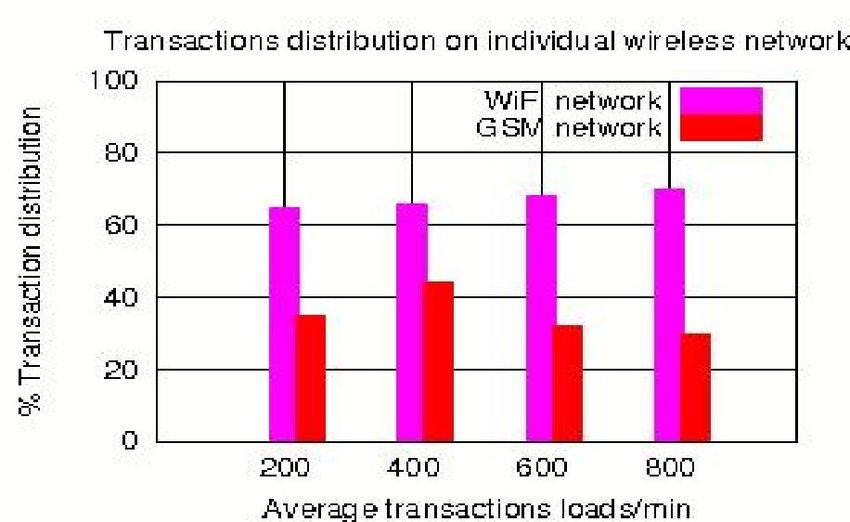
10                    A Dynamic Topology Management in a Hybrid Wireless Superstore Network

maps, price of the products, purchase, etc. WiFi                 finally purchase the food product and receive the
technology is designed for high speed transmission and           confirmation.
enables longer range of connection. WiFi technology has            To successfully complete this transaction, the
been deployed for public access to create hotspots in            connections must be established between the participating
places like superstore, hotels, airports and campuses.           entities and adequate resources must be allocated to
Superstore architecture of WiFi and GSM can take                 various transactions at different instants. If these
advantage of the complementary characteristics of those          transactions are carried out in a superstore hybrid
two technologies and provide a total solution for hybrid         wireless network, the connections have to be established
Wireless communication environment.                              between the involved entities and the necessary resource
    In a hybrid environment, the WiFi is used to get stock       have to be allocated for completion of these transactions.
details of shelves, to identify the category of products and        Some transactions may have strict restricted delay and
their place of availability in the superstore. The system        response time requirements. Therefore, the QoS support
uses the RF-ID technology for monitoring and                     for superstore transactions must address the requirements
identification of goods in a shopping cart. Database             of variable resources, bounded delay, and response time.
servers, cash registers and central servers are connected        Providing resources to superstore transactions is a
to the superstore LAN. In a superstore, the customer is          complex issue because of the mobility of users, handoffs
able to view and modify their shopping list which is             during ongoing transactions, resource variability of
automatically generated and one can place an order               transactions, etc.
through one’s mobile phone, PDA/ Laptop, etc. In order
to provide anytime and anywhere connectivity over the               IV. TRANSACTION-AWARE TOPOLOGY
hybrid wireless networks, a mobile terminal, which has            MANAGEMENT(TATM) IN A HYBRID WIRELESS
multi-interfaces, is able to handover among the different                SUPERSTORE ENVIRONMENT
access technologies.
                                                                     The architecture of the TATM in a Hybrid Wireless
   To improve the performance of a business critical
                                                                 Superstore Environment management scheme is shown in
transaction by reducing delay involved and to reduce the
                                                                 Fig. 3. We discuss the functioning of the TATM by
load on one network while accessing the database and
                                                                 describing each of its components and their functions.
accommodating more user transactions at peak time,
                                                                    The customers start the communication by sending the
efficient topology management and admission control are
                                                                 transaction through the corresponding network. If mobile
indispensable.
                                                                 device is equipped with multiple wireless connections,
  Each shopping cart in the superstore is equipped with
an electronic system based on a specialized computer
with a display. The shopping cart computer has an RF-ID
sensor to take stock of goods in the shopping cart. As
soon as the user picks the products from shelves and
placed in shopping cart, the RF-ID reader notifies to the
computer automatically. The shopping cart computer will
send all the details of the shopping basket to the server
via the WiFi network.
   Most of the time, the customers encounter
unpredictable delays in accessing the superstore database.
Also customers come across large queues at the billing
service counters. When the customers are in hurry, they          Fig 3: Architecture of transaction-based topology
have to get service without delay. This paper tries to           management in a hybrid wireless superstore environment.
solve some of the above said problems for a customer in
the superstore by efficient utilization of available             then the best available connection will be selected by the
bandwidth.                                                       server for the creation of response to the transaction. A
                                                                 default priority in the architecture is to choose WiFi
A. Superstore transactions                                       connection as long as possible. This is because in general
  As defined earlier, a superstore transaction corresponds       WiFi connection is free with better bandwidth than
to an interaction between the customer and the superstore        infrastructure connection like GSM/GPRS. During data
server. An example of a typical superstore transaction [4]       transfer operations, the mobile devices may move into or
is a user purchasing a food product by connecting to the         out of the overlapping area of hybrid wireless access area.
superstore server through a hybrid wireless network. The         In this case the connection used by the channel can be
purchase of a food product consists of several                   seamlessly switched without necessarily being perceived
transactions. A user intending to purchase a food product        by the customers, to ensure that the best connection is
typically logs into the superstore server, checks its details,   always used at any time.
expiry date, contents, price, offered discount, if any,          Transaction classifier
select the preferred food products, picks the number of          The main objectives of this module is to find the
quantities he/she wants to purchase, and then place them         transaction sensitivity level(TSL) for a given transaction.
in the shopping carts, and provides credit card details to       The TSL is analyzed based on the parameters: type of
                                                                 data involved in each transaction, time of operation, type

Copyright © 2011 MECS                                            I.J. Computer Network and Information Security, 2011, 3, 8-18
A Dynamic Topology Management in a Hybrid Wireless Superstore Network                                   11

                                                       TABLE. I
                          Transaction sensitivity level and transaction categorization
Transaction Sensitivity     Service types               Examples Transactions
Level
0                           No Profit service.          Product general information browsing, downloading free samples,
                                                        browsing low value products details, etc.
1                           Low Profit service.         Placing low volume orders, requesting account statement, Request for
                                                        maps of superstore where require items are placed, Request for technical
                                                        information, etc.
2                           Moderate Profit Service.    Placing high volume orders, making macro payments, requesting
                                                        purchase bills, requesting private information, making account transfers,
                                                        etc.
3                           High Profit Service         Financial transaction, large amount billing, making large account
                                                        transfer, making large advance payments, authentication of customer, etc.

of device used, location of operation, type of transaction,
                                                                   •    All the packets per transaction have the same size.
mobility and type of traffic generated by each transaction.
This analysis produces the TSL ranging from 0 to 3. A set          •    The wireless channel is error free channel.
of transactions with different sensitivity levels is shown
                                                               The estimation of bandwidth requirement                  for    a
in the Table I. The function of transaction classifier is
                                                               transaction is given as:
given in the Algorithm. 1.
                                                                       8* K * M
______________________________________________                  bi =            Bits/Secs                         (1)
Algorithm 1 Transaction classifier module                               KP + T
______________________________________________                 Let Bufferi be the number of byte of memory require for
1: begin                                                       each transaction. The estimation of memory requirement
2: Accept the transaction details from TATM main.              for a transaction is given as:
3: Let Op req is the operation requested by transaction T.
                                                                             K *M
4: if Op req is “superstore transaction” then                   Bufferi =         Kbytes                         (2)
5: Let TYPE is the type of superstore service to be used.                    1000
6: if TYPE is NO Profit Service then                           Where
7: TSL=0;                                                      K = No. of packets per transaction in any one direction.
8: else if TYPE is Low Profit Service then                     M= No. of bytes per packet in any one direction.
9: TSL=1;                                                      P = One way network latency per packet.
10: else if TYPE is Moderate Profit Service then               T = The amount of time a user needs between successive
11: TSL=2;                                                     transaction executions. The working of REM is given in
12: else if TYPE is High Profit Service then                   the Algorithm 2.
13: TSL=3;                                                     Network availability and status
14: end if                                                       This module periodically selects the best network
15: end if                                                     among the available networks in the vicinity of the
16: Pass TSL of transaction to TATM main.                      mobile terminals. When a customer moves to next
17: End                                                        location, it will choose the best network that provides the
Resource Estimation Module (REM)                               best QoS among the available APs or BS. The working of
    The REM module estimates the resource requirement          network availability checking module is given in the
of each incoming new transactions. If it is a handoff          Algorithm 3.
transaction, it assigns the value as specified in the
previous network. In any commercial transaction, request         Transaction-Aware Topology Management Module
transactions can be of few kilobytes, where as the                                       (TATM)
response transaction can be of multiple megabytes in size.       This module is to schedule the transaction response
These characteristics create very challenging demands          based on the estimated resource required for each
upon the network, which must accommodate the                   transaction. At regular intervals of time, the system
associated bandwidth and latency effects. Total number         collects all transactions arrival in that interval, classifies
of transactions is largely independent of the users. The       them into different categories based on the sensitivity of
total number of transactions to complete a business            operation and queues them in four priority queues. The
process is entirely a function of process complexity.          scheme schedules the highest priority transactions first,
    A transaction can vary widely in terms of sensitivity,     keeping the lowest priority transaction pending. If all the
power, buffer, bandwidth required and acceptable latency       highest priority transactions are over, then it continues
depending on the type of the transactions being executed.      with next priority level transactions, and so on.
The resource required is calculated upon making the
following assumptions.

Copyright © 2011 MECS                                           I.J. Computer Network and Information Security, 2011, 3, 8-18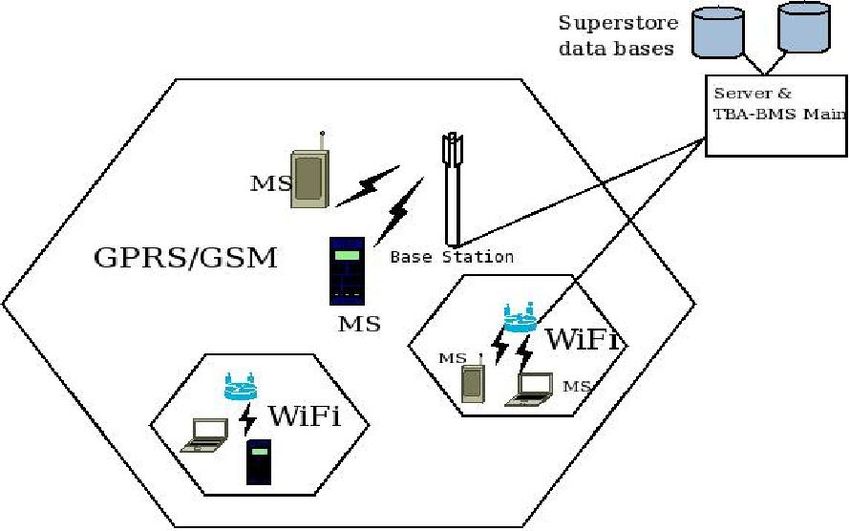
12                   A Dynamic Topology Management in a Hybrid Wireless Superstore Network

    In strict priority scheduling, a queue with a lower           To avoid the possible starvation of the low priority
priority is scheduled only if all queues with a higher        transactions, we propose a scheduling policy in which
priority are empty. However, this may result in a             older un-serviced transactions which have not been
starvation for low priority transactions. Further, the        scheduled due to their low priority are automatically
transmission order of different priority queues (PQs) is      upgraded to higher priority levels in the next scheduling
based on their priorities. According to [10], [11], 13% of    session. For this reason, if a older transaction request has
all transactions have the highest two priority TSL ( 2and     a lower priority value, then it will be served even if other
3), 32% have TSL level 0 transactions and remaining           newer transaction of higher priority are present in the
55% in TSL level 1 transactions.                              scheduler. In this way, the scheduler algorithm guarantees
___________________________________________                   an efficient aging mechanism of the requests, according
Algorithm 2 Resource estimation module(REM)                   to the transaction level categories. The working of
____________________________________________                  transaction scheduler is given in the Algorithm.4
1: begin                                                      Service provider module
2: Accept TDs and TSL ⇐ TATM main .                           This module is responsible for providing services based
3: Let Op req is the operation requested by transaction Ti.   on selected network and assigned resource. This module
4: while Op req is new transaction do                         works as per the information passed by the TATM main
5: Accept Datasize(V), transaction type(TYPE) and             module. The function of the service provider is given in
     time of operation(t) from transaction Log(TL).           Algorithm 5.
6: if Any information require from TL then                    TATM main module
7: Fetch them from TL.                                           The TATM main module coordinates the functions of
8: end if                                                     all the components of the TATM. The transaction
9: Estimate the bandwidth, buffer requirement of each         received is directed to the transaction classifier to find
    transaction                                               TSL. It guides the Resource Estimation Module (REM) to
10: bRe g _ bw , Buffer_reg ⇐ REM(R),Send bRe g _ bw ,
                                                              estimate the resource requirement of each transaction. It
                                                              guides the Transaction Scheduling and Topology
     Buffer reg ⇒ TATM main.                                  Management Module (TATM) to allocate resource based
11: end while                                                 on the TSL, type of transaction required. The function of
12: End                                                       TATM main module is given in the Algorithm 6.
______________________________________________                Transaction log
_____________________________________________                     This transaction log is recorded at service provider to
Algorithm.       3   Network     Availability    Checking     maintain the details of all the transactions conducted by
module(NACM)                                                  the superstore customers. The structure of the transaction
______________________________________________                log is service dependent, and its contents can be used to
1: begin                                                      estimate the resource requirement of each transaction.
2: Accept TDs and TSL ⇐ TATM main.                            Also the maximum and minimum values of resource
3: Accept the networks within the vicinity of MT’s            requirement can be estimated using data size, type of
4: Let NW_Sel_Op_ req is the network selection                transaction, etc.
operation                                                                       V. ANALYTICAL MODEL
                                                              Given the mobile user traffic intensity τ ( x, y ) at the
    requested by transaction Ti.                                                                           t
5: while NW_Sel_Op_ req is new transaction do
6: Accept Resource availability of all the networks within     APi at time t. The total traffic intensity can be viewed as
   the vicinity.                                              N separate datasets, where N indicates number of
7: if Any information require from AP/BS then                 wireless networks ( i.e No of APs +BS). The number of
8: Fetch them from AP/BS.
                                                              traffics at APi = {1, 2, 3, ..... ni } where ni indicates
9: end if
10: Resource_ Reg_ MTi= AP1                                   total number of traffics in each cell.
11: if Resource _Reg_ MTi ≥ BS resource then                  ______________________________________________
12: Resource _Reg_ MTi=BS resource.                           Algorithm 4 Transaction-Aware Topology Management
13: else                                                      ______________________________________________
14: if Resource _Reg_ MTi ≥ AP2 then                          1: begin
15: Resource_ Reg_ MTi = AP2                                  2: while Not end of customers transactions do
16: .....                                                     3: Accept the set of transaction {T1, T2, ..., Tm}.
17: end if                                                    4: Accept bbw _ req , Buffer_reg ⇐ REM & TSL ⇐
18: end if
                                                                TATM main
19: Resource_ Reg_ MTi ⇐ NACM(N),Send
                                                              5: if any Unscheduled transactions from previous then
     Resource_ Reg_ MTi ⇒ TATM main.                          6: Schedule all unscheduled transactions with high TSL.
20: end while                                                 7: end if
21: End                                                       8: Schedule all highest priority transactions.
______________________________________________                9: if New transaction then
                                                              10: if New transaction arrived require BW bi < system

Copyright © 2011 MECS                                         I.J. Computer Network and Information Security, 2011, 3, 8-18
A Dynamic Topology Management in a Hybrid Wireless Superstore Network                                      13

                                                                   from transaction log(TL).
    Available BW then                                          12: if Any information require from TL then
11: allocate bi and schedule the transaction                   13: Fetch from TL.
12: else                                                       14: end if
13: if New transaction arrived require BW bi > system          15: Estimate the resource requirement of each transaction
    Available BW then                                              using V, TYPE, TSL and t;
14: Increase the priority level and schedule next.             16: bMax _ bw , Buffer_reg ⇐ REM(R), Send bMax _ bw ,
15: if All transactions are over then
16: Schedule next highest priority transactions.                    Buffer _reg and TSL ⇒ TATM.
17: end if                                                     17: Sel Network ⇐ TATM, Send Sel Network ⇒ SP.
18: end if                                                     18: if Customer transaction is end then
19: end if                                                     19: Disconnect the client session.
20: end if                                                     20: end if
21: if All Priority levels are over then                       21: End
22: Increase the priority of the unscheduled transactions      ______________________________________________
23: Continue with next set of transactions.                    The probability for total number of transaction in each
24: end if                                                     cell is given by
25: end while                                                                       1
______________________________________________                   p (n i ) =                                               (4)
                                                                                   n i
Algorithm 5 Service provider module
                                                               Where i=1, 2,…. N
______________________________________________
                                                                  The number of users getting resources depends on the
1: begin
                                                               number of users entering the networks, available
2: while Not end of customer transaction do
                                                               resources and type of transaction to be executed. Let R be
3: Accept the Resource requirement from TATM main.
                                                               the maximum amount of resources available in the hybrid
4: Provide service based on allocated bandwidth and
                                                               wireless superstore network. These resources should be
   Sensitivity of transaction.
                                                               shared between “n=N” customers for shopping
5: end while
                                                               transaction.             Each          transaction         require
At the superstore server, for each cell, do the following
                                                                Ri = {r1 , r2 , r3 , r3 ,.....rN } amount of resources. There
     • Sort ascending each traffic from APi , i
                                                               are m user transaction is available in the superstore at
          =1,2,3, ...N,                                        time t. Then probability of rejecting the call is given by
                                                                                              n −1
   •    In each cell, divide the each traffic into different
        priority traffic
                                                                P ( Max . AvailableR −              ∑
                                                                                                   R ≤ 0 ) = P ( reject )
                                                                                                     i=0
                                                                                                           i
                                                                                                                           (5)

   •    Count number of traffics in each priority levels       i.e
                                                                               n −1

   •    Sort traffic in each priority in ascending order of    P (R −          ∑
                                                                               i=0
                                                                                      R   i   ≤ 0 ) = P ( reject   )     (6)
        their priority                                         The probability of accepting the call is given by
   •    Count the number of traffic suggested in each           P(accept ) = 1 − P(reject )                         (7)
        cells, maximum traffic levels and how many             The probability of the customer getting resource is P and
        traffic can be afford by the Cell.                     not getting the resource is 1-P. The probability of ith
The probability for total transaction is given by              customer getting the resource is
                          1                                     Pi Ri ≤ R                                           (8)
P (N ) = ∑          N
                    i=1      =1                     (3)        The total resource utilized by the m customer is given by
                          ni
                                                                m
______________________________________________
Algorithm 6 TATM main module                                   ∑PR
                                                                i =1
                                                                       i   i   ≤R                                        (9)
______________________________________________                 But
1: Begin                                                        m
2: Collect all transaction in the interval t2-t1.
3: while Not end of customer transaction do
                                                               ∑P =1
                                                                i =1
                                                                       i                                                 (10)
4: Accept the transaction details(TDs), Send TDs ⇒             Let λ be the average number of arrival per unit time to
    transactionClassifier(TC)(T).                              the superstore. The number of arrival to superstore is a
5: if Any request from TC(T) to find TSL then                  poison and probability mass function is given by
6: Fetch them from customer.
                                                                                 e −λ λk
7: end if                                                      PX ( k ) =                                                (11)
8: TSL ⇐ TransationClassifier(T).                                                   k!
9: end while                                                   Where k = 0, 1, 2, 3........
10: Send TDs and TSL ⇒ REM.                                    Poisson probability mass function with average number
11: AcceptDatasize(V ),T Y PE and timeofoperation(t)           of arrival λ is a good approximation for a binomial PMF

Copyright © 2011 MECS                                          I.J. Computer Network and Information Security, 2011, 3, 8-18
14 A Dynamic Topology Management in a Hybrid Wireless Superstore Network
with parameters n and p provided λ = n*p, Where n levels. The probability for number of transactions belong
should be very large and probability P should be very to level ’l’ is
small. ( ∑λ X)
( ∑ λr X )m e
r
l r ∈ level _ l
e −λ λk n k n−k (12)
= P (1 − P ) P (M l = m l ) =
r ∈ level _ l (17)
k! k ml!
Where k = 0, 1, 2, 3........ The total average transactions in each level is given by
Out of n users k number of users getting the resources
and its binomial random variable is given by
E[ M l ] = ∑λ
r∈level _ l
r X (18)
n
P X ( k ) = P k
(1 − P ) n − k (13) where ’l’ is a index value and it can take 0, 1, 2 and 3.
k N = m0 + m1 + m2 + m3 ; (19)
Hence the probability of success of the customer is given B. Resource estimation model
by The resource estimation is done only for new
n e − λ λk transactions but for the handoff transactions previous
P(accept ) = P k (1 − P) n − k (14) resource allocation is considered. This algorithm runs at
k k! superstore server to estimate the resource requirements of
downlink transactions that has been received successfully
A. Transaction categorization with a small time interval. The transaction response time
TABLE II can be calculated by knowing the average time required
TRANSACTIONS CATEGORIZATIONS to send one packet from server to destination device in
hybrid wireless networks. The receiving time of the
Transaction Types Number of transactions
1 λ1.X response message ( rbi ) is used as the packet interval
2 λ2.X end point. Therefore, the duration of the packet interval
3 λ3.X time (PIT) is computed by
… … PIT j = rb j − st j (20)
S λs.X
Where st j is the packet interval start time stj =t0 for i = 0.
The transaction categorization is done based on type The transactions data size (tds) can be calculated by
and importance of that transaction in superstore business knowing the number packets in each transaction.
applications. Let there be ’s’ transaction types, N tds j = m j PL (21)
downlink transactions may be distributed between ’s’
types. Let S r (1 ≤ r ≤ s ) be the random variable which Where m j the number of packets in each transaction and
counts the number of transactions of type ’r’ among the PL is is the packet length. The packet length may vary
given N transactions. Let λ r be the average rate of from 500 to 1500 bytes. Now bandwidth requirements of
Th
the j transaction can be estimated by using the equation
occurrence of each type of transaction and nr represents
tds (22)
bj =
j
the number of transaction of type ’s’. The probability of
number of downlink transactions in each type is a Poisson ( m j * PIT j + latency )
and given by for j = 0, 1, 2 ....
− λr X
(λ r X ) e nr
(15) Where latency is the minimum delay of the
P (S r = nr ) = corresponding network. The total bandwidth required by
nr !
The expected value of each type of transaction is given all the transactions in the interval X is given by
N
∑b
by
B total = ≤ B (23)
E (S r ) = ∑ λr X
j
(16) j =1
r∈Type _ s The available bandwidth in the networks is given by
S
We arrange the downlink transactions according to
their type. The ’s’ types of transaction and there are N
B Available = B − ∑b
r =1
r
(24)
transactions in the duration X. For simplicity, we are
Let Bufferi be the number of byte of memory require
dividing the type of transactions into four levels and
distributing all the transactions into four level queues for each transaction. The estimation of memory
based on their types. We are considered only four levels requirement for a transaction is given as:
in order to reduce the complexity of the systems. Let m0 , K *M
Bufferi = Kbytes (25)
m1 , m2 and m3 be the number of transactions of level 0, 1000
Where
level 1, level 2 and level 3. Let M l be the random K = No. of packets per transaction in any one direction.
variable which indicates number of transactions in each M= No. of bytes per packet in any one direction.
P = One way network latency per packet.
Copyright © 2011 MECS I.J. Computer Network and Information Security, 2011, 3, 8-18A Dynamic Topology Management in a Hybrid Wireless Superstore Network 15
T = The amount of time a user needs between successive assigned to all the networks as below- Let there are N
transaction executions. candidate networks out of k available networks at time t
Let S n be the number of each transaction packets sent then
For j=1 to k Do
and S r be the number of packets received the
If j is not a candidate network then Pj = 0
acknowledgments. Then percentage of packet loss can be
estimated in hybrid wireless network is Else if j is the only candidate network then Pj = 1
S − Sr th
% packet − loss = n 100 (26) Else if network is at i position in an ascending order
Sn i
Let S i is the sending time for packet i, and Ri is the Sorted set of RSS Diffj then p j =
k
receiving time for packet i, then for two packets i and j, Using above rule based the Network availability and
inter-arrival jitter D (i , j ) may be expressed as: status, select the eligible networks from the all available
networks and assign the priority.
Jitter = D(i, j ) = ( R j − S j ) − ( Ri − S i ) (27)
C. Network availability and status D. Dynamic topology management module(TATM)
The main object of this module is to identify all the This module is responsible to take final decision of
Candidate Networks from all the available networks and selecting a particular candidate networks from a set of
assign them Priority based on available load in the candidate networks decided earlier by network
network. A candidate network is the network whose RSS availability and status module. A dynamic score DScore
is higher than its threshold value and its velocity is calculated for each network i as below
threshold is greater than the velocity of mobile terminal. DSscorei = S i * Pi (28)
Let N = {n1 , n2 , n3 ,....n k } is the set of available
Where S i is the score calculated by the NACM module
network interfaces. VTh = {vt1 , vt2 , vt3 ,.....vtk }is the set of
and Pi is the priority decided by the ND module for the
threshold values of velocities for a mobile terminal for
the respective networks. i th network. A candidate networks which has highest
RSSTh ={rssth1,rssth2,rssth3,.....rssthk} is the set of threshold corresponding value of DScore is selected as the best
network to handoff.
values of received signal strengths of respective networks.
After selecting the network, Scheme schedules the
RSS Diff = {RSS Diff 1 , RSS Diff 2 , RSS Diff 3 ,.... RSS Diffk } highest priority transactions first, keeping the lowest
is the set of values of difference between the received priority transaction pending. If all the highest priority
signal strength and its threshold value. CN = is the set of transactions are over, then it continues with next priority
all eligible candidate networks into which the handoff can level transactions, and so on. In priority scheduling, a
1 2 j queue with a lower priority is scheduled only if all queues
be done. P = {0, , ,.... ,...1} is the set of priority with a higher priority are empty. However, this may
k k k result in a starvation for low-priority transactions. Further,
th the transmission order of different PQs is based on their
values for j network, where j=1,2, ..k. The superstore
server get the details of network base station (BS)/AP and priorities.
MT for the RSS and Velocity respectively at the specified VI. SIMULATION AND RESULTS
time intervals and the decisions are taken as below to We evaluate the performance of TATM scheme. All
select the candidate networks for handoff : Let the MS is the algorithms are known to preserve network topology in
hybrid wireless networks. In the first simulation, 50
currently in network ni Then mobile terminals are uniformly distributed in a
If ( RSS i < rss thi ) then For all n j where j, i are 1000mX1000 m region. The transmission ranges of nodes
are uniformly distributed in [200 m, 250 m]. The adaptive
AP/BS topology management significantly reduces the power
If ( RSS j < rss thj ) and (vi < vt j ) then requirement of each node, while maintaining network
connectivity.
CN = CNUn j RSS Diffj = RSS j − rss thj
A. Simulation setup
The priority is based on RSS Diffj where higher the We consider a superstore wireless simulation
environment to test the proposed topology management
RSS Diffj means higher the priority. It is so because scheme. It consists of a WiFi network, which is used to
consolidate all user transactions details and transmit to
higher RSS Diffj indicate that the MT is more nearer to
local server. The mobile customer can be connected to
the BS/AP of that network and hence the MT can stay for superstore via GSM network. In a superstore, request
more time in the cell of the respective network before transactions are generally of few kilobytes, whereas the
asking for another handoff. Thus it makes possible to response transactions have packet sizes of multiple
reduce the unnecessary switch over and improve the megabytes. Hence it is important to consider the
overall performance of the application. The priory P is downlink transactions rather than up link transactions.
Copyright © 2011 MECS I.J. Computer Network and Information Security, 2011, 3, 8-1816 A Dynamic Topology Management in a Hybrid Wireless Superstore Network
These characteristics create very challenging demands Shown in Fig.4. We assume that the handover probability
upon the network, which must accommodate the from WiFi to GSM and GSM to WiFi is 95%. The system
associated bandwidth and latency effects to downlink capacities for the WiFi and GSM networks are 11Mbps
transactions. The table III describes the QoS parameters and 12Kbps respectively.
of GSM and WiFi networks.
TABLE III
QOS PARAMETERS OF GSM AND WIFI NETWORKS
Parameters GSM WiFi.
Latency 700ms-4s 20-25ms
Jitter 4s 8ms
Packet error rate 1-2% 1-10%
Maximum Available BW 12Kbps 11Mbps
In our simulation, we consider the downlink transactions
for the resource estimation and allocation. All customer
launched transactions come to the server. At the server
resource are estimated for outgoing transactions based on
Fig. 4. Simulation environment
their priority. The downlink resource requirement can be
For simplicity, we consider 50 different transactions each
varied in accordance with transaction priority.
of which have different resource requirements. The
The superstore customers are assumed to use various
reservation signaling cost before the establishment of new
devices for transaction with superstore server such as
or hand-off connections is set to 0.01% of WiFi capacity.
laptop, HP iPAQ PDA with GSM and WiFi connected
For clarity, all the relevant simulation parameters are
mobile phone. The Cisco AP 1200 series gateway is used
given in Table IV.
for the WiFi wireless network. The simulation under
TABLE IV: Simulation parameters
consideration uses different transactions with different
resource requirements. Parameter Value Parameter Value
Transaction arrivals are assumed to follow WiFi capacity (W) 11Mbps Session time EXP 5
independent Poisson processes and the service time of
GSM Capacity(G) 12Kbps Guard band 2%
each transaction is considered to be exponentially
distributed. This section uses simulation experiments to Reservation Signaling 0.01% Simulation time 10000s
validate the proposed scheme. The following assumptions
are considered in simulation. Each simulation was run for ten thousands seconds. In
• We consider Hybrid Wireless Network(HWN) order to estimate the available resource, we consider 400
consisting of two resource access networks: transactions, few transactions going from GSM to WiFi.
GPRS/GSM and WLAN(e.g., IEEE 802.11b). Some transactions are initiated in GSM or WiFi networks
themselves. Some transactions are initiated in WiFi and
• The arrival of new/handoff transaction in a cell
forms a Poisson process. going to GSM. Each simulation experiment was run until
its stable state.
• Mobile hosts are multi-mode.
• GPRS/GSM resources are considered as the main
resource constraint.
• The two resource access networks can be owned
by the same service provider.
• Each macro-cell area with multi-RAN coverage
is served with individual common resource
management.
• Each transaction is equivalent to one packet
(maximum size of 1500bytes).
• The arrival of new/handoff transaction in a cell Fig. 5. Average transaction loads VS Loads on individual
forms a Poisson process. networks
In superstore wireless networks, bandwidth negotiation Fig.5 shows average transaction loads verses loads on
and renegotiation have to be performed during call setup, the individual networks. From figure, we notice that
vertical handoff (VHO) or handling a change in the transaction loads are distributed evenly in both WiFi and
network state. Bandwidth or QoS provisioning is the GSM networks.
major challenge in end to end QoS support. The explanation of the number of transaction versus
resource utilization is shown in Fig.6. From the figure we
The superstore wireless network simulation topology is notice that the transaction aware topology management
scheme utilizes the available resources efficiently in the
superstore at peak time of the business.
Copyright © 2011 MECS I.J. Computer Network and Information Security, 2011, 3, 8-18A Dynamic Topology Management in a Hybrid Wireless Superstore Network 17
transaction priority and gives resources bandwidth for
Fig. 7 presents the evolution of the rate of high priority transactions.
transactions/hour in the superstore, sampled every 5 min.
The average rate is around 100 transactions/hour and the
peak rate 986 transactions. From the figure we see that
maximum traffic occurs between 5PM to 9PM in
superstore business.
Fig. 9. No. of Transaction VS bandwidth utilization at
hybrid wireless network
Fig. 6. Number of transactions VS resource utilization
tions/hour.
Fig. 10. Transaction arrival rate/Secs VS Link utilization
at hybrid wireless network
Fig. 7. Time(hours)VS number of transactions
Fig. 11. Average Transactions load/Min VS Percentage of
Fig. 8. No. of Transactions VS No. of transaction transaction distribution on individual wireless network.
blocked in each level
The number of transactions versus the number of Fig.11 describes the number of transaction verses
arriving transactions blocked in each transaction level is traffic distribution on individual networks. From the
shown in Fig. 8. The number of transactions blocked is figure, we notice that more number transaction will be
almost zero in level 3 because our scheme allocates supported by the WiFi network when compare to GSM.
optimum bandwidth to high sensitivity transactions GSM will support high mobility with less data rate.
compared to level 1 and level 2. The number of VII. CONCLUSION
transactions blocked in level 0 is high because of its low In this paper, we have proposed an adaptive algorithm
TSL. to maintain topology of hybrid wireless superstore
From Fig. 9, we see that bandwidth utilization environment with transaction and individual load
increases as transaction rate increases. The proposed detection method. The adaptations include to choose the
scheme allows the network to intelligently allocate best network connection for the response, and to perform
bandwidth of each admitted transaction by scheduling the network connection switching when network situation
transaction according to transaction priority and gives changes.
maximum bandwidth for high priority transactions. We have proposed the topology management scheme
The transaction arrival rate versus percentage of link aiming to select the best network among available
utilization is given in the Fig. 10. From the figure, we wireless networks and to maximize the resource
notice that link utilization increases as transaction rate utilization in hybrid wireless networks. It works on the
increases. The proposed scheme allows the network to basis of allocating a fixed amount of resource for
intelligently allocate resources of each admitted transaction response based on transaction sensitivity. To
transaction by scheduling the transaction according to
Copyright © 2011 MECS I.J. Computer Network and Information Security, 2011, 3, 8-1818 A Dynamic Topology Management in a Hybrid Wireless Superstore Network
gain more resource to admit those prioritized transactions, Indian Institute of Science, Bangalore, India.
the system can consider the downlink transactions rather Prof. Pallapa’s research interest includes
than uplink transactions. Our simulation has shown that
the new scheme has outperformed the original topology
protocol engineering, wireless networks,
management and it is simpler than the original rate network management, computational
borrowing scheme. intelligence applications in communication,
mobile computing security, and multimedia
REFERENCES systems. He is a Fellow of IEE (England),
[1] J.Kilpi, A portrait of a GPRS/GSM session, Proceedings of Fellow of IETE (India), and a Senior member of
ITC oc, Berlin Germany, 2003. IEEE Computer Society. Dr. Pallapa is the
[2] A.K. Salkintzis, C Fors, R. Pazhyannur, WLAN-GPRS
integration for next-generation mobile data networks,IEEE holder of a distinguished visitor diploma from
Wireless Communications 112-124 9(5)(2002). the Orrego University, Trujillo, Peru. He has
[3] P.S. Henry and H. Luo, WiFi: Whats Next? IEEE Comm. authored more than three books, and published
Magazine, vol. 40, no. 12, pp. 66-72, Dec. 2002.
[4] P. Serrano-Alvarado, C. Roncancio, and M. Adiba, A over 250 papers in International/national
Survey of Mobile Transactions, Distributed and Parallel Journals/conferences.
Databases, vol. 16, no. 2, pp. 193- 230, 2004.
[5] M. Stemm, R.H. Katz, Vertical handoffs in wireless
overlay networks, ACM Mobile Networks and
Applications (MONET) 335-350,3 (4) (1998). Shankaraiah received his B.E.
[6] N. Montavont, T. Noel, M. Kassi-Lahlou, MIPv6 for degree in Electronics and
multiple interfaces, IETF Internet draft, draft- Communication Engineering
montavontmobileip-mmi-00.txt, July 2002.
[7] R. Ramanathan and R. Rosales-Hain, Topology control of from Mysore University,
multihop wireless networks using transmit power Mysore, India, in 1994,
adjustment, in Proc. IEEE INFOCOM, vol. 2, Tel Aviv, M.Tech. Degree in Digital Electronics and
Israel, pp. 404413, Mar. 2000.
[8] S. A. Borbash and E. H. Jennings, Distributed topology Communication Systems from Mysore
control algorithm for multihop wireless networks, in Proc. University in 1997. He has more than 10 years
Int. Joint Conf. Neural Networks (IJCNN 02), Honolulu, of teaching experience in engineering. From
HI, pp. 355360, May 2002.
[9] V. Rodoplu and T. H. Meng, Minimum energy mobile 2007 he is a research scholar in PET unit,
wireless networks, IEEE J. Sel. Areas Commun., vol. 17, department of Electrical Communication
no. 8, pp. 13331344, Aug. 1999. Engineering in Indian Institute of Science,
[10] D. Rosenthal and F. Fung, gA Test for Non-disclosure in
security level translations, h in The IEEE Symposium on Bangalore, India. His research interest includes
Security and Privacy, pp. 196- 206, 1999. bandwidth management, Quality of Service
[11] S. Sutikno and A. Surya, gAn architecture of F(22N) (QoS) management, topology management, and
multiplier for elliptic curves cryptosystem, h in The
ISCAS 2000 on Circuits and Systems, vol. 1, pp. 196-206, Energy management for hybrid wireless
2000. superstore environments. He is a student
[12] R. Wattenhofer and A. Zollinger, XTC: A practical member of IEEE and life member of India
topology control algorithm for ad-hoc networks, in Proc.
18th Int. Parallel and Distributed Processing Symp. Society for Technical Education (LMISTE).
(IPDPS04), Santa Fe, New Mexico, pp.216223, Apr. 2004.
[13] P.Gupta and P. R. Kumar, The capacity of wireless
networks, IEEE Trans. Inf. Theory, vol. 46, no. 2, pp.
388404, Mar. 2000.
[14] N. Li, J. C. Hou, and L. Sha, Design and analysis of an
MSTbased topology control algorithm, in Proc. IEEE
INFOCOM, vol. 3, San Francisco, CA, pp. 17021712, Apr.
2003.
[15] Sun J, Riekki J, Jurmu M and Sauvola J, Adaptive
connectivity management middleware for heterogeneous
wireless networks. IEEE Wireless Communications, 12(6),
2005:18-25
Pallapa Venkataram received
his Ph.D degree in Information
Sciences from the University of
Sheffield, U.K. in 1986. He is
currently a Professor of
Electrical Communication Engineering with
Copyright © 2011 MECS I.J. Computer Network and Information Security, 2011, 3, 8-18You can also read


