A LOVING AND PERMANENT HOME FOR EVERY CHILD
←
→
Page content transcription
If your browser does not render page correctly, please read the page content below
A LOVING AND PERMANENT HOME FOR EVERY CHILD

©2021 UNTIL THE LAST CHILD

I am a 150 year old problem
                             Canada has over 30,000 foster children awaiting a permanent home.

©2021 UNTIL THE LAST CHILD                                                                       2
HOW DID WE END   The current system that manages child
                                              welfare issues is COMPLEX, COSTLY
                                   UP HERE?   AND FRAGMENTED.

                                              Each province has its own model. There
                                              is NO NATIONAL TRACKING SYSTEM.

                                              LACK OF ACTION on the part of
                                              political and corporate Canada to
                                              prioritize child welfare.

©2021 UNTIL THE LAST CHILD                                                             3
THE ISSUE   WE BELIEVE every child is entitled
                                         to a loving permanent home at the
                                         earliest opportunity – that will set
                                         them up for success.

                                         There are OVER 30,000 Canadian kids
                                         who don’t have one.

                                         The success rate for finding permanent
                                         homes could be AS FEW AS 5% per year.

                                         Our failure to prevent these kids from
                                         falling through society’s cracks will cost
                                         Canada $7.5 BILLION according to the
                                         Conference Board of Canada.

©2021 UNTIL THE LAST CHILD                                                            4
A VICIOUS CYCLE OF UNINTENDED CONSEQUENCES
                                              For youth who have aged out of government care

                                                                                                                more likely to abuse
                                  will abuse and neglect
                                                                                                                alcohol and develop
                                       their own children                 30%                    3×             a drug addiction

                             are more likely to
                                                                                                                          more likely to
                              experience teen
                                   pregnancy
                                                          25%                                                   4×        attempt suicide

                               are more likely
                                                                                                                          will drop out
                                    to commit
                                violent crimes
                                                          30%                                                   50%       of high school

                                      of homeless youth
                                      have been in care
                                                                          43%                  46%              are unemployed

                                        *   “Youth Leaving Care – How Do they Fare” by MISWAA – childhelp.org
                                        *   25 is the New 21
                                        *   Conference Board of Canada Report – Success for All
                                        *   When Youth Age Out of Care – Where to from There
                                        *   https://www.ncbi.nlm.nih.gov/pmc/articles/PMC1472845/
©2021 UNTIL THE LAST CHILD                                                                                                                  5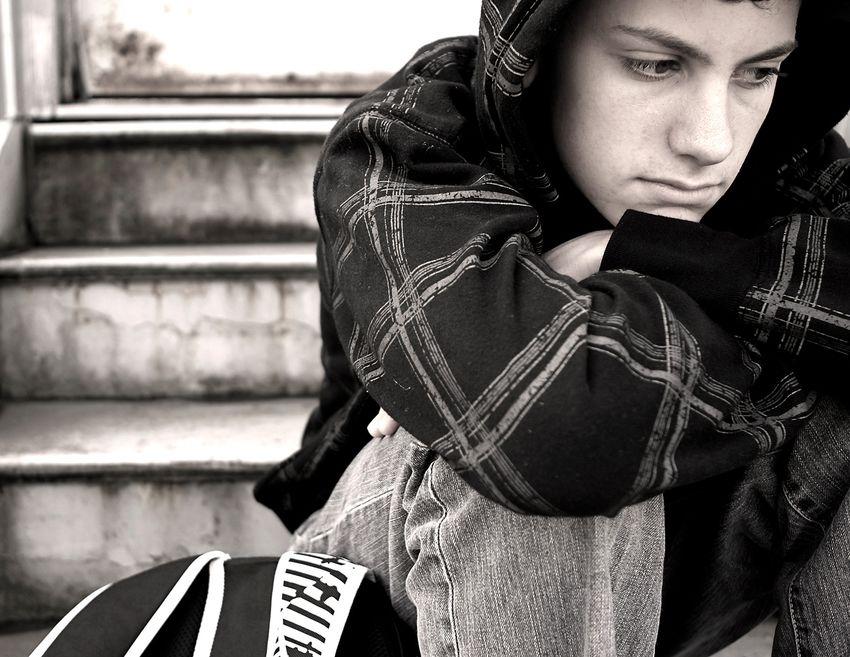
WHERE THE KIDS ARE
                                   Indigenous Children Are Over-Represented in Foster Care
                                                      UTLC is actively supporting this challenge

                             Aboriginal children 14 and under                        Yet they accounted for
                              Represented 7% of all children                        48% of all foster children
                                    In canada in 2011                                     In the country

                                    Source: The Globe and Mail, April 13, 2016                              = 2 children
©2021 UNTIL THE LAST CHILD                                                                                                 6
OVER-REPRESENTED IN ADMISSIONS INTO CARE
                                                           UTLC is actively supporting this challenge

                                proportion of            proportion of                            proportion of      proportion of
                             Indigenous children      Indigenous children                         Black children     Black children
                                in the general             in care was                            in the general       in care was
                               child population         2.6 times higher                         child population   2.2 times higher

                                          Source: Ontario Human Rights Commission Report, 2018 – 19
©2021 UNTIL THE LAST CHILD                                                                                                             7
WHO WE ARE Until The Last Child exists so that every
child who needs “BELONGING” with
a nurturing family gets one. Working
alongside child welfare entities, we fund
innovation and provide business expertise
to help them be more effective than with
public sector resources alone.
WE HELP THEM COMPLETE
CANADIAN FAMILIES.
WITH US
©2021 UNTIL THE LAST CHILD 8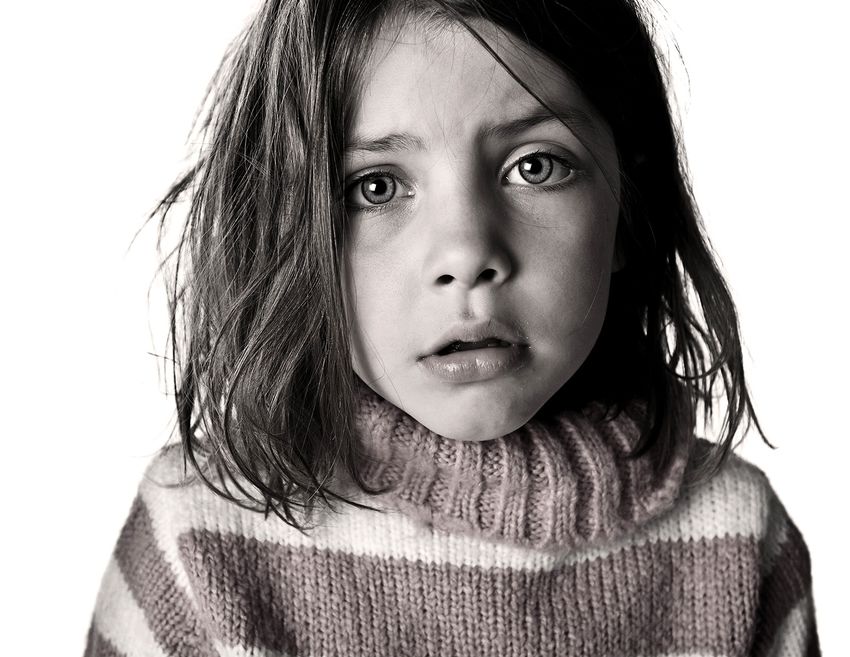
HELPING KIDS FIND “BELONGING” — LOVING HOMES
                                                            Innovation in Child Welfare
                                                 (Canadian Average Annual Permanency Rate is 5%*)

                                     76%                                             56%                                            50%
                                  Permanency                                      Permanency                                     Permanency
                                       Achieved                                        Achieved                                       Achieved
                                      During Pilot                                    During Pilot                                   During Pilot

                             Bringing Families Together                    Opaskwayak Cree Nation                           Keeping, Finding, and
                             Pilot Project in Winnipeg, Manitoba           Child and Family Services                        Honouring Connections
                             76% of the children served in                 Pilot Project in Northern Manitoba               Pilot Project in Guelph, Ontario
                             the pilot achieved permanency                 This pilot achieved a permanency                 Guelph achieved a
                             according to the Manitoba                     rate of 56% (2018 – 2019)                        permanency rate of 50%
                             Definition of Permanency within                                                                 (2012 – 2014)
                             the pilot’s 2 year time frame
                             (2016 – 2018)

                                               * According to: http://www.crin.org/en/docs/Canada_Canadian%20Coalition%20
                                                 on%20the%20Rights%20of%20the%20Child%20Response%20to%20List%20
                                                 of%20Issues_CRC.pdf
©2021 UNTIL THE LAST CHILD                                                                                                                                     9
UTLC PILOT PROJECTS
                  Ukrainian Government Child Welfare Project                                   Native Child and Family Services of Toronto
                  (2020 – 2023)                                                                                              (2020 – 2021)

                  Opaskwayak Cree Nation                                                                 Children’s Aid Society of Toronto
                  Child and Family Services                                                                 Kinship Search Program (2015)
                  (2018 – 2019)
                                                                                                                   University of Manitoba
                  Family and Children’s                                                                          Development of “Made in
                  Services of Guelph                                    UTLC                                        Manitoba Longitudinal
                  and Wellington County                              SUPPORTS                                  Wellness Indigenous” Model
                  Finding, Keeping, and                                                                                      (2020 – 2022)
                  Honouring Connections                             “BELONGING”
                  Pilot Project (2012 – 2014)                         FOR ALL                                                 Kinosao Sipi
                                                                                                                       Minisowin Agency
                  Bringing Families                                     KIDS                                         Family Finding Project
                  Together Pilot Project                                                                                     (2020 – 2022)
                  Winnipeg, Manitoba
                  (2016 – 2018)                                                                                       Manitoba Landmark
                                                                                                                       Social Impact Bond
                  Adoption Council of Ontario                                                                    Restoring the Sacred Bond
                  Research Project (2014 – 2015)                                                                 Pilot Project (2018 – 2019)

                             UNDERSTANDING THE CANADA-WIDE ECONOMICS/SOCIAL POLICY COSTS
                             The Conference Board of Canada Report – Success for All, Investing in the Future of Children in Care

©2021 UNTIL THE LAST CHILD                                                                                                                     10
A 2017 Ipsos Reid survey
found fewer than 8% of
Canadians ranked “children
at risk or in foster care”
as their most important
charitable cause.
“Action is the only remedy
to indifference, the most
insidious danger of all”
Elie Weisel
Night
©2021 UNTIL THE LAST CHILD 11CANADA’S CURRENT SYSTEM
9K KIDS IN ONTARIO APPROX. 3,000+/YR.
MILLIONS OF KIDS 250K KIDS (MINIMUM) 70K KIDS (ESTIMATED) 30K KIDS IN CANADA IN ONTARIO
CHILD AGES OUT
UNSEEN AT FOSTER GOV‘T OF CARE WITH
SILENT LIMITED OR NO
RISK CARE WARDS SUPPORT FROM
ABUSE THE SYSTEM
• Physical, emotional Known to the Legally available, still in
and sexual abuse Children’s Aid - active Foster Care – needs
monitoring & support permanent loving home.
• Extreme poverty ongoing. Child may
enter Foster Care.
• Neglect
• Abandonment
* Canadian Incidents Study of Reported Child Abuse and Neglect 2008 + Provincial Advocate for Children and Youth –
25 is the New 21 article
©2021 UNTIL THE LAST CHILD 12LET’S STOP THE Our vision:
30,000+ LOVING HOMES BY 2025.
CYCLE
WE NEED CORPORATE CANADA
TO ADOPT US and lead this
precedent‑setting movement.
©2021 UNTIL THE LAST CHILD 13WHAT IS THE WORLD CLASS EVIDENCE BASED
RESEARCH
SOLUTION Utilizing innovative jurisdictional
“best practices”
RESOURCES PROVIDED TO CHILD
WELFARE AGENDA
New funding and consulting expertise
LEVERAGE TECHNOLOGY
Innovative 21st century technology
to address systemic barriers – this
is a game changer
PROCESS ENHANCEMENT
Rigorous evaluation
©2021 UNTIL THE LAST CHILD 14WE WILL SHATTER CONVENTIONAL WISDOM
Through a Collaborative and Culturally Relevant “BELONGING” Approach
RECALIBRATE THE AGENDA
Infuse New Resources
Metrics
INNOVATIVE SET BOLD GOALS
THINKING UTILIZING
100% Permanency by 2025
JURISDICTIONAL
BEST PRACTICES
COLLABORATE
Business, Government, Academia,
Communities, Child Welfare
* Harvard Business Review – Multiplication Philanthropy. Feb 2012
* Harvard Business Review – A Unified Theory of Social Change. March 2012
* Stanford Review, Social Innovation – Collective Impact. Winter 2011
©2021 UNTIL THE LAST CHILD 15“In the past, the most powerful
people in society were in religion
and members of government,”
“In the last 50 years, it’s swung
to business people being the most
powerful and therefore I think
enormous responsibility goes
with this. They might think they
should just carry on and make
money, but they can also use their
entrepreneurial skills to sort out
the world’s problems.”
Richard Branson
Globe & Mail, May 18, 2012
©2021 UNTIL THE LAST CHILD 16OUR PROMISE
Until The Last Child (UTLC) exists to enhanced, stable outcomes for children premier panel of business process
help complete Canadian families. in care—outcomes that cannot be experts, and some of North America’s
achieved with public-sector resources most respected experts in child welfare.
We exist so that every child in Canada alone. In many cases, child welfare
who needs a healthy, permanent agencies already have the creativity The economic cost to society, the
home with a nurturing family gets and best practice models they need, emotional suffering for children
one at the earliest opportunity. but lack the funding to implement. without permanent families, and the
heartache often felt by those families
There are over 30,000 children across our We help child welfare entities maximize that would care for them make this
country awaiting a permanent home—yet their effectiveness. Our four‑pronged one of Canada’s most pressing issues—
as few as five percent of them find one. disciplined approach incorporates: one that has remained too low a
A 2013 Ipsos Reid survey found fewer priority for more than a century.
than eight percent of Canadians ranked • World class evidenced‑based research
“children at risk or in foster care” as With concerted effort, we are
• Robust process management,
their most important charitable cause. confident Canadian families will
analysis and results accountability
open their hearts and their homes
These children deserve better • Provide a steady stream of funding – Until The Last Child is home.
– we aim to change that. and resources to child welfare entities
• Leveraging technology to OUR VISION:
UTLC works alongside child welfare
address systemic barriers
entities, encouraging and supporting 30,000+ HOMES BY 2025.
innovation. We provide funding and UTLC is supported in this mission by
other necessary resources to enable corporate and individual donors, a
©2021 UNTIL THE LAST CHILD 17You have the power to change their lives forever
ADOPT US Funders Advisors
Advocates Volunteers
©2021 UNTIL THE LAST CHILD 18Our mentors are
Professor Julie Wilson Associate Professor Brad McKenzie
Malcolm Wiener Center for Social Policy Faculty of Social Work
at the HARVARD KENNEDY SCHOOL University of Manitoba
Department of Families
Ukrainian Government
Child Welfare Project
Our corporate partners are
©2021 UNTIL THE LAST CHILD 19CONTACT US
P.O. Box 279
31 Adelaide St. E.
Toronto, ON M5C 2J4
info@untilthelastchild.com
www.untilthelastchild.com
©2021 UNTIL THE LAST CHILD Images used on this book are for illustrative purposes only and any persons
depicted therein are models and not affiliated with UNTIL THE LAST CHILD or its mission directly.You can also read


