A PILOT STUDY INSIGHTS TO EFFECTIVE VOLUNTEER MANAGEMENT - NCSS
←
→
Page content transcription
If your browser does not render page correctly, please read the page content below

INSIGHTS TO EFFECTIVE
VOLUNTEER MANAGEMENT
A PILOT STUDY

“Volunteers as a form of                    “I volunteer in several
organisation resource should be             organisations. I find that those
viewed with greater strategic               with a (dedicated) Volunteer
importance. It’s heartening to see          Manager use the volunteers’
the Volunteer Manager Funding               skills more effectively, so
Scheme has enabled participating            we feel we are contributing
organisations to have dedicated             and not just a placeholder.
volunteer management roles                  A Volunteer Manager lets me
to effectively deploy resources             know what the organisation
available to them and increase              needs and helps me see how
their capacity to serve more                I fit in overall.”
service users.”                                                      – Richard
                 – Ms Charmaine Leung                      Long-term Volunteer
                          Group Director,               Beyond Social Services
      Fund-Raising & Engagement Group
       National Council of Social Service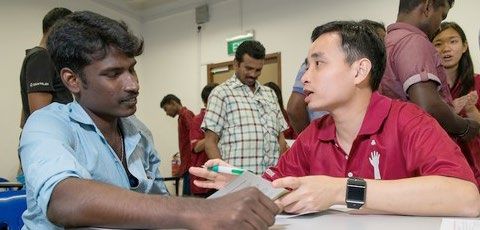
Foreword
Sim Gim Guan
Chief Executive Officer
National Council of Social Service

An active spirit of volunteerism and care from the community, for the community – that is
the heart of the SG Cares movement, launched by Prime Minister Lee Hsien Loong on 13 January
2018, and what National Council of Social Service (NCSS) strives to achieve together with our
social service organisations, corporate and community partners. This finite gift of time, however,
needs to be managed effectively to benefit volunteers, social service organisations, and ultimately
the service users who are in need.

With this in mind, NCSS rolled out the second year of the pilot Volunteer Manager Funding
Scheme (VMFS) with 10 volunteer managers and conducted a study to document achievements
and learnings. With strategic management and mobilisation of volunteer resources, the
participating organisations were able to enhance manpower utilisation and complement staff to
provide quality service solutions through sustained volunteerism. The pilot study also registered a
greater level of satisfaction and awareness among volunteers and corporate partners, which are
key factors to deepening and sustaining such collaborations across the social service ecosystem.

Beyond these key findings, the pilot study has underscored the benefits of having a dedicated
volunteer manager and having a volunteer management framework in place. Apart from ensuring
that volunteers are engaged and contributing in ways that are meaningful to them, the study
highlights best practices, strategies and examples to optimise resources, synergise efforts across
people, private and public sectors, and most importantly, improve the service delivery to our
service users.

I would like to extend my heartfelt thanks to the 10 participating member organisations,
volunteer managers from AMKFSC, AWWA, Beyond Social Services, HealthServe, Lakeside
Family Services, Lions Befrienders, Montfort Care, Rainbow Centre, RSVP Singapore and TOUCH
Community Services, and all other partners who helped put this report together. The experiences
and perspectives offered valuable insights that will help both NCSS and the sector to continually
improve the volunteer management journey, build a sustainable culture of volunteerism and truly
demonstrate the SG Cares spirit.

Table of Contents

INTRODUCTION & CONTEXT
      Understanding Volunteering in Singapore.......................................... 1

VOLUNTEER MANAGER FUNDING SCHEME (VMFS)...................................2
      Selection Criteria............................................................................ 3
      Performance Metrics....................................................................... 3
      Data Tracking & Supplemental Surveys............................................ 3
      Key Performance Indicators Data Report.......................................... 4
      Volunteer Feedback on Improvements.............................................. 4
      VMFS Participants & Achievements................................................. 5

CHALLENGES & BEST PRACTICES
      Organisational & Volunteer Management Challenges ....................... 10
      Recruitment.................................................................................... 11
      Data Management & Standard Operating Procedures........................ 14
      Training........................................................................................... 17
      Recognition & Retention.................................................................. 21

NEXT STEPS
      Next Steps for National Council of Social Service............................. 24
      Next Steps for VMFS Participants.................................................... 25

APPENDIX A:
Preparing for a Volunteer Manager
    Laying the Foundation...................................................................... 26
    Successful Volunteer Manager Traits................................................ 27

APPENDIX B:
Resources to Support Volunteer Management
    Enlarging Capacity.......................................................................... 28
    Enhancing Capabilities.................................................................... 28
    Leveraging Enablers......................................................................... 28

ACKNOWLEDGEMENTS. . .........................................................................29
1

Introduction
  & Context    Understanding Volunteering
               in Singapore
               Volunteering in Singapore has been on a continual rise in both numbers
               and commitment.

                                                                     Volunteer man-hours
                                                                     nearly doubled 1
                   In 2016,		             1 in 3
                   people in the country engaged in                  2014              66 million hours
                   volunteering (35%) as compared to
                   1 in 10 in the year 2000 (9%) 1                   2016                     121 million hours

               Social service organisations also benefited from the trend, with 38% of 242 social
               service organisations reporting more than 100 regular volunteers–those dedicating
               a minimum of 24 volunteer-hours with at least 4 engagements in a year.2

                                               children                persons with
                     seniors
                                              and youth                 disabilities

               The majority of these volunteer hours were spent in these three cause areas.

               In addition to giving time, current volunteers—individuals who volunteered in the
               last 12 months—also donated five times more in funds than non-volunteers. The
               average amount donated by a current volunteer was SGD 1,441, compared to
               SGD 285 by a non-volunteer.1 The level of corporate giving also grew impressively.
               In 2017, 39% percent of all corporate giving in Singapore was through volunteering,
               with 30% of corporate givers offering paid volunteer leave to employees.3

               By contributing both time and funds, volunteers form the backbone of service
               delivery for a large number of social service organisations in Singapore. However,
               effective volunteer management is needed to ensure that both volunteers and the
               organisations benefit from their experiences. To underscore the point, volunteer
               and human resource management was rated by Executive Directors as a very
               important aspect (top 3) for effective service delivery and more crucial to improving
               service delivery than attaining a high number of volunteers.2 On average, 71% of
               large social service organisations (defined as those with more than 100+ regular
               volunteers) have volunteer management roles.

               An organisation with a dedicated Volunteer Manager is likely to perform 10%
               better in volunteer management, including recruiting, training, recognising and
               retaining volunteers.

               1
                 Individual Giving Survey by National Volunteer & Philanthropy Centre (NVPC) 2016
               2
                 National Council of Social Service
               3
                 2017 Corporate Giving Survey by NVPC
2

    Volunteer Manager Funding Scheme
    While most social service organisations recognised the need for volunteers and effective volunteer management, not
    every social service organisation believes in it nor has the ability and the resources to manage volunteers efficiently or
    effectively. Individuals and corporate organisations often volunteer without the guidance of dedicated Volunteer Managers.
    In discussions with social service organisations, NCSS found that the staff managing volunteers often wore many hats–
    from programme management to operations to administrative support. More often than not, staff in the volunteer
    management role were untrained, under-resourced, and managed volunteers on an ad-hoc basis.

    Trained and dedicated volunteer managers in a social service organisation could address key challenges in three areas:

    Manpower                                             Volunteer Recruitment                 Alignment of
    Shortage                                             & Retention                           Volunteer Skills
                                                                                               & Needs with the
                                                                                               Organisation’s
                                                                                               Needs
    An increased number of effective                     Volunteer managers would help         A more robust volunteer
    volunteers would help supplement                     to implement better recruitment       management process would better
    organisational staff in increasing                   processes and help create a more      align volunteer skill sets and their
    service capacity and quality                         positive experience for volunteers,   needs with the social service
    of services.                                         helping retention.                    organisations’ strategic needs.

    NCSS’ next step to address these areas was to pilot the Volunteer Manager Funding Scheme (VMFS) in 2016. The VMFS
    aimed to test the impact of a dedicated Volunteer Manager on social service organisations, by funding the role for two
    years. NCSS selected 10 social service organisations from a pool of more than 80 submissions to receive funding for a
    dedicated Volunteer Manager position from October 2016 to September 2018. The VMFS’ main objectives were for social
    service organisations to:
    •     Optimise the use of regular volunteers to support service delivery
    •     Augment their manpower on a sustainable basis
    •     Implement the volunteer management framework for effective volunteer management

    The social service organisations selected differed in the type of causes they support and organisational size. Three out of
    the ten social service organisations created a new Volunteer Manager role, while the remaining seven organisations chose
    to fund existing staff. For the existing staff, the volunteer management function was newly added to their role.

        Leadership and Volunteer Managers from Montfort Care
3

Selection Criteria
Organisations were selected based on the following criteria:

        Support and                                Scalability                            Impact to the Sector
        Commitment                          Organisation’s ability to scale
                                          services to generate productivity
                                                                                       Organisation’s alignment with and
                                                                                          willingness to advocate NCSS
 Full support from the Board of
                                             improvements, for example                initiatives, for example championing
  Directors, Executive Director,
                                          increasing the number of service                  volunteer management for
   and senior management.
                                        users or generating cost efficiencies.                  sector-wide impact.

Performance Metrics
Performance was tracked against the following metrics:

      Total number                                  Total man-hours of                                 Total number of
      of volunteers                               volunteers and regular                                service users
                                                        volunteers                                        supported

                               Total number                                Percentage of satisfied
                                of regular                                      volunteers
                                volunteers

Data Tracking & Supplemental Surveys
NCSS worked with the 10 VMFS participants to track the key performance indicators (KPIs). Throughout the VMFS, NCSS
visited each agency to observe and discuss the organisation’s volunteer management practices, conducted mid-point
check-in at the one-year mark and hosted regular engagement sessions to foster networking, support and resource
sharing amongst the 10 social service organisations. Additionally, at the end of the funding period, in-depth interviews
were conducted with each organisation’s Executive Director (or equivalent) and Volunteer Manager to obtain learnings and
details on best practices and achievements.

In addition to metrics tracking, three surveys were conducted at the end of the funding period with the findings shared
throughout the report:

1.   Survey of 518 volunteers across the 10 VMFS participating organisations to understand their satisfaction levels for
     recruiting, training, recognition, and feedback.

2.   Survey of Volunteer Managers and the EDs / CEs of the 10 funded organisations to understand the value of the
     Volunteer Manager role.

3.   Survey of a control group of non-VMFS funded organisation EDs / CEs and Volunteer Managers (or the person
     acting in the Volunteer Manager role) in 10 service organisations. The 10 non-funded organisations were similar in
     size to the VMFS participants.
4

    Key Performance Indicators Data Report
    Overall, the VMFS achieved its KPIs which it set out to achieve. Significant improvement across all metrics were
    demonstrated at both aggregate level and at individual social service organisation level. Across the 10 funded
    social service organisations, the growth at the end of the funding period vis-a-vis the baseline is showcased here.

    Exceptional performance on every measured indicator

                                                                                                      41K               No. of Volunteers
                                                         36K
                                                                                                                        No. of Regular Volunteers
                                                                                                       6K
                                                                                                                        Volunteer Hours
     27K                                                  4K
                                                                                                    578K                Regular Volunteer Hours*
                                                         416K                                                           No. of Users Served
     3K                                                                                             422K
                                                                                                                        % of Satisfied Volunteers**
     257K
                                                         252K                                       436K

     189K
                                                         358K
                                                                                                      91%          * Delta increase is equivalent to about
     272K
                                                         87%                                                         12 full-time employees per organisation
     46%                                                                                                           ** % Based on average of 10 organisations

    Baseline                                            Year 1                                    Year 2

    Long-term volunteers—defined as volunteering over two years at an organisation—were also surveyed to rate
    improvements within the organisation. More than 60% reported improvements across every aspect of the Volunteer
    Manager’s function.

    Volunteer Feedback on Improvements
                                                                                                                                       2.2%
           Training                     40.2%                                 28.3%                    25.5%
                                                                                                                                    3.8%

           Overall                                                                                                                     1.7%
     Satisfaction                    31.6%                            31.6%                           31.1%
                                                                                                                                    4.0%
    of Volunteers

       Volunteer                                                                                                                       1.7%
                                  30.9%                              31.5%                          29.3%
     Recognition                                                                                                                    6.6%

          Data                                                                                                                         2.3%
                                28.9%                              28.3%                          37.6%
    Management                                                                                                                      2.9%

       Feedback                                                                                                                        1.7%
                            22.0%                                  44.6%                                29.4%
        Process                                                                                                                     2.3%

       Volunteer                                                                                                                       3.3%
     Recruitment            22.2%                          29.4%                              43.3%
                                                                                                                                    1.7%
         Process

       Volunteer                                                                                                                       2.8%
                          17.9%                        30.7%                                43.6%
       Retention                                                                                                                    5.0%

           Significant improvement           Minor improvement      Neutral      No improvement         It was better 2 years ago

    Feedback on improvements by volunteers in the 10 VMFS funded organisations
5

VMFS Participants & Achievements

       The following sections of this report highlight the key achievements of the VMFS, including:
       • Participants’ results against the key performance metrics
       • Benefits to the participants from employing a dedicated Volunteer Manager
       • Best practices for deploying a Volunteer Manager
       • Lessons learned for the future

AMKFSC Community Services Ltd.                                               www.amkfsc.org.sg
A leading community-based social service agency, which provides
a comprehensive range of services to support various service            Achievements:
users over multiple touchpoints across Singapore. AMKFSC
operates four family service centres in Ang Mo Kio, Sengkang and        2018                   2,523
Punggol, and offers other support services such as student care                                         157% growth in
                                                                        2016     980                    number of volunteers
centres, senior service, specialised services for youth and young
persons, and community mental health and wellness programmes.
                                                                        2018                   30,825   323% growth in
                                                                                                        number of volunteer
                                                                        2016          7,281             man-hours
                                                                         •   Created standard operating procedures
                                                                             for volunteer management.
                                                                         •   Moved from Excel spreadsheet for
                                                                             volunteer tracking to a more robust
                                                                             volunteer management system to track
                                                                             volunteer hours.

AWWA Ltd                                                                     www.awwa.org.sg
A social service organisation serving more than 10,000 of
the disadvantaged across life stages. Services include early
intervention for preschoolers, education and disability support
                                                                        Achievements:
for children with special needs, assistance to low income
families, caregivers, and health and social assistance for
                                                                        2018                      726   984% growth
                                                                                                        in number of
vulnerable seniors.                                                     2016     67                     regular volunteers

                                                                                                        Served 67%
                                                                        2018                   10,000

                                                                        2016           6,000            more users

                                                                         •   Implemented training & development
                                                                             framework for all volunteers.
                                                                         •   Created e-orientation modules to improve
                                                                             volunteer training efficiency.
6

    Beyond Social Services                                                  www.beyond.org.sg

    Beyond Social Services helps children and youth from less
    privileged backgrounds break away from the poverty cycle. They
    take a long-term view of their work and keep in touch with their
                                                                        Achievements:
    members until they reach adulthood. By being an advocate,
    enabler and motivator, Beyond rallies residents in public rental
                                                                        2018                6,926
                                                                                                     Doubled
    housing to work closely with other stakeholders in nurturing        2016     3,458               volunteer numbers
    young people to lead purposeful and meaningful lives.
                                                                                             409
                                                                        2018
                                                                                                     309% Growth in
                                                                        2016    100                  regular volunteers

                                                                        •   Created and launched Beyond Self Academy,
                                                                            an exchange platform for training that
                                                                            nurtures volunteers to fulfil Beyond Social
                                                                            Services’ vision of a vibrant volunteer
                                                                            driven culture to improve volunteer
                                                                            attraction and retention.
                                                                        •   Used social media to recruit and market,
                                                                            as well as to feature stories of regular
                                                                            volunteers to demonstrate how to
                                                                            contribute even with limited time or skills.
                                                                        •   Supportive of the strategic value of
                                                                            volunteer management and looking to keep
                                                                            the Volunteer Manager role going forward.

    HealthServe Ltd                                                         www.healthserve.org.sg
    HealthServe serves disadvantaged migrant workers in Singapore
    through healthcare, counselling, casework, and social assistance.
    The organisation advocates for and raises awareness for the
                                                                        Achievements:
    needs of migrant workers and bridges communities through
    meaningful partnerships and effective volunteers.
                                                                        2018                 455    379% Growth in
                                                                        2016      95                regular volunteers

                                                                        2018               14,155   314% Growth in
                                                                                                    regular volunteer
                                                                        2016     3,420
                                                                                                    man-hours

                                                                        •    Started using cost efficient technology
                                                                             to track volunteer activities and hours
                                                                             leading to improved efficiency and
                                                                             accuracy in record-keeping.
7
Lakeside Family Services www.lakeside.org.sg
Lakeside Family Services runs two Family Service Centres and
two Student Care Centres in Jurong providing highly subsidised,
quality services to underprivileged children, youths, families, and
Achievements:
seniors, regardless of race, language or religion. Lakeside works
with families in distress because of multiple issues and provides
2018 1,908
110% growth in
support through a multi-pronged approach, including financial 2016 909 number of volunteers
assistance, counselling, children and youth developmental
programmes, home and employment assistance. Last year, 2018 7,000
Lakeside journeyed with over 1,500 families and over 4,000 of 67% more
2016 4,200 users served
their members and other individuals through their services.
• Created and implemented a QR code
system for registering and tracking
volunteers leading to a larger, more
accurate database.
• Began following a 5-step human resources
model for volunteer retention.
Lions Befrienders Service www.lionsbefrienders.org.sg
Association (Singapore)
Formed in 1995 by the Lions Clubs of Singapore, Lions Befrienders
has more than 20 years of history in working with stakeholders Achievements:
to provide friendship and care for seniors to age in place with
community participation, enabling them to enjoy enriching lives. 2018 22,466 281% growth in
number of volunteers
2016 5,898
man-hours
• Launched a two-tiered volunteer
training programme with a pathway for
volunteer growth, including a Befriender
Certification, which upskills volunteers
in areas of communications and
engagement.
• Aligned the organisational needs
with volunteer needs and recruitment
for better volunteer satisfaction and
retention.
• Formalised volunteer feedback with an
online satisfaction and feedback survey.8
Montfort Care www.montfortcare.org.sg
A network of programmes committed to improving the lives
of individuals, families, and the community facing transitional
challenges. The team of social services professionals provides
Achievements:
community-based social services to empower lives and 2018 2,597
strengthen communities. Services offered include three Family 642% growth in
2016 350 number of volunteers
Services Centres, child protection service, cyber wellness
programme, and programmes to support active and frail
2018
seniors to age-in-place. 73,906
140% growth in
2016 30,848 users served
• Built stronger corporate relationships aimed
at long-term engagement, through funding
and volunteering, meeting both the needs of
Montfort Care and the corporate partners.
• Standardised processes to improve
efficiency, including centralising data
collection forms and building a data
management system that tracks hours
and acts as a centralised communication
platform to notify volunteers about available
programmes.
• Created an opportunity for the sharing of
best practices among different centres’
coordinators allowing them to discuss
challenges, solutions, and training resources.
Rainbow Centre, Singapore www.rainbowcentre.org.sg
Rainbow Centre envisions a world where persons with disabilities
are empowered and thriving in inclusive communities. The
organisation works with partners to create opportunities for
Achievements:
persons with disabilities to make the most of their abilities and
participate meaningfully in society. Through practical education,
2018 663
83% Growth in
meaningful support, and effective training programmes, Rainbow 2016 362 regular volunteers
Centre strives to increase the quality of life for persons with
disabilities and their families. • Refined the volunteer recruitment
programme.
• Revised volunteer job descriptions to
clarify roles, time commitment, and set
expectations for both the organisation
staff and the volunteers.
• Standardised training, structured orientation,
and created an observation period for
classroom volunteers.
• Organised Engagement Tea, where volunteers
share inspiring or challengingng experiences
and feedback about their volunteer work.9
RSVP Singapore The Organisation www.rsvp.org.sg
of Senior Volunteers
The organisation of senior volunteers, RSVP actively engages Achievements:
seniors in purpose-driven volunteerism. With over 1,000
members and 1,500 ad-hoc volunteers, RSVP Singapore 2018 433
48% growth in
supports more than 200,000 service users each year including regular volunteers
2016 292
the mentally disadvantaged, at-risk children from low income
families, and socially isolated seniors through its community
2018 291,516
service programmes. 52% growth in
2016 191,757 users served
• Created OpenHouse@RSVP, a monthly job
fair-style recruitment event with booths
dedicated to different volunteer activities.
• Began a “funneling” system for volunteers
that allows the organisation to better match
volunteers interests and time commitment to
RSVP’s needs.
• Implemented a volunteer management system
that allows the organisation to map the location
of the volunteers and mobilise them by locale.
• Developed a training manual for the volunteer
management system to train programme staff.
TOUCH Community Services Limited www.touch.org.sg
TOUCH Community Services is a not-for-profit charitable organisation,
dedicated to meeting the needs of children from low-income or single
parent families, youth-at-risk, needy families, people with special
Achievements:
and healthcare needs, and frail elderly. Through its network of 18 2018 10,860
services, TOUCH is committed to serving people of all ages, races, DOubled total
2016 5,378 number of volunteers
religions and backgrounds. Each year, its programmes and services
meet the needs of more than 31,000 service users.
95%
2018
10% rise in Overall
2016 85% Volunteer satisfaction
• Standardised volunteer orientation and
training to ensure consistent understanding
of TOUCH’s work
• Ramped up volunteer recognition efforts
using social media to profile volunteers’
work, as well as featuring their stories in the
monthly corporate e-newsletter, TOUCH Base.
Overall, the VMFS pilot scheme significantly improved the volunteer management function for the 10 participating
social service organisations. Even though different organisations found different ways in which a dedicated
Volunteer Manager could contribute, each organisation found that their volunteer numbers increased and that
new and productive processes to manage volunteers were created. Ultimately, this helped to lay the potential
foundation to improve the quality of life for the service users and increase the capacity of each organisation.10
Challenges & Best Practices
When interacting with the VMFS participating organisations, NCSS found the following key challenges in
volunteer management:
1. Difficulty in securing regular volunteers to commit at least 24 hours and 4 times per year
2. Need for a more efficient way of tracking numbers and management of volunteers across different
programmes/centres (i.e. need for volunteer management system/technology)
3. Turnover in Volunteer Managers
Organisational & Volunteer Management Challenges
While Volunteer Managers were brought in to address these volunteer management challenges, they also faced their own
challenges inside and outside the organisation. Challenges faced by Volunteer Managers across multiple organisations include:
Lack of Internal Support. Support for the Volunteer Manager role from the Board and management team through
to the programme staff is critical for success. The role must be recognised and properly resourced by the Board and
executive team. Volunteer Managers also spoke of needing to work towards an internal mindset shift with regard to their role
and the role of volunteers within the organisation. They expressed difficulty in getting the entire team to see that volunteers
are part of the ecosystem and can contribute in a meaningful way.
Untrained Volunteers. Trained volunteers who understand what to expect from the volunteer experience tend to
have more longevity in the organisation. Training takes time and resources, but is critical to success.
Alignment of Needs & Expectations. Volunteer Managers shared that it is critical to match an organisation’s
needs and the volunteers’ skills, desires, and agenda by placing volunteers in suitable roles. At the same time, when
volunteers have expectations that may not align with the organisations, Volunteer Managers stressed the need to not turn
them away, but to open a discussion to manage expectations for future activities.
Obtaining Feedback. Social service organisations required feedback on the volunteer experience in order to make
it meaningful for the organisation and the volunteers and to encourage repeated volunteering. Organisations and Volunteer
Managers found obtaining feedback a challenge, particularly with corporate volunteers.
Best Practices Developed
To address the challenges above, the VMFS participants created a variety of innovative, replicable and scalable best
practices for volunteer management that can be deployed by organisations across the social service sector over the
past two years. These best practices involved four key areas:
1. Recruitment
2. Data Management & Standard Operating Procedures
3. Training
4. Recognition & Retention
These practices could be used by dedicated Volunteer Managers in any social service organisation to achieve greater
impact for the organisation, and for the organisation to recruit and retain volunteers.11
Recruitment Recruiting the right volunteers is a big challenge. While there are ample
individuals and corporate partners offering volunteer time, making sure they
are the right fit for the tasks required starts with successful recruitment. From
writing detailed job descriptions to open house fairs to three-month mentoring
periods to curated corporate volunteer engagement, the VMFS participants
incorporated changes to make their recruitment processes more robust. The
result has been an increase in both overall (49% average growth from 2016)
as well as regular volunteer numbers (140% average growth from 2016).
40,776
6,382
27,429
2,657 No. of Volunteers
No. of Regular Volunteers
Baseline Year 2
Increase in volunteer numbers over 2-year funding period.
Rainbow Centre Begins Recruitment
Program & Solidifies Job Descriptions
While Rainbow Centre needed more and more volunteers to support its
programmes and services as the organisation grew, it did not have the resources
to actively recruit volunteers. As such, the Centre faced a lack of volunteers for
its programmes, as well as a lack of clarity on volunteer roles. With a dedicated
Volunteer Manager supported by the VMFS, they were able to use social media,
SG Cares, and roadshows to recruit volunteers. In year one of the pilot programme,
they nearly doubled their overall number of volunteers from 1,253 to 2,269 and
increased their total volunteer hours from 40,599 to 60,357.
From a process standpoint, they revised volunteer job descriptions to clarify roles,
time commitment, and set expectations for both sides. These steps have led to
more satisfaction from staff with regard to volunteer quality and from volunteers
with regard to their placements. In fact, 97% of volunteers report being satisfied
with their work at Rainbow Centre.
97%
volunteer
satisfaction12
RSVP’s Open House Recruitment Funnels
Interest for Better Retention of Volunteers
In the past, recruitment at RSVP meant staff had to conduct a one-to-one interview with a
potential recruit and discuss all the options for volunteering. As a multi-service organisation with
many different types of activities and commitment levels, this was time consuming and labour
intensive. It meant that RSVP could only reach a handful of potential recruits per month. Looking
for a broader, more efficient approach to recruitment, RSVP created OpenHouse@RSVP, a monthly
job fair-style event with booths dedicated to different volunteer activities. The organisation
casts a broad net inviting all seniors who might be interested in giving their time and talents to
the community. During Open House, current volunteers share their experiences with the aim of
inspiring others to become volunteers. They have had 30-40 attendees for each session.
After an Open House session, the recruitment process becomes a “funnel.” Interested attendees
go through a free half-day workshop about how to be an effective volunteer. About 80% of those
attending Open House move on to RSVP’s volunteer training which aims to show what they can
expect from the experience, but also what RSVP and other social service organisations expect
from them. Many of them become episodic volunteers, whom RSVP calls upon for event-based
or one-off activities throughout the year. The rest continue on as regular volunteers in their
weekly programmes.
OpenHouse@RSVP
Half-day Free Workshop
80%
RSVP’s Volunteer of attendees move on
Training to volunteer training
Episodic Volunteers/
Regular Volunteers
After the workshop, RSVP will place potential volunteers as observers in an actual volunteering
session with another social service organisation. They will also be paired with an experienced
volunteer or volunteer team leader. This further aligns expectations, with about 50% of these
converting to regular volunteers and quite a few of the rest becoming episodic volunteers,
creating a ready volunteer pool. Open House led to an additional 2,191 regular volunteer hours,
meaning RSVP could support an additional 29,928 service users by the end of the second year.13
Lions Befrienders Aligns Organisational Needs
with Volunteer Recruitment and Needs
Lions Befrienders believes that volunteer satisfaction and retention starts at the very beginning with
recruitment. By firmly understanding organisational goals and recruiting the right volunteers in service
of meeting the goals, volunteers will be more satisfied and more likely to convert to regular volunteers.
Recruitment begins with a screening process to orient volunteers to their programme and set
expectations for both sides. A Befriender Executive guides new Befrienders and provides a channel
for feedback and questions. During the first three-months the volunteer management team offers
support by calling new Befrienders to check on their well-being.
As an organisation that services seniors who may not be
fluent in English, language skills are a key component to
providing their services. When recruiting, Lions Befrienders Volunteer satisfaction
looks for volunteers who speak both Mandarin dialect and & retention begins
English/Mandarin. However, if volunteers do not speak with recruitment.
Mandarin dialect, the organisation conducts dialect training
sessions for them and encourages volunteers to learn from
the seniors they are serving.
With regard to volunteer needs and expectations, the team noticed the general profile of volunteers
is skewing younger. So they created an online recruitment and sustenance platform for its tech-savvy
younger recruits. They kept the call-in registration available as well to cater to the needs of mature
volunteers who are less tech-savvy.
Montfort Care Builds Corporate Relationship
Montfort Care struggled to build long-term corporate relationships because without a dedicated Volunteer
Manager, they did not have the bandwidth to manage them properly. Prior to the VMFS, Montfort Care worked
with corporate partners in one-off activities, such as food distribution or a single service visit, all geared
around corporate objectives and needs. But Montfort Care understood this was not a long-term solution to
meet their service needs. When Keppel Care Foundation approached Montfort Care for a corporate project,
having a dedicated Volunteer Manager allowed Montfort Care to propose a one-year commitment designed
to meet the objectives of both sides - to improve the outcomes for their service users.
Working together, they
created a nutrition
programme for seniors
Montfort’s dedicated
where a registered nurse Volunteer Managers
developed nutritious, created a bespoke
inexpensive and
corporate partnership.
personalised recipes
for each service user’s
needs. Then, Keppel volunteers visited the seniors and they
shopped together for ingredients for the receipe, using a voucher
system supported by Keppel.14
Data Capturing the details of new volunteers, getting a sense of volunteer activities
on an ongoing basis, assigning the volunteers to the right roles based on their
Management preference and experience, and enabling centralised volunteer communication
all fall in the area of data management and standard operating procedures
and Standard (SOPs). Now, more than ever, social service organisations feel the need to
evolve and adopt technology to enable efficient processes. 75% of the Volunteer
Operating Managers under the VMFS have started new initiatives in the last two years in
the area of data management compared to only 10% in non-VMFS organisations.
Procedures Having a dedicated Volunteer Manager vastly enables improvements in this area.
Data
Management
Process
Improvement
Communication
to Youth
Training
Recruiting
0% 25% 50% 75% 100%
VMFS Participants Control Group
New projects initiated by VMFS participants’ Volunteer Managers vis-a-vis the control group
HealthServe Uses Technology for
Better Data Management
HealthServe began using Google sheets as a cost-effective and efficient way
to track volunteer activities and hours. A potential volunteer keys details into a
volunteer interest form on the organisation’s website which populates a Google
Sheet. Volunteers’ phone numbers are used as an identifier. At the beginning of
each session, a volunteer scans a
QR code, which links to a Google
Use of QR codes to link
Form where they input the number
of hours they volunteer. HealthServe to expanded database
worked with an IT volunteer to for better tracking of
develop the system. volunteer hours.
The Google Sheet database has
helped the Volunteer Manager find out who their most active and committed
volunteers are, allowing for recognition and appreciation of volunteers that was
not possible before, due to a lack of data.15
Lakeside Family Services Leverages QR Codes
To Register New Volunteers
Lakeside Family Services works with large groups of
volunteers. While this is useful for one-off events, the
organisation also needs regular volunteers. Lakeside
viewed the large number of volunteers as a recruitment
opportunity, but needed a way to contact the individuals,
because most often the only contact for a group is with
the leader, leaving the organisation unable to follow up
with anyone else.
Looking for a practical, efficient, low-manpower, low-cost
way of collecting volunteer contact information, Lakeside
developed a QR code registration form for free. All
volunteers now scan a QR code posted at the activity
check-in desk. This links to a data collection form that
pulls info into their database. There is no physical form,
meaning it’s quick and easy, and there is no need for
2018 26,270
Lakeside staff to enter data, thus improving accuracy. Volunteers
2016 5,088
man-hours
This greatly expanded their database, allowing them
to reach out to more volunteers for both one-off and 2018 17,174 Regular
Volunteers
regular opportunities.
2016 9,828 man-hours
Montfort Care Standardises Processes
to Improve Efficiency
Montfort Care, with its multiple service centres, has a decentralised volunteer management system
with each centre responsible for recruiting, training, and sustaining their own volunteers. With
programme staff stretched thin and no way to track volunteers throughout the organisation, Montfort
Care saw a role for an internal resource for programme staff who manage volunteers. The Volunteer
Manager acts as a bridge between the centres and headquarters.
Each centre appoints a coordinator to work with the Volunteer Manager. The first step was to shift
the mindset among those dealing directly with volunteers to understand that volunteers are partners
in service delivery and staff must maintain the relationship and recognise volunteers for their work.
Part of that comes from tracking volunteers’ contact information and hours. To support this, the
Volunteer Manager instituted standard operating procedures including data collection forms and a
data management system, into which respective volunteer coordinators enter the volunteer activities
and movement in the system. In addition to tracking hours, this allows for centralised communication
to volunteers about available programs.
The Volunteer Manager also created a platform for The Volunteer Manager
the sharing of best practices among coordinators
allowing them to discuss challenges and solutions
coordinates volunteer
that others may be facing. In addition, it allows activities and best practices
centres to share training resources. across different centres.16
Rainbow Centre Standardises
Volunteer Training Operating Procedures
In looking for gaps in their standard operating procedures, Rainbow Centre (RC) saw a need to
standardise training, structure orientation, and create an observation period for classroom volunteers.
Through their Training and Consultancy department, RC began offering standardised training in two
modules—Disability Awareness and Understanding Challenging Behaviours. RC structured their
orientation process by developing a deck of standard slides, which includes the organisation’s
vision/mission and volunteer policies. Sometimes they include a sharing session with an
experienced volunteer.
It was a challenge to align the expectations of classroom volunteers with the expectations of
teachers. By creating an opportunity for potential volunteers to observe service users prior to
placement, volunteers better understand the expectations around their tasks and the service
users’ needs, creating a better experience for both sides.17
Training Overall, training was the area with the greatest improvement across the VMFS
with 68.5% of long-term volunteers experiencing training improvements over the
last two years. 82.5% of all volunteers found the training useful (42% extremely
useful). Standardising volunteer training, creating e-learning modules to save
time, ongoing training for experienced volunteers and launching a training
academy are some of the key initiatives over the last two years implemented
by VMFS participants.
41.9% 40.6% 15.6%
1.7%
0.3%
Extremely Useful Slightly Useful Neutral
Not useful Quite redundant
Response from VMFS participants’ volunteers on the usefulness of training programs
TOUCH Community Services Standardises
Volunteer Orientation
As a multi-service organisation, TOUCH Community Services works with a varied
group of volunteers who help to support its 18 services across the island.
Previously, each service area would create their own orientation and training
process, which may lead to inconsistencies and quality control concerns.
Having in place a standardised orientation system across all 18 service areas
allows staff to ensure that volunteers have a consistent understanding of how
TOUCH serves the community. Where required, services would also customise
specific areas of training to ensure that volunteers are adequately prepared for
their roles. This approach ensures that all volunteers have the same quality
onboarding experience.
TOUCH categorises its volunteers and aligns specific training guides for each.
Type of Volunteers Initial Training
Briefing
Ad-hoc
•Introduction to TOUCH •Roles and Responsibilities
Volunteers
•Code of Conduct •Safety briefing
Orientation Programme
•Introduction to TOUCH
•Roles and Responsibilities
•Policies and Processes
Service-based •Communication
•Handling service users
Volunteers •Demonstration
•Code of Conduct
•Safety briefing
•Assignment of buddy
or mentor
Briefing
•Introduction to TOUCH •Roles and Responsibilities
Skill-based
•Policies and Processes •Communication
Volunteers
•Handling service users •Demonstration
•Code of Conduct •Safety briefing
TOUCH Training Framework18
AWWA Implements Training &
Development Framework for All Volunteers
AWWA conducted an organisational-wide training and development needs analysis for all volunteers
(stage 1). With that information, AWWA assessed their current volunteers’ need for training and
development (stage 2). Next, they created customised training solutions for individual volunteers
(stage 3). In stage 4, the organisation implemented the volunteer training programme. The last stage
is to evaluate the programme. The programme is evaluated every three months by a volunteer survey
measuring overall experience satisfaction, effectiveness of training programme, and effectiveness of
the trainers.
In the latest post-training evaluation in 2018, AWWA reported receiving a 4 out of 5 rating by 100%
of the trained volunteers on the four key areas. They were, a. Usefulness of the training in their
volunteer work, b. Meeting the training objectives of the volunteer, c. Improving confidence in handling
service users and d. Applying the skills from the training to their day-to-day volunteering work.
Stage 2 Stage 3
Training and Building a
development customised training
needs analysis for solution
Volunteers
Stage 1
Organisational
vision & Stage 4
competency Deploy & implement
alignment Volunteer Training
Programme
Stage 5
Effectiveness of
training programme
AWWA Organisational Framework for Volunteer Training
Stage of
Domain Core skills needed to perform this role Training required for volunteer
completion
Module 1:
Sensory processing and its implications 12 hours
Self-Care Implementation of Sensory Diets
on self-regulation, attention, learning and practicum
emotional functioning
Module 2:
Carrying out of activities for 12 hours
Activities for the development of hand
development of hand skills practicum
skills
Learning
Implementation of motor exercises Module 3: 10 hours
for praxis and motor planning Praxis and motor planning practicum
Developmental gross Module 4: 10 hours
motor exercises Gross motor developmental milestones practicum
Module 5: 10 hours
Transferring child
Postural care practicum
Gross Module 6: 16 hours
Facilitation of hydrotherapy
Motor Facilitating hydrotherapy practicum
Carry over of intervention strategies Module 7: 16 hours
in the class and home environment Range of motion exercises practicum
Maintenance and conditioning Module 8: 16 hours
including gait training Balance and gait training practicum
AWWA Sample Individualised Training Plan for Therapy Aide Role19 AWWA Creates E-Orientation Modules to Improve Training Efficiency Looking for a more efficient and systematic way to orient volunteers, AWWA turned to technology, creating e-orientation modules covering the basics of dos and don’ts for working with service users, event-specific information, confidentiality, and administration. While the content-heavy modules took time to develop, AWWA felt strongly that the time was well worth it in manpower savings alone. Prior to e-orientation, AWWA staff would go directly to a corporate partner’s site to conduct an orientation. This posed several challenges including scheduling, significant time commitment, and difficulty in reaching every volunteer who would participate in an activity. Technology eliminates scheduling conflicts as the volunteers can do the training when it’s convenient. It saves on staff time, as AWWA estimated each orientation could take up to three hours, including travelling time to the service user site. And, if the AWWA staff had to return to a site because the entire group could not participate in a single session, that doubled or tripled the amount of staff time required. Each volunteer who registers for the system is given a unique number, enabling AWWA to track progress of the training. Each module takes about 30 minutes to complete. A big portion of the e-learning is devoted to ensuring volunteers are comfortable and understand what to expect from the service users. Lions Befrienders Creates Pathway for Volunteer Growth Lions Befrienders created two levels of training for volunteers allowing for growth as the volunteer is likely to stay with the organisation. Initially, all volunteers attend a one-time induction workshop consisting of four hours of classroom training including role play, case studies, and discussion. After volunteering a minimum of one year, those who wish to explore “breakthrough goals” for the service users may go for advance training to obtain a Befriender Certification. Breakthroughs refer to anything that the service user has not done before and may be as simple as going out for a walk or watching a movie. The objective is to encourage service users to take small steps outside their comfort zones to become less socially isolated. Befriender Certification training is offered once a year. It consists of an eight-hour classroom training session, followed by coaching and review sessions over the next six months. It has been available for two years and 20 people have taken up the certification challenge. Service users benefit from the additional support are obvious. For the Certified Befriender, the benefits include learning new engagement and communications skills.
20

     Beyond Social Services’ Beyond Self Academy
     Nurtures Volunteers
     Beyond Self Academy, an exchange platform for training, nurtures volunteers to fulfil Beyond Social
     Services’ vision of a vibrant volunteer-driven culture. The Academy leverages volunteers’ strengths
     and passions to respond to community needs, creating bonds between people from all walks of life
     and fostering a strong sense of community. The Academy’s goal is for participants to pay forward
     their new skills to Beyond Social Services through volunteering. The Academy’s training calendar
     is accessible for existing and potential volunteers. The curriculum is geared towards community
     needs and all training enables volunteers to contribute to one or more of the following roles:

     •    Project: one-off or ad hoc experience, such as door-knocking, gifts distribution

     •    Programme: 2-4 hours weekly for a minimum of 6 months, such as learning programmes,
          interest groups

     •    Relationship: 2 hours weekly for a minimum of 6 months, such as befriender

     •    Leader: professional expertise providing strategic direction, such as board members or
          management committee

     The curriculum has five different exchange areas:

                                                                    •   Teaching math models for
          Volunteers/Staff      Volunteers and staff train              primary school children
                                other volunteers with specific      •   Basic befriender training
             Volunteers         community action skills.            •   Photography 101
                                                                    •   Creativity Workshop

                                                                    •   Financial knowledge
            Volunteers          Volunteers train members
                                                                    •   Music skills
                                of the local community in
                                                                    •   Literacy
         Local Communities      specific areas.
                                                                    •   Swimming

                                                                    •   Baking
         Local Communities      Local community members
                                                                    •   Cooking
                                train volunteers in their areas
                                                                    •   Stretching the dollar
            Volunteers          of proficiency.
                                                                    •   Flower arrangement

                                                                    •   Football
          Local Volunteers      Local volunteers are drawn
                                                                    •   Dance
                                from the community where
                                                                    •   Baking
         Local Communities      Beyond works.
                                                                    •   Sewing

                                                                    •   Financial Planning
            Volunteers          Volunteers offer Beyond staff       •   Work plans
                                skills-specific training in their   •   Project management
               Staff            areas of expertise.                 •   Crisis management skills
                                                                    •   Using apps to organise work
21
Recognition From small initiatives such as recognition on social media to large ones such
as launching a volunteer retention programme and changing the feedback
& Retention process, the VMFS organisations realised that recognising and retaining great
volunteers is as important as recruiting them. In fact, 80% of the volunteers
surveyed from VMFS organisations feel appreciated as a volunteer (27% feel
greatly appreciated).
27.0% 52.9% 17.4%
1.5%
Greatly Appreciated/Very important 0.4%
Appreciated/Important
Neutral
Not much appreciated/Not so important
No appreciation at all/Not important at all
Response from VMFS participants’ volunteers on feeling of being appreciated
Lions Befrienders Collects Feedback
Via Online Survey
In the past, Lions Befrienders collected only informal feedback through volunteer
team leaders or would check-in with volunteers on an ad-hoc basis when they
met them in person. Realising this was not the best way to collect information,
especially when they were looking at ways to improve the volunteer experience,
Lions Befrienders created an annual online satisfaction survey using a simple
Google Form two years ago. It was free and effective.
Their volunteers were eager to share their feedback. Many of them commented
that they would like more activities where they can participate in groups with their
service users and other volunteers. This prompted the organisation to open the
annual Befriender Day to service users and offer activities at the event where
they could engage with one another and with volunteers.22
Lakeside Uses Human Resources Model for Retention
With five simple steps, Lakeside Family Services created a stewardship model for retaining volunteers.
1
Orientation for volunteers
All volunteers receive a basic orientation to align both their and the organisation’s
expectations. A clear understanding of what they will be doing and why is key to a
positive and rewarding volunteer experience.
Shift staff attitude towards volunteers
2 The Executive Director and Volunteer Manager have done a lot of internal work to
change staff mindset around volunteers. Moving away from the feeling that volunteers
are a burden and create more work for staff with little benefit, towards the belief that
volunteers are “treasure” and a key to the organisation’s success.
Feedback from volunteers
3 They ask volunteers for an evaluation of their experience through an annual year-
end volunteer survey. The Volunteer Manager also conducts impromptu programme
visits during volunteer debrief sessions. Volunteers feel they are listened to and the
information allows Lakeside to make improvements and adjustments to experiences.
Stay in touch
4
Lakeside has a multi-pronged approach to keeping in touch with volunteers, including
emails about new opportunities to get involved, regularly checking in via WhatsApp
about important dates likes exams and birthdays, and generally asking after
volunteers’ well-being. The organisation also uses social media like Facebook
and Instagram to connect with volunteers.
Birthday Notes
5
Continuing to improve their retention practices, starting in January 2019, Lakeside
plans to send all registered volunteers an electronic birthday note to let them know
how much they are appreciated. For regular volunteers, they will go a little further by
sending a handwritten note. It’s a small gesture, but aims for big improvements in
volunteer satisfaction.
Rainbow Centre Engages Volunteer Over Tea
Rainbow Centre discovered that volunteers like to hear about one another’s experiences, share
inspirational stories, and talk about how to overcome challenges in their volunteer work. In 2018,
it held 2 engagement teas for volunteers. During these sessions, those with experience are
encouraged to share with newer volunteers. Staff is on hand to help with engagement and listen
for feedback as well. It’s an opportunity for volunteers to feel a sense of connection (especially for
those who may be volunteering individually), learn from one another, and feel empowered to thrive
in their volunteering roles.23
Social Media Increases Volunteer Engagement
& Recognition at TOUCH Community Services
and Beyond Social Services
TOUCH Community Services has in place a structured volunteer recognition programme including
5- and 10-year service awards and an annual volunteer appreciation event. Under the VMFS,
TOUCH ramped up its volunteer recognition efforts using social media to profile volunteers’ work,
as well as featuring their stories in the monthly corporate e-newsletter, TOUCH Base.
Beyond Social Services features stories of volunteers on social media to help people see how
they can contribute with limited time or with skills. They also use social media for recruitment and
marketing awareness. It’s a new programme, but they are hopeful it will yield good results.
Best Practices Summary
In surveying volunteers, it became clear that when an organisation has a plan in place for volunteer
management that includes orientation, training, recognition, and feedback processes, retention rates are
higher. Volunteers are also happier and will passionately recommend the organisation to others looking
to give in the social service sector. The survey found that 68% of volunteers in the VMFS organisations
have in turn introduced people as potential volunteers. Strategic volunteer management therefore reaps
rewards in time, talent, and in many cases cost savings across the organisation.
12.9% 54.8% 32.2%
Quite Frequently Sometimes No
Have any friends or family, whom you introduced to your social service organisation, begun volunteering there?24
Next Steps
Next Steps for National Council of Social Service
NCSS will continue to work with social service organisations and partners to create more volunteering
opportunities as well as to aggregate volunteer demand for greater collective impact in the social service sector.
Recognising that effective volunteer management extends beyond funding, NCSS plans to further support the
sector’s volunteer management goals in the following ways:
Leveraging capability to catalyse Enlarging capacity to multiply Building conviction
meaningful volunteerism volunteers activation for volunteerism
• Implement a structured volunteer • Develop competency • Pilot a series of e-learning
management framework to help framework, training roadmaps courses and training directory for
social service organisations scale and directory to up skill volunteers to equip and empower
up members’ capabilities and Volunteer Managers volunteers with better knowledge
capacity to take in more regular • Connect Volunteer Managers • Publish curated volunteering
volunteers through networking and opportunities on SG Cares App
• Unlock new volunteering facilitate collaborations and giving.sg
opportunities through redesign • Create a vibrant online • Develop an AI-enabled
of volunteer roles community to engage volunteer Social Broker using artificial
• Develop partnership models and management practitioners intelligence to improve efficiency
match potential corporate partners and share best practices and accuracy in matching
to social service organisations and experiences corporates to social service
who are volunteer ready organisations for more regular
volunteering opportunities.
While NCSS was focused on supporting social service organisations through the VMFS, the long-term vision
is to impact individual service users and the larger community by empowering organisations to do better. By
strengthening the volunteer management function, social service organisations are able to improve their service
delivery, individual and corporate volunteers will feel more engaged and satisfied, and the community at large
will be more involved in improving the social aspects of society. NCSS will continue to work closely with social
service organisations on this journey to create positive change for all and build greater collective impact in
volunteerism towards a caring, collaborative and impactful social service ecosystem.You can also read


