Summarised Action Plan and Budget 2019 - ISGlobal
←
→
Page content transcription
If your browser does not render page correctly, please read the page content below
Summarised
                    Action Plan
                    and Budget
                    2019

A partnership of:
02
1. Presentation 03
2. Introduction 05
3. Strategic Themes 06
3.1 Strategic Theme 1: 06
Strengthening and consolidating the Institution.
3.2 Strategic Theme 2: 07
Reinforcing excellence for impact.
3.3 Strategic Theme 3: 09
Educating and learning for the future.
3.4 Strategic Theme 4: 10
An innovative, efficient and sustainable institution.
3.5 Strategic Theme 5: 11
Working for and with the people.
4. Special Addendum - Global Initiatives 12
4.1 Chagas Disease 12
4.2 Maternal, Child and Reproductive health 12
4.3 Antimicrobial Resistance 13
4.4 Malaria Elimination 14
4.5 Urban Health 14
5. Budget 2019 16
Summarised Action Plan and Budget 201903
1. Presentation The year ahead in 2019 will bring new challenges and op-
portunities for the advancement of our work at the Barcelona
Institute for Global Health (ISGlobal), with numerous large-
scale international projects and translational activities planned.
Among other features, I would like to underline the deploy-
ment of our current Strategic Plan, as well as the extension of
our strategy up to 2022, as advised by our External Advisory
Board. This will be possible with the revised scheme of our
Budgetary framework for 2019 and onwards, which includes a
specific chapter for annually prioritized strategic actions. This
year will also include a thorough effort to deploy external eval-
uations and potential promotions of our researchers, under
the guidance and supervision of our External Advisory Board.
Complementarily, we plan to formulate a monitoring scheme
and a performance review model, to be applied to all areas of
our Institute, in an effort to continue improving the quality of
our activities. Finally, it is also our priority to devote all need-
ed efforts to strengthen our institutional ownership, cohesion
and credibility, with a special attention to actions contribut-
ing to the attraction and promotion of talent committed with
global health, including a gender-based perspective.
The year 2019 will also bring a number of important inter-
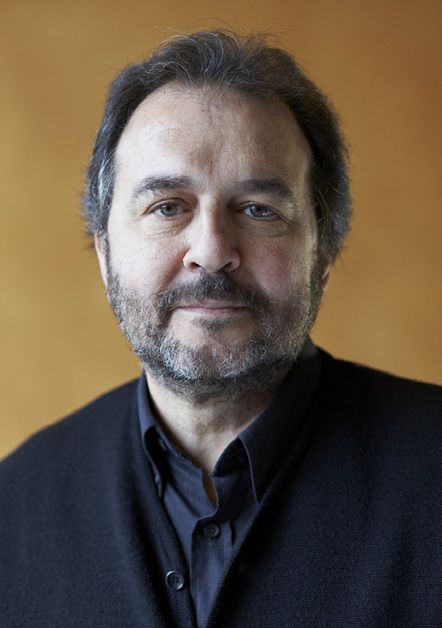
Dr. Antoni Plasència national changes, which are likely to affect budgets for com-
Taradach petitive funding for research and translational activities. This
includes events such as the exit of the United Kingdom from
General Director
the European Union (EU), and the finalisation of the EU
current multi annual framework budget finalizing in 2020.
Meanwhile, the international political climate regarding glob-
al health funding will remain full of uncertainties, especially as
regards some of the leading countries and stakeholders in this
field. Hopefully, the implementation of the Sustainable Devel-
opment Goals (SDG) 2030 agenda will guide key internation-
al funders including the UN agencies, national governments
and philanthropic organisations to ensure that the adequate
political and financial leverage is provided.
In this context, ISGlobal remains very well placed to move
forward in implementing new high quality research and in
leading translational activities to better respond to some of
the key challenges of Global Health, including our commit-
ment with the generation of transformative knowledge rele-
vant for the achievement of the SDGs and with the emerging
approaches to planetary health.
Our Action Plan for 2019 identifies the objectives and expect-
ed results for every area of the institution, as described in this
document, as one more step in the deployment of our cur-
rent Strategic Plan. Although it sets the bar quite high, I am
convinced that, as in previous years, the entire ISGlobal team
Summarised Action Plan and Budget 201904
1. Presentation will work with creativity and persistence in making new steps
towards achieving our goals and commitment to improving
health and reducing inequities around the world.
The success of this work depends on the sustained support and
excellent collaboration we maintain with our Trustee institu-
tions, including Fundació “la Caixa”, Generalitat de Catalunya,
Government of Spain, Barcelona City Council, Hospital Clinic,
University of Barcelona Parc de Salut Mar and Pompeu Fab-
ra University, as well as the Fundación Ramón Areces. Finally,
I would also like to express my deep gratitude to Professors
Marcel Tanner and David Savitz, co-chairs of our External Ad-
visory Board whom, together with the rest of its prestigious
members, are guiding us in our endeavour to achieve excel-
lence and impact.
Thanks all of you for your contributions to this great shared
journey!
Summarised Action Plan and Budget 201905
2. Introduction The Action Plan 2019 is part of a process of reflection and
joint planning in line with the institutional Strategic Plan which
involves all departments and areas of the institution. The ob-
jectives and expected results for each area are the result of an
exercise of analysis of the results achieved so far and projected
results for the coming year 2019.
Institutional design and budget planning
ISGlobal has an innovative design, with 3 pillars of Scientific
Research, Global Policy and Development and Training and
Education which work together with the 5 cross-cutting Initi-
atives. Each of the areas plan their activities for the year ahead
together with their financial needs. So the Objectives, Results
and Activities outlined in the Action Plan from each Area are
consistent with the budget.
Present document gathers activities funded through the fixed
structural budget and competitive funding.
Objectives and layout of the Action Plan document
This document sets out the objectives expected to be achieved
in 2019, in line with the vision, mission, values and the ulti-
mate goal of the institution: improving global health and pro-
moting health equity.
Objective 1. To plan activities in the different areas of ISGlobal
2019 (from January 1 to December 31).
Objective 2. To improve internal quality in the processes for
planning, monitoring and evaluation of ISGlobal activities.
The Action Plan is aligned to the 2017-2020 Strategic Plan.
The document is designed around 5 Strategic Themes for
ISGlobal. The Strategic Themes presented are in line with the
Strategic Plan for the period 2017-2020 and are focused on
the 2019 activities. As such, the strategic themes encompass
different research, policy, global development, education and
training, communications, administrative and institutional ob-
jectives and activities for the year ahead in 2019.
The Global Initiatives of Chagas, Maternal, Child and Repro-
ductive Health, Antimicrobial Resistance, Urban Health and
Malaria Elimination are reflected within Strategic Theme 2.
Implementation and monitoring
Throughout the year, area leaders will monitor the implemen-
tation of the objectives and results provided in this document.
To this end, a semi-annual report and a final report at the end
of the year 2019 will be generated.
Summarised Action Plan and Budget 201906
3. Strategic The institutional activities for 2019 are reflected through the
Themes 5 institutional Strategic Themes as outlined in the ISGlobal
Strategic Plan. The 5 Strategic Themes are:
1. Strengthening and consolidating the Institution
2. Reinforcing excellence for impact
3. Educating and learning for the future
4. An innovative, efficient and sustainable institution
5. Working for and with the people
Each theme has different activities, and each activity is the
responsibility of a different area of the institution.
3.1 Strategic Theme 1:
Strengthening and consolidating the Institution.
Overall Aim: Develop ISGlobal as an international reference
in research, translation and education based on an innovative
partnership among private and public trustees.
Key Objectives and Expected Results for 2019:
➔ O1 Strengthen the existing strategic partnerships with our
private and public trustees in research, translation and educa-
tion, working together to facilitate that their continued sup-
port to ISGlobal is appropriately appreciated by the society,
and explore the inclusion of new trustees.
R1.1 Adapted communication materials to strengthen soci-
etal engagement
➔ O2 Put in place a robust, effective, inclusive and transpar-
ent leadership model taking into account the strengths and
limitations identified during the post-merger phase.
R2.1 Map of internal fora and Committees reviewed
R2.2 Succession plan in preparation
➔ O3 Strengthen and consolidate ISGlobal brand as an inter-
national centre in global and public health research, transla-
tion and education.
R3.1 Increased number of international contacts on database
and key journalists contacted
R3.2 Increased number of international press releases and in-
ternational media impacts
R3.3 CRM tool improved
➔ O4 Establish and consolidate an External Advisory Com-
mittee (EAC) and the International Global Health Partner-
ship Board (IGHPB) to provide high level external evaluation
and advice.
R4.1 EAC involved in researcher’s evaluation processes
R4.2 Terms of Reference of IGHPB and deployment timeline
prepared
Summarised Action Plan and Budget 201907
3. Strategic ➔ O5 Implement the gender plan (and additional measures
Themes when necessary) as to make of gender equity an institutional
commitment at all levels and activities.
R5.1 New action plan 2018-2020 developed
➔ O6 Reinforce the ISGlobal network and regional presence
by further developing the strategic local and international
partnerships; starting with the potential of the existing part-
nerships in Mozambique, Bolivia and Morocco and exploring
new strategic international alliances to promote geographic
expansion/diversity.
R6.1 Memorandum of Understanding (MoU) with Manhiça
Foundation developed
R6.2 Funding, strategy and deployment proposal for each
partnership
3.2 Strategic Theme 2:
Reinforcing excellence for impact.
Overall Aim: Consolidate an institutional portfolio that re-
spond to the more relevant health needs and health equity
gaps by developing new knowledge, maximizing its translation
and impact.
Key Objectives and Expected Results for 2019:
➔ O1 Strengthen the scientific coherence and functionality of
the scientific organization including the integration and renewal
of the research programs and the internal scientific committee.
R1.1 Terms of reference (ToR) and minutes of the Scientific
Committee
➔ O2 Promote and reinforce the scientific excellence by
strengthening the existing and new research lines taking into
account: i) the analysis on internal research gaps, ii) the external
evaluation and advice, and iii) the competitive opportunities.
R2.1 Increased number of competitive research contracts won
➔ O3 Guarantee the appropriate structural support to group
leaders reinforcing the scientific career model based on inter-
national recruitment and continued external evaluation.
R3.1 External evaluation of researchers implemented and
presented to the Board of Trustees.
R3.2 Number of full time employees (FTEs) funded by struc-
tural budget and ratio per group leader
R3.3 Renewed working group meetings and new report based
on current situation and analysis
➔ O4 Reinforce the access of the ISGlobal members to the nec-
essary core facilities through both the internal services and the
shared core facilities (Campus UB-Clinic Facilities and PRBB).
Summarised Action Plan and Budget 201908
3. Strategic R4.1 Policy integrating the existing core facilities developed
Themes and in place
R4.2 Clinical Trials working group set up and internal policies
and procedures being implemented
➔ O5 Develop a robust strategy and infrastructures to se-
cure high quality standards for data management, storage
and high-performance computing and biobank, adopting the
guiding principles for scientific data management, open data
and stewardship.
R5.1 Data Management Policy developed and implemented
R5.2 Internal repository of new projects maintained
R5.3 GDPR and best practices in data protection implemented
➔ O6 Implement the ISGlobal innovation strategy support-
ing the faculty ideas and projects and exploring alternatives
for innovation. Deploying the Intellectual Property (IPR) and
Knowledge and Technology Transfer (KTT) Policies.
R6.1 1 seminar related to Innovation to have taken place
R6.2 Internal training on Innovation implemented
R6.3 Improved external innovation network to optimise
Knowledge & Technology Transfer (KTT) services, as evi-
denced by the number of patents granted
R6.4 Number of Digital Health Projects awarded; at least one
big project/start up in the microbiota field
➔ O7 Develop an integrative framework to strengthen the
ISGlobal role in translation and education taking into ac-
count the new international frameworks like the SDGs and
emerging priority topics as Planetary Health, and reinforc-
ing our presence in strategic international bodies (WHO,
EC, etc).
R7.1 Seminar with REDS and SDSN about health and SDGs
organised
R7.2 Seminar on Planetary Health done
R7.3 ISGlobal manifesto/policy position on SDGs completed
R7.4 Position paper on Spain’s implementation of SDG3
completed
R7.5 Advised provided to board members on the strategic de-
velopment of SDGs
R7.6 Participation in the start-up of the SDGs observatory
and private sector observatory and la Caixa
➔ O8 Strengthen and improve the translational ISGlobal In-
itiatives expanding their coverage to research on NCDs, cli-
mate and environment. Developing impact indicators beyond
scientific publications
R8.1 Strategic and operational planning for each initiative done
R8.2 Bank of projects of the initiatives (mapping) created
Summarised Action Plan and Budget 20199
3. Strategic 3.3 Strategic Theme 3:
Educating and learning for the future.
Themes
Overall Aim: Consolidate ISGlobal as an affiliated institute to
UB and UPF, and as a global educational hub in global and
public health.
Key Objectives and Expected Results for 2019:
➔ O1 Strengthen and expand the current education portfolio
in Global and Public Health with programs in communicable
and non-communicable health problems and their environ-
mental determinants.
R1.1 Education and Training Model in place
R1.2 Training activities developed aligned with in-house
knowledge and research capacity
R1.3 Second, 3-year impact assessment completed for main
programs
R1.4 Pilot for a blended distance learning / digital health
training program proposed
R1.5 International alliances with leading educational institu-
tions developed
➔ O2 Fully develop as University Research Institute (UPF
and UB) in close collaboration with our mother Universities
with capacity to promote our faculty to hold university posi-
tions and to ascribe and accredit postgraduate and other pro-
grams as the ISGlobal PhD program.
R2.1 A University Research Institute (URI) Strategy developed
R2.2 Education & Training university programmes created
R2.3 Personnel promoted in University positions
➔ O3 Strengthen the PhD program providing support and
follow up to the PhD students, facilitating their international
mobility and giving them access to training activities.
R3.1 Annual follow up of PhDs completed
R3.2 Training activities for PhD implemented
R3.3 Outcomes of the ISGlobal PhD programme measured
➔ O4 Provide access of ISGlobal staff to training programs,
according to HR training policy to ensure continuous educa-
tion and capacity strengthening of ISGlobal staff careers.
R4.1 Internal Training Programme designed and implemented
➔ O5 Strengthen our capacity building and strengthening activ-
ities in knowledge translation for researchers and global health
professionals in collaboration with our international partners.
R5.1 Capacity Building projects in place
Summarised Action Plan and Budget 201910
3. Strategic 3.4 Strategic Theme 4:
An innovative, efficient and sustainable institution.
Themes
Overall Aim: Develop and implement a robust and innovative
management and funding strategy that responds to the needs
of the post-merger phase and guarantees that all support ser-
vices and process are adequately integrated and its quality and
efficiency is improved.
Key Objectives and Expected Results for 2019:
➔ O1 Promote talent as a central axis of our organization
adopting and implementing the HRS4R certification to pro-
vide a stimulating and participative international working en-
vironment.
R1.1 HRS4R Action Plan - 2019 implemented
R1.2 HHRR tools improved: single HHRR incidence module
and hiring request available online
R1.3 Internal communications improved: a unique intranet,
welcome pack and suggestions mailbox online
➔ O2 Develop a strategy for funding diversification including
both public and private sources and institutions by i) increas-
ing our capacity to advocate for and attract local and interna-
tional funds through partnerships and alliances with key inter-
national actors; ii) developing a targeted fundraising program.
R2.1 Participation in EDD and/or other European activities
to increase ISGlobal visibility
R2.2 Alliances with key European actors developed
R2.3 Cooperation funds monitored and increased number of
proposals presented for funding
➔ O3 Optimize project management to deliver the best ser-
vice to our researchers, departments and funders.
R3.1 Application of proposals to national and international
funders promoted
R3.2 Project Management SOP developed and flowchart up-
dated
R3.3 Performance of the Projects Unit evaluated
R3.4 Financial reports sent on time and positive project au-
dits certifications
➔ O4 Implement a state of the art information and commu-
nication technology infrastructure (ICT) securing an appro-
priate integration in a single information system to facilitate
management and decision-making.
R4.1 Information Systems (IS) management improved and
information and communication technology (ICT) infra-
structure resized
R4.2 Security measures and tools to control and prevent at-
tacks improved
Summarised Action Plan and Budget 201911
3. Strategic R4.3 Computing & Storage infrastructure improved and con-
Themes solidated (storage exclusive for computing increased, comput-
ing workstations upgraded)
➔ O5 Improve the space availability in both campuses while
developing the strategy to secure an appropriate core building.
R5.1 Agreements for the new clima lab signed
R5.2 Project for new spaces under development
➔ O6 Improve quality and efficiency. Quality through the
standardization of support processes and the implementation
of a compliance system. Efficiency by putting in place the best
procurement and management practices and maintaining ad-
equate KPI.
R6.1 Activity Report summarizing the main actions under the
Compliance Program drafted and reported to the Executive
Committee and the General Management
R6.2 SBO optimized and travel module improved
R6.3 Monitoring system to control allocations in place
R6.3 Purchasing web service extended to new users (via VPN)
3.5 Strategic Theme 5:
Working for and with the people.
Overall Aim: Engage ISGlobal in a creative and dynamic dia-
logue and interaction with the society identifying and devel-
oping best practices in science communication and outreach.
Key Objectives and Expected Results for 2019:
➔ O1 Strengthen the ISGlobal profile and visibility in Respon-
sible Research and Innovation (RRI), involving key stakehold-
ers (especially La Caixa Foundation) and facilitating the en-
gagement of researchers.
R1.1 InSPIRES Project deployed
R1.2 International and local network in RRI maintained and
improved
➔ O2 Reinforce our collaboration with our trustees and part-
ners to develop innovative experiences.
R2.1 The Living Lab Concept developed with La Caixa and
Ajuntament de Barcelona
➔ O3 Reinforce the outreach activities in collaboration with
local and international stakeholders.
R3.1 Outreach activities implemented as planned
➔ O4 Adapt Communication channels to current social trends.
R4.1 New communication trends evaluated and/or adopted
R4.2 “Live communications” incorporated to contents plan
on a regular basis
Summarised Action Plan and Budget 201912
4. Special 4.1 Chagas Disease
Addendum - Aim: The Chagas Initiative aims to increase access to effec-
Global tive diagnosis and treatment for patients with Chagas disease,
Initiatives both in endemic and non-endemic countries, and to contrib-
ute to the global efforts made to control the disease.
Objectives
1. Consolidate existing research lines and promote new lines of
research focused on the interactions host-parasite and identi-
fied Research priorities for CD (see priority R&D lines detect-
ed at the end of 2015 in Chagas Initiative Strategic meeting)
2. Consolidate and expand the Platform model of integrated
CD care
3. Provide scientific evidence relevant for impacting health
policies on CD
4. Consolidate and expand the training offer for CD
4.2 Maternal, Child and Reproductive health
Aim: Building on the work of the past 20 years, ISGlob-
al launched in 2012 the Maternal, Child and Reproductive
Health Initiative to integrate the work of the different areas of
ISGlobal -research, training, policy and global development.
Maternal and newborn mortality in low- and middle-income
countries is heavily impaired by neglected diseases: taken to-
gether HIV/AIDS, malaria and tuberculosis are among the
leading causes of maternal mortality. Moreover, the most es-
sential maternal and reproductive health interventions do not
reach yet the most vulnerable women, girls and children in the
developing world. Despite remarkable global progress, wom-
en and children health still face disproportionate inequalities
in access to and quality health care. In this context, we work
with the ultimate goal of helping bridge the know-do gap and
support the global efforts to ensure that all women and chil-
dren, regardless of where they live or are born, have access to
quality health care services.
Objectives
1. Undertake and strengthen R&D in maternal, newborn,
child and reproductive health (RMNCH), with focus on:
• Malaria in pregnancy
• Determination of causes of death
• HIV
• Zika
• Maternal Immunization
• Anaemia
• Inequalities in maternal and reproductive health
• Environmental health
Summarised Action Plan and Budget 201913
4. Special 2. Disseminate RMNCH evidence generated in decision-mak-
Addendum - ing forums to inform/influence policies
3. Consolidate and expand the existing training in RMNCH
Global 4. Increase visibility and awareness on RMNCH issues among
Initiatives different audiences
5. Undertake technical assistance, consultancy and analysis
on RMNCH issues
4.2 Antimicrobial Resistance
Aim: In the last years the number of available antimicrobial
agents active against resistant pathogens has decreased, reduc-
ing the therapeutic options to treat infections due to multidrug
resistant (MDR) microorganisms. Although MDR pathogens
are mainly causing infections in the hospital, the figures re-
garding infections caused by MDR bacteria in the community
are increasing. When resistance to first-line drugs increases, in-
fections last longer and become more expensive to treat, with
hospitalization required in many cases. This situation increases
health costs and poses a serious risk to the progress made in glob-
al health by countries, communities and individuals in the past
decades. In fact, a recent report published by Lord Jim O’Neill
indicates that annually over 700,000 people die worldwide due
to infections caused by MDR pathogens, and it is predicted
that this number will achieve 10 million deaths by 2050 un-
less new policies and actions are implemented. At the Antimi-
crobial Resistance Initiative, we are focused on promoting the
transfer of scientific knowledge and spur social debate to have
a huge impact on public health and decision making policies.
Objectives
1. Research and Development: Our main goal on 2019 re-
garding the research area is to obtain new funding sources
for the research group in order to develop innovative research
lines as well as being able to continue the lines already estab-
lished. Another of the objectives will be to constitute a spin-
off focused on three aspects: 1) discovery of new antibiotics
and new biomarkers for improving diagnostics, 2) set up a
new delivery method of intestinal microbiota for multiple ap-
plications 3) establish a portfolio to provide different tools and
services to the pharmaceutical & biotechnological industry.
2. Policy and Global Development: We plan to contribute to
define an antimicrobial resistance mapping in areas where
there is a lack of information, particularly in low and mid-
dle-income countries (LMICs). In this context, we plan to
reinforce our presence in Morocco and collaborate with local
researchers through a project in this country under the um-
brella of the Mediterranean Health Observatory, for tracking
and monitoring antibiotic resistance.
3. Training and Dissemination: We plan to organize some ac-
tivities addressed to professionals in the field of microbiology
Summarised Action Plan and Budget 201914
4. Special and antimicrobial resistance (AMR) (Summer School, Inter-
Addendum - national Symposium), others addressed to the general public
(workshops at “Science Events”, supervision of “Treballs de
Global Recerca” at high schools) and to scientific journalists.
Initiatives 4. Communication: The design of educational materials used
in the context of the “World Antibiotic Awareness Week” and
training activities will be required to support them.
4.4 Malaria Elimination
Aim: The Malaria Elimination Initiative advances in research,
training and policy to create impact.
Objectives
1. To evaluate tools that can advance elimination such as the
Ivermectin Platform. To assess the utility of Ivermectin, an en-
dectocidal drug as complementary vector control tool against
residual transmission. To lead the development of an Ivermec-
tin Technology Roadmap to align actors and funders.
2. To coordinate effectively, raise visibility and utility of the
Malaria Eradication Scientific Alliance (MESA) already es-
tablished as a platform to drive an evidence-based approach
to malaria eradication, create knowledge management tools to
accelerate translation into both science and policy, and com-
municate lessons learned to the broader community.
3. To continue with the progress made in the Mozambican
Alliance Towards Elimination of Malaria (MALTEM) to ad-
vance the elimination of malaria in southern Mozambique by
implementation of the elimination strategy and evaluation of
tools such as MDA strategies.
4. To support leadership and education on the science sup-
porting malaria elimination strategies.
5. To support international, national and local effective pol-
icies for malaria elimination through scientific analysis and
governance.
4.5 Urban Health
Aim: The Initiative aims to potentiate the impact of research
in policy and society by translating scientific evidence and
tools to promote healthy and sustainable urban development.
The initiative brings together experts, practitioners and de-
cision-makers across sectors to address the challenges posed
by urbanisation, putting health and wellbeing at the centre
of urban and transport planning. Through research, advocacy,
policy and capacity building we engage with key stakeholders
and the public for transformative action.
Summarised Action Plan and Budget 201915
4. Special Objectives
Addendum - The Objective for 2019 is: Continue to develop the initiative
Global on Urban Planning and Environment and Health, positioning
Initiatives the initiative at the regional and global levels, with the follow-
ing goals:
1. Translate scientific evidence to make it accessible and rele-
vant for policy and decision making.
2. Create a community of practice among urban and trans-
port planners, health professionals, and economic and envi-
ronmental specialists to create common language and criteria
across sectors.
3. Foster innovative tools and approaches to address health
challenges posed by urbanisation.
4. Engage with the public and other key stakeholders inform
priorities and ensure uptake of our work.
5. Build capacity through education and training programs to
train current practitioners and future leaders.
6. Consolidate and strengthen the Initiative structure through
definition of policy, capacity building and networking strategies.
Summarised Action Plan and Budget 201916
5. Budget 2019 Expected income for 2019 is 24.908.294 euros, of which 30%
is contribution from the ISGlobal Trustees and 70% is from
competitive funding, as shown in the following table:
BUDGET P-2019
TRUSTEES 7.358.616
COMPETITIVE FUNDS 17.549.678
TOTAL 24.908.294
The following table shows expected expenditure for 2019:
EXPENDITURE P-2019
Administration and infrastructure 2.893.561
Research 2.942.929
Global Policy 252.242
Training 152.826
Global Development 170.901
Global Health Initiative 200.622
Communications 245.534
TOTAL TRUSTEES 7.358.616
Projects 17.549.678
TOTAL 24.908.294
The main funder for competitive projects in 2018 is the Eu-
ropean Commission, followed by UNITAID and the Instituto
de Salud Carlos III (ISCIII).
FUNDERS P-2019
EUROPEAN COMMISSION 8.462.515
UNITAID 2.368.687
ISCIII 1.449.900
BMGF 1.220.116
NIH-CDC 986.861
GENERALITAT DE CATALUNYA (AGAUR, AQuAS) 869.806
HEI (HEALTH EFFECTS INSTITUTE) 565.356
MINECO 412.317
OTHER 1.214.118
TOTAL 17.549.678
Summarised Action Plan and Budget 2019You can also read


