Management of Acute Pain - Pfizer for Professionals
←
→
Page content transcription
If your browser does not render page correctly, please read the page content below
Management of Acute Pain
DISCLAIMER
The Content in this presentation is only intended for healthcare professionals
in India . The medical information in this presentation is provided as an
information resource only, and is not to be used or relied on for any diagnostic
or treatment purpose. “
“The views and opinions mentioned in the presentation is strictly that of the
author and the individuals expressing the same and Pfizer may not necessarily
endorse the same. Pfizer (including its parent, subsidiary and affiliate entities)
makes no representation or warranties of any kind, expressed or implied; as to
the content used in the presentation and/or the accuracy, completeness of its
content.”
Pfizer Limited, The Capital- A Wing, 1802, 18th Floor, Plot No. C-70, G Block, Bandra -
Kurla Complex, Bandra (East), Mumbai 400 051, India
For the use only of Registered Medical Practitioners or a Hospital or a Laboratory
PP-NXM-IND-0248 4th Apr 2019Table of Contents Introduction Pathophysiology and Classification of pain Acute Pain Assessment of pain Treatment and Management of Acute Pain
Introduction
What is Pain?

     According to IASP1:
     Pain is an unpleasant sensory and emotional experience
     associated with actual or potential tissue damage, or described
     in terms of such damage.

IASP Terminology - IASP [Internet]. Iasp-pain.org. 2018 [cited 31 March 2019]. Available from: https://www.iasp-pain.org/Education/Content.aspx?ItemNumber=1698
Incidence of Pain
Globally, it has been estimated 1 in 5 of those with chronic pain had suffered
for over 20 years1
1 in 10 adults are diagnosed with chronic pain each year1
Pain affects all population irrespective of age, sex, race and geographical
area2
1. Unrelieved pain is a major global healthcare problem. International association for the study of pain. Section 4A. Available from: http://www.iasp-pain.org. [Last cited
on 31 March 2019].
2. Muthunarayanan L, Ramraj B, Russel JK. Prevalence of pain among rural adults seeking medical care through medical camps in Tamil Nadu. Indian Journal of Pain. 2015
Jan 1;29(1):36.Prevalence in India
Knee pain
N= 1246 Low back pain
Generalized body pain
Knee pain , Multiple joint pain
18.60%
Leg pain
Musculoskeletal Pain
Low back pain ,
Musculoskeletal 8.90%
Pain, 56.40% Generalized
body pain ,
7.80%
Multiple joint
pain , 4.90%
Leg pain, 2.70%
Muthunarayanan L, Ramraj B, Russel JK. Prevalence of pain among rural adults seeking medical care through medical camps in Tamil Nadu. Indian Journal of Pain.
2015 Jan 1;29(1):36.Pathophysiology and Classification of Pain
Pathophysiology of Pain

                                         Pain has a biologically important protective function

                                              Pain is the normal response to injury or disease
                                   Pain is a result of normal physiological processes within the
                                                         nociceptive system

                                 Pain may manifest as hyperalgesia, an exaggerated response
                                to a noxious stimulus or allodynia, the perception of pain from
                                                  normally innocuous stimuli

Pathophysiology & Clinical Implications - Pain Management [Internet]. Projects.hsl.wisc.edu. 2017 [cited 31 March 2019]. Available from:
http://projects.hsl.wisc.edu/GME/PainManagement/session2.3.html
Pain Pathway
Primary sensory cortex
• Location of pain
Limbic forebrain Cortical association area
• Emotional reaction to pain • Interpretation of pain
Thalamus
Axons project to other areas
of brain
Brainstem
Dorsal horn
Anterolateral tract
Release of substance P
Spinal cord
Peripheral transmission
Peripheral activity
• Vasodilation
• Edema
• Hyperalgesia
• Release of chemicals
Nociceptors
Noxious stimulus (may be chemical,
thermal, or mechanical)
Adapted from Hellms JE, Barone CP. Physiology and treatment of pain. Critical Care Nurse. 2008 ;28(6):38-49Classification of Pain
Classification
of Pain
Anatomic Onset and
Etiology Severity
Location Duration
Mild
Nociceptive Somatic Acute
Inflammatory Moderate
Visceral Chronic
Neuropathic Severe
Psychogenic
Classification of Pain - Pain Management [Internet]. Projects.hsl.wisc.edu. 2017 [cited 31 March 2019]. Available from:
http://projects.hsl.wisc.edu/GME/PainManagement/session2.4.htmlClassification Based on Etiology
Nociceptive1
• The normal response to noxious insult or injury of tissues.
• Examples :Somatic: musculoskeletal (joint pain, myofascial pain), cutaneous
Visceral: hollow organs and smooth muscles
Neuropathic1
• Pain initiated or caused by a primary lesion or disease in the somatosensory nervous system.
• Examples : diabetic neuropathy, post herpetic neuralgia, spinal cord injury pain, post-stroke
central pain
Inflammatory1
• A result of activation and sensitization of the nociceptive pain pathway by a variety of mediators
released at a site of tissue inflammation.
• Examples : appendicitis, rheumatoid arthritis, inflammatory bowel disease, and herpes zoster
Psychogenic2
• It is a pain disorder associated with psychological factors. Some types of mental or emotional
problems can cause, increase or prolong pain
Classification of Pain - Pain Management [Internet]. Projects.hsl.wisc.edu. 2018 [cited 31 March 2019]. Available from:
http://projects.hsl.wisc.edu/GME/PainManagement/session2.4.html
Psychogenic Pain [Internet]. WebMD. 2018 [cited 31 March 2019]. Available from: https://www.webmd.com/pain-management/guide/pain-management-psychogenic-
painKnowledge check 01
(match the following)
Nociceptive Neuropathic Inflammatory Neuropathic
Pain initiated or caused
The normal response to A result of activation and
by a primary lesion or
noxious insult or injury of sensitization of the It is a pain disorder
disease in the nociceptive pain pathway by a
tissues. associated with
somatosensory nervous variety of mediators released
Examples :Somatic: psychological factors.
system. at a site of tissue
musculoskeletal (joint inflammation.
Some types of mental or
Examples : diabetic
pain, myofascial pain), Examples : appendicitis, emotional problems can
neuropathy, post herpetic
cutaneous rheumatoid arthritis, cause, increase or
neuralgia, spinal cord
Visceral: hollow organs inflammatory bowel disease, prolong pain
injury pain, post-stroke and herpes zoster
and smooth muscles
central pain
Classification of Pain - Pain Management [Internet]. Projects.hsl.wisc.edu. 2017 [cited 31 March 2019]. Available from:
http://projects.hsl.wisc.edu/GME/PainManagement/session2.4.htmlClassification Based on Duration The Pain
Continuum
Time to resolution
Acute pain Chronic pain
Normal, time-limited response Pain that has persisted beyond
to ‘noxious’ experience normal tissue healing time
(less than 3 months) (usually 3 months)
• Usually obvious tissue damage • Usually has no protective function
• Serves a protective function • Degrades health and function
• Increased nervous system activity
Acute pain may become
• Pain resolves upon healing chronic
Sinatra RS, de Leon-Cassasola OA, Viscusi ER, Ginsberg B, McQuay H. Acute pain management.2009.
National Pain Summit Initiative. National Pain Strategy: Pain Management for All Australians. Iasp-pain.org. 2018 [cited 31 March 2019]. Available from: http://www.iasp-
pain.org/PainSummit/Australia_2010PainStrategy.pdf.Acute Pain
Acute Pain Acute pain usually comes on suddenly and is caused by something specific It goes away when there is no longer an underlying cause for the pain Causes of acute pain include: Surgery Broken bones Dental work Burns or cuts Labor and childbirth Acute Pain vs. Chronic Pain | Cleveland Clinic [Internet]. Cleveland Clinic. 2018 [cited 31 March 2019]. Available from: https://my.clevelandclinic.org/health/articles/12051-acute-vs-chronic-pain
Why is Timely Treatment of Acute Pain
              Important?
Under-treatment of acute or traumatic pain may lead
to:
    Disease progression and worsening of symptoms

               Depression, anxiety, insomnia, irritability, or phobias

                  Chronic fatigue

                  Atelectasis, pneumonia, hypoxia

               Immobility with risk for DVT

       Muscle spasms
Acute Pain Management in Emergency and Acute Care Settings [Internet]. Pain Management and Assessment Initiative (PAMI): A Patient Safety Project. 2017
[cited 31 March 2019]. Available from: http://pami.emergency.med.jax.ufl.edu/.
Sinatra R. Causes and consequences of inadequate management of acute pain. Pain medicine. 2010 Dec 1;11(12):1859-71.
Goals of Care in Acute Pain • Acknowledge the patient’s pain • Treat underlying cause where possible • Provide adequate pain relief • Minimize pharmacological side effects • Correct secondary consequences of pain Establishing Pain Relief Goals [Internet]. Prc.coh.org. 2018 [cited 31 March 2019]. Available from: http://prc.coh.org/pdf/Goals-FF%205-10.pdf
Assessment of Acute Pain
Assessment of Acute Pain

                                                         Circumstances
    Site of pain                                         associated with pain                   Character of pain
                                                         onset

                                                         Associated symptoms
    Intensity of pain                                                                           Comorbidities
                                                         (e.g., nausea)

  Treatment                                              Relevant medical
  •Current and previous medications,                     history
   including dose, frequency of use,                     •Prior or coexisting pain conditions
                                                                                                Factors influencing
   efficacy and side effects                              and treatment outcomes                symptomatic treatment
                                                         •Prior or coexisting
                                                          medical conditions

Australian and New Zealand College of Anaesthetists and Faculty of Pain Medicine.
Acute Pain Management: Scientific Evidence. 4th ed. ANZCA & FPM; Melbourne, VIC: 2015.
Determining Pain Intensity
Simple Descriptive Pain Intensity Scale
No Mild Moderate Severe Very severe Worst
pain pain pain pain pain pain
0–10 Numeric Pain Intensity Scale
0 1 2 3 4 5 6 7 8 9 10
No Moderate Worst
pain pain possible pain
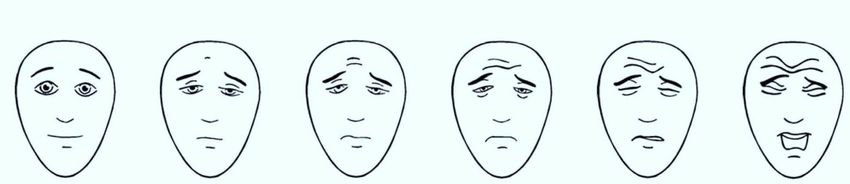
Faces Pain Scale – Revised
Hicks C, von Baeyer C, Spafford P, van Korlaar I, Goodenough B. The Faces Pain Scale – Revised: toward a common metric in pediatric pain measurement. Pain.
2001;93(2):173-183.
Iverson RE et al. Plast Reconstr Surg 2006; 118(4):1060-9.Treatment and Management of
PainMultimodal Treatment of Pain Based on
Biopsychosocial Approach
Lifestyle Stress
Sleep hygiene
Management Management
Occupational
Physical therapy Pharmacotherapy
therapy
Interventional Complementary
Education
pain management therapies
Biofeedback
•Gatchel RJ et al. The biopsychosocial approach to chronic pain: scientific advances and future directions. Psychol Bull 2007; 133(4):581-624.
•Institute of Medicine. Relieving Pain in America: A Blueprint for Transforming Prevention, Care, Education, and Research.; National Academies Press; Washington, DC: 2011.
•Mayo Foundation for Medical Education and Research. Comprehensive Pain Rehabilitation Center Program Guide. Mayo Clinic; Rochester, MN: 2006.Management of Pain
Broadly it can be divided into :
Pharmacological
NSAIDs
Opioids
Non-Pharmacological
Physical Interventions
Cognitive Behavioral Therapy
Rathmell JP, Fields HL. Pain: Pathophysiology and Management. In: Kasper D, Fauci A, Hauser S, Longo D, Jameson J, Loscalzo J. eds. Harrison's Principles of Internal
Medicine, 19e New York, NY: McGraw-Hill; 2014.
Nadler SF. Nonpharmacologic management of pain. Journal of the American Osteopathic Association. 2004 Nov 1;104(11 supplement):6S.Pharmacological Management
Analgesic medications are the first line of treatment.
Nonsteroidal Anti-inflammatory Drugs (NSAIDs)
Inhibit cyclooxygenase (COX) have anti-inflammatory actions at higher
dosages
Particularly effective for mild to moderate headache and for pain of
musculoskeletal origin
Parenteral forms of NSAIDs, ketorolac and diclofenac, can be used in acute
severe pain
Opioid Analgesics
Opioids are the most potent pain-relieving drugs
Produce analgesia by actions in the CNS activate pain-inhibitory neurons
and directly inhibit pain-transmission neurons
Effects are dose-related with great variability among patients in the doses that
relieve pain and produce side effects
Rathmell JP, Fields HL. Pain: Pathophysiology and Management. In: Kasper D, Fauci A, Hauser S, Longo D, Jameson J, Loscalzo J. eds. Harrison's Principles of Internal
Medicine, 19e New York, NY: McGraw-Hill; 2014.Guidelines for nsNSAIDs/Coxibs use based
on Gastrointestinal risk and ASA use
Gastrointestinal risk
Not elevated Elevated
Coxib
Not on ASA nsNSAID alone
nsNSAID + PPI
Coxib + PPI Coxib + PPI
On ASA
nsNSAID + PPI nsNSAID + PPI
ASA = acetylsalicylic acid; coxib = COX-2-specific inhibitor;
nsNSAID = non-selective non-steroidal anti-inflammatory drug; PPI = proton pump inhibitor
Tannenbaum H et al. J Rheumatol 2006; 33(1):140-57.Algorithm for Treatment of
Acute Pain Based on Severity
Acute pain due to: Mild or moderate
• Sport injury Severe acute pain
acute pain
• Traumatic or
inflammatory condition Inadequate
• Musculoskeletal injury analgesia
Step 1: acetaminophen
(4 g/day maximum dose;
4 h minimum interval between each 1 g dose)
Inadequate
analgesia
Step 2: coxib or nsNSAID
(make choice based on patient risk profile)
Inadequate
analgesia
Topical nsNSAID Step 3: add 1 of following:
Opioids
(with or without combined • Acetaminophen/codeine
(refer patient to pain clinic
oral acetaminophen, • Acetaminophen/tramadol
or specialist)
coxib or nsNSAID) • Tramadol
Coxib = COX-2 inhibitor; nsNSAID = non-specific non-steroidal anti-inflammatory drug
Ayad AE et al. J Int Med Red 2011; 39(4):1123-41.Cognitive Behavioral Interventions for
Acute Pain
Intervention Potential utility
Reassurance and • Evidence that information is effective in
provision of information reducing procedure-related pain is tentatively
supportive and not sufficient to
make recommendations
Relaxation training • Evidence is weak and inconsistent
Attentional techniques • Listening to music produces a small reduction
(e.g., imagery, distraction, in post-operative pain and opioid requirement
music therapy) • Immersive virtual reality distraction is effective
in reducing pain in some clinical situations
Hypnosis • Evidence of benefit is inconsistent
Coping methods/ • Training prior to surgery reduces pain, negative
behavioral instruction affect and analgesic use
Australian and New Zealand College of Anaesthetists and Faculty of Pain Medicine.
Acute Pain Management: Scientific Evidence. 4th ed. ANZCA & FPM; Melbourne, VIC: 2015.Physical Interventions for Acute Pain
Intervention Potential utility
Transcutaneous • Certain stimulation patterns effective in
electrical nerve some acute pain settings
stimulation
Massage and • Little consistent evidence for use in
manual therapy post-operative pain
Heat and cold therapy • Evidence for benefits from post-operative
local cooling is mixed
Australian and New Zealand College of Anaesthetists and Faculty of Pain Medicine.
Acute Pain Management: Scientific Evidence. 4th ed. ANZCA & FPM; Melbourne, VIC: 2015.Recommendations for Management of Acute
Pain
Acetaminophen
If ineffective
Add nsNSAIDs/coxibs
If ineffective
Add opioids
(preferably short-acting agents at regular intervals;
ongoing need for such treatment requires reassessment)
Coxib = COX-2-specific inhibitor; nsNSAID = non-selective non-steroidal anti-inflammatory drug
Australian and New Zealand College of Anaesthetists and Faculty of Pain Medicine.
Acute Pain Management: Scientific Evidence. 4th ed. ANZCA & FPM; Melbourne, VIC: 2015.Management of NSAID associated side effects
When COX-2 inhibitors and NSAIDs are to be used together, they should be
prescribed with the lowest effective dose and for the shortest duration
They should not be prescribed for high risk patients, e.g., patients with a
history of ischemic heart disease, stroke or congestive heart failure, or in
patients who have recently undergone CABG
Use of a NSAID alone is considered inappropriate in any patient with a
previous gastrointestinal event and in those who concurrently receive aspirin,
steroids or warfarin. These patients should receive either a NSAID plus a PPI
or a COX-2 inhibitor
CABG- Coronary artery bypass graft; PPI- Proton pump inhibitor
Ong CKS, Lirk P, Tan CH, Seymour RA. An Evidence-Based Update on Nonsteroidal Anti-Inflammatory Drugs. Clinical
Medicine and Research. 2007;5(1):19-34.Arrange the interventions in the right order
Acetaminophen
If ineffective
Add nsNSAIDs/coxibs
If ineffective
Add opioids
(preferably short-acting agents at regular intervals;
ongoing need for such treatment requires reassessment)
Coxib = COX-2-specific inhibitor; nsNSAID = non-selective non-steroidal anti-inflammatory drug
Australian and New Zealand College of Anaesthetists and Faculty of Pain Medicine.
Acute Pain Management: Scientific Evidence. 4th ed. ANZCA & FPM; Melbourne, VIC: 2015.Summary Common causes of acute pain include musculoskeletal pain, knee pain, back pain etc. Analgesic medications are the first line of treatment Combining pharmacological and non-pharmacological therapies is most effective in managing acute pain conditions Acetaminophen, nonsteroidal anti-inflammatory drugs or, if pain is severe, opioids are used for symptomatic relief from pain
Thank You
You can also read


