ADVANCED SYNTHESIS OPTION STUDIOS - Squarespace
←
→
Page content transcription
If your browser does not render page correctly, please read the page content below
ADVANCED
SYNTHESIS
OPTION
STUDIOS
  F18-S20
INTRODUCTION
This is the catalog of Advanced Synthesis Option Studios F18-S20. We are announcing the next four
studios to give students in all of our studio programs the opportunity to plan ahead and chart your
future. In these advanced and specialized studios, there are opportunities for BArch, BA, MAAD, MUD,
MArch, and MsSD (S’20) students to work alongside each other

STUDIO SELECTION PROCESS
The faculty will determine the studio allocations before the beginning of each semester, (in August for
the Fall and in November for the Spring semesters).
Students are invited to consider the upcoming studios and express their preferences for the immediate semester
in the light of their short, medium and longterm interests and ambitions.

SUBMIT
We would like to receive a discursive response to the options available, with preferences expressed
for at least three F’18 studios with a minimum100 words for each, describing what you would
contribute to and gain from working in that studio.
In addition, we ask that you set out the longer term trajectory that could be the outcome of taking any
of these three preferred studios. Thus you will put the immediate set of objectives for F18 into a larger
context.
Please could you return your written response in an email to me by 9am on Monday 16th July 2018.
Students who are studying abroad for the F18 semester need not submit their preferences.
There will be an invitation for another submission of preferences in November’18 for the S19 studio
allocation process.
The F18 studio allocations will be announced on August 1st.

Mary-Lou Arscott AADip RIBA
Studio Professor + Associate Head
mlarscott@cmu.edu

cover images
FRONT Forensic Architecture +SITU Research, ‘Left-To-Die-Boat’ 2011, the drift model.
BACK Forensic Architecture +SITU Research, Limeburner’s drift model, 2011.

                              Carnegie Mellon University, School of Architecture 20th June 2018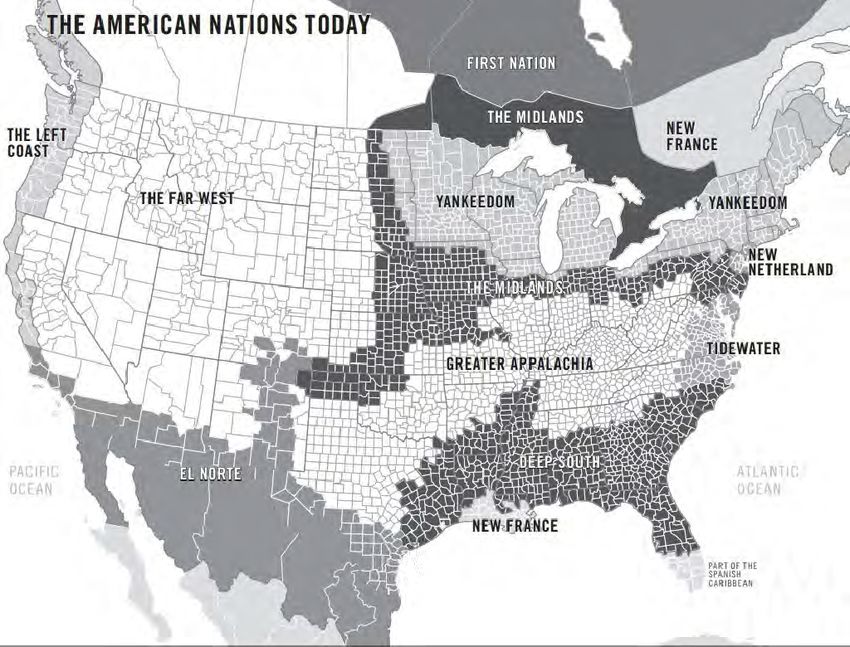
ASO studios listed
F18
       DAMIANI    High_Rise: ‘Untitled 2018’ New York (+MARFA pre-semester, NY midsemester)
       FICCA/KING SOLID: the rise of timber? (+Montreal )
       FOLAN      Deconstructing Blight: UDBS Pittsburgh
       GRUBER     Commoning the City: urban design thesis (+ Zurich travel mid-semester)
       HAYES      Density + Complexity: megastructure for Hudson River Pier76.+NY September
       LUCCHINO   Freespace: serving humanity (+Venice Biennale mid-semester)
       QUICK 		   Re-purposing Architecture: SUCC Pittsburgh

S19
 ARSCOTT     thesis/IP
 BARD 		     Low Relief: virtual+material cultures of architectural deceit (+visit London/Paris)
 BIZON 		    Identity+Making: The American Mash-up (Ann Kalla Professor ‘18-’19)
 FOLAN       Reconstructing Authenticity: UDBS Pittsburgh
 GRUBER      Acupuncture Urbanism - Collab Studio Pittsburgh
 HAYES       4-D Architecture: New ExperimentalTheatre for NYC +NY site visit
 KLINE 		    Commoning the City: urban design thesis
 LOFTNESS /KLEE      Brain Hub: HarnessingTechnology that helps the world explore brain and behavior.
 MONDOR      Infrastructure Studio +potential Europe in Summer

F19    COLVARD    Worksapce: industrial architecture 4.0
       DAMIANI/SHAPIRO – Bouca Social Housing (+Lisbon in Summer)
       FICCA      Subject to Change: Timber evolving
       FOLAN		    Home Re_Considered: UDBS Pittsburgh
       GRUBER     Commoning the City: urban design thesis
       HAYES      Terminal Systems: JFK airport T4 expansion (+NY site visit)
       MONDOR     Infrastructure Studio - TBD
       REHMAN     thesis/IP

S20
       ARSCOTT       Moving Image: phenomenal migration
       BARD		        Low Relief: concrete material exploration
       CUPKOVA       Behavior Matters: mediated nature in material systems
       FOLAN		       Home Re_Defined: UDBS Pittsburgh
       GRUBER        Acupuncture Urbanism - Collab Studio Pittsburgh
       HAYES         Humanizing Brutalism London’ SB Centre (+London/Paris)
       KALLA visitor TBD
       KLINE 		      Commoning the City: urban design thesis

       Carnegie Mellon University, School of Architecture 20th June 2018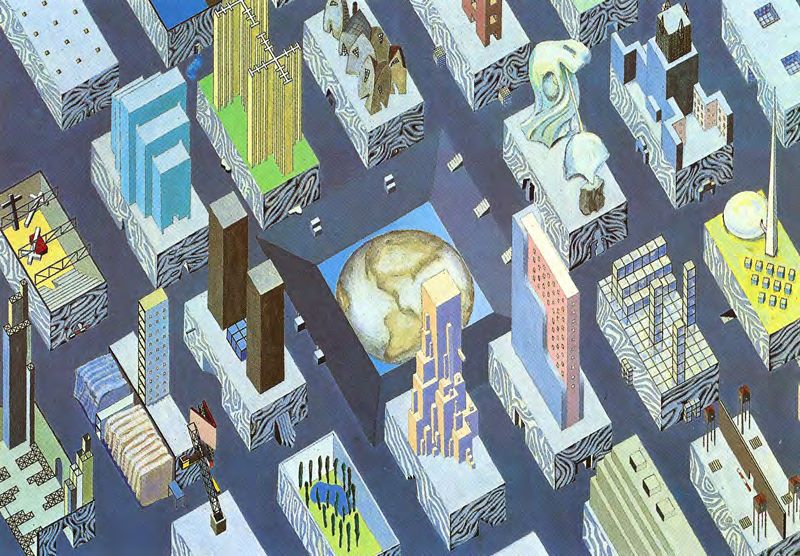
H i g h _ R i s e
                             “Untitled” 2018”
                             This studio will look at the role of the   Travel:
                             architectural promenade and how it         As part of the studio, the studio will visit
‘I pay a lot of attention    can be adapted to the typology of the      two of Judd’s workspaces (one rural and
to how things are done
                             high-rise. The promenade architecturale    one urban) to determine how these two
 and the whole activity
 of building something       first described by Le Corbusier as a       locations influenced his work and acted
          is interesting.’   sequence of spaces and direction of        as the context for his site specific art.
           Donald Judd       movement in the Acropolis in Athens is                                                    Donald Judd 1928-1994

                             a way of constructing views, vistas and    The studio consists of two field trips.
                             experiences. The high-rise, an American    The first to Marfa, Texas (August 21st-
                             typology, acknowledges maximizing          24nd) and the second to NYC 101 Spring
                             building area but does not address the     Street (September 14th-16th). Field Trips
                             role of the architectural sequence.        are required as part of the studio. Please
                             This studio will investigate the high-     note that Altenhof funding for travel is
                             rise typology through the hybridization    available for United States citizens and
                             of the typology with the architectural     U.S. Permanent Residents with financial
                             promenade.                                 need. Please inquire by contacting David
                             This studio will focus on a urban high-    Koltas, Assistant Head, for eligibility.
                             rise structure located in SoHo in New      - dkoltas@andrew.cmu.edu
                             York City directly across from the Judd
                             Foundation.
                             https://juddfoundation.org

                                                                                                                       Site Location
                                                                                                                       Mercer Street, NYC

                                                 F18
                                                                        48-400/500 Studio
                                                                        FALL 2018
                                                                        Damiani
                                                                        M,W,F 1.30-4.20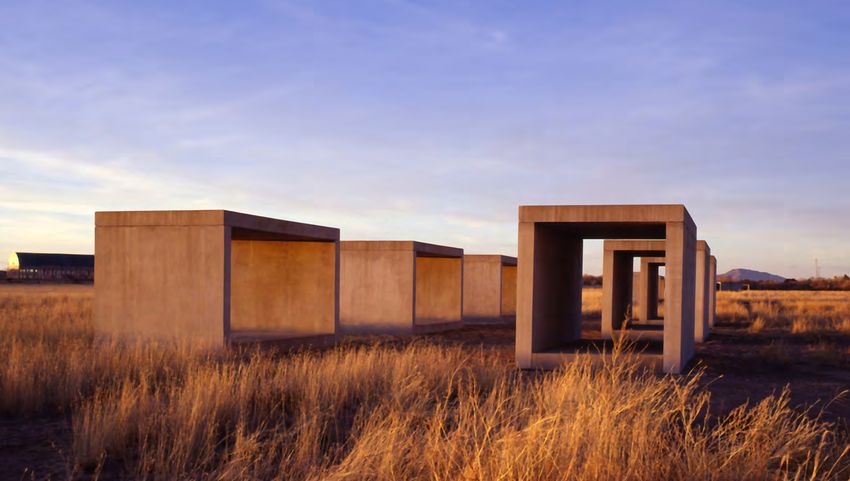
H i g h _ R i s e

This studio will focus on the writings        An inspiration to architects such as
and artistic output of Donald Judd as the     Steven Holl and Herzog & de Meuron,
intellectual underpinning of the studio,      the works of minimalist artist Donald
which will inform the spatial and detailing   Judd (1928-1994) spanned both art
agenda of the studio project. Often           and architecture through a search for
considered an artist of obdurate space,       autonomy and clarity for the objects and
Judd’s works are highly refined being         the spaces they occupy.
conscious of their context (what he called
fundamental realities), space, material,
color and detail.                             Program:
                                              The studio program will be a high-
                                              rise construction (75 feet or higher)
                                              consisting of vertical galleries, a
                                              museum store (street level), studio
                                              workspaces (mid-level) for visiting
                                                                                         Donald Judd
                                              artists and apartments (upper level).      untitled works
                                                                                         in concrete

                    F18
                                              48-400/500 Studio
                                              FALL 2018
                                              Damiani
                                              M,W,F 1.30-4.20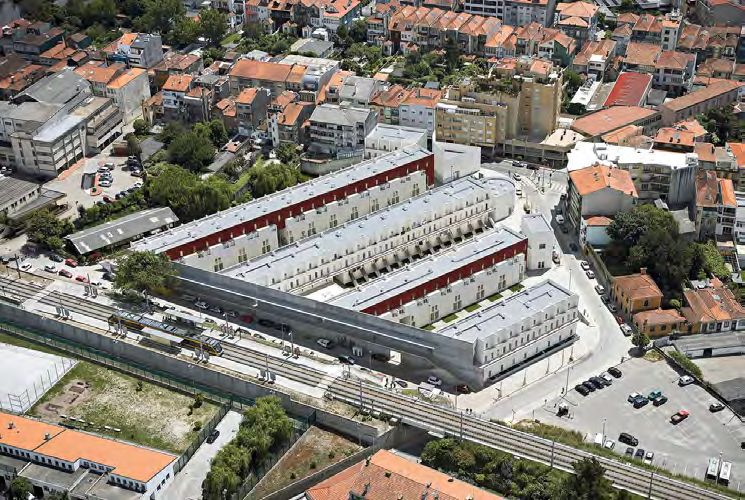
H i g h _ R i s e

                   Bi-Weekly Case Studies (Wednesdays):
                   Each of the following projects will be analyzed for how they address the promenade
                   architecturale.
                   • Schinkel: Altes Museum
                   • Labrouste: Bibliothèque Nationale
                   • Hornsbostel: New York Education Department Building
                   • Aalto: Säynätsalo Town Hall
                   • Le Corbusier: Palace of Assembly
                   • Sterling: Dusseldorf Museum
                   • OMA: Très Grande Bibliothèque
                   • Alvaro Siza: Ibere Camargo Foundation                                                James Sterling
                   • Morphosis: Perot Museum of Nature & Science                                          Dusseldorf
                                                                                                          Muesum Proposal

                   Bi-Weekly Case studies (Wednesdays):
                   Each of the following projects will be studied for context, program, code and
                   occupancy, construction/ material, and detail:
                   • Ando: 152 Elizabeth
                   • Herzog & de Meuron: 56 Leonard Street
                   • Vinoly: 432 Park Avenue
                   • Sanaa: New Art Museum, 235 Bowery
                   • Diller, Scofidio + Renfro: The Roy and Diana Vagelos Education Center
                   • SOM: Lever House, 390 Park Avenue
                   • SOM: The New School’s University Center
                   • Bernard Tschumi: Lerner Hall Student Center

                   Bi-Weekly Readings (Wednesdays):
                   The selected readings are to help position Judd’s work in the larger arts discourse.
                   • Specific Objects, 1964
                   • On Architecture, 1984
                   • Marfa_Texas, 1985
                   • 101 Spring Street, 1989
                   • It’s Hard to Find a Good Lamp,1993

                   Additional Reading:
                   • Delirious New York, Rem Koolhaas, 1978
Donald Judd
untitled (stack)

                                      F18
                                                                48-400/500 Studio
                                                                FALL 2018
                                                                Damiani
                                                                M,W,F 1.30-4.20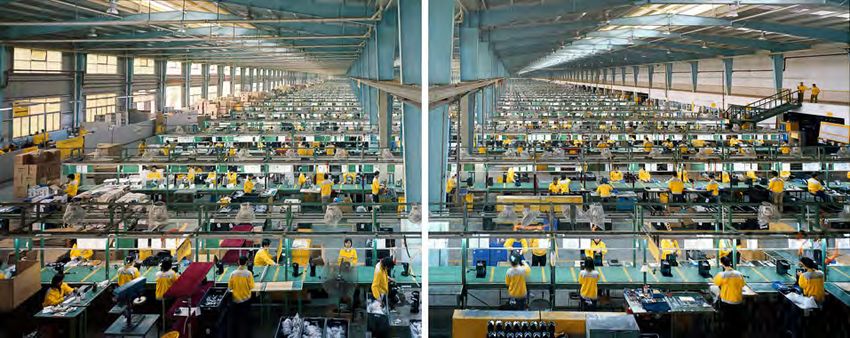
COMMONING THE CITY
                            Urban Design Thesis
                            OVERVIEW
                            This two semester research-based-design
                                                                           FALL: RESEARCH-BASED DESIGN
                            studio is focused on the bottom-up
                                                                           The fall studio will develop the core Atlas,
                            transformation of cities and explores
                                                                           by researching and assembling both
                            how designers and planners can tap into
                                                                           international and Pittsburgh region cases
                            the self-organizaing behavior of cities.
                                                                           that critically explore practices of urban
                            The first semester, taught by Stefan
                                                                           commoning, and embed them in a broader
                            Gruber, will focus on collective case study
                                                                           context of societal transitions. Learning
                            research that leads to the development
                                                                           from the collective research, students
                            of an individual design thesis proposal.
                                                                           will then develop a hypothesis and begin
                            The second semester, taught by Jonathan
                                                                           testing the aquired know-how in an urban
                            Kline, will support students in developing
                                                                           milieu of their choice.
                            their individual thesis projects culminating
                            in an exhibition at the Miller Gallery. This
                                                                           SPRING: DESIGN-BASED RESEARCH
  “In Common space,         studio is required for all second year
                                                                           The spring studio will focus on
    in space produced       Master of Urban Design students. For
                                                                           developing individual thesis and design
and used as common,         MArch and ASOS students the studio is
                                                                           proposals exploring the theme of urban
 people do not simply       an opportunity to pursue a year long thesis
  use an area given by
                                                                           commoning. For the project students will
                            within a structured research environment
    an authority (local                                                    be expected to take a personal position
                            exploring urban commoning.
    state, state, public                                                   and formulate a thesis, expressed and
      institution, etc.).                                                  refined through design. The site, program
                            The commons are emerging as a key
 People actually mold                                                      and general parameters of the project
                            concept beyond the binaries of public and
     this kind of space
                            private space for tackling the challenges      will be determined during the fall, allowing
     according to their
                            of the contemporary metropolis: How            students to gather data and base materials     Die Laube,
       collective needs
                            to build urban resilience in the face of                                                      Prinzessinnengarten
  and aspirations (…)                                                      over the winter break. The projects will
                                                                                                                          Berlin,
Whereas public space        dwindelling resources? How to tackle           be featured in the thesis exhibition at the    2017 studio work
   necessarily has the      growing inequity in the face of polarizing
                                                                           Miller Gallery.
   mark of an identity,     politics? And how to articulate common
common space tends          interests despite increasing social
       to be constantly     individualization? And how to find
 redefined: commons         agency as architects given the scope
 space HAPPENS and
                            of these challenges? Here commons
    is shaped through
                            are understood as a set of practices
     collective action.”
                            dealing with the production and self-
    - Stavros Stavrides     management of collective resourcees
           in Common        and spaces beyond contemporary
     Space: the City as     forms of domination (such as class,
       Commons, 2016        gender or race). Throughout the 2018/19
                            academic year the studio will continue
                            a collaboration with ARCH+ and ifa,
                            contributing to the travelling exhibition An
                            Atlas of Commoning. Our research will be
                            featured in the international premiere of
                            the exhibition in Pittsburgh in the S’19.

                            F18/S19
                                                                           48-400/500 Studio
                                                                           Stefan Gruber (F18) Jonathan Kline (S19)
                                                                           W/F +12:30-4:20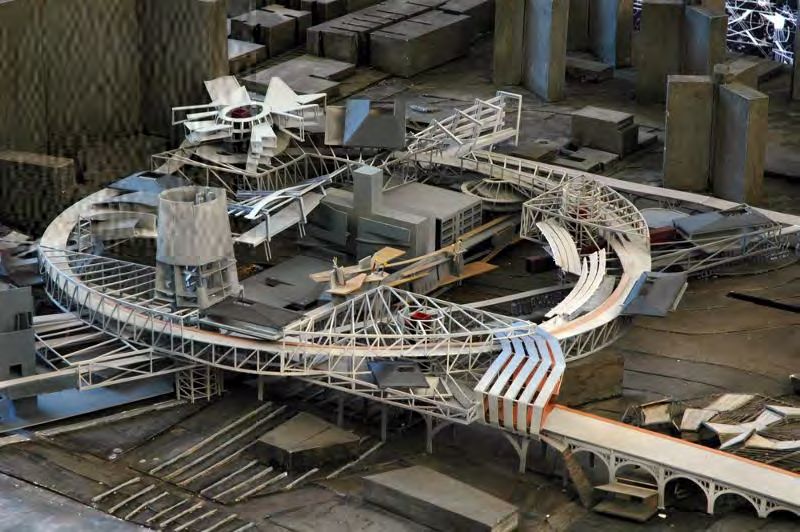
S O L I D
                        The Rise of Timber?
                                                                     Although the spatial, aesthetic, and
                                                                     structural affordances of these materials
                                                                     are universally accepted and heralded,
                                                                     the ecological impact of their production
                                                                     are increasingly difficult to ignore.
                                                                     While it is naïve and problematic to
                                                                     assume a single material will serve as
                                                                     a panacea for architecture’s carbon
                                                                     footprint, tree’s natural carbon capturing
                                                                     abilities, relatively short replenishment
                                                                     rate, and abundance within responsibly
                                                                     managed forests make a compelling
                                                                     case for building with timber. A growing
                                                                     collection of large-scale timber buildings
                                                                     is upending misconceptions of building
     Man standing in                                                 with wood, while demonstrating the
    the lumberyard of                                                efficacy of timber in the city. If the 17th
Seattle Cedar Lumber
                                                                     – 20th centuries of western architecture
 Manufacturing. 1939
  -Alfred Eisenstaedt                                                embodied transitions from stone, brick,
                                                                     iron and concrete, might the 21st century     “Wood is the mother
                        INTRODUCTION                                                                               of matter ... she
                                                                     be the time for timber?
                        Wood is arguably architecture’s original                                                   renews herself by
                                                                                                                   giving, gives herself
                        additive material. Epitomized through
                                                                                                                   by renewing. Wood
                        Laugier’s myth of the primitive hut in                                                     is the bride of life in
                        which trunk became column and branch                                                       death, of death in life.
                                                                     In putting forth a material centric           She is the cool and
                        became beam, the birth of architecture
                                                                     agenda, this studio seeks to explore          shade and peace of
                        beyond the cave is inextricably tied
                                                                     what it might mean to build with              the forest. She is the
                        to the tree. Despite the virtues of this                                                   spark and ear, ember
                                                                     wood at larger scale in the city and
                        abundant and replenishable material,                                                       and dream of hearth.
                                                                     how this method of construction               In death her ahses
                        modernism largely passed by wood
                                                                     might establish novel architectural           sweeten our bodies
                        in pursuit of the promise of steel and                                                     and purify our earth.”
                                                                     scenarios. This studio aims to
                        concrete to usher in a radical new global
                                                                     challenge notions of permanence
                        style of architecture. While the stylistic                                                 - Carl Andre
                                                                     to consider architecture’s presence
                        ambitions of modernism were undercut
                                                                     through time.
                        by an era of iconic building, modernism’s
                        primary materials of concrete and steel
                        continue to serve as the basis for large-
                        scale construction across the globe.

                                  F18
                                                                     48-400/500 Studio
                                                                     Ficca/King
                                                                     MF 12:30-4:20PM
S O L I D
                             The studio is interested in not only the     The second and culminating project will
  “The hotel industry is     spatial-structural affordances of timber     focus on the design of a food market hall
in denial about Airbnb,
                             but also the psychological potential         and mid-rise hotel tower that utilizes
      the same way they
  were about the online      of wood environments and perceived           timber material systems to consider the
    travel agencies. But     notions of “natural” materials. In           internalized social spaces of the city. (10
  you can’t compete by
                             foregrounding structural-material            week duration)
    playing politics. You
    can’t stall progress.    conditions, the studio aims to extend
         The only way to     contemporary material discourse from         The studio will make extensive use
 compete with a strong       architecture’s skin to its bones.            of wood analog models to shape
       idea like Airbnb is
                                                                          our understanding of basic material
    with another strong
      idea. You provide a    ORGANIZATION AND                             properties while testing spatial
      social community       PROJECTS                                     conditions and structural configurations.
         space, because      The semester will begin by researching       These models, in the first project, will
   Airbnb can’t do that.
                             and classifying a range of tectonic          serve as proto-architectures to establish
  A hotel traditionally      approaches for building with timber to       a collective body of knowledge for the
              provided a     create a shared studio reference that        entire studio. The second project will
  manifestation of the
                             outlines the current state of practice       continue an emphasis of analog model
   social fabric of that
    city. It’s when the      and research (2 week duration). This will    production, while utilizing methods
  real estate guys got       be followed by the first design project in   of digital fabrication to consider the
  ahold of it that they      which individual students will develop a     affordances of computational material
    stopped doing it.”
                             design for a small pavilion that explores    formation.
 - Ian Schrager in 2017      the hybridization of two timber systems
     NYTimes Interview       to achieve a horizontal span and vertical
                             stack (3 week duration).

                                                                                                                        Market Hall in Ghent
                                                                                                                        Marie-José Van Hee +
                                                                                                                        Robbrecht & Daem

                                       F18
                                                                          48-400/500 Studio
                                                                          Ficca/King
                                                                          MF 12:30-4:20PM
S O L I D
FIELD TRIP                                 Design, Master of Architecture, and
The studio will travel to Montreal         Bachelor of Architecture Programs
Canada over Fall Break (Oct. 18-21) to     with an anticipated size of 22-24
visit recently completed noteworthy        students. Commencing with the
timber projects by Canadian firms          second project, students will work in
Saucier Perrotte, Atelier TAG, and         teams of two for the duration of the
Coarchitecture . While in Montreal,        semester.
the studio will visit Nordic Structures,
a leading timber engineer and              WORKSHOP
fabricator.                                Teaching Assistants will offer weekly
                                           digital fabrication and computational
Students should anticipate combined        design workshops on Wednesdays.
airfare and accomodation costs
                                                                                   timber detail of the
of $500-$650. Travel details will be                                               Monte Rosa Hut by
outlined once the studio roster has                                                Gramazio Kohler
been established.
Please note that Altenhof funding
for travel is available for United
States citizens and U.S. Permanent
Residents with financial need. Please
inquire by contacting David Koltas,
Assistant Head, for eligibility.

STUDIO CONSULTANTS
Engineers from Arup with an                                                        Stade de Soccer de
expertise of Timber structures will                                                Montreal, Saucier +
offer unique perspective on the                                                    Perrotte Architects
                                                                                   + Hughes, Condon,
emerging state of mass timber
                                                                                   Marler Architects
construction.

STUDIO STRUCTURE AND
SCHEDULE
This studio will be co-led by
Professors Ficca and King, Monday
and Friday of each week. Teaching
Assistants will offer weekly digital
fabrication and computational
design workshops on Wednesdays.
The studio will operate as a ‘super-
studio’ comprised of students from
the Master of Advanced Architectural

         F18
                                           48-400/500 Studio
                                           Ficca/King
                                           MF 12:30-4:20PM
DECONSTRUCTING BLIGHT
Demolished and
Removed, Gordon
Matta-Clark, 1974
STUDIO DESCRIPTION dynamics. The central aspirations
The 2018/2019 Urban Design Build Studio of DECONSTRUCTING BLIGHT are
(UDBS) will explore the relationship multi-dimensional; with the concept
between building disassembly, of deconstruction being probed both
material harvesting, and new housing literally and figuratively. Literally,
construction oriented toward the the studio will engage in building
elimination of concentrated poverty. deconstruction as a physical operation to
Addressing dramatic shifts in regional harvest construction material consistent
housing needs that have precipitated with National Building Material Reuse
over the past 70 years, this Public Association (NBMRA) standards.
Interest Design (PID) studio will utilize Figuratively, the studio will operate
participatory processes to collaborate as design activists to deconstruct
with residents, neighborhood partners, pre-existing notions of blight and
and NGO’s on developing viable urban concentrated disinvestment. Closely
housing strategies that can continue associated with urban environments,
to evolve with regional population the word blight and associated concepts
F18
48-400/500 Studio
John Folan
day + time TBDDECONSTRUCTING BLIGHT
East Liberty
residents protest the
demolition of the
Penn Plaza apartment
complex. Photo: HUD deconstruction
Pam Panchak, 2016 project, Detroit, MI
have historically been pretext for drastic gained through the deconstruction
forms of construction that result in of buildings will establish tangible
massive displacement of populations. abilities in assessing broad tactical
This studio will seek to change thinking deconstruction strategies, material
and policy related to disinvestment harvesting opportunities, and upcycled
through demonstrable action that focuses material processes that can sustain
on inclusion, population retention, the creation of authentic, place based
and sets the table for the construction architecture.
of housing as part of the Spring 2019
CONSTRUCTING AUTHENTICITY studio. The remainder of the semester will be
utilized to advance the RE_CON 01
SCHEDULE OBJECTIVES/ Housing Prototypes with East Liberty
ACTIONS/PARTNERS Development Incorporated (ELDI),
Utilizing multiple adjacent structures UDBS/PROJECT RE_’s partner in
included on the city of Pittsburgh’s the development of the project site at
register of condemned buildings, the 318 N. St. Clair Street. The studio will
studio will collaborate with PROJECT collaboratively develop the conceptual
RE_’s building deconstruction crew design proposal for 318 N. St. Clair
and a labor force in training on the presented to, and approved by, ELDI’s
complete disassembly of three blighted Community Planning Committee in
houses. Materials harvested from the May of 2018. Students will advance the
deconstruction work will be utilized project through Schematic Design (SD),
as a platform for the development of Design Development (DD), and initiate
replicable design strategies that will
be implemented through the RE_CON
01 Housing Prototypes projected to
begin construction in the spring of
2019. Students enrolled in the studio
will become certified in building
deconstruction by the NBMRA by
extension of work executed on site
during the first four weeks of the
semester. Hands on/physical experience Bingo, Gorbon
Matta-Clark, 1974
F18
48-400/500 Studio
John Folan
day + time TBDDECONSTRUCTING BLIGHT
Rendered view of the
proposed RE_CON
01 housing prototype
and aggregated
development
approved by East
Liberty Development,
Inc. (ELDI).
Construction Documents (CD) during collaborate with industry partners/
the fall of 2018. As a component of the stakeholders on the development of
work, students will work closely with potential project strategies. To achieve
ELDI, its planning committee, board, and these objectives, the studio will 1)
community residents in advancing the work closely with the PROJECT RE_
housing proposal through Real Estate Deconstruction crew on the dissection/
Committee Approval, Finance Committee dismantling of a condemned structure
Approval, and Executive Committee to gain nuanced understanding of
Approval. processes through experience; 2)
extend a research partnership with
The studio will expand use of REALITY IDeATe utilizing Reality Computing
COMPUTING (capture, compute, create) applications to catalogue existing vacant
technologies explored in collaboration
with the IDeATe program. The studio
will utilize capture, augmented reality,
and virtual reality technologies to
advance design work, enhance efficacy
of communication with residents and
stakeholders, and increase transparency
of process. The studio will collaborate
with IDeATe students on a regular basis
throughout the semester, with specific,
self-identified liaisons bridging disparate Conceptual rendering
fields of interrelated inquiry. of the virtually reality
Over the course of the semester, the and community
engagement tool
UDBS will gain intimate knowledge
developed by the
of deconstruction processes, identify UDBS for RE_
material inventories/supply chains, and CYCLE PARK.
F18
48-400/500 Studio
John Folan
day + time TBDDECONSTRUCTING BLIGHT
structures, identify viable material for who have completed a sequence of
deconstructive harvesting, inventory two (fall and spring) Urban Design
potential of material for up-cycle Build Studios, and are offered based
construction at mass scale, visualize on demonstrated ability to accept
transformed landscapes, and 3) design, responsibility. The internships are
develop, and prototype full-scale also subject to availability of external
material assemblies for the integration funding The structure of the UDBS
into RE_CON 01 housing prototypes. sequence is designed to afford students
The DECONSTRUCTING BLIGHT an opportunity to participate in a one
studio is a component of a broader year long sequence in the fulfillment of
Public Interest Design continuum a Public Interest Design agenda. The
established by the UDBS and PROJECT focus of each UDBS sequence evolves
RE_. This studio provides a pre-text for with issues of regional and global
work in the Spring 2019 UDBS ASOS, significance. The studio is open to 4th
RECONSTRUCTING AUTHENTICITY, and 5th year undergraduate students in
and anticipated opportunity for the BArch program as well as all Masters
subsequent Summer 2019 UDBS Paid of Architecture (MArch) students.
Internship. Skill sets and sensibilities Undergraduate 4th year BArch students
developed in each UDBS ASOS and enrolling in the UDBS, and interested in
Co-requisite courses are intended developing an expertise/focus in Public
to inform subsequent studios and Interest Design may elect to continue to
the implementation of work through work with the UDBS in the 5th year of
jurisdictional review processes. Taking the program. MArch students enrolling
a project from initial concept through during the first year of the program may
Rendered perspective the completion of construction requires enroll for two years as well.
view generated by the commitment over the entire one year
UDBS as part of graphic
projected timeline. UDBS summer The UDBS is a vertically integrated,
series llustrating the
internships are reserved for students interdisciplinary studio. The studio
assembly sequence and
construction strategies will be composed of students from
for the proposed RE_CON the Masters of Architecture (MArch),
01 housing prototype. Masters of Architecture Engineering
and Construction Management (AECM),
Bachelor of Architecture (BArch),
Masters of Urban Design (MUD), and
IDeATe Reality Computing Programs.
The studio will meet Mondays,
Wednesdays, and Fridays from 1:30PM
to 4:20PM. Students enrolled in the
Urban Design Build Studio (UDBS)
DECONSTRUCTING BLIGHT Studio
are required to enroll in 48_493,
REPRESENTING ACTIVISM (9CU).
REPRESENTING ACTIVISM will meet
on Mondays, Wednesdays, and Fridays
F18
48-400/500 Studio
John Folan
day + time TBDDECONSTRUCTING BLIGHT
from 12:30PM to 1:20PM. Portions of are risks in travelling to and from work
each Monday and Wednesday studio sites, meeting locations, and other
session will be utilized for collaboration studio related destinations visited
on Reality Computing strategies related regularly throughout the course of the
to augmented and adaptive technologies semester. PROJECT RE_ is the primary
with IDeATe in the Collaborative Making construction/fabrication space utilized
Center, Hunt Library. by the UDBS. Students acknowledge
understanding that PROJECT RE_
This studio is generously funded by is an off-campus facility and that
Allegheny Foundation, Autodesk, the students are responsible for their own
Heinz Endowments, and the Urban transportation to and from the facility.
Redevelopment Authority of Pittsburgh UDBS work includes physical labor and
(URA). All construction work will be requires the utilization of construction
done in collaboration with PROJECT RE_ tools/equipment that may cause bodily
partners. Students will work shoulder to injury. Students acknowledge that
shoulder with populations representing they understand the risks associated
the communities where the UDBS with using the tools and do so of their
practices. own volition. The UDBS collaborates
with organizations include individuals
CONTEXT STATEMENT with previous legal violations and/or
The UDBS is a Public Interest Design incarceration. The Trade Institute of
(PID) entity. Each individual enrolling Pittsburgh (TIP), a partner in PROJECT
in this studio recognizes that work RE_, focuses its apprentice training
is executed in communities, with on individuals re-entering society post
residents served by the Urban Design incarceration. Students enrolling in
Build Studio (UDBS). The UDBS works this studio acknowledge that they
across the spectrum of scales from understand the working conditions and
urban to ergonomic. With the enormous have elected to participate in the studio
privilege that this opportunity provides of individual volition.
comes responsibility. Work is done for
clients with unmet needs, working to
budget and schedule demands required
to meet their needs. Students are
expected to be present for all client
meetings and participatory design
sessions. The ability to realize a project
through construction/implementation
is earned, and not an entitlement. While
every effort will be made to schedule
community/client meetings during
class time, client need/schedules will
determine times outside of scheduled
class. By enrolling in the UDBS, students
understand and acknowledge that there
F18
48-400/500 Studio
John Folan
day + time TBDDENSITY+COMPLEXITY
Sustainable Megastructure: Hudson River Pier 76 Redevelopment
METHODOLOGY
This studio will emphasize the use
of hand sketching, physical models
and iteration of design, research and
analysis at varying scales and degrees of
resolution.
Students must also expand their mastery
of digital and parametric tools for both
analysis and conceptual/ morphological
design development.
CHALLENGE
This studio will challenge the student
to address the full range of complex,
interrelated design issues of a new major
intermodal transportation terminal
combined with large, dense mixed-
use program. Students will explore
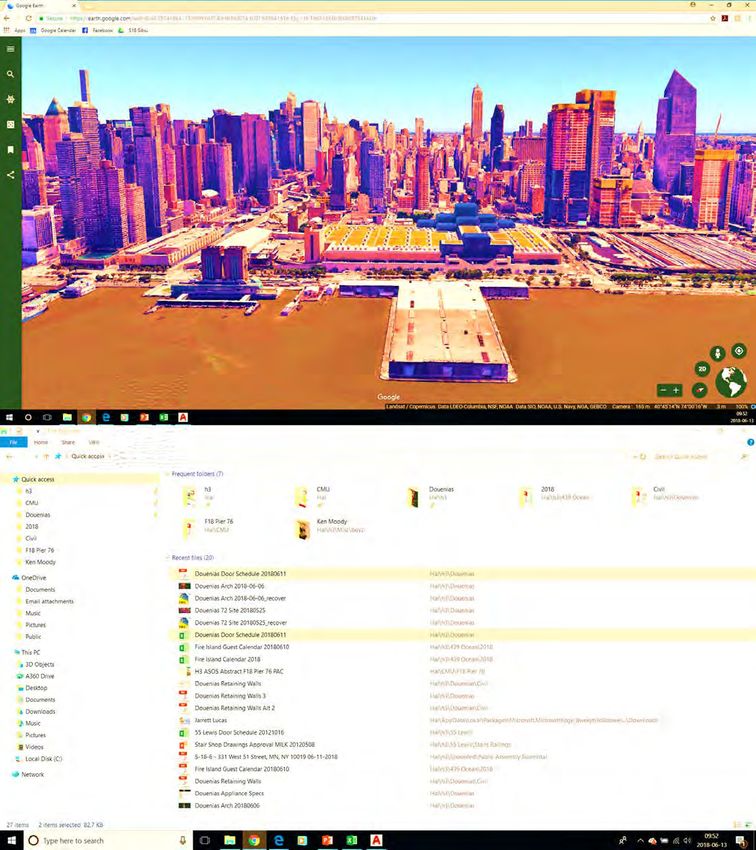
Google Earth view of INTRODUCTION structure, infrastructure systems and
site area from above building morphology on a grand scale,
This studio is about architecture concept
the Hudson River with major new program integrating
with Pier 76 (front and design methodology.
Paul Rudolph, Lower
with already vast existing buildings and
center), Waterway A semester-long theoretical project for Manhattan Expressway
Ferry Terminal and systems.
an extremely high density development Concept Design (1971)
Lincoln Tunnel vent
on the Hudson River in Midtown
shaft (front left ),
Midtown Heliport Manhattan will be the vehicle for our
(front right), Jacob study.
Javits Convention Growing populations and economies
Center (middle
increasingly stress natural resources
center), The High
Line (middle right), and ecosystems. Architects and
Times Square area developers can help to minimize and
(rear right), Penn
reverse this stress by making this
Station/Empire State
Building area (rear growth sustainable by understanding
center) Hudson and deploying smart growth strategies
Yards (rear right). that increase development density within
established urban environments. Sites
formerly considered too burdensome,
such as railyards and brownfields, have
now become among the most desirable
development sites in the planet’s most
vibrant megacities.
F18
48-400/500 Studio
Hal Hayes
MWF 1.30-4.20DENSITY+COMPLEXITY
DISCUSSION will confirm the base program for the
Studio discussion and design will studio, establish two to more common
primarily address conceptual frameworks, and identify
massive density & complexity; design optional program expansions.
and context of megastructures, Students will then as individuals or in
supertalls, groundscrapers, symbiotes
ad hoc teams propose individual project
and parasites etc., and
definition statements for concept
sustainable systems integration;
development for the remainder of the
transportation, water conservation/
semester.
recycling, power generation, district
thermal and other systems.
Students will test and expand their FOUNDATION
conceptual and technical design Students will explore concept & design
skills in all key areas, with particular methodology through a lens of 20th
focus on exploring issues arising from century & contemporary conceptual
architectural, structural, infrastructural theory and development strategies.
and mechanical systems at very large Student teams will build a foundation
scale and extreme complexity. of research into design speculations.
Research will analyse successful and
STRUCTURE unsuccessful historic precedents from
The first three weeks will be devoted the futuristic visions of Antonio Sant’Elia
to pre-design, site and market/program through the unbuilt megastructures of
Lebbeus Woods,
research in teams, from which students Paul Rudolph and the contemporary
The Proto-Urban
Campus 2008 theories of Lebbeus Woods. and Rem
Koolhaus.
PROGRAM
The base program will be 500ksf of
recreation, cultural, intermodal transit,
and convention, with an equal amount
of open space. Additional program is
to be determined by the students in
groups during the first three weeks of the
semester.
These program frameworks will be the
basis of individual semester projects.
Each student will expand and develop
the program to create a unique individual
project which may, or may not, be related
to other student projects.
F18
48-400/500 Studio
Hal Hayes
MWF 1.30-4.20DENSITY+COMPLEXITY
SITE
The site is centered on Hudson River
Pier 76, a NYC Marine & Aviation
Department facility that is currently
used as the city’s tow pound. It is
currently planned to become 50% park
as part of the Hudson River Park corridor
and 50% mixed use development.
Students will expand the site as needed
for their individual project definitions,
possibly including the Javits Center,
Waterway Ferry Terminal, Midtown
Heliport, the northern terminus of the
High Line, several blocks of the Hudson
River Park, and connection to the
Hudson Yards subway station.
LECTURES
Studio lectures will address relevant
architecture and urbanism theory from
1920s Futurism and Post-War Modernist
Urban Design to Rebuild By Design and
current planning & development trends,
as well as iconic designs of New York
and local precedents including the Time
Warner Center, Riverside South Master
Plan, the seminal 1969 Plan for New York
City, Central Park, and the Gridiron Plan
NYC FIELD TRIP
New York Harbor, the Economic Engine of
Top; Rem Koolhaas, a Continent. The studio will make a two-
Delirious New York, day site visit and field trip on Sunday
Cover Image of European
and Monday, September 16th-17th or
Editions (1978)
22nd-23rd. We will study and tour the
Middle; Rem Koolhaas, Hudson Yards, World Trade Center, Time
Delirious New York, Warner Center, Grand Central, Midtown
“The City of the
Manhattan, Hudson and East River Piers,
Captive Globe” (1978)
Central Park, an SOM office visit, and go
Bottom; BIG, Rebuild to a Broadway show.
By Design, “The
Big U” (2014)
F18
48-400/500 Studio
Hal Hayes
MWF 1.30-4.20RE-PURPOSING ARCHITCECTURE
Standard Underground Cable Co.
INTRODUCTION
Creating new architecture on greenfield The studio will visit repurposed and
sites is relatively easy compared to the adapted buildings throughout the
challenges facing the architect who city, talk with architects who practice
brings new life to aging buildings that adaptive reuse on a daily basis, meet
have lost their original purpose. If you with city officials who are responsible for
like puzzles and appreciate the mysteries the zoning and building codes that affect
of forensics, are curious about context design, and meet with real estate people
and wonder about how to design “within who market architecture.
the box,” all while practicing sustainable
and regenerative architecture … this will
be a studio experience that will change
the way you think.
Something old, Re-Purposing Architecture will explore
something new, how the adaptive and creative reuse
something borrowed,
of buildings can become community
something blue, …
these are the things … resources, community assets, and
that create healthy, agents of market change. We will learn
engaged, and forward- how context contributes to a sense
looking architecture.
of place and influences program,
the difference between historical
preservation and adaptive reuse, and
how to alter an existing structural
system to achieve a new architectural
expression. We will explore how
architects have achieved technological
breakthroughs within a confined
framework and how building systems SUCC’s Hamilton
site (1911) architects
can lead to high-performance results
Prack and Perrine.
without having to tear down and start
over. source; Workers Arts
and Heritage Centre
(WAHC) in Hamilton, ON
F18 48-400/500 Studio
Stephen Quick
day + time TBDRE-PURPOSING ARCHITCECTURE
In the studio and as the architect, you Above: 1889 Hopkins
Maps Vol sheet 15.
will simultaneously assume the roles of
source; Historic
building developer and long-term owner Pittsburgh Maps
of The Standard Underground Cable Below: Incline on 17th St
Company building in the center of the Photograph source
Heinz History Center
Strip District’s revitalization. As the
developer, you will be responsible for
determining the building’s market and
program, and as the building’s long-
term owner, you will be responsible for
achieving and maintaining tenant and
market flexibility while operating the
building as a profit-making investment.
As the architect, you will be responsible
for achieving your clients’ objectives and
meeting your professional responsibility
for environmentally sound architecture
while creating a noteworthy example
of regenerative and best-practices
architecture. At the end of the semester,
you will have a well-documented case
study of your design and representational
capabilities.
F18 48-400/500 Studio
Stephen Quick
day + time TBDF R E E S PAC E
S e r v i ng H u m a n i t y
INTRODUCTION
MANIFESTO BY The process of building has a signifi- What is the “embodied power” of
YVONNE FARRELL
cant impact that encompasses much architecture? What responsibility do
AND
SHELLEY MCNAMARA more than the immediate needs of we as architects have as stewards of
FREESPACE the client and extends well beyond the built environment and towards
the timeline of its completion. This our fellow humans? How does the
FREESPACE describes
process consumes extraordinary architects’ skill in the making of space
a generosity of spir-
it and a sense of hu- amounts of time, money, resources, create the conditions for an enduring
manity at the core of materials, effort and energy. Serving exchange between user and building?
architecture’s agenda, humanity, approaching architecture How can we add value to projects in
focusing on the qual-
ity of space itself.
with a generosity of spirit and ulti- ways that allow them to exceed expec-
mately adding value to this process is tations? Is it enough to satisfy the
FREESPACE focus- one quality that distinguishes archi- needs of the client?
es on architecture’s
tecture from building.
ability to provide free
and additional spatial We will bring these questions to bear
gifts to those who use The studio will investigate a few on our local context of Pittsburgh
it and on its ability to of the critical issues raised by the while also exploring through readings
address the unspoken
Venice Biennale 16th International and discussion the role of the Bien-
wishes of strangers.
Architecture Exhibition, FREESPACE. nale as an institution, an exhibition
FREESPACE celebrates This year’s curators, Yvonne Farrell and a provocation in the making of
architecture’s capacity and Shelley McNamara, conceived an contemporary architecture culture.
to find additional and
unexpected generosity
exhibition that presents “examples, Readings and discussion will be
in each project - even proposals, elements - built or unbuilt organized in collaboration with Dr.
within the most pri- - of work that exemplifies essential Francesca Torello, Architectural His-
vate, defensive, exclu-
qualities of architecture … revealing torian. The course will include a trip
sive or commercially
restricted conditions. [its] embodied power and beauty”. to Venice to visit the Biennale Archi-
Together, we will consider the follow- tecture Exhibition over mid-semester
FREESPACE pro- ing questions raised by this edition: break.
vides the
opportunity to empha- Svizzera 240 - House
sise nature’s free gifts Tour, The Swiss Pavilion,
of light - sunlight and Giardini,
moonlight, air, gravity, Golden Lion Best Na-
materials - natural and tional Pavilion
man-made resources.
FREESPACE encour-
ages reviewing ways
of thinking, new ways
of seeing the world,
of inventing solu-
tions where architec-
ture provides for the
well being and digni-
ty of each citizen of
this fragile planet. F18 48-400/500 Studio
Jennifer Lucchino
M/F 12:30 - 4:20F R E E S PAC E
contexts and scales. We will explore
FREESPACE can be a
STUDIO THEMES the potential to enhance the essential
space for opportunity,
a democratic space, We will consider the following qualities and experience of architec-
un-programmed and themes inspired by the Manifesto ture in our own local setting, treat-
free for uses not yet FREESPACE by Yvonne Farrell and ing Pittsburgh as a lab in which to
conceived. There is an
Shelley McNamara: explore and apply the ideas debated
exchange between peo-
ple and buildings that at the Biennale.
happens, even if not in- Sense of Humanity
tended or designed, so Providing for the well being and STUDIO ASSIGNMENTS
buildings themselves
find ways of sharing
dignity of all citizens of the planet by Research / Analysis
and engaging with peo- finding additional gifts and unex- Research of the FREESPACE exhi-
ple over time, long after pected generosity in each project bition will familiarize students with
the architect has left
while promoting an exchange be- the content of the exhibition and help
the scene. Architec-
ture has an active as tween people and building; students to identify specific areas of
well as a passive life. interest and investigation.
Spatial Gifts (Weeks 1 & 2; 9 & 10)
FREESPACE encom-
Celebrating space for opportunity,
passes freedom to
imagine, the free space unprogrammed space and social Project 1 Interior Condition “The desire to create
of time and memory, space by providing quality space for Investigations will identify and focus FREESPACE can be-
binding past, present users and strangers alike; on an active, collective space, of gen- come the specific in-
and future together, dividual characteris-
building on inherited
erous spatial volume. Students will tic of each project. But
cultural layers, weav- Nature’s Free Gifts propose a design intervention that space, free space, public
ing the archaic with Emphasizing sunlight, moonlight, contributes to the quality and experi- space can also reveal
the contemporary. the presence or absence
air, gravity, natural and man-made ence of the space.
of architecture, if we
resources, materials and orientation; (Weeks 2 to 5) understand architectre
to be ; thinking applied
Ways of Thinking to the space where we
live, that we in habit.’”
Challenging existing ways of seeing
- Paolo Baratta, Chair,
the world and encouraging or invent- La Biennale di Venezia
ing new ones, including the freedom
to imagine and the weaving of time,
memory and culture.
COURSE STRUCTURE
The studio will promote critical
design inquiry through three main
projects supported by research,
lectures and readings throughout the
semester. The projects are intended
to reinforce each other by investi-
gating the studio themes in various
Recasting
Alison Brooks, Arsenale
F18 48-400/500 Studio
Jennifer Lucchino
M/F 12:30 - 4:20F R E E S PAC E
Scheduled Programming Project 2 Building Condition Readings
at the Biennale
Investigations will identify and focus Students are required to prepare
Saturday, October
on an existing building located in a readings and actively participate in
20th at 2:30 pm high traffic area with a rich historical discussions. Topics to be addressed
context. Students will develop design will include the lead up and after-
Meetings on Architecture
proposals that reimagine the use and math to the first Architecture Bien-
THE PRACTICE OF
TEACHING, Te- role of the building. nale in 1980, its influence on the way
atro alle Tese (Weeks 5 to 10) we understand architecture today, the
The panel will discuss
commonalities between the current
the mutually beneficial
and reciprocal relation-
Project 3 Urban Condition exhibition and the 1980 exhibition and
ship between teach- Investigations will identify and focus the postmodern relationship between
ing and practice and on a gap space, barrier or border architecture and urbanism.
include architects who
within the city. Students will spec-
teach in schools of ar-
ulate in ways that re-conceptualize Local Sightsee-
chitecture as part of FIELD TRIP*
ing may include:
their creative process. these conditions. Visit to the 16th International Archi- Punta della Dogana
(Weeks 10 to 12) tecture Exhibition, Venice, Italy Museum (Tadao Ando),
Special feature-length
* Participation preferred but not required Il Fondaco dei
film screening
Tedeschi (OMA),
Unfinished Spac- Deliverables will include drawings
Foundation Querini
es: Cuba’s Architec- and models that explore a range of Tentative Dates Stampalia (Carlo Scarpa),
ture of Revolution formats, techniques and scales in an Thurs., Oct. 18 to Tues., Oct. 23, 2018 Palazzo Grassi,
A documentary about
Las Escuelas Naciona-
effort to capture the vitality of the The Peggy Guggen-
heim Collection.
les de Arte in Cuba. The design proposals. Tentative Itinerary
film tells the incredi- Day 1 Arrive Venice / Sightseeing Requirements:
ble story of the cycle of
life of the buildings from
Day 2 Visit Architecture Exhibition/ Up to date passport
Visas (for international
their founding by Fidel Arsenale
students)
Castro and Che Guevara Day 3 Visit Architecture Exhibition/ Health Insurance
to their eventual aban-
Giardini Mandatory CMU Study
donment and recent ef-
Day 4 Visit Architecture Exhibition/ Abroad Information
forts to restore them.
Session
Collateral Events in City
Day 5 Depart Venice Funding Sources:
Altenhoff Scholarship for
student travel (for eligible
Tentative Budget (per person)
SoA students).
Flight $1250
Hostel $ 250
Subtotal $1500 *
The Japan Pavilion, Fees & Local Transport $ 75
Architectural Meals & Incidentals $ 250 - 350
Ethnography,
Giardini
Total $1825 - 1925
* RT airfare from PIT to VCE and lodging for students
will purchased through the SoA. Deposit for airfare
and hostel due August 15th
F18 48-400/500 Studio
Jennifer Lucchino
M/F 12:30 - 4:20T H E S I S
and independent projects
All Thesis/IP Students The definition of ‘thesis’ within the While a project is not expected to be a
will be required to context of a professional program in ‘building,’ it should rigorously address
take Thesis Prep
architecture depends a lot on who you spatial concerns including how space
in the preceding
Spring Semester talk to in a diverse and often-contentious informs and intersects with other
field of views that spans institutions, processes (social, ecological, historic,
individuals, generations, and schools of etc.). The scale of consideration can
thought and practice. Tied to the question range from bodies to territories.
of ‘what is a thesis’ are of course varying
The studio comprises opinions on what constitutes research In this studio students are expected
a number of disparate in architecture —and whether we do to engage and develop a wide range of
and demanding projects research to frame a project, its argument, interrelated capacities, including critical
that have all required Mona Hatoum
and methods, or if in conducting a thinking, analytical writing and reflective Hot Spot III 2009
sustained independent
work in preparation and design investigation we are in fact doing design production. Photo: Agostino Osio
will continue through research.
the Fall and Spring
In either case, if we agree that research
semesters . There will be
an exhibition of the work
is being done, then we can also say
in the Miller Gallery in that in crafting a thesis project, you
April 2019 are entering a wider conversation and
exploring problems that have puzzled and
inspired others. By proposing your own
set of critical questions and methods of
inquiry, you recognize your responsibility
to engage seriously and rigorously with
prior work, and to extend its intellectual
scope through your own contribution. This
studio adopts this view.
The aim of this studio is to guide you to
through the process of clearly defining
and structuring a thesis project. The
Spring semester will follow the succesful
completion of the thesis development in
the Fall semester. The studio is a venue
for constructive discussion and mutual
critique. In addition to the core thesis
students a limited number of independent
project proposals for a semester long
studio project can be considered.
S19/F19 48-519 Thesis/IP
Mary-Lou Arscott/Nida Rehman
MWF 1.30-4.20pmL o w - R e l i e f
The Virtual and Material Cultures of
Architectural Deceit
INTRODUCTION to position the built environment as a
Modern Architecture championed proto-virtual-interface.
1474: Oculus at
‘Truthfulness’ as a laudable virtue in If a latent virtuality exists in
the Ducal Palace,
the built environment. Many iconic architecture’s past can historical Mantua, Andrea
modern architects preached and precedent frame the use of emerging Mantegna
(mostly) practiced legibility of material, digital technologies – like robotics,
structure, and intent in building design. projection mapping, and reality
The repetition, flatness, anonymity of capture –to explore new expressions
many contemporary cities represents the of architectural duplicity? In order to
physical inheritance of this sensibility. address this question, Low Relief will use
Despite Modern Architecture’s historical research, hands-on material
insistence on truthfulness of material, play, and full-scale prototyping of
architects before and since have architectural elements.
deployed an array of techniques to
trick the senses, including the use of COURSE STRUCTURE
faux materials, forced perspective, and Low Relief will promote critical design
applied media to walls and ceilings (e.g. inquiry through three main projects
fresco). supported by workshops throughout
Low Relief will study the material the semester. The projects are intended
cultures of deceit in architectural design to reinforce each other with a deep
and construction. The studio will explore dive into robotic fabrication of soft
architectural illusion not just as a visual materials like plaster and a broad survey
technique, but as a precise shaping of of historical construction techniques
physical material and the blending of used to produce architectural illusions.
hybrid media forms in three dimensions. The studio will split time and resources
The motivating frame of Low Relief between the SoA robotics lab and MMH
coincides with a proliferation of virtual Studios, blending the cultures of lab
reality in contemporary media, and seeks based research and studio based inquiry.
S19
48-400/500 Studio
Bard + Torello
M/W/F 1:30 - 4:20L o w - R e l i e f
An illustration of
‘the Sepulchral STUDIO ASSIGNMENTS
Chamber’ at Sir John
P1_Atlas of Architectural Deceit
Soane’s house, 1825
A visual compendium of research ex-
ploring the material culture of deceit
in architectural design.
(01.14 – 02.01)
London + Paris Trip ( 01.03 - 01.10)
P2_ Magic Box
A modeling exercise exploring phys-
ical and virtual techniques of archi-
tectural illusion. Students will design
and fabricate a model-scale artifact.
(02.04 – 03.01)
Workshop 1 ( 02.06)
P3_ Fun House
A fabrication exercise at full-scale
exploring architecture as virtual real-
ity interface.
(03.04 – 05.03)
Workshop 2 ( 03.06)
GLOBAL STUDIO TRAVEL
STUDIO THEMES
Low relief will travel to London and
In order to explore architecture’s material
Paris as part of the ASO global studio
duplicity, Low Relief will focus on:
program. During the trip we will visit
• Material play: exploring the
museums with the world’s largest
affordances of plaster, a material
plaster cast collections and visit
that can be cast, cut, and carved in a
regional plastering shops that have been
variety of physical states from liquid
furthering plaster craft for centuries.
to solid.
• Robotic Fabrication: creating new
Destinations will include:
robotic workflows to explore plaster.
• Sir John Soane’s Museum
• Victoria and Albert Museum • Reality Computing: using 3D scanning
• Cité de l’Architecture et du Pat- and projection mapping to create
rimoine hybrid virtual / physical artifacts.
Note: The trip will occur before the • Historical Precedent: learning
start of spring term classes. from techniques like trompe l’oeil,
( 01.03 - 01.10) scagliola, and anamorphic projection.
S19
48-400/500 Studio
Bard + Torello
M/W/F 1:30 - 4:20L o w - R e l i e f
SUPPORTING COURSES OBJECTIVES
#48-368 • You can test ideas at full scale using
Rediscovering Antiquity material affordance to inform your
Dr. Francesca Torello will be teaching, a design process.
seminar supporting the studio during the • You can program, simulate, and
Fall 2018 Semester. Although encouraged, execute basic robot paths.
the course is not required for participation • You can design and implement
in the studio. custom end of arm tools for
fabrication.
#48-455 • In addition to compelling
Introduction to Architectural Robotics representation, you can leverage
This seminar will be offered in the Fall of digital tools to construct physical
2018 and Spring of 2019. It is required as a artifacts.
pre-requisite or co-requisite for all studio • You can leverage parametric
participants. workflows to efficiently manage
complex fabrication tasks
• You can use detailed understanding
of historical precedent to inspire
Architectural cast
collection, Cité de
l’Architecture et du
Patrimoine, Paris
S19
48-400/500 Studio
Bard + Torello
M/W/F 1:30 - 4:20IDENTITY & MAKING
The American Mashup
INTRODUCTION architecture and culture. Play makes
To act, in its most Living within today’s global room for much that is not possible in
general sense,
infrastructure, where movement and reality: to slip into roles outside oneself,
means to take an
initiative, to begin.” displacement is commonplace; what to take risks without consequences, and
Hannah Arendt does it mean to identify yourself? The to challenge the codes and customs of
The Human counter to globalism, the prevalence of his society. Can activism through play
Condition, 1958
nationalism, has spread exponentially. and pageantry create public discourse?
Where seeming infrastructural space It is through the interaction, experience,
is expanding, why is the sense of and discourse we create our identities.
a homeland or historic identity so As designers and makers, it is in the
compelling? process of making proposals and making
Heather Bizon is In this way, one’s identity and in reactions where collaboration and
appointed as the particular the identifiers we use as dialogue coupled with making as thinking
‘18/’19 Ann Kalla
descriptors, suffer from an inherent test and create new futures.
Professor in SoA.
Heather Bizon is an spatial conflict of the relationship of the Focusing on design at a multitude of
artist and architect interior to the exterior. scales, how do the people of the site
working in New Haven, This studio will take the notion become a place itself?
CT. Ms. Bizon’s
works explore the
of aesthetics and play relative to
individual’s perceptual The 11 separate
of space and public/ nation-states, where
private domains dominant cultures
through new media explain our voting
and technology, behaviors and attitudes
sculpture, toward everything from
architecture, and social issues to the
film. She has worked role of government.
with MOS architects
collaborating “Our continent’s
on projects of a famed mobility has
range of scales been reinforcing, not
from film to landscape dissolving, regional
to exhibitions to public differences, as people
works, including PS1 increasingly sort
Young Architect’s themselves into like-
Pavilion 2009, minded communities.”
Ordos 100 House in - American Nations: A
Mongolia Lot 006, and History of the Eleven
Marfa Drive In and Rival Regional Cultures
Park. Heather received in North America,
her B.Arch from Colin Woodard, 2013
Cornell University
and M.Arch II from
Yale Univerisity.
S19
48-400/500 Studio
Heather Bizon (18/19 Ann Kalla Professor)
day + time: TBDIDENTITY & MAKING
MASHUPS SITE
The history of mashup culture in general As Architects, we analyze the site:
“Ah, yes, the Andy
Murray syndrome… can be dated back to the beginnings its conditions - physical, ecological,
Alexander Graham of dada and conceptual art. Artists temporal, historical. How does the Left
Bell, when he was such as Marcel Duchamp were the first S.L.A.B.S
people of the site become a place itself?
working away with While they might
to introduce already existing objects, The traditions and histories of the people
his bake-a-light and resemble the low-riders
his wires in his shed, which they rearranged and combined and the spaces they occupy in the City you see cruising through
he was a Scottish in collages, to the world of higher art. create a subculture that exists as a many American cities,
crackpot. When slabs form a cross-
These artists believed that even though temporal and unfixed site.
he invented the section of Houston
telephone, he was certain artifacts were ascribed a What do we have in common and what music, culture and
a British genius…If certain meaning, this meaning could be connects us? And how do we articulate community, making
you’re English and you altered through rearranging them and our identity? them more than mere
do something brilliant, souped-up rides. It is
putting them into a new context.
you remain English. an art form and social
If you’re Scottish or Pittsburgh is a city of neighborhoods; practice that builds and
Welsh and you do Mashups were part of a tactic of each with its own rites and rituals. maintains community
something brilliant, political and media pranksterism. across generational
Neighborhoods are separated by both
the English decide lines and expression
Turn-of-the-millennium ‘DJ mashups’ physical boundaries (bridges, rivers,
that you are, in fact, of creating their
British.” - originate in disc jockeys’ musical elevation changes etc) as well as socio own definition of the
Jeremy Clarkson, The combinations and medleys of songs political and economic differences. “American Dream”.
Grand Tour, Sn. 1 Ep.11 2016
produced by others. To fully appreciate As such, Pittsburgh presents unique
2016
a representation, the viewer or listener opportunities as sites of identity, Middle
must understand this ‘worlding’ aspect: community, and social exchange. We Jahnkoy’s designer,
an image does not simply present an Maria Kazakova, a
will explore the different neighborhoods
Russian-born designer of
object or a moment, but represents a of Pittsburgh relative to their cultural Siberian descent fashion
world. traditions and temporal events. artist, creating/designing
We will take up the tactic of the Mashup Who will live in the Pittsburgh of the hand-stitched Pumas.
2017
and expand upon the American “melting future, what will happen to those who
pot”. What does combining cultural and have called the City their home for Right
spatial traditions and typologies do to generations, and what does the future Chinese - American -
affect and transform our built reality? neighborhood look like? Hispanic Festival Float
S19
48-400/500 Studio
Heather Bizon (18/19 Ann Kalla Professor)
day + time: TBDYou can also read


