Progress on Activity 2016 - Shaping the nation and taking the best to the world The Road to 2025 - Massey University
←
→
Page content transcription
If your browser does not render page correctly, please read the page content below

Progress on Activity
2016
Shaping the nation and taking the best to the world
The Road to 2025

The following report has been compiled using information primarily sourced from the Quarterly Consolidated Performance Reports,
                           Massey News and the Vice-Chancellor’s e-logs as at 1st November 2016.
                                                For internal distribution only
Progress on Activity 2016

contents
Big Goal 1: Research and Enterprise                 4

Big Goal 2: Teaching and Learning                  12

Big Goal 3: Connections                           20

Big Goal 4: Internationalisation                  26

Big Goal 5: Responsibility                        32

Big Goal 6: Generating Income                     36

Big Goal 7: Enabling Excellence                   40

   Staff                                           41

   Students                                       42

   Infrastructure                                 43

Appendix A – 2016 Key Actions Status              48

                              For internal distribution only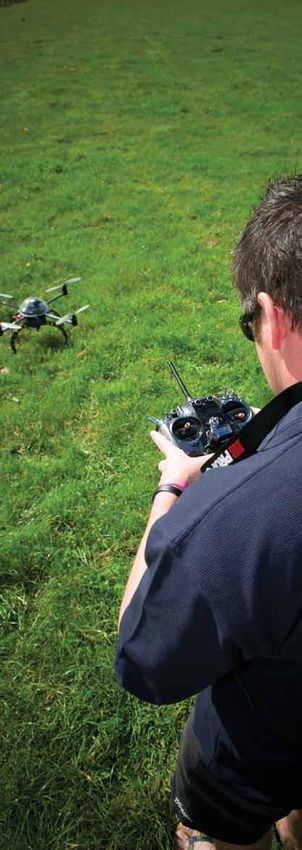
Big Goal 1:
Research and
Enterprise
Te Rangahau me te Umanga
“To promote the highest standards of research and scholarship,
be a world leader in our areas of specialisation and support active
engagement with, and participation in, knowledge exchange to ensure
that the intellectual capital we generate is used to best advantage.”

04
Progress on Activity 2016

The following key initiatives were undertaken in 2016 in        website. Work on the website to improve the visibility of
support of the Big Goal Research and Enterprise.                research expertise, award winners and research projects has
                                                                also progressed during this year albeit slightly behind the
Building up to 2018 PBRF                                        planned completion schedule.
Massey University advanced College plans for its
Performance Based Research Fund (PBRF) submission               Lift Massey’s position
in 2018 following the Institutional Review of Research          in world rankings
(IROR) undertaken in 2015. With University level support,
                                                                • Massey University maintained top QS rankings for
Colleges’ are implementing their plans which include
                                                                  veterinary science and for agriculture and forestry,
mechanisms to enable staff to fulfil research requirements.
                                                                  ranking 25th and 30th worldwide respectively. In addition,
These comprise targeted support, advice and mentoring,
                                                                  nursing, and finance and accounting ranked in the top
the strategic allocation of College MURF funds, symposia,
                                                                  100. It is the first time QS has ranked nursing.
training days and workshops, focussed support for
early career researchers, and the provision of research         • Massey University’s School of Design is now ranked second
mentors. Expectations regarding PBRF preparation have             within the Asia-Pacific region by global design award agency
been communicated widely to the University’s academic             Red Dot. Four years ago the school was placed 11th in the
community. A PBRF governance group, which meets on a              same rankings. Only China’s Zhejiang University was ranked
monthly basis and is chaired by the AVC Research, Academic        higher. The College of Creative Arts has forged a number of
and Enterprise, oversees activities against an approved           new partnerships in 2016 with institutions in China.
timeline. The University is also investing in both centrally
                                                                • Plans are on track to develop and implement a Massey
delivered and college-based support, aimed to significantly
                                                                  University Partnership Strategy to match Massey’s
improve our overall institutional quality score.
                                                                  capabilities with potential new partners with the expectation
                                                                  that new research partnerships will be revenue generating.
Research Strategy 2017-2021
                                                                  Mapping against New Zealand companies is complete
The new University Research Strategy was drafted and              and is being used to inform internal planning. Mapping of
refined this year with input through College Research             publications against QS and Times Higher Education (THE)
Committees and other wider workshop opportunities for staff       is underway and was reported to the University Research
on each campus. The Strategy document is in draft as at 1         Committee in October in the “Collaboration and Co-
November. The final consultation period was extended to 1         Publication” paper. Further review of MoU and contracts
December to ensure sufficient engagement, commentary and          with QS and THE ranked institutions is also underway. The
buy-in from the University community. The Strategy proposes       Partnership Strategy is now operating within Research and
six key commitments and 28 objectives, and includes an            Enterprise: new international, national and local research
implementation framework by which to monitor progress. It         partnerships have been developed; resultant research
is expected that College Research Strategies will be updated      initiatives are in development.
to reflect the university’s Research Strategy 2017-2021, once
approved. The Research Strategy will, following consultation,
proceed to SLT for finalisation in early 2017.

Research Communication Strategy
Communicating our research to the wider communities we
serve is a major objective for this year. Rangahau: Research
at Massey has been published by Massey University Press
and was launched in November; the book celebrates Massey
University’s outstanding research through profiling 30
Massey University research projects. The stories contained
in Rangahau have also been repurposed for the Massey

                                                                                                                               05
Progress on Activity 2016

‘Researcher Development’                                          • There has been strong engagement in the Vision
Programme                                                           Matauranga Capability Fund campaign including VM
                                                                    workshops which resulted in a number of new partnerships
• Initial implementation of the Vitae Framework is underway         with iwi. One iwi-based postgraduate research hub has
  with PhD candidates. A wider rollout to staff will be             been created with Ngati Wai.
  piloted by Massey Business School. In addition, in order
                                                                  • Four of the six MBIE Vision Matauranga Capability Fund
  to improve PhD students’ employability outcomes an outline
                                                                    projects awarded to Massey University in 2016 are led
  for transferrable skills for PhD students was developed. A
                                                                    by staff from College of Sciences. In addition, staff from
  transferrable skills programme, under discussion by the Deans
                                                                    the College of Sciences are partners in a project led by
  and Directors of Graduate Research Schools New Zealand
                                                                    Rangitaane. The projects span all of New Zealand, working
  (DDoGS) and which involves the development of content for
                                                                    with iwi in the areas of horticulture, ecology, and river and
  modules within the programme has not progressed in 2016.
                                                                    freshwater quality. The projects focus on building capacity
                                                                    and capability in iwi and developing strong partnerships that
Increasing the number of Higher                                     can help iwi achieve their aspirations.
Research Degree Students and
                                                                  • Massey University leads the Matauranga Māori research
reducing completion times
                                                                    program within the Resilience to Natures Challenges,
Activities to grow the pipeline of postgraduate                     National Science Challenge. This project directly
research students in 2016 included:                                 contributes to the Māori community by supporting 11 Māori
                                                                    researchers across the country across 7 institutions. Within
• An increase in the number of PhD scholarships - an additional
                                                                    the project Massey has provided three PhD scholarships
  30 PhD scholarships were available in 2016. This is part of
                                                                    to Māori students and directly supported Iwi/Māori
  an investment over three years of $4.5 million in this area
                                                                    organisations by providing direct funding to salaries for three
  which moves us toward the 2021 competitive goal of 200
                                                                    research positions.
  postgraduate research scholarships.
                                                                  • The Institute of Agriculture and Environment (IAE) has
• Massey Business School undertook to review its plans for
                                                                    supported Rangitaane O Manawatū/ Tanenuiarangi
  attracting PhD students – the report will be received and
                                                                    Manawatū over the last 10 years and continues to support
  recommendations considered by the College Executive
                                                                    their two staff members in terms of environmental research
  in the fourth quarter. The School has encouraged its PhD
                                                                    and gain research funding.
  coordinators and staff to use PhD scholarships to attract
  high calibre local and international PhD candidates with a      • Over the last year Massey staff have supported the Te Tai
  special focus on Māori and Pasifika candidates. The School       Hau a uru (south-western North Island) Iwi Fisheries
  has worked closely with Research and Enterprise services to       Forum particularly when engaging with Trans-Tasman
  offer PhD supervision training workshops to all staff by the      Resource in relation to sea floor mining. As a result the
  end of 2016.                                                      mining company has been responsive to supporting the
                                                                    Māori economy through developing policies to directly utilise
• A proposal is underway to develop a Professional
                                                                    local businesses and personnel to support their industry.
  Doctorate in Massey Business School. If the decision is
  made to proceed it will go to CUAP Round 2 2017.                • The IAE continue to support Ngāti Rangi and Whanganui
                                                                    Iwi. Through those relationships Massey is providing a PhD
• A contract is drafted and agreed for a joint postgraduate
                                                                    scholarship to one of their Iwi member to undertake a PhD
  school hosted by the College of Sciences with AgResearch.
                                                                    related to their environmental management aspirations.
  Implementation of the school was behind schedule due to
                                                                    This in turn allows the student to continue to be employed
  lead staff changes at AgResearch.
                                                                    part-time with the Iwi.

Māori knowledge development                                      • IAE is a party to the renewal in August of the MoU with
and leadership                                                      University of the South Pacific.

                                                                  • Currently underway is the process of developing a MoU
• A strategy, ‘Developing Māori Research’ is in planning.
                                                                    with Fiji National University (FNU) with a food science
• Targeted invitations to apply for a Pūrehuroa Award (for         and agriculture emphasis.
  fees) were sent to all Massey Māori postgraduates. Seventy-
                                                                  • The start of the project on improving the cocoa sector in
  three applications were received and 56 were awarded. All
                                                                    Samoa has begun and the next phase of the contract will be
  applications required an academic endorsement.
                                                                    to subcontract AgriChain Centre and the Samoa Chamber of
                                                                    Commerce (who have the contract with MFAT).

06
Progress on Activity 2016

Supporting advancement                                               ›› a variety of new partnerships developed with external
of Pasifika research and its                                            funding attached (including international) by College of
                                                                        Sciences staff against a College plan and target; and
effective dissemination
                                                                     ›› the College of Health completing its review of units’
• The Pacific Research Guidelines, which will assist                    research development plans to identify shared needs.
  researchers intending to work in the Pacific were developed
  and presented to staff in November this year. The Pacific        • Planning was underway to respond to the Request for
  Research and Policy Centre provides an up-to-date list on its      Funding Applications process (expected November) for new
  website of Massey staff who are conducting research in the         Centres of Asia-Pacific Excellence (CAPEs) announced
  Pacific or on Pacific topics.                                      by the government as part of the Innovative New Zealand
                                                                     package in Budget 2016. CAPEs will be cross-institutional
External Research Funding –                                          centres of excellence, in the language, culture, politics and
                                                                     economics of countries or groups of countries within the
a planned approach
                                                                     Asia-Pacific region.
• The University was awarded more than $4.4 million in
                                                                   • The Centre for Research in Mathematics Education
  funding from the Health Research Council to tackle
                                                                     (CeRME) was launched in October at the Auckland campus.
  issues including screening for cervical cancer, cancer
                                                                     The launch was part of the Making Waves and Opening
  survival rates in Māori, improving smoking cessation rates,
                                                                     Spaces symposium. The Centre is part of the Institute of
  managing nurses’ fatigue (Safer Nursing 24/7 project) and
                                                                     Education at Massey University, and brings together specialists
  occupational risk factors of cardiovascular disease.
                                                                     in mathematics education to work on a common theme:
• Six research projects involving Massey University have             the place of mathematics education and its transformative
  been awarded more than $2 million from the $4.75 million           potential in New Zealand, the Pacific region and the world.
  Government Catalyst Fund, which aims to link New Zealand
                                                                   • A new specialist clinic has opened at Massey University’s
  with other world-class international research groups and
                                                                     Auckland campus, with the aim to help people of all
  initiatives. Examples of Massey projects include developing
                                                                     ages across the region that stutter. Early treatment is
  5G communication technology worldwide, predicting when
                                                                     essential to try and prevent long-term impacts. The clinic
  the next volcano will erupt, child development in New
                                                                     is a collaboration between Massey University’s Speech
  Zealand, quality housing for the elderly, creating metals from
                                                                     Language Therapy Clinic and the Parnell-based
  plants, and distinguishing “doomed” endangered species
                                                                     Stuttering Treatment and Research Trust (START).
  from ones that can be saved.

• Research and Enterprise services continued to support            Agrifood
  Colleges with the major contestable funding opportunities
                                                                   • Launch of the New Zealand Food Safety Science and
  i.e. National Science Challenges (NSC), Catalyst, Marsden,
                                                                     Research Centre by Science and Innovation Minister Steven
  national and international partnerships development, through
                                                                     Joyce and Food Safety Minister Jo Goodhew in May. The
  proactive and targeted workshops and communications.
                                                                     centre will help to continue to build New Zealand’s reputation
• Colleges continued to focus effort to increase levels of           as a global leader in the supply of safe food by delivering
  success in external research funding. Approaches                   world-class strategic scientific research driven by the needs
  taken include:                                                     of government, consumers and industry. The Centre’s
  ›› the College of Humanities and Social Sciences appointed         inaugural director is Massey Professor Nigel French, a world
     research development officers to work with staff within         leader in molecular epidemiology and public health research.
     the College to identify opportunities and support College       Since its establishment the centre led successful bids for
     academic staff making funding applications;                     $500,000 for development of its business and research plans,
                                                                     $21 million for the centre and $1.25 million for the New
    –– CoHSS has increased its success in Marsden funding            Zealand-China Food Protection Network.
       applications (2 in 2015, 5 in 2016) after a major
       investment by the College to increase C&T funding           • A new partnership, the New Zealand-China Food
       and reputation. The 2016 results put CoHSS amongst            Protection Network (NZ-CFPN), was established and
       the most successful Humanities and Social Science             received funding of $1.25 million from the Ministry of
       colleges in New Zealand.                                      Business, Innovation and Employment. The network will
                                                                     enhance communication between research scientists,
  ›› an incentive scheme for staff as part of the External           government organisations and industries in New Zealand
     Funding Strategy from Massey Business School for non-           and China, and it will work alongside the New Zealand Food
     government research contracts;                                  Safety Science and Research Centre. The partners in the

                                                                                                                                   07
Progress on Activity 2016

  NZ-CFPN are from leading universities, Crown Research              • A new role of food entrepreneur-in-residence at Riddet
  Institutes and the Cawthron Institute. The Network will              Innovation has been established with the aim to encourage
  create a new mechanism for knowledge generation and                  greater food innovation, entrepreneurial thinking and
  exchange, enabling the uptake of research into effective             commercialisation of food science and technology ideas.
  policies that reduce hazards in the food chain and ensure a          Riddet Innovation is part of the Massey Institute of Food
  sustainable supply of safe and nutritious food. It will increase     Science and Technology and has the ability to take on
  consumer confidence in both countries, ensuring international        a range of projects from strategic research to practical
  best practice is being followed for food protection.                 processing and technology development.

• Professor Barbara Burlingame has been selected for the             • The New Zealand Land & Food Annual 2016 - Why waste
  new High Level Panel of Experts project team, for the                a good crisis? published by Massey University Press and
  Committee on World Food Security (CFS) and is the only               launched in June is the first edition of many that will examine
  appointment from the Southern Hemisphere. The team will              and analyse the agrifood and agribusiness landscape in
  address the theme ‘Nutrition and Food Systems’ and will              New Zealand. The book contains chapters derived from
  report to the Committee’s 44th session in October 2017.              the collective knowledge of 26 expert contributors from
  The expert panel was created as part of the reform of the            a spectrum of organisations and viewpoints. Authors
  international governance of food security and nutrition.             come from tertiary institutions like Massey University,
                                                                       manufacturers including The New Zealand Merino Company,
• A new research centre, the Alpha-Massey Natural
                                                                       and many more industry leaders in science, farming, banking,
  Nutraceutical Research Centre, was launched in April,
                                                                       research and environmental protection.
  following the signing of a MoU earlier in the year between
  Massey University on behalf of the Riddet Institute, Alpha         • In March the Social Science Food Network was
  Group Holdings Ltd and Shanghai’s Tongji University. The             established to foster greater cross-disciplinary and
  centre’s research will evaluate extracts for biological activity     collaborative research to make fundamental food science
  from plants common in New Zealand and thereby enhance                research more socially applicable and effective. The range
  New Zealand’s research and innovation capacity in                    of food-related areas to which social science researchers
  natural nutraceuticals.                                              can contribute includes: societal understanding of foods;
                                                                       consumption and consumer acceptance of foods; food
• The Massey-led Science of Food platform received $1.5
                                                                       communication and the mediation of food; history of food;
  million of funding from the High-Value Nutrition National
                                                                       sociology of food and eating; health psychology of food; food
  Science Challenge. Science of Food platform will address
                                                                       poverty and insecurity; food banks/social justice and food;
  the technological challenge of creating food products that
                                                                       food policy; overeating and dietary practices new migrants and
  provide enhanced health benefits by delivering natural
                                                                       food what, how and why people eat what they do; fast food
  health-enhancing compounds (bioactives) to the body. Up to
                                                                       and commodification; the pleasures of food; food substitution
  $1.5 million has also been allocated to Consumer Insights
                                                                       and supplementation; food safety scares; food practices in
  research at Plant and Food Research, with a focus on the
                                                                       the context of food allergies; vegetarianism and other eating
  health and wellness needs of Asian consumers.
                                                                       practices; families and food; food waste and dumpster diving;
• Progress has been made on a Joint Food Science Facility              and food markets, local food and sustainability.
  with AgResearch. A $39 million state-of-the-art facility,
                                                                     • The 2016 New Zealand Food Awards were held in October
  announced in August and in concept design phase, is to be
                                                                       with entries up by 62% over 2015. Massey University
  built over the next two years alongside the existing Food
                                                                       sponsors the supreme award. As a leading provider of
  Pilot Plant on the Manawatū campus. The facility which will
                                                                       knowledge for food and health innovation in New Zealand,
  be the epicentre of science for FoodHQ is part of a larger
                                                                       Massey University owns and organises the awards,
  body of work, the Future Footprint Programme. The facility
                                                                       recognising the creativity, innovation and excellence of our
  will be the base for nearly 140 staff and students, about 90
                                                                       largest export sector since 1987. Each year the awards
  of them from AgResearch. In addition to research, it will
                                                                       celebrate new initiatives in food and beverage production
  have a strong educational component and will house and
                                                                       and manufacturing, identifying not only company leaders
  train undergraduate and postgraduate students from the
                                                                       who inspire others to meet their standards of excellence, but
  University. The facility will house food and bio-based science
                                                                       the creative work of product innovators in packaging design,
  teams from AgResearch (dairy foods, food nutrition and
                                                                       nutrition, enterprise, food safety and quality.
  health, and part of food assurance and meat quality), and
  staff and students from Massey University’s Institute of Food        ›› The strategic and supporting partners with Massey for
  Science and Technology and staff of the Riddet Institute, the           the awards are – Auckland Tourism Events and Economic
  Massey hosted Centre for Research Excellence.                           Development, Countdown, FoodHQ, The FoodBowl, The
                                                                          New Zealand Institute of Food Science and Technology,
                                                                          Ministry for Primary Industries, New Zealand Trade &

08
Progress on Activity 2016

    Enterprise, NZME, Review Publishing, XPO Exhibitions,               Current sensing technology is typically carried on planes
    RangeMe, NZFSIT, Brother Design, Palmerston North City              or drones and uses expensive and complex equipment. A
    Council and Villa Maria.                                            robot is a cheaper option that would also be more reliable
                                                                        as it is less weather dependent than drones. The robot was
  ›› A first for the event was the presentation of a special
                                                                        originally designed by Transpower and students in Massey’s
     award to Massey University Vice-Chancellor Steve
                                                                        School of Engineering and Advanced Technology as a tool
     Maharey. Mr Maharey was presented the inaugural
                                                                        for assessing equipment at substations to reduce response
     “Support to the Food Industry Award”. He has been a
                                                                        times at remote locations. The prototype robot was on
     tremendous advocate for the New Zealand Food Awards
                                                                        show at Massey University’s display at Central Districts
     programme during his eight years at Massey and has
                                                                        Field Days in March.
     been involved in developing the industry both nationally
     and internationally, driving and supporting initiatives such     • Massey University was the proud sponsor of the 2016 FMG
     as the Food Innovation Network and FoodHQ.                         Young Farmer of the Year competition. The competition is
                                                                        a showcase of the best young talent the agricultural sector
• Te Puna implemented an annual calendar of events
                                                                        has to offer, celebrating innovators, excellence and the best
  as planned. A Steering Group met six weekly to review
                                                                        of the industry to the wider community. Four of the seven
  progress on the four work stream areas and eight ‘focus
                                                                        grand finalists attended Massey University.
  projects’ for 2016. Also, the network met every 6 weeks
  to develop links; a monthly newsletter was used as a                • Massey University is seeking to add a Global Centre for
  mechanism to circulate ideas and opportunities. A series of           Indigenous Leadership to the work being done by the
  free public lectures and discussions, ‘Better Futures’, with          team at Te Puna Whakatipu. The mission of the centre is to
  expert panellists was delivered.                                      build indigenous leadership capacity and capability through
                                                                        the design and delivery of multi-faceted projects that
• Food Futures Taranaki 2016 event, organised by Massey
                                                                        incorporate research, teaching, consulting, engagement,
  University and Venture Taranaki in January, provided
                                                                        policy formulation and programme development activities to
  case studies as well as information and guidance from
                                                                        advance indigenous leadership, delivered by interdisciplinary
  agrifood specialists for people interested in Taranaki’s food
                                                                        teams from within Massey and internationally. In November
  and beverage sector development. The event included
                                                                        Dr Selwyn Katene was announced as the Establishment
  presentations on global food market opportunities; food
                                                                        Director of the planned Centre.
  and food processing innovations; regional food and
  beverage sector development initiatives; Māori agri-
  business ventures; the evolving sheep dairying sector in
                                                                      Commercialisation
  New Zealand; nutraceutical and pharmaceutical market                • The Commercial Architecture Review, which included
  opportunities, and food export security.                              Enterprise Delivery, was considered at SLT Planning Day
• Te Puna’s Workstream 1, Entrepreneurial Leadership,                   in June.
  progressed as planned: a team of Massey staff supported             • Massey Ventures Ltd was awarded $927,692 over three
  the Flourishing Regions Initiative being undertaken in                years from the Government’s PreSeed Accelerator Fund,
  collaboration with the Horowhenua District Council, and Te            and will match the funding, enabling it to allocate more
  Puna supported the Global Market Immersion Programme                  than $1.8 million to Massey staff or student projects with
  for food executives being led by FoodHQ.                              the potential to attract research investors from fields such
• An implementation plan for the Manawatū regional agri-               as veterinary technology, food technology, fundamental
  business strategy was submitted to government mid-year.               science and engineering. Massey will fund a minimum of 21
  FoodHQ is highlighted as a key initiative for the region. Funding     projects from initiation to commercialisation, which has led
  has been received for FoodHQ to support the research                  to intellectual property licences and spin off companies in
  programme of Proliant, a new business in the region.                  the past. Budding entrepreneurs were given a behind-the-
                                                                        scenes look into some of the North Shore’s most innovative
• The 2015/16 agritech-accelerator SPROUT programme
                                                                        companies through Massey University’s first start-up bus
  was delivered and the university is involved in planning
                                                                        tour. The entrepreneurs were hosted by e-Centre, Massey
  for the 2016/17 programme. SPROUT, supported through
                                                                        University’s business incubator in Auckland, and given the
  the BioCommerce Centre in Manawatū, is a five month
                                                                        chance to pitch their ideas to an invited audience.
  programme designed to fund the next generation of
  agritech start-up companies in New Zealand.                         • Reinforcing the strength Massey University has in
                                                                        commercialisation, BioLumic, led by Dr Jason Wargent, has
• Professor Ian Yule and the team in the Centre for
                                                                        been placed at #2 in the list of most promising early-stage
  Precision Agriculture have developed a pasture sensing
                                                                        companies in NZ at the launch in October of the TIN 100
  robot prototype that will help farmers generate better
                                                                        Report 2016.
  information about the pasture and soils on their farms.
                                                                                                                                   09
Progress on Activity 2016

Awards and appointments                                                • Professor Robyn Phipps was awarded a highly commended
                                                                         award in the James Hardie Innovation category at the
• Professor Emeritus Margaret Tennant has been elected                   2016 New Zealand Institute of Building Awards held in
  to a general position to the Council of the Royal Society              August. The award was given to Professor Phipps by
  of New Zealand for a three year term, adding strength                  industry experts to acknowledge her leadership on a project
  to the humanities presence on the 11-strong body. She                  aimed at improving health and wellbeing in low decile
  joins two Massey University academics – mathematician                  classrooms with a low cost solar ventilation system.
  Distinguished Professor Gaven Martin and molecular
                                                                       • In October Massey University’s Riddet Institute welcomed
  geneticist Professor Barry Scott – on the Council.
                                                                         Professor Warren McNabb, as the Centre of Research
• Professor Barry Scott was awarded the 2016 New Zealand                 Excellence (CoRE) deputy director. Professor McNabb joins
  Microbiological Society Orator Award. Professor Scott’s                Massey following his most recent role as research director
  life’s work has seen him at the forefront of New Zealand’s             at AgResearch. He is also a Principal Investigator at the
  response to mad cow disease and the country’s policy                   Riddet Institute and is a Fellow of
  towards genetically-modified organisms.                                the New Zealand Institute of Agricultural and
• Distinguished Professor Gaven Martin, from the New                     Horticultural Sciences.
  Zealand Institute of Advanced Studies and the Institute              • Professor Ian Yule has been announced as president-
  of Natural and Mathematical Sciences, has been named a                 elect (2018-20) for the International Society of Precision
  Foreign Member of the Finnish Academy of Sciences and                  Agriculture. Professor Yule’s global-first research is at the
  Letters – Finland’s equivalent to The Royal Society. Typically         forefront of developing practical applications for remote
  only two non-Finnish academics are named each year to the              sensing and imaging. His research has contributed to New
  Academy, which represents all sciences and humanities -                Zealand’s largest jointly-funded remote sensing project, a
  highlighting Professor Martin’s expertise.                             Primary Growth Partnership project funded by Ravensdown
• Professor Murray Cox was awarded a Humboldt Research                   and Ministry for Primary Industries. The research is expected
  Fellowship to conduct research on advanced human                       to result in $120 million a year in export earnings by 2030 and
  genomics at the Max Planck Institute, one of Germany’s                 net economic benefits of $734 million between 2020 and
  most successful research institutions, over 2017-18.                   2050.

• PhD student Shuxiong Chen has been awarded the Chinese               • Dr Allanah Ryan was appointed to the position of Director
  Government Award for outstanding self-financed student                 – Sustainability in May and is underway with developing
  abroad for his work in 2015. Mr Chen’s research focuses on             a university-wide sustainability programme. An Energy
  designing and engineering self-assembling antigens towards             Efficiency Strategy has been prepared and progress is being
  the formation of particulate vaccines against a variety of             made to implement activities against an approved plan.
  infectious diseases. Mr Chen, originally from China, studied         • Massey University Research Medal 2016 recipients were
  at Massey’s Manawatū campus and is one of only two PhD                announced in November. The research medals and awards
  students to receive this award in New Zealand.                         will be presented at a ceremony early in 2017. These are:
• Massey University finance researchers, Professor Ben                   ›› Individual Research Excellence – Professor Marlena
  Marshall, the MSA Charitable Trust Professor in Finance,                  Kruger (School of Food and Nutrition) and Professor Tony
  Professor Nuttawat Visaltanachoti and Associate Professor                 Parker (College of Creative Arts)
  Nick Nguyen won the inaugural Boyle, Lally, and Rose prize
                                                                         ›› Research Team Excellence – Animal Welfare Science
  for best overall paper at the 2016 New Zealand Finance
                                                                            and Bioethics Centre (Institute of Veterinary, Animal and
  Colloquium. Their paper titled ‘Exchange Traded Fund
                                                                            Biomedical Sciences)
  Liquidity’, examined the liquidity of over 800 funds using daily
  data and tick data (the fluctuation in price from trade to trade).     ›› Research Supervisor Excellence – Professor Kevin
                                                                            Stafford (IVABS)
• Dr Mikael Boulic from Massey University’s School of
  Engineering and Advanced Technology was presented with                 ›› Early Career Medal – Dr David Aguirre (Institute of Natural
  an Emerging Researcher Award at the inaugural Health                      and Mathematical Sciences), Dr Jodie Hunter (Institute of
  Research Council/Massey University Health Research                        Education), Shannon Te Ao (College of Creative Arts).
  Leaders Awards held in August. The award is in recognition
  of a project to improve health outcomes and indoor
  environments in primary schools, in an effort to decrease
  rates of illness, decrease absenteeism and the level of
  chemical pollutants using a low-cost solar ventilation unit.

010
Progress on Activity 2016
011Big Goal 2: Teaching and Learning Te Whakaako me te Ako “To ensure an exceptional and distinctive learning experience at Massey for all students.” 012
Progress on Activity 2016

The following key initiatives were undertaken in 2016 in              • An application was filed as planned by Massey Business
support of the Big Goal Teaching and learning.                          School to the Commission of Sport Management
                                                                        Associations (COSMA) for accreditation of Massey’s
Enhancing Academic Profile                                              related programmes. Accreditation will differentiate
                                                                        Massey’s offering in the international market.
Accreditations and reaccreditations
                                                                      • The accreditation panel for the Bachelor of Information
• Massey Business School has maintained its prestigious                 Sciences visited Massey in December 2015 and
  AACSB (Association to Advance Collegiate Schools of                   recommended regulatory changes to the programmes 3rd
  Business) accreditation, a hallmark of excellence achieved            year capstone project. The programme was reviewed
  by less than 5 per cent of the world’s business programmes.           and amended.
  The recommendations from the review team that visited in
  2015 were ratified by the relevant AACSB committees in              Quality Assurance
  2016. The school received particularly high praise for its levels   and Quality Enhancement
  of engagement and innovation through initiatives such as its
  annual Research Translation Competition which challenges            Development of Qualification
  academics to make their research more accessible, and               Performance Dashboards
  the Auckland Knowledge Hub which provides research-led              Qualification Performance Dashboards will identify key
  solutions to public and private organisations. Consumer             metrics to measure performance. Progress on this initiative
  Insights, the Massey University spin-off company that               is dependent on the Curriculum Management sub-project of
  provides market research services to regional businesses,           SMSi; some piloting of information and consultation has taken
  and New Zealand’s first university share trading room were          place (see also Enabling Excellence – Infrastructure, SMSi).
  also singled out for commendation.

• The School of Accountancy was successful with                       The report ‘Assessing the Massey University Academic
  AACSB Accounting Accreditation. It is one of only three             Offer’ which tracks ten years’ of enrolment data across
  in Australia and New Zealand, and one of only ten in the            Massey qualifications was presented mid-year to the
  Asia-Pacific region to be accredited by AACSB - the world’s         University Academic Committee. The report recommended
  largest and longest-standing accounting accrediting agency.         the development of a sustainable, future-focussed directional
                                                                      academic strategy to underpin the future of the University’s
• The US-based Accrediting Council on Education in
                                                                      academic offer and curriculum design. This work is being
  Journalism and Mass Communication (ACEJMC)
                                                                      progressed by the Academic Profile Taskforce, led by the AVC
  awarded full accreditation to Massey’s communication
                                                                      RAE, as a working party of Academic Committee.
  programmes in May, noting the school’s strong leadership,
  large research output, good connections with industry and           Hallmarks of a
  its commitment to constant improvement. The accreditation           Good Qualification project
  applies to the Marketing Communication, Public Relations,
                                                                      The Hallmarks project, to inform the design, approval,
  Journalism Studies and Communication Management
                                                                      delivery, and review of qualifications, has been deferred by
  majors within the Bachelor of Communication, as well as to
                                                                      the Academic Profile Taskforce and will not be completed
  the Postgraduate Diploma in Journalism and the Master of
                                                                      within 2016 as originally proposed. Alternative models are
  Journalism. Massey is only the seventh institution outside
                                                                      being evaluated in tandem as an alternative to developing a
  of the United States and the first in the Asia-Pacific region
                                                                      Massey-centric approach to quality.
  to have its programmes recognised in this way. Also,
  Massey’s is the only three-year degree in the more than
  100-year history of the Council to receive accreditation.

                                                                                                                                 013
Progress on Activity 2016
Qualification redesigns and College of Sciences
curriculum development • The College has undertaken a comprehensive BSc evaluation
project in 2016. A series of proposals were drafted on the
Massey Business School
BSc redesign and shared with College staff for feedback.
• Redesign of the BBS core, development of capstone Final recommendations are due before year-end.
papers for all majors, the development of a 15-credit • Preparation of a business case exploring the financial
internship paper, and the development of new regulations, implications of an increase in class size for the Bachelor of
have been completed and the documentation submitted to Veterinary Technology is on hold. In principal the aim is to
the College Studies Committee with no requirement for it to increase the class size of the BVetTech programme.
go to CUAP Round 1 2016. Implementation of the new core
will start in 2017. • The Diploma of Meat Technology curriculum (courses and
delivery timing and mode) has been revised. The diploma
• The Executive MBA has been realigned to meet both is the sole Level 5 qualification for the meat processing
University and CUAP regulatory requirements. industry. A plan is underway to pilot an offering to
• Plans to develop a distance MBA have been deferred to international students in 2017.
enable the newly appointed (in August) Director-Executive • Plans to develop a new qualification, Masters of
Qualifications to assess the situation. Professional Practice, for delivery in 2017 have been
• The Master of Professional Public Relations has been reconsidered in light of the revision of the College’s portfolio
delivered for the first time in 2016. of qualifications and the initiative has been deferred.
• The proposal for a Master of Māori & Indigenous • Academic resourcing issues to complete course
Business, a new qualification jointly developed with four development for MSc (One Health) has delayed launch of
other NZ Business Schools, was submitted to Round 2 CUAP. the programme in 2016 to 2017. One Health is a burgeoning
field of high national and global opportunity.
College of Health
• A new Māori Agribusiness major within the Bachelor of
• The redesigned Bachelor of Nursing and Master of AgriCommerce was available for the first time in 2016. The
Public Health proposals were submitted to Round 1 CUAP. qualification produces graduates with the core skills of an
Programme promotion campaigns were initiated for 2017 agribusiness graduate, but also with the cultural information
enrolments. Redesign of Master of Public Health and to help organisations collaborate with Māori. Students take
ongoing changes to Bachelor of Health Science is utilising core papers from the Bachelor of AgriCommerce as well as
an online approach to most papers to make MPH and most specific Māori Agribusiness papers like Māori Agribusiness
majors and minors in BHlthSci available by distance. Systems and Māori Policy in Agribusiness.
• Redesign of the Bachelor of Sport and Exercise progressed College of Humanities and Social Sciences
slower than planned owing to efforts to align new
programme core with revisions to the Bachelor of Health • The proposal to develop a new qualification, Masters of
Science core papers to be shared across programmes. Analytics and Informatics, for offer in 2017 received
College-Board approval mid-year.
• Teaching teams were finalised and development of new
curriculum commenced for 200- and 300-level core BA
papers (with a focus on distance offerings and an updated and
comprehensive digital platform ready) for delivery in 2017.
• Review expected to be complete by year-end of outcomes
from the first two cohorts of 12-month 180 credit MA
students; delivery will be revised as necessary.
014Progress on Activity 2016
• Discussions were ongoing between the Pasifika Directorate
and the School of Psychology on collaboration towards
developing a minor in Pasifika Studies. A consolidation
of current offerings in courses with Pacific content is being
considered as well as discussion around what the core
paper/s would be for the minor with a view to a Pacific
Studies programme in time. A multi-discipline advisory
group within the School of Psychology is working on the
design of both majors and minors within the Bachelor of
Arts in Pacific Development.
• The first cohort (11 students) of the new Te Aho Tātairangi
programme graduated in May. The Bachelor of Teaching
Māori Medium, Diploma Māori Education is a four-year
double degree designed to train teachers ready to go
into the country’s Kura Kaupapa Māori. The course was
designed in partnership with Te Rūnanga Nui o Ngā Kura
Kaupapa Māori of Aotearoa and is one of the only tertiary
programmes in the country to be modelled on Te Aho
Matua, the founding document and driving force for Kura
Kaupapa Māori.
• One of New Zealand’s first postgraduate qualifications in
Māori-medium initial teacher training has been launched
by Massey University and is set to start in 2017. Te Aho
Paerewa will help provide kura kaupapa Māori with highly
qualified teachers and give people with degrees the
opportunity to move into teaching. The programme, which
is delivered entirely in te reo, is a field based one. Te Aho
Paerewa builds on the success of the University’s refreshed
undergraduate programme Te Aho Tātairangi which
delivered its first graduates in 2016.
• A milestone this year was the introduction of a new
Bachelor of Arts major in Creative Writing with
undergraduate offerings, including poetry, fiction, creative
non-fiction, life writing, travel writing, script writing well as
other creative options under the Expressive Arts pathway in
theatre and film. In 2016, Massey co-organised the second
conference of the Aotearoa Creative Writing Research
Network (ACWRN) with Auckland University of Technology.
The first ACWRN conference, hosted by Massey at the
Wellington campus in 2014, saw creative writers from
across New Zealand meeting for the first time to discuss
the future of the still-emerging discipline in New Zealand.
College of Creative Arts
The Bachelor of Commercial Music has been delivered for
the first time in 2016.
015Progress on Activity 2016
Ten-Year Strategic Enrolment Plan
The work to develop a 10-year strategic enrolment plan is progressing with the adaptation of an internal forecasting tool (the Pipeline
Tool) to provide functionality necessary to enable more advanced EFTS forecasting over a longer time period. This will provide an
ability to consider EFTS at a campus and whole of university-level.
Develop and encourage on the motivation of students in online settings with a range
technological innovation of motivation theories and frameworks. The publication of
this book is important and timely given the dramatic impact
in teaching
digital technologies are having on education.
• Development of an Online Strategy for the University and
Massey Business School
renewal of the Teaching and Learning Framework both
tracked behind schedule over the year. • The development of teaching awards at school level as a
›› The delay in refreshing the Teaching and Learning formative process towards the Richard Buchanan Teaching
Framework, which was to have been presented to Award was approved at the College Executive Group; the
Teaching and Learning Committee in July, is due to the final framework is underway and has been communicated
need to first develop an Academic Plan/Strategy for the to each School.
University which shows the place of the Framework with
College of Health
respect to this. A workgroup was established in quarter
three to refresh the Framework. • Workshops and meetings for staff have been ongoing in the
›› Development of an Online Strategy for the University College around technology-enabled learning as part of plans
tracked well behind schedule and is reliant on successful to redesign several undergraduate degree programmes. The
recruitment to the new role of Dean, Digital Innovation College has increased the number of papers designed in
and Learning Futures. Other activities paused pending alignment with the College’s stream-based framework
the new appointment are: international benchmarking for papers.
of Massey’s distance mode of study, DELFA publication
College of Creative Arts
outputs, and support of high quality scholarly practice in
distance and learning futures. • A Massey Strategic Innovations Fund application was
• A Hub of Excellence was established in each of the College submitted to start the Online Studio Project. Student
of Sciences and College of Humanities and Social Sciences. journey mapping data has been evaluated in the process.
Educational Technology Developers have been recruited • College of Creative Arts students took part in Runway to
by the National Centre for Teaching and Learning and New Zealand fashion showcase in India. The programme
aligned to support each of the five Colleges. is funded and organised by Education New Zealand. The
students collaborated with students from Pearl Academy
College of Humanities
and NIFT (National Institute of Fashion Technology), India’s
and Social Sciences best fashion schools, to produce Western-style outfits made
• The College’s Digital Learning Strategy was considered entirely from non-blended Indian fabrics. The project saw
by the College Executive Group in quarter three. the Massey students working with their partners online,
Implementation of the strategy will be staged over the culminating in a runway show with Indian judges and
next three years. This includes the goal to improve online/ models in New Delhi in May.
blended delivery and use of innovative curricula and
College of Sciences
pedagogies for the top 10 (by EFTS) courses outside the
BA core. The College has invested significantly in BA core • 3D digital replicas of a cane toad skeleton and the tough
courses plus some other selected courses to improve cartilage from the head of a spiny dogfish were made
capability and delivery. The College established a digital using the School of Engineering and Technology’s laser
project team to identify options in terms of a digital platform sintering 3D printer as test cases that will help students
for improved online content, especially for the Bachelor of learn anatomy. It is not always possible for learners to
Arts (BA) through its redesign. study original anatomy specimens, which is where high-
quality 3D printed models are useful.
• Dr Maggie Hartnett published the book Motivation in
Online Education. It is the first book to combine research
016Progress on Activity 2016
Support the achievement of ›› The College implemented new Assessment and
successful learning outcomes Moderation Policy, Principles and Guidelines to ensure
best practice in assessment design and delivery.
for students
›› Establishment of a College-level graduate support
• A review was undertaken of the Student Success Strategy function i.e. a graduate school, as referred by the College
and priority initiatives. Once the consultation process Executive Group in 2015 was not able to be actioned
is complete and the refreshed strategy approved, work before year-end and will continue in 2017.
will continue in 2017 to embed priority student success
›› School of English and Media Studies theatre staff have been
initiatives across the University.
engaged during the year in initial community consultation
• Analysis of results from the Academic Standing evaluation with theatre-makers, companies and arts organisations to
survey to all students has been completed and a highlights develop a project brief and model for the establishment of a
report has been made available. Results have been fed into resident theatre company in the Theatre Lab at Albany. The
the work being done on the student success review. project brief and budget is expected to be completed by the
year-end for public viewing and dissemination. The Theatre
• Progress was behind schedule on the initiative to enhance
Lab at Albany will contribute to raising the profile of the
numeracy support for students through developing
campus and to developing artistic engagement by students,
foundation papers focussed on numeracy skill development.
staff and the wider community on the North Shore.
Development of a model is underway to support the
numeracy requirements of students in the Colleges. ›› Appointment of Graduate Assistants and/or tutor roles
to support successful completions of Māori and Pasifika
• Internal discussions in Massey Business School have been
students; and a review of processes instituted in 2015 to
ongoing during the year on recommendations to enhance
track and monitor coursework of students in Te Putahi a
current processes to improve the student experience and
Toi in order to expand the processes to complemented
completion rates of MBS students. The aim is to improve
Academic Standing, are pending arrival of the new AVC
completion rates to 70% for domestic students in all taught
Māori and Pasifika and completion of the appointment
papers with more than ten students. Pending outcome of
process for a new HoS who are expected to provide
the discussions, the recommendations will be presented by
guidance on the achievement of these and other agreed
year-end to the College Executive Group for approval.
support mechanisms. However, the Tupu›anga project was
• The College of Health is on track with plans to address low underway to support targeted recruitment and support for
performing provision (LPP). A report has been circulated to all Pasifika students.
units in the College as part of the basis for ongoing discussions
on strategies for improved completion and retention. • In 2015 the College of Creative Arts undertook a pilot
Guidelines for curriculum and programme design have been Māori Student Mentor Programme, Tukutuku, that focused
drafted and shared with College Executive Group, academic on developing whanaungatanga/working relationships
governance, and units; discussions are underway to ensure between tuakana/senior students and teina/1st year students.
these are closely aligned with University objectives. Projects in After positive feedback the College in 2016 further developed
several areas are progressing: employability; student success; the programme and appointed a new position within the
technology-enhanced learning; internationalism. College, ‘Kaupapa Māori Coordinator’, to coordinate the
Tukutuku programme. The programme began in March 2016
• In the College of Humanities and Social Sciences outcomes
and will be evaluated at the end of the academic year.
of 2015 retention and completion strategies have been
reviewed and refined in 2016. Strategic focus has been on the • “A Guide for Good Teaching Practice - Considering
refreshed Bachelor of Arts with progress made in key areas: Māori Students” was developed and released by Te Mata
o Te Tau, the Academy for Māori Research and Scholarship,
–– Adoption of the Massey Student Success Framework
aimed at increasing Māori student retention and success at
with indicators across student life cycle, including
Massey University. The new guide encourages teachers to
student tracking in core papers;
be culturally engaged when dealing with Māori students.
–– Implementation of BASE (BA Student Engagement) - It provides a checklist to help teachers think about their
BASE Operational Strategy developed (with overall goal teaching practice, strategies for working with Māori
to enhance student experience, increase retention and students and teaching and learning resources.
increase educational achievement), facilitators in place,
• Yuni-tok’ (pidgin for university talk) has been published
coordinator appointed and activities running. A physical
as a guide for staff to enhance their understanding of
space was established at the Manawatū campus for
cultural needs and learning styles of Pasifika students. In
semester one and a space also secured at the Albany
its preparation, a Talanoa session was held on the Albany
campus available to students in semester 2. Digital BASE
campus to garner student thoughts on their needs and
was implemented over the second half of the year.
017Progress on Activity 2016
learning experiences. A video to accompany the booklet is • American university students participated in Massey
being developed. University’s international internship paper, the only one of its
kind offered in New Zealand and a first for those studying
Teaching Excellence communication and marketing. The six-week National
Expedition and internships programme offers not only
• The recipients of the Vice-Chancellor’s Teaching Excellence an internship with a leading New Zealand organisation, but
Awards 2016 (announced in May) are: Associate Professor also a two-week expedition from Auckland to Queenstown.
Margaret Brunton, from the School of Communication, In the process the students complete two 15-credit Massey
Journalism and Marketing, and Martin McMorrow, a papers that can be credited towards their degrees back
National Centre for Teaching and Learning consultant. Both in the United States. Host organisations include New
are based at Albany. The awards celebrate commitment to Zealand Police, Enspiral Collective and Volunteering NZ.
excellence and innovation in research-based teaching. The communication and marketing programme follows a
• Associate Professor Margaret Brunton went on to receive in successful pilot focused on agriculture students in 2014. In
August a national Sustained Excellence in Tertiary Teaching 2015, this programme grew from seven participants to 36.
Award. The national awards celebrate New Zealand’s best In 2016 the university offered three national expedition and
tertiary teachers – as recognised by their organisations, internship programmes for agriculture, communication, and
colleagues and students. The awards, which are disaster risk and emergency management students. Other
administered by Ako Aotearoa, also encourage the sharing study areas will be offered in future years, including defence
of good teaching practice for the benefit of students. and security studies, creative expression and media studies,
and education and community outreach.
Provide study abroad, student • College of Creative Arts was awarded another Prime
exchange or international study Minister’s Scholarship for Asia for a study tour to India. The
tour opportunities India Study Tour will proceed in January 2017.
Colleges have been proactive in direct marketing to qualifying
students to encourage them to apply for student exchange Employability
and to inform them of Student Exchange Study Awards. This The employability of Massey graduates is something
is proving successful and the number of students applying for the University is paying increasing attention to – as is the
student exchange continues to rise. Government. A major achievement for the University in 2016
was the ranking received in the QS Graduate Employability
• With this success, the Massey Business School is also
ranking. Massey is within the top 300 in the world; only one
working with Heads of Schools to identify suitable
other university in New Zealand was ranked.
overseas university programmes that are either consistent
or comparable with MBS specialisations for student A cross-college working party, led by the AVC RAE is
exchanges. In conjunction with the International Office developing a University-wide Employability Programme which
and a student intern, work was completed on developing will reward students for the acquisition and development of a
planned study abroad programmes with existing partner range of identified employability skills. This work aligns closely
institutions that align well with offerings for each discipline with the ‘Strengths@Massey’ project, implemented with first-
in MBS. This information has been shared with HoSs to year students in semester two, 2016 and with the Bachelor
review and provide feedback - or suggest an alternative of Arts programmes ‘Base+’. A distinctive Employability
institution which may not be a current partner for student Award will be confirmed in early 2017 and the programme
exchange. The planned programs will be expanded, if implemented from semester two, 2017.
required, and finalised for release to students in 2017.
Other employability related activities include:
• College of Humanities and Social Sciences completed evaluation
• The “Are you employable?” workshop series, following
of its first delivery of the ‘Cotton Trail’ study tour to determine
from the pilot series on the Manawatū campus in semester
future opportunities ensuring clear academic pathways.
2, 2015, was developed and delivered for the first time
• The 2016 National Expedition and Internships programme across all campuses. The workshop series develops
included a Disaster Risk and Emergency Management students’ preparedness for employment, including in a
stream through the College of Humanities and Social global context, and aligns with the Framework’s core nodes
Sciences. Discussions are underway for possible new of citizenship, employability and entrepreneurship.
streams for 2017: defence and security studies and/or
expressive arts and theatre studies.
018You can also read


