UNDERGRADUATE PROSPECTUS 2019 - THE UNIVERSITY OF MELBOURNE
←
→
Page content transcription
If your browser does not render page correctly, please read the page content below
U N D E R G R A D U AT E
          PROSPECTUS
                      2019

FO R
E V E RY
FUTURE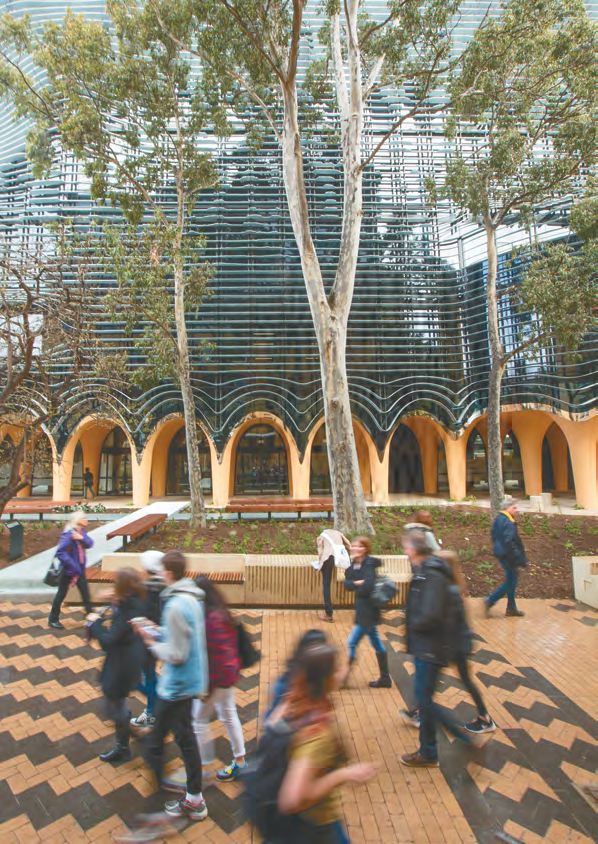
Contact us
For information on our courses and
entry requirements contact Stop 1

   Submit an enquiry online at:
   futurestudents.unimelb.edu.au/
   connect

   Call 13 MELB (13 6352)
   + 61 3 9035 5511

   Visit us at Stop 1 (Parkville):
   757 Swanston Street
   The University of Melbourne
   Victoria 3010 Australia
CO N T E N TS

The Melbourne advantage
Why choose Melbourne?                                         6
The Melbourne Model                                           8
Undergraduate study                                          10
Undergraduate courses
      Agriculture                                            12
      Arts                                                   16
      Biomedicine                                            20
      Commerce                                               24
      Design                                                 28
      Engineering                                            32
      Fine Arts                                              34
      General Studies                                        38
      Information Technology                                 40
      Music                                                  42
      Oral Health                                            46
      Psychology                                             50
      Science                                                52
      Concurrent diplomas                                    56
Your career starts now                                       58
Your next step: graduate study                               61
Popular graduate pathways                                    62

Get started now
Events on campus                                             66
Events in Australia and around the world                     66
Competitions                                                 66
Melbourne Extension Program                                  66
Kwong Lee Dow Young Scholars                                 67
Trinity Young Leaders Program                                67
Short courses                                                67
Take a single subject                                        67

Living in Melbourne
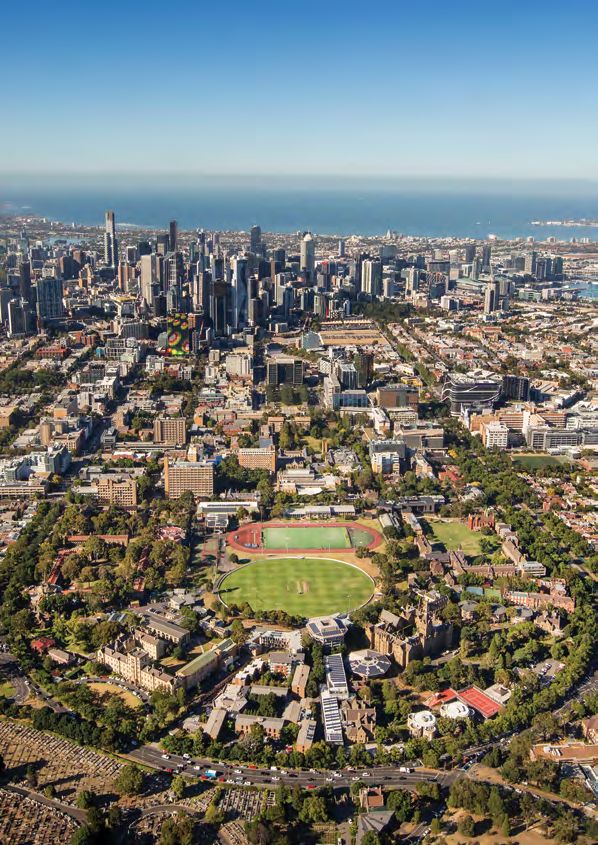
Your city                                                    70
Your campus                                                  72
Your home                                                    74
Your living costs                                            76

Your network
Your teachers                                                80
Your peers                                                   81
Melbourne Chancellor's Scholarship                           82
Access Melbourne                                             84
Indigenous students                                          85
Non-school leavers and mature-age students                   86
Your support teams                                           87

Admissions: domestic students
How to apply                                                 90
Admissions                                                   91
Domestic qualifications                                      92
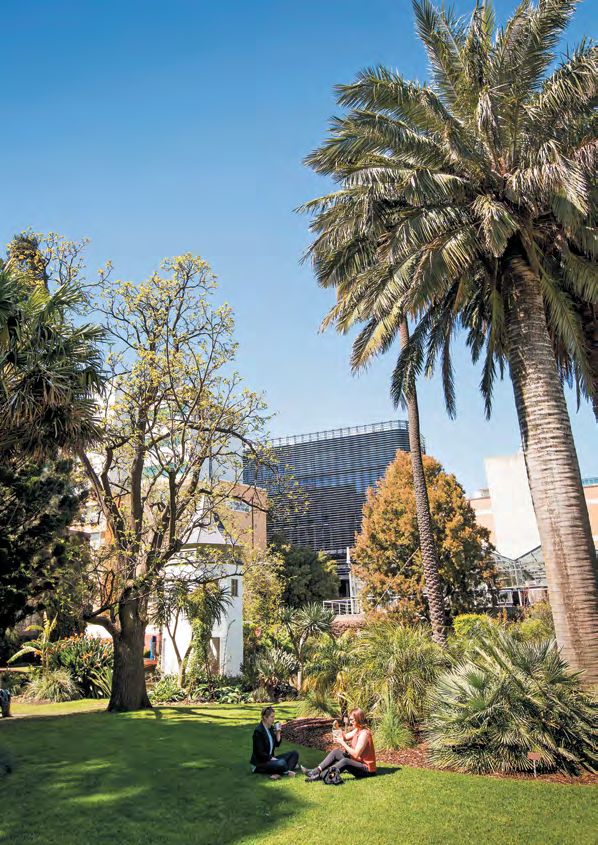
Non-school leavers and mature-age applicants                 93
Fees                                                         94
Undergraduate scholarships                                   95

Admissions: international students
How to apply                                                 98
Admissions                                                  100
Foundation Studies at Trinity College                       102
English language assistance                                 103
Fees                                                        104
Undergraduate scholarships                                  105

Reference
Entry requirements                                           108
Glossary                                                     121
Study area index                                             122
Degrees at a glance                            Inside back cover
Your timeline                                  Inside back cover
F
    E
4
FO R THE MELBOURNE

E V E RY
         A D V A N TA G E
WHY CHOOSE
    MELBOURNE?

    Many people know that the University
    of Melbourne is ranked number one in
    Australia, but you may not know why.

    We are one of the world’s finest
    universities, and employers seek out
    our graduates. Our students succeed
    at the highest levels, and in more than
    one domain. They live in the heart of
    the world’s most liveable city while
    studying, volunteering, and creating
    lifelong friendships with peers from all
    over Australia, as well as more than 170
    countries.

    That’s why some of the world’s most
    ambitious minds choose Melbourne.

    #1 in
    AustraliaQW

    #32 in W
    the world

6
THE MELBOURNE MODEL                      YOUR CITY                               WORLDS WITHIN WORLDS
Flexible and focused, the Melbourne      Consistently ranked the world’s         We’re part of the fabric of Melbourne
Model is a globally competitive          most liveable city, T Melbourne is      and Victoria, giving you invaluable
curriculum that couples broad            safe, fun and multicultural. The city   opportunities to engage with
undergraduate studies with               has international ties to research      organisations through internships
postgraduate specialisation.             and industry, including science,        with business and community
                                         agriculture, government, commerce       groups, applied research projects
                                         and the arts.                           and overseas study programs.

YOUR TEACHERS                           ALUMNI NETWORKS                          YOUR CAREER
Your lecturers, tutors and mentors      Melbourne draws high-achievers           We are ranked #7 in the world for
will guide you through uni and          from more countries than any other       graduate employability.R Employers
prepare you for your career. Our        Australian university. Our students      know our well-rounded graduates are
academics include business,             and alumni are entrepreneurial,          highly skilled and job-ready. You’ll
government and community leaders        engaged and always on the lookout        enjoy opportunities to grow your
as well as Nobel Laureates and          for new experiences. Whatever your       professional network while you study.
Rhodes Scholars.                        passion, you’ll find others here who
                                        share it.

SUPPORT                                 SCHOLARSHIPS                             ACCESS MELBOURNE
We offer support to help you find       Melbourne has one of the most            If you’re a domestic student whose
housing, careers and employability      generous scholarship programs in         circumstances have affected your
support, study assistance, disability   Australia. Scholarships, prizes and      academic performance, find out
services and counselling. Our           grants can propel you to new             more about our equity program:
communities of interest – including     heights and help you explore new         Access Melbourne. At least 20 per
places of worship, the student union    opportunities.                           cent of our domestic undergraduate
Queer space, and Murrup Barak for                                                places are reserved for Access
Indigenous students – will help you                                              Melbourne applicants.
feel included and welcome. The
support at Melbourne is one reason
why our students are more likely to
complete their degree than students
at any other Australian university.E
                                                                                 Q Academic Ranking of World Universities 2017
                                                                                 W Times Higher Education World University Rankings 2018
                                                                                 E Tertiary Education Quality and Standards Agency report June 2017
                                                                                 R QS Graduate Employability Rankings 2018

                                                                                 T Economist Intelligence Unit’s annual global liveability survey

                                                                                                                                                      7
THE
    MELBOURNE
    MODEL

    A DIFFERENT WAY
    OF THINKING
    The University of Melbourne offers a
    flexible, progressive degree opportunity.
    Our degrees aren’t like most others you
    will find in Australia. They are aligned with
    those offered by many top institutions
    worldwide – which means more
    opportunities for you.

    In a competitive market, having both an
    undergraduate and a higher-level graduate
    qualification helps our students stand out
    from the rest.

    You’ll start with one of our undergraduate
    degrees. You can then choose to join the
    workforce, or specialise at graduate level.
    During your time with us, you'll be able
    to study at partner institutions across
    the world. There, as in the employment
    market, your degree path will be
    recognised and understood.

    We want you to create your own unique
    Melbourne experience, with the power to
    choose your direction and keep exploring
    new options. This is important in a world
    where careers are changing fast and
    employers value independent thinking.
    We also want you to be able to take
    advantage of our knowledge precincts and
    partnerships, and to connect with brilliant
    minds who can offer you new perspectives.

    Few people graduating today will stay
    in the same industry forever. With our
    degrees, you will build the right skills and
    global networks to adapt successfully.

8
Today’s workplace demands                                       All the while, you’ll also be studying                      CONCURRENT DIPLOMAS
forward-thinking graduates who                                  an exciting selection of subjects from
                                                                both inside and outside your discipline,                    Want to be an economics reporter with
are skilled and resilient, with a                               gaining a breadth of knowledge that will                    first-class programming skills or a side gig
broad outlook and collaborative                                 set you apart.                                              playing the cello? Concurrent diplomas
approach. This is what the                                                                                                  allow you to study an extra qualification
Melbourne Model delivers.                                                                                                   alongside your degree. This can enhance
                                                                WHAT IS ‘BREADTH’?                                          your employability and enable you to
                                                                                                                            develop detailed knowledge in an area
                                                                A breadth subject is one taken from
IT BEGINS WITH YOUR                                                                                                         outside your main area of study.
                                                                outside your core studies or major. Most
UNDERGRADUATE                                                   University of Melbourne undergraduates
DEGREE                                                          take breadth subjects.                                      YOUR NEXT STEP:
Your undergraduate (bachelors) degree is                        Not only will breadth provide you with                      GRADUATE STUDY
your first university degree.                                   a greater understanding of the world                        Your undergraduate degree at Melbourne
                                                                around you, it will allow you to tailor your                sets you up for specialising in your chosen
You can choose from more than 100 major                         course to fit your individual passions                      field at graduate level. You’ll get the full
fields of study, giving you broad exposure                      and career ambitions. You might, for                        benefit of the graduate school experience
to different ideas, approaches and ways                         example, study Science but take breadth                     by studying intensively, in small classes
of thinking across many disciplines. You                        in Mandarin Chinese – a great choice for a                  led by experts and alongside others who
can focus on your major from day one, or                        scientist looking to work internationally                   share your deep interests and desire to
keep your options open and discover new                         and help solve global issues. You can also                  succeed.
possibilities along the way.                                    use breadth to explore something you’ve
                                                                always been curious about.                                  Work towards a professional qualification
                                                                                                                            (for example through an engineering
YOUR MAJOR                                                      Some of our students find that after                        stream), or join our world-changing
Your major is your chosen specialisation.                       taking a breadth subject, they discover                     researchers with a research higher
You’ll develop a deep understanding                             a passion they’d never known about                          degree. Your graduate degree will be
of your major study area from first                             and may even change their career plans.                     internationally recognised, and set you
to third year.                                                  Others might use breadth to improve                         apart from those who study a traditional
                                                                their career prospects by complementing                     Australian single or double degree.
In most degrees, you won’t need to select                       their major with a language,
your major on day one. In first year you’ll                     communications skills, or business know-
be able to explore a range of subject                           how. ‘Breadth tracks’ (groups of subjects
areas you’re interested in, so by the time                      taken throughout your degree) may even
it comes to choosing your major, you’ll be                      qualify you for graduate study in a field
well informed.                                                  that’s very different to your major.

M E L B O U R N E M O D E L G R A D U AT E S :
••    ARE HIGHLY SATISFIED WITH THEIR TEACHERS
••    DEVELOP ANALYTICAL PROBLEM-SOLVING SKILLS
••    EARN MORE Q AND BELIEVE THEY ARE PAID AND RECOGNISED FAIRLY
••    ENJOY THE WORK THEY DO
••    BELIEVE THEIR JOBS MAKE A POSITIVE CONTRIBUTION
••    ARE SATISFIED WITH THEIR LEVEL OF RESPONSIBILITY AT WORK
••    VOLUNTEER AND GET INVOLVED
University of Melbourne Career Outcomes Survey 2017

Q $26 000 difference in annual salary between holders of a graduate vs bachelors degree. Graduate Careers Australia 2015.

                                                                                                                                                                           9
UNDERGRADUATE
     STUDY

     At Melbourne, you’ll select                   SECOND YEAR
     one undergraduate degree.                     In second year, you will start to focus on
     Whether you select one of our                 the study area which will become your
     Melbourne Model degrees – in                  major, if you haven't already, and can
     Arts, Biomedicine, Commerce,                  also choose to follow a ‘breadth track’.
     Design, Music or Science – or a               That’s how an Arts student can qualify for
                                                   the Doctor of Medicine, or a Commerce
     specialist degree co-designed
                                                   student can become a property
     with industry such as Agriculture,            developer.
     Fine Arts or Oral Health, you’ll
     progress through your studies                 When they do, they’ll bring a wealth of
                                                   knowledge from their undergraduate
     while building networks,
                                                   degree to become a doctor with
     foundational knowledge and                    uncommonly good communication skills,
     shared experiences from which to              or a property developer who can respond
     launch a successful future.                   intuitively to business needs.

     FIRST YEAR                                    THIRD YEAR
     Your first year is your chance to explore,    By third year, you will achieve a high level
     whether it’s a brand new study area or        of specialisation in your major. You'll
     possibilities to complement your chosen       be ready to take part in a ‘capstone’
     path. We want you to make informed            experience, aimed at consolidating your
     choices and we understand that means          learning and preparing you for your
     challenging yourself in different ways.       career. Capstone subjects are different in
                                                   each discipline. They may involve work
     Alongside compulsory subjects, you might      placements, project-based learning, a
     choose from a wide variety of disciplines.    research project, or a coursework subject
     You can study overseas as early as your       outlining business best practice.
     first winter break.
                                                   Once you graduate, you have many
     Even if you’re sure about your professional   options, including joining the workforce,
     path, by taking interesting subjects          starting your research career with
     and exploring the unknown, you’ll gain        an honours year, or moving on to a
     additional skills and perspectives. Some      professional masters degree.
     experiences will be for you, some won’t,
     but you’ll learn from them all. We also
     hope that you will join student clubs
     and societies, and get involved in other
     extracurricular activities.

10
11
AGRICULTURE

     THE AGRICULTURE                                                   AGRICULTURE AT                                                     MAJORS
     STUDENT                                                           MELBOURNE                                                          ••    Agricultural Economics
     Agriculture students develop practical                            You’ll develop teamwork and                                        ••    Plant and Soil Science
     skills across plant and soil science,                             communication skills via industry
                                                                                                                                          ••    Production Animal Science
     animal science and agricultural                                   engagement and cross-disciplinary
     economics. You will graduate with                                 projects. In the second semester of second
     sophisticated knowledge of agricultural                           year, you’ll have the opportunity to learn                         COURSE STRUCTURE
     production from scientific, economic,                             agricultural science on a working farm
     environmental and ethical points of view.                         during our optional Dookie Semester.                               The Bachelor of Agriculture requires the
     If you wish to gain an understanding of                           This allows you to pick a different range of                       successful completion of 24 subjects
     how we can harness natural processes to                           core subjects than you’d be able to study                          (300 points), including one major. Most
     sustainably feed our growing population,                          at the Parkville campus and immerse                                students study eight subjects each year
     improve natural resource management                               yourself in practical learning at our Dookie                       for three years. Part-time study is also
     and contribute to Australia’s expanding                           campus: the largest farming campus in the                          available to domestic students.
     agricultural industry, Agriculture may                            southern hemisphere, with a robotic dairy,
     be for you.                                                       experimental crops and a working winery.

      SAMPLE COURSE PLAN – BACHELOR OF AGRICULTURE Q
      MAJOR IN PRODUCTION ANIMAL SCIENCE
                                                                                     Foundations of Agricultural            Biology of Cells and
                  Semester 1                 Agriculture in Australia                                                                                               Natural Environments
                                                                                     Sciences 1                             Organisms
       Year 1
                                             Genetics and the Evolution              Foundations of Agricultural
                  Semester 2                                                                                                Animal Production Systems               Plant Production Systems
                                             of Life                                 Sciences 2

                                                                                     Biochemistry in Agricultural                                                   Animal Physiology and
                  Semester 1                 Agricultural Economics                                                         Microbiology in Agriculture
                                                                                     Systems                                                                        Growth

                  Semester 2                                                         Ecology and Grazing                    Comparative Nutrition                   Crop Production and
       Year 2                                Principles of Soil Science
                  (Parkville campus)                                                 Management                             and Digestion                           Management

                  Alternative
                                             Ecology and Grazing                                                                                                    Applied Crop Production
                  Semester 2                                                         Enterprise Management                  Principles of Soil Science
                                             Management                                                                                                             and Horticulture
                  (Dookie campus)

                                             Applied Reproduction and                                                       Farm Management
                  Semester 1                                                         Applied Animal Behaviour                                                       Production Animal Health
                                             Genetics                                                                       Economics
       Year 3
                                             Professional Practice for               Production Animal                                                              Managing Production Animal
                  Semester 2                                                                                                Animal Welfare and Ethics
                                             Agriculture                             Physiology                                                                     Health

         Core Agriculture subjects                 Major subjects              Elective subjects              Optional Dookie Semester subjects
     Q This is a sample course plan only. Subjects offered may change from year to year. You will be advised of current subject offerings prior to subject selection and enrolment. Year 3 subjects are
       subject to Academic Board approval.
     W The published minimums and guaranteed scores are those approved for 2018 and should be considered indicative for 2019. The 2019 minimums and guaranteed scores are yet to be finalised
       and will be available on the University's website once confirmed.

12
BACH E LO R O F
AG RI CULTURE
Duration
3 years full time
Part time available
(domestic students only)
Campus
Parkville
Optional semester at Dookie
Entry
February (Semester 1)
Entry requirements
Domestic students
Minimum entry 2019:
ATAR 70.00, IB 25W
International students
International applicants will need to meet
the academic admission and English
language requirements.
See pages 101–103.
Prerequisite subject study areas
English and mathematics
For full details of entry requirements and
information for other qualifications, see pages
108–119 or visit: coursesearch.unimelb.edu.au
Contact hours
(first year, full time)
Approximately 16–22 hours per week
plus independent study time of
approximately 20 hours per week
CRICOS: 037228G
$543 000
in scholarships awarded
in 2017
13AGRICULTURE
#28
in the world for
Agriculture and Forestry
– QS World University Rankings by Subject 2018
THE STUDENT EXPERIENCE OUR GRADUATES
In the second year of your degree, you’ll
WORK IN MANY FIELDS,
have the option to live and study on our INCLUDING:
Dookie campus with around 50 other •• Agribusiness
agriculture students.
•• Agronomy
As part of a close-knit cohort from all •• Animal health and welfare, breeding,
over Australia and overseas, you’ll have nutrition and production
the opportunity to become immersed in
•• Biosecurity
the local agricultural industry through
enterprise visits. These may include •• Biotechnology and genetics
horticulture, sheep farming and cropping, •• Commodities trading and finance
water management, research, dairies,
food processing, rural finance and other •• Policy, aid and development
support industries. •• Resource economics and
international trade
You’ll have the chance to take part in
inter-college sports and broaden your •• Soil and water conservation.
skills and understanding through a host
of agricultural competitions including
meat, sheep, wool and crop judging, plus
GET STARTED NOW
animal welfare projects. Don’t wait until you start uni to find
out more about agricultural sciences.
Join our Pre-Ag Club for Year 9 to 12
AFTER YOUR DEGREE students and connect with like-minded
SAMPLE PATHWAYS peers, current uni students and our
leading academics and researchers.
Bachelor of Agriculture → Agronomist Take part in events such as the three-
day ConocoPhillips Science Experience
You can choose to join the workforce
December camp at our working farm at
after graduation, visiting properties
Dookie. The Food and Fibre Day at Dookie
to analyse data and collect samples,
each May is another popular event for
providing advice on how to improve crop
secondary school students.
and livestock production and developing
approaches to mitigate the effects of fvas.unimelb.edu.au/study/pre-ag-club
climate change.
Bachelor of Agriculture → Doctor of
Veterinary Medicine → Veterinarian
The Production Animal Science major is a
pathway to veterinary medicine, allowing
you to apply your strong knowledge of
agriculture to animal health on farms or
at a mixed rural practice.
14“My highlight so far would be moving to the
Dookie campus for a semester. It is the best decision
I have ever made. The friends and contacts I have made
here will be with me for life. I have also been able to get
a better understanding of the industry and really apply
my knowledge to practical situations.”
Tiffany Miller (Australia)
Bachelor of Agriculture , major in Agricultural Economics
Find out more
fvas.unimelb.edu.au/b-ag
facebook.com/FVASunimelb
instagram.com/FVASunimelb
twitter.com/FVASunimelb
youtube.com/FVASunimelb
15ARTS
THE ARTS STUDENT BACHELOR OF ARTS •• Australian Indigenous Studies
Arts students develop invaluable skills (EXTENDED) •• Chinese Studies
including high-level critical, creative and •• Classics
The Bachelor of Arts (Extended) has been
analytical thinking. Arts graduates are •• Creative Writing
developed specifically for Indigenous
uniquely positioned to take advantage
Australians. It is a four-year degree with •• Criminology
of change, by quickly critiquing and
integrated support and academic skills
capitalising on new information. If you •• Economics W
subjects to ensure your success in our
enjoy solving complex problems and
Arts program. •• English and Theatre Studies
mastering language, Arts is the right
fit for you. •• French Studies
ba.unimelb.edu.au/study/degrees/ba-
extended/ •• Gender Studies
ARTS AT MELBOURNE •• Geography
Your peers have worked hard for entry to MAJORS AND MINORS •• German Studies
Australia’s most popular course. You will The following specialisations are offered •• Hebrew and Jewish Studies
be inspired, encouraged and driven to as majors or minors: •• History
achieve by our academic staff, and leverage
work-integrated learning opportunities •• Ancient World Studies •• History and Philosophy of Science
offered through our cultural, government, •• Indonesian Studies
•• Anthropology
not-for-profit and corporate partners.
•• Arabic •• Islamic Studies
You’ll have the opportunity to explore
disciplines in humanities, social sciences •• Art History •• Italian Studies
and languagesQ and specialise in one or •• Japanese Studies
•• Asian Studies
two study areas of your choice.
•• Linguistics and Applied Linguistics
SAMPLE COURSE PLAN – BACHELOR OF ARTSE
MAJORS IN POLITICS AND INTERNATIONAL STUDIES AND SPANISH AND LATIN AMERICAN STUDIES
Semester 1 Power Introduction to Political Ideas Spanish 1 Free Speech and Media Law
Year 1
Generating the Wealth of
Semester 2 Introduction to Media Writing International Politics Spanish 2
Nations
International Relations:
Semester 1 Critical Analytical Skills Spanish 3 Urban History
Key Questions
Year 2
Community Volunteering
Semester 2 Political Economy Hispanic Cultural Studies Spanish 4
Global
Don Quijote Against the Global Health, Security and
Semester 1 International Gender Politics Spanish 5
Universe Sustainability
Year 3
Applied Research Methods
Semester 2 Global Environmental Politics Spanish 6 European Modernism
(Capstone)
Arts Foundation subjects Major subjects: Politics and International Studies Major subjects: Spanish and Latin American Studies
Elective subjects Breadth subjects R
Q Language subjects require a proficiency test prior to enrolment.
W Students wishing to undertake the Economics major must have achieved a score of at least 25 in VCE Mathematical Methods 3/4 or Specialist Mathematics 3/4, or equivalent.
E This is a sample course plan only. Subjects offered may change from year to year. You will be advised of current subject offerings prior to subject selection and enrolment.
R The breadth subjects featured are examples only. You can choose breadth subjects according to your interests. You must complete at least four breadth subjects in this degree. See page 9 for
more information about breadth.
16 T The published minimums and guaranteed scores are those approved for 2018 and should be considered indicative for 2019. The 2019 minimums and guaranteed scores are yet to be finalised
and will be available on the University's website once confirmed.BACH E LO R
O F ARTS
Duration
3 years full time
Part time available (domestic
students only)
Campus
Parkville
Entry
February (Semester 1) and
July (Semester 2)
Entry requirements
Domestic students
Minimum entry 2019:
ATAR 85.00, IB 31T
Alternative entry:
See Access Melbourne, page 84.
International students
International applicants will need to
meet the academic admission and
English language requirements.
See pages 101–103.
Prerequisite subject study areas
English (all majors) and
mathematics (Economics major)
For full details of entry requirements and
information for other qualifications, see pages
108–119 or visit: coursesearch.unimelb.edu.au
Contact hours
(first year, full time)
Approximately 14 hours per week
plus independent study time of
approximately 10–15 hours per week
CRICOS: 002167E
#1 in Australia
and #15 in the world
for Arts and Humanities
– QS World University Rankings
by Subject 2018
17ARTS
#1 in Australia and
#28 in the world for Communication
and Media Studies
– QS World University Rankings
by Subject 2018
•• Media and Communications truly unique within Australian humanities Bachelor of Arts → Executive Master
•• Philosophy and social sciences teaching. Integrate of Arts
yourself into our vibrant and diverse
•• Politics and International Studies community by attending a weekly Peer Developed in consultation with the arts,
•• Psychology Assisted Study Session (PASS), joining government, corporate and community
the Melbourne Arts Students Society sectors, the EMA is a world-first degree.
•• Russian Studies It focuses on project management,
(M-ASS) and becoming a mentee in the
•• Screen and Cultural Studies Arts Peer Mentoring program – a great leadership, creative and critical thinking,
way to widen your networks and connect people management, budgeting and
•• Sociology
with BA later-year students and alumni. financial management and organisational
•• Spanish and Latin American Studies. Discover your passions and transform theory and practice.
The following specialisations are offered your thinking by enrolling in one of our
exclusively as minors: numerous overseas intensive subjects,
including ‘In the Heart of the Loire
•• Chinese Societies Valley’ or ‘Contemporary Japan’. Make a
difference in the world by contributing
•• Development Studies
to a project run by a non-for-profit
•• English Language Studies organisation in the subject ‘Community
•• Environmental Studies Volunteering – Global’.
•• European Studies
•• Knowledge and Learning AFTER YOUR DEGREE
•• Law and Justice SAMPLE PATHWAYS
•• Social Theory. Bachelor of Arts → Media and
communications industry
COURSE STRUCTURE BA graduates are creative communicators
The Bachelor of Arts requires the who have developed insight into the
successful completion of 24 subjects human condition. They approach their
(300 points), including at least one major. work with an open mind, a thirst for
Most students study eight subjects each discovery and a set of transferable
year for three years. skills which stands them in perfect
stead for careers in the media and
communications industry. Having
THE STUDENT EXPERIENCE accessed specialised media and
communications internships alongside
You will study in the Arts West building, a wealth of extracurricular student
which will become the centre of your media opportunities, they possess both
experience as a student. An environment theoretical and practical skills, ensuring
which actively influences the way you they are empowered employees.
are taught – including collaborative
teaching spaces, object-based learning
and digital humanities labs, and ample
and inviting study nooks – Arts West is
18“The Melbourne Model gave me a great skillset, Secondary
so I can communicate with different people in
the industry and not just think as a lawyer but school (VCE)
think as an engineer as well, something that's
particularly critical in my role.”
Rachel Varghese (Australia) Bachelor of
Bachelor of Arts, Juris Doctor Arts with
Law breadth
subjects, major
in History
Juris
Doctor
Energy lawyer
Find out more
ba.unimelb.edu.au
facebook.com/ArtsUnimelb
instagram.com/ArtsUnimelb
twitter.com/ArtsUnimelb
19BIOMEDICINE
THE BIOMEDICINE biomedical science disciplines. This MAJORS
integration emphasises the relationships
STUDENT between different biomedical disciplines •• Biochemistry and Molecular Biology
Biomedicine degrees attract students and enhances your understanding of the •• Bioengineering Systems
who are interested in careers primarily human body in its full complexity.
•• Biotechnology
in the professional healthcare sector.
They seek opportunities in which they Core third-year subjects, available only •• Cell and Developmental Biology
can deploy skills in critical thinking, to you as a Biomedicine student, take
•• Genetics
problem-solving, evidence analysis and on a more clinical (Molecule to Malady)
or population (Frontiers in Biomedicine) •• Human Structure and Function
communication, which are highly sought
after by employers. focus, tying together all of the elements •• Immunology
of your Biomedicine journey.
•• Microbiology and Immunology
BIOMEDICINE AT While one-third of our Biomedicine •• Neuroscience
graduates enter the Doctor of Medicine
MELBOURNE (MD) program at Melbourne, even more
•• Pathology
You’ll develop an extensive knowledge choose another graduate course at the •• Pharmacology
and understanding of the structure and University in areas such as dentistry, •• Physiology
function of the human body, and explore physiotherapy, optometry, law,
the determinants of human disease. commerce, teaching and engineering.
The prerequisite content (Anatomy, Honours programs leading into PhD COURSE STRUCTURE
Biochemistry and Physiology) for pathways are particularly popular, no
The Bachelor of Biomedicine requires
aspiring Doctor of Medicine and Doctor doubt reflecting the significant impact
the successful completion of 22 subjects
of Dental Surgery students is built into of a student learning environment
(300 points), including one major. Most
two unique second-year subjects, and embedded within a world-class
students study eight subjects in first and
taught alongside a wide range of other biomedical research precinct.
third years, and six in second year.
SAMPLE COURSE PLAN – BACHELOR OF BIOMEDICINE Q
MAJOR IN PHYSIOLOGY
Semester 1 Biomolecules and Cells Chemistry for Biomedicine Mathematics for Biomedicine Science and Pseudoscience
Year 1
Sports Coaching: Theory and
Semester 2 Genes and Environment Physics for Biomedicine Experimental Data Analysis
Practice
Sport, Education and the
Semester 1 Molecular and Cellular Biomedicine Relating Health and Learning
Media
Year 2
Evolution: Making Sense
Semester 2 Human Structure and Function Experimental Pathology
of Life
Biomedicine: Molecule to Muscle and Exercise Wellbeing, Motivation and
Semester 1 Experimental Physiology
Malady Physiology Performance
Year 3
Biomedical Science Research
Semester 2 Frontiers in Biomedicine Frontiers in Physiology Youth and Popular Culture
Project
Compulsory subjects Major subjects Selective subjects Breadth subjects W
Q This is a sample course plan only. Physiology is a very flexible major and a number of alternative subjects are available. Subjects offered may change from year to year. You will be advised of
current subject offerings prior to subject selection and enrolment.
W The breadth subjects featured are examples only. You can choose breadth subjects according to your interests. You must complete at least four breadth subjects in this degree, plus another
two subjects either as breadth or as Biomedicine or Science subjects. See page 9 for more information about breadth.
E The published minimums and guaranteed scores are those approved for 2018 and should be considered indicative for 2019. The 2019 minimums and guaranteed scores are yet to be finalised
and will be available on the University's website once confirmed.
20BACH E LO R
O F BI O ME DI CINE
Duration
3 years full time
Part time available (domestic
students only)
Campus
Parkville
Entry
February (Semester 1)
Entry requirements
Domestic students
Minimum entry 2019:
ATAR 96.00, IB 38E
Alternative entry:
See Access Melbourne, page 84.
International students
International applicants will need to
meet the academic admission and
English language requirements.
See pages 101–103.
Prerequisite subject study areas
English, chemistry and mathematics
For full details of entry requirements and
information for other qualifications, see pages
108–119 or visit: coursesearch.unimelb.edu.au
Contact hours
(first year, full time)
Approximately 15–20 hours per week
plus independent study time of
approximately 10–15 hours per week
CRICOS: 058838G
#1 in Australia,
#9 in the world for Clinical,
Pre-clinical and Health
– Times Higher Education World University Rankings
by Subject 2018
21BIOMEDICINE
THE STUDENT EXPERIENCE OUR GRADUATES
You’ll be part of a close-knit community WORK IN MANY FIELDS,
of inspiring, high-achieving students INCLUDING:
from all over the world. The Biomedicine
•• Diagnostics
Students’ Society is one of the most active
course-based student societies on campus, •• Forensic science
running academic and social activities •• Health services
designed to complement your studies and
help you form friendships across all year •• Hospital science
levels. You could be mentored by senior •• Laboratory testing
students, join an academic study group •• Microbiology
and make unforgettable memories at the
annual social functions. •• Pharmaceutical and medical supplies
•• Pharmaceuticals
The Student Support Team at the
Health Hub offers a drop-in service •• Policy
for all students interested in graduate •• Public service
study options in the Faculty of Medicine,
•• Scientific equipment sales
Dentistry and Health Sciences.
•• Scientific research.
You’ll have access to the wealth of cultural
collections within our three museums,
spanning medicine, dentistry, and anatomy
and pathology.
AFTER YOUR DEGREE
SAMPLE PATHWAYS
Bachelor of Biomedicine (Honours) →
PhD in Microbiology and Immunology
Melbourne is home to several world-
leading research institutes. Research
specialists in Immunology join the fight
against antibiotic-resistant superbugs,
cancers and other threats to life.
Bachelor of Biomedicine → Master of
Engineering (Biomedical)
Modern health outcomes are increasingly
dependent on thinkers who can combine
knowledge of biology and engineering.
Graduates of Biomedical Engineering could
work on developing new drug therapies;
building artificial organs, limbs, heart
valves and bionic implants to replace
lost function; or growing living tissues to
replace failing organs.
22“As I was unsure of what particular career I wanted, Secondary
the Bachelor of Biomedicine enabled me to study
in the field I found most interesting while opening
school (VCE)
up various options for postgraduate and further
career pathways.”
Ruby Loschiavo (Australia)
Bachelor of Biomedicine,
Bachelor of
major in Human Structure and Function, Biomedicine
Doctor of Medicine
Doctor of
Medicine
Find out more
mdhs-study.unimelb.edu.au/
degrees/bachelor-of-biomedicine
23COMMERCE
THE COMMERCE STUDENT granted through: MAJORS
Commerce students develop knowledge •• CPA Australia •• Accounting
and skills in accounting, economics, •• Chartered Accountants Australia and
finance, marketing and management. •• Actuarial Studies
New Zealand
If you enjoy working with numbers, •• Business
thinking about what motivates people •• The Institute of Public Accountants
•• Economics
and understanding global trade, •• The Institute of Actuaries of Australia.
Commerce may be right for you. •• Finance
The University is a program partner of the •• Management
CFA Institute, the association that awards
COMMERCE AT the prestigious Chartered Financial •• Marketing
MELBOURNE Analyst® (CFA) designation. Commerce students can complete up to
Melbourne Commerce graduates are You’ll build expansive foundational two majors. You can wait until the start
known for their solid understanding of knowledge through core program of second year to choose, Q or focus on a
business issues and processes, problem- content before specialising in up to two particular discipline from day one.
solving and leadership skills. They are major areas of study. Breadth study will
highly sought-after by employers. allow you to explore diverse areas of
COURSE STRUCTURE
interest, broaden your graduate options,
The Accounting and Actuarial Studies and tailor your degree to your chosen The Bachelor of Commerce requires the
majors, together with specified career path. successful completion of 24 subjects
membership requirements, satisfy the (300 points), including at least one major.
educational accreditation requirements Most students study eight subjects each
of international professional year for three years.
associations. Australian accreditation is
SAMPLE COURSE PLAN – BACHELOR OF COMMERCE W
MAJORS IN ACCOUNTING AND MARKETING
Accounting Reports and
Semester 1 Introductory Microeconomics Quantitative Methods 1 Principles of Marketing
Analysis
Year 1
Introductory Introductory Financial
Semester 2 Principles of Finance Principles of Business Law E
Macroeconomics Accounting
Semester 1 Organisational Behaviour Cost Management Consumer Behaviour Corporate Law E
Year 2
Intermediate Financial Accounting Information:
Semester 2 Entrepreneurial Marketing Quantitative Methods 2
Accounting Risks and Controls
Enterprise Performance Global Health, Security and
Semester 1 Financial Accounting Theory Retail Management
Management Sustainability
Year 3
Auditing and Assurance
Semester 2 Neuromarketing Business Judgement Taxation Law 1E
Services
Core subjects Major subjects Elective subjects Breadth subjects
Q Students pursuing Actuarial Studies are required to choose specific subjects from first year. International applicants intending to pursue a major in Actuarial Studies mid-year (July) must, at
a minimum, meet the requirements to enter MAST10006 Calculus 2 which requires a study score of at least 29 in VCE Specialist Mathematics 3/4, or completion of IB Higher Level Mathematics
with a score of at least 4, or equivalent.
W This is a sample course plan only. Subjects offered may change from year to year. You will be advised of subject offerings prior to subject selection and enrolment.
E These breadth subjects are required for accounting accreditation. Depending on your major, you can choose breadth subjects according to your interests. Commerce students must take
between four and six breadth subjects. See page 9 for more information about breadth.
R The published minimums and guaranteed scores are those approved for 2018 and should be considered indicative for 2019. The 2019 minimums and guaranteed scores are yet to be finalised
and will be available on the University's website once confirmed.
T Domestic applicants with an ATAR or notional ATAR of 95 will receive the guarantee providing they satisfy course prerequisites. International students receive guaranteed entry with a 94 ATAR
24 or IB score of 36, in addition to satisfying prerequisites. Guarantees are available for other qualifications, including Trinity College Foundation Studies and A Levels. See pages 108–111BACH E LO R O F
CO MME RCE
Duration
3 years full time
Part time available (domestic
students only)
Campus
Parkville
Entry
February (Semester 1) and
July (Semester 2)
Entry requirements
Domestic students
Minimum entry 2019:
ATAR 93.00, IB 36R
Guaranteed entry 2019: ATAR 95.
Prerequisites apply.T
Alternative entry:
See Access Melbourne, page 84.
International students
Guaranteed entry 2019:
ATAR 94, IB 36R
International applicants will need to
meet the academic admission and
English language requirements.
See pages 101–103.
Prerequisite subject study areas
English and mathematics
For full details of entry requirements and
information for other qualifications, see pages
108–119 or visit: coursesearch.unimelb.edu.au
Contact hours
(first year, full time)
Approximately 12 hours per week,
plus independent study time of
approximately 20 hours per week
CRICOS: 002143B
#10
in the world for
Accounting and Finance
– QS World University Rankings
by Subject 2018
25COMMERCE
#1 in Australia and
#14 in the world for Business and
Management Studies
– QS World University Rankings by Subject 2018
THE STUDENT EXPERIENCE AFTER YOUR DEGREE
Outside of the classroom, there are many SAMPLE PATHWAYS
activities that will help you make the Bachelor of Commerce, major in
most of your degree, build your networks Accounting → Chartered accountant
and have fun. Bachelor of Commerce
students have access to a suite of BCom graduates with an Accounting
exclusive programs designed specifically major may apply for professional
for them. accreditation and join the workforce after
graduation. Accountants work in many
Our Career Mentoring Program has fields, in small and global companies, as
successfully matched hundreds of advisors and as managers.
Commerce students with business
professionals in a year-long mentoring Bachelor of Commerce →
partnership, while our Personal Master of Finance
Effectiveness Program – a professional
development program for workplace Combining a Bachelor of Commerce
readiness – is delivered as a series of with the Master of Finance offers
workshops which aim to develop your students advanced preparation for a
employability skills. career in the finance industry. You will
gain an understanding of Australian
The Future Leaders Forum is an annual and international financial markets,
event open to 100 of our highest- financial management principles and
achieving undergraduate students, their application to corporate financial
identified by their leadership skills and policy, and acquire appropriate skills for
those who have been awarded a place on analysing and interpreting developments
the Dean’s Honours List. in financial practice. Upon completion
you can work as an adviser, analyst
Commerce students are invited or banker right through to a trader,
to compete in teams to pitch their consultant, financial controller or chief
innovative solutions to real-world financial officer later in your career.
business challenges, while overseas
study in subjects such as Global
Management Consulting and OUR GRADUATES
International Business Experience WORK IN MANY FIELDS,
provides you with business-ready skills.
INCLUDING:
Our faculty-based student experience •• Banking
and career guidance service is there to
help you secure the graduate outcomes •• Corporate finance
you seek. •• Government
•• Management consulting
•• Project management
•• Trading.
26“As I wasn’t sure what I wanted to do
when I finished school, the flexibility
of the Bachelor of Commerce within
the Melbourne Model appealed to me. Secondary
Fortunately, it didn’t take me long school (IB)
to realise I’d made a good decision.
In my first semester, I discovered my
passion for economics and made some
great friends.”
Bachelor of
Todd Morris (Australia)
Bachelor of Commerce,
Commerce
Honours in Economics
Honours in
Economics
Doctor of
Philosophy
(Business and
Economics)
Find out more
bcom.unimelb.edu.au
facebook.com/BusEcoMelb
instagram.com/busecomelb
twitter.com/buseconews
youtube.com/melbournefbe
27DESIGN
THE DESIGN STUDENT The work you will do in class uses the same •• Performance Design
approach you'll find in the workplace, •• Property
Design has applications in the creation ensuring you are industry-ready from day
and improvement of our cities, buildings, one. You will study in award-winning state-of •• Spatial Systems
transport networks, furniture, websites, the-art teaching facilities that demonstrate •• Urban Planning
processes, bridges, landscapes and the many of the design techniques you will be
environment. Design students learn to working to acquire in class.
deliver innovative solutions that enhance DOUBLE MAJORS
the way we live and interact with the world A portfolio is not required for entry into
around us. Designers are in demand. If you the course. You will be producing your You have the option to complete a double
enjoy collaboration, learning about new own designs and learning different design major in some study areas within the
fields and finding innovative solutions, techniques from your very first semester. Bachelor of Design. Completing a double
Design may be for you. major can provide you with more career
options as well as a wider choice of
MAJORS graduate study. If you want to complete a
DESIGN AT MELBOURNE •• Architecture
double major, you will need to make this
decision in your first year.
The Bachelor of Design allows you to •• Civil Systems
combine the humanities, sciences and
•• Computing
visual and performing arts within a single COURSE STRUCTURE
degree. You can further tailor your skills •• Construction
through breadth study and third-year The Bachelor of Design requires the
•• Digital Technologies successful completion of 23 to 24
design specialisations such as Building
Image Modelling (BIM) and Design •• Graphic Design subjects (300 points), including one or
Visualisation to complement your core two majors. Most students study eight
•• Landscape Architecture
program. You can focus on one or two subjects each year for three years.
•• Mechanical Systems
majors, or complete a major and a minor.
SAMPLE COURSE PLAN – BACHELOR OF DESIGN Q
MAJOR IN ARCHITECTURE
Foundations of Design:
Semester 1 Global Foundations of Design Media Computation Principles of Marketing
Representation
Year 1
Related Studies Drawing and
Semester 2 Design Studio Alpha Construction as Alchemy Governing Environments
Printmedia
Semester 1 Design Studio Beta Digital Design Modern Architecture Strategic Marketing
Year 2
Environmental Building Human Behaviour and
Semester 2 Design Studio Gamma Construction Analysis
Systems Environment
Semester 1 Design Studio Delta Construction Design Applications of GIS Global Marketing
Year 3
Semester 2 Capstone: Design Studio Epsilon The Figure in Performance Society and Environments
Major subjects Elective subjects Breadth subjects W
Q This is a sample course plan only. Subjects offered may change from year to year. You will be advised of current subject offerings prior to subject selection and enrolment.
W The breadth subjects featured are examples only. You can choose breadth subjects according to your interests. You must complete at least four breadth subjects in this degree.
See page 9 for more information about breadth.
E The published minimums and guaranteed scores are those approved for 2018 and should be considered indicative for 2019. The 2019 minimums and guaranteed scores are yet to be finalised
and will be available on the University's website once confirmed.
R A study score of at least 25 in Units 3 and 4 of VCE Mathematical Methods (or equivalent) is required for the following majors: Civil Systems, Computing, Construction, Mechanical Systems,
Property and Spatial Systems.
28BACH E LO R
O F DE SI G N
Duration
3 years full time
Part time available (domestic
students only)
Campus
Parkville and Southbank
Entry
February (Semester 1) and
July (Semester 2)
Entry requirements
Domestic students
Minimum entry 2019:
ATAR 85.00, IB 31E
Alternative entry:
See Access Melbourne, page 84.
International students
International applicants will need to
meet the academic admission and
English language requirements.
See pages 101–103.
Prerequisite subject study areas
English (all majors) and
mathematics (select majors)R
For full details of entry requirements and
information for other qualifications, see pages
108–119 or visit: coursesearch.unimelb.edu.au
Contact hours
(first year, full time)
Approximately 16 hours per week
plus independent study time of
approximately six hours per subject
per week
CRICOS: 090744C
#21
in the world for Architecture
and Built Environment
– QS World University Rankings
by Subject 2018
29DESIGN
Pathways to
more than 20
masters degrees
THE STUDENT Bachelor of Design (Architecture)
→ Master of Architecture
EXPERIENCE
You’ll be immersed in wide-ranging study The Master of Architecture has a core
experiences including design studios, of design studios leading to a research
lectures, fabrication workshops, tutorials thesis. Architectural design is conceived
and lab sessions that will deliver the in broad terms as the creative invention
combination of technological and soft of architectural futures, integrating
skills required in professional practice. aesthetic, technological, programmatic,
environmental and social issues in the
Co-location with teaching partners in the production of the built environment.
Melbourne School of Engineering and the Graduates may design all kinds of spaces
Faculty of Fine Arts and Music, together for living, and influence health and
with easy access to industry partners happiness.
in Melbourne’s CBD, fosters student,
academic and professional networking.
OUR GRADUATES
Site visits, field trips and interaction with WORK IN MANY FIELDS,
industry practitioners in Australia and
overseas will give you valuable real-
INCLUDING:
life experience of industry briefs and •• Architecture and landscape
expectations. architecture
The Design and Environments Students •• Graphic design
Society (DESS) provides academic •• Construction and civil engineering
support and a fun social network for all •• Geospatial technology
Design students, while opportunities
such as student design exhibition MSDx •• Property
enable you to exhibit work to the public •• Software design, including games
throughout the year.
•• Town planning
•• User experience
AFTER YOUR DEGREE •• Virtual reality/augmented reality
SAMPLE PATHWAYS •• Performance design
Bachelor of Design (Digital •• Design for mechanics and robotics.
Technologies) → Game designer
Graduates of the Digital Technologies
major leave with a variety of skills such
as programming and interactive design
across a number of creative arenas
including animation and film. This makes
them uniquely suited to work in game
design or other media industries.
30“As an international student, studying
at a world-standard university gives
me diverse cultural perspectives that
enrich my life. Highlights of my first
year in Design were:
• Travelling to Shanghai with a group
of fellow students to compete in the
Tongji Construction Festival
• Volunteering in the Cultural
Collections Program at the
Architecture, Building
and Planning Library
• Getting to know numerous enthusiastic
friends, especially those who were in
the same design studios as me."
Saran Kim (Japan)
Bachelor of Design,
majors in Architecture and
Landscape Architecture
Find out more
bdes.unimelb.edu.au
31ENGINEERING
#1 in Australia and #27 in the
world for Engineering and Technology
– QS World University Rankings by Subject 2018
ENGINEERING AT You will have the opportunity to study Bachelor of Design
with design, science or biomedicine
MELBOURNE students, establishing networks and
If you're passionate about engineering
design, you can complement your major
Qualified engineers are in high demand. As building important professional skills with studies in architecture, construction
an engineering graduate, you can access that will give you a competitive edge or urban planning. This option will lead
a vast range of interesting and well-paid when you graduate. You'll also have the you to a Masters in Civil, Structural,
opportunities around the world. opportunity to take part in an internship Spatial, or Mechanical Engineering.
or work on a real-world industry project. See page 28 for more details.
At Melbourne, you can focus on your
chosen field of engineering from day Bachelor of Biomedicine Bachelor of Science
one, and complement your course with A major in Bioengineering Systems leading This option is the most flexible engineering
subjects from outside your discipline. to a Master of Engineering (Biomedical) or pathway, offering the largest range of
(Biomedical with Business) is ideal if you’re engineering majors and subject choices in
To become a professionally accredited
looking to complement your technical skills a wider scientific context. See page 52 for
engineer, you’ll complete a three-
with medical knowledge and take more details.
year undergraduate degree with
up a career in biomedical engineering.W
an engineering major through the
See page 20 for more details. Students in any other undergraduate
Bachelors of Biomedicine, Design or
degree are also eligible to progress into the
Science, followed by a two-year Master
three-year Master of Engineering, subject to
of Engineering or Master of Engineering
completing prerequisite studies.
(with Business).
SAMPLE COURSE PLAN – BACHELOR OF SCIENCE (CIVIL SYSTEMS MAJOR)Q
Semester 1 Engineering Systems Design 1 Calculus 1 Science elective Breadth
Year 1
Semester 2 Engineering Systems Design 2 Calculus 2 Science elective Breadth
SAMPLE COURSE PLANQ – BACHELOR OF DESIGN (CIVIL SYSTEMS MAJOR)
Semester 1 Engineering Mechanics Linear Algebra Science elective Breadth
Year 2
Earth Processes for
Semester 2 Engineering Materials Engineering Mathematics Breadth
Engineering
Semester 1 Fluid Mechanics Engineering Risk Analysis Science elective Breadth / Science elective
Year 3
Semester 2 Systems Modelling and Design Structural Theory and Design Science elective Breadth / Science elective
SAMPLE COURSE PLAN – MASTER OF ENGINEERING (CIVIL)Q
Structural Theory and Sustainable Infrastructure Engineering Site
Semester 1 Geotechnical Engineering
Design 2 Engineering Characterisation
Year 4
Engineering Project
Semester 2 Civil Hydraulics Transport Systems Civil elective
Implementation
Creating Innovative Infrastructure Engineering Integrated Design –
Semester 1 Civil elective
Engineering Research Project Infrastructure
Year 5
Semester 2 Construction Engineering Civil elective
Major subjects Elective subjects Breadth subjects Breadth or elective subjects
Q This is a sample course plan only. Subjects offered may change from year to year. You will be advised of current subject offerings prior to subject selection and enrolment.
W The Master of Engineering (Spatial) and the Master of Engineering (Biomedical with Business), (Electrical with Business) and (Software with Business) are provisionally accredited
by Engineers Australia until sufficient students graduate. The Master of Engineering (Software) and (Software with Business), are accredited by Euro-Inf®.
E Includes Biomedical, Biochemical, Chemical, Civil, Electrical, Environmental, Materials, Mechanical, Mechatronics, Software, Spatial and Structural specialisations.
Students seeking to specialise in Materials must enter the 2.5 or 3 year Master of Engineering (Materials).
R Includes Biomedical, Chemical, Civil, Electrical, Mechanical and Software specialisations.
32“I took a foundation engineering
subject and was fascinated by the
fusion of creative design, mathematics
and physics that engineering offered.
Leaving a positive and long-lasting
impact on society through innovative and
sustainable infrastructure is the reason I
chose to pursue an engineering career.”
Alison Mantegazza (Australia)
Bachelor of Science, major in Civil Systems,
Master of Engineering (Civil), Graduate
Civil Engineer (Water) at Jacobs
PROFESSIONAL
RECOGNITION
Melbourne’s Master of Engineering is
one of the few engineering degrees
in Australia to be accredited by both
Engineers Australia and EUR-ACE® in
Europe.W
HOW TO STUDY ENGINEERING
STEP 1: CHOOSE AN UNDERGRADUATE
EMPLOYMENT
DEGREE (3 YEARS)
Bachelor of Bachelor of Science
Biomedicine Secondary
Majors include:
•• Major in school (VCE)
•• Bioengineering
Bioengineering
Systems
Systems
•• Chemical Systems
Bachelor of Design
•• Civil Systems Bachelor of
Majors include: Science
•• Computing and
•• Civil Systems Software Systems
•• Mechanical •• Electrical Systems
Systems
•• Environmental Master of
•• Spatial Systems. Engineering
Systems Engineering
•• Mechanical (Civil)
Systems
•• Mechatronic
Systems Civil engineer,
•• Spatial Systems. Jacobs
STEP 2: CHOOSE GRADUATE STUDY
IN ENGINEERING (2 YEARS)
Master of Engineering E
OR Master of Engineering (with Business) R
Find out more
eng.unimelb.edu.au/study
facebook.com/engunimelb
STEP 3: EMPLOYMENT AS A PROFESSIONAL
(ACCREDITED) ENGINEER twitter.com/engunimelb
instagram.com/engunimelb
33You can also read


