ANALYSES DES REQUÊTES UTILISATEURS ADAPTÉES À LA RECHERCHE WEB - JOURNÉE DAPA - 26 MARS 2009 - LIP6
←
→
Page content transcription
If your browser does not render page correctly, please read the page content below
Analyses des requêtes utilisateurs
  adaptées à la recherche web

    - Journée DAPA - 26 mars 2009 -
      Nicolas Stroppa, Romain Vinot

                                      1
Goal and Outline
Goal
Final goal:
Being able to understand user intent for improving web search
Intermediate goals:
Being able to process the “user queries language”
Find suitable (internal) representations for web search queries
Develop tools to analyze productions from this language
i.e. translate queries into their proper internal representations
Outline of the talk
Part I - Description of user search queries
Part II - Presentation of some query analysis tools for web search
2Part I
Describing User Queries
3User Queries
Examples
20 random queries (from FR) 20 random queries (from UK-Ireland)
DEEZER cleberson roofing oswestry
situation geograhique kosovo car prices
le bon coin gestalt principles of perception
google www.supervalue.ie
the hun's yellow pages pascoa 2009
coloriages a imprimer gratuitement morgage express
domainenicolas rousset east yorkshire
facebook yahoo
www.banque-accord.fr bbc news
"sandy koufax" heuristic play
cheb mami hotels nancy
entretien nautisme la Mézière sex.com
"gilles gautier" farmdata
www.ca-nord-est.fr msn hotmail
itinéraire Mappy 02
asse work function
www.actualite-litteraire.com national rail enquiries
fetich finish butlins
skyrock search genes reunited
ph facebook
4User Queries
A language for web search?
How to formulate queries for web search?
Boolean
(colorier OR coloriage) AND (gratuit)
(download AND firefox AND 3.1) AND (NOT 3.0)
Database-oriented
WHERE url=‘%nikon.com’ AND title=‘%D3X%’ AND
in_links>0.76 ORDER BY recency
WHERE body=‘%recette%’ AND body=‘%tartiflette%’ AND
spamUser Queries
A language for web search?
How to formulate queries for web search?
Boolean (dedicated language)
(colorier OR coloriage) AND (gratuit)
(download AND firefox AND 3.1) AND (NOT 3.0)
Database-oriented (dedicated language)
WHERE url=‘%nikon.com’ AND title=‘%D3X%’ AND
in_links>0.76 ORDER BY recency
WHERE body=‘%recette%’ AND body=‘%tartiflette%’ AND
spamUser Queries
A language for web search?
Dedicated vs. Generic Language
Using dedicated languages means
Educating users
Ù Modifying the sender
Using a generic language means
Adapting the engine
Ù Modifying the receiver
7User Queries
A language for web search?
Dedicated vs. Generic Language
Using a dedicated language means
Educating users
Ù Modifying the sender
Using a generic language means
Adapting the engine
Ù Modifying the receiver
Remarks
Trying to explicitly modify users behaviour is not realistic…
Adapting an engine so as to fully understand natural languages is
not any better…
Reality is actually a mix of both
The users and the engine are both constantly making efforts to
understand each other! (more on next slides)
8User Queries
User Intent
I need to buy
that new
nikon camera
for my wife
I
I: User intent (hidden variable)
9User Queries
Issued Query
I need to buy
that new
nikon camera
for my wife
I Q
I: User intent (hidden variable)
Q: User issued query (observed variable)
10User Queries
Internal Representation
I need to buy
that new
nikon camera
for my wife ?
I Q Φ(Q)
I: User intent (hidden variable)
Q: User issued query (observed variable)
Φ(Q): Internal query representation
11User Queries
Search Results
I need to buy
that new
nikon camera
for my wife ?
I Q Φ(Q) S(Φ(Q))
I: User intent (hidden variable)
Q: User issued query (observed variable)
Φ(Q): Internal query representation
S(Φ(Q)): Search results
12User Queries
Feedback Loop
I Q Φ(Q) S(Φ(Q))
Q depends on I and on S:
Users tend to learn how to get good results
Two notable examples:
Keyword search:
Users have learned to omit stopwords, to limit number of words, etc.
Spaces in Japanese:
There’s no space in written Japanese to delimit “word” boundaries
Japanese search users learnt (without any specific “education”) that using space
was helping the engine tokenize queries => Japanese queries now contain
spaces!
This feedback loop illustrates the user effort to interact with the engine; Φ
is the engine effort to understand the user, which is what our work is
about (see Part II)!
13User Queries
Graphical Model
I Q Φ(Q) S(Φ(Q))
Note: all those variables can be modeled as random variables
I has a time-dependent distribution
Users interests are constantly evolving
Formalizing the objective (R=expected results, S=fixed engine):
Min φ E I [Loss( R(I), S (φ (Q( I )))]
14User Queries
A new language
Some Properties of user queries language
User/machine interaction created a new language, different from
French, English, or SQL
It shares some properties with natural languages
Unrestricted, Zipf law, lots of single occurrences (hapaxes), etc.
It’s different from natural languages:
Very light syntax, usually mere sequences of tokens
It cannot escape from its interaction with web search
Web search use as a bookmark (navigational and domain queries)
Lots of variation for same intent (no normative effort)
Note: a new language implies adapted linguistics tools
15User Queries
Examples
20 random queries (from FR) 20 random queries (from UK-Ireland)
DEEZER cleberson roofing oswestry
situation geograhique kosovo car prices
le bon coin gestalt principles of perception
google www.supervalue.ie
the hun's yellow pages pascoa 2009
coloriages a imprimer gratuitement morgage express
domainenicolas rousset east yorkshire
facebook yahoo
www.banque-accord.fr bbc news
"sandy koufax" heuristic play
cheb mami hotels nancy
entretien nautisme la Mézière sex.com
"gilles gautier" farmdata
www.ca-nord-est.fr msn hotmail
itinéraire Mappy 02
asse work function
www.actualite-litteraire.com national rail enquiries
fetich finish butlins
skyrock search genes reunited
ph facebook
16User Queries
Navigational Queries
20 random queries (from FR) 20 random queries (from UK-Ireland)
DEEZER cleberson roofing oswestry
situation geograhique kosovo car prices
gestalt principles of perception
le bon coin www.supervalue.ie
google pascoa 2009
the hun's yellow pages morgage express
coloriages a imprimer gratuitement east yorkshire
domainenicolas rousset yahoo
facebook bbc news
www.banque-accord.fr Navigational Queries heuristic play
"sandy koufax"
hotels nancy
cheb mami
sex.com
entretien nautisme la Mézière
"gilles gautier"
farmdata
www.ca-nord-est.fr msn hotmail
itinéraire Mappy
02
asse work function
www.actualite-litteraire.com national rail enquiries
fetich finish
butlins
skyrock search genes reunited
ph
facebook
17User Queries
Domain Queries
20 random queries (from FR) 20 random queries (from UK-Ireland)
DEEZER cleberson roofing oswestry
situation geograhique kosovo car prices
le bon coin gestalt principles of perception
google
www.supervalue.ie
the hun's yellow pages
pascoa 2009
coloriages a imprimer gratuitement
morgage express
domainenicolas rousset
east yorkshire
facebook
yahoo
www.banque-accord.fr bbc news
"sandy koufax" heuristic play
cheb mami hotels nancy
entretien nautisme la Mézière Domain Queries sex.com
"gilles gautier"
farmdata
www.ca-nord-est.fr msn hotmail
itinéraire Mappy 02
asse work function
national rail enquiries
www.actualite-litteraire.com
butlins
fetich finish
search genes reunited
skyrock
facebook
ph
18Part II
Analyzing Queries
19Analyzing Queries
Objective
Build a suitable (internal) representation of user queries for web search (Φ)
=> Engine effort to understand the user intent
Expected property
Identical intents should lead to the same results
One way to ensure that:
same intent => same internal representation
Taken approach
A user intent is defined as an “equivalence class” on queries
All possible formulations of the same intent belong to the same class
(=> A query should be safely replaced with any variant formulation)
Advantage
Does not need any explicit representation for intent
Limitation
Due to ambiguity, we cannot properly define equivalence classes
20User Queries
Internal Representation
Our Model
Φ(q) is the (weighted) list of queries that can be issued given the
intent behind q
We call this list the “variants” of q
This list is the input to the search engine
The assumption is that we have a search engine that can process these
“raw” queries, and does not do so bad a job at it
The model is built on top of an existing search engine, and thus cannot
deeply “break” it
21User Queries
Variants
Variants considered
Due to ambiguity issue, we prefer to keep a restricted view on
the notion of variants
Smaller equivalence classes Ù Focus on precision
Useful approximation: focus only on “promising” variants, i.e.
those that are likely to bring relevant results (e.g. it may be
legitimate to discard variants ranked lower in the list)
Examples of types of variants considered:
Orthographic variants
Morphological variants
Semantic variants (almost not covered in this talk)
Pragmatic variants (not covered in this talk)
22Analyzing Queries
Orthographic variants
Use case
Navigational query
Target site: www.lequipe.fr
Examples of issued queries
;'equipe
equipe
equipe fr
equipe.fr
l equipe
l' equipe
l'2quipe
l'equipe
l'equipe.
l'equipe.fr
lequipe
lequipe.fr
lequipelequipe
lequipes
23Analyzing Queries
Orthographic variants
Use case
Navigational query
Target site: www.youtube.fr (or www.youtube.com)
Examples of issued queries
utub yputube you tube*
utube yu tube you tubee
yotub fyoutube you tuber
utubes tou tube you tubes
u tube wyoutube your tube
y tube you tub youtubess
yootub you tube yuo tubes
youtub you tubr +you +tube
yuotub youttube www yutube
yutube youtubx you +tubes
yu tube youtub e youttttube
toutube youtubee youtub.com
yo tube youtubes youtube fr
yoo tub youtubze youtube.fr
yootube yoy tube youtubrese
yooutub yuo tube www.youtube
yotubes you tube0 youtube.com
you tub you ntube yuotube.com
youtube
24Analyzing Queries
Orthographic variants
Misspellings/Orthographic Variants
Goal:
Find “useful” orthographic variants
The notion of usefulness is defined only with respect to the
quality of returned documents (i.e. user satisfaction)
Concerned queries
~10% of user queries
Feedback loop: users have learned that misspelled queries were
automatically corrected…
Covered cases: typos, misspellings, spaces (split/join),
apostrophes, punctuations
Often an explicit messaging
25Analyzing Queries
Orthographic variants
Model
Supervised machine-learned model that makes use of
Query/Suggestion features
Occurrences, reformulations in logs, edit-distance, etc.
Click features
Search result features
Number of hits, etc.
Trained and tested on human annotated data
Precision-oriented: a miss (false negative) is better than a
mistake (false positive)
26Analyzing Queries
Orthographic variants
Not so easy cases…
xhamster => hamster
jukebo => jukebox
starbooker => starcooker
pmum => pmu
televysion => television
tecktonique => tectonique
metzanine => mezzanine
etc.
27Analyzing Queries
Orthographic variants
Not so easy cases…
xhamster => hamster (left=popular adult site)
jukebo => jukebox (left=popular clip site)
starbooker => starcooker (left=social site,
right=restaurant)
pmum => pmu (left=pari mutuel urbain maroc)
televysion => television (left=online tv)
tecktonique => tectonique (left=danse, right=science)
metzanine => mezzanine (left=zone d’activite
commerciale de Metz)
and very little context to disambiguate…
28Analyzing Queries
Orthographic variants
Not so easy cases…
xhamster => hamster (left=popular adult site)
jukebo => jukebox (left=popular clip site)
starbooker => starcooker (left=social site, right=restaurant)
pmum => pmu (left=pari mutuel urbain maroc)
televysion => television (left=online tv)
tecktonique => tectonique (left=danse, right=science)
metzanine => mezzanine (left=zone d’activite commerciale
de Metz)
site name or proper name
close to a common noun
Note: very high number of “entities” in user queries (sites,
person names, locations, product names, etc.)
29Analyzing Queries
Orthographic variants
Not so easy cases…
xhamster => hamster (left=popular adult site)
jukebo => jukebox (left=popular clip site)
starbooker => starcooker (left=social site, right=restaurant)
pmum => pmu (left=pari mutuel urbain maroc)
televysion => television (left=online tv)
tecktonique => tectonique (left=danse, right=science)
metzanine => mezzanine (left=zone d’activite commerciale de
Metz)
close abbreviations
30Analyzing Queries
Morphological Variants
Examples of Morphological Variants
French:
hotel club du soleil Ù hotel(s) club(s) du soleil
recettes cuisine Ù recette(s) cuisine(s)
film gratuit a regarder sur PC Ù film(s) gratuit(s) a regarder sur PC
centre de recherche européen + Italie Ù centre(s) de recherche(s) européen(s) + Italie
salle de bains Ù salle(s) de bain(s)
agence immobilière Ù agence(s) immobilière(s)
Ajouter feminin/masculin
German:
kleider in kataloge => kleide(r) in katalog(e)
auto lackieren preis => auto lackieren preis(e)
schlüssel langen => schlüssel langen/lang/langer
English:
english bulldogs => english bulldog(s)
sorting mail on the train => sort(ing) mail on the train
31Analyzing Queries
Morphological variants
Morphological Variants
Goal:
Find “useful” morphological variants
The notion of usefulness is defined only with respect to the
quality of returned documents (i.e. user satisfaction)
Concerned queries
Covered cases: mostly nouns and adjective inflection (very few
verbs)
No explicit messaging: (query=salle de bains)
32Analyzing Queries
Morphological variants
Model
Unsupervised models
List of language-specific morphological variants
Language models built with query logs (i.e. model the ‘user
query language’)
Mostly unsupervised but some internal parameters are tuned for
optimizing relevance metrics (e.g. DCG), which require some
human judgments
33Analyzing Queries
Morphological variants
Not so easy cases…
Relatively easy cases:
singular/plural variations for nouns
But:
les 7 mercenaires
le renard et la cigogne
la banque populaire
la mauvaise réputation
etc.
The high number of entities in user queries makes it harder to
determine if two queries are variants of the same intent
34Analyzing Queries
Semantic Variants
Semantic variants
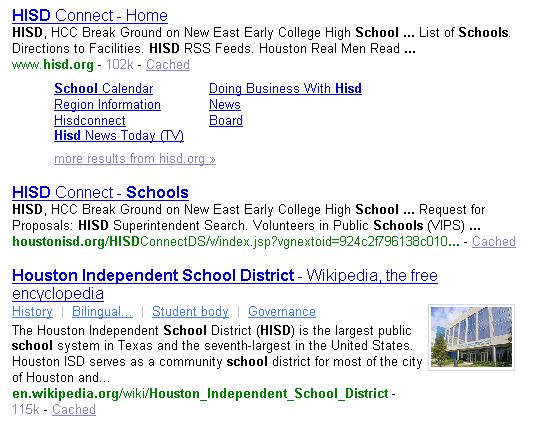
query=hisd schools query=US Marine
35Analyzing user queries for web search
Conclusion
Conclusion
Processing a query has no use per se
What’s important is the intent behind the query
User expectations: from "give me what I said" to "give me what I
want" (Amit Singhal, Google)
We need to build tools for understanding this intent, which is
accessible only indirectly through a ‘user query language’
Identifying query variation given an intent is a component built
with those considerations in mind, and bring significant
improvements in user experience and relevance gain
3637
You can also read


