Antwerp / Belgium Facts on Active Mobility - PASTA Project
←
→
Page content transcription
If your browser does not render page correctly, please read the page content below
Facts on Active Mobility
                                                     Antwerp / Belgium
     City Profile Antwerp

                                                                      City area      205 km2
                                                                      Population:    506,000 total inhabitants
                                                                      Life expectancy: 80,2 years (average)
                                                                      Population density: 2,458 inhabitants/km2
                                                                      GDP per capita: 33,500 Euro1
                                                                      Modal Split:   41% IMT, 16% PT, 20% Walking,
                                                                                     23% Cycling
                                                                      Car ownership rate: 383 cars/1,000 inhabitants
     Antwerp © PASTA consortium

     Modal Split

                                                                       Antwerp was named Flemish Cycle City in 2012.
                                                                       The cycling share in Antwerp amounts to 23% of all
                                                                       trips (2010) and in 2014 29,5% of residents cycled
                                                                       to work. Trips by car (IMT = individual motorized
                                                                       transport) are however comparatively high with
                                                                       41% of all journeys, while Public Transport (PT)
                                                                       share is relatively low (16%).

                                                                       Walking share (20%) while relatively high could be
                                                                       improved; and it is with this aim that Anwerp’s
                                                                       Masterplan 2020 is working on the development of
                                                                       attractive pedestrian axes.
     Figure 1: Modal Split Antwerp (2010)

This project has received funding from the European Union’s Seventh
Framework Programme for research; technological development and
demonstration under grant agreement no 602624-2.
Antwerp’s
       ’s transport system in a nutshell

                                 Walking &
Car network2                                                        Public Transport network
                                 Cycling network
Private car density: 383 cars/   Bike to work: 29,5% of             Tram: 13 lines
   1,000 people                     residents cycled to work in     Bus: approx. 100 lines
Road network: 1,649 km              2014
                                                                    PT priority: PT in separated
Parking: Parking Policy Plan     Cycling network: 702 km of            lanes where possible
                                   cycling paths
Road pricing: no                                                              information yes
                                                                    Real time information:
                                 Contra-flow cycling: yes
Car sharing: one main car                                           Price for a PT annual ticket:
  sharing provider (+ smaller    Cycle parking: Proactive bicycle      € 249.00
                                                                             .00 (train not included)
  local intiatives)                parking policy
                                 Bike sharing: "Velo". 150
                                 stations in the inner city (max
                                 400m of each other) with 1800
                                 bikes (2013).
                                 Pedestrian zones: 9

Antwerp’s
       ’s Strategies & Policies
                                 The City of Antwerp has an Urban Development Plan 3
                                 comprising of a Mobility Plan (Masterplan  2020 and an
                                                                Masterplan 2020)
                                 active cycling policy (Bicycle
                                                        Bicycle Policy Plan 2015-2019).
                                                                            2015        It
                                 aims to ensure:
                                    “AA smoother traffic flow, safer roads and increased
                                    liveability. These are the objectives of Masterplan
                                    2020. … It comprises a whole range of measures to
                                    deal with the heavy traffic, accidents and rat-run
                                                                               rat     traffic
                                    in and around Antwerp. The public transport network
                                    is expanded further. New, safe cycle networks will be
                                    created and the waterways will be developed further
                                    as well.
Antwerp’s Bicycle policy plan2
                                 Incidentally, Masterplan 2020 has a very specific aim: by
                                 2020 at least half of all transport in the Antwerp
                                 agglomeration should occurccur by public transport, on
                                 foot or by bike.” (Antwerp’s
                                                     ntwerp’s Urban Development Plan;

                                                                        PASTA Factsheet Antwerp
The city of Antwerp was awarded 5th place on
                                                         the Copenhagenize Index of bicycle friendly
                                                         cities 2013 (Antwerp’s
                                                                      Antwerp’s Bicycle Policy Plan).
                                                         “Copenhagenize
                                                            openhagenize mentions the extensive
                                                         network
                                                             twork of cycle paths and the bike sharing
                                                         system as our greatest achievements. Other
                                                         criteria are the presence of a bicycle culture,
                                                         cyclists’ sense of safety, and consideration of
                                                         cyclistss in urban renewal projects.” (Bicycle
                                                         Policy Plan 2015-2019).
Figure 2: Copenhagenize Index (Source: Bicycle Policy
Plan 2015-2019) 4

Transport & Health
                                                        Cooperation between the transport and health
                                                        departments is not structurally
                                                                              structural linked and as
                                                        such there is no regular exchange.change.Health (in
                                                        terms of enhancing physical activity) is not a
                                                        main argument in transport planning; the
                                                        discussion is rather framed around reducing
                                                        emissions and congestion. When health is
                                                        included in mobility projects,, it is often narrowed
                                                        down to air pollution. Traffic safety and physical
Picture © City of Antwerp 5                             activity are only sporadically included. Health
                                                        benfits are considered mainly on a national
                                                        level, while implementation costs are local.

“At
 At the moment we are not using health as main argument. …I believe we
      need an improvement on that, an integrated approach between
                            departments.”
                                            (Stakeholder, Antwerp)

  “II think it is not a problem about knowledge about how healthy cycling
                      is,, but it is about lifestyle and culture.”
                                            (Stakeholder, Antwerp)

                                                                                  PASTA Factsheet Antwerp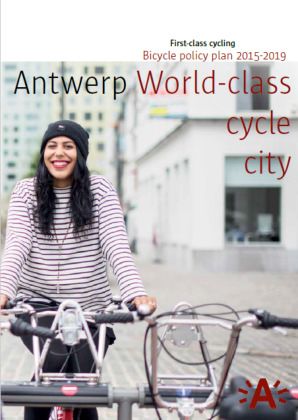
Enabling factors & challenges
A clear political will, development of strategies and visions, provision of walking and
cycling infrastructure, cycling culture and awareness etc. are enabling factors for
promoting walking and  nd cycling in a challenging process.

“The
 The municipal authorities want to stimulate as many people as possible to cycle.
The Cycle policy plan reflects the city’s strategy to create a comfortable and safe
cycling environment. The plan includes actions on three
                                                      three fronts: Riding, Parking and
Steering.” (Antwerp Urban Development Plan) 6.

Political decision: Antwerp stakeholders feel the need of a clear political will towards cycling
policies.
Administration: Cooperation between policy levels & departments, and budget constraints.
                     Political will is made visible by the budgets that they are willing to make
Financial issue: “Political
available. It is significant that the budgets for the soft modes are still only a fraction of the
budgets set aside for car infrastructure.” (Antwerp, stakeholder)
Infrastructure: Antwerp has systematically adjusted cycling infrastruture (long-distance
                                                                            (long        cycle-
routes, cycle tracks, cycle bridges, cycling parking etc.). However, space is limited.
Social environment: It’s fair to says that Antwerp has a cycling culture (diversity of bikes and
people using bikdes), but that car infrastructure is considered more important than
infrastructure for active mobility.
Transport & Health: Health is not a prior argument for cycling, it’s more about congestion and
emissions. There is no structural interchange between the transport and the health sector.

        “We need a political will. A car centered city has no future and the
                         political role has to show that.”
                                           (Antwerp, stakeholder)

Contact

    PASTA - Physical Activity Through Sustainable Transport Approaches
    www.pastaproject.eu

    Luc Int Panis, VITO, luc.intpanis@vito.be
    Helen Franzen, ICLEI – Local Governments for Sustainability;
                                                 Sustainability helen.franzen@iclei.org

1
  https://en.wikipedia.org/wiki/List_of_European_regions_by_GDP
2 http://ecf.com/files/wp-content/uploads/Fietsbeleidsplan_Antwerpen_ENG_web.pdf
                           ontent/uploads/Fietsbeleidsplan_Antwerpen_ENG_web.pdf
3 http://www.antwerpen.be/docs/Stad/Stadsvernieuwing/9746949_urbandevelopment_English.pdf (page 139 – 149 Mobility)
4 http://ecf.com/files/wp-content/uploads/Fietsbeleidsplan_Antwerpen_ENG_web.pdf
                          content/uploads/Fietsbeleidsplan_Antwerpen_ENG_web.pdf
5 http://www.antwerpen.be/docs/Stad/Stadsvernieuwing/9746949_urbandevelopment_English.pdf
6 http://www.antwerpen.be/docs/Stad/Stadsvernieuwing/9746949_urbandevelopment_English.pdf

                                                                                    PASTA Factsheet Antwerp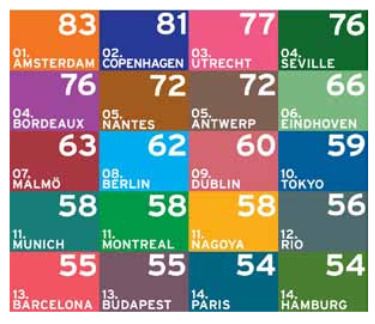

You can also read


