Mission Selection Review summary - M5 Public presentation, 29 April 2021 Frédéric Safa (ESA) - cosmos esa
←
→
Page content transcription
If your browser does not render page correctly, please read the page content below
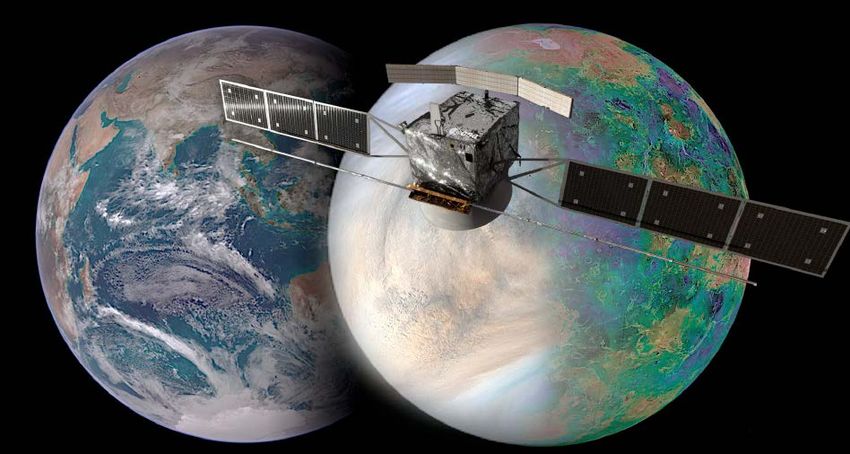
Mission Selection Review summary

                                                                  M5 Public presentation, 29 April 2021
                                                                                       Frédéric Safa (ESA)

ESA UNCLASSIFIED – Limited Distribution                                        M5 Mission Selection Review summary – 29 April 2021   page 1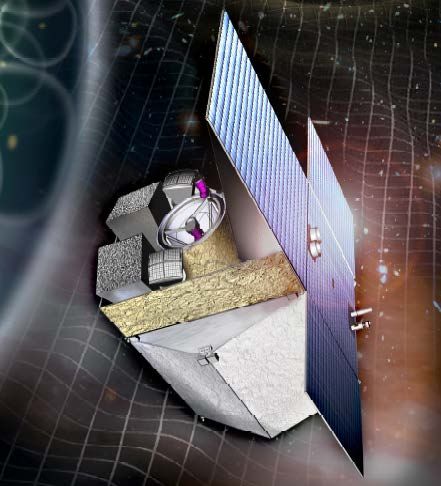
M5 Mission Selection Review
• ESA Independent Review concluding the Phase A, organised in two Panels,
Technical and Programmatic, for each mission
• Objectives: Confirm the candidate missions feasibility and enable the SPC to
make an informed decision for the M5 mission selection
• Review inputs produced by the Phase A studies
For ESA provision: Data packages produced by the two parallel industrial contracts for the
spacecraft definition, for each mission candidate
For nationally provided payload elements: Data packages produced by the instrument teams (I-
PRR)
• NASA provision to Envision was subject to NASA internal reviews, with visibility
provided to ESA, and positive outcome
M5 Mission Selection Review summary – 29 April 2021 page 2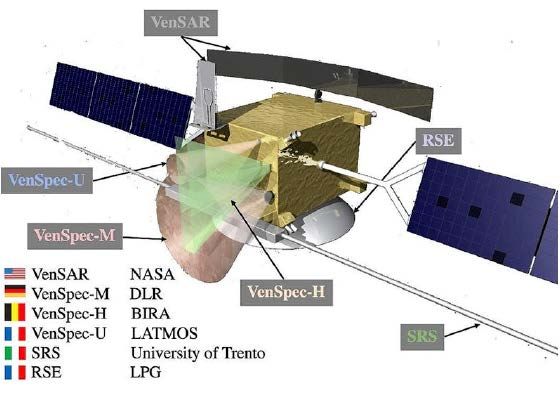
EnVision Technical Assessment: Spacecraft
• Good design maturity achieved
SC 1,400 kg (dry)/ 3 kW, incl. P/L 240 kg / 1,600 W
• Compatibility with Ariane 6.2 confirmed
• Critical functions designed with robust margins and
within heritage, e.g. Venus Orbit Insertion,
Aerobraking, and thermal management.
• Overall, medium development risk
Available heritage & know-how in Europe for both the SC
development and operations
High Thrust (1 kN) engine early qualification recommended
LEROS-4 1 kN engine fire test
M5 Mission Selection Review summary – 29 April 2021 page 3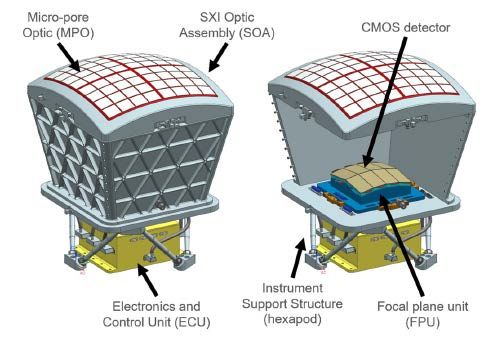
EnVision Technical Assessment: Payload
                                                                                           SMAP, NASA/ISRO NISAR,
                                                                                           NASA/CNES SWOT
• All instruments are new HW developments,
  however with recent relevant heritage
                                                           PHEBUS/Bepi-C
                                                           SPICAV-UV/VeX
  => Payload-driven development schedule
                                                           MERTIS/Bepi-C

• NASA VenSAR predevelopments initiated
  to secure the schedule
                                                                                            NOMAD / ExM

• VenSpec-H change of detector assembly                                                                            MARSIS/ MeX
                                                                                                                   SHARAD/MRO

  with respect to NOMAD (ExoMars):           Instrument    VenSAR     VenSpec-           VenSpec-          VenSpec-           SRS         RSE
                                                                         M                  H                 U                          (USO)
  Alternative identified but dedicated
                                             Mass            150           6 (*)            17 (*)             7 (*)         13 (**)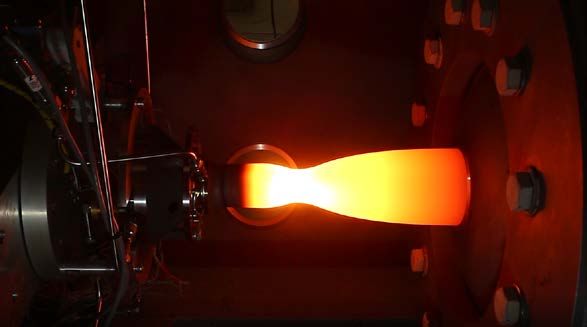
THESEUS Technical Assessment: Spacecraft
• Satisfactory design maturity achieved
SC 1,900 kg (dry) / ~ 2 kW, incl. PLM ~ 1,000 kg / 1,000 W
• Compatibility with VEGA-C confirmed
• Spacecraft platform using available technologies
and equipment , no predevelopment identified
• Main challenge will be on the development
schedule (driven by the payload)
Overall, medium development risk considering the
payload I/F and risks
M5 Mission Selection Review summary – 29 April 2021 page 5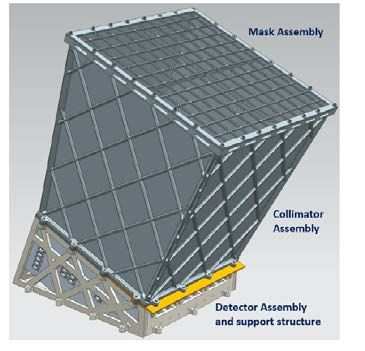
THESEUS Technical Assessment: Payload
• All instruments are new HW developments,
however with heritage
=> Payload-driven development schedule
Complex interface management expected at 700 mm IRT Korsch telescope layout IRT Focal Plane Assembly
Prime level, to be de-risked through appropriate
early models (e.g. STMs & functional models)
No basic technical feasibility issue
IRT payload defines the critical path, closely
followed by SXI & XGIS XGIS detector
module
(10 x 10
SXI camera
• Effort needed in Phase B1 to consolidate XGIS camera needed)
the development approach and schedule, Instrument IRT IRT SXI XGIS TBU
telescope Focal plane (tbc)
while providing flexibility for the instrument Mass 220 38 77 183 10
deliveries kg, nominal
M5 Mission Selection Review summary – 29 April 2021 page 6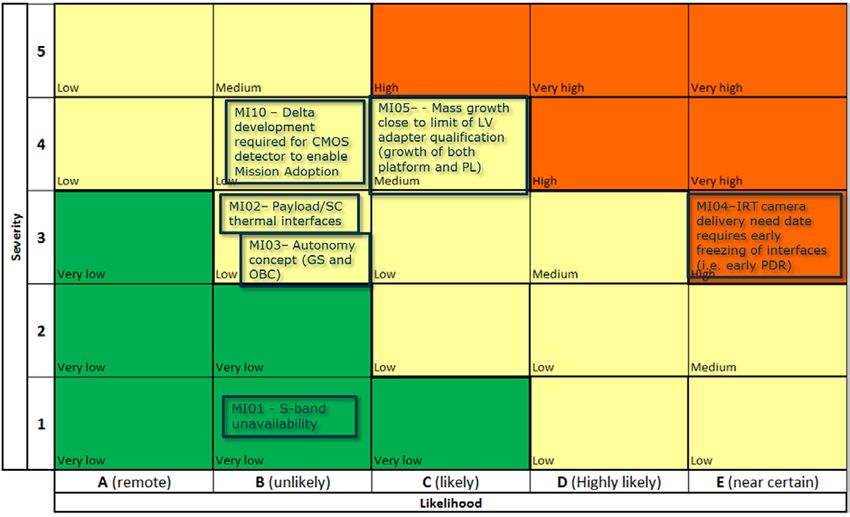
Risk bubble charts

             EnVision   THESEUS

                                  7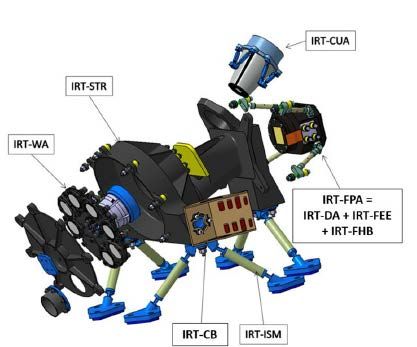
Phase B1 anticipated predevelopments

EnVision
• ESA: 1 kN thruster qualification, ideally to be completed by mission adoption
• ESA: Procurement of VenSpec-H detector assembly, to verify and confirm the baseline compatibility
  with EnVision
• Member States: Payload preparation activities (design & breadboarding for raising TRLs) in
  continuation of the Phase A to secure the schedule.

THESEUS
• ESA: SXI CMOS detector EM development and performance verification
• ESA: Activities TBD to support the payload interface freezing before adoption
• Member States: Payload preparation activities (design & breadboarding for raising TRLs) in
  continuation of the Phase A to secure the schedule

                                                                            M5 Mission Selection Review summary – 29 April 2021   page 8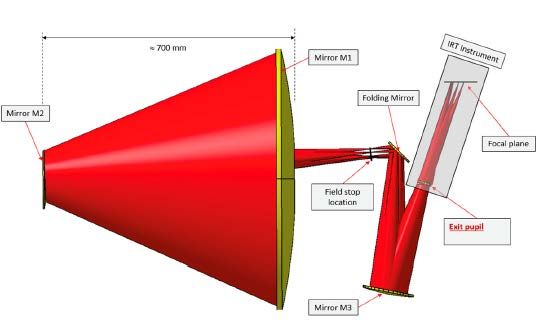
Schedule Analyses
SPC adoption targeted early 2024 for both candidates
• EnVision
Baseline schedule judged realistic: launch in June 2032, science operations at Venus starting in
Q1 2035. Back-up launch windows available in Dec 2032 and May 2033.
May 2031 launch window is possibly feasible (subject to compatibility with all instrument
schedules, including VenSAR) and is being investigated.
• THESEUS
A launch in 2032 would be possible, subject to overall development approach consolidation and
steady progress on instrument preparation activities during the phase B1 .
No stringent launch window constraints for THESEUS
M5 Mission Selection Review summary – 29 April 2021 page 9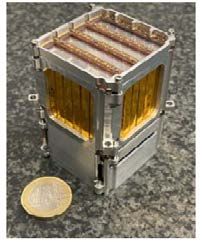
Programmatic assessment: responsibility scheme
ESA have consulted the Member States on the Phase A baseline responsibility scheme
payload funding scheme for the Phase A consolidated EnVision THESEUS
baseline.
ESA in charge of: ESA in charge of:
SC development; SC development;
For THESEUS, the ground VHF network provision is
Launch services; Launch services;
not confirmed.
In-orbit operations (MOC In-orbit operations (MOC
Not mandatory for THESEUS core science objectives and SOC); and SOC);
Basic mitigation is to use the SC communication
EnVision Payload: THESEUS Payload
system for the trigger alert and ESA ground station(s),
VenSAR: NASA Member States provision,
with reduced performance
with the following ESA
All other instruments: contributions:
All other elements are supported. Member States, with the
following ESA contributions: 1- IRT telescope assembly
1- VenSpec-H detector 2- IRT cryo-cooling chain
Following the MSR, a second consultation is planned
assembly, with integrated 3- IRT focal plane detector
on the funding of payload activities in phase B1. cryocooler and proximity electronics
2- SRS deployable antenna 4- SXI CMOS detectors
M5 Mission Selection Review summary – 29 April 2021 page 10Programmatic aspects: ESA cost estimates
ESA CaC estimated by the MSR Programmatic Panel for the Phase A baseline is
within 610 M€ (e.c. 2021) for both missions.
Exceeding the target by ~ 5%
Launcher costs based on recent consultations of Arianespace for other projects
Similar CaC for both missions, but with completely different profiles: Much larger
ESA contribution to THESEUS payload, approximately balanced by lower costs
for launcher (VEGA-C vs A62) and operations (LEO vs Venus)
ESA and NASA have started their discussion on the implementation details in
preparation of the MoU
M5 Mission Selection Review summary – 29 April 2021 page 11MSR conclusion
• For both EnVision and THESEUS, the Phase A converged to a feasible baseline by
following a design-to-cost approach while preserving the core scientific objectives
• The Member States have been consulted for the funding of nationally provided
payload elements. The payload funding scheme is confirmed.
• ESA anticipate a few predevelopment activities for each mission in Phase B1 for
securing the implementation schedule and risks
• Predevelopments will also be needed for the nationally provided payload elements,
and are expected to be funded in Phase B1
• ESA cost at completion estimates are within 610 M€ e.c. 2021 for both missions
M5 Mission Selection Review summary – 29 April 2021 page 12The end
M5 Mission Selection Review summary – 29 April 2021 page 13You can also read


