App-Based Tracking of Self-Reported COVID-19 Symptoms: Analysis of Questionnaire Data
←
→
Page content transcription
If your browser does not render page correctly, please read the page content below
JOURNAL OF MEDICAL INTERNET RESEARCH                                                                                                   Zens et al

     Short Paper

     App-Based Tracking of Self-Reported COVID-19 Symptoms:
     Analysis of Questionnaire Data

     Martin Zens1, MD, PhD; Arne Brammertz2, Dipl-Vw; Juliane Herpich1, MD; Norbert Südkamp3*, MD, PhD; Martin
     Hinterseer1*, MD
     1
      Department of Medicine, Kliniken Ostallgaeu-Kaufbeuren, Fuessen, Germany
     2
      DESIGN-IT GmbH, Frankfurt, Germany
     3
      University Medical Center Freiburg, Freiburg, Germany
     *
      these authors contributed equally

     Corresponding Author:
     Martin Zens, MD, PhD
     Department of Medicine
     Kliniken Ostallgaeu-Kaufbeuren
     Stadtbleiche 1
     Fuessen, 87629
     Germany
     Phone: 49 8362 500 726
     Email: martin.zens@me.com

     Abstract
     Background: COVID-19 is an infectious disease characterized by various clinical presentations. Knowledge of possible
     symptoms and their distribution allows for the early identification of infected patients.
     Objective: To determine the distribution pattern of COVID-19 symptoms as well as possible unreported symptoms, we created
     an app-based self-reporting tool.
     Methods: The COVID-19 Symptom Tracker is an app-based daily self-reporting tool. Between April 8 and May 15, 2020, a
     total of 22,327 individuals installed this app on their mobile device. An initial questionnaire asked for demographic information
     (age, gender, postal code) and past medical history comprising relevant chronic diseases. The participants were reminded daily
     to report whether they were experiencing any symptoms and if they had been tested for SARS-CoV-2 infection. Participants who
     sought health care services were asked additional questions regarding diagnostics and treatment. Participation was open to all
     adults (≥18 years). The study was completely anonymous.
     Results: In total, 11,829 (52.98%) participants completed the symptom questionnaire at least once. Of these, 291 (2.46%)
     participants stated that they had undergone an RT-PCR (reverse transcription-polymerase chain reaction) test for SARS-CoV-2;
     65 (0.55%) reported a positive test result and 226 (1.91%) a negative one. The mean number of reported symptoms among untested
     participants was 0.81 (SD 1.85). Participants with a positive test result had, on average, 5.63 symptoms (SD 2.82). The most
     significant risk factors were diabetes (odds ratio [OR] 8.95, 95% CI 3.30-22.37) and chronic heart disease (OR 2.85, 95% CI
     1.43-5.69). We identified chills, fever, loss of smell, nausea and vomiting, and shortness of breath as the top five strongest
     predictors for a COVID-19 infection. The odds ratio for loss of smell was 3.13 (95% CI 1.76-5.58). Nausea and vomiting (OR
     2.84, 95% CI 1.61-5.00) had been reported as an uncommon symptom previously; however, our data suggest a significant predictive
     value.
     Conclusions: Self-reported symptom tracking helps to identify novel symptoms of COVID-19 and to estimate the predictive
     value of certain symptoms. This aids in the development of reliable screening tools. Clinical screening with a high pretest
     probability allows for the rapid identification of infections and the cost-effective use of testing resources. Based on our results,
     we suggest that loss of smell and taste be considered cardinal symptoms; we also stress that diabetes is a risk factor for a highly
     symptomatic course of COVID-19 infection.

     (J Med Internet Res 2020;22(9):e21956) doi: 10.2196/21956

     KEYWORDS
     COVID-19; self-reporting; symptom; tracking; app; surveillance; distribution; digital tool; screening
     http://www.jmir.org/2020/9/e21956/                                                          J Med Internet Res 2020 | vol. 22 | iss. 9 | e21956 | p. 1
                                                                                                               (page number not for citation purposes)
XSL• FO
RenderX
JOURNAL OF MEDICAL INTERNET RESEARCH Zens et al
Medical Center Freiburg and Kliniken Ostallgaeu-Kaufbeuren,
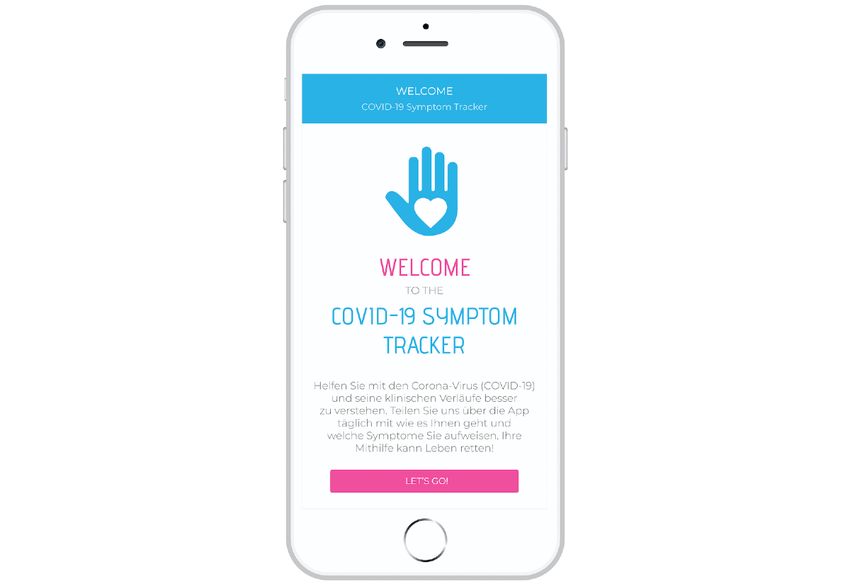
Introduction Fuessen Hospital (Figure 1). The first version was released for
COVID-19 was initially characterized as an acute respiratory Apple iOS on April 8, 2020, and for Google Android on April
infection with significant virulence and mortality. Following 20, 2020. Within 5 weeks, the app was downloaded 22,327
reports of the first cases in Wuhan, China, in December 2019, times. The app was released in German, English, French, and
the virus spread globally with 9,738,374 confirmed cases as of Spanish and advertised through public media (TV, radio,
June 26, 2020 [1]. Previous research has revealed that newspaper, online), following a nationwide press release. An
COVID-19, which is caused by the novel coronavirus initial questionnaire asked for demographic information (age,
SARS-CoV-2, is a systemic disease rather than an isolated acute gender, postal code) and past medical history with relevant
respiratory illness [2,3]. The diversity in symptoms is the result chronic diseases. The participants are notified daily by push
of SARS-CoV-2 attacking various organs. notifications to report whether they were experiencing symptoms
and if they had been tested for SARS-CoV-2. In addition to a
The aim of this study was to identify further symptoms and to binary response regarding the prevalence of symptoms, for some
investigate whether certain symptoms may be used as for items (eg, fever, cough) we collected additional details like
screening to differentiate COVID-19 infection from other temperature range or expectoration. If users sought professional
diseases. A powerful and reliable clinical screening tool may health care advice (eg, visited a hospital, a private practice, etc),
help to identify and isolate SARS-CoV-2–infected individuals additional questions regarding diagnostics and treatment were
and slow down disease prevalence. asked. Participation was open to all adults (≥18 years). The
study was anonymous; a formal consent for participation was
Methods not required due to this fact but was asked for regardless.
Study Setting and Participants
The COVID-19 Symptom Tracker was developed by
DESIGN-IT GmbH, in collaboration with the University
Figure 1. The COVID-19 Symptom Tracker.
further analysis. Participants were presented as counts, age as
Statistical Analysis mean and standard deviation derived from an age span, and
Data were downloaded from the database server. Only data sets questionnaire items as counts and percentages. For each risk
of individuals who live in Germany and had completed the factor and symptom, odds ratios were calculated using binary
entire symptom questionnaire at least once were included in
http://www.jmir.org/2020/9/e21956/ J Med Internet Res 2020 | vol. 22 | iss. 9 | e21956 | p. 2
(page number not for citation purposes)
XSL• FO
RenderXJOURNAL OF MEDICAL INTERNET RESEARCH Zens et al
logistic regression. Data from untested participants were not (SD 2.82). All participants were asked to fill out an initial
included in this analysis. questionnaire on intrinsic risk and demographic data. The
self-reported prevalence of risk factors (eg, diabetes: 917/11,538,
Ethics 7.95%; hypertension: 3268/11,538, 25.19%; and smoking:
Approval of the study design was obtained by the Ethics 3679/11,538, 31.89%) showed a significant correlation with the
Committee at the University Medical Center Freiburg (EK data provided regularly by the German Federal Office of
337/20). The committee was very supportive of the project. Statistics [5] and the Ministry of Health [6] (eg, diabetes: 7.2%;
hypertension: 24.6%), which suggests that the study cohort is
Data and Code Availability
representative of the German population (age group: 18-65
The anonymous data collected by the COVID-19 Symptom years). Elderly individuals are underrepresented due to the
Tracker app can be shared with researchers upon request with methodology used in this study.
a research protocol or due to a question of public interest, if
permitted by the ethics committee. The app code is also available The daily symptom questionnaire requested information on
upon request. Requests can be sent to the corresponding author. known or suggested symptoms as of April 1, 2020 [7-10] and
The Laravel PHP script for SQL data extraction is publicly permitted users to enter additional symptoms as free text. Odds
available [4]. ratios (OR) were calculated for all risk factors and reported
symptoms. According to our data, the most significant risk
Results factors are diabetes (OR 8.95, 95% CI 3.30-22.37) and chronic
heart disease (OR 2.85, 95% CI 1.43-5.69) (Figure 2). We
Between April 8 and May 15, 2020, 22,327 individuals installed identified chills, fever, loss of smell, nausea and vomiting, and
the COVID-19 Symptom Tracker on their mobile device. In shortness of breath as the top five strongest predictors for a
total, 11,829 (52.98%) participants completed the symptom COVID-19 infection (Figure 2). The OR for loss of smell was
questionnaire at least once. Of these, 291 (2.46%) stated that 3.13 (95% CI 1.76-5.58); of comparable significance were chills
they had undergone an RT-PCR (reverse (OR 4.48, 95% CI 2.51-8.01) and fever (OR 4.37, 95% CI
transcription-polymerase chain reaction) test for SARS-CoV-2; 2.44-7.81). Chills, fever, and shortness of breath have been
65 (0.55%) reported a positive test result and 226 (1.91%) a identified and communicated as common symptoms in the
negative one. The mean number of reported symptoms in the mainstream media. Nausea and vomiting (OR 2.84, 95% CI
group of untested participants was 0.81 (SD 1.85). On average, 1.61-5.00) has been reported as an uncommon symptom;
individuals with a negative result reported 4.26 symptoms (SD however, our data suggest a significant predictive value. The
2.52) and those with a positive result reported 5.63 symptoms characteristics of the entire cohort are displayed in Table 1.
Figure 2. (a) Association between reported symptoms and the odds ratio for a positive SARS-CoV-2 test result; (b) association between reported risk
factors and the odds ratio for a positive SARS-CoV-2 test result. Both analyses were carried out in a population of 291 participants who tested via
reverse transcription-polymerase chain reaction. Error bars represent 95% CI.
http://www.jmir.org/2020/9/e21956/ J Med Internet Res 2020 | vol. 22 | iss. 9 | e21956 | p. 3
(page number not for citation purposes)
XSL• FO
RenderXJOURNAL OF MEDICAL INTERNET RESEARCH Zens et al
Table 1. Characteristics of participants (N=11,829).
Characteristic Tested for SARS-CoV-2 Not tested for SARS-
CoV-2
Positive test result Negative test result
Participants, n (%) 65 (0.55) 226 (1.91) 11,538 (97.54)
Female, n (%) 33 (50.77) 109 (48.23) 4360 (37.79)
Age (years), mean (SD) 42.65 (13.33) 41.04 (12.88) 44.47 (15.41)
Smoker, n (%) 33 (50.77) 74 (32.74) 3679 (31.89)
Influenza vaccine, n (%) 21 (32.31) 69 (30.53) 3268 (28.32)
Comorbidities, n (%)
Diabetes 14 (21.54) 7 (3.10) 917 (7.95)
Arterial hypertension 26 (40.00) 54 (23.89) 2906 (25.19)
Chronic lung disease 22 (33.85) 51 (22.57) 1352 (11.72)
Chronic heart disease 17 (26.15) 25 (11.06) 1020 (8.84)
Symptoms, n (%)
Loss of smell 31 (47.69) 51 (22.57) 325 (2.82)
Fatigue 60 (92.31) 189 (83.63) 1560 (13.52)
Shortness of breath 40 (61.54) 84 (37.17) 554 (4.80)
Fever 36 (55.38) 50 (22.12) 296 (2.57)
Persistent cough 55 (84.62) 164 (72.57) 1290 (11.18)
Diarrhea 34 (52.31) 92 (40.71) 670 (5.81)
Chills 38 (58.46) 54 (23.89) 393 (3.41)
Headache 50 (76.92) 162 (71.68) 1388 (12.03)
Sniffling and snorting 43 (66.15) 129 (57.08) 1339 (11.61)
Nausea and vomiting 34 (52.31) 63 (27.88) 428 (3.71)
Body aches 45 (69.23) 112 (49.56) 1388 (12.03)
Sore throat 48 (73.85) 148 (65.49) 1185 (10.27)
a loss of smell and taste is unique and allows a better
Discussion differentiation from other infectious diseases since many are
Principal Findings accompanied by chills and fever. In the present situation, we
suggest that loss of smell and taste, especially in combination
The COVID-19 pandemic has triggered numerous research with other symptoms, ought to be considered a red flag and
endeavors that have focused on procuring a better understanding should result in immediate testing for SARS-CoV-2 as well as
of the disease caused by the novel SARS-CoV-2. Agile and isolation of the patient until the test result is obtained.
dynamic projects led to contemporaneous approaches with
similar and comparable study designs. Menni et al [11] report Furthermore, our work suggests that an increased awareness of
of real-time symptom tracking tool to predict COVID-19 gastrointestinal symptoms, namely nausea and vomiting, is
infections. The approach is based on a smartphone app available needed as these have a stronger predictive value for a COVID-19
in the United Kingdom and United States; 2,618,862 participants infection than symptoms such as sore throat or persistent cough,
were included and analyzed in order to design a prediction which are commonly considered as typical.
model. Simultaneously, a total of 22,327 participants reported Apart from that, a significant association was seen between
potential COVID-19 symptoms on a smartphone-based app in every symptom mentioned in this paper and a positive test result
Germany. However, unlike the cohort discussed in this work, for SARS-CoV-2. This finding is explained by the preselection
the British cohort did not represent the general population (eg, of symptoms that were reported to be associated with COVID-19
overrepresentation of female participants). in prior publications.
Menni et al [11] suggested that loss of smell and taste should Manual screening of the answers to the open question which
be included in routine screening for COVID-19. We strongly asked for additional symptoms revealed an accumulation of the
agree with this opinion as our data also suggest a strong following symptoms: vertigo, painful ears or eyes, burning
predictive value. Although chills and fever are found in sensation of the tongue, and thoracic pain. A static analysis of
COVID-19 patients with a higher probability, in a clinical setting
http://www.jmir.org/2020/9/e21956/ J Med Internet Res 2020 | vol. 22 | iss. 9 | e21956 | p. 4
(page number not for citation purposes)
XSL• FO
RenderXJOURNAL OF MEDICAL INTERNET RESEARCH Zens et al
these reported symptoms is not yet possible due to insufficient underrepresentation of older adults. Another possible limitation
data but corresponding questions have been added to the is the small number of participants that had been tested for
questionnaire in an updated version of the smartphone app. SARS-CoV-2 infection. A possible correlation between age,
gender, and postal code (demographic information) and
Diabetes was identified as a major risk factor for a symptomatic
individual symptoms was not considered in the univariate
course of COVID-19 infection. Other studies reported an
analysis of symptoms.
increased risk, rapid progression, and a worse prognosis in
patients with diabetes mellitus [12,13]. The mechanism remains Conclusions
unclear and requires further investigation. Self-reported symptom tracking may help to identify novel
Limitations symptoms of COVID-19 and estimate the predictive value of
certain symptoms [14]. This may aid in the development of
The limitations of this study are mainly due to the self-reporting
reliable screening tools. Clinical screening with a high pretest
nature of our methodology for data retrieval. The design does
probability allows for the rapid identification of infections and
not allow for the verification of the reported symptoms or test
serves as a cost-effective use of testing resources. Our data stress
results. Apart from that, the participants are not invited or
the necessity for an awareness of loss of smell and taste as
preselected and may not represent the general population. The
cardinal symptoms.
use of a smartphone device may have resulted in an
Acknowledgments
The authors would like to express their sincere thanks to all the participants who voluntarily entered the study and shared
information on their personal health and well-being. We thank the Ministerium fuer Wissenschaft, Forschung und Kunst,
Baden-Wuerttemberg for an initial funding of the research platform, which was the foundation for the COVID-19 Symptom
Tracker app. Furthermore, we would like to thank J Spieler, data protection officer at the University Medical Center Freiburg,
for his support. The article processing fee was funded by the Baden-Wuerttemberg Ministry of Science, Research and Art and
the University of Freiburg through the Open Access Publishing funding program in cooperation with a grant from
Arbeitsgemeinschaft Leitende Kardiologische Krankenhausärzte eV.
Authors' Contributions
AB designed the app and database. MZ, JH, and MH developed the study questionnaires. MZ and NPS analyzed the data and
plotted the results of the statistical analysis. MZ and JH wrote the manuscript. All authors revised the manuscript.
Conflicts of Interest
AB is the CEO of DESIGN-IT GmbH.
References
1. COVID-19 Coronavirus Pandemic. Worldometer. 2020. URL: https://www.worldometers.info/coronavirus/
?utm_campaign=homeAdvegas1? [accessed 2020-06-26]
2. Zheng Y, Ma Y, Zhang J, Xie X. COVID-19 and the cardiovascular system. Nat Rev Cardiol 2020 May 5;17(5):259-260
[FREE Full text] [doi: 10.1038/s41569-020-0360-5] [Medline: 32139904]
3. Ronco C, Reis T. Kidney involvement in COVID-19 and rationale for extracorporeal therapies. Nat Rev Nephrol 2020 Jun
9;16(6):308-310 [FREE Full text] [doi: 10.1038/s41581-020-0284-7] [Medline: 32273593]
4. martinzens / covid-19-st. GitHub. 2020. URL: https://github.com/martinzens/covid-19-st [accessed 2020-08-26]
5. Statistisches Bundesamt. German Federal Office of Statistics. URL: https://www.destatis.de [accessed 2020-08-26]
6. COVID-19 in Deutschland. Robert Kock Institute. URL: https://www.rki.de/DE/Home/homepage_node.html [accessed
2020-08-26]
7. Lake MA. What we know so far: COVID-19 current clinical knowledge and research. Clin Med (Lond) 2020 Mar
05;20(2):124-127 [FREE Full text] [doi: 10.7861/clinmed.2019-coron] [Medline: 32139372]
8. Gane S, Kelly C, Hopkins C. Isolated Sudden Onset Anosmia in COVID-19 Infection. A Novel Syndrome? Rhin 2020 Jun
01;58(3):299-301. [doi: 10.4193/rhin20.114]
9. Jiang F, Deng L, Zhang L, Cai Y, Cheung CW, Xia Z. Review of the Clinical Characteristics of Coronavirus Disease 2019
(COVID-19). J Gen Intern Med 2020 May 4;35(5):1545-1549 [FREE Full text] [doi: 10.1007/s11606-020-05762-w]
[Medline: 32133578]
10. Guan W, Ni Z, Hu Y, Liang W, Ou C, He J, China Medical Treatment Expert Group for Covid-19. Clinical Characteristics
of Coronavirus Disease 2019 in China. N Engl J Med 2020 Apr 30;382(18):1708-1720 [FREE Full text] [doi:
10.1056/NEJMoa2002032] [Medline: 32109013]
11. Menni C, Valdes AM, Freidin MB, Sudre CH, Nguyen LH, Drew DA, et al. Real-time tracking of self-reported symptoms
to predict potential COVID-19. Nat Med 2020 Jul 11;26(7):1037-1040 [FREE Full text] [doi: 10.1038/s41591-020-0916-2]
[Medline: 32393804]
http://www.jmir.org/2020/9/e21956/ J Med Internet Res 2020 | vol. 22 | iss. 9 | e21956 | p. 5
(page number not for citation purposes)
XSL• FO
RenderXJOURNAL OF MEDICAL INTERNET RESEARCH Zens et al
12. Guo W, Li M, Dong Y, Zhou H, Zhang Z, Tian C, et al. Diabetes is a risk factor for the progression and prognosis of
COVID-19. Diabetes Metab Res Rev 2020 Mar 31:e3319 [FREE Full text] [doi: 10.1002/dmrr.3319] [Medline: 32233013]
13. Muniyappa R, Gubbi S. COVID-19 pandemic, coronaviruses, and diabetes mellitus. Am J Physiol Endocrinol Metab 2020
May 01;318(5):E736-E741 [FREE Full text] [doi: 10.1152/ajpendo.00124.2020] [Medline: 32228322]
14. Rossman H, Keshet A, Shilo S, Gavrieli A, Bauman T, Cohen O, et al. A framework for identifying regional outbreak and
spread of COVID-19 from one-minute population-wide surveys. Nat Med 2020 May;26(5):634-638 [FREE Full text] [doi:
10.1038/s41591-020-0857-9] [Medline: 32273611]
Abbreviations
OR: odds ratio
RT-PCR: reverse transcription-polymerase chain reaction
Edited by G Eysenbach; submitted 29.06.20; peer-reviewed by I Rodriguez, P Innominato; comments to author 24.07.20; revised
version received 25.07.20; accepted 26.07.20; published 09.09.20
Please cite as:
Zens M, Brammertz A, Herpich J, Südkamp N, Hinterseer M
App-Based Tracking of Self-Reported COVID-19 Symptoms: Analysis of Questionnaire Data
J Med Internet Res 2020;22(9):e21956
URL: http://www.jmir.org/2020/9/e21956/
doi: 10.2196/21956
PMID:
©Martin Zens, Arne Brammertz, Juliane Herpich, Norbert Südkamp, Martin Hinterseer. Originally published in the Journal of
Medical Internet Research (http://www.jmir.org), 09.09.2020. This is an open-access article distributed under the terms of the
Creative Commons Attribution License (https://creativecommons.org/licenses/by/4.0/), which permits unrestricted use, distribution,
and reproduction in any medium, provided the original work, first published in the Journal of Medical Internet Research, is
properly cited. The complete bibliographic information, a link to the original publication on http://www.jmir.org/, as well as this
copyright and license information must be included.
http://www.jmir.org/2020/9/e21956/ J Med Internet Res 2020 | vol. 22 | iss. 9 | e21956 | p. 6
(page number not for citation purposes)
XSL• FO
RenderXYou can also read


