APPLICANTS POSTGRADUATE 2018/2019 - Wits University
←
→
Page content transcription
If your browser does not render page correctly, please read the page content below

T +27 (0)11 717 1888 W www.wits.ac.za/postgraduate

                 A GUIDE FOR

POSTGRADUATE
APPLICANTS
A research-driven institution committed to excellence

                  2018/2019
WELCOME TO WITS!
            4     Our University

            6     Our Faculties

            7     Research at Wits

            8     Research Snippets

            11    Accreditation

                                                                     CONTENTS
            12    Our City

            13    Postgraduate Studies

            14    Postgraduate Resources

            16    Faculty of Commerce, Law and Management

            17    Programmes on offer

            18    Faculty of Engineering and the Built Environment

            19    Programmes on offer

            22    Faculty of Health Sciences

            23    Programmes on offer

            26    Faculty of Humanities

            27    Programmes on offer

            36    Faculty of Science

            37    Research in the Faculty of Science

            39    Programmes on offer

            42    Postdoctoral Research

            44    Applying to Wits

            45    Application Procedure

            46   Closing dates

            47    International Students

            48    Campus Housing

            49    Funding Options

            50    Tuition Fees

            50    Faculty of Commerce, Law and Management

            51    Faculty of Science

            51    Faculty of Health Sciences

            53    Faculty of Engineering and the Built Environment

            54    Faculty of Humanities

2   POSTGRADUATE GUIDE | 2018/2019

Welcome to Wits!
                 Globally Competitive, Locally Responsive

           Wits is internationally renowned for its excellent research, high academic standards and commitment to
           social justice, freedom and democracy. More than 85% of our research is published in international journals.
           From telling the story of life, to finding solutions to deep level mining problems, from searching for the Higgs
           boson at CERN, to understanding the complexities of human interaction, our researchers are working with
           the best in the world to change our society for the better.

           Through our networks we are leading public health programmes that are improving lives, uncovering Africa’s
           mineral resources, and serving as a hub to facilitate research and postgraduate training with leading local
           and international institutions.

           Our location in the Gauteng City Region, the economic heartland of the continent, bolsters strong industry
           links and partnerships. This position offers countless opportunities for research students to engage with and
           present solutions that will contribute to our country’s knowledge base and build our future.

           Our postgraduate students are afforded a platform to engage in real life research issues that affect not only
           the surrounding communities, but the country, continent and the global village at large. Higher degree qual-
           ifications at Wits result from more mature teaching and learning requirements as well as a deeper and more
           academic focus.

           South Africa’s young researchers and researchers-in-training are nurtured in an environment where discov-
           ery and creativity is encouraged and where ideas are discussed freely in a spirit of openness and tolerance.
           Staff and postgraduate students are actively encouraged to push the boundaries of knowledge by tackling
           fundamental research questions, producing publications of the highest quality, and sustaining the interplay
           between teaching and research. Wits is committed to ensuring that a new generation of researchers is
           drawn from a diverse range of young people.

           We look forward to welcoming you to Wits in the near future.

4   POSTGRADUATE GUIDE | 2018/2019
Wits has a distinct and                            Our University
 proud reputation for its
                                                     Our people
 academic and research                               Wits is the home of exceptional researchers, academics,
  excellence, innovation,                            professional, administrative and support staff, and
                                                     students. This includes our lauded A-rated scientists,
enlightened discourse and                            our award-winning researchers and our internationally
                                                     recognised academics.
  its ability to provide a
                                                     In recent years, the University has appointed 16
platform to allow differing                          distinguished scholars who excel in their respective and
                                                     diverse fields of expertise.
    voices to be heard.
                                                  Wits is home to four Nobel Laureates: Sydney Brenner,
                                                  Nadine Gordimer, Nelson Mandela and Aaron Klug. Four
   National Planning Commissioners who helped to shape the future of South Africa are Witsies. More than 50
   Witsies have been awarded prestigious National Orders by the Presidency post-1994.

   More than 160 000 Wits graduates have made and continue to make their mark in the world. Amongst them
   are many illustrious artists, lawyers, politicians, business leaders, accountants and scientists.

   Our campuses
   Wits’ vast campuses are spread over 400 hectares in Braamfontein and Parktown. Wits is taking the lead in
   reimagining Braamfontein to further our contribution towards delivering high level scarce skills for the global
   knowledge economy.

   Wits donated land on which the Nelson Mandela Childrens’ Hospital has been built, completed in December
   2016.

   Our spaces and places
   The University’s physical reach extends from Sterkfontein in the Cradle of Humankind World Heritage Site,
   to the Wits Rural Facility in Mpumalanga.

   Wits is the curator of some of the world’s most priceless treasures – be they palaeontological, historical,
   artistic or cultural. The Wits campus has a wealth of sightseeing and educational opportunities which
   collectively depict the richness of our history, academic endeavours, diversity of disciplines and social
   interaction.

                                                                                    POSTGRADUATE GUIDE | 2018/2019   5
Our global footprint
           Wits is represented globally through our partnerships, collaborations, staff and student exchanges and our
           alumni around the world. We have over 50 active projects on the African continent. From trying to discover
           what lies beneath the Earth’s surface to saving lives through better healthcare systems, Wits is on the
           ground, making a difference. Wits was also the co-founder of the African Research Universities Alliance
           launched in 2015.

           Arts and culture at Wits
           The Wits campus has a wealth of sightseeing and educational opportunities which collectively depict the
           richness of our history, academic endeavours, diversity of disciplines and social interaction.

           There is always something happening at Wits and a vibrant social and cultural life is the norm.
           Science enthusiasts can pay a visit to the Planetarium, the Origins Centre, the Bleloch Geological Museum,
           the Life Sciences Museum and Biodiversity Centre or the James Kitching Gallery in the Palaeosciences
           Centre.

           The Fossil Vault and undergraduate chamber hold some of the world’s priceless faunal, floral and hominid
           palaeo treasures.

           Students studying in the health sciences may find the captivating Adler Museum of Medicine compelling, or
           may fancy a visit to the Brebner Museum, the Hunterian Museum of Anatomy or the Museum of Obstetrics
           and Gynaecology.

           New, experimental work is always explored at the Wits Theatre complex, side by side with the best
           professional talent on the continent.

           The Fassler Gallery, the Anthropology Museum and the Wits Art Museum will also enthrall audiences.

           www.wits.ac.za/campus-life/arts-and-culture

6   POSTGRADUATE GUIDE | 2018/2019
Our Faculties
Wits is structured into five Faculties, comprising 33 Schools,
          supported by over 30 service departments

         COMMERCE, LAW AND MANAGEMENT
         School of Accountancy
         School of Economic and Business Sciences
         School of Law
         Wits Business School
         Wits School of Governance

          ENGINEERING AND THE BUILT ENVIRONMENT
          Architecture and Planning
          Civil & Environmental Engineering
          Chemical & Metallurgical Engineering
          Construction Economics & Management
          Electrical & Information Engineering
          Mechanical, Industrial & Aeronautical Engineering
          Mining Engineering

         HUMANITIES
         Wits School of Arts
         Wits School of Education
         School of Human and Community Development
         School of Literature, Language and Media
         School of Social Sciences

         HEALTH SCIENCES
         School of Anatomical Sciences
         School of Clinical Medicine
         School of Oral Health Sciences
         School of Pathology
         School of Physiology
         School of Public Health
         School of Therapeutic Sciences

         SCIENCE
         School of Animal, Plant & Environmental Sciences
         School of Chemistry
         School of Computer Science and Applied Mathematics
         School of Geography, Archaeology & Environmental Studies
         School of Geosciences
         School of Mathematics
         School of Molecular & Cell Biology
         School of Physics
         School of Statistics and Actuarial Science

                                                                    POSTGRADUATE GUIDE | 2018/2019   7
Research at Wits
           “Wits is a research-intensive university, one of the leading institutions on the continent that produces world-
           class research that transforms our lives and society in multiple ways. Our exceptional academics create new
           knowledge, explain novel discoveries, impact on policy development, change the way we do business, pro-
           mote human rights and social justice and help us to think critically to find alternative solutions to the pressing
           challenges of the future. Wits offers a free space for the exchange of ideas, a platform for opposing voices
           to find common ground, and a vibrant intellectual community that fosters debate and knowledge transfer
           both in and beyond our lecture halls.”

                                                                 Professor Adam Habib, Vice-Chancellor and Principal

              28                                  6                 4
                                                                    2
                                                                         HOSTED

                                                                          CO-HOSTED

            42%
                                      SINCE 2014

           GLOBAL UNIVERSITY RANKINGS
           Benchmarking performance is important for universities striving to compete against
           thousands of research focused degree awarding institutions worldwide. Their criteria and
           methodologies differ on the various ranking scales. Wits is ranked No. 1 in SA by ARWU and
           in the top two nationally by Times Higher Education and CWUR rankings.

8   POSTGRADUATE GUIDE | 2018/2019
Research snippets
• Wits hosts the largest number of Department of Science and Technology National Research Foundation
  Centres of Excellence in the country.

• One of the most prestigious research awards in South Africa, the Harry Oppenheimer Fellowship Award, has
  been bestowed on four Witsies since its inception in 2001 for their cutting-edge, internationally significant
  work. The Wits Fellows are Prof. David Glasser for sustainable engineering, Prof. Norman Owen-Smith
  for ecology, Prof. Duncan Mitchell for mammalian physiology and Prof. Helen Rees for reproductive health
  and HIV/AIDS.

• Rees was also one of three Wits academics lauded at the 2015 National Science and Technology
  Forum Awards, honoured for her Contribution over a Lifetime for her work in the field of HIV prevention,
  reproductive health and vaccines. Rees was also among four Witsies who were honoured with national
  orders in 2016.

• Time magazine named Glenda Gray, Full Professor: Research in the School of Clinical Medicine, among
  the top 100 most influential people in the world.

• Wits physicists and students are collaborating with the best at the world’s most powerful particle
  accelerator, the Large Hadron Collider at the European Organisation of Nuclear Research (CERN) in
  Geneva, Switzerland to discover the secrets of the Universe. Since the start of 2013, the Wits-ATLAS
  group has submitted and/or published over 80 proceedings, research papers and chapters in books and
  has received multiple awards.

• Wits hosts the second African IBM Research Laboratory, one of only 12 such mega-labs across the
  world.This is part of a 10-year investment programme through the South African Department of Trade
  and Industry, in partnership with the Council for Scientific and Industrial Research. This is based at the
  Tshimologong precint, Wits Innovation Hub in Braamfontein.

• Dr Musa Manzi, the Director of the Wits Seismology Reflection Centre, has collected a host of local and
  global awards for his internationally groundbreaking work on 3D seismic reflection data from the Wits
  Basin, which is central to South African gold mining. Manzi and his team are addressing the skills shortage
  in the oil, gas and mineral industries and other key sectors that drive development on the continent.

• Wits hosts the Gauteng City-Region Observatory, a partnership between government and universities to
  undertake research that informs public policy.

• The Wits Advanced Drug Delivery Platform (WADDP) Research Unit has studied the limitations of current
  pharmaceutical drug products, and by rewriting the textbooks, they have come up with a whole new
  generation of Advanced Drug Delivery Systems (ADDS) that might well revolutionise the way medicine
  is administered. In addition to having over 200 publications in high-impact peer-reviewed journals, the
  WADDP has filed over 40 PCT patents.

• The Faculty of Humanities hosts six Research Chairs which are addressing key challenges facing the
  country. Prof. Noor Nieftagodien holds the SARChI Chair in Local Histories and Present Realities; Prof. Jill
  Adler has a First Rand Foundation Chair in Mathematics Education and Prof. Hamsa Venkatakrishnan has
  a First Rand Foundation Mathematics Education Chair in Numeracy. NRF Chairs have also been awarded
  to Prof. Loren Landau in Migration and the Politics of Diversity, as well as to Prof. Melissa Steyn in Critical
  Diversity Studies. Prof. Lawrence Hamilton was awarded a SARCHi Chair in Political Theory in 2016.

                                                                                  POSTGRADUATE GUIDE | 2018/2019    9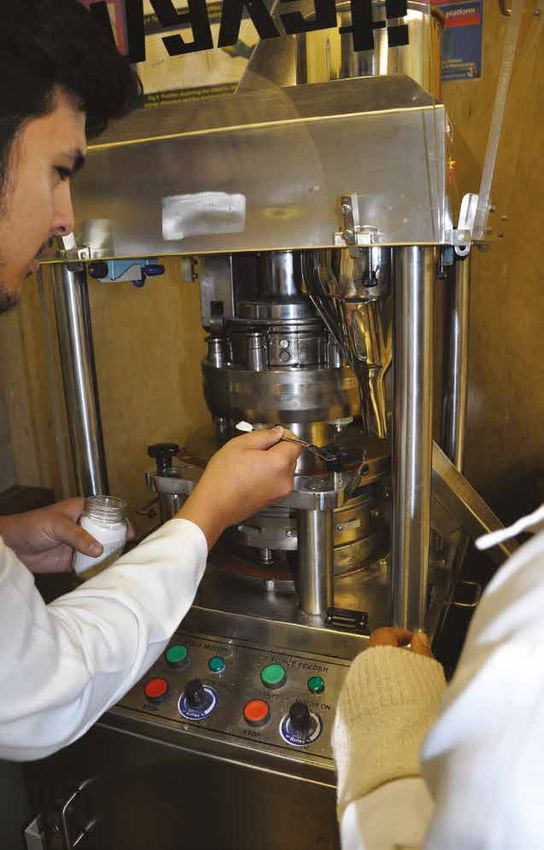
Flu vaccine protects pregnant
                                             women against pertussis
                                       Pertussis, also known as whooping cough, is a highly
                                      contagious respiratory disease caused by the bacterium
                                                         Bordetella pertussis.

                                      Wits researchers at the MRC Respiratory and Meningeal
                                      Pathogens Research Unit (RMPRU) published a paper in
                                       the New England Journal of Medicine, which shows that
                                      pregnant women vaccinated against influenza have 50%
                                         less pertussis infection than those not vaccinated.

                                          “So by preventing viral infections, we were also
                                      preventing bacterial super-infections that might be very
                                       severe,” says Nunes, adding that flu vaccinations for
                                      pregnant women could curb severe pertussis disease in
                                                         their babies later.

                                         Wits students contribute to the
                                        upgrade of the high-tech software
                                        and hardware at the CERN ATLAS
                                                    detector
                                      Wits is the single largest contributor from South Africa to
                                       CERN. This includes theoreticians and experimentalists
                                      together with a group of 35 students from a wide variety
                                        of historical and financial backgrounds that are highly
                                          involved in the search for new bosons. These Wits
                                        students spend a significant amount of time at CERN,
                                      where some of them play an active role in the upcoming
                                           upgrading of the ATLAS particle detectors, that is
                                      situated in the Large Hadron Collider (LHC). The LHC will
                                        be upgraded in 2023-2024 to increase its sensitivity in
                                         order to enhance the potential for new discoveries.

                                            Recreating our ancestral past
                                       Wits – in the champion’s league of archaeology – hosted
                                      the first African Conference on Experimental Archaeology.

                                         Bill Schindler gave a demonstration of experimental
                                        archaeology when he screened an episode of National
                                                 Geographic’s The Great Human Race.

                                        About 60 delegates from around the world watched as
                                      Schindler, dressed in skins, darted a boar in the Caucasus
                                      Mountains with an atlatl (and ancient weapon) and ate its
                                       fat to keep warm – what he described as ‘’an attempt to
                                       recreate our ancestral past’’, namely the Ice Age 40 000
                                                              years ago.

            Ira Block

10   POSTGRADUATE GUIDE | 2018/2019
Antiviral Gene Therapy at Wits
National Centres of Excellence at Wits
• Mathematical & Statistical Sciences
• Strong Materials
• Biomedical Tuberculosis Research*
• Palaeosciences
• Theoretical Physics
• Antiviral Gene Therapy
• Human Development
• Aerospace
• Integrated Mineral & Energy Resource Analysis*
• Advanced Drug Delivery Technology
* shared centres
Postdoctoral Fellowships
“The postdoctoral fellowship is an ideal opportunity for young researchers to
develop. Although the PhD is the first exposure to real research in the sense of
creating something new and original, it is undertaken under close supervision.
Postdoctoral fellows begin to develop their own independent research
trajectory without the aid of ‘training wheels’, so to speak. The Research
Office is committed to making the postdoctoral experience at Wits one that
enables the development of an independent research trajectory”.
Dr Robin Drennan,
Director Research Development
www.wits.ac.za/research
POSTGRADUATE GUIDE | 2018/2019 11Accreditation
The Wits Business School’s (WBS) programmes are fully accredited by the South African Council for Higher
Education and the School’s MBA degree enjoys prestigious international accreditation from the Association
of MBAs. The WBS is also a member of the Association of African Business Schools, the South African
Business Schools Association and the Partnership in International Management.
The Wits School of Public Health is internationally renowned for its academic and research activities.
International funders preferentially send students from Africa to the School, which enjoys local and
international partnerships with institutions like the London School of Hygiene and Tropical Medicine, Brown
and Colorado Universities and the Swiss Tropical Institute which foster state of the art public health teaching
and research programmes.
Wits’ Architecture degrees are accredited Wits’ academic programmes continue
by the South African Council of Architects to enjoy national and international
and the Commonwealth Association
accreditation. The curriculum is cutting-
of Architects. Planning degrees are
accredited by the South African Council edge and is continuously enhanced to
for Planning. ensure that our students and staff keep up
to date with the newest knowledge from
The Wits Actuarial Science Programme around the globe.
at the Honours level provides exemption
from 12 of the examinations required
for qualification as a professional actuary of the Actuarial Society of South Africa. This qualification has
international recognition with associations such as the Institute and Faculty of Actuaries in the UK, the
Institute of Actuaries of Australia and the Actuarial Association of Europe.
Wits’ BSc Honours degree in quantity surveying is accredited by the South African Council for the Quantity
Surveying Profession, the Royal Institution of Chartered Surveyors (UK) and the Chartered Institute of
Building (UK), while the BSc Honours in Construction Management is accredited by the Chartered Institute
of Building and the South Africa Council for the Project and the Construction Management Professions.
The BSc Construction Studies degree is accredited by both the South African Council for the Quantity
Surveying Profession and the South Africa Council for Project and Construction Management.
12 POSTGRADUATE GUIDE | 2018/2019Michael Tompsett ‘Johannesburg Skyline Blue’
Our City
Johannesburg, Joburg, Jozi, Egoli ... vibrant, passionate, diverse, a city of contrasts where skyscrapers live
side by side with 19th Century buildings, markets, bazaars and “spaza” shops.
In recent years, the city has reinvented itself. The inner city regeneration project has breathed new life into
run-down spaces and transformation can be seen in public art, tree-lined streets and open spaces, with
coffee shops, restaurants and markets. The Neighbourgoods Market in Braamfontein is a vibrant venue
for local produce and specialty goods. The Maboneng Precinct in downtown Johannesburg is a hub of
creative energy, housing art galleries, studio space, restaurants and retail space. The Bioscope screens
local, international and classic films not usually seen on the mainstream cinema circuit.
Other inner-city attractions are 1 Fox Precinct, a dynamic cultural hub that was once one of the first mining
camps that sprung up at the time of the discovery of gold in Johannesburg in the 1880s, and the Joziburg
Lane at One Eloff, an urban alley way lined by coffee shops, eateries, artist studios and retail spaces.
Close to the University’s main campus in Braamfontein is the site of an exciting new-age software skills
and innovation hub, the Tshimologong Precinct. Dream child of Wits Professor and head of the Joburg
Centre for Software Engineering, Barry Dwolatzky, the Precinct is named from the seTswana word for “new
beginnings”.
Museums include the Apartheid Museum and the Hector Pieterson Museum. Museum Afrika covers the
history of the city of Johannesburg and houses a large collection of rock art. The Johannesburg Art Gallery
features South African and European landscape and figurative paintings. Art galleries all over the city offer
visitors a choice of art – contemporary, ceramic, Islamic, watercolour, and the like, including the world-class
Wits Art Museum situated on the eastern corner of the Braamfontein campus.
The Walter Sisulu Botanical Gardens have been a popular outing venue and is situated on the western
outskirts of the city. The Cradle of Humankind, a UNESCO World Heritage Site, is 25 kilometres to the
northwest of the city. The Sterkfontein fossil site is famous for being the world’s richest hominid site
and produced the first adult Australopithecus africanus and the first near-complete skeleton of an early
Australopithecine.
POSTGRADUATE GUIDE | 2018/2019 13Postgraduate studies
Many more careers are becoming multidisciplinary and people need to acquire
new skills to match these ever challenging roles.
People are also changing careers more often, creating the need to enhance one’s skills to keep up with
these career moves. Rapid developments in knowledge across disciplines also requires one to constantly
update one’s understanding and skills base. Life long learning has become an imperative.
Wits offers you the opportunity to become globally competitive and locally relevant with a qualification from
one of South Africa’s leading universities. It is a university that is renowned for its high calibre graduates,
academic standing and research capabilities. Wits challenges you to create new knowledge boundaries and
to develop original thinking which is the cornerstone of intellectual growth.
Our research focus ensures that Wits students and staff operate at the leading edge of disciplines.
Just over one third of the student body at Wits comprises postgraduate students. Wits is thus dedicated to
providing quality training to postgraduate students as one means of ensuring a continuous supply of active
and motivated researchers, while at the same time enriching the University’s undergraduate teaching.
Honours programmes
Kick off your postgraduate career
with an honours degree from Wits.
A highly regarded honours degree
is your gateway into a world of
possibility.
Honours study gives you a far deeper
understanding of your field of study. In
addition to increasing your knowledge
base, an honours degree hones your critical
writing and research skills. The advanced
skills and knowledge you gain are respected
and sought after in the job market, both
locally and abroad.
An honours degree is also a pathway to
further study and higher degree research.
Through research you are able to make
a difference to the world and contribute
to the development of knowledge in your
particular field of study.
Wits offers a comprehensive choice of
honours programmes across five faculties,
intellectually stimulating research areas,
excellent supervision and research support,
as well as funding for meritorious students
and those in financial need. Honours
degrees run over a year of full-time study or
two years part-time.
14 POSTGRADUATE GUIDE | 2018/2019Postgraduate resources
As a research driven university committed to increasing the quality and quantity of its research output, Wits
recognises that support and development is a key component to success.
Postgraduate Affairs Office
The Postgraduate Affairs Office is a cross-faculty, cross-discipline graduate centre that provides a
home for the intellectual and social life of postgraduate researchers. It also acts as a facilitator to
increase awareness of postgraduate needs on campus. It therefore aims at improving the overall quality
of the postgraduate experience across all five faculties and offers focused strategic thinking about the
implementation of the 2022 vision to firmly establish Wits’ reputation as a research intensive University.
This is achieved through ensuring that postgraduates have access to resources, a rolling enrichment
programme including workshops in research methods, data analysis and research writing, and an
annual cross-faculty postgraduate symposium where students present their work in progress.
The presence of the Office has resulted in a greater awareness of responsibility to postgraduate students
on campus and to the extension of existing offerings to a wider range of students. The Office also works
with the Humanities Graduate Centre to offer workshops and support in a number of areas.
www.wits.ac.za/students/academic-matters/postgraduate-affairs-office
Research Development
Research development opportunities cover:
• Mentoring/coaching – one-on-one discussions with experienced researchers;
• Skills enhancement – training in the “art and craft” of doing research; (internal) hindrances to research;
• Recognition – recognising achievements;
• Exploiting networks – linking researchers with appropriate funders, for example:
The scope of the impact of the Research Development Directorate is conveniently grouped into three
areas: Initiatives focused on the new generation of researchers, emerging researchers and established
researchers.
www.wits.ac.za/research/about-our-research/research-development
University Library
There are two main libraries (Wartenweiler and William Cullen),
Wartenweiler library
and 14 branch libraries which make up the University of the
Witwatersrand Library. Students have access to 1,000,000 book
volumes, 400,000 journal titles and 46,000 updated electronic
resources.
The Wits Library plays a major role in southern Africa, both
in the provision of information for study and research, and in
the preservation of rare materials which record the heritage of
South Africa. The Library offers a “walk” through the history of
information, from the beautiful collections of incunabula, early
printed books and rare manuscripts, to the resources of the
internet and the global information village.
POSTGRADUATE GUIDE | 2018/2019 15The Africana Collection contains exquisitely illustrated volumes on the flora, fauna and exploration of the
southern half of the continent of Africa. Material housed in the Historical and Literary Papers department
deals with the early days of trade unions, political trials, organisations and people banned during the
apartheid years, and contains documents and information entrusted to Wits which are unavailable
elsewhere. For researchers in the social sciences it is a wealth of information.
The Wits Library keeps abreast of the technology, is linked by a network to other libraries throughout
the country, and via the Internet to information resources worldwide.
www.wits.ac.za/library
Student Services
All registered students at Wits have access to resources such as the Campus Health and Wellness
Centre, the Disability Rights Unit and the Counselling and Careers Development Unit, as well as the use
of sports facilities through the Wits sports associations.
www.wits.ac.za/students/health-and-wellbeing
Postgraduate Association
The Wits Postgraduate Association (PGA) is a student representative body for postgraduate students
at the University. The mission of the PGA is to promote and enhance the interests of postgraduate
students by interacting with the postgraduate student body and University management; upholding
academic excellence and integrity, facilitating the allocation of relevant resources for postgraduate
research; and enhancing access of resources to postgraduate students.
www.wits.ac.za/pga
16 POSTGRADUATE GUIDE | 2018/2019Faculty of Commerce, Law
and Management
Schools and Research Entities
Situated in the heart of the School of Accountancy (SOA)
economic hub of the African School of Economic and Business Sciences
continent and connected to the (SEBS)
African Microeconomic Research Umbrella
most powerful and influential (AMERU)
industrial, commercial and Institutions and Political Economy Group (IPEG)
Strategic Foresight Research Group (SFRG)
social agents in the country, the
Faculty of Commerce, Law and School of Law
Centre for Applied Legal Studies (CALS)
Management pursues a vibrant Mandela Institute
research agenda that changes
Wits School of Governance (WSG)
the way South Africa works. Centre for Defence and Security Management
Centre for Learning on Evaluation and Results
Our research changes the way we do business and Graduate School of Business Administration –
Wits Business School (WBS)
how we practice law and economics. It ultimately
Centre for Entrepreneurship
influences the public policy that builds the public
sector and it grapples with the economic and social
challenges facing our country and the wider global South. It also enables us to transfer new knowledge to
our curricula and to ensure that our students are at the leading edge of their professions.
The African Microeconomic Research Umbrella brings together South African and African researchers
to conduct rigorous quantitative research on African microeconomic issues, specifically on firms and labour
markets.
The Institutions and Political Economy Group (IPEG) promotes the study of the relationship among
institutions, organisations and markets. It applies the insights generated by institutional, organisational,
political and public economics to issues pertaining to economic performance through time.
The Strategic Foresight Research Group combines the expertise of Accountants and Management
scientists in projects that have a strategic focus including risk and crisis management, education, tax and
accounting systems, social responsibility and business sustainability.
The Centre for Applied Legal Studies conducts research linked to broader political and legal struggles
for social justice including socioeconomic rights focusing specifically on housing, as well as basic services
such as water, sanitation and electricity, the right to education, gender based research and labour law.
The Faculty continues to attract leading academics, researchers and top students. We are also gaining
from the experience of leaders in the private and public sectors, who add value to the teaching, learning
and research experience in the Faculty.
We offer a wide range of postgraduate degrees and diplomas that ensure our graduates are properly
positioned in the top echelons on the African continent and beyond. These postgraduate programmes are
offered full-time or part-time depending on the particular degree, and by coursework or through research
based programmes.
POSTGRADUATE GUIDE | 2018/2019 17Programmes on offer
Doctor of Philosophy – PhD 2 years full-time or 4
years part-time
1 year full-time or
Master of Business Administration – MBA
18 months part-time
Master of Commerce – MCom – by research or in the following fields:
1 year full-time or
Accounting, Taxation, Finance, Insurance and Risk Management, Economics,
2 years part-time
Development Theory and Policy, Information Systems
1 year full-time or
Master of Economic Science – MEconSc
2 years part-time
Master of Laws – LLM – by research or in the following fields: Commercial and
Business Law, Corporate Law, Environmental Law, Human Rights
1 year full-time or
Advocacy and Litigation, Information and Communication Law,
2 years part-time
International Law, International Law and Economics, Labour Law, Pensions
Law, Tax Law*, General
Master of Management – MM by research or in the following fields:
1 year full-time or
Public and Development Management, Public Policy, Security, Strategic Mar-
2 years part-time
keting, Business and Executive Coaching, Innovation Studies,
Governance and Public Leadership, Public and Development Sector
Monitoring and Evaluation
Master of Management in Entrepreneurship and New Venture
14 months full-time
Creation – MM (ENVC)
Master of Management in Finance and Investment – MM (FI) 1 year full-time
Bachelor of Accounting Science with Honours – BAccScHons
Available to existing and eligible Wits students who graduate at Wits and then
1 year full-time
enrol for BAccScHons directly thereafter. External candidates usually only
qualify for the PG Diploma in Accountancy.
Bachelor of Commerce with Honours – BComHons – in the fields of:
1 year full-time or
Economics, Information Systems, Business Sciences (Finance/Human Re-
2 years part-time
sources/Insurance/Management/Marketing)
1 year full-time or
Bachelor of Economic Science with Honours – BEconScHons
2 years part-time
Postgraduate Diploma in Accountancy (SAICA Chartered Accountant route) 1 year full-time
Postgraduate Diploma in Taxation – PGDipTax 1 year full-time
Postgraduate Diploma in Management – PDM – in the following fields: Busi-
ness Administration (full-time only), Public and Development Management,
1 year full-time or
Governance and Public Leadership, Public and Development Sector Monitor-
2 years part-time
ing and Evaluation, Security, Social Security Policy Management and Adminis-
tration
Postgraduate Diploma in Law – PGDipLaw – in the following fields:
Commercial and Business Law, Corporate Law, Environmental Law, General,
1 year full-time or
Human Rights Advocacy and Litigation, Information and Communications Law,
2 years part-time
International Law, International Economic Law, Labour Law, Pension Fund
Law, Tax Law*
1 year full-time or
Postgraduate Diploma in Business Administration – PDBA
2 years part-time
Postgraduate Diploma in Specialised Accountancy (Association of Chartered
1 year full-time
Certified Accountants (ACCA) Route)
T +27 (0)11 717-8390/3582 E pgqueries.clm@wits.ac.za W www.wits.ac.za/clm
* Programmes not offered in 2019
18 POSTGRADUATE GUIDE | 2018/2019Faculty of Engineering and
the Built Environment
The Faculty of Engineering and the Built Environment maintains strong links
with industry and facilitates student bursaries, scholarships and internships.
It has the highest number of endowed professorships or chairs in the University.
Large volumes of contract research are conducted for local and international companies. The Faculty works
intensely with the private and public sectors to tackle national problems like energy generation, deep-level
mining, mining safety, water purification systems, transport and urban development, amongst others.
Engineering
Engineering has high calibre academic and support staff, purpose built laboratories, and computing and
library facilities which enable Wits to provide the opportunity for advanced skilling in specialist areas and
training in cutting edge research.
Engineering offers a Graduate Diploma, Masters by coursework, Masters by coursework and research
report, Masters by research and Doctor of Philosophy. There are also special options which permit science
graduates to undertake postgraduate study in engineering. The variety and quality of the postgraduate
qualifications in engineering ensure that capable and committed students, with good first degrees, can
equip themselves for leadership roles in technology and related fields.
Built Environment
The first two decades of the 21st Century have seen dramatic changes in the global economy, politics and
social environment which have immense influences on cities and planning within the developing world.
Climate change and sustainability are becoming major concerns in designing cities and buildings. The
delivery of affordable housing and the development of more inclusive cities are also critical challenges.
Creative responses to these and other challenges form the basis of the teaching and research programmes in
both the School of Architecture and Planning and the School of Construction Economics and Management.
Live city studios, examining and developing proposals to shape change in key areas such as inner cities form
the basis for some postgraduate student projects in the School of Architecture and Planning. Other projects
include studies of declining towns, informal settlements, street traders, provincial and metropolitan policies,
inter alia. These issues are relevant to the South African context but draw on internationally accepted
disciplinary principles.
Recently completed doctoral theses range from studies on township economies to architectural education
to studies on film and the city.
The Faculty is home to eight externally funded centres: the National Aerospace Centre,
the Centre for Urbanised and Built Environment Studies, the DST-NRF Centre of
Excellence in Strong Materials, the Centre for Sustainability in Mining and Industry,
the Joburg Centre for Software Engineering and the Transnet Centre for Systems
Engineering. The Faculty also hosts the Wits City Institute.
T +27 (0)11 717-7002/3/4/6/7/8 E fbe.pg@wits.ac.za W www.wits.ac.za/ebe
POSTGRADUATE GUIDE | 2018/2019 19Programmes on offer
By submission of published work:
Doctor of Architecture – DArch
Doctor of Engineering – DEng
Doctor of Town and Regional Planning – D(TRP)
Doctor of Science in Architecture – DSc(Arch)
Doctor of Science in Building – DSc(Building)
Doctor of Science in Engineering – DSc(Eng)
Doctor of Science in Quantity Surveying – DSc(QS)
Doctor of Science in Town and Regional Planning – DSc(TRP)
By research: MSc in Engineering in the fields of:
Master of Science in Aeronautical Engineering • Chemical Engineering
Master of Science in Engineering Management • Civil Engineering
Master of Science in Mechanical Engineering • Electrical Engineering
Master of Science in Industrial Engineering • Mechanical, Industrial and Aeronautical Engineering
Master of Science in Systems Engineering • Metallurgy and Materials Engineering
• Mining Engineering
Doctor of Philosophy – PhD
2 years full-time or 4 years part-time
Engineering or Built Environment
Master of Architecture – MArch 1 year full-time or 2 years part-time
Master of Science in Building – MSc (Building) 1 year full-time or 2 years part-time
Master of Science in Town and Regional Planning –
1 year full-time or 2 years part-time
MSc (TRP)
Master of Science in Quantity Surveying – MSc (QS) 1 year full-time
By coursework and research report: MSc in Engineering in the fields of:
• Master of Science in Aeronautical Engineering • Chemical Engineering
• Master of Science in Engineering Management • Civil Engineering
• Master of Science in Mechanical Engineering • Electrical Engineering
• Master of Science in Industrial Engineering • Mechanical, Industrial and Aeronautical
Engineering
• Master of Science in Systems Engineering
• Metallurgy and Materials Engineering
• Mining Engineering
20 POSTGRADUATE GUIDE | 2018/2019Master of Architecture (Professional) – MArch(Prof)
A postgraduate degree for students who hold a Bachelor of
Architectural Studies with Honours. The MArch Professional 1 year full-time or 2 years part-time
is a professional degree done through the medium of
Architecture.
Master of Architecture in the field of Sustainable and Energy
1 year full-time or 2 years part-time
Efficient Cities
Master of the Built Environment in the field of Housing 1 year full-time or 2 years part-time
By coursework:
Master of Engineering – (Professional)
In the fields of:
• Aeronautical Engineering
• Metallurgy and Materials Engineering
• Civil and Environmental Engineering
• Electrical Engineering 1 year full-time or 2 years part-time
• Industrial Engineering
• Mechanical Engineering
• Mechanical, Industrial and Aeronautical Engineering
Master of Urban Studies 1 year full-time or 2 years part-time
Master of Urban Design 2 years part-time only
Master of Science in Engineering – MSc(Eng) 1 year full-time or 2 years part-time
Master of Science in Building in the field of Project
1 year full-time or 2 years part-time
Management or Property Development Planning Management
Master of Science in Development Planning 1 year full-time or 2 years part-time
By coursework:
Postgraduate Diploma in Engineering in the fields of:
• Chemical Engineering
• Electrical Engineering
• Aeronautical Engineering
1 year full-time or 2 years part-time
• Industrial Engineering
• Mechanical Engineering
• Metallurgy and Materials Engineering
POSTGRADUATE GUIDE | 2018/2019 21Postgraduate Diploma in Property Development and
Management – PGDip PDM in the fields of
1 year full-time
• Facilities Management
• Property Development and Management
PG Diploma in Planning 1 year full-time
Honours degrees:
Bachelor of Architectural Studies with Honours – BAS(Hons) 1 year full-time
Bachelor of Science with Honours in Construction Management
1 year full-time
– BSc(Hons)(CM)
Bachelor of Science with Honours in Quantity Surveying –
1 year full-time
BSc(Hons)(QS)
Bachelor of Science with Honours in Urban and Regional
1 year full-time
Planning – BSc(Hons)(URP)
Aeronautical Engineering Civil Engineering
Metallurgical Engineering Mechanical Engineering
22 POSTGRADUATE GUIDE | 2018/2019Faculty of Health Sciences
The Faculty of Health Sciences is the largest of its kind
in Africa, has an outstanding international reputation
and has produced graduates who have gone on to
become world leaders in their chosen fields.
The Faculty of Health Sciences offers a wide range other diseases such as diabetes, hypertension and
of postgraduate degrees and diplomas through its heart disease, which are increasing in prevalence
seven schools which are:
in South Africa, also holds prominence. Being a
• Anatomical Sciences
• Clinical Medicine diverse Faculty, studies are also being undertaken
• Oral Health Sciences in the fields of oral health sciences, therapeutic
• Pathology sciences and drug delivery, as well as in the basic
• Physiology sciences.
• Public Health
• Therapeutic Sciences The Faculty is home to two Department of Science
and Technology/National Research Foundation
The Faculty offers excellent postgraduate Centres of Excellence, two African Network
supervisors who participate in cutting edge for Drug and Diagnostics Innovation Centres
research and are thus able to guide and support (ANDI) and to seven Department of Science and
students during their engagement with research. Technology/National Research Foundation South
Wits is recognised both locally and internationally African Research Chairs. There are currently 21
for the quality of its research and for the exemplary research entities based in the Faculty and two
training of its postgraduate students. Our academic Research Thrusts (Diseases of Lifestyle and
staff are involved in ground breaking research in Molecular Biosciences). The quality of the Faculty’s
clinical, applied and basic sciences, thus providing research output ranks amongst the best in the
fertile and varied fields in which you may choose to country and is respected internationally. All these
work. The research environment in the Faculty is intensive research niches provide a nurturing
stimulating and thought-provoking. and research-rich environment for postgraduate
students.
Postgraduate students in the Faculty are offered
a selection of courses on research methodology, Our academics continue to publish in highly cited
scientific writing skills and biostatistics. Monthly local and international journals and are continuously
lunch time talks by researchers, for postgraduate lauded for the influential work in their respective
students, are held in the popular Postgraduate areas. More importantly, the impact of our research
Hub. An annual postgraduate social event and a can be traced to influence policy in South Africa and
biennial Research Day and Postgraduate Expo beyond, to develop new treatments and vaccines,
provide students with the opportunity to become to inform our clinical work and to enable us to
part of a thriving research community. produce well-grounded healthcare professionals.
Much of the research effort is directed towards
serious health issues which are affecting Our Faculty is one of the best on the
our communities - issues such as HIV/Aids, continent. Using a very extensive clinical
tuberculosis and malaria. In addition, research into training platform, which includes the Wits
Donald Gordon Medical Centre, we train
more specialists and sub-specialists than
any other university in southern Africa.
POSTGRADUATE GUIDE | 2018/2019 23Programmes on offer
*Not offered in 2019
Research degrees
In any field of research approved by the Faculty Graduate Studies Committee and the proposed
supervisor(s) and Heads of School(s)
Doctor of Science (Medicine or Dentistry): by submission of published work
Doctor of Philosophy: by submission of published work or by submission of a 2 year full-time or 4
thesis years part-time
Doctor of Medicine (MD): by submission of published work
Master of Science in Dentistry, Medicine, Nursing, Occupational Therapy and
2 years part-time
Physiotherapy: by submission of a dissertation
Degrees by coursework and research report:
Master of Science in Dentistry MSc(Dent) in clinical disciplines: Community
Dentistry, Digital Operative Dentistry, Maxillo Facial and Oral Surgery, Oral
1 year full-time or 2
Pathology, Orthodontics, Prosthodontics, Aesthetic Dentistry, Cranio-Mandibular
years part-time
Dysfunction, Implantology, Endodontics, Paedodontics, Oral Medicine, Oral
Pathology, Maxillo-Facial Radiology
Master of Science in Medicine MSc(Med) in the fields: Bioethics and Health Law,
Biokinetics, *Biology and Control of African Disease Vectors (July intake only),
1 year full-time or 2
Child Health, Emergency Medicine, *Genetic Counselling, Nuclear Medicine,
years part-time
*Pharmaceutical Affairs (part-time only), Pharmacotherapy (part-time only),
Sports Medicine
Master of Science in Epidemiology MSc(Epi) in the fields: Biostatistics and 18 months full-time
Epidemiology, Population-Based Field Epidemiology, Infectious Diseases or 3 years part-
Epidemiology, Research Database Management time
1 year full-time or 2
Master of Science in Occupational Therapy MSc(OT)
years part-time
1 year full-time or 2
Master of Science in Physiotherapy MSc(Physio)
years part-time
1 year full-time or 2
Master of Science in Nursing MSc(Nursing)
years part-time
1 year full-time or 2
Master of Pharmacy (MPharm)
years part-time
Master of Health Sciences Education 2 years part-time
*Master of Public Health (MPH)(not offered in 2019) in the fields: Communicable
Diseases, Community Rehabilitation, Demography and Population Studies,
Disaster Management, Environmental and Occupational Health, Gender
1 year full-time or 2
and Health, Health Management, Health Measurement, Health Promotion,
years part-time
Health Systems and Policy, Hospital Management, Maternal and Child Health,
Occupational Hygiene, Primary Health Care Management, Rural Health, Sexual
and Reproductive Rights and Health, Social Behaviour Change Communication
Master of Dentistry (MDent) in the specialties** Community Dentistry, Maxillo- 3 / 4 years full-time
Facial and Oral Surgery, Oral Pathology, Orthodontics, Periodontics and Oral depending on
Medicine, Prosthodontics, Maxillo-Facial and Oral Radiology specialty
24 POSTGRADUATE GUIDE | 2018/2019Master of Medicine (MMed)** in the specialties: Anaesthesia,
Cardio-Thoracic Surgery, Community Health in Public Health
Medicine, Community Health Occupational Medicine, Dermatology,
Diagnostic Radiology, Family Medicine, Internal Medicine,
3 / 4 / 5 years full-time
Medical Genetics, Neurology, Neurosurgery, Nuclear Medicine,
depending on specialty
Obstetrics and Gynaecology, Ophthalmology, Orthopaedic Surgery,
Otorhinolaryngology, Paediatrics, Plastic and Reconstructive Surgery,
Psychiatry, Radiation Oncology, Surgery, Urology, Virology, Paediatric
Surgery
Honours
Bachelor of Health Sciences with Honours in the field of Biokinetics,
Chemical Pathology, Human Biology, Experimental Physiology,
Pharmacology (Biosciences track), Pharmacology (Health Sciences 1 year full-time or 2 years
track), Human Genetics, Forensic Sciences, Medical Cell Biology, part-time
Molecular Medicine, Anatomical Pathology, Bioethics and Health Law,
Clinical Microbiology and Infectious Diseases
Diplomas
Postgraduate Diploma in Child Health (PGDCH) (not offered in 2019) 1 year full-time or 2 years
in the fields: Community Paediatrics*, Neurodevelopment part-time
*Postgraduate Diploma in Occupational Health (DOH)
2 years part-time
(not offered in 2019)
*Postgraduate Diploma in Public Health (DPH) (not offered in 2019)
in the fields: Communicable Diseases, Community Rehabilitation,
Demography and Population Studies, Disaster Management,
Environmental and Occupational Health, Gender and Health, Health
1 year full-time or 2 years
Management, Health Measurement, Health Promotion, Health
part-time
Systems and Policy, Hospital Management, Maternal and Child
Health, Occupational Hygiene, Primary Health Care Management,
Rural Health, Sexual and Reproductive Rights and Health, Social and
Behaviour Change Communication
Postgraduate Diploma in Tropical Medicine and Hygiene (DTM&H) 1 year part-time
Postgraduate Diploma in Occupational Therapy (PGDipOT) 2 years part-time
Postgraduate Diploma in Physiotherapy (PGDipPhysio) 1 year full-time
1 year full-time or 2 years
Postgraduate Diploma in Health Sciences Education
part-time
** The Master of Medicine in Clinical Disciplines and the Master of Dentistry in Clinical Disciplines
are limited to applicants who have registered with The Health Professions Council of South Africa
and hold a registrars post in a clinical discipline. Applications for these two programmes are
submitted via the Faculty of Health Sciences (you may not apply online).
Students applying for any of the postgraduate programmes offered by the Faculty of Health Sciences
should approach the Faculty Office directly for all matters pertaining to their enquiry.
The Health Sciences Postgraduate Office
T +27 (0)11 717-2075/6 or 011 717-2040
E Anna.muronga@wits.ac.za | E modie.maumela@wits.ac.za | E owen.naicker@wits.ac.za
W www.wits.ac.za/health
POSTGRADUATE GUIDE | 2018/2019 2526 POSTGRADUATE GUIDE | 2018/2019
Faculty of Humanities
The Faculty of Humanities is one of the leading centres for
postgraduate studies and research in South Africa and
Africa. Postgraduate students in the Faculty are taught
and supervised by leading academics many of whom have
attained an international reputation.

The Faculty seeks to creatively and critically engage     sciences, natural science, law and management.
with its location in Johannesburg, arguably South         Students are exposed to rigorous theoretical and
Africa’s most globally networked city, which has          methodological training which imparts strong
dynamic political, social, economic and cultural          research and analytical skills and enables them to
links to Africa and the world.                            adapt to the constantly changing world of work in
                                                          the 21st Century.
We offer a wide range of programmes, some of
which are vocationally oriented and lead to careers       The Faculty increasingly attracts postgraduate
in specific professions, while others are theory and      students from within South Africa and different
research oriented and impart critical analytical skills   parts of Africa and therefore comprises a diverse
that open up to a range of careers in academia and        community that contributes to providing a very
research institutes, the public and private sectors       stimulating    environment in which to study.
and non-governmental organisations alike.                 The vision of the Faculty is to ensure that it is
                                                          distinguished for its critical analytic approaches
Academics in the Faculty have a wide range of             to knowledge production that advance democratic
links, which include collaborative research with          life, and that it remains one of the most highly
other leading scholars in universities in Africa, Asia,   recognised entities in the country, Africa and the
Europe, North America and the Middle East.                world.

Our programmes seek to be at the cutting edge
of postgraduate studies by taking innovative
multi-disciplinary, cross-disciplinary and trans-
disciplinary approaches, linking the arts, social

                                                                               POSTGRADUATE GUIDE | 2018/2019   27
Programmes on offer
Doctor of Literature – DLitt (by published work) 2 years full-time or 4 years part-time
Doctor of Philosophy – PhD 2 years full-time or 4 years part-time
Doctor of Philosophy – Education – PhD 2 years full-time or 4 years part-time
Master of Arts – MA 1 year full-time or 2 years part-time
African Languages and Linguistics, e-Science, African Literature, Applied Drama: Theatre in
Education Communities and Social Context, Applied Language and Literacy Education, Archaeology,
Arts and Culture Management, Anthropology, Creative Writing, Demography and Population Studies,
Development Studies, Digital Arts, Drama and Film, Drama Therapy, English, English Education,
Transnational Literary and Cultural Studies, Geography, German, Heritage Studies, History, History of
Art, International Relations, Journalism and Media Studies, Labour Policy and Globalisation, Migration
Studies, Linguistics, Philosophy, Political Studies, Psychology, Organisational Psychology, Publishing
Studies, Sociology, Labour and Economic Sociology, Development Sociology, Interpreting and
Translation, Film and Television, French, General Sociology, Human Geography
Master of Arts (Audiology) – MA (Audiology)
1 year full-time or 2 years part-time
(Research; coursework)
Master of Arts (Fine Arts) – MA (Fine Arts)
1 year full-time or 2 years part-time
(Research; coursework)
Master of Arts (Heritage) – MA (Heritage)
1 year full-time or 2 years part-time
(Research; coursework)
Master of Arts in ICT Policy & Regulation 1 year full-time or 2 years part-time
Master of Arts (in Occupational Social Work)
1 year full-time or 2 years part-time
– MA (Social Work)
Master of Arts (Speech Pathology) – MA (Speech Path) 1 year full-time or 2 years part-time
Master of Arts in Translation by coursework
1 year full-time or 2 years part-time
and research report – MA (Translation)
Master of Arts (Organisational Psychology) 1 year full-time, 1 year internship
2 years formal time and 1 year
Master of Arts in Clinical Psychology
experiential
1 year formal time and 1 year
Master of Arts in Community-Based Counselling Psychology
experiential
Master of Music (MMus) 1 year full-time or 2 years part-time
Master of Education (by dissertation) 1 year full-time or 2 years part-time
Master of Education (MEd) 1 year full-time or 2 years part-time
28 POSTGRADUATE GUIDE | 2018/2019Master of Education in Educational Psychology MEd
1 year full-time
(Educ Psych)
Bachelor of Education with Honours – BEd(Hons) 1 year full-time or 2 years part-time
Bachelor of Arts with Honours in South African Sign Language 1 year full-time or 2 years part-time
Bachelor of Arts with Honours – BA(Hons) in the fields of: 1 year full-time or 2 years part-time
African Languages and Linguistics, Fine Art, Music, African Literature, Applied Drama: Theatre
in Education Communities and Social Context, Applied Language and Literacy Education, Archaeology,
Arts and Culture Management, Anthropology, Creative Writing, Demography and Population Studies,
Development Studies, Digital Arts, Drama and Film, Drama Therapy, English, English Education,
Transnational Literary and Culture Studies, Geography, German, Heritage Studies, History, History of Art,
International Relations, Journalism and Media Studies, Labour Policy and Globalisation, Media Studies,
Migration Studies, Linguistics, Philosophy, Political Studies, Psychology, Organisational Psychology,
Publishing Studies, Sociology, Labour and Economic Sociology, Development Sociology, Translation,
Interpreting and Translation, Film and Television, French, General Sociology, Human Geography
Bachelor of Arts with Honours – BA(Hons) joint honours programmes in:
Culture Management and History of Art, English and History of Art, English and International Relations,
English and Linguistics, English and Media Studies, English and Philosophy, French and International
Relations, French and Linguistics, French and Translation, Heritage and Culture Management,
History and Political Studies, International Relations and Media Studies, International Relations and
Politics, Philosophy and Political Studies, Political Studies and Sociology, Philosophy and History,
English Literature and Translation, German and Linguistics, African Literature and Publishing Studies,
Development Studies and International Relations, Journalism and Media Studies and English, Political
Studies and Development Studies
Postgraduate Diploma in Arts 1 year full-time or 2 years part-time
Postgraduate Diploma in Translation and Interpreting 1 year full-time or 2 years part-time
Postgraduate Certificate in Education (PGCE) 1 year full-time or 2 years part-time
Postgraduate Diploma in Higher Education 1 year full-time or 2 years part-time
E Madile.moloi@wits.ac.za (SLLM) (SHCD)
E veli.mongwe@wits.ac.za (SoSS) (WSOA)
E Thabo.makuru@wits.ac.za (WSOE)
W www.wits.ac.za/humanities
POSTGRADUATE GUIDE | 2018/2019 29You can also read


