ARTBEAT A Call to Action. Toi Ōtautahi/Christchurch Arts Policy 2019-2024 20 - May 2020
←
→
Page content transcription
If your browser does not render page correctly, please read the page content below
Issue 17                                    Exhibitions                                  Ōtautahi                                      www.artbeat.org.nz
May 2020                                    Galleries                                    Christchurch
                                            Studios                                      Canterbury
                                            Street Art
                                            Art in Public Places

ARTBEAT
  A Call to Action. Toi Ōtautahi/Christchurch
  Arts Policy 2019–2024   20

↑
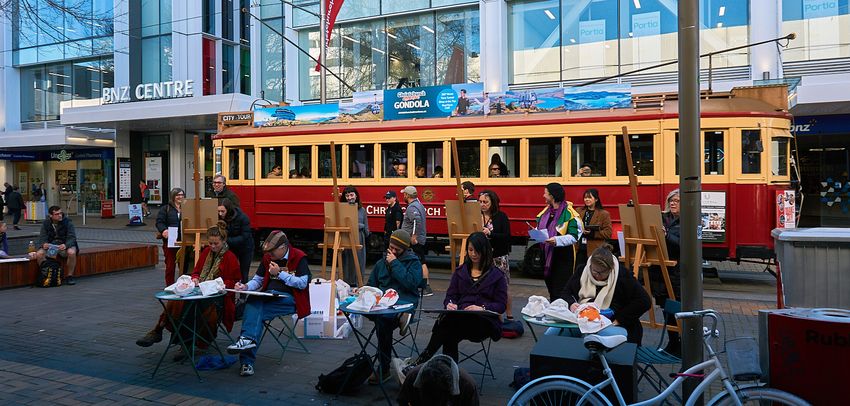
Glitter Pursuits hosted Winter Wander in August 2019 a programme of arts events in Cashel Street’s retail spaces, including lunchtime life-drawing outside
Ballantynes. Photograph: Jennifer Shields

  In this issue: Press Play and Start Washing                                                                                                     03

  Art in the Age of Closure The New Brighton
                            07

     Outdoor Art Festival News, Events &
                            09

    Workshops At the Galleries Discover
                 12               13       15

  Reviews Maurice Askew Sarah Anderson
           23                 28              31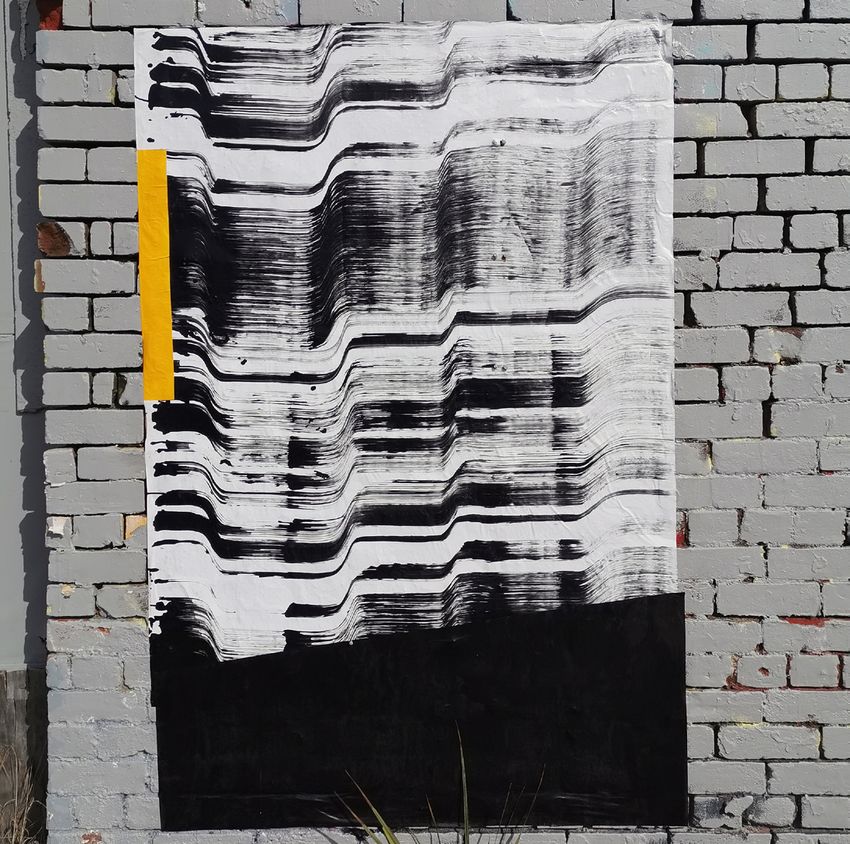
ARTBEAT
                                        03   Press Play and Start Washing
                                        07   Art in the Age of Closure
                                        09   The New Brighton Outdoor Art Festival
                                        12   NEWS, EVENTS & WORKSHOPS
                                        13   AT THE GALLERIES

                                        15   DISCOVER
                                        17   Kim Lowe: If Tao is a River
                                        18   Melissa Macleod: The Trappings of Ghosts Ensnaring the sea
                                             air at Wakanui
                                        20   A Call to Action. Toi Ōtautahi/Christchurch Arts Policy
                                             2019–2024

                                             REVIEWS
                                        23   NZ Bear Hunt
                                        25   Uncomfortable Silence
                                        27   Sarah Laing The Covid-19 Diaries

                                        28   Maurice Askew (1921-2020). Designer, Filmmaker and
                                             Teacher
                                        31   Sarah Anderson: Artist and Teacher in Lockdown
                                        32   What I’m Wearing in Lockdown
                                        34   Christchurch Art Seen

Artbeat is a monthly arts
newspaper with news, reviews,
commentary and listings of
exhibitions and events in Ōtautahi
Christchurch and Canterbury. We
cover all aspects of the visual arts,
inform existing audiences for the
arts and develop new ones

For news/advertising email:
artbeatwebsite@gmail.com

Artbeat: ISSN 2624-2664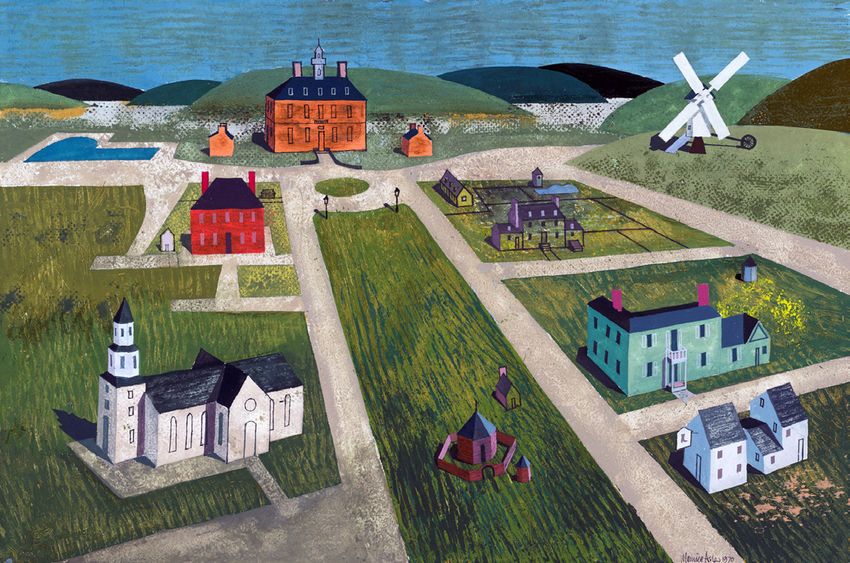
Artbeat      Issue 17, May 2020

Press Play and Start Washing

We definitely live in strange and inter-
esting times. Who could have imagined
that washing your hands, the collection
of the Christchurch Art Gallery Te Puna
o Waiwhetū and New Zealand poetry
would share the same stage? And that
the gallery’s librarian and archivist, Tim
Jones would be responsible for making
the connections? Hand-Washing Verse
is an online exhibition that draws from
works in the public gallery’s collection by
Aotearoa New Zealand artists and links
them up with poems of approximately
20 seconds elevating the task of wash-
ing your hands into an enlightening and       ↑
                                              Juliet Peter, North Canterbury Pastoral Scene. Collection of the Christchurch Art
entertaining experience.                      Gallery Te Puna o Waiwhetū; Judith Willet Ensor bequest, 2006

It is a partnership between art and hygiene about “squashing” Covid-19 that until now
could never have been imagined, but Jones had been working on this project prior to
the gallery’s lockdown. Now he is encouraging staff, family, friends and all who are inter-
ested to select an artwork from the gallery’s collection and a poem that they associate
with their chosen work of art. Jones says that in the period prior to shutdown when
the gallery and schools were open, Covid-19 had already begun to shape people’s
behaviour, cultivating the necessity to wash your hands. ‘There was a lot of stuff on
the internet, people singing silly songs, clapping and singing Happy birthday twice.
Others were putting new words to songs in various attempts to get people to wash
their hands. I thought we should do something similar.’

‘It is light-hearted thing. The last couple of weeks we were in the building I photo-
copied a poem that I liked the look of and blue-tacked it to the mirrors above the
wash-basins in the gallery’s washrooms. Some people said “that’s really nice” or
“that’s stupid” but it was just a talking point. When the building closed I thought we
can carry on doing this online. It just bubbled up from there.’

Poems on the gallery’s website include its director, Blair Jackson reading Dunedin
by Edith Howes for Robert Nettleton Field’s Sand Dunes, Dunedin a seascape of the
city’s shoreline and a place well-known to him.

                                                                                                                             3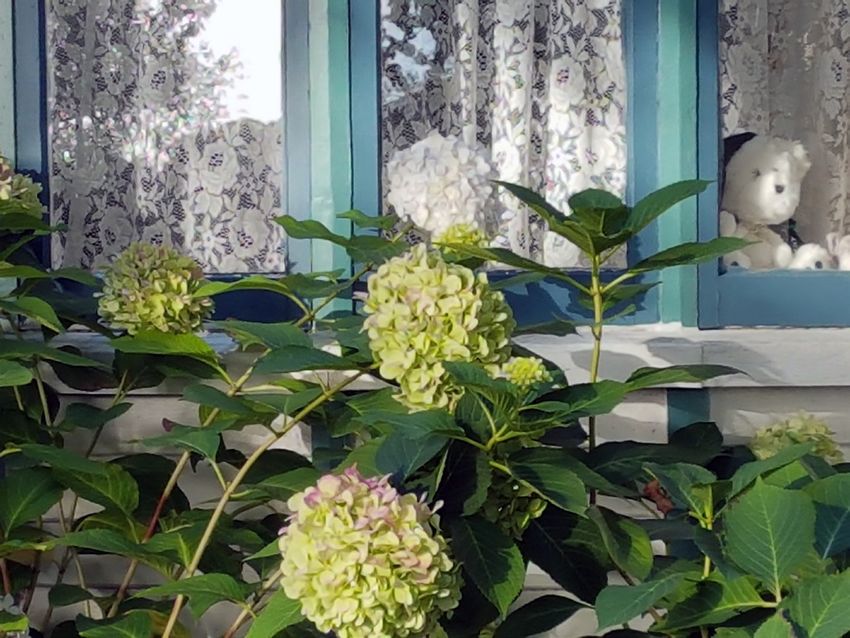
↑
Ani O’Neill, 5 Little Piggies, 2005. Collection of the Christchurch Art Gallery Te Puna o Waiwhetū

As interest from staff grew to create their own post for the online exhibition, Jones
decided to check the question of copyright. He contacted Rupert Glover, son of poet
Denis Glover (1912 – 1980) as many of the poems being selected were by him. Jones
was pleased to hear that Rupert ‘was tickled pink about the project.’

Jones says that he is also keen to mix it up with responses from all ages, races and
gender. ‘I am trying to keep it a bit light. We don’t want poetry about a tortured lover
or death or loss. We are trying to keep it mainly uplifting. And yes, sometimes it is
profound and sometimes it is not.’

Jones has also thought of poets who have written about works in the gallery’s collec-
tion like Jenny Bornholdt, Jane Simpson and John Summers. ‘But I have to emphasise
there was no planning or master plan. It has taken on a life of its own.’

Violet Richards, the young daughter of the gallery’s Registrar Gina Irish recites This
Little Piggy Went to Market, an accompaniment to Ani O’Neill’s 5 Little Piggies, while
writer and literary critic, Dr. Peter Simpson reads James K Baxter’s poem, There Is
Only One Direction, the poet’s response to Colin McCahon’s painting of the same
name.

The gallery’s lead curator, Felicity Milburn and curator Peter Vangioni selected poets
whose work had been previously chosen by them as titles for exhibitions they had
curated: Milburn’s exhibition of Juliet Peter’s paintings and prints, and Vangioni’s In
the Vast Emptiness, a survey of Canterbury regionalist painting. The Peter’s exhibi-
tion, Where the Line Leads, 2019, came from a line in the poem, What Happens by
Bornholdt who had written a series of poems responding to Peter’s Canterbury land-
scapes from the 1940s. In the online exhibition Bornholdt reads What Happens. For
Vangioni’s 2015 survey of regionalism, its title is taken from Basil Dowling’s poem, In
the Vast Emptiness and is read online by the curator.

                                                                                        Press Play and Start Washing   4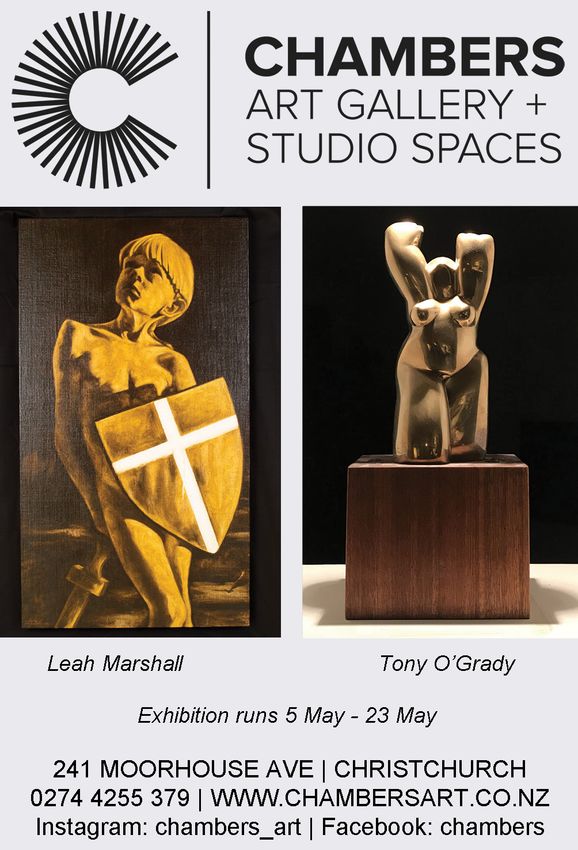
‘The response has come in from differ-
ent ways. Sometimes it is me just scan-
ning the Oxford Book of New Zealand
verse and sometimes someone visiting
the website and saying “this poem goes
with that.” It is a real mixture.’ Thomas
Benjamin Kennington’s Relaxation, 1908
has been paired up by Jones with Denis
Glover’s Girls in a Factory. ‘Those girls
aren’t in a factory but I think they proba-
bly are thinking about their own futures.
It is a way of reading the painting. What
are they thinking about and what are ↑
their hopes and ambitions?’He was also Thomas Benjamin Kennington, Relaxation. Collection of the Christchurch Art
                                            Gallery Te Puna o Waiwhetū; Robert Bell Bequest.
aware that Christchurch-based poet
Jane Simpson had written, A Student
Flat, in a Christchurch Winter, a poem that responded to Philip Clairmont’s Fireplace,
1972. ‘It was published in an anthology. She may have brought it to our attention,
again it seemed too good to resist. And we are trying to keep it vaguely local, a bit
New Zealand if we possibly can. Jane was only a phone call away and we thought it
was a really great poem.’

Hand-Washing Verse has also been a technically easy online exhibition to put together
day by day. ‘Compared to many digital things it couldn’t be easier. I would be very
pleased if people start the day by looking at what we are doing online, having a look
at what we have posted and thinking about that would be good. It sets a routine in a
world that has very little routine. We regularly point to the poem of the day on Face-
book and Instagram.’

‘With poetry there is also that Christchurch 1930s thing, about contemporary poetry
and painting. There are a lot of personal and intellectual links between them. Poems
could also be the label beside the works in an exhibition or available as an audio with
it. There are other ways of working with the painting /poetry connection that haven’t
yet been explored. This project may be the spark that ignites such exploration.’

See details: christchurchartgallery.org.nz

                                                                       Press Play and Start Washing            5
PG gallery 192
            Representing leading NZ artists

              192 Bealey Avenue, Christchurch
                       03 366 8487

           www.pggallery192.co.nz

PG_ad_ArtBeat_May2020.indd 1               21/04/20 12:24 PM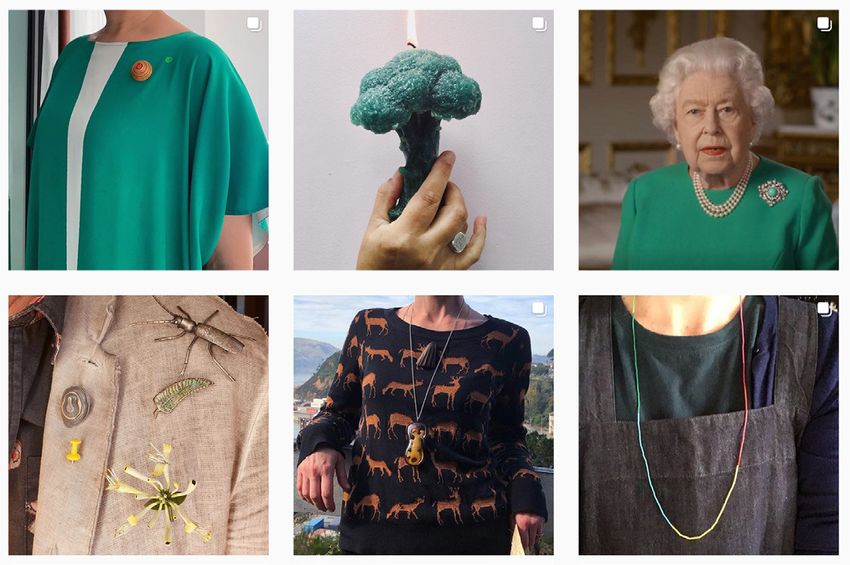
Artbeat          Issue 17, May 2020

Art in the Age of Closure
writer
Reuben Woods

The impact of the Covid-19 pandemic and the resulting lockdown period saw the inev-
itable closure of cultural institutions. Exhibitions have been kept captive and concerts
and performances cancelled or postponed. Of course, there are efforts to digitise
experiences, online access to shows and streamed performances providing a proxy
encounter from our homes (or bubbles to use the new terminology). The importance
of the arts is once again clear in a difficult time; not only in our consumption of films,
books, songs and more, but in people busying, distracting or soothing themselves
by making things. Much like the post-quake period, this compulsion to make and do
has extended to public gestures, with messages appearing on fences and footpaths
and with these acts of expression, a reminder of urban art’s ability to adapt in new
environments.

↑
Dr Suits’ large abstract collage paste-up is just one of a number of interventions appearing in the quiet lockdown
streets

                                                                                                                     7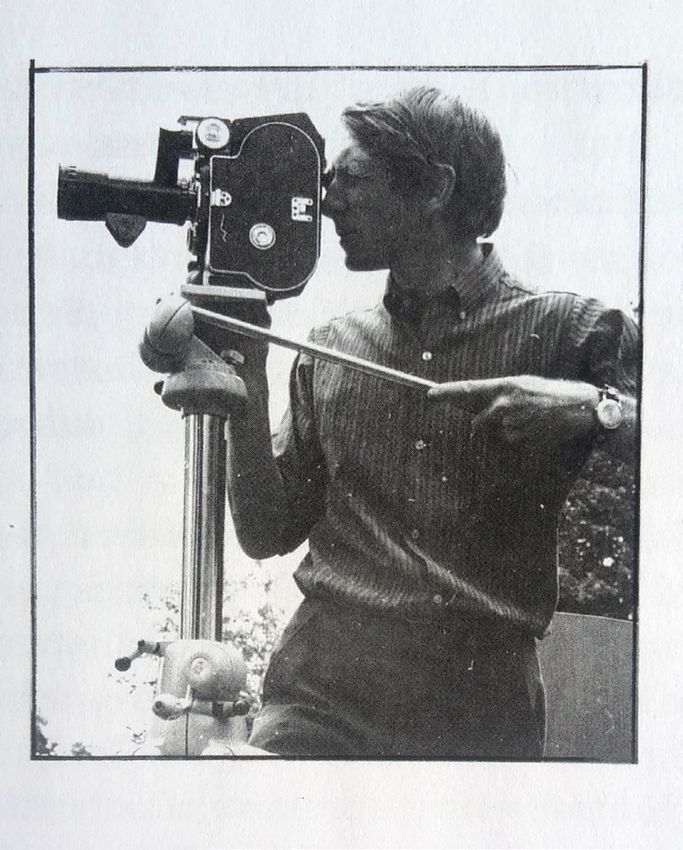
Not reliant on institutional or interior forums, or even the logistical necessities of
large-scale public art projects, graffiti and street can still thrive, their largely solitary
creation a benefit in the time of social distance. Indeed, the quieter streets provide
a favourable setting for intrepid guerrilla artists to operate, both in their traditional
locations and in new spaces.

Moreover, the ability to participate without invitation is another attraction, compulsion
to act the only requirement. While the potential audience may be smaller, public inter-
ventions still provide direct engagement; small moments of connection and possibly
reflection as people walk, cycle or skate their neighbourhoods.

On my daily walks over the last week I have not only reconnected with existing addi-
tions, but discovered the fresh presence of stickers on utility boxes, giant collaged
paste-ups on empty buildings, painted slogans and graffiti with a community-minded
message alongside its egocentric tradition. Social media has filled in some gaps on
what has been found in those enclaves outside of my socially responsible perimeter,
but I am left to largely wonder what other people are finding.

Yet, it is not just the practical potential of urban art that has been made clear in this
environment. Post-graffiti art has traditionally utilised graphic and conceptual simplic-
ity to communicate ideas, favouring accessibility. While some artists may require
more time to navigate the issues created by this period of pandemic and isolation
and specific environments in which to present them, urban artists have been quick
to respond, stencilling lovers kissing through their respirator masks, depicting heroic
health workers or sloganeering about how this may bring about the end of capitalism.
Even graffiti writers, so often self-involved have taken to writing COVID-19 in stylised
letterforms. There will be more cerebral, more thoughtful and more challenging
examples of art produced in response to this experience, but urban art’s directness
has proven its value in unsettling times and when the lockdown comes to an end it
will be exciting to see how the streets have spoken.

                                                                         Art in the Age of Closure   8
Artbeat          Issue 17, May 2020

                   The New Brighton
                   Outdoor Art Festival
                   writer
                   Reuben Woods

                   A Banksy stencil depicting a piece of graffiti reading ‘Follow Your Dreams’ plastered
                   with a cancelled sign has had an online resurgence recently. Gavin Fantastic, [Chair-
                   person at New Brighton Charitable Trust] can most definitely relate to the sentiment.
                   Fantastic started working on the idea of an outdoor art festival in New Brighton a year
                   ago. Just weeks before it was due to be staged, doubts about its form amidst the
                   Covid-19 pandemic began to crystallise. Just days before it would have come to life
                   it was postponed indefinitely.

                   Of course, this is not an isolated occurrence. Almost every event which would have
                   attracted a public audience was impacted by the response to the virus and ultimately
                   doomed by the enforced lockdown. Fantastic, an urban art champion and a resident
                   of the seaside village, conceived of the New Brighton Outdoor Art Festival as a way to
                   support an artistic community and to rejuvenate the suburb’s walls. He had gathered
                   a small team to develop the programme, including local graffiti legend Ikarus, and
                   secured support from the Christchurch City Council’s Enliven Places fund along with
                   various sponsorships. The official festival was scheduled for March 28th with artists
                   painting numerous village walls, live music, guided tours of the new and existing art
                   in New Brighton, interventions such as yarn-bombings and a stencil workshop all
                   planned.

                   The festival did technically get underway. Three weeks prior to the main event the
                   Fiksate crew produced a massive ‘Welcome to Ōrua Paeroa’ mural with the help of
                   the local community on a prominent wall visible on the way into the village intended
                   as a very public announcement of what was to come. A week before the festival was
                   to take place, an exhibition of work by participating artists, including Dcypher, Jacob
                   Yikes, Vesil, Jenna Lyn Ingram, Meep One, and Wongi ‘Freak’ Wilson was hung in the

↑
The Welcome to Ōrua Paeroa mural produced by the Fiksate crew with help from members of the community as part of the NBOAF. Photo: Gavin Fantastic

                                                                                                                                                     9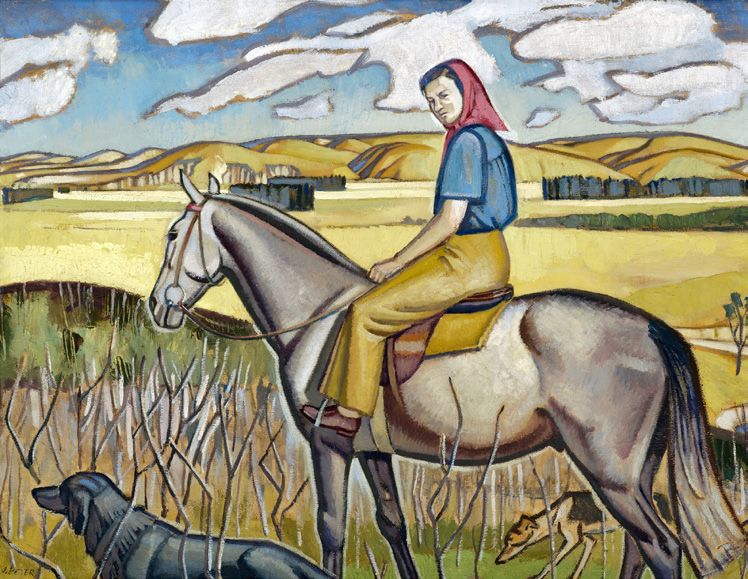
New Brighton community gallery. It was open for one day.

With the rapidly evolving situation, Fantastic re-imagined the festival as a ‘closed
door’ event, mask and glove wearing artists painting without the public attendance.
Fantastic even spent his weekend painting several huge walls grey in preparation.
However, it was soon apparent that even this approach was not possible, the country
heading into lockdown. While personally disappointed, he recognises the need to
act responsibly in the face of the current situation. Fantastic has been assured that
the Enliven Places funding will be available to stage the festival in some form and he
remains optimistic that it will occur in the future. For now, New Brighton has a vibrant
new welcome sign and Fantastic is determined to see more large-scale additions
realised in the near future.

                                                          The New Brighton Outdoor Art Festival   10
DISCOVER
ART IN
ASHBURTON
327 WEST STREET
ASHBURTON
7700
ASHBURTONART
GALLERY.ORG.NZ
T | 03 308 1133Artbeat Issue 17, May 2020
NEWS EVENTS
& WORKSHOPS
The Physics Room’s Art Not Science monthly podcasts
Artist Luke Shaw broadcasts his sound-work Metal Body: Ghost Field, 2020,
featured in the exhibition, Domino Domino. Recorded inside The Suter Gallery, Te
Aratoi O Whakatū Metal Body: Ghost Field is an improvised drone performance
utilising guitar, overhead projector, effects units and amplifiers.
See: physicsroom.org.nz and to hear Metal Body: plainsfm.org.nz
Online Interactive Exhibitions – courtesy of artist
Audrey Baldwin
Te Papa - Online jigsaw puzzles. Links to digital jigsaw
puzzles using images from their collection or upload
your own image to make into a puzzle.
See: tepapa.govt.nz
Christchurch Art Gallery Te Puna o Waiwhetū. Curate ↑
Bernard Roundhill, Original artwork Auckland 2000,
and share your own exhibition using the gallery’s
1956, airbrushed gouache on paper. Collection of Te
collection. Papa Tongarewa.
See: christchurchartgallery.org.nz ↓
John Chrisstoffels, Ritornello, 2018, digital video
Dunedin Public Art Gallery. Art at Home. For those with
little ones, Jen Boland hosts short, sweet videos for
kids (and maybe artists in need of inspiration as well),
to make artworks.
See: dunedin.art.museum
Online Films by New Zealand Artists
Spheres: An Online Video Project is launched by the Christchurch Art Gallery Te
Puna o Waiwhetū as a video series featuring the work of 12 New Zealand artists.
The Gallery’s website will host 6 months of films, commencing Tuesday 6th May
with a new work by a different artist released on each of the first 12 days. The line
up includes Ronnie van Hout, Xin Cheng, Nova Paul, Matavai Taulangau and Christ-
church cinematographer John Chrisstoffels.
See: christchurchartgallery.org.nz
12AT THE GALLERIES
↘ People often say things like, ‘Saskia, your art, your
Saskia Bunce-Rath, 2019, the
smell of sea air is about, embroi- writing, it’s a bit creepy, a little bit disturbing.’ I don’t
dery thread on calico fabric. mean for it to be, it’s just what’s coming out… I think
↘↘
when you’re making stuff from your personal life you’re
Talanoa I Measina - Sharing Our going to be emulating the feeling of your environment
Stories. An immersive exhibition
and society at the time, no matter how hard you try to
celebrating Pacific Peoples in
Ōtautahi Christchurch. avoid it.’
Saskia Bunce-Rath discusses her work in City Art Reader
↘↘↘
Dr Suits, New Boundaries, 2020, 19. (City Art Depot 96 Disraeli Street)
spray-paint on glass. One of See: cityart.co.nz
several new works on glass New
Boundaries was made in lock-
down. Curated by Nina Oberg-Humphries, Talanoa I Measina
- Sharing Our Stories is an expression of Pacific iden-
↘↘↘↘
Jane Barry, Seachange, 2020, ink tity, cultural belonging and visual talanoa (stories) from
on paper. Christchurch’s Pacific community. Gathered images,
film and objects from the local community and archi-
val material, Talanoa I Measina is a visual showcase
mirroring a living room that celebrates achievements,
people and love for Pacific culture in Ōtautahi.
Te Pito Huarewa / Southbase Gallery, Tūranga
See: christchurchcitylibraries.com
‘I’ve been keeping myself busy and managing to find
some time to also get back to my paste-ups and stick-
ers. There don’t seem to be any rules in place about
street art. My theory is if you can go for a 40 minute jog
for recreation then surely you can go for a 40 minute
street art installation.’
Dr Suits on his practice.
See: fiksate.com
Seachange is inspired by water and abstracted aspects
of landscape. I like the idea that water is symbolic and
a subconcious metaphor for change and the stream
of life. Be it the scent of soft falling rain or the sound
of the ocean, frantic and looming. (“Upon us all, a little
rain must fall,” Led Zeppelin).
Jane Barry details her new work.
See: chambersart.co.nz
Issue 17, May 2020 13A recently completed portrait by Badcock, ‘one of
↘
John Badcock, Covid-19, 2020, the leading proponents of “expressionist” art in the
acrylic on loose canvas. country… justly renowned for his mastery of the art of
↘↘
portraiture in all its haunting majesty.’
Artworks in public spaces are canvaschamp.co.nz
also gallery spaces. Russell
See: susanbadcockstudio.co.nz
Clark, The Family Group, 1960.
The Family Group is located at the University of
Canterbury. Those who are old enough will remember
its original location at Church Corner by the entrance
to Hay’s Shopping Centre (now gone), commissioned
by Hay’s Company whose support for contemporary
art in post-war New Zealand was also evident in their
establishment of our first contemporary art compe-
tition in 1960, The Hays’ Art Award.
See: canterbury.ac.nz
AT THE GALLERIES
Issue 17, May 2020 14DISCOVER
1 Absolution 14 City Art Depot 28 Paludal
Honor Roche, Copper Connectors Traffic Eve Barlow curates a group exhibition, Rectify Exhibition details and hours, 2 Papanui Road,
Data, Arts Centre of Christchurch, 2 Worces- This Painting, TBC, 96 Disraeli St, Sydenham, CHCH
ter Boulevard, CHCH CHCH
29 PGgallery192
2 Aigantighe Gallery 15 CoCA Toi Moroki John Reynolds 'In the street I was lost...' 192
49 Wai-Iti Rd, Maori Hill, Timaru Emma Wallbanks, Heteroglossia, Westfarbe, 66 Bealey Ave, CHCH
Gloucester Street, CHCH
3 Arca Gallery 30 Pūmanawa
127a Hackthorne Road, Cashmere, CHCH 16 Eastside Gallery Community Gallery
88 Worcester Street, Linwood, CHCH The Arts Centre Te Matatiki Toi Ora, 2 Worces-
4 Art Hole
ter Boulevard, CHCH
336 St Asaph Street, CHCH 17 Fiksate
Stock Room Hang, NZ and international artists; 31 Stoddart Cottage Gallery
5 Art on the Quay
prints, sculpture, books, stickers and more, 165 Diamond Harbour Camera Club, Splash of
176 Williams Street, Kaiapoi
Gloucester Street, CHCH Colour, 2 Waipapa Ave, Diamond Harbour
6 Arts in Oxford
18 Fo Guang Yuan Art Gallery 32 Studio 125 Gallery
Vantage Point, group exhibition curated by
Toney Su, Treasure of Nature Enlighten You, 2 Simon Kaan, Heather Brown, Josh O’Rourke
Philip Trusttum, until 3 May, Oxford Spinning
Harakeke Street, Riccarton, CHCH and selected artists, 125 Aikmans Road,
Group, TBC, Arts in Oxford Gallery, Main Street,
Merivale
Oxford 19 Form Gallery
Jane McCulla, Familiar Ground, 468 Colombo 33 Susan Badcock Gallery
7 Ashburton Art Gallery
St, Sydenham, CHCH Ongoing: John Badcock, Douglas Badcock, Su-
Zonta Ashburton Female Art Award 2020,
san Badcock, 47 Talbot Street, Geraldine 7930
Melissa MaLeod, The Trappings of Ghosts, 327 20 Heart & Soul
West St, Ashburton Painting, craft and photography, 34 New Regent 34 Teece Museum
Street, CHCH of Classical Antiquities
8 Bryce Gallery
Fantastic Feasts: dine with the ancients, Arts
Artists include: Paintings by Don McAra and 21 Ilam Campus Gallery
Centre of Christchurch, 3 Hereford Street,
Clare Wilcox, 84 Vicenza Drive, Ohoka RD2 Kim Lowe, The Silence of the Brush, Fine
CHCH
Kaiapoi Arts Lane, off Clyde Rd, Ilam, CHCH
35 The Central Art Gallery
9 Canterbury Museum 22 Jonathan Smart Gallery
Hannah Kidd, Inheritance, 7 May – 14 June, Arts
Slice of Life: The World Famous Dunedin Study, Anne Noble, a line between two trees, Julia
Centre of Christchurch, 2 Worcester Boulevard,
Ancient New Zealand: Squawkzilla and the Morison, Seque, John Pule, new paintings,
CHCH
Giants, prehistoric New Zealand, until 12 Jul, 52 Buchan Street, Sydenham, CHCH
Rolleston Avenue, CHCH 36 The National
23 Estrange Gallery
L
What I am Wearing – From Lockdown, 249
10 Catalogue Container Artists 8th annual group exhibi-
Moorhouse Avenue, CHCH
Penny Lane, 430 Colombo Street tion includes: Nigel Brown, Alison Erikson,
Hamish Allan, 53 Nayland Street, Sumner, 37 The Physics Room
11 Chamber Gallery Rangiora
Christchurch 301 Montreal Street, Registry Building, Arts Cen-
141 Percival Street, Rangiora
tre Te Matatiki Toi Ora
24 ittle River Gallery
L
12 Chambers Gallery
Jacqui Gibbs Chamberlain, Moment in Time, 38 Tūranga
Leah Marshal and Tony O’Grady, 5 – 23 May,
Christchurch Akaroa Road Robyn Webster, The Labyrinth, (harakeke instal-
Kim Lowe and Jane Barry, 26 May - 13 Jun, 241
lation), Talanoa I Measina, TBC, 60 Cathedral
Moorhouse Ave, CHCH 25 cAtamney Gallery
M
Square, Mon–Fri 8am–8pm Sat–Sun 10–5pm
Philippa Wilson, Into the Great Wide Open,
13 Christchurch Art Gallery
40A Talbot Street, Geraldine 39 Windsor Gallery
Te Puna o Waiwhetū
Anneke Bester, Sister Water, and Rhonye
Frances Hodgkins: European Journeys, Fiona 26 MG
N
McIroy, Stone to Flesh, 386 St Asaph St, CHCH
Pardington, Tiki: ‘Orphans’ of ‘Māoriland’, Wynn Williams House, 47 Hereford St, CHCH
Gathering Clouds, Uncomfortable Silence, cnr
27 Ng Space
Worcester Boulevard and Montreal Street,
Tim Main, A Quiet Place, Level 1/212 Madras
CHCH
St, CHCH
Due to Covid-19 and lockdown not all exhibi-
tion details, dates and hours are available.
Click on the listing for gallery websites. Issue 17, May 2020 15Artbeat Issue 17, May 2020
Kim Lowe. If Tao is a River
The title of Kim Lowe’s exhibition at
Chambers Gallery is a variation on a
quote by contemporary Asian American
Taoist, Deng Ming Dao: ‘If Tao is a River...
it’s good to know where the rocks are.’
The recipient of the Oliver Spencer Bower
Foundation Award in 2019, Lowe’s new
works relate to Chinese philosopher and
writer Lao Tzu and his ideas about life as
being like a river.
Lowe’s works on paper encompass
landscapes and portraits, also principal
↑
subjects in Spencer Bower’s practise, Kim Lowe, South Mountain, 2019, ink and acrylic on paper
both artists considering their potential
through their chosen medium, Spencer Bower in the 1950s in her response to British
Neo-Romanticism’s abstracted images of the natural world and Lowe in 2020, utilising
aspects of Chinese aesthetics and traditional brush painting. Lowe acknowledges this
influence of Olivia’s approach of painting portraits and landscapes of the people and
land around her.
There is also recognition by Lowe of our attitude to the land in the 21st century. She
comments, ‘there is something about tourism here, familiar landforms that get photo-
graphed and shared by hundreds of thousands of visitors. I have been attempting to
paint them from a historical/faux historical point of view and maybe also attempting to
fill in the gap between New Zealand Chinese painters from the era of Olivia Spencer
Bower.’
Kim Lowe, If Tao is a River
Chambers Gallery, 241 Moorhouse Avenue
See: chambersart.co.nz
17Artbeat Issue 17, May 2020
Melissa Macleod: The Trappings
of Ghosts Ensnaring the sea air at
Wakanui
↑
Melissa Macleod, The Trapping of Ghosts, 2020. Trapping sea air at Wakanui
An interdisciplinary Christchurch-based artist working in sculpture, photography and
performance, Melissa Macleod’s current solo exhibition as the 2019 recipient of the
Zonta Ashburton Female Art Award, The Trappings of Ghosts has seen the artist ‘bottle’
the fresh sea air of Wakanui Beach, east of Ashburton in 48 enormous bags installed
in the gallery.
For more than two decades Macleod has conceived and created conceptual works that
are socially engaged and accessible in the very broadest sense. Once encountered it
is impossible to resist wanting to see and know more, and in the process of doing so,
finding yourself challenged, seeking answers to the social, environmental and political
contexts that her works frequently represent.
The Trappings of Ghosts is an immersive installation, a response to the Ashburton envi-
ronment and Wakanui beach. Metaphorically a monumental work, yet at the moment,
Macleod’s attention is also on current global concerns, considering places where
18↑
Melissa Macleod, The Trapping of Ghosts, 2020, installation image
exhibitions themselves have been placed in lockdown. She reflects that her room
of Wakanui sea air now ‘sits silently in Ashburton,’ a room of air carrying even more
meaning as a work that was hours, months, years in the research and making - seen
by a handful.
Macleod also accepts that trying to make large installation in Christchurch is an unre-
lenting challenge and it is the moments of sweet passing response that you hold. For
anyone who has experienced Macleod’s work in the space of a gallery that feeling of an
immediate connection with the objects she creates is a given. Her installation Dead-
wood at the Jonathan Smart Gallery in 2018 was, like all her work, a special experience -
a work with a presence that heightened awareness of the very space in the gallery itself.
Macleod comments: ‘The problem is I really love and value this temporary/ conceptual/
large scale area of sculptural practice- it is what is exciting. I will no doubt carry on.’
Melissa Macleod
The Trapping of Ghosts
Ashburton Art Gallery
327 West Street
7 March – 19 April
See: ashburtonartgallery.org.nz
Melissa Macleod: The Trappings of Ghosts 19Artbeat Issue 17, May 2020
A Call for Action.
Toi Ōtautahi/Christchurch
Arts Policy 2019–2024
writer
Warren Feeney
Towards the end of 2019 Christchurch City Council launched a new arts policy and
strategy for the city and its residents. Toi Ōtautahi – Strategy for the Arts and Creativity
in Ōtautahi Christchurch replaced its well overdue 2001 predecessor with a well-re-
searched consultative document with attitude.
Toi Ōtautahi/ Christchurch Arts was initiated with a steering group set up in March
2018 that, among others, included City Council staff, Creative New Zealand, the Rātā
Foundation (Rātā) and ChristchurchNZ and from July to September 2018 a series of
consultative workshops were held with all sections of the arts community. The infor-
mation gathered was complemented by a working party made up of members from
CoCA, the CSO, the Court Theatre, Ōtautahi Creative Spaces, RAD Collective and
the Arts Centre.
The policy and strategy document describes itself as ‘a new kind of partnership strat-
egy, developed collaboratively with the arts sector and major funding, advocacy and
development agencies.’
This is framed by an acknowledgement that the arts cannot be sustained by City
Council on a scale that will adequately support the arts community and that Creative
New Zealand, the Rātā Foundation and ChristchurchNZ (the city’s marketing and
economic development agency) are to be significant players and supporters.
Toi Ōtautahi/ Christchurch Arts is a well overdue document and once the lockdown
is downgraded to the point where social distancing becomes redundant it should be
acted upon as an immediate priority for two good reasons. In the first instance, as
ChristchurchNZ surmises: As businesses struggle to recover in the central city and
9,000 to 36,5000 residents are expected to lose their jobs over the next 12 months,
the central city’s recovery and its retailers are among the most vulnerable. The arts
represent a point of difference to the suburban shopping mall through events and
creative activities capable of attracting returning visitors to the city’s heart.
Secondly, Creative New Zealand’s report on the state of the country’s artists, A Profile
of Creative Professionals published in May 2019 detailed that the average wage for
a New Zealand artist is $35,800 per annum or 69% of the average wage nationally.
Depressingly that % of difference remains close to the average twenty years ago.
20Creative New Zealand’s 2003 survey,
Portrait of the Artist, based on research
from 1999 detailed a slightly higher aver-
age at $20,700 or 74% of the average
wage. In spite of two decades of media
releases that claim the arts are valued by
New Zealanders our artists remain in an
occupation that places them financially
at the bottom of an economic ladder.
On both counts Toi Ōtautahi/ Christ-
church Arts is a timely document. It
states: Christchurch will be a place ↑
Lunchtime Sketch Club with Constance Mayhem modelling in The Crossing’s
‘where there is support for local artists air bridge: Winter Wander, Saturday 3rd August 2019 12pm - 2pm. Photograph
and this support provides new employ- by Janneth Gil
ment opportunities in the creative sector,
boosts the local economy and creates a more vibrant city to live in or to visit.’ It also
acknowledges that the role that the arts have played over the past decade throughout
a sustained period of challenges has seen them occupy an active role in shaping a
new city identity.
To its credit, there were already examples of collaborations between Council, busi-
ness and the arts prior to the document’s release. In August 2019 Glitterbox Pursuits
(artists Audrey Baldwin and Jennifer Shields) were commissioned by ChristchurchNZ
to deliver Winter Wander, an eight day arts event featuring sixty local artists in exhi-
bitions, installations and lunch-time sketching classes in Cashel Street, the Terrace
and The Crossing. This public arts programme featured the group exhibition, Reverie
in the BNZ Centre, an arts trail of 11 artists’ installations in nine retail outlets and a
Lunchtime Sketch Club in venues that included Scorpio Books and Ballantynes’
window display space.
From October to November last year, Terrace developer Antony Gough also provided
free rent for theatre producer Michael Bell’s Little Andromeda programme of 120
shows, upstairs on the Terrace within a cluster of restaurants and bars.
Toi Ōtautahi/ Christchurch Arts is a document perfectly suited to the needs of artists
and the city’s further revitalisation. It just needs activating with a light and practical
infrastructure that connects artists with businesses. Let’s see this happen.
See Christchurch City Council’s Arts Strategy 2019 – 2024: ccc.govt.nz
A Call for Action 21The Patriot by Michael Springer. Acrylic on hessian, 2020
Vantage Point
Rebecca Harris
Extended: Marie Le Lievre
21 March - 21 June Michael Springer
Closing event: Martin Whitworth
3pm Sat 20 June David Woodings
Vantage Point being both a high place providing a good clear
outlook and a particular point of view.
We look forward to seeing you again after lockdown.
ARTS IN OXFORD GALLERY
After lockdown reduced hours Fri - Sun 10am - 4pm
Closed Public Holidays www.artsinoxford.co.nzArtbeat Issue 17, May 2020
REVIEWS
For extended reviews
and content visit:
www.artbeat.org.nz
NZ Bear Hunt
writer
Andrew Paul Wood
It’s not overly clear where the phenomenon of teddy bears in windows to cheer up
people in their bubbles of pandemic self-isolation came from. It was already popular
overseas before the Facebook page “We’re Not Scared - NZ Bear Hunt” appeared (it
has around 8000 followers) and Prime Minister Jacinda Ardern declared her partic-
ipation from her Wellington Parliamentary residence.
In many ways it’s a nationwide participation in a spontaneous global community
artwork as hundreds of thousands, perhaps millions of people, intervene in their
collective environment to deliver one single, clear, unified message of solidarity in a
time of high anxiety, in an effort to distract and entertain children like a treasure hunt,
while we are confined to our social bubbles.
Even without getting into Rosalind Krauss’ conception of the Expanded Field, where
spatially-based visual art expands into spaces between sculpture, architecture and
landscape, or Nicolas Bourriaud’s idea of Relational Aesthetics where art takes its cue
from social context rather than private space, it’s fair to say contemporary western art
is predicated on three principles defined by three great artists and provocateurs of
the twentieth century. Marcel Duchamp’s readymades showed that it was intent and
environment that defined art, and in fact anything could be art. Joseph Beuys pushed
for a democratic view of art making where anyone who felt the urge to create could
be an artist. Finally, is Andy Warhol, who conceived of Pop Art as art of the familiar
for everybody.
This triumvirate sat at odds with a modernism exemplified by über-critic Clement
Greenberg where only a clinical form of abstraction would do, and any sign of figura-
tion or sentiment was to be condemned as kitsch and ultimately ideologically aligned
with the propaganda of fascism and communism. Increasingly though, there has
been a return of a romantic sensibility that embraces sentiment and sentimentality as
legitimate and human existential responses to an overwhelming, infinite and arbitrary
universe. COVID-19 certainly fits the bill in deserving such a response, and if anything
can be art, anyone can be an artist, and art can be for everybody, then why shouldn’t
we regard these furry little interlopers in our windows as an artistic act?
Of course, that is probably over-thinking it, although as a mass action it undeniably
fits the bill as an artwork. These bears ultimately find their origin in a 1902 political
23cartoon in the Washington Post depicting President Theodore “Teddy” Roosevelt
refusing to shoot a stunned and tied-up black bear for a trophy on the ground of being
unsportsmanlike. To us they represent comfort and security, especially for children.
To put them in windows at this difficult time is a profound act of kindness, humanity
and community, a material sign of our existence and participation at a time in history
where life is increasingly led in isolation and mediated by screens and technology.
Ours is a culture of display, with a distant echo of Walter Benjamin’s Arcades Project
(1927-1940) and the idea of creating a stimulating environment for the flâneur even
in the restricted form of the neighbourhood and the household bubble.
As an event, this is possibly the first example of spontaneous art performance
produced in response to the COVID-19 pandemic, and a truly heart-warming moment
in this otherwise dark and worrisome time.
↑
Jane Zusters, Untitled (teddy bear in window), 2020
See: In the windows of homes in Ōtautahi and Aotearoa
NZ Bear Hunt 24Artbeat Issue 17, May 2020
Uncomfortable Silence
writer
Stephanie Beth
How many times have you been to an art exhibition where it becomes evident that art
and artists in day jobs distinctly blur lines of focus? It is a theme that comes through in
Uncomfortable Silence, a group exhibition curated by Holly Best at the Christchurch
Art Gallery Te Puna o Waiwhetū. It is a clockwise parade of eight artists allocated
walls and spaces.
At the entrance is an art intervention. An air-filled plastic statement with a full stop:
GET IT RIGHT by Elisabeth Pointon. Using air-induced data, Pointon’s work was set
up in a car dealership in Wellington in 2018. GET IT RIGHT in Christchurch sustains a
feisty relationship between art and the public. Outdoor public art during the land art
movement of the 1960s included a work by Bruce Nauman, Leave the Earth Alone.
It was physically only readable in an airborne state in 2009 within a circle of the arts
fraternity. Is that sculpture Pointon’s precursor?
Mark Schroder is quite the comedian, spreading an outrageous installation over three
rooms, simulating a world of corporate capital, his assemblage is a fictitious holding
Company, PROXY.
For Schroder, the world of corporate pitching is not a clinical strategy, the sensa-
tion emanating from the work is the misery of waiting for that ‘chance.’ Schroder is
described in the gallery’s handout as applying an aesthetic to themes positioned
between “aspiration and disappointment” - the intersection between Art and Finance
and the “modern notions of success and failure.”
Meg Porteous is a photographer with elan. Five equally dimensioned coloured photo-
graphs of commissioned portraits of the artist, going about the activity of simply being
alive. Such an angle is fresh and intelligent, throwing us all beyond the era of photo
realism and into a surprising trustworthiness. Porteous takes us directly to astute
questions about image, observation, consideration and subject.
A change in mood – Johanna Mechen shows her child’s art making activity, as formal
studies once removed. This room is a fluent selection of three of her work, an anima-
tion of pencils on one wall captivating in its detail and a large square format video of
a sleeping child is a study of the rhythm of the human pulse.
25↑
Mark Schroder, SILVERCITY (installation view), 2020.
Greet the painterly gestures and dazzle and colour of fluorescence and automotive
paint of Jayden Plank. Using a range of laser-cut aluminium, acrylic spray paint,
industrial paint and raku clay in a set of, ‘hang on the wall’ objects, Plank’s painting is
an embrace of art at a brink of becoming and a ‘will-be’ of shift.
Some works whisper, some seek awe. Look out for Shiraz Sadikeen, Ammon Ngakuru
and Clare Logan. Uncomfortable Silence is a wave in time that cannot help but link
us into the contemporary. The opening door count on March Saturday 8, 2020, to
the Atrium, music and artists live, was four thousand. This site is an event and all are
made welcome.
Uncomfortable Silence
Curated by Holly Best
Christchurch Art Gallery Te Puna O Waiwhetū
7 March – 19 July
Issue 17, May 2020 26Artbeat Issue 17, May 2020
Sarah Laing, The Covid-19
Diaries
writer
Warren Feeney
↑ ↑
Sarah Laing, Untitled (Brave New World), 27 March 2020 Sarah Laing, Untitled (and of course, when it comes to the
milk), 27 March 2020
Sarah Laing describes herself as a cartoonist, fiction writer, illustrator, graphic
designer and mother of three. Her cartoons and comic books are autobiographical,
covering all aspects of the days of her life. From 26 March she began The Covid-19
Diaries, an online journal with pictures about the lockdown that is informed by its sense
of immediacy and regularity, Laing working in ink directly onto the blank page of paper
and a commitment to ten panels each day (also making it suitable for instagram).
The Covid-19 Diaries look like the initial layout for a comic strip, so there is an inti-
macy and authenticity about it. The pleasure in following the detail of Laing and her
family’s daily experiences of lockdown is in the familiarity of their circumstances. For
example; that once-a-week visit to the supermarket seems more than all too familiar.
Laing’s daily posting convey such encounters without the overstated affirmations of
the television news’ nightly coverage of lockdown. Rather, it is in the small details of
her life that a bigger picture and sense of the reality of lockdown is revealed.
And The Covid-19 Diaries are interactive. At the conclusion of each daily entry, Laing
has a short essay providing some context to the day, with feedback from interested
readers. Laing’s art has an honesty and respect for its readers and The Covid-19
Diaries are, indeed, about having sincere and meaningful conversations.
See: sarahelaing.com and instagram: sarahelaing
27Artbeat Issue 17, May 2020
Maurice Askew (1921-2020).
Designer, Filmmaker and
Teacher
writer
Warren Feeney
Maurice Askew was appointed Lecturer
in Design at the University of Canter-
bury’s School of Fine Arts in 1962 by
Professor John Simpson who, since
his arrival at the SFA three years earlier,
was in the process of redesigning its
curriculum.
Askew’s appointment saw the door
finally closing on the influential Arts &
Craft Movement, replaced by contem-
porary principles of British design influ-
enced by the legacy of the Bauhaus.
Further appointments included painter
Don Peebles in 1965. The remain-
ing remnants of the Victorian era were
finally over for the SFA, succeeded by
20th century Modernism. In addition to
changes in its design curriculum, Askew
also introduced film, animation and
photography.
Askew arrived in New Zealand from
↑
London with an experience of 20th Maurice Askew, University of Canterbury School of Fine Arts, c. 1965. Photograph:
century art and designed matched by Maurice Askew, At Sixties and Seventies. Christchurch: Selwyn Bridge Press, 2012
few of his contemporaries. He was born
in Redditch, Worcestershire in 1921 and
prior to his time with the Royal Air Force (RAF) during the Second World War, had
studied at Birmingham College of Arts and Craft and as an apprentice at the Argus
Advertising Agency.
On his second mission flying over Leipzig in Germany in 1944, the Lancaster Bomber
he and his crew were flying was shot down and he became a prisoner of war, returning
to England at the end of war. Again a civilian, he married Doris Parr and returned to
study at the Birmingham College of Arts and Crafts, graduating in 1951 with a Diploma
28in Fine Arts and taking up a teaching
position in design at the Stoke-on-Trent
College of Art. This was followed by time
in London, joining the design department
at the recently-formed Granada Televi-
sion Studio where, among his tasks, he
created promotion cards for television
programmes that included Wyatt Earp
and Sir Lancelot, as well set designs for
Granada’s Coronation Street.
↑
At Granada he also teamed up with fellow
Maurice Askew, Red Admiral Butterfly, Tussock Butterfly, 1970, New Zealand Post
graphic artist, Bryan Cosgrove to script
and animate Canary, a 15 minute cartoon, among the earliest to emerge in the United
Kingdom, following the success of English film animators, John Halas and Joy Batch-
elor’s Animal Farm in 1954. Canary received international critical acclaim, including
a silver medal at the Vienna film festival in 1963.
At the SFA, Askew established friendships and working relationships with artists and
teachers sharing his ambitions for the modern movement and its engagement with
New Zealand’s art and culture. This included, Russell Clark, Richard Lovell-Smith,
Doris Lusk, Don Peebles, Trevor Moffit , Tom Taylor and W. A. Sutton.
Askew’s influence within this community and environment was critical at this time for
New Zealand design and film. Painter and designer, Roy Good describes Askew’s
influence as highly underrated and its significance can be seen in his series of deci-
mal currency stamps from 1970, the 1974 Commonwealth Games in Christchurch
and theatre designs for the Court Theatre:
He was the very first lecturer with real world professional experience at the cutting edge of the
development of television in the United Kingdom. [His students at Ilam included] Murray
Reece the first graduate in film to come out of a New Zealand art school and of course went
on to make the breakthrough film for television, Ian Cross’s The God Boy. Mark Cleverly
another student of Maurice’s in my time was a ‘star’ graphic designer and made his name in
stamp design, dragging the profession into the 20th century in the late '60s and early '70s.
Senior Lecturer in Film at the School of Fine Arts, John Chrisstoffels similarly acknowl-
edges his influence, commenting that by 1975 the demand from Askew’s students for
film to be a separate studio at Ilam saw it become a reality. ‘It remains arguably the
oldest film school in the country. Among its early students were Vincent Ward and
Gaylene Preston as well as the famous Australian producer Timothy White.’
After almost twenty years of teaching at Ilam, Askew retired and for the next 39 years
went on to illustrate children’s books, hold numerous exhibitions of his Neo-Romantic
Maurice Askew 29paintings, responding to New Zealand’s and Great Britain’s land and cityscapes, write
and publish two books on his life and times, fundraise for the United Nations’ charity
for children UNICEF, and rediscovered and exchanged conversations with compan-
ions from his RAF war years.
My memories of Maurice were at COCA, the Centre of Contemporary Art in the 1990s
and 2000s. I programmed a number of shows, including I Love Lucy, an exhibition
of his television promotion cards for Granada. I was surprised by his humility and to
discover the breadth and depth of his practice. I recently posted on Facebook my
thoughts on Maurice, finishing with a quote from John Chrisstoffels: Maurice had an
amazing 99 years of life and set a wonderful example as an individual who proved
that we can be ambitious and successful and also “kind, gentle and generous.”
↑
Maurice Askew, Colonial Willamsburg, 1970, work on paper. Collection of Christchurch Art Gallery Te Puna o Waiwehtū.
William A Sutton bequest, 2000
Maurice Askew 30Artbeat Issue 17, May 2020
Sarah Anderson: Artist and
Teacher in Lockdown
↑
Sarah Anderson’s studio in Lincoln
I’m getting into the rhythm of being at home and having time to be in my studio - day
after day! It’s still frighteningly easy to get distracted, so many books to be read and
blockbuster series to watch and news to tune in to. Still there are no excuses. So the
studio has been tidied and the work is happening. Self-isolation is a default setting
and a pleasure not often available.
My contributions also continue as Vice President of the Friends of the Christchurch
Art Gallery - Te Puna o Waiwhetū. The committee are all contributing to the Gallery’s
on-line/social media programme, planning for a post-covid world is on-going. Who
knows when we will be able to congregate in groups again.
Meanwhile I’m focusing on a series started last year which has evolved out of a previ-
ous body of work exhibited in 2013, Botanical Fandango. Inspired by my collection
of treasures from the garden (objects I collect and allow to dehydrate/decompose),
I draw out the anthropomorphic characteristics I see in these vegetables, building a
narrative sequence. It is a treat to be able to disappear into this part of my brain for
a few weeks.
This is a time of strange dichotomies - both fearful and anxious for many as they see
their livelihoods disappear, while also presenting great opportunities to slow down,
catch-up on many neglected tasks and for me - enjoy uninterrupted creative time.
See: sarahanderson.info and christchurchartgallery.org.nz
31Artbeat Issue 17, May 2020
What I’m Wearing in Lockdown
↑
Jane Dodd, Parekareka III, 2020, Pendant, dyed bone, sterling silver. Photo: John Collie
Initiated by Caroline Billing director of The National, What I’m Wearing is a social media
series about wearers of contemporary jewellery. Each day Caroline posts a selfie
and a personal story from a wearer, asking the ‘essentially non-essential question:
“What jewellery are you wearing in confinement?” Lockdown jewels? Even The Queen
appears in her lockdown jewels.
Wearers and collectors of contemporary jewellery have stories to tell. It is a very personal
form of collecting art and wearing is performative, and though these wearers are serious
makers, gallerists, art historians, lecturers and academics on the international stage,
they are often brought together by that public element that the medium provides.
32↑
Thai gallerist Atty Tantivit, Jacquelyn Greenbank, Queen Elizabeth II, Garth O’Brien, Octavia Cook, Manon van Kouswijk.
Jewellery collector, wearer, and gallerist, Anna Miles kicked-started this social
media series reporting from lockdown in Auckland, wearing Jane Dodd’s Parekareka
pendant, photographed by Miles. Parekareka III is currently available at The National
and features in ‘At Home.’
Miles comments: ‘I spotted this glowing foot of the spotted shag carved from a piece
of cow bone at Jane’s ‘Bird Brain’ Masterworks exhibition in 2018. At the time I was
staggered by the University of Auckland’s decision to close the Elam Library. Jane
Dodd had been a Fine Arts Librarian when I was an Elam student. During the phase
between her career as a rock star (Dunedin bands The Chills and The Verlaines &
Auckland’s The Able Tasmans), and subsequent reinvention as a jeweller, Jane was
behind the issues desk. Like all Fine Arts librarians she had the gift of knowing what
us students were interested in long before we did.’
‘Unhappily my wearing of this wonder did not cause the University to reverse its
destructive decision. Pendant over polo neck is a look rich in associations. In partic-
ular, it was the leitmotif of Mrs Collins, my brilliant, gravelly voiced 6th form English
teacher who had the audacity to instruct a class of teenage girls that Antony and
Cleopatra is Shakespeare’s greatest play because it is about middle-aged love. I am
liking the idea that slipping Jane’s Parekareka over the polo neck connects me not
only with spotted shags but audacious English teachers and librarians — a tribe of
heroines who amongst other things are good at saving things.’
See: The National on Instagram
Issue 17, May 2020 33Artbeat Issue 17, May 2020
Christchurch Art Seen
writer
Karin Bathgate
No city in Aotearoa New Zealand knows
better than Christchurch that at times of
crisis people reach out to the arts. This
has happened once more in the Covid-
19 lockdown period. What we also see is
that the arts reach back into the commu-
nity. For Christchurch Art Seen this has
occurred through continuing weekly
emails and updating social media sites,
featuring local artists and conversations
about their newly created work.
Christchurch Art Seen was estab-
lished in January 2019 to host guided
tours each week to art galleries, artist
studios, artist-run spaces and public
institutions. Through our walking tours
we have been able to highlight what is
happening across the arts community ↑ Tour guide Reuben Woods introduces New Zealand street
in Christchurch and are well-placed to artist Chimp’s (AKA Ash Sisson) Organic Matters at Christ-
church Justice and Emergency Services Precinct, Lichfield
do so again once the city reopens. Over Street.
the past year of art touring local people
have often walked away surprised to discover something they did not know existed
in the city.
The future for our walking tour business is positive. As a small and nimble operation
we have already proven agility during our first year of touring. We are in the fortunate
position of being able to create new tours the moment galleries open and artists with
studios happy to receive us.
Christchurch Art Seen is unique to the city, passionate about the art scene and well
placed, with your support, to make local tourism a priority. Once restrictions are lifted
and we, the people of Christchurch, are able to move out of our bubbles, local busi-
ness is going to need our local support and we will be ready to provide our high-value
tours again. Christchurch is a strong and active arts city and with our patronage we
will see that vibrancy come into prominence once more.
See: Christchurch Art Seen on Instagram or email: Karin
34You can also read


