ARTIFICIAL GRASS PITCHES FOR RUGBY - performance standards and design guides for community use pitches and training areas - cloudfront.net
←
→
Page content transcription
If your browser does not render page correctly, please read the page content below
ARTIFICIAL GRASS
PITCHES FOR RUGBY
performance standards and design guides for
community use pitches and training areas
1     Introduction                                             4
      2     How should this performance standard be used?            5
      3     Artificial grass pitches for rugby -                     6
            performance standards and design guides for community
            use pitches and training areas
      3.1   Normative references                                     6
      3.2   Laboratory test specimens                                 7
      3.3   Player/surface interaction                                7
      3.4   Ball/surface interaction                                 8
      3.5   Durability                                               9
      3.6   Properties of artificial grass carpet                    9
      3.7   Joint strength                                          10
      3.8   Resistance to weathering and ageing                     10
      3.9   Toxicity                                                10
      4     Construction requirements                                11
      5     Pitch assessments                                       12
      6     Design guidelines                                       12
      7     References                                              14
      8     Recommended pitch dimensions                            15
      9     Artificial grass rugby pitch - Field Test Report        17
            Appendix A - Field Test Report Form                     18

Whilst every effort has been made to ensure the
accuracy of the information contained in this
publication, any party who makes use of any part
of this document in the development of an artificial
grass pitch shall indemnify the Irish Rugby Football
Union, its servants, consultants or agents against
all claims, proceedings, actions, damages, costs,
expenses and any other liabilities for loss or damage
to any property, or injury or death to any person
that may be made against or incurred by the Irish
Rugby Football Union arising out of or in connection
with such use.

                                                                          3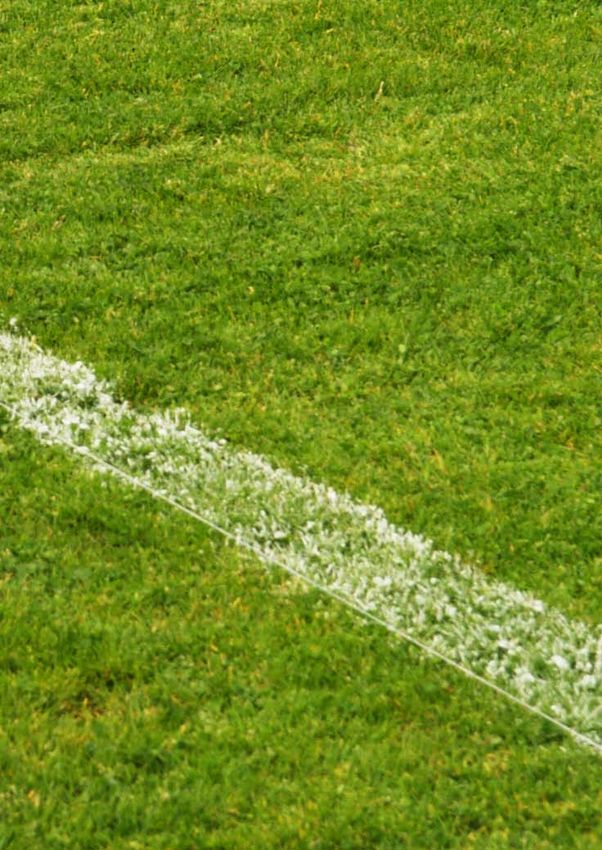
1 Introduction
    The development of artificial grass surfaces that
    replicate the playing qualities of good quality material
    grass has stimulated much interest in the games of
    rugby and football. These surfaces, often described
    as long pile (or third generation) artificial grass, have a
    much longer pile than the previously used sand filled
    surfaces and are normally partly filled with rubber or
    rubber and sand mixes.

    The improved qualities of these new surfaces have
    been recognised by the international governing
    bodies of rugby union and football and they have each
    amended their rules to allow the use of artificial grass
    pitches in their competitions.

    To ensure pitches have the desired playing
    characteristics and provide the necessary levels of
    player protection, these international governing bodies
    have specified the performance they require from
    artificial grass pitches. Their standards are:

    •   IRB Performance Specification for Artificial Surfaces
        for Rugby - Regulation 22 (henceforth referred to as
        ‘IRB Regulation 22’).

    •   FIFA Quality Concept for Artificial Turf Surfaces.

    Many artificial grass pitches are, however, used by more
    than one sport and this can lead to compromises in
    the characteristics of the playing surface. Recognising
    the synergy between sports, the IRFU has prepared
    this performance standard and guide for multi-use
    artificial grass pitches. The standard is based on the
    requirements of the IRB and FIFA standards, modified to
    reflect the multi-use nature of the pitch. It details how
    a pitch should perform (player/surface interaction and
    ball/surface interaction); it also specifies requirements
    for the artificial grass surfacing (durability, construction,
    etc); finally, it specifies requirements for the design and
    construction of pitches. Surface and pitches satisfying
    this standard will also satisfy IRB Regulation 22.

4
2 How should this performance
standard be used?
Most artificial grass pitches are obtained using design and build types of contract. In this form of contract, the developer
specifies what they require and the contractor prepares a design to satisfy the brief. To ensure dual use multi-use
pitches are designed to perform in accordance with IRFU recommendations, the design brief should state that the
system of artificial grass surfacing and the construction of the pitch should be in accordance with this standard.

The following flow chart shows the various steps that are required to fully comply with this Standard.

       An artificial grass surface                                        The facility operator
       is developed by the                                                prepares a project
       manufacturer.                                                      specification/design brief
                                                                          based on this Standard.

       The artificial grass surface
       is subjected to independent                                        Potential contractors
       laboratory assessment                                              submit design proposals for
       in accordance with this                                            the pitch, including proof of
       Standard. On completion                                            the proposed artificial grass
       of a satisfactory test                                             surface’s ability to meet the
       programme, the laboratory                                          laboratory requirements
       prepares a test report for                                         Standard.
       the manufacturer.

                                                                          A contractor is appointed
       The laboratory test report                                         and the pitch built.
       is sent by the surface
       manufacturer to the iRFU as
       evidence of compliance with
       IRB Regulations.                                                   The pitch is tested in
                                                                          accordance with the
                                                                          Field Test requirements of
                                                                          the Standard following
                                                                          construction.

                                                         The Field Test Report (see
                                                         Appendix A) is sent to the
                                                         IRFU by the facility operator
       The Irish Rugby Football Union.                   within one month of issue.

       The pitch is granted Approved                                      The pitch is re-tested every
       Status.                                                            two years.

                                                                                                                               5
3.1 Normative references
    IRB Regulation 22 refers to a number of test
    methods that are currently still under development
    by organisations such as the European Standards
    Organisation (CEN). As these test methods may be
    revised during the development of the European
    Standards, this standard refers to the editions
    available at the time of publication. These normative
    references are cited at the appropriate places in the
    text. Subsequent amendments to or revisions of any of
    these publications will apply to this standard only when
    incorporated into it by amendment or revision.

    The designation to FIFA refers to test method details in
    FIFA’s Quality Concept Handbook of Test Methods for
    Football Turf, March 2006.

    The designation to UEFA refers to a test method
    detailed in Section 2 of UEFA’s manual, Artificial
    Grass in UEFA Competitions, Requirements and
    Recommendations, 2002.

    3.2 Laboratory test specimens

    3.2.1 Unbound bases
    If the artificial grass surface incorporates an unbound
    base construction that is designed to contribute to
    the dynamic properties of the surface, laboratory
    measurements of football rebound, football pace,
    shock absorption, vertical deformation and HIC shall
    be made on the artificial grass, shockpad (if applicable)
    and a depth of unbound base of at least 100mm or
    the depth stated by the manufacturer to influence the
    performance, whichever is greater.

6
3 Artificial grass pitches
for rugby - performance
standards and design guides
for community use pitches
and training areas
If the unbound base is not designed to contribute to           3.2.5
the dynamic properties of the surface, laboratory              For all tests other than ball roll, wet test specimens
measurements may be made with the artificial grass             should be produced, by evenly applying to the test
surface laid on a concrete base. Tests for rotational          piece, a volume of water that is equal to the volume of
resistance, sliding distance, slip resistance and ball roll/   the test specimen. The sample shall be allowed to drain
velocity change may be made with the artificial grass          for 15 minutes and the test carried our within a further
surface laid on a macadam, concrete or unbound base,           5 minutes. For ball roll test specimens, the sample shall
subject to manufacturer’s approval.                            be saturated using a hose supply or watering can, taking
                                                               care to ensure any infill is not disturbed and be allowed
3.2.2 Engineered bases                                         to drain for 15 minutes, with the test being carried out
If the artificial grass surface is intended for installation   within a further 15 minutes.
on an engineered base, laboratory measurements
may be made on a macadam or concrete base,                     3.3 Player/surface interaction
subject to the manufacturer’s approval.                        In many respects, the primary consideration of a
                                                               surface when used for rugby is its ability to provide
3.2.3 Preparation of laboratory test                           a safe playing environment and withstand the high
specimens                                                      forces and impacts of players falling onto the surface.
Test specimens shall be prepared strictly in accordance        For this reason, it is essential that a dual use rugby/
with the manufacturer’s instructions. These should be          football surface satisfies the relevant requirements
detailed in the test report. Following preparation, the        of the IRB Regulation 22. These are detailed in Table 1.
specimens for sport and player/surface interaction             The player/surface requirements should be achieved
tests should be conditioned using the procedure                in the laboratory (product assessment) and on site
detailed in the FIFA Quality Concept Handbook of Test          (pitch assessment).
Methods for Football Turf.
                                                               IRB Regulation 22 contains a requirement for energy
3.2.4 Laboratory test conditions                               restitution. The specified test method allows a number
Laboratory tests shall be undertaken at a temperature of       of alternative ways to measure this property. Each
23 C+/-2 C. Test specimens shall be conditioned at the         method is currently under technical review. Care should
test temperature for at least 3 hours prior to the test.       be taken when comparing results obtained with one
                                                               method to those obtained with another.

                                                                                                                           7
Table 1 - Player/Surface interaction

     Property                                 Test method                              Requirement

     Shock absorption                         EN 14808: Method 1, 2005                 60% - 75%

     Deformation                              EB14809: Method 1, 2005                  4mm - 10mm

                                              EN1177: 1998 (treat surfaces as
     Head injury criteria                     loose particulate material and test in   >1.0m*
                                              accordance with clause 6.4.3.2 etc.

     Energy restitution                       IRB Regulation 22                        30% - 50%

     Traction/rotational resistance           FIFA 06/05-01                            30 Nm - 50 Nm

     Abrasiveness                             IRB test method: Securisport/Peau 1      ±30%

     Abrasiveness friction                    IRB test method: Securisport/Temp 1 T Max 5 C

    * To compensate for the reductions in Critical Fall Height that may occur as a result of infill consolidation through use,
    the IRFU strongly recommends a Critical Fall Height of greater then 1.3m be achieved on new pitches when tested
    after construction.

    The IRB and FIFA have specified different ways to measure the sliding properties of the surface. A surface should
    satisfy both requirements of Table 2.

    Table 2 - Player/Surface interaction - Sliding properties

     Property                                 Test method                              Requirement
                                              EN 14837: 2003 using studded test
     Slip resistance                                                                   0.6u - 1.0u
                                              foot
                                              BS 7044 Section 2.2 Method using
     Sliding distance                                                                  0.25m - 0.75
                                              studded test foot as specified by FA

    3.4 Ball/surface interaction
    Although IRB Regulation 22 contains requirements for the ball/surface interaction, these properties are of greater
    importance to football; multi-use pitches and training areas should therefore be designed to satisfy the relevant
    FIFA requirements detailed in Table 3. The ball/surface requirements should be achieved in the laboratory (product
    assessment) and on site (pitch assessment).

    Table 3 - Ball/Surface interaction

     Property                                 Test method                              Requirement

     Ball rebound                             FIFA 01                                  0.06m - 1.0m

     Ball roll                                FIFA 03                                  4m - 10m

                                                                                       Dry: 45% - 60%
     Football pace                            UEFA Method 2.5
                                                                                       Wet: 45% - 80%

8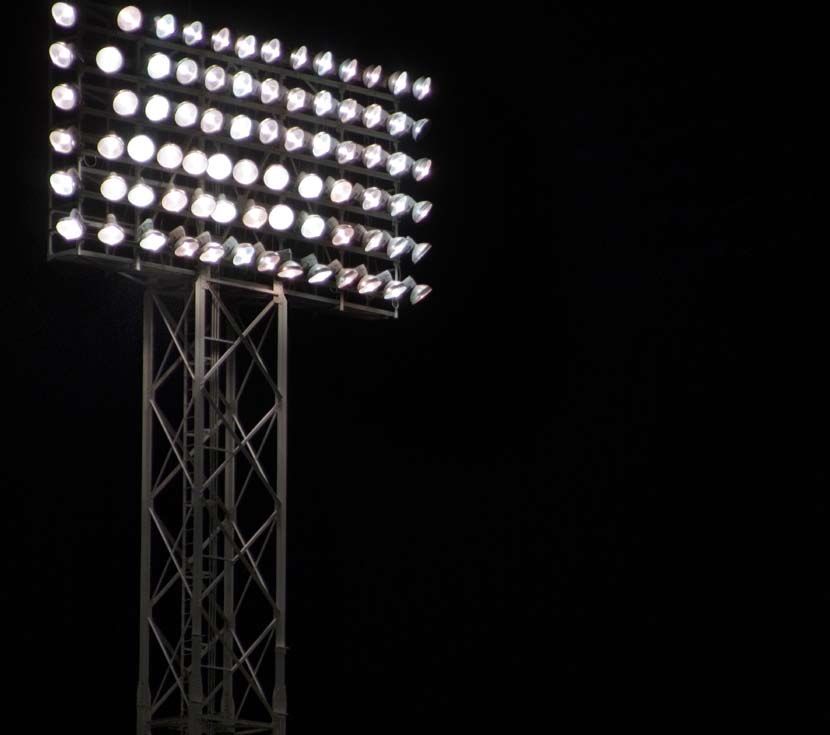
3.5 Durability
The ability of an artificial grass surface to retain acceptable playing properties throughout its service life (subject to
acceptable maintenance) is an important aspect of a product. Possibly the greatest threat to the performance of
an artificial grass rugby/football surface is excessive compaction of the infill materials and or excessive fibrillation of
the pile of the carpet. Both the IRB and FIFA have specified the same method for simulating the effects of playing on
artificial grass surfaces and assessing the changes in performance that may occur. Following conditioning to simulate
use the player/surface and ball/surface properties are reassessed to ensure continuing satisfactory performance.

The requirements for the effects of simulated use may only be undertaken in the laboratory and forms part of the
product assessment test programme.

Table 4 - Effects of simulated use

 Property                                 Test method                              Requirement

 Simulated use conditioning
                                          FIFA 10
 procedure

 Shock absorption                         EN 14808, 2005                           60% - 70%

 Deformation                              EN 14809, 2005                           4mm - 10mm

 Traction/rotational resistance           FIFA 06                                  30Nm - 50Nm

 Ball rebound                             FIFA 01                                  0.60m - 1.0m

 Water permeability                       BS EN 12616, 2003 (using a single ring) > 100mm/h

3.6 Properties of artificial grass carpet
The forces and stresses placed on artificial grass pitches, particularly when used for full contact adult rugby, are very
high. To ensure an artificial grass carpet is robust enough to withstand these forces, the IRB have identified a number
of properties for which they have specified requirements. These are detailed in the following tables.

Many properties of the artificial grass carpet and joints can be affected by prolonged exposure to water. To ensure
surfaces retain acceptable longer term performance, samples are artificially aged in water before having the
properties reassessed.

The properties of the artificial grass carpet are measured on laboratory samples and forms part of the product
assessment test programme.

Table 5 - Properties of artificial grass carpet

 Property                                 Test method                              Requirement

 Tensile properties of carpet             BS EN ISO 13934 - 1, 1999                > 25 N/mm

 Tuft withdrawal before and after         ISO 4919, 1978
                                                                                   > 25 N
 water ageing                             BS EN 13744, 2004
                                          Measurement using steel rule/BS ISO
 Pile height                                                                   > 65mm
                                          2549, 1972

                                                                                                                              9
3.7 Joint strength
     One of two methods is normally used to join rolls of artificial grass surfacing; some companies use stitched seams,
     whilst others use bonded seams. Stitched seams are most likely to fail in tension and should be tested in this mode
     to ensure adequate joint strength. Bonded seams are more likely to fail in peel (i.e. the carpet peels away from the
     backing tape to which it is bonded).

     The strength of seams is tested in accordance with BS EN 12228. This procedure describes methods for measuring
     joint strength in tensile and peel modes. The requirements for joint strength may only be undertaken on laboratory
     samples and forms part of the product assessment test programme. In certain cases, the strength of the joint may
     exceed the strength of the carpet but the recorded joint strength is below the values specified in Table 6. Providing the
     carpet satisfies the requirements for the tensile properties of the carpet, the joint strength is considered acceptable
     in such cases.

     Table 6 - Joint strength

      Property                                 Test method                               Requirements
      Tensile strength before and after        BS EN 1228: Method 1, 2002
                                                                                         ≥ 1,200 N/100mm
      water ageing - stitched seams            BS 7400 Section 2.4 Method 3, 1989
      Peel strength before and after water     BS EN 1228: Method 1, 2002
                                                                                         ≥ 75 N/100mm
      ageing - bonded seams                    BS 7400 Section 2.4 Method 2, 1989

     Note: IRB Regulation 22 currently specifies a tensile joint strength of 2500N/100mm for all types of joint. Experience
     to date has shown bonded joints are not able to achieve this value, but perform adequately on site. The RFU have
     proposed the IRB amend the Regulation to the requirements detailed in Table 6.

     3.8 Resistance to artificial weathering
     To ensure acceptable long term resistance to artificial weathering, the artificial grass surface, including all infill should
     be manufactured from materials that have levels of resistance to ultra violet (UV) light degradation, weathering and
     ageing that will ensure the surfacing does not prematurely breakdown, fail or significantly fade or change colour during
     its normal service life (10 years).

     Table 7 - Effects of artificial weathering

      Component                      Property                       Test Method                     Requirement

      Artificial                     Colour change                  EN ISO 20105-A02                ≥ Grey scale 3

                                                                                                    % change from unaged to
      Pile yarn(s)                   Tensile strength               EN 13864
                                                                                                    be no more than 50%

      Polymetric infill              Colour change                  EN ISO 20105-A02                ≥ Grey scale 3

     3.9 Toxicity
     When claiming conformity to this standard, the manufacturer/supplier of the artificial grass surface is deemed to be
     confirming that the artificial grass surface, including all infill and shockpad materials, have been manufactured from
     materials that in their finished state do not contain any substance which is known to be toxic or carcinogenic when in
     contact with the skin or ingested and that no toxic or carcinogenic substances will be released as a vapour, leachant or
     dust during normal use.

10
4 Construction requirements
Pitches should be designed and built to the criteria detailed in Table 8.

Table 8 - Pitch design and construction requirements

 Property                                 Test method                             Requirements
                                          3m straight-edge                        < 10mm
 Surface Regularity (see note below)      Maximum greater number of deviations: 20 with no deviation greater
                                          than 15mm
                                          Deviations greater than 1m in length shall be considered multiple deviations
                                                                                  No more than 1.0% in any direction
 Gradients                                Surveyor’s level
                                                                                  (0.5% recommended)

 Deviation from design level              N/A                                     +± 25mm

 Water infiltration rate                  BS EN 12616, 2003                       > 100mm/h

Note: Variations in the distribution of particulate fill within the pile of a carpet can have a significant effect on the
regularity of the playing surface. Whilst this can be corrected through maintenance, the regularity of the pitch will
also be influenced by the base on which the artificial grass carpet is laid. The base should therefore meet the surface
regularity requirement and be checked before the artificial grass is laid.

                                                                                                                            11
5 Pitch assessments
Once a pitch has been constructed, it needs to be Testing should be carried out by a specialist laboratory
tested to demonstrate it has the specified levels of that is experienced in the testing of artificial grass
performance; this is particularly important for rugby surfaces, using equipment that is formally calibrated
where the severity of player impacts with a surface are in accordance with the requirements of ISO 17025.
greater than in other contact sports, thereby increasing To ensure there are no perceptions of conflicts of
the potential risk of injury. The IRFU has adopted the interest, the laboratory should be independent of
testing programme detailed in IRB Regulation 22 and the manufacturer and installer of the artificial grass
require all artificial grass pitches used for rugby (training surface and should not have participated in the design
and competition) to be tested as follows: of the installation.
• following construction - as some surfaces need Tests should be carried out in at least six positions
a period of time for the infill materials to stabilise representing high, medium and moderate use areas (two
before the surface reaches it’s optimum condition of each), unless performance at a certain location is of
testing may be delayed for up to three months concern, in which case that location should be assessed.
following completion;
• every two years thereafter — re-testing may be Tests on site should be made at the prevailing ambient
undertaken up to three months in advance of a temperature, but within the range of +5 C to +30 C and
field’s renewal date without the subsequent renewal under the prevailing surface conditions (dry or wet), unless
date changing; performance under a certain condition is of concern, in
• whenever the artificial grass surface is replaced. which case that condition should prevail.
NB: If a pitch fails to satisfy the field test The responsibility for organising the testing of an artificial
requirements of IRB Regulation 22 grass pitches remains with the operator of the pitch,
(incorporated into this Standard), it should although it may be contracted to another party such
not be used for contact rugby (training and as the organisation responsible for the construction,
playing) until the necessary remedial works operation or maintenance of the pitch. The results of
required to ensure compliance are undertaken the field tests should be entered onto the IRFU Field Test
and the pitch has been re-tested and shown to Report (see Appendix A) and forwarded to the IRFU so
fully comply. they may record the compliance of the pitch.
6 Design guidelines
6.1 Dimensions, run-offs and line markings
The playing enclosure comprises the playing area (the field of play and in-goal areas) and run-off space around it,
which are provided to ensure players do not injure themselves by running into surround fencing, hoardings and other
obstacles. The run-offs should be surfaced with the same artificial grass surface as the playing area.
Table 11 on page 15 summarises the various pitch sizes for the main categories of dual use rugby/football facility and
the recommended run-offs.
Play lines can either be painted onto the playing surface or be tufted and inlaid. Tufted lines are incorporated into
the carpet during production and inlaid lines are cut into the carpet during installation. Tufted/inlaid lines provide
permanent markings that reduce ongoing maintenance costs, whereas painted lines give greater flexibility to the use
of the area. All three methods are considered acceptable.
126.2 Floodlighting
The minimum levels of performance should be in accordance with Table 9.
Table 9 - Minimum levels of floodlighting
Property Requirement
Maintained average illuminance > 200 Lux
Uniformity (Min/Ave) > 0.6
Glare Rating 400K
Lamp colour rendering ≥ 60
For coaching, training and cross pitch play, pitches should be lit to the minimum standards detailed in Table 10.
Table 10 - Minimum levels of floodlighting - training and recreational use
Use Property Requirement
Maintained average illuminance 120 lux
Recreational play
Uniformity (Min/Ave) >0.6
Maintained average illuminance 100 lux
Training
Uniformity (Min/Ave) No requirement
Note: Following installation or re-lamping, a lighting system will normally suffer an initial deterioration in lighting
performance; this is typically in the order of 15% to 25%. The lighting levels should then be consistent (subject to
routine maintenance, including cleaning of lamp glass, realignment, etc) until the lamps reach the end of their service
life. The value of maintained average illuminance is the level of illumination provided after the initial deterioration.
13Table 11 - Recommended pitch dimensions and run-offs (Based on common touch and goal lines)
Recommended run-off Playing
Type of pitch Category Playing Area beyond playing area enclosure
Distance at Minimum at
either end of either side of (fence to fence)
pitch pitch
Length Width (Refer to section
Touch- 6.1 of this
in goal Run-off Run-off document)
line
Full size pitches Recommended 130.0m 80.0m 10.0m 5.0m 5.0m 130.0m x 80.0m
Training/mini
Training pitches 55.0m 36.5m N/A 3.0m 3.0m 61m x 42.5m
football
The IRB states that: ‘The length and breadth of the playing area are to be as near as possible to the dimensions
indicated. All the areas are rectangular.’ (IRB Law 1 - The Ground)
7 References
1. IRB Performance Specification for Artificial Support and advice
Surfaces for Rugby - Regulation 22, March 2004 For further support and advice on artificial turf
www.irb.com pitches and their use for rugby union, please contact
your local branch office (see back page).
2. FIFA Quality Concept for Football Turf, April 2006
www.fifa.com/en/development/quality/
artificialtest.html
3. Artificial Grass in UEFA Competitions,
Requirements and Recommendations,
UEFA, 2003
www.uefa.com
148 Recommended pitch
dimensions (full size pitch)
20.00m
10.00m
5.00m 15.00m
3.00m
5.00m width of rugby goal posts
10.00m
100.00m 130.00m
10.00m
22.00m
10.00m
15.00m
5.60m width of rugby goal posts
5.00m
70.00m
80.00m
15Recommended pitch
dimensions (training pitch)
42.50m
36.50m
3m
6.00m R7.50m
55.00m 61.00m
3m
169 Artificial grass rugby pitch -
field rest report
This report must be completed in full and signed by a Director of the laboratory that
undertook the field tests and the organisation responsible for the artificial grass pitch.
The completed Field Test Report should be sent (by post, fax or email) to:
Declan O’Brien
Operations Manager
Irish Rugby Football Union
10/12 Lansdowne Road
Dublin 4
Fax: 01 647 3801
Email: declan.obrien@irfu.ie
Please see Appendix A for a sample Field Test Report.
17Appendix A
Artificial Grass Rugby Pitch - Field Test Report
Site details
Club or site name
Address
Club or site contact
Tel
Email
Date pitch installed
Contractor
Contractor’s address
Artificial grass product
name
Infill Upper layer
Middle layer
Lower layer
Shockpad
Base
Type of test Initial Re-test
Re-test: date of last test
Pitch owner/operator
Organisation
Address
Contact
Tel
Email
18Appendix A (continued)
Artificial Grass Rugby Pitch - Field Test Report
Test Laboratory
Laboratory
Address
Tel
Contact
Email
Laboratory project
reference
Signature
Test Conditions
Date of test
Surface condition Dry Wet
Ambient temperature Surface temperature
Pitch location Date of test
1920
Appendix A (continued)
Artificial Grass Rugby Pitch - Field Test Report
Test results - IRB Regulation 22
Person/surface interaction
Test Position
Property Requirements Pass/fail
1 2 3 4 5 6
Shock absorption 60% - 75%
Vertical deformation 4mm - 10mm
Rec: > 1.3m*
Head injury criteria
Min: > 1.0m
Energy restitution 30% - 50%
Traction 30Nm - 50Nm
Slip resistance 0.6 - 1.0
Sliding distance ** 0.25 - 0.75m
* IRFU recommendation for new pitches
** Dual use rugby/football pitches onlyAppendix A (continued)
Artificial Grass Rugby Pitch - Field Test Report
Ball/surface interaction
Test Position
Property Requirements Pass/fail
1 2 3 4 5 6
Ball rebound 60 - 100cm
Angle ball rebound
Ball roll** 60 - 100cm
* Tests on rugby only pitches in accordance with IRB regulation 22. Tests on dual use rugby/football pitches in accordance with RFU/FA Standard
** Dual use rugby/football pitches only
Construction
Dimensions Length Width
Principal gradients Length Width 180mm/h
Pile height >65mm
Infill depth
21Appendix A (continued)
Artificial Grass Rugby Pitch - Field Test Report
Plan showing surface undulations exceeding 10mm
22Appendix A (continued)
Artificial Grass Rugby Pitch - Field Test Report
Laboratory results
IRB Regulation 22 includes a series of laboratory tests. To fully comply with the Regulations, as required by the Laws of
the Game, the artificial grass surface installed on a field must also meet the requirements of the laboratory tests.
When submitting a Field Test Report for a new pitch a copy of the test report showing the installed surface’s
compliance with the laboratory test requirements of IRB Regulation 22 must be attached to the Field Test Report and
the installing company must confirm the artificial grass surface installed is to the same specification as that detailed in
the laboratory test report.
Statement of conformity
We confirm that the combination of artificial grass surface, infill, shockpad and sub-base installed on the pitch
to which this Field Test Report applies are the same (within industry production tolerances) as those previously
tested in the laboratory and as described in the laboratory test report detailed below
Signed
Name
Position
Company
Date
Laboratory Test Report
Reference No.
Laboratory report included Yes No
Pitch location Date of test
23For further information contact the Branch Club Rugby Development Manager: Munster Rugby Tel: 021 4323563 Fax: 021 4323956 Leinster Rugby Tel: 01 2693224 Fax: 01 2693142 Connacht Rugby Tel: 091 561568 Fax: 0909 643083 Ulster Rugby Tel: 048 90493111 Fax: 028 90491 522 The IRFU shall not be liable for any loss or damage whatsoever arising from the use of or reliance on the information contained in this Guidance Note. The IRFU reserves the right to amend or widthdraw the information contained in this Guidance Note. Produced in association with the RFU.
You can also read


