Multi-dwelling residential buildings and works (such as townhouses) - Stormwater planning requirements: development scenario - Water and catchments
←
→
Page content transcription
If your browser does not render page correctly, please read the page content below
Multi-dwelling residential buildings and works
                        (such as townhouses)
             Stormwater planning requirements: development scenario

                OFFICIAL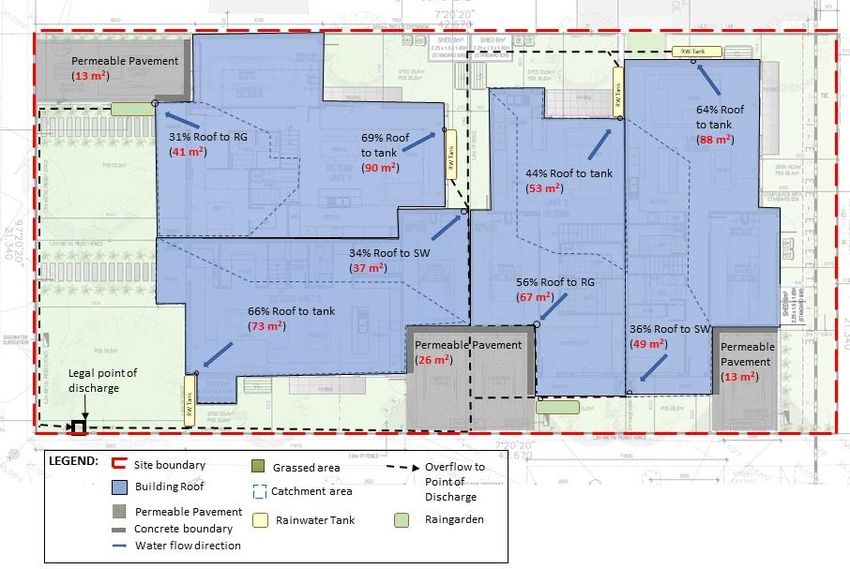
Acknowledgment
    We acknowledge and respect Victorian Traditional Owners as the original custodians of Victoria's land and waters, their unique ability
    to care for Country and deep spiritual connection to it. We honour Elders past and present whose knowledge and wisdom has
    ensured the continuation of culture and traditional practices.
    We are committed to genuinely partner, and meaningfully engage, with Victoria's Traditional Owners and Aboriginal communities to support
    the protection of Country, the maintenance of spiritual and cultural practices and their broader aspirations in the 21st century and beyond.

© The State of Victoria Department of Environment, Land, Water and Planning 2020
                 This work is licensed under a Creative Commons Attribution 4.0 International licence. You are free to re-use the work under that licence, on the condition that you credit the State of Victoria
                 as author. The licence does not apply to any images, photographs or branding, including the Victorian Coat of Arms, the Victorian Government logo and the Department of Environment,
                 Land, Water and Planning (DELWP) logo. To view a copy of this licence, visit http://creativecommons.org/licenses/by/4.0/

ISBN 978-1-76105-234-7 (pdf/online/MS word)

Disclaimer
This publication may be of assistance to you but the State of Victoria and its employees do not guarantee that the publication is without flaw of any kind or is wholly appropriate for your particular purposes
and therefore disclaims all liability for any error, loss or other consequence which may arise from you relying on any information in this publication.

Accessibility
If you would like to receive this publication in an alternative format, please telephone the DELWP Customer Service Centre on 136186,
email customer.service@delwp.vic.gov.au or via the National Relay Service on 133 677 www.relayservice.com.au. This document is also
available on the internet at www.delwp.vic.gov.au.

 delwp.vic.gov.au
                                                                                                                                                                                                                    i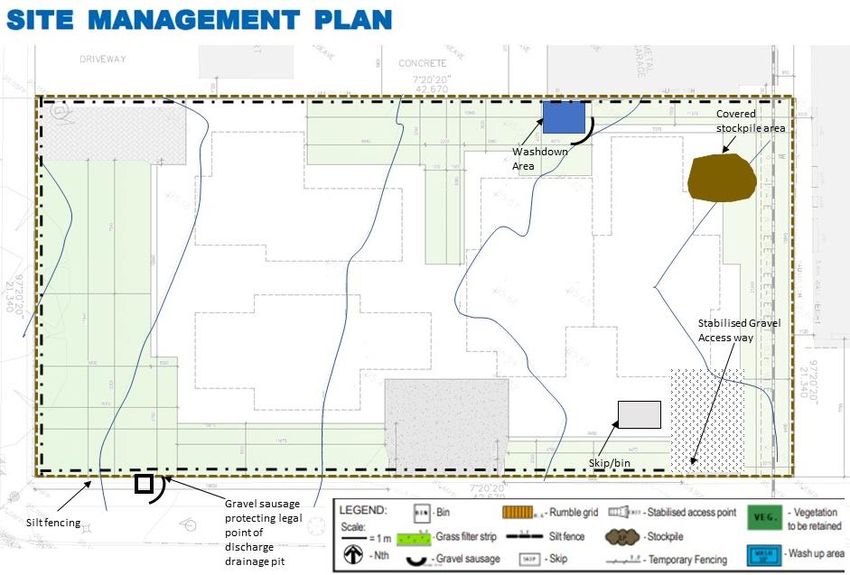
Contents

Introduction ....................................................................................................................... 1
Planning requirements ....................................................................................................................................1
Objectives of Clause 55.03-4 ..........................................................................................................................3
Standards .........................................................................................................................................................3

Worked example ............................................................................................................... 4
A: Proposed development description..........................................................................................................4
B: Site layout plan, catchment areas and WSUD treatment systems ........................................................5
C: Modelling and compliance .........................................................................................................................8
D: Functional design considerations ..........................................................................................................10
E: Site management plan ..............................................................................................................................13
F: Asset maintenance program ....................................................................................................................16

 delwp.vic.gov.au
                                                                                                                                                                       ii
                                                                                                                     OFFICIAL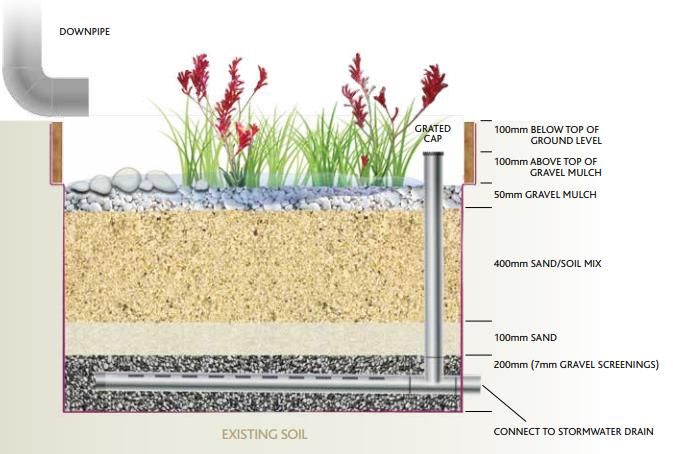
Introduction
This development scenario is a support tool for those complying with stormwater planning requirements. The intended audience is both design practitioners
submitting applications, as well as council planners assessing development applications.
A checklist indicates the minimum information that should be included in a stormwater report lodged with the planning application. This worked example for a multi-
unit townhouse development demonstrates how a ‘buildings and works’ planning application for multi-dwelling residential development should be designed to satisfy
the objectives and standards of the relevant clauses. The right column of the example (green boxes           ) indicate which sections of the report respond to which
checklist items. The call out text boxes (blue boxes      ) offer resources and links for both designers and assessors.

Planning requirements
This example is in a residential zone, for the development of the site for townhouses. These requirements apply irrespective of the site being subdivided in the
future. The stormwater management response is required to comply with Clause 55.03-4 (Permeability and stormwater management objectives) under the Victoria
Planning Provisions (VPP).
This example can be used for townhouses and similar residential development proposals. In this example the site is large enough to provide on-site car parking for
four townhouses. It can be adapted for smaller or larger developments with these features.
The development will need to meet all planning scheme requirements for the land and the development type. This may include local controls. Applicants are
encouraged to check with their local council if they are not sure which planning scheme provisions apply and complete a site layout plan before starting the
stormwater report.

 delwp.vic.gov.au                                                                                                        Multi-dwelling residential buildings and works    1
                                                                                                                                                  (such as townhouses)
                                                                                                                  Stormwater planning requirements: development scenario
delwp.vic.gov.au          Multi-dwelling residential buildings and works    2
                                                   (such as townhouses)
                   Stormwater planning requirements: development scenario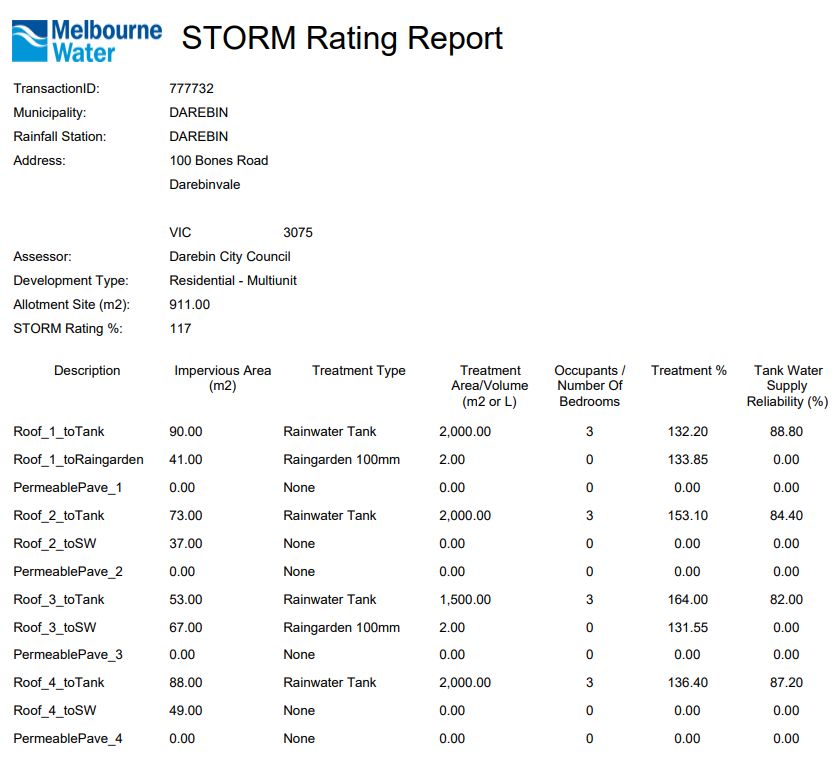
Objectives of Clause 55.03-4
55.03-4 Permeability and stormwater management objectives
• To reduce the impact of increased stormwater run-off on the drainage system.
• To facilitate on-site stormwater infiltration.
• To encourage stormwater management that maximises the retention and reuse of stormwater.

Standards
The requirements for Standard B9 are listed below.

 CLAUSE        Standards

 55.03-4       Standard B9:
               The site area covered by the pervious surfaces should be at least:
               • The minimum area specified in a schedule to the zone, or
               • If no minimum is specified in a schedule to the zone, 20 percent of the site.
               The stormwater management system should be designed to:
               • Meet the current best practice performance objectives for stormwater quality as contained in the Urban Stormwater - Best Practice Environmental Management
                 Guidelines (Victorian Stormwater Committee, 1999).
               • Contribute to cooling, improving local habitat and providing attractive and enjoyable spaces.

All applications must be accompanied by details of the proposed stormwater management system, including drainage works and retention, detention
and discharges of stormwater to the drainage system.

 delwp.vic.gov.au                                                                                                               Multi-dwelling residential buildings and works    3
                                                                                                                                                         (such as townhouses)
                                                                                                                         Stormwater planning requirements: development scenario
Worked example
The stormwater summary report presented by the applicant should provide all the information listed in the checklist.
This example aims to demonstrate how a townhouse development (or similar) could satisfy Clause 55.03-4 (Standard B9).
Some local councils may require more detail for some aspects of the design than presented here. The schematic is not intended
as an accurate representation of all other planning requirements for a development of this nature.
A: Proposed development description
A: Proposed development
The site is an existing 911 m2 residential block, to be developed into four townhouses, of two-storeys and three bedrooms each. description:
The development has 498m2 total impervious area making an impervious fraction of 55%. Each townhouse has external parking
space surfaced with permeable pavement. ❑ A1: Describe the
proposed development
The stormwater management response is summarised as:
e.g. describe the land
• Part of each dwelling’s roof drains to a rainwater harvesting tank which is supplied to toilets for flushing. use, anticipated
tenancy, buildings and
• Remaining parts of the dwellings’ roofs are directed to either raingardens (Dwellings 1 and 3) or the Council drainage network works, number of car
without treatment (Dwellings 2 and 4). parking spaces,
expected number of
• Permeable paving is used for the vehicle driveways.
occupants, etc.
• 45% of the site is pervious, including the open space areas provided in front and rear yards (meeting the minimum 20%
requirement).
• This site has generous green space allocation for the creation of green recreational areas for residents. Planting of trees and
native ground covers are proposed to contribute towards cooling and providing attractive and enjoyable spaces.
Figure 1 shows the WSUD assets and their required drainage connections. Please refer to concept design drawings for further
details of each WSUD asset.
delwp.vic.gov.au Multi-dwelling residential buildings and works 4
(such as townhouses)
Stormwater planning requirements: development scenarioB: Site layout plan, catchment areas and WSUD treatment systems
B: Site layout plan,
catchment areas and WSUD
treatment systems:
❑ B1: Provide a site layout
plan showing all building
roofs and covered areas,
pervious (unsealed)
surface areas and
impervious (sealed)
surface areas with
dimensions. These
details must be
consistent with the plans
and other documents
lodged with the planning
application.
❑ B2: Show the site
boundary, dimensions,
and total site area on the
site layout plan.
❑ B3: Show the legal point
of discharge (see
checklist for further
description).
❑ B4: Specify the area
draining to each
downpipe, treatment and
legal point of discharge –
includes both impervious
and pervious areas (see
checklist for further
Figure 1: Site layout plan description).
delwp.vic.gov.au Multi-dwelling residential buildings and works 5
(such as townhouses)
Stormwater planning requirements: development scenarioStormwater treatment strategy
A summary of the surface areas and treatments can be seen in Table 1. The site was assessed using the online STORM tool B: Site layout plan,
calculator. catchment areas and WSUD
It is assumed that very little litter will be generated from the site, as residents will make use of the existing rubbish collection treatment systems:
service provided by Council.
❑ B5: Show the location,
Table 1: Catchment type or WSUD asset surface area type and surface area (m2)
of the proposed WSUD
Surface type Catchment area (m2) Area treated by: treatment systems on a
plan, including how each
Townhouse 1
internal catchment area to
Roof to Tank 90 2kL tank, toilet demand for 3 bedrooms be treated will be
connected to a WSUD
Roof to Raingarden 41 2m2 above-ground raingarden
element (e.g. roof to
Permeable Pavement 13 rainwater tank, driveway to
raingarden). Show how
Pervious/Garden 90
piped connections will be
Townhouse 2 made within the site and to
the LPOD and clearly
Roof to Tank 73 2kL tank, toilet demand for 3 bedrooms
annotate any impervious
Roof to Drainage 37 areas not being treated by
a WSUD element.
Permeable Pavement 13
Pervious/Garden 102
❑ B6: Indicate the expected
Townhouse 3 volume of on-site
stormwater reuse and how
Roof to tank 53 1.5kL tank, toilet demand for 3 bedrooms
this has been calculated.
Roof to raingarden 67 2m2 above-ground raingarden
Permeable pavement 13
Pervious/garden 85
Townhouse 4
Roof to tank 88 2kL tank, toilet demand for 3 bedrooms
Roof to drainage 49
Permeable pavement 13
Pervious/garden 84
Total site area: 911m2 Total impervious area: 498m2 Site permeability: 55%
delwp.vic.gov.au Multi-dwelling residential buildings and works 6
(such as townhouses)
Stormwater planning requirements: development scenarioB: Site layout plan, catchment
Relevant links
areas and WSUD treatment
• Urban Stormwater Best Practice Environmental Management Guidelines (BPEM) (Victorian Stormwater Committee): systems:
http://www.publish.csiro.au/book/2190
• Options for treating stormwater using WSUD (Melbourne Water):
❑ B7: If relevant to the
development type, identify
https://www.melbournewater.com.au/planning-and-building/stormwater-management/options-treating-stormwater potential toxicants generated
• WSUD Engineering Procedures Stormwater (Melbourne Water): by the business, where they
https://www.publish.csiro.au/book/4974/#contents will be located on the
premises, and what
• Infrastructure Design Manual (IDM) (Local Government Infrastructure Design Association): structural isolation is
https://www.designmanual.com.au/download-idm required to prevent the
runoff draining to a WSUD
• Adoption Guidelines for Stormwater Biofiltration Systems (CRC for Water Sensitive Cities): treatment system or
https://watersensitivecities.org.au/content/stormwater-biofilter-design/ stormwater drain.
• Raingarden Instruction Sheets (Melbourne Water):
https://www.melbournewater.com.au/water-data-and-education/environmental-issues/why-we-need-save-water/tips-
❑ B8: Describe how the
stormwater management
saving-water/raingardens
design contributes to local
cooling, improving local
habitat outcomes and
providing attractive/
enjoyable spaces.
❑ B9: Table summarising the
internal drainage catchment
areas shown on the site
layout plan, the size of the
catchment area, the
percentage of the site this
represents and information
about the corresponding
WSUD treatment system.
The table should equal
100% of total site area.
The information should
correspond to the
information shown on the
site layout plan.
delwp.vic.gov.au Multi-dwelling residential buildings and works 7
(such as townhouses)
Stormwater planning requirements: development scenarioC: Modelling and compliance
The STORM tool was used to estimate the treatment size requirements for the proposed site design to meet best practice C: Modelling and compliance
requirements. The input details and compliance results are shown in the output from the STORM tool in Figure 2 below.
The site has 45% pervious area (meeting the minimum 20% requirement under Standard B9), and raingardens and tree
❑ C1: Compliance summary
with objectives outlined in
plantings also provide the combined benefits of cooling and improving amenity for inhabitants and visitors to the complex. Clause 55.03 – including
compliance with minimum
permeable area
requirement.
❑ C2: STORM report with a
minimum 100% rating or
MUSIC (or other acceptable
modelling) results that
meets best practice
performance for stormwater
pollutant load reductions:
TSS 80%; TP 45%; TN
45%; Litter 70%.
❑ Summary of model
input parameters,
including each WSUD
treatment system.
❑ Screen print of model
analysis (e.g. STORM
report) or a schematic
of the model (e.g.
MUSIC).
❑ If MUSIC: Check
MUSIC file using the
MUSIC auditor
(https://www.musicaud
itor.com.au/).
❑ The applicant should
submit a copy of the
MUSIC file (.sqz) used
to generate treatment
performance.
Figure 2: STORM model inputs and output
delwp.vic.gov.au Multi-dwelling residential buildings and works 8
(such as townhouses)
Stormwater planning requirements: development scenarioThe effectiveness of the treatment systems is summarised in Figure 2, indicating 117% STORM rating and thereby
demonstrating compliance with water quality improvement requirements outlined in Urban Stormwater Best Practice
Environmental Management Guidelines (BEPM) – as 100% STORM rating corresponds to the minimum 45% reduction in Total C: Modelling and
Nitrogen required by BPEM. The raingardens and tree plantings also provide the combined benefits of cooling and adding compliance
enjoyable aesthetics for inhabitants and visitors to the complex.
In this example the STORM tool has been used, which is appropriate for a residential development of this size and complexity
❑ C3: Minimises impact of
chemical pollutants and
(i.e. where each catchment area drains to no more than one treatment type). Alternatively, other appropriate modelling software other toxicants, as
(e.g. MUSIC or Insite Water) could be used to demonstrate compliance with the BPEM requirements, if acceptable to Council. relevant.
References and resources for STORM (as used in this example) and alternative models can be found in the text box below.
Relevant links – STORM
• STORM Calculator (Melbourne Water):
https://storm.melbournewater.com.au/
To use the STORM Calculator,
• Enter your email address to be taken to the STORM calculator page
• Enter rows in the calculator until all impervious areas in the catchment and their treatments are included (enter ‘none’ if no
treatment exists for an impervious area)
• Press the ‘Calculate’ button to view the performance of the design.
• In order to meet best practice, a STORM Rating of at least 100% must be achieved.
Other relevant links
• MUSIC software (eWater):
https://ewater.org.au/products/music/
• MUSIC Guidelines (Melbourne Water):
https://www.melbournewater.com.au/sites/default/files/2018-02/Music-tool-guidelines-2018.pdf
• MUSIC Auditor tool (Melbourne Water):
https://www.musicauditor.com.au/
• InSite Water (Organica Engineering):
https://insitewater.com.au/
delwp.vic.gov.au Multi-dwelling residential buildings and works 9
(such as townhouses)
Stormwater planning requirements: development scenarioD: Functional design considerations
Note: This section may be required for inclusion with the planning application, or else the information may be required as a D: Functional design
condition of permit. Check with your council for advice on which applies. considerations
Rainwater tank ❑ D1: Plan from Checklist
item B or amended plan
required by permit.
❑ D2: Sectional view of
each WSUD treatment
showing indicative
levels.
❑ D3: Size of treatment
elements, e.g. tank
volume, raingarden
width and length,
extended detention
depth, etc.
❑ D4: Details of pipe
connections between
any rainwater tank and
end uses, e.g. toilet/s,
laundry, hot/cold water
and irrigation, as
applicable.
Figure 3: Rainwater tank concept design plan
delwp.vic.gov.au Multi-dwelling residential buildings and works 10
(such as townhouses)
Stormwater planning requirements: development scenarioRaingarden
D: Functional design
considerations
❑ D5: Levels for each
WSUD treatment
including surface level,
extended detention
depth, filter layers and
depth, under drain
system, legal point of
discharge.
❑ D6: Plant species and
planting densities to be
used in any vegetated
treatment systems.
Refer to checklist.
❑ D7: For vegetated
treatment systems,
management of the
interface between the
WSUD treatment and
immediately surrounding
areas, e.g. car parking
spaces, walkways,
Figure 4: Raingarden cross section
lawns, so that the
WSUD elements and
Table 2: Plant species preferences public safety are
protected.
Recommendations for plant types*
Vegetation for raingarden Ficinia nodosa (Knobby Club Rush)
Anigozanthus spp. (Kangaroo Paw)
*These are only two of many species which could be used. For purposes of aesthetics other species may also be used to add
variety – refer to the resources below. For a development of this size a density of 6-10 plants/m2 is proposed.
delwp.vic.gov.au Multi-dwelling residential buildings and works 11
(such as townhouses)
Stormwater planning requirements: development scenarioRelevant links
• WSUD Engineering Procedures Stormwater (Melbourne Water):
https://www.publish.csiro.au/book/4974/#contents
• Adoption Guidelines for Stormwater Biofiltration Systems (CRC for Water Sensitive Cities):
https://watersensitivecities.org.au/content/stormwater-biofilter-design/
• Infrastructure Design Manual (IDM) (Local Government Infrastructure Design Association):
https://www.designmanual.com.au/download-idm
A useful reference for suitable streetscape WSUD plant species is Moreland City Council’s WSUD streetscape raingarden
and tree pit design package (refer to Planting Palette Extract) located at:
https://www.moreland.vic.gov.au/environment-bins/environment/water/wsud-design-package/
delwp.vic.gov.au Multi-dwelling residential buildings and works 12
(such as townhouses)
Stormwater planning requirements: development scenarioE: Site management plan
Many Victorian councils require a site management plan to be submitted and approved before site works begin, so check with E: Site management plan
council on specific requirements. Site management plans help you record the way you manage risk and may help with your
planning. If a pollution incident happens, they may also help demonstrate to Environment Protection Authority (EPA) Victoria
what steps you have taken to meet your general environmental duty (GED) (from 1 July 2021) by reducing or eliminating the risk
❑ E1: Statement outlining
the environmental
of harm to human health and the environment. protection measures to
protect the stormwater
The following site management plan (refer to Figure 5) outlines the consideration and measures taken to contain sediment and
system during
litter from construction on-site and to protect the receiving drain and downstream waterways. The measures include such things construction (e.g..
as covering stockpiles, designated wash-down areas, stabilised gravel entrance and protection to all receiving drains. sediment, dust, waste,
The EPA Victoria website also provides information about following a risk-based approach to preventing and minimising impacts chemicals management).
from erosion and sedimentation.
delwp.vic.gov.au Multi-dwelling residential buildings and works 13
(such as townhouses)
Stormwater planning requirements: development scenarioE: Site management plan
❑ E2: Site management
measures shown on a
plan.
Figure 5: Proposed site management plan
Note: Where the access way slopes down toward the road, a diversion hump should be installed across the stabilised access to
direct stormwater runoff to the side where it can be filtered by the silt fence.
delwp.vic.gov.au Multi-dwelling residential buildings and works 14
(such as townhouses)
Stormwater planning requirements: development scenarioRelevant links
For larger scale developments (10 or more dwellings or over 1000m2), consider developing a site management plan that
addresses environmental risk, or an Environmental Management Plan (EMP) – guidelines are available at:
• Environmental Management Plan Guidelines (Commonwealth of Australia):
https://www.environment.gov.au/system/files/resources/21b0925f-ea74-4b9e-942e-a097391a77fd/files/environmental-
management-plan-guidelines.pdf
Other useful resources include:
• Site Environmental Management Plan kit (Melbourne Water):
https://www.melbournewater.com.au/planning-and-building/developer-guides-and-resources/standards-and-
specifications/develop-site
• Guidance on reducing erosion and sedimentation risk (EPA Victoria):
https://www.epa.vic.gov.au/for-business/find-a-topic/erosion-and-sediment/advice-for-businesses
• Assessing and controlling risk: A guide for business – EPA publication 1695 (EPA Victoria):
https://www.epa.vic.gov.au/about-epa/publications/1695-1
This guide is also available in languages other than English.
• Construction techniques for sediment pollution control – EPA publication 275 (EPA Victoria):
https://www.epa.vic.gov.au/about-epa/publications/275
• Construction – Guide to preventing harm to people and the environment – EPA publication 1820 (EPA Victoria):
https://www.epa.vic.gov.au/about-epa/publications/1820
Outlines how to manage risks in construction, provides an outline of your legal obligations, what actions you can take to
comply with the new laws, and contains a list of common hazards and information about how to manage waste. The guide
does not tell you about the controls to put in place to suit your circumstances.
• Civil construction, building and demolition guide – EPA publication 1834 (EPA Victoria):
https://www.epa.vic.gov.au/about-epa/publications/1834
Supports industry to eliminate or reduce the risk of harm to human health and the environment through good
environmental practice. It provides an overview of the duties under the new laws, outlines a risk based approach for
assessing and managing risks, and includes information on controls that you can put in place to manage your risks.
delwp.vic.gov.au Multi-dwelling residential buildings and works 15
(such as townhouses)
Stormwater planning requirements: development scenarioF: Asset maintenance program
Note: This section may be required by your council. Check with your council for further advice on what is required. A suggested
list is provided in the checklist.
Although an asset maintenance program is not a requirement under this standard, some councils may require maintenance
schedule detailing, including inspection of WSUD assets, schedule of maintenance, and responsibilities (i.e. future tenant,
owner, body corporate, etc).
In order to protect our waterways and enhance the function, aesthetics and amenity associated with WSUD, it is important that
these assets are maintained so they continue to operate as designed.
In this case, in order to maintain the aesthetics and function of the raingarden, any litter/debris/sediment will need to be removed
at regular intervals (approximately monthly, as required). The management of the raingardens and tanks will be the
responsibility of the landowner.
Note: It is suggested that councils recommend to property owners that they record the location and details of their buried on-site
stormwater devices and attach it to property title documents. Councils should also consider recording information about the
location of buried stormwater infrastructure on private land where required as part of a planning permit, to support future asset
management and/or enforcement.
Relevant links
• WSUD Maintenance Guidelines (Melbourne Water):
https://www.melbournewater.com.au/media/636/download
• WSUD Audit Guidelines (Stormwater Victoria):
https://www.musicauditor.com.au/node/36
• WSUD Maintenance Manuals (City of Port Phillip):
- Rainwater tanks: https://manualzz.com/doc/7441220/rainwater-tanks---city-of-port-phillip
- Raingardens: https://www.portphillip.vic.gov.au/media/dd1n33yv/maintenance_manual_raingarden.pdf
delwp.vic.gov.au Multi-dwelling residential buildings and works 16
(such as townhouses)
Stormwater planning requirements: development scenariodelwp.vic.gov.au
delwp.vic.gov.au Multi-dwelling residential buildings and works 17
(such as townhouses)
Stormwater planning requirements: development scenarioYou can also read


