Technical SEO Checklist for 2020 - YOUR COMPREHENSIVE - Brafton
←
→
Page content transcription
If your browser does not render page correctly, please read the page content below
YOU R CO M PRE H E N S I V E

Technical SEO
Checklist for 2020
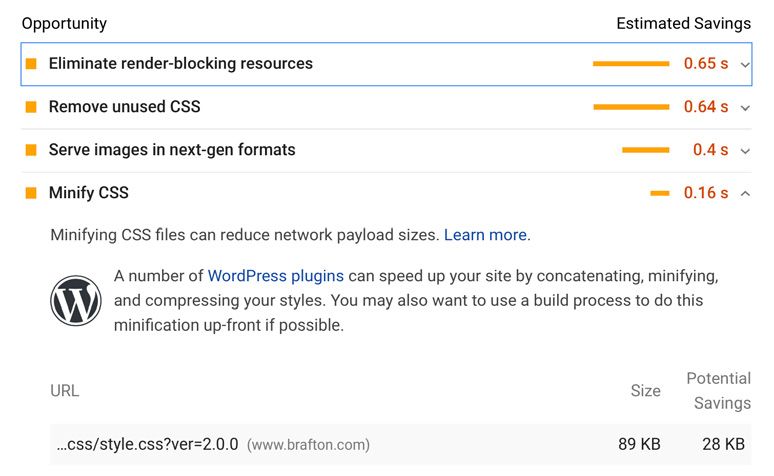
Table of Contents
  What is Technical SEO?                                Item No. 5: Accessibility

  Where Technical SEO Fits Into Your                    Item No. 6: Schema Markup
  Digital Marketing Strategy
                                                        Item No. 7: HTTPS Encryption
   Item No. 1: Indexing
                                                        Item No. 8: User Experience
   Item No. 2: Making
   Search-Friendly URLs                                 Item No. 9 Crawl Optimization

   Item No. 3: Page Speed                               Item No. 10: Duplicate Content and
                                                        Toxic Backlinks
   Item No. 4: Mobile Friendliness
                                                        Conclusion

                              YOUR COMPREHENSIVE TECHNICAL SEO CHECKLIST FOR 2020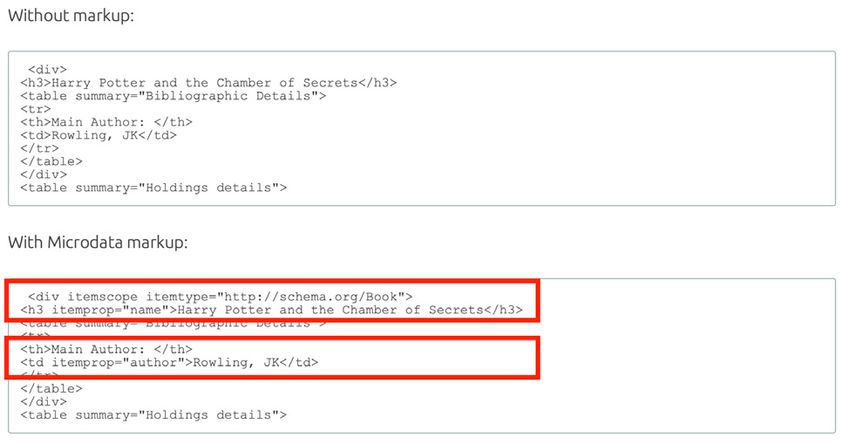
What is Technical SEO?
                          Your website is like a car. Some features are supposed to be seen and
                          interacted with: your webpage copy, images, graphics, videos, form fills,
                          navigation, etc. These are akin to a vehicle’s paint job, body, dashboard
                          and interior seating.

                          Then there are the unseen elements of your site – your robot.txt file, your
                          CSS, HTML and JavaScript files, your backend configurations, etc. Like
                          the gears, tubes, hoses, gaskets and other components under the hood
                          of a vehicle, they aren’t pretty or intuitive. But they are central to the
                          performance of your website.

                          Technical search engine optimization (SEO) is concerned with all the
                          non-intuitive stuff that influences search engines’ ability to crawl your site,
                          understand its content and, ultimately, index your pages in search results.

                          Without technical SEO, you can’t optimize your ranking. You’d just be
                          spinning your wheels.

YOUR COMPREHENSIVE TECHNICAL SEO CHECKLIST FOR 2020                                                   1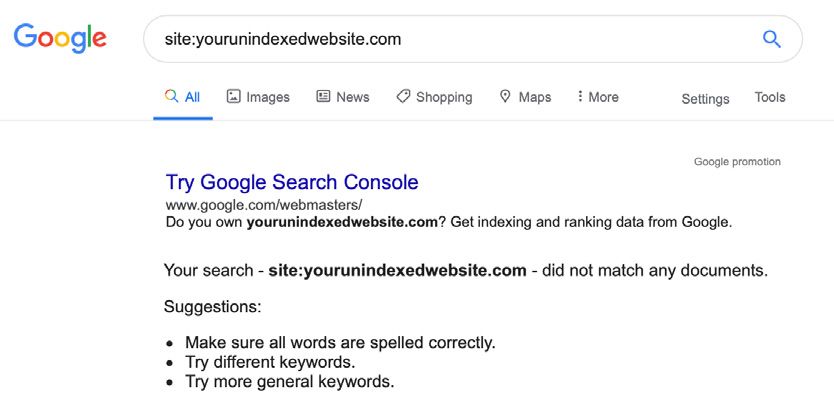
Where Technical SEO Fits Into
Your Digital Marketing Strategy
There are two main types of SEO:                                                                 You need both to rank well on search engines.

                                                                                                 That said, you can’t rank at all if your site isn’t
            1. ON-PAGE SEO: Activities on your site to help it rank better in search engine
                                                                                                 crawlable or indexable in SERPs – and even
            results pages (SERPs):
                                                                                                 if it is, a quagmire of technical issues can foil
                  Content optimization: Creating blog posts and landing pages that help you      your frontend SEO efforts and send your site
                  rank for specific keywords people are typing into search engines.              plummeting to Page 2.

                  Technical SEO: Optimizing the structural, backend elements of your site that
                                                                                                 In this sense, technical SEO is the engine
                  influence a search engine’s read of your webpages.
                                                                                                 behind all of your digital marketing campaigns.
                                                                                                 And like a real engine, a lot goes into
                                                                                                 building and optimizing it and maintaining
            2. OFF-PAGE SEO: Activities you do off your site to help it rank better:
                                                                                                 its performance.
                  Link building: Earning links from other blogs and websites back to
                  your pages.                                                                    This comprehensive checklist covers all of
                                                                                                 the most crucial technical SEO to-do items.
                  Social media and email marketing: Promoting your on-page content through
                                                                                                 Use it wisely.
                  off-page channels like Facebook and email.

                                              YOUR COMPREHENSIVE TECHNICAL SEO CHECKLIST FOR 2020                                                      2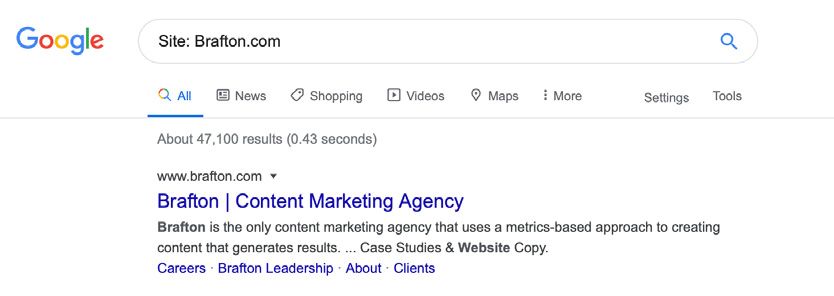
ITEM NO. 1:
                                                                           If it appears in SERPs, you know your site is indexed:

Indexing
Indexing is how you tell Google which of your webpages you want to
appear in search results, and which you want to exclude.

Some pages – like your product pages – are useful to a searcher.
Others – like an order-processing page – are not. You only want Google
to rank the useful ones. Otherwise, the pages that aren’t useful to
someone searching the web will be factored into how search engines         If it doesn’t appear in SERPs, Google will prompt you to “Try Google
rank your site. Other pages you might not want to index include:           Search Console.”

            Any duplicate pages on your site or between multiple
            web properties you might own.

            Internal search results pages.

            Thank you pages.

Unless your site is brand new, it is probably already indexed. The
easiest way to tell is to perform a simple Google search of your domain.

                                              YOUR COMPREHENSIVE TECHNICAL SEO CHECKLIST FOR 2020                                                 3
With that in mind, here are the checklist items associated with site indexing:
Create a Google Search Console account: Search Console via the Yoast SEO WordPress plugin. For pages that have
(formerly Google Webmaster Tools) lets you see if and already been indexed, you will have to submit a de-index
when your site was last indexed, any existing indexing request via Search Console.
errors, etc. The Bing equivalent of Search Console is Bing
Use the rel=“nofollow” tag: De-indexing a page will
Webmaster Tools.
prevent it from showing up in search results, but it
won’t necessarily hide the page from search crawlers.
Index your site: Assuming your webpages aren’t instructing
Googlebot can still discover a page if you have linked
Google otherwise, the search engine will eventually index
to that de-indexed page somewhere else on your
them on its own.
website, or if someone links to it on theirs. The only
way to be 100% certain that Google’s crawlers will
Create an XML sitemap and upload it to Search Console:
not follow those links is to add the rel=“nofollow” tag.
An XML sitemap is a list of every important URL on your
This will tell Google not to crawl this URL. Using the
website. It helps Google find all of the critical pages on your
Yoast plugin is the easiest way to do this.
site. It also tells Google when each page was last updated
and its priority relative to other pages on the site. An XML
Submit a robot.txt file to Google Search Console: This text
sitemap helps Google index your site more quickly, and can
file tells crawlers which pages and files they can request
ensure that the site is recrawled and reindexed regularly.
from your site, and how to crawl them. It must be named
“robot.txt” – all lowercase – and it must be placed on the
Use the tag for
website’s top-level directory. Note that crawling is not the
pages you do not want indexed: You can automatically add
same as indexing. Robot.txt won’t necessarily stop your
this tag (no coding necessary) to pages as you post them
pages from being indexed.
TOOLS YOU’LL NEED: Google Search Console, WordPress, Yoast SEO plugin (or MonsterInsights plugin), an XML sitemap generator.
YOUR COMPREHENSIVE TECHNICAL SEO CHECKLIST FOR 2020 4ITEM NO. 2:
Making Search-Friendly URLs
Your website URLs should be easy to understand for search engines and
human users alike. Long, inscrutable strings of scrambled letters and
numbers convey no information about a page. Keep your URLs simple
and understandable with these tips:
Shorter is generally better.
Use plain-text, easy to understand terms. Here is an example: “https://
www.brafton.com/blog/email-marketing/email-marketing-blogs/”
Use hyphens to separate words.
Use all lowercase.
Limit the use of underscores or special characters (hashes can send
users to a specific section of a page, but use this sparingly). TOOLS YOU’LL NEED: A CMS (e.g. WordPress), a
keyword research tool (e.g.) SEMrush, common sense.
Easily adjust your URLs in WordPress; make sure you include the main
keyword you’re trying to rank for within the URL.
YOUR COMPREHENSIVE TECHNICAL SEO CHECKLIST FOR 2020 5ITEM NO. 3:
Page Speed
How quickly your webpages load is a direct ranking factor. It’s also an indirect In this sense, the best checklist for page speed is whatever
ranking factor – slow loading times increase bounce rate (number of users who PageSpeed Insights tells you to do. However, nearly any
leave after visiting one page). That’s why it’s important to a) test your page speed website publisher can benefit from taking certain key steps.
using the Google PageSpeed Insights tool and b) takes steps to optimize page (WARNING: This is quite possibly the most technical section
speed to avoid ranking penalties and high bounce rates. Note that PageSpeed of this entire eBook.)
provides actionable steps to increase page speed and even links out resources
such as WordPress plugins that can help you, like so: Optimize images: There are a few things to
keep in mind here:
Use PNG for simple graphics with 16 or
fewer images and JPEG for photos and
advanced graphics.
Start using the SRCSET attribute in your
HTML code. This lets you have multiple
versions of images for different uses.
Use CSS sprites for images that you use
frequently like logos and buttons. This
essentially combines multiple images
into a single image file so there are
fewer HTTP requests.
YOUR COMPREHENSIVE TECHNICAL SEO CHECKLIST FOR 2020 6Use browser caching: Browsers can cache information such as Use Async: Work with your developers to set
images and style sheets to improve loading time for users. Use a scripts to “Async” when they aren’t needed to
tool such as YSlow to create cache expiration policies. render content above the fold. This ensures
the browser won’t pause site assembly when it
Reduce redirects: Every time a link on one of your pages redirects needs to fetch a script necessary to display the
to another page, you lose a little bit of loading time, so try to rest of your webpage.
minimize the number of redirects on your site.
Bundle files: Bundling puts like coding language files into one big
file (e.g., all the JavaScript files in one file, all the CSS files in another TOOLS YOU’LL NEED: Your web developers,
and so on). Lighthouse, Google PageSpeed Insights, GTmetrix,
YSlow, UglifyJS2, cssnano, HTMLMinifier.
Prioritize above-the-fold content: Structure your HTML code to run
content that appears above the fold (visible without scrolling) first.
Technically, this does not increase page speed; however, it gives the
user something to see and interact with while the rest of the page
loads, which improves perceived page performance and therefore
helps reduce bounce rates.
Minify CSS, HTML and JavaScript files: Minification removes all
unnecessary characters like spacing and developer comments from
your code. Tools like UglifyJS2 (for JavaScript), cssnano (for CSS)
and HTMLMinifier (for HTML) can help you optimize code so your
pages load faster.
YOUR COMPREHENSIVE TECHNICAL SEO CHECKLIST FOR 2020 7ITEM NO. 4:
Mobile Friendliness
Google prioritizes the mobile version of your site for ranking
and indexing. This means its bots look at the mobile version
before the desktop version.
For the most part, mobile SEO is the same as desktop SEO
– but with a few crucial exceptions. Namely, your webpages
will display differently on mobile than on desktop. It’s your
job to ensure they load well across different devices and
that they don’t disrupt the user experience.
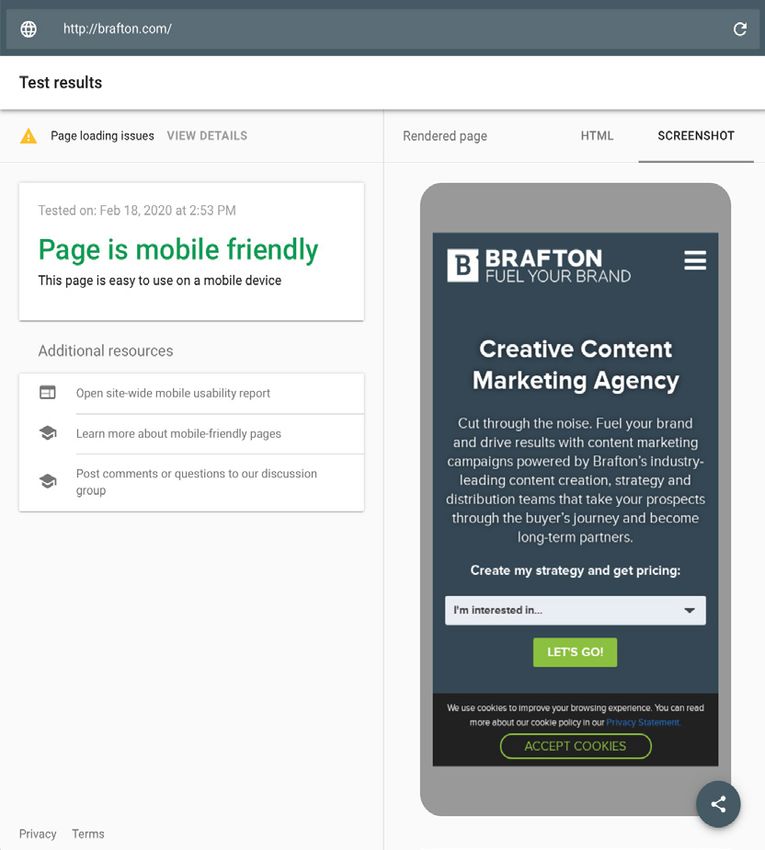
The easiest way to find out if your website is mobile friendly
is with the Google Mobile-Friendly Test. Just copy your site’s
URL into the tool and it will tell you whether your site is
optimized for mobile.
YOUR COMPREHENSIVE TECHNICAL SEO CHECKLIST FOR 2020 8Some of the main factors to consider when making your site mobile
friendly include the following:
Use responsive design: With responsive design, your
website code automatically responds to the screen you’re
viewing it on. You can either use a responsive template
(such as a WordPress theme), or you can manually make
each page responsive.
Use Viewport Meta Tag: Copy in the code for Use Accelerated Mobile Pages (AMP) only as
each of your webpages. This technique is especially useful a last resort: AMP is an open-source project
for publishers who need to manually make their site mobile that isn’t for everyone. It creates a compressed,
friendly. However, your code may require some fine-tuning stripped-down version of a page to improve its
(e.g. CSS media queries to set relative width values for speed and performance. However, this means it
certain on-page elements). eliminates some of your site’s bells and whistles,
and should therefore be used sparingly (if at all).
Remove Flash from your site: It’s no longer supported by
default on most major mobile devices.
Focus on page speed: Page speed is even more important TOOLS YOU’LL NEED: Google’s Mobile-Friendly Test,
on mobile than on desktop, so it’s that much more critical Lighthouse, PageSpeed Insights, Mobile Checker by
that you do everything we discussed on pages 6 and 7 of W3C, BrowserStack.
this eBook.
YOUR COMPREHENSIVE TECHNICAL SEO CHECKLIST FOR 2020 9ITEM NO. 5:
Accessibility
Some website publishers have faced lawsuits for failing to comply Use semantic markup (, , , etc.).
with the Americans With Disabilities Act. Perhaps the most high-
profile example involved a suit against Beyonce’s Parkwood Use Aria labels (this markup helps screen readers and other
Entertainment website, which was not making accommodations for assistive technologies better understand the purpose of
visually impaired users. certain navigation features).
While the ADA does not provide explicit guidance for website Use sufficient color contrast.
compliance, adhering to the Web Content Accessibility Guidelines
(WCAG) should help you cover your bases. Make sure you’re Use text alternatives for graphs represented as images.
checking the following boxes on your site:
Provide captioning and/or descriptive text.
All content is navigable via keyboard.
All images have alt text.
TOOLS YOU’LL NEED: WCAG guidelines, AChecker, WAVE,
Content should not blink more than 3 times per second. CKEditor 4 Accessibility Checker.
YOUR COMPREHENSIVE TECHNICAL SEO CHECKLIST FOR 2020 10ITEM NO. 6:
Schema Markup
There are two types of website markup that web
publishers can use to structure data so it is more easily
understood by search engines:
1. SEMANTIC: Helps search engines
understand structure of the site better (e.g.,
title tag, headers, etc.).
2. SCHEMA: Helps search engines better
contextualize subject matter (e.g., the As for the checklist, the only real step here is to use one of the following schema
difference between “Avatar” the movie markup languages to help better structure your code for Google:
versus an avatar in an application).
JSON-LD.
The simplest way to think of schema markup is as tags that
tell Google what a thing is. For instance, “Harry Potter and Microdata.
the Chamber of Secrets” is a “book.” You can indicate as
much with schema (Microdata in the example to the right): RDFa.
TOOLS YOU’LL NEED: A resource that simplifies schema markup, namely Google Data Highlighter (if you have access to Search Console);
Google Structured Data Markup Helper, MicrodataGenerator.com or Schema Markup Generator by Merkle.
YOUR COMPREHENSIVE TECHNICAL SEO CHECKLIST FOR 2020 11ITEM NO. 7:
HTTPS Encryption
If you don’t use HTTPS encryption, browsers will label your pages as not
secure, search engines will penalize you and users will lose trust in you.
HTTPS stands for Hypertext Transfer Protocol Secure. It indicates
to a user that their browser’s connection to a website is secured with
encryption. In other words, it prevents an interloper from tampering with
the connection between a user’s browser and your website.
Keep in mind that HTTPS is a direct ranking signal. Google, Bing and
other search engines obviously don’t want to send users to potentially
vulnerable websites.
TOOLS YOU’LL NEED: An SSL certificate from a certificate authority
(Symantec, Comodo, IdentTrust, GlobalSign, DigiCert), a tool to help
you install that plugin (Real Simple SSL).
YOUR COMPREHENSIVE TECHNICAL SEO CHECKLIST FOR 2020 12ITEM NO. 8: Make sure you’re doing the following to optimize UX:
User Experience
Look at bounce rate, session time, CTR, conversions and other Google
Analytics data to try to diagnose potential UX issues.
Optimize your site’s page speed (see pages 6 and 7 of this eBook).
User experience (UX) is not a direct ranking factor. Make sure your pages are optimized for mobile (see pages 8 and 9).
However, it can negatively affect your ranking in other
ways. Slow loading time, poor website navigation, Use breadcrumbs (especially for bigger sites).
excessively long form fills, unsightly or amateurish
graphic design, mobile unfriendliness and other on- Create an HTML Sitemap that is visible to users.
page UX elements can influence how a user engages
with your site. That, in turn, can impact your ranking. Perform a website audit using tools such as HotJar (for user
heat mapping).
Use strategically placed calls-to-actions and conversion tools to drive
positive engagements with your brand.
TOOLS YOU’LL NEED: Google PageSpeed Insights, Google’s Mobile-Friendly
Test, Google Analytics, HotJar, call-to-action tools (e.g., OptinMonster).
YOUR COMPREHENSIVE TECHNICAL SEO CHECKLIST FOR 2020 13ITEM NO. 9:
Crawl Optimization
When Googlebot or another search engine crawler fetches your
webpages, it may run into various types of site or URL errors.
A site error such as a DNS error, 500 error or timeout indicates that a
search bot is unable to access your site at all – and that is very bad.
If bots can’t crawl your site, the search engine will either lower the
ranking or drop your site from the index altogether. Site errors require
immediate attention, but are relatively easy to spot. If bots can’t
connect to your web servers, then chances are you can’t either.
A URL error, on the other hand, is much easier to miss. Your site
may have hundreds if not thousands of internal and external links.
Over time, some of those links may change, break or move, thereby
preventing Google from being able to crawl them. This will not result
in your site being deindexed, but it can hurt your ranking.
YOUR COMPREHENSIVE TECHNICAL SEO CHECKLIST FOR 2020 14It’s incredibly important to scan your site for broken or misconfigured 403 forbidden errors: Indicates that a certain page
links that inhibit proper crawling. The best tool for the job is is absolutely forbidden to anyone without the proper
ScreamingFrog. Use it to identify all of the following, and more: credentials. Try to avoid linking to pages that are forbidden
to users on your website.
404 errors: Indicates that a page could not be located by a
web browser. 301 vs 302 redirects: A 301 redirect is a permanent redirect
of one page to another page. You would use it if you were
Soft 404 errors: This happens when a server responds to permanently moving a page. A 302 redirect is temporary. It
a browser to say that a connection request has succeeded, is valuable if you’re performing maintenance on a page and
but the search engine thinks that the page should return a want to temporarily direct the user to a different page.
404 error. Pages with no – or very thin – content, may cause Do not mix them up: A 301 redirect will pass most
this error. SEO value (link equity) from the original page to
the new page. A 302 redirect, on the other hand,
retains the SEO value on the original page since it
is only meant to be temporary. ScreamingFrog can
show you all of your 301 and 302 redirects, but it is
on you to check that you have used them correctly.
Otherwise, you could be severely undercutting your
SEO efforts for the redirected page.
TOOLS YOU’LL NEED: Screaming Frog SEO Spider, Broken Link
Checker, Yoast SEO plugin.
YOUR COMPREHENSIVE TECHNICAL SEO CHECKLIST FOR 2020 15ITEM NO. 10: Both of these issues are relatively easy to detect and fix:
For duplicate content:
Duplicate Content Identify duplicate content on your site using a tool like Siteliner or
RavenTools.
and Toxic Backlinks Use the rel=canonical in the duplicate page to point to the original
version. This is a soft redirect. It does not redirect the user; it
just tells Google which version is more important for indexing
purposes. The Yoast SEO WordPress plugin makes this easy.
DUPLICATE CONTENT is content that
appears in more than one place on the web Also use the rel=canonical for any content you syndicate –
(meaning the content is the same but it’s meaning, any content you post on your site and on another blog
appearing under two unique URLs). Search or industry source.
engines get confused by duplicate content.
They don’t know which version to index or For toxic backlinks:
rank in queries. Perform a link audit using SEMrush Backlink Audit.
TOXIC BACKLINKS are any links back Disavow the back link through Google Search Console.
to your site from untrustworthy or
spammy sources.
TOOLS YOU’LL NEED: Siteliner or RavenTools, Yoast SEO plugin (for duplicate
content); SEMrush, Google Search Console (for toxic backlinks).
YOUR COMPREHENSIVE TECHNICAL SEO CHECKLIST FOR 2020 16Conclusion
Your website’s technical components need to be set up properly for your
pages to run well and continue to be accessible to Googlebot and other
search engine crawlers.
But technical SEO also requires ongoing maintenance.
As you add new content to your site, you need to be diligent about
optimizing it on the backend with schema and other technical SEO best
practices. Make sure you service your site from time to time – e.g., check
for toxic links, URL errors, issues affecting your page speed.
Also, be mindful of search engine algorithm changes and how they may
affect the way bots crawl your content.
It’s a lot to stay on top of, but the effort is worth it. Tend to the technical
side of things, and your site will return the favor by driving leads deeper
into your sales funnel.
YOUR COMPREHENSIVE TECHNICAL SEO CHECKLIST FOR 2020 17WWW.BRAFTON.COM
moz.com/beginners-guide-to-seo/technical-seo | brafton.com/blog/seo/is-your-website-accessible-to-everyone-downloadable-web-accessibility-checklist/ |
theguardian.com/music/2019/jan/04/beyonce-parkwood-entertainment-sued-over-website-accessibility | semrush.com/blog/what-is-schema-beginner-s-guide-
to-structured-data/ | searchenginejournal.com/301-vs-302-redirects-seo/299843/#closeYou can also read


