Asia Power Trends MARCH 2019 - www.theasiagroup.com - The Asia Group
←
→
Page content transcription
If your browser does not render page correctly, please read the page content below
Asia Power Trends
                           M A R C H         2 0 1 9

www.theasiagroup.com

                             Washington, DC | Hong Kong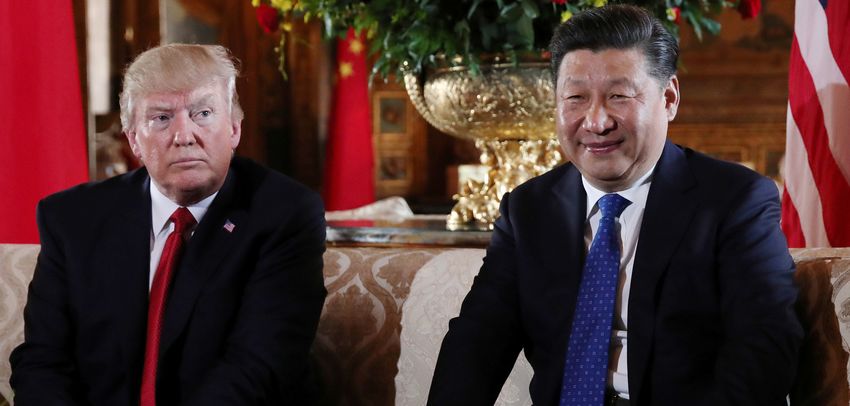
The Asia Group (TAG) is a strategic advisory firm co-founded in 2013 by Kurt Campbell and Nirav
Patel that helps the world’s leading companies and investors advance business and market
strategies throughout the Indo-Pacific region. Built on decades of senior-level experience in
diplomacy, finance, law, industry, and academia, TAG has cultivated unique networks and
expertise at the highest levels of government and business across Asia.

TAG’s global engagements cut across a broad range of industries that include technology,
media, financial services, manufacturing and apparel, health and pharmaceuticals, tourism and
hospitality, energy and mining, aerospace, and defense.

TAG also operates an analytics and risk advisory division that produces cutting-edge trade,
commercial, and geopolitical analysis of trends impacting the Indo-Pacific and a daily newsletter
on the most consequential developments in the region, TAG Capital, a boutique investment
bank that specializes in cross-border transactions, and the TAG Foundation, which provides
grants as well as pro-bono advisory work to support high-impact nonprofits.
The State of Asia

The Asia Group operates on a core premise: the Asia-Pacific is today the most economically and politically important
region in the world and will be for the rest of the 21st century. Home to 60 percent of the world’s population and
accounting for more than one-third of the world’s gross domestic product, Asia is the manufacturing and commercial
engine of the world and the most consequential arena for a new era of global security competition.

But for all of the opportunity that Asia presents today, the region is in flux. Geopolitical, nationalist, economic, and
regulatory developments stand to dramatically change the Indo-Pacific and test individual countries within the
region. In the following pages, we identify ten “Power Trends” that we believe will have an outsized impact on Asia
in the near future.

Asia is being reshaped by a United States that has stepped back from its traditional stabilizing role in the region, a
shifting, possibly fragmenting trading environment, and rising volatility and geostrategic risk. The most important
bilateral relationship in the world – that between the United States and China – is more complex and more
competitive. Regional states are dealing with economic headwinds and reform imperatives, some of which have
the potential to alter global supply chains. The technological landscape is shifting, raising new questions about the
role of governments and the rise of artificial intelligence. The United States and North Korea remain in an unstable
equilibrium. And climate change may be the greatest long-term challenge for the continent. This is by no means
an exhaustive list of trends that will shape Asia, but we believe these are some of the most important factors at the
intersection of business and public policy.

Executives and policymakers operating in Asia must remain intensely focused on the changes underway in the
region – which bring with them both risk and opportunity. We hope our report provokes new thinking about these
forces and how they will impact Asia.

Best,

Dr. Kurt M. Campbell				Dr. Siddharth Mohandas
Chairman and CEO				    Director of Research

2                                         THE     ASIA    GROUP
Asia Power Trends

  1                                       2
      THE TRUMP FACTOR                             RISING TRADE TENSION
      Asia Hedges Against                          A New Economic
      an Uncertain                                 Landscape
      America

  3                                       4
      XI AND TRUMP                                 WASHINGTON
      The World’s                                  TAKES ON BEIJING
      Most Important                               A Decades-Long
      Relationship Gets More                       Bipartisan Consensus
      Unpredictable                                Shifts

  5                                       6
      RISING                                       KEY ASIAN ECONOMIES
      GEOSTRATEGIC RISK                            SHOW SIGNS OF STRAIN
      Asia’s Powers Flex Their                     Reform Agendas Face
      Muscles                                      Challenges

  7                                       8
      TRUMP’S PERILOUS                             TECHLASH
      DIPLOMATIC GAMBIT WITH                       Privacy, Artificial
      NORTH KOREA                                  Intelligence, and Security
      The Dangerous Gap                            Concerns Define a New
      Between “Success” and                        Regulatory Landscape
      Denuclearization

  9                                      10
      SUPPLY CHAIN                                 CLIMATE CHANGE
      SHAKE-UP                                     CONUNDRUM
      Companies and                                Fossil Fuels and
      Countries Adjust to New                      the Climate Change
      Realities                                    Economy

                      A SIA      POWER   T RENDS                                3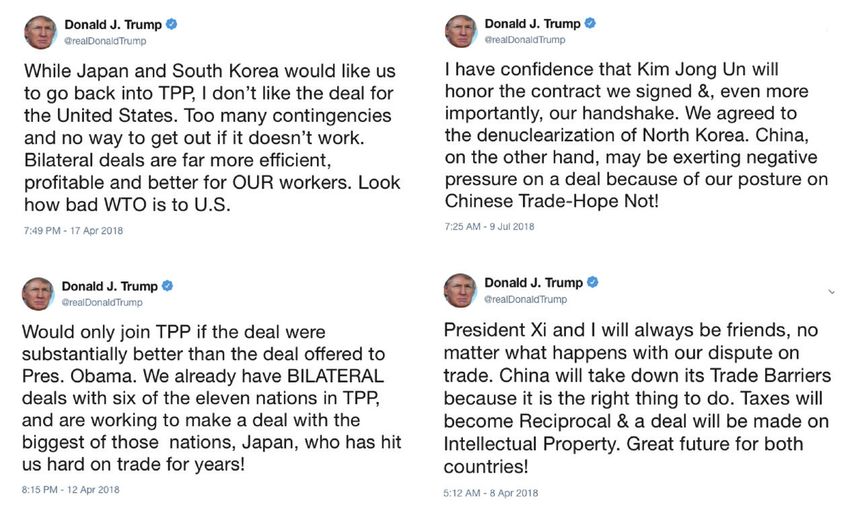
1                      The Trump Factor
                        Asia Hedges Against an Uncertain America

T
           he election of U.S. President Donald Trump has forced Asia to grapple with a new reality, as Washington
           appears poised to turn its back on the post-World War II international system. In the first two years
           of Trump’s presidency, Asian leaders have had to adjust to his inflammatory rhetoric and tweets.
           Regional confidence in the president remains low, as countries continue to adjust their economic and
security strategies in response to Trump’s “America First” doctrine. After the departure of U.S. Defense Secretary
Jim Mattis, few guardrails remain to prevent Trump from advancing policies that could undermine traditional
alliances and norms. What to Watch: Japan’s and South Korea’s relations with China, challenges in U.S. bilateral
defense and trade agreements with allies, greater intra-Asian cooperation.

Asia Reacts                                                CONFIDENCE IN THE U.S. PRESIDENT
After President Trump took office, many in Asia             Australia

                                                                                     - PERCENT REPORTING CONFIDENCE -

reacted negatively to the new direction and                Australia
                                                                                                                                                        81
                                                                                                  29
style of U.S. policymaking. In some countries,                                                                                                74
                                                                         India                                40
confidence in the U.S. presidency dropped by                                                                                   64
                                                          Indonesia
more than 50 percent. While individual leaders,                                              23

                                                                                                                                66
                                                                        Japan
such as Japanese Prime Minister Shinzo Abe                                                   24
                                                                                                                                                                  94
                                                         Philippines
and Chinese President Xi Jinping, have worked                                                                                       69

to establish a personal rapport with Trump, often
                                                                                                                                                             88
                                                        South Korea
                                                                                       17

engaging in flattery and praise in an attempt to           Vietnam                                                        58
                                                                                                                                         71

appease him, their citizens remain uneasy about                                  0      20               40               60                       80              100
                                                                                                       2015        2017
the president’s actions.
                                                       Source: Pew Research Center

                                                                                              Tweeter-in-Chief
                                                                                              Trump      has   governed      by
                                                                                              tweet, firing his first secretary
                                                                                              of state, Rex Tillerson, and
                                                                                              frequently making pivotal policy
                                                                                              announcements on the platform.
                                                                                              Allies and competitors alike
                                                                                              have had to adjust to the fact
                                                                                              that Trump will continue to use
                                                                                              social media as a bully pulpit in
                                                                                              unprecedented ways.

4                                        THE    ASIA   GROUP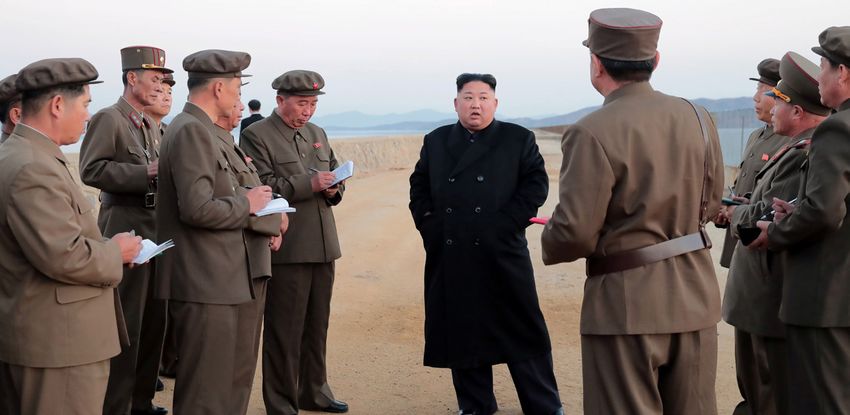
Hedging Behavior

Around the region, Asian leaders have, in their
own ways, sought to adopt hedging strategies
built around the following core components:
• Keeping relations stable with the United
     States
• Investing in their own defense capabilities
• Reaching out to like-minded countries
• Making their own “best deal” with China

                      Japanese Prime Minister Shinzo Abe has worked to maintain
                      a strong personal relationship with Trump. But as tides shift in
                      Asia, Abe is increasingly hedging through outreach to Chinese
        Japan         President Xi Jinping – a trend likely to continue.

                      Even as U.S.-India defense ties have grown, the Indian
                      government has sought to keep its options open, including
                      through the purchase of Russian S-400 missile systems – a
        India         move that irritated Washington.

                      South Korean President Moon Jae-in’s dramatic diplomatic
                      efforts have the potential to radically change the status quo on
                      the Korean Peninsula. As Trump calls on Seoul to take greater
                      ownership of its own security, Moon has met with both Xi and
    South Korea       North Korean leader Kim Jong-un.

                      The Australian government is committed to working with the
                      United States but has turned to Japan and India as well in an
                      attempt to revive the “quad” concept to counteract China’s
      Australia       rising influence.

                      Trump’s withdrawal of the United States from the Trans-
                      Pacific Partnership disappointed many member states of
                      the Association of Southeast Asian Nations, prompting them
       ASEAN          to seek greater economic engagement with other partners,
                      including China, and with each other.

                                          A SIA    POWER        T RENDS                  5
2                                       Rising Trade Tension
                                        A New Economic Landscape

A
           fter decades of movement toward freer trade and more-open markets, the region is adjusting to a
           more protectionist landscape. As a candidate, President Trump vowed to reverse U.S. trade policies,
           blaming trade deficits for souring U.S. economic growth and harming domestic manufacturers. In
           2018, Trump made good on longstanding threats to impose tariffs against economic competitors and
partners alike, but so far, he has failed to deliver on a new, integrated trade vision for the Indo-Pacific region
following U.S. withdrawal from the Trans-Pacific Partnership (TPP). Instead, the Trump administration has sought
to conduct trade relations on a bilateral basis and has placed significant pressure on India, Japan, and especially
China to find ways to reduce their bilateral trade surpluses with the United States. To date, Washington has not
succeeded in reducing its global trade deficit, possibly portending further punitive measures in 2019. What to
Watch: new bilateral trade agreements, Asian trade deals that exclude the United States, additional U.S. trade
measures targeted at certain sectors (e.g., technology).

Focus on Bilateral Trade Imbalances

                  U.S. GLOBAL TRADE DEFICIT                                                                           U.S. BILATERAL TRADE DEFICITS
                       - MONTHLY, IN USD BILLIONS -                                                       Australia
                                                                                                                            - USD BILLIONS IN 2017 -
                                                                                         55.5                                               188.0
                                            55.0
                                                                                  54.6
                                                                           53.7                          China                                                             523.7
                                     52.3
                              51.9
                                                                                                                                   114.7
                                                                    50.4
                                                                                                         Japan                             171.3
                       49.0

                47.0                               46.7                                                                   49.5
                                                                 46.2
                                                      45.7
                                                                                                         India               76.8
    44.2 44.2
                  44.4
                                                                                                                            73.4
                                                          42.8
                                                                                                         South               82.7
                                                                                                         Korea
    JUL AUG SEP OCT NOV DEC JAN FEB MAR APR MAY JUN JUL AUG SEP OCT                                                   0    100         200          300        400   500      600
    2017                    2018
                                                                                                                                     Exports         Imports

Source: U.S. Census Bureau                                                                              Source: U.S. Commerce Department

Trump’s overall goal of reducing the U.S. trade deficit still remains unmet. His tariffs have failed to substantially reduce
monthly deficits, instead leading to an increase in the deficit as countries impose retaliatory measures. The president
has made reducing the trade deficit a cornerstone of his economic policy, so if current trends continue, the Trump
administration may look to take further aggressive actions.

6                                                                       THE        ASIA         GROUP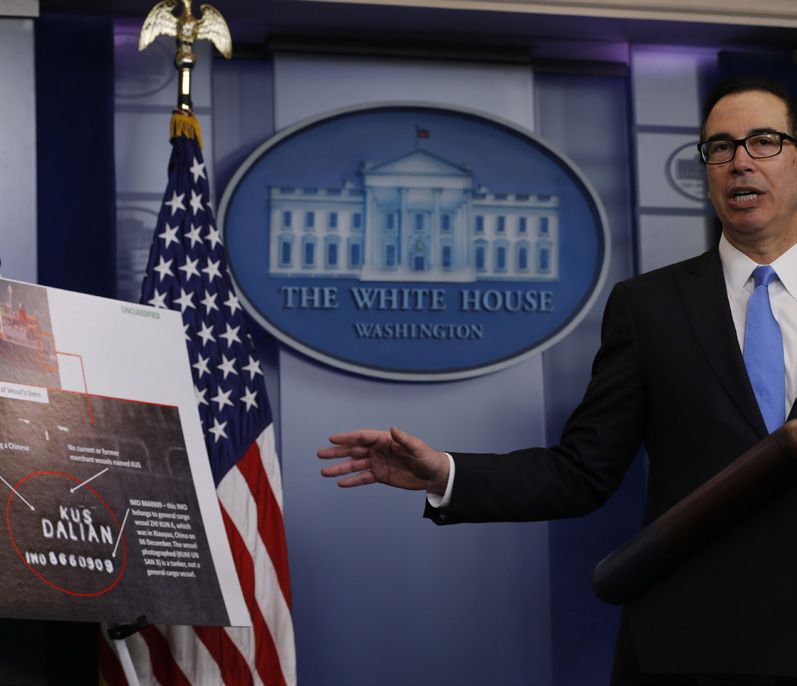
A New Willingness to Use Trade Measures...

       Section 201: In Jan-      Section 232: These           Section 301: The prin-         Sanctions:     Trump
       uary 2018, President      investigations look to       cipal tool in the trade        has also used sanc-
       Trump       approved      determine the national       war with Beijing, these        tions and the threat
       new safeguard mea-        security    implications     investigations       into      of sanctions to in-
       sures after a U.S.        of certain classes of        China’s theft of U.S.          fluence the region.
       investigation found       imports. The Trump ad-       intellectual property          Washington has ef-
       certain U.S. indus-       ministration has con-        (IP) and other unfair          fectively persuaded
       tries were injured by     cluded investigations        trade practices have           multiple countries to
       imports. The mea-         into steel and alumi-        resulted in the follow-        draw down oil pur-
       sures include tariff      num imports, imposing        ing tariffs:                   chases from Iran,
       rate quotas on solar      tariffs and quotas to        • A 25-percent tariff          successfully raised
       cells and washing         protect U.S. industry,            on USD 50 billion         pressure on North
       machines, as well as      and is completing an              worth of trade in         Korea (although for
       increased tariffs on      investigation into auto           Chinese goods             how long remains to
       solar panels.             imports, with the po-        • A 10-percent tariff          be seen), and sought
                                 tential for additional            on USD 200 bil-           to aggressively pros-
                                 tariffs.                          lion worth of trade       ecute violators of
                                                                   in Chinese goods          sanctions.

...to Secure Trade Victories
Trump campaigned on a pledge to abandon the TPP and has since harshly
denounced multilateral trade deals, even as he secured a renegotiation
of the North American Free Trade Agreement. Supported by U.S. Trade
Representative (USTR) Robert Lighthizer, Trump has instead sought to
negotiate bilateral trade agreements across Asia, including with South
Korea, China, Japan, the Philippines, and Vietnam. On September 24, 2018,
Trump and South Korean President Moon Jae-in signed a deal to revise the
U.S.-Korea Free Trade Agreement (KORUS).

                      South Korea                     China                               Japan
 Trump’s              The KORUS revision:             In the trade war with Beijing,      USTR Lighthizer has led

    Asia
                      • Allows the U.S. to            the Trump administration            a trade dialogue with
                         continue a 25-percent        has sought:                         Tokyo, though Japanese
   Trade                 tariff on Korean trucks
                         until 2041
                                                      • The end of “Made in
                                                           China 2025” industrial
                                                                                          officials remain wary of U.S.
                                                                                          demands to:
    Deal              • Doubles the cap on
                         U.S. auto imports to
                                                           subsidies
                                                      • To prevent forced
                                                                                          • Open up the Japanese
                                                                                               market to U.S.
  Check                  50,000 from 25,000
                      • Excludes South Korea
                                                           technology transfer and
                                                           increase IP protections
                                                                                               agricultural products
                                                                                          • Accept a trade
     List                from steel tariffs           • Increased purchases of                 framework that
                                                           U.S. goods                          reduces auto exports

                                        A SIA      POWER    T RENDS                                                       7
3                      Xi and Trump
                       The World’s Most Important Relationship
                       Gets More Unpredictable

D
           onald Trump’s election in 2016 stunned Chinese officials, forcing Beijing to deal with a U.S. president who
           promised during his electoral campaign that he would aggressively crack down on China. Despite multiple
           summit meetings since Trump’s inauguration, Chinese President Xi Jinping and Trump remain deeply at
           odds on key aspects of the relationship. Both leaders have turned to trusted lieutenants to manage
relations, yet many of these senior officials have walked away from meetings with little progress to show and their
own credibility questioned. But as tensions rise, both Trump and Xi will have to play an active role in managing
bilateral engagements. The fate of the U.S.-China relationship will depend on whether the two presidents can work
together to avert crisis, even as they both advocate for their respective priorities. What to Watch: whether Trump
continues to praise Xi, outcomes from new summits, whether hawkish advisors on both sides gain prominence.

                                Managing the Relationship

 Trump’s Relationship with China                              Xi’s Relationship with the United States
 President Trump has a bitter history with Beijing, after     While Trump has enthusiastically celebrated his
 his unsuccessful attempts to open a Trump property in        relationship with Xi, the Chinese leader has expressed
 China. However, he has personally sought to develop a        more muted feelings toward the U.S. president publicly.
 strong relationship with President Xi, whom he continues     Xi has significant knowledge of the United States,
 to call his friend. Trump reportedly was very impressed      having studied in Iowa in 1985, but he and other
 with Xi after the Chinese leader feted him with a “state     Chinese officials have struggled to interpret Trump’s
 visit plus” during his visit to Beijing in 2017.             ascendancy in U.S. politics.

8                                        THE    ASIA        GROUP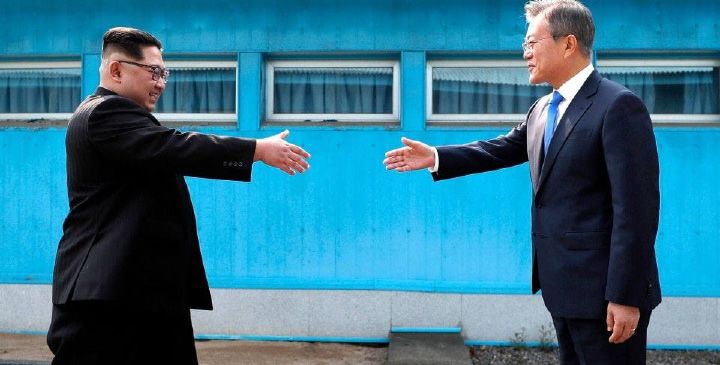
The Advisors
             Xi’s Team                                                                        Trump’s Team
              Vice President Wang Qishan                                       Secretary of State Mike Pompeo
              • One of Xi’s most trusted lieutenants and a                     • Has held hawkish views about China since his
                crucial advisor on bilateral relations                           days as a member of Congress
              • Maintains strong ties with U.S. corporate                      • Encourages U.S.-China cooperation on North
                executives                                                       Korean denuclearization
                                                                               Treasury Secretary Steven Mnuchin
              Vice Premier Liu He                                              • As a former Wall Street executive, has embraced
              • Oversees trade talks with the United States                      largely establishment trade views
              • Visited the United States multiple times to meet               • Reports of some tension with Trump and more-
                with U.S. negotiators                                            hawkish advisors in the administration

              Politburo Member Yang Jiechi                                     Trade Representative Robert Lighthizer
              • Has long served as one of China’s main                         • Has overseen the latest trade talks with China
                interlocutors with the United States                             and maintains a hawkish stance
              • Although not particularly close with Xi, serves on             • Served as the Deputy USTR during the Reagan
                the powerful Politburo                                           administration

              Foreign Minister Wang Yi                                         Trade Advisor Peter Navarro
              • Oversees day-to-day relationship management                    • Longtime critic of China’s economic policies and
                with Washington                                                  one of Trump’s most hawkish advisors
              • Has become more influential since becoming a                   • Has criticized Wall Street for encouraging U.S.-
                state councilor last year                                        China engagement

              Ambassador to the U.S. Cui Tiankai                               Senior Advisor Jared Kushner
              • Longest-serving Chinese ambassador to the                      • Trump’s son-in-law
                United States since his appointment in 2013                    • Originally served as one of the president’s chief
              • Makes frequent media appearances warning of                      envoys to China, helping orchestrate Trump’s
                the consequences of U.S.-China tension                           meeting with Xi at Mar-a-Lago in 2017

The
Issues             Beijing’s Take                                      Washington’s Take
Taiwan             Beijing has long defined Taiwan as a                After he was elected, Trump took a controversial
                   breakaway province but in recent months             congratulatory call with Taiwanese President Tsai Ing-
                   has increased assertive rhetoric and                wen, prompting immediate criticism from Chinese
                   diplomatic pressure on Taipei.                      officials. His administration has increased the pace of
                                                                       arms sales to Taipei.
North              Xi has welcomed U.S. diplomacy with North           Trump’s diplomacy with North Korea represents one
Korea              Korea, but Chinese officials have sought to         of his most significant foreign policy initiatives to date.
                   coordinate with Pyongyang.                          Washington welcomes Beijing’s interest but remains
                                                                       wary of Chinese intentions.
Regional           Through the Belt and Road Initiative, China         In 2018, the United States unveiled plans to incentivize
Investment         intends to provide up to USD 1 trillion             investment in the Indo-Pacific, including through a new
                   in infrastructure financing – though the            USD 60 billion global investment fund.
                   investments often come with strings.

Industrial         Beijing has embraced industrial and                 The Trump administration has harshly criticized China’s
and Cyber          cyber policies that advantage Chinese               industrial subsidies, including “Made in China 2025,”
Policies           companies, including “Made in China                 and cyber policies. Even after China’s accession to
                   2025” – a plan that provides subsidies to           the World Trade Organization, Washington worries that
                   Chinese technology sectors.                         Beijing retains inappropriate influence over industry.

                                               A SIA    POWER        T RENDS                                                     9
4 Washington Takes on Beijing
A Decades-Long Bipartisan Consensus Shifts
S
ince the U.S. opening to China in 1972, the prevailing view in Washington policy circles has been that
Beijing could be transformed into a responsible global stakeholder through inclusion in international
institutions. Today, U.S. officials and legislators on both sides of the aisle are reassessing China’s
willingness to step into that role. The rise of Xi Jinping and his policies are leading officials to
acknowledge that China may not be on a path to greater liberalization. While 2018 brought significant attention to
U.S.-China trade imbalances, Washington’s problems with Beijing run much deeper. As U.S. Vice President Mike
Pence outlined in a speech last October, China’s behavior has led U.S. officials to reconsider the longstanding
consensus, with some officials now preferring policies akin to containment. What to Watch: additional restrictions
on technology trade and investment, growing U.S. defense expenditures focused on China, increased attention
on Chinese influence in the United States.
The Speech
Vice President Pence’s speech on October 4, 2018, at the Washington-based Hudson Institute included a litany of
U.S. complaints against China, underscoring a new tenor in bilateral relations under the Trump administration. Pence
criticized China’s trade and defense policies and alleged that Beijing had embarked on extensive influence operations
and propaganda campaigns within the United States, even including interventions in U.S. elections.
Beijing is employing a whole-of-government approach,
using political, economic, and military tools, as well as
propaganda, to advance its influence and benefit its
interests in the United States. China is also applying
this power in more proactive ways than ever before,
to exert influence and interfere in the domestic policy
and politics of this country.
Vice President Mike Pence
October 4, 2018
1 0 THE ASIA GROUP6
Bipartisan Agreement
Japan Key Asian Economies Show Although Washington has become more polarized since Donald Trump was elected, Republicans and Democrats alike
Signs of Strain
have embraced Trump’s new approach to China. Many Chinese officials reportedly believe that the Democrats’ strong
performance in congressional midterm races may prevent Trump from embracing more-hawkish policies; however, contrary
Prime Minister Shinzo Abe has begun a quest to reform Japan’s to Beijing’s hope, Democrats remain very wary of China, especially as some within progressive circles claim that its industrial
pacifist constitution, as the country’s military continues to upgrade policies have hollowed out American industry. The bipartisan passage of a bill expanding the scope of the Committee on
its arsenal by:
• Acquiring strike capabilities – both air-based (F-35, F-15, F-X)
Reform Agendas Face Challenges Foreign Investment in the United States (CFIUS) underscores how liberal politicians have also embraced this “new normal.”
Indeed, some Democrats have even criticized the president for not being tough enough on Beijing.
and ship-based – and purchasing K-46 tankers to extend the
S
range and endurance of aircraft
• Developing satellite systems that enable improved ISR everal of the largest Asian economies showed signs of weakness in 2018, posing challenges to their
“China will bark back. But “The United States must
(intelligence, surveillance, and reconnaissance) governments’ reform agendas in 2019. Global trade tensions have exacerbated economic difficulties
they need us more than take strong, smart, and
• Installing two land-based Aegis Ashore batteries to enhance in China, Japan, South Korea, and India, reducing regional and global growth prospects. Additionally,
we need them — President strategic action against
ballistic missile defense, in light of advances in North Korean larger trends in the global economy are threatening economic stability. An economic downturn in China,
and Chinese ballistic missile capabilities aggravated by a trade war with Washington, could further damage elements of the regional economy. What to Trump is right about that — China’s brazenly unfair
• Repurposing a helicopter carrier to enable the launch of fighter Watch: deleveraging vs. stimulus in China, populist spending in India, government popularity in South Korea, and we should be strong.” trade policies.”
aircraft monetary policy in Japan.
Senator Chuck Schumer Speaker Nancy Pelosi
South Korea U.S. Senate Minority Leader U.S. House of Representatives
China
South Korea is focused on enhancing its capabilities to take over
operational control of its defense from the United States, including Ongoing trade frictions with the United States have The Trump administration and Congress have adopted new laws and regulations
by: put significant pressure on China’s economy and that restrict trade and investment with China.
• Pursuing counter-fire capabilities to suppress North Korean continue to test Beijing’s political will to continue • The Trump administration introduced tariffs on USD 250 billion of trade in Chinese
long-range artillery in the Kaesong Heights its deleveraging program. China now faces several goods and continues to threaten to impose even more tariffs on remaining
• Developing indigenous medium- and long-range surface-to-air challenges simultaneously, threatening to sour Chinese imports to try to change Chinese behavior.
missile systems and ballistic missile defense capabilities as part the growth outlook for 2019 and constraining top • Congress passed legislation to bolster CFIUS, the chief committee in the United
of its Korean Air and Missile Defense program officials’ choices: States responsible for reviewing the country’s inbound investment, and to codify
• Purchasing three additional KDX III Aegis destroyers to • Slowed Exports – While China’s exports initially Trade and Investment additional export control requirements.
complement the three it already has held up in the face of U.S. tariffs, their growth
slowed markedly amid struggles in the auto
market and as the boost from front-loaded
import orders wore off.
India • Massive Debt – Past stimulus policies enabled
Defense ties continue to deteriorate as the United States and China debate the
legality of Beijing’s activity in the South China Sea. China continues to militarize
a debt buildup that now poses serious risks
SHANGHAI COMPOSITE AND islands in the region, despite an international ruling denying its sovereignty claims.
Prime Minister Narendra Modi’s government has recently to China’s financial system. While regulators
CHINESE MONEY SUPPLY GROWTH • In response, the United States in 2018 restricted Chinese participation in the Rim
increased defense expenditures seven percent, enabling India’s have undertaken a wide-ranging campaign to of the Pacific exercise – the world’s largest maritime exercise.
military to achieve a number of its priorities, including: scale back lending and reduce systemic risk,
3500 • Last year, a Chinese vessel almost collided with the USS Decatur during a
• Constructing an indigenous aircraft carrier (INS Vikrant) the dampening effect is compounding the 9.2
freedom of navigation patrol, highlighting how a skirmish could escalate into a
to complement its single operational aircraft carrier (INS economic impact of the trade war. 9 Defense
broader conflict.
Vikramaditya)
3000
• Private-Sector Struggles – The government’s 8.8
• Continuing nuclear deterrence patrols, after the INS Arihant clampdown on shadow banking – a core 8.6
nuclear-powered ballistic missile submarine conducted its component of deleveraging – reduces credit
2500
8.4
first such patrol in November to the private sector, complicating Beijing’s The Trump administration has accused China of engaging in significant influence
• Developing intercontinental ballistic missile technology,
8.2
efforts to prime domestic demand. 2000
operations and even looking to use propaganda to influence American elections.
including the Agni V (5,500 km range) & VI (8,000 – 10,000 8
• U.S. authorities indicted multiple Chinese citizens accused of corporate
km range) JUL AUG SEP OCT NOV DEC JAN FEB MAR APR MAY JUN AUG SEP OCT NOV espionage last year.
2017 2017 2017 2017 2017 2017 2018 2018 2018 2018 2018 2018 2018 2018 2018 2018
• Congress remains worried about China’s role on American college campuses,
Shanghai Composite Index
Chinese M2 Growth (YoY, percent) especially through state-sponsored Confucius Institutes, and U.S. officials have
begun implementing visa restrictions on Chinese students.
Source: Wall Street Journal, People’s Bank of China Influence Operations
A SIA POWER T RENDS 13 14 TH E AS IA G R OU P A S I A P O W E R T RE NDS 115
North
Turkmenistan Korea
Dushanbe
Rising Geostrategic Risk
Ashgabat Tajikistan
DMZ
Rising Tension
Asia’s Powers Flex Their Muscles
REGIONAL FLASHPOINTS
South Japan
Korea on Historical
Islamabad Questions
A
Afghanistan
Japan and South Korea’s relationship
round the Indo-Pacific, countries have invested heavily in enhancing military capabilities. Particularly continues to suffer as the two debate
as China demonstrates its strength in the region, other powers have begun considering how they legacy issues from World War II –
will defend themselves in a new geostrategic environment. Geopolitical hotspots from the East and including Japan’s exploitation of
South China Seas to the India-China border have the potential to burst into conflict if not effectively South Korean “comfort women” and
managed. But even absent conflict in one of these consequential regions,Pakistan
growing defense expenditures across controversial backpay issues from the
Asia will heighten tensions. In 2018, countries across the Indo-Pacific spent a combined estimated total of USD wartime era.
450 billion on defense. Within 10 years, the region is expected to surpass North America as the world’s largest China
purchaser of military weaponry. By 2035, half of the world’s submarines are expected to patrol waters around
the region. Governments and businesses must be ready to embrace opportunities and consider challenges that Nepal Bhutan
accompany an increasingly militarized Asia. What to Watch: flaring of tension in hotspots, defense acquisitions Myanmar Senkaku
focused on power projection, more frequent and increasingly complex multilateral military exercises. India
Islands and the
Bangladesh Taiwan
East China Sea
Hong Kong
Rising Defense Budgets The Macau China and Japan continue to debate
India-China sovereignty over the Senkaku Islands,
located in the East China Sea, and
Defense budgets have ballooned throughout the region as countries look to increase their military capabilities:
• China – Since President Xi Jinping took power in 2013, China’s military spending has increased rapidly, with Chinese Border Laos which Beijing calls the Diaoyu Islands.
expenditures accounting for almost half of the region’s combined total. Although Japanese Prime Minister
In 2017, India and China engaged in a Shinzo Abe and Chinese President Xi
• Japan – The government plans to spend USD 239.5 billion on defense over the next five years. 72-day standoff on their shared border in Jinping have engaged in diplomacy
• South Korea – The government increased the 2019 defense budget 8.2 percent year-on-year, the largest annual the Doklam region of Arunachal Pradesh. over the dispute, this issue remains
increase since 2008. Although leaders from both countries unresolved.
• India – Last year, for the first time, the budget of the Indian Armed Forces eclipsed the French Armed Forces, worked to calm tensions in 2018, the Thailand
making India the world’s fifth-largest defense spender. fundamental dispute remains, prompting
increased militarization and continued
instability.
China Cambodia
Vietnam
Taiwan
Beijing has embarked on significant projects to bolster its power
South China Strait
projection capabilities, including:
• Launching its first domestic aircraft carrier in 2017, with Sea Sovereignty China and Taiwan remain locked in a
Taiwan Strait
bitter feud as Tsai Ing-wen continues
Sri
commissioning anticipated in 2019
• Establishing a constellation of 35 satellites that will enable Lankaglobal
Debates Philippines
to serve out her term as Taiwanese
China continues to militarize manmade president. In 2018, Beijing increased
coverage
fortifications in the South China Sea, pressure on Taiwan, which it considers
• Operating four nuclear-powered ballistic missile submarines, five
despite a 2016 ruling from the Permanent a breakaway province. While conflict
nuclear-powered general-purpose attack submarines, and 47 diesel- Malaysia
Court of Arbitration denying the legitimacy Brunei may be unlikely given U.S. support for
electric submarines – with plans to expand this fleet up to 78 vessels Taiwan, Chinese pressure will continue
of Beijing’s sovereignty claims under its
by 2020 to mount in the months and years
controversial “nine-dash line.” The near-
• Emphasizing long-range precision strike capabilities by extending
Maldives collision of U.S. and Chinese military Singapore ahead.
bomber flights past the first island chain vessels in 2018 highlighted the rising risk
of a conflict escalating from an accidental
interaction.
1 2 THE ASIA GROUP AS IA POWE R TR E N D S 2
Indonesia6
Bipartisan Agreement
Japan Key Asian Economies Show Although Washington has become more polarized since Donald Trump was elected, Republicans and Democrats alike
Signs of Strain
have embraced Trump’s new approach to China. Many Chinese officials reportedly believe that the Democrats’ strong
performance in congressional midterm races may prevent Trump from embracing more-hawkish policies; however, contrary
Prime Minister Shinzo Abe has begun a quest to reform Japan’s to Beijing’s hope, Democrats remain very wary of China, especially as some within progressive circles claim that its industrial
pacifist constitution, as the country’s military continues to upgrade policies have hollowed out American industry. The bipartisan passage of a bill expanding the scope of the Committee on
its arsenal by:
• Acquiring strike capabilities – both air-based (F-35, F-15, F-X)
Reform Agendas Face Challenges Foreign Investment in the United States (CFIUS) underscores how liberal politicians have also embraced this “new normal.”
Indeed, some Democrats have even criticized the president for not being tough enough on Beijing.
and ship-based – and purchasing K-46 tankers to extend the
S
range and endurance of aircraft
• Developing satellite systems that enable improved ISR everal of the largest Asian economies showed signs of weakness in 2018, posing challenges to their
“China will bark back. But “The United States must
(intelligence, surveillance, and reconnaissance) governments’ reform agendas in 2019. Global trade tensions have exacerbated economic difficulties
they need us more than take strong, smart, and
• Installing two land-based Aegis Ashore batteries to enhance in China, Japan, South Korea, and India, reducing regional and global growth prospects. Additionally,
we need them — President strategic action against
ballistic missile defense, in light of advances in North Korean larger trends in the global economy are threatening economic stability. An economic downturn in China,
and Chinese ballistic missile capabilities aggravated by a trade war with Washington, could further damage elements of the regional economy. What to Trump is right about that — China’s brazenly unfair
• Repurposing a helicopter carrier to enable the launch of fighter Watch: deleveraging vs. stimulus in China, populist spending in India, government popularity in South Korea, and we should be strong.” trade policies.”
aircraft monetary policy in Japan.
Senator Chuck Schumer Speaker Nancy Pelosi
South Korea U.S. Senate Minority Leader U.S. House of Representatives
China
South Korea is focused on enhancing its capabilities to take over
operational control of its defense from the United States, including Ongoing trade frictions with the United States have The Trump administration and Congress have adopted new laws and regulations
by: put significant pressure on China’s economy and that restrict trade and investment with China.
• Pursuing counter-fire capabilities to suppress North Korean continue to test Beijing’s political will to continue • The Trump administration introduced tariffs on USD 250 billion of trade in Chinese
long-range artillery in the Kaesong Heights its deleveraging program. China now faces several goods and continues to threaten to impose even more tariffs on remaining
• Developing indigenous medium- and long-range surface-to-air challenges simultaneously, threatening to sour Chinese imports to try to change Chinese behavior.
missile systems and ballistic missile defense capabilities as part the growth outlook for 2019 and constraining top • Congress passed legislation to bolster CFIUS, the chief committee in the United
of its Korean Air and Missile Defense program officials’ choices: States responsible for reviewing the country’s inbound investment, and to codify
• Purchasing three additional KDX III Aegis destroyers to • Slowed Exports – While China’s exports initially Trade and Investment additional export control requirements.
complement the three it already has held up in the face of U.S. tariffs, their growth
slowed markedly amid struggles in the auto
market and as the boost from front-loaded
import orders wore off.
India • Massive Debt – Past stimulus policies enabled
Defense ties continue to deteriorate as the United States and China debate the
legality of Beijing’s activity in the South China Sea. China continues to militarize
a debt buildup that now poses serious risks
SHANGHAI COMPOSITE AND islands in the region, despite an international ruling denying its sovereignty claims.
Prime Minister Narendra Modi’s government has recently to China’s financial system. While regulators
CHINESE MONEY SUPPLY GROWTH • In response, the United States in 2018 restricted Chinese participation in the Rim
increased defense expenditures seven percent, enabling India’s have undertaken a wide-ranging campaign to of the Pacific exercise – the world’s largest maritime exercise.
military to achieve a number of its priorities, including: scale back lending and reduce systemic risk,
3500 • Last year, a Chinese vessel almost collided with the USS Decatur during a
• Constructing an indigenous aircraft carrier (INS Vikrant) the dampening effect is compounding the 9.2
freedom of navigation patrol, highlighting how a skirmish could escalate into a
to complement its single operational aircraft carrier (INS economic impact of the trade war. 9 Defense
broader conflict.
Vikramaditya)
3000
• Private-Sector Struggles – The government’s 8.8
• Continuing nuclear deterrence patrols, after the INS Arihant clampdown on shadow banking – a core 8.6
nuclear-powered ballistic missile submarine conducted its component of deleveraging – reduces credit
2500
8.4
first such patrol in November to the private sector, complicating Beijing’s The Trump administration has accused China of engaging in significant influence
• Developing intercontinental ballistic missile technology,
8.2
efforts to prime domestic demand. 2000
operations and even looking to use propaganda to influence American elections.
including the Agni V (5,500 km range) & VI (8,000 – 10,000 8
• U.S. authorities indicted multiple Chinese citizens accused of corporate
km range) JUL AUG SEP OCT NOV DEC JAN FEB MAR APR MAY JUN AUG SEP OCT NOV espionage last year.
2017 2017 2017 2017 2017 2017 2018 2018 2018 2018 2018 2018 2018 2018 2018 2018
• Congress remains worried about China’s role on American college campuses,
Shanghai Composite Index
Chinese M2 Growth (YoY, percent) especially through state-sponsored Confucius Institutes, and U.S. officials have
begun implementing visa restrictions on Chinese students.
Source: Wall Street Journal, People’s Bank of China Influence Operations
A SIA POWER T RENDS 13 14 TH E AS IA G R OU P A S I A P O W E R T RE NDS 115
North
Turkmenistan Korea
Dushanbe
Rising Geostrategic Risk
Ashgabat Tajikistan
DMZ
Rising Tension
Asia’s Powers Flex Their Muscles
REGIONAL FLASHPOINTS
South Japan
Korea on Historical
Islamabad Questions
A
Afghanistan
Japan and South Korea’s relationship
round the Indo-Pacific, countries have invested heavily in enhancing military capabilities. Particularly continues to suffer as the two debate
as China demonstrates its strength in the region, other powers have begun considering how they legacy issues from World War II –
will defend themselves in a new geostrategic environment. Geopolitical hotspots from the East and including Japan’s exploitation of
South China Seas to the India-China border have the potential to burst into conflict if not effectively South Korean “comfort women” and
managed. But even absent conflict in one of these consequential regions,Pakistan
growing defense expenditures across controversial backpay issues from the
Asia will heighten tensions. In 2018, countries across the Indo-Pacific spent a combined estimated total of USD wartime era.
450 billion on defense. Within 10 years, the region is expected to surpass North America as the world’s largest China
purchaser of military weaponry. By 2035, half of the world’s submarines are expected to patrol waters around
the region. Governments and businesses must be ready to embrace opportunities and consider challenges that Nepal Bhutan
accompany an increasingly militarized Asia. What to Watch: flaring of tension in hotspots, defense acquisitions Myanmar Senkaku
focused on power projection, more frequent and increasingly complex multilateral military exercises. India
Islands and the
Bangladesh Taiwan
East China Sea
Hong Kong
Rising Defense Budgets The Macau China and Japan continue to debate
India-China sovereignty over the Senkaku Islands,
located in the East China Sea, and
Defense budgets have ballooned throughout the region as countries look to increase their military capabilities:
• China – Since President Xi Jinping took power in 2013, China’s military spending has increased rapidly, with Chinese Border Laos which Beijing calls the Diaoyu Islands.
expenditures accounting for almost half of the region’s combined total. Although Japanese Prime Minister
In 2017, India and China engaged in a Shinzo Abe and Chinese President Xi
• Japan – The government plans to spend USD 239.5 billion on defense over the next five years. 72-day standoff on their shared border in Jinping have engaged in diplomacy
• South Korea – The government increased the 2019 defense budget 8.2 percent year-on-year, the largest annual the Doklam region of Arunachal Pradesh. over the dispute, this issue remains
increase since 2008. Although leaders from both countries unresolved.
• India – Last year, for the first time, the budget of the Indian Armed Forces eclipsed the French Armed Forces, worked to calm tensions in 2018, the Thailand
making India the world’s fifth-largest defense spender. fundamental dispute remains, prompting
increased militarization and continued
instability.
China Cambodia
Vietnam
Taiwan
Beijing has embarked on significant projects to bolster its power
South China Strait
projection capabilities, including:
• Launching its first domestic aircraft carrier in 2017, with Sea Sovereignty China and Taiwan remain locked in a
Taiwan Strait
bitter feud as Tsai Ing-wen continues
Sri
commissioning anticipated in 2019
• Establishing a constellation of 35 satellites that will enable Lankaglobal
Debates Philippines
to serve out her term as Taiwanese
China continues to militarize manmade president. In 2018, Beijing increased
coverage
fortifications in the South China Sea, pressure on Taiwan, which it considers
• Operating four nuclear-powered ballistic missile submarines, five
despite a 2016 ruling from the Permanent a breakaway province. While conflict
nuclear-powered general-purpose attack submarines, and 47 diesel- Malaysia
Court of Arbitration denying the legitimacy Brunei may be unlikely given U.S. support for
electric submarines – with plans to expand this fleet up to 78 vessels Taiwan, Chinese pressure will continue
of Beijing’s sovereignty claims under its
by 2020 to mount in the months and years
controversial “nine-dash line.” The near-
• Emphasizing long-range precision strike capabilities by extending
Maldives collision of U.S. and Chinese military Singapore ahead.
bomber flights past the first island chain vessels in 2018 highlighted the rising risk
of a conflict escalating from an accidental
interaction.
1 2 THE ASIA GROUP AS IA POWE R TR E N D S 2
Indonesia6
Bipartisan Agreement
Japan Key Asian Economies Show Although Washington has become more polarized since Donald Trump was elected, Republicans and Democrats alike
Signs of Strain
have embraced Trump’s new approach to China. Many Chinese officials reportedly believe that the Democrats’ strong
performance in congressional midterm races may prevent Trump from embracing more-hawkish policies; however, contrary
Prime Minister Shinzo Abe has begun a quest to reform Japan’s to Beijing’s hope, Democrats remain very wary of China, especially as some within progressive circles claim that its industrial
pacifist constitution, as the country’s military continues to upgrade policies have hollowed out American industry. The bipartisan passage of a bill expanding the scope of the Committee on
its arsenal by:
• Acquiring strike capabilities – both air-based (F-35, F-15, F-X)
Reform Agendas Face Challenges Foreign Investment in the United States (CFIUS) underscores how liberal politicians have also embraced this “new normal.”
Indeed, some Democrats have even criticized the president for not being tough enough on Beijing.
and ship-based – and purchasing K-46 tankers to extend the
S
range and endurance of aircraft
• Developing satellite systems that enable improved ISR everal of the largest Asian economies showed signs of weakness in 2018, posing challenges to their
“China will bark back. But “The United States must
(intelligence, surveillance, and reconnaissance) governments’ reform agendas in 2019. Global trade tensions have exacerbated economic difficulties
they need us more than take strong, smart, and
• Installing two land-based Aegis Ashore batteries to enhance in China, Japan, South Korea, and India, reducing regional and global growth prospects. Additionally,
we need them — President strategic action against
ballistic missile defense, in light of advances in North Korean larger trends in the global economy are threatening economic stability. An economic downturn in China,
and Chinese ballistic missile capabilities aggravated by a trade war with Washington, could further damage elements of the regional economy. What to Trump is right about that — China’s brazenly unfair
• Repurposing a helicopter carrier to enable the launch of fighter Watch: deleveraging vs. stimulus in China, populist spending in India, government popularity in South Korea, and we should be strong.” trade policies.”
aircraft monetary policy in Japan.
Senator Chuck Schumer Speaker Nancy Pelosi
South Korea U.S. Senate Minority Leader U.S. House of Representatives
China
South Korea is focused on enhancing its capabilities to take over
operational control of its defense from the United States, including Ongoing trade frictions with the United States have The Trump administration and Congress have adopted new laws and regulations
by: put significant pressure on China’s economy and that restrict trade and investment with China.
• Pursuing counter-fire capabilities to suppress North Korean continue to test Beijing’s political will to continue • The Trump administration introduced tariffs on USD 250 billion of trade in Chinese
long-range artillery in the Kaesong Heights its deleveraging program. China now faces several goods and continues to threaten to impose even more tariffs on remaining
• Developing indigenous medium- and long-range surface-to-air challenges simultaneously, threatening to sour Chinese imports to try to change Chinese behavior.
missile systems and ballistic missile defense capabilities as part the growth outlook for 2019 and constraining top • Congress passed legislation to bolster CFIUS, the chief committee in the United
of its Korean Air and Missile Defense program officials’ choices: States responsible for reviewing the country’s inbound investment, and to codify
• Purchasing three additional KDX III Aegis destroyers to • Slowed Exports – While China’s exports initially Trade and Investment additional export control requirements.
complement the three it already has held up in the face of U.S. tariffs, their growth
slowed markedly amid struggles in the auto
market and as the boost from front-loaded
import orders wore off.
India • Massive Debt – Past stimulus policies enabled
Defense ties continue to deteriorate as the United States and China debate the
legality of Beijing’s activity in the South China Sea. China continues to militarize
a debt buildup that now poses serious risks
SHANGHAI COMPOSITE AND islands in the region, despite an international ruling denying its sovereignty claims.
Prime Minister Narendra Modi’s government has recently to China’s financial system. While regulators
CHINESE MONEY SUPPLY GROWTH • In response, the United States in 2018 restricted Chinese participation in the Rim
increased defense expenditures seven percent, enabling India’s have undertaken a wide-ranging campaign to of the Pacific exercise – the world’s largest maritime exercise.
military to achieve a number of its priorities, including: scale back lending and reduce systemic risk,
3500 • Last year, a Chinese vessel almost collided with the USS Decatur during a
• Constructing an indigenous aircraft carrier (INS Vikrant) the dampening effect is compounding the 9.2
freedom of navigation patrol, highlighting how a skirmish could escalate into a
to complement its single operational aircraft carrier (INS economic impact of the trade war. 9 Defense
broader conflict.
Vikramaditya)
3000
• Private-Sector Struggles – The government’s 8.8
• Continuing nuclear deterrence patrols, after the INS Arihant clampdown on shadow banking – a core 8.6
nuclear-powered ballistic missile submarine conducted its component of deleveraging – reduces credit
2500
8.4
first such patrol in November to the private sector, complicating Beijing’s The Trump administration has accused China of engaging in significant influence
• Developing intercontinental ballistic missile technology,
8.2
efforts to prime domestic demand. 2000
operations and even looking to use propaganda to influence American elections.
including the Agni V (5,500 km range) & VI (8,000 – 10,000 8
• U.S. authorities indicted multiple Chinese citizens accused of corporate
km range) JUL AUG SEP OCT NOV DEC JAN FEB MAR APR MAY JUN AUG SEP OCT NOV espionage last year.
2017 2017 2017 2017 2017 2017 2018 2018 2018 2018 2018 2018 2018 2018 2018 2018
• Congress remains worried about China’s role on American college campuses,
Shanghai Composite Index
Chinese M2 Growth (YoY, percent) especially through state-sponsored Confucius Institutes, and U.S. officials have
begun implementing visa restrictions on Chinese students.
Source: Wall Street Journal, People’s Bank of China Influence Operations
A SIA POWER T RENDS 13 14 TH E AS IA G R OU P A S I A P O W E R T RE NDS 11Japan
JAPANESE INFLATION AND MONEY SUPPLY GROWTH As Japanese Prime Minister Shinzo Abe begins a new three-
- PERCENT CHANGE -
year term, he is prioritizing economic growth, especially as his
1.2
goal of achieving sustained two-percent inflation – a key pillar
4.5
4
of Abenomics – remains unmet. Concerns about regional bank
1
3.5
profitability and inflated asset prices are expected to intensify
.08
3
.06
2.5
this year, and Bank of Japan Governor Haruhiko Kuroda has
already expressed concern about continuing ultra-low interest
2
.04
1.5
.02
1
rates, especially as the U.S. Federal Reserve considers rate
0
0.5 hikes. However, even as banks criticize the government’s
-.02
JAN APR JUL OCT JAN APR JUL OCT JAN APR JUL OCT policies, Abe and Kuroda will be reluctant to abandon stimulus
2016 2017 2018
Core Inflation YoY
Growth (left axis)
M2 YoY Growth
(right axis)
measures.
Source: Bank of Japan
South Korea
Global trade tensions and robust competition from
Chinese manufacturers weighed on South Korea’s SOUTH KOREAN UNEMPLOYMENT RATE
- IN PERCENTAGE -
economy in the second half of 2018, causing the
Bank of Korea to downgrade its growth outlook for 4.3
2019. As growth slows and unemployment remains 4.2
Moon Jae-in
high, South Korean President Moon Jae-in will face
Becomes president
4.1
added pressure to solve South Korea’s economic 4
challenges. Although Moon’s diplomatic outreach 3.9
to North Korean leader Kim Jong-un has bolstered
3.8
3.7
Moon’s popularity, continued economic malaise may 3.6
test even his most ardent supporters. Moon has 3.5
JAN APR JUL OCT JAN APR JUL OCT
already fired multiple senior members of his team, 2017 2017 2017 2017 2018 2018 2018 2018
even as he works to convince the Korean people to
Source: Statistics South Korea
stay the course with his economic policies.
India
INDIAN RUPEE AGAINST THE U.S. DOLLAR In 2018, the rupee underperformed, registering a double-digit
- DAILY CLOSING VALUE -
slide on the back of India’s widening current account deficit.
76 While a weaker currency may benefit the government’s “Make in
74
India” policy, the country is still a net importer, and its companies
72
70
are exposed to currency fluctuations through their external debt
68 obligations. India continues to confront an unsettled debate
66
between nationalists favoring more populist measures in the face
of consequential national elections and those advocating for
64
62
60
further economic reforms aimed at attracting increased foreign
58 direct investment. Despite the headwinds, India remains one of
DEC 17 JAN 18 FEB 18 MAR 18 APR 18 MAY 18 JUN 18 JUL 18 AUG 18 SEP 18 OCT 18 NOV 18 DEC 18
the world’s fastest-growing economies.
Source: U.S. Federal Reserve
A SIA POWER T RENDS 157
Trump’s Perilous Diplomatic
Gambit with North Korea
The Dangerous Gap Between
“Success” and Denuclearization
I
n 2018, President Trump engaged in unprecedented diplomacy with North Korean leader Kim Jong-un. Despite
months of harsh rhetoric between the two sides, with Trump at one point calling Kim “Rocket Man” and threatening
North Korea with nuclear annihilation, the new détente, brokered and encouraged by South Korean President
Moon Jae-in, represented a marked change. Though Trump and Kim have pursued personal diplomacy, the
situation remains volatile. Both sides expect the other to initiate the first major move, with Pyongyang demanding
sanctions relief before denuclearization, while Washington remains hesitant to provide full relief until Kim gives up
significant elements of his nuclear arsenal. Trump may feel the need to redefine what “success” means, especially
if he realizes that denuclearization is not realistic. The result is a still dangerous Korean peninsula ripe for conflict.
What to Watch: whether North Korea’s arsenal grows or slows, Pyongyang’s cooperation with international
inspections, the extent of U.S. sanctions relief.
2018: A Tumultuous Year
Kim and Trump Satellite images
Kim and Moon hold summit reveal North Korea
Kim announces the North Korea
meet for the in Singapore, is continuing
installation of a participates in
Pyeongchang first time at where Trump missile
nuclear
Olympics Panmunjom in the “fell in love” with development at 13
button at his desk
demilitarized zone Kim hidden bases
January February April June November
1 6 THE ASIA GROUPThe Rhetoric Versus the Reality
After returning from his meeting with Kim in Singapore, Trump declared the
North Korean nuclear threat to be over. However, there has been little action
from Pyongyang that would validate that claim. Washington continues to
demand that North Korea take concrete steps toward denuclearization,
while Pyongyang has demanded sanctions relief before making any further
concessions.
U.S. officials have repeatedly emphasized that the maximum-pressure
sanctions campaign remains in place, but President Trump’s warm words
for North Korea’s leader, combined with ongoing inter-Korean diplomacy,
have reduced China and Russia’s determination to comply with the UN
sanctions regime. UN documents reveal that China has continued illicit
exports to North Korea through mid-ocean ship-to-ship transfers, while
the Moon administration has moved ahead on economic reintegration
with North Korea, reconnecting inter-Korean rail links and potentially
reopening the Kaesong industrial park. In this environment, Trump will
likely come under increasing pressure to provide sanctions relief, even
absent total denuclearization by North Korea.
1 billion 148 2.2 billion
The USD value of North The number of illicit oil The USD value of transactions
Korean trade prohibited deliveries North Korea is that Chinese banks helped
by U.S. sanctions estimated to have received North Korea process through
enacted in 2017 between January and the U.S. financial system from
August 2018 2009 to 2017
Meanwhile, North Korea has not abandoned
its nuclear weapons program. In November
2018, satellite imagery revealed that North
Korea had continued its missile program,
including potentially nuclear-capable
missiles, at 13 hidden bases. If a major
new revelation or provocation emerges, the
present diplomatic situation will become
unsustainable and bring back the threat of
dramatically heightened tensions on the
Korean Peninsula.
A SIA POWER T RENDS 17You can also read


