ASSISTANCE POLICY #HERVOICEHERCHOICE - GLOBAL AFFAIRS CANADA
←
→
Page content transcription
If your browser does not render page correctly, please read the page content below
C A N A D A’ S
FEMINIST INTERNATIONAL
ASSISTANCE
POLICY
#HerVoiceHerChoice

Cover photo: © Mike Goldwater / Alamy Stock Photo

Global Affairs Canada
125 Sussex Drive
Ottawa, ON K1A 0G2
Canada

Telephone:
1-800-267-8376 (toll-free in Canada)
613-944-4000 (in the National Capital Region and outside Canada)

If you are deaf or hard of hearing, or if you have a speech impediment
and use a text telephone, you can access the TTY service from
9 a.m. to 5 p.m. Eastern Time by calling 613-944-9136 (in Canada
only).

Fax:
613-996-9709

Website: www.international.gc.ca
Email: info@international.gc.ca

© Her Majesty the Queen in Right of Canada, 2017

Cette publication est aussi disponible en français sous le titre
Politique d’aide internationale féministe du Canada.

FR5-113/2018
978-0-660-25698-6

Printed in Canada

MESSAGE FROM THE MINISTER OF FOREIGN AFFAIRS
                            Peace and prosperity are          I am delighted my colleague the Minister of
                            every person’s birthright.        International Development and La Francophonie
                            Today, as Canadians, we           is launching Canada’s first Feminist International
                            have a great opportunity          Assistance Policy, which targets gender equality
                            to help the people of             and the empowerment of women and girls. We are
                            the world’s developing            positioning Canada at the forefront of this global
                            countries join the global         effort. This is a matter of basic justice and also basic
                            middle class and the              economics. We know that empowering women,
                            multilateral system that          overseas and here at home, makes families and
                            supports it.                      countries more prosperous.

                            It is worth reminding             Now is the time to rise to the great challenges of
                            ourselves why we step             this century. As I said in the government’s foreign
                            up—why we devote                  policy statement, our job today is to preserve the
time and resources to foreign policy, trade, defence          achievements of previous generations, and to build on
and development: Canadians are safer and more                 them, as we are doing through Canada’s first Feminist
prosperous when more of the world shares our values.          International Assistance Policy.

Those values include feminism and the promotion of
the rights of women and girls.

It is important—and historic—that we have a prime
minister and a government proud to proclaim                   The Honourable Chrystia Freeland
themselves as feminists. Women’s rights are human             Minister of Foreign Affairs
rights. This includes sexual and reproductive rights—
and the right to access safe and legal abortions. These
rights are at the core of our foreign policy.

                                                          i
MESSAGE FROM THE MINISTER OF INTERNATIONAL
DEVELOPMENT AND LA FRANCOPHONIE
                            The Prime Minister gave             international laws and human rights are increasingly
                            me the mandate to refocus           under threat. Second, if we want to maximize the
                            Canada’s international              impact of our actions and help eradicate poverty, we
                            assistance on helping               must passionately defend the rights of women and
                            the poorest and most                girls so they can participate fully in society. And lastly,
                            vulnerable people and               for our actions to be sustainable, we must ensure that
                            supporting fragile states.          they contribute to building local capacity.

                           After a year of                      Canada’s vision for international assistance, therefore,
                           consultations involving              is as follows:
                           more than 15,000 people
in 65 countries, I am proud to present Canada’s new              “Canada is adopting a Feminist International
Feminist International Assistance Policy.                        Assistance Policy that seeks to eradicate poverty
                                                                 and build a more peaceful, more inclusive and
The primary objective of this policy is to contribute            more prosperous world. Canada firmly believes
to global efforts to eradicate poverty around the                that promoting gender equality and empowering
world. To achieve this, we must address inequality.              women and girls is the most effective approach to
Specifically, we need to make sure that women and                achieving this goal.”
girls are empowered to reach their full potential so
they can earn their own livelihoods, which will benefit         As a result of this new policy we will focus on gender
families as well as the economic growth of their                equality and the empowerment of women and girls
communities and countries.                                      in a manner that is both targeted and crosscutting.
                                                                A targeted approach to gender equality allows us to
This policy responds to the recommendations made by             focus on initiatives that fight poverty and inequality
stakeholders and reflects Canadian values. It defines           by supporting gender equality and defending the
an approach based on human rights, one that takes               rights of women and girls, particularly their sexual
into account all forms of discrimination based on               health and reproductive rights. Going forward, these
sex, race, ethnicity, place of birth, colour, religion,         initiatives will receive special, focused attention. A
language, sexual orientation, gender identity, age,             crosscutting approach to gender equality means that
ability or migrant or refugee status.                           all of our international assistance initiatives, across all
                                                                action areas, should be developed and implemented
The policy is evidence-based and takes into account             in ways that improve gender equality and empower
Canada’s expertise and comparative advantage. It                women and girls. This approach also means that all
supports the Sustainable Development Goals, which               our implementing partners must consult with women
aim to eradicate poverty by 2030, and it is also aligned        and involve them in needs assessments, decision
with the Paris Agreement on climate change, which               making and planning of initiatives, as well as in
seeks to reduce greenhouse gas emissions and protect            the implementation, monitoring and evaluation of
the environment.                                                projects.

I want to highlight three issues that particularly              Canada has adopted a feminist approach because
captured my attention during the consultations.                 we firmly believe that women and girls have the
First, I heard that our policy must underscore                  ability to achieve real change in terms of sustainable
the importance of human dignity at a time when                  development and peace, even though they are often
conflicts are multiplying and humanitarian principles,

                                                           ii
the most vulnerable to poverty, violence and climate             We must be innovative and foster innovation in how
change. So we will work closely with local women’s               we work—through our funding mechanisms and
rights groups, particularly in the areas of sexual and           by forming new partnerships. We will make sound
reproductive health; in the fight against child, early           decisions based on evidence and closely track our
and forced marriage; and in enabling access to the               progress, but in a manner adapted to the needs of
formal economy and decision making.                              different stakeholders in different contexts.

The core action area for the new policy—which will be            Today, Canada has the capacity to play a leading
integrated across all areas—is:                                  international role and will take the opportunity to
                                                                 implement its new vision for international assistance
  ▪▪ gender equality and the empowerment of women                in support of the 2030 Agenda for Sustainable
     and girls.                                                  Development. I will speak up for the poorest and most
                                                                 vulnerable, especially women and girls, and they can
The other action areas we have chosen are:                       count on the commitment and expertise of our team
                                                                 in Canada and in our missions around the world, as
  ▪▪ human dignity, covering humanitarian action,                well as the support of our many Canadian partners,
     health and nutrition, and education;                        with whom we are strengthening our collaboration.

  ▪▪ growth that works for everyone, which targets               As we implement this new policy, I will continue to
     areas such as sustainable agriculture, green                engage with Canadians and our stakeholders, because
     technologies and renewable energy;                          the launch of this policy is not the end of the process
                                                                 but rather a first step in a longer journey to achieving
  ▪▪ environment and climate action focusing on                  the best international assistance results.
     adaptation and mitigation, as well as on water
     management;                                                 We commit to all of this because international
                                                                 solidarity is a shared Canadian value. We live in an
  ▪▪ inclusive governance, including democracy,                  increasingly interconnected world, and Canada’s
     human rights, the rule of law and good                      international assistance will benefit not only partner
     governance; and                                             communities but also Canadians. Together with our
                                                                 international partners and allies, we have a collective
  ▪▪ peace and security, by promoting inclusive peace            responsibility to safeguard and promote global health
     processes and combatting gender-based violence.             and security, education, environmental protection and
                                                                 growth that works for everyone—and we will do so
In terms of its geographical distribution, Canada will           with conviction and pride.
no longer limit its international assistance strictly
to a list of countries of focus, nor will it disperse
its efforts in all directions. We will strike the right
balance to ensure that Canada’s contributions have
the greatest positive impact. We will address conflicts
and climate change in fragile states and contexts,               The Honourable Marie-Claude Bibeau
while continuing to foster economic development                  Minister of International Development and
and growth that works for everyone in the poorest                La Francophonie
countries and supporting middle-income countries
that face particular challenges, notably with respect to
governance.

For our assistance to have the greatest possible
impact on the ground, we must be determined but
also creative, flexible and rigorous in our approach.

                                                           iii
© Global Affairs Canada

iv

TABLE OF
CONTENTS

Executive summary                                                     vi

Building a more peaceful, more inclusive and more prosperous world:
Canada’s Feminist International Assistance Policy                      1

Action areas                                                          13

  Action area 1 (core):
  Gender equality and the empowerment of women and girls              17
  Action area 2: Human dignity                                        23
  Action area 3: Growth that works for everyone                       35
  Action area 4: Environment and climate action                       43
  Action area 5: Inclusive governance                                 49
  Action area 6: Peace and security                                   57

International assistance: Improving our effectiveness                 65

  Conclusion                                                          75

                                              v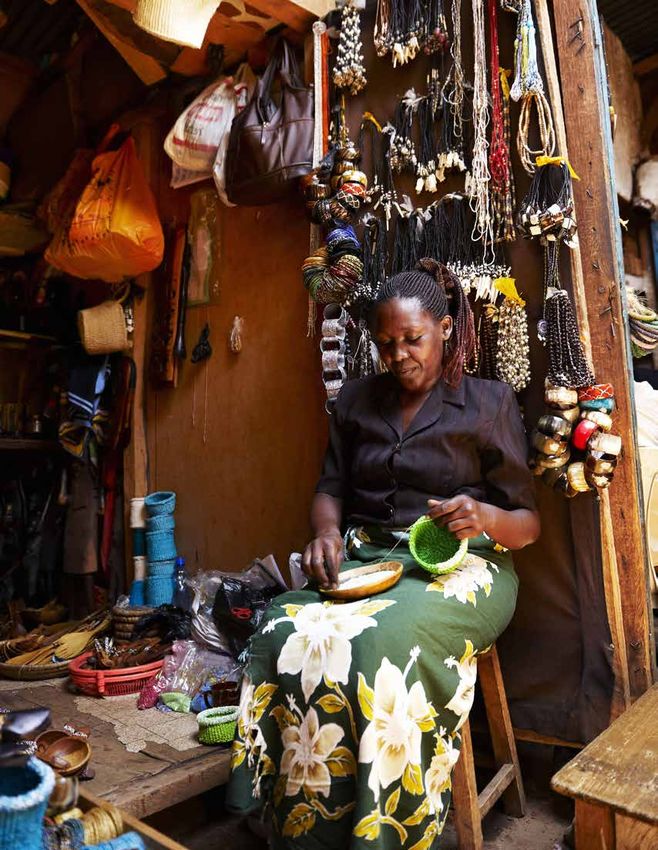
EXECUTIVE
                                                               SUMMARY

                                                                                                                     © Global Affairs Canada
© Global Affairs Canada

                          The last three decades have seen                                Canada’s Feminist International Assistance Policy
                          dramatic reductions in global poverty,                          recognizes that supporting gender equality and the
                                                                                          empowerment of women and girls is the best way
                          but not everyone has benefited                                  to build a more peaceful, more inclusive and more
                          equally. Hundreds of millions of                                prosperous world. To do this, it supports targeted
                          people, especially women and girls,                             investments, partnerships, innovation and advocacy
                          are still poor, have unequal access to                          efforts with the greatest potential to close gender gaps
                                                                                          and improve everyone’s chance for success. But it
                          resources and opportunities, and face
                                                                                          also works across other action areas that reflect the
                          major risks of violent conflict, climate                        multi-dimensional nature of poverty, in support of
                          and environmental hazards, and/or                               the Sustainable Development Goals. Working in this
                          economic and political insecurity. By                           way leads to better development results and benefits
                          eliminating barriers to equality and                            everyone, including men and boys.
                          helping to create better opportunities,                         Canada’s feminist international assistance will
                          women and girls can be powerful                                 help protect and promote the human rights of all
                          agents of change and improve their                              vulnerable and marginalized groups and increase their
                          own lives and those of their families,                          participation in equal decision making. This will help
                                                                                          women and girls achieve more equitable access to and
                          communities and countries. This is a
                                                                                          control over the resources they need to secure ongoing
                          powerful way to reduce poverty for                              economic and social equality.
                          everyone.
                                                                                          Committing to a feminist approach to international
                          Canada is part of a global community. This is why we            assistance represents a significant shift in how we
                          invest in international assistance: helping to eradicate        work. A feminist approach is much more than
                          poverty and vulnerability around the world enhances             focusing on women and girls; rather, it is the most
                          our own safety and prosperity.                                  effective way to address the root causes of poverty.

                                                                                     vi
Canada is adopting a Feminist International Assistance
Policy that seeks to eradicate poverty and build a more
peaceful, more inclusive and more prosperous world.
Canada firmly believes that promoting gender equality
and empowering women and girls is the most effective
approach to achieving this goal.

Our priorities will be strengthened by work in the               To promote Environment and Climate Action we
following action areas:                                          will support government planning and initiatives
                                                                 to mitigate and adapt to climate change, advance
Gender Equality and the Empowerment of Women                     women’s leadership and decision making and create
and Girls will be our core area of work. We will                 economic opportunities for women in clean energy.
support efforts to reduce sexual and gender-based
violence, to strengthen women’s organizations                    To support Inclusive Governance we will work to end
and movements that advance women’s rights, to                    gender discrimination by promoting and protecting
improve governments’ capacity to provide services                human rights, advancing the rule of law and building
to women and girls and to improve gender analysis.               stronger institutions. We will also encourage greater
We also believe that gender equality can be advanced             political participation by women and girls.
throughout our work by integrating this analysis
across the other areas of action. A feminist approach            To help strengthen global Peace and Security we
does not limit the focus of our efforts to women                 will support greater participation of women in
and girls; rather, it is the most effective way to fight         peacebuilding and post-conflict reconstruction
the root causes of poverty that can affect everyone:             efforts, help to increase women’s representation in the
inequality and exclusion.                                        security sector and enforce a zero-tolerance policy for
                                                                 sexual violence and abuse by peacekeepers.
To promote Human Dignity we will support access
to quality health care, nutrition and education,                 We are also committed to improving the effectiveness
and principled, timely, needs-based humanitarian                 of our international assistance, providing more
assistance that better addresses the particular needs            integrated and responsive support, investing more
and potential of women and girls.                                in innovation and research, and becoming more
                                                                 transparent in our results and activities. We will
To foster Growth that Works for Everyone we                      concentrate Canada’s international assistance in a way
will help increase women’s access to economic                    that will significantly improve the lives of the poorest
opportunities and resources. This will help women and            and most vulnerable, including those living in fragile
girls achieve the economic independence they need to             states. And we will use our assistance to mobilize
take control of their lives.                                     additional resources for sustainable development,
                                                                 including through building new multi-stakeholder
                                                                 partnerships.

                                                           vii
BUILDING A MORE
PEACEFUL, MORE
INCLUSIVE AND
MORE PROSPEROUS
WORLD
Canada’s Feminist
International Assistance Policy

                                  © Luke Myers

              viii
© Jake Lyell / Alamy Stock Photo
Over the past three decades, the world Investing in women and girls is the right thing to do
has made impressive gains in reducing and the smart way to reduce poverty and inequality.
poverty.1 Sustained economic growth For these reasons, Canada is committed to a new
has led to higher incomes, broader approach to international assistance: a truly feminist
access to goods and services, and a approach that supports the economic, political and
better standard of living for many of the social empowerment of women and girls, and makes
gender equality a priority, for the benefit of all people.
world’s poorest citizens.
At the same time, millions continue to struggle in the
face of persistent poverty and inequality, exacerbated Poverty rate Number of
by violent conflict and the effects of climate change. in region (%) poor (millions)
Women and girls—whose voices and interests are too WORLD
often ignored—are particularly at risk. 10.7 766.0
SUB-SAHARAN AFRICA
The good news is that when women and girls are given
equal opportunities to succeed, they can be powerful 41.0 388.7
agents of change—driving stronger economic growth,
SOUTH ASIA
encouraging greater peace and cooperation, and
improving the quality of life for their families and 15.1 256.2
their communities. EAST ASIA AND PACIFIC
3.5 71.0
LATIN AMERICA AND THE CARIBBEAN
5.4 33.6
EUROPE AND CENTRAL ASIA
2.2 10.3
Source: World Economic Forum
1© Global Affairs Canada
Women and girls can change in peacebuilding increases by 35 percent the
probability that a peace agreement will last for at
the world least 15 years.5
As powerful agents of change, women and girls
have the ability to transform their households, their
▶▶ benefit entire families
societies and their economies. Increasing gender
Evidence shows that women tend to spend more
equality can:
of their incomes in ways that directly benefit
their children, improving nutrition, health
▶▶ deliver strong economic growth and educational opportunities for the next
Women already generate nearly 40 percent of generation.6
the world’s gross domestic product (GDP) and
the potential for further growth led by women
▶▶ and empower all those who face
is relatively untapped. According to a 2015
discrimination.
global study, achieving gender equality around
Women and girls are not the only groups
the world could increase global gross domestic
that face discrimination and inequality.
product by $12 trillion in a single decade.2
Others face social and/or economic
marginalization, including on the
▶▶ help cut down on extreme poverty basis of their sex, race, ethnicity,
Ensuring that all students—especially girls— national or ethnic origin,
leave school with basic literacy skills could colour, religion, language,
cut worldwide levels of extreme poverty by sexual orientation, gender
12 percent.3 identity, age, ability, or
migrant or refugee status.
▶▶ reduce chronic hunger By empowering women and
Providing female farmers with equal access to girls as a means to achieve
resources could reduce the number of people gender equality, we send the
living with chronic hunger by as much as clear message that equality
17 percent, providing help and hope to as many is for everyone.
as 150 million people around the world.4
▶▶ lead to longer-lasting peace
It is estimated that in communities emerging
from violent conflict, women’s participation
2Achieving gender equality around
the world could increase global gross
domestic product (GDP) by $12 trillion
in a single decade.
Barriers to success for
women and girls
The potential of women and girls to help build a
better world cannot be ignored—but neither can
the harsh realities facing vulnerable populations.
These include the threats faced in fragile states,
the continued existence of poverty in many parts
of the world and the social contexts that can limit
women and girls’ ability to succeed.
Instability can lead to poverty. An increasing
proportion of the world’s poorest citizens live in
countries and regions that are deemed “fragile”
due to the risks of violent conflict, climate
and environmental hazards, or economic and
political insecurity. The Organisation for
Economic Co-operation and Development
(OECD) estimates that the number of people
living in extreme poverty in fragile states will
grow from 480 million to 523 million between
2015 and 2030.7
Poverty persists even in the absence of
conflict. While poverty rates have declined
globally, more than a tenth of the world’s
population (766 million people) still lives
in extreme poverty, earning on average
less than US$1.90 a day.8 Half of the
3 © OCTAVIO GLOBAL / Alamy Stock Photoworld’s extreme poor live in sub-Saharan Africa, with jobs typically work a greater number of hours in total
the rest concentrated in Asia and some middle-income than do men because of the double burden they face
countries of Latin America.9 The majority live in of paid work and unpaid domestic responsibilities.
rural areas, have low levels of education and work in Women who are less able to undertake paid economic
the agricultural sector. More than half of the world’s activities are pushed further into poverty.12
poorest citizens are children.10
Limited control over their own bodies and
Women and girls face many gender-specific challenges reproductive choices. An estimated 15 million girls
that limit the economic and social opportunities under the age of 18 are forced into marriage every
available to them. These challenges include: year—that’s 39,000 every day.13 Every year, 16 million
children are born to adolescent girls (age 15 to 19),
Diminished access to the resources and accounting for just over one out of every 10 births
opportunities they need to survive and thrive. In worldwide.14 For girls in developing countries, this
many societies, women and girls often eat last—and makes it harder to stay in school and harder to work—
least. They have more limited access to essential perpetuating the cycle of intergenerational poverty. A
services such as education and health care, and fewer recent study in Nigeria estimated that the gender gap
opportunities to work or earn a good wage. in education could be cut in half if child marriage and
early pregnancies were eliminated.
More family responsibilities and fewer
opportunities. In many of the world’s poorest The ongoing threat of sexual and gender-based
countries, in comparison to men and boys, women violence. It is estimated that one in three women
and girls face greater burdens of unpaid work, have worldwide have experienced some form of physical
fewer assets and resources, are exposed to higher rates and/or sexual violence in their lifetimes, often at the
of sexual and gender-based violence, and are more hands of intimate partners or family members. The
likely to be forced into early marriage.11 Women with threat of violence is also a reality for girls, with more
© Global Affairs Canada
4than one in 10 (120 million) having experienced forced intercourse or sexual acts at some point in their lives. Female genital mutilation/cutting is a persistent threat as well. There are now an estimated 200 million girls and women who have been subjected to this practice, in 30 countries around the world.15 Limited access to the tools they need to be financially independent. Among working women in the least developed countries, 79 percent report agriculture as their primary source of income. Despite this strong contribution to local economies, women continue to have less access to resources and financial services than men.16 Women account for fewer than 20 percent of all landholders in developing countries, and only 37 percent of these women landholders have bank accounts.17 Legal barriers to work and other limits on economic freedom. Women are legally discriminated against in more than 150 countries around the world.18 This includes 100 countries in which women are prevented from pursuing careers because of their gender.19 In some countries, women also face restrictions when it comes to registering a business, inheriting property and owning land. Nearly one third of developing countries do not guarantee the same inheritance rights for women as they do for men. These limits on women’s economic autonomy can also be seen at the household level, with one third of married women in developing countries having no say in major household purchases. © Ton Koene / Alamy Stock Photo 5
Fewer opportunities to attend school. Educated              Unequal participation in governmental decision
                          women and girls tend to marry later, have fewer             making. In most countries, it is governments that
                          children, and provide better health and nutrition for       shape the development process. To ensure that women
                          their families.20 Evidence shows that when women            and girls have equal rights and the ability to take equal
                          and girls are educated and have control over their          advantage of economic opportunities, governments
                          sexual and reproductive choices, maternal and child         must include gender analysis in planning, budgeting
                          mortality rates decrease and families thrive.21             and policy-making and ensure women and girls have
                                                                                      equitable access to essential services such as health,
                                                                                      education and justice.
© Global Affairs Canada

                                                                                  6
© Global Affairs Canada
SUSTAINABLE
DEVELOPMENT GOALS:
A GLOBAL ACTION PLAN
In 2015, world leaders agreed on the 2030 Agenda for Sustainable
Development—a global action plan to eradicate poverty and build peace
around the world. The 2030 Agenda’s 17 universal goals and 169 targets
are integrated and indivisible; they balance the social, economic and
environmental dimensions of sustainable development.
Sustainable Development Goal 5—achieving
gender equality and empowering all women
and girls—is at the heart of Canada’s approach
to implementing the 2030 Agenda because
it will drive progress toward achieving the
other Sustainable Development Goals (SDGs).
We believe that the best way to eradicate
poverty and leave no one behind is through
a feminist international assistance policy. We
are committed to helping achieve the SDGs in
Canada and in developing countries.
7© Yulia Grigoryants / Alamy Stock Photo
CANADA’S We believe that women and girls are disproportionately
at risk from the effects of climate change and need
FEMINIST VISION better support to mitigate and adapt to changes that
threaten their health and economic well-being.
“Canada is adopting a We also believe in governance that effectively serves
Feminist International and includes all citizens, irrespective of gender or any
other facet of personal identity.
Assistance Policy that
seeks to eradicate Finally, we believe that women and girls have a vital
poverty and build a role to play in establishing and maintaining peace
more peaceful, more in their communities—a necessary precondition for
inclusive and more prosperous world. stronger economic growth.
Canada firmly believes that promoting A feminist approach to international assistance will
gender equality and empowering help build a more peaceful, more inclusive and more
women and girls is the most effective prosperous world—a world where gender equality is
approach to achieving this goal.” achieved and women and girls are fully empowered.
We believe that empowering women and girls is the A feminist approach to international assistance places
best way to achieve positive economic and social gender equality at the centre of poverty eradication
outcomes. We believe that the inherent human dignity and peacebuilding efforts by challenging the
of all people should be respected and that everyone discrimination faced by women and girls around the
should have equal access to health care, proper world and by recognizing that inequalities exist along
nutrition, education and humanitarian assistance, intersectional lines.
irrespective of their gender.
Our feminist approach is based on the conviction that
We believe in economic growth that benefits all people should enjoy the same fundamental human
everyone—and believe that when women and girls rights and be given the same opportunities to succeed.
are given equal opportunities to succeed, they can
transform their local economies and generate growth Canada’s Feminist International Assistance Policy will
that benefits their entire communities and countries. prioritize the investments, partnerships and advocacy
efforts that have the greatest potential to close gender
gaps, eliminate barriers to gender equality and help
achieve the Sustainable Development Goals.
8The promotion of gender equality
and the empowerment of
women and girls require the
transformation of social norms
and power relations.
Canada’s feminist approach to
international assistance
A feminist approach to international assistance
recognizes that promotion of gender equality and
the empowerment of women and girls require the
transformation of social norms and power relations.
This objective is also essential for the achievement of
all other development priorities. For this reason, we
will ensure that by 2021-22 no less than 95 percent
of Canada’s bilateral international development
assistance initiatives will target or integrate gender
equality and the empowerment of women and girls.
Supporting local women’s
organizations that advance
women’s rights
For decades, women around the world have
led the struggle for gender equality. Local
women’s organizations that advance women’s
rights, particularly at the grassroots level, play
an important role in raising social awareness
and mobilizing communities to change laws,
attitudes, social norms and practices.
To better amplify women’s voices around
the world, Canada will collaborate with
partners to pilot, design and champion
new and innovative ways of working with
local women’s organizations that advance
women’s rights.
© Jake Lyell / Alamy Stock Photo
9© saravutpics / Shutterstock
Engaging men and boys
Gender equality cannot be achieved by women and It is particularly important to transform the attitudes
girls in isolation. Men and boys must also challenge of adolescent boys, as gender constructs are shaped
the traditions and customs that support and maintain during adolescence. Engaging with adolescent boys
gender inequalities. Because social norms and gender provides the best opportunity to promote positive
stereotypes also limit men and boys in their societal gender norms and prevent the perpetuation of
and family roles, it is important that men and boys negative stereotypes throughout their lives.
be engaged in the fight for greater gender equality,
be given opportunities to advocate for equality, and
be encouraged to lead by example in respecting and
promoting the interests of women and girls.
10© YAY Media AS / Alamy Stock Photo
Canada is committed to providing feminist international
assistance that is:
▶▶ Human rights-based and inclusive – All people ▶▶ Transformative and activist – Unequal
must enjoy the same fundamental human power relations and systemic discrimination,
rights, regardless of sex, race, ethnicity, as well as harmful norms and practices,
national or ethnic origin, colour, religion, will be challenged, and a broad range of
language, sexual orientation, gender identity, stakeholders—including men and boys—will be
age, ability or any other aspect of identity. engaged.
▶▶ Strategic and focused – Assistance will be ▶▶ Evidence-based and accountable – Our
directed toward those initiatives that best assistance will be informed by gender-based
support the empowerment of women and analysis and will rely on clear accountabilities
girls and have the greatest potential to reduce for planning, achieving, tracking and reporting
gender inequalities. on gender equality results.
11AREAS
ACTION
12
© Global Affairs Canada© age fotostock / Alamy Stock Photo
Committing to a feminist approach to
international assistance represents a
significant shift in what we do and how
we do it.
Our approach focuses on the goal of poverty
eradication and on the empowerment of women and
girls and promotion of gender equality as the most
effective approach to achieving this goal. To
HUMAN
most effectively champion gender equality DIGNITY
and the global empowerment of women
and girls, Canada will advocate for and
support initiatives that:
PEACE AND
▶▶ enhance the protection and SECURITY
promotion of the human
rights of women and girls; GROWTH THAT
WORKS FOR
EVERYONE
▶▶ increase the participation
Gender equality and
of women and girls in the empowerment of
equal decision making, women and girls
particularly when it comes
to sustainable development
and peace; and
INCLUSIVE
GOVERNANCE ENVIRONMENT
▶▶ give women and girls more AND CLIMATE
ACTION
equitable access to and control
over the resources they need to
secure ongoing economic and social
equality.
13© Tim Gainey / Alamy Stock Photo
To ensure that Canada’s international assistance is These action areas represent interrelated global
best able to achieve the goals of gender equality and challenges that, when addressed, will make a significant
the empowerment of women and girls, Canada will difference in the lives of the world’s poorest and most
focus its efforts on six action areas: vulnerable citizens, particularly women and girls.
▶▶ CORE ACTION AREA: GENDER Canada’s approach will build upon our experience
EQUALITY AND THE EMPOWERMENT in increasing food security, ensure safe and secure
OF WOMEN AND GIRLS futures for children and youth, stimulate sustainable
economic growth and advance democracy,
▶▶ HUMAN DIGNITY (HEALTH peacebuilding, stability and security. The new action
AND NUTRITION, EDUCATION,
areas demonstrate a shift toward a focus on the
HUMANITARIAN ACTION)
poorest and most vulnerable, and reflect areas in
▶▶ GROWTH THAT WORKS FOR which we can have the greatest impact. An integrated
EVERYONE approach across these six areas will allow us to deliver
a transformational change to those most in need.
▶▶ ENVIRONMENT AND CLIMATE ACTION
▶▶ INCLUSIVE GOVERNANCE Within each action area Canada recognizes the
importance of gender equality and the role that
▶▶ PEACE AND SECURITY empowered women and girls can play in building
a better future for themselves and for their entire
communities.
1415
© Kanokratnok / ShutterstockAction area 1 (core)
GENDER EQUALITY AND
THE EMPOWERMENT OF
WOMEN AND GIRLS
© Global Affairs Canada
16© Global Affairs Canada
Global Affairs Canada from now on In the context of this action area,
commits 15 percent of its bilateral this includes initiatives that enable
international development assistance, the fight against sexual and gender-
across all action areas, to implementing based violence, that support women’s
initiatives dedicated to advancing gender organizations promoting women’s rights,
equality and improving women and girls’ that enhance the institutional capacity
quality of life. of the public sector to address gender
equality and that build the evidence-base
for gender equality action.
Canada will help address It is essential that men and boys be engaged in this
sexual and gender-based effort. To that end, Canada will—among other
violence, one of the most interventions—support the development of gender-
pervasive and egregious human responsive curricula in schools, work to address and
rights violations, through our transform harmful behaviours that can have negative
advocacy and investments. consequences for all genders (such as sexual risk-
Broader approaches are needed taking, substance abuse and violence) and implement
because preventing sexual programming to better support fathers so that they
and gender-based violence, supporting survivors gain the skills and confidence needed to care for their
and bringing perpetrators to justice involves a wide children—boys and girls—on an equal basis with their
range of sectors, including health care, justice and partners.
policing, education, social protection, and economic
development. For example, when women are more
financially secure, they are better able to leave violent
relationships.
17© Fresnel / Shutterstock 18
TO BETTER SUPPORT GENDER EQUALITY AND THE
EMPOWERMENT OF WOMEN AND GIRLS IN DEVELOPING
COUNTRIES, CANADA WILL…
…address the unacceptably high rates                marriage; and female genital mutilation/
of sexual and gender-based violence                 cutting. Canada’s support will raise
experienced by women and girls. This                awareness of rights among women and
will include support for comprehensive              girls to improve their access to justice
approaches that help end these forms                and to provide psychosocial support for
of violence so that fewer women and                 survivors of violence. Canada will also raise
girls are subjected to domestic violence;           the importance of these issues through
intimate-partner violence; trafficking              diplomatic channels and advocacy efforts.
and exploitation; child, early and forced

…provide better support for local women’s           better advocate for changes in policies,
organizations and movements that                    legislation and services and so that they
advance women’s rights. These groups                can more effectively challenge harmful and
lead the way when it comes to pushing               discriminatory social beliefs and practices.
for gender equality but often lack the              To support and expand this work, Canada
resources needed to provide the help                is dedicating $150 million over five years to
women and girls need. Canada will support           support local women’s organizations and
these organizations and movements,                  movements that advance women’s rights in
building their capacity so that they can            developing countries.

…help governments in developing                     of their societies. Canada will work with
countries address the differential needs            the governments of developing countries
of women and men through policies and               to improve their ability to deliver programs
services. Governments have an important             that support gender equality at all levels
role to play in ensuring that women and             of government and in all sectors. This will
girls have equal rights and opportunities to        be accomplished, for example, through
participate in the sustainable development          programming and technical assistance.

…step up its commitment to evidence-                research, better data collection and
based decision making. For the work of              evaluation for gender equality. This will be
civil society, governments and donors to            done across all of Canada’s international
be most effective, it must rely on evidence         assistance efforts, and all of our partners
and learning. Canada will strengthen                will be expected to do the same.
the evidence-base by investing in policy

                                               19
OUR POLICY IN ACTION
EMPOWERING AFGHAN WOMEN
In 2009, Afghanistan enacted historic
legislation on eliminating violence
against women. But criminalizing
violence is not enough to eliminate it.
An estimated 87 percent of Afghan
women will be assaulted in their lifetimes.
Domestic and sexual violence are still
widespread, as is child, early and forced
marriage. Sexual harassment remains
common in public places, workplaces
and schools. Cases are rarely reported to
authorities.
© Ernesto Hernandez Fonte / Flickr
Canada wants to help Afghan women
assert their rights in these situations.
Together with the government and civil
society, we are working to ensure they
receive equal treatment from public
institutions, including the justice system.
We are working to raise awareness of
the new law among stakeholders in
the system. Training sessions for police
© Wandel Guides / Shutterstock
20officers, paralegals and prosecutors
aim to ensure the legislation is More and more Afghans recognize
interpreted accurately and truly protects that violence-free families are
complainants’ rights.
healthier, better educated and
We are helping civil society more prosperous. With the support
organizations, such as the Afghan of society as a whole, women and
Women’s Network, strengthen their
skills in order to better advocate for the
girls will be empowered for the
rights of women and girls. good of all.
In addition to the many other difficulties
they face, Afghan women who want
to leave abusive relationships are
often ostracized by their families and
must become financially independent.
Canada is helping these women gain
job skills, particularly in agriculture and
entrepreneurship.
Information sessions are offered to
religious and community leaders to raise
their awareness of the risks entailed by
child, early and forced marriage.
2122
Action area 2
HUMAN
DIGNITY
© Zvonimir Atletic / Shutterstock© Global Affairs Canada
Canada upholds human dignity in regions or natural catastrophe. Development
of the world where the poorest and most initiatives and emergency humanitarian
vulnerable populations have little or no assistance provide health care, including
access to essential services and where sexual and reproductive care, as well as
some populations have to deal with the drinking water, nutritious food and quality
devastating impact of armed conflict education.
Health and In many countries, a mix of discriminatory laws
and policies, coupled with inadequate services and
nutrition harmful cultural practices, limits the sexual and
Significant progress has reproductive health and rights of women and girls.
been made in increasing life The result is often a lack of comprehensive sexuality
expectancy and in reducing education and family planning services; restricted
infant and child mortality access to contraception and safe abortion; child, early
rates and the number of malnourished children and forced marriage; and female genital mutilation/
in developing countries.22 The incidence of many cutting.
infectious diseases has declined, thanks to better
sanitation, better nutrition, drugs and vaccines.23
SEXUAL AND
Not all parts of the world have witnessed this REPRODUCTIVE
HEALTH AND RIGHTS
progress, however. While some countries have made
CANADA IS
impressive gains in health and nutrition, others have
fallen behind or are at risk of slipping backwards,
particularly those facing high levels of HIV/AIDS and
other infectious diseases, the destabilizing effects of DOUBLING
climate change, economic hardship or conflict. ITS COMMITMENT
IN THE NEXT
3 YEARS
23Adolescent girls are particularly at risk for poor
health when they are going through puberty and KEY FACTS
start menstruating. Many have an inadequate
understanding of their sexual and reproductive health
HEALTH AND NUTRITION
and rights, and many face sexual and gender-based
violence. ▶▶ About 16 million girls aged 15 to 19 and
1 million girls under age 15 give birth
every year—95 percent of them in
Early pregnancy and motherhood present additional
developing countries.30
risks: complications in pregnancy and childbirth
are the leading cause of death for adolescent girls ▶▶ 99 percent of maternal deaths occur in
in developing countries.24 Exposure to sexually developing countries.31
transmitted infections is another cause for concern.
▶▶ 225 million women worldwide do not
HIV is the leading cause of death among women
have access to contraception. If they
of reproductive age in lower- and middle-income
did, 52 million unintended pregnancies
countries. In the hardest-hit countries, girls account could be prevented each year.32
for 80 percent of new HIV cases.
▶▶ Every year, some 3 million girls aged 15
Moreover, women living with HIV are four to five to 19 undergo unsafe abortions.33
times more likely to develop cervical cancer. Gender
▶▶ Smaller families make it easier for
inequality greatly influences survival rates, since women to participate in the workforce,
women who do not have equal access to health care which provides financial support and
have a 40-percent greater risk of dying from cervical guards against poverty. For every
cancer. additional child born to women aged 25
to 39, labour participation drops by 10
Women are more prone to 15 percent.
to nutritional deficiencies,
▶▶ In sub-Saharan Africa, women comprise
especially when they are
56 percent of new cases of HIV/AIDS
pregnant, breastfeeding or
infections among adults (15 and older),
experiencing their adolescent and the proportion is higher among
growth spurt.25 Gender-based young women aged 15 to 24.34
discrimination in some societies
means that women and girls eat least and eat last. As a ▶▶ HIV prevalence among young women
result, they are twice as likely to suffer malnutrition as (aged 15 to 24) is more than twice as
men and boys.26 high as young men in sub-Saharan
Africa.35
Of the 5.9 million child deaths in 2015, nearly 45 ▶▶ Cervical cancer kills more than 260,000
percent were linked to malnutrition.27 Children in women worldwide each year; of
sub-Saharan Africa are 14 times more likely to die those deaths, nearly 90 percent are in
before they reach the age of five than are children developing countries.
in developed countries.28 Poor nutrition among
▶▶ 60 percent of the world’s 800 million
pregnant women accounts for 800,000 newborn deaths
undernourished people are women and
annually.29 girls.36
24TO BETTER SUPPORT POSITIVE HEALTH OUTCOMES
FOR WOMEN AND GIRLS IN DEVELOPING COUNTRIES,
CANADA WILL…
…work to close persistent gaps in sexual comprehensive sexuality education; safe
and reproductive health and rights for and legal abortion, and post-abortion care;
women and girls. To achieve this goal, and prevention and treatment of HIV/AIDS
Canada will support increased access to and sexually transmitted infections. This
a full range of health services, including work will be supported by an investment
family planning and modern contraception; of $650 million over three years.
…join global partnerships that promote 2020 and the Ouagadougou Partnership
sexual and reproductive health and rights will make it possible for 120 million more
for women and girls. Over the next three women and girls in West and Central
years, initiatives such as Family Planning Africa to use family planning.
…focus its efforts on programs and particularly affect women and girls, that
projects that put gender at the heart of empower community health care workers
their efforts to improve health care. These (most of whom are women) and that
include initiatives that help fight infectious address the ongoing challenge of sexual
diseases through equity-based approaches and gender-based violence.
and a focus on diseases, such as HIV, that
…make it easier for women, girls and micronutrient supplements, including
all young children to access nutritious iron and folic acid. Canada will use its
foods and supplements. To reduce the participation in international working
prevalence of anemia among women groups such as the Scaling Up Nutrition
and adolescent girls and improve birth movement to advocate for the importance
outcomes, Canada will leverage its of more gender-responsive nutrition
investments to increase the provision of policies.
25© Global Affairs Canada
Canada’s investments will help improve the quality Evidence shows that when girls are given early access
of health and nutrition services for the poorest and to education and are supported in their studies, they
most vulnerable—including ongoing efforts to fight are more likely to graduate, improving their future
infectious diseases such as polio, AIDS, tuberculosis earning potential. Benefits for the communities in
and malaria—and help make these services more which they live are also undeniable: a one percentage
accessible. point increase in female education raises the average
gross domestic product (GDP) by 0.3 percentage
To support maternal, newborn and child health, points and raises annual GDP growth rates by
Canada will follow through on its 2015 to 2020 0.2 percentage points. In short, educated girls are
commitment to invest $3.5 billion in programs that empowered girls. And empowered girls and women
strengthen health and data systems, improve nutrition are key to making greater gains in sustainable
and combat infectious diseases. development.
Evidence shows, however, that these investments are
not enough to ensure the best outcomes for women KEY FACTS
and children and to achieve SDG 2 (Zero Hunger)
and SDG 3 (Good Health and Well-being). A plan
EDUCATION
to reduce the mortality of women and children must
also include investments that support sexual and ▶▶ Every additional year of schooling
reproductive health and rights for women and girls. for girls and boys increases GDP by
0.37 percent.39
Education ▶▶ Every additional year of secondary
Today, the world is home to school increases a girl’s future earnings
by 10 to 20 percent.40
more young people between the
ages of 10 and 24 (1.8 billion) ▶▶ In developing countries, girls who have
than at any other time in completed seven years of schooling will,
history.37 Yet 250 million girls on average, marry four years later and
and boys are still unable to read, have, on average, two fewer children.41
write or count, even after four Later marriage and smaller families
years of schooling.38 make it easier for women to break the
cycle of intergenerational poverty.
26TO BETTER SUPPORT EQUAL EDUCATIONAL
OPPORTUNITIES FOR WOMEN AND GIRLS IN DEVELOPING
COUNTRIES AND ACHIEVE SDG 4 (QUALITY EDUCATION),
CANADA WILL…
…support programs and advocacy efforts To support these efforts, Canada will also
that help women and girls get the skills actively promote awareness of the benefits
training and education they need to of education for women and girls at every
succeed. Giving women and girls more opportunity and of the need for curricula
opportunities to complete training and free of gender stereotypes, including at
education makes it easier for them to find international forums, bilateral talks and
decent work and reach their full potential. informal meetings.
…work to ensure that school facilities are washroom facilities, as well as systems to
welcoming spaces that respond to the help manage menstrual hygiene, and that
specific needs of girls. Canada will ensure support is given to programs that help
that investments in education include prevent and respond to school-related
provisions for separate and appropriate gender-based violence.
…support programs and partners that decent work. To improve opportunities for
help those who have missed out on these young people, Canada will support
the opportunity to complete a quality programs and partners that provide
education. Not all young people are able life skills, and technical and vocational
to finish school, which puts them at a education and training, with an emphasis
disadvantage—not only are they missing on assisting women and marginalized
critical knowledge and skills needed to youth find work, including in non-
face life’s challenges, they are likely to traditional and better-paying fields.
find it more difficult to find and keep
27© Mireille Vautier / Alamy Stock Photo
The world’s poorest girls are the least able to use Low levels of education among girls and boys are
education as a means to break the cycle of poverty. They also associated with limited access to sexual and
are less likely than boys to enrol in school and complete reproductive health information. This means that
their education, owing to a variety of barriers to their less-educated girls and boys are more vulnerable to
participation, such as limited societal support for girls’ sexually transmitted infections and other reproductive
education; societal expectations that they should stay health issues.
home to complete domestic chores; child, early and
forced marriage and early pregnancy and motherhood; Gender-responsive
sexual and gender-based violence around schools; and humanitarian action
inadequate infrastructure (for example, separate toilets
and access to sanitary products). While conflicts between states have declined
dramatically in the past 50 years, conflicts within
states—frequently involving non-state actors—are
on the rise.42 The result is human displacement
Where the world’s displaced (65.3 million displaced persons in 2015) on a scale not
people are being hosted seen since the aftermath of the Second World War.43
12% In conflict-affected countries, protracted displacement
Americas
29% has left millions of people with few opportunities,
6% Africa
limited access to services and an uncertain future. The
Europe
average length of time people are displaced is now
close to 20 years, up from nine years in the 1990s.44
Rapid forced displacement—which can also occur
as a result of natural disasters—puts a tremendous
39% 14% strain on those communities and countries that
Middle East and North Africa Asia and Pacific receive displaced citizens. Five of the top 10 refugee-
Source: UNHCR hosting countries are located in sub-Saharan Africa,
28where the capacity to provide adequate public goods refugees or displaced women have experienced sexual
and services is already limited.45 Driven mostly by violence, and given the barriers to reporting, this
large-scale displacements, the United Nations’ global figure is likely to be an underestimation.
humanitarian appeal has grown nearly 10-fold in
just 25 years, rising from $2.7 billion in 1992 to Because of the specific risks that humanitarian crises
$22.2 billion in 2017.46 create for women and girls, Canada also commits
to increase its support for women and girls in its
At the first World Humanitarian Summit in 2016, humanitarian response efforts and for local groups
the international community committed to a change providing emergency assistance, including local
in how humanitarian assistance is provided. For its women’s organizations.
part, Canada committed to providing more flexible
and predictable funding in response to humanitarian Women and girls have the potential to be powerful
crises, including the use of unearmarked and multi- agents of change in crisis situations. They are often
year funding for longer-term crises. uniquely positioned to take on leadership roles,
determine priorities and influence more effective
When humanitarian crises hit, women and girls humanitarian responses. When women and girls
shoulder a heavier burden of care for both families are included in the planning and implementation of
and the community at large. Women and girls are also humanitarian responses, it improves humanitarian
at higher risk for abuse, exploitation and violence— outcomes overall. These efforts also prepare women to
including sexual violence—with little protection and lead post-crisis recovery and reconstruction.
limited legal recourse. It is estimated that one in five
© Global Affairs Canada
29© Global Affairs Canada
As one example, in the aftermath of Typhoon Haiyan
KEY FACTS in the Philippines in 2013, women played a central
HUMANITARIAN ACTION role in the recovery and reconstruction process,
helping to guide the shelter recovery program and
▶▶ Pregnancy and childbirth are particularly
making important decisions about their homes
dangerous for women and girls during (traditionally the purview of men). With support from
humanitarian crises. It is estimated that Canada, women in the community worked closely
under these conditions, 500 women and with male carpenters to prioritize assistance to women
girls die every day from complications and vulnerable groups and to ensure that recipients of
related to pregnancy and childbirth.47 assistance were included in repair and reconstruction
decision making. Local women reported feeling
▶▶ A study in Haiti after the 2010
especially empowered by information they were given
earthquake found the pregnancy rate
on how to make their homes safer in the future.
was three times higher in camps for
internally displaced people compared
to the average urban pregnancy rate Canada is recognized as a leader in providing
before the crisis. Approximately two humanitarian assistance to those affected by conflicts
thirds of these pregnancies were and by natural disasters and will continue to support
unwanted or unplanned.48 timely humanitarian action, based on humanitarian
principles and on needs, to save lives, alleviate
▶▶ When it comes to food distribution suffering and support the dignity of those affected.
during humanitarian crises, it has
been shown that giving women and
Building on the existing global frameworks and
girls priority access to food helps to
guidelines for humanitarian action, Canada will
deliver better nutrition and reduce the
incidence of hunger.49
require its humanitarian partners to invest in and
report on gender data and analysis. This will make
it possible to deliver more effective responses to
humanitarian crises, while taking into account—and
responding to—the unique needs of women and girls.
30TO PROVIDE BETTER SUPPORT TO THOSE IN NEED
DURING HUMANITARIAN CRISES AND TO BETTER
ADDRESS THE UNIQUE NEEDS OF WOMEN AND GIRLS,
CANADA WILL…
…strengthen sexual and gender-based support to those in need. Canada will also
violence prevention and response increase its leadership in the Global Call to
strategies in humanitarian settings. Action on Protection from Gender-based
Canada will dedicate a portion of its Violence in Emergencies, to take stronger
humanitarian assistance funding to measures to keep people safe and help
providing counselling and psychosocial survivors rebuild their lives.
…advocate for humanitarian principles to, and that humanitarian assistance
and international humanitarian law, reaches those who need it most,
including by shining a light on the ways Canada will strongly promote the use of
in which humanitarian crises present gender- and age-disaggregated data by
unique challenges for women and girls. humanitarian partners. Canada will also
To ensure that the needs of women and continue to defend unfettered and safe
girls are better understood and responded access for humanitarian workers.
…support the full range of women and ensure that its humanitarian funding
girls’ sexual and reproductive health includes provisions for supporting women
needs during humanitarian responses. and girls’ sexual and reproductive health
This is important, as the needs of women needs and will raise the importance of
and girls are often overlooked during this kind of targeted assistance with
humanitarian crises, putting women and international partners and at international
adolescent girls at a greater risk of life- events in the humanitarian system.
threatening complications. Canada will
…help strengthen the capacity of local in supporting the ongoing recovery of
and national women’s groups to assist communities. Canada will work with local
in humanitarian emergencies and help and national women’s groups to involve
address the particular unmet needs of women and girls in program design,
women. Local actors play a critical role in delivery and monitoring of humanitarian
responding quickly to emergencies and initiatives.
31You can also read


