2015-2020 Applied Science University
←
→
Page content transcription
If your browser does not render page correctly, please read the page content below
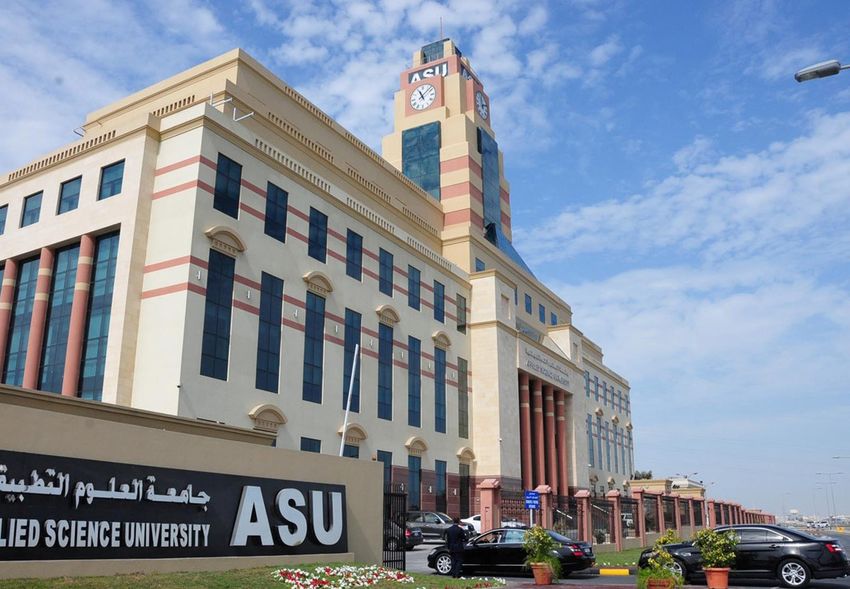
2015-2020

2

His Royal Highness                         His Majesty                          His Royal Highness
 Prince Khalifa bin Salman Al Khalifa      King Hamad bin Isa Al Khalifa        Prince Salman bin Hamad Al Khalifa
The Prime Minister of the Kingdom of    The King of the Kingdom of Bahrain     The Crown Prince, Deputy Supreme
               Bahrain                                                       Commander of Bahrain Defense Force and
                                                                                    First Deputy Prime Minister

                                                                             ASU Strategic Plan - 2015 - 2020         3
ASU
STRATEGIC
    PLAN
   2015-2020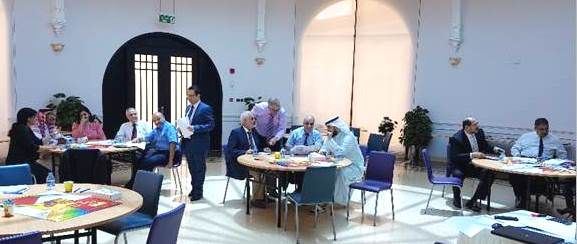
06    Foreword
      Chairman of the Board of Trustees

07
      Introduction
      President of the University

08    ASU
      A Brief History

10
      ASU
      Timeline

11
      Strategic Plan
      Executive Summary

12    Strategic Plan
      Vision and Mission

13
      Strategic Plan
      Core Values

14
      Strategic Plan
      Seven Strategic Pillars

16
      Strategic Plan
      Development & Review

17    Strategic Plan
      Implementation & Monitoring

18    Strategic Plan
      Achievements

20    Strategic Plan
      Objectives & KPIs

     ASU Strategic Plan - 2015 - 2020   5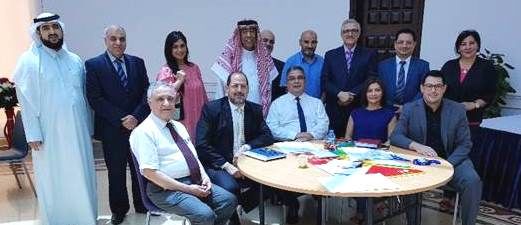
FOREWORD

           Professor Waheeb Alkhaja
           Chairman of the Board of Trustees, Applied Science University

           I am pleased to present the Strategic Plan of Applied Science University, Bahrain,
           where our students are at the heart of everything we do.

           ASU has an international outlook, through our partnerships with leading
           universities and academics in the UK and the Arab world. We also have a strong
           commitment to our local community and region - contributing through our
           educational provision, our research and our business partnerships. We intend
           to become a leading private University in the Gulf.

           We deliver undergraduate and masters programmes across four colleges to
           around 3,000 students. Several more programmes are planned to come on-
           stream in the near future, in order to widen our global reach and to provide
           quality education to bright, ambitious and talented students throughout the
           region. We have invested significantly in our facilities by building a modern and
           well-designed University campus.

           Our Strategic Plan has been developed with input from all our stakeholders, to
           ensure that with drive and determination Applied Science University and all our
           graduates will continue to play a vital role in the future of the GCC economy
           and contribute to our society.

6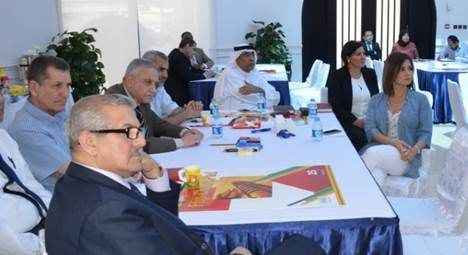
INTRODUCTION

               Professor Ghassan Fouad Aouad
               President, Applied Science University

               It gives me a great pleasure to introduce our Strategic Plan 2015-2020.
               Strategic planning plays a pivotal role in transforming our University and it was
               really exciting to develop our Plan with full participation from staff, students
               and external stakeholders, aligning it to the strategies and directions of the
               Kingdom’s Higher Education Council and especially Bahrain’s Economic Vision
               2030. Delivery of our Plan will be achieved through a series of clear and robust
               Operational Plans and Key Performance Indicators (KPIs).

               Our core activities are centred on teaching & learning, research and community
               engagement, supported by four pillars of student support, internationalization
               & partnerships, quality assurance and sustainable growth. Combined, these
               form our seven Strategic Objectives. Students are central to all that we do and
               our Strategic Plan will ensure we provide the best possible learning experience,
               focusing on employability, strong entrepreneurial skills and STEM subjects. Our
               new British degrees, in collaboration with London South Bank University and
               Cardiff Metropolitan University, demonstrate that ASU delivers education of the
               highest quality.

               This Strategic Plan has benefitted immensely from the clear vision of the Board
               of Directors and Board of Trustees, especially the insights of Professor Waheeb
               Alkhaja, our Founding President and Chairman of our Board of Trustees. It is
               also important to acknowledge the excellent contributions from our staff,
               students and external partners and stakeholders. Applied Science University
               has an exciting time ahead and our Strategic Plan will be a beacon to guide our
               direction.

                                                   ASU Strategic Plan - 2015 - 2020       7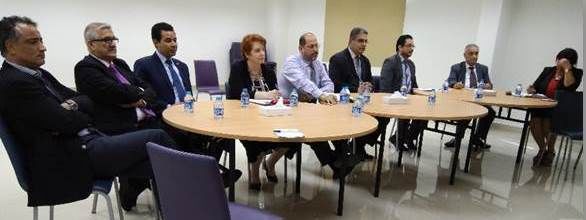
ASU
    A BRIEF HISTORY
    Applied Science University was granted its licence by the Ministry of Education
    according to the decree issued by the Minister’s Council (No. WD 140/2004)
    dated 5th July 2004, making it one of the first private universities in the Kingdom
    of Bahrain.

    ASU aspires to become one of the leading universities in the Kingdom of Bahrain
    and in the wider Gulf region. The University aims to support the economic
    and social development of the Kingdom of Bahrain by providing degree
    programmes at undergraduate and postgraduate levels. Our programmes
    are grounded in a pedagogical framework designed to develop students’
    understanding of key theories and concepts through knowledge acquisition
    and development of practical skills, with a focus on providing programmes in
    STEM (science, technology, engineering and mathematics). We aim to foster
    life-long learning and to prepare our graduates for a range of career paths
    within their chosen field or discipline.

    ASU employs experienced and well qualified academic faculty who support
    student learning and the overall student experience through provision of
    research-informed teaching, supported by a comprehensive range of learning
    and assessment methods. This approach ensures that ASU graduates are well-
    equipped and capable of facing the challenges of their professional careers.

8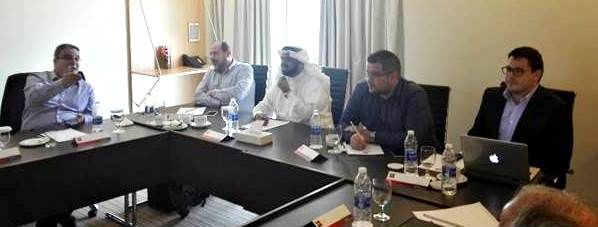
At its formation, ASU was situated in the Juffair district of Bahrain, and relocated to its new purpose-built campus in
September 2013. The new campus covers an area of 24,000sq.m, designed to accommodate around 1,690 students at a
time (giving a total capacity of 5,070 students distributed across mornings, evenings and weekends).

The campus is designed to provide a excellent educational environment, in accordance with the highest international
and local standards using the latest technology in classrooms, including design studios, lecture halls, computer labs,
language and specialized laboratories, as well as a high-tech library and a state-of-the-art lecture theatre with 292
seats. Wi-Fi connection is available across the campus. There is also a Student Activity Centre, featuring table tennis,
billiards, table-football and computer games; together with outdoor courts for tennis, basketball, etc. In addition, located
throughout the campus are social spaces with seating, a coffee shop and a cafeteria.

The location of the campus is an ideal geographical position, situated in the Central Governorate between Manama and
Riffa, making it easily accessible from all parts of Bahrain.

The academic year 2017/2018 marks the inauguration of the first international programmes delivered at ASU in
partnership with well-respected British universities, setting the University apart from the competition, on a path of
success and excellence.

                                                                               ASU Strategic Plan - 2015 - 2020       9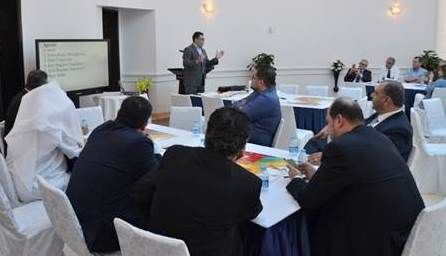
ASU TIMELINE

     Applied Science         Academic MOU* with
     University is                                                                                ASU is registered for
                             Yarmouk University
     established on                                                                               programme placement
     Juffair Campus                                                                               on the National
                                                                                                  Qualification
                                     ASU moves to                                                 Framework (NQF)
                                     New Campus
                First
                                                                                                  Application submitted
                Graduation                        ASU joins top-tier
                                                                        Successful NQF            for HEC Institutional
                Ceremony:                         universities in the
                                                                        Institutional             Accreditation
                105                               HEC Annual Report
                students                                                Listing
                                                  ranking
     2004        2007        2011     2013        2015                  2016                   2017 TODAY

                                                                        Academic
                                                  Creation of ASU       Agreements with         First cohorts of students join
                                                  Alumni Club           Cardiff Metropolitan    ASU’s collaborative British
                                                                        University and          programmes
                                                                        London South Bank
                                                                        University
                                                                                                Tenth Graduation
                                                                                                Ceremony:
                                                                                                Over 3000 alumni
                                                                                                since establishment

10
STRATEGIC PLAN
EXECUTIVE SUMMARY
Since its establishment in 2004, ASU has been on a path of dynamic and positive progress towards becoming an
internationally respected higher education institution.
This Strategic Plan is a high-level agenda, serving as a guide and roadmap to achieving our goal of excellence in all
aspects of our operation. Over the period of this Strategic Plan, ASU will build on progress to date, continue to contribute
to the strategies of the Kingdom of Bahrain and develop students into high-achieving global citizens.
This Strategic Plan 2015 – 2020 booklet covers:
• The cornerstones of ASU’s foundation which are therefore the starting points of our Strategic Plan – these are
- ASU’s Vision
- ASU’s Mission
- ASU’s Core Values
• The Seven Strategic Pillars which we have identified as key to the formulation and successful implementation of
our Strategic Plan
• The development of the ASU Strategic Plan and the mid-cycle review we conducted, leading to revisions and
the publication of this booklet
• Implementation of our Strategic Plan and the way in which we monitor its progress
• Achievements and progress made since the Strategic Plan was first devised in 2015
• Our Strategic Objectives and the KPIs with which we measure their achievement
ASU Strategic Plan - 2015 - 2020 11STRATEGIC PLAN
VISION AND MISSION
VISION
“The vision of Applied Science University is
to be one of the leading private universities
supporting practical learning and scientific
research in Bahrain and the Gulf.”
MISSION
“ASU is committed to offering an education
that is accessible to academically competent
students of Bahrain, the Gulf and beyond, and
to deliver academic programmes of quality that
graduate students equipped with knowledge
and skills relevant locally and regionally. ASU
is further dedicated to the promotion of a
culture of learning and scientific research for
its students, staff and faculty regionally and
globally to engage meaningfully with the
community at large.”
12ASU Strategic Plan - 2015 - 2020 13
STRATEGIC PLAN
SEVEN STRATEGIC PILLARS

As we developed our Strategic Plan, we identified the three areas on which we focus our efforts and the four areas
which enable us to do this. Together these make up the Seven Pillars of our strategic activities.

The focus areas are:

     • Teaching & Learning
     • Research
     • Community Engagement

The enabling areas are:

     •   Student Support
     •   Internationalization & Partnerships
     •   Quality Assurance
     •   Sustainable Growth

These Seven Pillars were identified because they are key to achievement of our Mission, and our primary purpose
of serving our community through provision of high quality education and the promotion of a culture of learning,
research and engagement with the community.

14
VISION
Where should we focus our efforts?
The vision of Applied Science University is to be one of the leading
private universities supporting practical learning and scientific
research in Bahrain and the Gulf.
MISSION
Why do we exist?
ASU is committed to offering an education ASU is further dedicated to the promotion of
that is accessible to academically competent a culture of learning and scientific research
students of Bahrain, the Gulf and beyond, and for its students, staff and faculty regionally
to deliver academic programmes of quality that and globally to engage meaningfully with
graduate students equipped with knowledge the community at large.
and skills relevant locally and regionally.
STRATEGIC OBJECTIVES
Where should we focus our efforts?
1. Teaching & Learning 2. Research 3. Community Engagement
Create a culture of learning and support students Develop a research culture and Ensure that ASU is committed to creating an impact on
to develop their knowledge, learning and skills by deliver high quality research society through all activities, recognizing its duty to ensure
engaging in professionally relevant programmes of outputs. that students, alumni and staff understand their obligations as
study. citizens to engage with and support the community.
4. Student Support 5. Internationalization & 6. Quality Assurance 7. Sustainable Growth
Partnership
Support Students as part of a Develop and maintain collaborative Comply with the HEC regulations, Operate effectively and efficiently,
‘learning community’. Ensure that all partnerships with other HE fully observe guidance from the optimising the use of ASU physical
students realize their full potential institutions, government, the industry national quality assurance and and human resources. Grow ASU
– both in engaging fully with the and professional bodies to ensure accreditation frameworks in Bahrain. provision in terms of increasing
opportunities provided for study and that ASU activities support national Demonstrate that quality assurance student numbers on existing
research and in preparing them for priorities and remain relevant to the and quality enhancement is programmes, expanding its provision
the world of work. needs of industry embedded in all of its activities in other areas.
VALUES
Integrity - Collaboration & Team Spirit - Loyalty - Social Responsiveness & Community Engagement - Quality
ASU Strategic Plan - 2015 - 2020 15STRATEGIC PLAN DEVELOPMENT & REVIEW ASU’s strategic planning process is a holistic one, encompassing a broad-based development stage and re-evaluation of its goals and strategic directions on a continuous basis, in light of new challenges and opportunities. Mid-way through the 2015-2020 cycle, and alongside activity for the HEC Accreditation process and the inauguration of the first British programmes to be delivered at ASU in partnership with London South Bank University and Cardiff Metropolitan University, the University decided to undertake an in-depth review of the Strategic Plan to gauge the degree of achievement to date of its strategic objectives and the related KPIs. In order to ensure participation by all stakeholders, the review involved a series of brainstorming and consultation meetings with the University’s main stakeholders such as student and employer representatives, members of academic staff, administrative staff, Senior Management Group and external consultants. Workshops were also held to update ASU’s SWOT Analysis and its Institutional Risk Register. This in-depth review, coordinated and led by the Governance and Strategic Planning Unit, resulted in an updated set of institutional KPIs that are more current and more reflective of the strategic direction of the university. This updated Strategic Plan, supported by annual Operational Plans, will continue to guide the University in the implementation of its Vision and Mission and the achievement of its Strategic Objectives. 16
STRATEGIC PLAN
IMPLEMENTATION & MONITORING

To enable ASU to implement its Strategic Plan and achieve its goals, all University colleges, departments, units, directorates
and deanships are required to develop annual Operational Plans that are closely linked and mapped to ASU Strategic
Objectives and Key Priorities. The Operational Plans are updated regularly and are reviewed by the Board of Trustees at
least twice each academic year.

The monitoring system includes:

    •   Continuous assessment of the level of progress achieved against the previously-set targets
    •   Occasional internal audits to verify that achievements are based on evidence and proper documentation
    •   A Strategy Implementation Report which is issued periodically
    •   A bespoke Dashboard for ASU’s institutional KPIs to measure overall performance at any given time

These measures, separately and together, ensure that progress is made and measured and that effective action is taken
when necessary, in order to achieve ASU’s Strategic Objectives.

Finally, ASU’s Governance & Strategic Planning Unit has responsibility to collaborate with the various units and
departments of the University to make sure that the Strategic Plan is being clearly communicated and fully understood
by our stakeholders and that our staff are sufficiently equipped to implement it successfully.

                                                                                ASU Strategic Plan - 2015 - 2020        17
STRATEGIC PLAN
ACHIEVEMENTS
After the University first devised its Strategic Plan in 2015, we immediately began work on implementation and major
progress has been made by the date of the mid-stage review in 2017.
During this period, the many significant milestones achieved include:
• Full confidence from Bahrain’s Education & Training Quality Authority (BQA) for additional programmes, bringing
the total number of programmes with Full Confidence to nine (three more to be reviewed in 2018)
• Collaboration agreement with the Higher Education Academy (UK) for pedagogic development of our faculty
- 50% of our academic staff are now HEA Fellows or Senior Fellows or in the process of achieving this
qualification
• International partnership agreements with two leading British universities, London South Bank University and
Cardiff Metropolitan University
- Four programmes are now in operation and recruited their first students in September 2017
• Institutional Listing for the University on Bahrain’s National Qualifications Framework (NQF) Register by the
Education & Training Quality Authority (BQA)
• Successful application for HEC Institutional Accreditation
- Significant progress has also been made on preparations for the Accreditation Panel Visit
18• Niche research areas identified for collaborative research activities within the University
• Increase of almost 70% in the number of research publications (42 in 2014/15 and 71 in 2016/17)
• International Conference on Sustainable Futures (ICSF 2017), an international research conference organised and
held in November 2017 in collaboration with London South Bank University, with participants from over 20 countries
• Our robust Quality Management System (QMS) set in place, together with starting the process of achieving ISO
9001:2015 certification
• Strengthened links with the business community via formal agreements with employers and organizations (including
Flat 6 Labs, SMEs Bahrain, Bahrain Businesswomen’s Society, etc)
• An increased number of entrepreneurship courses and activities to enable students to prepare better for their future
careers
• An enhanced programme of community engagement activities
• Additional student clubs established in collaboration with the Students’ Council to enrich students’ university
experience
• ASU Alumni Club, inaugurated to sustain contact with and support to our students after they graduate
ASU Strategic Plan - 2015 - 2020 19STRATEGIC PLAN
STRATEGIC OBJECTIVES AND KPIs
ASU’s Strategic Objectives (shown below) are our goal statements for the Seven Strategic Pillars which we identified as
key to achieving our strategy (see page 14).
The remaining pages of this booklet set out each of our Strategic Objectives, together with the KPIs which have been
agreed to measure progress.
1 2 3 4
TEACHING & RESEARCH COMMUNITY STUDENT
LEARNING ENGAGEMENT SUPPORT
Create a culture of Develop a research Ensure that ASU is Support students as part of
learning and support culture and deliver high committed to creating a ‘learning community’.
students to develop their quality research outputs. an impact on society Ensure that all students
knowledge, learning through all activities, realize their full potential –
and skills by engaging in recognizing its both in engaging fully with
professionally relevant duty to ensure that the opportunities provided
programmes of study. students, alumni and for study and research and
staff understand their in preparing them for the
obligations as citizens to world of work.
engage with and support
the community
20As described in the Implementation and Monitoring section (see page 17), targets are set for each Strategic Objective
and its KPIs, so there is a robust and clear process of measuring the steps taken towards achieving the ASU Strategic Plan.
5 6 7
INTERNATIONALIZATION QUALITY SUSTAINABLE
& PARTNERSHIPS ASSURANCE GROWTH
Develop and maintain Comply with the HEC Operate effectively and
collaborative partnerships regulations and fully efficiently, optimising
with other HE institutions, observe guidance the use of ASU physical
government, the industry from the national and human resources.
and professional bodies to quality assurance and Grow ASU provision
ensure that ASU activities accreditation frameworks in terms of increasing
support national priorities in Bahrain. Demonstrate student numbers on
and remain relevant to the that quality assurance and existing programmes and
needs of industry. quality enhancement is expanding provision in
embedded in all activities. other areas.
ASU Strategic Plan - 2015 - 2020 211. TEACHING & LEARNING
STRATEGIC OBJECTIVE Create a culture of learning and support students to
develop their knowledge, learning and skills by engaging in
professionally relevant programmes of study.
KEY PRIORITY INSTITUTIONAL KPI
1. Management of Programs and Curricula: Design and 1.1 Graduate employment rate
deliver programmes of study which are benchmarked 1.2 Number of graduates in STEM programmes
against international standards, meet the needs of 1.3 Student/faculty ratio
industry and the professions and focus on STEM 1.4 Number of programmes which have been externally benchmarked
subject areas and/or received full confidence judgements
1.5 Number of programmes with accreditation from appropriate
professional bodies
1.6 Number of programmes in STEM subjects
2. Faculty Development: Ensure that staff development 2.1 Proportion of teaching staff participating in professional development
activities support the needs of our staff to enhance activities
their pedagogical skills in teaching, learning and 2.2 Proportion of teaching staff who have gained a recognised pedagogical
assessment and apply this to motivate and engage qualification or engaged in pedagogical research
learners.
3. Enhancement of Programmes: Ensure that both the 3.1 Students’ overall rating of the quality of their courses.
content and delivery of programmes are informed 3.2 Number of courses which adopt a research based element in their
by research and scholarship and are continuously content or delivery
improved.
4. Technology Enhanced Learning: Embed technology 4.1 Percentage of academic staff using e-learning platform
enhanced learning in the delivery of its programmes. 4.2 Percentage of students using e-learning platform
222. RESEARCH
STRATEGIC OBJECTIVE
Develop a research culture and deliver high quality research
outputs
KEY PRIORITY INSTITUTIONAL KPI
1. Strategic Investments: Invest in increasing the 1.1 Percentage of the total annual operational budget dedicated to research
number of active research staff through appropriate 1.2 Percentage of faculty with doctorates
recruitment and staff development 1.3 Percentage of active researchers
2. Establish Priority Areas for Growth: Identify and 2.1 Number of cross-disciplinary collaborative research groups within the
support niche areas for inter-disciplinary research University
drawing on the collective subject expertise in its
constituent Colleges.
3. Increase Research Activity/Culture: Increase the 3.1 Number of publications in peer-reviewed journals
overall quality and quantity of published outputs. 3.2 Number of citations in refereed journals
4. External Profile Enhancement: Increase exposure 4.1 Number of research papers or reports presented at academic conferences
of staff to national and international research
communities through involvement in relevant
conferences and meetings and building research
networks.
ASU Strategic Plan - 2015 - 2020 233. COMMUNITY ENGAGEMENT
Ensure that ASU is committed to creating an impact
STRATEGIC OBJECTIVE
on society through all activities, recognizing its duty to ensure
that students, alumni and staff understand their obligations as
citizens to engage with and support the community
KEY PRIORITY INSTITUTIONAL KPI
1. Consultancy and Knowledge Sharing: Develop and 1.1 Number of consultancy and advisory activities conducted by the
deliver a broad portfolio of services that the University University
can offer to the community in order to provide advice, 1.2 Number of events/seminars/lectures/articles/discussion groups led by
discussion and debate on subject areas in which it has the staff involving the wider community
expertise.
2. Community Support: Arrange and participate in 2.1 Number of community engagement and services events
community engagement activities (ASU and external) 2.2 Number of students participating in activities
that provide opportunities for students, alumni and 2.3 Number of alumni participating in activities
staff to engage with and serve the community. 2.4 Number of staff participating in activities
3. Open Campus: Enable appropriate use of our campus, 3.1 Total number of events hosted on campus
facilities and services by the public, schools, academic
institutions and charitable organizations for free or at a
nominal cost.
4. Public Outreach: Develop relationships with all sectors 4.1 Number of formal/informal visits from and to the university
of society (including government, policy-making 4.2 Number of Memoranda of Understanding (MOU)
bodies, charities, distinguished figures, institutions, 4.3 Number of relevant media interviews
schools and media) to promote outreach through
dialogue, engagement and collaboration.
244. STUDENT SUPPORT
Support students as part of a ‘learning community’. Ensure that
STRATEGIC OBJECTIVE
all students realize their full potential – both in engaging fully
with the opportunities provided for study and research and in
preparing them for the world of work.
KEY PRIORITY INSTITUTIONAL KPI
1. Continuous Support: Support students through all 1.1 Student overall satisfaction rate
phases of the student journey from admission to 1.2 Student evaluation of academic advising
graduation and employment. 1.3 Graduation rate for undergraduate students
1.4 Graduation rate for postgraduate students
1.5 Student retention rate
1.6 Number of students that receive financial support
1.7 Number of active student clubs
2. Engagement & Employability: Ensure the personal 2.1 Number of extra-curricular activities offered
and professional development of students through 2.2 Number of career development and employability-related extra-curricular
the provision of extra- curricular opportunities. activities for graduating students and alumni
3. Campus Environment: Create and resource a 3.1 Student satisfaction rate on the quality of their learning experiences at the
campus environment that supports and enriches institution in terms of:
independent student learning - Library
- Information Technology
4. Entrepreneurship, Innovation & Leadership: Support 4.1 Number of extra-curricular initiatives designed to promote entrepreneurial,
and encourage students in a culture of engagement, innovation and leadership skills.
entrepreneurship and innovation and prepare them
to become leaders in their chosen professions.
ASU Strategic Plan - 2015 - 2020 255. INTERNATIONALIZATION & PARTNERSHIPS
Develop and maintain collaborative partnerships with other
STRATEGIC OBJECTIVE
HE institutions, government, the industry and professional
bodies to ensure that ASU activities support national priorities
and remain relevant to the needs of industry
KEY PRIORITY INSTITUTIONAL KPI
1. Partner Networks: Create a network of high value 1.1 Number of MOCs/MOUs with national and international partners
partners that share our ambitions and values. 1.2 Number of international students
2. External Profile Enhancement: Build relationships and 2.1 Number of international degree programmes offered by the University
embark upon joint projects with these partners that 2.2 Number of international degree programmes offered by the University in
support the implementation of our priority objectives. STEM subjects
2.3 Number of joint activities, projects or publications with suitable external
academic, professional or industry partners
3. Liaison with Government: Play a key role in partnership 3.1 Number of projects or initiatives which are relevant to and supportive of
with government to support the Economic Vision 2030 government priorities
for Bahrain.
266. QUALITY ASSURANCE
Comply with the HEC regulations and fully observe guidance
STRATEGIC OBJECTIVE
from the national quality assurance and accreditation
frameworks in Bahrain. Demonstrate that quality assurance and
quality enhancement is embedded in all activities
KEY PRIORITY INSTITUTIONAL KPI
1. Quality Assurance Procedures: Ensure that 1.1 Number of quality assurance training sessions delivered
quality assurance procedures and processes are
effectively communicated to all staff and are
regularly monitored
2. Regulatory Compliance: Ensure that ASU is fully 2.1 Number of audits to ensure full compliance with the higher education
compliant with the regulatory framework in regulations
which it operates
3. Best Practice: Regularly conduct external and 3.1 Number of best practices identified and implemented as a result
internal environmental scans to identify and of internal reviews (Annual Programme Review Reports, Periodic
implement best practices in quality assurance in Programme Review Reports, etc)
all aspects of its operations.
3.2 Number of best practices identified and implemented as a result of
external benchmarking and/or reviews
4. Accreditation: Gain appropriate national, regional 4.1 On-time and successful results from Bahrain’s accreditation bodies
and international accreditations (HEC and BQA)
4.2 Successful accreditations from appropriate quality-related bodies
ASU Strategic Plan - 2015 - 2020 277. SUSTAINABLE GROWTH
Operate effectively and efficiently, optimizing the use of ASU
STRATEGIC OBJECTIVE
physical and human resources. Grow ASU provision in terms
of increasing student numbers on existing programmes,
expanding its provision in other areas.
KEY PRIORITY INSTITUTIONAL KPI
1. Finance: Secure resources that will allow us to achieve 1.1 Budget realization with acceptable variance between actual expenditures
our ambitions in a sustainable way. and budget
2. Marketing and Public Relations: Develop and monitor 2.1 Number of enrolled students
the effectiveness of innovative marketing and PR 2.2 Cost per recruited student
strategies to optimize student recruitment and
enhance the reputation of the University.
3. Human Resources: Recruit and retain competent 3.1 Faculty retention rate
academic staff who have both strong subject expertise
and high academic standards
4. Value for Money: Ensure that investment in both 4.1 Total average operating expenditure (other than student allowances) per
human and physical resources is effective in supporting student
its strategic priorities and consistently provides value
for money.
5. Risk Management: Ensure that reputational and 5.1 Percentage of risks with valid mitigations keeping risks within tolerable
financial risks are identified and that appropriate limits
mitigation is in place to minimize risk.
6. Regulatory Compliance: Monitor regulations related 6.1 On-time regulatory compliance
to administrative matters at the University to promptly
satisfy regulatory bodies
28STRATEGIC PLAN
WORKSHOPS
ASU Strategic Plan - 2015 - 2020 29Governance & Strategic
Planning Unit
November 2017
www.asu.edu.bh
This book has been issued as per the approval of the General Secretariat of the Higher Education Council
30You can also read


