Australian Real Estate Quarterly Review - Q1 2020 - Dexus
←
→
Page content transcription
If your browser does not render page correctly, please read the page content below
Australian
                                                      Real Estate
                                                        Quarterly
                                                         Review
                                                                             Q1 2020

Australian Real Estate Quarterly Review | Q1 2020                                      Page 1 of
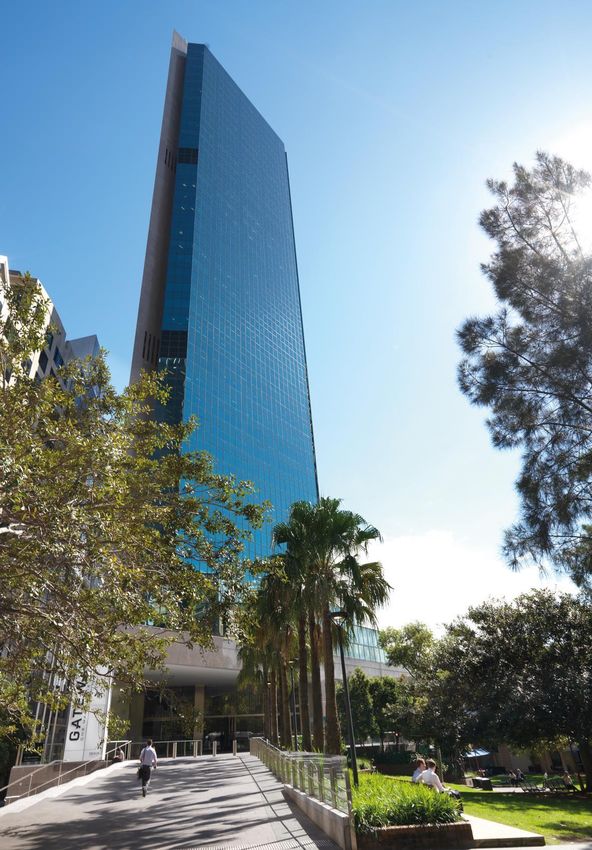
13                                                  Gateway, Sydney, owned by Dexus Wholesale Property Fund.
Inside

   Page 03                 Investment climate

   Page 04                 Transactions

   Page 05                 Performance

   Page 06                 Office

   Page 07                 Office market wrap

   Page 08                 Spotlight - coworking

   Page 09                 Industrial

   Page 10                 Retail

   Page 11                 Dexus Research

Australian Real Estate Quarterly Review | Q1 2020   Page 2 of 13

Investment climate

Economic growth down but not out                                          Figure 1: Modest growth outlook – slow in short term then
                                                                          improving in FY22
Australian GDP growth moderated over the past year
and is forecast to remain below average at around 1.8%                     % per annum
                                                                           8%
per annum in FY20 before improving FY21.
Australia’s bushfire crisis is expected to have major                      6%

environmental and social impacts. However, the overall                     4%
economic impact is likely to be small with Goldman
Sachs estimating a 0.3 basis points hit to growth in the                   2%

short term followed by a boost to growth from rebuilding
efforts. If there is a surprise in store it is most likely to              0%

be via a lull in tourism.
                                                                           -2%

Rising house prices bode well for future construction
levels, however, it will take until late FY21 and FY22 for                 -4%
                                                                                 FY61    FY66   FY71     FY76    FY81   FY86    FY91    FY96   FY01    FY06       FY11   FY16    FY21

the current slide in building commencements to turn
                                                                          Source: Deloitte Access Economics
around and for construction to contribute to growth.
The recent US/China trade deal should benefit business
confidence, notwithstanding that some Australian                          Figure 2: Uncertainty is influencing business and
agricultural exports could be affected by the terms of                    consumer confidence
the deal.
                                                                                                                          Business Confidence Index
Weak business and consumer point to generally                             Index
                                                                           20
                                                                                                                          Consumer Confidence Index (RHS)
                                                                                                                                                                              Index
                                                                                                                                                                                 120
subdued leasing conditions going forward. However,
business conditions vary greatly by industry. Conditions                  15                                                                                                     115

in the finance and business services industries (big
                                                                          10                                                                                                     110
users of office space) are much more positive than
conditions in the retail and wholesale trade industries.                   5                                                                                                     105

Interest rates are expected to remain low for a                            0                                                                                                     100
considerable period. The official cash rate is 0.75%.
The 10-year government bond yield (1.18%) is forecast                      -5                                                                                                    95

to remain below 2% for the foreseeable future.                            -10                                                                                                 90
                                                                            Dec-14              Dec-15           Dec-16              Dec-17           Dec-18             Dec-19
Australia’s strong population growth will support
demand for real estate going forward. The UN projects                     Source: ABS

that over the next decade Australia’s population growth
of 1.5% p.a. will far exceed the average of the G20                       Figure 3: Business conditions stronger in business
(0.5%), the US (0.7%), the UK (0.5%) and China                            services than in retail/wholesale
(0.2%).
                                                                                                                        Business Confidence           Business Conditions

                                                                                        Rec. & Personal
Table 1: Australian economic forecasts: Q4 2019
                                                                          Finance/ Prop & Business
                                   Jun-19       Jun-20        Jun-21
                                                                                           Construction
Real GDP %pa                         1.6%          1.8%            2.6%
Final demand %pa                     1.2%          1.4%            2.8%           Transport & Utilities

Employment %pa                       2.8%         2.0%             1.7%                          Mining
Goods imports %pa                   -3.3%         2.0%             1.9%
                                                                                         Manufacturing
Retail sales %pa (real)              0.2%         2.3%             2.3%
CPI %pa                              1.6%          1.8%            2.0%                      Wholesale

90 Day bill %                        1.2%         0.5%             0.6%                           Retail
10yr Bond %                          1.3%          1.0%            1.1%
                                                                                                           -20      -15        -10      -5       0            5          10        15
AUD/USD                               0.70         0.69            0.70                                                                                                       index

Source: Deloitte Access Economics base, Dexus adjusted forecasts
                                                                          Source: ABS

Australian Real Estate Quarterly Review | Q1 2020                                                                                                     Page 3 of 13
Transactions

Transaction volumes reach new highs                           Figure 4: Transaction volumes reach record highs, led
                                                              by the office market
Transaction activity has sustained its positive
momentum with 2019 volumes reaching a record
                                                               $Billion
high of $34 billion (Figure 4). Office continues to be                                                                        Office      Industrial     Retail
                                                               40
the most active sector accounting for two thirds of
total volumes.                                                 35
                                                                                                                                                          6.3
                                                               30                                                          8.6                    8.1
Industrial transactions are down 27% since 2016                                                                     7.3            7.4
                                                                                                                                           8.9
                                                               25                                                                                         5.2
despite strong investment demand because stock                                                                             6.7
                                                                                                                                                  5.3
                                                               20                                            7.4    5.0
remains tightly held as investors seek to grow their                                                                               7.1
                                                                                                                                           5.8
                                                                                                      6.4
exposure. Unprecedented investment demand has                  15    4.4                                     3.7
                                                                                                      2.6                                                 22.5
reduced the spread between prime and secondary                 10    4.4                  4.4
                                                                                          1.9
                                                                                                3.4
                                                                                                2.0
                                                                                                                    17.7   17.9
                                                                                                                                   14.7    16.4
                                                                                                                                                  19.9
                                                                                   2.3
industrial assets to around 100 basis points                               1.8                               12.9
                                                                5    7.9   1.3     1.6                10.3
                                                                                          6.4   6.7
compared to 200 basis points five years ago. The                0
                                                                           3.6     3.9

narrow spread points to the prospect of mispricing of               2007 2008 2009 2010 2011 2012 2013 2014 2015 2016 2017 2018 2019

risk in the secondary market.                                 Source: JLL Research, Dexus Research Transaction Database
                                                              *YTD
Capitalisation rates have compressed a further 25
basis points in office and industrial over the past six
months, hitting new historic lows of 4.50% and                Figure 5: Office and Industrial see further compression
                                                              with retail yields flat to up
4.88% respectively (Figure 5).
                                                                                                              Sydney CBD office
A-REITs were strong net buyers in 2019 (acquiring                                                             Sydney Central West industrial
                                                                %
nearly $10 billion in assets) following an active year                                                        Sydney Regional retail
                                                              9%
of equity raisings. ASX-listed REITs raised a total of
$7.1 billion of fresh equity. Key issuers were CLW            8%
($1.1 billion), DXS ($964 million), GPT ($867 million)
and MGR ($796 million).                                       7%

The most significant transaction of the quarter was           6%

Link REIT’s purchase of 100 Market Street, the office
                                                                                                                                                         4.88%
part of the Westfield complex.                                5%
                                                                                                                                                         4.75%
                                                                                                                                                         4.50%
                                                              4%
                                                               Dec-09            Dec-11         Dec-13         Dec-15             Dec-17          Dec-19

Table 2: Q4 2019 top transactions
                                                              Source: JLL Research, Dexus Research
Price    Asset/portfolio                 Buyer
($m)
683      100 Market Street, Syd.         Link REIT            Figure 6: A-REITs are the largest net buyers off the
670      Westfield Marion                SPH REIT             back of capital raisings
570      Westfield Booragoon             Scentre Group
425      Australian Government           AsheMorgan
         Centre
405      Liberty Place                   ISPT
395      Q&A Portfolio                   Shayher Group
350      118 Mount Street                CBRE Global
                                         Investment
345      National Cold Chain             Lineage Logistics
         Logistics Portfolio
325      Central Square                  LaSalle Investment
                                         Management
Source: Dexus Research Transaction Database, JLL Research

                                                              Source: JLL Research, Dexus Research

Australian Real Estate Quarterly Review | Q1 2020                                                                                   Page 4 of 13
Performance

Cap rates drive variation in returns                                    Figure 7: A-REIT pricing dips with a lift in 10 year bonds
Equity markets performed well during the year with                                       ASX 200 A-REIT Index (LHS)               10 year bond rate (RHS) - inverted
a 23.4% return. The strong performance was driven                       1,800                                                                                                        0.50%
at the back end of 2019 through easing trade war                        1,700                                                                                                        1.00%
tensions, Brexit optimism and the prospect of
continued growth in the US economy as interest                          1,600                                                                                                        1.50%

rates moderate.                                                         1,500                                                                                                        2.00%

A-REITs had a strong year, returning 19.4%,                             1,400                                                                                                        2.50%

however the index weakened mildly in the last                           1,300                                                                                                        3.00%

quarter due to a lift in 10 year bond yields which                      1,200                                                                                                        3.50%
saw a mild sell off in defensive assets (Figure 7).
                                                                        1,100                                                                                                        4.00%
Returns for office and industrial unlisted property                     1,000                                                                                                       4.50%
converged, recording 11.7% and 12.7% respectively                          01-Dec-14           01-Dec-15      01-Dec-16            01-Dec-17         01-Dec-18               01-Dec-19

in the year. Capital growth was mildly higher for
                                                                        Source: IRESS, Dexus Research
industrial given greater cap rate compression
(Figure 8).
Retail funds experienced a weaker total return                          Figure 8: Industrial cap rate compression edges out office
                                                                        returns, retail enters negatives
(-1.1%) given a softening in cap rates and weaker
operational metrics like vacancy and turnover                           % return                              Office              Retail        Industrial                   Diversified
growth. The slowdown in retail returns has dragged                      20.0%
on performance of diversified funds.
                                                                        15.0%
Strong returns in the industrial sector were driven                                                                                                                               12.7%

by capital growth. While the average capital return                     10.0%
                                                                                                                                                                                  11.7%

was 6.5% for the year to September 2019, top                                                                                                                                       7.1%
quartile assets showed a capital return of 10.3%                         5.0%
(Figure 9). There was significant variation in capital
return for retail assets, with the lower quartile                        0.0%

assets returning -3.1% whilst the top quartile                                                                                                                                     -1.1%

returned 2.3%.                                                          -5.0%
                                                                            Dec-14                 Dec-15      Dec-16               Dec-17             Dec-18                Dec-19

                                                                        Source: Mercer/IPD (NAV pre-Fee), Dexus Research
Table 3. Index returns to 31 Dec 2019
               Qtr.%       1 yr       3 yr                              Figure 9: Strong capital growth in office and industrial sectors
                          %p.a.      %p.a.                                  Capital Return (year to sep 19)
Australian         0.7       23.4       10.3     S&P/ASX 200            %                                              Bottom Quartile     Average      Top Quartile
                                                                        12.0
shares                                           Accumulation
                                                 Index                                                 10.3
                                                                        10.0
A-REITs           -1.0       19.4        9.1     S&P/ASX 200
                                                                                                                                    8.2
                                                 A-REIT                  8.0
                                                 Accumulation                                6.5                          6.3
                                                 Index                   6.0

Australian        -1.3        7.3        5.1     BACM0 Index
                                                                         4.0
fixed
                                                                                                                                                                       2.3
interest                                                                 2.0
                                                                                   1.8
                                                                                                                1.4

Unlisted           1.6        6.2       9.9      Mercer/IPD
property*                                        Australia               0.0
                                                 Monthly PFI
                                                 Core Wholesale*        -2.0
                                                                                                                                                           -2.2
Australian         0.2         1.5       1.7     BAUBIL Index           -4.0                                                                    -3.1
cash                                                                                      Industrial                     Office                           Retail

The indices are copyrighted by and proprietary to the relevant Source   Source: IPD/MSCI,Dexus Research
issuers: MSCI Mercer Aust. Core Wholesale Monthly PFI; Standard
and Poor’s Australian Securities Exchange Accumulation Index;
Bloomberg/UBS Composite and Bank Bill Indices.
 *NAV Pre-Fee

Australian Real Estate Quarterly Review | Q1 2020                                                                                                      Page 5 of 13
Office
Rent growth generally positive Figure 10. Rental growth most pronounced in Melbourne
CBD
Office markets nationally recorded positive rent
$900
growth in the 12 months to December 2019, with Syd CBD
Melb CBD
Melbourne CBD leading the charge (effective growth $800
Bris CBD
of 8.2%). $700 Perth CBD
While weakness in the broader economy and a $600
decline in job advertisements would seem to pose a $500
risk for office demand, business conditions in office-
$400
using industries such as finance and professional
services remain above the all-industry average, $300
providing Australian office markets with a degree of $200
resilience during this period of uncertainty.
$100
Sydney CBD recorded negative net absorption of $0
(37,700) sqm in the first half of FY20. This was Dec-09 Dec-11 Dec-13 Dec-15 Dec-17 Dec-19
almost entirely due to the decentralisation of several Source: JLL Research, Dexus Research.
Government departments and consolidation by
Telstra out of 231 Elizabeth Street. Not counting
these moves, net absorption was close to zero Figure 11. Vacancy rates generally falling except for
reflecting a shortage of available prime space. Sydney up from record lows
25%
Syd CBD
Australian office markets are well positioned.
Melb CBD
Vacancy rates are below average for Sydney (5.0%) Bris CBD
20%
and Melbourne (3.4%). While there is conjecture Perth CBD
about increasing supply in these two markets, supply
expected to complete in the three years to FY22 is 15%
well covered by average demand levels (Figure 12)
hence we expect vacancy rates to remain below 10%
long-term averages for a considerable time. Over
90% of supply under construction in Melbourne is
5%
pre-committed. Brisbane faces a relatively greater
challenge than Perth, which should benefit from a lull
in new supply over the next three years. 0%
Dec-09 Dec-11 Dec-13 Dec-15 Dec-17 Dec-19
Proportionally, the largest increase in office supply
will occur in Parramatta - albeit sizable pre- Source: JLL Research, Dexus Research
commitments will help shore up occupation of the
new stock.
Figure 12. Upcoming office supply generally moderate in
the context of past demand
% of stock per annum Net supply next 3 yrs (%pa) Net take up past 5 yrs (%pa)
7.0%
Table 4. Q4 2019 office snapshot
5.9%
6.0%
Prime net Net Prime net
Vacancy eff. rent Increase eff. rent 5.0%
% growth % of stock growth 4.0%
% p.a. to FY22 % p.a. 3.2% 3.3%
Melbourne CBD 3.40% 8.20% 9.7% 6.2% 3.0% 2.7%
2.5%
Sydney CBD 5.00% 0.40% 4.5% 7.7% 2.0%
1.3% 1.3% 1.4%
Parramatta 5.40% 6.50% 17.6% 1.4% 1.0%
1.0%
0.5% 0.4% 0.5%
Macquarie Park 5.90% 7.30% 17.6% 3.5%
0.0%
North Sydney 8.30% 7.80% 9.8% 9.8% Perth CBD Sydney CBD Melbourne CBD Brisbane CBD North Sydney Parramatta
Canberra 10.60% 4.00% 4.9% 10.1%
Source: JLL Research, Dexus Research
Brisbane CBD 11.70% 4.30% 7.0% 1.2%
Perth CBD 19.10% 1.90% 1.4% 6.7%
Source: JLL Research; *Projects under construction and plans approved
Australian Real Estate Quarterly Review | Q1 2020 Page 6 of 13Office market wrap
Market Direction of
Comments trend for next
12 months
Sydney Decentralisation of the NSW government leads to negative net absorption. The total vacancy Vacancy
rate increased to 5.0%, with circa 23,000 sqm of space vacated in Q4 as a result of government
decentralisations. In a generally subdued climate for business and consumer confidence nationally, Rents →
and a shortage of prime space available office take-up has been subdued in Sydney CBD. However, in
NSW, business confidence remains higher than the national average. Low interest rates have ensured Incentives
investment appetite for Sydney CBD office assets remains strong and prime investment yields fell a
further 25 basis points in 2019 to a record low of 4.5% Yields
North Sydney Falling vacancy rates and pronounced rental growth still a feature. Vacancy rates fell to 8.3%, Vacancy
with the permanent withdrawal of 168 Walker Street (conversion to residential). Prime gross face rents
increased by 6.4% over 2019, with effective growth more pronounced at 7.9% as a result of falling Rents
incentives over the same period. Strong demand should help to support a further uplift in rents over
2020, though not at the same rate seen over the past few years. Prime yields compressed by 20 basis Incentives →
points in 2019 and are expected to fall further in the year ahead
Yields
Macquarie Park Annual face rental growth highest nationally. The total vacancy rate fell a further 100 basis points in Vacancy
the December quarter to 5.9%. Net face rents grew by 7.5% over 2019, the highest growth rate
recorded within office markets nationally. New supply in 2020 will likely place upwards pressure on Rents
vacancy rates in Macquarie Park over the short term, with circa 4.7% of stock under construction due
for completion in 2020 and only one-third of the space currently pre-committed. Incentives →
Yields
Parramatta Lowest prime grade vacancy rate in the country. Total vacancy rates in Parramatta increased in Q4 Vacancy
2019 as the completion of 4 Parramatta Square saw the NSW Government vacating from a number of
secondary locations (12,200 sqm total). Prime grade vacancy remains the lowest of any office market Rents
nationally (0.5%), however, secondary grade vacancy increased to 12.0% in December. While
development of infrastructure projects should increase the tenant appeal of Parramatta, the market Incentives →
has yet to show it can attract head office tenants and become a viable alternative CBD. Prime
investment yields fell 12 basis points to 5.57% in December 2019. Yields
Melbourne Vacancy rates lowest on record and nationally. The Melbourne CBD office market continues to see Vacancy
positive fundamentals, with prime gross face rents rising by 5.2% over the latter half of 2019. Relatively
cheaper rents in Melbourne (compared to Sydney) provide the impetus for further tenant expansions in Rents
a state economy still doing well. Whilst annual net absorption of +21,517 sqm was well below the long-
term average of 73,257 sqm, little available stock and tenant expansions saw vacancy rates falling Incentives →
further to a record low of 3.4%. While 2020 will see circa 330,000 of new supply delivered to the
market, 92% of this space has been pre-committed. Prime yields fell a further 12 basis points in 2019 Yields
to 4.76%.
Brisbane Recovery on track with above average net absorption. Improved economic conditions in Brisbane Vacancy →
are flowing through to the office sector with annual net absorption of +44,947 sqm recorded in 2019,
well above long-term averages. The vacancy rate increased to 11.7%, with the completion of the 300 Rents
George Street where 88% of space is still available. While prime gross face rents continue to improve,
incentives (38-39% gross) remain elevated. With nearly half of the 125,000 sqm of supply currently Incentives →
under construction still available, the outlook for rental growth is subdued. Prime yields compressed by
nearly 40bps over 2019. Yields
Perth Limited supply will support rental growth. The steady recovery of the Perth market continues with Vacancy
annual net absorption of +28,939sqm recorded in 2019, steering vacancy rates lower to 19.1%. There
was some upward pressure on face rents and downward pressure on incentives . Tenant movements Rents
are largely motivated by upcoming lease expiries, rather than any notable expansions, hence the
rental market lacks tension. Recovery should continue in the absence of new supply, but it will take Incentives
time. Prime yields remained stagnant during 2019.
Yields
Canberra Above average rental growth recorded. The re-election of the Coalition government brought stability Vacancy →
back to Canberra's office market. Positive net absorption of 12,089 sqm in the six months to December
2019 was driven by a number of expansions by non-government tenants. In addition, there was Rents
notable rental growth on both a face and effective basis over the last two quarters of the year. Prime
investment yields fell to 5.75% on the back of renewed interest from domestic institutional investors. Incentives →
Australian Real Estate Quarterly Review | Q1 2020 Page 7 of 13Spotlight - coworking
Opportunity, challenge or risk? Figure 13: Office demand in the form of coworking has
comprised 18% of total take-up over the past 5 years
The failure of the WeWork IPO last year has focused
attention on the risks associated with the coworking sqm
Total Net Absorption
Total Coworking Take Up
sector. This article summarises the risks and 700000
opportunities. 600000
Coworking has been a major part of office demand 500000
accounting for 18% of CBD office take up nationally
over the past five years (Figure 13). While some have 400000
conjectured that a lull in coworking demand could 300000
reduce overall demand, the reality is that coworking is
mostly accommodating demand that would otherwise 200000
30% 14%
be there from the underlying sources (e.g. IT, business 16% 17%
100000
services, finance etc).
The Coworking sector is growing its share of total
0
Sydney CBD Melbourne CBD Brisbane CBD Perth CBD
office stock but at circa 3% of the Sydney and
Source: ABS, JLL Research, Dexus Research
Melbourne CBD markets, remains at low levels by
international standards. For example, several Asian
cities have circa 4% coworking and Central London Figure 14: WeWork expanding by more than other operators
has circa 6%. with almost half the take-up from 2016-19
WeWork is the largest player, comprising 48% of
coworking take-up over the past three years. Despite Other
its rapid growth, WeWork still only accounts for 0.8% 18%
of total office stock nationally – which mitigates risks to
the overall market. Exec Centre
4%
Coworking may compete with traditional office at the Hub Aust
smaller end of the market, however it also attracts new 4% WeWork
48%
business to CBD areas. Coworking complements Victory
traditional office space by allowing businesses to 5%
expand or contract on a short-term basis by acting as Regus
an incubator for traditional office space when 8%
occupiers outgrow their coworking space (Figure 15).
JustCo
13%
While it seems overall market risks are reasonably
contained by the small size of the coworking sector, it
is important that owners manage risks on building to Source: Morgan Stanley Research, Dexus Research
building basis. WeWork’s failed IPO highlights the
Figure 15: Coworking behind business services and finance
risks of a business model which both relies on venture
in terms of area leased (year to Q3 2019)
capital and fails to match short term revenue
agreements and long-term cost obligations. Sqm
90,000
For these reasons owners are very focused on the
80,000
credit risk of flexible operators, monitoring the extent
70,000
of exposure to any one operator and containing their
60,000
exposure in any one building.
50,000
In the event of a sharp economic downturn, coworking 40,000
space is likely to be more sensitive to vacancy than 30,000
traditional office space due to its discretionary nature. 20,000
However, the broader trend driving its growth – a 10,000
customer need for greater flexibility – is not going -
away. So, despite inevitable bumps in the road, the
sector is likely to continue on its long-term growth
trajectory over the next decade.
Source: Colliers, Dexus Research
Australian Real Estate Quarterly Review | Q1 2020 Page 8 of 13Industrial
Unprecedented investment demand Figure 16: Prime rents continue to grow mildly in the east
coast markets
Occupier activity continues to stay elevated on a
national basis, bolstered by ongoing structural tailwinds
such as ecommerce and outsourcing of logistics. A
broad-based economic slowdown across the states is
yet to have a material impact on leasing demand,
although it is a possibility if business confidence eases.
Industrial metrics continue to move positively. Land
values have risen strongly and investment demand has
pushed up values for industrial investments. Prime
rents continue to grow in the major east coast markets,
although a competitive market for pre-leased product
has constrained the level of growth achieved.
Demand has outpaced supply creating a lack of
available space in the Sydney market. Consequently Source: JLL Research, Dexus Research
Sydney (473,000sqm) experienced much less take-up
than Melbourne (842,000sqm). Favourable
demographics and major infrastructure projects have Figure 17: Land value growth flat over the quarter with a
bolstered demand in Melbourne. slight uptick in Outer West Sydney
A trend towards Investment in warehouse fit-outs is a
lengthening the average tenure of industrial occupiers
with longer tenant covenants making new
developments increasingly competitive.
The 25-75 basis points tightening of cap rates over the
past year has led to a significant appreciation in land
values. Despite the push up in land values, developers
have been taking advantage of higher values for built
product to offer very competitive rents to secure
customers. This dynamic has constrained rental growth.
Buoyant conditions have encouraged increasing levels
of speculative development, particularly in Melbourne.
While speculative projects have typically been leasing Source: JLL Research, Dexus Research
up quickly, their presence could add volatility to rents in
the event of a disruption in demand. Figure 18: Industrial supply has fallen below the 10-year
On-market opportunities have a significant depth of average across Australian capital cities
institutional buyers. In addition, institutional capital
raisings for industrial strategies have been
oversubscribed in recent years, highlighting the
unprecedented strength of investment demand.
Table 5. Q4 2019 industrial snapshot
Ave prime cap Existing prime
rate change from net face rental
Q3 2018 growth % p.a.
Outer West Sydney -0.38 1.7%
Southern Brisbane -0.56 1.9%
East Perth -0.25 0.0%
South Sydney -0.13 4.4% Source: JLL Research, Dexus Research
West Melbourne -0.75 0.8%
Source: JLL Research, Dexus Research
Australian Real Estate Quarterly Review | Q1 2020 Page 9 of 13Industrial
Outer West Sydney Figure 19: Outer West Sydney gross take-up
Take-up in Outer West Sydney has eased to
165,000sqm on a rolling 12-month basis, significantly
below the 10-year average (Figure 19).
Leasing activity was subdued this quarter due to a lack
of available stock. Wetherill Park had the strongest
leasing volumes over the quarter with deals to Sunrise
Medical (14,920sqm) and Freight Assist (5,100sqm).
In line with take-up, the supply pipeline for 2020
appears subdued following a couple years of
heightened development activity, while it appears a
short-term scarcity of serviced land is the main issue
the trend is also consistent with weaker business
confidence.
Source: JLL Research (gross take-up), Dexus Research.
West Melbourne
Figure 20: West Melbourne gross take-up
Melbourne had its strongest year of demand since the
GFC with 842,000sqm recorded across all sub-
markets, with ~60% coming from the West.
West Melbourne’s estimated 2020 supply pipeline of
427,000sqm is well above the average of 287,000sqm
with 50% being built speculatively. While this supply is
high, it comes off the back of a record year of take-up
and the market can be expected to benefit from a lack
of new supply in South East Melbourne.
The most significant leasing deal of the quarter was
Scalzo Foods taking up 35,300sqm at the Horizon
Estate in Ravenhall, highlighting the importance of the
growing food and grocery retail sector.
Brisbane Source: JLL Research (gross take-up), Dexus Research.
An improvement in economic conditions in Brisbane is
being reflected in leasing activity. Take-up in the Figure 21: South Brisbane and ATC gross take-up
Australian Trade Coast (ATC) and Southern Brisbane
was 440,000sqm, exceeding the long-term average for
three years in a row. TCK Alliance was the largest deal
of the quarter, taking up 10,500sqm in Berrinba.
Although take-up has remained elevated, rental growth
has been subdued due to the availability of stock. Over
the past six months the ATC has recorded negative
growth (0.7%) due to a more competitive stance by the
Port of Brisbane. However, numerous suburbs have
experienced growth despite a lack of growth at the
market level.
Speculative development is lower in Brisbane (35%)
than Melbourne and Sydney and such projects are
taking around four months to lease after practical
Source: JLL Research (gross take-up), Dexus Research.
completion on average.
Australian Real Estate Quarterly Review | Q1 2020 Page 10 of 13Retail
Retail conditions still challenging Figure 22. Retail turnover growth appeared to receive a
boost in late 2019
The Australian retail sector continues to muddle through
in an environment of subdued spending growth. Centre Monthly Year on year
%
performance remains variable with a large gap in 6%
performance between best and worst performers. While
5%
hard to generalise, city retail, dominant regionals and
good convenience centres have tended to outperform 4%
the average.
3%
Retail turnover lifted by 3.2% in the year to November
2%
(2.7% on an MAT basis) buoyed by strong performance
from food and groceries, cosmetics and 1%
pharmaceuticals. Retailers experienced a strong month
0%
in November 2019 with 0.9% growth for the month - at
least part of which can be attributed to strong ‘Black -1%
Friday’ sales. Nov-14 Nov-15 Nov-16 Nov-17 Nov-18 Nov-19
Source: ABS, Dexus Research
Clothing and footwear sales recorded a creditable 3.6%
MAT growth over the year. The improvement in the
clothing category will be welcome given its ongoing
competitiveness. While some commentators have Figure 23. QLD the standout within a flat retail outlook
blamed online retailing for Harris Scarfe, Jeanswest and with NSW and Victoria easing
fashion chain Bardot entering administration in recent % per annum
Nov-18 Nov-19
months, the reality is that management of changing 6%
fashion trends and rising costs were the main factors. 5%
Queensland saw MAT growth above the national 4%
average at 4.5% (Figure 23). On the other hand, growth
3%
is significantly lower within New South Wales and
Victoria compared to the previous year, dragged down 2%
by a weak housing sector. 1%
Looking forward, conditions are expected to improve 0%
only slowly. While rising house prices and growing -1%
employment are positives, consumer sentiment and
-2%
rising living costs continue to constrain spending growth. NSW VIC QLD SA WA ACT TAS NT AUS
Source: ABS, Dexus Research
Table 6. Q4 2019 retail snapshot
Specialty Cap rate State retail Figure 24. Supermarkets and pharmaceuticals underpin
rent growth change sales
growth while household goods drag
% p.a. from Q4 growth
2018 % p.a.
% per annum (MAT)
Sydney 1.5
Pharmaceuticals and cosmetics 5.4%
Regional -0.6 0.25
Sub-regional -0.7 0.00 Supermarkets and grocery stores 4.2%
Neighbourhood -0.8 0.37 Clothing, footwear and accessories 3.6%
Melbourne 3.5
Cafes, restaurants and takeaway 2.9%
Regional -0.7 0.25
Sub-regional -4.4 0.13 Liquor 1.2%
Neighbourhood 0.5 0.13
Dept stores 0.7%
SE QLD 4.5
Regional 0.0 0.25 Household goods 0.0%
Sub-regional -6.3 0.00
Neighbourhood -0.1 0.13
Source: ABS, Dexus Research
Source: JLL Research, ABS, Dexus Research
Australian Real Estate Quarterly Review | Q1 2020 Page 11 of 13Dexus Research Peter Studley Matthew Persson Head of Research Research Analyst d: +61 2 9017 1345 d: +61 2 9080 4950 e: peter.studley@dexus.com e: matthew.persson@dexus.com Karl Sarich Shrabastee Mallik Research Manager Research Manager d: +61 2 9017 1299 d: +61 2 9017 1320 e: karl.sarich@dexus.com e: shrabastee.mallik@dexus.com IMAGE CAPTION Australian Real Estate Quarterly Review | Q1 2020 Page 12 of 13
Disclaimer
This report makes reference to historical property data
sourced from JLL Research (unless otherwise stated),
current as at ‘Q4/2019’. JLL accepts no liability for
damages suffered by any party resulting from their use
of this document. All analysis and views of future
market conditions are solely those of Dexus.
Issued by Dexus Funds Management Limited ABN 24
060 920 783, Australian Financial Services Licence
holder. This is not an offer of securities or financial
product advice. The repayment and performance of an
investment is not guaranteed by Dexus Funds
Management Limited, any of its related bodies
corporate or any other person or organisation. This
document is provided in good faith and is not intended
to create any legal liability on the part of Dexus Funds
Management Limited.
This economic and property analysis is for information
only and Dexus Funds Management Limited
specifically disclaims any responsibility for any use of
the information contained by any third party. Opinions
expressed are our present opinions only, reflecting
prevailing market conditions, and are subject to
change. In preparing this publication, we have obtained
information from sources we believe to be reliable, but
do not offer any guarantees as to its accuracy or
completeness. This publication is only intended for the
information of professional, business or experienced
investors.

                                                                                         dexus.com

                                                                                   Responsible Entity
                                                                   Dexus Funds Management Limited
                                                                                   ABN 24 060 920 783
                                                           Australian Financial Services License Holder
                                                                              (License Number 238166)
                                                                                     Registered Office
                                                                           Level 25, 264 George Street
                                                                                    Sydney NSW 2000
                                                                                              Australia
                                                                                        PO Box R1822
                                                                            Royal Exchange NSW 1225
                                                                                              Australia
You can also read


