Über-influential? How the gig economy's lobbyists undermine social and workers rights - Corporate Europe Observatory
←
→
Page content transcription
If your browser does not render page correctly, please read the page content below
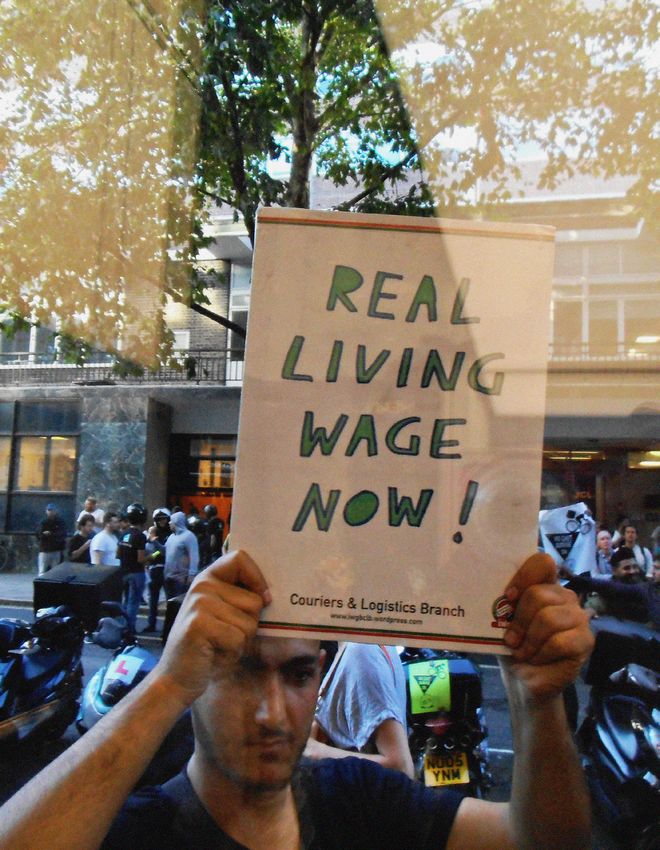
Über-influential?
How the gig economy’s lobbyists
undermine social and workers rights
Contents

        Summary                                                                                               3

        Chapter 1. Introduction                                                                               5

        Chapter 2. Uber lobbies for low costs, little responsibility                                         10

        Chapter 3. BusinessEurope: never far from the driving seat                                           26

        Chapter 4. Artful lobbying and a ‘grassroots’ chorus boost short-term rental platforms               31

        Chapter 5. How has ‘sharing’ come to mean big business?                                              40

        Chapter 6. Crowdwork platform lobbying: a hidden chess player?                                       44

        Chapter 7. Conclusion                                                                                50

        Published by Corporate Europe Observatory and AK EUROPA
        (Brussels office of the Austrian Federal Chamber of Labour), September 2019.
        Text: Rachel Tansey and Kenneth Haar
        Editing: Katharine Ainger
        Design by nestor.coop
        Images: cover image Steve Eason (via Flickr), p. 4 Sam Saunders (via Flickr), p. 8 David Holt (via Flickr),
        p. 15 Aaron Parecki (via Wikimedia Commons), p. 24 David Holt (via Flickr), p. 30 David Holt (via Flickr),
        p. 38 screenpunk (via Flickr), p. 43 Steve Eason (via Flickr), p. 46 Leonhard Lenz (via Wikimedia Com-
        mons)
        Contents of the report may be quoted or reproduced for non-commercial purposes, provided that
        the source of information is acknowledged.

2 Contents                                                                                       Über-influential?
Summary

The ‘gig’ or ‘platform’ economy – which refers        well before the gig economy became a political
to online companies such as Uber, Airbnb,             issue, and the texts do not provide self-evident
Deliveroo, and TaskRabbit – is increasing its         answers to the burning questions around the
lobbying presence in Brussels. Platform com-          gig economy. But thanks to direct involvement
panies’ key concern is to maintain their special      with the Commission, via pressure exerted
privileges as part of the so-called ‘collaborative’   from industry groupings and lobbying associa-
digital economy, including freedom from many          tions, through work with think tanks, we often
regulations that ordinary taxi, home-letting,         see the Commission act in their favour. Lob-
or temp firms, say, would be subject to. Of           bying efforts are rewarded: the platforms are
particular concern is the way companies like          clearly able to use the application of EU single
Uber class their workers as self-employed,            market rules to push back against regulation
thus contributing to a growing degradation of         adopted at national level or in cities.
labour rights.
                                                      The current application by the Commission of
Over the years, the platforms have been at the        the two Directives touch on key interests of the
centre of heated debate in cities and member          platforms. The e-Commerce Directive makes it
states. In response to the challenges platforms       difficult to impose rules on the platforms due
pose to eg. housing policy or labour rights,          to the so-called ‘country-of-origin principle’.
authorities have taken measures to mitigate           Also, the same directive enables platforms
the effect of the rapid increase in the use of        to refuse to cooperate with local authorities
the services provided by platforms.                   when they try to acquire the necessary data
                                                      to enforce protective laws. Even a simple
In response, some platforms, Uber and AirBnB          thing as a requirement to obtain a licence can
in particular, have launched multifaceted lobby       be prevented by the current reading of the
campaigns to persuade decision-makers in              e-Commerce Directive. On top of this comes
the EU institutions to come to their defence.         specific challenges from the Services Directive
In particular, they have worked intensely for         – eg. the ban in the directive of ‘quantitative
years to persuade the Commission to develop           limits’, which in the case of Airbnb and similar
its interpretation of two existing directives that    rental platforms, can help them reject restric-
suits their interests.                                tions on the use of the platform.

The two directives are the e-Commerce                 Unfortunately the European Commission,
Directive from 2000 and the Services Directive        dazzled by talk of innovation, has been all too
from 2006. Both were written in another era,          willing to be influenced by these companies’

Über-influential?                                                                                  Summary   3
lobbying aims. And if the Commission does
      not live fully up to expectations of platform
      lobbyists, they can often rely on member
      state governments instead, as in a recent case
      on the definition of ‘employee’ which leaves
      many platform workers without the protection
      enjoyed by colleagues with similar jobs.

      However, the EU institutions cannot continue
      to ignore the fact that platform economy
      appears to be an efficient model for privatising
      profits whilst socialising the risks. Meanwhile
      the social impacts, from loss of labour and
      consumer rights to unaffordable housing, are
      on the rise.

4 Summary                                                Über-influential?
Chapter 1

Introduction

Disruptive, online ‘platform economy’-based businesses, from Uber and Deliveroo, to
Airbnb and TaskRabbit, are able to avoid social and labour laws because, they argue,
unlike say conventional taxi or delivery services, hotels, or temp agencies, they are
mere ‘platforms’. Their success in presenting themselves as the future of the ‘new’
economy, free from historical restrictions such as complying with employment laws, is
in part due to their lobbying activities in Brussels. And it is coming at the cost of work-
ers’ rights, affordable housing, and social safety nets in general.

Online ‘platform’ businesses range from those       such as restaurants or hotels or taxis, and
in the realm of ‘information services’, such as     avoids any of the related safety, consumer,
Facebook, Google, and Twitter, to those who         or regulatory issues; similarly since it typically
organise the provision of services performed        classes its workers as self-employed, it avoids
in the ‘real economy’. These include companies      obligations towards them such as a minimum
that organise delivery and transportation,          wage or insurance. The company will often site
short-term rental accommodation, and various        itself in low tax jurisdictions, and as a platform
kinds of ‘gig’, ‘task’ or ‘crowd’ work. They usu-   often based in another country, it can avoid
ally involve creating an intermediary platform      responsibility for the social impacts its busi-
(often a smartphone app) that connects con-         ness model creates, such as increased labour
sumers wanting a service (eg takeaway food, a       precarity or unaffordable local housing.
cleaner, a car ride, a holiday apartment, data
processing, translation, etc) and connecting        Like any growing industry whose most influen-
them to individual providers. Some of the main      tial players are multi-billion euro multinational
‘gig economy’ companies are household names         companies, gig economy platforms have been
such as Uber and Airbnb, and increasingly, the      turning their attention to lobbying in Brussels.
likes of Home Away, TaskRabbit, and Amazon          They are keen to ensure EU rules work in their
Mechanical Turk.                                    interests, particularly in maintaining their
                                                    special treatment as ‘collaborative economy in-
It must be said that the platform business          novators’. The stakes are high: with the growth
model appears to be ideal for privatising prof-     of labour and short-term rental platforms, a
its whilst socialising risks. A platform company    parallel economy with the internet as its main
generally doesn’t have to purchase assets           tool is emerging, and it is having profound

Über-influential?                                                                              Introduction   5
effects on social rights. These include labour        the gig economy somehow eliminates issues
        rights, social protection policies, consumer          of power between workers and companies”,
        rights, and the right to housing. Many platform       noting that in fact, “algorithmic management
        companies have managed to evade or under-             puts dramatically more power in the hands of
        mine social protections and public interest           platform companies”. The newspaper notes
        laws that other companies have to respect.            that Uber, for example, can not only “monitor
                                                              workers 24/7, they benefit from enormous
        Despite the platform companies bandying               information asymmetries that allow them
        around words like the ‘sharing’ or ‘collabora-        to suddenly deactivate drivers with low user
        tive’ economy, even the Financial Times points        ratings, or take a higher profit margin from
        out that “we should give up on the fantasy that       riders willing to pay more for speedier service,

         Box 1:
         Platform workers in the EU

         A survey for the European Commission shows
                                                                      Percentage of platform workers in Europe
         an estimated 12 per cent of the adult population          according to the 2017 COLLEEM survey, initial
         in the UK have at some point been platform                                                estimate %
                                                              20
         workers. In Spain the number is 11.6 per cent;
                                                              15
         in Germany 10.4 per cent; whereas in countries
         such as Finland, Slovakia, Hungary, and Sweden,      10

         it is 6-7 per cent. On average in Europe it is
                                                               5
         nearly 10 per cent. Meanwhile an estimated 5.4
         per cent workers spend more than ten hours            0
                                                                   United Kingdom

                                                                                    Spain

                                                                                            Germany

                                                                                                      Netherlands

                                                                                                                    Portugal

                                                                                                                               Italy

                                                                                                                                       Lithuania

                                                                                                                                                   Romania

                                                                                                                                                             France

                                                                                                                                                                      Croatia

                                                                                                                                                                                Sweden

                                                                                                                                                                                         Hungary

                                                                                                                                                                                                   Slovakia

                                                                                                                                                                                                              Finland

                                                                                                                                                                                                                        Total
         per week doing platform work in the EU. An
         estimated 6 per cent earn more than a quarter
         of their income this way, and only 2.3 per cent of
         the adult population earn more than half their
         income this way.6
                                                              Overall these developments are a challenge to
         For comparison, the number of railway workers        trade unions. A majority of platform workers
         in the EU is 0.2 per cent;7 so although platform     – up to 68 per cent of the total – consider them-
         workers are still a small minority, they do repre-   selves to be employees of the platforms,10 yet
         sent a reasonable share of the labour market.        generally the responsibilities that come with an
         Globally the number of platform workers is           employer role are not accepted by the compa-
         growing exponentially, with the trend predicted      nies involved. For social rights to be met and
         to continue.8 While there is no corresponding        upheld, a path to defend the rights of platform
         figure for the EU, platform businesses’ gross        workers must be found.11
         revenue doubled in Europe between 2014 and
         2015.9

6 Introduction                                                                                                                                                                  Über-influential?
“
without giving drivers a cut. This is not a
properly functioning market. It is a data-driven
oligopoly that will further shift power from
labour to capital at a scale we have never seen     “This is not a properly functioning market. It is a
before.”1                                            data-driven oligopoly that will further shift power
                                                     from labour to capital at a scale we have never
These sentiments are echoed by trade un-             seen before.”
ionists, who argue: “Advances in technology                                                     – Financial Times
should be used to make work better, not to
return to the type of working practices we
thought we’d seen the back of decades ago.”2
This applies to all kinds of gig, crowd, and task   labour related, fiscal and social security duties
work, not just the likes of Uber and Deliveroo.     constitutes platforms’ main competitive advan-
Tech journalist Sarah Kessler has set out how,      tage vis-à-vis their competitors”.5 The JRC also
contrary to claims that the flexibility of short-   recommended that policy-makers stop treating
term ‘gigs’ make workers happier, platform          the platform companies as special cases with
workers are in reality being ‘liberated’ from a     “digital distinctiveness” and take “actions to
safety net, reliable work hours, and often, from    safeguard workers’ rights”.
anything close to a living wage.3 Kessler argues
that platform companies emphasise workers’          Short-term rental platforms such as Airbnb,
love of ‘flexibility’ in order to “deflect hard     HomeAway, and onefinestay are another
questions about pay and fairness”. Meanwhile        sector of the platform economy with growing
the digital platform technology is “often used      implications for social rights and public interest
to create employee-like relationships with a        law-making. Issues include access to affordable
veneer of plausible deniability”.                   housing, local governments’ ability to respond
                                                    to the concerns of their citizens, and loopholes
This gets to the core issue with platform           in consumer protection for the millions of
work: the lack of rights for platform workers.      people using the platforms. Faced with a
Most platforms insist their workers are             growing proportion of commercial lettings (a
self-employed or independent contractors, not       long way from the original ‘home-sharing’ idea)
employees of the platform. So, explains the         on the platforms, there are also implications
trade union initiative Fair Crowd Work, “most       for labour rights, for example, for the people
platform-based workers are not entitled to          employed by hosts to perform services like
minimum wage; paid vacation, parental leave,        cleaning in a largely unregulated area of the
sick leave, or overtime; employer-supported         economy. Corporate Europe Observatory’s
health insurance; protection from unfair            2018 report ‘UnfairBnB’ shows how Airbnb
dismissal; or compensation in the event of          and its ilk have turned to Brussels, appealing
work-related illness or injury; nor are they        to single market rules to defend their business
entitled to organize and negotiate collective       model via a very supportive European Com-
agreements with platform operators or               mission, to try to undermine cities’ abilities to
clients.”4 As a result, many platform workers       regulate them. And they have had considera-
in EU countries earn less than their national       ble success.12
minimum wage. And as the European Commis-
sion’s Joint Research Centre (JRC) concluded        At the European level there have been a
in a recent study, “the lack of compliance with     number of initiatives that relate to work in

Über-influential?                                                                              Introduction   7
Box 2
         Uberexploitation - platforms are struggling
         for the right to trample on labour rights

         The growing sigificance of the                                       not workers, and not covered
         gig economy is a challenge to                                        by federal labour protection
         trade unions and labour rights                                       laws. US district judge Michael
         across the globe. The fact that                                      Baylson, a Trump-nominated
         workers are contracted from                                          member of the board, argued
         afar through a system where                                          that Uber drivers had entrep-
         platforms frequently set the                                         eneurial freedom. And in the
         terms, makes it very difficult                                       UK, the Uber case seems to be
         for platform workers to assert                                       little but the tip of the iceberg:
         their rights, and difficult for                                      700.000 platform workers
         authorities to enforce the rules.                                    receive less than the minimum
         And often, platforms are even                                        wage.
         free of obligations that other
         companies in the first place.                        Delivery workers in peril

         Uber struggling to free itself from                  Following the death of a rider for a platform
         obligations                                          delivery company Glovo, Spanish trade union
                                                              UGT has filed a complaint with the Spanish
         To Uber, its drivers are ’independent con-           labour authorities to act against the company.
         tractors’, not employees. But in reality, Uber’s     According to UGT, Glovo does not ensure its
         drivers are subjected to terms similar to work-      employees are equipped with the ”necessary
         ers for a company: they have little influence        safety measures” and that the company is
         on the price of a ride and hence their wages,        ”putting their lives in danger”.According to some
         they can be penalised if they don’t accept rides.    sources, platform delivery workers are under so
         Despite this, Uber drivers do not enjoy the          much pressure to take on deliveries in order to
         rights of employees, generally speaking. This        make a decent salary, that fatal accidents are
         has opened a legal battle in many countries,         bound to happen.
         most prominently in the UK where workers
         sued the company to obtain the right to a            In some countries, whether the company is
         minimum wage and holiday pay. Eventually,            prepared or obliged to cover health insurance
         Uber lost the battle in court,but in other places,   is important. And that question can depend on
         Uber is more successful, such as in Francei          whether the employees are actually regarded
         and in the US. In May 2019 the decision of the       as just that. That is not the case, for instance,
         independent, federal National Labor Relations        with US based Amazon Flex, a company which
         Board, declared Uber drivers to be ’contractors’,    does not cover health insurance.

8 Introduction                                                                                  Über-influential?
“
what the Commission calls the “collaborative
economy”13 (in this context encompassing gig
economy and crowd work digital platforms)
including:14                                          “What emerges as a common objective in the
–– Principles enshrined in the 2017 European          lobbying of both short-term rental and labour
   Pillar of Social Rights;                           platforms, is the attempt to avoid regulation. They
–– subsequent proposals including for a Trans-        seek to avoid being covered by existing public
   parent and Predictable Working Conditions          interest laws”
   Directive (see Chapters 2 and 3);
–– and the ruling by the European Court of
   Justice (ECJ) on the nature of the service         the Austrian Federal Chamber of Labour (AK
   provided by Uber (see Box 6).                      Europa) concluded it was time to take a look
                                                      at the EU-level lobbying and influence of ‘gig
However, there are also various single market         economy’ platform companies, and the associ-
rules which aim to build a framework for the          ations, PR firms and think tanks that represent
platform economy, and which are favourable            their interests. What emerges as a common
to the companies involved, such as:                   objective in the lobbying of both short-term
–– The 2000 e-Commerce directive (see Box 5);         rental and labour platforms, is the attempt
–– the 2006 Services Directive;                       to avoid regulation. They seek to avoid being
–– and the 2015 Digital Single Market strategy.       covered by existing public interest laws – laws
                                                      which not only apply to their competitors, but
These can be invoked by platform companies            which offer protections to workers, consumers,
to stop national and local governments from           and citizens – by pushing for the EU to confirm
regulating them; to do so platform companies          an interpretation of single market rules that
and their lobbyists frame measures such               allows them to hide-behind the veneer of
as restricting Airbnb-style holiday letting as ‘ob-   being “digital” platforms. Lobby budgets may
stacles to the single market’. The 2015 Digital       still be relatively modest, but in their efforts to
Single Market strategy has further enabled            achieve this end, a multitude of lobbying tech-
platform companies to use single market rules         niques, old and new, have been deployed. To
to undermine social rights that have been             take just two examples, Uber has specialised
won through long and hard political struggles.        in commissioning and co-authoring high-level
Unfortunately, the Commission’s 2016 Com-             academic studies to feed into ‘evidence-based’
munication on the Collaborative Economy               policymaking; while Airbnb has mobilised its
very much follows in this vein, by discouraging       accommodation hosts as a grassroots echo
member states from regulating or placing              chamber for its demands in Brussels. And, as
restrictions on platforms like Airbnb and Uber        a growing sector of the economy, we surmise
(see Chapters 4 and 5). Issues around consum-         this is only the beginning.
er rights must also not be forgotten, since EU
consumer laws do not apply to ‘peer-to-peer’
(P2P) relations, creating a void in consumer
protection.15

Given the stakes – both for social rights
and for the profits of the gig economy’s big
players – Corporate Europe Observatory and

Über-influential?                                                                                 Introduction   9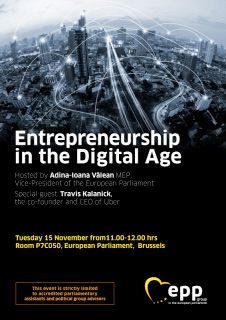
Chapter 2

         Uber lobbies for low
         costs, little responsibility

         Despite extensive rhetoric around the sharing         high profile revolving door moves, to hiring
         economy – or what the Commission dubs the             consultancies, and joining big business lobbies.
         ‘collaborative economy’ – it is important to re-      But mirroring its wider approach, the firm is
         member that in EU-policy circles, this is largely     also using more ‘disruptive’ lobbying methods
         being equated with the ‘disruptive’ business          – like funding free-market think tanks, and
         models of large transnational corporations like       keeping tight control of the evidence available
         Airbnb and Uber.                                      for ‘evidence-based policy-making’. The main
                                                               aim of Uber’s multifarious lobbying strategies
         The ride-sharing company Uber is valued at            is to avoid regulation as an employer, keeping
         somewhere between €61 billion and upwards             its costs and responsibilities as low as possible.
         of €100 billion ($120 billion).16 For such a colos-   But before we get on to the struggle over
         sal company, its declaration of spending just         particular policies, and the obligations (or lack
         €800,000 to €899,999 on EU lobbying in 2017           thereof) of platforms, let us first take a look at
         looks like peanuts.17 But dig a little deeper, and    the lobbying tools and tactics Uber has used.
         its clear that Uber’s influence in Brussels is far
         bigger than its lobby spending suggests. With
         over 50 meetings with the Juncker Commission          Revolving doors at the
         at the highest levels, political access doesn’t
         seem to be a problem (see page 27). Nor at the        highest level
         European Parliament; in 2016, for example,
         Uber’s disgraced former Chief Executive Travis        One of the perennial tactics companies use
         Kalanick was hosted by then- Parliamentary            to influence the political agenda in Brussels
         Vice President, EPP MEP Adina Vălean, at an           is the revolving door, and Uber is no ex-
         event on digital entrepreneurship.18                  ception. When European decision-makers
                                                               – such as commissioners, MEPs, officials
         Uber is also using some of the oldest tricks          – leave office take up lobby jobs (or vice
         in the book to help it peddle influence, from         versa), there is a serious risk of conflicts

10 Uber lobbies for low costs, little responsibility                                           Über-influential?
of interest, which threatens to undermine
democratic, public-interest policy-mak- Box 3
ing. For example former Commissioner
Neelie Kroes served first as Commissioner Commission selling
for Competition (2004 – 2010), then as
Commissioner for the Digital Agenda, and a product Uber
Commission Vice President (2010 – 2014).
After a decade at the top of the EU’s execu- wants to buy
tive body – at the start of which she “prom-
ised to never engage in business activities”
when her Commission term ended – Kroes
took up a number of advisory and board Travis Kalanick, the infamous founder of Uber
positions for big business, including on and from 2009-2017 its Chief Executive, paid
Uber’s public policy advisory board, in May three visits to Brussels between 2015 and 2017.
2016.20 She reportedly received shares in the Here he would throw dinner parties and organ-
company as payment. 21 To the cynical eye, ise special debates on innovation and transport
this might look a bit like cashing in on her for a select group. He would also meet with Com-
extremely pro-Uber stance whilst in office. missioners. On one such occasion, Kalanick was
very enthusiastic of the Commission’s vision. At
As Digital Agenda Commissioner, Kroes was a November 2016 meeting, Digital Single Market
a staunch defender of the company, writing Commissioner Günther Oettinger told Kalanick
in April 2014 that she was “outraged” by the that he saw the EU programme on startups as
decision of a Brussels court to ban Uber, a way of finding partners for Uber, and that the
adding that she had “met the founders and ‘Smart Cities’ programme was also very relevant
investors in Uber”, and that “Uber is 100% for the company. Kalanick was overwhelmed. He
welcome in Brussels and everywhere else”.22 had heard “a vision that dovetails with ours”....
She even started a #UberIsWelcome hashtag “I’m on board – I feel like I’ve heard a pitch for
on Twitter.23 Its not hard to see why Uber product that I want to buy,” he gushed.19
would want to recruit her in the hope that, as
TechCrunch reported, Kroes’ presence and Visits to the Commission have been a regular
advice could help “steer away the threat of activitiy for Uber lobbyists over the years.
According to the EU Transparency Register,
50 such meetings took place between January
2015 to September 2018.
“
“I’m on board – I feel like I’ve heard a
pitch for product that I want to buy.”
– Uber’s CEO Travis Kalanick’s response to a
When Neelie Kroes was still Competition presentation by Commissioner Oettinger, November
Commissioner she was very supportive of
Uber, including through very active tweeting, 2016.
as in 2014 when she urged to protest against a
decision to ban Uber temporarily in Brussels.
Über-influential? Uber lobbies for low costs, little responsibility 11any new European-wide moves to undermine Memberships as
its regulatory advantages versus traditional
taxi firms” by regulating it as a transportation mouthpieces
service rather than a digital platform (as Uber
is so keen to be considered).24 Uber is a member of numerous lobby groups,
think tanks and trade associations active at the
Uber’s use of the revolving door also oper- EU level.32 Getting the message out from as
ates at lower levels. For example, its lobbyist many different mouthpieces as possible is an
listed as having an access pass to the Euro- important lobbying strategy. Uber is a member
pean Parliament, Laurin Sepoetro, actually
,
of big business lobby groups BusinessEurope
came through the revolving door from the (see Chapter 3) and AmCham EU (which has
European Parliament, where he worked for had a staggering 101 highest-level meetings
five years as policy adviser to two MEPs cov- with the Juncker Commission).33 In the digital
ering transport and environmental policy.25 sector Uber is part of the Computer and
According to Sepoetro’s Linked-in profile, 26
Communications Industry Association (CCIA
one of the MEPs he advised for nearly three promoting open markets along with the likes
years on transport issues was of Ebay, Amazon, Facebook, and
Germany’s Ismail Ertug (of the Google34), and the European Inter-
Transport Committee).27 Now, as net Forum (EIF), a cosy club where
Uber’s Senior Associate on EU parliamentarians, other officials
Public Policy, Sepoetro works on and the biggest players in the
legislative files including “plat- digital industry – from Apple and
form and collaborative economy Amazon to Facebook and Uber –
regulation, social protection… and meet under Chatham House Rule
new mobility services”, working for some informal lobbying over
together with “EU/ national croissants and orange juice. Sitting
policymakers” on “embracing the alongside MEPs and Commission
Uber vision”.28 officials, Uber has been a speaker
Invite to an event in
November 2018 in the at EIF breakfast, lunch and dinner
In an illustration of how the European Parliament, debates, on issues from the future
organised by the con-
revolving door can facilitate servative EPP group in of urban mobility to the future of
privileged access Uber recently cooperation with Uber. work.35 Uber is also part of Mobility
sponsored an event hosted by as a Service (MaaS), an interest
the MEP that Sepoetro had previously worked group representing the likes of Siemens, the
for, Ismail Ertug.29 In November 2018, Ertug European Automobile Manufacturers’ Associa-
“organised in cooperation with Uber” an tion (ACEA), and rail company Alstom, lobbying
event entitled ‘The Urban Challenge: Towards for “a single, open market” to facilitate differ-
a Shared and Multimodal Future’, held in ent forms of transport being integrated “into
the heart of Brussels’ EU quarter. With a
30
a single mobility service accessible on de-
keynote speech from the Commission’s DG mand”.36 In Uber’s words, “we know that Uber
MOVE (delivered in front of an Uber ban- is just one part of the solution”.37 Continuing
ner), Uber’s representative focused on the this theme, Uber has more recently – as part of
media-friendly topics of its cooperation with its new image as a constructive and progres-
public transport and how Uber bikes were sive partner – even joined the International
getting more people out of cars. 31
Association of Public Transport (UITP).38 That
12 Uber lobbies for low costs, little responsibility Über-influential?it might improve not only Uber’s reputation Box 4
but also its access (for example, through the
seven Commission expert groups that UITP Libertarian ‘Consumer
sits on) probably never even crossed Uber’s
mind….39 Choice Centre’ fights
As well as these more traditional lobby associ- Uber’s corner
ations, Uber is a member of several influential
free-market economics think tanks, a very
effective way to influence the policy milieu in
Brussels. There’s the Lisbon Council for Eco- There is another think tank promoting Uber’s
nomic Competitiveness and Social Renewal, a interest, despite having no affiliation with the
“Brussels-based think tank and policy network” company: Brussels’ very own libertarian think
whose supporters include Apple, Google, tank the Consumer Choice Centre (CCC), a
Facebook and Uber. It is no small player in the spin-off from the US’s Koch Brothers-funded
murky world of corporate-think-tanks-as-lob- Students for Liberty, has been vocal in its defence
by-vehicles, spending €1.4 million on EU lobby- of Uber.55 The shutting down of Uber in various
ing in 2017 and has held high-level Commission European cities was cited as the “key trigger” for
meetings on the “App economy”.40 Then there setting up the group, keen to fight “paternalistic
is influential Brussels’ think tank Breugel whose regulations”.56 Although the CCC is not transpar-
lobby spend in 2017 was nearly €5 million, and ent about its “private donors” (though it does
whose corporate members range from Amazon name Facebook and Japan Tobacco International
and Google, to Shell, Pfizer, and Deutsche as funders),57 Uber told us that it has no affiliation
Bank.41 Uber joined the self-described “vibrant with the group.58 So despite CCC representatives
laboratory for economic policies”, which boasts speaking in the European Parliament about the
of “dynamic relationships with policymakers” wonders of “sharing economy technologies such
at all levels, for the sum of over €33,000.42 In as Uber and Airbnb”,59 it seems their rationale for
September 2014 Bruegel published what the this spirited defence is purely ideological. CCC’s
company heralded as “a positive analysis of parent Students for Liberty waxes lyrical over
Uber’s business model, its impact on consumer Uber “taking power away from state enforced taxi
welfare and the need for regulation to adapt cartels” and instead creating an “unregulated, vol-
quickly”.43 The study warns that banning “Uber untary, mutual beneficial market exchange”.60 The
would massively disadvantage the consumers US group also commends the EU institutions as
who are enjoying lower prices and better quality “a force of economic liberalization”, and particu-
due to the increased competition in taxi servic- larly the Commission for telling member states
es”, and describes taxis’ appeal to regulation as to “administer a light-handed regulation” on the
merely a way to “block Uber from market entry, sharing economy.61 This is reminiscent not only
and thus preserve their profits”.44 In February of the libertarian ideology (ie against government
2016 the think tank argued that the solution is regulations, such as labour or environmental
to liberalise and “more lightly” regulate the taxi rules, which limit liberty to maximise profits in any
industry.45 way possible) espoused by Uber’s founder Travis
Kalanick,62 but of the increasingly neoliberal and
Around the same time Breugel held an event deregulatory bent of the Commission.
on the ‘The Sharing/Collaborative Economy’
with Uber and Airbnb as speakers, and a
Über-influential? Uber lobbies for low costs, little responsibility 13session on collaborative economy business regulation, such as self and co-regulation… as a
models that started from the premise that means to developing future-proof solutions”.54
workers offering services on platforms like
Uber “are independent contractors, rather than Public affairs firms also play a significant role in
employees of the platforms”.46 Uber spoke at Uber’s lobbying strategy in Brussels. According
another Breugel event on ‘Crowd Employment’ to LobbyFacts Uber has been a client of FIPRA
in October 2017, about the question of whether International Limited (2017), acumen public
Uber is a tech or a transport company. This affairs (2017), Technology Policy Advocates
followed Breugel’s February 2017 ‘economic (2017 – with Uber as its sole client), Covington
review of the collaborative economy’, which & Burling LLP (Oct 2016 – 1 Sep 2017) and law
concluded that Europe could enjoy major firm Gide Loyrette Nouel (2016).63. Yet lack of
economic gains “if barriers are removed and transparency means it’s unclear which clients
the regulatory framework is adjusted to better the consultancies are acting on behalf of when
accommodate platforms”.47 Socrates Schouten, they conduct high-level lobby meetings with
Head of the Commons Lab at Waag, a Dutch the Commission (for example FIPRA’s encoun-
institute for technology and society, critiques ter on “technologies and digitalisation of Travel
the approach of Breugel’s review, noting that and Tourism” may or may not have been on
“social ideas and incentives are hardly touched Uber’s behalf).64
upon”.48 He also points out that the ‘collabo-
rative economy’ envisaged in Bruegel’s report
amounts to “a highly capitalist industry, a far Changing tack: from
cry from the ‘happy sharing, friends making’
narrative so often heard in sharing economy disruptor to partner in
circles”. Unfortunately this is a vision all too policy-making
closely shared by the Commission.
Uber is also a member of the Centre for Reg- Uber’s record of scandals under the lead-
ulation in Europe (CERRE), whose members ership of Travis Kalanick (from sexism and
include internet, telecoms and energy giants spying to sabotage and software-to-de-
like Facebook, Uber, Vodafone, and Enel.49 ceive-regulators),65 meant that the company’s
Its mission is to improve the “EU process of new Chief Executive Dara Khosrowshahi has
liberalisation” of these industries, and its board presided over a switch in attitude towards
of directors includes former Commissioner for regulators. The tone has gone from arrogant
Trade and former WTO Director General, Pascal and combative to constructive, as well as
Lamy.50 CERRE says it operates “at the inter- trying to pre-empt and prevent regulation
face of academia, administration, politics and the company doesn’t want by convincing
business”.51 Uber spoke alongside DG Com- law-makers that they’ll do the right thing
petition at a March 2019 CERRE event entitled anyway. As Khosrowshahi told Politico in
“Digital Conglomerates and EU Competition 2018 that “If the shift doesn’t come from
Policy”.52 Some of CERRE’s events are closed the industry, then the government will take
despite featuring multiple high-level EU officials over”.66 The same article reported how
as speakers.53 Recommendations by this corpo- Khosrowshahi’s new approach includes trying
rate funded think tank include, in a 2017 report to building partnerships with cities and taxi
‘Towards Smarter Consumer Protection Rules associations across Europe, contributing to
for the Digital Society’, “alternative means of clean air initiatives, and strengthening its
14 Uber lobbies for low costs, little responsibility Über-influential?commitment to passenger safety. In line with in the firm’s lobbying demands. Uber’s main this strategy it has joined the public transport message is still: we are not employers and association UITP (somewhat ironically, since you must not regulate us as such (see below). UITP – like BusinessEurope – is an employers’ organisation67), with the humble message that whilst “our technology and approach can Control the evidence, control bring new tools to the table… we have a lot to learn”.68 the policy-making As part of this ‘voluntary responsibility’ In the midst of Uber’s battles with London strategy – a classic lobbying technique de- courts over its drivers’ employment status, it signed to deter government regulation – Uber was reported in the press that “the ride-hailing announced in 2018 that it would provide firm is stepping up its public relations cam- insurance for its 150,000 “independent drivers paign with an academic approach”.69 Uber and couriers” in Europe, following its loss of co-published a ‘working paper’ with a couple a case at the European Court of Justice (see of Oxford University academics based on the Box 6). Uber’s 2018 White Paper on work and firm’s own anonymised data and a survey Uber social protection (see below) similarly informs had commissioned.70 The paper concluded the Commission that it “oppose[s] precarious that most of London’s Uber drivers are happy, and exploitative forms of work”, that Uber value flexibility, earn above the UK minimum “empower[s] self-employed drivers”, and wage, and didn’t sign up as a last resort.71 In that the company is constantly “improving common with other academic papers about the in-app driver experience and developing the company’s positive impacts, two character- new ways to better support these drivers and istics are notable about this study: its co-au- couriers”, including a “greater voice” within thors include Uber staff (in this case, including Uber, “innovative partnerships to offer great- the company’s Public Policy Manager Guy er protections”, plus help to save, learn skills, Levin), and the Uber data on which it is based and pay their taxes. This new, playing-nice is not publicly available to others, thereby attitude does not, however, as the White Pa- preventing the replication or validation of per makes clear, mean any significant change results. This has caused considerable backlash Über-influential? Uber lobbies for low costs, little responsibility 15
within academic circles. Karatzogianni, Codag-     rebuttals by the company via its blog ‘Uber
         none, and Matthews, for example, in their          Under the Hood’ (“Insights and updates
         2019 book Platform Economics: Rhetoric and         from the Uber Comms & Policy team”).78 The
         Reality in the ‘Sharing Economy’, criticise the    company even responded to an MIT study
         practice whereby academic economists directly      that found Uber drivers earned dramatically
         help commercial platforms “by using data           less than Uber claimed, by dubbing MIT as
         made available only to them to present partial     “Mathematically Incompetent Theories”.79
         analysis about the social benefits produced”,      Yet as Lawrence Mishel, labour economist
         effectively allowing the “legitimacy of a scien-   at the Economic Policy Institute, notes it is
         tist” to be used “to reduce the scope of choices   “pretty clear that they’re not going to give
         available for policy”, and turning “scientific     access to the data to people who are likely to
         work into issues’ advocacy”.72                     find things that are not favorable to Uber”.80
                                                            Meanwhile journalist Alison Griswald says,
         Yet this is exactly the strategy that Uber has     “the company’s economists have deftly woven
         taken, in part thanks to its own ever- expand-     their findings into the literature”, and reports
         ing team of economists73 – internally dubbed       that Uber’s Global Public Policy Head has
         ‘Ubernomics’ – which reportedly “acts as           admitted that their goal is to “build a body of
         an in-house think tank for Uber” producing         evidence and then build a global policy frame-
         materials “to arm the lobbyists and policy folks   work around that”.81 And this is where the
         who fight some of Uber’s biggest battles”.74       control of evidence becomes a crucial – and
         Uber’s first partnership with academic econo-      effective – part of Uber’s lobbying strategy
         mists at high-profile universities was in 2015,    and its fight against more regulation.
         when Uber’s Chief Economist Jonathan Hall
         co-authored a paper with Princeton econ-           Uber and other collaborative economy
         omist Alan Krueger (who was paid by Uber           lobbyists take advantage of what Karatzo-
         to do so). The paper found that most Uber          gianni et al (2019) describe as “the intrinsic
         drivers liked setting their own schedules, and     limitations... and technocratic nature of the
         made good wages.75 “That the study was dry         evidence-based policy” paradigm, a paradigm
         and academic only seemed to make it more           which the European Commission is committed
         appealing”;76 the paper gained lots of media       to.82 Its shortcomings stem from the fact that
         coverage, whilst the prestige of its association   it is not possible “to eliminate any ideological
         with Princeton helped to confer legitimacy.Yet     element and judgements from the formula-
         as Henton & Windelilde (2017) note, the bias       tion of policies”,83 and so what increasingly
         of the paper is indicated by the way it refers     occurs – and is a major part of how lobbying
         to Uber drivers as ‘Uber’s driver-partners’,       and influence operates in Brussels – is ‘poli-
         even whilst acknowledging that drivers’ status     cy-based evidence making’. In other words, it
         (ie self-employed or employee) is a central        creates the opportunity for Uber and others to
         controversy.77                                     provide apparently objective academic studies
                                                            that industry has partnered with, co-authored,
         Since then, Uber has continued to collaborate      used private data for, or otherwise influenced,
         with academics from prestigious institutions.      and that unsurprisingly, as a result supports
         At the same time, academic papers that             their policy goals.
         come to conclusions which differ from those
         of studies co-authored by Uber and based           It is no surprise, then, that the White Paper
         on data it won’t share, face criticisms and        Uber sent to the Commission in 2018 (see be-

16 Uber lobbies for low costs, little responsibility                                       Über-influential?
low) is full of references to ‘evidence’ that has
“
been commissioned by Uber (eg Orb Interna-
tional 2016 poll);84 produced in “collaboration
with” Uber (eg McKinsey’s 2016 ‘Independent
work’ report);85 co-authored by academics “Uber... faces different regulatory regimes across
Uber is known to have hired (eg Princeton’s the Single Market. It’s why we have been working
Alan Kreuger);86 or based on data that Uber closely with the European Commission to
gave the authors access to, but which “re- discuss a modern, common sense regulatory
mains unknown to the rest of the academic framework that benefits passengers,
communities and to the general public”87 (eg drivers and cities.”
Landier, Szomoru & Thesmar, 2016;88 Chen, – Letter from Uber CEO Travis Kalanick to Commissioner
Chevalier, Rossi, & Oehlsen, 2017).89 Evidence, Bienkowska, April 2016.
concludes Karatzogianni et al, “has become
the main currency of lobbying”, with commer-
cial platforms like Uber using its control over in Europe in July 2012, starting with London,
evidence, combined with the rhetorical fram- so its ‘ridesharing services’ were young when
ing around ‘sharing’, to effectively produce a it first turned its eyes on Brussels. Even so, the
“negative policy bubble” (ie an undersupply of company was already enmeshed in multiple
policy and regulatory responses to problems conflicts with member state authorities, in
emerging from a largely unregulated industry). large part due to rows with rival taxi compa-
nies. The conflicts took the company straight to
courts across Europe, and here, it was not an
“The driver is the client easy ride for Uber. In Spain a judge suspended
the use of Uber in December 2014;91 in France,
rather than the passenger” 90
the Government banned Uber from the start
of 2015;92 and in Germany, Uber was banned
Having seen the many different tools and in September 2014,93 then following the lifting
techniques Uber is employing in its efforts of the ban (annulled on procedural grounds),94
to influence EU policy, let us now move on to was banned again in March 2015.95 Uber’s
look at Uber’s lobbying objectives – namely, flagship ‘ridesharing’ service was hanging in
to be a platform without obligations – and the balance.
the different EU policies and processes it has
targeted to try to ensure this. Uber set its
sights on Brussels in 2015, with an objective Finding allies in Brussels
similar to that of Airbnb (see Chapter 4): for
the Commission to provide the company with This and similar experiences drove Uber to
some relief by telling member states that it start its lobbying campaign in Brussels: “There
should be exempt from rules that apply to is a growing need for policymakers to develop
taxi operators. By its own admission, Uber the appropriate regulatory regimes to allow
became the biggest company in the so-called new technology-enabled services to flourish,”
‘sharing economy’ in just a few years, hugely the company wrote in a letter to Commissioner
helped by the way it was able to circumvent Bienkowska in January 2015. “In order to
rules that apply to taxi companies. These rules ensure a single European market for these
include insurance, liability, safety regulations, new services, referred to as ‘sharing economy’
and workers’ rights. Uber entered the market or ‘on-demand services’, only the European
Über-influential? Uber lobbies for low costs, little responsibility 17Box 5
Another part of the puzzle: the safe
haven of the e-Commerce Directive
Digital platform companies enjoy certain afforded by electronic commerce… without
privileges that companies with a more physical consideration of borders”.101
presence don’t. It is much easier to avert intru-
sive regulation when you are an internet-based The e-Commerce Directive has two elements
company, often based in another country. A that have since caused intense debate, including
recruitment agency, for instance, is a physical in courtrooms in the EU, which together make
place with a leadership in the locality where they for a safe haven from regulation:
operate, who can be held directly accountable or
liable for their actions. Platforms can sell services 1. The country-of-origin principle: (Art.3, No. 2)
from afar and arrange the delivery of a service “Member States may not, for reasons falling
from one person to the other with no one from within the coordinated field, restrict the
the company setting foot in the country in ques- freedom to provide information society
tion. That creates obstacles for the authorities services from another Member State.” Put
to intervene and define the rules of the game, plainly, member states cannot impose rules
whether over social rights, consumer rights, or on platforms, unless they are rules within a
taxation. They can’t barge in and do an inspec- very narrow ‘coordinated field’ (concerning, for
tion, and there will always be tricky questions example, the behaviour/liability of the direct
about jurisdiction when a company is based services provider, not the platform).102 The
elsewhere. This puts international cooperation at basic message is that a whole range of meas-
the heart of the regulation of platforms. ures, such as consumer rights, social rights,
taxation, and authorisation of platforms are,
One might think that this should prove less com- broadly speaking, no-go zones for all member
plicated in the EU, as platforms typically have a states other than the one where a platform is
base in an EU member state. Yet from the start, based. Indeed, the country-of-origin principle
platforms were considered innovative business- led to massive protests some years later when
es given elbow room not enjoyed by non-plat- it was (unsuccessfully) proposed that it should
form companies, for example the e-Commerce apply to a wide range of services covered by
Directive from 2001.100 This was adopted to the Services Directive. It is the country-of-or-
ensure they “fully benefit from the internal mar- igin principle in the e-Commerce Directive
ket” and to remove “legal obstacles” which make that gave Uber the confidence to roll-out their
the “exercise of the freedom of establishment services in EU countries without asking for
and the freedom to provide services” less attrac- licences or authorization.
tive. It was not so much an attempt to secure
effective regulation as to provide certainty and 2. No obligation to monitor: (Art. 15) Plat-
simplicity for platforms. Consumers were to be forms are covered by an exemption from
able to take ‘full advantage’ of the “opportunities an obligation to systematically monitor their
18 Uber lobbies for low costs, little responsibility Über-influential?websites. This provision prevents authorities hold regulation at bay (including the Services Di-
from imposing a ‘general obligation’ to keep rective, when it is applicable), the e-Commerce
track of what is going on on their websites/ Directive is in a category of its own. It offers
apps. Authorities can turn to them when they platforms a safe haven from regulation that
suspect a specific activity is illegal, but they other companies, including companies providing
cannot ask websites to keep track. This aspect similar services, cannot escape. It provides for
of the e-Commerce Directive is what made loopholes to circumvent or outright reject rules
Airbnb refuse to work with authorities when intended to protect consumers and workers, to
asked for data on hosts, in order, for example, secure proper taxation, or to hold company’s
to keep track of whether they were abiding by liable. The only condition for enjoying these
local rules. To ascertain whether the maxi- privileges is that the platforms must be regarded
mum number of days are being exceeded, as “information society services providers”, as
municipalities need this information. But per the definition in the directive on “technical
Airbnb has so far got away with refusing to regulations and of rules on Information Society
take any responsibility. services”. According to this directive, the service
must be provided “at a distance”, “by electronic
This rule spills over to taxation as well. Regular means” and at the individual request of a recip-
companies based in a member state will typically ient of services’ (Art. 1).104 In other words, the
be asked to report to tax authorities on their platform must be an intermediary to be covered
employees’ income, but when it comes to a by the e-Commerce Directive. With the advent of
platform based in another member state, this platforms such as Uber, Airbnb, MTurk, UpWork,
cannot be taken for granted. In a recent prece- and many others, this issue has been at the core
dent, Airbnb has agreed to rules in Denmark to of court proceedings (see Box 6 and chapter 4).
report on hosts’ income (while carefully avoiding
an obligation to report on number of days
rented out), but to achieve this the authorities
felt compelled to offer an incentive: an increase
in the maximum number of days from 60 to 70
per year. On top of this, Airbnb hosts are offered
a tax bonus; signs of a company in an extraordi-
narily privileged position.103 What’s more, it was
only a voluntary agreement, which Airbnb may
be in a position to refuse.
A safe haven in cyberspace. While there are
other directives that can help certain platforms
Über-influential? Uber lobbies for low costs, little responsibility 19Commission has the position of leadership gation into the matter and open an informal
that is now urgently needed.”96 In the following debate with the member state in question. If
months the same message was conveyed to the Commission deems the member state has
Commission Vice President Andrus Ansip and not delivered satisfactory arguments, a formal
Commissioner for the Digital Single Market, ‘infringement procedure’ will begin, which can
Günther Oettinger. Of the three, Commission- ultimately lead to a case at the European Court
er Bienkowska, and her directorate DG GROW, of Justice (ECJ). The Commission keeps details
is most important for Uber. And in the next about ongoing investigations secret, so little
two and a half years, Uber had 14 meetings is known about the fate of these complaints.
with DG GROW, Commissioner Bienkowska, or Yet these complaints have subsequently been
her cabinet.97 used by Uber on several occasions, including
in May and October 2016, to prompt the
At these meetings Uber complained of “outdat- Commission to act in the face of court cases
ed and fragmented” regulation in Europe. In its at national level.105 Uber kept the Commission
December 2015 contribution to a consultation informed on cases in France, Spain, Germany,
on the digital single market, Uber explained and Belgium, all in the hope of sparking
its vision of the “right regulatory framework intervention in favour of single market rules,
for innovative services”: that the application which, Uber believed, would be squarely in
of EU law “should lead national courts and its favour. At the same time, Uber highlighted
European institutions to challenge the restric- ‘good’ examples of national legislation, such as
tions imposed on services such as Uber that a new law in Lithuania designed to accommo-
are bad for consumers and growth, as well as date Uber.
being at odds with the Digital Single Market”.98
According to Uber’s then-Chief Executive,
Travis Kalanick, the company by this point Lobbying for the rules they
considered itself to be working closely with the
Commission “to discuss a modern, common want
sense regulatory framework that benefits
passengers, drivers and cities”.99 Uber has also tried to directly influence the
Commission to adopt and enforce the inter-
pretation of EU law in ways that would most
The power of the complaints favour the company. In recent years there
have been two opportunities to do just that:
In its efforts to defend its right to ignore na- the Digital Single Market Strategy adopted
tional regulation Uber has repeatedly invoked in May 2015, and the Communication on
the Services Directive, and in particular, the the ‘collaborative economy’ released in June
e-Commerce Directive (see Box 5). To do this, 2016. Of the two, the latter attracted the most
Uber pursued several lines of action. The first attention from Uber. To Uber, it was all about
was to formally complain about the three one thing: making sure the Communication
member states in which Uber was already in would help the company acquire the rights
trouble: Germany, France, and Spain. The little bestowed under the e-Commerce Directive
known procedure Uber used is actually a pow- once and for all (see Box 5). To that end, the
erful tool for corporations to use in the single crucial question was around the definition of
market. In making a complaint, a company can an ‘information society services provider’. And
oblige the Commission to initiate an investi- to Uber’s satisfaction, the Communication
20 Uber lobbies for low costs, little responsibility Über-influential?You can also read


