BLUE BELT 2.0 BRITISH GLOBAL LEADERSHIP IN OCEAN CONSERVATION - 2017-2022 RICHARD BENYON MP
←
→
Page content transcription
If your browser does not render page correctly, please read the page content below
BLUE
BELT 2.0
BRITISH
GLOBAL
LEADERSHIP
IN OCEAN
CONSERVATION
2017-2022
RICHARD BENYON MP

OCTOBER 2017
1 | BRITI S H GLO BAL LE ADER SHIP IN OC EAN CON SER VATION   2 | B R I T I SH G LO B A L L E A DE R SHI P I N O CE A N CO N SE R VAT I O N

                                                              EXECUTIVE
                                                              SUMMARY
                                                              THE INTERNATIONAL COMMUNITY IS BEGINNING TO WAKE UP TO THE
                                                              FACT THAT THE WORLD’S OCEANS ARE IN CRISIS.

                                                              In June 2017 the United Nations hosted its first Ocean Conference in a bid to create
                                                              a similar international cooperative effort as we have seen to tackle climate change.

                                                              Just as the United Kingdom has shown global leadership in climate policy so can we,
                                                              in partnership with our Overseas Territories, lead on ocean conservation. We have
                                                              made remarkable progress over the past six years, committing nearly four million
                                                              square kilometres of British waters to a ‘Blue Belt’ of protection by 2020.

                                                              The UK must now support implementation of these Blue Belt commitments in full
                                                              and, as we leave the European Union, take the opportunity as Global Britain to lead
                                                              the world in ocean conservation through the following actions:

JUST AS THE                                                      Support ambitious implementation of the Blue Belt in our UK Overseas

UNITED KINGDOM                                                   Territories (UKOTs), with specific focus on the South Sandwich Islands, Saint
                                                                 Helena, Ascension Island and Tristan da Cunha.
HAS SHOWN GLOBAL                                                 The Government has already committed £4.8 million of funding per year from 2016
LEADERSHIP IN                                                    to 2020 to the Blue Belt. This funding must be maintained and extended up to the

CLIMATE POLICY
                                                                 end of this parliament in 2022 if Britain is to continue in its position as a global leader
                                                                 in ocean conservation.
SO CAN WE, IN                                                    Blue Belt funding should, where possible, be spent in the Territories rather than
PARTNERSHIP WITH                                                 within UK Government agencies.

OUR TERRITORIES,                                                 Replace the upcoming loss of EU environment funding for the Territories so that
                                                                 the UK can continue to protect the communities and wildlife of these precious places.
LEAD ON OCEAN                                                    Extend monitoring and surveillance efforts out to a 100 nautical mile ‘buffer zone’
CONSERVATION.                                                    around each of the existing Blue Belt sites.
                                                                 Lead in the United Nations diplomatic effort to create marine protected areas on
                                                                 the High Seas.
                                                                 Lead in securing more effective conservation performance from Regional Fisheries
                                                                 Management Organisations (RFMOs).

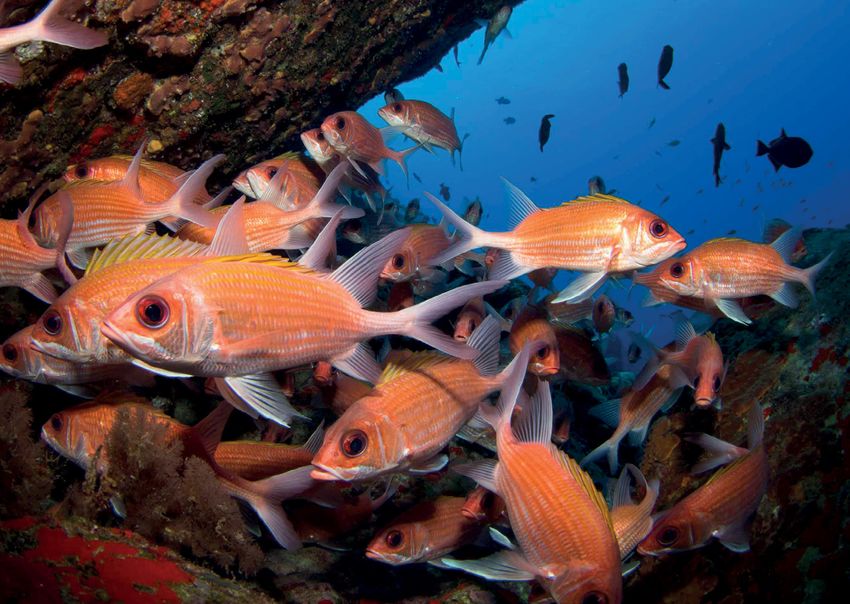
Photo: Judith Brown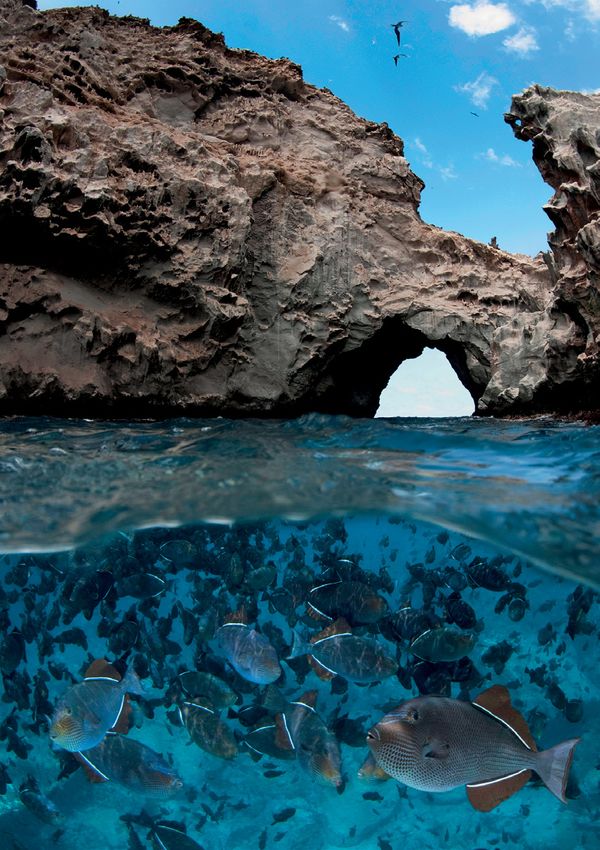
3 | B R IT I S H GLO BAL LE ADER SHIP IN OC EAN CON SER VATION   4 | B R I T I SH G LO B A L L E A DE R SHI P I N O CE A N CO N SE R VAT I O N

                                                                 INTRODUCTION
                                                                 LIFE ON EARTH DEPENDS ON THE OCEANS - FOR OXYGEN, FOOD
                                                                 AND CLIMATE STABILITY - BUT UNTIL NOW THE OCEANS HAVE BEEN
                                                                 UNDER-VALUED AND UNDER-GOVERNED. IN CONSEQUENCE, MARINE
                                                                 LIFE FACES GROWING THREATS FROM OVER-FISHING, CLIMATE
                                                                 CHANGE, ACIDIFICATION AND PLASTIC POLLUTION.

                                                                 The UK can play a leading role in valuing and protecting the oceans, for its domestic
                                                                 waters and its Overseas Territories together represent the fifth largest marine
                                                                 estate in the world. Spread across the world’s oceans, the 14 Overseas Territories
                                                                 possess some of the clearest waters and the largest fish on the planet. They contain
                                                                 breeding grounds for endangered turtles, a third of the world’s albatrosses, a quarter
                                                                 of the world’s penguins and the world’s largest coral atoll. Some 94% of the unique
                                                                 biodiversity for which Britain is responsible is found in its Overseas Territories.

                                                                 One of the ways to reverse decline in marine ecosystems and to enhance resilience
                                                                 to climate change is to establish marine reserves. The UK Government has already
                                                                 made what has been described as “the greatest environmental commitment by any
                                                                 government ever” in pledging to create a “Blue Belt” around its Overseas Territories
                                                                 and to complete a network of marine protected areas at home.

                                                                 The challenge is how to bring about exemplary levels of protection to the four million
                                                                 square kilometres of ocean the UK has pledged to protect by 2020 – an area greater
                                                                 than the size of India. This includes the British Indian Ocean Territory, Pitcairn,
                                                                 Ascension, Tristan da Cunha, Saint Helena and South Georgia and the South
                                                                 Sandwich Islands, among them are some of the places least impacted by human
                                                                 activity left on Earth.

                                                                 The task does not end there. Marine reserves will be ineffective if the oceans around
                                                                 them decline and therefore in the interests of conservation and good governance,
                                                                 an independent Britain should champion stronger cooperation within the bodies that
                                                                 manage international waters and support the case for marine reserves upon the High
                                                                 Seas which cover more than 45% of the Earth’s surface.

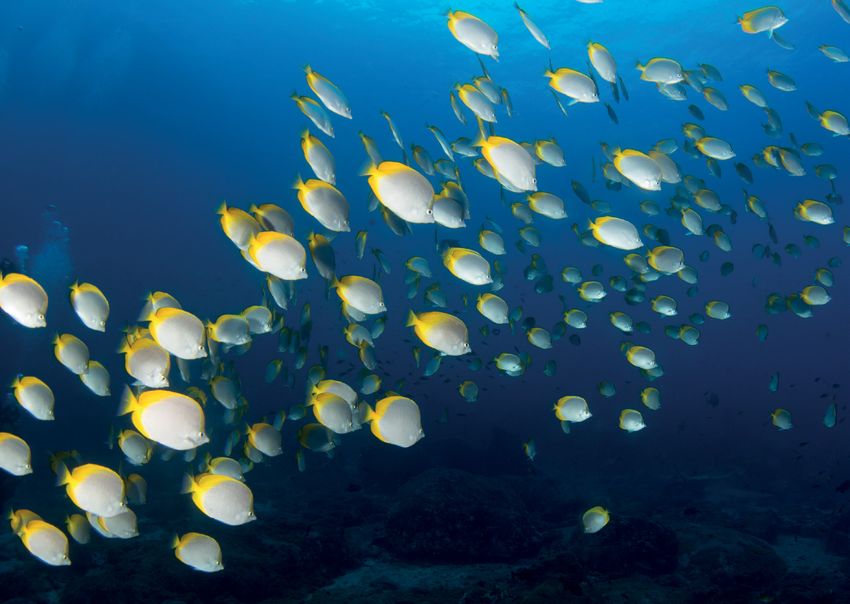
Photo: Johnny Briggs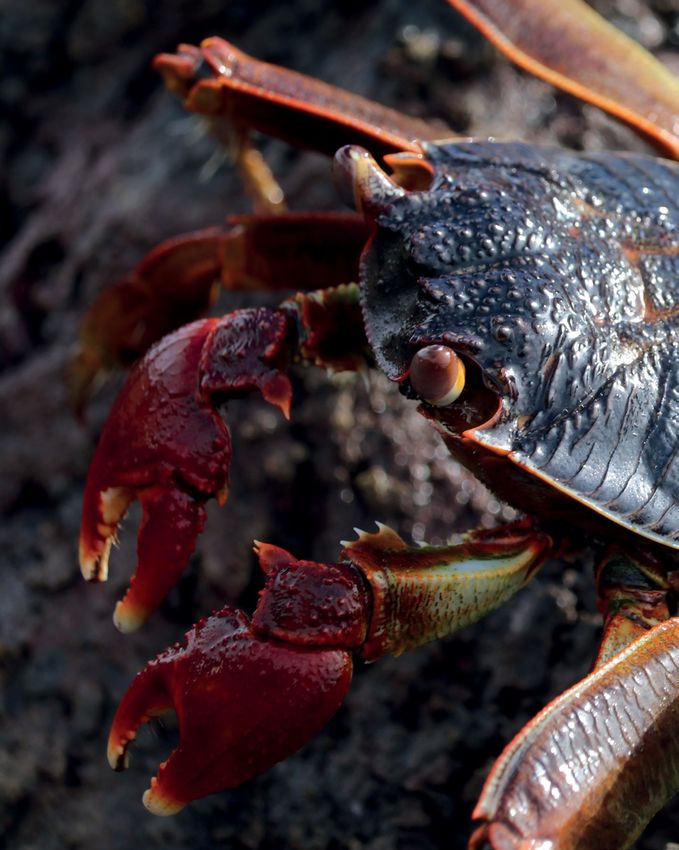
5 | BRITI S H GLO BAL LE ADER SHIP IN OC EAN CON SER VATION   6 | B R I T I SH G LO B A L L E A D E R SHI P I N O CE A N CO N SE R VAT I O N

                                                              THE UK OVERSEAS
                                                              TERRITORIES -
                                                              OUR COMMITMENT
                                                              OUR OPPORTUNITY

Photo: Judith Brown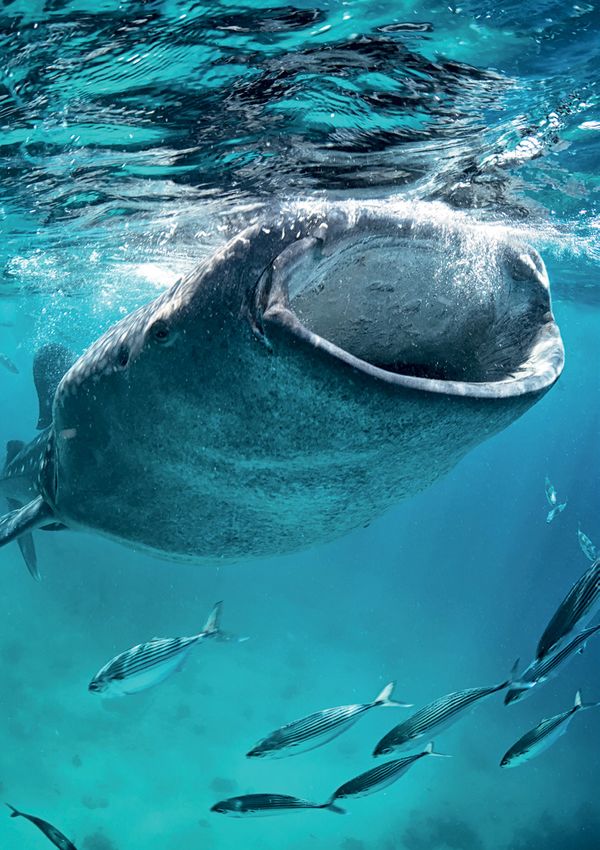
7 | B R IT I S H GLO BAL LE ADER SHIP IN OC EAN CON SER VATION                                                            8 | B R I T I SH G LO B A L L E A DE R SHI P I N O CE A N CO N SE R VAT I O N

                                                                                                                            A total of 14 Overseas Territories come under the jurisdiction and sovereignty
                                                                                                                            of the UK. The inhabited UKOTs are mostly small islands with varying levels
                                                                                                                            of internal self-government, with the UK retaining responsibility for defence,
                                                                                                                            foreign relations and good governance. UK appointed civil servants meanwhile
                                                                                                                            retain all executive power in the uninhabited Territories. While not forming part of
                                                                                                                            the UK, the approximately 250,000 inhabitants of the UKOTs are British nationals,
                                                                                                                            and the UK has an international responsibility to help protect their environment.

                                                                            N ORTH
                                                                           ATL A N TI C                    EU ROPE
                                N O RT H                                    OCEA N                                                                         ASIA
                               A ME RI C A
 NORTH                                                                                                                                                                                                       N O RT H
                                                                                         GIBR ALTAR                  CYPR US SOVEREIGN
PACIFIC                                                                                                                                                                                                     PAC I F I C
                                              BERM UDA                                                               BASE AR E AS                                                                            O C E A N
 OCEAN

                                                     BRI TI S H V I RGI N ISL ANDS
           T U R K S A ND C A I COS I S L AN DS            AN GUI L L A
                                                              M ON TS ERR AT
                     C AY M A N I S L AN DS                                                            A FRICA

                                                                                                                                     BRITISH INDIAN
                                                        SO UT H                        ASCENSION                                    OCEAN TERRITORY
                                                       AME R I C A                       ISL AND

                                                                                                                                         I N D I A N
                                                                                                                                          O C E A N
                                                                                           SAINT HE LE NA
      P ITC AI R N
      IS L A NDS                                                                    SOU TH                                                                                                 AUSTRALIA
                                                                              ATL A N TI C OCE A N
                         SO U T H
                        PAC IFIC
                         O C E AN
                                                                                     T R ISTAN DA CU NHA

                                                                                                                                                           SO U T H E RN             O C E A N
                                                  THE FAL KL AN D
                                                        I S L AN DS
                                                                                     SOU T H GEOR GIA
                                                                                     AND T HE SOUT H SANDWICH
                                                                                     ISL ANDS ( SGSSI)

                                                          BRI TI S H AN TAR CT IC
                                                               TERRI TOR Y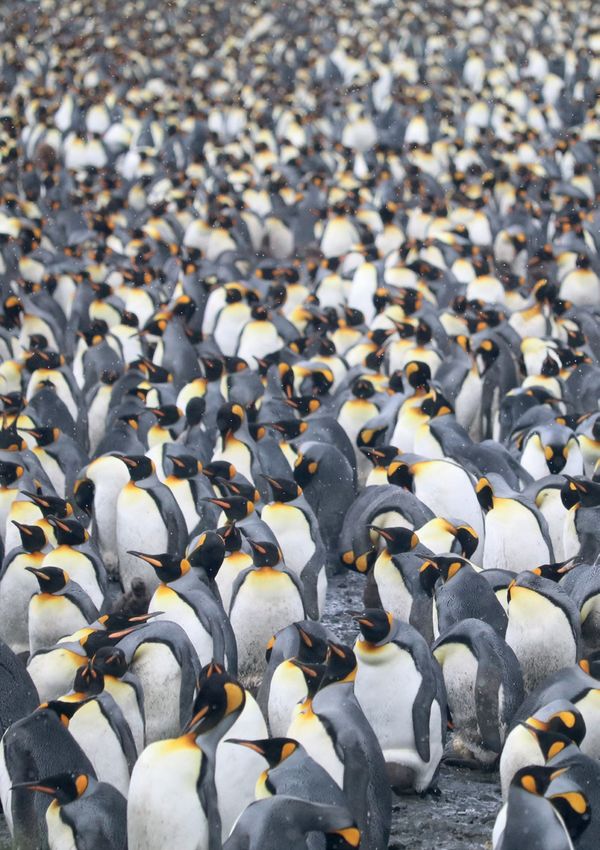
9 | B R IT I S H GLO BAL LE ADER SHIP IN OC EAN CON SER VATION   1 0 | B R I T I SH G LO B A L L E A DE R SHI P I N O CE A N CO N SE R VAT I O N

                                                                 GOVERNMENT
                                                                 COMMITMENTS
                                                                 ALREADY MADE

                                                                 In September 2016, at the Our Ocean conference in Washington DC, Foreign Office
                                                                 Minister Sir Alan Duncan MP announced:
                                                                    Designation of the Pitcairn Islands Marine Reserve in the Pacific.
                                                                    Designation of a marine protected area around Saint Helena in the South Atlantic.

“WE WILL...                                                         A commitment to designate a fully protected marine reserve around Ascension

CREATE A BLUE
                                                                    Island in the South Atlantic by 2019.
                                                                    A commitment to support a locally-led designation of a marine protection regime
BELT OF MARINE                                                      around Tristan da Cunha in the South Atlantic by 2020.

PROTECTION...                                                       £20 million of funding to support UKOT Governments to design, monitor and

ESTABLISHING THE
                                                                    manage these marine protections to 2020.
                                                                 The 2017 Conservative Party manifesto went further. Along with a commitment to
LARGEST MARINE                                                   “increase” fish stocks in UK waters after Brexit, it said:

SANCTUARIES                                                        “We will champion greater conservation co-operation within international
ANYWHERE IN                                                        bodies, protecting rare species, the polar regions and international waters. We will

THE WORLD”
                                                                   work with our Overseas Territory governments to create a Blue Belt of marine
                                                                   protection in their precious waters, establishing the largest marine sanctuaries
Conservative Party                                                 anywhere in the world.” (Forward Together, The Conservative Party Manifesto 2017)
Manifesto 2017
                                                                 Commitments to greater protection of the marine environments also featured in
                                                                 Liberal Democrat, Labour and Green Party 2017 General Election manifestos.

Photo: Paul Colley
1 1 | B R IT I S H GLO BAL LE ADER SHIP IN OC EAN CON SER VATION   1 2 | B R I T I SH G LO B A L L E A DE R SHI P I N O CE A N CO N SE R VAT I O N

                                                                   SOUTH GEORGIA
                                                                   AND THE SOUTH SANDWICH
                                                                   ISLANDS 2018 MARINE
                                                                   PROTECTED AREA REVIEW
                                                                   POLICY GOAL

                                                                   RECLASSIFICATION OF THE EXISTING SUSTAINABLE USE MARINE
                                                                   PROTECTED AREA AROUND THE SOUTH SANDWICH ISLANDS TO A
                                                                   FULLY PROTECTED MARINE SANCTUARY – TWICE THE SIZE OF THE
                                                                   UNITED KINGDOM – AND ENHANCED PROTECTION OF THE WATERS
                                                                   AROUND SOUTH GEORGIA

                                                                   The waters of South Georgia and the South Sandwich Islands (SGSSI) are of
                                                                   overwhelming conservation importance, supporting one of the largest and most
                                                                   varied populations of seabirds and marine mammals on Earth. The Territory harbours
                                                                   a quarter of the world’s penguins and breeding colonies of several species of albatross,
                                                                   along with Antarctic fur seals and southern elephant seals. Whale species, now
                                                                   recovering from exploitation, include southern right, sei, fin, humpback, minke,
                                                                   blue and sperm whales.

                                                                   The Government of SGSSI created a 1.07 million square kilometre marine protected
                                                                   area throughout its waters in 2012. However, only approximately 2% (20,000 square
                                                                   kilometres) of the Exclusive Economic Zone is fully protected from fishing activity and
                                                                   other resource extraction. In the remainder of the marine area, the three commercial
                                                                   fisheries, for krill, toothfish and icefish, are managed to prevent conflict between the

THE BLUE BELT                                                      ecosystem and fisheries.

2017-2022
                                                                   The SGSSI Marine Protected Area is to be reviewed in 2018. The review provides
                                                                   an opportunity for the Government and others to explore whether existing fishing
                                                                   management provisions are sufficiently precautionary. Options to strengthen the
THE PRESENT GOVERNMENT’S COMMITMENTS ARE OF GLOBAL SIGNIFICANCE.   existing marine protected area could include the designation of a large closed area
HOW THEY ARE IMPLEMENTED OVER THE COMING YEARS WILL BE CRITICAL    around the pristine South Sandwich Islands. Management measures should be
TO THEIR SUCCESS.
                                                                   considered in a regional ecological context, as the survival of many of the species
THE UK GOVERNMENT SHOULD PRIORITISE THE FOLLOWING NEXT
STEPS IN THE IMPLEMENTATION OF THE BLUE BELT, TO BE CARRIED OUT    found in SGSSI depends on the management of the Scotia Sea between the islands
CONCURRENTLY                                                       and the Antarctic Peninsula.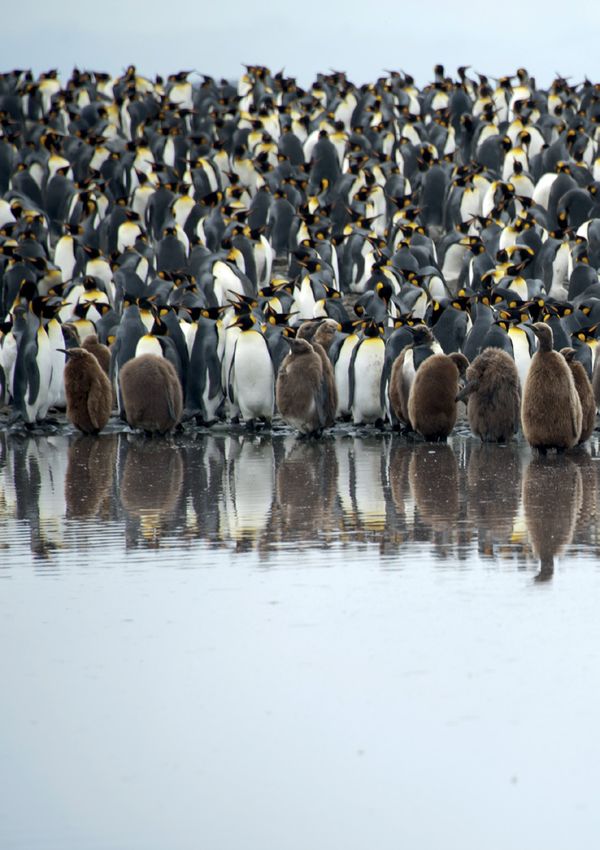
1 3 | BRITI S H GLO BAL LE ADER SHIP IN OC EAN CON SER VATION                               1 4 | B R I T I SH G LO B A L L E A DE R SHI P I N O CE A N CO N SE R VAT I O N

ASCENSION ISLAND
OCEAN SANCTUARY
DESIGNATION BY 2019
POLICY GOAL

THE ASCENSION ISLAND GOVERNMENT TO BE SUPPORTED TO
SUCCESSFULLY DELIVER ITS SCIENTIFIC ROADMAP AND DESIGNATE
A FULLY PROTECTED MARINE RESERVE COVERING AT LEAST 50% OF
ITS EXCLUSIVE ECONOMIC ZONE BY 2019.

The Atlantic is without any large fully-protected marine reserves. Ascension would be
the first and the largest. Straddling the Mid Atlantic Ridge, Ascension’s waters harbour
globally significant marine biodiversity. Ascension has the second-largest green turtle                                                                 ASCENSION’S
breeding population in the Atlantic. It is a hotspot for large predators, including
sharks, tuna, swordfish and some of the largest recorded Atlantic blue marlin. It is also
                                                                                                                                                        INSHORE
a significant bird colony, with its own unique frigatebird. Its inshore waters harbour a                                                                WATERS
number of fish species found nowhere else on earth.                                                                                                     HARBOUR A
One of the few landmasses in the tropical Atlantic, Ascension presents the UK with the                                                                  NUMBER OF
                                                                                                                                                        FISH SPECIES
opportunity to protect an area of 440,000 square kilometres of ocean (nearly twice the
size of the UK). Current plans are to designate half of Ascension’s Exclusive Economic
Zone as the Ascension Island Ocean Sanctuary in 2019. There is the opportunity to go                                                                    FOUND
                                                                                                                                                        NOWHERE ELSE
further and protect up to 100 per cent of Ascension’s offshore waters. Given restored
air access, Ascension would be one of the most accessible large-scale marine reserves
in the world.                                                                                                                                           ON EARTH.
The MoD recently closed Ascension’s runway to direct flights from the UK until 2020.
This is a setback but also represents a chance to forge a new vision for the island that
takes account of military and conservation needs and yet does not impose a burden
upon local people. The development of eco-tourism is key to enhancing the long-term
sustainability of the island’s economy but this will require more accommodation and
the restoration of the island’s heritage assets.

                                                                                            Photo: Judith Brown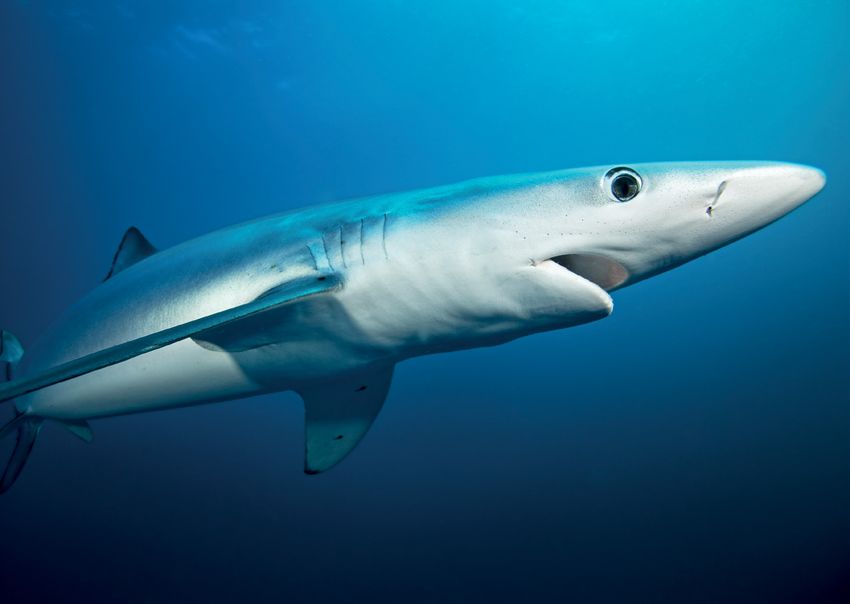
1 5 | B R IT I S H GLO BAL LE ADER SHIP IN OC EAN CON SER VATION   1 6 | B R I T I SH G LO B A L L E A DE R SHI P I N O CE A N CO N SE R VAT I O N

                                                                   SAINT HELENA: RESOURCING,
                                                                   MONITORING AND ENFORCING
                                                                   THE RESERVE ANNOUNCED
                                                                   IN 2016
                                                                   POLICY GOAL

                                                                   SAINT HELENA TO BECOME THE FIRST JURISDICTION IN THE WORLD TO
                                                                   PERMANENTLY DECLARE ITS WATERS RESTRICTED TO ‘ONE BY ONE ONLY’
                                                                   COMMERCIAL TUNA FISHING – ONE PERSON, ONE FISH - WITH A BAN ON
                                                                   LONG-LINING AND PURSE SEINING. THE UK WILL NEED TO SUPPORT THIS
                                                                   AID-DEPENDANT ISLAND FOR THIS INSPIRING STRATEGY TO SUCCEED.

                                                                   Saint Helena is small and remote, like Ascension, but has even more unique species –
                                                                   around 500 of them - of which at least 50 are marine based. Whale sharks, the largest
                                                                   fish in the ocean, are recorded in high numbers around Saint Helena and may well
                                                                   breed there. Habitats include the open-ocean zone, with tunas around the seamounts
WHALE                                                              (underwater mountains) and inshore rocky reefs. Little is known about what lives on

SHARKS ARE                                                         the several seamounts in St Helena’s waters, all 444,916 square kilometres of which
                                                                   were designated an IUCN category VI ‘Protected area with sustainable use of natural
RECORDED IN                                                        resources’ in 2016.

HIGH NUMBERS                                                       Saint Helena’s fishermen have long opposed foreign fleets fishing in their waters.

AROUND SAINT                                                       The protected area, larger than Germany, will offer the island both biodiversity
                                                                   protection and the opportunity for local fishermen to develop a high-value, low-volume
HELENA.                                                            tuna fishery. Much work remains to be done to support this new fisheries strategy.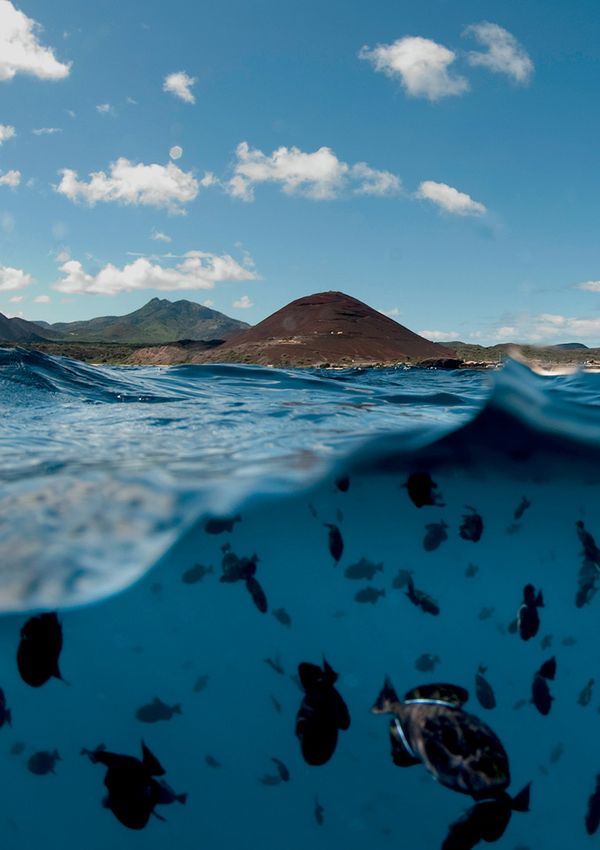
1 7 | BRITI S H GLO BAL LE ADER SHIP IN OC EAN CON SER VATION   1 8 | B R I T I SH G LO B A L L E A D E R SHI P I N O CE A N CO N SE R VAT I O N

                                                                The 270-person community on Tristan da Cunha has made the visionary

 TRISTAN DA CUNHA                                               commitment to establish a science-based and Tristan-led protection regime for their
                                                                entire 754,000 km² marine zone by 2020.
 DESIGNATION BY 2020                                            Tristan da Cunha is the world’s most remote inhabited island and in its vast and
  POLICY GOAL
                                                                near pristine marine zone the warm waters of the South Atlantic meet colder waters
                                                                from the south. This results in an area of enormous productivity. Famed for its
 THE TRISTAN DA CUNHA COMMUNITY TO BE SUPPORTED TO ESTABLISH
 THEIR OWN REGIME FOR PROTECTING THE WATERS OF THEIR ENTIRE     Marine Stewardship Council-certified sustainable lobster fishery, Tristan’s waters
 EXCLUSIVE ECONOMIC ZONE BY 2020. THIS WILL BE MANAGED TO       also support some of the world’s most important seabird breeding islands, vast
 THE HIGHEST INTERNATIONAL STANDARDS AND FULLY FINANCED BY
                                                                populations of seals, iconic penguin colonies, globally threatened tuna and breeding
 THE UK GOVERNMENT.
                                                                grounds for southern right whales and blue sharks.

                                                                The UK Government needs to fully finance this vast new area of marine protection
                                                                and help the Tristan community protect it from illegal fishing pressure.
1 9 | B R IT I S H GLO BAL LE ADER SHIP IN OC EAN CON SER VATION 2 0 | B R I T I SH G LO B A L L E A DE R SHI P I N O CE A N CO N SE R VAT I O N
GLOBAL BRITAIN
-GLOBAL OCEAN LEADER
The UK Government can use the Blue Belt as a platform to call for improved international
governance of the High Seas (those areas beyond national jurisdiction), where poor
governance of fisheries has been shown to go hand in hand with security and human
rights abuses such as smuggling, piracy, slavery and suspected murder.
Improved monitoring and enforcement is a global priority and satellite technology is
transforming this task.
While the priority for the UK Government must be to deliver on the Blue Belt
commitments in the Overseas Territories, the Government will have an opportunity to
further assert its leadership in ocean conservation as it manages the UK’s transition out
of the European Union.
With this in mind, the UK Government should seek a global leadership role in the
following four areas:
1. Fully implement the Blue Belt, with specific focus on supporting the maximum
appropriate protection in SGSSI, Saint Helena, Ascension Island and Tristan da Cunha,
while also completing the marine protected area network in UK seas.
2. Extend monitoring and surveillance efforts out to a 100 nautical mile ‘buffer zone’
around each of the existing Blue Belt sites. This would extend improved manage-
ment to an additional 3.89 million square kilometres of relatively lawless ocean.
3. The United Nations Convention of the Law of the Sea (UNCLOS) requires a new
implementing agreement to include the protection of biodiversity on the High Seas.
This new agreement should include the ability to create marine protected areas
FUNDING
on the High Seas. The UK should exert a positive diplomatic influence on the UN
In September 2016 the UK Government pledged £4.8 million per year from
negotiations taking place up to 2020, building on the progress made at the UN
2016-2020 to deliver on its Blue Belt commitment to the UKOTs.
Ocean Conference held in New York in June 2017.
The Government must maintain this financial commitment and extend it to
4. Regional Fisheries Management Organisations (RFMOs) are the primary
the end of this Parliament in 2022 if it is to continue to deliver a ‘Global Britain’
vehicle for international cooperation on the shared use of migratory fish stocks and
vision for ocean protection.
sometimes the only form of governance on the high seas. The UK has been poorly
represented by the EU on these bodies allowing fish stocks we depend on to decline. Replacing the upcoming loss of EU environment funding for the Territories
The opportunity presents itself for the UK to take its own seat at the table beside its (BEST & LIFE) will also be vital if the UK is to continue to protect the
Overseas Territories and exert a conservation focused role in these forums. communities and wildlife of these precious places.
Photo: Johnny Briggs21 | B R IT I S H GLO BAL LE AD ER SHIP IN OC EAN CON SER VATION
ABOUT THE
AUTHOR
The Rt Hon. Richard Benyon MP is the Member of Parliament for Newbury and a former
Fisheries Minister (2010-2013).
This pamphlet was written with help from the Great British Oceans coalition, a campaign
group established to work in partnership with the Overseas Territories and UK Government
to help create globally significant and scientifically rigorous marine reserves.
Its six members are the Blue Marine Foundation, Greenpeace UK, Marine Conservation
Society, Pew Trusts, Royal Society for the Protection of Birds (RSPB), and the Zoological
Society of London, who between them represent over 1.25 million supporters.
October 2017
Photo: Judith BrownFront cover photo: Paul Colley Printed on 100% recycled paper
You can also read


