Board of Regents March 2, 2020 - THE EVERY STUDENT SUCCEEDS ACT (ESSA) AND GRADUATION STANDARDS AND REQUIREMENTS - The Every ...
←
→
Page content transcription
If your browser does not render page correctly, please read the page content below

THE EVERY STUDENT SUCCEEDS ACT (ESSA)
AND GRADUATION STANDARDS AND REQUIREMENTS

             Board of Regents
              March 2, 2020
WHAT ESSA REQUIRES STATES TO DO:

     Adopt challenging State academic standards aligned with entrance requirements for credit-
     bearing coursework in the system of public higher education in the State.

     Establish high school graduation rate Long-term Goals and Measures of Interim Progress.

     Establish a method to identify for Comprehensive Support and Improvement (CSI) any high
     school that fails to graduate more than one-third of its students.

     Use high school graduation rates as a part of the system to differentiate school performance
     and identify schools for Comprehensive or Targeted Support and Improvement.
                                                                                                    2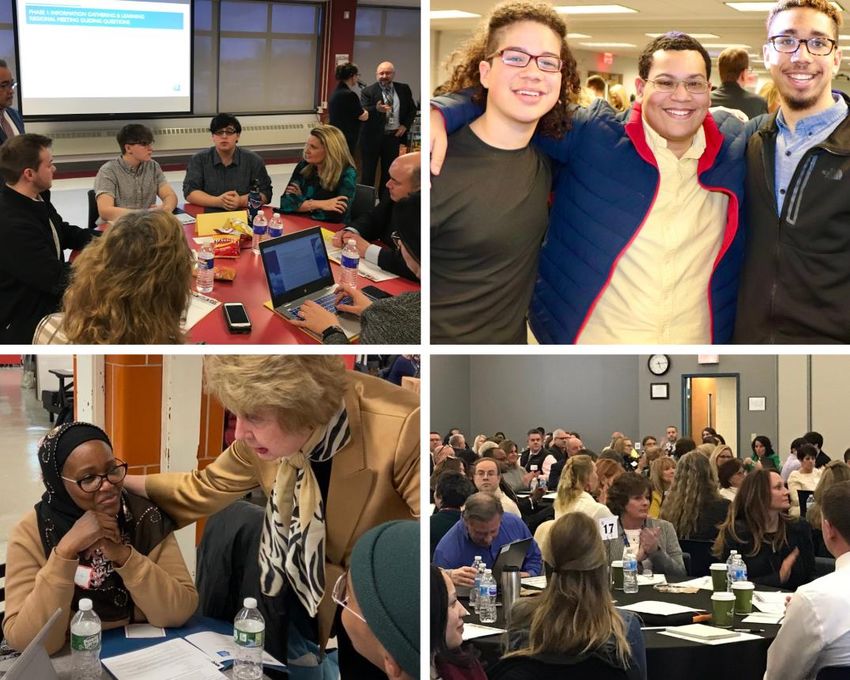
WHAT ESSA REQUIRES STATES TO DO:

     Include on annual state and local report cards the high school graduation rates for all students and
     specified disaggregated groups of students.

     Report for each public high school in the state, to the extent data are available, the rate at which
     students in the year following their high school graduation enroll in postsecondary institutions.

     Review the efficacy of funds provided to support charter school students, English language learners,
     homeless students, incarcerated youth, migrant students, and Native American students in assisting
     students to graduate high school.

     Calculate, publicly report, and use for accountability purposes the Four-Year Adjusted Cohort
     Graduation Rate and Extended Year Adjusted Cohort Graduation Rates in accordance with detailed rules
     specified in the law.
                                                                                                            3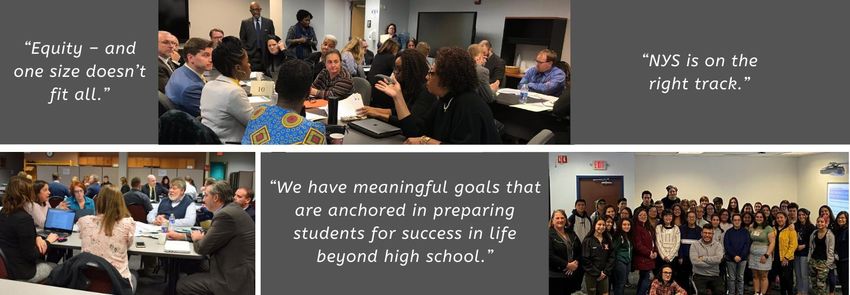
WHAT ESSA DOES NOT REQUIRE STATES TO DO:

      Submit its
                                          Meet any          Condition
     challenging
                                        specific ESSA     graduation on
      academic         Use State
                                        requirements     students passing
   standards for    assessments for
                                      for the awarding       specified
     review and        graduation
                                       of high school       courses or
  approval by the      purposes.
                                          credit to      earning specified
    Secretary of
                                          students.       units of credit.
     Education.

                                                                             4
ESSA AND HIGH SCHOOL ASSESSMENTS:

                                                     ESSA permits school
                                                     districts to substitute
                                                    a nationally-recognized
                                                     high school academic
                             Most states meet
                                                       assessment if such       States may also seek
  ESSA requires that           these subject
                                                         exam has been          USDE permission to
 students be assessed     requirements by giving
                                                    approved by the State         participate in the
  on a reading and a          all students in a
                                                        as meeting State       Innovative Assessment
  math assessment at       particular high school
                                                       academic content          and Accountability
least once in grades 9-      grade a statewide
                                                      standards and other          Demonstration
12 and at least once in   assessment, the results
                                                             technical                Program.
 science in grades 10-       of which are not
                                                        requirements. All      (Four states approved
          12.             consequential for high
                                                    students in the school            to date.)
                            school graduation.
                                                           district must
                                                        participate in the
                                                         locally selected
                                                          examination.
                                                                                                       5
SUMMARY:        States have broad latitude in setting graduation standards.

             Graduation results must be publicly reported and used for school
                                      accountability.

  SUMMARY
             Students must be assessed at least once in high school in ELA,
             math, and science on Statewide assessments. There are some
             limited options for local assessments and demonstration pilots.

            Changes in graduation standards would likely require amendments
             to the State ESSA plans in areas such as Long-term Goals and
                             Measures of Interim Progress.

                                                                                6
P-12 INSTRUCTION REQUIRED BY EDUCATION LAW
Article 17 requires instruction in the following:

                                                                          • physical education
                                            Physical Education / Health
Social Studies / Civics

                          • patriotism                                    • prevention of child abduction             • highway

                                                                                                                                         Science
                                                                                                             Safety
                            and                                                                                                                    • in the
                            citizenship                                   • prevention of child sexual                  safety and                   humane
                            and certain                                     exploitation and child sexual               traffic                      treatment of
                            historic                                        abuse                                       regulation                   animals
                            documents                                     • health education regarding                • fire and arson
                          • civility,                                       mental health, alcohol, drugs,              prevention
                            citizenship                                     tobacco abuse and the                     • internet
                            and character                                   prevention and detection of                 safety
                            education                                       certain cancers
                          • the flag;                                     • child development
                            holidays                                      • cardiopulmonary
                          • general                                         resuscitation
                            elections                                     • automated external
                                                                            defibrillator use                                                                       7
GRADUATION MEASURES IN NEW YORK STATE

                   Phase I:
   Information Gathering & Learning Update
                March 2, 2020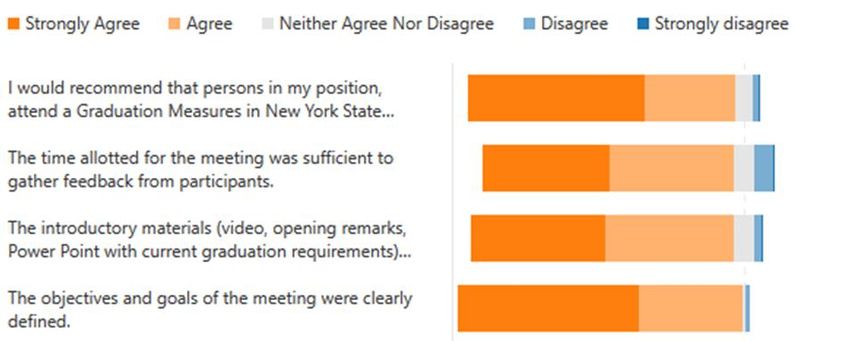
REGIONAL MEETINGS UPDATE
12 sessions have been held
Includes 2 student sessions
18 additional sessions to be held
between now and March 31st
Includes:
At least one more student session
Meeting for higher education &
workforce representatives
9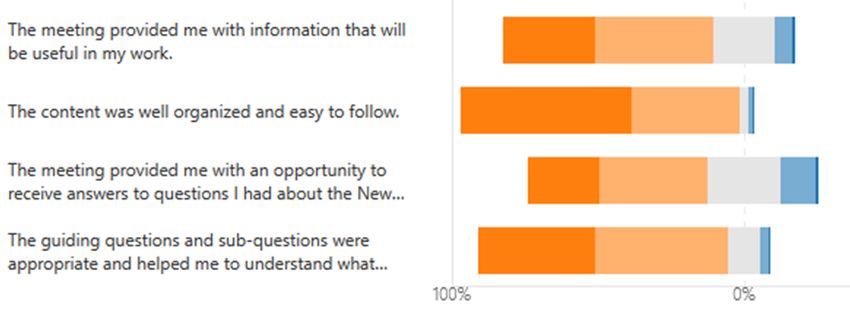
REGIONAL MEETINGS UPDATE

• Total participants to date:
  More than 1,375
  –   Students
  –   Teachers
  –   Parents
  –   Administrators
  –   Board of Education members
  –   Higher Education representatives
  –   Business leaders

                                         10
REGIONAL MEETINGS UPDATE
11MEETING PARTICIPANT SURVEY FEEDBACK
“I am happy to see the
State taking a proactive
approach to change the
graduation requirements.”MEETING PARTICIPANT SURVEY FEEDBACK
“Developing multiple and
inclusive ways to
demonstrate what students
know and can do with
choice and with voice.”UPCOMING REGIONAL INFORMATION MEETINGS
Date Regent/Judicial District Meeting Site
3/3/20 Lester W. Young Roosevelt High School Early College Studies, Yonkers, NY
3/4/20 Josephine Finn Ulster BOCES, New Paltz NY
3/4/20 Roger Tilles Eastern Suffolk BOCES, Holtsville, NY
3/9/20 Elizabeth S. Hakanson Oneida-Herkimer-Madison BOCES, New Hartford, NY
3/10/20 Judith Chin Helen Marshall Cultural Center, Queens, NY
3/10/20 Judith Chin York College, Queens, NY
East High School, Rochester, NY
3/11/20 Wade Norwood
Satellite Location:
Joseph C. Wilson Foundation Academy Rochester, NY
3/11/20 Christine Cea Borough President’s Hall of Science, Staten Island, NY
Chancellor
3/16/20 SUNY Oneonta, Oneonta, NY
Betty A. Rosa
3/18/20 Josephine Finn Hearst Media Center, Albany, NY
3/23/20 Nan Eileen Mead Borough of Manhattan Community College, New York, NY
Chancellor
3/24/20 Monroe College, Bronx, NY
Betty A. Rosa
3/27/20 Roger Tilles Western Suffolk BOCES, Wheatley Heights, NY
3/31/20 Catherine Collins Erie 1 BOCES, West Seneca, NY
3/31/20 Nan Eileen Mead Manhattan Center for Science and Mathematics, New York, NYDRAFT TIMELINE
• November 2019 to April 2020:
Phase I: ❑ Literature review of research and practices in other states. Report to Board in Spring 2020
Information ❑ Regional workgroups hold meetings beginning in January to gather feedback from across the
Gathering & state.
• Summer 2020: Establish the Blue Ribbon Commission (BRC) and draft meeting schedule.
Learning
• Summer 2020: Compile Regional Meeting feedback.
• September 2020: Commission’s first meeting – the BRC convenes and defines the scope of
its work.
• October 2020: Blue Ribbon Commission second meeting to identify priority areas and a
Phase II: framework for moving forward. Establish sub-groups for priority areas.
Blue Ribbon • November 2020 – February 2021: Sub-groups meet.
Commission • March 2021 – May 2021: Sub-groups develop proposed recommendations.
• Summer – Fall 2021: Sub-groups advance recommendations to the BRC.
• Fall 2021 – Winter 2022: The BRC finalizes recommendations and a report is prepared.
Phase III:
• Winter 2022: The Blue Ribbon Commission’s final report is presented to the Board of
Regents Regents for consideration.
Discussion
15QUESTIONS
16You can also read


