Brighton and sussex medical school - POSTGRADUATE PROSPECTUS 2021-22
←
→
Page content transcription
If your browser does not render page correctly, please read the page content below

~ brighton and sussex
~ medical school

                        POSTGR ADUATE PROSPECTUS 2021-22
Contents

    Welcome                                           3   Postgraduate courses

    What our postgraduate courses offer               5      Anaesthesia and Perioperative Medicine    16

    Studying at Brighton and Sussex Medical School    6      Cardiology                                18

    Inclusive environment                             8      Clinical Education                        20

    Postgraduate taught courses                      10      Clinical Professional Studies             22

    Flexible, modular learning                       12      Clinical Radiology                        24

    Continuing professional development              13      Contemporary Bioethics                    26

    International student programme                  14      Dementia Studies                          28

    Research programme                               54      Diabetes in Primary Care                  30

    Our teachers                                     56      Global Health                             32

    How to apply                                     61      Healthcare Leadership and Commissioning   34

    How to fnd us                                    63      Internal Medicine                         36

                                                             Medical Education                         38

                                                             Medical Research                          40

                                                             Paediatrics and Child Health              42

                                                             Physician Associate Studies               44

                                                             Psychiatry                                46

                                                             Public Health                             48

                                                             Simulation in Clinical Practice           50

                                                             Surgical Studies                          52

2
Welcome                                                          We are delighted that you are considering
                                                                 postgraduate study at Brighton and
                                                                 Sussex Medical School (BSMS), whether
                                                                 as the next step in your own career or to
                                                                 develop your staff and trainees.

     Professor         As a partnership between the         Over the past few years we          The Universities of Sussex
     Malcolm Reed      Universities of Sussex and           have worked closely with            and Brighton are immensely
     Dean, BSMS        Brighton and the NHS, we pride       our colleagues in the region        proud of the success of our
                       ourselves on providing high-         to expand the scope of our          medical school.
                       quality clinical and professional    postgraduate offering and added
                                                                                                BSMS has developed
                       healthcare training in a nurturing   several new areas of study
                                                                                                a strong and diverse
                       learning environment. BSMS is a      including, most recently, an
                                                                                                portfolio of postgraduate
     Professor         highly regarded medical school,      MA in Contemporary Bioethics.
                                                                                                courses, informed by high-
     Gordon Ferns      and in the National Student          We have also responded to the
                                                                                                quality research, relevant
     Head of the       Survey (NSS) we have ranked          needs of both clinical and non-
                                                                                                to the workplace and
     Department        among the top fve UK medical         clinical healthcare providers,
                                                                                                multidisciplinary in nature.
     of Medical        schools for the past six years.      delivering a wide range of
     Education, BSMS                                        tailored courses in mental health   Our graduates are gaining
                       We provide a broad
                                                            and healthcare leadership and       signifcantly from this
                       portfolio of postgraduate
                                                            commissioning. You can read         experience and are
                       taught courses that have been
                                                            more about our bespoke options      increasingly well prepared
                       designed to meet the learning
                                                            on pages 12 and 13.                 to meet the challenges of an
                       needs of clinicians and other
                                                                                                evolving healthcare sector.
                       health professionals working         Our aim is to enable you to
                                                                                                We are committed to high
                       in an increasingly complex           deliver high-quality healthcare
                                                                                                academic and professional
                       healthcare sector.                   – be it regionally, nationally or
                                                                                                standards, as well as to
                                                            globally. We have continued
                       These courses range                                                      meeting the needs of students
                                                            to do this using a fexible and
                       from individual continuing                                               as individuals.
                                                            blended approach during the
                       professional development
                                                            COVID-19 pandemic.                  We welcome you in
                       modules to postgraduate
                                                                                                considering BSMS.
                       certifcates, diplomas and            We look forward to meeting your
                       full Masters.                        professional development needs.     Professor Debra Humphris
                                                                                                Vice-Chancellor,
                                                                                                University of Brighton

                                                                                                Professor Adam Tickell
                                                                                                Vice-Chancellor,
                                                                                                University of Sussex

                                                                                                                                3
4
What our postgraduate courses offer

Clinical and                     Strong multidisciplinary           Responding to changing              Nationally and
professional combined            learning                           healthcare needs                    globally relevant

All our clinical courses         Our courses bring together a       We tailor our courses to            Our courses are delivered by
include professional modules     vibrant mix of professionals       refect the current changes          high-level practitioners, who
as standard, ensuring that       from a variety of health and       taking place within the wider       base their teaching on the latest
students develop the skills      social care backgrounds. As a      healthcare environment,             research and case studies.
and knowledge to meet the        result, students gain valuable     including the NHS, local            Prominent guest lecturers add
challenges of a changing         insights into other disciplines,   authorities and independent or      to the student experience.
health and social care sector.   leading to stronger team           third sector providers delivering   This ensures the knowledge
                                 working – and, ultimately, to      or planning services.               is relevant and translatable to
                                 better patient care.                                                   both national and international
                                                                                                        healthcare settings.

Regionally signifcant            Beneft of two universities         Conveniently located with
                                 and local NHS trusts               excellent transport links           “The best thing is having
Our course content draws                                                                                 the fexibility to complete an
on regional experience with      BSMS is a partnership              BSMS is just over an hour from       MSc alongside full-time work
local professionals delivering   between the Universities of        London, and 45 minutes from          and medical training. The
the course, using relevant       Sussex and Brighton with           Gatwick Airport. Most courses        range and scope of options
research and case studies that   local NHS providers, and           are delivered at the main            and support available are
are directly applicable to the   all courses are validated by       campus at Falmer or at nearby        very impressive and the
regional health sector.          both universities. Each has a      NHS centres. The vibrant city        curriculum is tailored to
                                 strong reputation in medical       and seafront of Brighton are         confer an advantage when
                                 and healthcare teaching            just four miles away.                applying for competitive
                                 and research. Some clinical                                             consultant posts.”
                                 courses also take place in
                                 NHS trusts who work closely                                            Dr Alice Brooke
                                 with both universities.                                                Core Psychiatry Trainee

                                                                                                                                            5
Studying at Brighton and Sussex Medical School

                                                 The city has a very rich           Falmer is very well served by
     The vibrant seaside city of Brighton and    and diverse cultural life and      public transport, with regular
                                                 boasts many theatres, cinemas      rail and bus services running
     Hove offers an impressive array             and music venues. The              directly into both campuses,
     of restaurants, bars, specialist shops,     Brighton Festival takes places     and is easily accessed by road.
                                                 in May and is the second           The village of Falmer is located
     museums, galleries and other attractions.   largest arts festival in the UK,   on the edge of the South Downs
                                                 showcasing a wide variety of       National Park, with beautiful
                                                 art, music and performance.        countryside just minutes away.

                                                 Brighton and Sussex                BSMS is run in partnership
                                                 Medical School (BSMS) is           by the Universities of Sussex
                                                 located across two university      and Brighton, and all
                                                 campuses at Falmer, four           postgraduate courses lead
                                                 miles north of Brighton. Most      to joint awards. Our students
                                                 postgraduate teaching takes        are full members of both
                                                 place on the University of         universities and are entitled to
                                                 Brighton Falmer campus.            make use of the facilities each
                                                                                    institution has to offer.

6
Support and facilities

Campus facilities                   Student accommodation                  Sport                               Disability and dyslexia
There are a number of catering      The University of Brighton             As members of both universities,    We believe that every
outlets on both campuses, from      guarantees an offer of halls of        BSMS students can use the           student should have an
small café bars to self-service     residence to all frst-year BSMS        sporting facilities offered by      equal opportunity to acquire
restaurants. The Students’          postgraduate students providing it     the University of Brighton          knowledge and prove their
Union runs a shop and café on       is their frst time studying with us.   and the University of Sussex.       ability. The Disability and
the Brighton campus during                                                 Sports facilities across both       Dyslexia team at the University
                                    Learning resources
term time. A number of facilities                                          campuses include sports halls,      of Brighton is on hand to discuss
                                    and libraries
are available on the Sussex                                                fitness rooms, dance classes        the specifc needs of students
                                    BSMS students have access to
campus including a post offce,                                             and studios, squash and tennis      and reasonable adjustments
                                    the range of learning resources
supermarket, pharmacy, GP                                                  courts, and football, rugby and     can be made to teaching and
                                    and facilities at the University
surgery and dentist.                                                       floodlit astroturf pitches.         learning delivery. The team
                                    of Sussex, the University of
                                                                                                               are able to offer advice on all
Student Services                    Brighton and Brighton and              Childcare
                                                                                                               aspects of studying with a
Student Services provide a          Sussex University Hospitals            Both universities offer nurseries
                                                                                                               disability or dyslexia.
range of support to students        NHS Trust. Resources include           and students may enquire and
throughout their courses to         libraries, media centres and           apply for a nursery place once      For more detailed information
help ensure they get the most       computer rooms.                        an offer from the university has    on the support offered
out of their experience. They                                              been accepted.                      please visit brighton.ac.uk/
offer professional support and                                                                                 applicantadvicedisability
advice on career development,
fnance and welfare, along with
counselling services.

                                                                                                                                                   7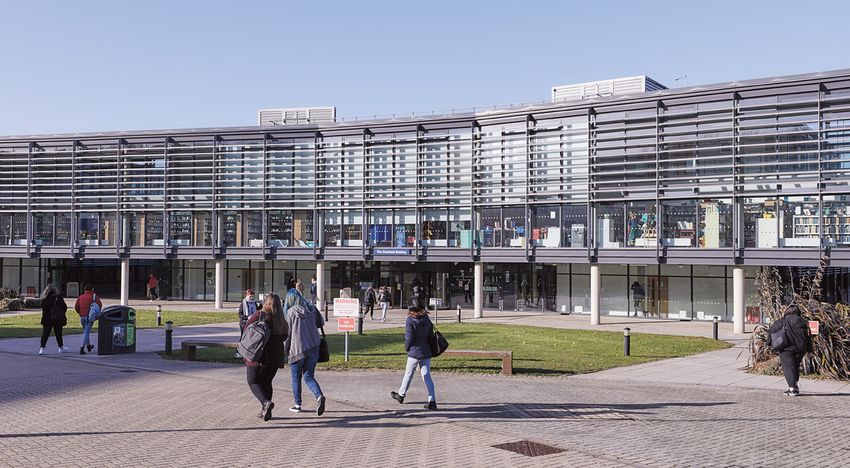
Inclusive environment                                             At BSMS we place the quality of the
                                                                      students’ learning at the heart of all our
                                                                      activities, in an environment which is
                                                                      intellectually challenging and enjoyable
                                                                      for a diverse body of students and staff.

                                We deliver an exciting,
    “At BSMS we                 relevant, balanced and well-
     recognise the complex      taught range of postgraduate
     intersecting social        courses which emphasise the
     issues within which        importance of research, both
     medicine operates and      to inform teaching and also as
     are striving for a world   a key skill for students.
     in which the benefits of
     medicine are available     Subject leadership is offered
     to all. BSMS is the        by professionals of the highest
     proud holder of an         academic calibre, supported
     Athena SWAN Silver         by a wide selection of high-
     Award, has recently        quality speakers who are
     signed up to the British   leading experts in their felds.
     Medical Association        BSMS is characterised by
     charter against            outstanding personal support
     racial harassment          for students and a commitment
     and is committed to        to listen and respond positively
                                                                   We believe that all people        BSMS strives to provide a
     the broader task of        to student feedback.
                                                                   involved with our school should   higher education environment
     decolonising medicine.”                                       feel welcome and respected,       that is intellectually challenging
                                Ensuring equality
     Dr Arianne Shahvisi                                           and be valued for the positive    and enjoyable for a diverse
                                and diversity
     BSMS Inclusivity Lead                                         contributions they can make.      body of students and staff,
                                Our medical school is based                                          underpinned by a culture of
                                                                   The school has a commitment
                                on fundamental values of                                             mutual respect.
                                                                   to equality and diversity,
                                friendliness, kindness and
                                                                   including protected               We believe that, as a result,
                                community allied to excellence
                                                                   characteristics such as           we are helping equip students
                                in education and deliberately
                                                                   sex, race, disability, religion   to provide best medical
                                chosen areas of research.
                                                                   and belief, age, gender           practice in a complex and
                                                                   reassignment, pregnancy           changing healthcare system.
                                                                   and maternity, marriage and
                                                                   civil partnership and sexual
                                                                   orientation.

8
9
Postgraduate taught courses

        BSMS offers a range of full-time and
        part-time taught postgraduate courses
        up to Masters level in subjects relevant to
        medicine and healthcare and the delivery
        of the national curriculum framework for
        specialist training.

     Courses are modular and lead   Unless otherwise stated on the    Mode of study                     Dissertation
     to the following awards:       relevant course page of our
                                                                      Modules are taught either         All Masters courses
                                    website, successful completion
     • Masters                                                        extensively over a semester or    include a research-based
                                    of a module is awarded
       Successful completion of                                       intensively in blocks of two to   dissertation on a relevant
                                    20 Masters level credits
       a minimum of four to six                                       five days (see relevant course    topic of interest, which
                                    and requires 200 hours of
       taught modules plus a                                          web page). Many courses           students are encouraged
                                    student input, mainly through
       dissertation                                                   offer a choice of full-time       to publish. Students are
                                    independent study. Every
                                                                      study over a year or part-time    supported by a dissertation
     • Postgraduate Diploma         module has its own method of
                                                                      study over a longer period to     supervisor and by an
       Successful completion of     presentation and assessment.
                                                                      suit individual needs, up to a    extensive programme of
       four to six taught modules   Some taught modules
                                                                      maximum of five years.            research skills workshops
                                    associated with postgraduate
     • Postgraduate Certifcate                                                                          that include: interview skills,
                                    courses are also available to
       Successful completion of                                                                         analysing qualitative data,
                                    take individually as continuing
       three taught modules.                                                                            statistical analysis, and
                                    professional development (see
                                                                                                        sampling and sample size.
                                    pages 12-13).

10
Course Award Eligible applicants Mode
Anaesthesia and Perioperative Medicine MSc PGDip PGCert UK* PT
Cardiology MSc PGDip PGCert UK • International FT or PT
Clinical Education MSc PGDip UK* PT
Clinical Professional Studies PGCert UK • International FT or PT
Clinical Radiology MSc PGDip PGCert UK* PT
Contemporary Bioethics MA PGDip PGCert UK • International FT or PT
Dementia Studies MSc PGDip PGCert UK • International FT or PT
Diabetes in Primary Care PGCert UK* PT
Global Health MSc PGDip PGCert UK • International FT or PT
Healthcare Leadership and Commissioning MSc PGDip PGCert UK • International FT or PT
Internal Medicine MSc PGDip PGCert UK • International FT or PT
Medical Education PGCert UK* PT
Medical Research MRes PGCert UK • International FT or PT
Paediatrics and Child Health MSc PGDip PGCert UK • International FT or PT
Physician Associate Studies MSc UK • International FT
Psychiatry MSc PGDip PGCert UK* PT
Public Health MSc PGDip PGCert UK • International FT or PT
Simulation in Clinical Practice PGCert UK* PT
Surgical Studies MSc PGDip PGCert UK • International FT or PT
MSc: Master of Science; MA: Master of Art; MRes: Master of Research; PGDip: Postgraduate Diploma; PGCert: Postgraduate Certificate; FT: full time; PT: part time
*Also open to EU applicants who are appointed to a post within Health Education England Kent, Surrey and Sussex (HEEKSS)
11Flexible, modular learning Our modular course structure allows
flexible study options for part-time
learning. Many modules can be studied
as stand-alone units or as part of a multi-
year programme of part-time study
leading to a postgraduate qualification.
Single modules Build towards an Further information Fees
academic qualifcation
Most modules involve For more information about The single module fee is
approximately 35 hours Each module is worth 20 any of our modules, or for pro-rata of the relevant course
of face-to-face teaching level 7 credits. Modules can advice about single module fee. For further information
accompanied by 165 hours be taken individually or can registration and part-time please visit bsms.ac.uk/
of independent learning. build towards an academic study towards a qualifcation, postgraduate-fees
Teaching is usually an qualifcation if desired. Where contact the Department of
intensive fve-day block over relevant, candidates may gain Medical Education by emailing
one week, although some credits via recognition of prior dme@bsms.ac.uk
modules are taught over learning (RPL) gained at another
Course delivery methods for
several weeks. For detailed academic institution. Some
2021/22 are still to be confrmed
information on eligibility qualifcations require completion
as we take into account
requirements, teaching format of mandatory modules (these
the ongoing impact of the
and assessment methods for vary by qualifcation); in many
COVID-19 pandemic. However,
each of our modules, visit instances these are combined
the intention will be to provide
bsms.ac.uk/ with your choice of optional
a blended learning approach
pg-single-modules modules to achieve the credits
of both online and face to face
required for the award.
provision where possible.
12Continuing professional development
BSMS offers a variety of continuing professional development (CPD) opportunities
to help you to develop new skills and update your current knowledge base.
Single modules as CPD Short courses and workshops Bespoke options
Our extensive range of BSMS provides a wide variety of short courses and workshops Many of our workshops and
postgraduate taught modules throughout the year, including the following: short courses are bespoke
cover clinical, professional and educational packages
research subjects in depth. commissioned by local
General workshops Conferences
Many of these individual healthcare organisations.
modules can be taken for CPD BSMS can partner with your
Clinical/Educational Heath Education Conference
purposes alone. Standard organisation to help meet
Supervisor Course
single module registration Inclusion Health Day your staff development
processes and fees apply (see Effective Presentations Training requirements.
Research Symposia
previous page); participants
Teaching and Innovation in If your desired CPD
can opt out of assessments
Medical Education (TIME) opportunity is not listed,
in advance to be awarded a
Psychiatry updates please visit bsms.ac.uk/cpd
certifcate of completion for Personal and Professional
or contact cpd@bsms.ac.uk
their CPD portfolio. Development Master classes
Forensic Psychiatry Update to discuss your requirements.
Postgraduate study, including
Leadership for Psychiatrists
independent study, can be
recorded as external CPD Physical Health Updates
hours. For further information for Psychiatrists
on CPD requirements and how
Psychopharmacology Update
to claim postgraduate study
as CPD, please see advice
published by the relevant
royal college, approving body
or organisation.
13International student programme BSMS provides a range of benefits
for international students, including
preparation in language and study skills
and dedicated support from tutorial staff.
Postgraduate courses suitable
for study by international
students include:
• Cardiology
• Clinical Professional Studies
• Contemporary Bioethics
• Dementia Studies
• Global Health
• Healthcare Leadership
and Commissioning
• Internal Medicine
• Medical Research
• Paediatrics and Child Health
• Public Health
• Surgical Studies As a postgraduate student at BSMS, you will beneft from the following support:
Full-time courses are studied • a personalised learning • professional modules in • guest lectures are offered
over a 12-15 month period. experience, with small group leadership, communication, from a wide range of lecturers,
seminars and workshops learning and teaching, including professionals
For further information and
in which a wide range of working at the forefront of
details of courses which • international students have
students study together health care delivery, advocacy
are suitable for international dedicated support services
and research with world-
students please visit: and a member of staff as a • in-depth study at the cutting-
leading institutions
bsms.ac.uk/postgraduate/ frst point of contact edge of clinical and health
international practice • extensive additional wellbeing
• research training tailored to
and academic skills support
individual needs and interests • opportunities to network with
from both the Universities of
leaders in health research and
• each student is assigned Sussex and Brighton.
practice
two dissertation supervisors
to cover both topical and
methodological expertise
14f .., ·-
-
~
!
..
fl
-
,
.
..,,._ I
.::,
“One of the best decisions
I’ve made in my life was to
do my Masters at BSMS.
As an overseas student,
I had all the care and
support I needed. It was a
great year, my supervisors
were super and I wish I
could turn back time to be
there again.”
Wiaam Alaa
MSc Public Health
graduate
15Anaesthesia and Perioperative Medicine MSc PGDip PGCert
• •
Open to
UK applicants*
Start date
September 2021
Mode of study
Part-time: 3 years
Course location
Princess Royal Hospital,
Haywards Heath
University of Brighton, Falmer
Course Leader
Dr Vanessa Fludder
Entry requirements
Applicants should have
a medical degree plus a
minimum of two years’
UK NHS experience in
anaesthesia. Applicants are
normally expected to be in
clinical practice throughout
the course.
Bursaries may be available,
please check the course web
page for more details.
bsms.ac.uk/anaesthesia-and-perioperative-medicine *Also open to EU applicants who are appointed to a post within HEEKSS
16About this course Who is it for? Key areas of study What are the benefts?
The course is based on The course covers areas that • Assessment and Students will be able to
areas of clinical practice and are relevant to all anaesthetic optimisation develop the skills to become
professional skills that are trainees. It is suitable for • High-risk anaesthesia the high-achieving consultants
relevant to all anaesthetic doctors who have at least • Emergency care and clinical leaders of the
trainees. Face-to-face tuition two years’ experience in • Research methods and future. Tuition is provided
will be provided in cutting- anaesthesia in the UK. critical appraisal in both clinical practice
edge aspects of patient • Communication, learning and key professional skills
care. The course uses an Stand-alone modules and teaching in health and including leadership, service
evidence-based approach to social care development, research and
The clinical modules can
provide knowledge of clinical • Leadership and change an appreciation of evidence-
all be taken as stand-
practice which extends beyond management in clinical based practice.
alone modules as part of
the scope of the training services
continuing professional
programme and represents
development.
many of the most important
bsms.ac.uk/pg-single-
areas of development for
modules
clinical anaesthesia. It also
includes modules which
enable students to gain an
in-depth understanding of the
professional skills essential for
a successful career in the NHS.
“After completing the FRCA, I wanted to enhance my
knowledge and understanding of clinical anaesthesia and
particularly the developing area of perioperative medicine
so that I could improve the care I provide to patients. The
taught modules were really well supported and gave me the
confdence to complete the dissertation.”
Clare Invernee
MSc Anaesthesia and Perioperative Medicine graduate
17Cardiology MSc PGDip PGCert
• •
Open to
UK and international applicants
Start date
September 2021
Mode of study
Full-time: 1 year
Part-time: 3 years
Course location
University of Brighton, Falmer
Course Leader
Dr Sean O’Nunain
Entry requirements
The course is open to post-
registration doctors and
qualifed practitioners in any
profession allied to medicine.
Those with a frst degree
will have a minimum of two
years’ clinical practice; those
without will have a minimum
of fve years’ post-qualifcation
practice in cardiology.
Applicants who do not hold a
frst degree will initially register
for either a Postgraduate
Certifcate or a Postgraduate
Diploma award.
For international students a
minimum IELTS score of 7.0
is required.
Bursaries may be available,
please check the course web
page for more details.
bsms.ac.uk/cardiology
18About this course Who is it for? Key areas of study What are the benefts?
This internationally recognised The course is designed to • Communication, On completion of the
course is designed to train provide advanced professional learning and teaching in course, students will have
healthcare professionals to education for a wide range health and social care developed a broad and
be the clinical leaders of the of practitioners with a career • Acute cardiology principles systematic understanding
future by providing a mix interest in cardiology. It is and practice of cardiovascular medicine
of clinical and professional suitable for doctors aspiring • Fundamentals of cardiac and will be equipped to
knowledge relevant to the to specialist positions. With diagnostic procedures translate this knowledge
practice of cardiology in a multi-professional focus, and investigations into good practice. Students
contemporary healthcare. the course is also suitable • Invasive and interventional will also have acquired
Learning in key professional for nurses, pharmacists, cardiology a portfolio of advanced
domains includes service paramedic practitioners, • Research methods and research, leadership,
leadership and development, radiographers and cardiac critical appraisal and communication and
research, commissioning and physiologists who wish to • Leadership and change learning skills to support the
communication and teaching. develop a specialist interest in management in development of a specialist
The cardiology content cardiology at Masters level. clinical services interest in cardiology and
provides comprehensive • Quality, safety and enhance their future career
learning to meet the service improvement in opportunities.
professional development clinical services
needs of a wide range of
practitioners working in
cardiology.
“ The Acute Cardiology module defnitely had a positive
effect on my practice in cardiology. It allowed me to
review and discuss the main topics which I am most likely
to encounter working in this feld.”
Ebraham Alskaf
MSc Cardiology graduate
19Clinical Education MSc PGDip •
Open to
UK applicants*
Start date
September 2021
Mode of study
Part-time: 1-3 years
Course location
University of Brighton, Falmer
Course Leader
Dr Jim Price
Entry requirements
This course is open to
health professionals who will
normally have completed
a Postgraduate Certificate
in Medical Education or
Simulation in Clinical Practice
at BSMS, or the equivalent
from other institutions. It is
expected that teaching will
form a significant element in
your professional role.
bsms.ac.uk/clinical-education *Also open to EU applicants who are appointed to a post within HEEKSS
20About this course Who is it for? Key areas of study What are the benefits?
The overall aim of the course The course is aimed at • Professional identity The course provides health
is to promote knowledge of, professionals from medical as a teacher professionals who have
and research into, learning, and other clinical backgrounds • Pedagogical practice in a significant element of
teaching and communication who are involved in teaching, medical education education within their clinical
in a clinical context, together or proposing to teach, medical • Advanced communication work with the credibility,
with facilitating a reflective students, doctors or other skills and strategies in credentialing and personal
awareness of participants’ healthcare professionals. medical education development opportunities
related skills and their Participants will wish to • Technology-enhanced to become excellent
ongoing development. The develop their teaching, learning learning specialist medical and clinical
course allows candidates to and communication skills to • Simulation studies educators. Students will have
progress from initial PGCert a high standard. Applicants • Leadership and facilitation the opportunity to further their
level to PGDip and MSc level will also be interested in the • Evidence-based clinical career in clinical education
qualifications. The Diploma academic evidence base for academic practice as well as clinical practice,
route will normally take a medical and clinical education, • Clinical education research and will have the academic
year, while progression to and at Masters level will have and methodology grounding to confidently
the Masters degree entails the opportunity to pursue address educational issues
completion of an in-depth an in-depth, research-based and standards in their
research project, normally dissertation. professional roles as clinicians
taking a further year. and educators.
“The course was extremely dynamic and included varied
content and learning opportunities developed from peer-
reviewed teaching practice, group discussions and group
communication exercises. The focus on excellent teaching
at BSMS also means that you benefit from fantastic practical
experience of teaching undergraduate students.”
Dr Camilla Tooley
Clinical Teaching Fellow in Medicine and Surgery
at Epsom and St Helier University Hospitals NHS Trust
21Clinical Professional Studies PGCert
Open to
UK and international applicants
Start date
September 2021
Mode of study
Full-time: 1 year
Part-time: 3-5 years
Course location
University of Brighton, Falmer
University of Sussex, Falmer
Course Leader
Dr Jackie Knight
Entry requirements
This course is open to all
medical trainees, physician
associates, locally employed
doctors, specialty associate
doctors and other healthcare
professionals. Students should
normally have at least one
year of professional practice
before entering the course.
For international students
a minimum IELTS score of 7.0
is required.
bsms.ac.uk/clinical-professional-studies
22About this course Who is it for? Key areas of study What are the benefts?
This course will provide This course is designed to Three professional modules: The course is an opportunity
a rounded education to meet the career development for anyone returning to
• Research methods and
prepare senior specialists for needs of healthcare postgraduate studies or
critical appraisal
clinical practice, taking into professionals, in particular: wishing to start a clinical
• Leadership and change
account their academic and medical, surgical, psychiatry Master programme. The
management in clinical
professional development and GP trainees; physician PGCert is designed to provide
services
needs. Participants will study associates; locally employed additional support at Master
• Communication, learning
both theory and practical doctors and specialty level with a focus on the
and teaching in health and
skills in a range of subjects associate doctors. professional core modules.
social care
that cover the three core Therefore, students will be
domains of research, It may be possible to able to use their existing credit
leadership and education. substitute another module to fast track on to a Master
from the BSMS Department of programme. Successful
Medical Education portfolio for completion will prepare
one of the modules above. students for more effective
leadership and for senior
clinician roles in the future.
“ This course provided me with a detailed insight into
communication in both clinical practice and educational
activities. I found it really valuable to be in a group with such
a diverse range of professionals, and I have been able to
incorporate the learning into my practice.”
Rachel Thompson
PGCert Clinical Professional Studies graduate
23Clinical Radiology MSc PGDip PGCert
• •
Open to
UK applicants*
Start date
September 2021
Mode of study
Part-time: 3 years
Course location
University of Brighton, Falmer
University of Sussex, Falmer
Course Leader
Dr Phil Thompson
Entry requirements
Applicants should have
a medical degree plus a
minimum of two years’
postgraduate experience or a
degree in a profession allied to
clinical radiology. Applicants
are normally expected to be
in clinical practice in the UK
throughout the course.
bsms.ac.uk/clinical-radiology *Also open to EU applicants who are appointed to a post within HEEKSS
24About this course Who is it for? Key areas of study What are the benefts?
The clinical modules of The course has been • Imaging physics This course aims to produce
this course allow in-depth specifcally designed in and anatomy high-quality clinical radiology
coverage of key areas of collaboration with the • Musculoskeletal and consultants, capable of
knowledge. These include Health Education Kent, neurological imaging meeting the challenges of this
imaging physics and anatomy Surrey and Sussex School • Oncological imaging dynamic and rapidly evolving
and a wide spectrum of of Radiology to provide • Research methods and specialty and equipped with
disease processes with advanced professional critical appraisal a wide range of invaluable
associated imaging features, education for trainees in • Communication, learning clinical and professional
all essential for professionals clinical radiology. and teaching in health and knowledge and skills.
and trainees working in social care
radiology today. The number of • Leadership and change
radiologists actively engaged management in clinical
in high-quality research services
remains small, despite the
rapid advances being made
in imaging technology and
the professional modules
allow development in the
key domains of research,
leadership and teaching.
“Delivered through a series of interesting and engaging lectures,
this MSc course has provided a thorough foundation in the
basic concepts underlying clinical radiology. This has enhanced
my knowledge and understanding of the specialty, and greatly
supported my professional practice as a trainee radiologist.”
Dr Frances Sheehan
MSc Clinical Radiology student
25Contemporary Bioethics MA PGDip PGCert
• •
Open to
UK and international applicants
Start date
September 2022
Mode of study
Full-time: 1 year
Part-time: 2 years
Course location
University of Brighton, Falmer
University of Sussex, Falmer
Course Principal
Professor Bobbie Farsides
Course Leader
Dr Peter West-Oram
Entry requirements
Applicants should have a
first or upper second-class
undergraduate honours
degree in a relevant subject
or equivalent.
or:
Completion of at least three
years’ basic medical science
at a UK medical school (having
gained at least 360 credits)
with a guaranteed place to
continue medical studies on
completion of the MA.
For international students a
minimum IELTS score of 7.0
is required.
Please note this course will
launch in September 2022.
Please visit the webpage for
more information.
bsms.ac.uk/contemporary-bioethics
26About this course Who is it for? Key areas of study What are the benefts?
The programme brings The course has been • Current issues and This programme pays
together experts from many specifcally designed for approaches in bioethics particular attention to the
disciplines within BSMS to students seeking advanced research systemic and structural issues
deliver a vibrant programme training and education • Feminist and anti-colonial which have shaped traditional
offering a contemporary and in both theoretical and bioethics bioethics discourse. Against
critical approach to bioethics. applied bioethics. It will • Solidarity in bioethics this background, students will
The course will address core be of signifcant value and society be schooled in the tools of
issues in bioethics while also to those who wish to • Global bioethics theoretical analysis needed to
considering the frameworks continue their bioethical and • Ethical issues at the analyse emerging and novel
and structures which shape philosophical education, beginning and end of life bioethical issues. Graduates
bioethical discourse, including either in preparation for • Philosophy and health will be well placed to deliver
gender, coloniality and global a PhD programme, or as ethically and theoretically
health. As such, the course a terminal degree. The robust research and
will empower students to course will also serve those professional practice.
engage with the bioethical working and training in the
challenges that medical, medical, scientifc and allied
scientifc, technological and professions.
social changes will present in
the future.
“In an era of rapid social, medical and scientifc change,
both domestically and globally, expertise in bioethics is of
particular importance. This programme will build on BSMS’s
commitment to placing bioethics at the core of medical and
scientifc education and practice, with students being given
the opportunity to interact with a dynamic group of experts in
the feld and related disciplines.”
Professor Malcolm Reed
Dean, BSMS
27Dementia Studies MSc PGDip PGCert
• •
Open to
UK and international applicants
Start date
September 2021
Mode of study
Full-time: 1 year
Part-time: 3 years
Course location
University of Brighton, Falmer
Course Leader
Dr Naji Tabet
Entry requirements
Applicants should have a
degree and evidence of a
capacity to study at Masters
level with a substantial interest
and/or experience in an area
of health or social care.
or:
Evidence of a capacity to
study at Masters level and
at least two years’ work
experience in an environment
related to dementia care
(including lived experience).
or:
Completion of at least three
years’ basic medical science
at a UK medical school (having
gained at least 360 credits)
with a guaranteed place to
continue medical studies on
completion of the MSc.
For international students a
minimum IELTS score of 7.0
is required.
bsms.ac.uk/dementia-studies
28About this course Who is it for? Key areas of study What are the benefts?
Dementia is a growing The course is aimed at a • Understanding dementia Students will be empowered
problem globally. This course wide range of professionals • Assessment and treatment to deliver significant
comprises a set of educational who are in a position to of dementia improvements in the quality of
initiatives which enable deliver improvements to the • Psychological and social services provided. Successful
healthcare professionals to health and care of people perspectives of dementia completion of the course
improve the quality of life of with dementia. This includes • Research methods and will provide specialised
dementia patients by building nurses, doctors, psychologists, critical appraisal knowledge and expertise
expertise in generating and occupational therapists and • Leadership and which will be invaluable in
delivering better care. The managers and staff in nursing change management in improving the prospect of
comprehensive, holistic, and residential homes. clinical services employment in the field and
theoretical and practical • Quality, safety and will enhance the likelihood of
framework for understanding service improvement in career progression.
dementia enables a broad clinical services
understanding of the impact • Communication and learning
on the individual and society. in health and social care
Clinical knowledge is blended
with developing skills in
communication for health
and social care, research and
leadership learning.
“The course has brought me up to date on the latest
understanding of dementia and how we can best assess,
diagnose, treat and support people affected by it. The range
of topics and engaging lecturers have really increased my
knowledge of, and passion for, the subject. Involving people
living with dementia in the teaching was a real highlight too.”
Lauren Wonnacott
MSc Dementia Studies student
29Diabetes in Primary Care PGCert
Open to
UK applicants*
Start date
September 2021
Mode of study
Part-time: 2 years
Course locations
University of Brighton, Falmer
Course Principal
Dr David Lipscomb
Course Leader
Dr Wajeeha Aziz
Entry requirements
This course is open to post-
registration doctors and
qualified practitioners with
two years’ relevant clinical
experience in any profession
allied to medicine.
bsms.ac.uk/diabetes-in-primary-care *Also open to EU applicants who are appointed to a post within HEEKSS
30About this course Who is it for? Key areas of study What are the benefts?
The course delivers advanced The course meets the • Complications of diabetes Professionals who provide
professional education in professional development and their management care and support in the
diabetes for people working needs of a wide range of • Epidemiology community for people
in primary care. Uniquely, practitioners working in • Lifestyle interventions and with diabetes will gain an
it enhances both clinical primary care, including general up-to-date treatment options accessible and achievable
knowledge of diabetes and practitioners, practice nurses, • Self-management and the postgraduate qualification.
current best practice in its community nurses, podiatrists patient perspective Practitioners will gain clinical
diagnosis and management in and pharmacists. • Insulin management, and professional knowledge
a primary care setting, with the therapeutics and monitoring which will enhance their ability
option to study commissioning Continuing professional • Evidence-based practice in to practise, commission and
and service development development diabetes care promote state-of-the-art,
or evidence-based care for • Quality, safety and service evidence-based care.
people with diabetes. Two core diabetes
improvement in clinical
clinical modules can
services
be taken as a stand-
• Leadership and
alone module as part of
change management in
continuing professional
clinical services
development. bsms.
ac.uk/postgraduate/cpd
“Being a GP in East Sussex, I wished to lead by example
and practise good evidence -based medicine. My aim was to
tailor the care I provide for my patients as well as push the
existing boundaries to achieve good outcomes. I feel
the balance at BSMS was just right with respect to taught
and self- directed learning.”
Dr Varuna Paranahewa
PGCert Diabetes in Primary Care student
31Global Health MSc PGDip PGCert
• •
Open to
UK and international applicants
Start date
September 2021
Mode of study
Full-time: 1 year
Part-time: 2 years
Course locations
University of Sussex, Falmer
Course Principal
Professor Melanie Newport
Course Leader
Dr Anne Gatuguta
Entry requirements
Applicants should have a
first or upper second-class
undergraduate honours
degree or equivalent in
any global health-related
subject (eg, development
studies, anthropology,
nursing, political sciences,
geography, psychology,
biomedical sciences, etc) or
the successful completion
of at least three years’ basic
medical science at a UK
medical school (having gained
at least 360 credits). Relevant
global health experience is
desirable but not essential.
For international students an
IELTS score of 7 or above is
required, with no less than 6.5
in each section.
bsms.ac.uk/global-health
32About this course Who is it for? Key areas of study What are the benefts?
The course brings together The course is suitable for • Determinants of health Graduates will have the
experts from the health anyone interested in global and ill-health in a skills to work as global
sciences, pharmaceutical health who would like to take globalised world health practitioners, policy
sciences, development an inter, multi and cross- • Global burden and makers, consultants or
studies, anthropology, disciplinary approach to health management of disease researchers within national
economics and political and ill health. It develops and injury and international health
sciences, among others, in students’ understanding of • Access to medicines and development agencies.
order to deliver a stimulating the complex determinants of • Neglected tropical diseases They will have a sound
and vibrant programme. We health in a globalised world, • Health, poverty and understanding of the complex
combine traditional didactic global health challenges and development global health problems,
teaching with dynamic and their potential solutions in order • Global mental health their potential management
interactive methods, using to help them contribute to the • Emerging infectious strategies at different
case studies alongside improvement of health equity diseases and antibiotic levels and the research
evidence and insights from the and social justice worldwide. resistance approaches used to foster
various disciplines to facilitate • Sexuality, fertility and change. Previous graduates
students’ critical understanding reproductive rights have gone into a range of
of current global health issues, • Confict and violence careers, including working for
their complex determinants • Research practice in international non-governmental
and their potential solutions. global contexts organisations, Public Health
England or pursuing fully
funded PhDs.
“The Global Health MSc is a phenomenal course that embraces
a diverse student body, and insightfully teaches us to address
the health complexities that exist in our world today.”
Mah Asombang
MSc Global Health graduate from Zambia
33Healthcare Leadership and Commissioning MSc PGDip PGCert
• •
Open to
UK and international applicants
Start date
September 2021;
January 2022; April 2022
Mode of study
Full-time: 1 year
Part-time: 3 years
Course locations
University of Brighton, Falmer
University of Sussex, Falmer
Course Leader
Ms Breda Flaherty
Entry requirements
Applicants will normally
have clinical, managerial or
leadership experience and/
or be educated to degree
level. Students are normally
in practice in the health and
social care field. Full-time
students, or students not
in healthcare practice, will
be identified and supported
through the tutorial process.
or:
Successful completion of
at least three years’ basic
medical science at a UK
medical school (having gained
at least 360 credits) with a
guaranteed place to continue
medical studies on completion
of the MSc.
For international students a
minimum IELTS score of 7.0
is required.
bsms.ac.uk/healthcare-leadership-and-commissioning
34About this course Who is it for? Key areas of study What are the benefts?
With an innovative blend Our multidisciplinary approach • Leadership and change We have been offering
of leadership theory, brings clinicians, leaders, management in clinical in-depth academic study of
contemporary healthcare commissioners and managers services healthcare leadership and
policy and active application together from all parts of • Commissioning for commissioning at BSMS
to practice, we equip clinicians, the health and care system, quality care for over 10 years. Our
leaders, commissioners and offering a rich learning • Quality, safety and service graduates will apply their
managers to develop their environment to build links improvement in clinical range of specialist skills to
knowledge and understanding with colleagues from other services real healthcare challenges.
of healthcare leadership. professions and services. • Principles and practice of They will conduct research
Uniquely, we focus on clinical public health and enquiry into challenges
expertise and clinical contexts • Research methods and to the dominant 20th century
in depth, alongside research critical appraisal models of healthcare and help
and implementing change • Economics of health and to shape healthcare for the
in practice. health-related behaviour 21st century.
“Partnered to theoretical teaching was practical teaching
from regional healthcare leaders, who spoke about the
challenges they face. The wide variety of students from
clinical and non- clinical backgrounds created exciting
discussions and networking opportunities that would not
otherwise have been possible.”
Elliott Sharp
MSc Healthcare Leadership and Commissioning graduate
35Internal Medicine MSc PGDip PGCert
• •
Open to
UK and international applicants
Start date
September 2021
January 2022
Mode of study
Full-time: 1 year
Part-time: 3-5 years
Course locations
University of Brighton, Falmer
University of Sussex, Falmer
Course Principal
Professor Kevin Davies
Course Leader
Dr Ursula Davies
Entry requirements
This course is open to
medical trainees who have
completed a primary medical
qualification and MRCP Part 1.
These requirements may under
special circumstances be
reviewed for applicants
with substantial clinical
experience (please enquire
prior to application).
For international students a
minimum IELTS score of 7.0
is required.
Bursaries may be available;
please check the course web
page for more details.
PET-CT showing
increased FDG
uptake in the wall
of the thoracic
ascending aorta
bsms.ac.uk/internal-medicine
36About this course Who is it for? Key areas of study What are the benefts?
Run in partnership with The course is designed for Clinical modules The course provides increased
educators, commissioners and medical trainees interested • Intensive medicine scientifc awareness of
practitioners from throughout in professional and academic • Autoimmunity pathophysiological processes
the region, the Masters development in the field • Infectious diseases and will prepare medical
course has support from of internal medicine. It is a lso • Frailty and elderly medicine trainees for advanced practice
Health Education England valuable for those seeking and senior clinical posts. It
Professional modules
Kent, Surrey, and Sussex to build their portfolio and trains students to be high-
• Research methods and
(HEEKSS). It provides a strengthen contacts achieving consultants and
critical appraisal
rounded education in internal for the future. clinical leaders by combining
• Leadership and change
medicine, including current clinical knowledge with
management in clinical
advances in medical sciences professional development
services
and their application in the and learning in the three
• Communication, learning
clinical arena. Students will key domains of leadership,
and teaching in health and
gain detailed understanding of communication, and learning
social care
core research methodologies, and teaching. It develops
critical evaluation, evidence- research and publishing skills
based approaches and the and this provides a sound
pathophysiology of conditions foundation for students who
of clinical interest. wish to engage in substantive
research projects leading to
an MD or PhD.
“Expert speakers with a focus not on simply learning a
bunch of diseases but rather on clinical reasoning, principles
of autoimmunity and developing a deeper understanding.”
MSc Internal Medicine graduate
37Medical Education PGCert
Open to
UK applicants*
Start date
September 2021
Mode of study
Part-time: 1 year
Course locations
University of Brighton, Falmer
Course Leader
Dr Jim Price
Entry requirements
The course is open to post-
registration doctors, nurses,
midwives and other health
practitioners who contribute
to the education of medical
students and/or doctors.
A first degree is not essential
but evidence of ability to
study at Masters level and a
current teaching commitment
are desirable.
or:
Successful completion of at
least three years’ basic medical
science at a UK medical school
(having gained at least 360
credits) with a guaranteed place
to continue medical studies on
completion of the MSc.
The course forms one of two
validated routes for entry to
the PGDip or MSc in Clinical
Education, the other being via
the PGCert in Simulation in
Clinical Practice.
bsms.ac.uk/medical-education *Also open to EU applicants who are appointed to a post within HEEKSS
38About this course Who is it for? Key areas of study What are the benefts?
The course aims to promote The course is aimed at • Professional identity Graduates will gain a frm base
knowledge of learning and professionals from medical as a teacher and accredited professional
teaching theories in a medical and other clinical backgrounds • Learning and teaching in standards to underpin their
and clinical context and to who are involved in teaching medical education role as medical and clinical
facilitate a refective awareness or proposing to teach medical • Pedagogical practice in educators. It will help them
of the student’s own teaching students, doctors or other medical education develop academic skills in
and learning practice, ensuring health professionals, and • Advanced communication ‘social science’ writing, as
that the teacher is also a who wish to develop their skills and strategies in well as an in-depth refective
learner. The Academy of teaching, learning and medical education educational portfolio to give
Medical Educators (AoME) communication skills. • Medical education research them a strong foundation as
has fully accredited the course both a scholar and practitioner
and successful completion in clinical education. This
now entitles participants to forms an ideal springboard
membership of the Academy. for further qualifcations in
For further information, medical or clinical education
visit the AoME website: such as a Diploma or Masters
medicaleducators.org degree, fellowship of the
Higher Education Academy or
membership/fellowship of the
Academy of Medical Educators.
“The PGCert in Medical Education was a good opportunity to
ground my teaching in education theory and to refect on my
current practice. The modules were varied in their teaching
and the portfolio exercise provided a great opportunity to look
forwards as a medical educator.”
Sam Wickham
PGCert Medical Education graduate
39Medical Research MRes PGCert •
Open to
UK and international applicants
Start date
September 2021
Mode of study
Full-time: 1 year
Part-time: 3-5 years
Course locations
University of Brighton, Falmer
University of Sussex, Falmer
Course Leader
Dr Trevor Welland
Entry requirements
Applicants should have a first
degree plus a stated desire to
develop as a researcher.
or:
Evidence of involvement in an
ongoing research programme,
award of a research grant
or employer support for a
research project.
or:
Successful completion of at
least three years’ basic medical
science at a UK medical school
(having gained at least 360
credits) with a guaranteed place
to continue medical studies on
completion of the MSc.
bsms.ac.uk/medical-research
40About this course Who is it for? Key areas of study What are the benefts?
The course has been designed The MRes is aimed primarily This course is research The course can be a useful
to develop and promote at BSMS Academic Clinical focused and core and optional stepping stone to PhD level
independent research skills in Fellows, intercalating students modules explore: study and collaborative or
future principal investigators. and NHS trainees in medicine • Research methods and independent research in the
Education and training is and surgery. Applications critical appraisal of research future. Course graduates
provided through classroom are welcome from NHS staff literature will be research literate,
teaching, workshops, self- in a setting in which medical • Essential statistics for health research skilled and equipped
directed learning and the research is part of their day- and medical research to be research active in
development and application to-day activity. Independently • Evidence-based practice their careers. It is expected
of research skills. Students funded applicants may also (this module is delivered by that they will present their
engage with a supervised apply. Individuals who do distance learning) studies at conferences and
research project and are not wish to pursue the full • Clinical trials management publish research papers in
encouraged to develop MRes course may consider • Advanced research appropriate professional and
their autonomy in research the PGCert with the potential skills (eg, interview and academic journals.
project design, management, to transfer to the MRes later focus groups; systematic
governance and reporting. All should they wish. reviews; statistical analysis;
students are expected to give qualitative data analysis)
presentations and publish their • Epidemiology
research work.
“The PGCert in Medical Research further developed my
interest in research and gave me the confdence to start
writing articles. I enjoyed the way that teaching combined an
intensive course with self-studying. I am looking forward to
putting my knowledge into practice.”
Asma Rourou
PGCert Medical Research student
41You can also read


