BUDGET 2019/2020 APRIL 2019 - Submission to the University of British Columbia Board of Governors - The University of British ...
←
→
Page content transcription
If your browser does not render page correctly, please read the page content below
2019/2020
BUDGET
APRIL 2019
Submission to the University of British Columbia
Board of Governors

Table of Contents
      TABLE OF CONTENTS.........................................................................................................................................2
      1. EXECUTIVE SUMMARY ...................................................................................................................................3
         Overview ............................................................................................................................................................3
         Economic Environmental Scan ..........................................................................................................................4
         Strategic Investments ........................................................................................................................................5
         Base Operations ................................................................................................................................................6
      2. INTRODUCTION (“BUDGET 101”) ..................................................................................................................8
         The Budget Process ..........................................................................................................................................8
         Budget Framework .............................................................................................................................................9
      3. OPERATING BUDGET ................................................................................................................................... 11
         Operating Revenue ......................................................................................................................................... 11
         Operating Expenditures .................................................................................................................................. 14
      4. UBC VANCOUVER......................................................................................................................................... 16
         Strategic Initiatives .......................................................................................................................................... 16
         Academic Funds (formerly the Strategic Investment “Excellence” Fund) ...................................................... 18
         UBC Vancouver Faculties and Departments – Allocations and Projected Expenses .................................... 21
      5. UBC OKANAGAN .......................................................................................................................................... 25
         Strategic Initiatives .......................................................................................................................................... 25
         UBC Okanagan Excellence Fund ................................................................................................................... 27
         UBC Okanagan Faculties and Departments – Allocations and Projected Expenses ..................................... 30
      6. CONSOLIDATED FINANCIAL BUDGET ....................................................................................................... 33
      7. CAPITAL EXPENDITURE .............................................................................................................................. 36
      8. DOCUMENTS REQUIRING BOARD APPROVAL ........................................................................................ 37
      APPENDIX I – KEY BUDGET ASSUMPTIONS ................................................................................................. 39
      APPENDIX II - FINANCIAL RISKS .................................................................................................................... 40
      APPENDIX III - ENDOWMENT ........................................................................................................................... 41
      APPENDIX IV - RELATED ENTITIES ................................................................................................................ 42
      APPENDIX V - KILLAM ENDOWMENT FUNDS ............................................................................................... 43
      APPENDIX VI – CAPITAL DETAILS ................................................................................................................. 44
      APPENDIX VII – INVESTMENT INCOME ON LAND DEVELOPMENT ............................................................ 48
      APPENDIX VIII – FISCAL 2019/20 PLAN TO FISCAL 2018/19 FORECAST BY FACULTY/PORTFOLIO .... 50

Pictured on front: The Indian Residential School History and Dialogue Centre, opened in 2018.

UBC 2019/2020 BUDGET                                                                                                                                               Page 2 of 76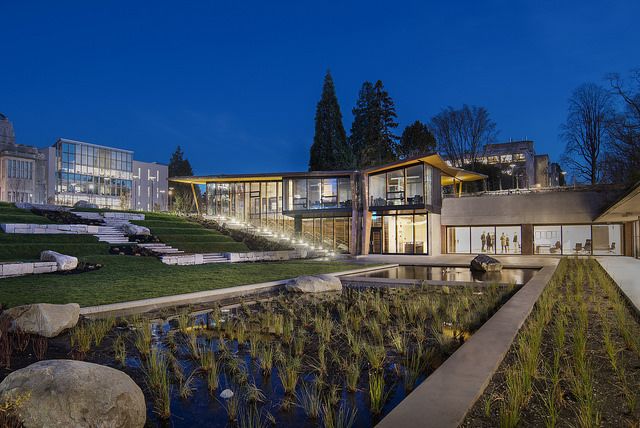
1. Executive Summary
     Overview

     We are pleased to present the 2019/20 Budget for The University of British Columbia.

     UBC ranks among the leading public universities in the world, and contributes extensively to the economic and
     wider prosperity of British Columbia, as well as Canada and beyond. The annual budget supports the collective
     vision, purpose, values, and goals of the institution, as identified in the university’s new strategic plan (Shaping
     UBC’s Next Century, Strategic Plan 2018 – 2028). This Budget Report presents the operating and consolidated
     budget for the university, which aims to continue the university’s ongoing endeavors and to identify new
     opportunities for extending research, teaching, and engagement.

     The UBC Operating Budget reflects the operations of both campuses of the university, including capital
     spending and income earned from land development proceeds endowments, but excluding restricted funding in
     research and endowments.

     OPERATING BUDGET FISCAL 2019/20                        Fiscal 17/18         Fiscal 18/19         Fiscal 19/20
     (In $millions)                                            Actual             Forecast              Budget

     Operating Revenue
        Provincial government grants                                       615                  637                  657
        Tuition                                                            607                  689                  754
        Others                                                             728                  778                  785

     Total Operating Revenue                                          1,950                2,104                2,196

     Operating Expenditures
        Salaries & benefits                                           1,158                1,242                1,349
        Non Salaries                                                       770                  858                  907

     Total Operating Expenditures                                     1,928                2,100                2,256

     Reserve (drawdowns) / additions                                       22                    4               (60)

     Core revenues are fully allocated towards the cost of continuing the current base operations, as well as
     investing in new strategic initiatives to meet university priorities. Revenues are forecast to increase by $92m
     (from $2,104m in fiscal 2018/19 to $2,196m in fiscal 2019/20), which will be allocated to faculties, the Strategic
     Investment or “Excellence” Funds (proposed to be renamed the Academic Funds) and strategic initiatives.

    The budgeted operating deficit of $60m is the result of planned one-time investments from accumulated
    reserves, notably the Academic Funds, capital investments on the Okanagan campus and one-time expenses
    for enterprise-wide IT systems.

    The university’s consolidated budget assumes annual revenues of $2.8b of which $2.2b are from the
    university’s core operations, as identified in the table above. Adjusting for unrestricted surpluses in research
    and endowments, as well as a net investment in capital, the university expects a consolidated surplus for fiscal
    2019/20 of $30m as detailed in section 6.

UBC 2019/2020 BUDGET                                                                                                       Page 3 of 76
Economic Environmental Scan

     International
     UBC is a globally-recognized centre for teaching, learning, and research, and an important contributor to the
     landscape of international education. The institution is consistently ranked as one of the top 20 public
     universities in the world, and is recognized as having the most international outlook of any university in North
     America. This position has created opportunities for UBC to attract talented students and researchers from
     over 160 countries, and has opened doors for the university to engage with global challenges that have far-
     reaching impact.

     International student enrolment continues to show strong demand, and combined with increases in
     international tuition has provided an important source of revenue for the university. This revenue base now
     supports the UBC Academic Funds (formerly the Strategic Investment or “Excellence” Funds), and contributes
     to student financial aid as well as UBC’s strategic investments.

     Domestic
     While the overall economic environment UBC faces in the year ahead continues to be constrained in a number
     of aspects, it does include an uplift in funding from the provincial government for general wage increases, a
     continuing commitment to improving routine capital funding (deferred maintenance on academic facilities), as
     well as significant contributions to several building projects in partnership with the federal government’s
     “Strategic Investment Fund.”

    In March 2017, the provincial government announced additional funding to increase students’ access to
    technology-related programs. In the 2019/20 fiscal year, the Ministry of Advanced Education, Skills & Training
    will fund an additional 136 FTEs for Computer Science, Biomedical Engineering, and Manufacturing
    Engineering at the Vancouver campus, and 44 FTEs for Computer Science and Manufacturing Engineering at
    the Okanagan campus. These opportunities will be created with $2.6m of incremental funding.

    One-time funding from the Ministry of Advanced Education, Skills & Training will also add 36 new FTEs in Early
    Childhood Education, and 15 new FTEs in the Master of Nursing Practitioner programs on the Vancouver
    campus for fiscal 2019/20.

    UBC
    The university’s main campuses in Vancouver and the
    Okanagan are home to world-class facilities that foster
    cutting-edge research, innovative entrepreneurship,
    and boundless academic and extracurricular
    opportunities. The campuses, as well as UBC’s satellite
    locations around British Columbia, also represent
    important social and economic contributions to their
    respective communities and beyond. The university
    projects 49,456 undergraduate (+0.7 per cent) and
    9,135 graduate students (+2.6 per cent) in fiscal
    2019/20.

                                                                Students celebrating at Imagine UBC, a campus orientation for
                                                                new students held every September.

UBC 2019/2020 BUDGET                                                                                                 Page 4 of 76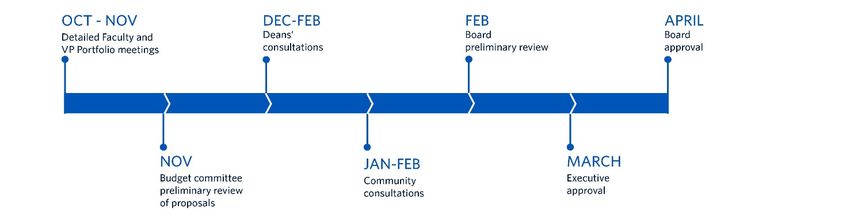
Strategic Investments

     Priority Operating Investments
     The 2019/20 Budget includes a number of new investments in strategic priorities and operating initiatives.
     Incremental operating revenue will provide the capacity to meet a wide number of important needs and
     opportunities. The new investments support the core areas and priorities of the 2018-2028 UBC Strategic Plan.

     The recommendations are the result of extensive consultations across the Vancouver campus that included
     senior leadership, faculty, staff, and students. A budget advisory group conducted a thorough review of the
     detailed proposals, including feedback from the group consultations and provided their recommendations to the
     Provost & Vice-President Academic, the Vice-President Finance and Operations, and the Executive.

     The areas selected for new funding follow the themes identified in the UBC Strategic Plan, which include:

     • Strategic Themes

          •   People and Places
          •   Research Excellence
          •   Transformative Learning
          •   Local and Global Engagement

     • Sustainment/Compliance/Operations/Risk Mitigation

     In fiscal 2019/20 a total of $36.9m has been recommended for the Vancouver campus, and in some cases
     system-wide, with some of the most notable investments being in IT systems and infrastructure, Aboriginal
     learning and relationships, expanded Collegia for first-year students, the Library (exchange rate equalization),
     the Independent Investigations Office, UBC brand positioning, and classroom upgrades. The Okanagan
     campus is recommending $10.3m in strategic investments.

     UBC Academic Funds
     UBC is a globally recognized centre of research and educational excellence, and its goal is to enhance this
     excellence through targeted strategic investments on both campuses. The Academic Funds (formerly the
     Strategic Investment or “Excellence” Funds) were established in February 2016 to support UBC’s ambition to
     become Canada’s best university over the
     next decade.
                                                     A total of $68.2m of funding is planned in the
     The funds support strategic initiatives that    2019/20 fiscal year with some of the most
     will enhance and amplify current efforts in
                                                     notable being: increased student financial aid;
     key areas to ensure UBC is:
                                                     President’s International Doctoral Student
     • Recruiting and retaining exemplary            Awards; President’s Recruitment Awards;
       students, faculty, and staff
                                                     Work Learn opportunities for students;
     • Building and supporting world class           Research Clusters and Digital Research
       research infrastructure to enable             Infrastructure operations.
       innovative, cutting-edge research
     • Providing an excellent student learning
       experience for domestic and international students, at the graduate and undergraduate levels, both inside
       and outside the classroom

UBC 2019/2020 BUDGET                                                                                          Page 5 of 76
Given the limitations of a single fund, and the current terms of reference, to achieve the desired goals the
following stratification of the fund, for the Vancouver campus, is being proposed:
• Strategic Excellence Fund
• Revenue Sharing Fund
• Student Financial Aid Fund
• Academic Capital Fund
• Integrated Renewal Project Fund
A total of $68.2m of funding is planned for the Vancouver campus in the 2019/20 fiscal year with some of the
most notable being: increased student financial aid; President’s International Doctoral Student Awards;
President’s Recruitment Awards; Work Learn opportunities for students; Research Clusters; and Digital
Research Infrastructure operations. A total of $8.9m is also planned for the Okanagan campus.
Base Operations
Operating Revenue
UBC’s operating revenue is generated from government grants, tuition revenue, land proceeds, and faculty and
central unit revenues. The Provincial Grant has in recent years increased only for funded general wage
increases (GWI) for core operations, and incrementally funded seats for specific programs, with any funding
required for strategic initiatives provided from incremental tuition and business revenues.
Operating Costs
The Operating Budget, covering the core academic operations of the university, includes elements of new
investments in programs and services, as well as providing resources necessary to maintain current activities.
UBC continues to be challenged in meeting the other
The Canadian Dollar continues to provide growing costs of our teaching, research, and support
services. The Canadian dollar is currently trading at
challenges in key import costs, including approximately $0.75 relative to the U.S. dollar, and
library subscriptions and monographs, and provides challenges in key import costs, including
research equipment. Library subscriptions and monographs, and research
equipment.
Savings from efficiencies continue to make an important contribution to providing the capacity for both new
investments and maintaining current activity levels. The university will need to continue to focus on the delivery
of ongoing efficiencies to optimize its teaching, learning, and research outcomes.
Capital Expenditure
The capital program for fiscal 2019/20 continues to be extensive, with $525m of total expenditure budgeted. A
notable feature in the year ahead is the continued expansion of funding from the Provincial Government for
“routine capital.” This expenditure principally focuses on the deferred maintenance associated with our
academic facilities, and is budgeted to be $50m in fiscal 2019/20. (Note that this expenditure includes a 25 per
cent matching contribution from UBC.)
UBC 2019/2020 BUDGET Page 6 of 76Major building projects under development include the Pacific Residence (Walter Gage Infill Site), Brock
Commons Phase 2, Okanagan Nechako Housing Commons and Skeena Residence, the Undergraduate Life
Sciences Teaching Labs, UBC Vancouver Bus Exchange, and the MacInnes Field Parkade. Please refer to
section Appendix VI Capital Details for further information.
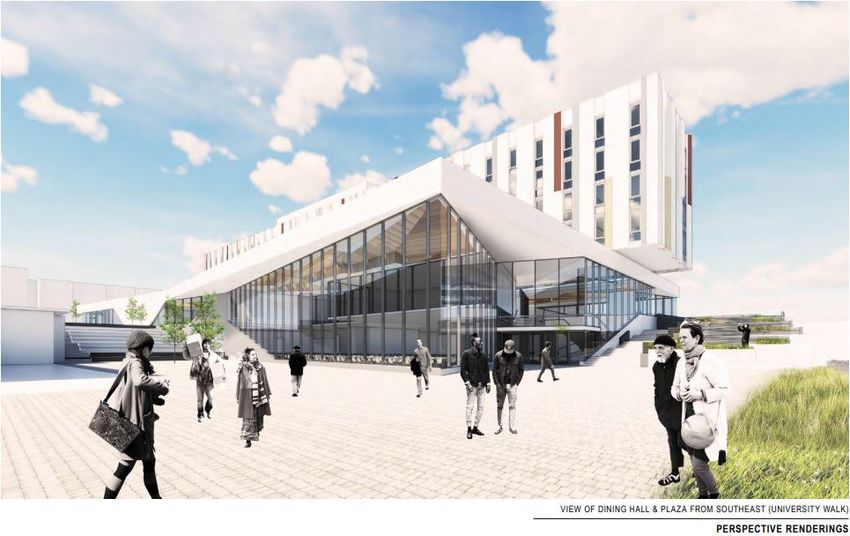
A rendering of the planned Nechako Housing Commons and Skeena Residence, under development on the Okanagan campus.
UBC’s student, finance, and human resources enterprise IT systems were implemented over 20 years ago and
are in desperate need of renewal. The university is committing $12m of recurring funds in this year’s budget,
with a further $16.5m in fiscal 2020/21 to fund the loan repayments for the replacement of these systems.
UBC 2019/2020 BUDGET Page 7 of 762. Introduction (“Budget 101”)
The UBC Budget represents the financial plan for the university — it serves as a roadmap for allocating all of
the university’s revenues against anticipated expenses. It uses the prior year’s allocations as a starting point to
identify recurring funding, and considers enhancement requests and the distribution of incremental revenue to
fund strategic initiatives and manage cost pressures. The model used at UBC is decentralized, meaning that
faculties and administrative units are responsible for balancing budgets within their respective portfolios. The
budget process includes the following key assumptions with regard to revenues and expenses:
• Funding from the provincial government
• Tuition levels and student numbers
• Revenue forecasts from other sources
• Salary and benefit increases
• Other cost increases, in line with on changes to the consumer price index (CPI) or the Higher Education
Price Index, and currency exchange rates
These budget assumptions (summarized in Appendix I) include all proposed budget allocations, as well as
projections made by faculties and units from both campuses (Vancouver and Okanagan) of expected results
for the year, including any plans for drawdowns of reserves. The budget for each campus is determined
separately but both are combined in this report, with supporting details provided for each.
The Budget Process
Extensive consultation and engagement with the university community is a cornerstone of the budget process,
to ensure the successful combination of university-wide projections and analysis with faculty and administrative
unit plans. To create the budget this year UBC’s financial teams have collaborated with:
• Deans
• Senate Budget Sub-Committees of the Budget
Extensive consultation and engagement
Committee of the Council of Senates (Vancouver
and Okanagan)
with the university community is a
cornerstone of the budget process.
• Elected student leadership
• Heads and Directors of academic departments
and schools
• Associate Vice-Presidents (and equivalent)
• Executive
UBC 2019/2020 BUDGET Page 8 of 76A general timeline illustrating the budget development process is as follows:
The Budget is presented for the approval of UBC’s Board of Governors, and covers the fiscal year from April 1,
2019 to March 31, 2020.
Budget Framework
The most significant component of the university’s Consolidated Budget is the Operating Budget, which covers
the core academic operations of UBC. This report also covers all other areas comprising the consolidated
financial statements of the university, including research, endowment, and capital expenditure. The intention of
the Budget Report is to illustrate how these pieces link together, as well as the financial targets for each.
A simple picture of university’s Consolidated Budget is as follows:
Provincial grant Faculty teaching and
Domestic tuition research
International tuition Operating
Academic Funds
Research indirects Budget
Investment income $2.2 billion
UBC-wide services
Business revenue
Land Development
Ancillary operations
Faculty revenue
Central support unit revenue
Research grants Restricted Research projects
funds
Endowment $0.6 billion Endowment spend
Plans for capital expenditure are summarized later in this report, including projections for major projects
approved separately by the Board of Governors, as well as other planned minor capital expenditure.
UBC 2019/2020 BUDGET Page 9 of 76The Operating Budget includes income received by the university to support core academic operations. This
revenue includes the provincial operating grant, domestic and international tuition, investment income earned
on cash and investments, research overheads and indirect costs of research funds received from the federal
government, and investment income earned from land development proceeds. It also includes other revenue
generated by central units and ancillaries across campus that directly support those operations, including
student housing, food services, the UBC Bookstore, and parking. Many faculties also receive funding directly
from non-core activities, which are managed locally to directly support their operations.
The financial target for the Operating Budget is to achieve a near balanced result. This means that operating
revenue and expenditures (which include ongoing capital costs and internal loans for capital projects) are at
equivalent levels.
The Province of BC provides an operating grant
totaling $657m to the university to support the
teaching of domestic undergraduate and graduate
students in selected programs. Of this, $585m is
designated for UBC Vancouver and $72m for UBC
Okanagan. In return, the university enrols 29,877
full-time domestic undergraduates and 5,812
graduate students in Vancouver, and 7,025 students
overall in the Okanagan. There are some specific
enrolment targets, primarily in the health sector and
in line with the provincial government’s Skills for
Jobs Blueprint. UBC expects to exceed the
provincial enrolment targets by approximately 1,200
A big part of new student success is mental and physical wellbeing. domestic undergraduate students and 3,200
graduate students.
UBC allocates tuition received via formula to the faculties and to student financial aid (SFA). In Vancouver, we
allocate approximately 7.5 per cent of incremental tuition to support student financial aid for both international
and domestic students. Of the remainder, 75 per cent of graduate and domestic undergraduate tuition and 65
per cent of international undergraduate tuition flows directly to the faculties to support direct teaching costs. In
the Okanagan, after SFA, 60 per cent of domestic and 50 per cent of international tuition is allocated to the
faculties. The remainder is allocated for strategic priorities and core and support services. Since 2015/16, both
campuses have set aside two-thirds of the international undergraduate tuition rate increases to support the
Strategic Investment “Excellence” Fund.
UBC 2019/2020 BUDGET Page 10 of 763. Operating Budget
The Operating Budget (Vancouver and Okanagan combined) is summarized in the statement below.
Total revenue is budgeted to increase by $93m (4.4 per cent) with the most significant increase arising from
international tuition. Expenses are expected to increase by approximately $160m (8.6 per cent) with a range of
factors including salary obligations.
OPERATING BUDGET FISCAL 2019/20
Fiscal 17/18 Fiscal 18/19 Fiscal 19/20
(In $millions) Actual Forecast Budget
Operating Revenue
Provincial government grants 615 637 657
Tuition 607 689 754
Investment income 41 51 58
Research indirects 37 35 34
Business revenue 28 35 35
Land development proceeds 24 31 33
Faculty revenue 182 187 181
Central support unit revenue 416 439 444
Total Operating Revenue 1,950 2,104 2,196
Operating Expenditures
Salaries & benefits 1,158 1,242 1,349
Operating costs - other 471 527 569
Cost of goods sold 43 43 50
Grants to third parties 1 1 1
Interest expense 51 53 57
Capital spending 143 154 162
Transfers to non-operating funds 60 80 68
Total Operating Expenditures 1,928 2,100 2,256
Surplus / (Deficit) 22 4 (60)
Operating Revenue
The Operating Budget includes all unrestricted revenue received by the university. The majority of this revenue
is managed and allocated through the budget process, but a smaller portion is generated directly by faculties
UBC 2019/2020 BUDGET Page 11 of 76and central support units. The total revenue managed through the budget process in fiscal 2019/20 is $1,571m,
with an additional $626m of operating revenue generated directly by units.
OPERATING REVENUE UBC Vancouver UBC Okanagan UBC Total
(in $millions) Actual Forecast Budget Budget Actual Forecast Budget Budget Actual Forecast Budget Budget
Fiscal Fiscal Fiscal vs. Fiscal Fiscal Fiscal vs. Fiscal Fiscal Fiscal vs.
17/18 18/19 19/20 Forecast 17/18 18/19 19/20 Forecast 17/18 18/19 19/20 Forecast
Provincial government grants 546 567 585 18 69 70 72 2 615 637 657 20
Undergraduate tuition
Domestic 193 200 207 7 35 37 39 2 228 237 246 9
International 268 318 359 41 32 46 54 8 300 364 413 49
Graduate tuition 75 82 88 6 4 6 7 1 79 88 95 7
Investment income 41 51 58 7 - - - - 41 51 58 7
Research revenue 36 34 33 (1) 1 1 1 - 37 35 34 (1)
Business revenue 27 33 33 - 1 2 2 - 28 35 35 -
Land development proceeds 24 31 33 3 - - - - 24 31 33 3
Subtotal 1,210 1,316 1,396 81 142 162 175 13 1,352 1,478 1,571 94
Faculty revenue 181 186 180 (6) 1 1 1 - 182 187 181 (6)
Central support unit revenue 406 428 435 7 10 11 9 (2) 416 439 444 5
Total Operating Revenue 1,797 1,930 2,011 82 153 174 185 11 1,950 2,104 2,196 93
Provincial Government Grant
The government grant is the primary source of funding for domestic undergraduate and some graduate
teaching. Operating revenue is up $20m in fiscal 2019/20 largely due to funding for general wage increases
(GWI) for all bargaining units and FTE growth in technology-related programming expansion.
Tuition Income
Student enrolment
The university is projecting a total enrolment of 58,591 student FTEs in fiscal 2019/20 across both campuses;
details as follows:
Student Enrolment
Fiscal 18/19 Fiscal 19/20 (Projected)
Student FTE Change
Vancouver Okanagan Total UBC Vancouver Okanagan Total UBC
Undergraduate
Domestic 31,111 6,626 37,737 31,129 6,775 37,904 0.4%
International 10,032 1,327 11,359 10,079 1,473 11,552 1.7%
Total 41,143 7,953 49,096 41,208 8,248 49,456 0.7%
Graduate 8,128 779 8,907 8,330 805 9,135 2.6%
Total 49,271 8,732 58,003 49,538 9,053 58,591 1.0%
Undergraduate Student Intake
Fiscal 18/19 Fiscal 19/20 (Projected)
Student Headcount Change
Vancouver Okanagan Total UBC Vancouver Okanagan Total UBC
Domestic 11,402 1,877 13,279 11,586 1,964 13,550 2.0%
International 3,744 522 4,266 3,652 518 4,170 -2.3%
Total 15,146 2,399 17,545 15,238 2,482 17,720 1.0%
Domestic undergraduate tuition
The Vancouver campus enrolled 31,111 FTEs in fiscal 2018/19. This is projected to remain relatively constant.
The fiscal 2019/20 budget reflects a 2 per cent increase in tuition rates.
UBC 2019/2020 BUDGET Page 12 of 76The Okanagan campus enrolled 6,626 FTEs in 2018/19. The fiscal 2019/20 budget assumes a 2 per cent
increase in tuition rates and a 2 per cent increase in FTEs.
International undergraduate tuition
Faculties are planning for a total international enrolment increase of 1.7 per cent. In combination with increases
in international student tuition (3 per cent for continuing students and 4 per cent for new students), this will
result in an increase of $49m across both campuses. Intake for fiscal 2019/20 is expected to decrease by 2.3
per cent, compared to the 2018/19 intake of first-year and transfer students.
Graduate tuition
The Vancouver campus budget reflects a 2 per cent tuition rate increase for domestic students and higher
increases in certain professional programs for international students. . It also includes growth in domestic
professional programs, largely in UBC Sauder School of Business, Faculties of Forestry, Arts, Science and
Dentistry. The Okanagan campus budget reflects a 2 per cent tuition rate increase and growth in professional
programs, primarily the Master of Data Science, in the Irving K. Barber School of Arts and Sciences.
Other Income
Investment income
Investment income represents income earned on cash and operating investments, internal loans and
construction project financing. The earnings are netted against interest payments on external debt, the Student
Housing Finance Endowment and the endowment borrowing for Orchard Commons. Overall volatility is mostly
a function of the variability in working capital balances and the distribution of those balances; for example,
delays in construction will reduce the interest earned on construction deficits whilst increasing interest earned
on operating investments. The exposure to interest rate risk is minimal due to fixed rates of interest on internal
loans and external debt.
Investment revenue in fiscal 2019/20 is expected to be higher than 2018/19. This is due to expected increases
in overall cash reserves which will then be invested in UBC Properties Trust promissory notes to fulfill
upcoming construction financing requirements and several new internal loan advances. In addition, operating
investments with variable rate terms have increased rates of return corresponding with market interest rate
increases.
Research revenue
Research revenue includes the Federal Research Support Fund (which contributes to the overhead or indirect
costs of Tri-Council research grants and is calculated, based on a formula, as a percentage of total federal
research funding, based on a formula), a share of royalty revenue, and cost recoveries from industry
sponsored research funding. Fiscal 2019/20 is the last year of phasing out UBC central’s share the Canada
Research Chair (CRC) funding for indirect costs, and now 100 per cent of the funding resides in faculties’
revenue.
Business revenue
Business revenue includes the net return or dividend to the university from ancillary operations (including
student housing and hospitality, parking, food services and the bookstore) as well as lease income and the
General Municipal Service Levy (GMSL) charged to businesses on campus. Ancillaries are expected to be
financially self-sustaining, including setting aside funds for capital renewal and providing a financial dividend to
the university to be invested in important strategic priorities. Dividends paid each year by the ancillaries are
determined through the budget process. The operating revenue of ancillaries is included under “Central support
unit revenue,” and includes Student Housing and Hospitality Services, Bookstore, and Parking
UBC 2019/2020 BUDGET Page 13 of 76Land development proceeds
The proceeds from land development are derived from long-term leases and from the net proceeds of market
rental activities. This enterprise is managed by UBC Properties Trust. Revenue received from long-term leases
is held in perpetuity as endowments (invested at UBC Investment Management Trust Inc. [“IMANT”] and in the
Student Housing Financing Endowment and Faculty Housing Assistance Financing Endowment Fund ) to
support strategic investments. This is expected to generate $23m in fiscal 2019/20 and the net proceeds of
rental activities are expected to generate $10m. Please refer to Appendix III for further details.
Faculty revenue
Faculty revenue represents operating revenue generated by the faculties that flows directly to them (rather than
being allocated via the tuition allocation model or the budget process). Examples include revenue generated by
Faculty of Arts’ business development contracts and grants for the Canadian International Resources and
Development Institute (CIRDI), and Real Estate pre-licensing courses in the UBC Sauder School of Business,
as well as analytical and core services that faculties bill on a fee-for-service basis.
Central support unit revenue
Vancouver central support unit revenue includes revenue from Extended Learning, Vantage College,
Information Technology, Building Operations, Energy and Water Services, and ancillary units. The revenue
increase is mainly due to the anticipated opening of the Exchange Residence and MacInnes Field underground
parkade at the Vancouver campus.
Okanagan central support unit revenue primarily includes Information Technology, Campus Operations and
Risk Management, and ancillary units.
Operating Expenditures
Operating Expenditures UBC Vancouver UBC Okanagan UBC Total
Actual Forecast Budget Budget Actual Forecast Budget Budget Actual Forecast Budget Budget
(in $millions) Fiscal Fiscal Fiscal vs. Fiscal Fiscal Fiscal vs. Fiscal Fiscal Fiscal vs.
17/18 18/19 19/20 Forecast 17/18 18/19 19/20 Forecast 17/18 18/19 19/20 Forecast
Salaries & benefits 1,056 1,131 1,224 93 102 111 125 14 1,158 1,242 1,349 107
Operating costs - other 444 493 533 40 27 34 36 2 471 527 569 42
Cost of goods sold 43 43 50 7 - - - - 43 43 50 7
Grants to third parties 1 1 1 - - - - - 1 1 1 -
Interest expense 49 51 55 4 2 2 2 - 51 53 57 4
Capital spending 131 140 136 (4) 12 14 26 12 143 154 162 8
Transfers to (from) non-operating fund 52 72 58 (14) 8 8 10 2 60 80 68 (12)
Total Operating Expenditures 1,777 1,931 2,057 127 151 169 199 30 1,928 2,100 2,256 157
Salaries and benefits
The increase in salaries and benefits includes amounts related to general wage increases (GWI), progress
through the ranks (PTR) for faculty, merit increases for staff, and market adjustments. The remainder of the
increase is primarily due to new faculty and staff, including expenditures from the Academic Funds. This
increase will be invested largely in staff and faculty committed to research, teaching, and student support, and
in building services as we add to our student residences and academic facilities.
Operating costs-other
The increase in operating costs-other is primarily due to an increase in operational expenses related to items
such as supporting various strategic initiatives, increased IT support costs, increased student housing and food
UBC 2019/2020 BUDGET Page 14 of 76services activity, as well as increased scholarship, fellowship and bursaries amounts related to undergraduate
and international students, and support from the Academic Funds.
This category also includes the use of proceeds from land development that are derived from long-term leases
and from the net proceeds of market rental activities. In the past, the majority of these funds were used to
support the costs of priority building investments.
Cost of goods sold
The increase in cost of goods sold for the Vancouver campus is primarily due to the transition to an in-house
food service delivery model for UBC Okanagan Food Services, to be operated by UBC Student Housing and
Hospitality Services.
Interest expense
The increase in interest expense is primarily due to loans for new projects in student housing ($2.5m) and the
Undergraduate Life Sciences Teaching Labs on the Vancouver campus ($2.7m).
Capital spending
Capital spending has been identified at the departmental level across the university. These are largely funded
from current revenue, though, in some cases, units have reserve funds to support this spending. It does not
include any spending on major capital buildings, except to the extent that portions of those costs come from
accumulated reserves. This includes library acquisitions, equipment and furnishings, and minor renovations
funded locally. It also includes the principal payments on any internal loans that will be repaid during the year.
The increase is primarily due to large capital projects (1540 Innovation Drive and Research Greenhouse),
equipment replacement, and modular lab and office spaces on the Okanagan campus. Please refer to section
7 Capital Expenditure for spending details.
Transfers to/(from) non-operating funds
The Operating Budget includes interfund transfers to and from other university funds that form part of the
Consolidated Budget, including research and capital (e.g. the provision of support for research projects
contained in the Research Fund).
UBC 2019/2020 BUDGET Page 15 of 764. UBC Vancouver
Strategic Initiatives
The following tables summarize the calculation of the revenue available for allocation, after pre-determined
allocations to faculties, the Academic Funds and student financial aid, and the proposed allocations for the
Vancouver campus:
UBC VANCOUVER - OPERATING BUDGET
Fiscal 2019/20 Budget on a Differential Basis
(In $ millions)
Fiscal 19/20 Outlook One-time Recurring Total Fiscal
Incremental revenue
International Tuition (Graduate and Undergraduate) - 44.6 44.6
Domestic Tuition (Graduate and Undergraduate) - 9.4 9.4
Provincial Grant - 19.0 19.0
Other revenues - 6.2 6.2
Uncommitted Land development proceeds .4 .3 .7
Land development proceeds' prior year surplus 7.1 - 7.1
Operating's prior year surplus and recurring reserve 10.9 5.6 16.5
18.5 85.0 103.5
Less
Faculty share of tuition growth - 19.0 19.0
Excellence fund - 21.4 21.4
Student Financial Aid - 4.0 4.0
Funding to Faculties and Units (GWI and FTE growth) (.9) 16.4 15.4
Operating contingency fund 4.2 2.5 6.7
3.2 63.3 66.5
Total available for allocations 15.2 21.7 36.9
Incremental revenues are projected to increase by $103m for fiscal 2019/20, of which $85m is recurring. As
previously described, some of that increase is allocated to the faculties, Academic Funds and SFA, as well as
pre-commitments approved by the board, with the remaining $37m of additional revenue available for fiscal
2019/20 creating an opportunity for UBC Vancouver to fund various strategic priorities and operating initiatives.
UBC 2019/2020 BUDGET Page 16 of 76UBC VANCOUVER - OPERATING BUDGET
Fiscal 2019/20 Budget on a Differential Basis
(In $ millions)
Fiscal 19/20 Outlook One-time Recurring Total Fiscal
Proposed allocations
Local & Global 3.5 2.5 6.1
People & Places 7.0 3.6 10.7
Research Excellence 2.0 1.4 3.4
Sustainment / Compliance / Operations / Risk Mitigation 1.5 12.2 13.7
Transformative Learning 1.4 1.6 3.0
Total proposed allocations 15.5 21.4 36.9
The recommendations for fiscal 2019/20 are the result of extensive consultations across campus that included
senior leadership, faculty, staff, and students. A budget advisory group conducted a thorough review of the
detailed proposals and provided their recommendations to the Provost and the Vice-President, Finance and
Operations based on the feedback received through the consultation process. The recommendations are
consistent with the new UBC Strategic Plan.
Strategic Theme
People and Places
Funding is proposed to implement and sustain the Procurement Modernization Initiative following the review of
the university’s procurement and payment processes; sustain the Independent Investigations Office operations;
support a transit office to promote the extension of the transit corridor to the university; support for the Blue &
Gold Campaign; support for the University Neighbourhood Association. Funding will also be made available to
support market adjustments for some administrative staff salaries, and an alignment of contributions to the staff
pension plan.
Research Excellence
Funding is proposed for: the library collections, including monographs, which are impacted by fluctuations in
the US$ exchange rate; the new Vice-President Health portfolio to coordinate and align the teaching and
research for UBC’s health profession programs.
Transformative Learning
Funding is proposed for: expanded Collegia, digital experience, and faculty fellows and student leaders for all
1st year students; work to strengthen the UBC-Musqueam relationship; an Integrated Health Clinic for students;
and a new organizational structure in Undergraduate Admissions designed for higher performance in
responding to prospective students and greater efficiency.
Local and Global Engagement
Funding is proposed for UBC to better brand and position itself domestically and internationally; increased
support for fundraising; hosting the Congress of Humanities & Social Sciences conference and UBC Connects
series; enhanced support of the Indian Residential School History & Dialogue Centre; and UBC Carnegie
Elective Classification for Community Engagement (Canadian Pilot).
UBC 2019/2020 BUDGET Page 17 of 76Sustainment/Compliance/Operations/Risk Mitigation
Funding is proposed for the continued upgrading of classroom and learning spaces; upgrading, replacement
and renewal of the major IT platforms that have university-wide impact; upgrading of the space for the Office of
the Vice-President Research & Innovation; matching funding for provincial routine capital projects;
supplemental funding for the engagement of contracted occupational first aid services (OFA2); funding for
copyright compliance through UBC Library Online Course Reserves (LOCR) and CANVAS, UBC’s cloud-based
learning management system.
Academic Funds (formerly the Strategic Investment “Excellence” Fund)
The university is a globally recognized centre of research and educational excellence, and our goal is to enhance
this excellence through targeted strategic investments on both campuses. The Academic Funds (formerly the
Strategic Investment “Excellence” Fund) was established in February 2016 to support the university’s ambition
to become Canada’s best university over the next decade.
The fund supports strategic initiatives that will enhance and amplify current efforts in key areas, to ensure the
university is:
a) Recruiting and retaining exemplary faculty members, students and staff,
b) Building and supporting world class research infrastructure to enable innovative, cutting-edge research,
and
c) Providing an excellent student learning experience for domestic and international students, at the
graduate and undergraduate levels, both inside and outside the classroom.
The board will consider revising and renaming the funds at the April 2019 meeting of the UBC Board of
Governors. A separate report is provided. In that report, there is a recommendation to stratify the Vancouver
campus Academic Fund as follows:
• Strategic Excellence Fund
• Revenue Sharing Fund
• Student Financial Aid Fund
• Academic Capital Fund
• Integrated Renewal Project Fund
A. Strategic Excellence Fund
Commitments for Fiscal 2019/20
People and Places
An outstanding university is defined by the quality and diversity of students and faculty that it attracts. The
university continues to commit funds to support the attraction and retention of both.
The Blue & Gold Campaign for Students continues into its second successful year as funds continue to be
provided as matching funds for new gifts to select Blue & Gold campaign priorities. Discussions are underway
for considering increasing the matching fund commitment over the five-year period.
Funds continue to be committed to support awards for retention of exemplary faculty under the Distinguished
University Scholars Program. Funds also continue to support the research activities of Killam Professors and
UBC 2019/2020 BUDGET Page 18 of 76Canada Research Chair holders. Housing has been described as one of the main barriers the university faces
in retaining and attracting faculty to Vancouver even in the current market. To continue to enable UBC’s
recruiting and retention of exemplary faculty, funding continues to be committed to support the Housing Action
Plan, including an approved increase in the average annual commitment envelope for the Prescribed Interest
Loan Program from $10m to $15m to accommodate increasing demand for this program.
Allocation: $9.5m
Local and Global
In advance of the approval and implementation of the Indigenous Strategic plan (ISP), funds have been
committed to invest in initiatives that will be well aligned to the plan. This will allow us to move more quickly
with the implementation of the ISP, once approved, and to identify opportunities for further funding more
quickly. The plan identifies recruitment, curriculum and research support infrastructure that needs to be
established to attain the goals identified in the UBC Strategic Plan. In addition to initiatives identified under the
ISP, certain faculty initiatives supporting indigenous communities have also been committed. These include
support for the development of the Diploma of Arts offered free of charge for indigenous learners and funds to
support the recruitment of faculty members for the School of Public Policy and Global Affairs in the areas of
Indigenous Policy Studies & Migration/Refugees.
Allocation: $2.6m
Building and Supporting Research Excellence
The research action plan developed by the VP Research and Innovation continues to support established and
emerging research clusters, including innovation and knowledge mobilization as major initiatives for the
university. An open call for proposals was launched called “Program for Undergraduate Research Experience”
as the university is looking for innovative pilot projects that will enhance the undergraduate research
experience. Submissions to date have been tremendous as considerable interest has been shown by the
community.
The university continues to be committed to supporting the development of the digital research infrastructure to
provide faculty the ability to enhance their research productivity and accelerate time to discovery and
innovation. Year 2 funding of the 3-year capital investment for critical upgrades to the UBC University Data
Centre (UDC) has been committed. Expansion of the recurring operating sustainment base to support this
infrastructure has also been committed starting 19/20.
In February 2018, the Government of Canada announced five successful applicants in Canada’s $950m
Innovation Superclusters Initiative. The university is a founding member of the BC-based Canada’s Digital
Technology Supercluster, which was a successful applicant. Investment from the Academic Funds will be
made through UBC’s subsidiary.
Allocation: $33.9m
Transformational Learning
Students desire a career path that is integrative of all that they have become at the university. An action plan
developed through consultation with students and faculties by the Vice-President Students. The university
continues to support the expansion of experiential learning programs in the areas of clinical, legal and health
education. Funds have been committed to further support the expansion of co-op programs.
UBC 2019/2020 BUDGET Page 19 of 76A report was received from The Alma Mater Society (AMS), which was helpful to identify areas of funding
consistent with the action plan developed by the vice-president students. Some of these additional
commitments include: funding for the development of Open Educational Resources to alleviate the high cost of
learning materials on students and the expansion of the on campus work learn program in addition to
implementing an off campus work learn pilot that will broaden the availability of work experiences so that all
students have the option of participating in experiential learning.
Investment in a project to support better classroom scheduling to optimize utilization will come into full gear in
the coming year. This will improve the student experience by promoting student success as more course
selection and fewer schedule conflicts can enable faster completion times. It will also improve transparency
and enable better access to data for more effective decision making by the university academic community,
and ensure that pedagogical requirements and classroom facilities are well matched.
Allocation: $4.8m
Strategic Plan Enablement
A funding envelope continues to be set aside for an annual open call on strategic pilots that emphasize
supporting the core areas of the UBC Strategic Plan.
Allocation: $2.0m
B. Revenue Sharing Fund
This fund will provide support to the Faculties and academic units that have limited access to international
students or have other restrictions that affect their budget sustainability. Allocations that will be applied to this
Fund include unfunded salary impacts, new initiatives that are campus wide, and other cost pressures affecting
smaller faculties and academic units.
Commitments for Fiscal 2019/20
People and Places
Support for strategic hires for faculties that have limited access to international tuition has been committed for
Education and Law. Funding for library support of scholarly writing and librarians has also been committed.
Funding has been set aside to support the sustainment of salary costs for those faculties with limited ability to
benefit from international students.
Allocation: $8.2m
Transformational Learning
Projects identified for funding include the implementation of a full digital dental laboratory to support the
teaching and the delivery of care of current and future advances in Digital Dentistry plus the infrastructure
development of the new Bachelor of Pharmaceutical Sciences degree program over a two year period.
Allocation: $0.9m
C. Student Financial Aid Fund
A gap in funding bursaries for domestic students is estimated to be $6.4m, which will be funded through an
allocation from the Academic Funds.
Allocation: $6.4m
UBC 2019/2020 BUDGET Page 20 of 76D. Academic Capital Fund
This fund is planned to start in fiscal 2020/21 initially at $5m, with annual growth by $5m, until $25m is reached
in fiscal 2024/25 to support debt servicing of academic capital projects.
E. Integrated Renewal Project (IRP) Fund
Starting fiscal 2020/21, a fixed envelope of $10m has been identified as an ongoing funding requirement to
supplement operational funding to advance and maintain our technology platform to match current
requirements.
Total Academic Funds at UBC Vancouver
Total Academic Fund (UBCV) Strategic Excellence Fund Revenue Sharing Fund Student Financial Aid Fund Total Academic Fund
(in Thousands) Plan Forecast Plan Plan Forecast Plan Plan Forecast Plan Plan Forecast Plan
Fiscal Fiscal Fiscal Fiscal Fiscal Fiscal Fiscal Fiscal Fiscal Fiscal Fiscal Fiscal
18/19 18/19 19/20 18/19 18/19 19/20 18/19 18/19 19/20 18/19 18/19 19/20
Total Funding Available 39,288 39,050 40,872 - - 13,249 - - 6,350 39,288 39,050 60,471
Local and Global 555 502 2,626 - - - - - - 555 502 2,626
Transformative Learning 1,045 1,713 4,833 - - 1,583 - - - 1,045 1,713 6,416
People and Places 19,287 7,237 9,474 - - 7,429 - - 6,350 19,287 7,237 23,253
Research Excellence 20,454 22,945 33,908 - - - - - - 20,454 22,945 33,908
Strategic Pilot Enablement 4,000 137 2,000 - - - - - - 4,000 137 2,000
Total Commitments 45,341 32,534 52,841 - - 9,012 - - 6,350 45,341 32,534 68,203
Net Surplus/Deficit (6,053) 6,516 (11,969) - - 4,237 - - - (6,053) 6,516 (7,732)
Opening Carryforward 13,588 13,629 20,145 - - - - - - 13,588 13,629 20,145
Ending Carryforward 7,535 20,145 8,176 - - 4,237 - - - 7,535 20,145 12,413
UBC Vancouver Faculties and Departments – Allocations and Projected
Expenses
The following tables show the fiscal 2019/20 projected funding and expenses by unit, including both allocations
from the government grant and tuition, as well as revenue generated directly by the faculties and central
support units.
Summary
Reserve Ending
Funding Unit Total Total
UBC Vancouver (in $thousands) (Drawdowns) Reserve (Drawdowns) Additions
Allocations Revenues Funding Expenses
/Additions Balance
Faculties 759,916 180,079 939,995 940,150 (155) 224,473
Student Financial Aid 79,884 - 79,884 79,402 482 3,987
Central support units (including ancillaries) 523,208 435,439 958,647 1,004,678 (46,031) (37,442)
Total UBC Vancouver 1,363,008 615,518 1,978,526 2,024,230 (45,704) 191,018
Of the funding allocations made for the fiscal 2019/20 budget, 56 per cent have been made to faculties, 6 per
cent to student financial aid, and 38 per cent to central support units.
UBC 2019/2020 BUDGET Page 21 of 76The total reserve drawdown for the Vancouver campus is $46m.
Faculties and Departments
Overall, the net position of the faculties is projected to be virtually balanced.
Reserve Ending
Funding Unit Total Total
UBC Vancouver (in $thousands) (Drawdowns) Reserve (Drawdowns) Additions
Allocations Revenues Funding Expenses
/Additions Balance
Faculties 759,916 180,079 939,995 940,150 (155) 224,473
Faculty of Applied Science 88,506 6,387 94,893 92,921 1,972 35,080
Faculty of Arts 175,664 11,318 186,982 188,299 (1,317) 36,682
Sauder School of Business 64,248 30,471 94,719 92,964 1,755 23,711
Faculty of Dentistry 13,116 19,478 32,594 32,282 312 4,126
Faculty of Education 48,618 7,018 55,636 55,280 356 7,561
Faculty of Forestry 22,099 4,523 26,622 29,067 (2,445) 7,524
Faculty of Graduate and Postdoctoral Studies 3,036 1,772 4,808 4,787 21 1,825
Faculty of Land and Food Systems 17,825 4,610 22,435 20,737 1,698 12,461
Allard School of Law 14,611 730 15,341 16,432 (1,091) (2,344)
Faculty of Medicine 153,873 77,967 231,840 233,355 (1,515) 73,778
Faculty of Pharmaceutical Sciences 20,905 2,294 23,199 23,034 165 8,576
Faculty of Science 137,415 13,511 150,926 150,992 (66) 15,493
The addition to the Faculty of Applied Science reserve is primarily due to the forecasted growth of
undergraduate and graduate programs combined with international and graduate tuition rate increases, and is
partially offset by increases in salary and benefit costs. The faculty is planning to invest in new capital
infrastructure.
The drawdown to the Faculty of Arts reserve is primarily due to the increase in faculty and staff salaries and
benefits and investment in capital projects (i.e., Kenny Building renovation for new research space to support
newly-appointed faculty members).
The addition to the UBC Sauder School of Business reserve is primarily due to projected enrolment in all
professional graduate programs and tuition rate increases for international students for the Bachelor of
Commerce program. The school is planning to invest in new capital infrastructure.
The drawdown to the Faculty of Forestry reserve is primarily due to the recruitment of ten new faculty positions
and the decrease in logging revenue from the faculty’s research forests.
The addition to the Faculty of Land and Food Systems reserve is primarily due to increases in tuition allocation,
which are partially offset by increases in salary and one-time capital expenditures.
The drawdown to the Allard School of Law reserve is recurring, primarily from hiring new faculty and staff in
addition to increases in salary and benefit costs.
The drawdown to the Faculty of Medicine reserve is recurring, primarily due to unfunded wage increases.
Faculty budgets remain constrained; however, the overall financial position is projected to remain stable in
fiscal 2019/20. There is an average tuition rate increase of 9.65 per cent for international undergraduate
students, which is the effect of differential rates of increase flowing through all years.
Faculties are continually examining their cost structures by finding more effective ways to deliver their core
academic programs while enhancing the quality of teaching, research and student support. The Faculty of
Education now eliminates their structural deficit with various initiatives carried out from the Programmatic
UBC 2019/2020 BUDGET Page 22 of 76Sustainability Initiative (PSI) process started in 2016/17. The Faculty of Medicine has undergone intensive
reviews of their academic and non-academic programs and found opportunities that have considerably
improved their budget outlook without compromising quality.
Student Financial Aid
Reserve Ending
Funding Unit Total Total
UBC Vancouver (in $thousands) (Drawdowns) Reserve (Drawdowns) Additions
Allocations Revenues Funding Expenses
/Additions Balance
Student Financial Aid 79,884 - 79,884 79,402 482 3,987
SFA Graduate 21,948 - 21,948 21,785 163 1,924
SFA Undergraduate Domestic 18,806 - 18,806 17,917 889 1,297
SFA Undergraduate International 26,793 - 26,793 27,219 (426) 612
Workstudy, Go Global - SFA, Int'l Tuition Award 12,337 - 12,337 12,481 (144) 154
The small addition to the SFA Undergraduate Domestic reserve is due to anticipated increases in SFA awards
that have been covered by additional funding from the Academic Funds.
The SFA Undergraduate International drawdown is to utilize prior year reserves.
Central Support Units (including ancillaries)
Reserve Ending
Funding Unit Total Total
UBC Vancouver (in $thousands) (Drawdowns) Reserve (Drawdowns) Additions
Allocations Revenues Funding Expenses
/Additions Balance
Total Central Support Units (incl. ancillaries) 523,208 435,439 958,647 1,004,678 (46,031) (37,442)
Provost and VP Academic 165,718 81,012 246,730 249,381 (2,651) 21,787
Library 42,126 940 43,066 43,305 (239) 985
Information Technology 66,840 28,185 95,025 93,123 1,902 5,179
Extended Learning 137 16,688 16,825 15,707 1,118 (1,150)
Enrolment Services 13,725 488 14,213 14,658 (445) (171)
International Student Initiative 8,507 - 8,507 8,829 (322) 204
Vantage College 160 20,090 20,250 19,835 415 3,705
Centre for Teaching, Learning and Technology 8,532 500 9,032 10,129 (1,097) 424
Other Provost and VP Academic units 25,691 14,121 39,812 43,795 (3,983) 12,611
VP Students 33,693 281,740 315,433 316,010 (577) 29,027
Athletics and Recreation 2,492 31,443 33,935 34,970 (1,035) (3,345)
Housing and Hospitality Services 757 209,037 209,794 208,148 1,646 27,919
Student Development and Services 19,468 2,956 22,424 22,522 (98) 450
University Community Services 7,329 38,304 45,633 46,406 (773) 3,594
Other VP Students units 3,647 - 3,647 3,964 (317) 409
VP Finance and Operations 128,833 41,588 170,421 171,631 (1,210) 4,990
Energy and Water 29,281 26,306 55,587 55,079 508 1,535
Building Operations & Infrastructure Devl't 74,232 13,118 87,350 88,220 (870) 794
Other VP Finance and Operations units 25,320 2,164 27,484 28,332 (848) 2,661
Academic Fund 60,471 - 60,471 68,203 (7,732) 12,413
Governance 11,883 31 11,914 13,115 (1,201) (2,258)
VP Development and Alumni Engagement 28,787 155 28,942 29,292 (350) (250)
VP Health 2,969 8 2,977 2,698 279 1,905
VP External Relations 18,796 3,542 22,338 24,378 (2,040) 2,628
VP Research and Innovation 26,537 13,635 40,172 40,702 (530) 7,389
VP Human Resources 16,429 7,500 23,929 23,941 (12) 1,339
Campus Wide Expenses 29,092 6,228 35,320 65,327 (30,007) (116,412)
Within Provost and Vice-President Academic, the increased reserve for Information Technology is due to fewer
IT small projects being taken on in fiscal 2019/20. The accumulated resources are for the Application
Ecosystem to support the Integrated Renewal Program in the future years. The addition to Extended Learning
UBC 2019/2020 BUDGET Page 23 of 76You can also read


