BUILDING SKILLS, SAVING LIVES - Bihar Technical Support Program Innovation Brief no.1 The Incremental Learning Approach - CARE India
←
→
Page content transcription
If your browser does not render page correctly, please read the page content below
Bihar Innovation Series

BUILDING SKILLS,
    SAVING LIVES
   Bihar Technical Support Program
              Innovation Brief no .1
The Incremental Learning Approach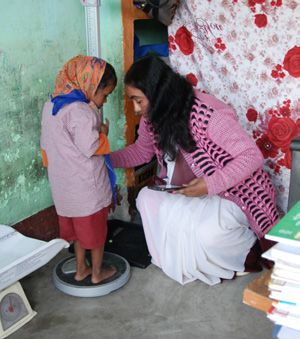
THE CHALLENGE: IMPROVING THE                            With long distances between health centers, poor road
      COVERAGE AND QUALITY OF HEALTH                          conditions, and limited transportation options, many
      SERVICES                                                people who live in Bihar have little access to facility-based
                                                              health services. FLWs bring health education, services, and
Frontline health workers (FLWs) have demanding jobs. In       support to families who would otherwise not receive care.
India, female FLWs visit families in their homes to provide
counseling and services related to reproductive, maternal,    Three different cadres of FLWs work in Bihar: Aganwadi
newborn and child health along with nutrition, hygiene and    workers (AWWs), Accredited Social Health Activists
sanitation. Although most of them are proud of the work       (ASHAs), and Auxiliary Nurse Midwives (ANMs). ANMs
they do, it is not uncommon for them to feel unappreciated    work out of health sub-centers and provide supervisory
and ignored. The training they receive is usually limited.    services to ASHAs. AWWs and ASHAs have overlapping
Often during the home visits, clients’ questions remain       responsibilities and serve the same populations, but work
unanswered and health needs and complications are left        for different governmental departments.
unaddressed. Their payment and supervision are also often
inconsistent and irregular.                                   FLWs typically receive several weeks of classroom training
                                                              when they first start their jobs, covering a wide range of
Bihar is one of the most populous states in India – home      reproductive, maternal, and child health and nutrition
to over 110 million people, nearly a third of them living     services. While they learn about many different health
below the poverty line.1 The Bihar public health system       topics, they have no opportunity to practice their new
has struggled for decades to keep up with the needs of the    skills before going into the communities. Inevitably they
growing population, while women and children have often       forget some of these lessons over time without further
suffered the most. Bihar has some of the country’s highest    feedback, guidance, or support. This leads many FLWs
rates of maternal, newborn, and infant mortality.             to become frustrated and demotivated, and the quality
                                                              of their work deteriorates as a result. Fortunately, this
                                                              began to change in 2012 with the introduction of the
                                                              Incremental Learning Approach (ILA).

      I NNOVATI O N BRIEF #1
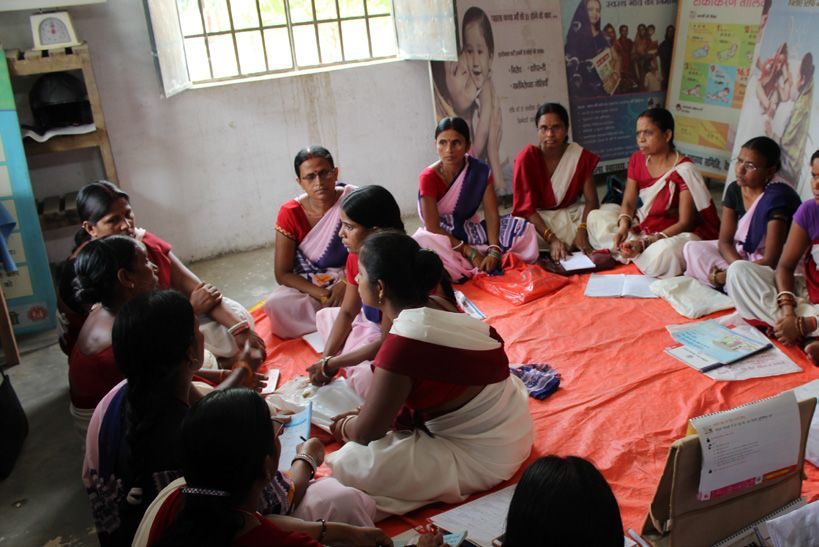
THE INNOVATION: THE INCREMENTAL                         Reviewing and planning
       LEARNING APPROACH                                       The sessions follow a general structure of reviewing,
                                                               learning, and then planning. Each month, FLWs review
CARE partnered with the Government of Bihar to plan            what they learned from the previous month’s training
and facilitate training sessions for FLWs at health sub-       module and relate how they used those skills in the
centers. Throughout India, health sub-centers are a link       community that month before moving onto the next
between the community and the primary health care              lesson. Then after each new lesson, they discuss and
system, providing essential services to about 5000-7000        plan together how to apply their new knowledge and
people. Each sub-center is staffed by approximately 20         skills into their work for the following month.
FLWs (more or less, depending on the size of the served
population), and managed by at least one ANM. CARE             Cooperation and coordination
decided to leverage these sub-centers as platforms for new     FLWs also make time at these meetings to discuss any
purposes: 1) to provide ongoing training and supportive        trends they may have noticed among their clients and
supervision to FLWs, 2) to increase cooperation and            common problems they have identified during their regular
coordination between ASHAs and AWWs, and 3) to review          home visits. Comparing notes on their work experiences
and plan the actions of FLWs based on the needs in             helps the AWWs and ASHAs to coordinate their visits and
the community, identified through data collected during        harmonize key messages, strengthening the accuracy and
home visits.                                                   consistency of their client guidance. For the first time,
                                                               ASHAs, AWWs, and ANMs are working together to solve
Training, practice, and supportive supervision                 problems and support each other in delivering quality
Recognizing that most adults retain information more           health services to the families they serve.
effectively through active, hands-on methods than
by reading or listening alone, CARE divided up the
numerous tasks and skills FLWs need to know into short
lessons with theoretical and practical components.
CARE’s block managers deliver these lessons to ANMs in
weekly sessions at primary health centers, and in turn,
ANMs provide the same training to FLWs at monthly
sub-center meetings that were previously held only to
deliver paychecks.

The training modules include information on family
planning, antenatal care, institutional delivery, post-natal
care, immunizations, infant feeding, kala-azar, and other
important family health topics. Facilitators are equipped
with handheld projectors that they connect to their
mobile phones, allowing them to project videos or other
visual aids during the meetings. The FLWs then have the
opportunity to role play and to practice their new skills
on each other and to ask questions, discuss challenges,
problem-solve, and get feedback from ANMs and trainers.
The monthly sessions build on each other, increasing FLW
knowledge and skills a little at a time.

                                                                                          I NNOVATI ON B R I E F # 1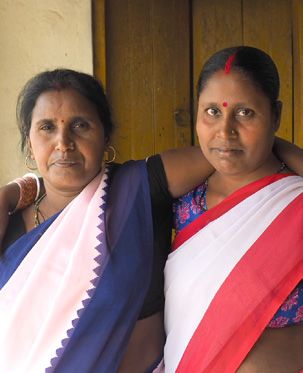
RESULTS

Household surveys in Bihar have noted advancements in                                        One AWW noted that after the various FLW cadres began
the quality of health service delivery by FLWs in recent                                     meeting regularly and working together toward common
years, which may well be attributed to the implementation                                    goals and targets, “the scenario completely changed.” She
of the ILA. Pregnant women are receiving significantly                                       became more confident in her skills and approaches her
more antenatal care visits, and are delivering in health                                     work each day with newfound passion and fulfillment,
facilities with skilled birth attendants more often than in                                  proud of what they are accomplishing together.
the past. Positive newborn care practices have improved,
including skin-to-skin contact and early initiation of
breastfeeding. Immunization coverage has also increased                                              WHAT’S NEXT
significantly. Overall, the quality of counseling and
coverage of health services have improved.                                                   After witnessing these health system and service delivery
                                                                                             improvements, the Government of Bihar decided to
FLWs participating in the sessions report that their                                         replicate the ILA in all 38 districts in the state. It has
technical knowledge and skills are enhanced, and they                                        been further adopted for scale-up in 162 districts and
feel more empowered, motivated, and proud than they                                          eight states across India.
did before the trainings began. As they spent more time
together and began to collaborate, ASHAs, AWWs, and                                          Notes
ANMs formed more positive and productive working                                             1. World Bank. (2016). http://documents.worldbank.org/curated/
relationships including among those who previously held                                      en/781181467989480762/pdf/105842-BRI-P157572-PUBLIC-Bi-
                                                                                             har-Proverty.pdf
unfavorable opinions of each other.

             This brief is part of the Bihar Innovation Series, which highlights some of the innovations that make up
             the Bihar Technical Support Program. In partnership with the Government of Bihar, CARE has developed
             innovative solutions that are increasing access to high quality health services in Bihar.

             The Bihar Technical Support Program is helping the Health and Social Welfare Departments of Bihar to
             achieve their goals of reducing rates of maternal, newborn, and child mortality and malnutrition, and of
             improving immunization rates and reproductive health services statewide.

Contact Information
Dr. Hemant Shah, Chief of Party
Bihar Technical Support Program, CARE India Solutions for Sustainable Development
hshah@careindia.org

© 2018 Cooperative for Assistance and Relief Everywhere, Inc. (CARE). All rights reserved.

Photo Credits: Pages 1: CARE; Page 2: Rick Perera/CARE; 2018 Matt Ipcar/CARE; Page 3: 2018 Rick Perera/CARE.
You can also read


