Building Standards Corporate & Democratic Services - Verification Annual Performance
←
→
Page content transcription
If your browser does not render page correctly, please read the page content below
Building Standards
Corporate & Democratic Services
    Perth & Kinross Council

    Verification
      Annual
   Performance
      Report
    2020-2021
Perth & Kinross Council
Corporate & Democratic Services

          Building Standards Verification Service
           Building Standards Verification Service
                 Annual Performance Report
                         2020—2021

                       Perth and Kinross Council
                              Pullar House
                           35 Kinnoull Street
                                  Perth
                               PH1 5GD

                   : 01738 475300

                   : buildingstandards@pkc.gov.uk

       Building Standards Verification Service - Annual Performance Report   2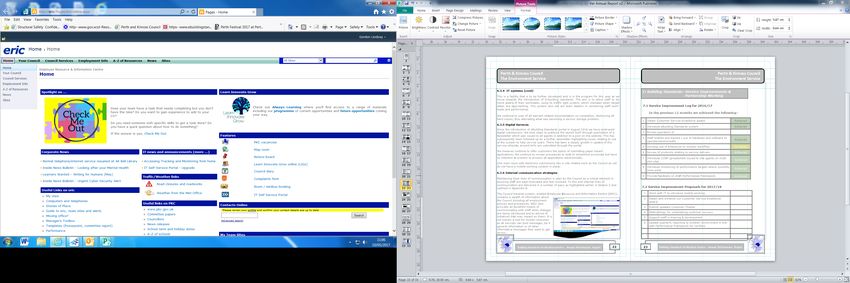
Perth & Kinross Council
                             Corporate & Democratic Services

                             Table of Contents

                                                                          Page

        1    Introduction to Perth & Kinross                               4

        2    Building Standards in Perth & Kinross                         8

             Building Standards Verification Service
        3                                                                  13
             Information

        4    Strategic Objectives                                          14

        5    Key Performance Outcomes and Targets                          15

        6    Key Performance Outcomes Data                                 18

             Service Improvement & Partnership
        7                                                                  25
             Working

        8    Additional Data                                               28

     Appendices

       A     Building Standards Customer Charter                           29

       B     Departmental Communication Framework                          30

3   Building Standards Verification Service - Annual Performance Report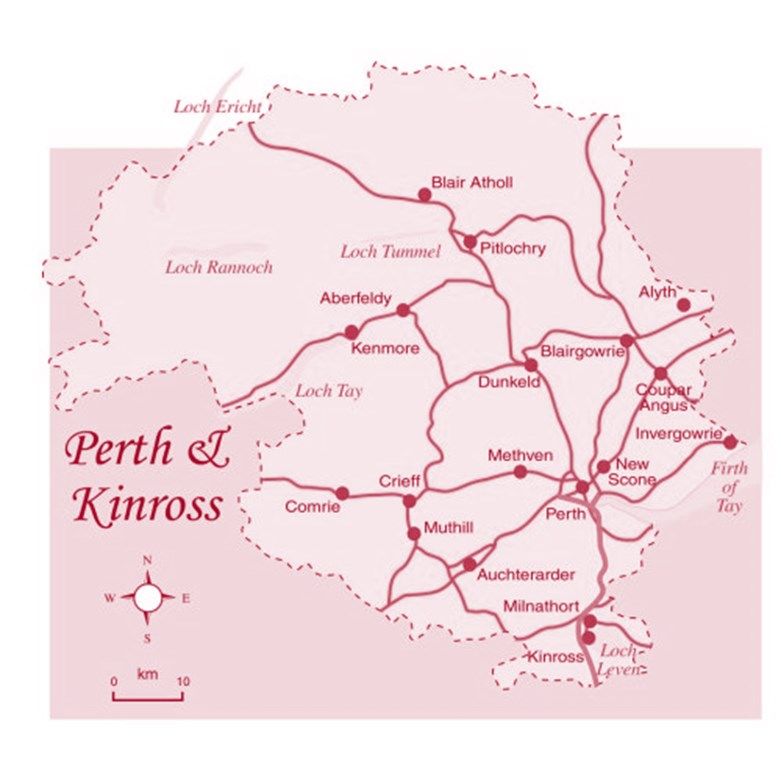
Perth & Kinross Council
  Corporate & Democratic Services

INTRODUCTORY STATEMENT FROM THE SCOTTISH GOVERNMENT

The verification performance report is a strategic planning and management tool that
provides information about the local authority building standards service, communicates the
vision and strategy, and sets out performance against strategic goals and targets.

Building standards verifiers in Scotland are required to utilise the performance report to
manage, monitor, review and develop strategies for their business, and should focus on the
performance framework’s core perspectives and cross-cutting themes.

1: Introduction to Perth & Kinross

1.1 Perth & Kinross

Perth & Kinross occupies a large swathe of the centre of Scotland as can be seen from the
maps below. It extends from the Drumochter Pass on the A9 in the north to beyond Loch
Leven in the south and from Meigle in the east to Loch Lyon at the remote head of Glen Lyon
in the west. The main centre of population is the Fair City of Perth, the newest of Scotland’s 7
cities, once capital of Scotland.

    Image 1 –P & K Location

               Building Standards Verification Service - Annual Performance Report          4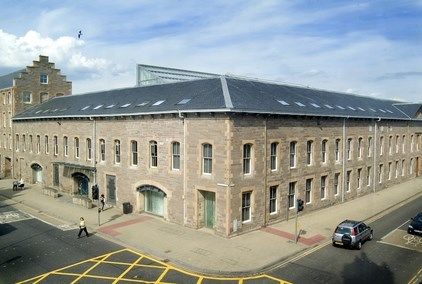
Perth & Kinross Council
                                     Corporate & Democratic Services

                                     5th largest
                                     Council area
                                      covering
                                     5, 286 km²

             8th least                 Perth and Scone                12th largest
        populated area per              form the main               population with
         km². Estimated at              population of                   151,100
        28 persons per km²              around 52,000                  residents
                  *                       residents**

    Tourism &               Main private               Economy is             Almost 85% of
    hospitality           sector employers           dominated by            the economy is
   employ over           include Scottish &             tourism &                 micro-
 12% in the area         Southern Energy.              hospitality,            enterprises:
   and annually          Public sector main           agriculture,              companies
  contributes an         employers include          retail & financial       employing up to
    estimated              Perth & Kinross                  or                10 employees
     £448M                   Council***             support services

                    Chart1—P&K Statistics

  * The Scottish average being 69 people per square kilometre reflects the diverse nature of
    the district with large very sparsely populated mountainous areas particularly to the north.
** Other main centres of population are Blairgowrie with around 9,100 followed by Crieff with
    over 7,400 and Kinross of around 5,100.
*** The main private sector employers in the area include Scottish and Southern Energy, Crieff
     Hydro Ltd, VION, The Gleneagles Hotel, Aviva and Perth College/University of Highlands &
     Islands. NHS Tayside and Perth & Kinross Council remain key employers in the public sector.

  5        Building Standards Verification Service - Annual Performance Report
Perth & Kinross Council
Corporate & Democratic Services
1: Introduction to Perth & Kinross (cont.)
1.2 Perth & Kinross Council Operational Structure
The Council operates with 4 main services:-
Corporate & Democratic Services
Education & Children’s Services
Health & Social Care Partnership
Housing & Environment
Building Standards is a function of Corporate & Democratic Services as outlined in the structure
below . Corporate & Democratic Services is headed by the Depute Chief Executive (chart 2).
This change to the Council structure took place last year, the Planning and Development
team having been previously aligned under the Executive Director of Housing and Environ-
ment.
This new structure has still not yet been fully implemented. The Building Standards budget is still
dealt with within Housing and Environment.
Council Senior Management structure
Building Standards Verification Service - Annual Performance Report 6
Perth & Kinross Council
                                     Corporate & Democratic Services

      1: Introduction to Perth & Kinross (cont.)

1.2 Perth & Kinross Council Operational Structure (cont.)

The net effect on the Building Standards team is negligible with direct reporting unchanged
as shown below.

Chart 2—Council Management Structure

  7         Building Standards Verification Service - Annual Performance Report        6
Perth & Kinross Council
  Corporate & Democratic Services

2: Building Standards as a function of Perth & Kinross Council

2.1 Where to Find Building Standards

The Building Standards team along with colleagues in related Planning teams are all
based on the top floor of Pullar House in Kinnoull Street in Perth. This building houses the main
operational frontline services of the council.

The main corporate services, educational services and councillors offices are housed in the
main Council headquarters which is situated at 2 High Street in Perth.

                                        Pullar
                                        House

                                                                           2 High
                                                                           Street

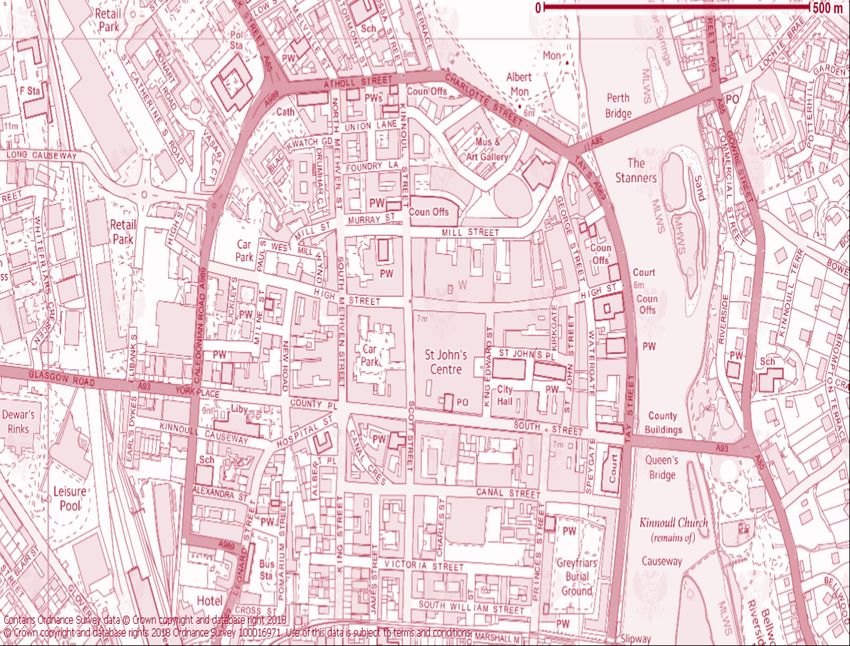
Image 2—Perth offices

               Building Standards Verification Service - Annual Performance Report          8
Perth & Kinross Council
Corporate & Democratic Services
2: Building Standards as a function of P & K C (cont.)
2.2 Overall Roles and Responsibilities of Building Standards
The principal function delegated to Building Standards is the application and enforcement of the
Building (Scotland) Act 2003 and its associated regulations.
The Act effectively divides the duties into two main strands of work:-
The Verifier role (explained in more detail in Section 3)
The responsibility of processing Building Warrant applications from submission through to
completion certificate acceptance.
Verifiers are appointed by the Scottish Government, currently Scottish Local Authorities are sole
verifiers for their own geographical areas but this is subject to review. The Scottish Minister
re-appointed Perth & Kinross Council as Verifier until May 2023.
The Enforcement and Information role in the built environment
The Act delegates these functions to the Local Authority as opposed to the verifier:-
Enforcement in terms of compliance with building regulations,
Enforcement in relation to work which is either unauthorised or in contravention of warrant
approvals,
Enforcement in relation to dangerous buildings and defective buildings,
Providing and maintaining a publicly available electronic Building Standards Register,
Providing guidance on building standards on our website and in leaflet form.
In addition within Perth & Kinross, Building Standards have delegated responsibility to fulfil the
following roles:-
Enforcement of the Energy Performance of Building Regulations 2008.
Safety of Sports Grounds certification, inspection and enforcement— This applies to 3 main
sporting venues, McDiarmid Park home to St Johnstone FC, Perth Racecourse and the George
Duncan Athletics Arena. In dealing with sports ground safety we work closely with the
emergency services as well as colleagues in Angus and Dundee City as the Tayside Sports
Ground Safety Team.
Membership of the Council’s Safety Advisory Group - involves pre-event planning as well as
inspection at major events held in the area.
Processing of applications for raised structures under Section 89 of the Civic
Government (Scotland) Act 1982 and associated inspections.
Processing of applications for letters of comfort, including inspection.
Provision of a building standards property information system, including a warrant search and
copy document/plan service.
Co-ordination of Council’s property enquiry service.
The Council’s scheme of delegation is such that all work is fully delegated to the Building Standards
Manager thus there is little involvement with Council committees. Indeed only where an appeal is
triggered by an applicant aggrieved by a decision would be referred to committee.
Whilst Building Standards effectively runs with little or no daily input from above, there are clear lines
of communication and support which are demonstrated in Appendix B to this document.
9 Building Standards Verification Service - Annual Performance Report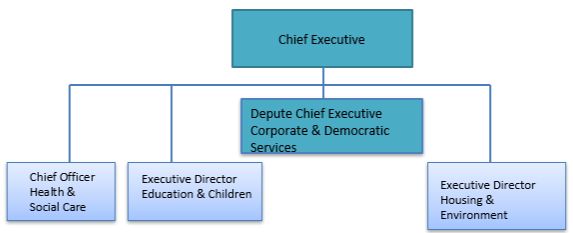
Perth & Kinross Council
   Corporate & Democratic Services

2.3 Building Standards Structure
The structure was originally set up to allow for career progression from graduate level up to
manager. At this time, the graduate posts have been removed from the structure. The team
is divided into two, covering the North and South areas of the county. Each has a team lead-
er although this is for line management duties only.
Last year, the decision was made to remove the post of a dedicated manager. The Building
Standards team is now headed by a manager with joint responsibility for Building Standards
and Development Management.

                                Chart 4—Staff structure

Despite the changes in structure and staff profile, we have maintained a balance in staff age,
experience and qualification. There is an even split between staff below and over 50 years of
age. This helps us create a more resilient team as the industry as a whole faces a workforce
shortage in the future. The graduate posts have allowed us to grow our own but with the loss
of these posts, we must try to keep the existing younger staff.

The profile of our staff is shown in the following charts.

                Building Standards Verification Service - Annual Performance Report   10
Perth & Kinross Council
Corporate & Democratic Services
2: Building Standards in Perth & Kinross (Cont.)
2.4 Building Standards Staffing Report (Cont.)
Graphs 1to 3 —
Staffing details
11 Building Standards Verification Service - Annual Performance ReportPerth & Kinross Council
Corporate & Democratic Services
2.5 Business Support Staff
The efficient and effective delivery of the building standards service relies heavily on input
from business support staff. Previously, the line management responsibilities for this team sat
outwith the direct control of Building Standards management. As part of the restructuring and
re-alignment under Corporate and Democratic Services, the Business Support team was re-
aligned under the service manger for Building Standards and Development Management.
The small team who are responsible for the day to day delivery of administrative support to
Building Standards is led by a Business Support Officer who also has responsibility for the busi-
ness support provided to planning. It is proposed that the Business Support Officer will be line
managed by one of the Building Standards team leaders, in tandem with a Development
Management team leader. The structure at this time has not been finalised but is currently as
shown below (chart 5).
Chart 5 — Business Support Team Structure
2.6 Customer Service Centre
The customer service centre is a centralised call centre run by the council to which all general
inquiries, including those for Building Standards are directed.
The call centre staff have access to a wide range of scripts as well as all IT systems including
our Uniform system which enables them to answer most general enquiries at first point of con-
tact.
Where this is not possible, the staff are trained to ensure that calls are forwarded
to the person best placed to provide an answer.
Building Standards Verification Service - Annual Performance Report 12Perth & Kinross Council
Corporate & Democratic Services
3: Building Standards—Verification Service Information
3.1 Public Interest Statement—provided by Scottish Government
The purpose of the building standards system is to protect the public interest. The system sets
out the essential standards that are required to be met when building work or
conversion of a building takes place in order to meet building regulations.
The building standards system checks that proposed building work or conversion of a building
meets standards; inspections are by limitation of resources set to key stages in the construction
process to ensure that legislation is not avoided. The control of work on site is not down to the
system but is a matter for contracts and arrangements in place between a builder and client.
Verifiers, appointed by Scottish Ministers, are responsible for the independent checking of
applications for building warrants to construct or demolish buildings, to provide services, fit-
tings or equipment in buildings, or for conversions.
3.2 Verification Services & Functions Delivered
As verifiers for the Perth & Kinross area, we undertake the following duties:-
Pre-warrant consultations.
Assessment of applications for building warrant, including late warrant
applications and by agreement, staged warrants.
Assessment of applications for amendment of warrant.
Consideration of applications for Determinations (Alternative means of compliance with the
technical standards).
Site inspections, (reasonable inquiry) in accordance with Construction Compliance &
Notification Plans.
Consideration of Completion Certificate submissions and Completion
Certificates Without Warrant submissions, including final inspections.
Consideration of applications for letters of comfort.
Provision and maintenance of a Building Standards Register for Perth & Kinross.
Advice and guidance on compliance with the technical standards
Advice and guidance on exempted classes including a service offering to confirm that the
exempt works will comply with building regulations.
Advice and guidance on all Building Standards matters through a combination of website,
leaflets and a daily duty officer.
Customer service – Focus Groups, newsletters and briefing sessions.
13 Building Standards Verification Service - Annual Performance ReportPerth & Kinross Council
Corporate & Democratic Services
4: Strategic Objectives
4.1 The Overarching Goal/ Vision
4.1.1 Perth & Kinross Council Strategic Goals
The goals and vision for the Council, the Service and ultimately Building Standards are set
out in the Corporate Plan 2018-2022. This document is the overarching plan setting out the
Council’s ambition to be an excellent organisation, delivering high performing quality ser-
vices that meet the needs of communities and users. It gives a commitment to improve
services, enhance quality of life for citizens and make best use of public resources. It
importantly also sets out how the Council will support the Perth & Kinross Community Plan/
Local Improvement Plan 2017—2027.
The stated vision for Perth & Kinross Council is as follows:
‘Creating a confident, ambitious and fairer Perth and Kinross, for all who live and work
here.’
To deliver this vision, the Council has identified the following five strategic objectives to
provide a clear direction, inform decisions at a corporate and service level and shape
resource allocation.
Giving every child the best start in life
Developing educated, responsible and informed citizens
Promoting a prosperous, inclusive and sustainable economy
Supporting people to lead independent, healthy and active lives
Creating a safe and sustainable place for future generations
The plan includes the key priority commitments for each of these strategic objectives.
The plan does not stand alone, it forms part of a robust strategic framework that connects
the vision of the council and its partners to the detailed plans that guide the delivery of
our services.
Building Standards Verification Service - Annual Performance Report 14Perth & Kinross Council
Corporate & Democratic Services
4: Strategic Objectives (Cont.)
4.2 The Goal/Vision of The Service
We strive to improve our service to:
• Deliver an excellent Verification service that fulfils the requirements of Scottish
Government Ministers as set out in the Operating Framework; is customer focused taking
account of customers’ needs, and delivers best practice in terms of consistency of
interpretation and predictability of service,
• Deliver high levels of performance in terms of meeting the targets set in the Building
Standards Performance Framework. Review service delivery practices as required to
address any issues identified through national customer surveys, and
• Deliver targeted, cost effective, value for money services that meet operational needs
and customer demand.
4.3 Building Standards Strategic Objectives
For the forthcoming year the primary objectives for Building Standards are:-
To continue to deliver timeous and consistent service to our customers.
To continue growth in uptake in use of the eBuilding Standards system.
To work with our IT service to enable mobile paperless working.
To retain and enhance our Customer Service Excellence award.
5: Key Performance Outcomes & Targets
5.1 Key Performance Outcomes — Introduction
Continuous improvement is recognised as key in ‘raising the bar’ for quality, compliance,
consistency and predictability of verification activities. This principle was at the core of the
introduction of a best value Balanced Scorecard for verifiers in 2005.
This approach was reviewed by the Scottish Government when the appointment of verifiers
was reviewed in 2011. As a result, a Building Standards Performance Framework (BSPF), which
set out 9 Key Performance Outcomes (KPO’s) for Verifiers, was introduced.
In 2017, following a further Scottish Government review, the framework was updated to bring it
more in line with current practice. Image 3 overleaf shows the framework’s 3 core
perspectives and cross cutting themes.
Image 4 shows the current KPO’s which you will see have been reduced in number from 9
down to 7. The verifier is required to complete and submit performance reports quarterly to the
Scottish Government.
15 Building Standards Verification Service - Annual Performance ReportPerth & Kinross Council
Corporate & Democratic Services
Image 3 - Performance Framework overview
5.2 Summary of Key Performance Outcomes (KPO’s)
Image 4 below sets out the current list of KPO’s for which targets are set by the Scottish
Government. In Section 5.3 more detailed information on these KPO’s is provided to explain
the targets that have been set.
Professional Expertise and Technical Processes
Minimise time taken to issue a first report or issue a building warrant or
KPO1
amendment to building warrant.
KPO2 Increase quality of compliance assessment during the construction processes
Quality Customer Experience
KPO3 Understand and respond to the customer experience
KPO4 Commit to the building standards customer charter
Operational and Financial Efficiency
KPO5 Maintain financial governance
KPO6 Commit to eBuilding Standards
KPO7 Commit to objectives outlined in the annual performance report
Table 1 — KPO’s from 1 April 2017
Building Standards Verification Service - Annual Performance Report 16Perth & Kinross Council
Corporate & Democratic Services
5.3 Summary of Key Performance Targets
Table 2 below summarises the 7 KPO’s including, where appropriate, the targets against which
verifiers are assessed by the Scottish Government. It is of note that not all the Outcomes
necessarily relate to performance e.g. KPO6.1 and not all are within the control of the verifier
i.e. KPO6.2
KPO 1 Minimise time taken to issue a first report or to issue a building warrant or amendment to
building warrant.
1.1 95% of first reports (for building warrants and amendments) to be issued within 20 days
1.2 90% of building warrants and amendments to be issued within 10 days from receipt of all
satisfactory information
KPO 2 Increase quality of compliance assessment during the construction processes
2.1 Targets to be developed as part of future review of KPO2.
KPO3 Commit to the building standards customer charter
3.1 National customer charter is published prominently on the website and incorporates version
control detailing reviews (frequency of reviews to be at least quarterly).
3.2 95% of BSD requests for information on a BSD ‘Verifier Performance Reporting Service for
Customers’ case responded to by verifier within 5 days.
KPO 4 Understand and respond to the customer experience
4.1 Achieve as a minimum, an overall average satisfaction rating of 7.5 out of 10
KPO 5 Maintain financial governance
5.1 Building standards verification fee income to cover indicative verification service costs (staff
costs plus 30%).
KPO 6 Commit to eBuilding Standards
6.1 Details of eBuilding Standards are published prominently on the verifier’s website.
6.2 75% of each key building warrant related process being done electronically — Plan checking;
issuing approvals; site inspections; accepting completion certificates.
KPO 7 Commit to objectives outlined in the annual performance report
7.1 Annual performance report published prominently on website. To be reviewed and updated
quarterly.
7.2 Report to include KPO performance data from previous year, along with: Adherence to the
national customer charter (KPO3); Improvement actions to respond to customer feedback
(KPO4); Financial performance (KPO5); Commitment to digital services (KPO6)
Table 2—KPO Targets
17 Building Standards Verification Service - Annual Performance ReportPerth & Kinross Council
Corporate & Democratic Services
6: Building Standards—Key Performance Outcomes Data
6.1 Performance summary in relation to all KPO’s
As mentioned in 5.1 the verifier must report quarterly on performance against the KPO targets,
this table summarises how Perth & Kinross have performed during 2020/21.
Further statistical information is included in the table in Section 8 of this document.
Ave
Ref Requirement Q1 Q2 Q3 Q4
2019/20
95% of applications responded to 94.5%
84.1% 89.3%
within 20 working days
KPO1
90% of approvals issued within 10 93%
80.6% 86.8%
days of competent plans
What % of CCNP’s complied with 13.4% 12.7%
KPO2 13%
overall (Applicant & P&KC)
Average overall number of days 61 77
KPO3 69
to obtain a building warrant
Improvement in customer Participated in running of national survey and
KPO4
KPO1 experience achieved a rating of 83%
Financial Governance % Fee
KPO5 97.5% 184% 145.8%
income against staff costs only
Adherence to commitments of Charter clearly published on website and
National Customer Charter available in leaflet form
KPO6
% of applications processed
99% 100% 99.5%
electronically
Commit to annual performance
report
KPO7 Published clearly on website
Annual performance report to
include performance data
Table 3 - 2020/21 KPO statistics
Building Standards Verification Service - Annual Performance Report 18Perth & Kinross Council
Corporate & Democratic Services
6: Building Standards—Key Performance Outcomes Data (cont)
6.2 How We Meet Expectations of the 3 Core Perspectives
This section provides a brief summary to demonstrate how we achieve the goals set under each
of the 3 main perspectives.
6.2.1.1 Protocols Setting out Clear Procedures for Dealing With Work
We have in place a suite of protocols covering the main areas of operation. The purpose is to
assist staff in undertaking their duties and improve the consistency of service delivery. All of the
documents are readily available to all on our SharePoint site.
The protocols are regularly reviewed, updated and added to in order to ensure they remain rel-
evant and accurate.
6.2.1.2 Performance Management Systems
At corporate level— we participate in an annual self assessment process using the “How Good Is
Our Team” model.
At service level— we contribute to the service Business Management & Improvement Plan
(BMIP) which details the work and performance targets of the Service.
At divisional level— Planning & Development Management Team meet monthly to discuss a
range of current issues, with performance management being a standing agenda item.
At team level—staff utilise the Enterprise workflow management system; this uses a traffic light
system to prioritise workloads to ensure key outcomes are met.
Individually— staff have the opportunity to participate in monthly one to one sessions with the
team leader so any performance issues can be discussed and addressed.
6.2.1.3 Staff Training & Development
The organisation recognises the staff are key to efficient and effective service delivery. On this
basis we seek to ensure they receive regular training on all aspects of the job, be it procedural or
technical.
This takes many forms:-
Employee Review and Development is a key methodology used by the Council from which
are derived individual training and development needs. To assist in this process, we have in
place a competency framework against which staff are measured.
We hold monthly team meetings which include training as a standing item in the agenda.
This allows for those who have attended events to share knowledge with colleagues as well
as identifying any training requirements.
19 Building Standards Verification Service - Annual Performance ReportPerth & Kinross Council
Corporate & Democratic Services
The Council have a policy in place whereby on the first Thursday of each month they
delay access to the public for two hours. This gives an opportunity for ad hoc discussions
on a variety of subject matter.
Staff can access our SharePoint site which includes information such as office protocols,
technical determinations, guidance on interpretation and team meeting records.
Staff can access an on-line technical directory which contains a wealth of information i.e.
all current British and European Standards and other technical papers.
Staff are encouraged to participate in meetings of the Tayside Building Standards
Consortium. This leads to improved levels of consistency across the region.
Staff are encouraged to attend meetings of LABSS to keep abreast of national issues
affecting the Building Standards profession.
Staff can also attend lunch time CPD technical presentations which are run in conjunction
with our colleagues in the Architectural Section of the Property Service.
6.2.1.4 Benchmarking/Shared Services/Partnership Work
We recognise the benefit of active participation in benchmarking and closer collaborative
working. To this end, we continue benchmarking with:-
Tayside Building Standards Consortium which comprises colleagues from Angus Council,
Dundee City Council and ourselves. This is one of 8 consortia set up by LABSS. The consortia
aims are:-
• Developing best practice in the application of procedures.
• Improving uniformity of interpretation and application of the technical standards.
• Feeding in to the work of the Local Authority Building Standards Scotland (LABSS).
the Building Standards Division of the Scottish Government (BSD)
the 32 Scottish Local Authorities through the work of Local Authority Building Standards
Scotland (LABSS).
the SOLACE group of authorities which share data to allow us to compare ourselves
against a variety of similar authorities (with a mix of urban and large rural areas)
CSE benchmarking group
6.2.1.5 Succession Planning
As noted in section 2.3 to this report we did have a structure aimed at encouraging career
development with posts ranging from graduate to manager level. Regrettably cuts to budgets
resulted in the loss of the graduate posts and further cuts this year has seen the loss of the
dedicated manager post.
Building Standards Verification Service - Annual Performance Report 20Perth & Kinross Council
Corporate & Democratic Services
6: Building Standards—Key Performance Outcomes Data (cont.)
6.2.2.1 Customer communication strategies
Customer engagement is one of our key objectives as we have recognised the importance of
listening to, as well as informing, our customers. This is recognised in our customer
communication strategy which includes the following:-
Customer surveys (local and national)
Annual customer focus group
Service newsletters
Service user briefing sessions
General feedback, meetings, phone calls etc.
6.2.2.2 Charter (local/national)
Our customer service charter is available in leaflet form and on our website .
The charter outlines national Scottish Government commitments for all verifiers. In addition it
outlines our internal service targets, our duties and our staff commitments together with what is
expected from customers to enable us to undertake our duties efficiently and effectively.
The key performance targets extracted from the charter are contained in Appendix A.
6.2.2.3 Customer Engagement and Feedback
As outlined in 6.2.2.1 above, engaging with and seek views of customers is something we
endeavour to achieve in a number of ways.
The information we glean from customer feedback is discussed at team meetings and where
appropriate, fed in to our team plan.
6.2.2.4 Accessibility of Service
As a customer focussed service, we aim to make the service as accessible as possible which
we do through the following methods:-
The customer contact centre, as outlined in Section 2.6, is manned by staff who are
specifically trained to deal with most general enquiries at first point of contact.
We publicise, on our website and in all correspondence, a generic e-mail address to
which general enquiries can be sent. This is monitored on a regular basis to ensure there
are no delays in responding.
We operate a duty officer rota so that someone is available to assist customers.
We include in correspondence the name and contact details of the surveyor dealing with
the application.
We are prepared to meet locally with agents to discuss proposed warrants, although
more and more ‘discussions’ now take place through electronic means.
We ensure our website is updated and kept relevant.
21
Building Standards Verification Service - Annual Performance ReportPerth & Kinross Council
Corporate & Democratic Services
6.2.2.5 Pre-Application Service
We welcome pre-warrant application discussions for significant, complex or develop-
ments incorporating new or innovative design. We advise that this service can be under-
taken at a local office if coming to Perth is inconvenient. Electronic pre-warrant
“discussions” also take place on a fairly regular non-formal basis for smaller development
proposals.
6.2.2.6 Customer Agreements
A customer agreement in simple terms is an agreement to extend the assessment period
from the standard target of 20 working days. This is rarely used but has been of benefit for
example in dealing with an application that is particularly complex or when we have
been inundated with applications (normally immediately prior to changes to the tech-
nical standards or fee increases).
6.2.2.7 Customer Dissatisfaction (procedural or technical)
The technical standards are now framed in a manner that they are guidance as opposed
to the regulations with are mandatory. On occasion there can be differences in opinions
over a technical or procedural matter, or a perceived lack of consistency with another
verifier.
To address this Local Authority Building Standards Scotland (LABSS) have in place a dis-
pute resolution service. This involves the verifier escalating the enquiry to LABSS who then
seek a national view before publishing their interpretation.
The Council have a robust complaints procedure for dealing with all forms of complaint.
6.2.2.8 Recognised External Customer Service Accreditation
We achieved Customer Service Excellence in 2016, the only team within Planning &
Development to achieve this award. Although valid for 3 years, it is subject to annual re-
view. In the intervening years we have been successful in not only maintaining our ac-
creditation but increasing the number of criteria where we have demonstrated we deliver
a service that is above the minimum recommended standard.
In addition we require to demonstrate we meet the standards required by the council
through the “How Good is Our Council” system of performance reporting & monitoring.
Building Standards Verification Service - Annual Performance Report 22Perth & Kinross Council
Corporate & Democratic Services
6: Building Standards—Key Performance Outcomes Data (cont.)
6.2.3.1 Team structures e.g. (area splits/specialist teams)
Operationally we have a two team structure albeit at present they are under the direct control
of one team leader. Having a number of staff covering an area has the benefit of helping in
the distribution of work, and increases levels of internal communications and discussion
amongst team members. This in turn improves consistency of interpretation and application of
the technical standards.
When it comes to inspections, the Assistants do retain their dedicated area as this gives some
consistency to customers.
6.2.3.2 Time recording system
We utilise the time recording function in the Uniform system to gather information on the time
spent on verification (vetting & inspection) and that spent on non-verification duties.
6.2.3.3 Financial monitoring/governance
The Council as a whole do take pride in how budgets and finance in general are controlled to
ensure it remains well placed to cope with budgetary fluctuations.
At a service level senior management team meetings are held weekly. Each quarter one such
meeting focuses on the position with regards to meeting budgetary targets.
The BS Manager meets with finance colleagues on a two monthly basis to monitor income and
expenditure against budgets. This allows for early intervention and reporting to the Council
should significant issues be identified.
6.2.3.4 IT Systems
We use the Uniform system linked to IDOX document management system. This in turn links in to
the Scottish Government eDevelopment portal which permits customers to lodge applications
electronically.
In addition we operate the IDOX Enterprise management system which uses a traffic light
indicator for both staff and management. This ensures workloads are evenly distributed and
that workflow is monitored to ensure targets are met.
We continually look to evolve the use of the system, most recently for logging licensing
responses and dangerous building reports.
All staff now have tablet devices to allow for site visits to be undertaken without need for plans
to be printed. All paper submissions are scanned at approval stage and related documents
are scanned and the paper copies destroyed completion.
23 Building Standards Verification Service - Annual Performance ReportPerth & Kinross Council
Corporate & Democratic Services
6.2.3.5 Digital Services
Since the introduction of eBuilding Standards portal in August 2016 we have embraced digital
submissions and have sought to promote this both in our guidance leaflets and our website.
There has been a steady growth in uptake of this service whereby now over 75% of warrant
applications are submitted through the portal.
Customers do have the option of submitting paper based applications, which at present are
processed and approvals issued in paper. Across Scotland there is no consistency of approach
with anecdotal evidence that some still insist that a paper set of plans be submitted to support
electronic submissions and conversely some who will not accept paper submissions at all.
We are seeking to increase the levels of business conducted electronically in accordance with
recommendations of the Scottish Government as and when that becomes appropriate.
A significant block to fully electronic submissions remains the lack of a mobile solution to
undertake site related “reasonable inquiry” something that we are working on.
6.2.3.6 Finance Systems
The Council utilise the Integra IT system from which the general ledger is used for routine
monitoring of budgets. At a team level, all monies received in respect of building warrant fees
are logged on Uniform and on Integra. This permits monies received and budgets to be
monitored by our Finance colleagues.
6.2.3.7 Internal communication strategies
The council recognise the importance of having clear lines of communication to ensure staff
are kept motivated and feel involved. Internal communications are delivered in a number of
ways as highlighted earlier in Section 2 and outlined in Appendix B.
The Council have an intranet system, entitled Employee Resource and Information Centre
(ERIC). This contains a wealth of information about the Council including all employment
policies and procedures.
ERIC also provides an excellent
means of communicating with
staff when changes are being
introduced and to advise of
initiatives that may impact on
them.
It is not merely a tool for human
resources; all services can utilise
this to post messages, be it
general information, events or
specific key messages they
require to share with all staff.
Image 4—ERIC
Building Standards Verification Service - Annual Performance Report 24Perth & Kinross Council
Corporate & Democratic Services
7: Building Standards—Service Improvements & Partnership Working
7.1 Service Improvement Log for 2019/20
In the previous 12 months we achieved the following:-
No. Continuous Improvement Action Timescale
1 Review team structure as result of management changes Complete
Mobile working — complete trials of using tethering of mobile phone
2 On-going
as a solution to wifi access remotely.
Mobile working — demonstration to be arranged of IDOX mobile so-
3 Complete
lution to determine if this offers greater functionality and consistency.
Review, clear out and revamp the e-filing system ahead of move
4 On-going
away from the use of the “P” drive.
5 Review, as required, protocols relating to service delivery Complete
Introduce letter to applicant advising when an assessment report has
6 been issued to their agent based on success of this process by col- On-going
leagues in North Lanarkshire Council
Training of staff as necessary when latest amendments are
7 Complete
published—expected in autumn
Table 4—Action log 19/20
25 Building Standards Verification Service - Annual Performance ReportPerth & Kinross Council
Corporate & Democratic Services
7.2 Planned Service Improvements for 2020/21
No Improvement Action Timescale
1 Review team structure to meet changing demands on service Q3
Mobile working — continue to work with IT to optimise mobile work-
2 On-going
ing
BIM training for those working on major capital projects
3 Q3
Investigate uses of Microsoft Teams to maximise potential
4 On-going
Review, as required, protocols relating to verification service deliv-
5 On-going
ery
Introduce letter to applicant advising when an assessment report
6 has been issued to their agent to reduce contact for updates on ap- Q2
plication progress
Introduce automatic acknowledgement, providing timescales and
7 alternative contact methods Complete
Introduce pro-active dangerous building regimen including submit-
ting paper recommending that the Council adopts a focussed D.B.
8 strategy involving all relevant Council departments Q2
Review and update Sports Ground Safety procedures and policies
9 in line with the COSLA review and Sports Ground Safety Authority’s Complete
Table 5—Action log 20/21
Building Standards Verification Service - Annual Performance Report 26Perth & Kinross Council
Corporate & Democratic Services
7.3 Partnership Working
Building Standards does not and cannot operate effectively and efficiently by working in
isolation. The following are examples of how partnership working has achieved success:-
Working collaboratively to encourage
development in Perth & Kinross, assist with
planning conditions e.g. phosphate mitigation.
Working with the Enforcement team to ensure
Development Management
unauthorised development is addressed.
Working with the Conservation Team in dealing
with dangerous & defective buildings that are
listed or within conservation areas.
Working collaboratively on defective buildings.
Environmental Health
Consultations relating to contaminated land.
Within the
Council Property Services Ensure effective and timely delivery of building
warrants; CPD events.
We consult and discuss matters of legislative
interpretation with our solicitors and process
Legal Services applications for Section 50 (Liquor licensing)
certificates and are consulted on applications
for HMO licences.
Roads Service Dangerous buildings & SUDS adoption
Fast-tracking building warrants that have
Economic Development
significant implications for inward investment.
Identifying best practice; improving consistency
Tayside Building Standards
in the application and interpretation of
Consortium
technical standards
Building Standards CSE Identifying best practice in customer service
Benchmarking Group delivery.
LABSS Participate in consultations and attend meetings
Outwith
the Consultation on BW’s; completion acceptance;
Scottish Fire & Rescue Service
Council Dangerous buildings. Sports Ground Safety
Building Standards Focus Group Benchmarking on best practice
Foul water discharge licences and phosphate
SEPA
mitigation.
Tayside Sports Ground Safety Inspection of grounds; meetings to determine
Team best practice and uniformity of application.
27 Building Standards Verification Service - Annual Performance ReportPerth & Kinross Council
Corporate & Democratic Services
8: Building Standards—Additional Data
As a verifier we must provide quarterly reports to Scottish Government that detail our
performance against targets and other workload statistics. The performance data relates to
the building standards verification performance framework and the workload data relates to
the numbers of building warrant applications; completion certificates; fees; costs; certificates
(certification, energy performance; sustainability); enforcement cases.
Total
Statistical Information Q1 Q2 Q3 Q4
2020/21
No of BW applications validated 194 284 478
No of BW applications approved 212 252 464
Fee income (£) 152,801 320,436 473,237
Value of work (£m) 17.1 90.7 107.8
No of Completion Certificates submitted 131 395 526
Certificate of Design submitted 139 190 329
Certificates of Construction submitted 11 62 73
Energy Performance Certificates
9 65 74
(domestic)
Energy Performance Certificates
0 1 1
(non-domestic)
Statements of Sustainability (domestic) 10 63 173
Statements of Sustainability
1 1 2
(non-domestic)
Notices served under
0 4 0 0 4
sections 25 to 30
Enforcement Cases referred to P.F. 0 0 0 0 0
Cases where L.A. has
0 0 0 0 0
undertaken work.
Table 6—Workload Stats
Building Standards Verification Service - Annual Performance Report 28Perth & Kinross Council
Corporate & Democratic Services
Appendix A— Building Standards—Customer Charter
The key commitments from our customer charter are as follows:-
• We will respond in a clear and comprehensive manner to your general enquiries by
e-mail or in writing within 10 working days. Where this is not possible, we will notify
you within 5 working days giving a likely response date.
• We will acknowledge receipt of your application for building warrant within 3
working days.
• We will respond to your application for building warrant within 20 working days of
validation. In the case of major developments that will impact on the economy of
the area, the target will be 15 working days.
• We will issue your building warrant within 10 working days of receipt of competent
plans.
• We will respond to your notification for inspection/ drain test in terms of your
Construction Compliance & Notification Plan within 3 working days.
• We will respond to your submission of a completion certificate within 10 working
days of receipt.
• We will issue your completion certificate decision notice within 3 working days of a
satisfactory inspection.
• We will respond to your request for a letter of comfort within 10 working days.
• We will respond to reports of dangerous buildings within 24 hours and most urgent
cases within 1 hour.
• We will respond within 5 working days to reports of buildings in disrepair.
• We will respond to your request for copies of documentation/plans within 5 working
days.
• We will answer telephone calls within 6 rings.
29 Building Standards Verification Service - Annual Performance ReportPerth & Kinross Council
Corporate & Democratic Services
Appendix B—Departmental Communication Framework
B.1 Chief Executive Officer
Publishes a monthly blog to inform staff of what is happening at a corporate level. She has
also indicated there will be learning lunches to which staff will be invited to attend so they
can communicate directly with her. It is not clear yet whether or not the “business
breakfasts” meetings held by the previous CEO will be re-introduced. .
B.2 Executive Director
Hosts “business breakfasts” to which all levels of staff are invited in small groups. The format
is very similar to that of the CEO meetings described above, where the main corporate
issues affecting the Service are discussed and attendees can share experience of what is
happening within their own area of expertise.
B.3 Head of Service
Hosts monthly management meetings for the planning and the economic development
sections. These cover issues such as updates form the senior management team; staffing
issues; health & safety; management priorities; significant projects, etc.
Meet each of their managers individually for a monthly one to one catch up.
B.4 Building Standards Manager
Hosts monthly team meetings which all staff and the Business Support Officer attend. The
meetings allow staff to be updated on corporate matters, LABSS, BSD and other business
issues, as well as standing items such as health & safety, updates on RICS or CABE meetings,
feedback from training sessions. Staff are also encouraged to bring items for discussion,
including technical issues.
Attends Business Support team meetings as required to update them on any changes
affecting procedures, to discuss performance and to answer any questions.
Hosts annual Focus Group meetings with service users which are aimed at encouraging
open and frank discussions.
Maintains an open door policy so staff can discuss issues as they arise.
Annually team leaders have Employee Review and Development meetings (ERD’s) to dis-
cuss personal performance and to consider training and development needs.
B.5 Team Leaders
Interacts daily with staff and has invites all staff to have a monthly one to one meeting.
Annually all staff have Employee Review and Development meetings (ERD’s) to discuss
personal performance and to consider training and development needs.
B.6 Service
Quarterly the service publish a staff newsletter which has a mix of informative and informal
articles.
Building Standards Verification Service - Annual Performance Report 30Perth & Kinross Council
Housing & Environment
Our shared vision is
‘Creating a confident,
ambitious and fairer
Perth and Kinross
for all who live and
work here.’
OCTOBER 2020
Perth &
Kinross
The Heart
of
31 Building Standards Annual Verification Report ScotlandYou can also read


